•  

    toni-morrison-9415590-1-402

    “If thought corrupts language, language can also corrupt thought,” George Orwell wrote in Power of the English Language. Much has been written on the power of language, which can be appear through political rhetoric and bedazzlement, as seduction through words, as “persuasion” – in order to change the way we perceive the world. This power can be used to coral, dictate to and control entire swathes of the population; by the media, through dictators and elected politicians alike; through to influencing the minutiae of everyday life; the arts of seduction of advertising, the sales tricks of telephone marketing, or the menacing undertones we may encounter in the workplace or our personal relationships.

    Yet language is also the hallmark of our species. Our ability to communicate with one another through words, through grammar and syntax, either written down or spoken aloud, is perhaps the defining feature of what we may term ‘civilisation’. Language has the power to corrupt – and to be corrupted – yet it also has the power to convey meaning across generations, it has the ability to record histories and ideas that lead to advancements in our society once thought impossible.

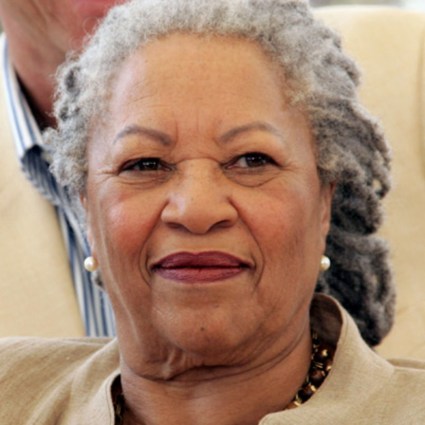
    When it comes to the great power of language and the responsibility we have when using it, we may turn to the Nobel Prize acceptance speech of one of the greatest writers of the 20th century, Tony Morrison.

    Morrison received the Nobel Prize in literature for being a writer “who in novels characterized by visionary force and poetic import, gives life to an essential aspect of American reality.” On taking to the podium to accept the award in December 1993, she provided us with a spectacular speech on the power of language to oppress and to liberate, to scar and to sanctify, to plunder and to redeem.

    Morrison opines:

    ““Once upon a time there was an old woman. Blind but wise.” Or was it an old man? A guru, perhaps. Or a griot soothing restless children. I have heard this story, or one exactly like it, in the lore of several cultures.

    “Once upon a time there was an old woman. Blind. Wise.”

    In the version I know the woman is the daughter of slaves, black, American, and lives alone in a small house outside of town. Her reputation for wisdom is without peer and without question. Among her people she is both the law and its transgression. The honor she is paid and the awe in which she is held reach beyond her neighborhood to places far away; to the city where the intelligence of rural prophets is the source of much amusement.

    One day the woman is visited by some young people who seem to be bent on disproving her clairvoyance and showing her up for the fraud they believe she is. Their plan is simple: they enter her house and ask the one question the answer to which rides solely on her difference from them, a difference they regard as a profound disability: her blindness. They stand before her, and one of them says, “Old woman, I hold in my hand a bird. Tell me whether it is living or dead.”

    She does not answer, and the question is repeated. “Is the bird I am holding living or dead?”

    Still she doesn’t answer. She is blind and cannot see her visitors, let alone what is in their hands. She does not know their color, gender or homeland. She only knows their motive.

    The old woman’s silence is so long, the young people have trouble holding their laughter.

    Finally she speaks and her voice is soft but stern. “I don’t know,” she says. “I don’t know whether the bird you are holding is dead or alive, but what I do know is that it is in your hands. It is in your hands.”

    Her answer can be taken to mean: if it is dead, you have either found it that way or you have killed it. If it is alive, you can still kill it. Whether it is to stay alive, it is your decision. Whatever the case, it is your responsibility.

    For parading their power and her helplessness, the young visitors are reprimanded, told they are responsible not only for the act of mockery but also for the small bundle of life sacrificed to achieve its aims. The blind woman shifts attention away from assertions of power to the instrument through which that power is exercised.

    Speculation on what (other than its own frail body) that bird-in-the-hand might signify has always been attractive to me, but especially so now thinking, as I have been, about the work I do that has brought me to this company. So I choose to read the bird as language and the woman as a practiced writer. She is worried about how the language she dreams in, given to her at birth, is handled, put into service, even withheld from her for certain nefarious purposes. Being a writer she thinks of language partly as a system, partly as a living thing over which one has control, but mostly as agency — as an act with consequences. So the question the children put to her: “Is it living or dead?” is not unreal because she thinks of language as susceptible to death, erasure; certainly imperiled and salvageable only by an effort of the will. She believes that if the bird in the hands of her visitors is dead the custodians are responsible for the corpse. For her a dead language is not only one no longer spoken or written, it is unyielding language content to admire its own paralysis. Like statist language, censored and censoring. Ruthless in its policing duties, it has no desire or purpose other than maintaining the free range of its own narcotic narcissism, its own exclusivity and dominance. However moribund, it is not without effect for it actively thwarts the intellect, stalls conscience, suppresses human potential.

    The vitality of language lies in its ability to limn the actual, imagined and possible lives of its speakers, readers, writers. Although its poise is sometimes in displacing experience it is not a substitute for it. It arcs toward the place where meaning may lie. When a President of the United States thought about the graveyard his country had become, and said, “The world will little note nor long remember what we say here. But it will never forget what they did here,” his simple words are exhilarating in their life-sustaining properties because they refused to encapsulate the reality of 600, 000 dead men in a cataclysmic race war. Refusing to monumentalize, disdaining the “final word,” the precise “summing up,” acknowledging their “poor power to add or detract,” his words signal deference to the uncapturability of the life it mourns. It is the deference that moves her, that recognition that language can never live up to life once and for all. Nor should it. Language can never “pin down” slavery, genocide, war. Nor should it yearn for the arrogance to be able to do so. Its force, its felicity is in its reach toward the ineffable.

    Be it grand or slender, burrowing, blasting, or refusing to sanctify; whether it laughs out loud or is a cry without an alphabet, the choice word, the chosen silence, unmolested language surges toward knowledge, not its destruction.

    Word-work is sublime … because it is generative; it makes meaning that secures our difference, our human difference — the way in which we are like no other life.

    We die. That may be the meaning of life. But we do language. That may be the measure of our lives.”

    Listen to Toni Morrison’s dazzling speech here below
  • 1457448732152_2x
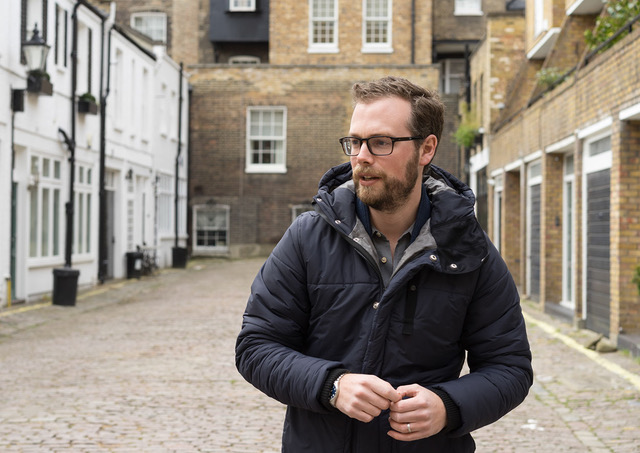
    Matthew Smith, founder of independent publishing house, Wunder Editions.

    It seems old hat to say that mainstream publishing has been facing an existential crisis in recent years. As profit margins thin, the industry has been forced to seek new and innovative ways to survive. 

    One fantastic – and relatively new – player within the sector is Wundor Editions, a London-based publishing house committed to producing innovative and challenging literature and images, while working with new and established writers and photographers.

    It is an honour to bring you this detailed interview with the founder of Wundor Editions, the author, photographer and designer Matthew Smith.

    INTERVIEWER

    Tell us about yourself, your background and ethos.

    SMITH

    I’m a writer of fiction and poetry, a photographer and a designer. I read English Literature at Oxford, but part of me had wanted to go to art school in London. Both the literary and the visual have always been key for me. In my own creativity and in the work of the artists I am inspired by I like to be surprised by the work of the imagination. A ‘wundor’ is an Old English word for something unimaginable, perhaps a miracle, perhaps a monster. This is the stuff of storytelling, so I named my publishing house after it.

    INTERVIEWER

    Who inspires you?

    SMITH

    Nas, Billy Corgan, Pep Guardiola, Marilynne Robinson, Bjork, Warren Buffet. All people with a singular vision who have managed to bring it out of themselves.

    INTERVIEWER

    Can you tell us a bit about Wundor Editions – how was it borne into existence? 

    SMITH 

    I wanted to make compelling books and present them to readers in new and engaging ways. By fusing together the worlds of striking photography, illustration and design with original, new works of literature, I felt we could make a world of creativity that people would want to be part of.

    INTERVIEWER

    It’s no easy feat to bring a new independent publishing house into existence – the sector is so dominated by the established ‘big five’. What are some of the main challenges you faced in establishing Wundor Editions?

    SMITH

    The main challenges are to do with becoming known to readers. First you have to become known to bookshop owners. Before that you have to become known to reviewers, a distributor and a sales team. You have to take the vision out to these people first, and convince a lot of people that your vision will come to fruition with perhaps only one book in print form that you can use to demonstrate this.

    INTERVIEWER

    What, do you think, are the biggest opportunities for independent publishers within the publishing sector?

    SMITH

    There are lots of artistic works out there that are not given the time of day but they could find an audience. There is no shortage of this stuff, that’s a myth. You just have to know what you’re looking for, and be grateful that it’s not what someone else is looking for.

    INTERVIEWER

    What do you think a publishing house or printing press should be for? Why are they important?

    SMITH

    They give artists a platform and inspire their readers.

    INTERVIEWER

    Julian Barnes has stated that the problem with the big publishing companies is that they are too risk averse: they are only willing to “publish novels that are copies of other successful novels”. Do you think that independent publishers have a duty to champion independent voices of authors and artists whose books may never be given a chance by the bigger companies in the sector?

    SMITH

    Great books are great books – big companies publish them, small companies publish them. Independent publishers should be careful not to define themselves by their differences to bigger companies, thereby limiting their own potential unnecessarily. And independent publishers do fall into the same trap Julian Barnes rightly mentions. But hopefully more often than not their independence allows for a more nimble and agile approach to creativity, and the courage to take risks on original works of art. The challenge is to build this ethos into a growing company that continues to take risks as it grows.

    INTERVIEWER

    The future of literature; of writing – and indeed the future of publishing – are all frequently discussed at great lengths. What are your thoughts on current industry trends – where are we heading?

    SMITH

    I’m just looking for exciting new authors and photographers who have unique visions and who have taken the time to develop their technique so they can express their ideas brilliantly. The future will look after itself.

    INTERVIEWER

    Obviously, the rise of the internet has seen a big culture shift in the way we communicate. What role do you see traditional presses playing in this new “digital era”? 

    SMITH

    The same role they’ve always played. The internet is great for seeking out specific pieces of information and for communication, but after prolonged periods it wears away at your concentration and offers little in the way of sustenance. Traditional presses can make books we can treasure and that have meaning – both in their physical form and as vehicles for stories and poems. There is a power that a book lying on a table has that is magnetic. The internet can’t compete with it.

    INTERVIEWER

    How would you define creativity?

    SMITH

    The ability to imagine something and then to make it accessible to others.

    INTERVIEWER

    What advice would you give to authors thinking of submitting their work to Wundor Editions?

    SMITH

    Go for it! It doesn’t have to be perfect – we will work with writers to develop their stories and their poetry. But you do need to have an original voice.

    INTERVIEWER

    What’s next for Wundor Editions? What should we look out for?

    SMITH

    We’ll be publishing an Australian literary heavyweight for the first time in the UK later this year, and we’ll be launching our first photobooks too.

    INTERVIEWER

    Could you write us a story in six words?

    SMITH

    Oh no. Wait. That’s it! Hmmm.

    INTERVIEWER

    What are your 5 – 10 top tips for aspiring writers and artists?

    SMITH

    • Trust your own instincts completely but be open to other people’s ideas.
    • The only thing worse than refusing to take advice is taking advice you’re not comfortable with. Take advice from a number of sources and pick and choose what resonates with you. Be your own executive editor.
    • Know that you might have to put your work out there before it’s perfect, and perfect it along the way.
    • There’s no such thing as writer’s block, only fallow periods. If you don’t have any ideas, don’t write anything. Wait for the urge to come back. You’ll save yourself a lot of hours of editing.
    • There’s always time to write a novel if you really want to. Be ingenious in your scheduling.
    • Minimise all engagement with digital stuff if you want to rediscover deep concentration.
    • Don’t buy into the dream of a life where you only have to write. You wouldn’t find it fulfilling because there are other kinds of work which can provide things that writing can’t. And if you can earn money from another source, you’re free to pursue your vision unimpeded by commercial concerns. Ironically, if your work is good, there’s a good chance it will sell.
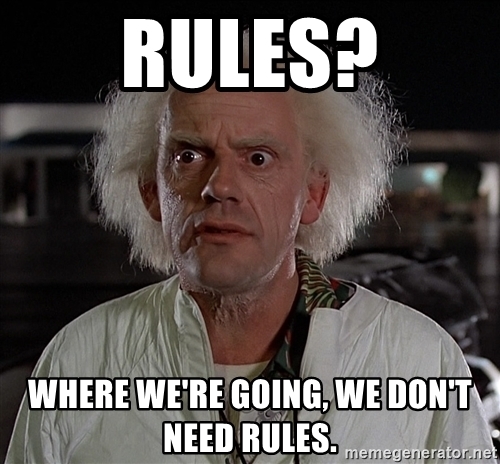
  • rules-where-were-going-we-dont-need-rules

    Breaking rules are what all the cool cats are doing these days (and have been doing for years, to be honest with you – it isn’t something that goes out of fashion). Even though new writers may find themselves drawn to the myriad number of ‘rules’ for writing that exist on the internet, there are a lot of writing ‘Dos and Don’ts’ that were made to be ignored – so long as you do it right, of course.

    Chief among these are often rules of grammar, syntax and punctuation. Not least because attempts to standardise language and the written word often leads to the suppression or marginalisation of communities and peoples.

    Grammar rules do exist for a reason; yet learning when and how to ignore certain rules can enhance your writing.

    To give you an example, in this article we’ll look at the run-on sentence – and show you how you can throw all conventional wisdom out of the proverbial window in order to write one hell’uva good story.

    Cool runnings – an introduction to the run-on sentence

    First things first; the basics: run-on sentences, also known as fused sentences, occur when two complete sentences are squashed together without using a coordinating conjunction or proper punctuation, such as a period or a semicolon. Run-on sentences can be short or long. A long sentence isn’t necessarily a run-on sentence.

    What’s the problem with using a run-on sentence?

    A run-on sentence lacks the correct punctuation to tell the reader where to pause or to signal that a new idea is being expressed. The reader may be confused about the meaning of the sentence or have to make their own decision about where to pause.

    Correcting a run-on sentence can help your sentences read more smoothly and should help your reader understand what you’re trying to say more easily. The independent clauses help the sentences make sense and they are much tighter and concise by comparison to the run-on sentence structures.

    Breaking the grammar rule

    Now, we’re not advocating ignoring the rules around run-on sentences completely: you can’t use them for everything you write, constantly. But if you understand how to conveniently forget about the grammar rule around them from time to time, you can help bring some new-found life and variation to your stories that will leave your readers gasping for breath – and gasping for more of your writing.

    In the spirit of one of the most frequently touted rules of writing – we aren’t going to tell you how to do this; but rather show you, by using examples from some of the greatest writers who didn’t think twice about what grammatical rules they may or may not have been breaking.

    First up – and perhaps not surprisingly – we have James Joyce’s Ulysses, which  famously concludes with Penelope, or Molly Bloom’s Soliloquy, which has 24,048 words punctuated by two periods and one comma. Here’s a part of the final episode:

    “…I suppose he was thinking of his father I wonder is he awake thinking of me or dreaming am I in it who gave him that flower he said he bought he smelt of some kind of drink not whisky or stout or perhaps the sweety kind of paste they stick their bills up with some liquor Id like to sip those richlooking green and yellow expensive drinks those stagedoor johnnies drink with the opera hats I tasted one with my finger dipped out of that American that had the squirrel talking stamps with father he had all he could do to keep himself from falling asleep after the last time we took the port and potted meat it had a fine salty taste yes because I felt lovely and tired myself and fell asleep as sound as a top the moment I popped straight into bed till that thunder woke me up as if the world was coming to an end God be merciful to us I thought the heavens were coming down about us to punish when I blessed myself and said a Hail Mary like those awful thunderbolts in Gibraltar and they come and tell you theres no God what could you do if it was running and rushing about nothing only make an act of contrition the candle I lit that evening in Whitefriars street chapel for the month of May see it brought its luck though hed scoff if he heard because he never goes to church mass or meeting he says your soul you have no soul inside only grey matter because he doesnt know what it is to have one yes when I lit the lamp yes…”

    If you find this difficult to follow, you’re not alone. At the time of writing, this soliloquy contained the longest sentence ever written at 4,391 words, which made it the master of all run on sentences.

    Nonetheless, while you might not want to go quite as far as Joyce, you can see how ignoring conventional grammatical wisdom can enhance the intensity, voice, and style of your writing. It helps your words to flow freely, adding life and vigour to your writing.

    For our second example, we’re turning to another literary great, David Foster Wallace. His short story Incarnations of burned children was first published in Esquire magazine and you can read it online for free (do it now).  The story consists of only nine sentences, and yet is 1100 words. The breathless run-on sentences intentionally lend to a panicked, anxious reading, a messy and somewhat incoherent babble as neither the narrator nor the Daddy nor the Mommy can slow down and think rationally.

    Here are the first three sentences of the story, to give you a flavour of how Wallace breaks traditional grammatical rules to such devastating effect:

    “The Daddy was around the side of the house hanging a door for the tenant when he heard the child’s screams and the Mommy’s voice gone high between them. He could move fast, and the back porch gave onto the kitchen, and before the screen door had banged shut behind him the Daddy had taken the scene in whole, the overturned pot on the floortile before the stove and the burner’s blue jet and the floor’s pool of water still steaming as its many arms extended, the toddler in his baggy diaper standing rigid with steam coming off his hair and his chest and shoulders scarlet and his eyes rolled up and mouth open very wide and seeming somehow separate from the sounds that issued, the Mommy down on one knee with the dishrag dabbing pointlessly at him and matching the screams with cries of her own, hysterical so she was almost frozen. Her one knee and the bare little soft feet were still in the steaming pool, and the Daddy’s first act was to take the child under the arms and lift him away from it and take him to the sink, where he threw out plates and struck the tap to let cold wellwater run over the boy’s feet while with his cupped hand he gathered and poured or flung more cold water over his head and shoulders and chest, wanting first to see the steam stop coming off him, the Mommy over his shoulder invoking God until he sent her for towels and gauze if they had it, the Daddy moving quickly and well and his man’s mind empty of everything but purpose, not yet aware of how smoothly he moved or that he’d ceased to hear the high screams because to hear them would freeze him and make impossible what had to be done to help his child, whose screams were regular as breath and went on so long they’d become already a thing in the kitchen, something else to move quickly around.”

    Protect your voice

    If we were to ‘correct’ the work of Joyce and Wallace (to name just two authors who ignore the run-on sentence rule), we may make them conform more closely with standardised English language; but both works would lose something fundamental in doing so. They would lose their energy; they would lose their voice.

    Since a writer’s voice has more to do with what meaning is or isn’t conveyed to the reader than the grammatical rules and syntactical structures we place upon our written language, these stories would have their fundamental essence rearranged and, ultimately diminished.

    So, if you find yourself locked in a burst of frenzied writing energy and wake the next morning covered in raw coffee beans and ink (we’ve all been there) to find that your prose is riddled with run-on sentences; don’t worry. Sit back, re-read what you’ve written, and remember the timeless (though slightly paraphrased) words of Doc Brown from Back to the Future: “Rules? Where we’re going, we don’t need rules…”


  • d20188987445f363cfd44e8282f153eb
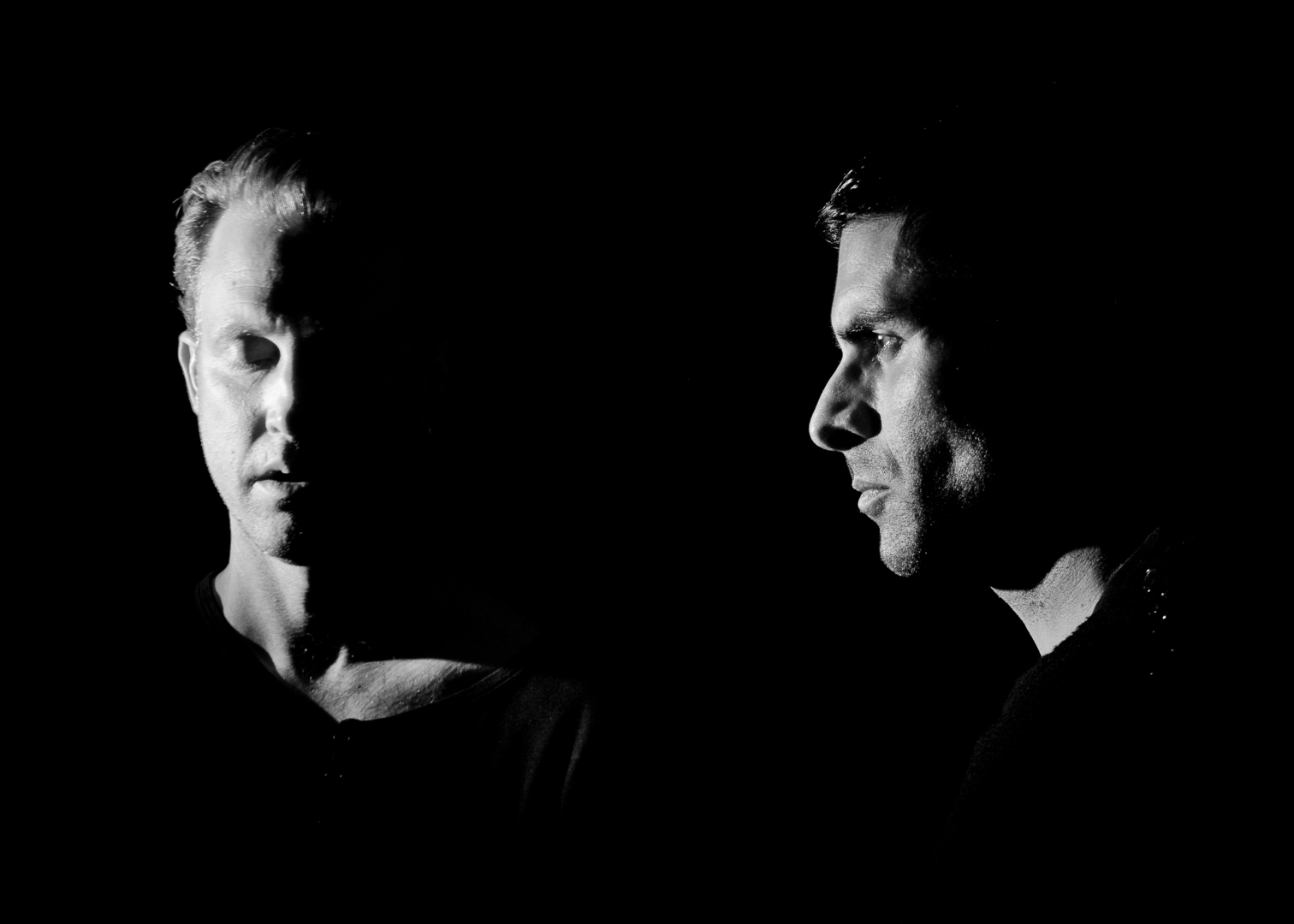
    The Ultra. Photography by Mike Dodson/Vagabond Images.

    In the latest of our ‘Creatives in profile’ interview series, it is an honour to introduce you to Joel Alexander and Paul Dogra – the duo behind independent rock/electronic band, The Ultra.

    First founded in East London, The Ultra is a band that likes to experiment and create interesting emotive music that captures memorable hooks and melodies. To date, The Ultra have two EP’s and two videos out, as well as a write up in in the popular local magazine The E-list. They also have their debut EP ‘When The World Turns Out Its Lights’ signed to Platform Records and recently had their track ‘Universe In Two’ used on a trailer for a new computer game called ‘Die Young’.

    You can check their music out here  and follow them on Twitter @UltrabandUK. We hope you enjoy this detailed interview…

    INTERVIEWER

    Tell me about yourselves, where you live and your background/lifestyle?

    THE ULTRA

    Joel:

    We are Paul and Joel Aka ‘The Ultra’, and we met and started creating music after meeting through a musician’s site in London.

    I am originally from all over the south of England as my parents liked to move around. Later I was actually living round the corner from Paul when we met, which was convenient. I now live with my partner in Copenhagen, Denmark and fly back regularly to work with Paul. My background has always involved singing in bands and writing lyrics.

    Paul:

    I am originally from London and studied in Brighton.  I currently reside in East London to be near my 5 yr old daughter who delightfully absorbs my time when I am not writing music.  My life revolves around my daughter and music – these are both what make me content and purposeful in life.

    I have been in various bands over the years that were more guitar based and played many gigs in the late 90s and early 00s in London.  I have worked with other musicians over the years on a variety of projects, but more in the background.  There came a point in 2014 when I rediscovered dance and electro based music again, and so I started to write with this in mind, with the primary focus of forming a duo with a co-writer/singer.

    INTERVIEWER

    Is music your first love, or do you have another passion?

    THE ULTRA

    Joel:

    I would probably say yes, as I have grown up listening and being very passionate about music, probably also due to my parents playing a wide range of music when I was a kid. I also enjoy travelling very much and – of course – spending time with my partner, Ida.

    Paul:

    Music has always been my passion and it is how I express my emotions and inner most thoughts.  I use music almost as a form of meditation – to help forget my worries and concerns.  My other passion would of course be my daughter, Orla, who I adore and is my absolute world!

    INTERVIEWER

    Who inspires you?

    THE ULTRA

    Joel:

    I have been inspired by great bands from Depeche Mode to Pearl Jam, Peter Gabriel and Dire Straits. I am also inspired by people who have overcome great hardship.

    Paul:

    The main artist that inspires me musically and spiritually is Depeche Mode, also the U2 period 1991 – 2005.  I am also inspired to write music to enable my daughter in years to come to admire my creative side and be proud of what I achieved.  I guess its about wanting to leave a legacy of music for her.

    INTERVIEWER

    Who were your early teachers?

    THE ULTRA

    Joel:

    I guess it was the music I listened to as a kid, Eddie Vedder was a great teacher from afar. I have worked with vocal coaches over the years too, some good, some not so good. When you find your true real voice it gets more straight forward.

    Paul:

    I am fan of U2 musically and lyrically.  Their songs taught me how to approach writing a song in terms of dynamics, textures, and creating atmosphere.  I was heavily influenced by the guitar style of The Edge to play a minimalist yet effective guitar sound.  Depeche Mode obviously too.

    INTERVIEWER

    How would you describe your current sound?

    THE ULTRA

    Joel:

    I would say electronic with rock elements, experimental and atmospheric.

    Paul:

    I would say it is electro/alternative and experimental.  We like to challenge ourselves to create emotive and interesting music that hopefully captures people.

    INTERVIEWER

    As primarily a community of writers, we’re keen to learn about your creative songwriting process. How does a song usually develop – do you first start with the lyrics, melody, chord progression, or something else?

    THE ULTRA

    Joel:

    Paul will normally send me over a melody idea and then I will start writing to that, after we have the rough lyrics and a guide vocal we will then build the track around that.

    Paul:

    It starts in various ways – sometimes a drum loop or beat I have found, or playing around with synth sounds – this then creates a mood with which to build upon.  I’ll then put down a basic template of chord progression and sounds. Then I will send this to Joel who will work on melody and lyrics.  When Joel feels he has a basic idea, we will record vocals and work out what does and doesn’t work. That will then provide a template to build upon with more sounds and instruments.

    The exciting thing is that I wouldn’t have heard Joel’s ideas until he records a draft vocal – I always look forward to this.  As always, Joel will complement the music ideas I have so well.

    INTERVIEWER

    Do you have a favourite place or time that you like to write?

    THE ULTRA

    Joel:

    Not really – when I sit down and decide to write. I generally get lost in the track so anytime works.

    Paul:

    I am at my most creative at night and like to write and lay ideas down then – usually with a glass or two of red wine!

    INTERVIEWER

    Where do your ideas for songs originate from?

    THE ULTRA

    Joel:

    Current feelings I guess, also what may be happening in the world at the time or something I have seen recently that sticks with me.

    Paul:

    From a certain emotion, thought or mood I am in at that time – that could be about my personal life or something I have heard or read in the news.

    INTERVIEWER

    Does a certain emotion trigger your songwriting impulse?

    THE ULTRA

    Joel:

    Often feeling reflective, full of questions or if I really feel I need to get some words/emotions out.

    Paul:

    Yes, usually an emotion of sadness, hurt or doubt.  Certainly I know that Joel’s lyrics complement the basic mood I try to write from a music perspective.

    INTERVIEWER

    What do you think is the relationship between lyrics and poetry?

    Paul:

    Yes, I would say there is a relationship, but I do not know if Joel approaches his lyrics in this way.  My favourite lyricists are Bono and Martin Gore, who I feel have a sense of poetry in their writing.

    Joel:

    Lyrics are poetry to music.

    INTERVIEWER

    When putting together a new song, do you tend to work in long stretches, or short bursts?

    THE ULTRA

    Paul:

    It depends on how creative I get when writing.  This can mean long bursts because I am determined to get a basic idea down.

    Joel:

    We spend a long time crafting the songs once we have the idea down, it is a nice process.

    INTERVIEWER

    When creating a new song, how do you maintain motivation through the whole process – from the initial idea, to writing the lyrics and music, playing, rehearsing, practising, editing, finally recording and then releasing to the public?

    THE ULTRA

    Paul:

    This can depend on song the song(s) we are working on.  From my point of view, when I have an initial idea (and if it is really inspiring) then this will increase the motivation and workflow.  If I have an idea that I think is really good, I will want to get a very basic template down and then send to Joel for his thoughts and suggestions.  Joel will then work on his melodies and lyrics for the song.

    When Joel feels that he has good ideas we will co-ordinate dates to record draft vocals in London.  Once these are completed this will motivate me to work more crafting the song with layers and sounds based on Joel’s melodies.  Once we are both satisfied, then we set a date for final recording of vocals.  We have a very dedicated and intense recording workflow.

    I then spend much time editing the song which involves more dynamics and textures.  I know at times Joel can get frustrated as to why a song takes so long to have a final mix!  I guess I am in my element when I am mixing and editing away on a song – sometimes I do need Joel to say “come on mate, don’t over do the song now!”.  Setting deadlines is how we tend to motivate ourselves, which we discuss in detail.

    Joel:

    The belief in the songs and the excitement I get as they develop keeps me          motivated for sure! But, yes, as Paul says I think it is important to set deadlines as to not let the song stagnate.

    INTERVIEWER

    A number of songwriters have spoken about the power of music to change the world. In these turbulent political times, what role do you think music has to play in putting forward new ideas, or challenging existing ones?

    THE ULTRA

    Paul:

    Certainly I would suggest that music is an ‘escapism’ from the reality of the turbulent times that surround us.  I guess music and lyrics can help define a mood, thought, or worry a person has and ‘hide away’ from the worries at that time.  Lyrics most definitely make a statement about the times we are in.

    Joel:

    Yes, I think you can get a strong message across through music and this has been done many times over the years. Whether the people who can actually do something listen is a different story.

    INTERVIEWER

    In Capitalist Realism, Mark Fisher speaks about the catch-22 situation some musicians find themselves in, where “a protest against MTV is the only thing guaranteed to get you airtime on MTV”. How do you perceive the relationship between new or independent music artists and the corporate music studio corporations and power structures?

    THE ULTRA

    Paul:

    This really resonates with us, because we are independent and self-financing musicians.  The corporate music studios and power structures hold immense sway in getting music heard on radio stations and promoting artists. I think that there is a ‘battle’ against the independent artist and the big corporations for exposure and to make an impact.  Unfortunately, the independent artist does not have the same money or influence as the corporates, so this is so frustrating when all we want to do is ‘get our music heard’ and play decent music venues.

    Joel:

    It is difficult as an independent artist trying to get your work out there; but I think when things happen for you it is all the more rewarding. It is a shame there seems to be such a big divide these days. I can’t remember last time I heard a new experimental song in the charts. But then again I don’t listen to the charts often anymore.

    INTERVIEWER

    Do you feel any ethical responsibility as musicians and artists?

    THE ULTRA

    Paul:

    Yes, in terms of honesty. In my personal life, I would like to think I am ethically responsible in my everyday life of how I treat people.  I am aware that I have a young daughter who will be on this planet for years to come and so from an environmental point of view and how to behave, I like to think I am ethical.

    Joel:

    Yes I do, I think how we as artists come across is very important and it is also important to stick to one’s beliefs.

    INTERVIEWER

    What are your thoughts on some of the general trends within the music industry? Is there anything in particular you see as being potentially future-defining?

    THE ULTRA

    Paul:

    Certainly it is much easier to be able to ‘put your music out there’ for people to hear and watch, and the power of social media is clearly evident.  However, there unfortunately is still an element that the big-label players have the connections to elevate your music and contacts for air/video play.

    Joel:

    I think a shake up needs to happen sometime. Spotify is a big one where the artist has control of their music and can get it out there and earn money from it without needing support from a label.

    INTERVIEWER

    Could you tell us a little about some of the future projects you’re working on?

    THE ULTRA

    Paul:

    We have a live performance video of our song Incognito in final editing at the moment, which we will then promote.  We are also working on new ideas and hoping to look towards targeted live performances with a drummer later in the year.

    Joel:

    Exactly what Paul said, we have loads of stuff coming up!

    INTERVIEWER

    Could you write us a story in 6 words?

    THE ULTRA

    Joel:

    The world spun then went numb.

    Paul:

    This is impossible!


  • Faking Lit1

    Would you be averse to a velociraptor opening your door handle at night? Have you ever looked at a picture of a Tyrannosaurus Rex and thought they’d make a great CEO of a large financial firm? These questions – and more – have been both raised and answered in the latest issue of the acclaimed podcast ‘Faking Lit’, in which five rising comedians get together to talk about books they may or may not have actually read.

    Nothing in the Rulebook were thrilled to be invited onto the show to discuss the intriguing world of dinosaur erotica – where humans and dinosaurs get all kinds of jiggy with it.

    Sitting within the wider genre of ‘moster book porn’, dinosaur erotica has proved to be quite the explosive phenomenon. Some of the best-selling authors behind the books (usually self-published) have earned so much from their craft that they have been able to quit their day jobs. With these books ranging in size from one to fifteen pages, and featuring titles such as ‘Taken by the T-Rex’ and ‘My billionaire triceratops craves gay ass’, the team behind Faking Lit had just one main question: just how hard can writing dinosaur erotica be?

    Check out the podcast below and find out more about the quite frankly insane world of dinosaur erotica through the following helpful resources:

    Watch Faking Lit live

    On Thursday 29th March, the Faking Lit podcast team at Waterstones Tottenham Court Road, London, in a live Easter special of the podcast, as they work together to unlock the mysteries of Dan Brown’s blockbuster novel of Jesus secrets, The Da Vinci Code.

    Check out the podcast

    The podcast is available on Soundcloud, iTunes,Tunein and Stitcher.

    Follow Faking Lit on Twitter via @Faking_Lit_Pod

  • bio photo

    The world of a short story may be more condensed than the world of a novel, but its emotional impact can be as wide-ranging as a novel’s. Indeed, whether you want to call it micro-fiction, sudden fiction, smokelong lit, short-shorts or flash fiction, writing short stories requires dedication, skill and applying new techniques to make them zing. But, when done right, these pieces of fiction can offer a true – albeit fleeting – moment of literary delight to both writers and readers.

    With booksellers reporting a surge in the popularity of the short story, Nothing in the Rulebook caught up with one of those writers brave enough to embrace the short story as their form of choice.

    Helen Rye has arrived on the short-story scene with quite the onomatopoeic splash and bang since her debut short story was nominated for the 2016 Bridport Prize – with her stories variously winning or being shortlisted for a number of other prestigious short story competitions since.

    It is an honour to bring you this detailed interview…

    INTERVIEWER

    Tell me about yourself, where you live and your background/lifestyle

    RYE

    I live in Norwich, UK, a beautiful city packed to the seams with talented writers, due in part to the legendary MA creative writing programme at the UEA. I don’t have an MA, but I have benefited via a sort of trickle-down effect from some brilliant classes and writing groups run by people who do.

    My main work background is in homelessness and drug work, but I’ve also been a lab technician, a classroom assistant, a cleaner, an admin worker, a voluntary theatre company director and an underqualified parent. I’ve wanted to be writer since I was eight and was encouraged by a couple of English teachers to pursue it seriously, but I dropped in and out of school as a teenager. After being told in sixth form that there was no way to study creative writing beyond school, I ended up leaving to work in a science lab, studying physics part-time at a tech college.

    I was always writing in my head, but too afraid to put it down on paper for such a long time in case I turned out not to be any good at it after all. For years I kept telling myself that soon I would write, until I was staring down the barrel of a milestone birthday and decided it was now or never. I took a couple of courses and joined a writing group, where I was introduced to flash fiction via a Kit de Waal story. I REALLY wanted to learn how to do that, so had a stab at it, and that story – the first thing I’d ever subbed anywhere – ended up being shortlisted for the Bridport Prize. That gave me enough of a confidence boost to try writing some more and (I know this sounds incredibly jammy), the next story I sent out won the October 2016 Bath Flash Fiction Award, out of 700 entries.

    I’ve since had other stories published in various online and print journals and anthologies and went on to win the Reflex Fiction Prize in the summer of 2017, as well as unceremoniously crashing and burning in other contests. Confidence is such a strange thing, isn’t it. I’m still really reticent about sending stuff out, and am fairly brutally aware of my shortcomings as a writer. The last few months have been a particularly busy and difficult time in my life, but I’m hoping now to press through this hesitancy – basically, to get over myself and get subbing.

    INTERVIEWER

    Is writing your first love, or do you have another passion?

    RYE

    No, it’s writing. That’s my thing. I also love music, though, and I have been part of an improv comedy troupe, although I’ve come to the conclusion that my brain just doesn’t work fast enough for that. I do love the creative, collaborative nature of music and of improvised theatre, though, and the incredible sense of teamwork and connection that comes with both – I get that from the writing community, too  – the flash fiction writers are my lovely dysfunctional extended family. We get each other in a way that nobody else does, beautiful obsessive weirdos that we are.

    INTERVIEWER

    Who inspires you?

    RYE

    Oh, gosh. Well everyone who can write a beautifully constructed sentence that takes my breath away with its emotional impact, and anyone who can produce a flash story that shines with heart and poetry. So many writers. My mentor, Tania Hershman – as well as being a wonderful, joyful writer, she is a shiny, glowing human full of life and encouragement. One or two of my closest writing friends who would probably be embarrassed if I named them, but they know who they are. People who give so much to the writing community in editing journals, helping other writers develop, writing incredible stories themselves. People who always make time to workshop your story twenty minutes before the deadline you forgot you had. People full of kindness, humour and humility who are willing to slice open a bit of their heart and lay it on the page, make themselves vulnerable in order to say something worth saying. These guys keep me sane and keep me writing with their support and encouragement.

    INTERVIEWER

    Who were your early teachers?

    RYE

    I had two dedicated and (here comes that word) inspirational English teachers at school who both said they were keeping stuff I’d written because they thought I’d be a famous writer one day. Sorry to disappoint you there, guys. But thank you so much for your encouragement – I definitely wouldn’t have tried to write at all if it weren’t for you. Then in more recent years I did some creative writing courses with former UEA people Lisa Selvidge, Stephen Carver, Andy McDonnell and Ian Nettleton. They’re all utterly fantastic teachers, genuinely.

    INTERVIEWER

    What draws you to flash fiction?

    RYE

    Flash is everything that’s best in writing, to me. It’s closer to poetry than it is to longer fiction, I think – the condensing of ideas and feeling, the need for single or pared down imagery and language. At its best (i.e. other people’s) it’s a laser-cut jewel of perfect shining prose. It can break your heart in pieces in such few words. I love poetry too, but I don’t understand it well enough to write it well and I relate better to the clearer narrative of flash. A great flash story will make me feel something, and that’s almost the whole reason I read. Writing it lets me work out and express what I feel or think about something better than anything I know. I’d trot out that old line that it’s faster to write flash than longer fiction, but for most flash writers I know that’s not actually true. When you have few words to tell a story you try to get every one of them right. I hope there’s no function on my computer that can tell you how long I’ve spent per word on a given story – I’m sure whole novels have been written faster and better.

    INTERVIEWER

    How easy do you find it to move between different writing forms/mediums – can you balance writing a novel with crafting flash fiction or short stories?

    RYE

    I’m focussing on trying to get better at writing flash at the moment, but have accidentally written some hybrid pieces that stray towards prose poetry territory. I have begun thinking about returning to the shambolic collection of scenes on my laptop that I’ve sometimes described as a novel draft, and I have a couple of children’s fiction drafts and ideas I’m wanting to find the time to return to. How easy I’ll find that shift, I’ll let you know when I try it!

    INTERVIEWER

    How do you maintain your motivation for writing?

    RYE

    The crazy obsessive in me can’t let it be. It’s how my brain works, I think in terms of stories and eccentric language and metaphors, and it’s one way I try to make sense of the world. If I didn’t keep writing now I’d probably develop some other, more self-destructive habits, so I need to keep it up, I think. And the support and encouragement of writer friends. I’d be weeping under a duvet without them.

    INTERVIEWER

    Do you feel writers should feel any ethical responsibility in their roles?

    RYE

    I don’t think you can divorce ethical responsibility from anything you do. Nobody wants to read preachy writing, but sometimes what drives us to write is an unbearable sense of injustice, or the suffering of other people. And maybe occasionally a story will make someone think – or rather, feel – deeper – who knows. Doing our absolute best not to be a part of endemic racism, sexism, homophobia, ableism etc is everyone’s responsibility, and that extends to art.

    INTERVIEWER

    Do you have a specific audience in mind when you write?

    RYE

    No. Maybe I should, I don’t know. I kinda just write and hope it might end up beautiful in some way, say what I want it to say, and that someone somewhere will read it and not completely hate it.

    INTERVIEWER

    What are your thoughts on some of the general trends within the writing industry (if we can call it thus)? Is there anything in particular you see as being potentially future-defining?

    RYE

    I’m a mum from Norfolk and I’ve only been submitting stories for about 18 months – I’m not sure I’m aware of general trends within the writing industry… I think flash is becoming more mainstream, maybe? There seem to be more opportunities for chapbooks and collections to be published commercially than a year or so ago, which can only be fairly wonderful. Maybe the literary world is catching up with us flash writers, here at the tiny but sharpened cutting edge of short story writing…

    INTERVIEWER

    Could you tell us a little about some of the future projects you’re working on?

    RYE

    I’ve just joined the editorial board of Ellipsis Zine, a fantastic online flash fiction magazine, and also been asked to act as fiction editor for another print journal. Both of those are incredibly exciting for me. I have a back catalogue of mothballed flash stories in need of editing and sending out and I’m hoping desperately to find the time and confidence to do that now. I have that half-written and possibly very bad novel hidden in a dark corner and I need to brush the beetles off that and see if it’s worth working on. I also have some children’s picture book texts I’m trying to psych myself up to send to an agent. And an idea for a children’s novel that’s been occupying a small space in my head for about a decade. What I really need is someone to prod me with sticks until I get over myself and just do this stuff because who knows, hey. It’ll definitely never get anywhere if nobody ever sees it.  And that’s what writer-friends are for.

    INTERVIEWER

    Could you write us a story in 6 words?

    RYE

    No.

    Kidding, but they’re so hard! Ok, erm…

    Whiteness would have made him bulletproof.


  • censorship

    A quick scan over the list of books banned by American schools makes for some intriguing reading. Among their number you can find such famous titles as A Clockwork Orange, by Anthony Burgess, Howl and other poems by Allen Ginsberg, Persepolis by Marjane Satrapi, Grapes of Wrath by John Steinbeck, Lord of the Flies by William Golding, and The Adventures of Tom Sawyer by Mark Twain.

    As recently as 2011, Kurt Vonnegut’s Slaughterhouse 5 was banned by schools in Republic, Missouri – with copies only available to students who could present written parental permission.

    All of these books have been banned for their use of “bad” or otherwise offensive language.

    In this way, the parents of American children who seek to ban these books align themselves with the Daily Mail – who have run a number of fear-filled pieces noting that swearing in books could potentially corrupt children’s minds. And they also share similarities with the notorious law passed by Russian President Vladimir Putin in 2014 that is still in effect today, in which writers can be fined and books banned for including “obscene” or “offensive” language or “objectionable words”, including swearing.

    But what impact does banning books for supposedly ‘bad’ or ‘offensive’ language actually have, and what message does it send?

    Censorship as suppression

    The case against use of swear words or otherwise “bad” or “offensive” language is usually made by those who feat these words either corrupt the language itself or those people reading it. Here, the phrase ‘think of the children’ is frequently heard in shrill cries as concerned parents take a leap of faith in thinking that seeing swear words written down or used by characters in a book may make their innocent kiddos somehow no longer innocent – or otherwise corrupted.

    Yet such thought-policing tactics ultimately amount to attempts to control and suppress certain voices and cultures.

    Just think of Irvine Welsh, author of Trainspotting (a book which has three instances of “cunt”, one of “fuck” and one of “fucking” on the first page). Welsh rails against moves to censor literature on the basis of swearing – and explains:

    “it seems to be an attempt to erase and/or marginalise certain cultures, i.e. the working class, the ghetto and so on. Language is a living, organic thing. If you try to control that and prescribe what people say, the next thing is prescribing what people think.”

    Such concerns of course follow the thoughts of Orwell, who wrote in Politics of the English Language that “If thought corrupts language, language can also corrupt thought.” Indeed, Orwell also refuted the idea that one should follow “a ‘standard English’ which must never be departed from” – rather, he said, “correct grammar and syntax are of no importance so long as one makes one’s meaning clear”.

    What this again illustrates is that to suggest a book is of poor quality because it deviates from the norm or standard, or because it possesses within its pages swear words or other words in which people find offense, is to completely misread such a book, and to misunderstand the point of it all – not just the book; but culture itself.

    This is because culture is not standard. It should not, therefore, be contained or controlled. It is natural. It is alive. It flows and changes in various fluctuations and metamorphoses.

    The sterility of censorship

    Trying to impose censorship on books for their use of language ultimately serves as a form of defence for the status quo against new ideas and inspiration. This in turn prevents marginalised communities and voices from finding expression through artistic means.

    This is a clear danger to all writers – aspiring or otherwise – as well as everyone involved in the book industry, including readers – and ultimately anyone who considers themselves a part of a diverse or inclusive society. This is because it limits freedom of expression in such a way as to suppress new ideas from emerging; enforcing the creation of dull and mundane art that all looks the same – for fear of doing anything that might fall foul of the new age thought police.

    In 1945, American novelist and diarist Anais Nin discussed the act of censorship and its effect on originality in her personal diary, writing:

    “The important task of literature is to free man, not to censor him, and that is why Puritanism was the most destructive and evil force which ever oppressed people and their literature: it created hypocrisy, perversion, fears, sterility.”

    As we’ve discussed before, the act of censorship is indeed brutal and even fascistic in its oppression of freedoms. Indeed, it is often a clear act to control the thoughts and creative expressions of others – limiting originality as it does so.

    Missing the f*cking point

    Scottish author James Kelman – who saw his own book How late it was how late challenged for its use of “offensive language” has himself challenges whether people trying to ban books for their use of swearing really understand how language works.

    Kelman writes: “people can use swear words to emphasise the beauty of something – so it’s not really a swear word at all. If you say something is ‘fucking beautiful’, how can it be swearing, because you’re emphasising the beauty of something. If so-called swear words should only be used when appropriate, well what do you mean, ‘when appropriate’? I was in my 20s before I even realised the word ‘fuck’ had to do with a sexual act for some people. It was never used in that way for myself, and none of my community used it in that way.”

    Indeed, Willy Maley recognises the range of functions swearing can adopt in Kelman’s work, in his essay ‘Swearing Blind’. Maley writes: “The swearing is integral to Kelman’s power as a writer. It is neither a vulgar and superfluous supplement nor an offensive coating concealing shortcomings in the narrative, dialogue or characterization.”

    Were Kelman to have restricted his language and natural writing style to omit certain words, would we have been given such important literary works as he has produced as an author? Almost certainly not. And in this way we as readers would have been denied access to truly original pieces of fiction.

    The difference between ‘bad language’ and bad writing

    Just because a character in a novel likes to say the word fuck, or because the author of a book uses a narrator unafraid to use expletives in their narration, it does not mean the book you’re reading is bad – and certainly not that it should be banned.

    It may seem obvious, but there is a very real difference between a good novel that contains swear words, and a bad novel that is written in fine, puritanical English.

    This is because there is a difference between bad language and bad writing.

    Bad language, according to Mark Twain, “has no lifelikeness, no thrill, no stir, no seeming of reality; its characters are confusedly drawn, and by their acts and words they prove that they are not the sort of people the author claims that they are; its humour is pathetic; its conversations are — oh! indescribable; its love-scenes odious; its English a crime against the language.”

    Anyone who has read Fifty shades of Grey, which contains lines like “My subconscious has found her Nikes, and she’s on the starting blocks,” or anything ever written by renowned author Dan Brown will know what Twain is talking about here.

    Indeed, you need only read some of the winners of the notorious ‘Bad Sex in Fiction’ award to see just how badly some writers can abuse language – yet even here (perhaps even curiously) there are often no swear words or expletives in sight. In their place you find only misplaced metaphors and “bulbous salutations”. 

    Conversely, “bad language” is really nothing of the sort. When writers use expletives – or even deviate from traditional models of ‘standard English’ or spelling and grammar – may well be trying to capture language as it is used by their own community.

    With this in mind, how can anyone, after all, be genuinely upset by swearing – words that irrefutably exist and form a crucial element to our language? People so often don’t even swear to be abusive or to cause offense: it’s just how people talk.

    Of course, this is not to suggest simply including expletives for their own sake can ever be taken as a sign of good writing or mature writing skill. As legendary writer and editor E B White noted, “vigorous writing is concise. A sentence should contain no unnecessary words, a paragraph no unnecessary sentences, for the same reason that a drawing should have no unnecessary lines and a machine no unnecessary parts. This requires not that the writer make all his sentences short, or that he avoid all detail and treat his subjects only in outline, but that every word tell.”

    When it comes to writing – and protecting your own work from genuine accusations of ‘bad language’ – therefore, the most important thing to keep in mind when penning your drafts is ensuring that every word you use is absolutely necessary. If that necessary word may offend Vladimir Putin or evangelical Christian parents in small US towns and states, then you must keep it in – if anything, in today’s world, it may be more necessary than ever before.


  • DavidTurner_ThomBartley
    David Turner, founder of Lunar Poetry Podcasts. Photo credit: Thom Bartley 

    It’s no secret that the team here at Nothing in the Rulebook are always looking out for new and exciting creative projects. So when we stumbled upon the work of the exquisitely excellent Lunar Poetry Podcasts, we immediately wanted to introduce all our fine readers to it, too.

    Founded in October 2014 in south-east London, Lunar Poetry Podcasts features discussions, interviews and live recordings with poets in the UK and further afield.  Now based in Bristol, the podcast recently agreed a deal with The British Library which will result in the entire series being archived in their audio archive.

    It is an honour to bring you this detailed interview with the founder of this fabulous podcast, David Turner.

    INTERVIEWER

    Tell us about yourself, your background and ethos.

    TURNER

    I was born in London, went to secondary school in The Fens and rejected a job offer from The Royal Signals before serving an apprenticeship as a Bench Joiner. This opening sentence can be read, equally, as an explanation and/or an excuse for not having any formal background in Literature.

    After my most recent stay in a secure psychiatric unit, in 2014, I founded the online series Lunar Poetry Podcasts in lieu of a place on a creative writing course. In 2018, along with my wife, I founded a second podcast series, a poem a week – as I definitely didn’t already have enough to do!

    I’m a poet, though widely unpublished, drawing on my working-class upbringing and experiences as a frequent user of the mental health services, both in south London and the south of Norway.  I can often be found standing in solidarity alongside the good folk of Poetry On The Picket Line.

    My ethos? – If the door has been opened for me then I’ll be holding it open for others… or kicking it off its hinges.

    INTERVIEWER

    Who inspires you?

    TURNER

    Anyone living with a mental illness in the face of social pressures to present themselves as a survivor.

    LPP new 2500x2500

    INTERVIEWER

    Can you tell us a bit about Lunar Poetry Podcast – what inspired you to first set the podcast up; and how has it developed from then?

    TURNER

    In the summer of 2014 I began writing reviews of live poetry events for Lunar Poetry Magazine and even with a generous word count of 1500 words it was impossible to cover all of the topics that I wanted to discuss. In the autumn of that year I suggested to the editor, Paul McMenemy, the idea that I could record and publish three conversations with poets and see how popular they proved. My first three recordings were with Pat Cash (founder of Spoken Word London), Helen Mort and three spoken word artists in Stockholm.

    Very early on I was attracted by the idea of building a platform that would provide a space for writers who weren’t afforded that space by other mainstream outlets, to talk about their creative process.

    Since 2014, the series has developed from a series of interviews conducted solely by me into a series involving guest hosts guiding conversations with editorial autonomy on subjects they feel are important.

    INTERVIEWER

    What does it take to pull together a literary podcast?

    TURNER

    At the beginning you only need a basic understanding of what a podcast should be; this knowledge will grow over time and will be specific to the podcast that you’re making. In terms of making a literary podcast my advice would be the same as if you want to be a writer… read. Read. Read.

    Basic requirements: a mic, a recorder, a hosting platform. I started off recording into my iPad Mini using a Blue Yeti mic and uploading to YouTube – this isn’t technically a podcast as YouTube doesn’t offer the opportunity to download and doesn’t produce a RSS Feed.

    I now record into a Zoom H6 recorder, usually using Røde Lavalier mics, I edit in Reaper (cleaning the audio with iZotope Audio plug-ins), and host all episodes on Soundcloud which then shares with iTunes, Stitcher Radio and Acast.

    Pulling together a literary podcast also includes emails… millions of fucking emails!

    INTERVIEWER

    How do you plan and prepare for each new episode?

    TURNER

    This has change a lot since 2014. I used to make extensive notes, even going as far as writing loose scripts for each episode. With time and gained experience, though, I’ve come to trust my instincts and ability to guide a conversation and I tend now to go into recordings with few or no notes. I like to be familiar with any collections that may be discussed in interviews but not to the point where my opinion of the work becomes the main focus.

    When producing episodes with guest hosts most of my prep involves gauging how confident they are and either reassuring them that everything will turn out fine or simply giving them an outline of how I want the episode to shape up.

    On the day of the recording I try to make sure I eat beforehand and stay hydrated as suddenly feeling faint during an interview is a horrible experience.

    INTERVIEWER

    Are there any other podcasters you listen to regularly for new ideas? Or any like-minded websites that you’d recommend checking out?

    TURNER

    Page One Podcast is a beautiful insight into the reading habits of a huge number of writers and artists. I absolutely love the Radio 4 podcast, Only Artists. I tend to listen to podcasts as a break from the literature stuff and the four podcasts I’m currently listening to regularly are – The Adam Buxton Podcast, Richard Herring’s Leicester Square Podcast, Imaginary Advice and The Wire: Stripped… you know, because I’m a 36-year-old white man.

    Websites? And Other Poems, Proletarian Poetry and Hotel.

    INTERVIEWER

    What does the average day look like to you?

    TURNER

    Up until last week I worked full-time in a caravan factory, repairing damp caravans but I mutually agreed with the employment agency that that particular zero-hours contract wasn’t working for either of us. I’m now on an endless battle to not lose myself on YouTube while I look for part-time work that will allow me to pay my rent and produce the podcast.

    A day of editing involves: coffee, a run-through of the audio (usually 90 mins total) on Reaper which takes around three hours, lunch and then another run through the audio on Reaper (another three hours). I’ll do this twice for each episode before reaching the point of wanting to dig my eyeballs out with a teaspoon.

    INTERVIEWER

    What do you think a podcast should be for? Why are they important?

    TURNER

    I’m really trying not to sound like a knob here but a podcast should fulfil whatever the expectations are of the listener. If the listener wants to be distracted or find some form of escapism then that’s what the podcast should deliver. Similarly, if the listener wants in-depth engagement with political debate then this should be the producer’s goal.

    I don’t believe that podcasts are inherently important, though what they do that is different from the radio, for example, is allow producers to focus on niche subjects in a way that isn’t available to mainstream media channels. I suppose this in itself is what is important, and a number of podcasts have proven that there is a desire from listeners to engage with nuanced and focused programming.

    INTERVIEWER

    Obviously, the rise of the internet has seen a big culture shift in the way we communicate. What role do you see podcasts playing in this new “digital era”?

    TURNER

    I understand very little about this digital era outside of the very narrow thing that I do so can’t really answer that. I think, in general, podcasters aren’t very good at answering that question as what most of us do is force an analogue process out through a digital platform. Two people who certainly could answer this question more deeply (or at least have the experience to think about it properly) are Matthew Plummer-Fernandez and Alison Parrish.

    INTERVIEWER

    When there are so many podcasts, and so many different voices speaking at once – how do you try to make your voices heard – how do you cut through the babble?

    TURNER

    This is probably the point at which social media and promotion are at their most important. Trying to identify where there may be opportunities for cross-promotion, for example. Did the conversation cover mental health issues, and would mental health charities be interested in sharing the episode? Did your guest talk about their class identity and would specific unions or organisations be interested in promoting the discussion?

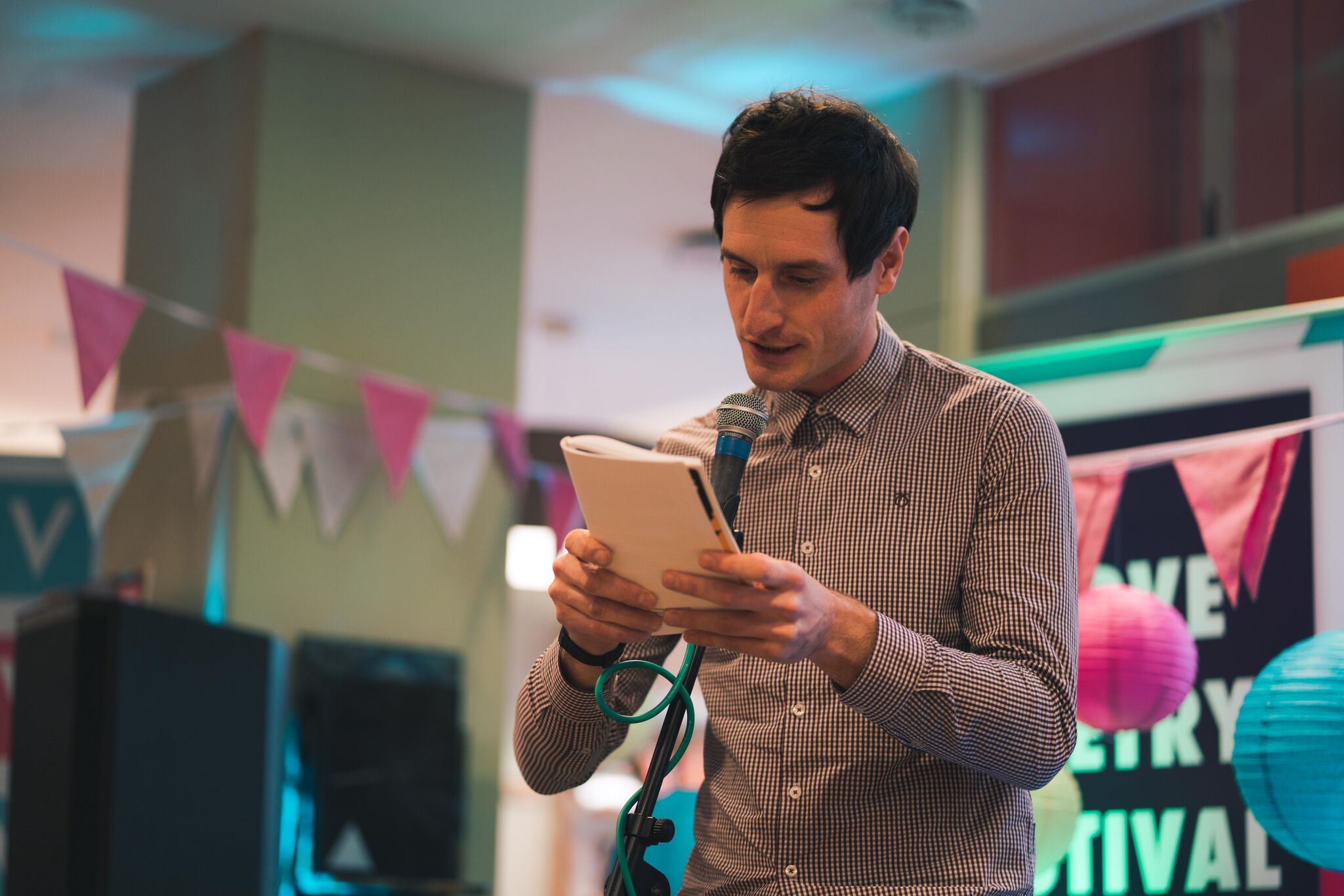
    I was also lucky enough to be invited to record four live interviews at this year’s Verve Poetry Festival. Presenting the podcast series to a live literature audience was a wonderful opportunity and I saw a definite spike in listening numbers immediately after the festival.

    I’m also hoping to have a table at this year’s Poetry Book Fair with the aim to just hand out loads of fliers and chat to visitors about the series.

    INTERVIEWER

    What are some of the main challenges you face?

    TURNER

    Raising awareness of podcasts in general and getting other literature/poetry organisations to realise the value of series like LPP.

    INTERVIEWER

    How would you define creativity?

    TURNER

    The ability to negotiate a way around the question, “why the fuck am I doing this?”

    INTERVIEWER

    What’s next for the podcast? Any exciting projects or episodes in the pipeline?

    TURNER

    I’m currently in the process of negotiating a paid mentoring project in which I’ll support some young literature producers, here in Bristol, in developing and producing their own podcast focusing on BME poets in the UK.

    2018 will see me continuing to archive LPP’s entire archive within The British Library’s Sound & Drama Department. This is a really exciting opportunity as it’s still unusual for podcasts to be archived in this way, and I’m really happy to have enabled over 200 poets to get recordings of and discussions around their work housed in an internationally famous institution.

    There’s another brilliant project in the pipeline which I can’t talk about just yet but has so far involved compiling a list of poets in sort of a fantasy poetry league-style team sheet before emailing them all an invitation. More on this over the next couple of months on our website.

    INTERVIEWER

    Could you write us a story in six words?

    TURNER

    It’s certainly possible, though ultimately pointless.

    INTERVIEWER

    What are your 5 – 10 top tips for aspiring podcasters?

    TURNER

    • Join the ‘Podcasters Support Group’ on Facebook
    • Remember that you will never feel ‘ready to start’
    • If you can’t afford your own mic/recorder then ask someone if you can borrow their equipment (while they supervise). Podcasters are a very friendly bunch.
    • Your podcast artwork needs to be 1500×1500 in size in order to be accepted by iTunes.
    • The best way to record a remote/skype/international interview is for your guest to record themselves and then send you their audio. It is an unnecessary stress to rely on two internet connections for a clean recording.
    • LISTEN TO YOUR GUEST. LISTEN TO YOUR GUEST. LISTEN TO YOUR GUEST.
    • Make the podcast that makes you happy.
  • Donald-Trump-The-Ugly-Face-of-America.jpg
    My name is Donald, no, I’m not going bald; that’s not a toupee, what a rude thing to say.”

    Donald Trump’s often bizarre and frequently unsettling use of language has been a source of both amusement and horror to onlookers around the world. Yet, like many egomaniacs before him, his words have a strange aesthetic quality that seems to lend them to the form of poetic verse.

    For a man who spins his own fictions and creates his own realities, moving into the world of poetry may not be a surprising career move for Donald (although, considering this is the man who moved from reality TV star and frequent failed businessman to become President of the United States, no career move should really be surprising). Yet it must be admitted that his creative writing ability may be impaired by his extremely limited vocabulary and the fact he thinks he can use “schlong” as a verb.

    Within Trump’s crude and simple use of language, however, lies a natural poetic lilt. He speaks in compact, distilled phrases that tell you a lot about who he is – often in only a handful of words. His frequent use of declarative sentences and severe lack of complexity gives both his speeches and his tweets a natural staccato rhythm.

    Like a child first learning to write and speak, Trump also repeats words and phrases again and again. While this primitive use of language may amuse many – particularly within the liberal metropolitan elite – these are the same linguistic qualities that give Trump’s words power.

    By using simple sentences and phrases again and again – accompanied by sweeping generalisations and categorizing his ideas into simple groups (mostly “winners”, “haters” and “losers) – Trump is in some ways a natural communicator to the masses. People remember what he says and take away messages from what he says in a way they seldom do during the triangulated, euphemism-filled speech of most other modern day politicians.

    How do we approach this power? How do we deconstruct Trump’s aggressive, misogynistic, racist, and, ultimately, stupid, turns of phrase into something else?

    Well, here the best approach seems not to deconstruct it (spending too much time analyzing the babblings of an unhinged idiot is about as fun as trying to remove an ingrowing hair from your crotch with a pair of rusty tweezers).

    Instead; it seems we may be best to reconstruct his words – keeping the same natural structures in his choice of phrasing, but mixing his quotes up, in a form of poetic collage, to create new poems and poetry.

    We have done just this, exploring the aesthetic power of Trump’s nonsensical babblings about covfefe, and turning them into new forms.

    You can read each of our poems below for free through the following links:

    Nothing to hide 

    So beautiful

    Like, really smart

    Humble pie

    Thank you for listening

    So that was my words

  • giant's causeway .jpg

    If Ireland is seen by some people in the world as some kind of romantic ideal, it must be seen only through the prism of eyes that have not seen news or history of the killings in the North, or how Irish women were considered far too lovely for contraception (and still today too lovely to be given the right to abortions). Ireland, far from being a mystic isle of pure beauty and tribal innocence, is – like so many countries – a land of contradictions and complexities.

    Ireland’s greatest litterateurs have embraced these sometimes conflicting differences to create works of fiction that are as beautiful as they are in themselves complex; that do not shy from painting the horrors that have befallen the island at times, but find lyrical ways of expressing these to readers across the world. Irish writers write against their own foolishness and flaws as much as they do against those of their fellow countrymen or those of colonial invaders – and in doing so they find ways of expressing truths that are delightful and intricate and small; and thereby discovering beauty that is real and full of power and significance.

    Perhaps the lyricism and beauty of Irish writing is in part down to the tradition of oral storytelling and poetry within Irish history, combined with the suppression of the Irish language itself during the centuries of British colonialism. With the brutal restrictions placed upon not just the Irish people themselves, but the very words and language with which they used to communicate, the British, in a way, created the conditions necessary for new forms of writing to emerge. Irish writing so often seems at times to be born from the fragmentation of old certainties, and the need to say important things in an almost coded fashion, so as to avoid discovery. Fiction and poetry – creative writing in general – play a crucial role in conveying meaning through indirect means (metaphor, allegory, etc.). And so, in the face of an increasingly restricted and complex reality, Irish writers created their own worlds – spun into life in the most beautiful, unique and creative ways.

    In this view, Irish writers rise to a cultural prominence in which they are defined both by their creative genius and by their nationality. Their identity is absorbed by their craft, and the geopolitics of it. This is an idea captured by Sean O Faolain – a pillar of twentieth century Irish short story writing – who wrote:

    “Irish literature came to its great period of effervescence in a romantic mood whose concept of a writer was almost like the concept of a priest: you did not just write, you lived writing; it was a vocation; it was part of the national resurgence to be a writer.”

    In honour of these writers, we have brought together a far from exhaustive list of our recommended Irish books to read at any time; but perhaps most fittingly on St Patrick’s day.

    You can read our book list here.