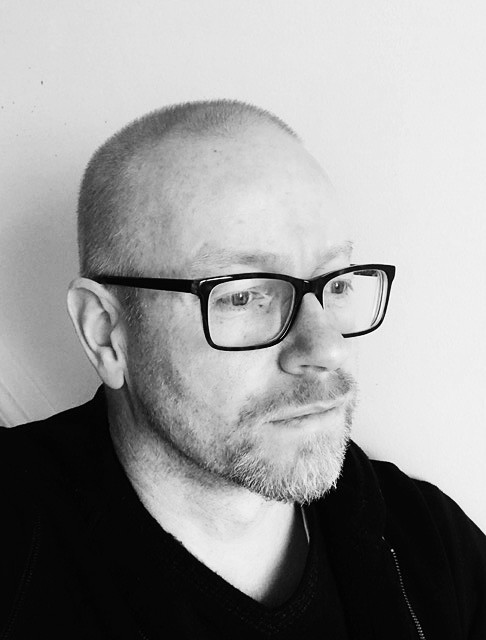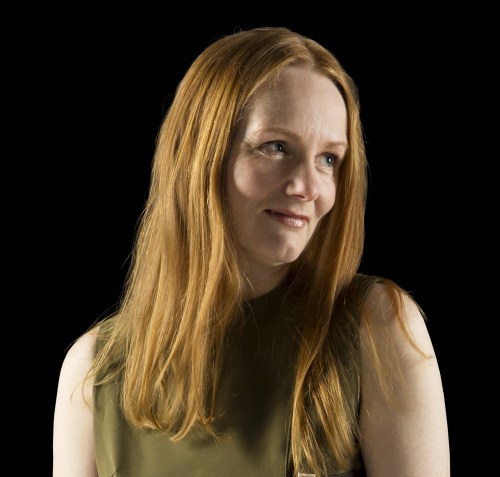
• Martina Devlin Columnist - Image (2).jpg

    Back in January, Nothing in the Rule Book had the chance to review Martina Devlin’s tenth book, a collection of short stories, entitled ‘Truth and Dare’. The stories follow eleven pioneering women from Irish history, pulling moments from their lives and reimagining them in fiction. Each story is an invitation into the life of a historical figure but we wanted to know more about the woman behind the book: Martina herself.

    A former Fleet Street journalist, Martina was born in Omagh and now lives in Dublin. She writes for the Irish Independent and was named National Newspapers of Ireland Columnist of the Year. Her fiction is ambitious and covers a wide range of genres and themes. From About Sisterland, a dystopian novel set in the near-future, to The House Where It Happened, historical fiction based on the Irish witch trials of 1711, her writing is ambitious and creative, steeped in dedicated research.

    Her work has won or been shortlisted for several prestigious several prizes, including the 1996 Hennessy Literary Award and the Royal Society of Literature’s VS Pritchett Prize. We were lucky enough to be able to catch up with Martina a second time, to find out more about her background, her inspiration and her writing.

    INTERVIEWER

    Tell us about your background.

    DEVLIN

    I’m a child of the Troubles. I grew up in Omagh, Co Tyrone when civil war for a prolonged period was our normal – random bomb attacks, heavily armed soldiers on the streets, roadblocks, no-go areas, dawn raids on houses by security forces, helicopters buzzing overhead and civilians treated as collateral damage in large scale violence. My parents protected us from it as much as possible but violence was a fact of everyday life.

    INTERVIEWER

    Is writing your first love?

    DEVLIN

    Storytelling certainly is. I regard myself as a storyteller whether I’m engaged in journalism or creative non-fiction or fiction. As a little girl I was always telling stories to told my family and writing them down in copybooks. I also illustrated my stories, rather badly but with an enthusiastic use of colour. I still have one of my notebooks – it shows no early signs of genius but, rather, a fascination with what my characters were having for tea. Enid Blyton was able to carry that off with picnics and all sorts of foodie high jinks but I wasn’t. However, I realised that research mattered and I used to go to Mrs Quinn’s sweetshop near our house and write down the names of various goodies. Although the shop no longer exists, I can’t pass the building without thinking of all those chocolate animals and jelly shapes I used to buy with a few small coins.

    INTERVIEWER

    What would you be if not a writer?

    DEVLIN

    A politician because politics can effect change. The Good Friday Agreement is proof of that. But the whip system is exerted too ruthlessly and I know I’d struggle with that – for me, conscience would always trump how any party leadership decided to vote on an issue. So I expect that eventually I’d be expelled from whichever party I joined. I’ve never belonged to any political party. I’m too much of an outsider, an observer. But I do see that politics is a powerful way of driving change and making a difference in people’s lives.

    INTERVIEWER

    Who were your early teachers?

    DEVLIN

    My parents. My father, in particular, had a great respect for reading, learning and storytelling – the power of the story – and he shared that love with me. I remember long car journeys as a child, going from our home in Omagh to my mother’s place of birth in Co Limerick, and both parents passed the journey for us with stories. The oral tradition was strong in our family.

    My father never felt hard done by, he had a gentle nature, but there’s no doubt he was a clever man unable to get on in life because of the unjust political situation in Northern Ireland which denied him opportunities. He wasn’t able to vote until he was in his mid-thirties, for example – you had to be a householder but housing was in the control of the ruling majority which didn’t believe in sharing. That’s why the civil rights movement started in 1968. My mother lost the right to vote when she moved to Omagh. Isn’t that extraordinary? Both Dublin and London looked the other way for many decades of Northern Ireland’s existence.

    My father had to leave school at the age of 12 to work as a message boy – Grandad was more or less an invalid and the family needed my father’s wage to help them survive. By the time I came along, he was a bus driver and worked very hard to raise seven children – as did my mother in the home – and if I have a work ethic I inherited it from them.

    INTERVIEWER

    Where do you find inspiration?

    DEVLIN

    If I knew the answer to that I’d bottle it and keep it on my desk. I honestly don’t know. Reading, thinking, looking, thinking some more?

    INTERVIEWER

    You describe the women featured in ‘Truth and Dare’ as your heroes. Is there some shared quality that earns them this distinction?

    DEVLIN

    Their vision and persistence. They recognised injustice and struggled to overturn it. They believed they could bring about change and wanted to make it happen not just for their own benefit but for others. They collaborated to achieve their goals, chipping away at enormous obstacles – both from the system, or the community at large, and their own families. It’s always hard to challenge the status quo but they did. Often, they were demonised for their behaviour but they knew they were right and kept faith.

    INTERVIEWER

    Is there one woman from the book whose life you find particularly moving or instructive? If so, why?

    DEVLIN

    Mary Ann McCracken because she was loyal and courageous and believed in the strength of her convictions. In 1798, she walked with her brother Henry Joy McCracken to the gallows – now that required pluck – and took responsibility for his natural daughter after his death, insisting the little girl should be recognised by the family. Also she believed in doing what was right in other ways, for example refusing to eat sugar because of the slave trade. She was a successful businesswoman and ran a muslin manufacturing business with her sister to give employment to poor Belfast people, and the pair of them absorbed the losses during slack periods rather than lay workers off. She wanted children to be educated and helped to support a school, she was part of a campaign to stop boys being used as chimney sweeps and she spoke out about cruelty to animals. Her empathy and energy ranged far and wide. This woman was a rock of decency: Protestantism at its most ethical.

    INTERVIEWER

    Who did you feel you were writing the book for?

    DEVLIN

    People who didn’t know much about the women I chose to include in the collection, people for whom they were only names, if that – but who might be intrigued and go off and learn more about them. There’s magic in fiction. I hoped the stories would help to breathe life into extraordinary figures who have shaped the world we live in. Women have pockets in our clothes because of the Rational Dress Movement. We can vote because of the suffrage movement. Let’s not take it all for granted.

    INTERVIEWER

    Feminism has changed so much since the time of the women in your book – 2018 saw the Irish Abortion Referendum. How does being a woman in Ireland now compare to the lives of women a hundred years ago?

    DEVLIN

    I’m convinced women from a hundred years ago would be disappointed by the slow pace of change, although there have been improvements in recent years – quotas have increased the number of women TDs. But there are still only four female Cabinet ministers out of 15. As it happens, I brought Countess Markievicz back from the dead in one of my stories (What Would The Countess Say?)  to cast a cold eye over the state of politics today. She’s aghast to discover there’s been no female Taoiseach in the history of the Irish State. It doesn’t look imminent, either, with no female leader of Fianna Fáil or Fine Gael in the history of either party. When you consider that she was the second Cabinet minister in the world and the first in Europe (back as 1919), we can see the trailblazing ground to a halt. Women of enormous talent, with a real contribution to make, weren’t given a look in.

    Incidentally, Countess Markievicz has taken on a life of her own apart from the short story collection and a play based on the story is being debuted at Dalkey Heritage Centre in Dublin on April 2nd – the centenary, to the day, of her appointment as Minister for Labour.

    INTERVIEWER

    How does writing a collection of short stories compare to writing a novel?

    DEVLIN

    It’s less of a long haul – I liked the variety of working on short stories rather than the concentrated focus of a novel. Sometimes you can feel overwhelmed by a novel.

    INTERVIEWER

    Were any of the stories in the collection particularly difficult to write? If so, why?

    DEVLIN

    The really difficult one was the story about Nano Nagle, who founded the Presentation order, because I struggled to imagine myself as a nun. But I hope I did justice to her and her selfless work for the poor of Cork. The stories are all first person or close third so I had to feel an empathy with those I wrote about. One or two women didn’t make the final cut because I didn’t manage that act of ventriloquism. I was nearly there but the clock was against me deadline wise. Perhaps another time.

    INTERVIEWER

    What makes you angry?

    DEVLIN

    The risk from Brexit of a hard border undermining peace in Ireland. I can’t say any more, I might burst a blood vessel. Oh, all right, I’ll just say this. Project Fear was the most perfidious phrase to put into people’s hands by the Leave campaign…it allowed them to avoid dealing with inconvenient facts.

    INTERVIEWER

    What makes you hopeful?

    DEVLIN

    The shameless self-interest of our cat Chekhov. When he wants something, he weaves figures of eight between your legs, tripping you up. When he can’t be bothered with you, if you try to stroke him he slinks down almost to his (considerable) belly to avoid your hand. It’s all on his terms. Why does that make me hopeful? Nature gives most of us the tools we need to survive. With cats, it’s winning ways – when it suits them. I admire their indifference to us.

    INTERVIEWER

    Are there any writers you envy?

    DEVLIN

    No, everyone who gets published is lucky, regardless of how well or otherwise a book does. I know I’m fortunate and I don’t take it for granted.

    INTERVIEWER

    To what extent do you feel stories should be morally instructive?

    DEVLIN

    Ouch! You have to sneak in the moral if you’re bent on having one, and I confess I often am. The minute it’s obvious, though, you and your moral are toast.

    INTERVIEWER

    If you could go back, what advice would you give yourself as you started out on your writing career?

    DEVLIN

    Listen carefully to all the conflicting advice you’re given, mull it over and make up your own mind.

    INTERVIEWER

    What frustrates you about writing?

    DEVLIN

    The days when nothing comes. The days when I start to doubt a story I’m working on. If I don’t believe in them, who will?

    INTERVIEWER

    What is the best thing about writing?

    DEVLIN

    I love the characters who spring from my fingertips. I know this makes me sound like a hapless channel for some external intelligence producing the work. But honestly, sometimes – on a good day – characters just muscle in unexpectedly. And I say to myself, well who are you?

    INTERVIEWER

    What are you working on next?

    DEVLIN

    A novel about Edith Somerville of Somerville and Ross fame – they were Victorian ladies who charted the demise of their Ascendancy class even as it was happening. I find them interesting for at least five reasons, if not more. But I’ll spare you the dissertation and stop at five. Number one, because Ross was a unionist while Somerville developed a nationalist position. Number two, because they worked in partnership (dual voices combining to create one memorable voice). Number three because they understood the value of authentic dialect. Number four because of their humour. And number five because they insisted they were professional writers, not dilettantes, had one of the first literary agents and demanded to be treated with respect.


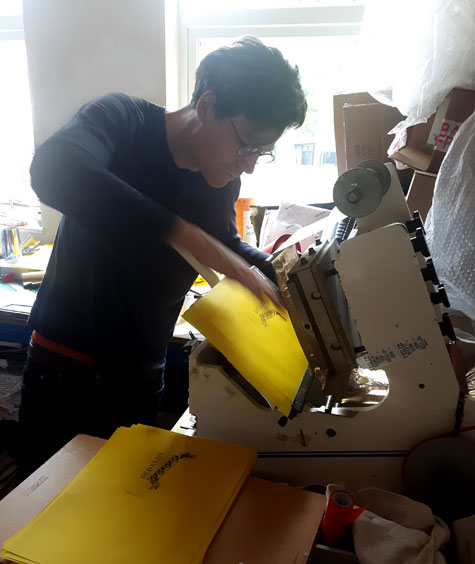
  • dedalus-foiling-action.jpg
    David Henningham 

    When we first caught up with David and Ping Henningham, of Henningham Family Press, they had just been commissioned to make a major public arts contribution to the Central Hall of Artists in Moscow.

    Fast forward a couple of years, and the duo behind this dynamic printing press are once again deep into an exciting new creative project – and getting knee deep in mud to do so.

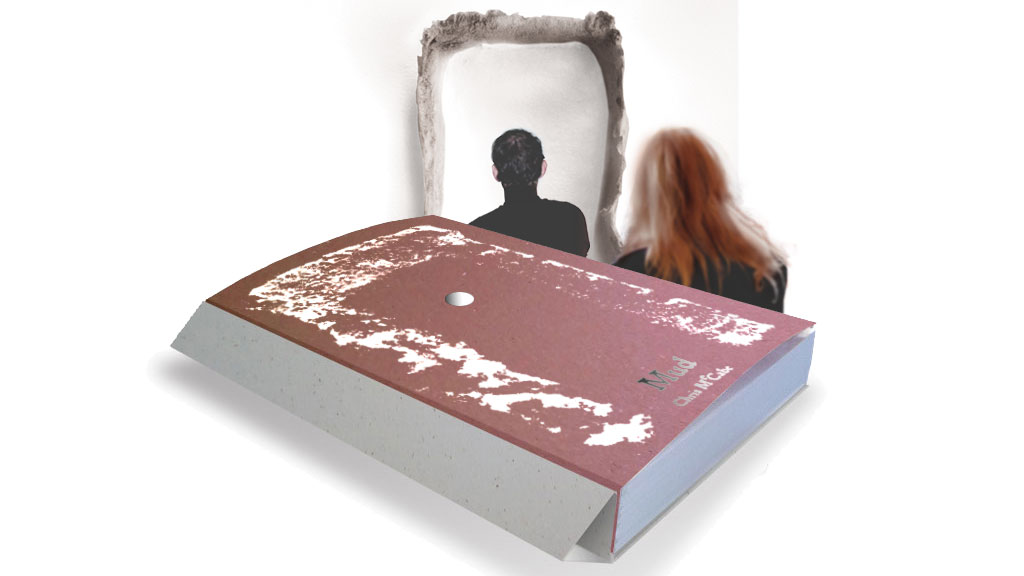
    ‘Mud’ is the new book by Chris McCabe, which follows his debut novel, Dedalus, also published by Henningham Family Press (HFP).

    The couple have been raising funds to support the publication of the book through a recently launched Kickstarter project. And yet, in typical HFP fashion, this is no ordinary printed book – but rather one that blurs the boundary between art and writing.

    kickstarter-image4.jpg
    ‘Mud’ – the new book by Chris McCabe, published by Henningham Family Press

    Described by the creative duo as ‘an Artists’ Book in exquisite handmade and paperback versions’, Nothing in the Rulebook caught up with David Henningham to find out more about the project.

    INTERVIEWER

    Tell us about Chris McCabe’s new book ‘Mud’ – and what you’re planning on doing with it.

    HENNINGHAM

    Mud is a story re-imagining Orpheus & Eurydice in contemporary London. Borak and Karissa must find a bubble buried in mud, somewhere. Along their way into the Underworld beneath Hampstead Heath, to scour the 24 types of mud, they are followed by their film crew and its odious Director. As they chance upon bones, bricks and talking Moles, they must restrain themselves from throttling each other. And falling in love all over again.

    We have begun a quest with Chris McCabe parallel to that of his characters underground; an addition to the conventional editing process. We’ve been collecting different types of London mud to use as pigments and salvaging a half-brick, involved in a car crash, to use as our printing block (the perfect metaphor for Borak and Kar’s relationship). We used the faces of the brick to cast Orphic shapes resembling thresholds, mounds and tunnels of the Underworld.

    This process will produce three versions of the book that use the same printed pages:

    • High-quality Paperback
    • Deluxe Hardback, representing a mud type with unique limited edition print
    • Deluxe Hardback, representing a mud type, in solander box with unique sculpture

    INTERVIEWER

    Why Mud?

    HENNINGHAM

    I can’t answer that, except to say that the notion there are 24 types of mud has totally changed the way I see the world. I keep spotting muds with extraordinary colour or texture and thinking ‘we missed that one!’ I suspect that somewhere in there, this sensation that language variegates experience of the world is “why Mud”.

    INTERVIEWER

    In an era of digital publishing, amid the rise of e-books and audiobooks; how important is it, do you think, that as readers we return to the physical value books have and invest in printed copies? Do you see your production of hand-made books to be a revolt against artifice or digitalisation?

    HENNINGHAM

    No, digital technology makes book production and selling cleaner, quicker, cheaper and easier at every stage, which is the most important aspect to us. Our handmade books are enabled by digital technology.

    Ebooks are just a copyright thing, they prevent creative opportunity in my experience, but audiobooks are interesting to us. We love moving texts into different creative forms. I like the fact that our books will be among the best someone will handle, and that there’s something you can only get from the book because that means it is a book that has fully exploited the form. But I’m not interested in dominating anything. If someone thinks books aren’t important to them, I’ll wave them on their merry way. If they don’t like stories, I refer them to a special watch list at the Dept of Culture, Media, Sport, Shopping and Lawnmowers.

    INTERVIEWER

    In your Kickstarter project, you say you believe artist-Writers shouldn’t just be producing radical words; but also radical means of production and distribution. Can you expand on this – is there a Marxist element to your publishing ethos?

    HENNINGHAM

    Not Marxist, although I’m sympathetic to the Socialist publishing aspirations of B.S. Johnson you can find in Jonathan Coe’s biography, and admire Marxist friends who find a way to navigate the book Market.

    What I mean by it is that, instead of approaching the current system of commissioning and selling books and trying to publish books that will change the world, the system itself must be changed in the process. Take diversity. Rooms full of privileged people are saying “how can we publish more diverse writers?” I suspect it isn’t working because the system is token operated. Not only are the people in the room almost all privileged, they begin by saying “how can we help these people?” The Hogarth Press had a fantastic record on publishing women writers. Because of what it was, not because of any policy. So if you want to make a Press that publishes X kind of writing, you need to make a Press the shape that will produce that writing. Not a mini-Corporate.

    INTERVIEWER

    How can aspiring artists and writers – or newly established publishing houses – reclaim the means of production and distribution from the corporate behemoths who dominate the publishing (and indeed wider media) landscape?

    HENNINGHAM

    The difference is between big organisations and partnerships of smaller organisations. Become a member of a group of smaller organisations and work together cooperatively if you want to take on the corporates.

    If you simply want to make a few things and get them out there, you just need to find the right printer (production) and attend DIY book or arts fairs (distribution).

    INTERVIEWER

    Can you talk us through the sensation of crafting one of your books – is there a connection, do you think, between publisher and physical book that goes beyond a desire to sell copies? And where does the line between art and writing collide and/or blur?

    HENNINGHAM

    When I’m binding I’m very much thinking with my hands. I’m sort of aware of language, and thoughts apparently located in my head, but mostly it’s my hands working almost independently. I also stopped thinking ahead much, I seem to know what to do next without planning.

    Afterwards, for me, it’s about getting the fruits of that process as close to readers as possible, but I suspect most publishers aren’t approaching it this way. They have babies, while I’m more of a midwife. Or a sorcerer.

    INTERVIEWER

    In many ways, the focus your project places on words influencing the physical design of the book – as well as the structure and form – makes this a thoroughly modernist piece of art and writing; yet the source material for the novel is from Ancient Greek mythology. What is the relationship, do you think, between the classical and the modern? And how important are the works of literary figures like James Joyce to informing any such debate on this topic?

    HENNINGHAM

    Well as you suggest, Ulysses took myth as its structure and embedded it in modernity. We don’t get equally influenced by all world mythologies, though. Some ancient stories are simply bizarre to us. It’s not just that we’re used to Greek myths, there’s something recognisable about the people and gods in them, and the themes, such as metamorphosis, we carry with us.

    In the Penelope section at the end of Dedalus (his sequel to Ulysses), I suspect Chris McCabe wrote a kind of manifesto for himself, about writing myth. If so, he’s delivered in spades with Mud.

    INTERVIEWER

    Can anything ever be truly ‘new’, ‘modern’, or ‘unique’?

    HENNINGHAM

    It’s interesting to push it to the other extreme; to try making something the opposite of unique. It will always have this stubborn singularity.

    INTERVIEWER

    What’s been your experience of using Kickstarter to support your project? What role do crowdfunding models have to play in the current publishing and artistic sectors?

    HENNINGHAM

    We have been able to share our excitement around a project while we are still genuinely excited about it. Marketing afterwards is fun, but it’s more about sustaining that excitement and sharing a finished product. Involving people in the process and having a way of updating them as we make things for the book changes it too. The rewards structure has obliterated the barrier between our trade and handmade versions.  

    Quick fire round!

    INTERVIEWER

    Modernism or post-modernism?

    HENNINGHAM

    Modernism

    INTERVIEWER

    Curl up with a book or head to an art gallery?

    HENNINGHAM

    Book

    INTERVIEWER

    Critically acclaimed or cult classic?

    HENNINGHAM

    Cult classic

    INTERVIEWER

    Most underrated writer/artist?

    HENNINGHAM

    Such a contested field! Agota Kristoff? Or I’d like to see Darker With The Lights On by David Hayden (which was acclaimed in the small press world) accepted wholeheartedly by mainstream booksellers and readers.

    INTERVIEWER

    Most overrated writer/artist?

    HENNINGHAM

    Again, such a contested field! J.K Rowling. So slow and clunky. Magic for people who don’t like to be surprised. Why bother. Ctrl+v Diana Wynne-Jones.

    INTERVIEWER

    Who is someone you think people should know more about?

    HENNINGHAM

    British Viceroy Robert Bulwer-Lytton was a famous poet and responsible for the deaths of between 6 and 13 million Indian subjects in the Late Victorian period.

    INTERVIEWER

    Could you write us a story in 6 words?

    HENNINGHAM

    Drawing road-markings made Doug’s handwriting taller.

    INTERVIEWER

    What 5-10 pieces of advice can you give to people thinking of exploring crowdfunding as a means of getting their writing or artwork out there?

    HENNINGHAM

    • Get advice and key questions from their representatives or online knowledge base and do everything they tell you to. They’ve done it a million times.
    • Contact 30 committed supporters and get them ready to pledge in the first 48 hours.
    • Involve people in a process. Make sure you are doing something for the project other than talking about money in that 30 days and make daily updates of the work in progress.
    • Have a theme derived from your project and apply it to all your reward names and updates.
    • Make a video. If it’s just you, a selfie stick and windows movie maker, that’s fine. Without it nobody really knows you.
    • Look out for trolls. If someone spends big, have a look at their identity before announcing you’ve hit your target and raise it with Kickstarter if you think they look suspicious.
    • There will also be spam.


    To find out more about Chris McCabe’s new novel, and to pledge your support for this fantastic project, please visit the Kickstarter page


  • 15 excellent short stories you can read for free right now

    Book and Stones

    Are you a literature addict looking for that sweet hit of literary ecstasy that comes from reading well-told stories? Are you also – like so many of us slaving away with ever-increasing work demands – short on time? Fortunately, we have just the thing for you that can satiate your craving for well-told, expertly-crafted fiction; bringing you tightly controlled beginnings, middles and endings in the time it takes to eat your lunch or smoke a cigarette (there’s a reason flash fiction used to be called smoke-long stories, after all).

    We’re talking, of course, of some of the finest short stories that you can read for free thanks to the wonders of the interwebs. There are untold thousands – probably millions (if not billions) of these pieces floating around in the digital ether, but to get you started we’ve compiled 15 of our favourites, mixing together writing from new and aspiring artists with established literary titans.

    Once you’ve had your fix, fear not! We also have many other collections of short stories you can read for free from legendary writers including J.M. Coetzee, Philip Roth and Alice Munro among others.

    And if you need even more literary satisfaction; we’re pretty sure you’ll find it thanks to some of these fantastic places you can read tens of thousands of literary texts completely legally and completely for free.

    Back to the matter at hand: check out these brilliantly crafted short tales from magazines around the world below.

    ‘That was back before, of course’ by Samuel Dodson

    short-stories-on-TSS-online-that-was-back-before-of-course

    “She never knew what Maxine wanted. But it started the moment Mark Dean emerged from all the rust. Then it ended with a knife and the sound of something scraping against metal, some sound almost like an animal.”

    Read the story for free courtesy of The TSS

    ‘The Semplica Girl Diaries’ by George Saunders

    “Work, work, work. Stupid work. Am so tired of work.”

    Read the story in The New Yorker

    ‘Bullet in the Brain’ by Tobias Wolff

    “The bullet is already in the brain; it won’t be outrun forever, or charmed to a halt. In the end it will do its work and leave the troubled skull behind, dragging its comet’s tail of memory and hope and talent and love into the marble hall of commerce. That can’t be helped.”

    Read for free online.

    ‘Broads’ by Roxane Gay

    “Jimmy Nolan has a thing for broads—loud, brassy women who sit with their legs open and drink beer straight from the bottle—women who always say exactly what they’re thinking and for better or worse, mean what they say.”

    Read it via Guernica.

    ‘Ganymede’ by Chelsea Harris

    “Tonight I am Venus. We’re sitting on top of the kitchen counters. Daddy hasn’t been back in days but I’m not worried.”

    Read it via Okay Donkey

    ‘Black Moons’ by Robert Wyatt Dunn

    black moons

    “There were some things you could only do in New York.”

    Read the story in Litro.

    ‘Tell-tale heart’ by Edgar Allen Poe

    “It is impossible to say how first the idea entered my brain; but once conceived, it haunted me day and night.”

    Read it courtesy of Project Gutenberg.

    ‘Goose’ by Chelsea Grasso

    “It’s okay, my goose. She will come back.”

    Read the story via Carve Magazine

    ‘Girls at play’ by Celeste Ng

    “This is how we play the game: pink means kissing; red means tongue. Green means up your shirt; blue means down his pants. Purple means in your mouth. Black means all the way.”

    Read the story thanks to Bellevue Literary Review

    ‘Anatomy of a burning thing’ by Monica Robinson

    “He was falling in on himself.”

    Read via Blanket Sea Magazine 

    ‘Hills like White Elephants’ by Ernest Hemingway

    “I said the mountains looked like white elephants. Wasn’t that bright?’”

    Read for free online. 

    ‘Fitting’ by Molly McConnell

    “I left a relationship because it was too tight. But once I was out, I wanted back in.”

    Read the story in Rabid Oak

    ‘The lady with the dog’ by Anton Chekhov

    “It was said that a new person had appeared on the sea-front: a lady with a little dog.”

    Read courtesy of Project Gutenberg.

    ‘Five baked beans’ by Katy Thornton

    “I had started wearing earrings again, after the break-up. Not that I hadn’t worn earrings because of him – I’m sure we never had a conversation about it. I guess at some point I’d grown out of wearing my green-skin inducing costume jewellery and decided only to wear jewellery with sentimental value.”

    Read thanks to Porridge Magazine

    ‘The Veldt’ by Ray Bradbury

    “‘Nothing’s too good for our children,’ George had said.”

    Read for free online

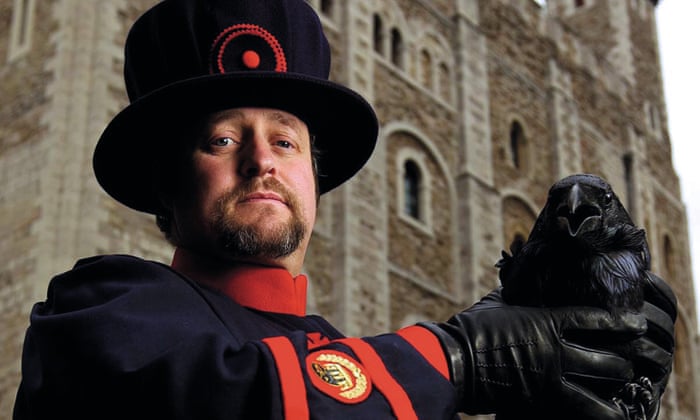
  • The Yeoman Warder of Her Majesty’s Royal Palace. Photo: 4th Estate

    Christoper Skaife lifts the lid on an impenetrable fortress and its guests

    Could the raven surpass dog as man’s best friend? It’s unlikely despite the bird’s usefulness, intelligence and uncanny ability to remember humans for life. But it’s perhaps what self-described Raven Master, Christopher Skaife wants to pose to us, the uninitiated.

    As hidden as the secret life of its ravens, The Tower of London is as mysterious a jewel as the treasure (stolen?) it houses. The lives of those held captive there are told in other stories; Hess, Raleigh, Casement, Krays. What sets Skaife apart from other writers though is the delicacy with which he lifts the veil to this primordial ‘black site’ of Tudor-era renditions. Skaife preserves the mystery while answering every question we could ever have about literature’s feathered doom harbinger.

    In The Raven Master, Skaife shares what almost ten years of chief raven husbandry has taught him about these misrepresented animals and the site its fabled will crumble to dust should the ravens ever depart. Skaife’s goal is to keep the Tower from crumbling by keeping the ravens satisfied. He calls it the ‘oddest job in Britain,’

    The Ravenmaster Photo: 4th Estate
    The Ravenmaster Photo: 4th Estate

    This book starts as many good books do: at 5.30am, when the Ravenmaster’s duties begin. Climbing the Flint Tower with the urgency of the commuters he can hear entering the city, wishing they’d used the toilet before they got on the train, Skaife hopes today will not be the day the ravens left. He breathes easy when he sees all seven ravens present and accounted.

    Starting with this apocalyptic prophecy unfulfilled Skaife propels the reader through ages as he describes the weight of his position – Yeoman Warder –  a title dating back to Henry VII. A position the young soldier couldn’t possibly have plotted a course towards when he joined the Army so he could go fire guns in the Falklands. It would lead to quarter century in the Forces, uneducated until the ravens zeroed in on their newest pupil.

    When we are introduced to those who rule the roost, they’re presented as if they were part of a crack team of chaotically good mercenaries: “Rocky. Male. Entered Tower Service July 2011.” Skaife separates his charges with the single-mindedness of the Birdman of Alcatraz even if he is the jailor of this prison and some novelists could learn from the deftness with which Skaife characterises a non-speaking rogue’s gallery with only a few tactical ‘Ghars’.

    With one eye on his flock, there’s a sense Skaife worries whether the position he’s lovingly fostered can weather the transforming fog rolling in from the Thames. A spiritual epilogue to this book might involve Skaife in dialogue with the Tower’s first yeoman explaining how he can reach more people with a tweet than ever conceived. Skaife chronicles all the post-war ravenmasters in an appendix which testifies to the author’s humility. The Tower (and its ravens) will succumb to the sieging modernisers. At the time of writing, beefeaters remain in dispute with their employers over a controversial pension change. Skaife’s sketch of a unglamourous royal palace will record this moment on the precipice so that if the ravens do in fact depart, something will remain in tact.

    ***
    The Ravenmaster by Christopher Skaife, published by Fourth Estate, is available at all good bookshops. 

  • Better Known

    At Nothing in the Rulebook, we love starting conversations and building new creative relationships. So we were thrilled to be invited onto a wonderful new podcast called Better Known Show, hosted by Ivan Wise, which seeks to uncover new things that guests think should be better known.

    As Ivan set out in an article for NITRB, “If you need a recommendation right now, there will be no shortage of suggestions. The problem is that far too many of them are exactly the same.”

    Well, we couldn’t agree more. On the show, we pick six things we think should be better known. If you don’t want to spoil the surprise – click the link and subscribe (on Android or iTunes), and check out our episode!

    But, if you don’t mind spoilers, read on!

    6 things that should be better known, according to Nothing in the Rulebook

    1. The Future Library project in Norway
    2. Dr Chuck Tingle Professor of Massage
    3. The bad sex in fiction awards
    4. No Alibis book shop http://www.noalibis.com
    5. Richard Serra’s “portend I slugten” at the Louisiana art gallery in Denmark http://channel.louisiana.dk/video/richard-serra-porten-i-slugten
    6. Josh Spiller’s IF comic book anthology on superheroes
      http://www.joshspillercomics.tumblr.com

    And a few things that we mention that almost made the cut:

    Now what are you waiting for? Go listen to the episode!

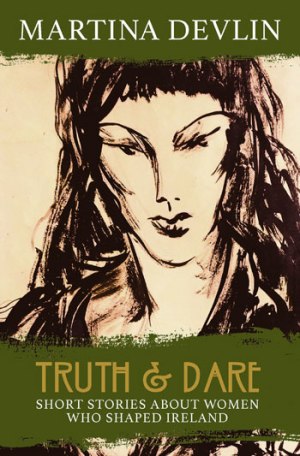
  • Cover-Truth-Dare-Martina-Devlin.jpg

    Martina Devlin describes the eleven Irish women featured in her collection Truth and Dare as her ‘heroes’. Her admiration is evident; it is impossible to read this book and not discover something interesting. Devlin’s impressive research is fuelled by her conviction that these women were overlooked – sometimes even blatantly abused – in their own lifetimes. The collection is an attempt to redress the balance and give these women the recognition they deserve. It’s compelling and timely, particularly after the 2018 Irish Abortion Referendum, and is full of powerful moments. In Nana’s Ark’, Nana’s father smuggles her onto a merchant ship inside a chest stuffed with wool so that she can attend a convent school in France. In ‘Tucked Away’, two sisters burn to death at a society dance when the crinoline of their dresses catches a spark from the fireplace. Devlin shows us the underbelly of history, tells it from perspectives normally suppressed or dismissed, and it makes for refreshing reading.

    It’s an ambitious goal, rejuvenating the legacies of eleven different historical figures within two hundred and sixty pages, and perhaps at times Devlin stretches herself thinly. In her determination to do the lives of the women justice, she prefaces each story with a detailed non-fiction biography and wraps it up with an italicised summation of their subject’s impact on Irish society. In the introduction to the collection, Devlin admits that she was unsure whether to write the book as fiction or non-fiction. ‘I decided on fiction because of the uncanny hold stories have over us,’ she writes. ‘Fiction is laced with enchantment. It hums with energy. It has the power to transport readers – to let us inhabit someone else’s life. Stories connect us with one another on a more intimate level than history or biography allows, creating space for magic to happen – the imaginative leap.’ In fact, Devlin’s storytelling is compelling enough to render the biographies unnecessary. The stories are short and dense, filled with context and historical knowledge, but the best moments are those that are emotional and human. Mary Ann McCracken is the only member of her family to walk with her condemned brother to the scaffold. Incarcerated Hanna Sheehy Skeffington is visited mid-hunger-strike by the ghost of her dead husband. It is only his company that keeps her from imagining delicious meals and distracts her from the cup of congealed tea in the corner. In these moments, the transformative effect Devlin sets out to create begins to emerge.

    While fiction ‘brings history to life’, it does also have limitations. Readers are unlikely to be able to inhale facts from a story the same way they would from a reference book, though from a fictional account of someone’s life they are likely to get much else: atmosphere, context etc. Devlin is aware of these limitations, stating in her introduction that ‘none of these stories represent the total sum of the woman concerned. After all, each of them led fascinating and productive lives, whereas a short story can do no more than filter light towards some element or other which caught my attention.’ The stories are most successful when Devlin realises this point and reduces her own scope, choosing one or two moments within a person’s life and using them to paint a human, rather than a heroine.

    In ‘Somebody’, featuring activist Anna Parnell (1852–1911) and ‘No Other Place’, about writer Alice Milligan (1866-1953), Devlin appears to do just this. In each, she describes a long scene – a visit to the pawnbroker’s, a conversation with a policeman over a cup of tea – and uses objects to trigger memories, a line of dialogue to open up the character and invite the reader into their past. This method is more satisfying for a historical short story and is well-executed by Devlin. Sometimes, the stories are so detailed they become stationary tableaus – revealing and beautifully described – but slightly overwhelmed by biography. The technique would be hard to sustain as a writer and difficult to absorb as a reader in anything longer than a short story but are probably a result of its form and the need to be concise. Devlin can’t draw it out because she doesn’t have time but, by unlocking information with imagery, manages to convey an extraordinary amount of research in very few pages.

    The concision is admirable but it is possible that, in Truth and Dare, Devlin has the making of eleven novels rather than a collection of short stories. The content is arresting and disturbing – the description of Hanna Sheehy Skeffington dreading her impending force-feeding is particularly brutal – and could easily withstand a more thorough examination. Devlin is an expert researcher and prolific writer, having already written nine novels and several short story collections. Truth and Dare is a tantalising hint as to what could be possible, almost a catalogue of stories waiting to be novels or biopic movies starring Meryl Streep. At this time, with these characters, I’m sure a lot of people would buy tickets.

    About the reviewer

    Ellen Lavelle is a postgraduate student on The University of Warwick Writing Programme. An aspiring novelist and screenwriter, she has worked with The Young Journalist Academy since the age of fourteen, writing articles and making short films for their website. She’s currently working on a crime novel, a historical fiction novel and the script for a period drama. She interviews authors for her blog and you can follow her @ellenrlavelle on Twitter.

  • Dungeons and Dragons Dice

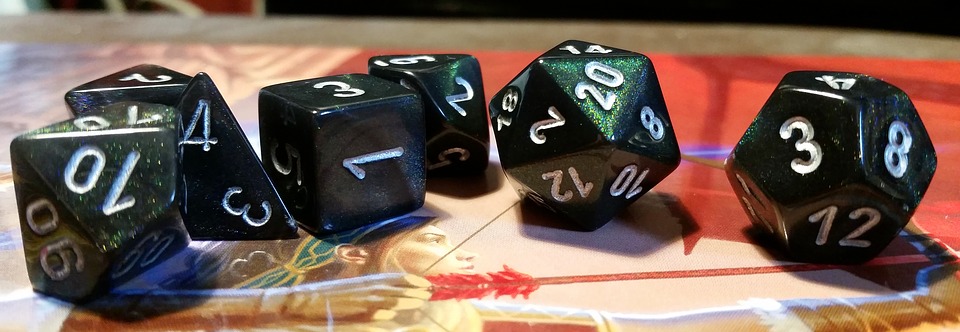
    Pssst… are you playing Dungeons & Dragons yet? In case you didn’t know, it’s not just for ‘nerds’ any more, hiding in their bedrooms with stacks upon stacks of impenetrable lore. These days, D&D has experienced a massive resurgence — partially thanks to Netflix nostalgia machine Stranger Things — and is now the focus of some of the most watched podcasts on the internet, played by stars like Magic Mike’s Joe Manganiello, Daredevil’s Deborah Ann Woll and action superstar Vin Diesel. Groups across the country are springing up and struggling to make room for massive influxes of players.

    That’s because D&D is buckets of fun, but it’s also a fantastic tool for writers, allowing them to sharpen their craft without even thinking about it. I started playing D&D around 18 months ago — first as a player-character, and then embarking on a year-long campaign as the group’s dungeon master. The benefit for writers is present on both sides of the screen, whether you’re taking your Level 5 Fighter for a romp through the Underdark or plotting your players’ demise at the hands of Strahd von Zarovich, so whichever way you’re taking part, there’s plenty of opportunity to learn a thing or two.

    Stranger_Things_logo.png
    D&D has seen a massive resurgence in recent years, partially thanks to Netflix nostalgia machine Stranger Things

    But wait, the treasure’s over this way!

    As a player or a dungeon master (DM, if you’re being technical about it), one of the first things you’ll need to get down is improvising, and being quick about it. When there are multiple voices at the table, and dragons have gotta get slain, there’s no time for extensive debate. So, if the DM throws in an assassination attempt on your way back to Waterdeep, or your party’s dwarven warlock decides to hijack the party’s boat, you need to figure out how you’re going to react.

    That quick-fire storytelling can be really helpful when it comes to your own writing, especially when you find characters wandering off in their own direction, or a plot thread that seems to be steadily gaining a life of its own. Don’t be afraid to see where the rabbit hole takes you; a little improv can take your story in new and exciting directions.

    Dungeons and Dragons dog.jpg
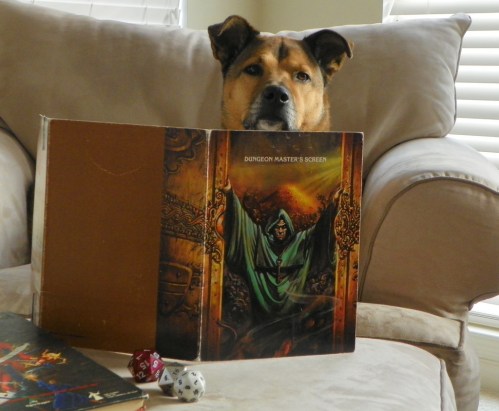
    As with writing, mastering D&D requires preparation – especially if your DM happens to enjoy curveballs (or, indeed, balls of any description)

    Preparation is key

     Playing the role of the DM? You’ll need to make sure you’re prepared for your next session. Even if you’re running a module, also known as a pre-written campaign, you’ll need to read through the sections you’ll be handling before your session. It’s often helpful to draft a few pieces of dialogue or something to set the scene, and having that ‘prep time’ in mind can give you the perfect excuse to carve out time in your weekly schedule to write.

    It’s also worth remembering that you’ll probably toss out about 70% of what you had planned for the session, based on how your group react, but that’s okay — after all, that’s what editing is like most of the time.

    Accents maketh the monk

    D&D is also your opportunity to do really, really silly accents. I’m currently playing a Grave Cleric called Gwendolyn who sounds like she’s from Merthyr Tydfil, and while it may seem like an excuse to play the fool, giving my character an accent is one extra level of separation for me. As soon as I start talking like Gwendolyn, I find it much easier to inhabit her shoes, figure out what her motivations are and make decisions that are wholly within her character, rather than what I would do personally — a handy trick for writing difficult passages. The same goes for DMs; giving non-player characters a distinctive accent that’s different from your own voice can help them become more than just Goon #1, and you might be able to build a compelling story around them.

    This is our story, nobody else’s

    Perhaps one of D&D’s biggest appeals (besides an excuse to hang out, eat junk food and sink a few beers) is the fact that it’s a story everyone can get involved with. Working with other people to effectively create and tell a story is ridiculously good fun, and especially if you’ve been struggling to find the time to start writing, it can help you satisfy that creative itch. Even if you’re playing a classic module, or a campaign you’ve completed with a different group, the story is different every time.

    Bardic inspiration

    Once you step away from the table and put the d20s back in your bag, the fun doesn’t end there. When I get back from a session, I’m filled with ideas for what might happen next time, and sometimes that even translates into a new story or something to try out in an existing piece of work. It’s thanks to D&D that I’ve felt more creative in those past 18 months than I have in years, whether I’m devising a new campaign scenario or coming up with a backstory for my latest character.

    So, where to start…

    While D&D can seem overwhelming to the uninitiated at first, the main thing to remember is that it’s a game, with the primary purpose of having fun with some friends. Creating a new character shouldn’t take hours upon hours (unless you want it to!) but should serve as a springboard for your next adventure. Sit back, relax, pick up a pencil and see where it takes you – whether that’s fighting bandits, sourcing magical ingredients or changing the multiverse as you know it.

     About the author of this post

    13231227_10209425815752741_151755471_n

    Robyn Hardman is a writer, blogger and a PR and marketing consultant based in the Cotswolds. When she’s not writing press releases about silly cars, she’s usually in the pit at your local punk show. She tweets as @twobeatsoff.

  • panoramafromcathedralroofi
    Berlin

    Berlin is not what you’d call ‘chic’. A lot of the city was flattened in the war and the subsequent Wall drama kept it on its toes, driven by practicality rather than aesthetics. It’s fairly square and industrial, with huge signs of corporations stretching over streets and into the sky. Occasionally, however, you find an old building that remains un-bombed – a relic from another age. I was there last weekend, with two old friends, Bex and Charlotte. Our apartment was in one of these old structures, above an Indian restaurant. Inside, there was a wide, shallow-stepped staircase, hidden by huge heavy oak doors.

    Our host, Gesine, emerged from the darkness of the flat with a runny nose and sore throat.

    ‘I feel like shit,’ she said. ‘Also the apartment is very historical. Look at the bullet holes in the door. They are from the second world war.’

    We dragged our cases back out to look at the holes. There they were. Then we dragged everything back in.

    The flat was small and massive at the same time. There was a tiny, low-ceilinged hallway, full of piles of miscellany everywhere. Sewing equipment, boxes of beer, creepy dolls with cracked faces – if Gesine owned something, she stacked it, normally under something heavier. But if you could break through the hall, you reached the rooms prepared for us, which were huge and light but still weird, with cinema seats and paintings of wobbly fruit.

    ‘I did the bathroom myself,’ Gesine said. She had, as well. She’d signed the painted tiles with her name and gave us a bucket to take into the shower. I’m not sure why.

    But we didn’t come all the way to Berlin to look at tiles and wobbly fruit. We came for food and culture and more food.

    Brandenburg Tor.jpg
    Brandenburg Gate

    Charlotte’s boyfriend, Andy, is a good cook who is picky about where he eats. He refuses to go to restaurants that have pictures of their food on posters outside or on the menu. In Berlin, Andy would starve. If it wasn’t a photograph of schnitzel, it was a portion of fries, or a burger or a pizza. Every restaurant in Mitte, it seemed, threw photographic evidence of their cooking at you. Of course, it’s our own fault. We can’t speak German. If they told us they served Hähnchen or Kartoffeln or Eintopf, we wouldn’t know what the hell that was, so of course they have to label everything. This became a recurring theme of the trip: language shame. The locals looked at us, knew we were English and started to speak in English. I’d downloaded Duolingo on my phone, brought a phrasebook with me, but I kept getting zwei and drei mixed up and they had to go back for another glass. I was causing pain and confusion, making everyone’s lives difficult, but still I persisted because I am English and ashamed.

    The waiting staff were using a lot of English – the English seemed to be the only people out. The streets were wide and deserted. We walked a few miles a day, from one landmark to another, without seeing many people. Then we’d stop for lunch or dinner and hear someone at the next table order ‘two ham and mushroom pizzas, please.’ So where were the Germans? Probably inside because it was freezing. It was only the English, in their bobble hats, clogging up the Straßen.

    It got me thinking about the ways people are the same and the ways people are different. When I lived in Paris, I met a guy from a tribe in Indonesia. He was in my French language class and wanted to show us pictures of the particular kind of batik (dyed cloth) his tribe were famous for producing but he couldn’t because the projector wasn’t working. He pressed a few buttons, shrugged and sat down with his arms folded in a way that reminded me of the boys at my high school in Lincolnshire. Now, when I travel, I like to spot the domestic arguments in languages I can’t understand. Mitsuko having a go at Akihiko because he’s put the hand sanitizer in the wrong pocket of the rucksack and now she can’t find it, daughters getting ratty with their fathers in Swahili. It makes me feel good, the idea that no matter where we come from or the language we speak, we’re all basically the same. It makes me feel good but I don’t know if it’s true – not anymore.

    A lot of things have happened recently that have made me think my comfortable truth is a lie. I was in Paris when the Brexit vote was announced, had a depressing meal out with friends where we all stared into our pizza and wondered what the hell was happening. And now, thirty years after the Berlin Wall came down, we have a man in America trying to put another one up. We’re not all the same. People think insane things, do terrible things as a result, and from the outside, it’s sometimes difficult to tell who they are.

    The Memorial to the Murdered Jews of Europe is just along the road from the Brandenburg Tor, so we did both in an afternoon. The Memorial is next to a building site which, to be honest, is the same for most things in Berlin. It’s a load of grey blocks of various shapes and heights, assembled in a dip so they look more or less level from the top, with a museum underneath.

    ‘The vibe’s a bit off,’ Charlotte said, as we stared out at the cubes. A group of tourists were taking selfies as they stood on the blocks. ‘It’s a bit weird. The way it’s just here, in the middle of everything.’

    On the other side of the monument I could see the light of a Subway sandwich shop. We went down into the museum and it seemed clear, then, that that was the point. The people getting murdered were ordinary and the people doing the murdering were ordinary too. You stare into the faces of these people and you see shop assistants, student, doctors, teachers. Then you come out of the museum and you’re back on Ebertstraße, buses rolling past. We like our evil at the edges of the city, where we know where it is, but it walks among us, sits at the next table, gets on the train behind us. You’d think we’d have learned by now that evil doesn’t come in a uniform. It’s in that moment, when we reduce a person to one thing, rather than a load of contradictions, that we do the damage.

    The more you learn about nationalism and monarchy and all that, the more you realise what a huge mess it is. On our final day, we went to Charlottenburg Palace which is basically the German Versailles and was even built by the same architect, Dutchman Johann Friedrich von Eosander. Charlottenburg was built in the 17th century under the instruction of Sophie Charlotte, wife of King Fredreich I and sister to George I of England. It’s just the one family tree, you see, spanning the whole of Europe. It gets even worse when Queen Victoria starts having children, planting them in every royal dynasty she can. They all copy each other’s interior design skills too. It’s all impressive, but there’s no escaping the fact that these palaces do look the same. They share architects, employ the same engravers, all dabble in chinoiserie and have whole rooms devoted to their porcelain. One room in Charlottenburg resembled Gesine’s flat, with chinoiserie ornaments piled high one on top of the other, duplicated a million times over by the mirror panelling and reflections in the golden gilt.

    charlottenburg
    Charlottenburg Palace. “Waiting for it all to come crashing down.”

    ‘I’m just waiting for it all to come crashing down,’ Charlotte whispered.

    Up at the top, near the ceiling, was a stuffed stag lunging down the wall towards the vases. No placard or segment in the audio guide – just the corpse with glassy eyes.


    Upstairs, there was an exhibition about the origin of the Prussian royal family. In order to pad out their lineage, they made up a person called Otto who was a great fighter and won a load of battles. There were painting and engravings in his honour. He was amazing, Otto. He just didn’t exist which, when you’re establishing a royal house, apparently doesn’t matter.

    Finally, on our way to the airport at the end of the trip, I got my domestic argument. Behind us on the train was a woman with two small wailing children, one of which was brandishing a fully-functioning toy shop till, complete with flapping receipt paper. At one point, the woman, who I assumed to be his grandmother, grabbed it off him and shouted. When this did not silence the children, she FaceTimed a man who must have been their father or grandfather, who screamed at them in Arabic. She then shouted at them again and they disembarked with us at the airport, till training behind. Perhaps us the kid was going to charge us for his screaming? We got a move on before we ran up a bill.

    If there’s one thing that’s going to unite people, it’s bad service from an airline. Our airline of choice seemed keen to strip everything right back to basics, doing just enough to keep you airborne, while a member of cabin crew wheeled a trolley of cut-price cologne down the aisle. Before we even boarded, they told us our flight would be delayed, then that it wasn’t, then kept us all cooped up in the tiny area beyond security for an hour. When we finally got on the plane, the ice on the wings had to be thawed. They did this slowly, with a truck that seemed to be powered by a single AA battery.

    ‘They charged us an extra thirty quid so we could sit together,’ the couple in the row in front muttered to the German woman next to me. ‘We’re never flying with this lot again,’ they said.

    ‘We always say that and yet we always do,’ said the man next to them. He’s right – we’re all the same really. Except for the ones of us that aren’t.

    About the author of this article

    Ellen Lavelle

    Ellen Lavelle is a postgraduate student on The University of Warwick Writing Programme. An aspiring novelist and screenwriter, she has worked with The Young Journalist Academy since the age of fourteen, writing articles and making short films for their website. She’s currently working on a crime novel, a historical fiction novel and the script for a period drama. She interviews authors for her blog and you can follow her @ellenrlavelleon Twitter.

  • KMElkes.jpg

    Writing flash fiction takes skill, precision and – perhaps more than anything – hard work and dedication. When done well, these micro-stories can throw the reader in and out of the human condition in profound and unpredictable ways.

    Some have said flash fiction stories are a part of our social media age, our insta-lifestyles, our shortened attention spans, our handheld devices, our micro-making of everything. Yet, in a world preciously short of big ideas, we could do with some of the big ideas contained within these short tales. And we could do with more

    Nothing in the Rulebook caught up with one of these writers willing to put pen to paper to bring these short tales – and their ideas – to us.

    K.M. Elkes’s short fiction has won (or been placed) in a number of international writing competitions including the Manchester Fiction Prize, The Fish Publishing Flash Prize, the Bridport Prize and the PinDrop Prize, as well as appearing in more than 30 anthologies. His work has also been published in literary magazines such as UnthologyThe Lonely CrowdStructo and Litro. A flash fiction collection All That Is Between Us will be published in paperback by AdHoc Fiction in 2019. He is a short story tutor for Comma Press and his work has also been used on schools and college curriculum in USA and Hong Kong.

    Elkes lives and works in the West Country, UK. A recipient of an Arts Council England award, he is currently working on a debut short story collection and a novel. As a writer with a rural working class upbringing, his work often reflects marginalised voices and liminal places.

    INTERVIEWER

    Tell me about yourself, where you live and your background/lifestyle

    ELKES

    In summary – writer, teacher, musician, traveller, ginger, potty-mouth. Not always in that order. I currently live in Bristol, but my background is rural working-class Shropshire.

    INTERVIEWER

    Is writing your first love, or do you have another passion?

    ELKES

    Writing is one of the things, like making music, that I cannot not do. It’s more complicated than love or passion.

    INTERVIEWER

    Who inspires you?

    ELKES

    Single-minded people – I’m too ‘jack of all trades, master of none’, so I draw inspiration from writers, particularly women or those from less privileged backgrounds, who have had the singleness of vision to succeed against the odds.
    And pole vaulters – their sport is rife with symbolism.

    INTERVIEWER

    Who were your early teachers?

    ELKES

    I went to a tiny rural primary school in Shropshire that had about 30 children and two teachers. It was stuck in a 1930s time warp – two classrooms, no inside toilets, dinners delivered lukewarm on the back of a van. But that school and those teachers instilled a hunger for reading in me that has been the catalyst for many things.

    INTERVIEWER

    What draws you to flash fiction?

    ELKES

    As a form based around concision, it combines poetry’s attention to language and rhythm with the prose tools of plot, characterisation, dialogue etc. Within that there are infinite colours, moods and stories, so what’s not to like?

    INTERVIEWER

    One of the joys of English is that, while its huge vocabulary can be deployed in mesmerising Joycean arpeggios, it can just as easily concentrate its meaning in a few well chosen words. In the age of Twitter, why do you think so many people are increasingly attracted to the brevity of short, flash or ‘micro’ fiction?

    ELKES

    I’m not a fan of the notion that people have short attention spans so they are attracted to shorter forms. Just because something is short doesn’t mean it requires less concentration and effort to read. I would hope more people are attracted to the form because they recognise it can produce genuinely good writing. The rise of social media and digital platforms for writing has no doubt helped.

    INTERVIEWER

    What do you think a story needs in order for it to be a story?

    ELKES

    Movement. Not necessarily plot, but a sense that something has changed.

    INTERVIEWER

    How easy do you find it to move between different writing forms/mediums – can you balance writing a novel with crafting flash fiction or short stories?

    ELKES

    Transitioning between different forms is not difficult. Writers who claim otherwise are probably just procrastinating. In fact, changing forms is a good way to give the kaleidoscope a shake to find new ideas. What is difficult, sometimes, is the act of writing itself, whatever the form.

    INTERVIEWER

    How do you maintain your motivation for writing?

    ELKES

    By reflecting at length on the fact that I don’t have motivation to carry out just about any other form of gainful employment.

    Also by dreaming of the day when I can walk into a bookshop and find a section devoted just to short fiction, rather than having to play ‘hunt the collections’ among the general fiction…

    INTERVIEWER

    Do you feel writers should feel any ethical responsibility in their roles?

    ELKES

    I don’t think it is ethical for a writer to create ethical responsibilities for other writers – they need to deal with their own shit.

    Having said that it grinds my gears when well-established writers phone it in for cash. Such as when novelists supply distinctly average ‘been-in-the-bottom-drawer-awhile’ pieces for occasional short story specials in newspapers or magazines. In this case, maybe the ethical motto should be: ‘Do your best or don’t bother’.

    INTERVIEWER

    Do you have a specific audience in mind when you write?

    ELKES

    No. Except that maybe the fantastic audience who came to a live literary event I did in Bath last year and laughed like drains at my funny stuff and emoted all over my sad pieces. They can come and sit in the room while I’m writing (if they bring their own chairs).

    INTERVIEWER

    What are your thoughts on some of the general trends within the writing industry (if we can call it thus)? Is there anything in particular you see as being potentially future-defining?

    ELKES

    The trend to encourage more diversity in writing and publishing is something I would like to see continuing. As someone from a working-class background, I know there are barriers still in place. But I also know I have to check what privileges I have as a white male. Even those at the epicentre of the white, male, middle-class, London-dominated and Oxbridge educated system must acknowledge there’s a better way. Done right, I think more diversity would mean more readers, more books sold, a more robust industry.

    Another big challenge is how writers, whose average income from books continues to decline, can earn enough to keep creating. There is an unrealistic expectation in society that creative work should merely be another form of free content.

    INTERVIEWER

    Could you tell us a little about some of the future projects you’re working on?

    ELKES

    I’m editing a collection of flash fiction called All That Is Between Us which will be published by Ad Hoc Fiction in Spring 2019. I’m also working on finishing a short story collection and starting a novel.

    INTERVIEWER

    What are your 5-10 top tips for writers of flash fiction?

    ELKES

    1. Give yourself permission to write crap, then use that freedom to write well.
    2. Read lots of short fiction in collections and online to learn more about what works and what doesn’t
    3. Don’t grab at the first idea for a story, let things brew for just a little while longer.
    4. Write hot, edit cold
    5. Ignore lists of top tips for short fiction writers and write whatever feels risky and surprises you.

    INTERVIEWER

    Could you write us a story in 6 words?

    ELKES

    Instagram and Twitter allow this:  #Thewomandreamedofstrollingdampwintermeadowswithherlatehusbandbefore wakingtofindherloverwashingherfeet


  • Grand Canyon Better Known.jpg
    “We soon learn that Shakespeare, the Grand Canyon and the Bible are worthy of our attention because everyone keeps telling us so.”

    If you need a recommendation right now, there will be no shortage of suggestions. The problem is that far too many of them are exactly the same. For instance, in looking for something to watch on a Saturday night, your search for “greatest films” will be answered with an infinity of lists compiled with varying degrees of judgement but surprising levels of consistency. Automated recommendations generally just give you more of what you have already asked for. Critical ones seem to clone themselves, as if unwilling to depart from an agreed line. Citizen Kane is repeatedly right up there, according to the American Film Institute (number 1 film of all time), Sight and Sound (number 2), Hollywood Reporter (3) and Rotten Tomatoes (4). But what if you’ve already seen it, and didn’t even think it was that good? What then?

    By adulthood, most of us are aware of the historical figures, places and books represented by what can loosely be categorised as the canon: the list that you were taught at school, that books and newspapers tell you are the best and most important. Sometimes, we agree with them, sometimes not, but we soon learn that Shakespeare, the Grand Canyon and the Bible are worthy of our attention because everyone keeps telling us so. It is supplemented by a popular canon, as expressed by your social media, of more ephemeral, instant pleasures, that may have an unstoppable democratic force, but that does not mean that you always share them.

    Any canon is important, as it provides a society with a shared catalogue of experiences and reference points; otherwise, how does one know what to speak about to a stranger? But your curiosity about the world need not stop there. How much more interesting, every so often, to put the canon to one side, and say to someone, “Tell me about a great book that I’ve never heard of.”

    My podcast Better Known sets out to ask people what they love that the rest of the world does not seem to value. In short: what should be better known?

    People are keen to answer the question, firstly because we all love talking about what we are passionate about, but also because we do not always get the opportunity. Most people have quirks in their tastes that are slightly unorthodox but we rarely get a chance to talk about our obscure preferences, precisely because other people are not familiar with them. Generally, in conversation, most people are looking to have their beliefs confirmed than challenged, and so they may not be in the mood to hear anything new. Instead, much of our social life only covers those topics which we know are popular and thus safe, and so it is easy to live one’s life with others only through the pleasures which the news picks out for us.

    Through dozens of interviews, I have heard about the fascinating objects, events and ideas which guests hold dear and feels compelled to impress upon other people. The novelist Joanne Harris spoke about the Child Ballads, hundreds of traditional stories collected in the nineteenth century. Biographer Lucy Hughes-Hallett discussed a book which her mother had written about a nineteenth century dinner party of writers and artists. Writer Ben Schott explained why movie posters look the way they do. It has been inspiring to hear and then take up these suggestions of things which I would otherwise have never known about.

    For some guests, the obscurity of their choice provides a pleasure. They like the fact that they have uncovered something that others have not. For others, they enjoy the obscurity, particularly of a place, for a more practical reason: if lots of people knew about the place, then its serenity, part of its appeal, would be ruined. But, most of all, they make their choices because we are all individuals, and sometimes what we like most of all may not have officially made the grade, but is nonetheless worthy of their – and maybe your – time.

    Each episode aims to bring a person with private obscure passions to an audience eager to learn more about what is best in the world. Each guest selects six things, and so you begin to get a real sense of who they are through the range of their choices without necessarily knowing particular facts about them, their job or their life. By way of contrast, and to ensure we do not drown in positivity, they also get to pick one thing which they think should be less well known and it is frequently a highlight for me to hear someone go from such radiant optimism to unbridled cynicism so rapidly. Picnics, liver and jeans are among those proposed as being overrated. But the focus always then returns to what they like.

    It is easy, as an adult, to stop learning anything new, and to exist endlessly off inspiration from the past. If you want to remain curious about the world, and continue to be inspired, you have to make an active effort. Better Known aims to be an entertaining introduction into a world of inspiration that you previously knew little about. You will not agree with all recommendations, but you will hopefully learn something new. After all, how many more endorsements for Citizen Kane does one need?

    About the author of this article

    IW.jpgIvan Wise presents the Better Known podcast (www.betterknown.co.uk). He is a former editor of The Shavian, the journal of the George Bernard Shaw Society, about which he has written for the Times Literary Supplement, Times Higher Educational Supplement and The Guardian website, and was the expert witness on an episode of BBC Radio 4’s Great Lives. He works in the charity sector, for Think Ahead, a mental health organisation that recruits and trains graduates to become social workers.