Two titles from the new Ladybird book series, published by Penguin
Book publisher Penguin has launched a new series of spoof Ladybird book titles, modelled on the Peter and Jane learning reading books from the 1960s and 70s.
The eight books include ‘The Ladybird Book of Sheds’, ‘The Ladybird Book of the Hipster’, and ‘The Ladybird Book of the Mid-Life Crisis’, as well as ‘How it Works: The Husband’ and ‘The Ladybird Book of Mindfulness’. They feature original Ladybird artwork alongside new, deadpan text from Jason Hazeley and Joel Morris.
“Leanne has been staring at this beautiful tree for five hours. She was meant to be in the office. Tomorrow she will be fired. In this way, mindfulness has solved her work-related stress,” goes the mindfulness spoof, later adding, alongside an image of a woman in a field of flowers: “Sophie is concentrating on her breath. It smells of Frazzles. She says she has light for breakfast, air for lunch and love for supper, but Sophie has also secretly had some Frazzles.”
Book sellers have already shifted over 600,000 copies of the mini-hardbacks in less than two months, as people rush to fill stockings for Christmas, according to book sales monitor Nielsen.
All eight of the titles are in the top 50 selling books, with the biggest sellers – ‘How It Works: The Husband’, and ‘How It Works: The Wife’ – both in the top 10.
Penguin originally printed 15,000 copies of each title, but the publisher now has over 1.5 million copies in print. Some bookstores have reported struggling to get their hands on stock, with the titles proving so popular.
At Waterstones, non-fiction buyer Richard Humphreys said the chain was doing “amazingly well” with the spoof Ladybird books. “These strong sales are down to a number of factors: it’s been Ladybird’s 100th anniversary this year and almost everybody will have a fond memory of the Ladybird books of their childhood,” he said.
But this has been done before, hasn’t it?
While Penguin and others count revenues from these books, many will be inclined to think they have seen something similar before.
In 2014, artist Miriam Elia was behind the runaway success of her satirical art book, ‘We Go to the Gallery’ – a spoof version of the same Ladybird books Penguin is now spoofing itself.
In 44 pages, Elia poked fun at the art world, using simple scenes reminiscent of the Peter and Jane series alongside new vocabulary at the bottom of each page. Described in The Guardian as “funny, smart and – to any parent who has tried to introduce small children to modern art – excruciatingly recognisable”.
Miriam Elia – ‘We Go to the Gallery’
“The rubbish smells,” says the girl, standing by a binbag installation. “It’s the stench of our decaying Western civilisation,” says Mummy.
Elia raised £5000 through Kickstarter to publish the book, marketing the idea by putting sample pages out on social media. By the time the first edition of 1000 books had been released, it had gone viral.
Miriam Elia – ‘We Go to the Gallery’
Those with memories of this will remember that Penguin did not take too kindly to Elia’s ingenuity, threatening her with court action to seize the books and have them pulped.
“It was really distressing,” she says. “I’m not a very professional person. Millions of people around the world were sharing pages of the book, but nobody knew what it was.”
In an attempt to divert away from legal proceedings, Elia rebranded the books under the publishing title ‘Dung Beetle Limited’.
“We set up Dung Beetle Limited as a joke,” she laughs, “and it’s become a corporation with a ‘fulfilment centre’ to send out the books.” By we, she means herself and her older brother, Ezra, who is cited as co-author, and with whom she created a previous hit: The Diary of Edward the Hamster, 1990 to 1990. Their childhood memories of owning a hamster were the basis of this mordant story of an abused pet, which began life as a satire for Radio 4 before becoming a Sony-nominated animation and a book. It is a memorial to the suffering of the only pet the siblings were allowed growing up in north London, when they would really have preferred a dog. “Wednesday May 5: Why exist?” writes Edward. “Wednesday May 7: Two of them came today, dragged me out of my cage and put me in some kind of improvised maze made out of books and old toilet rolls.”
Elia hits back at book publisher
The similarities between Penguin’s new book series and the Dung Beetle copy they threatened legal action over have not been missed by the artist.
In a brilliant, scathing rebuttal on her website, Elia writes:
“Penguin books […] were right to threaten me with legal action when I first released We Go to the Gallery, and right also to force me to pulp all remaining copies of the first edition. They were right to call my work morally bankrupt (which it is), and infer that it would corrupt the minds of young children (which it certainly has). They were right also to lie about the fact they owned the copyright to the original illustrations, because to do good, sometimes you have to be bad.
Indeed in the long run, independent artists like myself are worthless to the national economy, because Penguin employs more people and therefore feeds more children, who will read Ladybird books. I have learnt my lesson. I have learnt that Penguin are a force for goodness, innocence and purity in this shitcan we call real life, and that I was mentally deranged to attempt an upturn of the status quo. In the future I will always ask for permission before I decide to rip the piss. I would also like to apologise to the teams of lawyers who nobly slogged night and day to crush my artistic integrity. Without their weighty correspondences I would never have gained the means to see the error of my ways.
Furthermore, I would like to personally congratulate the creative team at Penguin- they have ingeniously manages to come up with an original concept, that they copied from me. Almost word for word in places. And they were right to do that. Their new books clearly demonstrate that it is the working class, not the intelligentsia, who present the greatest hazard to our cultural, artistic and political heritage. And also hipsters, who in their frivolous narcissism also represent a tangible threat to good taste and common sense. They are so right to choose superfluous targets that won’t be there in a year’s time.”
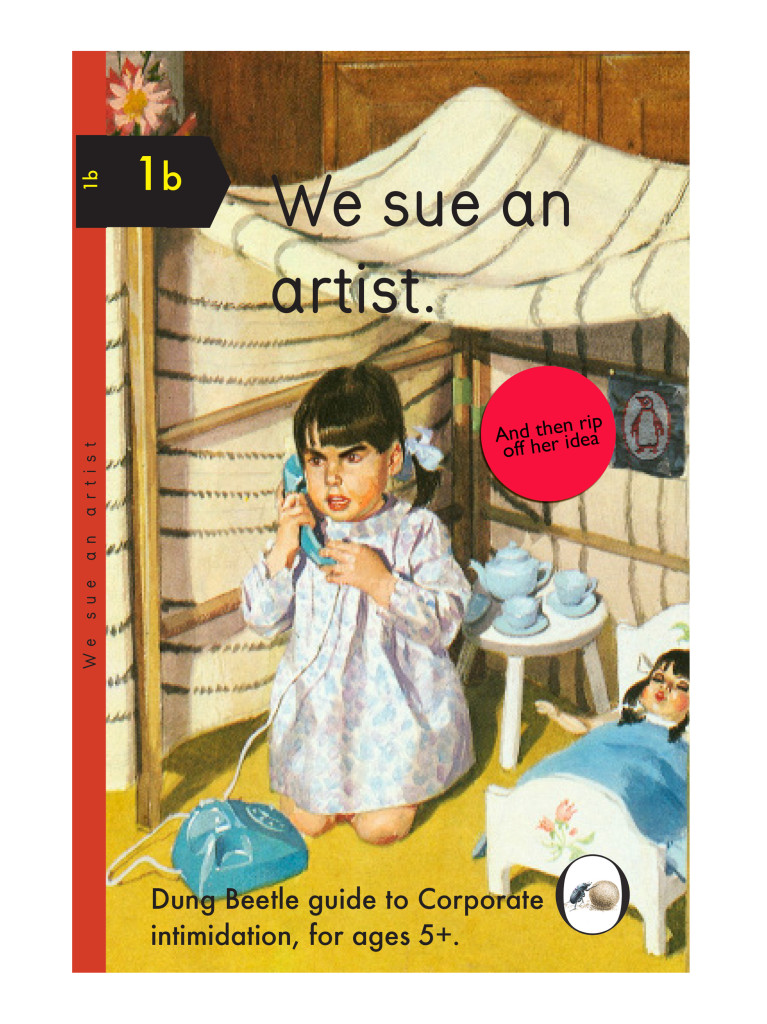
And Elia has gone further, adding a new title to her Dung Beetle series, ‘We sue an artist (and then rip off her idea)’.
Miriam Elia’s latest guide for children to help them learn about corporate intimidation.
Faber and Touchpress have launched a “groundbreaking” new mode of publishing, which explores the future of digital reading after ebooks.
Novelist Iain Pears has worked with the two media organisations to create a new reading experience which combines the traditional paperback novel with the new digital opportunities of the smartphone or tablet app.
His new work, Arcadia, has been conceived to be read as an app first and book second, with the application written using specially-commissioned software and developed for readers by Touchpress and Gaver, the partners behind multi-award-winning apps such as The Waste Land and Shakespeare’s Sonnets for iPad.
The e-novel gathers up ten characters in three different worlds, and presents them as a skein of coloured, intersecting lines. Short bursts of text propel the characters onward, or across into another storyline: the choice depends upon the reader.
But this is not your standard “choose your adventure” type model of writing – or reading. This interactive fiction enables every single individual reader to experience the story differently. The author controls the story universe, but how readers reave the three tales – pastoral utopia, 1950s Oxford and dystopian future – is deeply dependent on the individual turning the page (or, in this case, putting fingertip to touch screen).
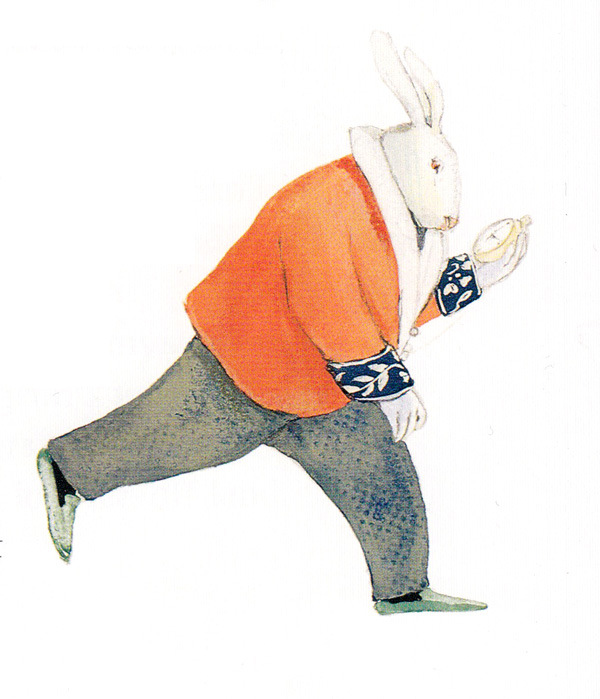
“There are readers who are ‘acrossers’ and others who are ‘up and downers’,” says Henry Volans, director of Faber Press, a division of the app’s publisher, Faber & Faber. “It’s meant to be a rabbit hole that encourages all sorts of reading.”
Where will this rabbit hole end?
The Circumstance art collective in Bristol is set to follow a similar interactive model of app and primary text (or primary app and secondary text, as it may be, depending on your viewpoint), as the group prepare to publish a new version of “These pages fall like ash”: a combination of a print book and an urban-walking app that overlays an imaginary world onto the physical.
Some remain cautious of suggesting anything even more interactive could be produced, however. Lincoln Michel, of the website Electric Literature, says it is hard to imagine a truly digital novel because “we already have digital narratives – they’re called videogames”. Meanwhile, British novelist, Naomi Alderman, points to the intimate nature of reading, echoing the thoughts of many other readers and writers throughout the centuries: “There’s nothing like a novel to take you into the individual consciousness of a writer. But there are things that are choice-based that only video games can do.”
Human beings have always been story tellers. Part of the reason for our species’ success has been our ability to communicate – and in fact has been key to the rise of the digital era we currently live in. What we may be catching the first glimpses of is a new digital environment that begins to break the page. As Tom Abba, a scholar or digital narrative at the University of the West of England says: “We’re trying to nudge the reader into a new kind of relationship with the story.” In other words, the traditional models of reading are changing. The future of literature may be electric.
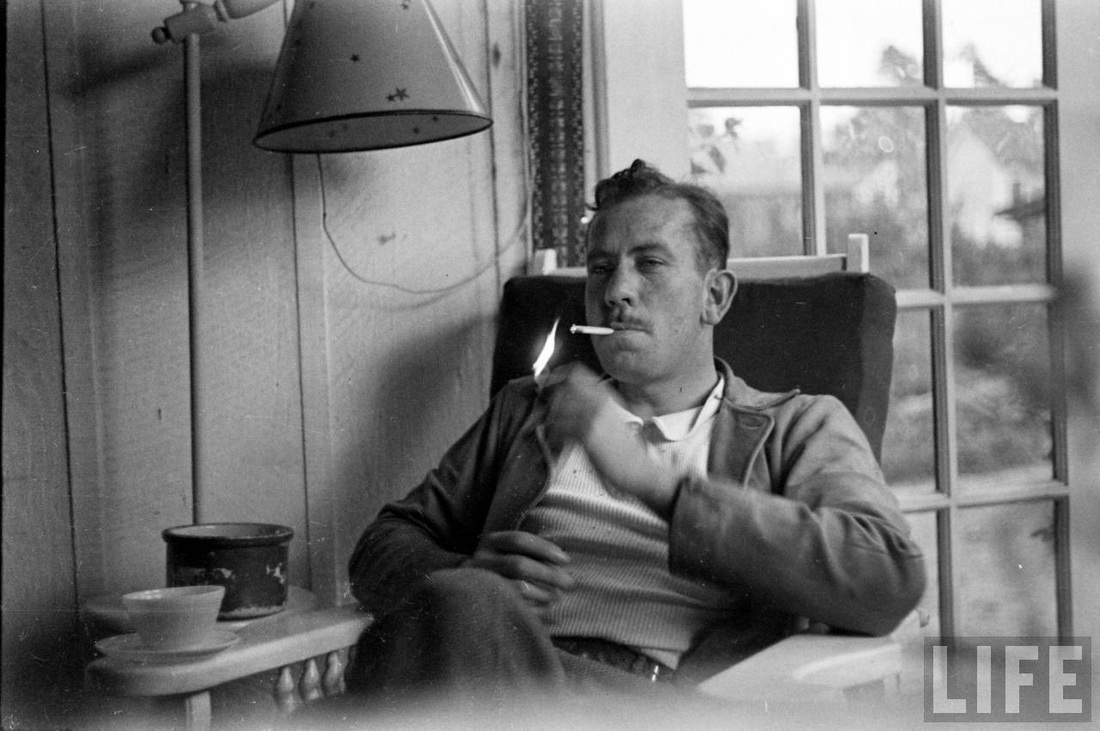
As prophetic dreams go, few are as discomfiting – due to their close proximity to reality – as one nocturnal epiphany John Steinbeck conjured up in the mid 1950s.
A rare writer of uncommon integrity, with a deep resistance to commercialism and a supreme faith in the human spirit, Steinbeck felt the need to pen a short letter to his literary agent and lifelong friend, Elizabeth Otis, after one specific dream caught him off guard. Indeed, the missive speaks volumes about what is perhaps the most significant threat to creative culture today.
In late July, 1956 – some 50 years before Buzzfeed – Steinbeck writes:
“Do you ever dream of getting letters? I used to a lot but haven’t lately until last night when I had one very clear and sharp. I can even see the stationery. It was from Otis Wiess and it said, “We would like very much to print your book The Short Reign of Peppin IV and think we can do it in two large installments. There are, however, certain changes we would like you to make in order that our readers will be more interested. The pace must be considerably speeded up and many of the historical and literary allusions must be removed since they will only confuse our readers. We should also want you to add three new characters and several episodes which are too long to put in a letter. I should like to meet with you to tell you of the changes we will require. Will you please let me know when this will be convenient?”
It was all perfectly clear. When the clock went off this morning I was busy typing an answer and had got as far as “Dear Otis: I have your letter and am deeply pleased with your interest in my book. I would like to suggest to you that rather than put in new characters and episodes, that you get new readers—” And I woke up thinking this was funny as hell and just laughing at my own cleverness. Isn’t that an odd and perhaps prophetic dream?”
Prophetic indeed. After all, we are in constant dynamic interaction with this thing we call culture – which is shaped by our values and, in turn shapes what we come to value. The question of balance between catering and creating is one that is asked by countless aspiring creatives: whether it is the responsibility of those involved in cultural enterprise to cater to what the people already crave, or else to create new, more elevated tastes by insisting on the substantive over the vacant?
It is pretty clear where much of the corporate media (i.e. culture and art for profit at all costs) stand on the issue. How else to explain the constant stream of novels that are copies of other successful novels, and the sequels and prequels of movies, and the exhibitioning of photography and art that is simply clones of previously successful pieces of art or photographs?
There is undoubtedly a necessary dialogue between catering and creating; yet it is difficult not to side with E.B. White, who famously asserted that “writers do not merely reflect and interpret life, they inform and shape life,” and that the role of the writer is “to lift people up, not lower them down.”
Yet irrespective of White’s idealism, we find ourselves immersed in a culture that purveys endless memes of cats because – we are told – that is what we want. We don’t want new films. New stories. New art. New ideas. We want cats getting stuck on treadmills. We want cats looking grumpy. Sometimes we want dogs chasing deer but that is about as far as originality is allowed to stray.
This is part of an overarching narrative that is suffused with a rather insidious implication that cat GIFs – and the occasional inspirational (though usually misattributed) quote superimposed on some stock image of a sunset – are all that we as a people are capable or worthy of wanting or understanding. Increasingly, our agents of culture are abdicating their responsibility to create more elevated tastes and capitulating to catering.
What is to be done? As aspiring creatives, the challenge is and may always remain: do something different. Create something new. It may be difficult. There may be less money in it. But it is possible. It has to be. In the words of Captain Picard, you just have to “make it so”.
Everyone has that book they can’t get out of their head. The story that will forever hold a special place in their hearts and souls. We were lucky enough to have the chance to ask* five famous authors about their favourite books** – here’s what they told us…
Jonathan Franzen – The Hungry Caterpillar
“This is a fabulous allegory for rapacious capitalism. The caterpillar clearly represents neoliberalism. He bites into every fruit, takes just one bite and moves on, getting fatter and fatter. He’s exploiting everything. The caterpillar might as well be called Ronald Reagan. It’s great! Also I liked the colours.”
Toni Morrison – Fifty Shades Free
“Like most people I prefer to read the ‘Fifty Shades’ series upside down. It really puts things into perspective. You are hanging there, reading this, and everything becomes so clear. What I realised was that this book goes so much deeper than most people give it credit. And in fact you can do so much with it. You can dip it in Pepsi. You can spread Nutella over it. You can cut out all the words and arrange them in little patterns on your fridge by sticking those tiny magnets to them. It’s interactive, in that way.”
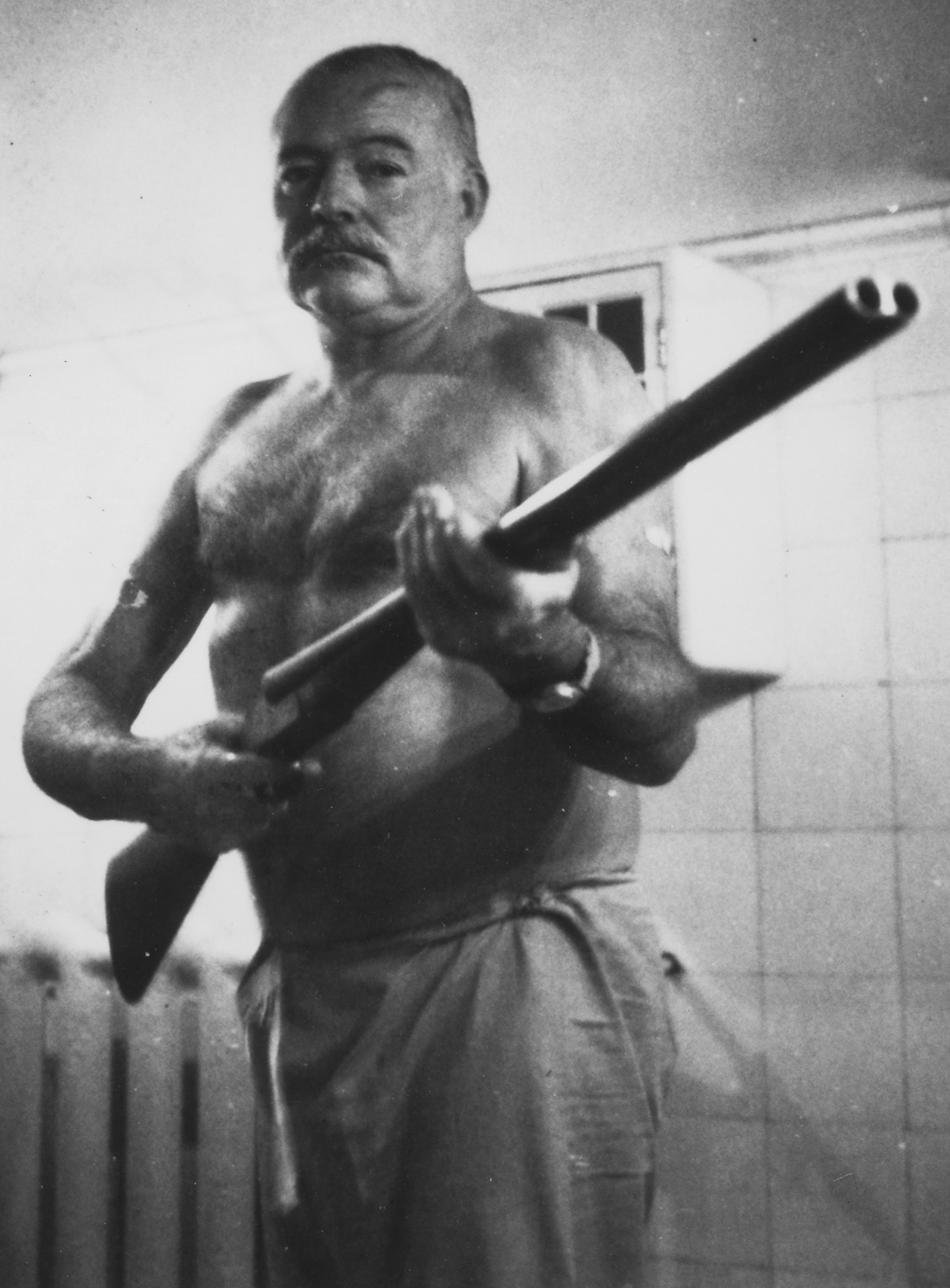
Ernest Hemingway – The Secret Diary of Adrian Mole
“Every so often you come across a book in which it feels as though the author has reached a hand through the page and taken yours in its grasp. You see yourself in the characters. You become the story. The story becomes you. This is the book that does that for me. When Adrien writes “I have never seen a dead body or a female nipple” I wept. It was too close to home.”
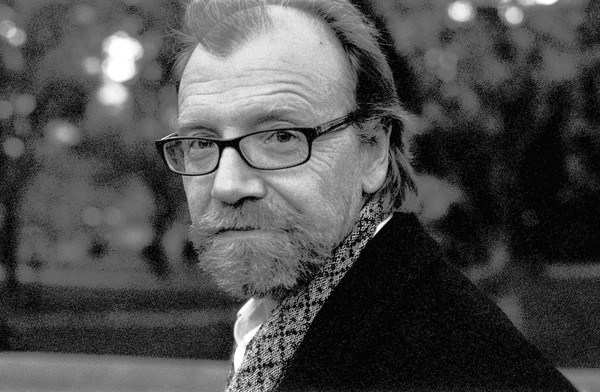
George Saunders – Sex and the City
Photo of George Saunders. (Chloe Aftel/Random House)
“One of my favourite aspects of Sex and the City is how you can read it with your eyes closed, trying to guess aloud what words will come next. I’m really good at this game now – I play it with my son, who frankly is terrible at it. But part of this just comes down to practice. A lot of the time you’ll get it right by shouting one of the following phrases: “I could so do with a margarita right now”; or “This once again illustrates the fundamental problem with modern economic theory, and makes you realise that we are increasingly becoming a plutocracy, rather than a democracy.” That’s a good hint I gave you. Don’t tell anyone.”
Margaret Atwood – The Eye of Argon
“This story has unfairly got a bit of a bad rep, I think. Too many books these days are written by people who seem to think the only thing that matters is whether or not their characters drink enough Mountain Dew or wear the latest Nike trainers. This is one of those rare books that doesn’t suffer from that sort of nonsense. It’s concise. And yet it feels alive.”
* May not actually have had the chance to ask these authors anything.
** May or may not be their favourite books. It’s all pretty much conjecture at this point.
The well-known ailment of any artist, writer, illustrator, photographer, comedian, actor – anyone creatively inclined at all, in fact – is of course creative block. So often, this mental obstacle that seems to stifle our ability to think clearly about creative challenges is met with hours of another well-known symptom: procrastination.
Indeed, this symptom is increasingly common throughout the world – in office blocks and class rooms, in the student dormitories of undergraduates and post graduates not working on their theses or essays, and in our own homes, where chores are put off in favour of watching that latest episode of Catastrophe, or simply staring at a spot in the wall above the fireplace until you can’t tell whether you’re asleep, awake, or in some crazed semi-reality where everything is off-white and always out of focus.
These life-draining hours spent putting off new projects is often predicated on the illusion that tomorrow will contain more favourable – or even optimal – conditions for beginning it. And this theory itself is of course based on the clear untruth that there will ever be any perfect or optimal conditions for doing anything, anything at all.
Yet what so often happens when trying to begin a new creative project – or that novel you’ve been working on – is that the more we stall and procrastinate after the initial spark of inspiration, the more we stifle the force it fired within us, until eventually – tragically, inevitably – we douse it completely without catalysing a beginning at all.
Part of this may have to do with overthinking, which is an especially common form of procrastination. Picasso famously captured the error with thinking that art can begin with planning or a novel can begin with a thousand post-it notes when he said: “To know what you’re going to draw, you have to begin drawing.”
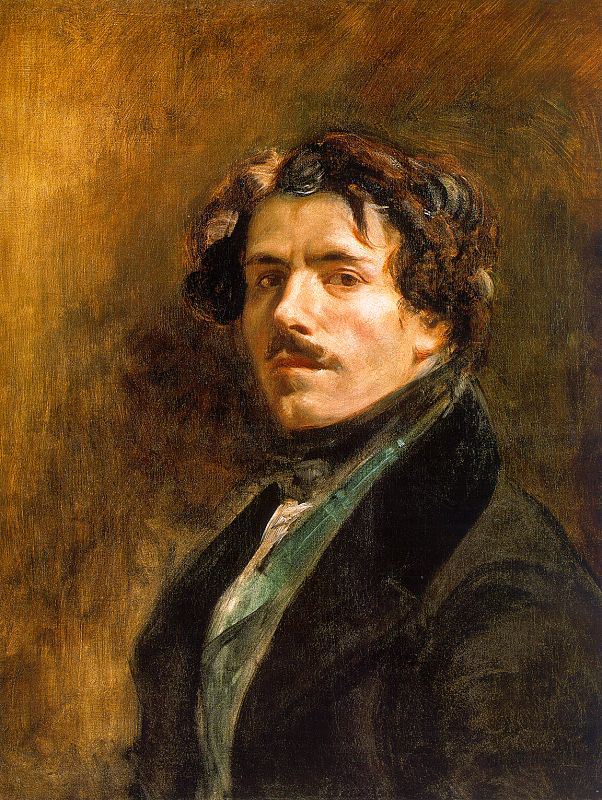
Another great artist articulates the psychological underpinnings of this tendency with an uncommon clarity and vulnerability. Eugene Delacroix’s journal provides us with a transcendental, moving meditation on procrastination and self-doubt.
Eugene Delacroix – Self Portrait, 1837
In an entry from April of 1824, two weeks before his twenty-sixth birthday, Delacroix writes:
“I’m always having excellent ideas, but instead of working on them while they are still fresh in my imagination, I keep telling myself that I will do them later on — but when? Then I forget about them, or worse still, can no longer see anything interesting in ideas that seemed certain to inspire me. The trouble is, that with a roving and impressionable mind like mine, one idea drives another out of my head quicker than the changing wind alters the direction of a windmill’s sails. And when I have a number of different ideas for subjects in mind at once, what am I to do? Am I to keep them in stock, so to speak, quietly waiting their turn? If I do that, no sudden inspiration will quicken them with the touch of Prometheus’s breath. Must I take them out of a drawer when I want to paint a picture? That would mean the death of genius.”
Delacroix’s solution to this is to turn to the classics as a clarifying force of inspiration:
“I believe that when one needs a subject, it is best to hark back to the Classics and to choose something there. For really, what could be more stupid? How am I to choose between all the subjects I have remembered because they once seemed beautiful to me, now that I feel much the same about them all? The very fact that I am able to hesitate between two of them suggests lack of inspiration… What I must do to find a subject is to open some book capable of giving me inspiration, and then allow myself to be guided by my mood.”
Four days later, he returns to this topic, reasoning that at the heart of procrastination lies self-doubt – and the most effective cure for it is immediate action:
“I must never put off for a better day something that I could enjoy doing now. What I have done cannot be taken from me. And as for this ridiculous fear of doing things that are beneath my full powers…. No, this is the very root of the evil! This is the mistake which I must correct. Vain mortal, can nothing retrain you, neither your bad memory and feeble strength, nor your unsuitable mind that fights against ideas as soon as you receive them? Something at the back of your mind is always saying: “You who are withdrawn from eternity for so short a time, think how precious these moments are. Remember that your life must bring to you everything that other mortals extract from theirs.” But I know what I mean. I think that everyone who has ever lived must have been tortured by this idea to some degree.”
Procrastination is by no-means a modern phenomenon. No doubt Homer spent days picking sand from his toes after walking on the beaches of the Aegean rather than pen the Iliad. Shakespeare undoubtedly spent many weeks talking about how high the price of apples were rather than start working on Romeo and Juliet. And it spares no-one: not the troubled French artist nor those writers we celebrate as geniuses: after all, Steinbeck reasoned, that to avoid procrastination, one simply had to get on with it: “One never feels like awaking day after day. In fact, given the smallest excuse, one will not work at all […] I must get my words down every day whether they are any good or not.”
One of Delacroix’s stunning illustrations in Goethe’s Faust.
To steady ourselves in a thrashing sea of distraction and procrastination, then, The Journal of Eugene Delacroix remains an invaluable source and reference book for all creatives struggling with creative block – and two centuries after it was first written. Not only does it provide readers with an invaluable record of the inner life of one of humanity’s greatest artists; but also serves as a timeless trove of insight into the universal afflictions (and their cures) which take the challenges of the creative life and turn them into art.
The Nigerian novelist is rightly regarded as one of the greatest writers of the past century. His debut novel, Things Fall Apart, is still the single most widely read book in African literature, despite being published in 1958.
Yet despite his fame and status, few people are familiar with his lesser-known – though certainly not ‘lesser’ in any other sense – poetry. Indeed, this was something the great man himself was well-aware of: joking in a 1998 lecture at Portland’s Literary Arts event that there was a “conspiracy” theory against his poetry.
Yet his love for poems and poetry dates back to the very dawn of Achebe’s career as a writer. And the very title of his magnum opus is borrowed from a line in Yeats’s poem “The Second Coming”.
It was only thanks to Professor Wu stumbling upon this edited recording of his nearly two-hour long Literary Arts lecture during his idle trawling through the interwebs that we have discovered this fantastic example of Achebe reading three of his poems, later published in the 2004 anthology ‘Collected Poems’.
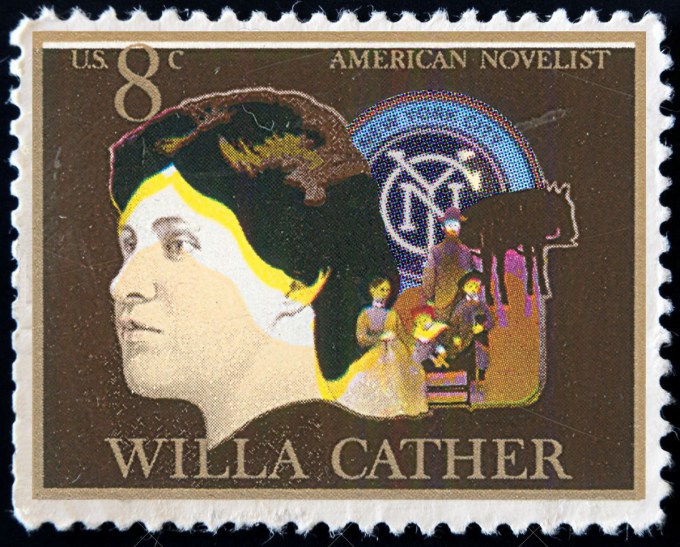
Reading the wonderful exchange of letters between Pulitzer Prize winning author, Willa Cather, and her friend and fellow writer, Sarah Jewett, one is struck immediately by how rare such thoughtful examples of communication have now become. Where once it was common to place such great thought and care into penned – or pencilled – correspondence, we now find ourselves changed by our electronic, immediate communications.
Why is it that our personal identities seem to shift when moving between these mediums? And what does it mean for us as individuals, and as a species?
These questions have in part been answered by Rebecca Sonit, one of the most incisive thinkers and exquisite essayists of our time, in her essay “We’re breaking up: Noncommunication in the Silicon Age”. Indeed, Solnit believes this shift and change began at a very specific point in the summer of 1995. She writes:
“On or around June 1995, human character changed. Or rather, it began to undergo a metamorphosis that is still not complete, but is profound — and troubling, not least because it is hardly noted. When I think about, say, 1995, or whenever the last moment was before most of us were on the Internet and had mobile phones, it seems like a hundred years ago. Letters came once a day, predictably, in the hands of the postal carrier. News came in three flavors — radio, television, print — and at appointed hours. Some of us even had a newspaper delivered every morning.”
Newspapers every morning! An unbelievable concept for so many of us living in our digital bubbles.
Some here might logically play the part of Lawrence Robertson – the fictitious CEO of USR, the massive Robotics conglomerate of I-Robot – who asks “Would you ban the internet just to keep the libraries open?” And sceptically suggest that worrying over technological progress has been the past-time of thinkers since time-immemorial. Italo Calvino, after all, bemoaned newspapers themselves as a worrisome distraction from what was really important: and one twelfth century Zen monk railed against books because they were “annoying”.
On the shredding of the fabric of time
Yet at the heart of Solnit’s argument is a discussion of the far more insidious effects of our modern communication technologies on the human psyche. These subtle changes, she argues, are beginning to shred the very fabric of time – or, at least, our perceptions of it – and beginning to blanket our daily lives and dictate the rhythm with which we live:
“Those mail and newspaper deliveries punctuated the day like church bells. You read the paper over breakfast. If there were developments you heard about them on the evening news or in the next day’s paper. You listened to the news when it was broadcast, since there was no other way to hear it. A great many people relied on the same sources of news, so when they discussed current events they did it under the overarching sky of the same general reality. Time passed in fairly large units, or at least not in milliseconds and constant updates. A few hours wasn’t such a long time to go between moments of contact with your work, your people, or your trivia.
[…]
The bygone time had rhythm, and it had room for you to do one thing at a time; it had different parts; mornings included this, and evenings that, and a great many of us had these schedules in common. I would read the paper while listening to the radio, but I wouldn’t check my mail while updating my status while checking the news sites while talking on the phone. Phones were wired to the wall, or if they were cordless, they were still housebound. The sound quality was usually good. On them people had long, deep conversations of a sort almost unknown today, now that phones are used while driving, while shopping, while walking in front of cars against the light and into fountains. The general assumption was that when you were on the phone, that’s all you were.”
Art by Lisbeth Zwerger.
Solnit considers how correspondence changed from the thrilling event of receiving a letter — “the paper and handwriting told you something, as well as the words” — to the task-oriented pragmatism of fielding a demand or relaying one for the recipient to field:
“Letters morphed into emails, and for a long time emails had all the depth and complexity of letters. They were a beautiful new form that spliced together the intimacy of what you might write from the heart with the speed of telegraphs. Then emails deteriorated into something more like text messages… Text messages were bound by the limits of telegrams — the state-of-the-art technology of the 1840s — and were almost as awkward to punch out. Soon phone calls were made mostly on mobile phones, whose sound quality is mediocre and prone to failure altogether (“you’re breaking up” or “we’re breaking up” is the cry of our time) even when one or both speakers aren’t multitasking. Communication began to dwindle into peremptory practical phrases and fragments, while the niceties of spelling, grammar, and punctuation were put aside, along with the more lyrical and profound possibilities. Communication between two people often turned into group chatter: you told all your Facebook friends or Twitter followers how you felt, and followed the popularity of your post or tweet. Your life had ratings.”
But, says the content marketer, the SEO optimiser, the social media specialist, the digital executive, the blogger, the vlogger, the Instagram star, the Twitter hero (incidentally the new cast of the upcoming Breakfast Club sequel) – But, but there are so many benefits of our modern communication technologies! They are democratic! We can create our news ourselves! We self-publish, self-publicise! We spread ideas! Railing against change is as futile as Cnut trying to hold back the sea.
It’s true that there are a great many benefits – or at least, perceived benefits – of our modern communication technologies. Not least of which (of course) is this site itself (not to brag or anything), which without the immense power of the Internet would simply be a group of creative giraffe-aficionados writing long letters to each other that may never be read by more than a dozen souls. But perhaps there are costs to these new technologies that outweigh their benefits. Consider, as Solnit does, the following:
“Previous technologies have expanded communication. But the last round may be contracting it. The eloquence of letters has turned into the nuanced spareness of texts; the intimacy of phone conversations has turned into the missed signals of mobile phone chat. I think of that lost world, the way we lived before these new networking technologies, as having two poles: solitude and communion. The new chatter puts us somewhere in between, assuaging fears of being alone without risking real connection. It is a shallow between two deeper zones, a safe spot between the dangers of contact with ourselves, with others.”
Digital isolation
A familiar concept in this digital era is the strange isolation that modern communication models create for individuals – distracting them from real life and real-lived conversations and human communication. This is perhaps best depicted in the increasingly familiar sight of a group of people seated together at a restaurant, each staring into their phones instead of conversing with one another.
But what do such scenes mean? Perhaps we are only just realising that human beings are less interesting in person than they are online. Or perhaps it is symptomatic of a restlessness which has seized so many of us – a fear of missing out on news or updates; or else caused by a new era in which we are continually distracted from real life. Solnit suggests it is “an anxiety about keeping up, about not being left out or getting behind.”
Of course, the tragedy here is that, however discomfiting such anxieties are, the sense of missing out is in fact essential to a full life – and indeed a creative life. As psychoanalyst Adam Phillips notes in his book “Missing Out: In Praise of the Unlived Life”:
“Our lived lives might become a protracted mourning for, or an endless tantrum about, the lives we were unable to live. But the exemptions we suffer, whether forced or chosen, make us who we are.”
And something as simple as heading outside to sit quietly by ourselves and embracing boredom can in fact enhance the creative’s ability to produce new art, new thought, new ideas and formulate better answers to the questions they contend with as they attempt to write their novels, or paint their masterpieces.
Yet the new mediums of the digital era seek to disable this, and distract us. Our time no longer comes in large, focused blocks, but rather in fragments and shards. As Solnit notes: “We’re shattered. We’re breaking up.”
She continues:
“It’s hard, now, to be with someone else wholly, uninterruptedly, and it’s hard to be truly alone. The fine art of doing nothing in particular, also known as thinking, or musing, or introspection, or simply moments of being, was part of what happened when you walked from here to there, alone, or stared out the train window, or contemplated the road, but the new technologies have flooded those open spaces. Space for free thought is routinely regarded as a void and filled up with sounds and distractions.”
When we are constantly driven to check our social media apps for notifications, and compose the shortest and most succinct emails and social media statuses, which, by design, must be created almost without thought or any real deliberation or consideration – we are distanced from the ability to think hard about something for the length of time necessary to ponder important questions. We can no longer contemplate the essential mysteries of the universe – or express these creatively – when we are too busy trying to write a funny tweet about Donald Trump in 140 characters or reply to Jeremy in HR with an email that treads that fine-line between snappy and rude.
Such a scenario was perceived way back in 1948 by Henry Beston – a rather adroit bridge-builder between humanity and nature – whose bewitching work “Northern Farm” features a timeless meditation on the relationship between humanity and technology:
“What has come over our age is an alienation from Nature unexampled in human history. It has cost us our sense of reality and all but cost us our humanity. With the passing of a relation to Nature worthy both of Nature and the human spirit, with the slow burning down of the poetic sense together with the noble sense of religious reverence to which it is allied, man has almost ceased to be man. Torn from earth and unaware, having neither the inheritance and awareness of man nor the other sureness and integrity of the animal, we have become vagrants in space, desperate for the meaninglessness which has closed about us. True humanity is no inherent and abstract right but an achievement, and only through the fullness of human experience may we be as one with all who have been and all who are yet to be, sharers and brethren and partakers of the mystery of living, reaching to the full of human peace and the full of human joy.”
The context of reality: straight outta context
The loss of our sense of reality, which Beston touches upon, of course can be traced through the many existentialist writings and musings of essayists and commentators, writers and artists throughout the 20th and 21st centuries.
In 1980, for instance, George W.S. Trow penned his seminal essay, ‘Within the Context of No-Context’, a terrifyingly prescient doomsday prophecy about the corrosive effects of electronic media.
Of course, what is so worrying for a modern reader of Trow’s essay is just how prescient the essay is. It predates the blogosphere and social media. It’s pre 24 hour News, pre-reality show. Yet Trow still sees cognitive and psychological destruction at the heart of ‘new media’, which Trow suggests exists solely to “establish false contexts and to chronicle the unraveling of existing contexts; finally, to establish the context of no-context and to chronicle it.”
Just as the television Trow derides holds “no history”, so too do modern forms of communication and new digital technologies bring with them nothing constructive, but rather only destructive: the annihilation of cognitive thought and well-argued expression in favour of those curt emails and meaningless social media status updates. In this world, it is reality, as well as our own minds and thoughts, which is fractured, which is lost.
Reclaiming reality
To reclaim reality, and once again piece together our lives and sense of time, which have been fractured by the new digital technology, perhaps the answer is to slow everything down. To contemplate and articulate the value of the real world outside electronic chatter and distraction. To find alternatives. To put the world and our lives back together again.
As Beston writes, this may begin outside:
“Oh, work that is done in freedom out of doors, work that is done with the body’s and soul’s goodwill, work that is an integral part of life and is done with friends — is there anything so good?”
So, if you’re still reading this, close your internet browser and throw your smartphone in the nearest stream. Quit your office job and see if the local farmer has any jobs going. You never know, it might just give you the ideas and freedom you need to finish writing that novel you’ve been working on.
The Glastonbury Thorn, with its own associated mythology and connection to Joseph of Arimathea, is but one of many examples of trees to which human beings have attached a great, long, deep and complex association with spirituality. Photography: Mike Dodson/Vagabond Images
Trees – the oldest living things in our world – have been mankind’s ever-present, silent companions from the dawn of time and life. They have been transmuted into myths and metaphor, and have long been used to symbolise and visualise human knowledge and the cycle of life. “The Tree of Life” means so much and makes so much sense to us, perhaps because they are so strong and salient, bearing steadfast witness to our own evolution, and indeed, the wider evolution of the entire planet. There is little wonder why, staring at the spreading branches and leaves of trees reaching into the sky, we have projected our internal spiritual longings onto these arboreal companions.
Think, for example, of the thoughts penned by 17th century English gardener, Ralph Austen, in his pamphlet ‘The Spiritual Use of an Orchard of Garden of Fruit Trees’:
“The world is a great library, and fruit trees are some of the books wherein we may read and see plainly the attributes of God, his power, wisdom, goodness &c. … for as trees (in a metaphorical sense)* are books, so like-wise in the same sense they have a voice, and speak plainly to us, and teach us many good lessons.
[…]
Fruit trees, though they are dumb companions, yet (in a sense) we may discourse with them… We may read divine truths in them, as in a book consisting of words and sentences… Not only rational and irrational, but even inanimate creatures have a voice, and speak loudly to men, and it is our duty to learn their language, and hearken to them.”
As we seek to learn this language, however, we are so often distracted by thoughts ever present in this digitised world of 24/7 work, where we are so often trapped in offices behind computer screens and within ethereal spaces of the internet.
To help us regain our connection with nature and with trees, Spanish multimedia storytelling outfit, Kauri, has produced a beautiful short film celebrating our abiding bond with trees.
We present this cinematic ode – ‘The Silent Friends’ – with accompanying words from the creators:
“The Silent Friends is a film about trees, and how they possess the virtues we seek in those close to us. Every tree plays a vital role in our world, and the uniqueness of each tree is, in fact, universal. Each is as important as the other, so long as they are respected and loved, and we are aware of their presence. Just like a friend.”
After watching the film, we suggest rising up from your desk, walking to your nearest copse, woodland or forest, and spending at least thirty minutes spending a little time in the presence of our oldest companions. You never know – it might even help with your writing.
How many of us have ushered the phrase ‘I work to live; not the other way around’, insisting that we believe this to be true even while we toil away at our desks for hours after hours? Apart from the general unpleasantness of finding ourselves caught in this corporate entrapment – which is entirely unnecessary, by the way – such soul sucking drains are also incredibly dangerous to our creative sensibilities, and our writing abilities. After all, we need silence, and boredom, and time to compose our thoughts and creative inclinations – none of which come easily in the hustling, hurly-burly world of the 24/7 post-fordist society.
How can we break free from such trappings? Well, fortunately we have an inspiring example set to us by one of the greatest writers of the twentieth century, who struggled with, and eventually extracted herself from, a similar predicament.
In 1906, Willa Cather left teaching and moved to New York City to join the most successful and prestigious periodical magazine of the era: McClure’s Magazine. Famous for its fierce investigative reporting and for publishing spearheading, radical fiction writers like Robert Louis Stevenson and Jack London, the magazine’s success had been driven not by artistic endeavour but by brutally ruthless corporate management, which saw journalism as business and writing as a marketable commodity that bordered on what might be called content-farming today.
Cather was originally hired as a fiction editor, but after a mass staff walk out over employee discontentment with the magazine’s corporate ruthlessness, she found herself leading an intense investigative project, which became such a sensation that the magazine’s circulation exploded.
“Mr. McClure tried three men at this disagreeable task, but none of them did it very well, so a month ago it was thrust upon me,” Cather wrote to a friend shortly before she was promoted to managing editor.
Cather’s natural ability saw her excel at the role, and at first she noted being enticed by the trappings of being called an “executive”, as well as the gratifications of attractive pay. Yet she soon began to reflect that the relentless intensity of journalistic productivity drained her creative capacity, which she felt was blocking her from her true calling as a literary writer.
Yet despite her misgivings, she found she was unable to tear herself away from the role – for the same complex, conflicting and often contradictory reasons any of us stay in thankless jobs, or other situations that restrict, rather than expand, our creative spirit – that do not let our souls grow.
In a letter, Cather discerns that this is, in part, down to corporate manipulation on the part of her employers. She notes that McClure was able to shape the interior conditions of life within the publication’s offices, to keep his staff running on their corporatized hamster wheel; feeding their confidence to deliver greater productivity that suited his profit margins, and fuelling their self-doubt about larger creative pursuits. She writes:
“Mr. McClure tells me that he does not think I will ever be able to do much at writing stories, that I am a good executive and I had better let it go at that. I sometimes, indeed I very often think that he is right. If I have been going forward at all in the last five years, it has been progress of the head and not of the hand. At thirty-four, one ought to have some sureness in their pen point and some facility in turning out a story.”
Two years later, however, in 1908, everything changed. Cather received a remarkable letter from her friend and mentor, the writer Sarah Jewett. The letter contained what so many of us need in this situations: a simultaneous hard shake of the shoulders and warm embrace. Cather discovered it was precisely the kind of wake-up call she needed to emerge from her trance of corporate productivity and focus her creative energies on the task of writing.
Jewett wrote:
“Your vivid, exciting companionship in the office must not be your audience, you must find your own quiet centre of life, and write from that to the world that holds offices, and all society, all Bohemia; the city, the country — in short, you must write to the human heart, the great consciousness that all humanity goes to make up. Otherwise what might be strength in a writer is only crudeness, and what might be insight is only observation; sentiment falls to sentimentality — you can write about life, but never write life itself. And to write and work on this level, we must live on it — we must at least recognize it and defer to it at every step. We must be ourselves, but we must be our best selves.”
Cather replied quickly to Jewett, showcasing as she did a natural mastery of self-awareness and insight into a great many perennial perplexities of the human spirit:
“My Dear, Dear Miss Jewett;
Such a kind and earnest and friendly letter as you sent me! I have read it over many times. I have been in deep perplexity these last few years, and troubles that concern only one’s habits of mind are such personal things that they are hard to talk about. You see I was not made to have to do with affairs — what Mr. McClure calls “men and measures.” If I get on at that kind of work it is by going at it with the sort of energy most people have to exert only on rare occasions. Consequently I live just about as much during the day as a trapeze performer does when he is on the bars — it’s catch the right bar at the right minute, or into the net you go. I feel all the time so dispossessed and bereft of myself. My mind is off doing trapeze work all day long and only comes back to me when it is dog tired and wants to creep into my body and sleep. I really do stand and look at it sometimes and threaten not to take it in at all — I get to hating it so for not being any more good to me. Then reading so much poorly written matter as I have to read has a kind of deadening effect on me somehow. I know that many great and wise people have been able to do that, but I am neither large enough nor wise enough to do it without getting a kind of dread of everything that is made out of words. I feel diluted and weakened by it all the time — relaxed, as if I had lived in a tepid bath until I shrink from either heat or cold.”
At the heart of the friends’ exchange is the acute awareness of that bargain we strike between practicality and idealism; of our perceived conceptions of reality and our real, true hopes and dreams. It is the tradeoff between productivity and creativity. Cather continues in her reply to Jewett:
“Your mind becomes a card-catalogue of notes that are meaningless except as related to their proper subject.
[…]
[Mr. McClure] wants me to write articles on popular science, so called, (and other things) for half of each week, and attend to the office work in the other half. That combination would be quite possible — and, I fear perfectly deadening. He wants, above all things, good, clear-cut journalism. The which I do not despise, but I get nothing to breathe out of it and no satisfaction.”
Cather’s awareness of this tradeoff is crucial to her realisation of the need for change. She remained restless at the thought of the sacrifice she was making in buying the model of “productivity and profit” as success at the success of soulful, creative satisfaction:
“The question of work aside, one has a right to live and reflect and feel a little. When I was teaching I did. I learned more or less all the time. But now I have the feeling of standing still except for a certain kind of facility in getting the sort of material Mr. McClure wants. It’s stiff mental exercise, but it is about as much food to live by as elaborate mental arithmetic would be. — Of course there are interesting people and interesting things in the day’s work, but it’s all like going round the world in a railway train and never getting off to see anything closer. I have not a reportorial mind — I can’t get things in fleeting glimpses and I can’t get any pleasure out of them. And the excitement of it doesn’t stimulate me, it only wears me out.
Now the kind of life that makes one feel empty and shallow and superficial, that makes one dread to read and dread to think, can’t be good for one, can it? It can’t be the kind of life one was meant to live. I do think that kind of excitement does to my brain exactly what I have seen alcohol do to men’s. It seems to spread one’s very brain cells apart so that they don’t touch. Everything leaks out as the power does in a broken circuit. So whether or not the chief is right about my never doing much writing, I think one’s immortal soul is to be considered a little. He thrives on this perpetual debauch, but five years more of it will make me a fat, sour, ill-tempered lady — and fussy, worst of all! And assertive; all people who do feats on the flying trapeze and never think are as cocky as terriers after rats, you know.”
Continuing this train of thought, Cather attempts to rationalise her decisions in the same way so many of us justify tolerating circumstances that don’t serve us in the grand scheme of happiness and lived experiences:
“I have to lend a hand at home now and then, and a good salary is a good thing. Still, if I stopped working next summer I would have money enough to live very simply for three or four years. That would give me time to pull myself together. I doubt whether I would ever write very much — though that is hard to tell about for sure; since I was fifteen I have not had a patch of leisure six months long. When I was on a newspaper I had one month vacation a year, and when I was teaching I had two. Still, I don’t think that my pen would ever travel very fast, even along smooth roads. But I would write a little — “and save the soul besides [from Robert Browning’s The Ring and the Book].” It’s so foolish to live (which is always trouble enough) and not to save your soul. It’s so foolish to lose your real pleasures for the supposed pleasures of the chase — or of the stock exchange.”
Shortly after penning these thoughts to paper, Cather began working on her first novel. Yet it took her another three years to finally leave McClure’s – by which point she was one of the most powerful women in journalism.
Once she had left the oppressive corporate regime, however, Cather never looked back. Her debut novel was published the same year she left her role, and received wide critical acclaim. She subsequently published another thirteen books over the course of three decades, earning Cather the Pulitzer Prize and establishing her as one of the finest writers of the twentieth century.
Book publisher Penguin Random House has blamed ebooks for 225 potential job losses at its warehouse in Rugby, Warwickshire.
The publisher pointed to figures from the Publishers Association, which show that UK digital book sales rose 11% last year, while print copies fell 5%.
“The revolution in reading habits, with ebooks becoming more popular, has put these 225 jobs at risk,” said Unite regional officer Peter Coulson. “It is a worrying time for employees and their families, especially in the run-up to Christmas, and is a real blow to the local economy.”
The Warwickshire distribution centre is bookmarked for closure by 2019, with redundancies beginning in May 2017. Penguin Random House said distribution from the site would be moved to one of its remaining warehouses at Frating, near Colchester.
“Proposing to part company with colleagues is never easy,” said the publisher’s chief executive, Tom Weldon.
Staff are to be offered redundancy packages that Penguin Random House claim will be significantly higher than the statutory minimum – and the company have also intimated they will provide support to staff in finding new jobs.
Unite is to meet company managers to discuss the business case for closing the site and to discern whether there is any chance for it to remain open.
Print sales of books continue to decline as ereaders such as the Kindle – provided by tax-dodging company, Amazon – and its rivals Kobo and Nook prove increasingly popular. Ebooks now make up 25% of the market, just eight years after the launch of the Kindle in 2007.
Earlier this year, NielsenBookScan released figures showing physical sales of adult fiction had declined by more than £150 million in just five years.
There have been some anomalies in this general trend. For instance, Waterstones boss James Daunt ended Kindle sales after saying ebook revenues “had disappeared to all intents and purposes”.
Analysis
Professor Wu says: “The changing face of the literary marketplace will continue to strain tensions between Penguin Random House and Amazon over the price of ebooks; and will likely lead to many more passionate arguments between defenders of the printed page and advocates of digital technology.”
“One might point out that, as technology goes, printed books are actually pretty wonderful. You can spill water on them and they will still work. They have working lifespans of decades, perhaps centuries, rather than a couple of years. They provide a sense of permanence, which might be why capitalists hate them.”











 nothing in the rulebook