•  

    bad-sex-image
    Bulging trousers, gasps, moans and sighs – all feature heavily in the award winning passages of “bad sex in fiction”.

    Every year in November, the lovers of literature hold their breath as they await news of the winner of one of the most notorious ‘booby’ prizes in the world: the Bad Sex in Fiction Award.

    Founded in 1993 by the Literary Review, the award causes titular delight among its hordes of fans, and has developed from a cult-prize into a world famous event – this year’s shortlist and award ceremony was covered by major newspapers and mainstream TV news channels across the globe.

    Italian novelist Erri De Luca scooped the 2016 award, which recognises those authors who have produced an outstandingly bad scene of sexual description in an otherwise good novel. A general consensus seemed to form relatively quickly that this year’s shortlist (which can be read here) didn’t quite live up to 2015’s, which was won by Morrissey. But perhaps this has less to do with the featured writing in both year’s shortlists, and more to do with the way Morrissey reacted to the news his book, The List of the Lost, was first shortlisted – and then announced as the winner.

    Indeed, describing the prize as “a repulsive horror”, Morrissey told Uruguayan newspaper El Observador that he had “many enemies, and their biggest motivation, as you know, is to try to use all your achievements against you.”

    So perhaps it was the added drama of Morrissey’s reactions that made the 2015 awards seem that bit spicier compared to Erri De Luca – who reacted by ignoring the whole thing.

    With that in mind, how have previous winners of the notorious prize responded to the news? We’ve brought together a few choice reactions from these famous authors below.

    “Honoured” – Rachel Johnson
    Rachel-Johnson-01-1.jpg

    Rachel Johnson’s novel Shire Hill was singled out for her book’s slew of animal metaphors, including comparing her male protagonist’s “light fingers” to “a moth caught inside a lampshade”, and his tongue to “a cat lapping up a dish of cream so as not to miss a single drop”. Literary Review deputy editor Tom Fleming was also disturbed by the heroine’s “grab, to put him, now angrily slapping against both our bellies, inside”.

    Johnson said it was an “absolute honour” to win, taking her place alongside former winners including Norman Mailer, Sebastian Faulks and Tom Wolfe. “I’m not feeling remotely grumpy about it. I know that men with literary reputations to polish might find it insulting,” she said, “but if you’ve had a book published in the year any attention is welcome, even if it’s slightly dubious attention of this sort.”

    Read Johnson’s full extract alongside the other winners in our Connoisseur’s Compendium.

    “Not the least bit surprised” – David Guterson  guterson_300.jpg
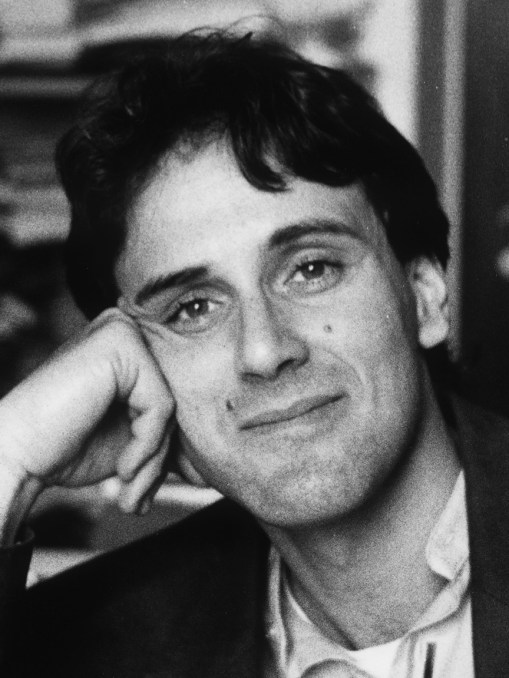
    David Guterson snaffled the bad sex prize for his fifth novel, Ed King, a modern reimagining of the Oedipus myth. Judges were swayed by a scene introduced as “the part where a mother has sex with her son”, and including the passages: “these sorts of gyrations and five-sense choreographies, with variations on Ed’s main themes, played out episodically between 10 pm and 10 am, when Diane said, ‘Let’s shower’”; and “she took him by the wrist and moved the base of his hand into her pubic hair until his middle fingertip settled on the no-man’s-land between her ‘front parlour’ and ‘back door’ (those were the quaint, prudish terms of her girlhood)”.

    “He says in brackets that these are quaint, prudish terms but I don’t think that is sufficient justification for using them,” said Jonathan Beckman, the Literary Review’s assistant editor.

    The American author took his triumph in good spirits, saying in response that “Oedipus practically invented bad sex, so I’m not in the least bit surprised”.

    Read Guterson’s full extract alongside the other winners in our Connoisseur’s Compendium.

    You can lead an English literary wannabe to irony but you can’t make him get it.” – Tom Wolfe  Wolfe_at_White_House.jpg

    American author Tom Wolfe, 74, best-known for his novel Bonfire of the Vanities and for his eccentric dress – he normally wears a white suit and carries a cane – was awarded the Bad Sex award for his novel I Am Charlotte Simmons. Judges were swayed by a number of passages of “ghastly and boring prose”, with the following extract drawing particular ire:

    “Slither slither slither slither went the tongue. But the hand, that was what she tried to concentrate on, the hand, since it has the entire terrain of her torso to explore and not just the otorhinolaryngological caverns – oh God, it was not just at the border where the flesh of the breast joins the pectoral sheath of the chest – no, the hand was cupping her entire right – Now!”

    Wolfe did not react well to news his novel had won the infamous prize. He described The Literary Review as “a very small, rather old-fashioned magazine”, and went onto say that the British literary judges who awarded him a prize for the year’s worst sex in fiction simply did not understand that his description of a first encounter was meant to be ironic.

    “There’s an old saying – ‘You can lead a whore to culture but you can’t make her sing’,” he said. “In this case, you can lead an English literary wannabe to irony but you can’t make him get it.”

    “I purposely chose the most difficult scientific word I could to show this is not an erotic scene,” he added. “There’s nothing like a nine-syllable word to chase Eros off the premises.”

    Read Wolfe’s full extract alongside the other winners in our Connoisseur’s Compendium.

    “I blush to read my offending prose” – Iain Hollingshead
    cropped-nutmeg-pic6.jpg

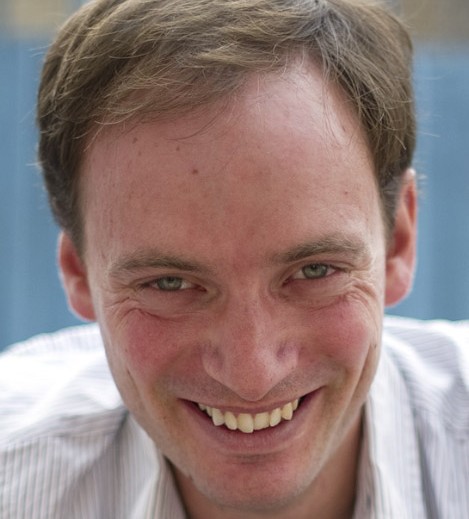
    British journalist and novelist Iain Hollingshead received the 2006 award for his book Twenty Something, specifically because of his description of sex on page 46 of his novel, in which he writes:

    “I can feel her breasts against her chest. I cup my hands round her face and start to kiss her properly. She slides one of her slender legs in between mine.

    Oh Jack, she was moaning now, her curves pushed up against me, her crotch taut against my bulging trousers, her hands gripping fistfuls of my hair.

    She reaches for my belt. I groan too, in expectation. And then I’m inside her, and everything is pure white as we’re lost in a commotion of grunts and squeaks, flashing unconnected images and explosions of a million little particles.”

    Judges were particularly keen to highlight the use of the phrase “bulging trousers”, and upon receiving the award, Holligshead wrote an entire article in the Daily Telegraph about the experience.

    He said when he first discovered his book had been shortlisted, he “wasn’t too ashamed” because he was “sure I wouldn’t win”.

    Yet, when he was announced as the winner, he wrote “I blush to read my offending prose now […] apparently the judges wriggled with mirth at [some of the phrasing] and I don’t blame them. Shamefully, it could have been even worse.”

    He added:

    “There’s something very British, of course, about celebrating failure. Some writers deserve to be taken down a peg or two, but most nominees take the awards with the good humour with which they’re intended. […] But there’s also something very British about the whole approach to sex. We’re good at smut, less good at genuine erotica. It is difficult to imagine the French or the Italians running a similar award.

    It was once said that the English have hot-water bottles rather than sex lives. I think it’s more that we’re still not sufficiently grown-up to read and write about it properly.

    No matter. It’s all harmless fun. Until now, friends’ concerns about my budding literary career have revolved around the possibility that I might, unfairly, be confused with the rather more successful Alan Hollinghurst, author of The Line of Beauty.

    Since this surprise victory, I feel we’re on a level playing field. And he can keep his Booker Prize.”

    Read Hollingshead’s full extract alongside the other winners in our Connoisseur’s Compendium.

    “I deserve a Blue Peter badge for my description of sex” – Janet Ellis
    JANET-ELLIS-2-Colour-Copy.jpg

    Not an eventual winner of the award, and so placed at the end of this short list, but Janet Ellis nonetheless makes an appearance after her novel The Butcher’s Hook was nominated for the 2016 award, and she wrote a lengthy article in The Guardian in defence of her own book.

    The panel of five judges at the Literary Review singled it out for a surprisingly agricultural passage in which Ellis’s heroine Anne consummates her passion for butcher’s apprentice Fub.

    “‘Anne,’ he says, stopping and looking down at me. I am pinned like wet washing with his peg. ‘Till now, I thought the sweetest sound I could ever hear was cows chewing grass. But this is better.’ He sways and we listen to the soft suck at the exact place we meet. Then I move and put all thoughts of livestock out of his head.”

    In her article, Ellis claims that she should be praised, rather than singled out negatively, for being willing to write about sex, because “I didn’t set out to titillate or shock, but to have skirted around the issue would have been cowardly. I didn’t let imaginary hecklers get in the way of what I wanted to write, or worry someone who’d watched me when they were a child would suffer the trauma of finding out I was a grown woman after all.”

    She added:

    “Writing about writing about sex is also difficult, of course. If you’re not describing what happens (when you can use all the available words any which way you choose, in an attempt to make a very old act seem new) you’re a hostage to fortune. Every phrase risks alerting the double entendre police, who are eager to nudge each other in the ribs if anything naughty arises (see?).

    […]

    The paragraphs they’ve pulled out (sorry) for the shortlist are scarcely erotic, and weren’t designed to be, but the cumulative effect must have caused some flushing at least. I take some comfort from the fact that if, after such an avalanche, my writing stood out like a ski pole, I must be doing something right.”

    Read Ellis’s extract alongside the shortlisted entries for the 2016 awards here.


    So, dear readers, what do you think? How should writers react to winning prizes of the ilk of the Bad Sex Awards? With good humour and grace? Or are they right to feel aggrieved and challenge the ethos behind the award? Should they react at all? Sebastian Faulks, a previous winner in 1998, ignored the award at the time; but then paid homage to his ‘achievement’ with a couple of references to the experience in his 2015 novel Where my heart used to beat.

    There’s no easy answer, of course; but let us know your thoughts in the comments below.


  • writers+block_fed465_5042647

    ‘There is nothing so dangerous to good writing as having too much time, too much liberty. You need the filtration system of being kept from your work,’ so says renown author Maggie O’Farrel. Writing in The Guardian, she says that “the idea that there is a typical ‘writing day’ makes me laugh”.

    Here at Nothing in the Rulebook, we’ve previously asked whether there is such a thing as ‘the perfect daily routine’ for writing, examining in the process the writing habits of a number of literary titans. Kurt Vonnegut, for example, stuck to a regimented routine of writing, reading, exercise and general life admin.

    But are such routines only available to those writers who are not dependent upon other sources of income? With author’s incomes collapsing to ‘near abject’ levels, many writers, both established or aspiring, must balance the requirements of writing with the rigors of a 9 to 5 job. And while certain literary voices, such as legendary poet Charles Bukowski, can urge you to quit your soul sucking job to pursue your dreams, it’s obviously more easily said than done.

    Some writers, such as Willa Cather, have elucidated at great lengths that face writers who must also work regular jobs. But even if you are free of the challenges that face employees in the hurly burly world of the modern capitalist workplace, what of other demands of day-today human existence?

    In her article, O’Farrel notes that it is not just about the work than brings in additional income, but also the work of being a mother – and of being a fully functioning social adult in the modern world.

    “Life with children precludes such planning, such routine, such predictability. Last week, for example, my writing mornings were disrupted and erased by, in no particular order: the cat being copiously indisposed on sofa and carpet; my daughter drawing a seascape of swimming lions on top of some notes I had made; one child sent home ill from school; and another requiring lifts to and from concert rehearsals.”

    The challenges facing writers who wish to establish a regular pattern of writing into their day-to-day lives are steep. As O’Farrell notes: “All books are written against impossible odds”.

    And of course this is just on the practical side of things – before we even start to consider some of the more existential challenges writers must grapple with; including the need to “struggle with integrity” as James Baldwin says.

    There are no easy answers to any of these questions. Some practical advice may be to include exercise in your daily routines, as so many creatives do. But perhaps it ultimately comes down to a matter of attitude. As F. Scott Fitzgerald once wrote to a close family friend and aspiring young writer: “nobody ever became a writer just by wanting to be one”. It takes time, and effort – and the struggle to face the challenges of writing and becoming ‘a writer’ is part of what you do when you love something enough, and when you’re drawn to write without question – when the thought of not writing is impossible to contemplate; when not writing becomes more difficult than all the difficulties one must face in trying to write, to express yourself.

    These are just the thoughts that spring to mind when reading O’Farrell’s insightful article, which you can read on The Guardian here. So what do you think? Is there such a thing as a typical writing day? If so, what does yours look like? Or what would yours look like in an ideal world? Let us know in the comments below!

  • artist in pain.jpg

    Think you know what it takes to become the next Picasso or Monet? Think again!


    1. There are 5000 shades of white – and they all have specific names that are usually unheard of. The most common shades are codswallop and bumdergard.
    white
    What even is ‘white’, anyway?
    1. Wild easels make the best artistic companions, but they must be caught first. You can do this by tying a piece of camembert to a painter’s apron and leaving it out in the sun for an hour, the easels will eat the cheese and become dopey, making them easier to catch in the apron.
    easel in the wild.jpg
    A wild easel in its natural habitat 
    1. When you go to a modern art exhibit at a fellow artist’s gallery, there will always be a picture of a giant penis somewhere on the walls. The best thing you can do in this situation is to ignore the penis, and use the stock-phrases artists use in such instances. These phrases include “This art really smells like the decay of our modern civilisation” and “What a lovely shade of bumbdegard the artist is using”.

    Penis_2b.jpg


    1. Never make eye contact with an artist you haven’t been introduced to, especially if there is a full moon due.

    eye contact.gif

    1. There is a hierarchy within the art world that must be strictly acknowledged. It runs thusly: Illustrator; Naked Illustrator; Impressionist; Naked Impressionist; Faux-renaissance post-modern lumberjack painter; sculptor; mole-rat enthusiast; naked contemporary artist; contemporary artist.

    hierarchy.gif

    1. All art can be described as either ‘cliché’ or ‘erotic’.

    cliche.gif

    1. If you ever see a photographer trying to sneak into your art studio, you have permission to beat him with your sharpest paintbrush – but only if you are painting with lilac or mauve at the time of his arrival.

    photographer.gif

    1. The best background music to pipe into your gallery when exhibiting your own work is Enya – also known as ‘loud silence’
    1. The finest pieces of portrait art are those that evoke real, true emotions in the viewer. But beware! These are also the most likely pieces to come to life. If they do, you must burn them before they can take up jobs as inner-city accountants.

    come to life.gif

    1. You will frequently get calls from an unknown number that hangs up as soon as you answer it. Ignore these, it’s just Banksy trying to get your attention, and street art can only lead to a life of debauchery and poverty.

    hangs up phone.gif

  • baldwin

    For all artists, there has long been a struggle between creative expression and meaning. Particularly for writers, there is a curious difficulty often in ‘choosing the right words’. This is because, as the post-modern critics and theorists like Derrida and Lacan argue, the meaning of words depends on their context. Yet we never understand contexts fully.  Consequently, ambiguity reigns.  Even our most cherished words – God, love, world, Jesus, hope – are ambiguous.

    As we interpret and reinterpret words, we realize no foundational, final, or fixed interpretation is available.  Words refer to other words, those refer to other words, and those words refer to still others.

    Meaning seems to exist only in relations of matrices.  Language is a web without any fixed cables.  If we think we have a solid foundation, “things fall apart,” as the poet William Butler Yeats put it, and “the center cannot hold.”

    This struggle provides the starting point for one of the most interesting and unique lectures on creative writing available to us today.

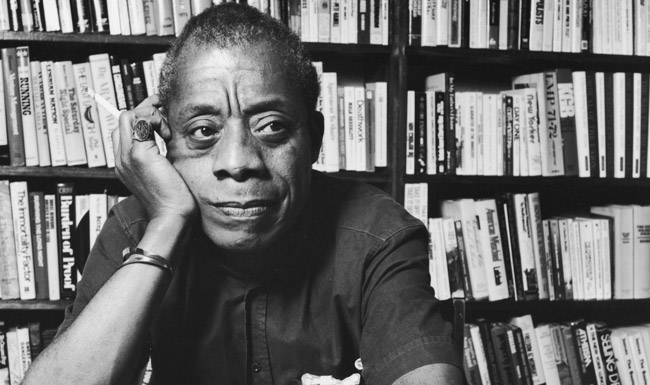
    Speaking at New York City’s Community Church in 1962, the literary legend James Baldwin emphasises the difficulty of using words to convey meaning that is ‘true’ or ‘real’:

    “Words are attempts made by us all to get to something which is real and which lives behind the words […] The terrible thing is that the reality behind all these words depends on choices one has got to make, for ever and ever and ever, every day.”

    From this point onward, Baldwin continues his terrific reflection on creativity and art, particularly focusing on some of the core challenges central to any artist.

    In one of the many moments during the lecture when Baldwin’s passion for art – and the possibilities art can create – truly comes to life, he considers the role of the artist (of the writer, poet, photographer, painter, and so on ad infinitum) in a world beset by chaos and uncertainty. Though Baldwin was speaking in 1962, his words bear that rare timeless quality that make them all the more pertinent here today, in 2016, particularly as our world faces crises posed by Donald Trump, and the rise of fascism across the developed world:

    “I am not interested really in talking to you as an artist. It seems to me that the artist’s struggle for his integrity must be considered as a kind of metaphor for the struggle, which is universal and daily, of all human beings on the face of this globe to get to become human beings. It is not your fault, it is not my fault, that I write. And I never would come before you in the position of a complainant for doing something that I must do… The poets (by which I mean all artists) are finally the only people who know the truth about us. Soldiers don’t. Statesmen don’t. Priests don’t. Union leaders don’t. Only poets.

    […]

    [This is] a time … when something awful is happening to a civilization, when it ceases to produce poets, and, what is even more crucial, when it ceases in any way whatever to believe in the report that only the poets can make. Conrad told us a long time ago…: “Woe to that man who does not put his trust in life.” Henry James said, “Live, live all you can. It’s a mistake not to.” And Shakespeare said — and this is what I take to be the truth about everybody’s life all of the time — “Out of this nettle, danger, we pluck this flower, safety.” Art is here to prove, and to help one bear, the fact that all safety is an illusion. In this sense, all artists are divorced from and even necessarily opposed to any system whatever.”

    Listen to the full audio recording of Baldwin’s stunning lecture via the Youtube video below:

    If that hasn’t left you pondering your struggle for your own artistic integrity, why not explore some other fine pieces of worldly advice for creative writers and artists available right here at Nothing in the Rulebook.


  • best selling books 2016.png

    There has been much debate in recent years regarding the future of bookselling, and whether the online retail industry can – or will – replace traditional bricks and mortar bookstores you find on the physical high street.

    While we can’t yet answer this question, we can tell you a little about the ways in which readers are using these outlets, and what books they are purchasing from them.

    We still await data on what books sold the most copies across traditional bookstores, but Amazon has now released its list of the best-selling books for 2016.

    “This year’s best-selling list showcases the variety of Amazon readers’ tastes, from literary fiction to thrillers to memoirs,” said Chris Schluep, Amazon senior book editor, in a press release. “The power of Potter is still strong, and readers of all ages can’t get enough of Hogwarts – ‘Harry Potter and the Cursed Child’was the most anticipated book of the year, breaking pre-order records months before its release.”

    The full list is here below, with links to Goodreads for your convenience.


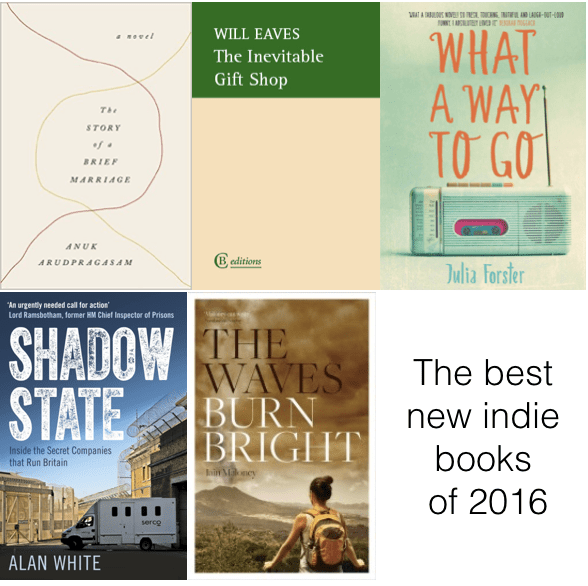
  • The best new indie books of 2016

    Screen Shot 2016-12-14 at 17.46.35.png

    In a year that began with a spate of celebrity deaths including David Bowie and Alan Rickman, and ended with the election of Donald Trump to the US Presidency after taking us via both Brexit and the news that the planet has now passed through the ‘carbon threshold’, there have been precious few things for liberally minded, creative and generally right-thinking people to hold onto. However, when it comes to independent works of writing by new and contemporary writers, 2016 has at least given us cause for celebration.

    As such, we’ve hand-picked our favourite indie books of the year.

    The Inevitable Gift Shop

    We’re big fans of indie publishers CB Editions, and so it’s not surprising that one of their many fabulous titles makes its way onto our 2016 list. The Inevitable Gift Shop, by Will Eaves, is one of those increasingly rare literary finds: a book that is thoroughly unique, yet also pleasingly familiar as it breaks new ground. Described as ‘a memoir by other means’, it’s not at all plot driven. Rather, this work of collage brings together bits and pieces of memoir, fictional prose, poetry, essay and non-fiction. Interactive, funny, insightful and thought provoking in equal turns, it’s a perfect book to revisit time and time again. Read our review of the book here.

    What A Way To Go

    Atlantic Books published What A Way To Go, the latest work of novelist Julia Forster. Set against a backdrop of high hairdos and higher interest rates, pop music and puberty, divorce and death, this coming-of-age tale is effervescently 80s, following the tale of 12-year old Harper Richardson as she navigates the various trials and tribulations of young adulthood. Read our review of the book here.

    The Waves Burn Bright

    There should be a critical term for a book that you can’t stop reading; but also makes you stop and think. Published by Freight Books, The Waves Burn Bright is the latest novel from Scottish author Iain Maloney, and focuses on the 1988 Piper Alpha oil disaster, and the impact it has on the novels central protagonists, Carrie and Marcus, as well as the wider Aberdeen community. It is a book rooted very much in both the past (and the night of the disaster itself), as well as the present; and in its universally recognisable motifs of trauma, loss, and love, carries important messages that will resonate with anyone. Read our review of the book here.

    The Story of a Brief Marriage

    Published by Granta and Portobello, The Story of a Brief Marriage by Anuk Arudpragasam is an uncompromising narrative of a single day during the war in Sri Lanka. Arudpragasam is an assured and confident writer – and it belies belief that this is the work of a debut novelist. The opening sequence of the novel, in which a six-year-old child with a shrapnel-shredded arm is brought to an open-air operating theatre, feels horribly timely, and the poetic nature of the prose and eerily beautiful writing style makes the detail described in the novel’s pages all the more painful and devastating.

    Shadow State

    Published by Oneworld, Shadow State by Alan White is a biting critique of the £80 billion the UK government spends on outsourcing some of the country’s most important public services, from prisons to hospital resources and even child protection. Remember the scandal of G4S’s bungled Olympic security contract? Frightened about the threat Richard Branson’s Virgin Care poses to our healthcare and National Health Service infrastructure? Then this really is a must-read book for you. There are plenty of reasons to despise modern capitalism, and this book pertinently showcases several. We’ll see you on the barricades, comrades.

  •  

    Screen-Shot-2015-04-13-at-11.05.29-AM.png
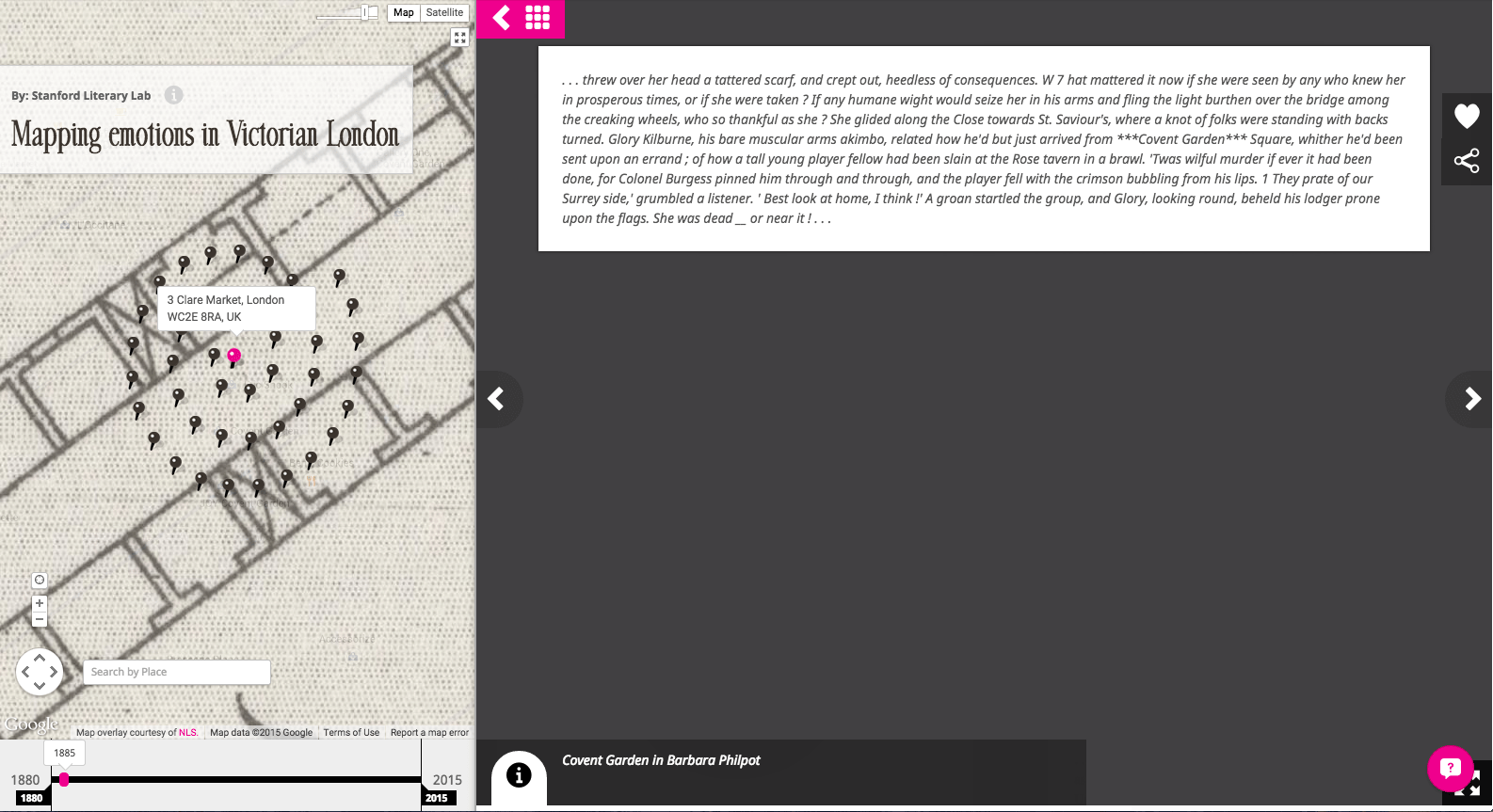
    Digitally mapping literature: the project ‘Mapping Emotions in Victorian London’ takes data from readers and primary texts to create a graphical visualisation of emotions in fictional Victorian London. 

    Here’s a new one for you – what if we were to argue that literary scholarship and the general study of literature no longer requires you to actually read any books? Instead, the same results could be achieved by using computers to crunch “big data” and stores of literary information to provide new insights into the way we think about books, literature, and stories.

    This obviously flies in the face of the standard understanding of literary study that for centuries has insisted upon the close reading of texts. Yet it is not a unique argument.

    We’ve previously considered whether, with the rise of Apps and digital programming influencing the way we publish stories, the future of literature may be electric. And there is now an increasing number of groups and individuals who believe a similar approach could be taken towards academic literary theory. Indeed, they term this “computational criticism” – that is, the analysis of literature in a statistical way using computational models and digital programming.

    Why now? Simply, because modern digital technology permits it. Since Google developed an electronic scanner capable of digitising books in 2004, the written words of all literature can be turned into data – and computers can scan and process this information to pick out trends and identify new areas of insight. They can create graphs, tables, and visual representations of this data that is – arguably – more engaging and interesting to consider than a 100,000 word treatise on the relationship between Kafka’s shoes and modern anti-establishment sentiment (please note: this may not in fact be an actual PhD thesis title – but there are some great ones out there, see for yourselves).

    Of course, the idea of visually representing literature as data is not new. One of the great masters of the written word, Kurt Vonnegut, proposed mapping the plots of stories, as well as character development arcs, onto graphs. In 1952, the satirist’s work Player Piano predicted a dystopia in which giant computers have taken over the work of the human brain – and in his later lectures on the shapes of stories he opined “there’s no reason why the shapes of stories can’t be fed into computers.”

    Needless to say, this topic has drawn some controversy among the literary establishment. Harold Bloom, one of the best-known literary critics and Sterling Professor of the Humanities at Yale University, has described the idea of digital literary theory as “absurd […] I am interested in reading; that’s all I’m interested in.”

    Others are, however, more receptive to these ideas. Jonathan Franzen, for example, says: “The canon is necessarily restrictive. So what you get is generation after generation of scholarship struggling to say anything new. There are only so many ways you can keep saying Proust is great.”

    “It can be dismaying to see Kafka or Conrad or Brontë read not for pleasure but as cultural artefacts,” Franzen continues. “To use new technology to look at literature as a whole, which has never really been done before, rather than focusing on complex and singular works, is a good direction for cultural criticism to move in. Paradoxically, it may even liberate the canonical works to be read more in the spirit in which they were written.”

    We’ll let you decide for yourselves what you think of this new world of literary study. Below, you’ll find five of our “picks” of digital projects in the humanities. Let us know what you think in the comments section at the end!


    1. Mapping Emotions in Victorian London draws on annotations made by readers on passages of Victorian novels, to generate an “emotional map” of London. You can navigate the map online, exploring the emotions of the readers, as well as the underlying fictional passages, to discover the ways in which London was constructed, navigated and represented emotionally in its fiction.
    2. BookLamprecognises how similar one book is to others in the same genre. Simply type into BookLamp’s search bar one of your favourite novels and it will return a data-driven list of 20 more titles that you’ll like.
    3. VisualEyes, developed by the University of Virginia, is a web-based tool that uses data to digitally map, graph and chart important historical events, searching through vast online databases to pinpoint where concepts first appeared and how they spread across the world.
    4. ‘A View of the World Through Wikipedia’is a time-lapse video made by Kalev Leetaru, a researcher at the University of Illinois, charting how writers have expressed generally positive or negative sentiments towards the places they have written about. Leetaru has done similar analyses with books, social media and online news in a project entitled Culturomics 2.0
    5. The Circumstance art collective in Bristol is an interactive online model: a combination of a print book and an urban-walking app that overlays an imaginary world onto the physical.


  • Hands4
    Photography by Mike Dodson/Vagabond Images

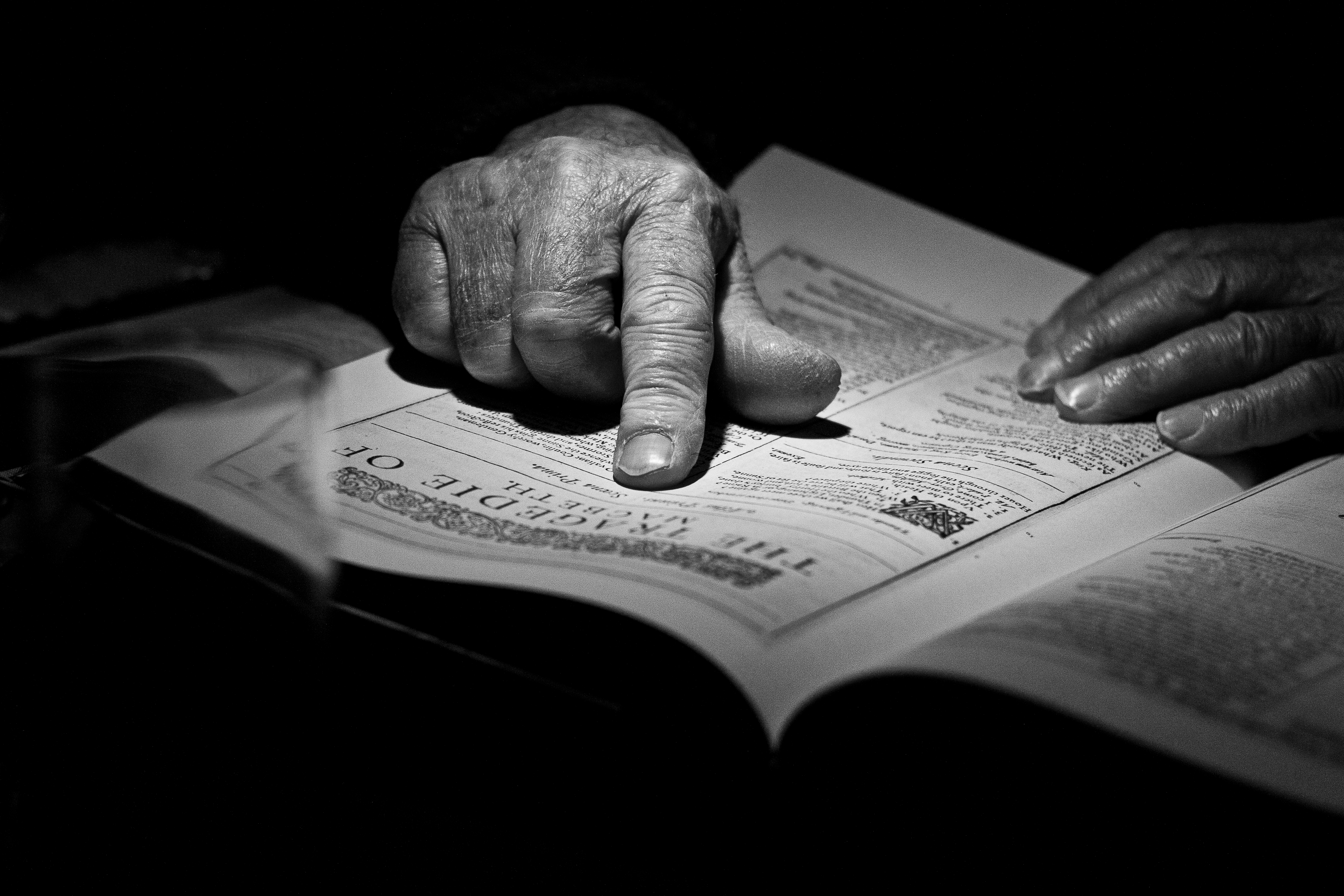
    Reading books is a way of studying human beings – ourselves – our ideas and our passions, our cultures and histories, our successes and our failures. So how did we reach a point where the literary world is increasingly divided by accusations of, variously, elitism or populism?

    In the intriguing book Philology: The Forgotten Origins of the Modern Humanities, by the scholar James Turner, it is argued that what we might term ‘academic humanities’ subjects, such as classics, literature, anthropology and comparative arts studies, can be traced back to the splintering of the master discipline of “philology” – the pursuit of wisdom through the study of written words – in the late 19th century.

    Literature, and the study of books and the written words of human beings, ought then to be the most accessible of academic disciplines. Indeed, it need not be seen as specifically academic at all. Because it is through the simple act of reading that wisdom is gained.

    It might seem obvious, but the fact that the written words of books help us communicate universally applicable ideas to one another is one of the things that sets literature apart from, say, the sciences. Yes we can read, for instance, the scientific observations of theoretical physicists, but we won’t necessarily understand their meaning. Take this description of the point-like particles present in ‘String Theory’:

    “Matter particles are usually fermions — particles with an intrinsic angular momentum (spin) that is half-integral in appropriate units. Force carriers like photons and gravitons are “bosons”, particles that carry integer spin. In fact, all the force carriers except the graviton have spin 1 in units of Planck’s constant, while the graviton has spin 2.”

    The ideas contained within the scientific writing, then, are not universally applicable. On the other hand, the works of writers of literature are: for instance, you do not need to know the specific historical or cultural context of 19th century Russia to understand the universally recognisable core content and themes of a book like War and Peace or Anna Karenina – where we see characters become bored, fall in love, fall in love with someone else at the same time, get married, commit adultery, fight with rivals.

    It has become taboo, in some academic circles, to think this way about fiction. From the 20th century onwards, students at universities studying literature will have likely encountered situations where they have been told it is an error to treat a literary character or scene as anything other than a rhetorical or linguistic or formal or gendered construct. Indeed, it is only by striving for the interpretation and “true meaning” (of which there are nearly always guaranteed to be an infinite number) of a book or story that we should read books, we are told. The act of reading thus is replaced by the act of analysing, evaluating, and theorising. It becomes our business not to empathise with characters but to deconstruct and critique them.

    But of course the empathetic element of writing and reading is fundamental to the relationship between the reader and the written word. We develop attachments to fictional characters, simply, because we see ourselves in them. By reflecting characteristics we recognise, characters in books hold a mirror up to our world in a way that science or theoretical academic writing generally can’t.

    Fortunately there has been a recent upward surge of writers, academics and literary critics who are increasingly willing to talk about the fundamentally enjoyable pleasure of reading for reading’s sake. The Canadian writer and editor, Alberto Manguel, for example, writes he “would rather describe himself as a reader” rather than a translator or critic.

    In the 16th century, Michel de Montaigne wrote “books have been useful to me, less for instruction than as training.” This is perhaps the crux of the matter. When we ask the question ‘what is literature for?’, we can say it is – more than anything – about teaching us about the world, and how to be better human beings; books help us become who we want to be, in other words.

  •  

    dear-life-author-photo-credit-derek-shapton

    Few authors can be easily recognised as being among the greatest of their generation. Fewer still can easily be counted as staying among the literary elite for the entirety of their careers – their writing reaching across multiple generations of readers over the course of their lives. It is therefore fair to say that Nobel-Prize winning author Alice Munro is truly one of a kind.

    Described by Jonathan Franzen as having “a strong claim to being the best fiction writer in North America”, the now-retired Munro has consistently inspired devotion among her readers. For Margaret Atwood, she is “an international literary saint”, while the New Yorker magazine describes her as “our blessing”. When she received her Nobel Prize for Literature in 2013, the Swedish Academy called her “a master of the contemporary short story”. This, certainly, is beyond dispute. With 14 story collections, her psychologically subtle stories are nothing if not personal – and all the more intimate for it.

    “In many ways I’ve been writing personal stories all my life,” Munro has said – and those familiar with her wok will know intimately the details of her years spent with her family on their struggling mink and fox farm during the Great Depression; the burden of her mother’s Parkinson’s disease in her early 40s; her young experiences of marriage, motherhood and divorce.

    While many literary titans are known for either their poetry or epic novels, Munro stands apart for her skill as a short story writer. It is therefore interesting to note that she didn’t set out to write short fiction; and in fact always intended to write a novel, but never had the time to do so. Of this fact, she has said:

    “Why do I like to write short stories? Well, I certainly didn’t intend to. I was going to write a novel. And still! I still come up with ideas for novels. And I even start novels. But something happens to them. They break up. I look at what I really want to do with the material, and it never turns out to be a novel. But when I was younger, it was simply a matter of expediency. I had small children, I didn’t have any help. Some of this was before the days of automatic washing machines, if you can actually believe it. There was no way I could get that kind of time. I couldn’t look ahead and say, this is going to take me a year, because I thought every moment something might happen that would take all time away from me. So I wrote in bits and pieces with a limited time expectation. Perhaps I got used to thinking of my material in terms of things that worked that way. And then when I got a little more time, I started writing these odder stories, which branch out a lot.”

    Regardless of the initial intention, over the course of her literary career Munro has produced countless rare and incredibly important short stories – a short list of which we have compiled below here, which you can read for free.

    A Red Dress—1946” (2012-13, Narrative—requires free sign-up)

    Amundsen” (2012, The New Yorker)

    Train” (2012, Harper’s)

    To Reach Japan” (2012, Narrative—requires free sign-up)

    Gravel” (2011, The New Yorker)

    Deep Holes” (2008, The New Yorker)

    Free Radicals” (2008, The New Yorker)

    Face” (2008, The New Yorker)

    Dimension” (2006, The New Yorker)

    “Wenlock Edge” (2005, The New Yorker)

    “The View from Castle Rock” (2005, The New Yorker)

    Passion” (2004, The New Yorker)

    Runaway” (2003, The New Yorker)

    The Bear Came Over the Mountain” (1999, The New Yorker)

    “Queenie” (1998, London Review of Books)

    Boys and Girls” (1968, womanlit)

    For writers inspired by Munro’s work, think closely also on her thoughts about what it takes to be a writer. In an interview with the Paris Review, Munro says:

    “It isn’t just ideas you need, and it isn’t just technique or skill. There’s a kind of excitement and faith that I can’t work without. There was a time when I never lost that, when it was just inexhaustible. Now I have a little shift sometimes when I feel what it would be like to lose it, and I can’t even describe what it is. I think it’s being totally alive to what this story is. It doesn’t even have an awful lot to do with whether the story will work or not. What happens in old age can be just a draining away of interest in some way that you don’t foresee, because this happens with people who may have had a lot of interest and commitment to life. It’s something about the living for the next meal. When you travel you see a lot of this in the faces of middle-aged people in restaurants, people my age—at the end of middle age and the beginning of old age. You see this, or you feel it like a snail, this sort of chuckling along looking at the sights. It’s a feeling that the capacity for responding to things is being shut off in some way. I feel now that this is a possibility. I feel it like the possibility that you might get arthritis, so you exercise so you won’t. Now I am more conscious of the possibility that everything could be lost, that you could lose what had filled your life before. Maybe keeping on, going through the motions, is actually what you have to do to keep this from happening. There are parts of a story where the story fails. That’s not what I’m talking about. The story fails but your faith in the importance of doing the story doesn’t fail. That it might is the danger. This may be the beast that’s lurking in the closet in old age—the loss of the feeling that things are worth doing.”


  •  

    woman-cover

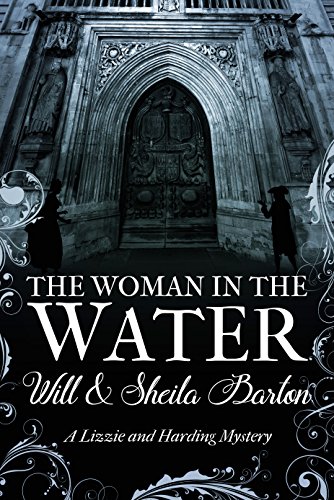
    This period mystery is set in the mid-eighteenth century; Bath is a fashionable watering place, but hasn’t always been quite as civilized. Beau Nash, master of ceremonies and ‘King of Bath’, the man who made it so, has just died and been buried in a pauper’s grave.

    Rich invalids come to sample the curative powers of the hot spring waters, while most of the residents make their living from attending to their needs. Others come to drink, dance, gamble and find themselves a suitable spouse. But beyond the refined balls of the Assembly rooms, there are the poor of Bath, mostly ignored and often exploited, either as servants, labourers quarrying the famous Bath stone, or prostitutes working on grimy Avon Street.

    The story follows Lizzie Yeo, a young woman just coming up from being down on her luck, and Jonathan Harding, a clergyman with something of a social conscience. A body is found in the River Avon and both of our leads have their own personal and moral reasons for trying to identify the woman in the water, despite the indifference of the rest of society.

    The Amazon description gives a great deal away, including all of Lizzie’s backstory and some events from the last half of the novel. This one is the sort where it helps to be in suspense. Unfortunately, the authors do not always reveal things as dramatically as they might, given you already know them from the Amazon spiel.

    The setting is an interesting one, but might have added interest if you have lived in or visited Bath, or perhaps know it from descriptions of it in its Regency pomp. There is no shortage of period detail. The two characters give a dual perspective on the lives of the wealthy and privileged on the one hand and the less fortunate, as well as the double standards that exist for men and woman, rich and poor.  The battle to remain ‘respectable’ is also a feature – even when Harding performs a charitable act for a young woman, rumours begin to circulate about his character. Lizzie has it much worse, as her past misfortunes and the things she has had to do in her poverty are condemned by society. It passes the Bechdel test with ease, as it is a novel where a female protagonist investigates the death of a woman.

    However, It is not without weaknesses. The red herrings are disposed of in a summary manner, leaving the last section of the book as a confirmation of the inevitable. Having said that, this is done in an exciting way up until the last page, although the mystery is over. Occasionally the book feels the need to spell things out more than is necessary.

    I don’t want to sound too negative about what is an entertaining mystery novel, set in a period that does not get the attention that later periods do. The authors, Will and Sheila Barton, have an obvious knack for writing in this genre, and future novels starring Lizzie and Harding seem probable – if so the series may well hit its stride later.


    The Woman in the Water is now available on Amazon: 

    About the reviewer

    TAndrews.jpg

    Tom Andrews is a Genetics graduate and book lover based in Somerset. He has previously attempted music and game reviews. He tweets at @jerevendrai