Amazon is closing all 68 of its physical bookstores. Photo credit: Michael Sauers via Flickr
With news first reported by Reuters that Amazon plans to close all 68 of its physical bookstores in the USA and United Kingdom, there may never have been a better time for readers to shop local, and support independent bookstores.
It is with a certain sense of irony that Amazon is closing its bookstores just 7 years after opening its first store in Seattle. After all, the tax-dodging behemoth did so much to accelerate the decline of longstanding physical bookstore chains like Borders. Indeed, Amazon’s rise from online bookstore to the corporate giant that it is today has often been directly blamed for the shuttering of so many beloved high-street bookshops. As financial analyst Alastair Dryburgh pointed out in an article for Forbes, “The reason that brick-and-mortar bookstores have been disappearing at such a rate is that Amazon destroyed their economics.”
Eyebrows were raised when Amazon announced it was to open its own physical stores – yet it seems the experiment has been relatively short lived.
Michael Pachter, an analyst at Wedbush Securities, said the rationale from Amazon’s standpoint was simple: “Retail is hard, and they’re discovering that,” he said.
The rise of the independent bookstore?
Yet the closure of Amazon’s physical stores comes at an interesting time for the bookselling industry more generally.
After decades of continued decline, recent years have seen this trend slow, or even reverse.
In the UK, the number of bookstores grew modestly between 2016 and 2019, from 868 to 890. And it was in 2017 that Chief Executive of the Bookseller Association, Tim Godfrey, told The Guardian “I think that we have turned the corner.”
While many bookstores understandably struggled during the first of a series of COVID-related lockdowns, the Book Dealers Association announced last year that the number of independent bookstores actually grew over the last 22 months, with its independent membership increased by 12% since the pandemic started. In the UK, there are now 1,026 independent bookshops: the highest number since 2012.
No Alibis Bookstore: a much-loved independent bookshop in Belfast, Northern Ireland.
Meanwhile, across the pond in the USA, independent booksellers also began to increase in number between 2016 and 2019 – rising from 1775 to 1887. However, while the pandemic saw a sharp and sudden decline in independent bookselling firms (falling to 1700), those that survived the first year of COVID seemed to use the opportunity to expand: with the number of physical bookstore locations rising from 2524 to 4100.
All of this seems to suggest that people are starting to recognise the value of physical bookstores, and shopping local to support independent firms in particular – even if it means paying slightly more to avoid lining the pockets of Jeff Bezos.
As Alexandra Petri argued recently in the Washington Post, part of the reason for this is what physical bookstores offer us: “physical bookstores still serve a vital role as showcases for books,” she wrote. “Their ability to bring us into contact with hundreds of things we did not know we wanted is not to be underestimated.”
Writing in the Harvard Political Review, Nathan Cummings goes further, arguing: “Independent booksellers are even better than their chain rivals […] Smaller and less corporate, they leverage their close connections with local communities to provide personalised book recommendations based on store employees’ or frequent customers’ testimonials.”
For anyone who has a favoured local bookstore that they know and love, such testimonials will ring real and true. As NITRB contributor and author of “Philosophers’ Dogs”, Samuel Dodson, says:
“There is something particularly unique and special about going to your local indie bookstore and whiling away the hours, chatting to the owners who have been part of the community for years; who know your literary tastes and go above and beyond to get great books out to readers. All while often organising fantastic community events like book readings and writing classes – which do so much to also support local authors and artists, and bring lovers of books and the written word together.”
So, where to shop local?
Although the trends seem to be moderately encouraging, many authors and bookstore owners are clear that the road ahead is still fraught with risk. In 2021, Managing Director of the Bookseller Association, Meryl Halls, said she was “anticipating that we’re going to lose a slew of [bookstore] businesses”, as things like the cost of living crisis and fallout from Brexit and the Pandemic are felt by consumers and businesses alike.
Meanwhile, Tim Leach, author of The Smile of the Wolf, told NITRB that the last few years have left him feeling “less pessimistic” than he was when considering the future of physical bookstores, but still viewed there situation as “precarious”. He said:
“Waterstones seems to be holding strong from what I can tell, and the renewed desire for physical books definitely bodes well for bookshops. Their position is still precarious, especially the small indie bookshops, but I’m really glad to see them surviving better than I thought they might.”
So, as Amazon closes it’s physical bookstores, where can readers in the USA and UK pick up their books?
Yet, there remain literally thousands of local independent bookstores out there: and we want to hear about them! So, if you have a favourite bookstore in mind – or if you run one yourself – then we want to hear from you! Let us know in the comments below, or even drop us an email or message on social media with a few words about your store and what it means to you.
It was a project 8 years in the making, but in 2019 Maria Popova, founder of The Marginalian (formerly Brainpickings), published a lovely anthology of letters to children about the importance of reading, written by inspiring humans from around the world.
A velocity of beingwas born of Popova’s “deep concern for the future of books”, as well as a love of literature as a pillar of democratic society.
The book features a collection of original letters to the children of today and tomorrow about why we read and what books do for the human spirit, composed by incredible writers, thinkers, and all-round inspiring human beings, including Jane Goodall, Yo-Yo Ma, Ursula K. Le Guin, Mary Oliver, Neil Gaiman, Rebecca Solnit, Elizabeth Gilbert, Shonda Rhimes, Alain de Botton, Anne Lamott, Diane Ackerman, Judy Blume, David Byrne, Sylvia Earle, Richard Branson, Daniel Handler, Marina Abramović, Regina Spektor, Adam Gopnik, Debbie Millman, Dani Shapiro, Tim Ferriss, Ann Patchett, a 98-year-old Holocaust survivor, Italy’s first woman in space, and many more artists, writers, scientists, philosophers, entrepreneurs, musicians, and adventurers whose character has been shaped by a life of reading.
Each letter is accompanied by original illustrations by prominent artists like Sophie Blackall, Oliver Jeffers, Isabelle Arsenault, Jon Klassen, Shaun Tan, Olivier Tallec, Christian Robinson, Marianne Dubuc, Lisa Brown, Carson Ellis, Mo Willems, Peter Brown, and Maira Kalman.
All proceeds from the sale of the book are donated to the New York public library system – a gesture inspired by literary greats like James Baldwin and Usula K. Le Guin.
Le Guin’s poem-letter to children, featured in this anthology, is the legendary author’s last published work. (While we’re speaking of Le Guin and her overall excellence – do not forget her rallying call for writers to imagine alternatives to capitalism, or her exceptional writing routine helped fuel her creativity.
Described as a “labour of love” by Popova, she writes in her introduction to the book that A Velocity of Being is in part about showing “as plainly yet passionately as possible that a life of reading is a richer, nobler, larger, more shimmering life”. We couldn’t agree more.
A Velocity of Being can be picked up from Amazon and all good bookstores.
In further great news, you can also read some of the individual letters featured in the book – including ones by Jane Goodall, Alain de Botton, Rebecca Solnit, and Jacqueline Woodson – via The Marginalian here. A dozen illustrators from the book also gave Popova permission to make beautiful prints of their artwork, all proceeds from which, like those from the book itself, benefit the public library system. So – another way you can support public libraries that is also beautiful and inspiring.
The heady days before lockdowns and Coronavirus seem a long time ago now. But while much has changed in the last two years, one thing has remained constant: our commitment to trying to pull together as many helpful tools, resources and guides to help creative folk fulfil their potential.
It is with this commitment in mind that we are thrilled to once again bring you our list of creative writing competitions from around the world, scheduled for the year ahead (2022).
The Margery Allingham Short Story Competition is open until 28th February, 2021.
Submit stories up to 3,500 words. Your story should fit into crime writer Margery’s definition of what makes a great story: “The Mystery remains box-shaped, at once a prison and a refuge. Its four walls are, roughly, a Crime, a Mystery, an Enquiry and a Conclusion with an Element of Satisfaction in it.”
Prize: £500 plus two weekend passes to Crimefest 2023 and a selection of Margery Allingham books.
The Restless Books Prize for New Immigrant Writing was created in 2016 to honour outstanding debut literary works by first-generation immigrants, awarded for fiction and nonfiction in alternating years.
The competition is organized by the Restless Books, an independent, non-profit publisher located in Brooklyn, New York.
Participants must be first-generation residents of their country. “First-generation” can refer either to people born in another country who relocated, or to residents of a country whose parents were born elsewhere. The submission should address some combination of identity, the meeting of cultures and communities, immigration and migration, and today’s globalized society.
This year, the competition is open to fiction submissions.
Authors must not have previously published a book of fiction in English.
Fiction manuscripts must be a minimum of 45,000 words.
Just in its second year, this story competition has a maximum word limit of 1800 words. The first submission will cost you £5, with an additional £2.50 cost for each submission after that.
First prize will receive £100, with second and third prizes receiving £50 and £30, respectively.
The Rialto working in association with the RSPB, BirdLife International and the Cambridge Conservation Initiative on this lovely offering that is sure to attract poets and nature lovers.
Poems are invited that deal with any aspect of nature and place – these terms will be given a wide interpretation by the judge Gillian Clarke. The closing date is 1st March 2021. There is a £7 submission fee and winning entries can receive between £250 to £1000 in prize money.
Most recently Oscar nominated for Belfast, acclaimed writer, actor, and director Kenneth Brannagh lends his name to this playwrighting competition.
Amateur playwrights world-wide are invited to submit unpublished one-act plays.
Three winning scripts will be selected for fully staged performances during the Fringe Festival in October. One of the three scripts will be chosen for the £500 prize, judged purely on the writing. Plays must be no longer than 30 minutes long.
International writing prize for writers of all stripes and nationalities. Deadline is March 14th, 2022 for submissions of 12,500 words or less. Entry fee is US$15 and first prize is US$2000.
One of the most significant short story competitions in the UK, this prize is awarded yearly by the BBC. Entrants must have a prior record of publishing creative work in the UK. Stories up to 8,000 words are accepted, and may be submitted by the author or by their agent. Shortlisted stories are awarded a prize of £600.
This hotly contested competition is free to enter. The deadline for entries is 28th March 2022.
Following the murder of George Floyd in 2020, Nottingham Writers’ Studio launched the ‘George Floyd Short Story Competition’ in remembrance and in protest against his senseless death. We had over 150 excellent entries with the very best 27 being chosen for our anthology ‘Black Lives.’
In that same spirit of protest, we are proud to launch the next chapter. From November 26th 2021 to March 31st 2022 the second year of the competition will be taking stories of up to 5,000 words on the theme of ‘EARTH 2.0’
Global warming is the big issue of the day, disproportionately affecting developing nations. As the world heats up, the changing climate will likely be the greatest challenge future generations face; whether this be environmental, or socio-political (though the two seem to walk hand in hand…) We can’t think of a worthier topic for writers to explore.
This competition is open to all as we welcome the experiences of advocates and allies as well as voices from the black community. Above all, we want to ensure in publishing the anthology we amplify, centre, and celebrate the voices and writings of BAME authors.
There is no fee to enter, and the maximum word count is 5,000.
Every year, the Killer Nashville Claymore Award assists new and rebranding English-language fiction authors get published, including possible agent representation, book advances, editor deals, and movie and television sales. 2022 is the 13th year for the KNC award.
The contest is limited to only the first 50 double-spaced pages of unpublished English-language manuscripts containing elements of thriller, mystery, crime, or suspense NOT currently under contract.
The entry fee is US$40 and the deadline for submissions is 1st April 2022.
The New Deal Writing Competition is a short story competition where the writer is asked to use a painting chosen by the staff of GVCA as inspiration for their short story.
This year’s painting is “In the Paddock” by William Dowling.
There is an entry fee of US$5 to enter and a maximum word limit of 10,000. Top prize receives US$200.
The deadline for entries is 1st April 2022 (the portal will open in March).
The theme for this year’s highly prestigious award is freedom.
There is no fee to enter and the winner will receive a £10,000 cash prize. A £3,000 cash prize will go to the second place, and £2,000 to the third place runner up. The winner and two runners up are invited to attend the symposium.
An award for local, national and international writers. Closing date for submissions is 11th April, 2022. Short stories of up to 2200 words in all genres and styles are welcome – there is no minimum word limit. First prize receives £1000 and there is also a local prize for Bath residents, as well as The Acorn Award of £50 for unpublished writers of fiction. Entry fee is £8.
The aim of the Desperate Literature Short Fiction Prize is both to celebrate the best of new short fiction and to give winners the most visibility possible for their writing.
Max word count is 2000 and there is an entry fee of €20 to enter for your first submission (and €10 thereafter). First prize receives €1500 and a week’s residency at the Civitella Ranieri Foundation, a long-form manuscript assessment, and a consultation with a UK literary agent, while second and third places also receive €750 and there are other prizes available (check the website for details).
The 2022 Brick Lane Bookshop Short Story Prize is now open for submissions, with a deadline for entries of 19th April, 2022.
The prize is open to all UK residents for original short stories between 1000 and 5000 words and we’re looking for new, exciting and diverse voices in short fiction. There is no fee for entry.
First prize will receive £250. All of the longlisted stories will be published in the Brick Lane Bookshop Short Story Prize anthology in Autumn 2022.
Longlisted stories will be read and judged by our panel: Anne Meadows, Huma Qureshi and Chris Wellbelove.
One for Australian writers. First prize is AU$2000. The deadline for submissions is 25th April 2022 and the entry fee is AU$15. The maximum word limit is 2000 words, which includes both titles and any subheadings.
This is an international competition and there is just one category: Adventure. The organisers accept traditionally published, e-published and manuscript novels. There is a US$1000 cash prize. A $25 entry fee is charged, and all proceeds go to promoting the contest, the finalists and the winner. The deadline for entries is 30th April 2022.
As it says on the tin, this short and sweet writing contest has a word limit of 100 words. Writers of all ages from around the world can submit as many entries as you like, with an entry fee of US$10 per entry.
The theme for this year’s prize is The Power of Words, with first prize taking home US$1000, and some excellent prizes on offer for those who take home second and third place. More info on their website.
Entries are welcomed for unpublished stories written in English. The deadline for submissions is 4th May 2022 and stories can be on any theme or subject. Maximum length of 4000 words. An £8 entry fee and first prize is £1000. There are also 17 further prizes of £100 for all shortlisted writers.
Fix, Grist’s solutions lab, invites you to submit a hope-filled climate fiction short story for our second annual contest, Imagine 2200: Climate Fiction for Future Ancestors.
Stories must be set anytime between today and the year 2200, and show a path to a clean, green, and just future. We especially want to read — and share — narratives that center solutions from the communities most impacted by climate change and stories that envision what a truly equitable, decolonized society could look like. In 3,000 to 5,000 words, show us the world you dream of building.
The winning writer will be awarded $3,000, with the second- and third-place finalists receiving $2,000 and $1,000, respectively. An additional nine finalists will get $300 apiece. All winners and finalists will have their story published in an immersive collection on Fix’s website — each with its own original art — and will be celebrated in a public virtual event.
The winner of this annual award will receive US$5000 and an interview in Writer’s Digest. There are a variety of different award categories so it’s best to check the website for details. Deadline is 6th May 2022.
The Raymond Carver Short Story Contest is one of the most renowned fiction contests in the world. Featuring prominent guest judges and offering US$1500 across five prizes, the contest delivers exciting new fiction from writers all over the world. The contest opens each year April 1 – May 15 and prize winners are published in their annual fall issue in October. Usual entry fee of US$17.
International open competition founded in 1973. Four categories in poetry (max 42 lines); short story (max 5,000 words); flash fiction (max 250 words) and the Peggy Chapman-Andrews Award for a First Novel (max 8,000 words from opening chapters plus 300 word synopsis).
Deadline usually looms towards the end of May each year and 2022 is no different; so make sure you submit by 31st May 2021.
Entry fees and prizes vary depending on category. Full information about this world-renowned competition can be found online.
The Bath Novel Award 2018 is an international prize for unpublished and self-published novelists. The winner will receive £3000, with manuscript feedback and literary agent introductions for those shortlisted. In addition, the writer of the most promising longlisted novel will receive a free place on an online editing course with Cornerstones Literary Consultancy.
Submit your first 5000 words along with a one page synopsis by the end of May 2022.
There is an entry fee of £29 per novel (there are sponsored places available for writers on low incomes).
The fine folk over at the Fiction Factory run a suite of great writing competitions throughout the year. If you have a novel that you’re sitting on; you also have a first chapter – and the FF folk want to read it.
The winning entry will be read by literary agent Joanna Swainson of the Hardman & Swainson Agency. Joanna is looking for originality and distinctive voices. For complex, larger-than-life characters and stories that will stay with the reader forever. Stories that surprise, and keep on surprising. As Joanna says, she will know what she’s looking for when she sees it!
The winner will also receive £500 – not bad, eh!
There is an entry fee of £18 per entry and the deadline is 31st May. Max word count is 5,000 words.
The Narrative Prize is awarded annually for the best short story, novel excerpt, poem, one-act play, graphic story, or work of literary nonfiction published by a new or emerging writer in Narrative.
Deadline is 15th June 2022 and there is no entry fee. Maximum word counts of 2000 and prizes of up to US$4000 available.
The Moth Short Story Prize is an international prize, open to anyone from anywhere in the world as long as their story is original and previously unpublished. The winners are chosen by a single judge each year, who reads the stories anonymously.
The Prize is open to anyone (over 16), as long as the work is original and previously unpublished. This year’s prize will be judged by Sarah Hall.
There is a word limit of 4,000.
The entry fee is €15 per story, with prizes including €3000, a week at the Circle of Misse plus a €250 stipend, and €1000.
You may have heard of this feller called HG Wells. He’s inspired countless authors; and now he has a writing competition to get them excited, too (in fairness, this competition has been around for a little while, now).
The annual HG Wells Fiction Short Story Competition offers a £500 Senior and £1,000 Junior prize and free publication of all shortlisted entries in a quality, professionally published paperback anthology.
All entries must relate to the theme for this year’s Competition: MASK.
You can if you wish enter more than one story: please complete a separate entry for each story entered.
Your story can be set anywhere, feature any characters, and be written in any style. The length is 1,500 to 5,000 words. Entries must be in English.
The deadline for submissions to the HG Wells competition in 2021 is 12th July.
The competition is open to original, unpublished and unbroadcast short stories in the English language of 3,000 words or fewer. The story can be on any subject, in any style, by a writer of any nationality, living anywhere in the world. Translated work is not in the scope of this competition.
First Prize: €2,000, a week-long residency at Anam Cara Retreat and publication in the literary journal Southword.
There is a fee of €18 per entry and the deadline for submissions is 31st July 2021.
Renowned lit mag, Aesthetica, is looking for the best new writing talent. The £5,000 international literary prize is open to poetry and short fiction entries on any theme, celebrating innovation in content and form.
Sometimes, the right story at the right moment can give us the courage we need to overcome adversity. And when that story doesn’t already exist, we need to make it ourselves.
To have a chance to win the Exisle Academy’s short story competition, you need to write a short story – in any genre, fiction or fact – that helped or would have helped you at a pivotal moment in your life. One winner will receive up to US$ 1,500 worth of training and coaching with Exisle Academy, including the opportunity to discuss developing a book with our editors.
Deadline to submit is August 28th. There is a maximum word count is 1,500. Enter here.
The winner of City Academy’s Short Story Writing Competition 2022 will receive a cash prize of £1,500 and a City Academy voucher worth £300. The winning story will also be published on their website with an accompanying interview and photoshoot.
Registration will close at 9am, Monday 5th September 2022. Submission deadline is 11.59pm on Monday 5th September 2022. Please note that submissions after this time will not be considered.
There is an entry fee of £15 and submissions must be no longer than 4,000 words. More information online.
There are two prizes available in this annual award – one for fiction and one for poetry. Both competitions offer a £10,000 first prize. Deadline for entries is usually around mid-late September and the competition generally opens in February each year. The fiction prize will be awarded to the best short story of up to 2500 words, and is open to international writers aged 16 or over. The poetry prize will be given to the best portfolio of three to five poems (maximum length: 120 lines). The entry fee for each competition has usually been £17.50.
For American citizens with books published in the calendar year (or scheduled to be published) – no self-published books will be accepted. No submission fees, with a deadline of October.
The SmokeLong Quarterly Award for Flash Fiction (The Smokey) is a biennial competition that celebrates and compensates excellence in flash.
The SmokeLong gang will pay the grand prize winner $2000. Second place: $1000. Third place $500. Finalists: $100. All finalists and placers will be published in the special competition issue in December 2022.
Your story must be no more than 1000 words in length. Entry fees change (the sooner; the cheaper!), and the deadline for entries is 15th November 2022.
For this award, any genre or theme of short story is accepted. All applicants should submit their original unpublished work of short fiction or nonfiction, 5,000 words or fewer, to be considered. Along with receiving an award for $1,000.00 USD, the winner will have his or her short story featured within the ServiceScape blog, which reaches thousands of readers per month.
There is no entry fee and the deadline for entries is 30th November 2022.
As it says on the tin, this short and sweet writing contest has a word limit of 100 words. Writers of all ages from around the world can submit as many entries as you like, with an entry fee of US$10 per entry.
There is no theme for the November contest, with first prize taking home US$1000, and some excellent prizes on offer for those who take home second and third place. More info on their website.
The Moth Poetry Prize is one of the biggest prizes in the world for a single unpublished poem. The prize is open to anyone, as long as the poem is previously unpublished, and each year it attracts thousands of entries from new and established poets from over 50 countries worldwide.
The Prize is open to anyone (over 16), as long as the work is original and previously unpublished.
There is no line limit, and the poems can be on any subject.
The entry fee is €15 per poem. You can enter onlineor send your poem(s) along with a cheque or postal order made payable to ‘The Moth Magazine Ltd.’ with an entry form or a cover letter with your name and contact details and the title of your poem(s) attached to: The Moth, Ardan Grange, Milltown, Belturbet, Co. Cavan, Ireland H14 K768.
The closing date for submissions is 31 December 2022. What a way to round out your writing year!
A Six Word Wonder is a story, memoir, poem, or joke, told in only six words. Write a tiny bite-sized story in exactly six words. The winner is crowned the Six Word Wonder, receives a US$ 100 prize, and is published in an anthology of six word stories.
The ambition of the contest is to encourage everyone to experiment with the six word format, and hopefully discover fresh new stories, poems, memoirs, and jokes.
Entry is free. All entries will be credited to you if shared or published in future.
Shortlisted stories will also win the chance to be published in a future Six Word Wonder series book.
Every Friday, Reedsy kicks off a weekly short story contest by sending out a newsletter that includes five themed writing prompts. Subscribers have one week (until the following Friday) to submit a short story based on one of the prompts. The winner receives US$ 50 and publication on Reedsy’s Medium blog.
Austin Film Festival 2022 is offering a number of different writing contests for you to sink your teeth into. In well over two decades, the Austin Film Festival (AFF) have helped many writers break into the industry of film and television.
AFF currently offer writing competition categories for screenplays, teleplays, short screenplays, digital series scripts, stage plays, and fiction podcast scripts.
Deadlines for the competitions vary, with some differences in entry fees depending on whether you enter before, early, regular, or late/final deadlines.
Dan Brotzel describes himself as a “funny-sad author” and writer of novels, short stories, articles and other motley bits of content. The author of Hotel du Jack, a collection of short stories, and The Wolf in the Woods, a novel, he also co-wrote the brilliantly funny Work in Progress – a “novel-in emails” from award-winning publishers, Unbound.
Now, writing humorous prose is no mean feat. As James Parker wrote in the New York Times, “the future belongs to stern, hectoring bozo-prose, with no giggles at all. Because it’s easier”. Indeed, many authors are inclined to see comic writing as not only more difficult, but also more honest, more essential and even – in some ways – more serious than apparently serious writing. As Cath Crowley rightly noted: “it is easier to make someone laugh, than it is to make someone cry”.
It is a privilege, then, to have the opportunity to speak with Brotzel about his writing; maintaining your creativity under through Lockdown; and how writers can make something genuinely funny and humorous. While it should be noted that we here at Nothing in the Rulebookare huge fans of Work in Progress (fast-paced, witty and definitely one to put on your reading list), we are absolutely thrilled to feature Brotzel as part of our ongoing ‘Creatives in profile’ interview series, and bring to you, dear readers, the following interview…
INTERVIEWER
Tell me about yourself, where you live and your background/lifestyle
BROTZEL
I live in suburban north London with my partner and three children. After decades in journalism and content, I finally got down to fiction (always my dream and ambition) in about 2015. Since then I’ve been writing pretty much non-stop – about 100 short stories, which led to a collection (Hotel du Jack) followed last year by a novel, The Wolf in the Woods (both Sandstone Press). With a couple of pals from my writing group, we wrote Work in Progress (originally called Kitten on a Fatberg), a comic novel-in-emails about an eccentric writers’ group. It was crowdfunded via Unbound and also came out last year.
INTERVIEWER
Is writing your first love, or do you have another passion?
BROTZEL
I think reading was probably my first love, but the two are very bound up in my mind.
INTERVIEWER
Who inspires you?
BROTZEL
A lot of my work comes from things I see or hear in my daily life. My writers’ group is brilliant for motivation, support and constructive feedback. In particular I’m inspired again and again by my co-author Alex Woolf, for his commitment to writing and profound understanding of how fiction works. I learn from him all the time.
I like authors who take risks and follow their own voice. People I’ve really been enjoying and inspired by recently would be Ottessa Moshfegh, Binnie Kirshenbaum and Gary Shteyngart.
INTERVIEWER
How have you found the experience of writing under lockdown?
BROTZEL
Before lockdown, I got into a routine of starting writing every day at 5.30am. With lockdown, that went out the window. It was hard to fit writing in with home-schooling, and somehow everything turned to very slow-moving treacle. I did squeeze out a couple of longer stories but it always felt like pushing against an unseen current.
INTERVIEWER
Your most recent book, Work in Progress, brings to life the world of the creative writing clubs in such an authentic way that anyone who has any experience of such clubs – or university courses – will find instantly relatable (and perhaps the fact it strikes so close to home is what makes it so side-splittingly funny). How much of the book is drawn from your own experiences of these kinds of groups – and would any of your writing friends feel an unnerving familiarity with any of the characters?
BROTZEL
I think we imagined the characters as types, and then tried to make them more particular. We all drew on the sort of people you can find in these groups – Alex and Martin in particular are veterans of several groups – but were very careful not to base them on people we knew. If anything, they are based on aspects of ourselves more than anyone else.
I wrote a piece about writer group ‘types’, which takes you from “the crap dad”, through to “the sentimentalist” who repeatedly weeps as they read their very long short story about a baby dinosaur who has lost its mum.
INTERVIEWER
A lot of books will have the “humour” label attached to them; but it takes a special kind of book to make a reader laugh out loud. How do you write something genuinely funny?
BROTZEL
For me, writing funny is about taking risks – for example, daring to write the thing that everyone thinks but no one dares say aloud. It’s about close observation – humour often arises where a writer notices or articulates something about the way we think or behave that normally gets overlooked. Style and precision come into it – a well-told joke (and especially a punchline) often has a wonderfully tight structure and the economy of a poem. And I think it’s about not trying too hard. For me, humour isn’t a genre, it’s an element that can arise in any kind of fiction. Don’t try to force it, it will always come. I write more about this on my blog.
INTERVIEWER
You’ve now written three novels – could you tell us how you’ve found the writing experience for each of them? Is each writing journey completely unique, or do you have the same writing process you apply for all your books?
BROTZEL
All a bit different. With Jack, I started writing stories as a way into writing. Most were written in a blitz, and edited heavily afterwards. Many went through several different versions, were combined and cut etc. The collection contains things written over about 20 years.
Work in Progress was a collaboration. It’s a much more drawn-out process, with hundreds of emails exchanged and important pub conferences at key moments. We had a rough idea where we were going, but after the draft was done, there was a huge amount of editing (more about this here).
I made a point of not starting Wolf till I had really worked through the idea, and had an outline that broadly made sense. (I got lots of help with this by sharing with a couple of pals.) My nature is to plunge in and start writing so it was hard to make myself wait, but I know from bitter experience that without a plan things I will just quickly fall over. Once I got started, the first draft went very quickly, most done in the early morning. But again, lots of editing and rewriting afterwards.
INTERVIEWER
You published Work in Fiction through the crowdfunding publisher Unbound. How did you find the experience of crowdfunding, and the overall Unbound experience?
BROTZEL
It’s a wonderful idea and I think it has great potential for authors as a model. Unbound continues to publish a wonderfully eclectic list. It’s great fun to start with, but of course there is a lot of money to raise in pre-sales, so you do need to have a bit of stamina and patience (along with your supporters) and be prepared for the hustle.
I wrote about the experience in great detail here.
INTERVIEWER
Any tips you can share with writers thinking of submitting to Unbound?
BROTZEL
Go for it! Probably good to think in advance about who the ‘market’ for the book might be, and how you might reach them. Everyone has a network of friends and family who will offer support, but to get a book published you need to go far beyond that and it usually takes many months, sometimes years.
INTERVIEWER
Looking around at current trends in publishing right now, what are your thoughts and feelings on the state of the industry as it is and as it has been in recent years. And what has your personal experience been of trying to break onto the ‘literary scene’?
BROTZEL
I used to think that just getting published would be the answer to everything, but in many ways it’s just the beginning. These days authors have to be prepared to do a lot of the marketing and promotional hustle themselves. You have to find a way to embrace that and see it’s all part of the bigger piece of finding an audience for your work.
INTERVIEWER
When writing, what do you think is most important to keep in mind when writing your initial drafts?
BROTZEL
Have a plan before you start. The plan won’t survive contact with the enemy, and it doesn’t have to be incredibly detailed and long, but it gives you a framework to hang your scene and chapters on. Without it, it’s very hard to finish anything.
For me it’s just about getting it down. Just having a first draft done, with a rough start, middle and finish, however crap you might think it is, is a huge milestone. Then you can start editing, which is in some ways the most fun part.
INTERVIEWER
Do you have a specific ‘reader’ or audience in mind when you write?
BROTZEL
Not really. There are so many things I feel I couldn’t write, I just have to go for things that feel doable to me. I tend to prefer domestic everyday life and comic themes to building worlds and imagined futures, for example – not because they’re better or worse, they’re just things I feel I can write. I like writing about relationships and everyday things and small, unglamorous feelings – pettiness, jealousy, frustration, narcissism. Lots of comic potential – and we can all relate to them! I just wouldn’t have a clue about how to go about writing a historical novel or a sci-fi saga.
INTERVIEWER
How would you define creativity?
BROTZEL
I don’t know. To me it feels like a sort of constructive play. The times I feel most creative I’m not even really there any more – it’s just a feeling of absorption in the scene at hand, a sort of happy trance. There’s an element of performance in there too, which is a good thing: you can’t just write for yourself, you have to communicate to others. (Another reason a writer’s group is such a godsend.)
INTERVIEWER
Could you tell us a little about some of the future projects you’re working on?
BROTZEL
I’m working on An Awareness Almanac (working title). I’m going to observe a different awareness day every day for a whole year – World Turtle Day, National Paper Airplane Day, Equal Pay Day, International Talk Like A Pirate Day, World Dairy Goat Awareness Week – and document what that does to my head. (I’m a month in and it’s already changing me radically!)
I’ve also drafted a new novel, The Earth Husband, about a man who is married to a psychic and finds himself in a love triangle with her and her first husband (now deceased).
Quick fire round!
INTERVIEWER
Favourite writer?
BROTZEL
Changes all the time. At the mo, probably Ottessa Moshfegh.
INTERVIEWER
Favourite book?
BROTZEL
Under the Volcano
INTERVIEWER
Who is someone you think more people should know about?
BROTZEL
Mason Currey’s Daily Rituals and Natalie Goldberg’s Writing Down the Bones are wonderful books about writing and process.
INTERVIEWER
If writing didn’t exist – what would you do?
BROTZEL
Read. Run.
INTERVIEWER
Do you have any hidden talents?
BROTZEL
I am good at catching small morsels of food in my mouth thrown at some distance
And finally, could you give your top 5 – 10 tips for writers?
BROTZEL
Start with the main course. When you sit down at your desk, start by doing some writing that matters – don’t get side-tracked by doing lots of little jobs or reading the football reports first.
Learn to love rejections. They’re all part of the game. The more you submit, the less you care.
Get it done. Every time you finish something – however much you hate it – you grow your writing muscles a little.
You don’t have to writing to be writing. Simply reading a book, watching a film or talking to someone about things relevant to your idea are all a hugely valuable part of the process.
Ignore all writing tips, unless you like them. There are no rules, only things that work for you.
Karl Ove Knausgaard; creative commons license via NDLA
After two years of pandemic-imposed postponement, acclaimed writers from around the world are now due to submit their manuscripts to the Future Library: a 100-year art project based in Norway.
In June this year, the Norwegian novelist Karl Ove Knausgård (year 2019), Vietnamese American writer and poet, Ocean Vuong (year 2020) and Zimbabwean novelist, playwright and filmmaker Tsitsi Dangarembga will handover their manuscripts, which will remain sealed and unopened for 100 years.
The library of the future
In Nordmarka, a forest just outside of Oslo, a thousand trees have been planted for an incredibly special purpose. In 100 years time, they will be used to make the paper for an anthology of books, which will form part of the so-called ‘library of the future’.
A path through the Nordmarka forest – where the footsteps of authors past, present and future will follow. Photo by Kristin von Hirsch
The Future Library – Framstidsbiblioteket – is a 100-year artwork launched by Scottish artist Katie Paterson (read our interview with Katie here). From 2014 until 2114, one writer every year will contribute a text, with the writings held in trust, unpublished for up to 100 years. Each writer has the same remit: to conceive and produce a work in the hopes of finding a receptive reader in an unknown future.
The first writer to contribute a text was Margaret Attwood, with novelist David Mitchell adding his own manuscript the following year. Since then, the shelves of the future library have swollen with contributions from the likes of Elif Shafak and Man Booker prize winning author, Han Kang.
A milestone ceremony
Prior to the pandemic, each author had walked a special route through the Nordmanka forest as part of an annual handover ceremony. However, following the global outbreak of COVID-19, these have been paused.
The Future Library handover ceremony 2022 however promises to be a very special event, and a milestone for the visionary project: not only will the annual handover take place, but this year the ceremony will include the opening of the manuscripts’ resting place, the silent room in the new public library Deichman Bjørvika.
The silent room will be home to all the manuscripts contributed to the project until their eventual publication in the year 2114. The room is designed by artist Katie Paterson and architects Atelier Oslo and LundHagem. The opening of this very special place marks an important milestone for the Future Library.
Designing he silent room in the Oslo public library where the manuscripts will be stored for the next one hundred years. Photo credit: Atelier Oslo and Lund Hagem
On Monday the 13th of June a symposium on the topic of nature and future will take place in the new public library Deichman Bjørvika. It will be the first of the annual symposiums to take place the coming 93 years. All three authors being honoured this year will contribute to the conversations alongside the artist Katie Paterson, moderated by Claire Armitstead, Associate Editor, Culture, the Guardian.
The events will be live streamed and spread worldwide.
Work in Progress – definitely one to put on your reading list for 2022.
What would Handforth Parish Council be without Jackie Weaver? Read “Work in Progress” and you may well find out. The book has all the quintessential British charm of Bake-Off, except with an anger management problem; every chapter is “FreezerGate”. So many pages brimming with all the awkward British tension of a ‘Come Dine With Me’ episode gone spectacularly awry. The book is fast-paced, witty and definitely one to put on your reading list for 2022.
The action centres around Crawley’s newest writing group, founded by Julia (jet-setting trophy wife and failed actress) and populated by seven other equally flawed and equally entertaining characters, with the book composed of the emails exchanged between them.
After a day of work and sending a million of my own emails, the thought of reading more emails, even in a book format, did not appeal to me. But how wrong I was! The short snappy emails take the pressure out of reading. There is no worrying if you can finish the chapter before your partner turns the light off or having to push yourself through dryer sections. In fact, I even ended up reading it between meetings whilst working, with the Crawley writing group emails infinitely preferable to those in my own inbox. The format of the book, while not traditional, is by no means unique. However, that does not matter. It’s well executed and the perfect way to observe the exquisitely funny false-praise, shoulder-jostling and petty scabbles of the would-be writers.
There’s something very satisfying about reading the sugar-coated exchanges between the group, whether they’re catching a love-cheat in a lie or remarking on the lacklustre vol-o-vents at the last meeting. Woe-betide anyone who thinks twiglets are sufficient for the Crawley Writing Group. They’re the sort of emails you dream about sending to your boss, or perhaps a difficult client, but never quite have the nerve. You can delight in their gentle scandals and embrace the Schadenfreude.
The authors drip feed you information, with each character and email bringing more and more detail and personality to light. From an innocuous email about a lunch time drink, we learn details of two-timing lovers, hails of root vegetables and some very dodgy accents. It plays into your psyche, encouraging you to make assumptions about a character’s age, looks, and motivations, only to flip it on its head, and leaving you cackling with glee.
Through the emails, the characters are represented as caricatures. Julia’s humble brags growing ever more outrageous, Peter’s conceptual art gets ever more meta, and disgruntled civil servant, Jon, starts to seem more and more like a tin-foil-hat-wearing-lunatic. Were this story to be told in the traditional first or third-person format, it would be rather too much on the nose. Trying too hard. As it is though, through the clever narrative structure, jokes are often glanced or hinted at. It tempers the outrageous characters, giving the book more sophistication than you would expect, particularly from a book that deliberately seems to fall into tropes.
Unusually, the book is written by a collective of three authors, Dan Brotzel, Martin Jenkins and Alex Woolf, and it is better for it. Having so many writers may lead you to worry the book would be disjointed and inconsistent, however this feeds into its fundamental structure. Having different writers perhaps helps give the emails written by each character their own character and style. You don’t need to see who the emails are from to know the flowery-worded essay is from Julia darling, any more than to see the simple “Yes” reply is from Jon.
Work In Progress is a great, fun book. It’s light-hearted and will have you in fits of laughter. Whilst it’s not the sort of book I can imagine re-reading time and again, the humour often relies on slight twists, which would be ruined in hind-sight, that does not lessen the enjoyment I had reading it. It’s left-field and quirky, which we need to see more of in the literary world. The fact that it was picked up at all indeed was thanks to their Publishers Unbound, who rely on crowd-funding to help release this sort of unique and independently minded work. I look forward to seeing what Unbound, and Brotzel, Jenkins and Woolf get up to next.
About the reviewer
Jennifer Taylor is a twenty-something reader and art-lover based in London. She knows a thing or two about Kombucha and how to grow avocados. When not forgetting to water her (other) houseplants, she can usually be found with a book in-hand or else generally wishing she had a dog. She (occasionally) tweets at @JenTaylor300 and can be found on Instagram @jennifertaylor12
Stories, it has been said, are both true and untrue. This is the case with realistic fiction as well as with genres like sci-fi, fantasy or magical realism. Yet the latter’s speculative or fabulous elements are often singled out as making them distinct from naturalistic fiction.
In an era of concerns about untruths in society, including the proliferation of fake news and public figures like Donald Trump who tell compulsive lies, is there any reason to be more wary of fiction with speculative or ‘untrue’ elements? Or does this still have an important role in storytelling?
Psychological truths
Fiction with fabulous elements has an infinitely longer history than realistic fiction, from the monsters of ancient myth, to the magic lamps of fairy tales, to the Lilliputians of Johnathon Swift’s Gulliver’s Travels, to the daemons of Philip Pullman’s His Dark Materials. Clearly, literature with fabulous aspects appeals to something deep within human beings, but what?
Firstly, it gives pleasure. ‘There is more bliss in describing the origin of the giants than in describing court etiquette,’said the ancient philosopher Paracelsus. Much more recently, in an interview with me in Serendipity, the Canadian novelist Gail Anderson Dagartz observed: ‘what drew me to magic realism is the fun. Who doesn’t like the chill of seeing a ghost… The wonder of flowers falling from the sky?’
Fabulous stories meet human needs beyond pleasure, though. For one thing, they draw on, or speak to, depth psychology – the research and study of the unconscious. Fairy tales, for instance, have a dream-like logic – with their dark forests and gleaming palaces, crystal slippers and wish-granting fairies, they almost seem cast in the language of the unconscious. In his influential book The Uses of Enchantment (1979), Bruno Bettleheim drew on psychoanalytic ideas to argue that fairy tales provide an outlet for feelings of anxiety, anger and guilt in children; these tales literally depict scenarios of abandonment, powerlessness and sibling rivalry. Such stories, he argued, enable children to work through their tricky emotions about the adult world.
The magical realist writer Angela Carter enjoyed retelling fairy tales precisely because they don’t document the ordinary world in a simple way but trade in the language of the unconscious. In The Bloody Chamber (1979), she rewrote fairy tales such as Bluebeard and Snow White in stylish prose, bringing out their latent erotic content and giving them a sharp feminist slant. Her heroines are cunning and clever and act to fulfil their desires. In the ‘Appendix’ to Burning Your Boats, Carter insisted she herself wrote ‘tales’: ‘Formally, the tale differs from the short story in that it makes few pretences at the imitation of life. The tale does not log everyday experience, as the short story does; it interprets everyday experience through a system of imagery derived from subterranean areas behind everyday experience’ (1996, p.459). Symbols recur in her works – mirrors, doubles, beasts – which address a realm beyond appearance.
In the 20th century, psychoanalytic ideas also informed untruths in the political sphere, but in a very different way. Edward Bernays, nephew of Sigmund Freud, saw the power of propaganda during World War I and set about using it in the US to sell products and manage the images of politicians during peacetime. He drew on Freudian ideas and renamed propaganda as ‘public relations’. His influential ideas about this subject, later to inspire the Nazis, involved deliberately manipulating the public without them being aware of it, for political or commercial ends. The simple narratives or associations used were intended to appeal not to the rational part of the mind, but to unconscious desires – so US women were persuaded to take up smoking through having female fashion icons flaunt their ‘torches of freedom’. This manipulative appeal to desires for money or power is very different from offering an imaginative storytelling space in which unconscious emotions can be explored or life illuminated through symbolic or metaphoric structures. It couldn’t be further from Angela Carter who used ‘the fabulous’ to shed lacerating light on questions of sexuality and gender. Carter put women at the centre of her stories and gave them agency over their fate.
Documents of our time
Carter is far from alone in using fabulous elements to examine contemporary concerns. Writer Colleen Gillard (2016) argues here that many YA fantasy worlds allow children and young adults to think through the problems of their day. At a time when fears about terrorism, economic hardship, inequality and environmental disaster are ever-present, fantastic stories about dystopias have become popular (The Hunger Games, The Giver, Divergent): ‘Like the collapse of the Twin Towers, these are sad and disturbing stories of post-apocalyptic worlds falling apart… This is a future where hope is qualified, and whose deserted worlds are flat and impoverished.’ Francesa Haig, YA author of The Fire Sermons series, observes in this 2017 BBC Open Book podcast that the appeal of these dystopian stories to young people isn’t about them processing teen angst in a narcissistic way. To her, young people feel disenfranchised and aren’t looking inwards but outwards, keen to ask big questions about, for instance, democratic freedoms, women’s rights, and climate change.
Adult fiction also addresses reality through speculative lenses. William Gibson, author of the Neuromancer trilogy (1984-8), says that his ‘science fiction’ examines and develops tendencies within the present more than projecting into the future. His Neuromancer books, set in a near-future world dominated by corporations and high tech and exploring a world of human-machine links, revealed a mind paying keen attention to the present, prescient about the age of the internet. Fiction with speculative or ‘untrue’ elements may actually be better at revealing truths about our own times. Mary Robinette Kowal, author of the Lady Astronaut series (2014-20), said in a 2021 podcast: ‘one of the great advantages of science fiction and fantasy is that we are writing with metaphors baked into the bones of our artform… [genre fiction] takes the building blocks of the normal world and shifts them to the side enough so you can see backstage, see the connective tissue… [it] makes you understand better how things in our world interconnect than you would in… straight up mimetic fiction.’
The US writer George Saunders has suggested that ‘an aesthetic uncoupling from the actual’ may be necessary to ‘express our most profound experiences‘ (cited in Joel Lovell’s ‘Foreword’ to The Tenth of December, 2013). Saunders uses absurdist elements to explore contemporary American life; his stories are set in a slightly futuristic America where things have gotten strange. As writer Junot Diaz says of Saunders: ‘There is no one who has a better eye for the absurd and dehumanising parameters of our current culture of capitalism’ (cited in Lovell’s ‘Foreword’, 2013). ‘The Semplica Girl Diaries’ in The Tenth of December, for instance, is about third world women who come to America to decorate the lawns of the wealthy; they are hung up, in flowing dresses, on a microline that runs through their brains. The short story explores injustice and the ripple effects of global capitalism, though above all, it is a compelling tale of domestic yearning and class anxieties. Written as a series of journal entries, it tells of a man struggling on low pay who just wants to make his three kids feel better about themselves in relation to their wealthy classmates.
Magical realism
Magical realism is a genre known for its fabulous elements and for its political engagement and historically informed stories – it comes from the periphery and the colonies, from women and migrants. The term ‘magical realism’ was put on the literary map by post-World War II authors like Gabriel García Márquez and Miguel Ángel Asturias, whose work combined the history of Latin America with the fabulous. While acknowledging the influence of European modernism, these writers set out to create a literature that was distinctly Latin American in style and content. So, they drew on non-western narrative styles, as well as on popular folklore and superstitions, on the myths of indigenous Americans and popular Catholicism.
Gabriel García Márquez’s One Hundred Years of Solitude (1967) tells a story of a family over a century, offering a sketch of Colombian history and, more broadly, of Latin America, with its civil wars and emergence into modernity. The book features ghosts, a girl who ascends to heaven while hanging out the washing, an insomnia plague, and a child with a pig’s tail born out of incest. The folk wisdom and magic of the non-west is sometimes used in a knowing manner, sometimes more sincerely. Despite the sense that ‘tall stories’ are being told, by presenting the extraordinary events in a matter of fact tone, as real as events like civil wars or marriages, non-western cultural systems are effectively validated.
Márquez’s use of fabulous elements is thus nothing like political falsehoods, though he himself wouldn’t have been fazed by fake news or by politicians like Donald Trump assaulting truths in the west – Latin America has had its fill of lying leaders. Indeed, when Trump announced he would buy Greenland, ‘one could hear the ghost of Gabriel García Márquez chuckle’, as the writer Nina Martyris said in 2019. In Márquez’s Autumn of the Patriarch (1975), a magical realist novel about a 200 year old tinpot dictator in some unnamed Latin American country, the United States actually buys the Caribbean Sea from the broke tyrant and ships it off to Arizona, leaving behind a vast crater of dust. The monstrous dictator at the centre of the story is an amalgam of all those who have ruled parts of Latin America, and the novel ‘stands out as a scathing critique both of the ravages of power and the ruthlessness of capitalism’ (Nina Martyris, 2019).
Magical realism, begun in Latin America, quickly travelled round the globe to countries like the US, Canada, India, Japan, and the UK. In Magical Realism and the Post Colonial Novel, Christopher Warnes (2009) distinguishes two broad types – faith-based and irreverent – although these can coexist in any text. The faith-based version, practiced by Guatemalan writer Miguel Ángel Asturias, for instance, incorporates mythic elements in order to enrich the category of the ‘real’, often to reclaim indigenous cultural knowledge. The irreverent version tends to be more knowing and deconstructivist; it playfully critiques claims to truth and coherence in western worldviews (colonial, racist, patriarchal), assuming they are historically contingent rather than inevitable. For example, Salman Rushdie’s The Satanic Verses (1988) is about migrant communities in late 20th century London. When he comes to Britain from India, the Indian Muslim character of Saladin Chamcha is turned into a devil/goat. Lying in a guarded hospital, sprouting horns and a tail, he is asked how this metamorphosis is possible, and replies, ‘They describe us… That’s all. They have the power of description, and we succumb to the pictures they construct’ (p.168). In painting people of colour as ‘animals’ and ‘devils’, they – that is, the police and related institutions here – hold power over these minorities and withhold humanity from them. The fabulous elements in Rushdie are used as literal metaphors to explore the destructive effects of racism.
Magical realist narratives have been rife recently in the revival of the UK short story form, as I explore in my essay here (Wimhurst 2019); their appeal lies partly in their subversiveness. Talking about her inventive collection Fen(2016), Daisy Johnson told me (in a 2017 interview): ‘In a lot of stories the magical realism often begins as strength for the female characters (they can breathe underwater, they eat men) and gradually seems to turn against them. Magical realism is used as a way to undermine old orders, to create new realities and new possibilities. It is the fiction of attack…. It also creates a space where these women characters can speak out loud, can become more than their relationship to men.’ The stories of Kirsty Logan also have a fabulous feminist impulse. Logan sits within the contrary tradition of the feminist fairy story that started with Angela Carter’s (1979) Burning Your Boats. In a 2018 interview, Logan told me: ‘Carter’s books work hard to upend the [fairy] stories rather than just update a few flimsy details. As Carter put it: “I am all for putting new wine in old bottles, especially if the pressure of the new wine makes the bottles explode.” That’s what I want to do with my stories, too.’ Logan’s excellent The Rental Heart and Other Stories (2016) includes fairy tale retellings that put female experience and lesbian sexuality at their core.
A writer’s take on ‘the fabulous’
Many of the authors referred to above have inspired my own writing. Though I’m hesitant to include myself in such illustrious company, my stories also use speculative elements – especially magical realist and dystopian – to address uncomfortable truths about today. In Snapshots of the Apocalypse, my first book of short fiction, I invent dark, off-kilter worlds which hopefully illuminate, and unsettle the complacencies of, our own world. The title story, ‘Snapshots of the Apocalypse’, portrays a 2060s England on the verge of collapse due to aggressive climate change, a place where the many types of rain are named after former Prime Ministers and Tate artworks are used as frisbees. ‘The Job Lottery’ portrays a surreal dystopia in which the plebs are allocated jobs randomly each year by them fishing numbered rubber ducks from a pool. ‘The Wings of Digging’, featuring a winged being/refugee who works on a building site but yearns to be an archaeologist, explores racial prejudice. My stories tend to be dark because, without the political will for dramatic change, we are heading to a bleak future – of growing xenophobia and inequality and devastating climate change. As a writer, I can’t look away, even if I can soften the stories’ impact by introducing hope, imagination and quirky humour – odd towns called Nowhere, knitting as an antidote to Armageddon.
Conclusion: Truth versus Untruth
Samuel Butler (1612-80), the British satirist and poet, once said, ‘Men take so much delight in lying, that truth is sometimes forced to disguise herself in the habit of falsehood to get entertainment, as in fables and apologues frequently used by the ancients’ (Butler 1759). Indeed, fabulous fiction has a long history of using fantastical elements to offer metaphors for human behaviour and to interrogate power or satirise topical issues. As Salman Rushdie recently said in a BBC Arts and Ideas podcast (‘Alice and Dreaming’), ‘Literature in the end is about the truth, about finding a way to say something truthful about human beings, what we’re like, what we do to each other, whereas [political] lies are a way of obscuring the truth. Fiction, no matter how fabulous it is, and lies, no matter how convincing, are actually enemies.’
About the author
Katy Wimhurst’s first collection of short stories, Snapshots of the Apocalypse, is published by Fly on the Wall Press. Her fiction has been published in numerous magazines and anthologies including The Guardian, Ouen Press, Fabula Press, Cafe Irreal, and ShooterLit. She also sometimes writes essays like this. She is housebound with the illness M.E.
Another year has passed and, as we prepare to ring in 2022, here at Nothing in the Rulebook we’ve been struck, in the twilight of the year, by the writings of Seneca, and his 2000 year old treatise on the Shortness of Life:
“It is not that we have a short time to live, but that we waste a lot of it. Life is long enough, and a sufficiently generous amount has been given to us for the highest achievements if it were all well invested. But when it is wasted in heedless luxury and spent on no good activity, we are forced at last by death’s final constraint to realize that it has passed away before we knew it was passing. So it is: we are not given a short life but we make it short, and we are not ill-supplied but wasteful of it… Life is long if you know how to use it.”
With these words swirling in our minds, we’ve decided to do what so many others do at this time, and resolve to do things differently in the year to come.
But what resolutions should we hold ourselves accountable for, in 2022? Well, as readers, writers, artists and all-round creative folk, we thought we’d put down a few resolutions with a creative angle, in the hope that we might loosen the creative ligaments and spur ourselves onto widen our lives, as Seneca instructed; rather than merely lengthen them.
Without further ado, below we have a short list of what you might call “guidelines” for the year ahead. We’d love to hear your own though (and we might even add to this list with full credit with any suggestions we receive), so please do add your own in the comments or send us an email!
Getting a debut book out there is no mean feat, especially in the current climate where most big publishers are mostly interested only in sequels, prequels, or celebrity memoir (or, as Julian Barnes observed in The Paris Review “Publishing houses are only looking for books that are imitations of other successful books.”).
So, in 2022, we’ve resolved to read more books by debut writers – not necessarily only those published in this calendar year, but recent authors who for the first time find their books on the shelves of bookstores. And we’ll support them in other ways, too, leaving reviews online to help support the inevitable sales algorithms, and spreading word via social media. We have compiled a short list of debut writers and their books that we’re recommending for 2022, but if you are a debut author and would like us to support your book,please get in touch.
Start a diary – and keep it
“The habit of writing thus for my own eye only is good practice. It loosens the ligaments” so wrote literary legend Virginia Woolf when discussing her own diary keeping.
It perhaps seems a bit old hat to suggest keeping a diary in an age where our lives are self-documented via various social media platforms. Yet for writers and readers (and other creative folk!) alike, the simple art of noting one’s experiences and thoughts down in a moderately thoughtful and creative manner, through a diary, can be infinitely helpful. 2022 could be the year you start – or restart – your diary writing habit.
Measure activity; not results
When it comes to the work of a creative – whether a writer, artist, photographer, film maker or musician – your job is to share your truth, not worry about the outcome of your work. The first goal of any creative artist is therefore to sit down and do the work, no matter how scary or hard it may be. When you do this, you almost always create something better and more honest than worrying about “what will people think?” So, create art in whatever shape or form that moves you and leave the results to your audience. In 2022 therefore, set yourself creative goals based in activity – and aim to meet them by the end of the year.
Spasming muscles, groans, whispers, licked ears, sweat, bucking, otherwise central zones and bulging trousers. If you’re hoping your New Year’s Eve will feature at least some of the above, you can guarantee it by checking out our collection of all the winning entries of the infamous ‘Bad Sex in Fiction’ award. It’s hilarious, and a lighthearted break from the seriousness of both creative resolutions and the grimness of reality in the 2020s.
The big one: should you quit your job and become an artist?
It’s a similar question posited by another literary great, Charles Bukowski – who asked: “How in the hell could a man enjoy being awakened at 8:30 a.m. by an alarm clock, leap out of bed, dress, force-feed, shit, piss, brush teeth and hair, and fight traffic to get to a place where essentially you made lots of money for somebody else and were asked to be grateful for the opportunity to do so?”
These existential worries are pretty big ones to kick a new year off with. But if now isn’t the kind of time to consider these big, soul searching questions, when is? Creativity isn’t always suited to the demands of late neoliberal capitalist society; yet it’s something we desperately need as both individuals and also for our collective human consciousness. So, even if you don’t throw it all in this year, maybe it’s still worth asking the question: if creativity brings you joy, what do you need to do, in order to pursue it?
The power of reading is what draws us to this quiet, contemplative – and often beautiful – act; but where should one actually start? When you bookshelves are full to bursting with books you haven’t yet read, or if you’ve read them all and don’t know where to turn next, what book should you pick up?
It can be quite a commitment, which book you read and when. So, for 2022, we’ve made it a New Year resolution to support new writers by committing to reading more books by debut authors. In the list below, you’ll find some of our recommendations – but we’re the first to admit that it’s far from exhaustive. So, if you’re a debut author yourself, or if you’ve uncovered a new fabulous book by a debut writer and think it deserves a place on this list, please let us know in the comments or by getting in touch!
Published by Hamish Hamilton, Brown’s first book is remarkable both for its size (it’s a slim volume of around 100 pages or so), but also for just how much impact every single word within those pages has. As noted in The Elements of Style, what matters above all else in writing is that “every word tells”, and boy, does this book tell a stunning, vivid, and beautiful story. At it’s heart, it is a brilliantly compressed, existentially daring study of a high-flying Black woman negotiating the British establishment – and is the exact sort of fiction we all need in our lives. Check it out via Amazon (or all good bookstores)
On a painful, freezing Easter Monday in 1917, Private Robert Gooding Henson of the Somerset Light Infantry is launched into the Battle of Arras. In the pages of the unfolding debut novel, Cobley delivers a simply stunning story, beautifully told. It is very hard to write about something as “big” as the Great War; yet Cobley shows some impressive writing talent in the way he’s able to bring us into the world and the characters. Beautiful and at times meditative language also help lift the book up and place it right up there alongside the very best of war literature. A fantastic reading experience. Check it out via Amazon
Charman has a gift for nimble interior monologues and a superb ear for the varieties and vagaries of human speech. It’s often the interior questions that his characters ask themselves that stand out most strongly; “What does God owe you now?” one asks as Crow Court moves to its conclusion. It’s a question that hangs in the air, as well as on the pages of the novel, as though we had asked it ourselves.
Over the course of Garthwaite’s brilliant first novel, titular protagonist Cecily flatters and flirts, she plots and schemes. She also faces an army, bargains for the lives of her children, and endures terrible losses. Garthwaite’s writing is brutal in places, beautiful in others, all powered by her thirty years of research and careful observation. A fantastic book by an excellent new writer. While you’re at it, check out our review with Garthwaite here.
Embers is a first novel by Josephine Greenland. A beautifully told mystery that takes place amidst conflict between contemporary Swedes, and Sami reindeer herders who want to preserve their traditional way of life. Against this backdrop, Embers explores themes of hate crime, prejudice, family relationships and animal cruelty. Reading this book, one can’t help but be drawn into the dark mysteries at its heart, which are mirrored by the dark forests of northern Sweden and the mysticism of Sami folklore. Pick up a copy today.
Described by many reviewers as “bleak”, there’s very good reason that Stuart’s debut novel won the 2021 Booker Prize for fiction. An unforgettable story of a sweet and lonely young boy (Shuggie Bain) growing up in Glasgow in the 1980s. One to check out.
Centuries after Thomas Jefferson set up home at Monticello in Charlottesville, Virginia, and a few years from now, a group of Black and brown friends, families and strangers from the city’s First Street neighbourhood arrive after fleeing white supremacists. A time of rolling blackouts and turbulent weather, this near-future nightmare plays out over 19 tense days in the former president’s home. Told from the perspective of Da’Naisha Love, a Black descendent of Jefferson and Sally Hemmings, My Monticello is a blistering reflection of today’s society. Buy the book.
Though author Costanza Casati sets her debut novel in a dystopia, there are very few elements of Iris’s world that do not seem to have an equivalent in ours. People’s sexual relationships are played-out on screen for entertainment. Women portrayed as glamorous and powerful are systematically abused behind the scenes. Hysterical social media posts reported as gospel truth. There are too many enemies to count. There are the other contestants jostling for the top spot, the entitled politicians the Lovers are ordered to ‘entertain’, the bodily imperfections – the cellulite, the wrinkles, the extra few pounds – that are said to hold each contestant back. Read our review here
What if all philosophers stole their ideas from their dogs?
That’s the premise behind this hilarious, beautifully illustrated debut by Nothing in the Rulebook’s own Samuel Dodson and his sister, Rosie Benson. Described by Waterstones as “side splittingly funny”, Philosophers’ Dogs could be treated as a kind of faux serious philosophy 101 text book, rewriting the philosophical work of thinkers from Socrates (ahem, Socrafleas), through Sun Tzu (Sun Shih-tzu), Karl Marx (Karl Barks) and Mary Wollstonecraft (Mary Woof-stonecraft). You’ll come for the philosophy; but you’ll stay for the dog puns.
Searching for the perfect literary gift for the book lover(s) in your life this festive season? Well, look no further. While the songs we hear pumped into ever store at this time of year tend to reference presents under the tree, it’s important not to forget the smaller ones that fit snuggly inside stockings of all shapes and sizes. So, below you’ll find our list of book-ish treasures that will be perfect for the bookworms and bibliophiles in your life.
Ian Sansom is back with another antidote to the festive season with this brilliant collection of short stories, filled with those same emotions we feel year upon year in the most trying and joyous of months – anticipation, frustration, despair and ecstasy. We loved the first instalment by Sansom and our feelings towards December Stories II are no different. These wonderful stories will make you laugh, cry and question everything you thought you knew about Christmas, Yuletide, the winter solstice, etcetera. In these stories, Sansom’s vivid and varying characters peel back the many layers of the winter month, from a lonely mother to a guardian angel, a pest-controller to a ‘bar-bar-bar owning brother’ to a baker selling lockdown sourdough kits, these snippets of lives are revealing and beautifully familiar. With the cynical wit and emotional insight we’ve come to expect from Sansom, get ready to fall in love with this mind of winter, and you might begin to wonder, are December Stories becoming a tradition? ‘Happy, Merry, etcetera, etcetera, etcetera.’
A subscription to a literary magazine
There’s a lot of talk these days of buying the ones you love subscriptions to streaming services like Netflix or Spotify. But this year, why not support some independent creatives instead of lining the pockets of huge media corporations, while also bringing some literary delights to the doors of those you care about for the next year?
Purchasing a subscription (or three, or thirty) to a literary magazine (like The Brixton Review of Books, Litro, Tin House, The Emma Press, the TSS or Oxford American, to name but a few) help readers around the world discover new writing. Not only are they a great way of getting cheap (sometimes almost free) reading material on the regular, you also get added cool-person points for supporting some right-on creatives.
The last couple of years may not have been the most fun-filled for many of us; but that doesn’t mean you can’t have a fun-filled calendar.
From the creative minds behind Dung Beetle books (the team who brought you the excellent spoof ladybird classics like ‘We Go to the Gallery’), now comes a limited edition calendar featuring the ‘best of’ stories from these hilarious books.
You can order our special limited edition Dung Beetle Books ‘best of’ Calendar for 2022
Mummy is guaranteed to put your life in order for just £12.99.
With a limited run of 1500, these calendars are a genuinely perfect gift for bookish and art-ish types in your life.
Something special from the Folio Society
Looking to hide a real genuine treat at the bottom of someone’s stocking? Then why not check out these extraordinarily beautiful books from The Folio Society’s Christmas selection, featuring Bram Stoker’s Dracular, Charles van Sandwyk’s The Meaning of Mice and even a stunning collection of Spiderman comics by Stan Lee and others (perfect for anyone currently enthralled to the latest Marvel instalment celebrating your friendly neighbourhood spiderman.
A literary face mask
Not all of our items on this list are Covid-related (we promise!) but in a year that has seen the face mask make a re-emergence on the fashion market for the first time since plague times, we think you’d be missing a trick not to make sure the book lovers in your life were able to sport their literary spirit while sticking to health and safety guidance. The folks over at Redbubble have a fine selection of literary masks to choose from, to boot. We quite like the above one featuring a quote from old Bill Shakespeare.
Who loves a Christmas gift from Virginia Woolf?
Mrs Dalloway. Or To the Lighthouse. Or A Room of One’s Own. Virginia Woolf remains one of the canon’s most beloved writers, and essentially any of these Vintage Classics series of her works, complete with gorgeous watercolour covers by Aino-Maija Metsola, would make a lovely addition to any reader’s stocking – and a necessary addition to any book collection, too.
Something magic from Foyle’s Harry Pottergift selection
Twenty years on from the first publication of J.K. Rowling’s beloved Harry Potter and the Philosophers’ Stone (or Sorcerer’s stone for our US-based friends), the Harry Potter series continues to enchant adults and children alike. For any of your Potterhead friends, something from the Foyle’s Harry Potter gift selection – including wands, chess sets, models and an official marauders map – is surely going to go down a treat.
Literary Emporium’s Book Lover Gift Set makes the perfect present for any bibliophile and includes an assortment of bookish items along with an exclusive Literary Emporium mug and your choice from a selection of delicious tea.
A monthly subscription to a book club
If there have been some positives to draw from the last couple of years, perhaps one is that lockdown and the pandemic seem to have gotten many more of us reading. Earlier this year, The Bookseller reported that publishers and booksellers had seen “dramatic increases” in the numbers of people signing up for book subscriptions. Some book subscription services reported up to 10-fold increases.
Book subscriptions make the perfect presents for bookworms, so perhaps it’s no surprise that more time spent at home has seen us reaching for classic books we’ve perhaps never read. After all, what could be nicer than a beautifully wrapped, hand-picked, thought-provoking book dropping through your letterbox every month?
There are plenty of bookclub style subscriptions out there, but a few of our favourites (via Not on the Highstreet), include the Personalised Book Subscription, and A subscription to Rare Birds Book Club, the home of women’s fiction, with their monthly Female Authors Book Subscription.
Those that like a challenge or want to broaden their reading horizons will love this scratch-off poster from The Literary Gift Company. Get inspired to delve into a varied range of fiction, non-fiction, contemporary and 20th-century tomes, as well as classics – and then, once you’ve read it cover to cover, rub off each panel to reveal a hidden image. All the classics are here and it makes for some nice wall art (remember: you can always cheat and scratch off panels even when you haven’t read the books to impress your friends…though where’s the fun in that?)
It wouldn’t really be Christmas without some socks to open on Christmas morning. Add a literary twist to this year’s Christmas socks with these Fahrenheit 451 inspired designs from the Literary Gift Co.
Philosophers’ Dogs is published by award-winning publishers, Unbound
If you’re looking for a perfect stocking-filler sized gift, you need look no further than Philosophers’ Dogs, the first book by Nothing in the Rulebook’s own Samuel Dodson.
Featuring beautiful illustrations, alongside jokes and puns galore, Philosophers’ Dogs reveals a truth long kept secret: that all philosophers stole their ideas from their dogs.
“Finally setting the record straight and revealing the philosophical genius of the canine species, this invaluable – and side-splittingly funny – book demonstrates how Marx, Socrates and many other celebrated intellectuals shamelessly pilfered their pooches’ theories.”
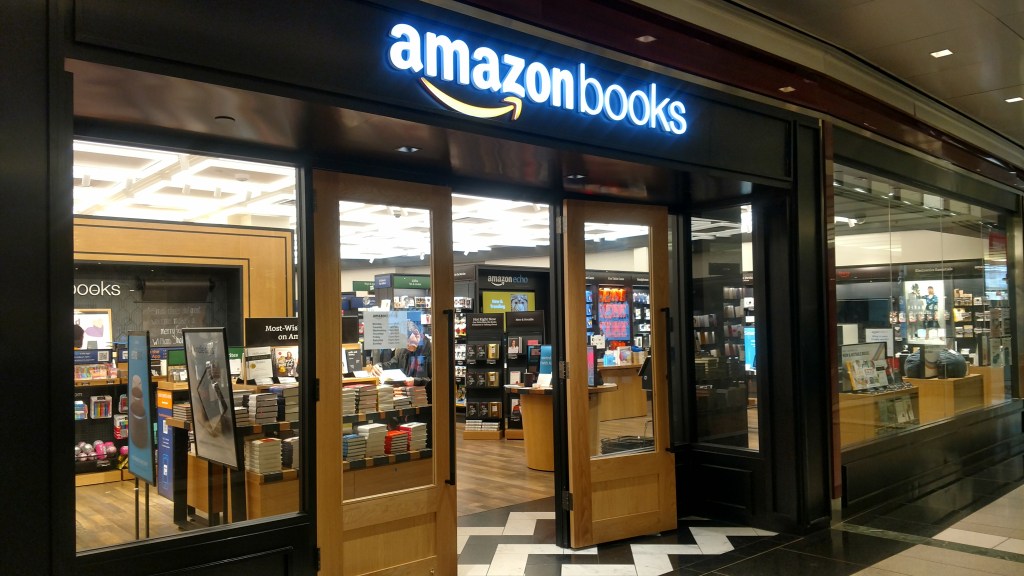







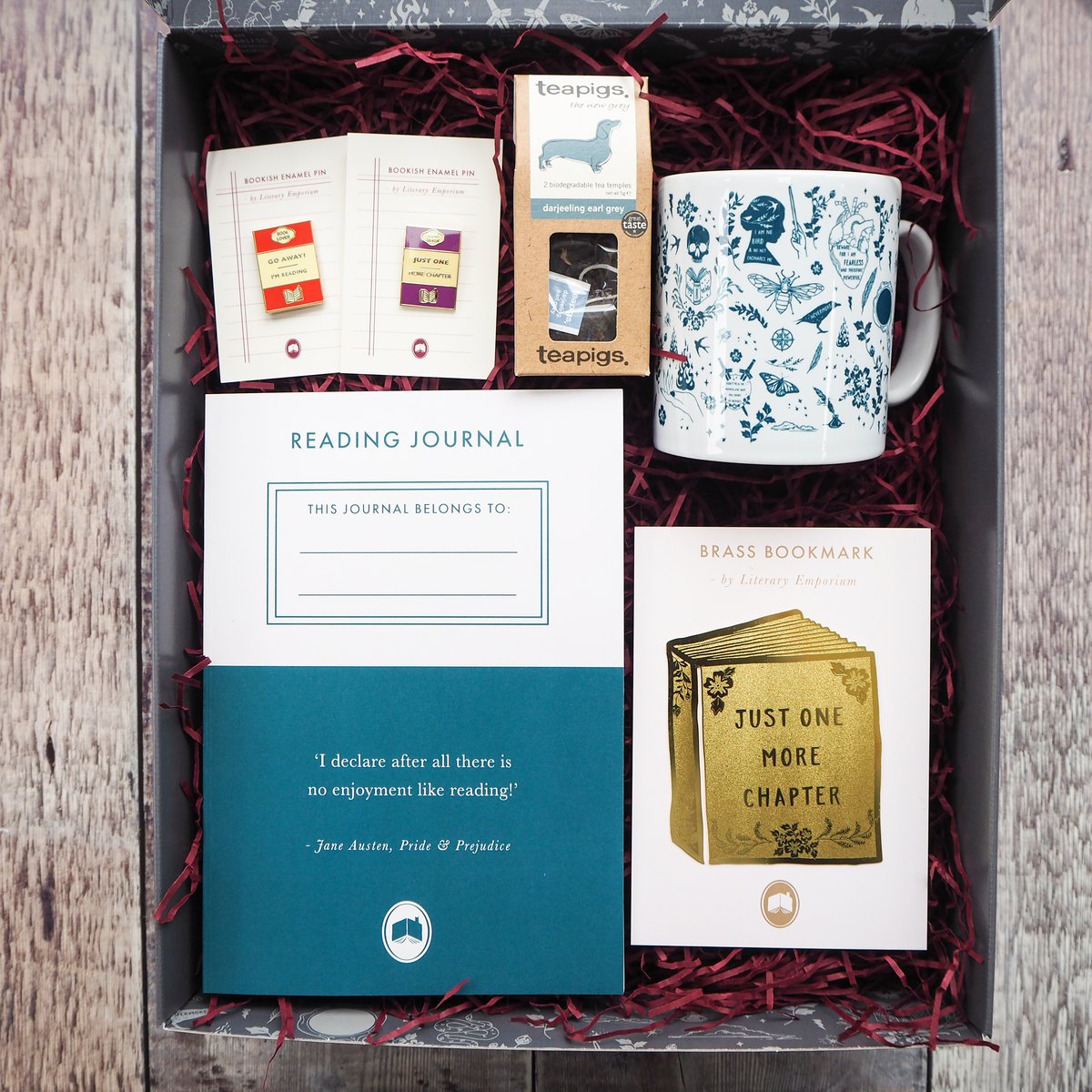

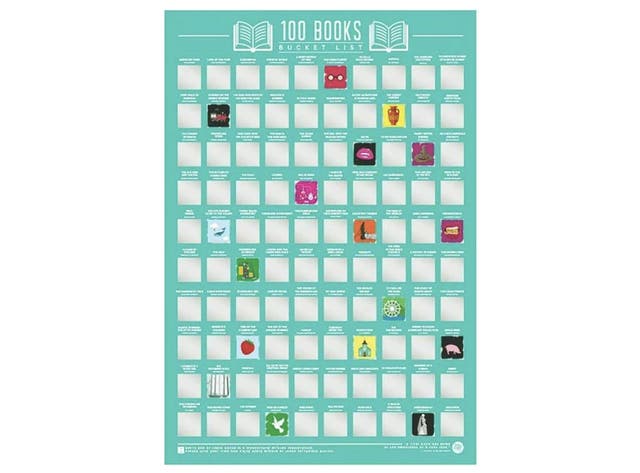
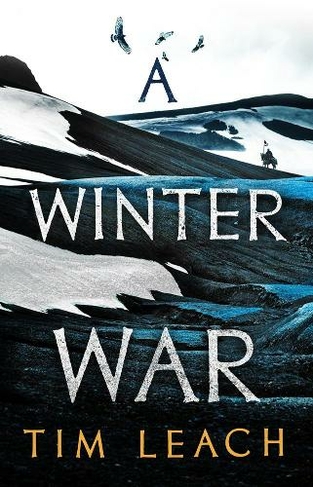
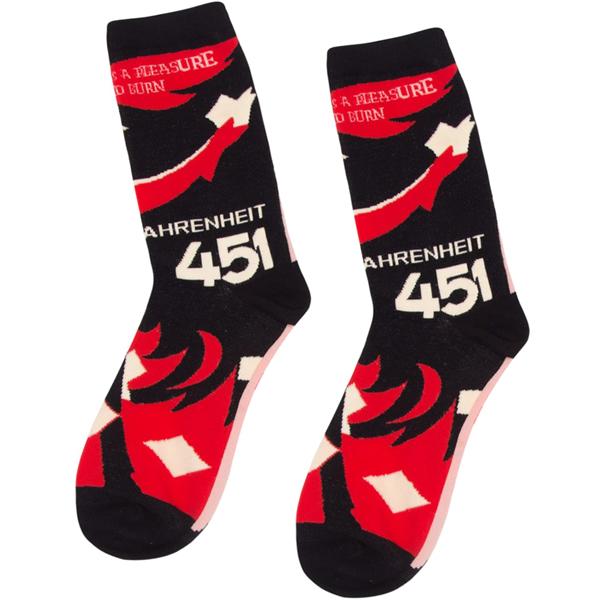

 nothing in the rulebook