• Gumption
    When it comes to thinking, “all else is both ephemeral and chaotic”, writes Jayat Joshi.

    It is hard to justify a career in the humanities and social sciences in India. Parents expect their kids to accumulate at least some knowledge of the engineering, business and medical professions, which are also the three most sought after subjects. Even if your parents support you, there’ll be someone in your family who isn’t fully convinced. Convincing said family member might require living a whole life and producing it for them as evidence.

    People often measure others by the identity of their profession, and to call oneself a “philosopher” or a “political theorist” does not immediately ring the bell in others’ minds. Doctors, we know, will treat diseases. What, exactly, does a “philosopher” or “political theorist” do? Heck, even an “economist” seems somewhat comprehensible. There is a certain faith in the potential modes of being attached to the (in comparison) mainstream professions, as opposed to the humanities. The humanities are humanity’s most traditional professions, however, in an increasingly ‘modern’ world, they lose their connection with the way to live.

    Then there is politics in India, as everywhere else; but politics is dirty. This dirt includes treachery, immorality, violence, manipulation, wealth, power; everything that the middle-class individual is afraid of in principle but secretly dying to explore. Is there such a thing as a middle-class individual? Perhaps this is a weak explanatory category in economic terms, but in terms of the body of thoughts and tendencies that populates the mind of many people, it is safe to presume, in my humble opinion, that a sizable majority of Indians are in fact “middle-class”. Even the most unexpected of them, the elite, the ones who have been around the world, the residents of high towers and owners of labradoodles. Hypothetically speaking, if we were to imagine three individuals from three clearly separable classes lower, middle and upper, where the “middle” is the mean relative to which the other two are on the top or bottom, we will see that the lower pulls the middle closer to itself. And this is not just a common sense opinion. But it indeed is the product of a one-dimensional analysis. If the middle-ness of a class of the population were to be gauged in terms of adherence to a set of beliefs and value-systems, the upper would pull the middle towards itself as the class widens to accommodate greater numbers.

    Such counterintuitive revelations hide in plain sight, because the structures of societal makeup are designed to accommodate them. These structures are not available to the humanities and the cluster of associated works. The attributes they bestow on their practitioners are considered taboo, not merely counterintuitive results of a changed way of being and doing. This logic, as I earlier pointed out, is a matter of faith. It is a religion of life. Religion is the closest competitor of the arts. It is an influencer, and a patron, and a nemesis, and a rival training camp. Religion is a thousand-armed deity, and its numerous recruits come only as close to the humanities as the wisdom of the spiritual guru their next of kin follow brings them. Most people do not think deeply or read widely. Most people, as they pass through their lives, let their biases ossify as ideology and norm, and hardly ever expose themselves to ideas that threaten the careers of their thinking, if we were to consider thought as a career.

    Thinking is a shady business

    Thinking is shady business; and one guru or another would prescribe a serene “thoughtlessness” as the path to enlightenment. Such preaching, however, carries the seeds of a dangerous nihilism. When the prescription of the powerful and those who preserve them is lack of thought, the thoughtful angst of the humanities scholar has to find all the nooks and crannies it can to come out of the dark jungle of public discourse and “common sense” and bask in the sunlight. 

    Thinking is a difficult business. It needs pedagogy and training to equip oneself in the art of thinking. It is neither only wit, nor just wisdom. Thinking is lesion, a cut, a break, an exercise in nuance and non-conformity. When you arrive at something, hold it, then attack it with all the rigor you can muster, so as to see how much pressure it can withstand. From such a process emerges a valuable result, something which can be kept and passed on. All else is both ephemeral and chaotic. It is not a surprise then, that in the absence of such an emphasis on the importance of deep thinking, the ideas that float around in the public domain are hollow in their philosophical essence. With one lens or another, different versions of the reality can be bent out and extracted, except none of them will fall anywhere close to what could be construed as the absolute, actual whole. The humanities are important for India because only there is the teaching and learning of multiplicity and threatening thought encouraged. Threatening, to the status quo. Without this, the available body of knowledge in circulation in the veins of the country will be reductive, prejudiced, misleading, fallacious, and inaccurate.

    Considering the difficulties tied up in critical thought, brings us quickly back to the dirty business. Politics is not an isolated occurrence limited to elections and legislators. Murky thought misguides political action. Political behaviour is first and foremost the casting of doubt at power. If one arrives at a sense of oneself by casting the first stone on one’s own existence, the next stage, where one arrives at a sense of the society, must be reached by casting the second stone at political power, and the institutions that wield it. Through a political act and a political will, one can arrive at a set of fertile commandments to lead life by. However, and this is the nature of the act of thinking with doubt, it renders all absolutism and fundamentalism invalid. It opens the individual, making the self vulnerable in the presence of the other. A caveat begs to be addressed though: the risk with doubt is that it once again draws you towards nihilism. But senselessness can be defeated with the use of political will, in making life-affirming choices.

    The essence of the humanities lies in their ability to deal with the very fabric of human life and its makeup.

    I must reiterate the point I have been trying to make to tie together the ideas I have spilt here: the essence of the humanities lies in that they deal with the very fabric of human life and its makeup. These things are not investigated in specialized disciplines, unless by individual choice, but they necessarily require urgent dissemination in a country such as India, to salvage popular narratives from truly dangerous ideas by exposing it to the good “dangerous” ideas. The thriving of civic life will rest on such a holistic pedagogy that rests on the foundations of the humanities and social sciences. The nobility of this vision is its courage, its human-centric political organ, and its purpose of serving the humanistic versions of the truth.

    Thought, for once, can be given a higher pedestal than action; not only what you think is significant, but also what your society thinks. Between passive thought and action is a spectrum of active choice, and this spectrum is what demands most to be navigated with clarity and sane intent. Perhaps the restoration of the highest power, a God, might do the trick. Perhaps its negation and staunch belief in that negation might do the trick. Whatever may be true, choice must be weighed against something extremely powerful and omnipotent, because of its sheer force in the scheme of progression of life. This is the sum of gumption.

    About the author of this post

    Jayat Joshi is pursuing a Masters in Development Studies from the Indian Institute of Technology Madras. He has previously worked with several organisations in the cultural and educational sectors. A keen student of economic and political thought, he firmly believes in the social responsibility of each individual and is passionate about education accessibility in India. He is also a classical vocalist of the Hindustani tradition. He is currently researching the impact of the COVID-19 pandemic on human rights in India: https://oaj.fupress.net/index.php/cambio/openlab/art18. In 2019, he was awarded the UN Millennium Fellowship. He is available via LinkedIn.
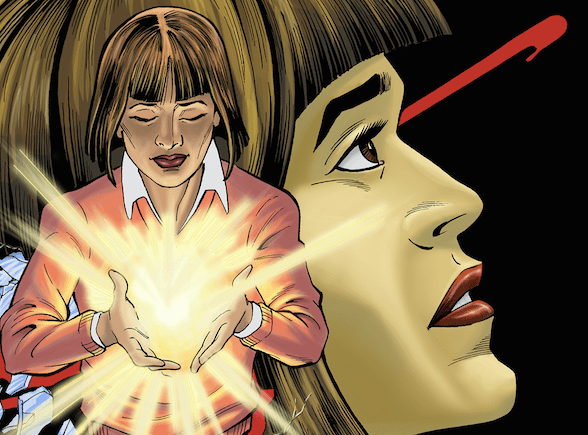
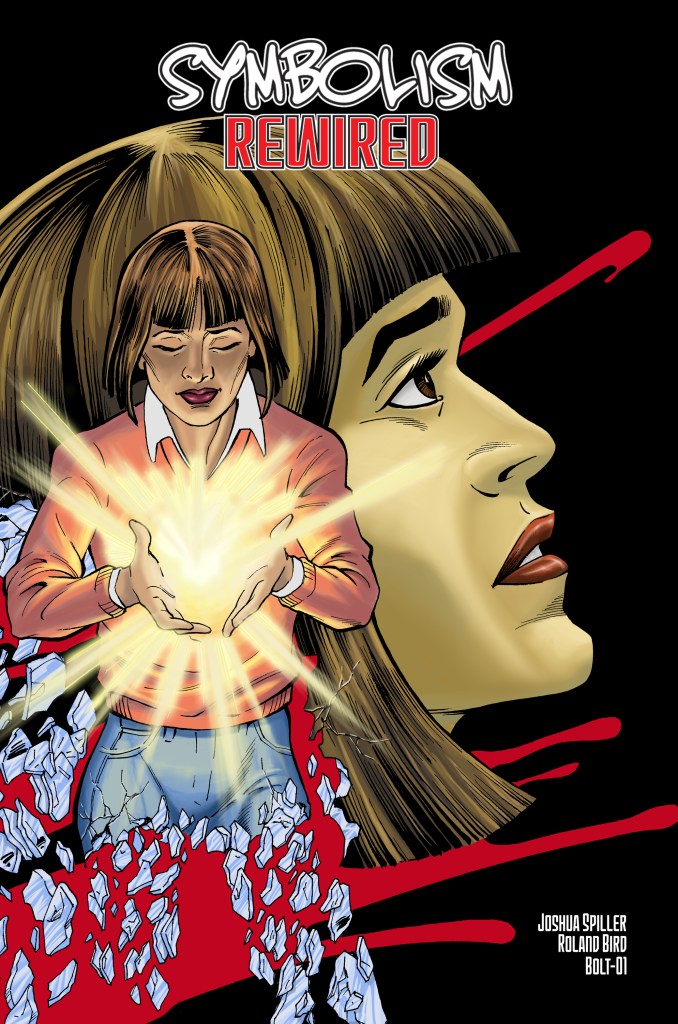
  • Sci-fi comic ‘Symbolism Rewired’ – available for only £1.50
    Comic book fans keen to discover some fresh stories and new talent are in for a treat, as news drops that you can now pick up ‘Symbolism Rewired’ for just £1.50

    ‘Symbolism Rewired’ is a 21-page, self-contained comic-book story, written by NITRB’s own Joshua Spiller… illustrated by artiste extraordinaire Roland Bird… and lettered by the being known only and mysteriously Bolt-01. And it’s currently available for only £1.50.

    Here’s the synopsis

    “Silence… silence and poetry fills my thoughts…”

    From a deeply surreal and disturbing dream, a woman awakes in a strange sleeping pod, in a disconcertingly deserted laboratory. She has no idea who she is. And even her own mind now feels alien to her…

    Set in a faintly estranging London of the not-too-distant future, ‘Symbolism Rewired‘ is a cerebral and grounded piece of sci-fi, that both explores how symbolism may be at the root of human consciousness, and operates as a kind of low-key biography of a fictional future human being.

    The comic was originally published by the co-creator of V for Vendetta, David Lloyd, in his award-winning anthology, Aces Weekly.

    Be a darling – check it out here: https://gumroad.com/joshuaspiller#kiMl

  • Writers in lockdown: #LockdownLit series draws to a close

    After well over 100 days of coronavirus-imposed restrictions, countries around the world are gradually emerging from ‘lockdown’.

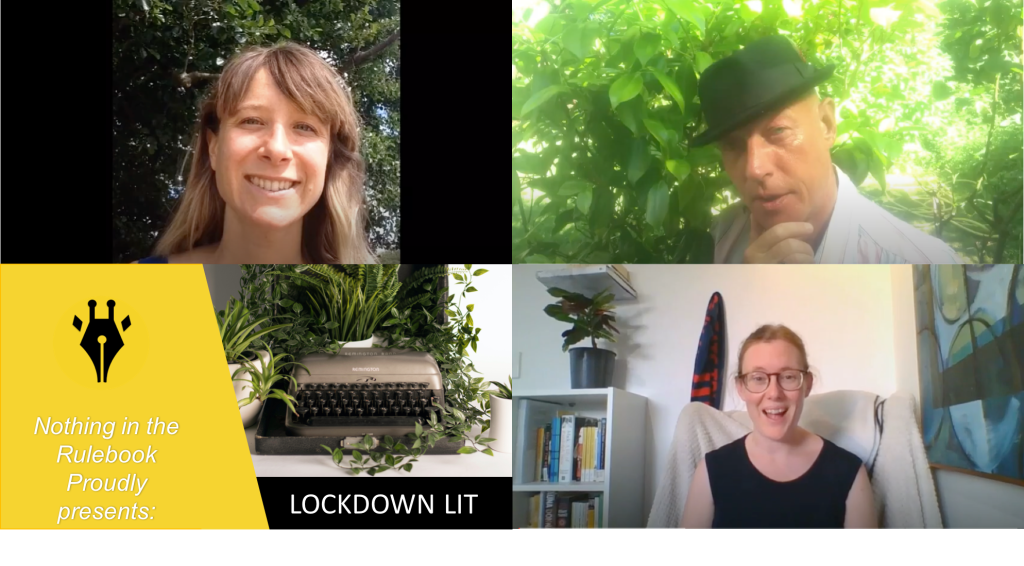
    Throughout the lockdown period, the Nothing in the Rulebook community has come together as part of its ‘Rulebook readings: lockdown lit’ series, which saw award-winning, best-selling and acclaimed writers, artists and musicians share their stories of lockdown alongside emerging creatives.

    With the end of the ‘first wave’ of coronavirus lockdown in sight, the #lockdownlit series will now end with submissions from Miranda Roszkowski, Catherine Noske, and Neil Sparkes.

    Speaking about her submission to the Rulebook readings series, Roszkowski, the editor of ‘100 voices’, a collection of stories by women writers all about finding their voice, said:

    “I’m loving Lockdown Lit and chuffed to be a part of this community. It’s been inspiring and fantastic for seeing what other writers and artists have been up to, and has also challenged me to get to work!”

    Reflecting on the final edition of the first lockdown lit series, NITRB co-founder, Professor Wu, said: “Nothing shines a light on the importance of creativity than a global crisis. Writing, art, music and all other art forms can help us make sense of the world around us, channel our emotions, and express ideas about challenging, unprecedented events in ways that are so accessible and inspiring. And, through #lockdownlit, it has been genuinely inspiring to connect with and hear the stories of artists and writers from around the world.”

    But as well as discovering new and beautiful pieces of creative work, this entire project has been about connection; and bringing different people together into a conversation at a time when it’s easy to feel cut-off from other people and more isolated. If nothing else, we hope that this project has helped bring us all a little closer together.”

    NITRB Editor, Ellen Lavelle, meanwhile, said: “I’m delighted by the way the project came together. I think it’s quite common for creative people to be perfectionists – I know there’s often a lot of over-planning in my life and I waste time trying to find the perfect conditions to create something. During this pandemic, the conditions have been far from perfect for anyone, so to have created something like #lockdownlit, which exists precisely because things are far from ideal right now, feels really liberating. Thanks so much to the people involved – those that have sent in videos, those that have watched them. It’s been really great to hear from everyone.”

    Check out the latest videos below and find out more about the creative folk behind them…

    Miranda Roszkowski is a writer and civil servant currently living on a boat somewhere on Britain’s waterways. She is currently crowdfunding for her book, ‘100 Voices’ – a collection of stories by women writers all about finding their voice. 100 voices is being crowdfunded through award-winning publishers, Unbound, with contributions by award winning writers like Yvonne Battle-Felton, Sabrina Mahfouz and 98 others that you’ll soon know the name of. You can pledge to support Miranda’s book here – https://unbound.com/books/100-voices/
    Catherine Noske is a writer and academic, currently teaching Creative Writing at the University of Western Australia, and the editor of Westerly Magazine. Her short fiction and poetry have been published in Australia and overseas, and her novel ‘The Salt Madonna’ has just been released with Picador (2020). Here, from her home in Australia, she reads from the beginning of the novel as part of Nothing in the Rulebook’s Lockdown Lit series. The Salt Madonna can be ordered here through Pan Macmillan Australia: https://www.panmacmillan.com.au/9781760980191/
    Neil Sparkes is a poet, musician and visual artist. Sparkes forthcoming collection of poetry “Xerox Sonnets & X-Ray Blues” is published by Hesterglock Press in Spring 2020. Sparkes’ work includes several collections of poetry published by Billy Childish. His poetry has been published widely in magazines and anthologies. Neil has worked around the globe as a Vocalist, Percussionist and Producer; founder member of World music pioneers Temple of Sound and former member of Indie dance group Transglobal Underground. He has worked with Peter Gabriel, The Stranglers & Jah Wobble amongst many others. Sparkes’ artwork has been exhibited widely in the UK and abroad. 

    Do check out all the Rulebook Reading videos that have been submitted by writers, artists and musicians from around the world through the Lockdown Lit  Youtube playlist; and join in the conversation by following us on Twitter (@NITRB_Tweets) and liking us on Facebook, and using the hashtag #LockdownLit!

  • A Lit Fest in Lockdown: How the Newark Book Festival team dealt creatively with COVID-19

    This year, Sara Bullimore , artistic director of Newark Book Festival, was able to attend the events she organised. 

    ‘That never happens,’ she says. ‘I’m normally running from one venue to the next to check everyone’s ok. This time, though my fingers were typing across two computers and a phone, I was able to watch the events. I loved it! It was great to chat to the audiences too!’ 

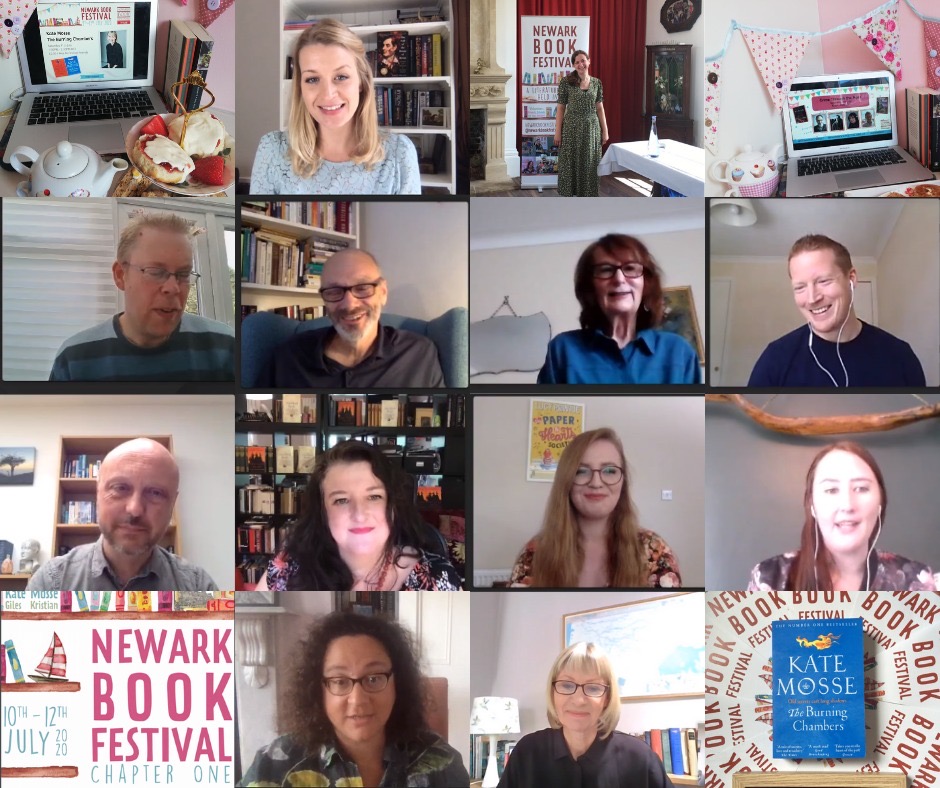
    Like so many events across the globe, this year’s Newark Book Festival was held remotely, relying on the tech wizardry of volunteers and acquaintances to ensure events could go ahead. 

    ‘We knew the worst possible scenario was no 2020 festival. We’d need more funding to go ahead but cancelling the whole thing would mean no future for the Festival at all.’ 

    Sara Bullimore – Artistic Director, Newark Book Festival

    When lockdown was announced at the end of March, Sara and her Festival volunteers had managed to raise 75% of the budget needed to organise the festival. The festival takes place in July every year, scheduled this time for the 9th to the 12th, so they had three more months of fundraising to go. But the 2020 plans were big. One of the main venues, The Palace Theatre, was celebrating its 100th birthday. Sara had planned a host of centenary-themed events in keeping with the celebrations, including an event with bestselling crime author Sophie Hannah to mark a hundred years since the publication of Agatha Christie’s first novel and a Brontë talk to celebrate Anne Brontë’s 200th birthday. 

    With lockdown looming, it seemed possible these anniversaries would go unacknowledged. .

    Newark Book Festival is well-embedded within its town. The venues, from the velvet-curtained Palace Theatre to the high-ceilinged town hall, the quaint little tea shops and cosy library, have always provided a welcoming backdrop to events. Though people travel to the festival from far and wide, it never loses its sense of community, the idea that this is a place where you come and bump into neighbours and friends. Queuing to get your book signed by some illustrious literary figure, you normally bump into old teachers, or hairdressers, or people you know from last year. As a festival that has worked so hard to get Newark on the literary map, simply taking events and sticking them online could lose something integral, some essential quality, that makes the festival what it is. 

    ‘We were so lucky we already knew the ladies at I am In Print,’ says Sara. ‘They run remote webinars for writing communities. As soon as it became clear what was going on, we reached out to them and started going over the logistics. I also spoke to a videographer too.’ 

    But the rescheduling wasn’t easy. Some of the venues were shut, staff at sites and publishers were furloughed, and some contacts had even contracted the virus and were unable to answer emails. Marketing was also difficult. Normally, Sara prints off leaflets and hand-delivers them to venues. Local people coming to a local event. But an online festival demanded a totally different approach.

    Though the scheduling of the festival in July was in some ways a boon – more time for planning, chance to adapt to the Lockdown rules – in other ways, it made life more complicated. In July, things were beginning to open up for the first time in months. Hairdressers, shops, even pubs were opening their doors for the first time since the beginning of the pandemic.  

    ‘We knew then we’d be competing for people’s attention,’ Sara says. ‘We knew people would want to visit family, get their hair cut, go out for the first time. Completely understandable of course, but selling tickets for online events in this sort of half-lockdown was much more difficult than in total lockdown, when everyone’s at home!’ 

    But the show went ahead and people did buy tickets. The schedule was packed with events, including:

    • a series of writing workshops with Leanne Moden
    • a ‘Crime Through the Ages’ panel with Nick Quantrill, Rod Reynolds, Mick Finlay & Frances Brody
    •  a ‘Bronte 200’ talk with Lauren Livesey from the Brontë Parsonage, and writers Rowan Coleman and Lucy Powrie
    • an interview with best-selling historical thriller writer Kate Mosse
    • Emily Brand’s ‘The Fall of the House of Byron’ talk
    • Sophie Hannah’s ‘Agatha, Poirot & Me’ talk
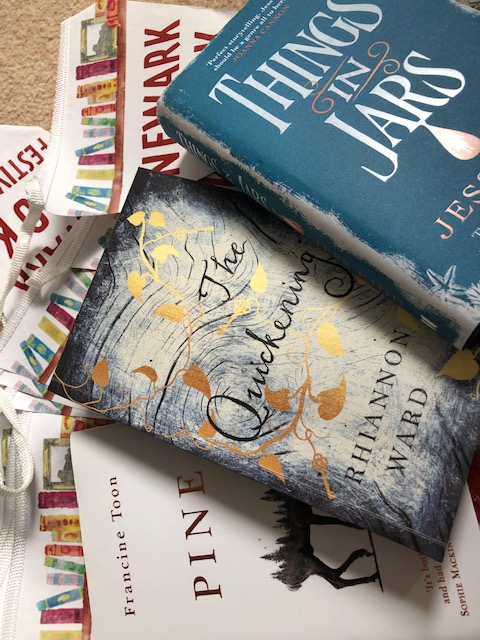
    • a Gothic Fiction Panel with Rhiannon Ward, Francine Toon, and Jess Kidd
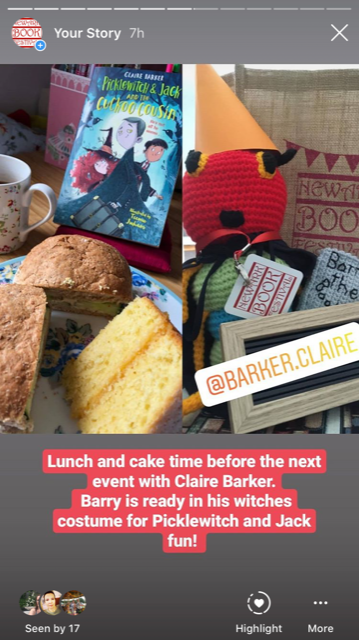
    • Children’s author Claire Barker’s ‘Picklewitch & Jack’ talk 
    • A ‘Dressed for War’ talk with Julie Summers
    • An interview with ‘Lancelot’ author Giles Kristian
    The Festival social media accounts were regularly updated.

    And for the first few minutes of each event, the chat box at the side of the screen was alive with greetings. Hi Jan. Hi Pete. Hi Diane. How’s the family? Fine thanks. You? Kate Mosse was talking and people were saying hello. They were staying hello to Kate Mosse but also to each other. You couldn’t tap someone’s shoulder in a signing queue but you could say hello in a chat box.

     ‘We definitely missed running something very local and reaching local communities,’ says Sara, ‘but we’re going to compensate for this in the future when we’re able. But, yes, loads of really good things came out of the remote festival. Our audiences were wide-ranging – we had old Festival Friends but we also had people tuning in from all over the UK. We also had guests from Canada, Washington, Vancouver, Germany, Barcelona and Brussels. One lovely lady in Canada donated tickets to Newark locals unable to buy tickets themselves.’ 

    Sara makes a point of thanking Elane and Sarah from I am in Print for their stellar work packing nine events into two days and hosting every single author webinar. Without them, the festival could never have taken place. The official Festival Bookseller, The Bookcase in Lowdham was also essential, agreeing to run book festival offers unto the 27th July. 

    ‘All of our Festival Friends, funders, sponsors and partners were incredibly supportive,’ says Sara. ‘They gave us hope and confidence. Our authors were simply outstanding in creating and delivering in new circumstances. They had to undergo tech tests (sometimes many) before the event and were really gracious, happy to do what needed to be done.’  

    Sara Bullimore, Artistic Director of Newark Book Festival

    And the acts themselves were delighted to take part. After chairing the Crime Fiction Webinar, crime writer and Newark Book Festival alumnus, Nick Quantrill, said the festival was very different but still very enjoyable. 

    ‘I missed seeing the town and old friends in person,’ Nick says, ‘but I love the fact the event was opened up to a wider audience around the country. I think we’ll see a mix of real-world events and online in the future.’

    Rhiannon Ward, author and chair of the Festival’s 2020 Gothic Panel, praised the hard work of festival volunteers and staff. 

    ‘Sara and her team at Newark Book Festival did an amazing job getting the event online supported by I Am Print,’ she says. ‘The gothic panel was wonderful to chair and was followed by insightful and interesting questions. Thank you to everyone for their hard work.’ 

    Children’s author Claire Barker, described the festival cohort as a ‘dream team’; ‘Passionate, professional, with excellent communication skills,’ says Claire, ‘I loved working with you all.’ 

    Putting on your own remote book event in 2020? Here are Sara’s top tips for planning in a pandemic: 

    1. Make sure you have the absolute best tech in place. You can’t fake a good connection. 
    2. Look at what is happening in the UK culturally. Is there anything you’re doing that could tie in? 
    3. Create a buzz any way you can. Reach out to authors to get signed editions. Find some way to make what you’re doing exclusive. 
    4. Help stores general sales. There’s no book festival without selling books. Events are a great way of hooking people’s interest. They’re never more likely to buy a book than after just meeting an author, even if it is through a screen. Make sure there’s an easy, reliable way to get from book events to book-buying. 
    5. Leave plenty of time and be prepared to work very, very hard!

    Many of the book festival’s extra fundraising activities had to be put on hold as a result of the pandemic. 2021 is going to be a real challenge for the festival. The only two members of staff will only be financially supported until September. With the new phases of the festival there are plans to still hold events in February. To ensure these events go ahead and the festival survives into the future, the festival is going to need help. 

    You can make a single donation by emailing the team or contacting them through the festival website (www.newarkbookfestival.org.uk) or become a Festival Friend for only £15 a year. Friend status entitles you to several special privileges – to find out more and sign up, visit the festival website! 


    About the author

    Ellen Lavelle is a post-graduate alumni of The University of Warwick’s Writing Programme. An aspiring novelist and screenwriter, she has worked with The Young Journalist Academy since the age of fourteen, writing articles and making short films for their website. She’s currently working on a novel. She interviews authors for her blog and you can follow her @ellenrlavelle on Twitter.

  • Creatives in profile: an interview with Olivia Kiernan

    We may be in the middle of a global crisis, but there’s nothing in the rulebook to say you can’t continue your interview series during a worldwide pandemic.

    Olivia Kiernan was born and raised in County Meath in Ireland. She studied anatomy and physiology before she started writing crime fiction. Her first crime thriller Too Close to Breathe was published in 2018 and features Dublin detective Frankie Sheehan. The sequel, The Killer in Me, was published in April 2019 and the latest instalment in the series, If Looks Could Kill, was published on 23rd July 2020.

    Described by crime fiction heavyweights CJ Tudor and Jo Spain as ‘truly first class,’ and ‘a proper page-turner’, the first DCS Frankie Sheehan novel Too Close to Breathe finds Frankie investigating the supposed suicide of successful Dr Eleanor Costello. But when another young woman from Frankie’s own past is found dead, Frankie discovers a sinister link to Eleanor and realises there is more to both cases than meets the eye.

    Having now finished Frankie’s third case, If Looks Could Kill, Kiernan has been described by the Irish Times as ‘the heir to Tana French’s throne.’ If Looks Could Kill is now available for purchase from Waterstones and Amazon.

    We spoke to Kiernan earlier this year, before the release of If Looks Could Kill. We asked what drew her to writing crime fiction, how she finds ‘the voice’ of a novel, and why Anne of Green Gables taught her to cherish her imagination.


    INTERVIEWER

    Tell us a little about yourself. Where do you live? What’s your background/lifestyle?

    KIERNAN

    I’m Irish and grew up in the countryside, a couple of miles outside the town of Kells in Co. Meath, one of six. When I was nineteen, I moved to Wales to study Chiropractics. My intention was to return to Ireland but I took a job near beautiful Oxford shortly afterwards and still live here with my partner and daughter.

    When I worked as a chiropractor, I wrote in the evenings. Writing was never far away from my day at all. Then, when my daughter was born, I started to write what became my debut novel, Too Close to Breathe. When it was published, I moved to writing full-time. Now that my daughter is at school, I write during the day or if I’m really trying get ahead I’ll get up early and write. I’ll usually try to fit in a walk with the dogs or run in the day, if I can. 

    INTERVIEWER

    Who or what inspires you?

    KIERNAN

    So many things and people inspire me. On a creative level, other writers and artists inspire me, of course. And the research for my books can take me far and wide from philosophy to the psychology of a police interrogation or, as it was in my first novel, the artist Marc Chagall and the pigment Prussian blue.

    Listening or reading material from specialists who are enthusiastic about their subject matter inspires me all the time. Nature and wildlife too. I’m only realising how often I’m inspired by the beauty and brutality of nature. In my second novel, The Killer in Me, an entire chapter was shaped by a tiny spider’s web that was on the other side of the window at my kitchen sink.

    INTERVIEWER

    Is writing your first love or do you have another passion?

    KIERNAN

    Writing is definitely my first love. I have other interests, of course, hobbies like running, reading, cooking but nothing that feels so tied up in my sense of self as writing is. 

    INTERVIEWER

    Tell us a little about your main character, DCS Frankie Sheehan. What did you find interesting about her? 

    KIERNAN

    Frankie revealed herself to me as I wrote my debut novel, Too Close to Breathe. I had a very clear sense that she was good at her job, brave and very confident in her role and her abilities. She has at times an awkward relationship with herself. One of her skills is being able to study criminal behaviour and analyse the psychology of the crime scenes presented to her to get a sense of their suspect. She profiles criminals so although I think she does have a good understanding of who she is and how she might act, she’s reluctant to look too closely at herself in that way.

    When I began writing her, I could sense that she was someone who really knew their stuff when it came to work and was used to being right. She was the strong one, the hero, but very early on I realised that her feeling of being the hero had been undermined. She was still recovering mentally from an attack she’d experienced on her previous case. Of course, Frankie being Frankie, pushes on. She wants to be as she was before but her current case will not let her forget or bury her experience.

    INTERVIEWER

    How did you come to choose the setting of you books – Dublin, Ireland?

    KIERNAN

    I’m from Ireland but have lived away for many years so it’s fair to say that to be able to return in my novels is a real treat. Dublin is a great city to set a crime novel. The setting is interesting both historically and socioeconomically and the Irish weather can always be depended on to provide the right atmosphere for a crime thriller. Plenty of brooding skies, for sure.

    INTERVIEWER

    Steve Cavanagh has described your writing as, ‘Cracking, taut and beautifully written.’ What do you think are the three most important ingredients for a gripping crime thriller?

    KIERNAN

    I guess it might depend on the reader but for me, with any book, I want good storytelling. I enjoy propulsive prose that occasionally surprises and characters with depth.

    INTERVIEWER

    Which crime writers should we be paying particular attention to at the moment?

    KIERNAN

    Books I’ve read recently and really enjoyed have included Karen Hamilton’s The Last Wife. Karen is phenomenal at getting under the skin of disturbing characters and this book simply had me gripped in its very twisted hand. I also loved Rachel Edward’s Darling, a literary psychological thriller around the developing relationship between a black British woman called Darling and her white step-daughter, Lola.

    INTERVIEWER

    Can you tell us a little about your creative process? How do you go from blank screen to completed manuscript? Do you plan the plot before you write or do you just dive in? 

    KIERNAN

    My process varies for each book. Generally, I don’t sit down from the off and plot out my novel but simply (she laughs) write the first lines and go forward from there. However, I will have a premise or a theme that I’m wanting to explore. Or maybe it will be an unusual character who will inspire the story. Often I’ll be able to picture a few key scenes to write towards.

    When I start out on a first draft, it feels more important to get the tone and voice right rather than knowing exactly what is going to happen next. I try not to interrupt the flow too much but life or pandemics get in the way and that’s usually when it gets tough. Trying to get back into the mood of a scene that I’ve been kept from for a few days is probably the most difficult thing.

    As I get deeper into the novel, I might have to sit back occasionally and make lists of the scenes and look at what might need to happen or elaborate on a section of the plot. Often this is when I’m nearing the final third of the book when there are many plates spinning and I have to make some definite decisions going into the final scenes.

    INTERVIEWER

    Do you feel a sense of responsibility as a writer?

    KIERNAN

    I’m frequently asking myself questions about what’s right to include in a story and always look at all options – a story can take many paths to the same conclusion – when it comes to adding or removing difficult emotions or scenes. But ultimately, I feel my loyalty is to the story, to be true to what I want to write and be true to my characters.

    INTERVIEWER

    What was the first book that made you cry? 

    KIERNAN

    Probably The Fox Cub Bold by Colin Dann. 

    INTERVIEWER

    What is the hardest thing about being a writer?

    KIERNAN

    When you really want to write or have an idea or urge to write a story or scene and for whatever reason you can’t get to a notebook or computer or don’t have the time to get to it. I think many writers know that feeling of agitation.

    INTERVIEWER

    Name a fictional character you consider a friend.

    KIERNAN

    I lived in my imagination a lot when I was a child. Always making up stories. So I remember reading Anne of Green Gables for the first time, a character who cherished her ability to imagine, and suddenly feeling less ashamed of my tendency to let my mind wander. She made me feel that it was okay to day-dream. Now day-dreaming is an essential part of my work day!

    INTERVIEWER

    Did getting published change your perception of writing?

    KIERNAN

    Not especially, only that now I’m more aware there will definitely be readers (thankfully) so I do have to work harder to ignore the inner critic during the first draft when I don’t necessarily want to pause too much.

    INTERVIEWER

    Which book deserves more readers? 

    KIERNAN

    D A Mishani’s Three which was released in March this year and is a fantastic thriller set in Israel.

    INTERVIEWER

    Do you have any friends that are writers? If so, do you show each other early drafts?

    KIERNAN

    I know many wonderful writers. The crime writing community, in particular, is very welcoming. I don’t tend to exchange early drafts with them or at least have not yet. My first reader tends to be my literary agent.

    INTERVIEWER

    What’s next for you?

    KIERNAN

    At the moment, I’m eagerly awaiting publication day for book three in the DCS Frankie Sheehan series, If Looks Could Kill which is coming in July 2020 and in the meantime I’m writing the next book in the series, In The Final Hours.

    QUICK FIRE ROUND: 

    INTERVIEWER

    Favourite book?

    KIERNAN

    Just one?! The Secret History by Donna Tartt, A Long, Long Way by Sebastian Barry or Perfume by Patrick Suskind. There are many more.

    INTERVIEWER

    Saturday night: book or Netflix?

    KIERNAN

    Book of course!

    INTERVIEWER

    Critically acclaimed or cult classic?

    KIERNAN

    Critically acclaimed.

    INTERVIEWER

    Do you have any hidden talents?

    KIERNAN

    If I do, they are hidden from me! 

    INTERVIEWER

    Any embarrassing moments?

    KIERNAN

    Many but we don’t speak of them.

    INTERVIEWER

    What’s the best advice you ever received?

    KIERNAN

    It’s a little clichéd but if you want something to change, you need to change something.

    INTERVIEWER

    Any reading pet peeves?

    KIERNAN

    If it’s absorbing or interesting, I’ll forgive most things. 

    INTERVIEWER

    Do you have a theme song?

    KIERNAN

    Not particularly but when writing my lastest book If Looks Could Kill I did listen to Rag’n’Bone Man a lot, particularly the hit song ‘Human’. Sometimes, a song or piece of music, even if the lyrics don’t reflect the true content of the story, the mood or emotions evoked might help me back into a scene. 

    INTERVIEWER

    Your proudest achievement?

    KIERNAN

    Aside from giving birth to my daughter, definitely getting published. 

    INTERVIEWER

    Best advice for writers just starting out?

    KIERNAN

    It is something repeated often but it does hold up and that’s ‘never give up’. I’d also suggest that if your first novel doesn’t land where you want it, don’t be afraid to move on to another.


    If Looks Could Kill is now available for purchase from Waterstones and Amazon.

  • On Dining Alone

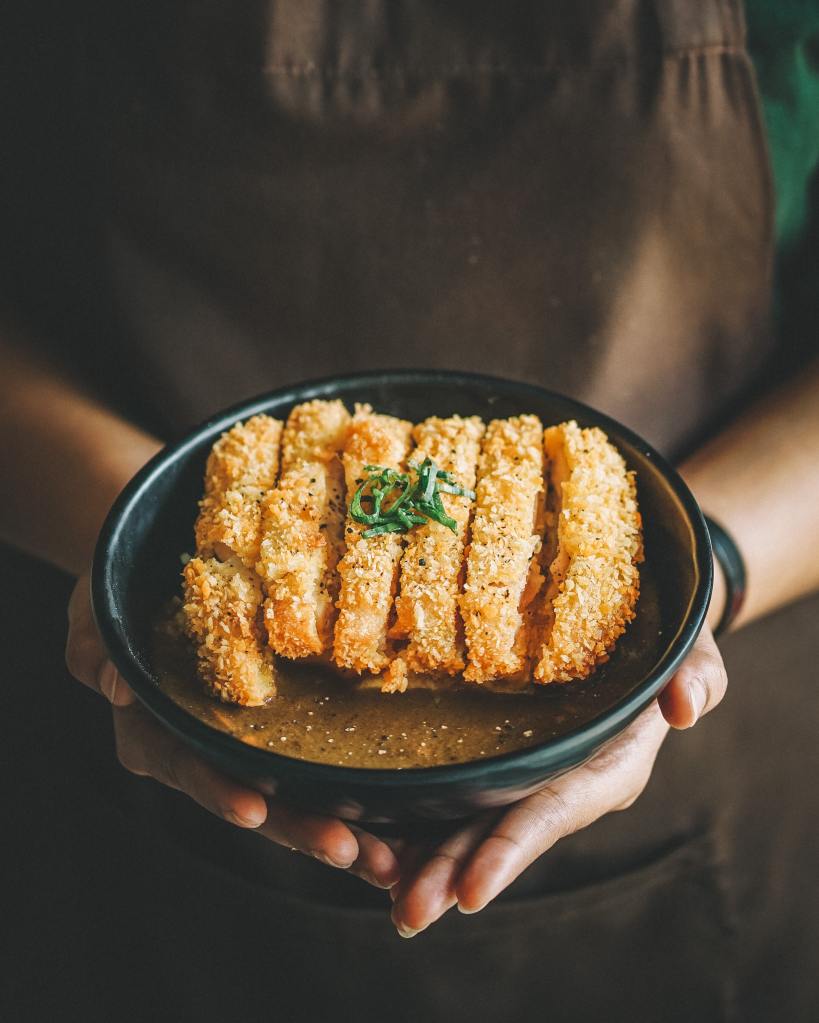
    My sister loves to cook curry. Japanese style, the way an old lady cooked it for her when she visited Japan for the first time, last year. ‘This stuff is delicious, you must try it,’ she told me. My sister would make the sauce and my mum would fry chicken breast, so we could have chicken katsu curry: sticky white rice, crispy chicken and the thick sauce on top. They prepared it for me the day before I moved to England to start a new job and we ate it together, sitting on the sofa, watching an episode of my mum’s favorite crime TV series. 

    The following day, at Rome’s international airport, my dad hugged me and told me to enjoy the new adventure. Was it really worth it? Leaving my home country, and my parents? I was aware that they were growing older without me, and that my younger sister was growing up faster than I ever thought. I was conscious that I was following my own path and that it was taking me away from them. At the airport, I hugged my dad and kissed his shaved cheeks. He waved at me while I stood in line for the security check, and I knew he wouldn’t leave until he didn’t see me getting through.   

    When I got to the gate area, I could smell freshly prepared croissants, and stuffed bagels; focaccias and sandwiches were nicely arranged behind the counters of the many restaurants and coffee shops. I could have eaten a bowl of traditionally cooked pasta, or a slice of my favorite pizza, before boarding. I had half an hour to kill, but I didn’t even look at the menus. I knew that I would never sit and eat alone in a restaurant, not even in a busy airport terminal. Instead, I ordered a cappuccino to take away and sat in front of one of the departures screens, waiting for my plane. 

    I grew up in a busy household. My parents are doctors, and while I was growing up they were frequently away on business trips, but my sister and I were never unsupervised, because my dad’s father, Nonno Roberto, lived with us. We wouldn’t see much of him during the day; he spent his days working in the garden, listening to the radio, building wooden objects that he would then give away as Christmas presents, and occasionally reading books that he would then confess to find quite boring. When my sister and I came back from school, we always knocked on his door to say hi, we are back, how are you? Good? See you later then. 

    Nonno Roberto might have looked very stern on the outside, and some members of our family couldn’t really stand his temper, but he was different with my sister and me. He was caring and gentle, laughed a lot at his own jokes, and insisted to read my history essays, and correct my math’s exercises. Even when I went to uni, he would always help me revise the day before an exam. 

    We always ate dinner with him – that was an important family moment for all of us. He asked my sister and I how school was and if we’d finished our homework.  He talked about his day, about what he saw on the news and the people he met during his daily walk to the newsagent. He hated sweetcorn and would never eat it when my mum served it for dinner; he said it felt like he was ‘robbing chickens of their food.’ 

    If he realized I was upset or sad during dinner, and didn’t eat my share of food, he would always ask what was wrong. I never felt there was something I couldn’t talk to him about. 

    On my eighteenth birthday, when it was time to blow the candles on my cake, he stood next to me and we locked arms, and took a picture together. A line by an Italian poet I studied at school perfectly described what I felt when he died two years later: “I descended, with you on my arm, at least a million stairs, and now that you are not here, every step is emptiness.”

    On Sundays, we would always go out for lunch. My grandad would choose the restaurant and call to book a table for five. He would eat potatoes from my sister’s plate, because he wasn’t allowed to order a whole portion for himself, due to his diabetes.

    For a very long time after I moved away from the house where I lived with Nonno Roberto, my younger sister and my parents, sitting at a table for dinner or lunch remained for me a moment to be shared with loved ones. A moment I couldn’t stand spending alone. 

    Summer was just about to come to an end, when I sat for the first time alone at a restaurant table in Soho, London. 

    My boyfriend was meant to meet me for dinner. Stuck in a meeting for another hour, do you mind going ahead? He texted me. I was in the tube and almost missed my stop when I read the message. 

    It’s ok, I texted back, even though it wasn’t ok at all. I am going home, see you there, I wrote. The tube was just pulling in at Piccadilly Circus. I deleted the text without sending it and got off. 

    My initial thought had been to wander around Soho until he could meet me, but I knew that could take hours, and I was hungry after a full day at work. 

    I ignored the gurgling in my stomach and decided to head to Carnaby, where I knew I could walk around for a bit, looking at shop windows, enjoying the last rays of London’s summery sunset. On Carnaby Street, I walked all the way down, from Garton Street to Beak Street, and then turned left. 

    On my left again, I found a shop selling beautiful vintage glasses; at the end of the road, an expensive-looking sushi restaurant was opening its doors to the first visitors of the evening. I followed the road without a clear destination in mind. The bars were filling up, and young people were drinking cold beers, sitting on plastic chairs outside the busy pubs. I turned right on Dean Street and on the corner, a traditional Japanese restaurant caught my eye.  

    I had lived alone, away from my family, for nearly three years, and I had never eaten alone in a restaurant.  It was easier to eat something by myself in the silence of my own kitchen. If I wanted, I could turn on my computer and watch Netflix, or call my best friend on FaceTime. 

    At a restaurant, it was different. I was so used to going to a restaurant with my family that I couldn’t see myself doing it alone. There was no point eating something delicious if I couldn’t share it, if I couldn’t share a conversation or a laugh with the people dining next to me. I found dinner and lunch quite difficult when I had to spend time alone: I kept thinking about my family and how far they were from me. I kept thinking: who would I talk to, while waiting for my meal to arrive? Would people think I’m lonely because I’m sitting at a table for one? 

    I checked the menu of the traditional Japanese restaurant, and before I could change my mind, I stepped inside. Table for one? Asked the waitress, and I nodded. I sat at the counter, in front of a window, right on vibrant Dean Street and ordered my food. I took my copy of An American Marriage out of my bag, I laid it flat on the table and started reading. From time to time, I glanced up and I noticed that there was a boy, about my age, who was eating his ramen, alone. And he didn’t look miserable at all. Did people actually enjoy going to restaurants by themselves? I thought. Maybe.

    At the back of the restaurant, a woman in her forties was looking at the menu in front of her, sipping a colorful cocktail, she was sitting alone too. 

    By the time my food arrived, I was comfortable in my seat and I was enjoying watching people walking by, my book now closed at one end of the table. I finished my chicken katsu curry, and I stayed at the table long enough to enjoy the feeling of doing something for the first time. I am not alone, I thought. I am just far from the people I love. 


    Born and raised in Rome, Italy, Anna Colivicchi is a journalist and writer based in Lancashire. A graduate of the University of Warwick’s Writing Programme, she writes about politics, art, food and gender issues. You can follow her on Twitter @AnnaColivicchi 

    Anna’s essay As Elegant as a Violin was published here on NITRB in 2018. She’s also reviewed serveral works of fiction for us, including Julian Barnes’ The Only Story and Slack-Tide by Elanor Dymott.

  • “Cancel your Amazon Prime Accounts”, independent bookstores urge readers in wake of coronavirus pandemic
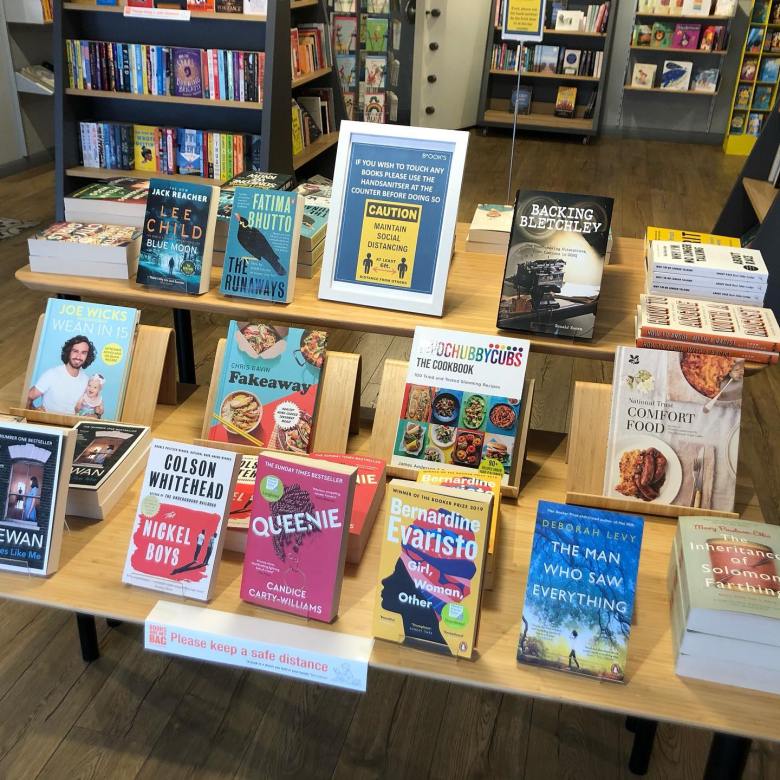
    Independent bookshops like BrOOK’S Pinner in North London have introduced social-distancing measures since reopening. Photo via BrOOK’S Pinner.

    As the UK slowly emerges from some 100 days of coronavirus lockdown, independent bookstores have urged readers to “shop locally” and “cancel their Amazon Prime accounts”.

    Over the last few months, the coronavirus pandemic has shone a spotlight on the pivotal role played by bricks-and-mortar bookstores, with many customers describing the reopening of their local independent bookshop as bringing “a sense of normality” back to their community.

    Peter Brook, from the independent bookstore BrOOK’S Pinner, in North London, in turn paid tribute to the store’s “wonderful” customers, who had continued to order their favourite titles online during lockdown, and had returned “in a steady flow” after BrOOK’S Pinner reopened on 16th June.

    Yet this unique relationship between local bookstores and their customers is facing an existential threat. BrOOK’S Pinner, like many independent bookstores and publishers were able to continue taking online orders over the course of lockdown. However, with Amazon accounting for more than half of all book sales, and Jeff Bezos adding some US$34.6 billion to his personal wealth during the pandemic, the real challenge facing independent bookstores and publishers may not be the coronavirus; but Amazon itself.

    In this context, Peter had a simple message to all readers when speaking to Nothing in the Rulebook: “shop locally”. He said:

    “We urge all book lovers to shop locally, now more than ever. Visit your local independent bookshop or order from them online. It is easier to buy books from us now than ever before, so you have no excuses to be using those online marketplaces!”

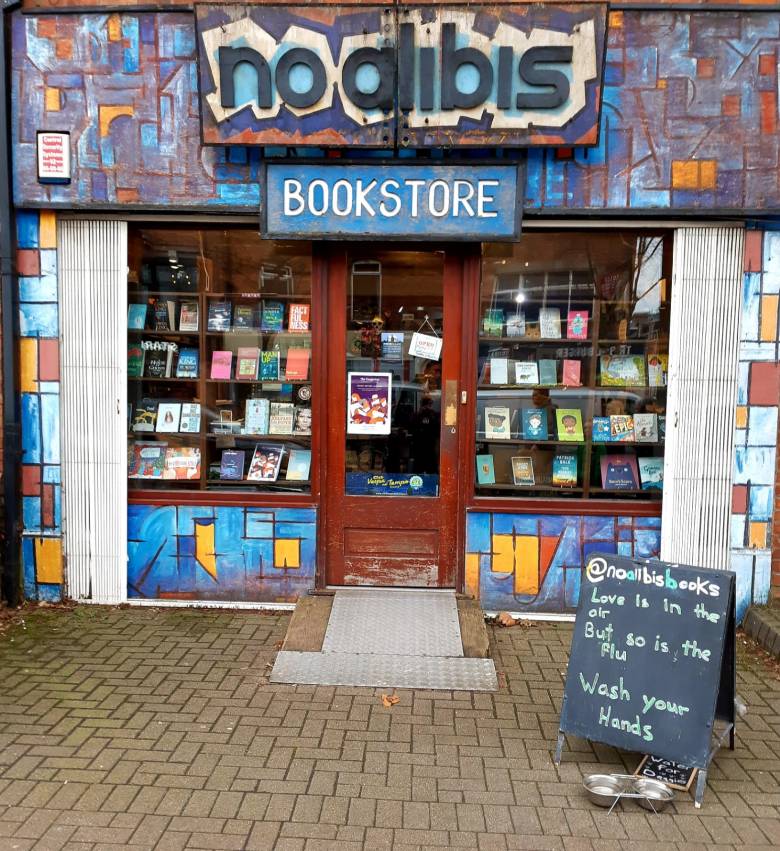
    This is a mantra echoed by fellow independent bookstore owner David Torrans, who runs one of Belfast’s most beloved bookshops, No Alibis.

    David acknowledges that lockdown has been “challenging, disrupting, and frightening” and says, while an increase in sales has been gratefully received, it will not make up for the overall loss incurred by lockdown.

    No Alibis Bookstore

    Although No Alibis remain confident that they will be able to adjust their business within the new commercial environment, the biggest help they could get right now would be from consumers changing their buying habits – and moving away from the online behemoths to support local independents instead. In a rallying call to literary arms, David said:

    “Everyone could cancel their Amazon Prime accounts! That would be my dream situation. But really, what people can do is continue to support the bookshops, as they have been doing so wonderfully well, and just keep in mind that maybe not everything needs to be there the very next day.”

  • The Inner Game of Writing (Or How I Wrote A Novel By Accident)

    Twelve years ago I started working with a coach. At the time I was wretchedly unpublished. My efforts at becoming an author were in pieces and the whole pretension was starting to feel like an embarrassment. I had made my first bright-eyed submission to an agent nineteen years previously, in 1989, and in between had produced huge volumes of part-novels, fragments, segments, sections and even a few finished works—but over the course of more than two decades, the consistent rejection began to outweigh the sporadic flashes of encouragement, and by the time I started talking to my coach, I was starting to give up hope.

    However, ten months after our first coaching conversation, my first short story was published. After more than two decades of trying, the first step took less than a year. That is not the end of the story for a couple of very good reasons: firstly, because one short story was not the sum of my ambitions, and secondly, because it wasn’t immediately obvious that the coaching relationship was the key.

    So the sequence that followed was important. After that first story, there were other successes. I was shortlisted in a couple of competitions and had some stories in a few anthologies. The acceptances kept coming and it started to seem that I was getting the hang of it. So I decided to build on my growing confidence and attempt another novel.

    Up to that point it was clear to me—so I thought—how the coaching relationship had helped. My coach was implausibly enthusiastic and encouraging. We talked about once a month (via internet calls because she was in the US), always focusing our conversations on what I was writing about. She sounded immensely American, whooping with joy at each new success and forever asserting how amazing I was as a writer, while I sounded terminally English, embarrassed by my own modest achievements and emotionally reticent. So it’s not a surprising mistake, but as I geared myself up to produce a novel, I did my coach a disservice: I believed that the main difference she had made was helping to bolster my confidence.

    Then came the fourth act crisis.

    I chose to write a crime novel because I thought it would be the most fun to write. I followed the requirements of the genre, gave it a strong female lead, added as much originality as I thought it could carry, located it firmly in a town I knew well and, having re-drafted it twice over the period of a couple of years, fired it off to an agent.

    Then came the shock: I received a message from the agent’s readers saying she loved it. Her voicemail explained how she had stayed up late into the night to finish reading it, had been completely hooked, and thought it was brilliant. She actually used the ‘B’ word. I was over the moon.

    But that little flash of excitement from the agent’s reader was the entire life-span of my crime novel. It turned out the agent did not agree. A couple of weeks went by before the reader emailed me, confessing the result and lamenting the loss, which, she said, felt as if she’d written it herself. Bless.

    After that, nothing. No-one else could be induced to show the slightest interest in my crime novel. Rejection followed rejection and eventually the whole thing was relegated to a metaphorical bottom drawer where it will dwell for all eternity.

    This was my nadir, but there was little risk of giving up completely because I had a monthly coaching call to attend and needed something to talk about, and because I had what Emma Darwin rightly calls ‘the itch of writing’. So rather than giving up, my coach encouraged me to stop trying. I stopped trying to write what I thought would sell; I stopped trying to write something clever and new and appealing; I stopped trying to write to please agents or to produce what everyone else wanted. I stopped trying.

    I did not stop putting effort into my craft. Far from it; under the guiding eye of my coach (who claims no knowledge about writing at all) I started to write short stories that stretched my skills and abilities, just to see if I could. I settled on 19th century Dorset for a consistent setting and combined research with experimentation. I wrote a story in which first, second and third person narrative positions sat alongside each other. Another story mixed future tense, past tense and present tense. I wrote in a ‘Victorian style’ but with a modern voice. I played with a rapid-paced narrative and then with something very slow and studious. I became increasingly obsessed with using different and authentic-sounding voices, and in order that the narrative would not sound mock-Austen, or faux-Dickens, I worked hard to uncover the realities of mid-century diction. I studied diaries that were not meant for publication (Anne Lister’s was particularly revealing) to see how people expressed themselves when they thought no-one was looking, and I became obsessed with academic work on regional dialects. After discovering William Barnes’s glossaries and grammar descriptions, I started weaving Dorset dialect into my stories. Then I had a go at writing a whole story purely in dialect.

    For three years, I lived part of my life in the mid-nineteenth century, I wrote about female composers, priests, cordwainers and even a full London theatre troupe. I spent several months researching what it was like to sail around Cape Horn and several months more turning that research into a five-thousand word story.

    My production rate was pathetic, but it didn’t matter because I didn’t expect anyone else to ever see the result. No-one was waiting.

    What emerged, during this process, was an overarching story. I found links in the different experiments and gradually reworked them until the links became threads and the threads ran through everything. That was very unexpected, and was very clearly the result of my coach encouraging me to relax from trying so hard. Pretty soon I realised that I had quite unwittingly—as if by accident—written a novel.

    I still didn’t expect anyone to publish it. It was too quirky, self-indulgent, experimental and uneven. It broke far too many rules, there wasn’t even a single central character—indeed most of the characters in the first section didn’t reappear in the whole of the rest of the book.

    All the same, I showed a few sections to an editor at Unbound, the crowd-funding publisher. Her reaction was unexpectedly enthusiastic. She told me that if I gave her a chance to publish it, she’d bite my hand off.

    So it has come about. The novel I wrote as if by accident is being published by Unbound. It is called Crow Court and is due to hit bookshelves in January 2021. Unbound have high hopes for it, proof copies are garnering some excited responses from some very respectable literary figures, and my coach is ecstatic.

    These are the moments that writers live for. For the most part, writing is a lonely, unrewarding pursuit. Feedback can be patchy, infrequent, and unreliable, and keeping the emotional and intellectual stability to get through the troughs between each peak is a real ordeal. That is where coaching can really help.

    The influence my coach has had—constantly—over the past twelve years, is to encourage me back to myself. In practical, writing terms that means returning time and again to write about what interests me, in a manner that I find engaging; and to listen to my own judgement when making choices about what to write and how to write it. The pioneer of coaching, Tim Gallwey, called it the ‘inner game’ and while he developed coaching as the ‘inner game’ for tennis players, it can be applied to just about anything.

    There is only so far we can go when learning the craft. There is a wealth of information to be gained from all the brilliant teachers that offer their knowledge, from Dorothea Brande, to Robert McKee, John Truby and John Yorke. There are some superb blogs such as Toby Litt’s and Emma Darwin’s and there are brilliant examples such as the podcast, The Bestseller Experiment, to show us the way. But there comes a point when the writer needs to set out alone. After that line has been crossed, the advice given by teachers and mentors runs the risk of being counter-productive.

    A writer who is teaching another writer will always be prone to advise writing the way the teacher would write it. It’s the best way they know. They aren’t going to teach you the second-best way, nor eschew an improvement in their own technique. But there comes a point when you need to stop learning other people’s way of doing it, and start finding your own way.

    At that stage, coaching becomes the right tool for the job. Coaching is designed to enable you to find your own way, using your own resources. I am immensely grateful to have had the wisdom, company and guidance of my own coach for many years, and now I’m determined to pass on the benefit. I have a coaching certificate and I studied NLP to master practitioner level, so I have all the tools I need. I might not be the most accomplished author, but I do have a few achievements under my belt and, as a qualified coach, I know how help other writers, new or experienced, to perfect their own ‘inner game’.

     So if you know what you are doing, but you’re still struggling to actually get on and do it, or even if you are getting along perfectly well, but you want to take your writing to another level—get a coach. There are plenty of them out there, and the International Coaching Federation can point you to qualified and experienced practitioners. You could even engage me. I’m currently offering cut-price introductory sessions as rewards in the crowd-funding campaign for Crow Court (single sessions or a set of three). There are still a few available!

    https://unbound.com/books/crow-court

    Or you could get in touch via Twitter, where I am @andycwriter.

    The inner game of tennis

    The International Coaching Federation

    Emma Darwin’s Blog

    Toby Litt’s Blog

    About the Author

    Andy Charman is an author and writing coach. His short stories have been included in anthologies, long-listed and short listed in competitions and published in journals such as Every Day Fiction, The Battered Suitcase, Cadenza, Pangea and Ballista magazine. His novel, Crow Court, is published by Unbound and is due in bookstores in January 2021.

    Andy is a certified coach, an NLP practitioner and master practitioner. He coaches authors and creative writers to find or improve their own method, rhythm and writing voice.

  • Have you played YouTube Bingo? If not, then you should

    So you’re in lockdown. And you’ve been in lockdown since the dawn of time. Yes, okay, maybe shops and zoos are opening up, but what if you don’t want to shop for an anaconda right now? You’ve completed Netflix, you’ve downloaded and watched every series of ‘The News’, and you’re tired of drinking alone in the corner of your bedroom.

    Well, it’s during these moments that perhaps some of the greatest inventions stand to be made. We’ve already seen the dawn of new cultural entertainment events like marble racing and dog watching, but here’s something else that – even better – you can do with actual, real-life, other people, too…

    We’re talking about YouTube Bingo, the invention of photographer, philanthropist and general all-round sexy person Mike Dodson, and started as Chinese Whispers with music videos. The idea is to share songs that bring something to the table – whether the music itself, or the video.

    How does it work?

    From a practical point of view, the best number of participants is about six.

    Someone – it could be you-  is hosting. In lockdown, this can be done in houseshares, or people you’re ‘bubbling’ up with. Whoever is hosting has a moral duty to ensure that there’s enough seating, a massive telly to play YouTube on, and nibbles. Guests should bring whatever they’re drinking, and a bottle for the host.

    There aren’t any rules, though it’s worth limiting song times to under 6 minutes, because no one except you wants to sit through a 23-minute Mongolian nose-flute solo, however moving it is.

    During proceedings, plenty of liquid refreshment needs to be available for all parties.

    • Flip a coin to start, or just kick off with Alan.
    • While watching Alan’s choice, Betty will be inspired by an aspect of either the tune itself, or the video, and so on her go, she will be passed the remote control, and will put that tune on.
    • The bass line of Betty’s choice will remind Chaz of Bette Midler’s 1976 cover of Satan Ate My Goatherd, so for his go he puts that on.
    • Davina will notice that the girl in the video for it was also in Duran Duran’s Chauffeur so that goes on when it’s her turn.
    • Repeat until close.

    Lockdown Variations

    We’ve found that creating a WhatsApp group can replicate the group dynamic quite well. Download WhatsApp to your laptop and connect it to the telly, so that you can cast links across.

    You all agree a time, and all parties should ensure they have plenty of liquid refreshment.

    You then take your agreed turns, instead of having the remote, you send YouTube links on the WhatsApp group, and everyone listens to your tune on their home machines, at the same time.

    You can then chat on the WhatsApp group.

    Tips for Lockdown Variation

    It’s generally worth having a few tunes pre-selected for the Lockdown version, as the administration of typing into WhatsApp can be a bit unwieldly. While it detracts from the spontaneity, everyone still gets a jolly good crack at things, and you can finally share that weirdo DJ Hedfuk remix featuring that guy who used to be in Eastenders.

    Be nice – everyone’s got a different taste in music, and yours is no better.

    You may find that you are up until the early hours. This is normal.


    About the author of this post

    The Goatman is a 45-year-old git with a slight drinking problem.

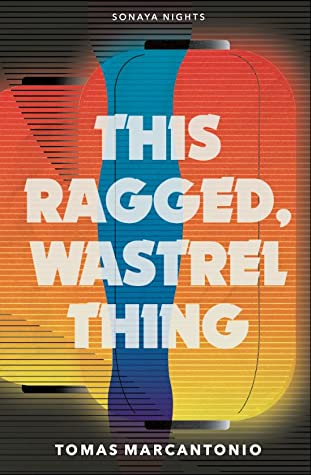
  • Book review: This Ragged, Wastrel Thing by Tomas Marcantonio
    This Ragged, Wastrel Thing is published by independent printing press, STORGY.

    Within the first pages of Tomas Marcantonio’s searing new book, we are utterly caught up in the crazed action of a world alight with neon fire.

    This Ragged Wastrel Thing (have you heard many better book titles recently?) transports us to the frenetic, fractured world of The Rivers – a twisting network of alleyways that our protagonist, Daganae Kawasaki, must somehow navigate. It is a fiercely appropriate setting, mirroring the entangled nature of a narrative that twists and turns as we uncover a world of secrets, lies, death and sex.

    But this isn’t a book that plays out like your standard piece of dystopian fiction. Nor is it simply a crime thriller with a dystopian backdrop. Rather, This Ragged Wastrel Thing is entirely unique – it is it’s own thing, if you will.

    Of course, it shares traits with all great books: the pacing is perfectly poised and tight – you barrel along with Kawaski and co as fast as some of the punk-riddled bikers we encounter in its pages. The writing is sharp and the characters are never cardboard cut-outs (so often an unfortunate feature of thrillers, where authors reach for ways to advance plot points at the expense of their characters). Indeed, reading Marcantonio’s book, one is struck by how cinematic it feels at times. Not simply through it’s descriptions, but also through some of the scenes the author evokes: from extravagant parties thrown by and for the richest in society; through to tight fight scenes and action sequences.

    There are elements of Watchmen in this novel – particularly Rorschach’s diary – but also of Philip. K. Dick, and Ballard. While it perhaps lacks some of the subtlety or probing, interrogative philosophical questions that Dick and Ballard pose us, This Ragged Wastrel Thing is never anything other than compelling, and exciting.

    The excitement comes not only from the action, but from the very nature of the prose itself. Filled with stunning imagery that blends beauty with horror, and sanity with absurdity, the language gives life to a world that feels so intensely realised it is as though we are walking the streets alongside Dag, Fairchild and co. Added to this, Marcantonio’s decision to use the present tense gives a sense of urgency and pace that begs the reader to keep reading, continue turning the pages, desperate to uncover the next part of the story.

    There’s intrigue galore and this is a book that keeps you asking questions until the very end (setting us up nicely for the sequel). But while neither we, nor our protagonists, can be sure where we’ll end up, there’s one thing that we can be certain of: when the future comes, it will be drenched in neon.