• fountain pen

    Man has an instinctive inclination toward communication and the written word. Indeed, it is writing that can be held up as the defining record of our civilisation – an enduring and expansive catalogue of human feeling, expression, discourse, thought, history and philosophy. Yet we are also drawn to the study of writing as an art form – inspired by a belief that, through learning, tips and advice, we can learn to write well and beautifully.

    Perhaps this is because good writing has to be learned – and even if there are those who possess a natural flair or talent for the craft, this must be honed and cut from its raw bedrock if it is to be perfected. As David Oglivy – iconic businessman and original ‘Mad Man’ – wrote in a 1982 memo to his advertising agency employees: “Good writing is not a natural gift. You have to learn to write well.”

    Yet to move beyond simply ‘good writing’, and to attempt to create writing that might be termed great, canonical or beautiful, is to learn more than simple writing tips, tricks and hints. In fact, it requires no less than the someone miraculous mastery of “style” – a rather illusive term that nonetheless is at the heart of one of the most important writing guides; Strung and White’s The Elements of Style, a book of legendary status that has inspired countless writers – and even inspired a rap.

    Nearly a century after The Elements of Style was first published, Harvard’s Steven Pinker – arguably today’s most prominent and prolific psycholinguist – has now taken up the task of trying to articulate the science of beautiful writing, in his book The Sense of Style: The Thinking Person’s Guide to Writing in the 21st Century.

    In the prologue, Pinker writes:

    “I like to read style manuals for another reason, the one that sends botanists to the garden and chemists to the kitchen: it’s a practical application of our science. I am a psycholinguist and a cognitive scientist, and what is style, after all, but the effective use of words to engage the human mind?”

    From this starting point, Pinker approaches the question of style first and foremost as a scientist – applying the findings of his field to debunking a number of longstanding dogmas and dictums about writing that are often followed blindly, for instance:

    “We now know that telling writers to avoid the passive is bad advice. Linguistic research has shown that the passive construction has a number of indispensable functions because of the way it engages a reader’s attention and memory. A skilled writer should know what those functions are and push back against copy editors who, under the influence of grammatically naïve style guides, blue-pencil every passive construction they spot into an active one.”

    However, there is nothing cold or overly analytical in this scientific deconstruction. And this is thanks, largely, to the very obvious fact that the book has ultimately been inspired by Pinker’s love of writing and the written word.

    His broader point that carries through the book is that language is not a set of static doctrines; but rather a living, breathing thing – born from a dynamic interaction between writer and reader, speaker and listener. This is the inverse of E.B White’s ‘ecstasy’ of reading – in which White notes that “as in the sexual experience, there are never more than two persons present in the act of reading – the writer, who is the impregnator, and the reader, who is the respondent.”

    Because of this intimate relationship, and because of the organic nature of writing, Pinker notes that such rigid rules are both limiting and unnecessary:

    “Although some of the rules can make prose better, many of them make it worse, and writers are better off flouting them. The rules often mash together issues of grammatical correctness, logical coherence, formal style, and standard dialect, but a skilled writer needs to keep them straight. And the orthodox stylebooks are ill equipped to deal with an inescapable fact about language: it changes over time. Language is not a protocol legislated by an authority but rather a wiki that pools the contributions of millions of writers and speakers, who ceaselessly bend the language to their needs and who inexorably age, die, and get replaced by their children, who adapt the language in their turn.”

    This cross-contamination – or fertilization – of ideas is what drives language and literature forward. Writers have long noted the influence of other writers on themselves and their own work, and this can be seen as a natural evolution of consciousness, creativity, culture and, ultimately – style. As nobel-prize winning writer, J.M Coetzee, notes in this detailed interview:

    “There are works of literature whose influence is strong but indirect because it is mediated through the whole of the culture rather than immediately through imitation. Wordsworth is the case that comes to mind. I see no marks of Wordsworths style of writing or style of thinking in my own work, yet Wordsworth is a constant presence when I write about human beings and their relations to the natural world. […]

    “One does not pick up ideas from writers, but a style, an attitude to the world [which] as it soaks in, becomes part of the personality, part of the self, ultimately indistinguishable from the self.”

    24-Strahov-Monastery-Library-Prague-Czech-Republic

    As we continue with Pinker’s book, then, we see that his personal intention is to “distinguish the rules that enhance clarity, grace, and emotional resonance from those that are based on myths and misunderstandings” and to supplant “dogma about usage with reason and evidence.”

    The trick then, is to apply insights, writing advice and tips, mindfully – rather than robotically. This is, then, ultimately about consciousness, and deliberately thinking hard about why we do what we do and understanding our intentions when it comes to penning a word, a phrase, a short story, a novel.

    Pinker carries on, denoting the three main reasons why style is so important – and why it matters so much today:

    “First, it ensures that writers will get their messages across, sparing readers from squandering their precious moments on earth deciphering opaque prose…

    Second, style earns trust. If readers can see that a writer cares about consistency and accuracy in her prose, they will be reassured that the writer cares about those virtues in conduct they cannot see as easily…

    Style, not least, adds beauty to the world. To a literate reader, a crisp sentence, an arresting metaphor, a witty aside, an elegant turn of phrase are among life’s greatest pleasures… This thoroughly impractical virtue of good writing is where the practical effort of mastering good writing must begin.”

    Pinker, then, does not take Oscar Wilde’s view that “nothing worth knowing can be taught”. Rather, he believes fervently and passionately that everyone and anyone can learn to write beautifully, and write with style – through a combination of both instruction, and – most importantly – by absorption. A kind of creative osmosis, whereupon one is fertilized by the ideas and writings of others. Our own writing self, then, is not who we personally are – but is rather a continually learning, growing thing, created by all the writers we have read and all the ideas we have heard and all the things we have seen.

    The most important scientific tool to enable one to write beautifully, then, is no new gadget – no minimalist typewriter – but rather the simple book. And the best guide to good writing is good reading. Just as Susan Sontag said she became a writer by first becoming a reader, and like David Foster Wallace – who urged his writing students to read a lot and read attentively, and as Ray Bradbury advised aspiring writers that the only education they needed was available to them through their local library – so too does Pinker advocate the immeasurable value of reading in learning to write:

    “Good writers are avid readers. They have absorbed a vast inventory of words, idioms, constructions, tropes, and rhetorical tricks, and with them a sensitivity to how they mesh and how they clash… The starting point for becoming a good writer is to be a good reader. Writers acquire their technique by spotting, savoring, and reverse-engineering examples of good prose.”

    He offers some words of assurance to those entering the craft:

    “An aspiring writer could be forgiven for thinking that learning to write is like negotiating an obstacle course in boot camp, with a sergeant barking at you for every errant footfall. Why not think of it instead as a form of pleasurable mastery, like cooking or photography? Perfecting the craft is a lifelong calling, and mistakes are part of the game. Though the quest for improvement may be informed by lessons and honed by practice, it must first be kindled by a delight in the best work of the masters and a desire to approach their excellence.”

    The siren call of clichés

    But, of course, there are a few time-honoured elements to be aware of, if one is searching to “approach their excellence”. And perhaps the most important of these, Pinker suggests, is to resist any and all urge to fall back to tired clichés:

    “Every writer faces the challenge of finding a superlative in the English word-hoard that has not been inflated by hyperbole and overuse… Good writing can flip the way the world is perceived, like the silhouette in psychology textbooks which oscillates between a goblet and two faces.”

    Thankfully, Pinker is on hand to offer keen advice on how to search out the perfect word:

    “Readers who want to become writers should read with a dictionary at hand (several are available as smartphone apps), and writers should not hesitate to send their readers there if the word is dead-on in meaning, evocative in sound, and not so obscure that the reader will never see it again. (You can probably do without maieuticpropaedeutic, and subdoxastic.) I write with a thesaurus, mindful of the advice I once read in a bicycle repair manual on how to squeeze a dent out of a rim with Vise-Grip pliers: “Do not get carried away with the destructive potential of this tool.”

    old-dictionary1-web

    Writing as conversation

    Ultimately, Pinker reminds us that writing is a “kind of conversation, or correspondence, or oration, or soliloquy” – and because of that is alike to the instinctive human need to communicate (just as Darwin noted that “man has an instinctive tendency to speak”).

    However, the trick with writing is to converse with invisible men and women – our inscrutable readers who never show us their reactions. This may at first sound challenging; however, as writers the prescription or remedy to this challenge should come easy enough, since Pinker suggests it requires a simple act of imagination:

    “At the time we write, the reader exists only in our imaginations. Writing is above all an act of pretense. We have to visualize [a conversation], and put words into the mouth of the little avatar who represents us in this simulated world.

    The key to good style, far more than obeying any list of commandments, is to have a clear conception of the make-believe world in which you’re pretending to communicate.”

  • In the hurly burly world of our Post-Fordist society, it is increasingly becoming difficult to sit and concentrate for thirty seconds – let alone thirty minutes – as the digital background babble drills into our consciousness, and we are met in the world outside the office by TV in waiting rooms and the backseats of cars; by music in supermarkets, retail stores, gyms and buses; by advertisements everywhere you look.

    Each of these things distract us from our thoughts, and from real life. They consume us to such an extent that people sometimes even ask questions like “why do we even need books?” “Why should we spend our times reading novels and poems, when so much is happening?”

    Well, fortunately, to answer these questions the wonderful folk at The School of Life have created a marvellous animated essay, which extols the value of books and literature in expanding our circle of empathy, validating and ennobling our inner life, and fortifying us against the paralyzing fear of failure.

    The creators note that we tend to treat literature as a distraction, an entertainment – something for the beach. But it’s far more than that, it’s really therapy, in the broad sense. Indeed, they suggest books could be used as a cure for many of the afflictions that ail us:

    “We should learn to treat literature as doctors treat their medicines, something we prescribe in response to a range of ailments and classify according to the problems it might be best suited to addressing.”

    The essay notes key rewards found in reading, which are detailed here below:

    It saves you time

    It looks like it’s wasting time, but literature is actually the ultimate time-saver — because it gives us access to a range of emotions and events that it would take you years, decades, millennia to try to experience directly. Literature is the greatest reality simulator — a machine that puts you through infinitely more situations than you can ever directly witness: it lets you – safely: that’s crucial – see what it’s like to get divorced. Or kill someone and feel remorseful. Or chuck in your job and take off to the desert. […] it lets you speed up time.

    It turns us into citizens of the world

    Literature introduces you to fascinating people: a Roman general, an 11th century French Princess, a Russian upper class mother just embarking on an affair…it takes you across continents and centuries. Literature cures you of provincialism and, at almost no extra cost, turns us into citizens of the world.

    It makes you nicer

    Literature performs the basic magic of what things look like though someone else’s point of view; it allows us to consider the consequences of our actions on others in a way we otherwise wouldn’t; and it shows us examples of kindly, generous, sympathetic people.

    Literature deeply stands opposed to the dominant value system — the one that rewards money and power. Writers are on the other side — they make us sympathetic to ideas and feelings that are of deep importance but can’t afford airtime in a commercialized, status-conscious, and cynical world.

    It’s a cure for loneliness

    We’re weirder than we like to admit. We often can’t say what’s really on our minds. But in books we find descriptions of who we genuinely are and what events, described with an honesty quite different from what ordinary conversation allows for. In the best books, it’s as if the writer knows us better than we know ourselves — they find the words to describe the fragile, weird, special experiences of our inner lives… Writers open our hearts and minds, and give us maps to our own selves, so that we can travel in them more reliably and with less of a feeling of paranoia or persecution…As the writer Emerson remarked: “In the works of great writers, we find our own neglected thoughts.”

    It prepares you for failure

    All of our lives, one of our greatest fears is of failure, of messing up, of becoming, as the tabloids put it, “a loser.” Every day, the media takes us into stories of failure. Interestingly, a lot of literature is also about failure — in one way or another, a great many novels, plays, poems are about people who messed up… Great books don’t judge as harshly or as one-dimensionally as the media. They evoke pity for the hero and fear for ourselves based on a new sense of how near we all are to destroying our own lives.

    Sylvia Plath, reading.
    Sylvia Plath, reading.

    The essay concludes with a fitting tribute to literature, and perhaps the most salient answer to that damnable question we first started with – “what is literature for?”

    The creators say: “Literature deserves its prestige for one reason above all others — because it’s a tool to help us live and die with a little bit more wisdom, goodness, and sanity.”

    We here at Nothing in the Rulebook couldn’t agree more. Why not complement this video essay with musings on the ecstasy of reading, and then peruse some of essential summer and autumnal reading lists.

    About the School of Life

    The School of Life is devoted to developing emotional intelligence through the help of culture. We address such issues as how to find fulfilling work, how to master the art of relationships, how to understand one’s past, how to achieve calm and how better to understand, and where necessary change, the world.

  • Jeremy Corbyn colouring book

    The winds of change are turning through the publishing industry, as bookstores across the UK report huge spikes in the sales of socialist and left-wing literature.

    It is believed the increase in sales is linked to the rise of Jeremy Corbyn – the left-wing leader of the UK’s opposition Labour Party.

    Books like Karl Marx’s Capital used to be the preserve of politics students, political theorists and veteran activists; but not anymore. Andrea Butcher, of Bookmarks, a socialist bookshop at the heart of Bloomsbury, central London, said: “We’re already out of Capital, Volume I, because people have been buying it so much. For other people, it’s books like The little rebel’s guide to Marx – which we’re having to reprint because we’re almost out of it.”

    And Ms Butcher is clear that she believes the rise in sales is linked to Jeremy Corbyn’s ascent to leader of the UK’s main opposition party.

    “I think one of the things that the Jeremy Corbyn victory has done is that it’s given people a shot in the arm; it’s building up confidence and people are now looking to the books that can help them in the fights they are facing,” she said.

    “Those fights could be around housing, or increased private debt due to government austerity measures – and we have books on housing and austerity that are flying off the shelves,” she added.

    But it’s not just niche bookstores registering a spike in sales of Marxist and other left-wing literature.

    Vivian Archer, manager of Newham Bookshop, which stocks a wide variety of literature, says that interest from consumers has clearly shifted to the left.

    “Basic things like the Communist Manifesto have been the biggest sellers,” Ms Archer said. “It’s people trying to find out about the history of the Labour movement; the trade union movement; and there are also a lot of new books on the NHS and the NHS has been a major issue. And, of course, anything on austerity.”

    The publishing industry at large has clearly recognised the shift toward left-wing ideals, too, and bookstores across the UK are now eagerly awaiting the arrival of a much-anticipated Jeremy Corbyn-themed Adult Colouring Book.

    The book, the creation of illustrator James Nunn, features images of Jeremy Corbyn sitting down for tea with the queen, and squaring off with David Cameron in the boxing ring.

    On his creation, Nunn says he came up with the idea based on the fact that “Corbyn is a massive part of our cultural consciousness at the moment.”

    “I’m trying to reach out to everyone across the political spectrum,” Nunn added. “So if you want to pick one up and draw horns on Jeremy, that’s fine; but there’s this centre-right zeitgeist that is currently trundling on that has not previously been checked with proper opposition, and I think it’s important to have a voice on the left that Jeremy provides that can hold these right-wing ideas to account. I think these differences of opinions are good.”

    Nunn also admitted that Corbyn was an illustrator’s “dream” to draw, noting that “his eyes hold you, and he has these great laughter lines. The beard helps you shape things […] he’s so much easier to draw than David Cameron with his big dough face who has no markings, no sign of life on his face.”

    “Of course I’m a fan of Corbyn,” Nunn said. “He’s been making people’s lives better for 40 years rather than being an overprivileged ball of dough.”

    And it’s not just people over voting age getting caught up in the literary Corbynmania: sales of left-wing children’s books, like Click Clack Moo are also on the rise. These books include cows going on strike when the farmer refuses to improve working conditions, with support from the chickens, who get involved with secondary picketing.

    Analysis

    Professor Wu says: “At a time when the mainstream media is continually trying to paint Corbyn in a negative light – as Paul Myerscough excellently details here – it’s great to see this isn’t impacting real public perception of a man who inspired hundreds of thousands of people over the summer with his honesty, his integrity, and his popular policies, such as support for the arts and creative industries, and his resistance to austerity – which has been shown time and time again to be, simply, the worst way to deal with an economic crisis caused by an over-reliance on an unregulated financial sector.”

    “Just because many bookshelves of bookstores are now dominated by the latest memoir of your premier league footballer, or other minor celebrity, doesn’t mean that British readers don’t still demand – and in fact actively crave – intellectual literature. The ideas of Marx and other left-wing philosophers haven’t disappeared, and are actually perhaps more relevant today than they have ever been. As we wrote in a recent article, books have the capacity to break down walls and help us better understand the world around us – and so this explosion in sales of left-wing books is testament to the innate human curiosity in ideas, and an intrinsic willingness to learn about life and question the authority of those in power, who, because of self-interest, would rather we didn’t have exposure to any alternative ideas, and seek to suppress creativity and original thought with every attempt.”

    “It was the printing press that first helped spread the ideas of Marx and other left-wing philosophers, so it is fitting that the new revolution will not be televised; but will be printed on the page.”

  • An eternal, largely ineffable question has long been asked of books and the so-called ‘art of reading’. What, precisely, does reading do for the human soul?

    Broadly speaking, books, reading and writing are about communication and creating connections with other human beings – people who exist beyond the page, and within the words before us. Books help us know other people – often those long dead – and help us better understand the world around us. In the process of reading, we come to know ourselves more deeply in a way that is borne out of an instinctive curiosity – a creative restlessness that exists within each of us, which we bring to each book we open.

    mauricesendakposters2

    These tomes – both big and small – open passageways and portals to other lands and ears, and in doing so provide guidance on how we might live in our own lives and surroundings.

    Little wonder, then, that the masterful E.B. White likened reading to a drug-like experience:

    “Reading is the work of the alert mind, is demanding, and under ideal conditions produces finally a sort of ecstasy.”

    Indeed, this extraordinary essayist went further, in a short essay titled “the future of reading”, penned in 1951, and in it White writes:

    “As in the sexual experience, there are never more than two persons present in the act of reading — the writer, who is the impregnator, and the reader, who is the respondent. This gives the experience of reading a sublimity and power unequalled by any other form of communication.”

    The intimacy of the reading experience described here reflects an intensity discovered by countless other writers, readers, and thinkers. Perhaps one of the best articulations of this feeling is captured by Franz Kafka.

    In a November 1903 letter, for instance, a 20 year old Kafka writes to a childhood friend, that “some books seem like a key to unfamiliar rooms in one’s own castle” – highlighting as he does so the curious ability books and literature possess to provide more insights into our own selves than we might think possible.

    Kafka expands on this sentiment in another letter, penned in January 1904:

    “I think we ought to read only the kind of books that wound and stab us. If the book we’re reading doesn’t wake us up with a blow on the head, what are we reading it for? So that it will make us happy, as you write? Good Lord, we would be happy precisely if we had no books, and the kind of books that make us happy are the kind we could write ourselves if we had to. But we need the books that affect us like a disaster, that grieve us deeply, like the death of someone we loved more than ourselves, like being banished into forests far from everyone, like a suicide. A book must be the axe for the frozen sea inside us. That is my belief.”

    But of course, the art of reading needn’t always be seen as something intense. Put simply, it can also be joyous.

    mauricesendakposters5

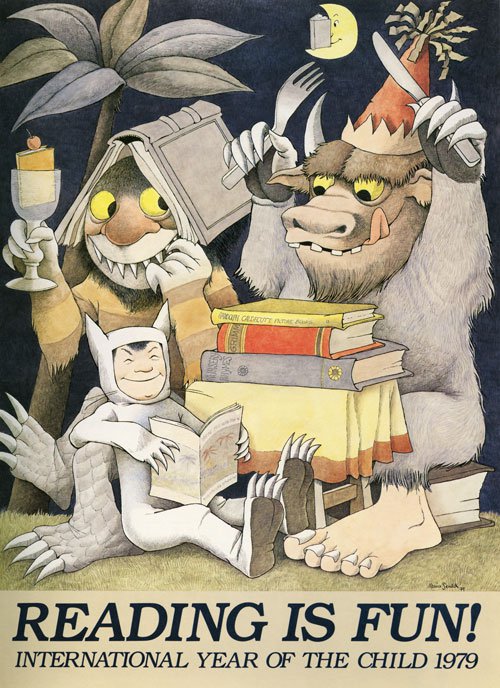
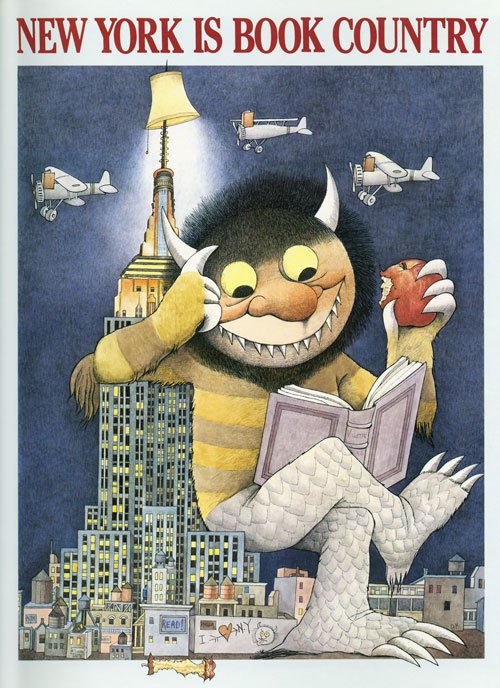
    Nowhere is the importance of simple literary pleasure demonstrated than in the wonderful collection of posters by illustrator Maurice Sandak. Within this large-format tome are the artist’s enchanting posters celebrating the love of books and the joy of reading, many featuring his iconic Wild Things.

    In the introduction, Sendak notes: “all of the pictures collected here were done for pleasure, and are offered up now with the hope that they will give pleasure”.

    We’ve provided some of these posters throughout this article, and we hope you agree that they not only give pleasure; they also illustrate clearly the pure, infinitesimal joy that is possible to find within the pages of a good book.

    mauricesendakposters6

    In this digital age, some might suggest that books are no longer necessary – that they belong to a previous era. Yet such thinking is not only flawed; but in fact is dangerous. For books, as Susan Sontag told us: “are not only the arbitrary sum of our dreams, and our memory. They also give us the model of self-transcendence […] a way of being fully human.”

    Books – and literature – therefore, are a vital part of our lives, because they keep us in touch with our humanity. They keep us in touch with life.


  • Writing tips from writers (Volume II)

    Writer’s Block. It sounds like a fearsome condition, a creative blockage. The end of invention. But what is it, really?

    Often, it’s created from conflicting, unhelpful desires – we want the writing to be perfect; but we also want the novel to be finished as quickly as possible. We want the words we write to be good; but can’t bear to put them down on the page in case they are bad. We like using semi-colons, because we’ve been to college; but we also love Kurt Vonnegut and we know how he feels about them, so we just use boring old commas instead.

    Okay, so that last one isn’t the most difficult challenge to overcome in writing our magnum opuses; but it’s often these smaller, minute details that cause writers the most grief. You can be overcome by a fear that the precise way you’ve written a sentence isn’t quite right – and you grow frustrated as you try to change your story on a sentence-by-sentence basis. Surely, if every sentence and word and turn of phrase is constructed perfectly, the novel will take care of itself?

    Such concerns are, of course, ultimately self-defeating. Because the only way to actually write something is to write it!

    But then, perhaps the hardest part of writing is actually starting to write. Hemingway, after all, famously opined that the most frightening thing he had ever encountered was “A blank sheet of paper.”

    So just how do you go about facing an empty page, coaxing your ideas into the world of form, and steering the end result toward shore? To help you cast off, we’ve compiled a list of #WritingTips – from writers; for writers.


    Cherish feelings of inadequacy – Will Self

    will-self-1420801432

    “You know that sickening feeling of inadequacy and over-exposure you feel when you look upon your own empurpled prose? Relax into the awareness that this ghastly sensation will never, ever leave you, no matter how successful and publicly lauded you become. It is intrinsic to the real business of writing and should be cherished.”

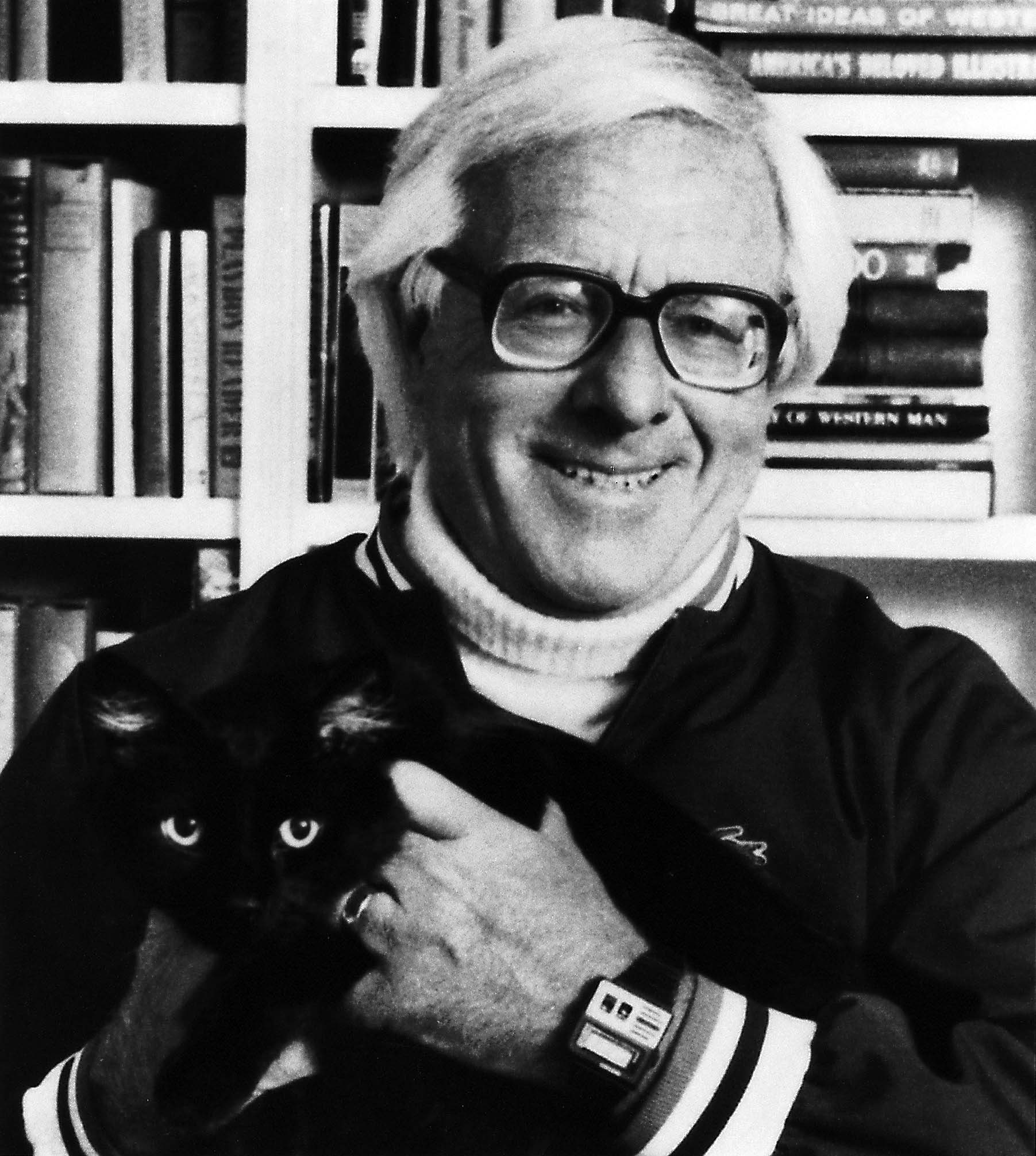
    Stay drunk – Ray Bradbury
    raybradbury

    “You must stay drunk on writing so reality cannot destroy you.”

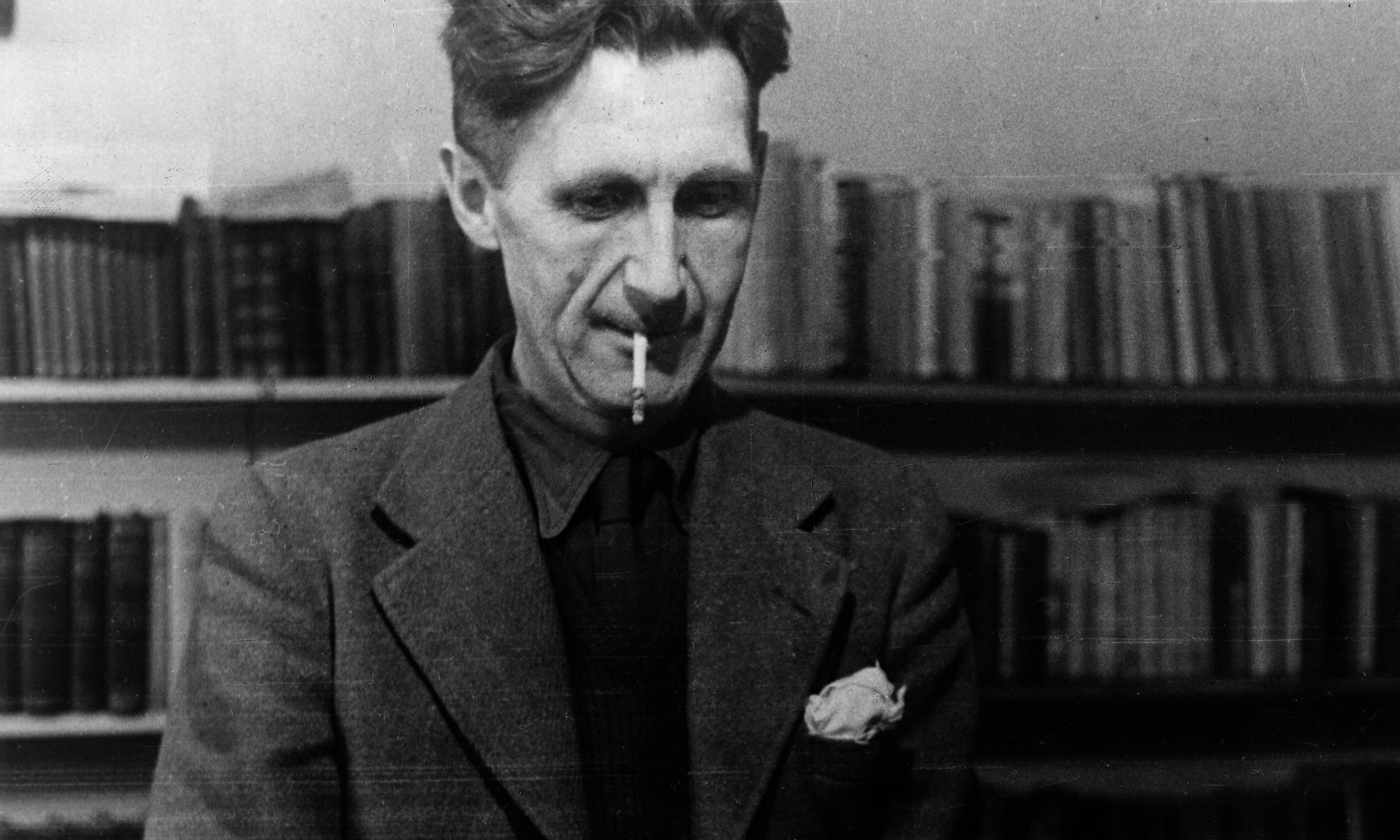
    You need rules you can rely on – George Orwell

    George Orwell at a typewriter

    “One can often be in doubt about the effect of a word or a phrase, and one needs rules that one can rely on when instinct fails. I think the following rules will cover most cases:

    1. Never use a metaphor, simile, or other figure of speech which you are used to seeing in print.
    2. Never use a long word where a short one will do.
    3. If it is possible to cut a word out, always cut it out.
    4. Never use the passive where you can use the active.
    5. Never use a foreign phrase, a scientific word, or a jargon word if you can think of an everyday English equivalent.
    6. Break any of these rules sooner than say anything outright barbarous.”

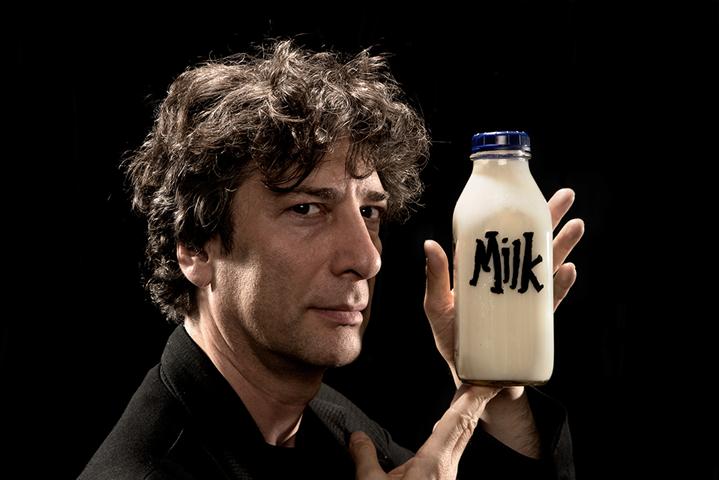
    Only tell stories you can tell – Neil Gaiman

     GaimanMilk_1_photo_Brady_Hall080713

    “Start telling the stories that only you can tell, because there’ll always be better writers than you and there’ll always be smarter writers than you. There will always be people who are much better at doing this or doing that — but you are the only you.”

    Allow yourself to lose track of your writing – John Steinbeck

     John Steinbeck

    “Abandon the idea that you are ever going to finish. Lose track of the 400 pages and write just one page for each day, it helps. Then when it gets finished, you are always surprised.”

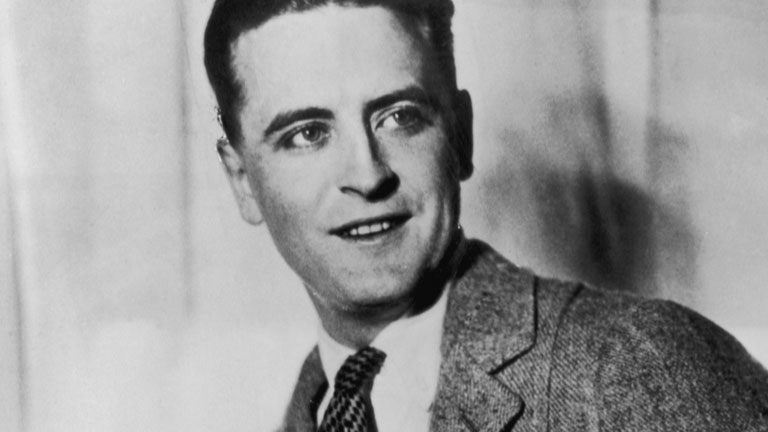
    Cut out exclamation marks – F. Scott Fitzgerald

    F Scott Fitzgerald

    “Cut out all those exclamation marks. An exclamation mark is like laughing at your own joke.”

    You need to have guts – Sylvia Plath

     Sylvia Plath

    “Everything in life is writable is you have the outgoing guts to do it, and the imagination to improvise. The worst enemy to creativity is self-doubt.”

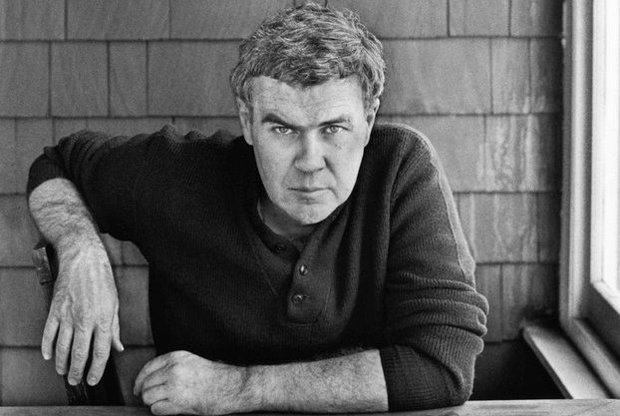
    Find your writing signature – Raymond Carver

     raymond-carver

    “Every great or even every very good writer makes the world over according to his own specifications. It’s akin to style, what I’m talking about, but it isn’t style alone. It is the writer’s particular and unmistakable signature on everything he writes. It is his world and no other. This is one of the things that distinguishes one writer from another. Not talent. There’s plenty of that around. But a writer who has some special way of looking at things and who gives artistic expression to that way of looking: that writer may be around for a time.”

    Protect your writing time and space – Zadie Smith

     Dress to impress … Zadie Smith's Miss Adele Amidst the Corsets has been nominated for the BBC's £15,

    “Protect the time and space in which you write. Keep everybody away from it, even the people who are most important to you.” 

  • aristotle

    During her acceptance speech for the Nobel Prize in Literature, Pearl S. Buck thrilled a captive audience with her description of the shimmering aliveness from which a creative work is born: “The creative instinct is, in its final analysis and in its simplest terms, an enormous extra vitality, a super-energy, born inexplicably to an individual, a vitality great beyond all the needs of his own living […] this energy consumes itself then in creating more life, in the form of music, painting, writing or whatever is its most natural medium of expression […] it is a process proceeding from within. It is the heightened activity of every cell.”

    This description of inspiration – an event (if we might describe it thus) both mental and physical – will be recognisable to all creative types who have ever been overcome by it. Yet discovering it has been, at best, an elusive hunt. Whether it is even possible to manufacture the conditions necessary to draw inspiration out from whichever haunt it keeps, so that it might spur the creative onto create the art they seek to make, remains a contentious debate. Is there a way to produce the inspiration needed – and also to keep hold of that inspiration long enough to express it adequately – to produce a great creative work? Or is there a mystic, divine-intervention element to inspiration and creativity?

    It is the belief – or hope – that inspiration and creativity can be nurtured by the practices and processes we, as creatives, employ, which remains the unspoken assumption beneath all creative writing courses; in the subtext of all writing tips from writers; and behind the daily routines employed by creatives. They point to what might be described as the ritualization of creativity – or attempts to advise others as to what daily processes they may employ to invoke the muse.

    There is something quasi-religious, half-ceremonial about such processes and routines. Writers can get quite pernickety about them. Edgar Allan Poe, for instance, wrote his final drafts on separate pieces of paper attached to a running scroll with sealing wax. James Joyce wrote lying on his stomach in bed, with a large blue pencil, clad in a white coat – and composed Finnegans Wake with crayon pieces on cardboard.  Virginia Woolf spent two and a half hours every morning writing, on a three-and-a-half foot tall desk with an angled top that allowed her to work both up close and from afar. John Steinbeck, who liked to write his drafts in pencil, always kept exactly twelve perfectly sharpened pencils on his desk. Truman Capote wouldn’t begin or end a piece of work on a Friday, would change hotel rooms if the room phone number involved the number 13, and never left more than three cigarette butts in his ashtray.

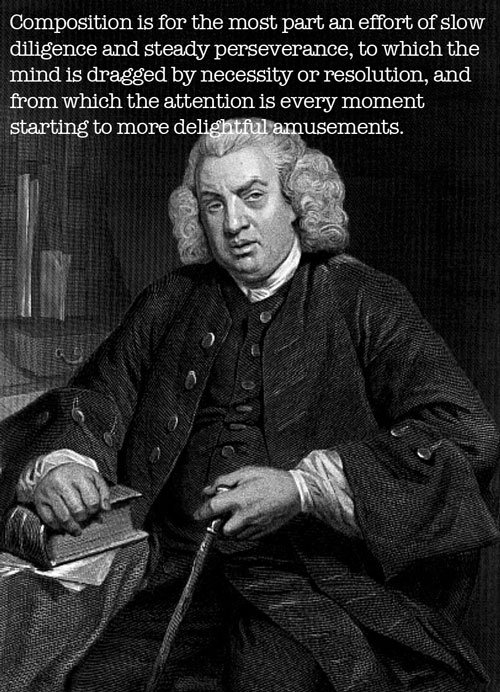
    Yet does such ceremony – rooted in strange uneasy feelings of superstition – actually help the creative writer? Or is it down to sheer determination? Samuel Johnson, after all, said simply that “composition is for the most part an effort of slow diligence and steady perseverance”, and contended that, rather than need a particularly angled desk, “a man may write at any time, if he will set himself doggedly to it.”

    samueljohnson1

    Intriguingly, psychological analysis suggests these creative rituals may be both cognitively sound and creatively fruitful.

    The Psychology of Writing

    Cognitive psychologist, Ronald T Kellogg, illuminates the role of the daily routine in producing inspiration and enhancing creativity in his work The Psychology of Writing. In this volume, he explores how work schedules, behavioral rituals, and writing environments all effect how much time we spend trying to write – and also influence how much of that time is spent feeling bored, anxious, or bound up in actually writing or being otherwise creative. Kellogg writes:

    “[There is] evidence that environments, schedules, and rituals restructure the writing process and amplify performance… The principles of memory retrieval suggest that certain practices should amplify performance. These practices encourage a state of flow rather than one of anxiety or boredom. Like strategies, these other aspects of a writer’s method may alleviate the difficulty of attentional overload. The room, time of day, or ritual selected for working may enable or even induce intense concentration or a favorable motivational or emotional state. Moreover, in accordance with encoding specificity, each of these aspects of method may trigger retrieval of ideas, facts, plans, and other relevant knowledge associated with the place, time, or frame of mind selected by the writer for work.”

    Among many of Kellogg’s interesting findings relating to the impact of our writing habits and environments, is the attention paid to background noise. Here, we find that high-intensity noise (exceeding 95 decibels) disrupts performance on complex tasks but improves it on simple, boring tasks. The reason for this is that noise raises arousal levels, which helps us stay alert during mindless and monotonous work, but can distract and agitate us out of creative work when immersed in the kind of work that requires deliberate, reflective thought. Scientific evidence to support therefore, our previous suggestion that when it comes to writing, we need silence.

    Yet the degree to which we are affected by such environmental factors also concerns our natural disposition toward anxiety (or lack thereof). Kellogg notes that writers more afflicted with anxiety – an unfortunately rising epidemic in our 24/7, post-Fordist, hyper-commercialised, society – tend to be more disconcerted by noisy environments. And the degree to which one feels anxious similarly affects how much noise one can put up with. This is almost scaleable – so that on the one hand you have Proust – who wrote in a cork-lined room to eliminate obtrusive sounds – and the other you have Allen Ginsberg, who was known for being able to write anywhere; from trains to planes to public parks and bustling streets.

    Each writer, therefore, has a highly subjective requirement for what makes a daily creative routine effective in preserving the state of inspiration and creativity:

    “The lack of interruption in trains of thought may be the critical ingredient in an environment that enables creative flow. As long as a writer can tune out background noise, the decibel level per se may be unimportant. For some writers, the dripping of a faucet may be more disruptive than the bustle of a cafe in the heart of a city.”

    Forget the 9 to 5

    Another key observation Kellogg makes regards the amount of time spent writing. Several studies indicate that working for 1 to 3 hours at a time, then taking a break before resuming, is most conducive to productivity. What is more, studies on circadian rhythms suggest that performance on intellectual tasks peak during morning hours, whereas perceptual motor tasks fare better in the afternoon and evening.

    Intriguingly, these findings almost perfectly mirror Kurt Vonnegut’s daily routine. Perhaps therefore showing that certain creatives are naturally predisposed to work in a way that naturally complements their creative inclinations.

    The dedicated workspace

    As to the location and physical environment needed to nurture creativity, Kellogg notes that writers’ dedicated workspaces tend to involve solitude and quiet, although in youth – “the apprenticeship phase of a writer’s career” – almost any environment is workable, perhaps a hybrid function of youth’s high tolerance for distraction and the necessity of sharing space earlier in life when the luxuty of privacy is unaffordable.
    Good news, then, for young writers currently facing (in the UK at least) the crippling effects of a conservative government seemingly hell set on forcing the young to bear the brunt of austerity measures, with lack of housing, huge debts and no jobs. Thank heavens for small mercies, eh?

    But Kellogg points out that the key thing to remember, when it comes to these environments,  that there is little here to do with superstitious ritualization — an effort to summon the muse through the elaborate juju of putting everything in its right place — as cognitive cueing. Kellogg considers the usefulness of a special space used solely for writing, which cultivates an “environment that cues the desired behavior”:

    “This phenomenon can be reinterpreted in terms of the cognitive concept of encoding specificity. The abstract ideas, images, plans, tentative sentences, feelings, and other personal symbols that represent the knowledge needed to construct a text are associated with the place and time of the writing environment. These associations are strongest when the writer engages in few if any extraneous activities in the selected environment. Entering the environment serves as a retrieval cue for the relevant knowledge to enter the writer’s awareness. Once the writer’s attention turns to the ideas that pop into consciousness, the composing process flows again. Particular features of the environment may serve as specific prompts for retrieving, creating, and thinking.

    For instance, a scene outside an office window, a painting hanging on the wall, or a plant sitting in the corner may become associated with thinking deeply about a particular text under development. Staring at the feature elicits knowledge representations bearing on the problem at hand.”

    Flexibility of human thought

    Yet for all these routines, insights and analysis, Kellogg notes astutely at the end of his book that the multitude of different practices and processes used by writers suggests more about us as human beings than any set guidance to creating the ‘perfect routine’ for nourishing creative thought.

    In his closing chapter, he says: “The diversity in environments chosen by writers, from Proust’s cork-lined room to Sarraute’s Parisian cafe, suggests the flexibility of human thought. A person can think in any environment, though some locations become habitual for certain individuals. The key is to find an environment that allows concentrated absorption in the task and maximum exposure to retrieval cues that release relevant knowledge from long-term memory.”

    Despite all the available strategies for ‘optimising creativity’, then, one truth – the ‘Capital T-Truth’ remains: there is no ideal cork-lined study with the perfectly angled chair rotated to the acceptable degree of inspiration creation. No matter how perfectly you position your desk clock, or sharpen your pencil, you cannot guarantee that Booker Prize.

    Ultimately, what actually counts is sitting down, clocking in the hours and showing up day in and day out, without fail, without romance, and writing; writing; reading; reading; editing; editing; and writing. More than superstition, it’s about effort. And more than luck; it’s about love.

  • River of Ink

    River of Ink, the debut novel from Paul M. M. Cooper, is set to be published by Bloomsbury on 28th January 2016 – and we here at Nothing in the Rulebook are already excited about it.

    Combining the intrigue of Wolf Hall, the drama of Game of Thrones and the elegance of My Name is Red, the novel promises to be one of the most thrilling new novels published in recent times.

    Madeline Miller, Orange Prize-winning author of The Song of Achilles, says: “Potent, beautiful and wholly absorbing, Cooper’s  portrait of a reluctant revolutionary had me in thrall from its first chapter. A wonderful, memorable debut.”

    True power lies in the tip of a pen

    All Asanka knows is poetry. From his humble village beginnings in the great island kingdom of Lanka, he has risen to the prestigious position of court poet. When Kalinga Magha, a ruthless prince with a formidable army, arrives upon Lanka’s shores, Asanka’s world is changed beyond imagining. Violent, hubristic and unpredictable, Magha usurps the throne, laying waste to all who stand in his way.

    To Asanka’s horror, Magha tasks him with the translation of an epic Sanskrit poem, The Shishupala Vadha, a tale of Gods and nobles, love and revenge, which the king believes will have a civilising effect on his subjects.  Asanka has always believed that poetry makes nothing happen, but, inspired by his love for the beguiling servant girl, Sarasi, as each new chapter he writes is disseminated through the land, Asanka inadvertently finds himself at the heart of an insurgency.

    True power, Asanka discovers, lies not at the point of a sword, but in the tip of a pen.

    About the author

    Paul M. M. Cooper was born in south London and grew up in Cardiff, Wales. He was educated at the University of Warwick and UEA, and after graduating he left for Sri Lanka to work as an English teacher.  There he returned again and again to the ruins of Polonnaruwa, learnt to speak Sinhala and to read Tamil. About River of Ink, Paul has said:

    ‘I was inspired by the life of Thomas Wyatt and how he used his translations of Petrarch to vent anger at Henry VIII, due to his rumoured romantic relationship with Anne Boleyn. I loved the idea of the poet using translation’s slipperiness to hide his sedition but wanted to set the story elsewhere.’

    Analysis

    Professor Wu says: “All of us here at Nothing in the Rulebook are eagerly anticipating the release of what appears to be a stunning debut novel from a really exciting young writer. It’s so important that, in this day and age, we continue to invest in and support aspiring writers – because it is through them that our literary canon can be expanded and taken in new and exciting directions.”

    “Once again, it looks as though the University of Warwick writing programme has given us yet another fantastic novelist. Paul clearly has a fantastic literary career ahead of him. We’ll be sure to bring you a detailed interview with the author, along with a detailed book review. So watch this space, comrades!”

  • novel

    Writing, we know, is a serious business. Behind the scenes, many writers admit they struggle with the daily work of writing, clocking thousands of solitary hours staring at blank pages and computer screens. Most agree on common hurdles: procrastination, writer’s block, the terror of failure that looms over any creative project and, of course, the attention sucking power of the Internet.

    But it is largely thanks to the wonderful attention sucking power of the Internet that we have stumbled upon a rather intriguing writerly discovery!

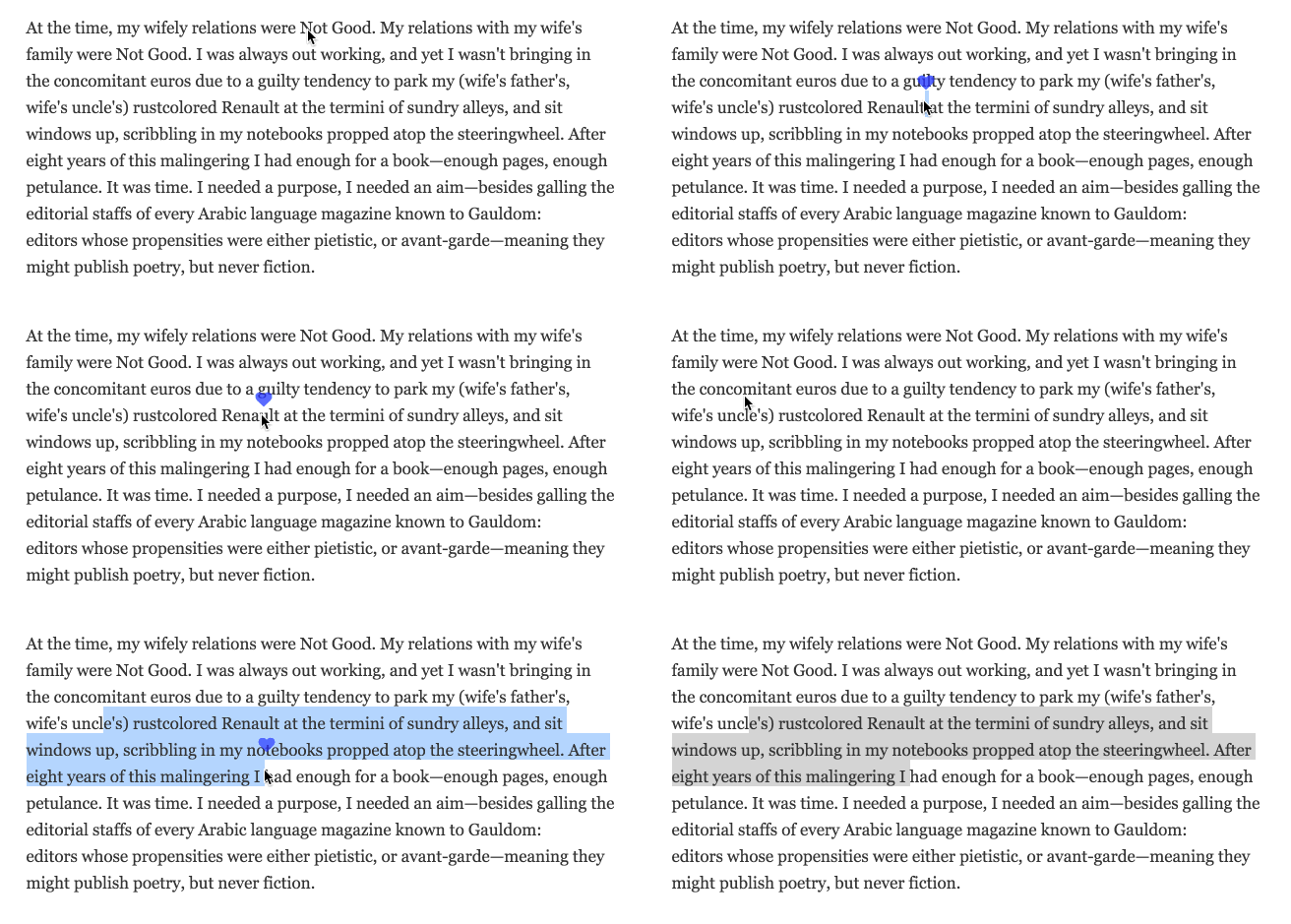
    A new initiative from novelist Joshua Cohen lets you watch him write his next novel, in real time, with video.

    Called PCKWCK, it’s a Google Docs style app that lets you watch the novel develop from start to finish, complete with typos, re-writes and other mistakes.

    writing

    You can even chat with Cohen and anyone else watching, and highlighting the text in the live view sends ‘hearts’ to him, similar to Periscope (because isn’t that just adorable).

    Hypnotizing to watch, or just another excuse for you to put of writing that novel you’ve been working on? You tell us! Let us know whether you think this is a cool idea, where aspiring writers can get a new insight into how a novel is written, or is it just more of the self-referential narcissism  we now expect from ‘digital writers’? Leave your thoughts in the comments section below!

  • poetry

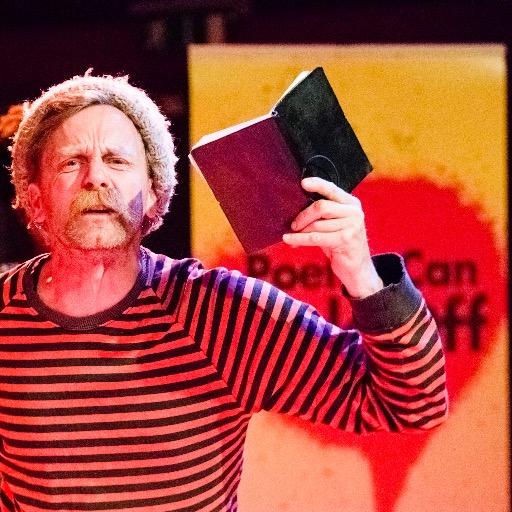
    Heathcote Williams’ radical new work, Poetry Can F*ck Off is coming to The Cockpit Theatre, London on 29th, 30th, and 31st October 2015; and The Other Place Theatre, Brighton on 20th, and 21st November.

    “Poetry Can F*ck Off is a revolution in poetry. And it’s the revolution in poetry”

    -Jeremy Hardy


    When Brainfruit artistic director and seasoned performer, Roy Hutchins began his daily visits to Brighton Occupy in 2011, he did what he does best – rouse the crowds with the words of radical poet, Heathcote Williams.

    Williams, known for his idiosyncratic documentary/investigative poetry style, was in turn inspired by Hutchins’ activism to reflect on the role of poetry in all political uprisings, and Poetry Can F*ck Off was born.


    “A picker pucker panoramic poetry parade”

    John Hegley


    Performed with live music, Brainfruit’s epic production charts the great resistance movements from the Peasants’ Revolt to Occupy Wall Street. Over 80 poets are referenced in a 55-minute mind-bending maelstrom – a compendium of the courageous, creative voices who called for change, from Shelley to Ginsberg to Pussy Riot.

    Their Edinburgh run culminated in Williams being awarded the most prestigious award of the festival: The Glasgow Herald Archangel – Lifetime’s Achievement Award.

    From Tahrir Square to Fukushima to Mesopotamia, this is not canonical school stuff its electrifying and erudite, passionate and political

    -Three Weeks


    Roy Hutchins is joined by Sameena Zehra, who cut her teeth performing AIDS awareness shows on the streets of Delhi; Jonny Fluffypunk, designated poet of the Bristol squat scene; Selina Nwulu, daughter of Nigerian refugees, charting her parents’ flight from the civil war in her poetry; and they are joined by a host of special guests – all underscored with live, original music from Dr Blue.

    A convincing case for poetry as weapon of choice in the revolution

    -Sabotage Reviews


    In the light of recent political events, this radical work finds itself a part of a much larger movement of artists, liberals and activists calling for change, and the response (and in many cases participation) of the audience has been electric. The reminder that words alone can bring down a tyrant, encapsulate a vision, or simply embarrass complacent leaders into action, has never been more timely.

    Auden said, Poetry

    Makes nothing happen. Auden

    Was quite mistaken.

    The world that you know

    Can have its entire shape changed

    By just one poem. Poetry teaches

    The heart to think.


    Poetry was school

    Roddy Doyle recalls.

    All poetry could fuck off.

    Professor Wu says:

    “This much needed poetic call to arms promises to provide a crucial rallying cry against authority figures whose pursuit of power at all costs threatens to reduce our society and culture to binary and uninspired norms of cultural subservience and insignificance. Nothing in the Rulebook wholeheartedly recommends you attend one – if not all! – of these upcoming shows. This revolution will be poetic.”

    Further reading

    To find out more about the project, follow @PoetryCanFckOff on Twitter, Like their Facebook Page and check out their website!

  • cursive handwriting

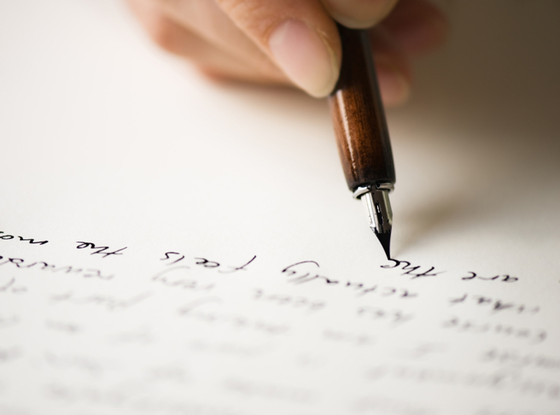
    There is something about handwriting that is thoroughly human. Few things exercise – and exorcise – the often stubborn collaboration between mind and body like that direct line between the tip of the pen and the tip of the neuron. Pens become the corporeal transmitter of creative flow for writers, just as the paintbrush is for the artist; the camera lens for the photographer.

    Yet in our digital world, we so often find ourselves only using the keyboards of our desktop computers, our laptops – or even our minimalist typewriters (if you swing that way). With such tools available to us, it can be tempting to forget the power of the pen and the importance of handwriting. But don’t just take our word for it! Here we’ve collected just a few thoughts of famous writers on the glorious, grounding physicality of penmanship…

    John Steinbeck

    In a series of disarming observations, Steinbeck captures the curious role of the pen as negotiator between brain and body in Working Days: The Journals of the Grapes of Wrath. This remarkable volume gives us a glimpse how the great writer used a diary as a tool of discipline when he embarked upon the most intense writing experience of his life – the masterwork that earned him the Pulitzer Prize.

    Steinbeck

    Here, we see how the writer falls almost completely in love with his pen. In July, he notes:

    “This has been a good pen to me so far. Never had such a good one.”

    And by mid-August:

    “What a wonderful pen this is. It has and is giving me perfect service – never stops flowing for a second and never overflows and blots a word.”

    A year later, having dabbled with using a new pen (flirting with a younger model), he returns to his calligraphic home:

    “There is no doubt that this fine old pen is better and smoother than the newer one. I think I’ll keep with this good old pen. I’ve done a lot of writing with it. I only hope it holds up.”

    As his relationship with the pen develops, we see Steinbeck define fulfilment in a way we hope other aspiring writers take heart from. For it is not in writing for readers or writing for publishers or writing for commercial success that Steinbeck seeks happiness – but in the profound private fulfilment of simply writing:

    “The perfect pen and the perfect paper and me working on work that pleases me and has no note for the critics.”

    Or, more intensely:

    “Oh! Lord, how good this paper feels under this pen. I can sit here writing and the words slipping out like grapes out of their skins and I feel so good doing it.”

    Then perhaps Steinbeck captures in a single exquisite passage the almost mystical quality of writing by hand – the strange way the pen can become a projection of the creative psyche, channeling deepest longings and twirling patterns of thought as the hand drafts what might be the meaning of life itself:

    “Here is a strange thing — almost like a secret. You start out putting words down and there are three things — you, the pen, and the page. Then gradually the three things merge until they are all one and you feel about the page as you do about your arm. Only you love it more than you love your arm. Some day I will be all alone and lonely — either dead and alone or alive and alone, and what will I do then? Then those things I have now and do not know will become so desperately dear that they will be aches. Then what? There will be no way to cure those aches, no way. In that coldness nothing will come. Things are leaving me now because they came too fast — too many of them — and being unable to receive them I threw them out and soon they will not come any more. This process is called life or living or any one of a number of things like that. In other words these are the soundless words, the words that have no being at all. The grey birds of loneliness hopping about. I thought that there might be a time or a condition different from that. But I know now — there isn’t any other way. “

    Edgar Allan Poe

    One of the masters of mystery and the macabre, Poe provides us with much reason to lament the rise of Kindels and e-readers, as he explains one of the key joys of a book is being able to write – in the margins – one’s thoughts as one reads, as though in an intimate, entwined conversation between yourself and the writer.

    Edgar_Allan_Poe_daguerreotype_crop

    ‘Marginalia’ are, to Poe, a playground for ideas and intellectual discourse – where one’s personal handwriting exhibits the mind at its most uninhibited. Certainly, a vital prerequisite for writers often afraid to write out one’s thoughts for fear of finding them flippant or trivial, as Poe notes:

    “Marginalia are deliberately penciled, because the mind of the reader wishes to unburden itself of a thought; — however flippant — however silly — however trivial — still a thought indeed, not merely a thing that might have been a thought in time, and under more favorable circumstances. In the marginalia, too, we talk only to ourselves; we therefore talk freshly — boldly — originally — with abandonment — without conceit. . . .”

    And Poe does not forget to point out that handwriting is marginalia’s most necessary vehicle. He asserts that personal script, and handwriting itself, create a window into one’s core attributes of character:

    “I am far more than half serious in all that I have ever said about manuscript, as affording indication of character.

    The general proposition is unquestionable — that the mental qualities will have a tendency to impress the MS [manuscript]. […]given a man’s purely physical biography, with his MS., and the moral biography may be deduced.

    The actual practical extent to which these ideas are applicable, is not sufficiently understood.”

    Mary Gordon

    In her wonderful essay Putting Pen to Paper, but Not Just Any Pen to Just Any Paper, Gordon celebrates the glorious, grounding physicality of penmanship:

    marygordon

    “Writing by hand is laborious, and that is why typewriters were invented. But I believe that the labor has virtue, because of its very physicality. For one thing it involves flesh, blood and the thingness of pen and paper, those anchors that remind us that, however thoroughly we lose ourselves in the vortex of our invention, we inhabit a corporeal world.”

    Indeed, she posits that the tool itself is in itself a gateway – and it may transport us to a different sense of self:

    “My pen. It is a Waterman’s, black enamel with a trim of gold. When I write with it, I feel as if I’m wearing a perfectly tailored suit, and my hair is flawlessly pulled back into a chignon. Elizabeth Bowen, maybe, only French. Anna de Noialles, but played by Deborah Kerr. My pen is elegant, even if I’m wearing the terry robe whose frayed state suggests a fashion statement from a gulag. My ink is Waterman’s black. Once while traveling I could only find blue-black. I used it for a few weeks, but it made me feel like a punitive headmistress.”

    And, in copying out – by hand – the writing of poets, authors, musicians, Gordon finds this can create for her what all writers seek – inspiration:

    “Into the notebook I am using for the fiction I’m writing, I copy paragraphs whose heft and cadence I can learn from. And some days, if I’m lucky, the very movement of my hand, like a kind of dance, starts up another movement that allows me to forget the vanity, the folly, of what I am really about.”

    Perhaps this inspiration drives from the special physicality of handwriting, which Gordon notes can prove rather pleasurable:

    “It is remarkably pleasant, before the failure starts, to use one’s hand and wrist, to hold and savor pleasant objects, for the purpose of copying in one’s own delightful penmanship the marks of those who have gone before. Those whom we cannot believe have ever thought of failing, or of (as I do each morning) envying hod carriers, toxic waste inspectors, any of those practitioners of high and graceful callings that involve jobs it is possible to do.”

    And then, Gordon (and this article) concludes with the following thought – a passing warning to the pitfalls of modern technology:

    “I don’t know what people who work on computers do to get themselves started. I hope never to learn firsthand.”