• Storm_clouds

    A storm is brewing.

    See how the clear sky dims before the advance,

    A new wind blows, unheard in a lifetime of years,

    One to make the shutters dance;

    A storm that plays to people’s fears.


    A storm is brewing:

    One of our own making,

    One to shake windows to frost,

    Splinter the eaves, unsure the footings,

    And leave us lost.

    And leave us rueing.


    A storm is brewing—

    Soon to be ensuing—

    So why aren’t you waking?

    A storm to twist metal like truths and silence tongues

    A storm as dense as ignorance—

    And here it comes.

    ~Anonymous

  • Essay

    In his magnificent 1866 guide to the art of conversation – Martine’s Handbook of Etiquette, and a Guide to True Politeness –  Arthur Martine provided the following advice for those who find themselves in “disputes upon moral or scientific points”:

    “Let your aim be to come at truth, not conquer your opponent. So you shall never be at a loss in losing the argument, and gaining a new discovery.”

    In these heady days of the babbling Twittersphere and online trolls; of half-baked, half-formed comments on the echo chambers of Reddit and Facebook; it is fair to say that such advice is rarely heeded. Indeed, the artillery we deploy when hidden behind computer screens and keyboards is less reasonable argument and more simple menace: it is reaction, rather than response. They are opinion, rather than critique.

    Yet it needn’t be this way. Rather than believe the falsehood that we must be right at all costs, it is surely preferable that we all engage in active discussion and conversation – and look to deploy skills that enable us to better understand the world around us, and in turn advance the collective understanding of humankind.

    Into this may step the non-fiction essay. The written argument or critique, which unfortunately often shows signs of disintegrating in response to the culture of the online newspaper comments section. Indeed, with a few exceptions – most notably the Guardian’s George Monbiot, perhaps – the opinion or comment pages on most of the UK’s newspapers, from the Guardian and the Independent on the so-called establishment left, through to the corporate propaganda at work in The Times and The Telegraph, are increasingly falling short of the high standards necessary for advancing human thought and consciousness through debate, discussion and reasoning.

    What is lacking in so many of our debates and so many of the essays available to us, is the necessary rhetorical ingenuity, instructive in the art of countering potential criticism, which takes charge of conceivable counterarguments and thoroughly challenges them, seeking ultimately to debunk or disprove them. This is a problem for thinkers of all philosophical and political persuasions, because they are neither able to refute the arguments of others effectively, nor have their own arguments held up to the necessary scrutiny. How can Owen Jones, for instance, improve his argument when the only charge levied against him from those who disagree is that he is “a loony lefty”? Equally, how can those who challenge him hope to advance their own opinions instead, when Jones can easily dismiss such charges out of hand?

    As is often the case, there are countless examples from history that illustrate how we can reinvigorate our arguments.

    That’s so Blaise

    Nearly half a millennium before modern psychologists identified the ‘three elements of persuasion’ – attunement, buoyancy and clarity – French physicist, philosopher, mathematician and inventor, Blaise Pascal, intuited these same mechanisms as he arrived at what he saw as the great truth about the secret of persuasion: that the surest way of defeating the erroneous views of others is not by bombarding the bastion of their self-righteousness but by slipping it in through the backdoor of their beliefs.

    In his work Pensees, he examines the best strategy for changing people’s minds, distilling the art of persuasion into its essence:

    “When we wish to correct with advantage, and to show another that he errs, we must notice from what side he views the matter, for on that side it is usually true, and admit that truth to him, but reveal to him the side on which it is false. He is satisfied with that, for he sees that he was not mistaken, and that he only failed to see all sides. Now, no one is offended at not seeing everything; but one does not like to be mistaken, and that perhaps arises from the fact that man naturally cannot see everything, and that naturally he cannot err in the side he looks at, since the perceptions of our senses are always true.”

    Long before we invented psychology and learned to apply it in reverse, Pascal adds:

    “People are generally better persuaded by the reasons which they have themselves discovered than by those which have come into the mind of others.”

    On the origin of effective argumentative strategy

    Two centuries on from Pascal’s intimations, Charles Darwin – who surely needs no introduction – provided supreme practical proof of the French philosopher’s insight, as he changed the way we think about the origin of life on Earth.

    Indeed, Darwin’s singular genius of presenting and defending his ideas, and what it teaches us about the art of pre-empting criticism and effectively countering counter arguments before they are levied at our arguments, is explored by New Yorker contributor and essayist, Adam Gopnik, in his book, Angels and Ages: A Short Book About Darwin, Lincoln and Modern Life.

    Gopnik considers the unusual intellectual architecture of Darwin’s 1859 masterworkOn the Origin of Species — a book “unique in having a double charge, a double dose of poetic halo” — built into which was an ingenious and timelessly effective model for disarming critics:

    “The book is one long provocation in the guise of being none.

    Yet the other great feature of Darwin’s prose, and the organization of his great book, is the welcome he provides for the opposed idea. This is, or ought to be, a standard practice, but few people have practiced it with his sincerity — and, at times, his guile. The habit of “sympathetic summary,” what philosophers now call the “principle of charity,” is essential to all the sciences.”

    As the book progresses, Gopnik advances in more detail his thoughts on what lies behind this habit of “sympathetic summary”, and considers the essential principle, which lies at the heart of Darwin’s rhetorical excellence, which in turn illuminates the secret to all successful critical argument:

    “A counterargument to your own should first be summarized in its strongest form, with holes caulked as they appear, and minor inconsistencies or infelicities of phrasing looked past. Then, and only then, should a critique begin. This is charitable by name, selfishly constructive in intent: only by putting the best case forward can the refutation be definitive. The idea is to leave the least possible escape space for the “but you didn’t understand…” move. Wiggle room is reduced to a minimum.

    This is so admirable and necessary that it is, of course, almost never practiced. Sympathetic summary, or the principle of charity, was formulated as an explicit methodological injunction only recently.”

    The marriage of ideas and argument

    What Pascal and Darwin illustrate in abundance, then, is the necessary ability to marry visionary ideas with a mastery of argument. But of these two aspects, it is perhaps the latter that is the vital requisite to convincing others that your argument bears most weight.

    Think, for instance, of Alfred Russel Wallace, known for arriving at the same conclusions of Darwin – concerning natural selection and evolution – but failing to take any credit for this discovery for decades after his death.

    The idea both men advanced upon is fundamentally the same: but could Wallace have posited his thesis as effectively as Darwin, and brought about the cultural revolution in thinking that Darwin did? He might have written the words and evidence in support of his own idea, but could he have answered the objections Darwin faced? The likelihood is not: because at its heart, the Origin of Species is a book of answers to questions that are expected to be asked, but have not yet been spoken, and it provides examples and evidence and counter arguments to faceless opponents yet to emerge.

    An act of charity

    Daniel Dennett, described as “our best current philosopher” and “the next Bertrand Russel”, picks up on some of the elements present in Darwin’s and Pascal’s works, as he probes some of the basic tendencies and dynamics necessary within essay writing. Most pertinently, asking the question “just how charitable are you supposed to be when criticising the views of an opponent?”

    In his work, Intuition Pumps and other Tools for Thinking, Dennet offers what he calls “the best antidote for the tendency to caricature one’s opponent”: a set of rules, or steps, laid out below as a simple starting guide to all aspiring and established essayists.

    “How to compose a successful critical commentary:

    1. You should attempt to re-express your target’s position so clearly, vividly, and fairly that your target says, “Thanks, I wish I’d thought of putting it that way.

    2. You should list any points of agreement (especially if they are not matters of general or widespread agreement).

    3. You should mention anything you have learned from your target.

    4. Only then are you permitted to say so much as a word of rebuttal or criticism.”

    Such a strategy is ultimately simple in its theory, yet remains cuttingly effective. For it transforms your opponents – faceless or otherwise – into a more receptive audience for your criticism or dissent, which in turn helps advance the discussion, and the argument. Thus avoiding the risk that all philosophical and political debate becomes the sound of a single record stuck on repeat, exposing retried and reconstituted, regurgitated facts, figures and opinions round and round on a ceaseless merry-go-round of nonsense.

    At its heart, this strategy is about seeing what people might say, turning it into what they ought to say, and then answering.

    If only such a code of conduct could be advised and followed to all critical commentary online – though doing so in 140 characters might be a feat too far.


  • time is short

    This year, the Jamaican writer Marlon James won the 2015 Man Booker Prize for Fiction for his novel, A Brief History of Seven Killings. In the aftermath of his win, much was made of how the manuscript of his first novel, John Crow’s Devil, was rejected almost 80 times before finally being accepted by a publisher and printed in 2005.

    James himself has said that, in face of such overwhelming rejection, he actually stopped writing and destroyed his own work:

    “There was a time I actually thought I was writing the kind of stories people didn’t want to read. I actually destroyed the manuscript, I even went on my friends’ computers and erased it.”

    While social media seized on this and encouraged writers “not to give up” and to “keep going”, while posting various motivational pictures and GIFs and quotes, it also cast light on the thoughts and feelings of countless writers across the world, who, faced with constant rejection, either give up or seek alternative routes to getting their work out there – most notably with the rise of self-publishing.

    Of course, this trend is nothing new. One of the most celebrated minds in the history of letters, Henry David Thoreau, confronted his own trials in seeking publication as he completed A Week on the Concord and the Merrimack Rivers.

    Unable to find a publisher for the book, Thoreau paid out-of-pocket for a print run of 1000 copies – but sold less than 300. What is interesting to note, however, is his response to such rejection, as he considers the experience in this funny and poignant diary entry (which can be found in The Journal of Henry David Thoreau, 1837-1861):

    “For a year or two past, my publisher, falsely so called, has been writing from time to time to ask what disposition should be made of the copies of “A Week on the Concord and Merrimack Rivers” still on hand, and at last suggesting that he had use for the room they occupied in his cellar. So I had them all sent to me here, and they have arrived to-day by express, filling the man’s wagon, — 706 copies out of an edition of 1000 which I bought of Munroe four years ago and have been ever since paying for, and have not quite paid for yet. The wares are sent to me at last, and I have an opportunity to examine my purchase. They are something more substantial than fame, as my back knows, which has borne them up two flights of stairs to a place similar to that to which they trace their origin. Of the remaining two hundred and ninety and odd, seventy-five were given away, the rest sold. I have now a library of nearly nine hundred volumes, over seven hundred of which I wrote myself. Is it not well that the author should behold the fruits of his labor? My works are piled up on one side of my chamber half as high as my head, my opera omnia. This is authorship; these are the work of my brain. There was just one piece of good luck in the venture. The unbound were tied up by the printer four years ago in stout paper wrappers, and inscribed, —

    H.D. Thoreau’s
    Concord River
    50 cops.

    So Munroe had only to cross out “River” and write “Mass.” and deliver them to the expressman at once. I can see now what I write for, the result of my labors.

    Nevertheless, in spite of this result, sitting beside the inert mass of my works, I take up my pen to-night to record what thought or experience I may have had, with as much satisfaction as ever. Indeed, I believe that this result is more inspiring and better for me than if a thousand had bought my wares. It affects my privacy less and leaves me freer.”

    Define your own success

    What does such an entry teach us? Put simply, it’s about defining your own success. This is of course a topic Thoreau discussed extensively in his 1854 paean, Walden. Take the following extract, for instance:

    “If the day and the night are such that you greet them with joy, and life emits a fragrance like flowers and sweet-scented herbs, is more elastic, more starry, more immortal — that is your success. All nature is your congratulation, and you have cause momentarily to bless yourself. The greatest gains and values are farthest from being appreciated. We easily come to doubt if they exist. We soon forget them. They are the highest reality. Perhaps the facts most astounding and most real are never communicated by man to man. The true harvest of my daily life is somewhat as intangible and indescribable as the tints of morning or evening. It is a little star-dust caught, a segment of the rainbow which I have clutched.”

    Or this, as Thoreau nears a conclusion:

    “If one advances confidently in the direction of his dreams, and endeavors to live the life which he has imagined, he will meet with a success unexpected in common hours. He will put some things behind, will pass an invisible boundary; new, universal, and more liberal laws will begin to establish themselves around and within him; or the old laws be expanded, and interpreted in his favor in a more liberal sense, and he will live with the license of a higher order of beings. In proportion as he simplifies his life, the laws of the universe will appear less complex, and solitude will not be solitude, nor poverty poverty, nor weakness weakness. If you have built castles in the air, your work need not be lost; that is where they should be. Now put the foundations under them.”

    What this hints at, is that we are likely looking at success entirely in the wrong way. James’s Booker Prize victory is not his success – nor should writers measure their own success by such metrics.

    This is not simply posited for philosophical reasons. But also because such metrics are symbolic of institutionalised failings within the publishing industry.

    The establishment

    Time and time again, the literary establishment will seize upon stories of writers who meet inordinate obstacles, overcome rejection to achieve publication and recognition and success. It is a story that has perhaps disturbing echoes of the arc of the American dream – and undoubtedly one Kurt Vonnegut would find remarkably easy to draw in his famous ‘graphs’ of stories. However, as with the American Dream, the romantic narrative hides a more sinister one: because by focusing on how individual artists should persist in the face of rejection obscures how the system is set up to reward only a select, chosen few.

    This is an issue engrained within many literary institutions – with honourable exceptions, such as Litro Magazine. And it is one discussed in detail by the writer Chimamanda Ngozo Adichie in her TED Talk, “The Danger of a Single Story”:

    “It is impossible to talk about the single story without talking about power. There is a word, an Igbo word, that I think about whenever I think about the power structures of the world, and it is nkali. It’s a noun that loosely translates to ‘to be greater than another.’ Like our economic and political worlds, stories too are defined by the principle of nkali: How they are told, who tells them, when they’re told, how many stories are told, are really dependent on power.”

    The real story beneath James’s overarching American-Dream-narrative is of the systemic failings within the publishing industry, the literary establishment – and indeed the wider media industry – to permit different artists and culture a voice.

    Until we begin to define and measure success by our own standards – as both writers and readers – those in power will continue to use measurements of success that do everyone but their shareholders a disservice.


  •  

    Microphone-Whealans

    Competition season is upon us. I’ve already crashed out of two large competitions for new acts, Laughing Horse New Act of the Year and Leicester Square Theatre New Act of the Year. They’re a frustrating experience and I hate them. There’s nothing quite like the imposition of competition to make an activity which I love doing, stand-up, stressful and unpleasant.

    I’m not saying this, of course, just because I failed to progress in two of the biggest competitions; but it is a factor. Laughing Horse wasn’t fun, partially because I was so very bad in it. My poor performance can, in part, be explained by a lethargic audience, tired after sitting through fifteen other acts (I was on last), including one who did a good fifteen minutes on stage instead of his allotted four. But I was also lacking in my usual energy, my presence was stilted and I visibly lost faith and interest when my first joke didn’t provoke huge laughter.

    Leicester Square Theatre was frustrating for the opposite reason. I was really good and didn’t progress. I was on second and got big laughs from a large crowd. I came off stage delighted, certain that if I wasn’t placing first on the night I’d be given a wild card through to the next round. Three days of nervously checking my emails followed, before all the quarter finals were set in stone without me in them.

    I don’t mean this blog to come across as the ravings of a bitter man, although it is by definition. The three acts who progressed through my heat, James Bennison, Red Richardson and Joe Jacobs, are all excellent. I wouldn’t place myself above them in a competition. There is, though, a definite annoyance at being really rather good, being told so by my peers, and then getting nothing from it. I’m insecure and ambitious and these slight failures make me ask questions that I probably needn’t. Are there inherent problems in my act? Am I actually good enough to make it as a comedian? Am I deluded?

    All the comedians I’ve talked to about this, and I’ve talked to a good number because I am very insecure, have said similar things. Firstly, competitions don’t matter. They’re an accelerator, helping you get to paid gigs faster, sure, but if you’re actually any good, the recognition that a trophy brings you will come along in time anyway. Secondly, they’re essentially random. Good comedians won’t get through and rubbish ones will. It all depends on the audience, where you’re placed in the running order and a myriad of other factors. You shouldn’t worry so much, you’ll get lucky in time.

    I think these are half true. Sure, a good comedian will eventually find success anyway, but I’d rather find it sooner than later. Besides, you get a thousand pounds for winning a big new act competition. I’d quite like a thousand pounds. Secondly, there is a certain element of unfair randomness but generally speaking the people who win competitions are good. There’s always a way I could have been better, without compromising my act, to wow an audience. It’s easy to blame fate, to blame the very nature of the universe. It’s harder to accept the inevitable unfairness and try to do the best with it you can.

    So what now? I’m at the point, after six months and a hundred gigs, where I can comfortably do fifteen minutes in front of a packed Saturday night crowd. I’d like to move onto more paid work but there’s no real urgency yet. The mantra, repeated to friends and myself, has become “next year is my year”. I feel I’m growing as a performer all the time, I’m getting significantly better at dealing with troublesome crowds. I’ve got a healthy amount of material. I’m developing an identity. Most importantly though, I’m consistently funny. I’ve actually been paid real money. Twenty whole pounds of it.

    “I tried out a joke about Jeremy Corbyn and homoeopathy the other day, and nobody in the audience either knew what Jeremy Corybn or homoeopathy were.”

    Aside from the vague objective of ‘improving’ my goal is to have a half hour I’m happy with for the Edinburgh festival next year. With underlying themes and everything. I’m gradually managing to put together something that feels fairly consistent; but it’s difficult finding the time and space to try it out all at once. Most spots I do these days are ten minutes long, and I’m proud that I’ve migrated onto these longer sets from doing just five minutes so quickly, but it’s still barely enough time to lay down anything with a longer, more considered narrative.

    I can find spots which are fifteen to twenty minutes long at the club where I’m now a regular: Cafe Mode. However, the audience found there, drunk party goers, aren’t the kind of people who are going to appreciate twenty minutes of satire. I tried out a joke there about Jeremy Corbyn and homoeopathy the other day, and nobody in the audience either knew what Jeremy Corybn or homoeopathy were.

    The material will come together in bits then. Grown by a series of amendments to my existing cannon, trying out little new jokes that can be added to what I already have. The occasional longer two to three minute bit. I’m hoping to gain the confidence to perform new material for longer stretches, at the moment I give up at the slightest sign of trouble. Too cowardly to accept anything but instant love from an audience. A brave comic allows themselves to die. I’ve got to learn to commit suicide and come out unscathed. It’s not as dramatic as that really though, it’s just comedy.

    About the author of this post

    Daniel Offen is an aspiring comedian and writer. He has written four jokes and half a book. He assures us he is capable of all of the usual thoughts and emotions of an unusual twenty four year old man and will talk about them at length. He deals primarily in irony and whimsy. He tweets as @danieloffen.


  • 24-Strahov-Monastery-Library-Prague-Czech-Republic

    In explaining how the act of reading can be likened to a drug-taking experience, the masterful essayist, stylist and author, E. B. White, noted how this “sort of ecstasy” could only be derived from literature “under ideal conditions”.

    What exactly are these conditions? Are they similar to those unique requirements writers need to help them through the process of writing? Or are they universal – accessible to anyone and everyone of us?

    Perhaps a clue lies in the conditions present in those most important centres of creativity and learning: the public library. These monuments to human thought and communication, which have that fascinating ability to function both as institution and metaphor. Of course, no library is alike, yet we ascribe them all a set of conforming features: studiousness, solitude and quiet, above all else.

    From the earliest scholastic archives of writing at Ugarit of Ancient Egypt, libraries have been models for the world and models of the world; they’ve offered stimulation and contemplation, opportunities for togetherness as well as a kind of civic solitude. They’ve acted as gathering points for lively minds and as sites of seclusion and solace. Most importantly of all, they have provided countless doses of White’s “ecstasy” to readers and writers, because of the conditions inherently present within the walls of every library, and the corridors of books within them.

    In praise of libraries

    These qualities of libraries are at the heart of the belief that all humans have a certain responsibility for maintaining and taking care of these cultural hubs. Indeed, Neil Gaiman asserted that “we have an obligation to support libraries. If you do not value libraries then you do not value information or culture or wisdom. You are silencing the voices of the past and you are damaging the future.”

    Part of the reason for this is clear. In our digital, Post-Fordist world, it is becoming harder and harder to free ourselves from distraction. To find solace and places of quiet. To think hard about something for thirty minutes instead of thirty seconds.

    Of course, the fundamental need to slow down – to find the time and space to think – is nothing new. For centuries, wiser souls have reminded us that we will never be happy unless we live quiet lives.  “Distraction is the only thing that consoles us for our miseries,” the French philosopher Blaise Pascal wrote in the 17th century, “and yet it is itself the greatest of our miseries.” He also famously remarked that all of man’s problems come from his inability to sit quietly in a room alone.

    British philosopher, Bertrand Russel, meanwhile, opined that “a happy life must be to a great extent a quiet life, for it is only in an atmosphere of quiet that true joy can live.”

    It is the opportunity libraries offer us to sit quietly by ourselves that makes them such fitting sanctuaries for books. As we lift a book from a shelf carrying the words of so many others, these buildings remind us, in their calm, quiet serenity, of the conditions in which the words are best read. For it is within these conditions that some of the greatest rewards from reading are reaped: these being a deeper consciousness of oneself, increased creativity, increased freedom; increased joy.

  • Litten

    In the latest of our ‘Creatives In Profile’ interview series,  we’re thrilled to introduce acclaimed writer, Russ Litten.

    Litten is the author of “Scream If You Want To Go Faster”, “Swear Down” and “Kingdom”. His short stories have appeared in various international magazines and he has written for the screen and radio.

    INTERVIEWER

    Tell me about yourself, where you live and your background/lifestyle

    LITTEN

    I am a 47 year-old man from a working class background who lives and works in Kingston-Upon-Hull and entertains himself with fairly simple pleasures; walking the dog, going to football, sitting in the pub talking bollocks.  In between all of this I sit down and write. For the last five years I’ve been a writer in residence at a prison, but the funding got pulled in May when the current set of psychopaths got into government. So my lifestyle currently involves balancing the need to make money with the need to make time to write.

    INTERVIEWER

    Is creativity and writing your first love, or do you have another passion?

    LITTEN

    I’ve always written and that’s the thing closest to me, but for years I was in a band. I played bass and wrote lyrics. I think this period was the closest I’ve come to achieving transcendence through the act of creation, but of course it’s a shared experience, and sooner or later you’ve got to push your own boat out. So music is my significant other passion. I still play bass guitar to amuse myself. I’d give anything to be able to sing though. That must be amazing, to be able to entrance a room with your voice, rather than clear it in seconds.

    INTERVIEWER

    Who inspires you?

    LITTEN

    As far as the writing goes, everyone and everything on the face of the planet and beyond, human beings especially. If you’re talking about heroes or influences on life in general these change from year to year, but the hard-core influences remain: Muhammad Ali, Quentin Crisp, Nelson Mandela, Jesus Christ, Chief Sitting Bull, Charles Bukowski, Kevin Rowland, Billy Whitehurst, Lillian Bilocca and Eddie Smith. Anyone who had a go, basically.

    INTERVIEWER

    Your 2010 novel, Scream If You Want To Go Faster, is rooted so firmly in the location and geography of your home city of Kingston upon Hull. What role does region and notions of ‘home’ play in your writing?

    LITTEN

    I was living in London when I started writing that first book. At the time, Hull had come bottom of some bullshit marketing gimmick “worst places to live” table. When I moved back up, Hackney took the bottom slot. So I’m obviously the kiss of death to any place I’ve previously lived. Except for Prague, hopefully. But generally, when considering notions of home and belonging, I refer to that Captain Beefheart song, “My Head Is My Only House Unless It Rains”.

    INTERVIEWER

    Your subsequent novel, Swear Down, has been described as “a postmodern triumph” – when you are writing, do you consciously attempt to create something that is ‘post modern’? Where does your focus, as a writer, lie when writing?

    LITTEN

    I certainly don’t set out to write post-modern stuff because I don’t particularly like post-modernism that much. I find it a bit tiresome and unhelpful. I like sincerity and stuff that’s from the heart. The focus for me when writing is purely to get the story down in as simple and as evocative a manner as possible. If that involves adopting a specific voice then I like that voice to be as authentic. I like Kerouac’s definition of literature as “a tale that’s told for companionship”.

    INTERVIEWER

    Are there any specific themes you’re interested in exploring as a writer?

    LITTEN

    I would very much like to write a love story. In fact, that’s what I’m doing next. A proper full-on exploration of love, in all its glorious fucked up wonder. Other than that, I like to start a story from an initial spark of intrigue and wander about within it until I find the thing that’s bothering me. It’s generally an abstract human emotion, like desire or jealousy or loyalty or grief, and out of that emerges the theme.

    INTERVIEWER

    Why do you write?

    LITTEN

    Because if I don’t I get unwell. I realised this a long time ago. I write to get it all out of my head and put down somewhere safe where it can’t bother me anymore.

    INTERVIEWER

    In his work, The Psychology of Writing, Ronald T Kellogg explored the role of the daily writing routine in producing inspiration and enhancing creativity. Sometimes these are pretty specific. Virginia Woolf, for instance, spent two and a half hours every morning writing, on a three-and-a-half foot tall desk with an angled top that allowed her to work both up close and from afar. Do you have a specific daily writing routine? If so, what is it?

    LITTEN

    I do have a preferred writing routine, which is to get up, go for a run around the park, come back and start typing at around seven am. This is a summertime routine though. In winter, I usually avoid the running part. Generally, the earlier I start the better writing day I have. I like to write to music as well, instrumental stuff mainly, ambient or classical. I don’t like music with human voices when I’m writing unless it’s a language I can’t understand. I used to have this routine where I had to listen to Ralph Vaughan William’s “The Lark Ascending” in its entirety before I could type a sentence. But you have to be careful with routines; they can become crutches, which are a bit unhealthy.

    INTERVIEWER

    In terms of writing fiction, what do you think is most important to keep in mind when writing your initial drafts?

    LITTEN

    That you’re probably going to change everything, so it absolutely doesn’t matter. Just enjoy yourself. It’s the best bit, the first draft. It’s like spewing up and then immediately feeling better.

    INTERVIEWER

    Looking around at current trends in literature, what are your thoughts and feelings on the publishing industry as a whole? And how would you advise aspiring writers to break out onto the ‘scene’?

    LITTEN

    I think it’s fair to say that the cramped financial restrictions on mainstream publishing means that it’s become a lot more safe and cautious, less experimental or willing to take risks. As a result, the books they push tend to be a bit dull and samey. Everyone seems to be frantically copying each other in the hope of emulating commercial success, hence the plethora of books about birds and grief, or girls in a variety of locations. Most of the interesting stuff comes from the small presses and the underground. As for aspiring writers, I’m not sure I’m well qualified to offer any hints or tips outside of the obvious stuff – write from the heart, don’t try and chase the obvious trends and find the thing you really want to say. Sooner or later some else will notice.

    INTERVIEWER

    Within this scene, is there anything in particular you see as being potentially future-defining, in terms of where the industry is headed?

    LITTEN

    Not really, no. I try and ignore trends or any attempt to ride the zeitgeist. I suppose self-publishing will become more and more popular as a way of avoiding the traditional gate-keepers and I think that can only be a good thing.

    INTERVIEWER

    How is the digital age impacting writers?

    LITTEN

    As soon as you can reproduce anything digitally it is worthless. You now have a generation that don’t realise you should actually pay for music. An artist now has to identify the people who are into what they do and hope that they feel enough passion and loyalty to part with some money in exchange for a physical thing. In a more practical sense, the digital platforms enable a writer to get a story or book or whatever straight to an audience pretty quickly.

    INTERVIEWER

    In an internationalist, interconnected world, ideas and creativity are constantly being flung across community threads, internet chatrooms and forums, and social media sites (among many others). With so many different voices speaking at once, how do you cut through the incessant digital background babble? How do you make your creativity – your voice – stand out and be heard?

    LITTEN

    I really don’t know. I think the temptation of the last few years has to be sensationalist or extreme or brutal. I’m a bit bored of all that to be honest. Twitter is a good example of this, where people often feel the need to be endlessly sarcastic or cutting or witty. To me, it feels like one big public audition for people who want to be the next Charlie Brooker. It’s back to that post-modern thing, the endless self-conscious wink of the eye.  The best way to stand out is to be truly yourself.  Which is a task in itself.

    INTERVIEWER

    Do you have a specific ‘reader’ or audience in mind when you write?

    LITTEN

    Not really, no. I write initially to amuse or engage myself and if anyone else recognises something of worth in there, then that’s ace. Writing to a specific audience would only end in disaster for all concerned.

    INTERVIEWER

    How would you define creativity?

    LITTEN

    It’s a spiritual thing, and it involves breathing from within. Opening your head up like a radio receiver. It doesn’t stand up to too much scrutiny. It used to amaze me when I was in a band, having four or five of you in a room hitting bits of metal and wood and then all of a sudden there’s something there that did not exist five minutes previously. Swop guitars and drums for a typewriter and the effect is much the same.

    INTERVIEWER

    What does the term ‘writer’ mean to you?

    LITTEN

    Someone who writes things down, regardless of whether it gets read by anyone else or not.  A recorder, an observer, one who scratches marks in the mud for posterity and kicks.

    INTERVIEWER

    For all writing, the importance of finding the right ‘voice’ is of course crucial. Often, writers’ speak of developing an ‘other’ – who provides that voice when they write. How have you created and refined your voice and tone for your writing – and do you have a separate, ‘other’ persona who helps you write?

    LITTEN

    I would identify that “other” as the subconscious. If you write often then your subconscious mind tends to bubble to the surface and you become less elf-conscious. I think that’s a vital part of finding your own writing voice; letting go of conscious hang-ups and telling the truth as you perceive it.

    INTERVIEWER

    Could you tell us a little about some of the future projects you’re working on?

    LITTEN

    I’m writing a love story and a non-fiction book about prison. I’ve also got a collection of monologues in the pipeline and a longer animation project for kids that I’m tackling next year.

    INTERVIEWER

    Could you write us a story in 6 words?

    LITTEN

    Probably not, no. Oh, hang on …

    INTERVIEWER

    Could you give your top 5 – 10 tips for writers?

    LITTEN

    1. Turn off the internet
    2. A long walk throws up many answers.
    3. Most TV isn’t worth watching
    4. Listen to The Beatles
    5. Don’t measure your success against others
    6. Pull down the blinds
    7. Try and finish everything you start
    8. Don’t worry
    9. Read stuff you don’t think you’d like
    10. Try and tell the truth unless the lie is more sincere


  • Of course, we’re all told not to judge books by their covers. But sometimes it can be fun to break the rules. Here are our picks for the 10 best book cover designs of 2015.

    1. Satin Island by Tom McCarthy

    Satin Island

    McCarthy’s novel has been described as “intriguing and infuriating” – a little bit like the book’s dizzying, manic cover design.

    2. Book of Numbers by Joshua Cohen

    Book of Numbers

    Some reviewers have noted that Cohen’s novel “doesn’t really get going until around page 238”. This is a shame, because the cover design certainly grabs the attention from the get-go.

    3. Not on Fire, But Burning by Greg Hrbek

    Not on Fire, but burning

    If there is a more apt cover design for a book about a slow motion apocalypse as America implodes, we haven’t seen it.

    4. Paulina & Fran by Rachel B. Glaser

    Paulina & Fran

    Hair plays a bigger role in this book than you might think.

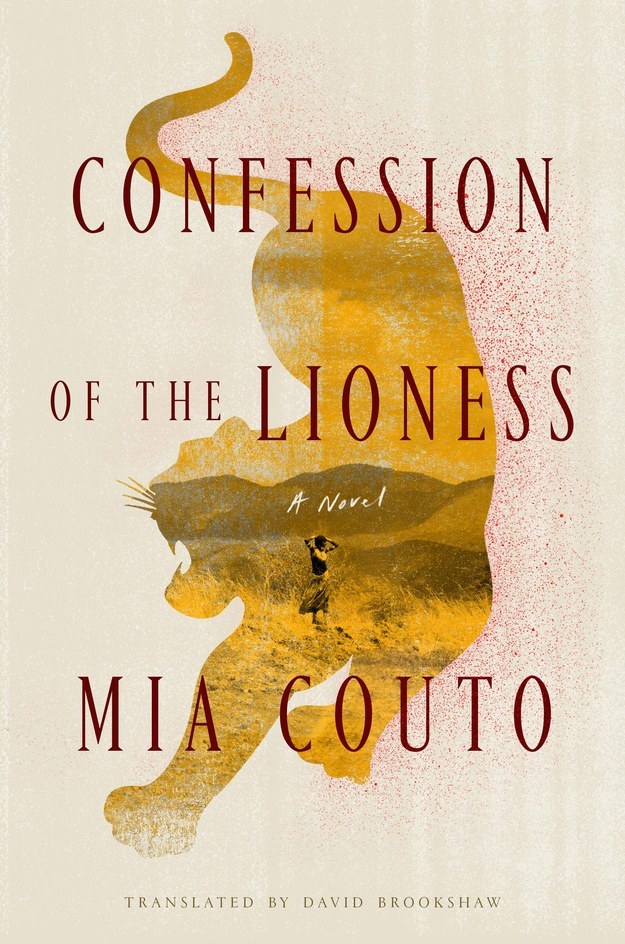
    5. Confession of the Lioness by Mia Couto

    Confession of the Lioness

    More novel covers should feature lionesses and other big cats. Just a gut feeling we have.

    6. The Seven Good Years by Etgar Keret

    The Seven Good Years

    Just where is that dove of peace being catapulted off to?

    7. Dark Sparkler by Amber Tamblyn

    Dark Sparkler

    Dark? Check. Sparkly? Sort of check. What about that woman with no eyes though – what’s up with that?

    8. Hall of Small Mammals by Thomas Pierce 

    Hall of Small Mammals

    This fascinating short story collection opens with a story about a man bringing a waist-high, supposedly extinct Bread Island Dwarf Mammoth home to his mother. Need we say more?

    9. Speak by Louisa Hall

    Speak

    More than anything, this book is about consciousness. It’s spellbinding. A little like this fascinating cover.

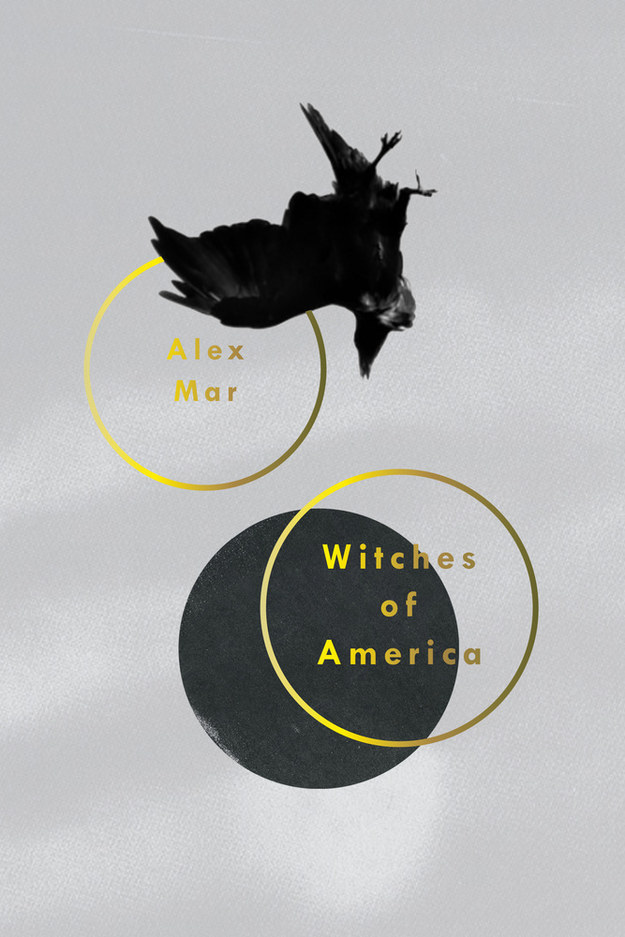
    10. Witches of America by Alex Mar

    Witches of America

    Are you a witch? Or are you just doing the research? Either way, you’ll probably be using a dead crow in some way or other.

    And a bonus 11th book cover…

    The Jeremy Corbyn Colouring Book by James Nunn

    Jeremy Corbyn colouring book

    Come on. What with the rise in sales of left wing literature that have accompanied Corbyn’s meteoric rise to become leader of the UK Labour Party, and what with the huge trend toward adult colouring books, we couldn’t NOT include this fabulous little book.

    What are we missing?

    Of course, there are countless other excellent book covers we’ve sadly not been able to include in this short list. So, what are we missing? Let us know your thoughts in the comments below!

  •  

    Erik Akoto

    In the latest of our ‘Creatives In Profile’ interview series, it is an honour to introduce Eric Akoto, Publisher and Editor in Chief of Litro Magazine.

    With a journalistic background, Eric has featured in various magazines, and contributed to various books. He also curates and comperes at festivals such as The Latitude Festival and the Hay Festival. His passions lie in progressive politics, freedom of expression, quality & independence in arts and journalism, social enterprise, secularism, good technology, and above all the power of fiction to connect and bring a level of empathy to different peoples.

    INTERVIEWER

    Tell us about yourself, your background and ethos

    AKOTO

    There’s a long story and a short story. The short story of my background is that I was born in London and raised in South London, Battersea; I had a strict African upbringing. After leaving University, it was hoped I’d become a doctor or a Lawyer; but I had a creative spirit. Not knowing how to channel that creativity, I accidently landed a job as a male model – the job required a great deal of travelling. This was about 2000. Before the dawn of email and fast internet connectivity for sending large image files – so I would always be travelling, with an A-Z & my portfolio in hand. Spending hours on end on public transport – my sense of direction is terrible so I was always late – but I lasted for a good number of years and got to work with some amazing creative designers, photographers & magazine editors, which ironically lit a spark in me to get into magazine publishing. My first attempt at a creative publication was an e-zine called LA-NYLON (Los Angeles, New York & London) – I was about 25 and fortunate to have been offered the opportunity – through the modeling- to travel to some amazing cities. I wanted to create a platform where I was able to share what I was experiencing in these cities with friends.

    Reading was always a passion and the time I spent travelling to and from interviews was always spent reading a book, magazine whatever I could get my hands on.

    The long story starts in 2006, when I met a guy at the London Bookfair who was handing out a pamphlet – an A4 sheet folded in half – with short stories. I took one and on my ride home on the tube started reading it and thought to myself “this is a great idea I want my friends to see this”. I had a spider web of talented friends all doing different creative stuff, and so I began reaching out to them – for artwork, cartoons, stories, design – along with this guy in the space of a month or two we’d put together about a 20 page DL sized pamphlet. I took it to a local printer and printed a few thousand copies – and began distributing them myself.  It was a fun hobby and every couple of weeks I got these amazing creative friends together to help design, bounce ideas off each other and produce this pamphlet, which I then shared with them – and the rest of my community.  Before long a year or two passed and the guy from the bookfair went on to finish his PHD – and I’d fallen in love with publishing. I started taking the pamphlet to book shops – Foyles was one of the first book chains to support the magazine and after a few meetings with them they decided to sponsor the pamphlet – I managed to then convince Time to insert the pamphlet into one of its issues – to do this I had to increase the print run to 60,000 to meet it’s print run and at the same time decided to hold more stories and add more pages to the pamphlet turning it into a magazine and I haven’t looked back since.

    My ethos has been shaped by the help given to me by the creative friends who supported me – it is being able to give a platform to emerging talent and Litro Magazine over the past 10 years has allowed me to do this.

    INTERVIEWER

    Who inspires you?

    AKOTO

     I guess anyone who is “fair” to people and know that despite a “general” direction there is always another way.  Kwame Nkrumah, Nelson Mandela, Malcom X, Tony Benn, Ta-Nehisi, and my daughter.

    INTERVIEWER

    The future of literature; of writing – and indeed the future of publishing – are all frequently discussed at great lengths. What are your thoughts on current industry trends – where are we heading?

    AKOTO

    The future of literature and writing, to me has to be one of growth and diversity (diversity not in the populous term that’s now coined as a catch all for inclusion of Black and ethnic minority in the publishing industry (being a minority, Black and Male in a very white industry I find the term a little condescending) – but the diversity in the industry to embrace all talented writers through to editors, publishers; whether they be Black, Female, Transgender, Gay whatever and not to be diverse because it’s trendy. A great writer will be enjoyed and appreciated by all and not just the few.

    In order to not loose the many talented emerging writers by the wayside – from the top-down of the literary industry – it must reflect today’s society.

    For a long time the dialogue around the future of publishing has been one of death –  its true many publications have either transitioned to the web or given a greater focus on the web; but what the web has done for publishing is to kill off the kind of print that provides distractions of the ’10-minute-read-before-you-bin’ variety. In turn, this has cleared the way for titles that are fascinating, made with passion, collectables.

    Print does a great deal that the web can’t and vice versa – there will always be the need for a tangible, haptic experiences. Ultimately, nothing can replace the smell of a printed material. Even if the web / new technologies being developed cause a shift in the regularity of the reading experience.

    INTERVIEWER

    What do you think a Literary Magazine should be for? Why are they important?

    AKOTO

    The sad truth is that literature or literary magazines does not reach a wide enough audience; yet alone have any chance of competing against other entertainment options – Binge TV watching, movies, journalism and non-fiction. More people will camp outside an Apple store for the launch of a new iPhone than they would for the lunch of a new literary magazine or a book. If the competition was a boxing match, there would be an inquest as to why the referee allowed the match to start in the first place.

    It’s important for a literary magazine – on surviving its daily pounding from other entertainment options, it’s struggles with lack of funding – to produce a publication that does not just cater to writers but for the general reader – a platform for writers to write, emerging voices to be heard, but importantly a place for it’s contributors to develop a place to be heard for their particular beliefs or aims that they feel will better society and move culture in a positive direction.

    Contributors to literary magazine’s should not expect to be published because they have done the rounds and feel it’s their turn to be published; but instead should be contributing because they feel their voice / story has something to say. And it’s in the publishing of these contributors that makes a literary magazine important.

    Litro Magazine, for instance, has a clear identity. We have always championed and provided a platform for emerging writers, whether through print, online, festival stages, our newly launched literary agency – Litro Represents – and through other opportunities.

    But alongside this, we also publish contributors with arguments about the current cultural dialogue, and political landscape – through the monthly themes of Litro Magazine – we do this so we can encourage an attitude to writing that goes beyond just getting one’s name in print.

    INTERVIEWER

    Obviously, the rise of the internet has seen a big culture shift in the publishing industry; with numerous magazines switching from print to online, and others starting out and continuing as purely digital platforms. How do you balance the two outlets of print and digital with Litro? What are the different challenges you face with each of these?

    AKOTO

    I’m an early adaptor and a big tech geek, but I also enjoy the tangible feel of the printed form. There’s nothing better than meeting a person for the first time having a passing conversation – and for that person to then send you a book he/she has read and feels you will enjoy!

    The internet has certainly provided a massive opportunity for writers – and consumers; but I don’t see a fight between print and the internet (for one thing print would surely loose before the bell rang). Instead, I see a nice challenge – how one can get the two to compliment each other. For instance, three years ago we started our collective story telling on twitter the #litrostory; and the experiment has been a great way to reach a new audience and followers on social media and draw them to the magazine.

    INTERVIEWER

    The magazine and online platform both look to combine various different aspects of literature – and indeed, culture in general, through a medium of different forms; from stories to reviews and comment or feature pieces. Why do you think it is important to combine these mediums?

    AKOTO

    I started Litro to share stories with friends who not only have differing practices but also differing interests – and I’d like to think of Litro Magazine’s readers as the same.

    INTERVIEWER

    Literature, and ultimately all art, is about communication and expression. How does Litro fit within our cultural conversation? And how do we ensure the conversation carries on?

    AKOTO

    I’m sure many in the publishing industry see Litro Magazine as incomprehensible – considering the fact we don’t just cover literature, yet we still call ourselves a literary magazine. The great thing about Litro being a small magazine compared to our larger, older contemporaries – who have greater access to funding and trusts set up – is that we are able to address topics and questions more openly.

    The classical musician Bach was dismissed by his peers, who thought his music was incomprehensible. Employed by a church to play the organ, he was rebuked as having  “many curious variations in the chorale, and for having mingled many strange tones in it, and for the fact that the congregation has been confused by it”.

    With Litro we provide a platform for the unheard, the experimental – and at times unpopular.

    For literature and all art, we need to ensure the conversation continues to flow – so all of us – especially those in a position to help support the arts – must not be afraid to experiment and take chances.

    INTERVIEWER

    David Foster Wallace once opined that it was “getting harder and harder to sit quietly by yourself and think hard about something for thirty minutes instead of thirty seconds”. Do you believe that the ‘instant gratification’ culture of iPods, televisions in car back seats and constant information on our smartphones is having an impact on us as readers? How can the publishing industry counter this? How do we engage our readers effectively?

    AKOTO

    Our reading habits as a whole has been impacted by the rise of the use of smartphones and other hand held devices. Developments in technology moves so fast that I guess an ‘iPod’ now belongs in a museum.

    Whether the change in our collective thirst for instant gratification needs countering – on the one hand yes, but the book as a product and the way it is consumed – has had to change to keep with the times, in the same way music consumption changed from a product packaged on a TDK cassette tape, on vinyl, or a CD, to a file on a smartphone or iPod.

    But will book reading actually suffer – and its consumption need more engaging?

    I doubt it. My daughter – who at just 11 has more handheld devices than I have, with Kindles, iPhones…you name it! –  But recently she not only re-introduced me to one of Kipling’s poems – but also to a poem by Jacqueline Woodson, New York from her collection Brown Girl Dreaming – a book I ordered on Amazon.

    The new era of books may actually see more authors, more reading, and more books being bought and sold.

     INTERVIEWER

    Could you name your top five writers – and explain why they impress you?

    AKOTO

    I am impressed and engaged by so many writers it’s far too difficult to limit to just five.

    INTERVIEWER

    How would you define creativity?

    AKOTO

    For me, creativity is passion, and wanting to unleash something you feel you need to share, beyond your immediate surroundings and not having the fear of ridicule stop you from doing so. Ultimately, creativity is the need to create something new, which is very hard to do.

    INTERVIEWER

    In an internationalist, interconnected world, ideas and creativity are constantly being flung across community threads, internet chatrooms and forums, and social media sites (among many others). With so many different voices speaking at once, how do you cut through the incessant digital background babble? How do you make your creativity – your voice – stand out and be heard?

    AKOTO

    I stopped watching the Television a while ago – which has been a great help, I like to run in my local park – I’m fortunate to live not too far from Hyde Park, which has a lot of green open space.

    INTERVIEWER

    Could you give your top 5 – 10 tips for writers?

    AKOTO

    Read, Read, Read, Read and Read some more – even it’s just a menu at a restaurant, a random magazine you pick up whilst travelling – you never know where your inspiration might come from. It’s also good to have a complete knowledge and understanding of whatever it is you end up writing.
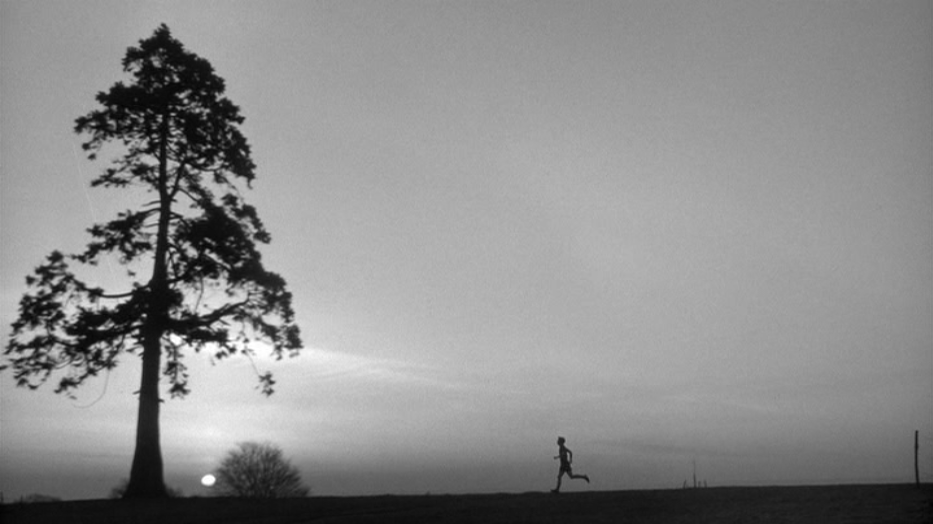
  • LonelinessOfThe_sillhouette

    Studying the daily routines of many famous writers, one is immediately struck by how many rely on physical exercise to support their mental cogitations. Kurt Vonnegut, for instance, favoured long swims at his local municipal pool, accompanied by “doing sit ups and push ups all the time”, while author Tim Leach has prescribed rock climbing as a writing aid, noting how “both writing and rock climbing share a kind of rarefied loneliness”. Countless other writers, meanwhile, have found solace in the hypnotic action of racking up mile after mile in solitary, focused long-distance running.

    Louisa May Alcott, for instance, thought she “must have been a deer or a horse in some former state, because it was such a joy to run”. Famous misanthropic satirist, Jonathan Swift, meanwhile, would “run half a mile up and down a hill every two hours” during his 20s, according to Samuel Johnson. Then of course we have the novelist Haruki Murakami, who started running to get healthy and lose weight, but who found in running something essentially important to the mindset of the writer, noting how he felt his “real existence as a serious writer began on the day that I first went jogging.”

    So what precisely is it, about running, which seems to lend itself so aptly to the art of writing?

    Joyce Carol Oates ascribes the twin activities of running and writing “to keep the writer reasonably sane and with the hope, however illusory and temporary, of control”, and notes that she would ease any bouts of writing block with afternoon runs.

    Freedom, consciousness and wildness

    For Oates and other writers, running is thus a process that proves especially useful for the type of intensive, cloistered work they do. But perhaps it goes beyond that. After all, there seems a natural similarity between the two actions; they complement each other, seeming to be the natural extension of the other. The steady accumulation of miles mirrors the accumulation of words on the page, and both aspire toward a clear finishing line: either the end of the run, or else the end of the novel. Equally, while both are challenging, they can also invoke a sense of joy and elation – heavy physical exercise releases endorphins, while the rush and exhilaration of finding a writing rhythm and flow similarly brings forth feelings of ecstasy (no wonder Vladimir Nabokov described writing as “a drug”).

    Both Leach’s “lonely” rock climbing and long distance running, therefore, offer a combination of freedom, consciousness and wildness – an ability for writers to escape their surroundings with a sense of purpose that is necessary for cultivating deep thought, or working out constraints and challenges within their writing.

    Running is important to writing, then, because it opens channels. It expands our potential and helps us grow – to better understand the world. Our minds are free to linger on thoughts they otherwise would not; in a kind of simulated – but nonetheless stimulating solitude that helps us better understand who we are, at our very deepest levels, as human beings.

    Perhaps nowhere in literature is this crucial aspect of running captured better than in Adam Sillitoe’s short story, The Loneliness of the Long Distance Runner. Famously, this work began as two alliterative lines of verse, written by Sillitoe upon being struck by the serene calmness of a young man bedecked in a running vest and shorts trotting past his cottage.

    Sillitoe’s short story focuses on Smith – a working class teenager with bleak prospects in life and few interests beyond petty crime – who turns to long-distance running as a method of both an emotional and physical escape, and as a means of mental reflection. As he runs and thinks alone, Smith – perhaps inevitably – turns to writing; and it is he who narrates his own story, in a perfect summation of the symbiotic relationship between writing and individual cogitation on notions of ‘the self’ during bouts of solitary exercise.

    Expanding consciousness and self-education

    This idea is expanded upon by Oates, who in 1972 began keeping a journal to accompany a new-found “compulsive” need to run. She writes: “[Running] is not a respite for the intensity of writing but is a function of writing […] running seems to allow me an expanded consciousness in which I can envision what I’m writing as a film or a dream.”

    Don DeLillo echoes such sentiment, as he recalls the transporting effects of running after his morning writing sessions in an interview with The Paris Review: “Running helps me shake off one world and enter another. Trees, birds, drizzle – it’s a nice kind of interlude.”

    The solitary exercise of long-distance running seems, in many ways, to be part of self-education – and indeed of self-revelation; just as writing is. This is pointed out by Murakami in his book, What I Talk About When I Talk About Running, as he attributes “most of what I know about writing fiction I learned from running every day”. On the one hand, running is about constantly striving for new challenges and fresh goals – competing ever longer distances in the quest for better conditioning of our bodies – and on the other hand it helps us better express how this makes us feel through our words; supporting us in writing as we seek to better condition our minds and souls.

    This isn’t simple conjecture based on hearsay from other creatives, either. Indeed, there are an increasing number of scientific studies that show a connection between aerobic exercise – which increases the flow of blood to the brain – and enhanced mental capacity. For example, a study by Oppezzo and Shwartz demonstrated that walking boosts “creative ideation” both in real time and shortly after (though this effect can also be induced by other activities, such as knitting).

    Perhaps, then, the perfect daily routine for writing should include both long periods of solitary exercise, followed by periods of writing interspersed with periods set aside for knitting. Or perhaps the clue to the perfect daily routine for writing actually lies in those crucial words “daily routine”. For composition and writing is so rarely sustained by one momentary act of inspiration; but rather by daily perseverance and steady progress.

    When creativity flows, it really flows; just like an invigorating run where you finally “hit your stride” – and it is no coincidence that this same phrase is used by writers and runners alike to describe the moment when work becomes joy.

    But of course, simply running regularly will not be enough on its own to invoke the muse of creativity. It is not necessarily an instant cure for writer’s block. Yet it is through the same effort, determination and repetition of the act necessary to perfect the running process and push ourselves toward our long-distance goals that we must bring the same commitment to writing; turning up day in, day out, regardless of weather, or whether we feel “inspired” enough; and sitting down at our desks and putting word after word and sentence after sentence, just as we place one foot in front of the other out on the road.

    In a 2004 interview with Runner’s World, Murakami sums this up pretty succinctly:

    “The most important qualities to be a writer are probably imaginative ability, intelligence, and focus. But in order to maintain these qualities in a high and constant level, you must never neglect to keep up your physical strength. Without a solid base of physical strength, you can’t accomplish anything very intricate or demanding. That’s my belief. If I did not keep running, I think my writing would be very different from what it is now.”

  • At one point or another, it seems as though nearly every significant writer in history has tried to address the question of why writers write. Some suggest the impulse to put pen to paper is down to a desire to better understand one’s own self; for others, it is the desire to understand the world, other human beings, reality. For some, writing is redemption. It is a means of freedom. Others, meanwhile, simply write for the fun of it.

    Of course, there is – and never could be – a single answer to this question. Yet it nonetheless mesmerises us – partly, perhaps, as a piece of psychological voyeurism, as well as because it seems so hopeful and enticing a prospect that, by garnering a slight glimpse of the innermost drivers of great writers, maybe – just maybe – we might be able to replicate their workings and their motivation in our own work.

    In this article, we attempt to highlight certain writers and their views on writing motivation.

    George Orwell: Four universal motives of writing and creative work

    George-Orwell-001
    George Orwell: Photograph: Public Domain

    Orwell’s 1946 essay Why I Write begins by detailing his less than idyllic childhood – absentee father, school mockery and bullying, and a profound sense of loneliness – and proposes that such early micro-traumas are essential for any writer’s drive. He then lays out what he believes to be the four main motives for writing (full version here):

    “(i) Sheer egoism. Desire to seem clever, to be talked about, to be remembered after death, to get your own back on the grown-ups who snubbed you in childhood, etc., etc. It is humbug to pretend this is not a motive, and a strong one.

    (ii) Aesthetic enthusiasm. Perception of beauty in the external world, or, on the other hand, in words and their right arrangement. Pleasure in the impact of one sound on another, in the firmness of good prose or the rhythm of a good story. Desire to share an experience which one feels is valuable and ought not to be missed.

    (iii) Historical impulse. Desire to see things as they are, to find out true facts and store them up for the use of posterity.

    (iv) Political purpose. — Using the word ‘political’ in the widest possible sense. Desire to push the world in a certain direction, to alter other peoples’ idea of the kind of society that they should strive after. Once again, no book is genuinely free from political bias. The opinion that art should have nothing to do with politics is itself a political attitude.”

    Ray Bradbury: Writing is joy and celebration

    ray-bradbury-zen

    Bradbury’s remarkable keynote address at the Sixth Annual Writer’s Symposium by the Sea brims with an invaluable reflective view on why you should write. It’s a simple mantra, really, because it’s about fun:

    “Writing is not a serious business. It’s a joy and a celebration. You should be having fun with it. Ignore the authors who say “Oh, my God, what word? Oh, Jesus Christ…”, you know. Now, to hell with that. It’s not work. If it’s work, stop and do something else. […] I’ve never worked a day in my life. I’ve never worked a day in my life. The joy of writing has propelled me from day to day and year to year. ”

    Watch the full address here:

    William Faulkner: Man is so amazing and beautiful that the writer must put it down on paper

    williamfaulkner

    In May 1958, Faulkner read from his favourite novel, The Sound and the Fury, at an event open to the general public. After the reading, he answered questions from the audience. The surviving recording is of questionable audio quality but makes up for it in the utter depth and richness of insight into the author’s views on writing and the project of art:

    “You’re alive in the world. You see man. You have an insatiable curiosity about him, but more than that you have an admiration for him. He is frail and fragile, a web of flesh and bone and mostly water. He’s flung willy nilly into a ramshackle universe stuck together with electricity. The problems he faces are always a little bigger than he is, and yet, amazingly enough, he copes with them — not individually but as a race.

    The writer is so interested — he sees this as so amazing and you might say so beautiful… It’s so moving to him that he wants to put it down on paper or in music or on canvas, that he simply wants to isolate one of these instances in which man — frail, foolish man — has acted miles above his head in some amusing or dramatic or tragic way… some gallant way.

    That, I suppose, is the incentive to write, apart from it being fun. I sort of believe that is the reason that people are artists. It’s the most satisfying occupation man has discovered yet, because you never can quite do it as well as you want to, so there’s always something to wake up tomorrow morning to do. You’re never bored. You never reach satiation.

    […] I’m writing about people. Man involved in the human dilemma, facing the problems bigger than he, whether he licks them or whether they lick him. But man as frail and fragile as he is, yet he will keep on trying to be brave and honest and compassionate, and that, to me, is very fine and very interesting — and that is the reason I think any writer writes.”

    Isabel Allende: Writing is an obsession

    Isabel Allende - Register files
    Isabel Allende – Register files

    Celebrated Chilean American author Isabel Allende has famously spoken about writing “gave some sort of order to the chaos of life” after experiencing personal tragedy (her daughter, Paula, died in 1992). Indeed, she insists that storytelling is rooted in personal experience, and is, in so many ways, an obsession:

    “I need to tell a story. It’s an obsession. Each story is a seed inside of me that starts to grow and grow, like a tumor, and I have to deal with it sooner or later. Why a particular story? I don’t know when I begin. That I learn much later. Over the years I’ve discovered that all the stories I’ve told, all the stories I will ever tell, are connected to me in some way. If I’m talking about a woman in Victorian times who leaves the safety of her home and comes to the Gold Rush in California, I’m really talking about feminism, about liberation, about the process I’ve gone through in my own life, escaping from a Chilean, Catholic, patriarchal, conservative, Victorian family and going out into the world.”

    Susan Orlean: Writing feels like magic

    susanorlean

    New Yorker staff writer and journalist, Orlean, has previously noted that the first rule of writing is that “you have to simply love it, and you have to remind yourself often that you love it.” Yet she goes further when reflecting on her own writing motivation:

    “Writing gives me great feelings of pleasure. There’s a marvelous sense of mastery that comes with writing a sentence that sounds exactly as you want it to. It’s like trying to write a song, making tiny tweaks, reading it out loud, shifting things to make it sound a certain way. It’s very physical. I get antsy. I jiggle my feet a lot, get up a lot, tap my fingers on the keyboard, check my e-mail. Sometimes it feels like digging out of a hole, but sometimes it feels like flying. When it’s working and the rhythm’s there, it does feel like magic to me.”

    Italo Calvino: writing is becoming part of a collective enterprise

    calvino001

    From his collection of letters (1941 – 1985), Calvino often addresses the motivation beneath his attempts at poetry, fiction – and even letter writing:

    “Personally, I believe in fiction because the stories I like are those with a beginning and an end. I try to write them as they best come to me, depending on what I have to say. We are in a period when in literature and especially in fiction one can do anything, absolutely anything, and all styles and methods coexist. What the public (and also the critics) require are books (“open” novels) that are rich in substance, density, tension. […] One writes most of all in order to take part in a collective enterprise.

    […] The fact is that I have always been more a writer of short stories than a novelist, and it is second nature to me to close — both in formal and conceptual terms — even a story that remains open; to condense into a short narrative space all the elements that give a sense of completion to the story. However, I do not mean by this that I am in favor only of short time-spans — or rather, there is no doubt that we are living in a period in which time has been shattered, there is no room to breathe, no possibility of foreseeing and planning ahead, and that this rhythm is imposed on what I write — but ideally I believe more and more that the only thing that counts is what moves in long, very long time-spans, both in geological eras and in the history of society. Trying to work out the directions in which these things are moving is very difficult; for that reason I feel more and more incapable of understanding what really is happening in a world which does nothing but prove each model wrong. “

    Joy Williams: Writing is fumbling around in the light

    joywilliams

    In her beautiful essay, Uncanny Singing That Comes From Certain Husks, Williams considers the impetus for writing with equal parts insight, irreverence, and that blend of anguishing ambivalence and convulsive conviction so characteristic of the writer’s mind.

    “It’s become fashionable these days to say that the writer writes because he is not whole, he has a wound, he writes to heal it, but who cares if the writer is not whole, of course the writer is not whole, or even particularly well. There is something unwholesome and destructive about the entire writing process. Writers are like eremites or anchorites — natural-born eremites or anchorites — who seem puzzled as to why they went up the pole or into the cave in the first place. Why am I so isolate in this strange place? Why is my sweat being sold as elixir? And how have I become so enmeshed with works, mere works, phantoms?

    […]

    A writer starts out, I think, wanting to be a transfiguring agent, and ends up usually just making contact, contact with other human beings. This, unsurprisingly, is not enough. (Making contact with the self — healing the wound — is even less satisfactory.) Writers end up writing stories — or rather, stories’ shadows — and they’re grateful if they can but it is not enough. Nothing the writer can do is ever enough. […] A writer loves the dark, loves it, but is always fumbling around in the light.”