• 2016-04-07_02-03-49
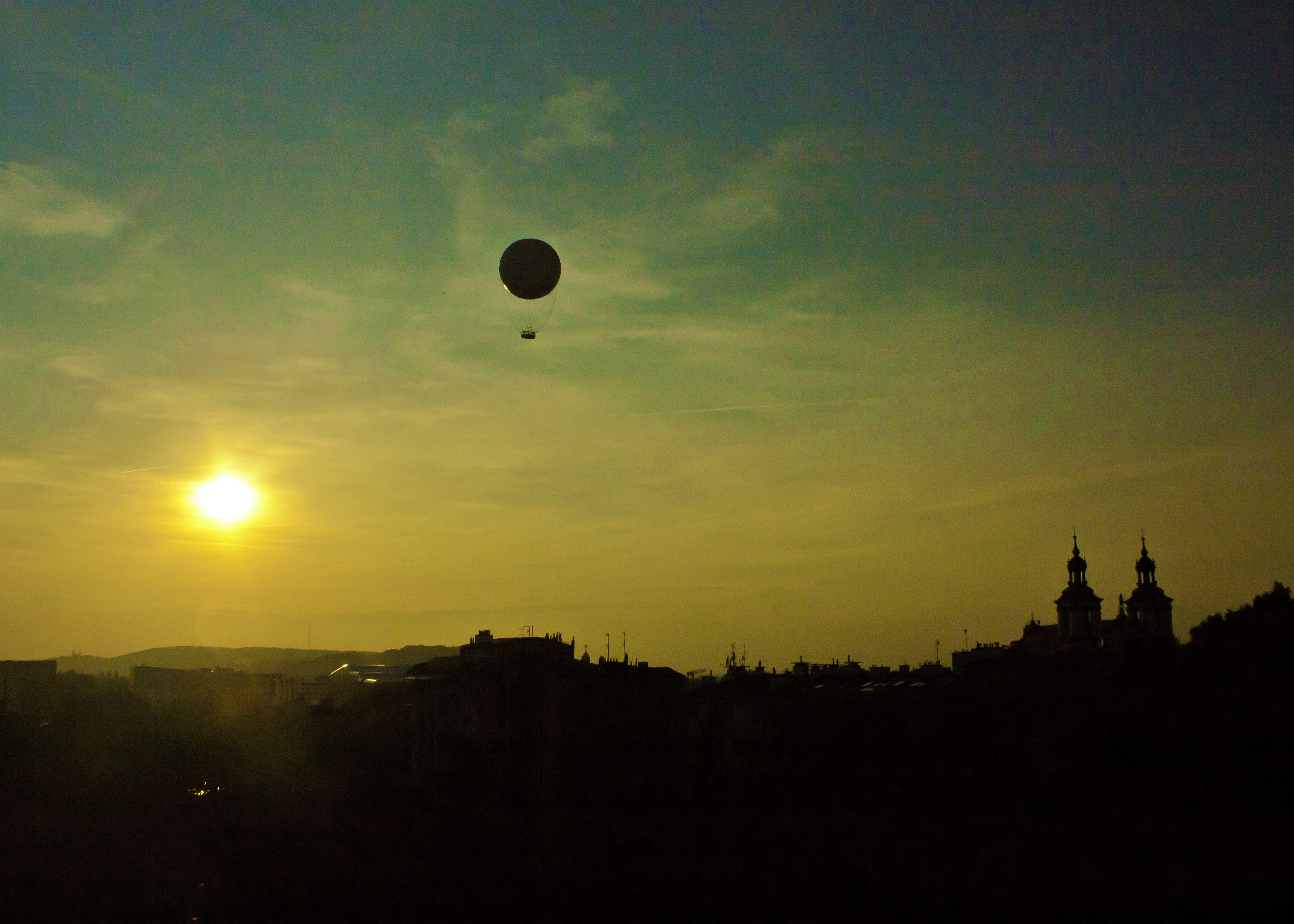
    ‘Krakow Sunset’ – Photography by Mike Dodson/Vagabond Images, via Flickr

    One of the defining features of humanity is our ability to create; and to turn flashes of inspiration and new ideas into solid creative constructions: be they works of art; photography; writing; film; dance or any other one of the forms through which creativity can be channelled.

    Yet just as creativity is an intrinsic part of who we are; so too is the difficulty in actually working through the creative process. “Creative Block” seems to be utterly tied with creativity, and we will all have encountered it in some form or other during our lives.

    We’ve previously documented how various great writers and artists have tried to circumnavigate the various travails of creativity by developing rigid routines; but is there a more general structure we can, as aspiring creatives, use to culture our ideas and inspiration, and turn them into creative works of art?

    Well of course there is! We wouldn’t have started writing a post about it if there wasn’t, would we?

    In fact, the question of how to master the strange process through which the conscious develops with the unconscious; the voluntary becomes entwined with the involuntary; and we are able to somehow bring something physical out of the mystical realm of the imagination, was pondered 90 years ago in 1926 by the founder of the London School of Economics; Graham Wallas.

    68 at the time, Wallas penned a rather incredible book called The Art of Thought – an insightful theory outlining what he saw as “the four stages” of the creative process. He based this theory on both his own empirical observations, as well as by drawing on the accounts of famous inventors and polymaths.

    Sadly, the book is now long out of print, and only available in a handful of public libraries. You can, if you’re lucky (and rich), purchase one of the few surviving copies; but be prepared to spend around £1000 or so.

    However, not so sadly, the general outline of Wallas’s model has been preserved in a chapter of the 1976 collection of essays titled The Creativity Question. Within this tome are to be found an invaluable selection of meditations on and approaches to creativity by some of history’s greatest minds; and we heartily recommend you purchasing a copy of your own (it won’t cost you a fortune).

    Yet what caught our eye was Wallas’s outline of the four stages of the creative process, which he sees as being preparation, incubation, illumination, and verification. These stages can be seen as essentially universal across all forms of creativity. They proceed as follows:

    1. Preparation
    Hands4
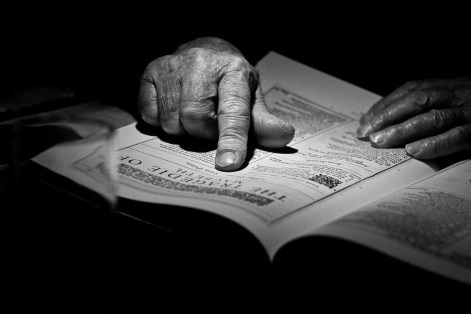
    Photography by Mike Dodson/Vagabond Images. Via Flickr

    Of course, some might argue that you can never prepare yourself for creativity or inspiration: ideas, surely, are known most of all for their ability to fly out at the most unexpected of moments, catching us off guard as we idly clip our begonias. However, consider the way in which ideas so often come to us shortly after doing or seeing something that inspired us. There is a reason so many ‘advice for writers’ articles place “reading” as one of the most important parts of writing: it is part of the process of preparation.

    To return to gardening imagery, for a moment, during the preparation stage we ready the mental soil for the sowing of creative seeds; and the subsequent growth of ideas. Wallas describes this as “investigation in all directions”; by which he means the accumulation of intellectual resources out of which we are able to construct new ideas. Through this deliberate, fully conscious process, the unconscious is exercised, and the involuntary production of ideas and inspiration made possible.

    It entails research, planning, and developing the right frame of mind and holding the right level of attention. Wallas writes:

    “The educated man has, again, learnt, and can, in the Preparation stage, voluntarily or habitually follow out, rules as to the order in which he shall direct his attention to successive elements.”

    1. Incubation
    dickensdream
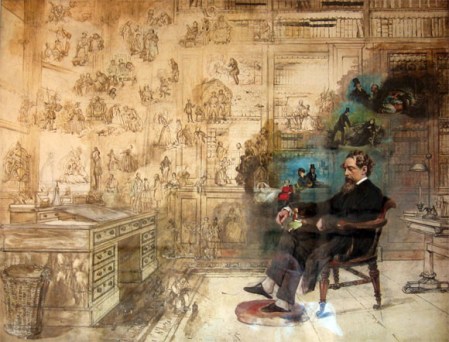
    ‘Dickens’s Dream’ by Robert William Buss. 

    Once we have prepared ourselves, the next part of the process is a period of unconscious processing – the time we get the clippers ready and head into the garden; the times we sit quietly by ourselves and listen. It requires no direct or deliberate effort; it takes place in our unconscious; in our souls.

    Wallas notes that the stage has two divergent elements – the “negative fact” that during Incubation we don’t consciously deliberate on a particular problem, and the “positive fact” of a series of unconscious, involuntary – Wallas terms it “foreconscious” and “forevoluntary” – mental events taking place. He writes:

    “Voluntary abstention from conscious thought on any problem may, itself, take two forms: the period of abstention may be spent either in conscious mental work on other problems, or in a relaxation from all conscious mental work. The first kind of Incubation economizes time, and is therefore often the better.”

    Wallas proposes a technique for optimising the fruits of the Incubation stage by deliberately building interruptions of concentrated effort into our workflow:

    “We can often get more result in the same way by beginning several problems in succession, and voluntarily leaving them unfinished while we turn to others, than by finishing our work on each problem at one sitting.”

    1. Illumination
    2016-04-07_02-04-48
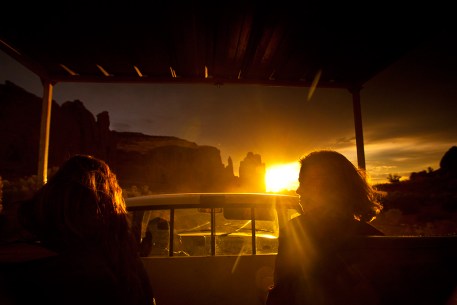
    Photography by Mike Dodson/Vagabond Images. Via Flickr

    This is the stage that makes you drop your trowel/hoe/spade/cultivator (delete as appropriate), and gasp at the sudden exhilaration that comes with stumbling upon a new idea or creative thought.

    Wallas based this stage on French polymath Henri Poincare’s concept of “sudden illumation” – the flash of insight that the conscious self can’t conjure itself and the unconscious self can only produce once all the elements gathered during the Preparation stage have been nurtured during the Incubation stage. The famous “Eureka” moment.

    Wallas writes:

    “If we so define the Illumination stage as to restrict it to this instantaneous “flash,” it is obvious that we cannot influence it by a direct effort of will; because we can only bring our will to bear upon psychological events which last for an appreciable time. On the other hand, the final “flash,” or “click” … is the culmination of a successful train of association, which may have lasted for an appreciable time, and which has probably been preceded by a series of tentative and unsuccessful trains. The series of unsuccessful trains of association may last for periods varying from a few seconds to several hours.

    […]

    Sometimes the successful train seems to consist of a single leap of association, or of successive leaps which are so rapid as to be almost instantaneous.”

    1. Verification
    2016-04-07_02-04-21
    Photography by Mike Dodson/Vagabond Images. Via Flickr

    The final stage of the creative process shares a more deliberate, conscious effort of focused will, as was necessary during the Preparation stage. It involves the practical art of testing whether or not the idea created during phases two and three is actually any good or not. For scientific discovery, this means testing the chemistry or maths behind it; for art, the act of putting paintbrush to blank canvas; and for the writer, the act of “putting one word after another”, as Neil Gaiman advised.

    Wallas writes:

    “It never happens that unconscious work supplies ready-made the result of a lengthy calculation in which we only have to apply fixed rules… All that we can hope from these inspirations, which are the fruit of unconscious work, is to obtain points of departure for such calculations. As for the calculations themselves, they must be made in the second period of conscious work which follows the inspiration, and in which the results of the inspiration are verified and the consequences deduced. … They demand discipline, attention, will, and consequently, conscious work.”

    All together now

    Wallas is keen to note that it is not possible to conjure creativity through any one of these stages alone – regardless of how well one executes that particular stage. None of them exist in isolation from the others, because they are each part of a much grander mechanism of creativity, which is built from innumerable complex, perpetually moving bits and pieces. He writes:

    “In the daily stream of thought these four different stages constantly overlap each other as we explore different problems. An economist reading a Blue Book, a physiologist watching an experiment, or a business man going through his morning’s letters, may at the same time be “incubating” on a problem which he proposed to himself a few days ago, be accumulating knowledge in “preparation” for a second problem, and be “verifying” his conclusions on a third problem. Even in exploring the same problem, the mind may be unconsciously incubating on one aspect of it, while it is consciously employed in preparing for or verifying another aspect. And it must always be remembered that much very important thinking, done for instance by a poet exploring his own memories, or by a man trying to see clearly his emotional relation to his country or his party, resembles musical composition in that the stages leading to success are not very easily fitted into a “problem and solution” scheme. Yet, even when success in thought means the creation of something felt to be beautiful and true rather than the solution of a prescribed problem, the four stages of Preparation, Incubation, Illumination, and the Verification of the final result can generally be distinguished from each other.”

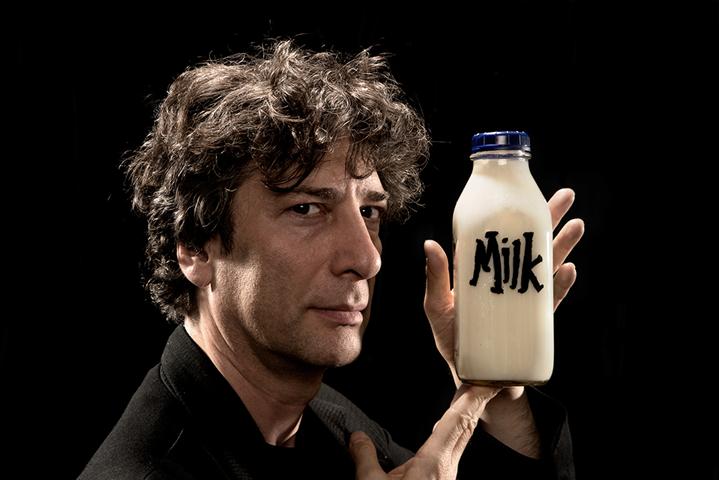
  • GaimanMilk_1_photo_Brady_Hall080713

    Few professions are as solitary – indeed, as secretive – as writing. Yet perhaps a strange quirk in the attitudes of authors is the willingness and desire of writers to share what they know with other students of the craft.

    But of course, writing, to put it bluntly, is kind of a strange gig. There is a plethora of advice out there available to writers – aspiring or established – which they can choose to heed or ignore as they see fit. Some might term these pieces of advice as “rules” and, for want of a better term, we might follow them, especially when they come from some of the great masters of writing.

    In 2010, inspired by Elmore Leonard’s 10 Rules of Writing, The Guardian asked authors for their personal lists of dos and don’ts. We’ve gone through the full list, previously bringing you the writing rules of the brilliant Zadie Smith. We’re on the case again, and here bring you some timeless counsel from one of the great writers of the 20th and 21st centuries: Neil Gaiman.

    Some of Gaiman’s rules sound deceptively simple, enjoy:

    1. Write
    2. Put one word after another. Find the right word, put it down.
    3. Finish what you’re writing. Whatever you have to do to finish it, finish it.
    4. Put it aside. Read it pretending you’ve never read it before. Show it to friends whose opinion you respect and who like the kind of thing that this is.
    5. Remember: when people tell you something’s wrong or doesn’t work for them, they are almost always right. When they tell you exactly what they think is wrong and how to fix it, they are almost always wrong.
    6. Fix it. Remember that, sooner or later, before it ever reaches perfection, you will have to let it go and move on and start to write the next thing. Perfection is like chasing the horizon. Keep moving.
    7. Laugh at your own jokes.
    8. The main rule of writing is that if you do it with enough assurance and confidence, you’re allowed to do whatever you like. (That may be a rule for life as well as for writing. But it’s definitely true for writing.) So write your story as it needs to be written. Write it ­honestly, and tell it as best you can. I’m not sure that there are any other rules. Not ones that matter.


    For more excellent wisdom on writing, consider the writing tips from author and creative writing lecturer Julia Bell; and complement that with some priceless advice from Kurt Vonnegut, alongside our compendium of writing advice from some of the greatest authors.

    Alternatively, you could get all this and more by signing up to our free, weekly newsletter for everything interesting. Join the gang!    

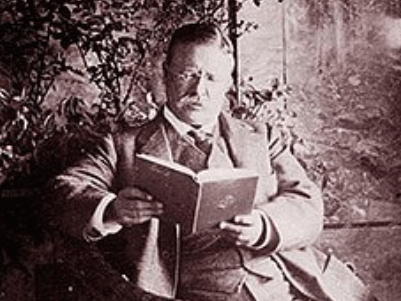
  • teddyroosevelt.png

    Some of the greatest thinkers in human history have long pondered the power of books. Aristotle found that reading surpassed “all stupendous inventions”, while the great author and critic E.B. White suggested books could produce “a sort of ecstasy”. Not only have these great minds tried to give a reason to why we read; they have also put forward suggestions on where we should read – asking whether there is such a thing as the ideal sanctuary for books and reading.

    Yet we have not yet tackled questions on how we should read – or whether the way in which we consume books, information and literature has a bearing on our reading experience.

    This is a subject pondered by one of the most zealous readers in the history of mankind: Theodore Roosevelt, the 26th President of the United States.

    To give you an idea of the level of Roosevelt’s literary consumption, it is well-known that he would read a book before breakfast every day, and up to a further two or three books again in the evening. By his own estimates, he read tens of thousands of books over the course of his lifetime.

    A lifetime advocate of the power of literature, Roosevelt noted in his autobiography a series of points that can be taken as his suggested “rules” for reading, which, if applied correctly by the reader, can ensure they make the most of books and literature.

    We’ve noted them here below:

    1. Dispense with booklists

    Roosevelt writes: “The room for choice is so limitless that to my mind it seems absurd to try to make catalogues which shall be supposed to appeal to all the best thinkers. This is why I have no sympathy whatever with writing lists of the One Hundred Best Books, or the Five-Foot Library. It is all right for a man to amuse himself by composing a list of a hundred very good books… But there is no such thing as a hundred books that are best for all men, or for the majority of men, or for one man at all times.”

    1. Read what you enjoy

    Roosevelt writes: “A book must be interesting to the particular reader at that particular time […] Personally, the books by which I have profited infinitely more than by any others have been those in which profit was a by-product of the pleasure; that is, I read them because I enjoyed them, because I liked reading them, and the profit came in as part of the enjoyment.”

    1. Ignore what people tell you to read

    Roosevelt writes: “The reader, the booklover, must meet his own needs without paying too much attention to what his neighbours say those needs should be.”

    1. Don’t fake enjoyment

    Roosevelt writes: “The reader must not hypocritically pretend to like what he does not like.”

    1. Beware the mad pride of intellectuality – don’t judge others for their book choices

    Roosevelt writes: “Books are almost as individual as friends. There is no earthly use in laying down general laws about them. Some meet the needs of one person, and some of another; and each person should beware of the booklover’s besetting sin, of what Mr. Edgar Allan Poe calls ‘the mad pride of intellectuality,’ taking the shape of arrogant pity for the man who does not like the same kind of books.”

    1. Read poetry, novels and short stories

    Roosevelt writes: “Now and then I am asked as to ‘what books a statesman should read,’ and my answer is, poetry and novels – including short stories under the head of novels.”

    1. Stock your library with the books you want to read – not those you feel you have to

    Roosevelt writes: “Ours is in no sense a collector’s library. Each book was procured because some one of the family wished to read it. We could never afford to take overmuch thought for the outsides of books; we were too much interested in their insides.”

    1. Learn what it means to be human by reading

    Roosevelt writes: “[We] all need more than anything else to know human nature, to know the needs of the human soul; and they will find this nature and these needs set forth as nowhere else by the great imaginative writers, whether of prose or of poetry.”


    So! There you have it. Some wonderful guidance on reading from an ex-president. But just how did he read tens of thousands of books in his lifetime? Perhaps his speed reading is something we will need to revisit – I sense another post in the making! Until then comrades.


    Fancy seeing more cool stuff like this in your inbox? Join the gang! Sign up to our free, regular newsletter of everything interesting.


  • Creative writing

    “Creative writing is not just concerned with competence in replicating a practice, its students are not just learning craft, but flexing their muscles as entrepreneurs within our cultural future […] We defer inventive thinking at our peril.” (Munden, 2013, p1).


    Ever since the University of East Anglia established the first MA in creative writing in 1970, there has been extensive debate on whether creative writing should be taught as a distinct discipline within education. Many writers and teachers have voiced their opinions over the years; John Barth (1985, p3) argues that creative writing “can be learned, by the able; it can be studied, by everybody and his brother; it can even be taught, even in school,” while in contrast Kay Boyle (1975, p1) dramatically asserts that “all creative-writing courses should be abolished by law.” Hanif Kureishi (2014, p4) offers more balanced advice for contemporary students, stating that “aspiring writers who wish to be taught plot, structure and narrative are not mistaken, but following the rules produces only obedience and mediocrity.”

    Despite this controversy, the number of universities that provide degrees in creative writing continues to grow, with over one hundred courses currently being offered in the UK alone. More students than ever are leaving secondary education to pursue a degree in this subject, which implies that there is something inherently essential about the place of creative writing within the curriculum of our schools as forerunners to these institutions.

    However, in September 2015 the Department of Education (2015, p11) announced that they are axing the Creative Writing A-level – bringing the subject’s value into question. Having only been established in 2013, it is currently the only recognised qualification for creative writing in secondary education, and by discontinuing it, the DfE has effectively undermined its worth. The DfE explained that “it became clear that for AS and A-level in creative writing […], it has not been possible to draft subject content in accordance with the department’s guidance and Ofqual’s principles for reformed AS and A levels.”

    Ofqual’s dilemma about subject content highlights a conflict within the subject; the assessment of something that is essentially a social practice and not merely a skill. As Anderson (2014, P97) states, “problems can arise when writing is approached as a discrete, individual skill to be learned in school, primarily in order that it might be tested. This is because writing is a socio-cultural practice, or set of practices. It involves people making meaning and getting things done within a cultural context…” By its nature, writing is universal, all-encompassing and intentionally broad in order to evoke higher order thinking.

    The challenge of assessment also appears to have had a deeper impact in the development of the creativity within the whole curriculum according to Ferrari, Cachia & Punie (2009, p26). Assessment was reported as having a restricting impact on the educational process, endorsed by the work of Wyse and Jones (2003). They stated that “testing has narrowed school provision at the expense of creativity.” We are made to ask whether children should be encouraged to foster a curiosity that enables a freedom to be creative, rather than restricted by conformity that is so often created by the system of assessment?

    But what exactly does it mean to be creative, particularly in regard to writing?

    Goodwin (2004. p2) describes creativity in literacy as “the ‘effective surprise’ that occurs when the unpredictable connections of otherwise unrelated bits of knowledge or experience spark new insights and understanding.” By this definition, creativity is often impulsive and random, which implies that it is unfeasible to assess every learner in the same way. It is something often noted by teachers and students; assessing creative “worth” is subjective.

    This, surely, is to be expected. Creative writing is about imagination, being original/innovative, breaking conventions, going beyond the obvious. Robinson (2013, p 5), the former national advisor on creative and cultural educations, argues that “creativity is not a linear process, in which you have to learn all the necessary skills before you get started. It is true that creative work in any field involves a growing mastery of skills and concepts. It is not true that they have to be mastered before the creative work can begin […] The real driver of creativity is an appetite for discovery and a passion for the work itself.”

    Robinson’s definition seems appropriate for two reasons. Firstly, it accepts the notion that creativity is inherently inside all children; that it can be nurtured and encouraged, mastered and honed, but initially, the innovation must come from within. The second reason is because his definition keeps a love of learning and intellectual curiosity at the heart of what it means to be creative.

    Corbett and Strong (2011, p2), argue that breadth of reading is crucial to the development of creative writing, which contradicts Ofqual’s current narrowing of the curriculum. They assert that “Unsurprisingly, the best writers in any class are always readers. Reading influences writing – indeed the richness, depth and breadth of reading determines the writer that we become.” It is important that we actively encourage pupils to read widely in order to support their creative development in writing and also across the curriculum. Blythe and Sweet (2008, p310) warn us about the dangers of a narrowly prescribed reading list stating that those “who assign the great works can perpetuate the cloning effect,” where the writing of all pupils in a class begins to conform and mimic the work of a studied author(s). They also question the legitimacy of the assigned literature, asking “Who, some ask, determines what makes a great work “great”?” By avoiding a prescribed reading list, the creative writing A-level enables pupils to discover ‘greatness’ for themselves based on their exposure to a plethora of different writers.

    Furthermore, it is important to distinguish the synergy between the knowledge acquired through reading and pupil development of creativity through producing original writing. It is   the role of the teacher to enable an environment where students can effectively analyse other writers’ works and then apply their individual creative talent. As stated by the author and teacher Gibbons (2009, p10), “There has to be a balance between teaching features of writing and leaving a space within which the child can experiment, yes, play with language.” This balance between effective experimentation and teaching writerly techniques is essential for children to productively channel their creative playfulness and take ownership of their work.

    What might an appropriate creative writing reading list look like? A short, reasonable list might include a variety of authors, poets and playwrights, in a plethora of different forms and genres – for instance, Shakespeare, Vonnegut, Harrigan, Huxley, Orwell, Ford, Thomas, Salinger, Lee, Durrell, Bryson, Donne, Elliot, Fitzgerald, Moore, Bradbury, and Atkinson. For AS and A-Level students, such a list may be more extensive than they’d encounter even in English Literature, yet there is no limit to the number of writers students of writing should read. As Corbett and Strong assert: the “richness, depth and breadth of reading determines the writer that we become.” It also promotes a holistic approach to creative writing as this emersion technique encourages a limitless horizon for pupil learning. By setting challenging goals, we can create learning that stretches every pupil by offering a syllabus with an infinity rich list of literature to suit the strengths of each child.

    Part of the risk of teaching creative writing in schools is that a medium that is supposed to free the student – the writer – from constraints can become restricting, when the only focus of the course is to pass exams and fulfil pre-set criteria. Yet the value of teaching creative writing does expand to other areas of a child’s – indeed a person’s – skill set and development. In particular, the innovative thinking and inventive assertiveness that children foster through creative writing seems to be fundamental across the curriculum. Poetry written in creative writing classes becomes the lyrics to songs used in Music lessons; while essay skills are improved in History or Business Studies; investigative, innovative thought applied to Science experiments; grammar and vocabulary skills improve in Foreign Languages. In short, teaching creative writing helps pupils become students not just of writing or of literature; but of the world.

    Creative writing is rooted in having original ideas. Therefore, how can we expect pupils to flourish imaginatively and artistically by conforming to narrow assessment objectives? As Paul Munden, the director of National Association of Writers in Education, warns us, “We defer inventive thinking at our peril.” (Munden. 2013, p1).

    It is only within a safe and supportive environment that pupils are able to cultivate their flair for expression in a manner of different mediums to produce overwhelmingly imaginative, thoughtful and evocative writing. What is the point of creative writing? Everything.

    Bibliography

    Anderson. G. (2014) ‘Writing’ in Davidson, J. and Daly, C4th edition,’ Learning to Teach English in the Secondary School, A companion to school experience.’ Suffolk: Routledge.

    AQA Subject Content:

    http://www.aqa.org.uk/subjects/english/as-and-a-level/creative-writing-2750/subject-content  [15/12/15]

    Barth, J. 1985, ‘Writing; Can it be taught?’ The New York Times 16 June. Available from: < http://www.nytimes.com/>. [15/12/15]

    Blythe, H & Sweet, C. (2008) ‘The Writing Community: A New Model for the Creative Writing Classroom’ from Pedagogy: Critical Approaches to Teaching Literature, Language, Composition, and Culture Volume 8, Number 2.  Duke University Press

    Boyle, K. 1975, ‘New printers, new writers and a new literature’ The New York Times 14 September. Available from: < http://www.nytimes.com/>. [15/12/15]

    Corbett, P & Strong, J. (2011) ‘Talk For Writing Across The Curriculum: How to teach non-fiction writing.’ (London). Open University Press.

    Craft, A. (2002), ‘Creativity and early years education’ (London) Continuum. Bloomsbury Academic.

    DfE (2015). Additional reformed GCSE and A level subject content consultation:

    https://www.gov.uk/government/uploads/system/uploads/attachment_data/file/459669/Additional-reformed-GCSE-and-A-level-subject-content-consultation.pdf  [15/12/15]

    Ferrari, A. Cachia, R. & Punie, Y. “Innovation and Creativity in Education and Training in the EU Member States: Fostering Creative Learning and Supporting Innovative Teaching

    Available from: < http://ftp.jrc.es/EURdoc/JRC52374_TN.pdf > [15/12/15]

    Frater, G. (2004) ‘Improving Dean’s writing: what shall we tell the children.’ Literacy. 38, 78-82.

    Gibbons, A. (2009) ‘Back to the Future – Or Putting the Creative Back in Writing.’ National Association for the Teaching of English. Classroom Issue No. 8.

    Goodwin, P. 2004 ‘Lieracy through Creativity.’ (Oxford) David Fulton Publishers.

    Kureishi, H. 2014, ‘What they don’t teach you at creative writing school,’ The Telegraph 25 January. Available from: < http://www.telegraph.co.uk/culture/books/10594606/Hanif-Kureishi-What-they-dont-teach-you-at-creative-writing-school.html>. [15/12/15]

    Kroll, J & Harper, G. 2008. ‘Creative Writing Guidebook.’ London: Continuum.

    Minot, S. 2003. ‘Three Genres: Writing Fiction/Literary Nonfiction, Poetry, and Drama’ 7th ed. (London) Longman.

    Munden. P. 2013. ‘The Rise of Creative Writing’. SecEd Magazine 2/05/13.

    Available from: http://www.sec-ed.co.uk/best-practice/the-rise-of-creative-writing [15/12/15]

    Ofqual. ‘Further Decisions for Completing GCSE, AS and A Level.’ 2015. Available from:

    https://www.gov.uk/government/uploads/system/uploads/attachment_data/file/479635/2015-05-14-reform-of-gcses-as-and-a-levels-in-2017-may-2015.pdf  [17/02/16]

    Robinson, K. (2013) ‘To encourage creativity, Mr Gove, you must first understand what it is.’ Guardian. 17 May 2013.

    Available from: < http://www.theguardian.com/commentisfree/2013/may/17/to-encourage-creativity-mr-gove-understand > [15/12/15]

    Wyse, D & Jones R. 2003 ‘Creativity in the Primary Curriculum’ (London): David Fulton Publishers.


    About the author of this post

    11920594_10153537595492145_200658208_nGeorge Vernon is a writer and English teacher based in the UK. He graduated from Warwick University with a first class (hons) degree in English Literature and Creative Writing in 2012, and completed his MA with distinction in Creative Writing from Chichester University in 2013. He has been shortlisted for the Almond Press Dystopian Short Story competition and won the Kate Betts award for most promising piece of fiction. When not teaching, George can be found writing; learning; living; loving. He tweets as @MrGeorgeVernon
  • john-green-wint-twee-jongerenliteratuur-prijzen

    The Government have announced an audacious plan to replace the British Pound with a new book-based currency.

    The shock announcement came just weeks after Chancellor George Osborne’s most recent shambolic budget. After taking the United Kingdom to the brink of economic catastrophe through a series of ill-thought out neoliberal measures of privatisation, tax cuts for international conglomerate corporations and attacks on middle and low-income households, the Chancellor of the Exchequer has released a statement explaining that he sees books and literature as the only way to save the failing UK state.

    “The British people have had to put up with a lot these past six years,” the Chancellor wrote. “And although I would say I have taken substantive action to make things easier for people, I am starting to recognise that we now need – more than ever before – new, innovative, some may even say drastic, measures and ideas to ‘stop the rot’ and make Britain great again.”

    “As such, in order to ensure the British economy continues to grow and create jobs, and after consulting with various leading economists, we have decided to forge ahead with a new, literary-based currency,” Osborne continued. “Britain, after all, has given the world so many priceless works of literature – from Shakespeare through to J.K Rowling. It’s time we recognised that money, in its current form, isn’t serving the needs of the people, and replaced it with something that will enrichen the lives of everyone: books.”

    The full details of what the new British currency will look like, or how it will function in practical terms, has yet to be revealed. One inside source close to the Cabinet told Nothing in the Rulebook they expect to see a quasi-bartering system introduced, while taking aspects of free-market economics and adapting them into something more cultural.

    “Nobody likes money anyway,” our source said. “It’s boring and can get a bit of a weird smell. I’m sure people would be much happier to fill their wallets with book, script and poetry extracts rather than tiny bits of paper with pictures of old people on them.”

    Prime Minister David Cameron said he welcomed the change in British currency.

    “Forever more, the date of this announcement – April 1st – will be known as a great day in British history,” the Prime Minister said. “Introducing a literary-based economy, built on the shoulders of Shakespeare, Dickens, Austen, Golding, Orwell, Woolf and Hardy and so on, will help us pear down the deficit and support British workers.”

    Some financial analysts, however, have voiced quiet concern over the plans.

    “Replacing The Pound with a heap of books? Are they totally bonkers?” An incredulous colleague of economist Simon Wren Lewis said in response to the announcement. “First they ignore all rules of basic economics with their stubborn-minded pursuit of austerity, then they attack the incomes of the British people while giving tax cuts to a handful of their billionaire donors, and now this. I’ve never heard of a developed country using a book-based currency before, and quite frankly I am in no doubt that this will be yet another unmitigated disaster caused by the Conservative party.”

    George Osborne dismissed criticisms of his plans as “the usual left-wing loonies getting on their high horse about what will be seen, in years to come, as the most financially astute idea in the history of economics.”

    Analysis

    Professor Wu says: “We have long agitated for the Conservative administration to recognise the value of books and literature, yet today’s announcement goes far beyond what we ever expected to achieve. We were originally just hoping that Osborne and co would stop slashing budgets for local libraries and start to invest in our culture, and schemes that promote the countless wonderful attributes of books and writing. But to have an entirely book-based economy? I personally can’t wait to use my first edition copy of Ulysses to pay down the mortgage on my flat. As David Cameron said, April 1st, 2016 will be a day long remembered in the history of this country.”

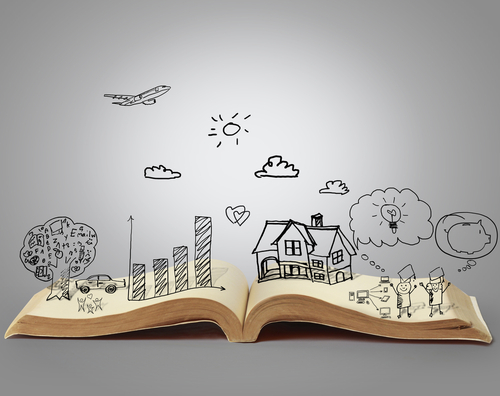
  • Once upon a time

    Books and literature are entwined with human culture. Reading brings with it a touch of magic, saves us time, and turns us into citizens of the world. But when it comes to literature, we tend to think only of those books that we have enjoyed, or those we know have sold well, or those that form the literary canon. Of course we know, somewhere in our minds, that there are also countless other books and stories out there, sitting unread or unpublished, or still swirling around the minds of aspiring writers. So how do stories make the grade and leave a mark in our minds or our culture? What, in other words, makes a great story?

    We know that some have taken a scientific approach to answering this question. For others, like Zadie Smith, it has less to do with science, and more to do with “the truth”. It is a question that has been asked – and answered – in different ways for generations, and in 1986, the great Harvard psychologist Jerome Bruner weighed in with his own ideas.

    Bruner had precedent when he wrote his essay collection Actual Minds, Possible Worlds, which explored the role of the mind in creation of creative works. Two decades previously, he had pioneered the modern study of creativity in the 1960s, and his collection of essays On Knowing suggested creativity was entwined closely with “passion”. This, he said, “like discriminating taste, grows on its use. You are more likely to act yourself into feeling than feeling yourself into action.”

    The ideas incepted then stayed with him all those years, evolving in his own creative mind. In one immensely insightful piece from Actual Minds, titled “Two Modes of Thought”, Bruner writes:

    “There are two modes of cognitive functioning, two modes of thought, each providing distinctive ways of ordering experience, of constructing reality. The two (though complementary) are irreducible to one another. Efforts to reduce one mode to the other or to ignore one at the expense of the other inevitably fail to capture the rich diversity of thought.

    Each of the ways of knowing, moreover, has operating principles of its own and its own criteria of well-formedness. They differ radically in their procedures for verification. A good story and a well-formed argument are different natural kinds. Both can be used as means for convincing another. Yet what they convince of is fundamentally different: arguments convince one of their truth, stories of their lifelikeness. The one verifies by eventual appeal to procedures for establishing formal and empirical proof. The other establishes not truth but verisimilitude.

    […]

    A story (allegedly true or allegedly fictional) is judged for its goodness as a story by criteria that are of a different kind from those used to judge a logical argument as adequate or correct.”

    For writers, it’s interesting to note how Bruner highlights the way storytellers are primarily concerned with the question of how to endow experience with a meaning; and points out the vital distinction between truth and meaning. Scientists find ways to come at a binary truth, which leaves their minds closed and narrow; storytellers explore different “truths” and realities in order to discover new ways of looking at the world, and encouraging readers to do the same – even though there is no single answer; and indeed, only ever countless possibilities.

    Bruner contrasts the two modes, which he calls the paradigmatic or logico-scientific, and the narrative, arguing that each is animated by a different kind of imagination:

    “The imaginative application of the paradigmatic mode leads to good theory, tight analysis, logical proof, sound argument, and empirical discovery guided by reasoned hypothesis. But paradigmatic “imagination” (or intuition) is not the same as the imagination of the novelist or poet. Rather, it is the ability to see possible formal connections before one is able to prove them in any formal way.

    The imaginative application of the narrative mode leads instead to good stories, gripping drama, believable (though not necessarily “true”) historical accounts. It deals in human or human-like intention and action and the vicissitudes and consequences that mark their course. It strives to put its timeless miracles into the particulars of experience, and to locate the experience in time and place.

    […]

    In contrast to our vast knowledge of how science and logical reasoning proceed, we know precious little in any formal sense about how to make good stories.

    Perhaps one of the reasons for this is that story must construct two landscapes simultaneously. One is the landscape of action, where the constituents are the arguments of action: agent, intention or goal, situation, instrument, something corresponding to a “story grammar.” The other landscape is the landscape of consciousness: what those involved in the action know, think, or feel, or do not know, think, or feel.”

    Looking at the specific, unique landscape of narrative, Bruner writes:

    “Narrative deals with the vicissitudes of human intentions. And since there are myriad intentions and endless ways for them to run into trouble — or so it would seem — there should be endless kinds of stories. But, surprisingly, this seems not to be the case.

    […]

    We would do well with as loose fitting a constraint as we can manage concerning what a story must “be” to be a story. And the one that strikes me as most serviceable is the one with which we began: narrative deals with the vicissitudes of intention.”

    Crucially, Bruner notes that this “intention” will forever be beyond the control of the storyteller or writer; for it belongs solely to the reader (or readers) of the work itself. Just as Sylvia Plath observed that a poem, once made available to the public “belongs to the reader”, so is all art and storytelling, Bruner contests. And he considers how the psychology of this interpretation factors into the question of what makes a great story:

    “It will always be a moot question whether and how well a reader’s interpretation “maps” on an actual story, does justice to the writer’s intention in telling the story, or conforms to the repertory of a culture. But in any case, the author’s act of creating a narrative of a particular kind and in a particular form is not to evoke a standard reaction but to recruit whatever is most appropriate and emotionally lively in the reader’s repertory. So “great” storytelling, inevitably, is about compelling human plights that are “accessible” to readers. But at the same time, the plights must be set forth with sufficient subjunctivity to allow them to be rewritten by the reader, rewritten so as to allow play for the reader’s imagination. One cannot hope to “explain” the processes involved in such rewriting in any but an interpretive way, surely no more precisely, say, than an anthropologist “explains” what the Balinese cockfight means to those who bet on it… All that one can hope for is to interpret a reader’s interpretation in as detailed and rich a way as psychologically possible.”

    Making a great story, therefore, relies upon a reader’s interpretation of it. It is down to a reader to make a text their own, and extract meaning from it in a way they find suitable. Bruner illustrates this using an extract of Italo Calvino’s Invisible Cities, in which Marco Polo describes a bridge to Kublai Khan (stone by stone).

    ‘“But which is the stone that supports the bridge?” Kublai Khan asks.

    “The bridge is not supported by one stone or another,” Marco answers, “but by the line of the arch that they form.”

    Kublai Khan remains silent, reflecting. Then he adds: “Why do you speak to me of the stones? It is only the arch that matters to me.”

    Polo answers: “Without stones there is no arch.”’

    On this, Bruner reflects that this extract itself can be used as an allegory to explain the key to great storytelling:

    “But still, it is not quite the arch. It is, rather, what arches are for in all the senses in which an arch is for something — for their beautiful form, for the chasms they safely bridge, for coming out on the other side of crossings, for a chance to see oneself reflected upside down yet right side up. So a reader goes from stones to arches to the significance of arches is some broader reality — goes back and forth between them in attempting finally to construct a sense of the story, its form, its meaning.

    As our readers read, as they begin to construct a virtual text of their own, it is as if they were embarking on a journey without maps — and yet, they possess a stock of maps that might give hints, and besides, they know a lot about journeys and about mapmaking. First impressions of the new terrain are, of course, based on older journeys already taken. In time, the new journey becomes a thing in itself, however much its initial shape was borrowed from the past. The virtual text becomes a story of its own, its very strangeness only a contrast with the reader’s sense of the ordinary. The fictional landscape, finally, must be given a “reality” of its own — the ontological step. It is then that the reader asks that crucial interpretive question, “What’s it all about?” But what “it” is, of course, is not the actual text — however great its literary power — but the text that the reader has constructed under its sway. And that is why the actual text needs the subjunctivity that makes it possible for a reader to create a world of his own.”

    How does one write a great story, then? Simply perhaps, by reading the great stories of others. As Bruner writes: “the great writer’s gift to the reader is to make him a better writer.”

  • Writers! Twitterers! Creatives! Social Media Gurus! There’s a new competition just for you.

    The fabulous literary publisher and resource for writers, Tethered By Letters, has launched a new Twitter contest.

    If you think you can tell a story in 140 characters or fewer, TBL want to hear from you!

    Every two weeks, an acclaimed judge will choose the winning story. The winner will receive a free digital copy of F(r)iction, and potential publication of the Tweet in a future issue of F(r)iction.

    Don’t blink, or you’ll miss it! Tweet your tiny narratives using the hashtag #BlinkTBL, and be sure to check the @TethrdByLettrs and @FrictionSeries Twitter pages for start dates, deadlines, and judging info!


  • Zadie Smith

    Writing, and advice for writers on how to write, is the topic of so many internet articles and forums. There can, at times, be a feeling that writers spend more time talking about writing and how to do it than they spend actually, well, writing.

    Yet of course there’s a balancing act between ‘going at it’ and writing for the sake of writing, and learning what one can about the craft from those who have devoted their entire lives to the cause. As such, there remains inherent value in listening to the wisdom of great writers and working out which of their tips are the most suited to our own writing skills, habits and routines.

    In 2010, inspired by Elmore Leonard’s 10 Rules of Writing, The Guardian asked authors for their personal lists of dos and don’ts. We’ve gone through the full list, and here bring you some timeless counsel from one of the great writers of the 20th and 21st centuries: Zadie Smith.

    1. When still a child, make sure you read a lot of books. Spend more time doing this than anything else.
    2. When an adult, try to read your own work as a stranger would read it, or even better, as an enemy would.
    3. Don’t romanticise your “vocation.” You can either write good sentences or you can’t. There is no ‘writer’s lifestyle.’ All that matters is what you leave on the page.
    4. Avoid your weaknesses. But do this without telling yourself that the things you can’t do aren’t worth doing. Don’t mask self-doubt with contempt.
    5. Leave a decent space of time between writing something and editing it.
    6. Avoid cliques, gangs, groups. The presence of a crowd won’t make your writing any better than it is.
    7. Work on a computer that is disconnected from the ­internet.
    8. Protect the time and space in which you write. Keep everybody away from it, even the people who are most important to you.
    9. Don’t confuse honours with achievement.
    10. Tell the truth through whichever veil comes to hand — but tell it. Resign yourself to the lifelong sadness that comes from never ­being satisfied.


    If you’ve enjoyed Smith’s mix of practical, philosophical and poetic advice on writing, why not check out some of the other great pieces of advice from literary greats? And, while you’re at it, send us your own writing tips – how do you write? What gets you through each chapter? Let us know in the comments below.

    Fancy seeing more cool stuff like this in your inbox? Join the gang! Sign up to our free, regular newsletter of everything interesting.


  • cursive handwriting

    The importance of poetry, and the innate, natural beauty of it has been acclaimed for generations. JFK wrote that poetry was “the means of saving power from itself, for when power leads man towards arrogance, poetry reminds him of his limitations. When power narrows the areas of man’s concern, poetry reminds him of the richness and diversity of his existence. When power corrupts, poetry cleanses.”

    Yet the ability to write poetry is also known as being incredibly difficult. Elizabeth Bishop, former Poet Laureate of the United States, said it was “an unnatural act”, which took “great skill to make it seem natural. Most of the poet’s energies are really directed toward this goal: to convince himself (perhaps, with luck, eventually some readers) that what he’s up to and what he’s saying is really an inevitable, only natural way of behaving under the circumstances.”

    Poet and journalist, Rishi Dastidar, meanwhile said that writing poetry was “a patient game”; and that it was a fine balancing act between being “a post-modern Casanova” and “on a bad day: a failed post-modern Casanova.”

    So what exactly makes a good poem? What makes a good poet? And, ultimately, what’s this poetry business all about, anyway?

    This #WorldPoetryDay, we’ve brought together a collection of some of the best quotes about poetry – by poets, for poet – to try and make the day more than a Twitter #Hashtag and into more of a real celebration of what poetry is, and what it ultimately does for the human soul.

    Enjoy!


    1. William Wordsworth

    “Poetry is the spontaneous overflow of powerful feelings: it takes its origin from emotion recollected in tranquillity.”


    1. Robert Graves

    “A perfect poem is impossible. Once it had been written, the world would end.”


    1. H. Auden

    “A poet must never make a statement simply because it sounds poetically exciting; he must also believe it to be true.”


    1. Percy Byshhe Shelley

    “Poetry lifts the veil from the hidden beauty of the world, and makes familiar objects be as if they were not familiar.”


    1. Rita Dove

    “Poetry is language at its most distilled and most powerful.”


    1. Lucille Clifton

    “Remember that the first poems didn’t come out of a classroom. Poetry began when somebody walked off of a savanna or out of a cave and looked up at the sky with wonder and said, “Ahhh.” That was the first poem.”


    1. Virginia Woolf

    “Anon, who wrote so many poems without signing them, was often a woman.”


    1. Plato

    “Every heart sings a song, incomplete, until another heart whispers back. Those who wish to sing always find a song. At the touch of a lover, everyone becomes a poet.”


    1. Robert Frost

    “A poem begins as a lump in the throat, a sense of wrong, a homesickness, a lovesickness.”


    1. Charles Darwin

    “If I had my life to live over again, I would have made a rule to read some poetry and listen to some music at least once every week.”


    1. Charles Bukowski

    “Poetry is what happens when nothing else can.”


    1. Vincent van Gogh

    “I have nature and art and poetry, and if that is not enough, what is enough?”


    1. Emily Dickinson

    “If I feel physically as if the top of my head were taken off, I know that it is poetry.”


    1. John Keats

    “Poetry should surprise by a fine excess and not by a singularity – it should strike the reader as a wording of his own highest thoughts, and appear almost a remembrance.”


    1. Salman Rushdie

    “A poet’s work is to name the unnameable, to point at frauds, to take sides, to start arguments, shape the world, and stop it going to sleep.”


    Of course, these are but a few of countless thoughts on the subject of poetry. Which ones are we missing? Let us know in the comments below!

    Don’t forget to sign up to our free, regular newsletter for more posts like this. Never miss a trick!


  • Spasming muscles, groans, whispers, licked ears, sweat, bucking, otherwise central zones: if you hear those terms, you know you can be only be reading about one thing: the Bad Sex in Fiction Award, a prize established 25 years ago by the Literary Review.

    Each year since 1993, the Bad Sex in Fiction Award has honoured an author who has produced an outstandingly bad scene of sexual description in an otherwise good novel. The purpose of the prize is to draw attention to poorly written, perfunctory or redundant passages of sexual description in modern fiction, and to discourage them. The prize is not intended to cover pornographic or expressly erotic literature.

    The Award was established by Rhoda Koenig, a literary critic, and Auberon Waugh, at that time editor of Literary Review.

    Because we wouldn’t want you having to sift through the archives, we’ve brought you this: a compendium of all the winning entries, featuring extracts of the very best bad sex in fiction. Enjoy!


    1993: Winner – Melvyn Bragg’s A Time to Dance – “the ram of sex”

    “We came together, do you remember, always tenderly, at first standing, like a chivalric introduction to what was to be a voluptuous sensual battle? Just stood and kissed like children, simply, body to body, skin to skin, you slightly stirring against me, myself disregarding for those seconds the ram of sex aching below.

    And then we would be on the bed and I touching you, hungry. Eyes closed, fingers inside you, reaching into the melting fluid rubbered silk – a relief map of mysteries – the eager clitoris, reeking of you, our tongues imitating the fingers, your hands gripping and stroking me but also careful not to excite too much. […] and so I would fuck you gently and then more strongly and finally thrust in hard and suddenly let everything go. “Slam into me,” you used to say. “how you just slam into me!”


    1994: Winner – Phillip Hook’s The Stonebreakers – “mad mobile sculpture”

    “His hand set out on a magnificently daring journey across limitless expanses of thrillingly unfamiliar flesh, exulting in the possession of unknown territory. He traced an exploratory path from the nape of her neck, over her breasts, under her straining buttocks

     […]

    Soon they were no longer bodies on a bed. They became some mad mobile sculpture manipulated this way and that in the throes of its own creation; two forms in search of positions of perfect linkage.


    1995: Winner – Phillip Kerr’s Gridiron – “gnomon”

    “Quickly he threw off his own clothes and rolled on top of her. Detaching mind from over-eager gnomon and its exquisitely appointed, shadowy task, he began to make love to her.

    When they had finished they lay under the sheet and watched TV. After a while Mitch glanced at the gold Rolex submariner watch on his wrist.

    ‘I ought to be going,’ he said.”


    1996: Winner – David Huggins’s The Big Kiss: An Arcade Mystery – “Squeaked like wet rubber”

    “’Stick it in’, she whispered. I moved up the bed and pushed inside her. Liz squeaked like wet rubber. She grabbed my love-handles and ground her hips against me, her eyes black saucers staring into mine as she hooked a yoga-leg onto my shoulder. We went through a medley of our favourite positions. When Liz saw that I was about to shoot my blob of Lo-Cal genetics she turned onto her stomach, lifting her arse to get a hand to her clitoris and chase me to an orgasm. She made it just in time.

    We lay panting with the sweat cooling on our bodies.

    Things were better between us after that but it didn’t last long.”


    1997: Winner – Nicholas Royle’s The Matter of the Heart – “making a noise somewhere between a beached seal and a police siren”

    “But Ambrose banished the thought and reached for a condom. Yasmin grinned and writhed on the bed, arching her back, making a noise somewhere between a beached seal and a police siren. And then he was there. Slowly at first, dead slow – she liked that, he knew. Then speeding up gradually to gain a rhythm until he was punching smoothly in and out of her like a sewing machine. Her noises increased in volume until she was producing a throaty ululation.”


    1998: Winner – Sebastian Faulks’s Charlotte Gray – “a means to some vague, profounder union”

    “It seemed incredible to her that this bodily feeling was so specific, when her purpose in it all was to use the act only as a means to some vague, profounder union, far removed from flesh and sheets and physical sensation. Meanwhile her ears were filled with the sound of a soft but frantic gasping, and it was some time before she identified it as her own.”


    1999: Winner – A.A. Gill’s Starcrossed – “like a cigar”

    “His tongue is long and hard and tastes of mint. We don’t say anything, but he pushes me to my knees in the middle of the shop. It’s difficult to undo his flies. I put my hand in. It’s hot and damp, and then, Christ; it’s amazing, huge. It just goes on and on, as thick as…’

    ‘As a magnum? A jeroboam? A methuselah? A bitter pump?’

    ‘A fucking salami. Shut up, John.’

    ***

    ‘…he takes his clothes off until he’s just wearing his boots. I hook my nails into his really taut bottom and he pumps and nearly chokes me.’

    ‘How did he get his trousers off over his boots? I mean, does he take his boots off and put them back on again?’

    ‘Shut up. I pull my dress off and I’m naked. He reaches down and roughly grabs me between the legs. I can feel his long, bony finger slip inside me. His thumb slides into the crack of my bottom and lifts me like…’

    ‘A bowling ball? A six-pack?’

    ‘Like I was light as a feather.’

    ***

    She got to his cock and stuck it between her teeth like a cigar.”


    2000: Winner – Sean Thomas’s Kissing England – “his dinky little JVC”

    “It is time, time … Now. Yes. She is so small and compact and yet she has all the necessary features … Shall I compare thee to a Sony Walkman, thou art more compact and more – She is his own Toshiba, his dinky little JVC, his sweet Aiwa … Aiwa, aiwa aiwa aiwa aiwa aiwa aiwa aiwa aiwa aiwa aiwaaaaaaaaahhhhhhhhh …”


    2001: Winner – Christopher Hart’s Rescue Me – “like Sir Ranulph Fiennes”

    “Her hand is moving away from my knee and heading north. Heading unnervingly and with a steely will towards the pole. And, like Sir Ranulph Fiennes, Pamela will not easily be discouraged. I try twitching, and then shaking my leg, but to no avail. At last, disastrously, I try squeezing her hand painfully between my bony thighs, but this only serves to inflame her ardour the more. Ever northward moves her hand, while she smiles languorously at my right ear. And when she reaches the north pole, I think in wonder and terror….she will surely want to pitch her tent.”


    2002: Winner – Wendy Perriam’s Speak Softly – “a seductive pin-striped foreskin”

    “She closed her eyes, saw his dark-as-treacle-toffee eyes gazing down at her. Weirdly, he was clad in pin-stripes at the same time as being naked. Pin-stripes were erotic, the uniform of fathers, two-dimensional fathers. Even Mr Hughes’s penis had a seductive pin-striped foreskin.”


    2003: Winner – Aniruddha Bahal’s Bunker 13 – “the Aryan denominator”

    “Her breasts are placards for the endomorphically endowed. In spite of yourself a soft whistle of air escapes you. She’s taking off her trousers now. They are a heap on the floor. Her panties are white and translucent. You can see the dark hair sticking to them inside. There’s a design as well. You gasp.

    ‘What’s that?’ you ask. You see a designer pussy. Hair razored and ordered in the shape of a swastika. The Aryan denominator…

    As your hands roam her back, her breasts, and trace the swastika on her mound you start feeling like an ancient Aryan warlord yourself…

    She sandwiches your nozzle between her tits, massaging it with a slow rhythm. A trailer to bookmark the events ahead. For now she has taken you in her lovely mouth. Your palms are holding her neck and thumbs are at her ears regulating the speed of her head as she swallows and then sucks up your machinery.”


    2004: Winner – Tom Wolfe’s  I am Charlotte Simmons – “otorhinolaryngological caverns”

    “Hoyt began moving his lips as if he were trying to suck the ice cream off the top of a cone without using his teeth … Slither slither slither slither went the tongue, but the hand that was what she tried to concentrate on, the hand, since it has the entire terrain of her torso to explore and not just the otorhinolaryngological caverns.”


    2005: Winner – Giles Coren’s Winkler – “like Zorro”

    “And he came hard in her mouth and his dick jumped around and rattled on her teeth and he blacked out and she took his dick out of her mouth and lifted herself from his face and whipped the pillow away and he gasped and glugged at the air, and he came again so hard that his dick wrenched out of her hand and a shot of it hit him straight in the eye and stung like nothing he’d ever had in there, and he yelled with the pain, but the yell could have been anything, and as she grabbed at his dick, which was leaping around like a shower dropped in an empty bath, she scratched his back deeply with the nails of both hands and he shot three more times, in thick stripes on her chest. Like Zorro.”


    2006: Winner – Iain Hollingshead’s Twenty Something – “bulging trousers”

    “I can feel her breasts against her chest. I cup my hands round her face and start to kiss her properly. She slides one of her slender legs in between mine.


    “Oh Jack, she was moaning now, her curves pushed up against me, her crotch taut against my bulging trousers, her hands gripping fistfuls of my hair.


    “She reaches for my belt. I groan too, in expectation. And then I’m inside her, and everything is pure white as we’re lost in a commotion of grunts and squeaks, flashing unconnected images and explosions of a million little particles.”


    2007: Winner – Norman Mailer’s The Castle in the Forest – “as soft as a coil of excrement”

    “Then she was on him. She did not know if this would resuscitate him or end him, but the same spite, sharp as a needle, that had come to her after Fanni’s death was in her again. Fanni had told her once what to do. So Klara turned head to foot, and put her most unmentionable part down on his hard-breathing nose and mouth, and took his old battering ram into her lips. Uncle was now as soft as a coil of excrement. She sucked on him nonetheless with an avidity that could come only from the Evil One – that she knew. From there, the impulse had come. So now they both had their heads at the wrong end, and the Evil One was there. He had never been so close before.

    The Hound began to come to life. Right in her mouth. it surprised her. Alois had been so limp. But now he was a man again! His mouth lathered with her sap, he turned around and embraced her face with all the passion of his own lips and face, ready at last to grind into her with the Hound, drive it into her piety.”


    2008: Winner – Rachel Johnson’s Shire Hill – “like a cat lapping up a dish of cream”

    “JM’s hands are caressing my breasts, now, and I am allowed to kiss him back, but not for long, for he breaks off, to give each breast the attention it deserves. As he nibbles and pulls with his mouth, his hands find my bush, and with light fingers he flutters about there, as if he is a moth caught inside a lampshade.

    Almost screaming after five agonizingly pleasurable minutes, I make a grab, to put him, now angrily slapping against both our bellies, inside, but he holds both by arms down, and puts his tongue to my core, like a cat lapping up a dish of cream so as not to miss a single drop. I find myself gripping his ears and tugging at the locks curling over them, beside myself, and a strange animal noise escapes from me as the mounting, Wagnerian crescendo overtakes me. I really do hope at this point that all the Spodders are, as requested, attending the meeting about slug clearance or whatever it is.”


    2009: Winner – Jonathan Littell’s The Kindly Ones – “a soft-boiled egg”

    “Una had stretched out on the bed of the guillotine; I lifted the lunette, made her put her head through it, and closed it on her long neck, after carefully lifting her heavy hair. She was panting. I tied her hands behind her back with my belt, then raised her skirt. I didn’t even bother to lower her panties, just pushed the lace to one side and spread her buttocks with both hands: in the slit, nestling in hair, her anus gently contracted. I spit on it. ‘No,’ she protested. I took out my penis, lay on top of her, and thrust it in. She gave a long stifled cry. I was crushing her with all my weight; because of the awkward position – my trousers were hindering my legs – I could only move in little jerks. Leaning over the lunette, my own neck beneath the blade, I whispered to her: ‘I’m going to pull the lever, I’m going to let the blade drop.’ She begged me: ‘Please, fuck my pussy.’ – ‘No.’ I came suddenly, a jolt that emptied my head like a spoon scraping the inside of a soft-boiled egg.”


    2010: Winner – Rowan Somerville’s The Shape of Her – “it tore a climax out of him”

    “Naked from waist to toe, a faint wedge of paleness from a few hours of sun, streaked with shadows in the candlelight; the triangle of pubic hair, blond, a thin line bunched darkly, like desert vegetation following an underground stream. He placed his hand on the concave stretch that was her belly, letting two fingers rest in the yawn of her navel. He slipped downwards, grazing the tight skin of her waist with his fingertips. He reached her hair line and the muscles of her belly hardened as she raised herself up onto her elbows. She stayed his hand and drew him, yanked him, into a smothering kiss. She released his hair from her fingers and twisted onto her belly like a fish flipping itself, her movement so brusque his chin bounced off her head.

    He grasped the side of her hips, pushed her away and pulled her to him with a slap. Again and again with more force and velocity. Tine pressed her face deeper into the cushion grunting into the foam at each thrust.

    The wet friction of her, tight around him, the sight of her open, stretched around him, the cleft of her body, it tore a climax out of him with a final lunge. Like a lepidopterist mounting a tough-skinned insect with a too blunt pin he screwed himself into her.”


    2011: Winner – David Guterson’s Ed King – “the family jewels”

    “In the shower, Ed stood with his hands at the back of his head, like someone just arrested, while she abused him with a bar of soap. After a while he shut his eyes, and Diane, wielding her fingernails now and starting at his face, helped him out with two practiced hands, one squeezing the family jewels, the other vigorous with the soap-and-warm-water treatment. It didn’t take long for the beautiful and perfect Ed King to ejaculate for the fifth time in twelve hours, while looking like Roman public-bath statuary. Then they rinsed, dried, dressed, and went to an expensive restaurant for lunch.”


    2012: Winner –  Nancy Huston’s Infrared – “a delirium of restrained desire”

    “In a delirium of restrained desire, I weigh, stroke and lick Kamal’s balls, then take his penis in my hands, between my breasts, into my mouth. He sits up, reaches for me and I allow him to explore me in turn. He runs his tongue and lips over my breasts, the back of my neck, my toes, my stomach, the countless treasures between my legs, oh the sheer ecstasy of lips and tongues on genitals, either simultaneously or in alternation, never will I tire of that silvery fluidity, my sex swimming in joy like a fish in water, my self freed of both self and other, the quivering sensation, the carnal pink palpitation that detaches you from all colour and all flesh, making you see only stars, constellations, milky ways, propelling you bodiless and soulless into undulating space where the undulating skies make your non-body undulate…”


    2013: Winner – Manil Suri’s The City of Devi – “statisticians the world over rejoice”

    “Surely supernovas explode that instant, somewhere, in some galaxy. The hut vanishes, and with it the sea and the sands – only Karun’s body, locked with mine, remains. We streak like superheroes past suns and solar systems, we dive through shoals of quarks and atomic nuclei. In celebration of our breakthrough fourth star, statisticians the world over rejoice.”


    2014: Winner – Ben Okri’s The Age of Magic – “the universe was in her”

    “When his hand brushed her nipple it tripped a switch and she came alight. He touched her belly and his hand seemed to burn through her. He lavished on her body indirect touches and bitter-sweet sensations flooded her brain. She became aware of places in her that could only have been concealed there by a god with a sense of humour.

    Adrift on warm currents, no longer of this world, she became aware of him gliding into her. He loved her with gentleness and strength, stroking her neck, praising her face with his hands, till she was broken up and began a low rhythmic wail … The universe was in her and with each movement it unfolded to her. Somewhere in the night a stray rocket went off.”


    2015: Winner – Morrissey’s The List of the Lost – “the otherwise central zone”

    “At this, Eliza and Ezra rolled together into the one giggling snowball of full-figured copulation, screaming and shouting as they playfully bit and pulled at each other in a dangerous and clamorous rollercoaster coil of sexually violent rotation with Eliza’s breasts barrel-rolled across Ezra’s howling mouth and the pained frenzy of his bulbous salutation extenuating his excitement as it whacked and smacked its way into every muscle of Eliza’s body except for the otherwise central zone.”


    2016: Winner – Erri De Luca’s The Day Before Happiness – “my body was her gearstick”

    “My prick was a plank stuck to her stomach. With a swerve of her hips, she turned me over and I was on top of her. She opened her legs, pulled up her dress and, holding my hips over her, pushed my prick against her opening. I was her plaything, which she moved around. Our sexes were ready, poised in expectation, barely touching each other: ballet dancers hovering en pointe.

    She pushed on my hips, an order that thrust me in. I entered her. Not only my prick, but the whole of me entered her, into her guts, into her darkness, eyes wide open, seeing nothing. My whole body had gone inside her. I went in with her thrusts and stayed still. While I got used to the quiet and the pulsing of my blood in my ears and nose, she pushed me out a little, then in again. She did it again and again, holding me with force and moving me to the rhythm of the surf. She wiggled her breasts beneath my hands and intensified the pushing. I went in up to my groin and came out almost entirely. My body was her gearstick.”


    2017: Winner – Christopher Bollen’s The Destroyers – “the billiard rack of my penis and testicles” 

    “Do me a favor,” she says as she turns. She covers her breasts with her swimsuit. The rest of her remains so delectably exposed. The skin along her arms and shoulders are different shades of tan like water stains in a bathtub. Her face and vagina are competing for my attention, so I glance down at the billiard rack of my penis and testicles. “Let’s not tell Charlie and Sonny about us. Let’s leave them out of it. You know how this kind of thing can become a telenovela for everyone else.”

    2018: Winner – James Frey’s Katerina – “One. White. God.”

    “I’m hard and deep inside her fucking her on the bathroom sink her tight little black dress still on her thong on the floor my pants at my knees our eyes locked, our hearts and souls and bodies locked.

    Cum inside me.

    Cum inside me.

    Cum inside me.

    Blinding breathless shaking overwhelming exploding white God I cum inside her my cock throbbing we’re both moaning eyes hearts souls bodies one.

    One.

    White.

    God.

    Cum.

    Cum.

    Cum.

    I close my eyes let out my breath.

    Cum.”

    Want more stuff like this in your inbox? Join the gang – sign up to our free, regular newsletter of everything awesome.