•  

    woman-cover

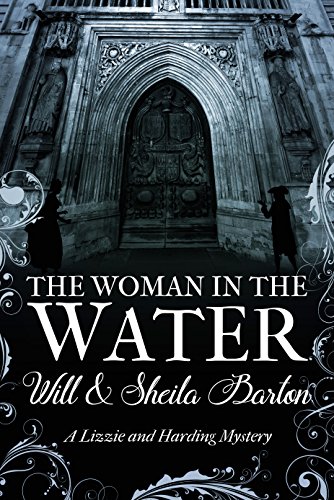
    This period mystery is set in the mid-eighteenth century; Bath is a fashionable watering place, but hasn’t always been quite as civilized. Beau Nash, master of ceremonies and ‘King of Bath’, the man who made it so, has just died and been buried in a pauper’s grave.

    Rich invalids come to sample the curative powers of the hot spring waters, while most of the residents make their living from attending to their needs. Others come to drink, dance, gamble and find themselves a suitable spouse. But beyond the refined balls of the Assembly rooms, there are the poor of Bath, mostly ignored and often exploited, either as servants, labourers quarrying the famous Bath stone, or prostitutes working on grimy Avon Street.

    The story follows Lizzie Yeo, a young woman just coming up from being down on her luck, and Jonathan Harding, a clergyman with something of a social conscience. A body is found in the River Avon and both of our leads have their own personal and moral reasons for trying to identify the woman in the water, despite the indifference of the rest of society.

    The Amazon description gives a great deal away, including all of Lizzie’s backstory and some events from the last half of the novel. This one is the sort where it helps to be in suspense. Unfortunately, the authors do not always reveal things as dramatically as they might, given you already know them from the Amazon spiel.

    The setting is an interesting one, but might have added interest if you have lived in or visited Bath, or perhaps know it from descriptions of it in its Regency pomp. There is no shortage of period detail. The two characters give a dual perspective on the lives of the wealthy and privileged on the one hand and the less fortunate, as well as the double standards that exist for men and woman, rich and poor.  The battle to remain ‘respectable’ is also a feature – even when Harding performs a charitable act for a young woman, rumours begin to circulate about his character. Lizzie has it much worse, as her past misfortunes and the things she has had to do in her poverty are condemned by society. It passes the Bechdel test with ease, as it is a novel where a female protagonist investigates the death of a woman.

    However, It is not without weaknesses. The red herrings are disposed of in a summary manner, leaving the last section of the book as a confirmation of the inevitable. Having said that, this is done in an exciting way up until the last page, although the mystery is over. Occasionally the book feels the need to spell things out more than is necessary.

    I don’t want to sound too negative about what is an entertaining mystery novel, set in a period that does not get the attention that later periods do. The authors, Will and Sheila Barton, have an obvious knack for writing in this genre, and future novels starring Lizzie and Harding seem probable – if so the series may well hit its stride later.


    The Woman in the Water is now available on Amazon: 

    About the reviewer

    TAndrews.jpg

    Tom Andrews is a Genetics graduate and book lover based in Somerset. He has previously attempted music and game reviews. He tweets at @jerevendrai 

  • allen-ginsberg

    Allen Ginsberg was one of the seminal figures of American Beat poetry. He was involved with both the New York and San Francisco poetry scenes, and was friends with some of the most prominent figures in 20th century literature such as William Carlos Williams, Jack Kerouac and Kenneth Rexroth.

    Audio recordings of Ginsberg are few and far between – so to uncover one from 1979 found in the archives of the University of Warwick is a rare treat indeed.

    Along with Peter Orlovsky, and co, Ginsberg sings and reads a selection of his poetry, referring to the fact that the students present may well have been studying his work – “I think some of my poems are taught here, in some class or other”.

    Alongside the musical and poetic interludes, Ginsberg offers a variety of priceless insights into the way he thought about creative expression. When writing, for instance, the legendary poet explains how the poetry he wrote was in a way alive – with new lines and words adding themselves as if through some innately natural phenomenon:

    “Sometimes in the night a couple of phrases floated in […] some of the lines are written, mostly, in a first impression sort of way – first thought; best thought.”

    Occasionally in the breaks between songs or poetry readings, Ginsberg can be heard talking softly, musing about the meaning behind lyrics or rhythmical balances in the poetry itself, including one moment when he says, “what it really means is that nobody has a soul, anyway.”

    You can listen to the recording in the University of Warwick’s audio archives here.

  • voynich-manuscript-main.jpg

    Few things in this world are genuinely unique. We live in a culture of mass production and mass consumption that, as this article argues, creates clones and attacks that which we perceive as “new”.

    This background makes it all the more imperative to preserve and appreciate those works that are truly one of a kind. The Voynich Manuscript is just this – you might call it a special kind of unique, in fact.

    Rediscovered more than a century ago in mysterious circumstances, this medieval manuscript now sits in the archives of Yale University’s Beinecke Rare Book and Manuscript Library. And here’s the thing: it’s indecipherable.

    539028a-i1.jpg

    Despite being puzzled over by experts ranging fro US military cryptographer William Friedman to countless humanities scholars, no one has yet been able to draw any conclusion as to what the fine calligraphy of the 234-page manuscript actually means.

    What is perhaps most intriguing about this mysterious tome is that is appears to sit on the very edge of translation – as though a sudden thought or breakthrough would suddenly reveal its secrets.

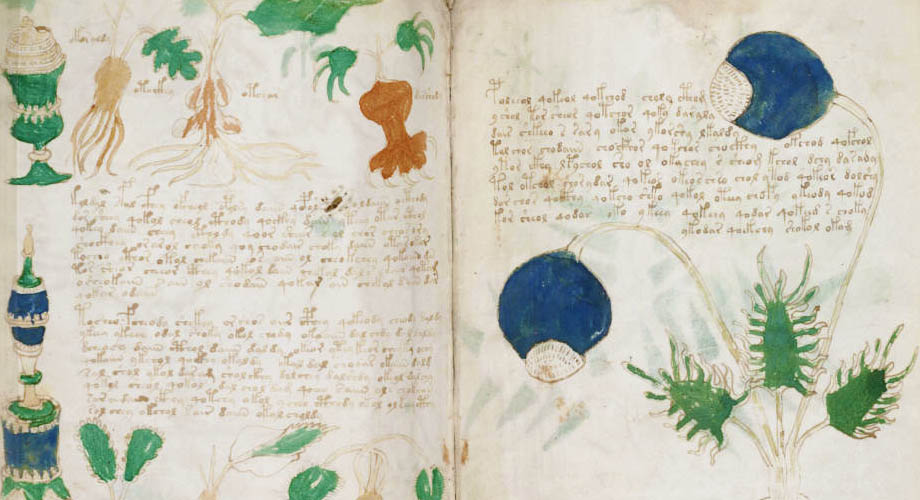
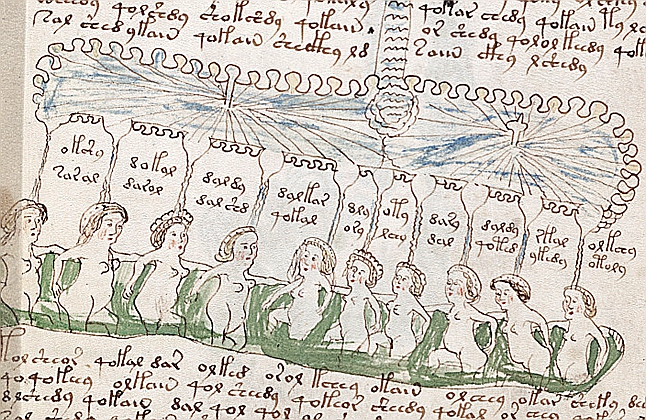
    As it is, the copious illustrations of bathing women, semi-recognisable plants and apparent star maps remain undeciphered – and are perhaps undecipherable. Nobody knows who created it or where it came from, with the only hard fact available to us being that radio carbon dating showed the script to be written between 1404 and 1438.

    f75v.jpg

    Claims it is a forgery have been squashed by experts from Yale to Cambridge – begging the question of what this genuine medieval mystery actually means.

    What is so fascinating about this unique book is how it invites guesses and conspiracy theories. It makes us question our understanding of language and communication; through the essences of spiritualism, drawn out via its beautiful illustrations and cryptography.

    The calligraphy is one of the most puzzling elements. Named “Vonichese” – after Wilfred Voynich, the Polish Revolutionary who bought the book from Jesuit priests who were selling ancient books to the Vatican – the language of the manuscript was apparently invented by whoever made it. The letters loop prettily, the text runs from left to right and top to bottom; with no clear structure or reason behind it. Is it a code? Or someone playing with future generations? Is it, simply, a statement of art – based on the simplest of calls to action, for the reader to “bring their own meaning” to this incredible volume.

    This latter option, while not necessarily the correct one, is perhaps the one we should consider in a world that is increasingly prescriptive about the ideas we have. In an age where it can feel as though we need to have answers all the time, and tend to seek these from the less than informative mainstream media, or the even less informative echo chambers of social media, perhaps what humanity needs right now are those unique pieces of art that invite questions and give no answers; that do not lay it out for us on a plate but seek interaction with our thoughts and our minds. Perhaps what we need, simply, are more mysteries.

    It’s therefore incredibly fortunate that today we can all view the manuscript for ourselves online – as Yale digitised the tome in 2004 and is available via the Beinecke digital library. Built with a digital zoom viewer that allows examination of individual pages in minute detail.

    voynich_manuscript613

    When the late semiotician and novelist Umberto Eco visited Yale in 2013, the Voynich Manuscript was the only book he asked to see. There’s a reason for that. Do check it out for yourselves.

  • 48 Writing competitions for 2017

    Jpeg

    Excelsior! Welcome all ye saviours of the written word! 2016 is almost over (thank goodness), and while we try to distract ourselves from the horrors of a year that culminated in the election of Donald Trump to the US Presidency, it is also important we look forward to a 2017 as we try to make sure it isn’t quite as terrible as the last one.

    For our part, we’ll endeavour to ensure 2017 is filled with a multitude of writerly insights and discussion, and (just for you) we’ve compiled a list of upcoming writing competitions scheduled for the year ahead.

    Included are details about word counts, deadlines and direct links to each event.

    If you’d like to add a writing competition to our list then please feel free to contact us!

    1. James Knudsen prize for fiction

    The deadline for this year’s James Knudsen prize is 1st January 2017.

    The winner of this year’s contest will receive US$1,000 and a year’s subscription to Bayou Magazine. Finalists will be named on the magazine’s website and all entries will be considered for publication.

    Submissions must be original and previously unpublished, no longer than 7500 words.

    There is a reading fee of US$20

    1. Exeter Novel Prize

    Submissions are invited for the first 10,000 words (including synopsis) of a novel that has not been accepted for publication by a traditional publishing house. The competition is open to all authors who are currently without representation by a literary agent.

    First prize for the award is £500 and a trophy. The entry fee is £18 and the deadline is 1st January 2017

    1. Henshaw Press short story competition

    Submissions for fictional short stories of up to 2000 words on any theme are sought by Henshaw Press for their 2017 competition.

    First prize receives £100 – with monetary prizes also available for second and third placed winners. The deadline for entries is 10th January 2017.

    1. Furious Gazelle February writing contest

    The Furious Gazelle are seeking short story submissions of no more than 7000 words around the theme of ‘February’ – anything you can connect to the month of February is on the table, whether that’s Black History, Cupids, Valentine’s Day or leap years.

    The winner will receive US$50 and a book in the genre of their choosing. There is an entry fee of US$3 and entries must be submitted by 20th January 2017.

    1. The Caine Prize for African Writing

    For published African authors of fiction. Must be over 3000 words in length and written for adults. Advisable length for the stories is between 3000 and 10,000 words. There is a cash prize of £10,000 and works must be written in or translated into English.

    Deadline for submissions is January 31st.

    1. The Fiction Desk Ghost Story Competition 2017

    Entry fee is £8 for ghost stories between 1000 and 7000 words in length. Though the website also runs competitions throughout the year for flash fiction stories. Deadline is Thursday, January 31st 2017 and first prize receives £500.

    7. Sweek Writing competition 

    At the end of each year we take time to reflect upon our life and to make plans for the coming year. With a little bit of creativity you can transform your contemplations into an adventurous travel story, a thrilling mystery or epic love story. Give your real life story a fictional layer and write your 2017! You can submit a poem, short story, novel or ongoing serial of any length. There is also no restriction on genre. Impress our jury to win a Samsung Galaxy Tab or one of several giftcards worth €50. Publish your story on Sweek to participate.

    There is no word limit as multiple forms are allowed (poems, short stories, novels, ongoing stories).

    The deadline for submissions is 31st of January 2017.

    8. Philosophy through fiction competition

    Short stories that are eligible for this competition must be some form of speculative fiction (this includes, but is not limited to, science fiction, fantasy, horror, alternative history, or magical realism), and must explore one or more philosophical ideas. These can be implicit; there is no restriction on which philosophical ideas you explore.

    The winner will receive US$500 and there is no entry fee. Submissions should be between 1000 and 7500 words, and be accompanied by a brief “food for thought” section of 500 words, where the author explains the philosophical ideas behind the piece.

    The deadline for entries is 1st February 2017.

    9.American Short(er) Fiction Contest

    Submissions of short fiction of no more than 1000 words are sought by American Short Fiction.

    The winner will receive US$1,000 and there is an entry fee of US$17. The deadline for submissions is 1st February 2017.

    10. Mercier Short Story Competition – one from an Irish Publisher

    For writers of young adult or adult fiction. First prize is 1000 Euros and a publishing deal (including all editorial and cover design services).

    Submissions must be between 10,000 – 12,000 words along with a 12000 word synopsis of the full novel, which cannot be more than 100,000 words.

    The deadline for entries is 1st February 2017.

    11. Newcastle Short Story Award 2017

    One for Australian writers. First prize is AU$2000. The deadline for submissions is  7th February 2017 and the entry fee is AU$15. The maximum word limit is 2000 words, which includes both titles and any subheadings.

    12. Writers’ & Artists’ Yearbook 2016 Short Story Competition

    First prize receives £500 and a place on an Arvon residential writing course of your choice, as well as publication of your story on the W&A website. Closing date for writing submissions is Monday February 13th 2017 and all submissions must be unpublished prose of 2000 words or fewer.

    13. Haikus for the NHS poetry project

    As the UK’s National Health Service (NHS) faces a “humanitarian crisis”, thousands of demonstrators are preparing to march on London in protest.

    This poetry project and competition seeks to use the power of poetry as protest – specifically, the power of haiku as protest – to support the NHS.

    Free to enter, the winning haikus will be printed and distributed liberally during the NHS demonstration in London. The winning poet will also receive a limited printed edition collection of their haikus, along with a £25 book voucher.

    All haikus will be considered for publication online.

    The deadline for entries for the competition is 20th February, although submissions received after that date will be considered for publication online.

    14. Wundor Short Fiction Competition 

    The competition owners are looking for unusual pieces of fiction.

    Whether you have a single piece of work, a collection of pieces or a brilliant novella on your hands, they would like to read it. The only stipulation is that the sum total word count of your submission should fall between 5,000 and 45,000 words.

    The entry fee is £10 and and winner will receive £500.

    The deadline is 28 February 2017.

        15. Artificium Short Story Competition

    What makes a winner? The judges are looking for accomplished writing, full of style and intelligence, demonstrating a passion for language. Intriguing plots and themes that captivate the reader and make them think. Any genre, as long as the quality of writing is high. Works must be written in English, and authors can be from any country.

    Submissions must be less than 8000 words in length. There is a £5 entry fee and a prize of £300 for the winner. Deadline is 28th February 2017.

    16. Exeter Writers Competition

    Exeter Writers runs an annual short story competition. The competition began in 2009 and is very popular, receiving entries from all over the UK. The 2017 competition is OPEN for entries. Prizes are £500, £250, £100 for first, second and third placed submissions. There is also a local prize of £100 for the best Devon entry.

    Deadline is February for stories no more than 3000 words in length, of any style or genre.

    17. New Welsh Writing Awards 2017

    The New Welsh Writing Awards 2017, run by New Welsh Review in association with Aberystwyth University and AmeriCymru is open for entries with two new categories, the Aberystwyth University Prize for Memoir and AmeriCymru Prize for the Novella.

    Now in its third year, the Awards were set up to champion the best short-form writing in English

    Each category winner will receive £1,000 cash, e-publication by New Welsh Review on their New Welsh Rarebyte imprint and a positive critique by leading literary agent Cathryn Summerhayes at Curtis Brown. Subsequent prizes include residential courses and weekend breaks.

    Entries close at midnight on 1 March 2017

    18. Ginosko Literary Journal 2017 Flash Fiction contest

    You can submit two pieces of flash fiction of no more than 800 words each to the  Ginosko Flash Fiction Contest, which closes on the 1st March 2017.

    Prizes include US$ 500 and publication on the Ginosko Literary Journal website.

    The entry fee is US$ 5

    19. Nelligan Prize

    International writing prize for writers of all stripes and nationalities. Deadline is March 14th, 2017 for submissions of 12,500 words or less. Entry fee is US$15 and first prize is US$2000.

    20. Gemini Magazine Short Story Prize

    Rules? Where you’re going you don’t need rules. Yes, that’s right; with the Gemini Magazine short story prize there are no specific rules for writers to follow. There is, however, a US$1,000 prize. The competition organisers are open to any subject or writing style. Or word count. They just want your most exciting work. This is their eighth annual short story contest. Second prize is US$100, with three honorable mentions at $25 each. The entry fee is US$5. Deadline: March 31, 2017.

    21. Southport Writers Circle competitions 

    One poetry and one short-story competition from Southport Writers Circle. Entry fees vary depending on category. First prize in each competition receives £150 – though subsequent prizes vary on category, too. You can enter directly online for £3.40 per story or poem.

    The deadline for entries is 30th April 2017.

    22. The Bath Short Story Award

    An award for local, national and international writers. Closing date for submissions is May 1st, 2017. Short stories of up to 2200 words in all genres and styles are welcome – there is no minimum word limit. First prize receives £1000 and there is also a local prize for Bath residents, as well as The Acorn Award of £50 for unpublished writers of fiction. Entry fee is £8.

    23. Page is Printed and Page to Stage writing competitions 

    Page is Printed 2017:

    Tacchi-Morris is back with its annual creative writing competition centred around the A4 page. The rules are simple. Submissions are invited in any genre – it could be a love letter, a short story, a poem, a court summons or a shopping list … the only rule is that your entry must be contained on just one side of A4. Deadline is Monday, May 1st and there is a £5 entry fee with up to £400 in prizes to be won. Full competition information can be found online. 

    Page to Stage 2017:

    Tacchi-Morris is offering writers the unique opportunity to develop their work for the stage. Play scripts and excerpts are invited from fledgling playwrights (no more than 20 pages in length, or 20 minutes in performance time) for the chance to win the opportunity to stage the work-in-progress at Tacchi-Morris Arts Centre on Wednesday 14 June. There will also be opportunity for the audience to feedback to the winning playwrights on the night. Deadline for entries is May 1st and there is a £5 fee per script, with three bursaries worth up to £100 available as prizes.

    24. The Bristol Short Story Prize

    Entries are welcomed for unpublished stories written in English. The deadline for submissions is 3rd May 2017 and stories can be on any theme or subject. Maximum length of 4000 words. An £8 entry fee and first prize is £1000. There are also 17 further prizes of £100 for all shortlisted writers.

    25. Writer’s Digest Competition

    The winner of this annual award will receive US$5000 and an interview in Writer’s Digest. There are a variety of different award categories so it’s best to check the website for details. Deadline is May 5th 2017.

    26. Birds of a Feather Press Travel Writing Competition 2017

    Birds of a Feather are looking for travel writing of 500-2,000 words. This is your chance to fill in the gaps of your favourite destination. Share what you’d wish you’d known before you arrived.

    The Birds of a Feather Press Travel Writing Competition 2017 closes on May 31, 2017.

    The winner will receive US$ 200. Ten runner-up prizes of US$ 10 each.

    Free to enter.

    27. Bridport Prize 2017 

    International open competition founded in 1973. Four categories in poetry (max 42 lines); short story (max 5,000 words); flash fiction (max 250 words) and the Peggy Chapman-Andrews Award for a First Novel (max 8,000 words from opening chapters plus 300 word synopsis).

    Deadline is May 31st 2017.

    Entry fees and prizes vary depending on category. Full information about this world-renowned competition can be found online.

    28. Gertrude Stein Award in Fiction

    All stories in English and fewer than 8,000 words long are eligible for this award.

    Winners receive US$1000 and publication. There is a US$10 entry fee and the deadline is 1st June 2017

    29. The Brighton Prize

    The Brighton Prize offers cash prizes for new short and flash fiction. If you’re a writer with a brilliant short story that will both challenge and excite the judges; this is for you.

    Submissions are currently open for flash fiction up to 350 words, and short stories of 1-2000 words.

    The winner of the short story prize will receive £500, and the winner of the flash fiction prize will receive £100.

    There is an entry fee of £8 for short stories and £6 for flash fiction.

    The deadline for submissions is 10th June.

    30. Miami Book Fair Novella Competition 

    Submit your novellas (of between 17,000 – 40,000 words) to the Miami Book Fair/de Groot Prize. The winner will receive a US$6,000 cash award, publication by Melville House, a critically acclaimed independent press, an expense-paid (hotel, travel, per diem) trip to the Miami Book Fair after publication, and a chance to read/participate in programs at the fair. The two runners-up will each receive US$2,000, an expense-paid (hotel, travel, per diem) trip to the 2018 Miami Book Fair, and a chance to read/participate in programs at the Fair. The three winners work will be publicised in print and online media.

    The deadline for submissions is June 15th 2017 and there is an entry fee of US$50.

    31. Adventure Writers Competition 2017

    This is an international competition now in its eighth year, and there is just one category: Adventure. The organisers accept traditionally published, e-published and manuscript novels. There is a US$1000 cash prize. A $25 entry fee is charged, and all proceeds go to promoting the contest, the finalists and the winner.  The deadline for entries is 30th June 2017.

    Adventure is out there!

    32. Young Lions Fiction Award

    This award recognises ‘young authors’ – defined in the competition rules as anyone aged 35 or under. Submit any novel or short story published or scheduled to be published in the calendar year.

    The deadline for submissions is August.

    33. Ex Ophida Press Poetry Book Contest 

    Ex Ophidia Press is a fine literary press, specialising in the publication of contemporary poetry and fiction in distinguished editions. The Press has now launched its second annual poetry book contest, which is open to all English language authors.

    In addition to publication, the winning writer will receive US$1000 and 15 copies of their book.

    The deadline for submissions is August 15 and there is a US$25 fee to enter.

    More details available through Ex Ophida Press website.

    34. Baum Book Prize 2017

    One for indie authors. Henry and Cate Baum, founders of indie book companies Self-Publishing Review and Kwill Books, have set up a fund for one author to receive an entirely free book publication and marketing deal with Kwill Books starting in October 2017. This is to encourage talent in authors who do not have money to spend on marketing to see what they can achieve with a full-range publishing service and individual attention.

    The competition organisers are looking for diverse and interesting fiction or non-fiction books of any genre including poetry and children’s books.

    There is a reading fee of US$20 and the deadline for entries is 31st August 2017.

    35. Omnestream Creative Writing Competition

    There is a fine line between creativity and insanity, and when it comes to art, that line is often blurred. Omnestream Entertainment is looking for writers to paint a tale chronicling the dark side of art using a palette of suspense, horror, mystery or crime. The protagonist or antagonist must be an artist/creative immersed in the madness of creativity. The story can contain between 500-4000 words. All genres accepted. The winners will receive publication in the Out of Frame Anthologies Novel.

    The deadline for entries is 31st August 2017 and there is a US$ fee.

    36. Bare Fiction Magazine Short Story Competitions

    Any style/genre of writing in a variety of forms, including short stories, flash fiction and poetry. An annual competition with submission deadline of October.

    Short story submissions must be below 3000 words and the associated entry fee is £8. Winners of each category receive £500.

    37. Early Works Press

    Annual writing competition accepts entries of any style or genre. Winners are published in anthology containing 10 to 20 stories (length dependent). There is a £5 entry fee for stories up to 4000 words in length and £10 fee for stories up to 8000 words long. Deadline is October each year, though the publishers also run other competitions throughout the year, so it’s worth keeping an eye on their site for details.

    38. Bedford Writing Competition

    Annual competition for writing of any style or genre. Winners are published on website and in an eBook, and they also receive a £200 prize.

    Submissions have a maximum word count of 3000 words and the associated entry fee is £5. Deadline is September 2017, with the competition opening in May.

    39. PEN/Faulkner Award for Fiction

    For American citizens with books published in the calendar year (or scheduled to be published) – no self-published books will be accepted. No submission fees, with a deadline of October.

    40. Cinnamon Press Writing Competitions

    Any style or genre of writing is eligible for their rolling competition deadlines, which fall throughout the year between September and July. Entry fees vary according to form of writing, such as poetry, novels, short stories and flash fiction.

    41. The Doris Gooderson Short Story Competition

    Submissions welcomed for writing of any style or genre. Winners are published on the Wrekin Writers website and in the Wrekin Writers anthology. This annual competition offers a first prize of £150 for stories of no more than 1200 words. Entry fee is £3. Check the website for details around deadlines.

    42. Manchester Writing Competition 2016

    There are two prizes – one for fiction and one for poetry. Both competitions offer a £10,000 first prize. Deadline for entries is Friday September 23rd 2016. The fiction prize will be awarded to the best short story of up to 2500 words, and is open to international writers aged 16 or over. The poetry prize will be given to the best portfolio of three to five poems (maximum length: 120 lines). The entry fee for each competition is £17.50.

    43. The Bath Children’s Novel Award

    A £2,000 international prize for emerging writers of novels for children or young adults. The shortlist is chosen by a team of junior judges aged from seven to seventeen with the winner chosen by literary agent Sallyanne Sweeney.Entry fee is £25. Submissions 5,000 words and the closing date is 19th November 2017.

    44. Reflex Fiction Winter 2017 Flash Fiction Award

    Reflex Fiction is a traditional flash fiction competition where entries are read and judged, a long-list created, winners selected, and prizes awarded. It is also a place to share and read fantastic flash fiction. Winner receives £1000 with second and third prizes worth £500 and £250, respectively. Entry fee is £7. The deadline for submissions to the Winter Flash Fiction contest is 20th November.

    45. TCK Publishing’s Reader’s Choice Awards

    TCK Publishing invites indie authors to join this year’s Readers Choice Book Awards contest. Self-published and indie authors may submit one (1) book in any of the given categories for FREE, which will then be reviewed by the TCK committee. The shortlist of books will then be open to the public to vote for their favourite book. Deadline for submissions is 10th December.

    46. The Magic Oxygen Literary Prize

    A great prize for both short story writers and poets. Accepting submissions of up to 4000 words of short fiction or 50 lines of poetry, MOLP will also plant a tree for every single entry we receive in Boré, Kenya and they’ll email you the GPS coordinates of it once the contest has closed and we’ve received confirmation of them from our Word Forest Coordinator.

    Additionally, your entry will also help fund the construction of a much needed new classroom in the same community.

    First prize receives £1000 and there is a cost of £5 per entry. The deadline for submissions is 31 December 2017.

    47. Tethered by Letters F(r)iction contest

    Literary publisher and resource for writers Tethered by Letters run this tri-annual publication, F(r)iction, – an art and literature imprint that is distributed around the world. It features short fiction, flash fiction, poetry, nonfiction, and even a selection of graphic stories. It also showcases amazing artwork.

    First prize for the short story contest is US$1000 and there is an entry fee of US$18. The first prize for both the poetry and flash fiction contests is US$300 and there is a US$10 entry fee.

    Visit the website for information about upcoming deadlines for their competitions.

    The TBL Winter Contest is currently open for submissions.

    48. The Short Story ‘Monthly 500’ Flash Fiction competition 

    The Short Story was established in 2015 and has quickly developed into an influential platform for short fiction. They champion short stories, flash fiction, and micro-fiction.

    Every month, they invite submissions for their flash fiction competition, the winner of which receives publication on their website and £50.

    The deadline for each month’s contest is midnight on the last day of each month.

    There is an entry fee of £2.28 and entries must be no longer than 500 words (including title).
  • bad-sex-image

    Erri De Luca has been named the winner of the 2016 Bad Sex in Fiction Award during a ceremony in London. The renown Italian author, poet and translator won the award for the following passage in his work, The Day Before Happiness:

    “My prick was a plank stuck to her stomach. With a swerve of her hips, she turned me over and I was on top of her. She opened her legs, pulled up her dress and, holding my hips over her, pushed my prick against her opening. I was her plaything, which she moved around. Our sexes were ready, poised in expectation, barely touching each other: ballet dancers hovering en pointe.

    She pushed on my hips, an order that thrust me in. I entered her. Not only my prick, but the whole of me entered her, into her guts, into her darkness, eyes wide open, seeing nothing. My whole body had gone inside her. I went in with her thrusts and stayed still. While I got used to the quiet and the pulsing of my blood in my ears and nose, she pushed me out a little, then in again. She did it again and again, holding me with force and moving me to the rhythm of the surf. She wiggled her breasts beneath my hands and intensified the pushing. I went in up to my groin and came out almost entirely. My body was her gearstick.”

    Described in some quarters as “the writer of the decade”, De Luca was unable to attend and his publisher at Allen Lane accepted the prize on his behalf.

    The Italian beat fellow authors Janet Ellis, Tom Connolly, Ethan Canin, Robert Seethaler, and Gayle Forman. All of the nominated extracts for this year’s Bad Sex in Fiction Award can be read here.

    screen-shot-2016-11-30-at-20-28-48

    Every year since 1993, the Literary Review, which founded the award, has honoured an author who has produced an outstandingly bad scene of sexual description in an otherwise good novel. The purpose of the prize is to draw attention to poorly written, perfunctory or redundant passages of sexual description in modern fiction, and to discourage them. Last year’s winner was Morrissey for the following passage in his book ‘The List of the Lost’:

    “At this, Eliza and Ezra rolled together into the one giggling snowball of full-figured copulation, screaming and shouting as they playfully bit and pulled at each other in a dangerous and clamorous rollercoaster coil of sexually violent rotation with Eliza’s breasts barrel-rolled across Ezra’s howling mouth and the pained frenzy of his bulbous salutation extenuating his excitement as it whacked and smacked its way into every muscle of Eliza’s body except for the otherwise central zone.”

    Past winners have included literary giants including Tm Wolfe and Sebastian Faulks. You can read the winning extracts of all the past award winners in our full compendium of bad sex in fiction.

    How Erri De Luca feels about having their name and extract added to the list remains to be seen. Previous winners Wolfe and Morrissey have both expressed vague dismay at winning the prize, with Morrissey describing it as “a repulsive horror” and Wolfe claiming the judges just didn’t understand irony.

    Perhaps all the winners should simply have thought a bit more about how not to write about sex in fiction.

  •  

    f-scott-fitzgerald-cut-exclamation-marks-laughing-own-joke

    Good writing advice is hard to find. We’ve compiled various collections of writing tips from some of literature’s greatest minds; but when it comes to motivation and inspiration sometimes the ordered lists and quotes don’t go far enough.

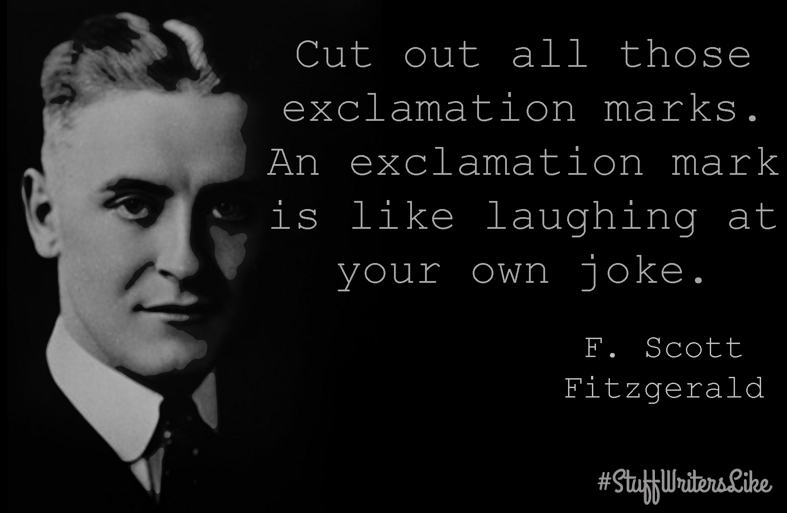
    As such, today we’ve brought you some uncompromisingly honest advice on the essence of great writing from F. Scott Fitzgerald – one of the 20th century’s finest authors.

    In two letters, one to a close family friend and college sophomore, Frances Turnbull, and one to his fifteen-year old daughter, Scottie, Fitzgerald insists upon the importance of emotional investment in writing, and provides some timeless advice for all aspiring writers.

    Happy reading!


    “November 9, 1938

    Dear Frances:

    I’ve read the story carefully and, Frances, I’m afraid the price for doing professional work is a good deal higher than you are prepared to pay at present. You’ve got to sell your heart, your strongest reactions, not the little minor things that only touch you lightly, the little experiences that you might tell at dinner. This is especially true when you begin to write, when you have not yet developed the tricks of interesting people on paper, when you have none of the technique which it takes time to learn. When, in short, you have only your emotions to sell.

    This is the experience of all writers. It was necessary for Dickens to put into Oliver Twist the child’s passionate resentment at being abused and starved that had haunted his whole childhood. Ernest Hemingway’s first stories ‘In Our Time’ went right down to the bottom of all that he had ever felt and known. In ‘This Side of Paradise’ I wrote about a love affair that was still bleeding as fresh as the skin wound on a haemophile.

    The amateur, seeing how the professional having learned all that he’ll ever learn about writing can take a trivial thing such as the most superficial reactions of three uncharacterized girls and make it witty and charming — the amateur thinks he or she can do the same. But the amateur can only realize his ability to transfer his emotions to another person by some such desperate and radical expedient as tearing your first tragic love story out of your heart and putting it on pages for people to see.

    That, anyhow, is the price of admission. Whether you are prepared to pay it or, whether it coincides or conflicts with your attitude on what is ‘nice’ is something for you to decide. But literature, even light literature, will accept nothing less from the neophyte. It is one of those professions that wants the ‘works.’ You wouldn’t be interested in a soldier who was only a little brave.

    In the light of this, it doesn’t seem worth while to analyze why this story isn’t saleable but I am too fond of you to kid you along about it, as one tends to do at my age. If you ever decide to tell your stories, no one would be more interested than,

    Your old friend,

    Scott Fitzgerald

    P.S. I might say that the writing is smooth and agreeable and some of the pages very apt and charming. You have talent — which is the equivalent of a soldier having the right physical qualifications for entering West Point.”


    “Grove Park Inn
    Asheville, N.C.
    October 20, 1936

    Dearest Scottina:

    […]

    Don’t be a bit discouraged about your story not being tops. At the same time, I am not going to encourage you about it, because, after all, if you want to get into the big time, you have to have your own fences to jump and learn from experience. Nobody ever became a writer just by wanting to be one. If you have anything to say, anything you feel nobody has ever said before, you have got to feel it so desperately that you will find some way to say it that nobody has ever found before, so that the thing you have to say and the way of saying it blend as one matter—as indissolubly as if they were conceived together.

    Let me preach again for one moment: I mean that what you have felt and thought will by itself invent a new style so that when people talk about style they are always a little astonished at the newness of it, because they think that is only style that they are talking about, when what they are talking about is the attempt to express a new idea with such force that it will have the originality of the thought. It is an awfully lonesome business, and as you know, I never wanted you to go into it, but if you are going into it at all I want you to go into it knowing the sort of things that took me years to learn.

    […]

    Nothing any good isn’t hard, and you know you have never been brought up soft, or are you quitting on me suddenly? Darling, you know I love you, and I expect you to live up absolutely to what I laid out for you in the beginning.

    Scott”


  • dof1wmv0iynqwdzkr1dl
    The Codex Silenda – brainchild Brady Whitney

    As mind-boggling literary challenges go, there are a fair few books for you to choose from. You could navigate your way through the odyssey that is Joyce’s Ulysses, you could put your biggest hipster hat on and work your way through Wallace’s Infinite Jest, or you could try to solo your way through One Hundred Years of Solitude by Marquez. Alternatively, you could try your hand at this fascinating little oddity we’ve stumbled upon during our general exploration of the creative world: the Codex Silenda.

    hfr9od7m1mbdhgwhd544

    Created by puzzle designer Brady Whitney, this wooden book has only five pages – but it may well still take you a good deal of time to finish, since you’ll need to solve a complex mechanical puzzle on each one before you can turn to the next.

    Made entirely of laser-cut wood, the short story within the Codex Silenda is about an apprentice in Leonardo Da Vinci’s workshop who stumbles across a similar tome, except the version they find is actually a trap created by the artist that you’ll need to help them solve in order to escape.

    kykrz8iibijil1ac7j6f

    A Kickstarter campaign to fund the mass-production of the books has already far surpassed its original US$30,000 target. Whitney and co are now creating the codices for their Kickstarter backers, aiming to deliver the first books in May 2017 – after which point they will begin taking orders once again. If you’re keen not to miss out, you can sign up to the email waiting list to hear news on when the next Codices will become available.

    As literary oddities go, we hope you’ll agree that this is a good one. We’ll be sure to keep bringing you more, so keep your eyes peeled for more examples of the weird and wonderful!


  • Revolutionary poetry publishers Hesterglock Press is seeking submissions of collected poetry for publication next year.

    The press, run by Sarer Scotthorne and Paul Hawkins, is looking for formally interesting, experiment poetry and ain’t hot on modern lyric poetry, emotive confessionalism or “vague discussions of love, life and poetic craft” (there goes my teenage diary).

    However, Hesterglock Press are very to keen to hear from poest who’ve written:

    • Work which interprets ‘revolution’ from a women’s/ feminist perspective
    • Work from black women and other women of colour
    • Work from poets and writers of all genders, sexual orientations and dis/abilities

    Hesterglock don’t want to read neoliberal capitalism, homophobia, transphobia, racism or misogyny (and if that’s your jam, why do you enjoy reading this blog – do you just love echidnas and chinese salamanders?)

    Find out more about how to submit here.

    BtE

  • vonnegut

    Fourteen novels, three short story collections, five plays and five works of non-fiction stand as a towering testament of Kurt Vonnegut’s ability to show us the fantastic in literature, and the extent to which books and writing can make us feel sublime. The man who brought us the terrific Slaughterhouse 5, which experiments in form, structure, as well as time and inter-dimensional travel, is rightly regarded as one of the greatest literary titans of the last 200 years.

    And the man who has given us some of the finest, timeless advice on writing and reading has also provided some prescient advice on the way we should live our lives. Indeed, in 1988, he collaborated with TIME Magazine to write a letter to the future population of Humanity, in the year AD 2088.

    The purpose of the project was simple: to provide “some words of advice” to those living in 2088”. Vonnegut’s words of advice are, of course, that trademark and distinctive blend of satire and sincerity, and – at a time when the world increasingly seems destined for catastrophe (what with the election of various demagogues-cum-fascists in major countries around the globe, along with the passing of the carbon threshold, mass extinction of flora and fauna, rising global temperatures and increasing inequality) – it seems we need to revisit Vonnegut’s words now more than ever before.

    His letter and 7 pieces of advice for our future selves is printed here below:


    “Ladies & Gentlemen of A.D. 2088:

    It has been suggested that you might welcome words of wisdom from the past, and that several of us in the twentieth century should send you some. Do you know this advice from Polonius in Shakespeare’s Hamlet: ‘This above all: to thine own self be true’? Or what about these instructions from St. John the Divine: ‘Fear God, and give glory to Him; for the hour of His judgment has come’? The best advice from my own era for you or for just about anybody anytime, I guess, is a prayer first used by alcoholics who hoped to never take a drink again: ‘God grant me the serenity to accept the things I cannot change, courage to change the things I can, and wisdom to know the difference.’

    Our century hasn’t been as free with words of wisdom as some others, I think, because we were the first to get reliable information about the human situation: how many of us there were, how much food we could raise or gather, how fast we were reproducing, what made us sick, what made us die, how much damage we were doing to the air and water and topsoil on which most life forms depended, how violent and heartless nature can be, and on and on. Who could wax wise with so much bad news pouring in?

    For me, the most paralyzing news was that Nature was no conservationist. It needed no help from us in taking the planet apart and putting it back together some different way, not necessarily improving it from the viewpoint of living things. It set fire to forests with lightning bolts. It paved vast tracts of arable land with lava, which could no more support life than big-city parking lots. It had in the past sent glaciers down from the North Pole to grind up major portions of Asia, Europe, and North America. Nor was there any reason to think that it wouldn’t do that again someday. At this very moment it is turning African farms to deserts, and can be expected to heave up tidal waves or shower down white-hot boulders from outer space at any time. It has not only exterminated exquisitely evolved species in a twinkling, but drained oceans and drowned continents as well. If people think Nature is their friend, then they sure don’t need an enemy.

    Yes, and as you people a hundred years from now must know full well, and as your grandchildren will know even better: Nature is ruthless when it comes to matching the quantity of life in any given place at any given time to the quantity of nourishment available. So what have you and Nature done about overpopulation? Back here in 1988, we were seeing ourselves as a new sort of glacier, warm-blooded and clever, unstoppable, about to gobble up everything and then make love—and then double in size again.

    On second thought, I am not sure I could bear to hear what you and Nature may have done about too many people for too small a food supply.

    And here is a crazy idea I would like to try on you: Is it possible that we aimed rockets with hydrogen bomb warheads at each other, all set to go, in order to take our minds off the deeper problem—how cruelly Nature can be expected to treat us, Nature being Nature, in the by-and-by?

    Now that we can discuss the mess we are in with some precision, I hope you have stopped choosing abysmally ignorant optimists for positions of leadership. They were useful only so long as nobody had a clue as to what was really going on—during the past seven million years or so. In my time they have been catastrophic as heads of sophisticated institutions with real work to do.

    The sort of leaders we need now are not those who promise ultimate victory over Nature through perseverance in living as we do right now, but those with the courage and intelligence to present to the world what appears to be Nature’s stern but reasonable surrender terms:

    1. Reduce and stabilize your population.
    2. Stop poisoning the air, the water, and the topsoil.
    3. Stop preparing for war and start dealing with your real problems.
    4. Teach your kids, and yourselves, too, while you’re at it, how to inhabit a small planet without helping to kill it.
    5. Stop thinking science can fix anything if you give it a trillion dollars.
    6. Stop thinking your grandchildren will be OK no matter how wasteful or destructive you may be, since they can go to a nice new planet on a spaceship. That is really mean, and stupid.
    7. And so on. Or else.

    Am I too pessimistic about life a hundred years from now? Maybe I have spent too much time with scientists and not enough time with speechwriters for politicians. For all I know, even bag ladies and bag gentlemen will have their own personal helicopters or rocket belts in A.D. 2088. Nobody will have to leave home to go to work or school, or even stop watching television. Everybody will sit around all day punching the keys of computer terminals connected to everything there is, and sip orange drink through straws like the astronauts.

    Cheers,

    Kurt Vonnegut”


  • If you’ve some great work rattling around in your desk drawer, craving the literary light of day, why not shoot off an application to the Enizagam Journal 2017 Literary Contest.
    Enizagam Journal, a project run by Californian high school students, is looking for poetry and short stories up to 4,000 words long.

    Matthew Zapruder (Sun Bear, Come On All You Ghosts) will be this year’s poetry judge, and novelist Esmé Weijun Wang (The Border of Paradise) will judge for fiction.
    The deadline for submissions is 24 March 2017, and the entry fee is 20 of the finest American dollar-e-doos.

    Enizagam Journal is also accepting general submissions in fiction, poetry, non-fiction, and cross/multi-genre, fee-free.

    You can read the submission guidelines here.

    There’s still a couple of this year’s literary competitions seeking submissions – check out our master list here – 30 Writing competitions for 2016