For the first time in 29 years, Sydney’s Taronga Zoo has successfully match-made a couple of echidnas who’ve given birth to three adorable echidlings. As a species, we’re notoriously stubborn when it comes to mating in captivity.
Imagine if someone put you behind several inches of plexiglass with a lady you’ve never met before and peers at you from behind their clipboard expecting the marsupial mamba to happen without even a thimble of XXXX Gold to part the waters. I don’t think so.
The creepy observed love-making paid off at least in the arrival of three ‘puggles’, whose sexes and names have yet to be determined. Might I suggest “Billy II” or, failing that, “Nicole Echidman”… Ok, ok, “Eartha Echid”
The Literary Review have published their six-author shortlist for their world-famous annual Bad Sex in Fiction Award, which honours those authors who have produced an outstandingly bad scene of sexual description in an otherwise good novel. The purpose of the prize is to draw attention to poorly written, perfunctory or redundant passages of sexual description in modern fiction, and to discourage them. The prize is not intended to cover pornographic or expressly erotic literature.
Ian McEwan received an honorary mention, but just missed out on making the final shortlist. Former Blue Peter presenter, Janet Ellis, joins authors Tom Connolly, Ethan Canin, Robert Seethaler, Gayle Forman, and Erri De Luca on this year’s shortlist.
This year’s winner promises to be a tough one to call, with each of the authors showcasing exactly what not to do when it comes to writing about sex.
A spokesperson for the judges said that some of the nominated extracts “fall into the classic bad sex mistake of overwriting, with mixed metaphors, uncomfortable similes, or becoming so hyperbolic they strain credulity”.
Unintentional Madonna references put American novelist Gayle Forman on the judge’s list, while European prize for literature winner Erri de Luca makes the grade for a startlingly confusing sex scene, in which de Luca writes “my whole body had gone inside her.” One of the judges found the passage so confusing they said: “the detail of what’s happening gets so out of control it’s very hard to make head or tail of it.”
Tom Connolly, meanwhile, finds his name on the list thanks to a description of perfunctory airport sex: “He watched her passport rise gradually out of the back pocket of her jeans in time with the rhythmic bobbing of her buttocks as she sucked him. He arched over her back and took hold of the passport before it landed on the pimpled floor. Despite the immediate circumstances, human nature obliged him to take a look at her passport photo.”
The judges noted that, during Connolly’s sex scenes, it becomes apparent that the author’s grasp of human anatomy: “The judges were struck by the incredible length of the male character’s arms. Sometimes anatomy goes a little bit wrong for a writer who’s trying to do too many things at once,” he said.
Robert Seethaler is on the list for a sex scene that “takes itself too seriously”, according to a Literary Review spokesperson. Meanwhile, Ethan Canin is in the running for the dubious honour of the prize for overwriting and a heavy use of similes. In his book, Canin writes: “During sex she would be quiet, moving suddenly on top of him like a lion over its prey … The act itself was fervent. Like a brisk tennis game or a summer track meet, something performed in daylight between competitors.”
Former Blue Peter presenter Ellis completes the shortlist after the panel of five judges singled her book out for a surprisingly agricultural passage:
“‘Anne,’ he says, stopping and looking down at me. I am pinned like wet washing with his peg. ‘Till now, I thought the sweetest sound I could ever hear was cows chewing grass. But this is better.’ He sways and we listen to the soft suck at the exact place we meet. Then I move and put all thoughts of livestock out of his head.”
It’s that time of year again – the literary period that brings one of the greatest gifts of all to so many people around the world. That’s right, it’s time for the annual Bad Sex in Fiction award, the shortlist of which has just been announced.
If you’re a fan of spasming muscles, shooting blobs of “lo-cal genetics”, sighs, moans, groans and general limb-flying raunchy madness, then you’re in for a treat.
While Ian McEwan almost made it onto this year’s shortlist, all eyes are on the judges at The Literary Review, which founded the award, to see who will be crowned this year’s winner – and whose name will be added to our long-running connoisseur’s compendium.
We’ve listed the full set of shortlisted authors below, along with their literary extracts. Enjoy!
Ethan Canin – A Doubter’s Almanac
“The act itself was fervent. Like a brisk tennis game or a summer track meet, something performed in daylight between competitors. The cheap mattress bounced. She liked to do it more than once, and he was usually able to comply. Bourbon was his gasoline. Between sessions, he poured it at the counter while she lay panting on the sheets. Sweat burnished her body. The lean neck. The surprisingly full breasts. He would down another glass and return.”
Robert Seethaler – The Tobacconist
“He closed his eyes and heard himself make a gurgling sound. And as his trousers slipped down his legs all the burdens of his life to date seemed to fall away from him; he tipped back his head and faced up into the darkness beneath the ceiling, and for one blessed moment he felt as if he could understand the things of this world in all their immeasurable beauty. How strange they are, he thought, life and all of these things. Then he felt Anezka slide down before him to the floor, felt her hands grab his naked buttocks and draw him to her. “Come, sonny boy!” he heard her whisper, and with a smile he let go.”
Tom Connolly – Men Like Air
“The walkway to the terminal was all carpet, no oxygen. Dilly bundled Finn into the first restroom on offer, locked the cubicle door and pulled at his leather belt. “You’re beautiful,” she told him, going down on to her haunches and unzipping him. He watched her passport rise gradually out of the back pocket of her jeans in time with the rhythmic bobbing of her buttocks as she sucked him. He arched over her back and took hold of the passport before it landed on the pimpled floor. Despite the immediate circumstances, human nature obliged him to take a look at her passport photo.”
Janet Ellis – The Butcher’s Hook
“When his hand goes to my breasts, my feet are envious. I slide my hands down his back, all along his spine, rutted with bone like mud ridges in a dry field, to the audacious swell below. His finger is inside me, his thumb circling, and I spill like grain from a bucket. He is panting, still running his race. I laugh at the incongruous size of him, sticking to his stomach and escaping from the springing hair below.”
Gayle Forman – Leave Me
“Once they were in that room, Jason had slammed the door and devoured her with his mouth, his hands, which were everywhere. As if he were ravenous.
And she remembered standing in front of him, her dress a puddle on the floor, and how she’d started to shake, her knees knocking together, like she was a virgin, like this was the first time. Because had she allowed herself to hope, this was what she would’ve hoped for. And now here it was. And that was terrifying.
Jason had taken her hand and placed it over his bare chest, to his heart, which was pounding wildly, in tandem with hers. She’d thought he was just excited, turned on.
It had not occurred to her that he might be terrified, too.”
Erri De Luca – The Day Before Happiness
“She pushed on my hips, an order that thrust me in. I entered her. Not only my prick, but the whole of me entered her, into her guts, into her darkness, eyes wide open, seeing nothing. My whole body had gone inside her. I went in with her thrusts and stayed still. While I got used to the quiet and the pulsing of my blood in my ears and nose, she pushed me out a little, then in again. She did it again and again, holding me with force and moving me to the rhythm of the surf. She wiggled her breasts beneath my hands and intensified the pushing. I went in up to my groin and came out almost entirely. My body was her gearstick.”
Let’s be honest here. 2016 hasn’t been the best of years. What started with a spate of celebrity deaths has also seen the escalation of conflict in the middle east, the election of a near-definite tyrant in the Philippines, the increasing divide between the richest 1% and the rest of the global population, the passing of the carbon threshold, Brexit, the rise of the alt-right in numerous Western Democracies, and even the election of Donald Trump as President of the United States of America.
As we discussed recently on The Extra Secret Podcast, it’s important we don’t bury our heads in the sand over these concerning trends – and avoid giving into apathy. We also pointed out that the creative arts have the power to bring enlightenment and to fight the malignant forces that are currently stirring.
And in addition to their revolutionary power, artistic projects also serve as pretty marvellous distractions – providing some much needed positive energy for those of us who are well in need of it as 2016 enters its final chapters.
So, without further ado, we have compiled a list of creative projects and events that will help ensure you end 2016 on a much better note than we perhaps started on. Do check them out!
1. Live reading of Goldsmith prize-shortlisted novel, The Absent Therapist
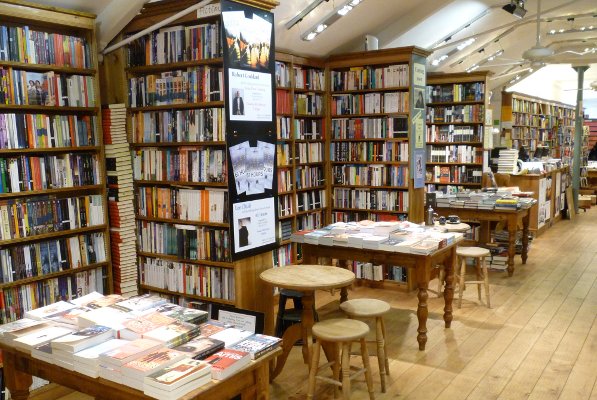
What is it? Celebrated author Will Eaves will be delivering an animated reading of his Goldsmith Prize-shortlisted novel, The Absent Therapist. We speak from experience when we say this is an opportunity not to be missed.
When is it? Late January 2017 (date TBC) at Bookseller Crow in Crystal Palace
2. Pop-up photography gallery at gorgeous cocktail bar and former cinema in Walthamstow, London
What is it? The creative mind behind photography project and site Vagabond Images, Michael Dodson, is hosting a pop-up gallery at a gorgeously renovated former cinema. With Christmas around the corner, and a proven fact that giving a gift of photographic artwork makes you over 37% sexier, the gallery offers you the chance to view and purchase prints (both framed and unframed), as well as canvases and greeting cards.
What is it? Looking for a writing session that will trigger something new in your writing and your voice, and perhaps get you started on a new project? Give yourself an early festive treat, and join Spread the Word for their popular and inspiring creative writing session.
When is it? 6th December at the Albany Performing Arts Centre, London.
4. An evening with acclaimed novelist Sally Vickers
What is it? Salley Vickers’s first novel, Miss Garnett’s Angel, was an international word of mouth bestseller, and she has since established herself as one of the UK’s leading novelists, in the tradition of Penelope Fitzgerald and Marilynne Robinson. She will be holding a book reading event in the world-heritage historic city of Bath in the UK.
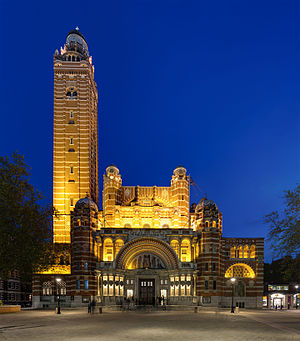
What is it? An intense writing workshop with writing exercises led by publisher and poetry editor Katherine Lockton. The workshop will look at Shakespeare’s women in his plays and discuss how he portrays the female gender. Focusing on writing new material, participants will come away with a body of creative work (2 or 3 first drafts.) A limited number of places are available to ensure the tutor has ample time for each student. All levels welcome.
When is it? 11th December with organisers from the Poetry Library at Westminster Cathedral, London.
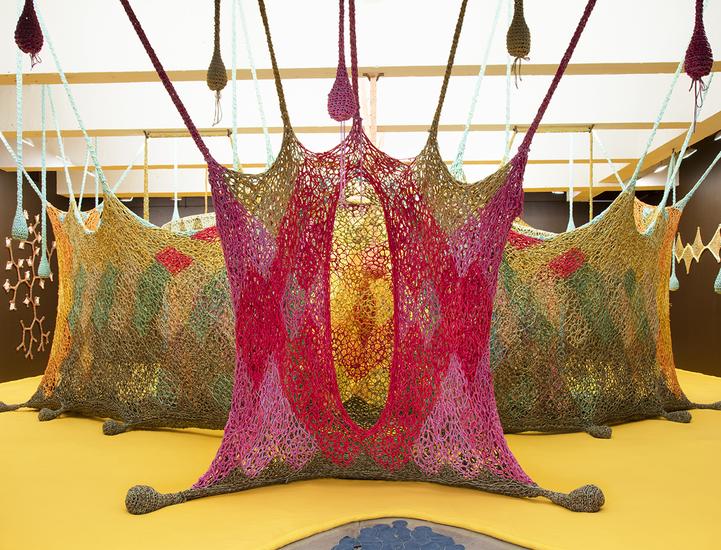
6. Ernesto Neto, “The Serpents’ Energy Gave Birth to Humanity” art installation
One of Ernesto Neto’s many immersive sculptures.
What is it? Brazilian artist Ernesto Neto has a solo exhibit of new crocheted fabric sculptures, immersive installations and wall works.
When is it? Neto’s exhibition is open until December 14th at the Tanya Bonakdar Gallery in New York.
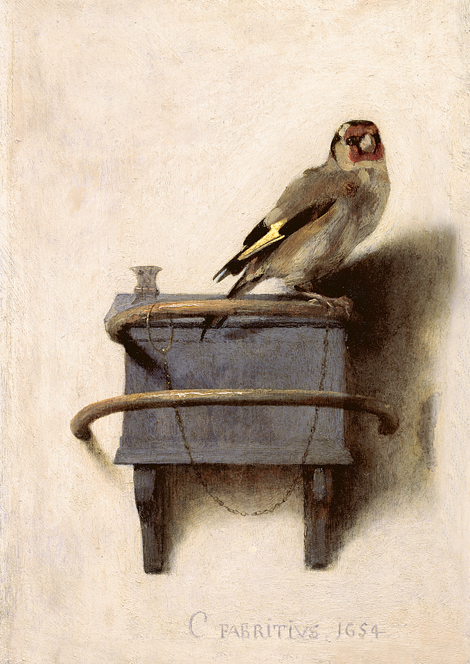
7. Opportunity to see one of the most iconic paintings in the world, the Goldfinch
What is it? The Goldfinch by Carel Fabritius is held as one of the most iconic – and most important – paintings in the world. It is now on show in Scotland for the first time ever – and admission is completely free. What more could you ask for?
When is it? Fabritius’s painting is on display until the 18th December at the Scottish National Gallery in Edinburgh.
Your event here?
Are we missing something? If you have an event or creative project you’d like us to feature, let us know and get in touch!
43.1% of US adults read literature, according to the NEA’s Annual Arts Basic Survey and the Survey of Public Participation in the Arts. Find the interactive map of the data here.
In the fallout of Donald Trump’s victory in the US presidential elections, a multitude of commentators – from mainstream media analysts through to social media users – have been keen to analyse, deciphering the results and reaching conclusions as to what the precise cause of Trump’s victory actually was.
While we dissect the different voter demographics for clues and reason – is it simply the case that rich white people won Trump his election victory, as exit polling data indicates? Or perhaps it is simply the case that America has a problem with the idea of a female president, as Patton Oswalt neatly opined in a single tweet that read: “What I’ve learned so far tonight: America is WAAAAAAAY more sexist than it is racist. And it’s pretty f******g racist.”
With so many potential theses being thrown around the digital and traditional media spheres, we thought we’d throw our own into the mix. Given that we are a collective of creatives, bound by a single motto (“there’s nothing in the rulebook that says a giraffe can’t play football”) and focused on supporting artists and artistic endeavours of all kinds, you may not be surprised to hear that we believe the election of Donald Trump was due, in part, to a lack of literature – to a lack of inspiration, imagination, and art in general.
We might also argue that there are too few giraffes playing football in this day and age; although unfortunately the datasets we have on even-toed ungulate mammals playing sports of any kind is, at best, inconclusive.
Fortunately, we aren’t just postulating when it comes to the correlation between reading and art (or lack thereof) and Donald Trump’s election victory.
While Trump himself has said he doesn’t read books, it may not be the greatest surprise that areas in the USA that provided him with the greatest levels of support are also those in which the lowest number of people read books (either regularly or at all) or are inclined to get involved with creative or artistic projects.
Indeed, data pulled from the National Endowment of the Arts (NEA) show that in places like Mississippi, where Donald Trump beat Hilary Clinton by almost 220,000 votes (almost 60%), only 21.7% of people from the state read literature, and only 38.5% of people personally created or performed art.
By contrast, those states with the highest rates of reading and artistic engagement were also the ones that polled most strongly for Clinton. Colorado, New Mexico, New York, California, Washington, Oregon, Minnesota, Illinois, Maryland, New Hampshire and Maine all scored at least 48% or above for literature reading levels, with the majority of these scoring closer to 60%. Indeed, some of the only outliers to this trend at New Jersey (voted Clinton), which had a 40.7% rate for literature and 44% artwork participation, and Pennsylvania (voted Trump), which had a 47.7% literature reading score, and 48.3% rate of art participation. Interestingly, Pennsylvania was among the closest run races of the election night, with Trump winning by a marginal 48.76% to Clinton’s 47.68%.
Fans of the Democratic Senator Bernie Sanders – who ran Clinton extremely close for the Democratic nomination earlier in the year – will be pleased to know that Vermont (Sanders’s home state) had the highest rate of literature readers – at 62.8% – and an impressive 64% of Vermont residence said they regularly created or performed their own works of art.
Of course, correlation can never be seen as causation, yet we would still make the case that a greater inclination towards creativity and art – as well as a passion for reading – are more likely to move people to vote in favour of progressive change, and intellectualism, as opposed to supporting a demagogue who has faced constant charges of racism and misogyny, and who has boasted about his inclination towards sexually assaulting women.
This may well be because books so often contain within them the power to express important ideas in an engaging, thoughtful way – and can teach us truths about the world we may not otherwise see. Some scientific studies even indicate that reading literature is highly correlated with other kinds of behaviours, such as civic engagement and volunteering.
Likewise, a passion for art and creating new creative works speaks to an inclination towards the imagination: which, in order to flourish, grows from the idea that anything is possible – and that idealistic, wonderful things are within our grasp if only we choose to reach for them. Such an ethos seems to stand in stark contrast to the world of Donald Trump – a man who dismisses the science of climate change, who refutes the idea that it is better for human beings to co-operate with one another than oppose each other, and whose complete inability for nuanced thought means he thinks a potential solution to the trends of globalisation we have experienced in recent decades is to build a wall between the USA and Mexico.
Unfortunately, recent years have also seen an increase in the number of libraries closing across the USA – and with them a declining availability and accessibility of literature for many citizens. Simultaneously, cuts to public schooling and education – and increasing costs of higher education – mean that opportunities for young people to access art and literature are further diminished. Since our formative years are just that – formative – such disinvestment in education seriously threatens to undermine the power of literature and art to influence people, and encourage them to think in ways that create new possibilities.
Because, of course, Donald Trump – for all his talk of change – in many ways does not represent anything of the sort. He is not a man of new possibilities; but instead epitomises the private, corporate power that many of his supporters claim to have railed against, and which is in itself one of the core tenants of the neoliberal consensus that has been with us for so many years.
Whether or not literature has the power to spark a revolution remains to be seen. What we do know is that human beings have within them the power to do incredible things – even those that were previously thought to be impossible. And we also know is that reading itself is associated with empathy and kindness and truth – not one of which Donald Trump stands for. This, if nothing else, should be cause to triumph the power of reading literature and creating works of art.
Encouraging people to consume more literature is therefore critical. As we try to digest and process Trump’s victory (you can listen to our conversation on this topic on the Extra Secret Podcast here), perhaps the first form of protest we can all participate in is one of the simplest: going to our local library, checking out a good book and then looking to get involved with a local or digital creative arts project.
If you’re stuck for ideas on which books to check out of your library, why not kick off with one or two of the titles on our list of essential reading for the Donald Trump Apocalypse? And if you’re looking to get involved with a creative art project, remember that we here at Nothing in the Rulebook would love to hear from you and feature your work – so do get in touch!
Until that end, comrades, do not despair; just keep reading, and keep your minds open to all the possibilities in the world.
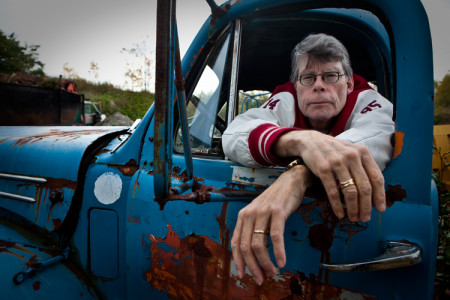
Do you know your Carrie from your Christine? Do you know better than to visit Jerusalem’s Lot for a malted milk after dark? What’s the actual name for the clown (who’s also a spider and immortal inter-dimensional doomsayer) who promises to give you a balloon if only you’d come a little closer to the storm drain?
We’re more likely to talk about Stephen King’s awkwardly titled On Writing: A Memoir of the Crafthere but this echidna remembers, with a fond hue, evenings spent cradling the bedside lamp, mightily summoning the strength and will to turn yet another page of Salem’s Lot, Pet Sematary or The Ten O’Clock People.
We’ve read a handful of King’s writings but are by no means experts so we spent a couple of minutes this afternoon testing our mettle in BBC Radio 4’s Stephen King Quiz.
The quiz marks BBC’s Fright Night, a series of spooky readings and performances including Sex in the City’s Kim Cattrall reading Ira Levin’s Rosemary’s Baby and a three-part adaptation of King’s The Cookie Jar.
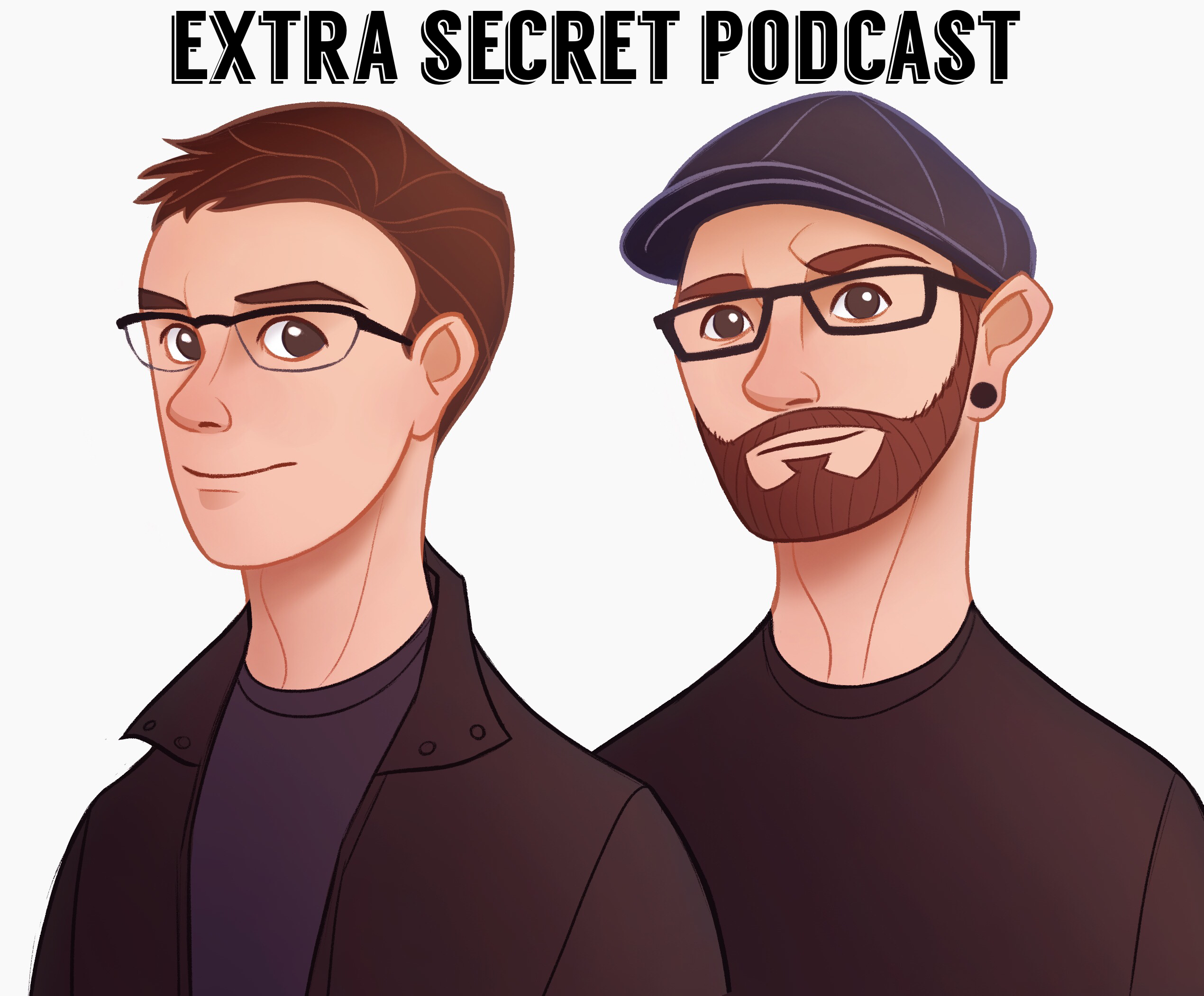
Eric and Dan are the masterminds behind the awesome Extra Secret Podcast.
Ahoy there, friends! The team here at NITRB are thrilled to announce we had the honour of making a special guest appearance on the fabulous Extra Secret Podcast.
Given the tumultuous events that have happened recently, and the potential of an impending “Trumpocalypse” (essential reading for which can be found here), we thought it would be pertinent to discuss the really important things in the world right now. So, naturally, on the show we discuss everything from Donald Trump to literature, podcasting, digital technology, art, creativity and – of course – obscure cartoon shows from the early 2000s.
There have never been so many photographs taken. With so many of us now using the latest in “smart” mobile phone technology (we use the term “smart” in quotation marks because is there really anything that smart about supporting an industry that is helping to destroy the planet?), we have, it seems, all become photographers. In fact, through various mediums like Instagram and social media in general, photography has perhaps never been so popular. Yet this is not to say the overall quality of photographs has improved. In fact, the proliferation of “everyman” photographers has perhaps changed the way we perceive what is – and has been – one of the most important artistic mediums of the 20th and 21st centuries.
Psychologists have argued that our reliance on smartphone cameras to take photographs of ourselves and of our lived experiences is both narcissistic and damaging to our personal memories. While studies show that people who take “selfies” are more likely to be psychopaths, the fact that so many people now choose to photograph their food instead of eating it, and choose to film or take pictures of the historical monuments they visit, beautiful natural landscapes they see or nights out with friends they experience, has also been linked to a psychological misremembering of lived experiences. In other words, our reliance on smartphone technology to see the world for us means we don’t actually take in what it means to be alive. We are denied the experience of living.
This is an incredibly disturbing concept, especially since photography has been one of the most important cultural phenomena of the last century or so. Not only does it allow people to communicate what is important to them through angles and perspectives we would not otherwise see, it also helps preserve history, facilitates communication and – when done truly artistically – moves people in ways that words sometimes cannot. While a picture of someone’s bacon and egg brunch will not change the world, the camera in the hands of, say Steve McCurry, Annie Leibovitz, Robert King, David LaChappelle, Diane Arbus, Dorothea Lange or Mark Seliger, truly can make us stop and re-evaluate the way we see the world; the way we think about everyday life, or even the grander existential ideas that we are faced with.
Photography moves people in ways language sometimes cannot. Image via Vagabond Images.
Photography, in short, matters. And while modernity’s narcissism may muddy the waters of the way we perceive the art form, it is critical we do not lose sight of its potential to help us see the world more clearly. To imagine a world devoid of photography as a genuine art form is to imagine a world lesser in its cultural impact, seemingy halved through the loss of its reflection through the expert’s camera lens. There are few other artistic mediums that help us to process and reflect reality – even though there are also so few other mediums that, through its proliferation and adulteration, are also able to obscure reality so fundamentally.
There is clearly therefore a delicate balancing act that we must contend with when we think of photography as an art form and as part of our everyday lives. When photography was first invented two centuries ago, it was hailed as a revolution in terms of the way mankind perceived both time and place. And it is undoubtedly true that the visual impact of photography is a vital instrument to all of those people who seek to evaluate the world and make sense of it. Indeed, as a potent symbol of what is and what is not significant, the photograph can work in ways that language simply cannot.
Photography helps us evaluate the world, and make sense of it. Image via Vagabond Images.
The French photographer Henri Cartier Bresson once said that “it is an illusion that photos are made with the camera […] they are made with the eye, heart and head”. It certainly seems true that it is the ability to feel and think as well as see that makes a truly great photograph – for through this we are able to engage in the adventure of examining reality, making the familiar strange and vice versa.
“It is an illusion that photos are made with the camera […] they are made withe the eye, heart and head”. Image via Vagabond Images A wonderful example of this is the work of Vagabond Images – the photographic collection of the photographer Mike Dodson. The myriad different styles of photography available, from mysterious, emotional urban landscapes to vivid depictions of the natural world, right through intimate portraits of human beings – in all their intricate, flawed and magnificent states of being – the collection contains within it everything that photography should be.
You may have noticed we are pretty big fans of this photographic work – as we’ve been featuring a small collection of the images in this very article. You can treat this as a sneak peak of what’s on offer. We love a good sneak peak as much as the next person, after all.
Photography can be so much more than a picture of sausages and beans taken on a smartphone. Image via Vagabond Images.
The really good news here is that Vagabond Images will be hosting a pop up gallery in Walthamstow, London, on the weekend of the 25th November in Mirth, Marvel & Maud. We here at Nothing in the Rulebook thoroughly recommend you checking it out. After all, it’s a proven fact that photography makes you 62% better (better at what you might ask? Well, just generally better). Don’t take out word for it of course – check it out for yourselves!
Experience and enthusiasm combined as a debut Australian novelist and a five-time author shared a prestigious literary award for fiction this week.
The Natural Way of Things, about the hidden tension in one of Australia’s establishment families and The Life of Houseswhich centres on a group of women kept prisoner in a derelict home, were joint fiction winners of the prime minister’s literary awards.
The $80,000 prize money will be divided between authors Charlotte Wood and Lisa Gorton with some of the fund going to shortlisted authors.
Announcing the winners at the National Library of Australia on Tuesday night, the prime minister, Malcolm Turnbull, said winning and shortlisted authors had continued Australia’s rich literary tradition.
The winning entries were selected from a shortlist of 30 books from 425 entries across each of the three categories of fiction, non-fiction and poetry, by the prime minister and a panel of experts.
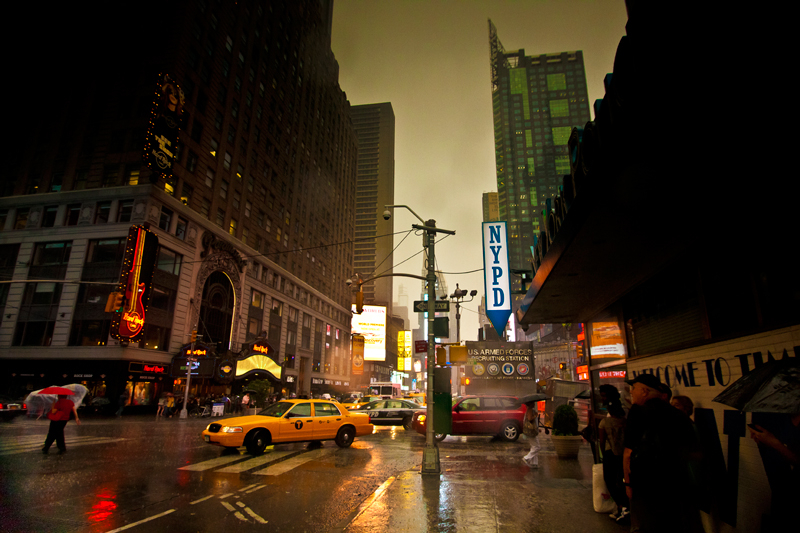
Jagged and surreal – the blood-coloured clouds of Donald Trump’s world. Photography by Mike Dodson/Vagabond Images.
So it finally happened. 24 years after Francis Fukuyama pronounced we had reached “the end of history”, the year 2016 has brought us Brexit, the Global Warming tipping point, escalating global conflict, the rise of the alternative fascist right in Germany and across Europe, and Donald Trump. Oh, and David Bowie, Prince, and Alan Rickman are all dead. In short, it’s been a tough year.
While the New Yorker – fairly – claimed the election of Donald Trump was a “tragedy”, we here at Nothing in the Rulebook only aim to please, and tragedy generally doesn’t do that. So, while we – like the rest of you right-minded people – are planning the revolution against President Trump’s impending fascist dictatorship, we’re also planning our essential reading list for these dark times.
Although Trump himself (should that be Drumpf?) has admitted he doesn’t read books, we feel that they represent one of the last bastions of culture and intellect, and could prove particularly useful during the imminent nuclear winter when we no longer have electricity or the internet.
We have therefore put together our literary recommendations for the possible future and the end of the world. Spoiler alert, Fukuyama doesn’t feature.
First things first, a crash course in some of the causes for our current state of travesty. Fisher expertly describes the factors that have contributed to the rise of the alt-right and the collapse of the traditional left; and how the neoliberal consensus has alienated and disenfranchised so many of the poorest and most vulnerable in society – to the extent that they are offered no alternative path. When viewed through this lens, Trump’s ascendency appears no shock: but an inevitability
2. Slaughterhouse five, Kurt Vonnegut
Does it feel as though you’re living out of step with reality – with time itself, perhaps? Vonnegut’s mastery in this brilliant novel is to make the unreal real, and vice versa. What’s more, it also serves as a brilliant cultural portrayal of the American psyche – that same psyche that has just chosen to elect as president a misogynist and racist, who is the embodiment of the establishment and corporate power. In the light of the knowledge that Trump secured his victory via the votes of white men and women from rural and post-industrial declining towns, consider the following passage from Slaughterhouse five:
“America is the wealthiest nation on Earth, but its people are mainly poor, and poor Americans are urged to hate themselves. To quote the American humorist Kin Hubbard, ‘It ain’t no disgrace to be poor, but it might as well be.’ It is in fact a crime for an American to be poor, even though America is a nation of poor. Every other nation has folk traditions of men who were poor but extremely wise and virtuous, and therefore more estimable than anyone with power and gold. No such tales are told by the American poor. They mock themselves and glorify their betters. The meanest eating or drinking establishment, owned by a man who is himself poor, is very likely to have a sign on its wall asking this cruel question: ‘if you’re so smart, why ain’t you rich?’ There will also be an American flag no larger than a child’s hand – glued to a lollipop stick and flying from the cash register.
Americans, like human beings everywhere, believe many things that are obviously untrue. Their most destructive untruth is that it is very easy for any American to make money. They will not acknowledge how in fact hard money is to come by, and, therefore, those who have no money blame and blame and blame themselves. This inward blame has been a treasure for the rich and powerful, who have had to do less for their poor, publicly and privately, than any other ruling class since, say Napoleonic times. Many novelties have come from America. The most startling of these, a thing without precedent, is a mass of undignified poor. They do not love one another because they do not love themselves.”
3. A vindication of the rights of women, by Mary Wollstonecraft
Since the world now has a President-Elect who seems to think its okay to refer to women as “pigs”, and sexually assault them as much as he wants, it seems vital to take some of the founding literature of modern feminism with us into our revolutionary hiding spots. Wollstonecraft’s principled, logical tract is an inspiration for three centuries of subsequent human rights thinking. She identifies natural rights as inalienable and God-given. So they cannot be denied to any group in society by another. If Trump read books, we doubt he’d understand this concept; but as free-thinking, logical beings – all of us (yes, that’s you) are more than able not only to understand this idea, but to act upon it.
4. Blindness, by Jose Saramago
Blindness is the story of an unexplained mass epidemic of blindness afflicting nearly everyone in an unnamed city, and the social breakdown that swiftly follows.
Absurd to say it, but Blindness is an allegory for not being able to see. For those of us looking on in horror at Trump’s election, and seeing the parallels between this modern era and that of the early twentieth century, the feeling that we seem to be among the few who can see the world as it is, is perfectly captured by this Nobel Prize winning novelist.
”Why did we become blind, I don’t know, perhaps one day we’ll find out, Do you want me to tell you what I think, Yes, do, I don’t think we did go blind, I think we are blind, Blind but seeing, Blind people who can see, but do not see.”
5. Fahrenheit 451, by Ray Bradbury
Given Trump’s aggressive disavowal of intellectualism and books, it seems pertinent that we include one of Bradbury’s most celebrated novels. This is the ultimate dystopia for literature lovers, describing a society where books are burned and intellectual thought illegal. The work tackles head on the nightmare world in which a free press and the dissemination of ideas is not possible. The message from the NITRB team here is clear: comrades! Collect all the books you own and don’t let anybody try to burn them!
6. The Road, by Cormac McCarthy
One of the most concerning of Trump’s policies has been insistence on denying climate change, and his promise to reverse the various pieces of climate change legislation (however small they may have been) that have been passed by the US during Obama’s administration. He has also vowed to abandon the Paris Climate agreement, which is pretty terrifying, given the knowledge that our planet is spinning towards an inevitable future of warmer temperatures, which will have catastrophic consequences for human beings and the natural world.
McCarthy’s bleak post-apocalyptic novel therefore is perhaps not one to raise the spirits, but one instead to shock us into action. While the precise cause of the environmental destruction depicted in the novel is never explicitly stated, the bleak reality of living in a world without animals, without vegetation, subject to fierce and unpredictable changes in weather is imagined with McCarthy’s vividly compelling prose. This fiction could well be our reality if we don’t work together to stop the worst effects of Trump’s impending presidency. It is up to us to hold the fire.
These six books are, it must be said, simply a starter for ten (should that be a starter for six?). So which ones are we missing? Let us know which books you’ll be taking with you for the world of Donald Trump in the comments below!



 nothing in the rulebook
