• I don’t have anything to hide

    I think Viagra is wonderful

    I definitely don’t need Viagra

    If you need it, Viagra is great

    But I just don’t need it

    Sometimes I wish there was an anti-viagra

    Something that had the opposite effect

    I’m not bragging

    I’m just lucky: I don’t need Viagra

    ~ Anonymous 

    A note on the above poem: 

    All the lines of ‘Nothing to hide’ are taken, verbatim, from Donald Trump speeches, Tweets, interviews or recorded comments. For a fully referenced version of the poem please send the NITRB team an email!

  • thisistheplaceFRONTsmall

    Human beings have been reporting on wars and battles almost as long as there have been wars and battles (which may mean they have always been, if you are to accept the idea that mankind has an innate inclination toward violence). The earliest cave paintings depicted our forebears on great hunts; and oral histories of all early human civilisations recount battles and wars in their various bloody guises. Shakespeare, of course, deserves mention here for the means with which he memorialised England’s dynastic wars in his plays.

    Yet the idea of professionalising this war reportage into something an individual person sets out to specifically do has perhaps more recent historical trappings. From Henry Crabb Robinson’s early reports of battles against Napoleon for the London Times, through to coverage of the D-Day landings; the French and subsequent American wars in Vietnam; through to coverage of both Gulf Wars; the Troubles in Ireland and Northern Ireland and indeed, conflict across the Middle East, Africa, and the rest of the world – the human desire to seek first-hand accounts of the multiple ways we can find means of killing one another has shifted in tone through our most recent generations.

    As times change, war correspondence has changed, also – from the first wide-use of video clips to bring wars into our living rooms, through to the advent of social media, which pummels our pockets with updates from global conflicts.

    The sole constant here is perhaps the war correspondent themselves. That person who witnesses war and tells, shows, or tweets their experiences to others.

    What does it mean to be an observer to war? Is it possible to retain any semblance of independence as a ‘neutral’ party when one sees what war is so closely? And what do war correspondents do when there is no war to report on? How do people who derive and depict meaning from mass human violence – and how do people who earn a living through their involvement with this – respond when faced with the relative peace of society?

    Answers to these questions are hard to come by and are, by their very nature, complex. Yet there is fascinating and powerful insight provided by the exceptional book This is the place to be by Lara Pawson.

    Pawson, who worked as a journalist for the BBC in several African countries between 1996 and 2007, grapples with such themes – among many others (including women’s rights, the intrinsic value of language to a person’s identity, and what it means to form relationships with people who exist in a quasi-state of acquaintance; from youths in your neighbourhood to stall owners in your local market).

    Reflecting on her time covering the Angolan Civil War, she writes:

    “It was an incredibly intense experience, one that influenced me radically. For a long time, I tried to work out how I could retrieve it. I wanted a repeat, like that absurd sensation you get when you first take certain class-A drugs.”

    In the clearest of ways, This is the place to be is in essence a written attempt at self-evaluation and rigorous self-critique. Described ostensibly as a memoir, this seems appropriate – given that, as David Sheilds notes in Reality Hunger, “For centuries, the memoir was, by definition: prayerful entreaty and inventory of sins.” Yet Pawson’s novel is not concerned with human sin, per se – there is no attempt to moralise human behavior; instead, the focus is on trying to dissect it. This refers not only to the dissection of human behavior on a societal scale – as a sociologist might – but rather, also on an intensely personal level.

    Indeed, the inquisitiveness of Pawson’s prose creates an existential inquisitiveness that balances finely with the author’s inclination toward more descriptive journalistic reportage. Consider, for instance, the scene in which the narrator sees a “woman cut in half by an articulated lorry”:

    “I was in my car and as I drove around the roundabout, I saw the head and bust and waist of a woman and then, a few feet away, her lower half: wearing a skirt, her ankles and feet still sticking out at the bottom. At least, that’s what I believe I saw and what I remember I saw. And it’s what I have told many people I saw. But considering the binding problem, I wonder if what I say I saw was in fact fill-in created by my brain. Which bit was real – the upper part of her body, or the lower part?”

    Moving from the simple precise description of the scene, the sudden reflection and of questioning one’s own experiences – one’s own sight and memories – opens possibilities for the reader in a way simple reportage of fact fails to do. And it engages with interesting concepts and themes – not least of the which is that of the fallibility of memory.

    Nothing, after all, is as unreliable as our recollections of events. We know that our brains reconstruct fragments of things we perceive to recreate wholes; meaning that what we think we saw may not be verified by CCTV cameras (if there are CCTV cameras to counterbalance against our memories). As Patrick Duff, from The Brink of Oblivion, notes: “Our memories are filled with gaps and distortions, because by its very nature memory is selective.”

    The fragmentary and selective nature of memory is itself reflected in the very structure of Pawson’s book.

    Of course, fragmentation as a structural form within literature is not new, yet Pawson builds on its modernist origins and takes it to somewhere new and unique (and, as she does so, skillfully avoiding becoming simply “post-modern” or unduly self-referential about it all, as other writers sometimes tend to do).

    Indeed, while fragmentation was employed by some of the modernist writers of the 20th century to help them capture how the (then) modern world overloaded the human mind (think of Dubliners, by Joyce, for instance); Pawson’s This is the place to be also helps create this sense of sensory overload caused by our ‘modern’ existences – and how it can lead to fragmentation of thought and feeling. But it goes a step further because it does not seek to necessarily imply that the world is fragmenting the mind; but rather that the mind (being fragmented itself) seeks to make sense of the world through analysis of fragmented episodes, which, though they may seem unconnected and disassociated from one another at first glance, in fact share a much greater commonality.

    To dwell on this for a moment longer: what is interesting about the use of fragmentation in Pawson’s book is the careful balance between unity and disunity that comes from structuring the memoir in this way. On the one hand, the chosen form enables the reader to starkly experience the horrors – and mundanity – of war, and also the mundanity – and horrors – of modern, perhaps sedentary, ‘western’ life. The disunity between, say, the tension of the author finding herself in rebel held territory, arriving at a scene of an ambush moments after a massacre, are fraught with such tension that it is a genuinely affecting experience to read. Yet contrast this with a friendly relationship with a market stall owner in Walthamstow and at first glance the impression is one of a real disconnect. However, explore the text as a whole and suddenly contrasts become comparisons and quickly similarities – jokes shared with market stall owners transpose themselves as jokes shared with the pilots of old airplanes and army vehicles, even high ranking government officials or colonels. This fragmentary sense of broken unity, or conversely, of united disunity, is surely in its own way so recognisable to ourselves as readers, because one of the fundamental truths about the human condition – of human life – is how full of simultaneous contradictions and similarities it is and can be. We are defined in so many ways by the united, harmonised parts of ourselves, even when those parts, when looked at individually and of themselves, can seem so at odds with one another under the microscope.

    Speaking of microscopes can invoke a sense of forensic exploration and what This is the place to be does well is avoid any sense of intense introspection. The reader is never told what to think or how to feel, simply shown and left to bring their own meaning to the scenes they are presented with.

    This style of writing is ultimately a true indication of Pawson’s great ability as a writer. After all, to write about subjects as intense as war carries with it a weight of expectation. Think, for instance, of Vonnegut’s quasi-autobiographical narrator in Slaughterhouse 5, who remarks he “thought it would be easy to write about the destruction of Dresden, because all I would have to do would be to write what I saw” – yet finds quickly that this is impossible, because the subject is “too big”. Simply writing about war is not simple at all, it seems.

    In his essay, Welcome to the Desert of the Real, the philosopher Slavoj Žižek explores how we react when “the unimaginable impossible happen[s]”. To many (most?) of Pawson’s readers, the thought of finding ourselves in the midst of a civil war is just that: unimaginable. Yet by balancing the unimaginable with the extremely relatable (Angola vs Walthamstow, etc.), Pawson counterpoints two very real – but very different – realities in such a way that the world we cannot picture becomes more accessible; while the world we perhaps think we know becomes that little bit more strange and alien.

    We live in a time when so many people now express the sentiment of “not recognising” the country or people they live with. This is true in the UK, from hard-right brexiteers who complain of non-white people working and living in their towns; through to liberal and metropolitan ‘remain’ voters, as well as left-wingers, who can’t believe hard-right brexiteers and racists seem to be in control of the UK government. And it is true of the USA, where Donald Trump was able to re-use Reagan’s ‘Make America Great Again’ slogan to such affect precisely because it tapped into a sentiment raging across America’s deep (but superficially hidden) divides of people who felt that ‘their’ country somehow wasn’t “great”. Similarly to the UK, Trump’s election has also shaken the self-belief of the USA’s ‘metropolitan liberal elite’, who thought that Obama’s election may have finally signalled a key change in direction for the country. That they now, in their eyes, have a misogynistic, self-proclaimed sexual harasser, blustering bigot, egregious egomaniac and would-be demonic despot for a president is, to use Žižek’s expression, “unimaginable [and] impossible”. Yet here we are.

    In a world that seems so unrecognisable to so many – we need books like Pawson’s This is the place to be that shows us how to recognise things we think we cannot imagine; and reflects our feelings of uncertainty about the world and things we think we know and understand. Our worlds can so easily become so small and narrow and defined; This is the place to be helps bridge the divide between our social bubbles and the rest of the planet and reminds us, ultimately, of our place within it.


    To purchase a copy of Lara Pawson’s This is the place to be, visit CB Editions – http://www.cbeditions.com/pawson.html 
  • pic    Dan Tuffs (001 310 774 1780)

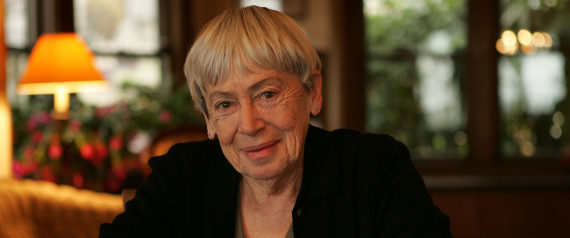
    News of the death of Ursula Le Guin at the age of 88 has hit the literary world hard. The sharp-minded, large-spirited, incomparably brilliant Le Guin  brought literary depth and a tough-minded feminist sensibility to science fiction and fantasy, and for many stood as a triumphant champion of the written word – and books in general, as well as a powerful cultural figure fighting against the catastrophic ills of capitalism.

    In addition to more than 20 novels, she was the author of a dozen books of poetry, more than 100 short stories (collected in multiple volumes), seven collections of essays, 13 books for children and five volumes of translation, as well as a writing guide for aspiring (and established) writers.

    Her books and stories often challenged prevailing societal sensibilities, and at every turn she saw fiction and writing as a powerful tool to fight against the powers of corporate greed. Indeed, so many of Le Guin’s stories serve as timely reminders of the human capacity to keep dreaming of better worlds no matter how the grim the actual situation.

    Indeed, as she was honoured for her contribution to literature at the 2014 National Book Awards, Le Guin used her platform took aim at publishers who placed profit before art – calling on writers to imagine new alternatives to capitalism.

    At a time when it seems as though the power of corporate neoliberalism cannot be exposed as any more rigged and corrupt – and designed only to benefit a miniscule few at the expense of the entire human race (indeed; the pursuit of profit above all else has left the planet facing catastrophic climate breakdown) – it is a crying shame (to use that oft-over used phrase) that society has lost a figure in Le Guin who saw the world clearly for what it was and called on us to act.

    As a small tribute to her continued calls for freedom and change, we’ve reprinted the transcript of her National Book Award speech below.

    “To the givers of this beautiful reward, my thanks, from the heart. My family, my agents, my editors, know that my being here is their doing as well as my own, and that the beautiful reward is theirs as much as mine. And I rejoice in accepting it for, and sharing it with, all the writers who’ve been excluded from literature for so long – my fellow authors of fantasy and science fiction, writers of the imagination, who for 50 years have watched the beautiful rewards go to the so-called realists.

    Hard times are coming, when we’ll be wanting the voices of writers who can see alternatives to how we live now, can see through our fear-stricken society and its obsessive technologies to other ways of being, and even imagine real grounds for hope. We’ll need writers who can remember freedom – poets, visionaries – realists of a larger reality.

    Right now, we need writers who know the difference between production of a market commodity and the practice of an art. Developing written material to suit sales strategies in order to maximise corporate profit and advertising revenue is not the same thing as responsible book publishing or authorship.

    Yet I see sales departments given control over editorial. I see my own publishers, in a silly panic of ignorance and greed, charging public libraries for an e-book six or seven times more than they charge customers. We just saw a profiteer try to punish a publisher for disobedience, and writers threatened by corporate fatwa. And I see a lot of us, the producers, who write the books and make the books, accepting this – letting commodity profiteers sell us like deodorant, and tell us what to publish, what to write.

    Books aren’t just commodities; the profit motive is often in conflict with the aims of art. We live in capitalism, its power seems inescapable – but then, so did the divine right of kings. Any human power can be resisted and changed by human beings. Resistance and change often begin in art. Very often in our art, the art of words.

    I’ve had a long career as a writer, and a good one, in good company. Here at the end of it, I don’t want to watch American literature get sold down the river. We who live by writing and publishing want and should demand our fair share of the proceeds; but the name of our beautiful reward isn’t profit. Its name is freedom.”

  • typewriter-1

    It’s been said before and will be said again; but one of the most – if not the most – important parts of writing is re-writing. Writing often isn’t about inspiration or waiting for your muse to arrive – it’s about getting down to it and finally actually writing that novel you’ve been working on – and then fine-tuning it. Writing is about finding your way into the moment and sustaining the energy for as long as you can effectively and in the rhythm of your narrative. Then it’s about checking what you’ve produced and making sure you succeeded – and even where you’ve done well, it’s about looking at your work in the cold light of day and trying to improve it even further (for example, by cutting out clichéd phrases like the cold light of day).

    Here, for you today, we have brought you a selection of the most delicious quotes on rewriting and revision from some of the finest writers of the last 100 years. Enjoy!

    Ernest Hemingway

    HemingwayGun

    “The greatest pleasure in writing is rewriting. My early drafts are always wretched.

    […]

    Revision takes time, a pleasing long process. Some of these essays took more than eighty drafts, some as few as thirty… Because of multiple drafts I have been accused of self-discipline. Really I am self-indulgent, I cherish revising so much.”

    Zadie Smith

    Zadie-Smith

    “When you finish your novel, if money is not a desperate priority, if you do not need to sell it at once or be published that very second — put it in a drawer. For as long as you can manage. A year or more is ideal — but even three months will do. Step away from the vehicle. The secret to editing your work is simple: you need to become its reader instead of its writer. I can’t tell you how many times I’ve sat backstage with a line of novelists at some festival, all of us with red pens in hand, frantically editing our published novels into fit form so that we might go onstage and read from them. It’s an unfortunate thing, but it turns out that the perfect state of mind to edit your own novel is two years after it’s published, ten minutes before you go onstage at a literary festival. At that moment every redundant phrase, each show-off, pointless metaphor, all the pieces of deadwood, stupidity, vanity and tedium are distressingly obvious to you. Two years earlier, when the proofs came, you looked at the same page and couldn’t see a comma out of place.

    […]

    You need a certain head on your shoulders to edit a novel, and it’s not the head of a writer in the thick of it, nor the head of a professional editor who’s read it in twelve different versions. It’s the head of a smart stranger who picks it off a bookshelf and begins to read. You need to get the head of that smart stranger somehow. You need to forget you ever wrote that book.”

    Stephen King

    king5-450x300

    “Mostly when I think of pacing, I go back to Elmore Leonard, who explained it so perfectly by saying he just left out the boring parts. This suggests cutting to speed the pace, and that’s what most of us end up having to do (kill your darlings, kill your darlings, even when it breaks your egocentric little scribbler’s heart, kill your darlings)…I got a scribbled comment that changed the way I rewrote my fiction once and forever. Jotted below the machine-generated signature of the editor was this mot: ‘Not bad, but PUFFY. You need to revise for length. Formula: 2nd Draft = 1st Draft – 10%. Good luck.’

    Truman Capote

    100 best novel cold blood

    “I’m all for the scissors. I believe more in the scissors than I do in the pencil.”

    Kurt Vonnegut

    43766-1

    “Your eloquence should be the servant of the ideas in your head. Your rule might be this: If a sentence, no matter how excellent, does not illuminate your subject in some new and useful way, scratch it out.”

    Donald Hall

    Donald-Hall

    “The most important thing I’ve learned about writing is never write too much at a time… Never pump yourself dry. Leave a little for the next day. The main thing is to know when to stop. Don’t wait till you’ve written yourself out. When you’re still going good and you come to an interesting place and you know what’s going to happen next, that’s the time to stop. Then leave it alone and don’t think about it; let your subconscious mind do the work.

    […]

    The next morning, when you’ve had a good sleep and you’re feeling fresh, rewrite what you wrote the day before. When you come to the interesting place and you know what is going to happen next, go on from there and stop at another high point of interest. That way, when you get through, your stuff is full of interesting places and when you write a novel you never get stuck and you make it interesting as you go along. Every day go back to the beginning and rewrite the whole thing and when it gets too long, read at least two or three chapters before you start to write and at least once a week go back to the start. That way you make it one piece. And when you go over it, cut out everything you can. The main thing is to know what to leave out. The way you tell whether you’re going good is by what you can throw away. If you can throw away stuff that would make a high point of interest in somebody else’s story, you know you’re going good.”

    Helen Dunmore

    Extra-Helen-Dunmore-0071

    “Reread, rewrite, reread, rewrite. If it still doesn’t work, throw it away. It’s a nice feeling, and you don’t want to be cluttered with the corpses of poems and stories which have everything in them except the life they need.”

    In nuce, then, writing is two steps: the first draft, and the second, repeated on and on, ad infinitum until the process simply cannot be sustained (or until you die and leave your unpublished manuscripts in a loft somewhere in the hope that a future generation of your grandchildren will uncover the books, find something meaningful in it and whack it up on the internet in an eBook). But the important thing to remember is that rewriting is, in so many ways, not too dissimilar from the writing part. You’re just taking existing writing and making it better.

    Now, what’s so hard about that?

  • I’m so beautiful and good looking

    That reminds me of another beautiful thing I’ve seen

    Beautiful hats

    Beautiful coal

    Look at these scissors

    I have never seen scissors that look this beautiful before


    Beauty and elegance, whether in a woman or a building,

    Comes down to one thing:

    You don’t give a shit if a girl can play the violin

    Like the greatest violinist in the world

    You want to know:

    What does she look like?

    ~ Anonymous 

    A note on the above poem: 

    All the lines of ‘So beautiful’ are taken, verbatim, from Donald Trump speeches, Tweets, interviews or recorded comments. For a fully referenced version of the poem please send the NITRB team an email!

  • Murmur image

    The quite frankly brilliant independent publishing house, CB Editions, has announced the publication date of the equally brilliant Will Eaves’s latest novel, Murmur.

    Taking its cue from the arrest and legally enforced chemical castration of the mathematician Alan Turing, Murmur is the account of a man who responds to intolerable physical and mental stress with love, honour and a rigorous, unsentimental curiosity about the ways in which we perceive ourselves and the world.

    Formally audacious, daring in its intellectual inquiry and unwaveringly humane, Will Eaves’s new novel is a rare achievement. The opening section of Murmur was shortlisted for the 2017 BBC National Short Story Award.

    Described as “quiet and horrifying” by The Guardian, The soon-to-be-published novel has already attracted praise from the writing community. Among them, author, poet, musician and cartoonist, Peter Blegvad, said: ‘Murmur is a profound meditation on what machine consciousness might mean, the implications of AI, where it will all lead. It’s one of the big stories of our times, though no one else has treated it with such depth and originality. A moving and marvellous book altogether.’

    See CB Edition’s website for further information on Murmur and other titles by Will Eaves.


    Nothing in the Rulebook will be keeping you updated with news and alerts for more news regarding exciting new releases of fiction and poetry. If you have a book or poetry collection you’d like to promote, get in touch using our contact information.

  • I have a question:

    Why can’t we use nuclear weapons?

    I have a nuclear button

    And I have big beautiful hands

    But my button is much bigger and more powerful

    And my button works

    ~ Anonymous 

    A note on the above poem: 

    All the lines of ‘A question’ are taken, verbatim, from Donald Trump speeches, Tweets, interviews or recorded comments. For a fully referenced version of the poem please send the NITRB team an email!

  • Sorry losers and haters, but my IQ is one of the highest

    I guarantee I have a vocabulary better than you

    I’m intelligent

    Some people would say I’m very, very, very intelligent

    I am, like, really smart

    I am a very smart person

    I went to school

    I’m very intelligent

    Trust me, I’m like a smart person

    I think that would qualify as not smart, but genius

    ~ Anonymous 

    A note on the above poem: 

    All the lines of ‘Like, really smart’ are taken, verbatim, from Donald Trump speeches, Tweets, interviews or recorded comments. For a fully referenced version of the poem please send the NITRB team an email!

  •  

    stocking

    The average British family is set to spend almost £800 on Christmas this year – and their American counterparts will themselves spend around US$950. That’s an awful lot of turkey and cranberry sauce to go with all those horrible socks for your uncle and those whisky stones for your hipster brother – not to forget that Rick and Morty version of Monopoly for your sister or that tartan scarf for your mother-in-law to go with all the other tartan scarves you’ve bought her every other Christmas.

    While there’s nothing wrong with copious amounts of cranberry sauce or horrible socks necessarily, it goes without saying that Christmas is so often a time of purchasing for the sake of purchasing only in honour of the religion of consumerism, rather than anything more meaningful. There’s obviously a problem here, as David Foster Wallace would put it: “if you worship money and things – if they are where you tap real meaning from life – then you will never have enough.”

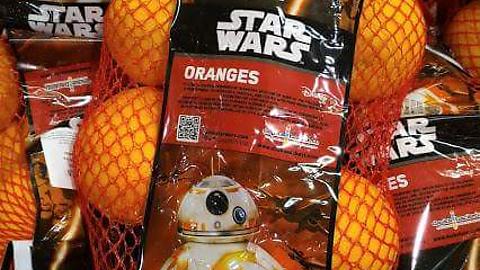
    So what purchases can you make this year that provide more of that “real meaning”? Well, we’ve come to the conclusion that some of the best purchases you can make this Christmas may be on items that have a far longer shelf-life and far greater usability than Star Wars fruit and utensils.

    We are, of course, talking about books. Not only can they be read again and again, and invite us to explore new worlds and entire new universes, they also help us think differently about the world – and they teach us about wonderful new ideas. They’re also good for us, too. As this paper in the journal Science points out, reading literary works cultivates a skill known as “theory of mind”, which is described as the “ability to ‘read’ the thoughts and feelings of others.” So books make us nicer, basically. If there is anything more appropriate at Christmas, then, we certainly haven’t come across it.

    Star Wars images

    So which books should you buy for those special people in your life whose stockings you need to fill? To help you narrow your options down, take a look at some of our suggestions, below:

    1. Christmas with dull people, by Saki

    9781911547181-643x1024-232x369

    ‘They say (said Reginald) that there’s nothing sadder than victory except defeat. If you’ve ever stayed with dull people during what is alleged to be the festive season, you can probably revise that saying.’

    Hector Hugh Munro, better known by his pen name, Saki, was a master of wit and satire in the Edwardian era. Here, Daunt Books has reproduced four of his short stories that explore one the most dangerous aspects of Christmas: dealing with dull people. Saki expertly, and with an incredible precision of wit, deconstructs those most ghastly and perilous aspects of the holiday period, from being given unwanted gifts to writing thank you notes. Short and sharp enough to devour before breakfast on Christmas Day – and, crucially, small enough to fit in any size of present-filling footwear – this is an excellent stocking filler for anyone who pleasures in moaning about the festive holiday before getting into the swing of it all.

    2. Penguin Little Black Classics

    Penguins-Little-Black-Cla-009

    126 little books to choose from – each around 60 pages long – give you a wealth of options to explore. These extracts of wider classical literary works are sure to offer choices to meet all literary tastes. Authors include Karl Marx, Jane Austen, Jonathan Swift, Virginia Woolf, Friedrich Nietzsche, Plato, Caligula, Keats, Flaubert, Dostoevsky and Dickens. What’s not to love?

    3. This is the place to be, by Lara Pawson

    thisistheplaceFRONTsmall

    Nominated for the Gordon Burn Prize, as well as the PEN Ackerley and the Bread & Roses awards, This is the place to be, by Lara Pawson, is one hell of a good read. Small enough to fit in your stocking, it still packs a massive punch in the proverbial “feels” as it moves with a delicate precision through personal anecdotes of the author, taking us from the market at Walthomstow to the harrowing experiences of war in Angola. There’s an immense honesty within this book that carries us through from start to finish – with each vignette or mini-story contained within it perfect for sharing together around a Christmas fire or over a large bottle of brandy.

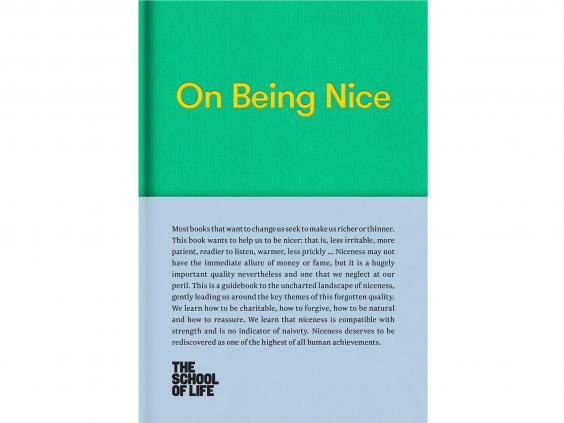
    4. On being nice, by the School of Life

    on-being-nice

    Most books that want to change us seek to make us richer or thinner. This book wants to help us to be nicer: that is, less irritable, more patient, readier to listen, warmer, less prickly. Niceness may not have the immediate allure of money or fame, but it is a hugely important quality nevertheless and one that we neglect at our peril.

    Produced by those wonderful folk at The School of Life – the same folk who gave us this lovely meditation on what literature is actually forOn being nice states that niceness “deserves to be rediscovered as one of the highest of all human achievements”. In the era of Donald Trump, Brexit, rising hate crime and geopolitical tensions, it’s a lesson we would do well to learn, whether it’s Christmas time or not.

    5. The Corbyn Colouring Book: Austerity-free edition, by James Nunn

    51P08mCAQRL._SX350_BO1,204,203,200_

    Speaking of people being nicer to one another, how about the latest iteration of the Corbyn colouring book? In a year that saw over 40% of the UK vote for the radical socialist and hope-filled policies of Jeremy Corbyn’s labour party – forcing the much-maligned (and malignant) Conservative government to sign a desperate deal with the terrorist-sympathising DUP – this book is a fine addition to the new canon of colouring books for adults.

    Designed by James Nunn, the new version invited you to “relive the excitement of #GE2017 over and over again.” To the colouring pencils, comrades!

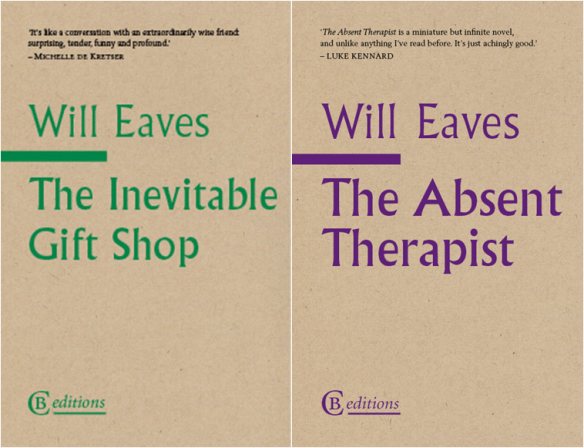
    6. These delightful short quasi-novellas by BBC National Short Story Prize shortlistee Will Eaves

    Eaves1

    The Absent Therapist (TAT) saw Will Eaves shortlisted for the prestigious Goldsmith Prize, and you can see why. Technically described as a novel, this delightful little book will fit any stocking – but would also be a great find under the Christmas tree. A collection of mini-narratives, each with a precise tone and occasional touches of poetry, feature stories of artificial intelligence and musings on philosophy, of travel and adventure, and of course, family feuds – without which it simply wouldn’t be Christmas.

    Cousin to TAT, The Inevitable Gift Shop, is similarly groundbreaking and unique (as we’ve noted before). Described as ‘a memoir by other means’, it’s not at all plot driven. Rather, this work of collage brings together bits and pieces of memoir, fictional prose, poetry, essay and non-fiction. Interactive, funny, insightful and thought provoking in equal turns, it’s a perfect book to revisit time and time again.

    7. Ignore those rip-off ‘Children books for adults’ – get the original instead
    we-sue-an-artist-767x1024

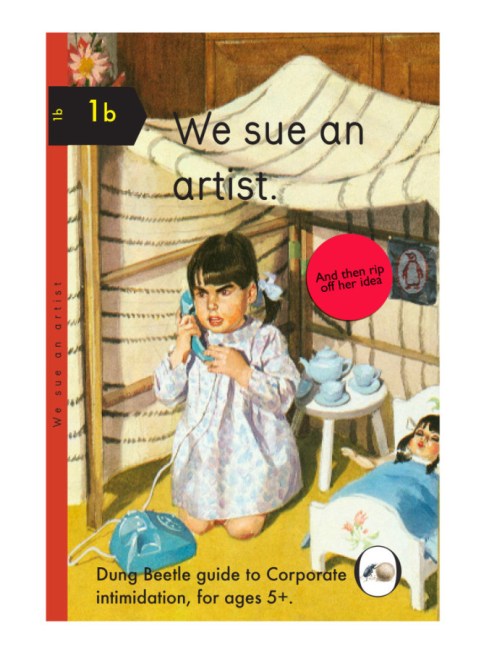
    It now seems as though the shelves of all bookstores and department stores are full of these ‘adult children’s books’; semi-funny spoof versions of the books we grew up reading as children. You know the ones – “The Ladybird book of the Wife”; “Five go to an office Christmas party”; “Mr Tickle gets arrested for sexual assault”, etc. etc.

    The trouble with these books, however, is that they are so obviously part of a fad trend built up by the publishing industry to keep their noses afloat as sales of literary fiction crash. And while that might be excusable, the fact that these are rip-off copies of an idea by one independent artist – who was then sued for copyright by Penguin only to see the publishing giant steal her idea for their own gain – leave a somewhat sour taste in the mouth.

    So, this Christmas, don’t pick up the latest gimmick – go for the original thing and get a copy of ‘We Go to the Gallery’ from Dung Beetle Books.

  • quote-the-writer-must-earn-money-in-order-to-be-able-to-live-and-to-write-but-he-must-by-no-means-live-karl-marx-120997 (1)

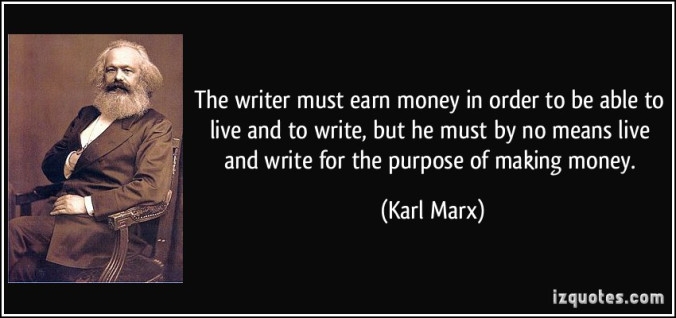
    At the start of 2016, Nothing in the Rulebook reported that authors’ incomes had collapsed to “near abject” levels – with professional writers earning on average just £11,000 a year.

    Now, the trend seems to have accelerated, with a new report finding that a “collapse” in sales of literary fiction had seen advanced paid to writers diminish even further – meaning ever fewer authors were able to support themselves through their craft alone.

    Indeed, the authors of the report, commissioned by Arts Council England, note that the shifts in the dynamics of the publishing industry have fundamentally changed the entire model on which writers previously built their careers.

    The traditional model of writing could be said to begin with an author penning a masterful manuscript, subsequently being discovered by a powerful agent who lands said author an enormous book deal with a large advance. This supplies the necessary funding for the writer to pen further masterful manuscripts, with the same effect, all the while as their book sales continue to supplement their income. And so on ad infinitum.

    Yet as 98% of writers report falling advances – with some noting cuts falling dramatically from over £50,000 per book to less than £5,000 – it seems this fall in writerly wages directly correlates with a collapse in sales of literary fiction.

    Indeed, analysis of sales data from Nielsen BookScan found that hardback book sales slumped by £10 million between 2007 and 2001, with paperback sales falling even more dramatically – falling by over £40 million between 2011 and 2012 alone.

    And, where once the book sales of ‘established’ or ‘major’ literary names could be relied on to supplement publisher’s investment in new or emerging writers, even these can no longer provide the financial support publishers need to sign on new talent.

    Within the last 10 years, the only literary works to have sold more than 1 million copies include Atonement by Ian McEwan, the Kite Runner by Khaled Hosseini, the Time Traveler’s Wife by Audrey Niffenegger, and Life of Pi by Yann Martel. Last year’s best selling novel was Kate Atkinson’s A God in Ruins, which sold 187,000 copies – roughly half the number of 2015’s best selling novel, Elizabeth is Missing by Emma Healey.

    As this collapse precipitates a further fall in income for new writers, the authors of the report note: “Outside of the top 1,000 authors (at most), printed book sales alone simply cannot provide a decent income. While this has long been suspected, the data shows unambiguously that it is the case. … What’s more, this is a generous assessment. After the retailer, distributor, publisher and agent have taken their cut, there won’t be a lot of money left from 3,000 sales of the 1,000th bestselling title. That we are returning to a position where only the best-off writers can support themselves should be a source of deep concern.”

    So, what is to be done?

    The image of the struggling – perhaps even starving – artist is one that is now so stereotypical as to be cliché. And while we here at Nothing in the Rulebook have tried subsisting on a carefully balanced diet of hopes and dreams, it’s fair to say it can leave a certain ache in the stomach.

    With the trend in falling book sales and incomes continuing at pace, it seems as though aspiring writers must look to supplement their endeavours with funds from elsewhere.

    Such is the current state of affairs that the authors of the report note that the traditional model and dream of a writing career “is now severely challenged. If you want to be on the inside of those networks and live in London, a £13,000 advance, spread over several years of work, won’t cut the mustard. Writers must, for better or worse, take on more financial risk in order to write.”

    While the most obvious course of action may be to look at taking on a full or part-time job, such a decision may not necessarily be the best for one’s own writing. As Charles Bukowski put it: “To not to have entirely wasted one’s life working, seems to be a worthy accomplishment, if only for myself.”

    But perhaps in the digital age, old challenges can be met with new solutions. For instance, Crowdfunding projects can see writers’ dreams become realities – such as Josh Spiller’s exciting new speculative fiction project, The 8th Emotion, which has received through crowdfunding the necessary financial backing that is perhaps no longer there to be found via traditional publishing models.

    Indeed, as the print publishing industry appears to rely ever more on sales from cookbooks than literary fiction, aspiring writers may need to seek ever more imaginative ways to get their (much needed) new ideas and writing out there.