• Once described by Mark Twain as “an unhappy invention”, interviews are in some ways a strange form of media. Not quite entirely formal; but never truly casual, these recorded conversations between subject and interviewer have the potential to stray from banal, scripted and pre-recorded Q&As to existential, winding, in-depth and revealing verses.

    Strange as they may be – perhaps occupying a space between spontaneous and prepared conversational performance – interviews are one of the few tools available to us that can still spark new ideas and uncover unique perspectives in an instant. As a tool for conjuring creative thinking, there are few better.

    As we at Nothing in the Rulebook endeavour to support and promote creativity in all its forms, then, interviews are a crutch upon which we are proud to lean on.

    Since we launched our creative collective in 2015, we have been honoured to interview writers, artists, photographers, comedians, film directors and entrepreneurs.

    In our ‘Creatives in profile’ interview series, you can read our detailed discussions and conversations with them all.

    Creatives in profile

    We have collated all our interviews here below. Keep an eye out for more interviews as we publish them. Happy reading, comrades!

    Eric Akoto
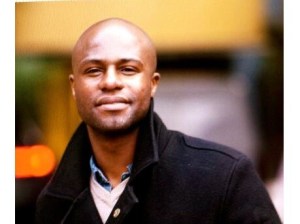
    Erik Akoto

    Akoto is the founder and publisher in chief of Litro Magazine. He also curates and comperes at literary festivals including Latitude and Hay.

    “Ultimately, nothing can replace the smell of a printed book.”


    Ben Armstrong
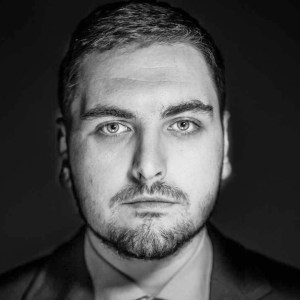
    B_IMG

    Ben Armstrong is a poet from the West Midlands, UK, who specialises in surrealist, hyper-real and absurdist pieces. His debut collection Perennial is out now through Knives, Forks and Spoons Press.

    “We’re living in an age of pastiche. This is the first time that our entire existence as human beings has become self-referential. It feels like we’re finally letting go of the concept of ‘time’ – the whole thing has just become delineated.”

    Katie Arnstein

    Arnstein is an actor, writer and musician from Screenshot 2019-04-21 at 21.17.49the Midlands. Her two solo shows have both won Show of the Week at VAULT Festival, with her most recent show, Sexy Lamp winning The Pick of Pleasance Award.
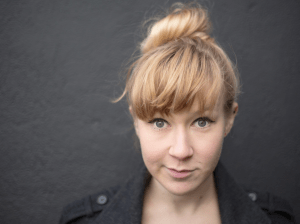
    “We need more female voices in every area of the industry; but particularly when it comes to making the decisions of what gets made.”

    Paul M.M. Cooper
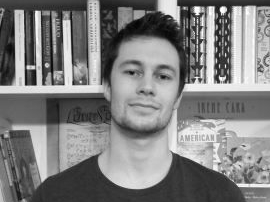
    paul-cooper.jpgCooper’s début novel River of Ink was one of the largest literary book deals at the London Book fair. He has written for websites and magazines, working as an archivist, editor and journalist.

    “Artists around the world are currently struggling beneath autocratic regimes, and their art is often the mode they use to express their dissent.”

    Rishi Dastidar
    img_0008_2.jpegDastidar’s poetry and reviews have been published in the Financial Times, Tate Modern and the Times Literary Supplement, amongst many others.

    “Don’t send your first draft: it won’t be ready. I guarantee it. If it takes 8, 16, 20 drafts to get a poem right, then take that long. This is a patient game. And the poem will wait for you.”

    Martina Devlin
    martina-devlin-columnist-image-2.jpgA former Fleet Street journalist, Devlin writes for the Irish Times and was named their National News Columnist of the Year. Her ambitious fiction, including About Sisterland, The House Where it Happened and Truth and Dare covers a wide range of genres and themes.

    “I love the characters who spring from my fingertips […] honestly, sometimes – on a good day – characters just muscle in unexpectedly. And I say to myself, well who are you?”

    Mike Dodson
    md-nitrb13Dodson’s photographic work has been used by organisations from the BBC to Pearson. Cutting his teeth as a copywriter and editor, he has written for Time Out, Viz and Private Eye, as well as the Metro newspaper.

    “The great thing about technology now is that it has made everyone a photographer. The problem with technology now is that it has made everyone a photographer.”

    Will Eaves
    IMG_9320

    Will Eaves is a novelist, poet and teacher. Arts Editor of the Times Literary Supplement from 1995 to 2011, his books have, variously, been shortlisted for the Goldsmiths Prize, the Ted Hughes Award for Poetry and the BBC National Short Story Prize.

    “Writing a book – and perhaps especially a book about a dreadful transfiguration – is a little like having a protracted fit. Once it’s over, there’s no way to retrieve the feverish actuality of the creative moment. Thank God.”

    K.M. Elkes
    kmelkes.jpg

    Winner of various international writing awards, Elkes is currently working on a debut short story collection and a novel. As a writer with a rural working class upbringing, his work often reflects marginalised voices and liminal places.

    “I don’t think it is ethical for a writer to create ethical responsibilities for other writers – they need to deal with their own shit.”


    Extra Secret Podcast

    IMG_4186Shhh, it’s a secret!

    “We don’t advertise. It’s tough to reach a vast audience without dumping a ton of money into it. Good content will propel the show forward. Ultimately if you’re trying to do a podcast to get famous, have a million listeners…you’re doing it wrong.”


    Julia Forster
    Julia-Forster-B&W-©-Alice-Hendy-2014Forster is an author, non-fiction writer, journalist and publishing professional. She is also a mentor for writers at the Literary Consultancy.

    “I believe that the crucial thing when writing an initial draft is not to judge yourself or your writing. Believe in yourself in epic proportions.”

    Mark Gillis
    Headshot-IMDBGillis is a writer, actor and director. His debut film, ‘SINK’ has been produced by Oscar-winner Mark Rylance and has received critical acclaim.

    “I think the current ease with which the fundamental structures of democracy are being dismantled is terrifying […] I guess it’s down to us to speak up.

    Karen Healy
    Karen HeadshotCo-founder of award-winning original comedy production company, Pondering Media, Karen is an actor, comedian, and social activist.

    “Even if you’re dying on stage every night, just keep getting up there and doing it, you will eventually find your voice.”

    Michael Healy
    MichaelThe other half of Pondering Media, Michael is a writer and director.

    “If the audience can’t walk in and get a strong impression of you and your work right away, you’re wasting your time.”


    Henningham Family Press
    d-henninghamHenningham Family Press (HFP) is the collaborative art and writing of David and Ping Henningham. HFP combines writing and art through fine art printmaking, bookbinding and performance.

    “There’s no point having an experimental writing scene populated by wealthy people from a single school.”

    Anne Beate Hovind
    Hovind, Anne Beate-2Oslo native, entrepreneur and public art professional, Anne Beate Hovind is the curator of the world-famous ‘Future Library’ project.

    “If you’re not curious about something, how can you have the passion for it, how can you find that energy?”

    Asher Jay
    AsherCoveredinPaint-SerengetiMural

    Asher Jay is an acclaimed designer, artist, writer, and environmental activist.

    “Look around you though, everything is life, there is nothing on this planet untouched by it. So I love life; I love all life on earth! […] because we are all the same when we breathe, when we allow ourselves to just be.”

    Tim Leach
    Tim LeachTim Leach is an historical fiction author and creative writing teacher. His debut novel, The Last King Of Lydia, was longlisted for the Dylan Thomas prize.

    “What is ‘reality’? I think that we are creatures of narrative, it’s how we understand and process the world. We tell stories to survive, and the stories that we tell become our reality.”

    Sean Leahy
    sean-leahy-3000x15000.jpg

    Named as one of the ’50 Funniest People on Twitter’, Sean Leahy has built quite the following on the Twittershphere as @thepunningman. Appearing on Buzzfeed, Comedy Central, The Poke, Huffington Post, Funny or Die and TimeOut (among others), he has recently published his debut children’s book, The Monster Cafe via award-winning publishers Unbound. 

    “Write all the time. Write again. Read it back, twice. You’re never finished.”

    Russ Litten
    LittenLitten is the author of “Scream If You Want To Go Faster”, “Swear Down” and “Kingdom”. His short stories have appeared in various international magazines and he has written for the screen and radio.

    “I don’t particularly like post-modernism that much. I find it a bit tiresome and unhelpful. I like sincerity and stuff that’s from the heart.”

    Iain Maloney
    0020.jpg

    Maloney is the author of three novels, First Time Solo, Silma Hill and The Waves Burn Bright and has been shortlisted for the Guardian’s Not The Booker Prize and the Dundee International Book Prize.

    “As writers, we have an ethical responsibility to engage honestly with our stories, with our subjects, not to shy away because a handful of people won’t agree.”

    Andrew McMillan
    McMillan photo credit Urszula SoltysOne of the most exciting new talents to hit the poetry scene in recent years, McMillan’s debut collection, Physical, was the first ever poetry collection to win The Guardian First Book Award.

    “I think all artists always wish they were proficient at something else, but I have no other skills, I can only write (and most days I can barely do that).”

    No Alibis Press
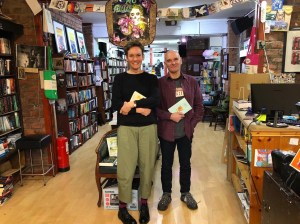
    e-d-in-no-alibis-with-books-e1546540038556.jpgBased in a small corner of Belfast, No Alibis Press is a small publishing company with a big shouty attitude.

    “Find a way to make your work unfamiliar as you redraft – writers’ techniques include printing out work, changing the font, reading aloud. The aim is to read it as though for the first time.”

    Katie Paterson
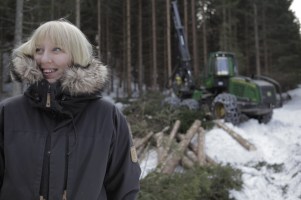
    Katie Paterson1

    Widely regarded as one of the leading artists of her generation, Paterson’s work collapses the distance between the viewer and the most distant edges of time and the cosmos.

    “I love the idea that you need to plan hundreds of years ahead for something to last or exist; it seems the antithesis of the current mode. Instead we live in a ‘one click’ world.”

    Laura Potts
    570Twice-recipient of The Foyle Young Poets Award, Potts has been published by Agenda, Aesthetica and The Poetry Business, while her radio plays have also appeared on the BBC.

    “Quite frankly, I think the world is creeping dangerously close to repeating those centuries of war and hatred it said it would leave behind. It makes a mockery of those who died for the sake of democracy; for gender and racial equality; for decency; for rights.”

    Joana Ramiro
    Joana RamiroJoana Ramiro is a journalist, writer and political commentator who has been featured on Channel 4 News, BBC and LBC radio, as well as debates against fellow pundits Peter Oborne, Michael White and Peter Hitchens.

    The role of a journalist at any time is to speak truth to power. To me that means looking at the balance of forces and asking yourself “Who is being exploited, oppressed, or used in this situation?” and then write about it.

    Nicholas Rougeux 
    Nicholas Rougeux

    Nicholas Rougeux is a Chicago-based web-developer, data visualisation and concept artist.

    “Stick with what you love doing. It sounds cliché but it’s true. There isn’t one guaranteed way to get what you want but if you keep doing what you enjoy, things tend to happen naturally.”

    Helen Rye 
    bio photoHelen Rye’s searing pieces of flash and short fiction have been nominated for numerous prestigious literary awards since she arrived on the short story scene in 2016.Se

    “Nobody wants to read preachy writing, but sometimes what drives us to write is an unbearable sense of injustice, or the suffering of other people.”


    Señor Samba
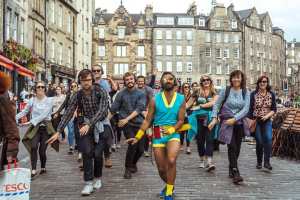
    Edinburgh 4In the spirit of all good interviews, Nothing in the Rulebook first encountered Señor Samba on a chilly night in central London, dancing in a group apparently gripped by some shared disco-infused hysteria and shouting half-correct lyrics of classic disco tunes at unsuspecting tourists.

    “I’ve been angry. Angry at the state of the world, angry at the state of my life, angry at the state of myself. The best way to combat anger is with love. Self-love, love of others. Play, joy, passion, and love.”

    Ian Sansom
    ian-sansom1bw.jpgIan Sansom is the author of the popular Mobile Library Mystery Series. He is also a frequent contributor and critic for The Guardian, The Daily Telegraph, The London Review of Books, and The Spectator. He is a regular broadcaster on BBC Radio 3 and Radio 4.

    “Like most writers, I am incredibly lazy and try to avoid all research if at all possible. If it’s necessary, I will do what’s necessary.”

    Paul Scraton
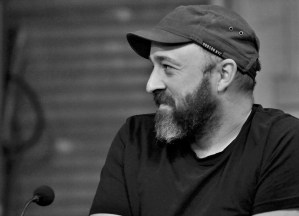
    Paul_BioScraton is a writer and editor based in Germany. His fiction debut is ‘Built on Sand’.

    “The deeper question is, why do we as society not value art and music and literature in a way that means that artists, musicians and writers can live from their work? Because the danger is that the majority of voices we will hear will increasingly come from a privileged minority, those who can afford, one way or the other, to “pursue their passions”.

    Matthew Smith
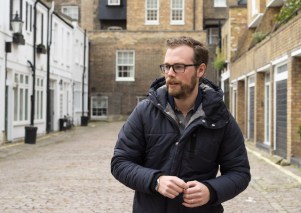
    1457448732152_2xAuthor, photographer and designer Matthew Smith is the founder of London publishing house Wundor Editions.

    “The internet is great for seeking out specific pieces of information and for communication, but after prolonged periods it wears away at your concentration and offers little in the way of sustenance.”

    Josh Spiller 
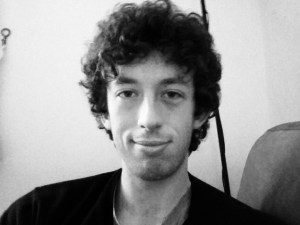
    FullSizeRenderComic book writer, essayist and author of speculative fiction, Josh Spiller discusses everything from story writing to taking on corporate power structures.

    “I think Star Wars a far stranger creation than I think most people perceive it as; with its bizarreness obscured beneath its patina as the pre-eminent popcorn blockbuster.”

    Justin Sullivan
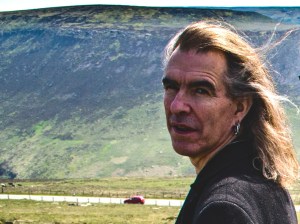
    JS (Trust a Fox)Justin Sullivan is a singer and songwriter; the founding member and lead singer of New Model Army. Formed in 1980 to play two gigs, 14 studio and four live albums later they are still going strong.

    “Political poetry and music rarely change people’s minds but what they can do is give focus and clarity to a half-thought and, most importantly, make people aware that they’re not alone in how they feel about the World.”

    Dr Chuck Tingle
    dr-chuck-tingle-2

    Erotic author and Tae Kwon Do grandmaster, with a PhD from DeVry University in holistic massage. Dr Chuck Tingle is an almost mythical figure.

    “being creative is just being yourself and trotting with YOUR OWN unique way. just waking up in the morning and stetching your bones is creative because every moment is making infinate timelines.”

    Ben Thomas
    006 Ben PortraitsThomas is editor of The Willows Magazine, author of The Cradle and the Sword, creator of TheStrangeContinent.com, and founder of the neuroscience news agency The Connectome.

    “words are magic, aren’t they? When we present a compelling argument or conjure an imaginary scene in someone else’s mind, we’re quite literally casting spells: shaping our own (and others’) perceptions of reality through the verbal evocation of ideas. I can’t imagine a more delightful or rewarding trade to be in.”

    David Turner
    DavidTurner_ThomBartleyDavid Turner is a poet and founder of Lunar Poetry Podcast – which features discussions, interviews and live recordings with poets in the UK and further afield.

    “I’m attracted to the idea of building a platform that provides a space for writers , to talk about their creative process.”

    The Ultra
    d20188987445f363cfd44e8282f153ebFirst founded in East London, The Ultra is a band that likes to experiment and create interesting emotive music that captures memorable hooks and melodies.

    “I think that there is a ‘battle’ against the independent artist and the big corporations for exposure and to make an impact.”

    Laura Waddell
    image1Shortlisted as Emerging Publisher of the Year by the Saltire Society, Laura Waddell writes reviews of fiction, a book column, articles, and short fiction and poetry.

    “Art is about communicating, and what is communicated forms the landscape we live in – what we can expect or demand from our politics, the perspectives we read, the stories that are told and on the record throughout history.”
     

  • 220px-Philip_Roth_-_1973

    Celebrated as “the last of the great white male” American authors of the 20th Century, Philip Roth has died at the age of 85.

    Rather than devote pages (or pixels, as may more accurately be the case) to an obituary recounting the same great feats of an author who has towered over the US literary scene for decades, we have endeavoured to find and bring to you short stories, as well as one excellent piece of non-fiction, written by the man himself.

    All the following texts are available online for free.

    Conversion of the Jews

    Extract:

    If one should compare the light of day to the life of man: sunrise to birth; sunset—the dropping down over the edge— to death; then as Ozzie Freedman wiggled through the trapdoor of the synagogue roof, his feet kicking backwards bronco-style at Rabbi Binder’s outstretched arms-at that moment the day was fifty years old. As a rule, fifty or fifty-five reflects accurately the age of late afternoons in
    November, for it is in that month, during those hours, that one’s awareness of light seems no longer a matter of seeing, but of hearing: light begins clicking away. In fact, as Ozzie locked shut the trapdoor in the rabbi’s face, the sharp click of the bolt into the lock might momentarily have been mistaken for the sound of the heavier gray that had just throbbed through the sky.

    Defender of the faith

    Extract:

    Long ago, someone had taught Grossbart the sad rule that only lies can get the truth. Not that I couldn’t believe in the fact of Halpern’s crying; his eyes alwaysseemed red-rimmed. But, fact or not, it became a lie when Grossbart uttered it. He was entirely strategic. But then—it came with the force of indictment—so was I! There are strategies of aggression, but there are strategies of retreat as well. And so, recognizing that I myself had not been without craft and guile, I told him what I knew. “It is the Pacific.”

    He let out a small gasp, which was not a lie. “I’ll tell him. I wish it was otherwise.”

    “So do I.”

    He jumped on my words. “You mean you think you could do something? A change, maybe?”

    “No, I couldn’t do a thing.”

    “Don’t you know anybody over at C. and A.?”

    “Grossbart, there’s nothing I can do,” I said. “If your orders are for the Pacific, then it’s the Pacific.”

    “But Mickey—”

    “Mickey, you, me—everybody, Grossbart. There’s nothing to be done. Maybe the war’ll end before you go. Pray for a miracle.”

    “But—”

    “Good night, Grossbart.” I settled back, and was relieved to feel the springs unbend as Grossbart rose to leave. I could see him clearly now; his jaw had dropped, and he looked like a dazed prizefighter. I noticed for the first time a little paper bag in his hand.

    “Grossbart.” I smiled. “My gift?”

    “Oh, yes, Sergeant. Here—from all of us.” He handed me the bag. “It’s egg roll.”

    “Egg roll?” I accepted the bag and felt a damp grease spot on the bottom. I opened it, sure that Grossbart was joking.

    “We thought you’d probably like it. You know—Chinese egg roll. We thought you’d probably have a taste for—”

    “Your aunt served egg roll?”

    “She wasn’t home.”

    “Grossbart, she invited you. You told me she invited you and your friends.”

    “I know,” he said. “I just reread the letter. Next week.”

    I got out of bed and walked to the window. “Grossbart,” I said. But I was not calling to him.

    “What?”

    “What are you, Grossbart? Honest to God, what are you?”

    I think it was the first time I’d asked him a question for which he didn’t have an immediate answer.

    “How can you do this to people?” I went on.

    “Sergeant, the day away did us all a world of good. Fishbein, you should see him, he loves Chinese food.”

    “But the Seder,” I said.

    “We took second best, Sergeant.”

    Rage came charging at me. I didn’t sidestep. “Grossbart, you’re a liar!” I said. “You’re a schemer and a crook. You’ve got no respect for anything. Nothing at all. Not for me, for the truth—not even for poor Halpern! You use us all—”

    “Sergeant, Sergeant, I feel for Mickey. Honest to God, I do. I love Mickey. I try—”

    “You try! You feel!” I lurched toward him and grabbed his shirt front. I shook him furiously. “Grossbart, get out! Get out and stay the hell away from me. Because if I see you, I’ll make your life miserable You understand that?”

    “Yes.”

    I let him free, and when he walked from the room, I wanted to spit on the floor where he had stood. I couldn’t stop the fury. It engulfed me, owned me, till it seemed I could only rid myself of it with tears or an act of violence. I snatched from the bed the bag Grossbart had given me and, with all my strength, threw it out the window. And the next morning, as the men policed the area around the barracks, I heard a great cry go up from one of the trainees, who had been anticipating only his morning handful of cigarette butts and candy wrappers. “Egg roll!” he shouted. “Holy Christ, Chinese goddam egg roll!”

    An open letter to Wikipedia 

    Extract:

    Novel writing is for the novelist a game of let’s pretend. Like most every other novelist I know, once I had what Henry James called “the germ”—in this case, Mel Tumin’s story of muddleheadedness at Princeton—I proceeded to pretend and to invent Faunia Farley; Les Farley; Coleman Silk; Coleman’s family background; the girlfriends of his youth; his brief professional career as a boxer; the college where he rises to be a dean; his colleagues both hostile and sympathetic; his field of study; his bedeviled wife; his children both hostile and sympathetic; his schoolteacher sister, Ernestine, who is his strongest judge at the conclusion of the book; his angry, disapproving brother; and five thousand more of those biographical bits and pieces that taken together form the fictional character at the center of a novel.


  • Katie Paterson1.JPG
    Katie Paterson. Photo by Giorgia Polizzi. 

    In 2114, 1,000 trees planted a century previously in the Nordmarka forest in Norway will be cut down. From their wood, the pages of 100 texts from 100 authors will be made and published.

    How can we make such predictions? Well, this is the end-goal of a generation-defying artistic project called the Future Library. Conceived by Scottish artist Katie Paterson, and supported by library curator and entrepreneur Anne Beate Hovind, it is an idea that has captured global imaginations.

    Celebrated authors Margaret Atwood, David Mitchell, and Sjón have already committed works to the project, with Turkish novelist Elif Shafak set to add her manuscript to the project at a handover ceremony in early June 2018.

    This is a living, breathing, organic artwork that spans time, literature, ecology and human mortality.

    So how does one first conceive of such a project? The Nothing in the Rulebook team were honoured to catch up with Paterson – widely regarded as one of the leading artists of her generation – to find out.

    It is an honour to bring you this detailed interview…

    INTERVIEWER

    Could you tell us about yourself, where you live, and your background?

    PATERSON

    I’ve recently moved back to Scotland, I live in Fife, before that I was in Berlin for about 6 years and before that I lived in London. I studied at Edinburgh College of Art and then the Slade School of Fine Art. I graduated nearly 10 years ago, which is frightening!

    INTERVIEWER

    Is art your first love, or do you have another passion?

    PATERSON

    It definitely is; it was the most obvious direction I was going to go in. I knew that from a young age – I was always a daydreamer and spent time lost in other worlds. Of course, it’s difficult when you’re at that age to have any sort of clear vision of what the future is going to hold. I would never have predicted or been able to visualise what has happened in the years that have followed.

    INTERVIEWER

    Could you tell us a bit about your journey from making that decision – to pursue art – to where you ultimately are now, particularly with the Future Library project?

    PATERSON

    Throughout my career I’ve remained open to different disciplines. At art school I was wondering around and changing between sculpture and fine art and fashion – and later astronomy and geophysics – and I couldn’t settle on a discipline. It makes sense now because I still don’t really settle when it comes to any disciplines.

    I’ve always been quite resourceful when it comes to trying to make projects happen – it was quite clear to me from early on that the kind of ideas I have are complicated and they were never going to happen unless I worked really hard to make them happen – they were going to need willpower and dedication; not just from me but also from other people who would need to be invested in the projects.

    INTERVIEWER

    It’s interesting you mention the need to rely on others and pitch them often quite complicated ideas; because, as Anne Beate says in her interview with us, when you first get approached with the idea for a project that is for 100 years in the future, it can be quite crazy. But you were quite aware of that?

    PATERSON

    Oh absolutely – I am so lucky that I met her! She is an absolutely remarkable woman – it takes a lot of dedication for somebody to take on one of my projects; they’re not simple by any means! And especially Future Library. It’s the sort of project that you throw your life into.

    INTERVIEWER

    With a project of such scale, how did you first conceive of the Future Library?

    PATERSON

    It was simple I’ve got to say. As these things often can be at the beginning – or at least, it seemed simple. I was drawing tree rings, and as I was doing that I very quickly made a visual connection between tree rings and chapters in a book and paper and trees and time. And I had a vision of a forest that was growing a book, and that the book was made of chapters of tree rings – and it would evolve and grow over time.

    That all happened in a snippet of time and then, from there, it grew. I met Anne Beate and it became a stronger concept once I realised that it could happen in reality – even though in my mind it had been one of the wilder ideas that I’ve had.

    FL_KP_5.JPG
    Tree rings. Future chapters. Photo by Giorgia Polizzi.

    INTERVIEWER

    In terms of just the practicalities of actually making an idea like that a reality – what steps did you both have to take at that point?

    PATERSON

    The very first step was proposing it to BI, the producers: ‘I’ve got this idea to grow a forest over 100 years’!  Incredibly, they said yes – and then we built the idea slowly, ‘brick by brick’.

    I called Anne Beate when I got back to Berlin a few days after the proposal and asked if I could come back to Norway immediately and go to a forest and stay for a while. She was quite surprised, then set it up and I stayed in her relative’s cabin deep in the woods where there was no electricity, no running water.

    INTERVIEWER

    How did it feel to get really back to basics in that way?

    PATERSON

    It was a remarkable experience – until then the idea for Future Library was so abstract, I felt I had to go and be in a Norwegian forest for some time to visualise it becoming a reality. There, it became a more solidified idea, imagining the authors and the time scales and how we might build in a ritual every year with the ‘handing over’ ceremonies.


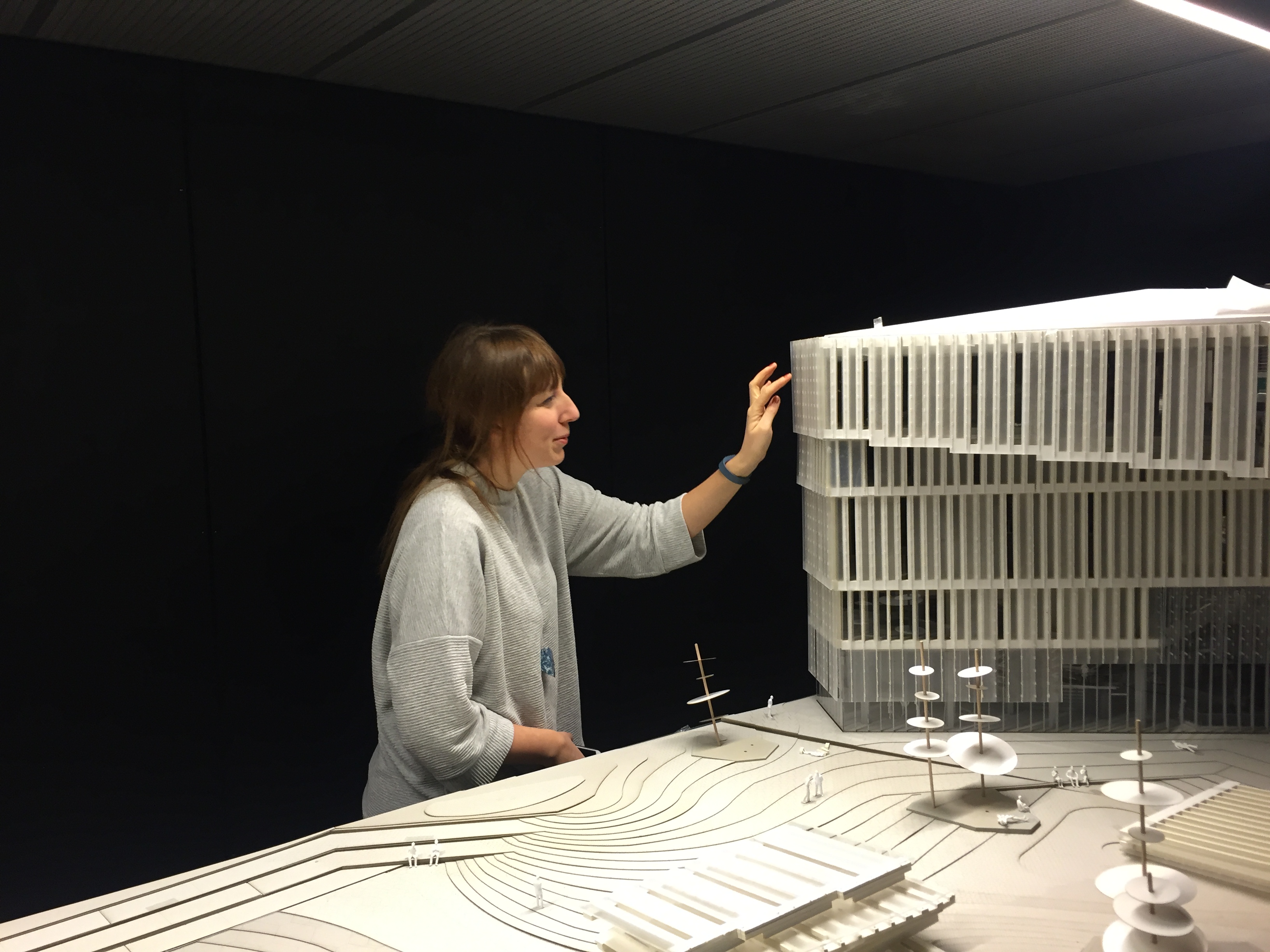
    From there, there were several different stages, including finding the forest. Anne Beate liaised with the City of Oslo, who donated us the land and the trees. And then there is the library aspect; we’re creating a silent room inside the new Oslo public library that will open in 2020. It’s going to house the manuscripts for the future, I’m designing it with the architects of the library.

    KP_library.JPG
    Designing the silent room in the Oslo public library where the manuscripts will be stored for the next one hundred years. Photo credit: Atelier Oslo and Lund Hagem

    Many aspects were in place before we started inviting the authors. We didn’t approach Margaret Atwood until we felt like this was really happening.

    INTERVIEWER

    Until it felt more real and tangible.

    PATERSON

    Exactly. The trees had taken root.

    INTERVIEWER

    Did you have any expectations for the project at all? Did you realise it was something authors would want to get involved in, or were you sort of cautious when you first approached Margaret Atwood?

    PATERSON

    Oh sure we were so shocked and amazed and delighted. It was such a wonderful moment when she said yes, it was a huge seal of approval. Margaret Atwood was a remarkable writer to open the project. Even though we’d planted the forest it was at that moment when I realised ‘this is it; this is something that is going to continue for the rest of our lives’.

    katie_paterson_MG_0183.jpg
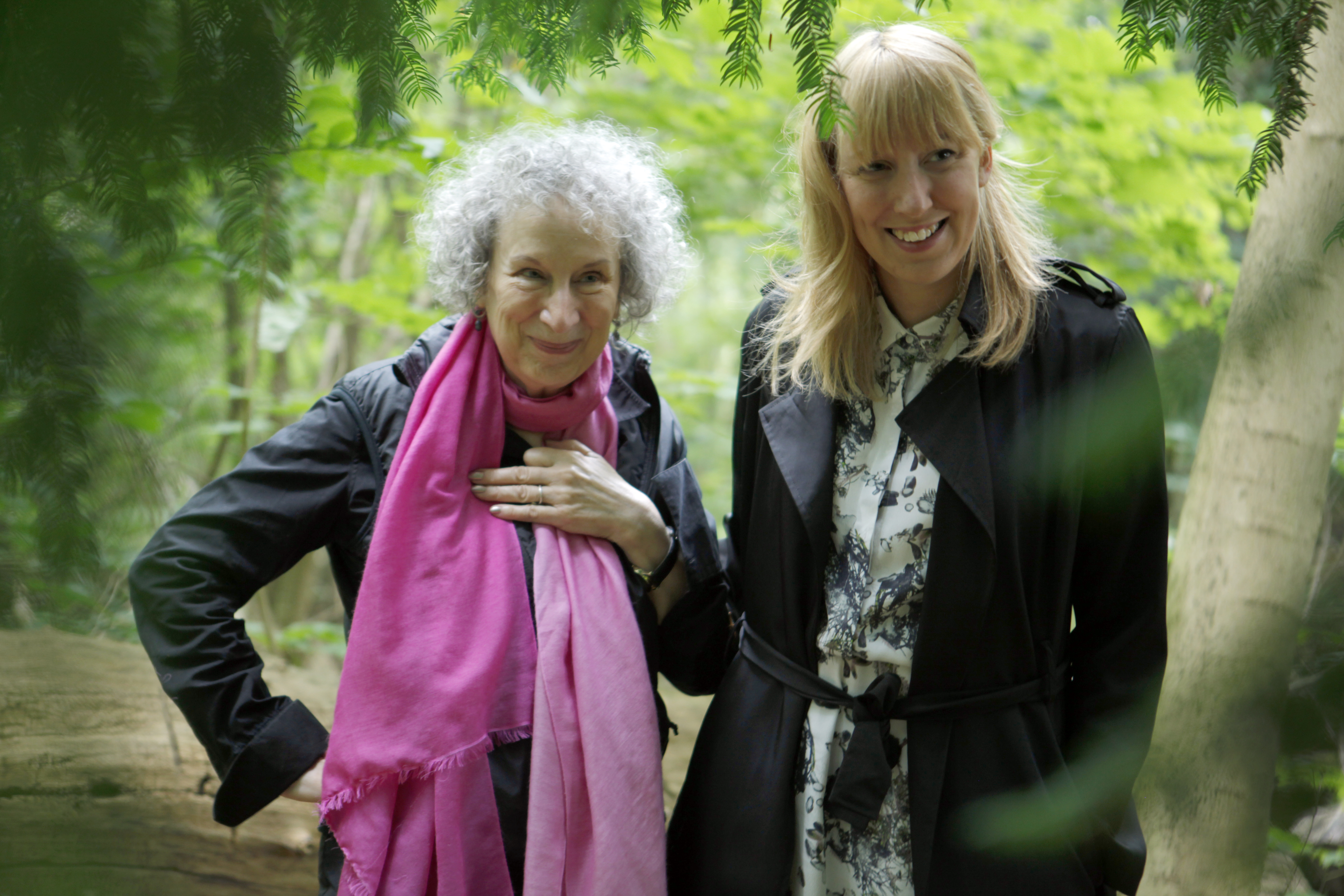
    Margaret Atwood was the first author to donate a manuscript to the Future Library. Photo by Giorgia Polizzi

    From there, it just grew and grew; it’s gone from a project that was quite theoretical to a living artwork that is really taking form. We’re now on year four – the handover with Elif Shafak is next week (2 June) and we’re working with next year’s author too. Future Library is a major part of our lives; it’s intertwined with daily life, and the ritual that repeats each year is a defining moment.

    INTERVIEWER

    There’s something striking about the rituals built into the project and how they are set to carry on for a hundred years. We live in this age where everything is so focused on the present and the here and now, that we have lost track of ideas that span across generations. Was the idea of longer term, ‘cathedral’ thinking specific in your mind when you first came up with the idea? Or is it something that solidified more as the project progressed?

    PATERSON

    It wasn’t specific at the beginning; the initial idea appeared in a flash, the repercussions of the idea were unclear. Future Library is evolving into something far more complex than I could have imagined.

    The ‘cathedral thinking’ you mention is really interesting. I continue to be inspired by a place I’ve visited called Ise Jinju in Japan, a Shinto shrine near Kyoto. Here shrines have been built and rebuilt in exactly the same form every 20 years, for a few thousand years. And the community have been growing the wood for the shrines in a special forest, over this vast expanse of time.

    I love the idea that you need to plan hundreds of years ahead for something to last or exist; it seems the antithesis of the current mode. Instead we live in a ‘one click’ world.

    INTERVIEWER

    Do you think it feels there’s a certain ‘unreal’ element to our lives in that respect? As you say we spend all this time clicking on social media; but not actually participating in our social lives. It definitely seems to stand in contrast to those things that are real – a forest and nature, but also an actual physical printed book.

    PATERSON

    Exactly. Of course, I’m absolutely part of this technologically driven culture, too. Though when I am inside the forest there are moments when I am acutely aware of the timelessness nature of trees. It could be any era on earth there, just about! You could be standing thousands of years in the past in the same forest or you could be standing there thousands of years into the future and it could almost be the same place.

    I love that feeling to be sort of outside of time or inside of time – to be somewhere, where time is drawn out, and to not have this ‘instant-ness’ feeling that seems to be there in many other aspects of life.

    INTERVIEWER

    How do you feel that sensation of time slowing down – especially during the handover ceremonies or when you’re in the forest – affects you at all? Is there a spirituality to it?

    PATERSON

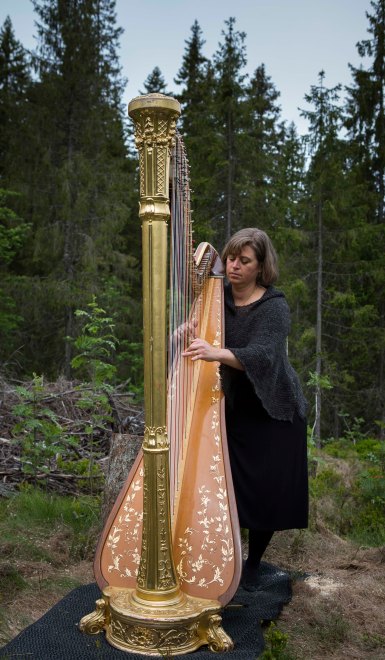
    Last year, we had a golden harp brought in for the ceremony and the musicians were warming up with us there early in the morning – there was such quietude, a serene moment that’s hard to define, when everybody was gearing up amongst the trees – time slows down and it’s just precious. Then the authors arrive and walk in the footsteps of the previous authors and those of the future and it’s all part of this rite we’ve created that will continue for the next 96 years. Elif Shafak uses the term ‘secular acts of faith’ and I believe Future Library is one of these acts.

    7_KP_FL_harpe-future library-kristin von hirsch-6538.jpg
    A golden harp for the 2017 handover ceremony. Photo by Kristin von Hirsch

    INTERVIEWER

    The relationship with nature is clearly so bound up with the project – do you think that the project speaks to people partly because we live in an age where we are also suffering the effects of environmental break down?

    PATERSON

    I think so. The planet is being destroyed and it’s affecting all of our lives. In that sense nature feels really close – you can’t help but think how even the rain falling on our heads is connected to the changing climate and the way the planet is trying to survive.

    I think appreciating our natural environment is something Norway does exceptionally well. Our forest is a tiny patch inside the larger forest that surrounds the whole city of Oslo, which is protected under law so developers aren’t allowed to encroach on it. Oslo’s citizens deeply appreciate the forest too, and I think in a way this cultural link with the forest is why the city have been so supportive of Future Library.

    INTERVIEWER

    It seems really appropriate in that sense how links up the timeless nature of writing – you think of Shakespeare, Shelly, Austen, Joyce – and how writing and literature can stretch across centuries; just as trees and forests do, too. How do you think authors today can write for the readers of tomorrow?

    PATERSON

    A book is an object that survives time and passes voices through time.

    It’s so easy to forget that books come from trees! I am an e-reader and use technology all the time; but how can we improve on the printed book? It’s not possible! Who knows what the methods of reading will be like in a hundred years’ time. The form of reading may be something that’s so far beyond our imagination right now.

    If you jump back a century – that generation would never have guessed the authors that are writing now – it’s unimaginable – it’s too long a gap to perceive of. I find it odd that the authors right now will be authors from the past, many will be dead. And then the authors at the end of this project will still be alive and be read by their contemporaries.

    INTERVIEWER

    There’s a certain sense of mortality tied up in the project. Do you think about that or dwell on that at all?

    PATERSON

    I do; and it can be disconcerting. Of course, I did conceive this project so that it would be going on beyond my lifetime so I was always aware that I wasn’t going to be around to see it through – it’s about getting everything set up to ensure it keeps going after we’re gone.

    The question of mortality is there – even the legalities of artist’s contracts have to contain clauses relating to death. I had a child this year and so he’ll be coming with me to the handover ceremony. He won’t quite be one years old at that point; I’ve thought how I deeply hope he will be around to read these books.

    INTERVIEWER

    Thinking about the future, do you have an idea or ideal in your head about what the final ceremony will be like. Or are you very prepared to let it go?

    PATERSON

    My greatest hope is that it’s still there at that point and that there is a ceremony and that the world hasn’t collapsed in on itself! It’s an emotional thought, the final ceremony, and the idea of those vast trees we know so well, being cut.

    We’re always troubleshooting with Future Library and thinking what could happen that we need to prepare for –  but it’s the unpredictable things that worry me. But ultimately you have to have trust and hope and I think those are key concepts within the project.

    INTERVIEWER

    Do you ever think about the authors and what they’re actually writing and the stories they are going to produce – is there anything you are hoping for?

    PATERSON

    We leave it entirely up to the authors, it’s important that they have free reign to write whatever they chose. The only rule we have is that there are no illustrations – just the written word. I like to imagine what is hidden within their manuscripts, but it’s more satisfying to not know because in some ways that’s the key to it all – that none of us know and it’s going to be a complete surprise to those in the future.

    Each author brings a completely different perspective to the project, and that’s important, it doesn’t concern one set theme – it’s about bringing people together.

    INTERVIEWER

    Do you feel there’s a certain sense that each author brings something different but complementary to the project, in that case?

    PATERSON

    Yes, I think there is a thread that connects all the authors together. There is this almost familial bond that we create with them. Like a family tree, and each author follows in the footsteps of the one before and through the annual ceremony we do create a chain of people who are connected through time and through the trees.

    15_Katie_Paterson_Future_Library
    A path through the Nordmarka forest – where the footsteps of authors past, present and future will follow. Photo by  Kristin von Hirsch

    INTERVIEWER

    Isn’t that the truth of so many artists and writers in general; we’re all in conversation with one another.

    PATERSON

    Absolutely. And here they are each having a conversation with the authors that have come before; but also those who are still to come.

    INTERVIEWER

    And what’s still to come from you – could you tell us a little about some of the future projects you’re working on?

    PATERSON

    I’m actually working on a book myself at the moment – called ‘A place that exists only in moonlight’. It’s a collection of over 100 short texts that are similar to haiku; they are ideas for artworks to exist in the imagination. I have a lot of ideas for artworks but not all of them turn into real forests! So I’ve been writing them as text works, they come alive in the reader’s minds.

    INTERVIEWER

    There’s a certain lightness there it sounds like to be able to note down these ideas without necessarily having to worry about putting them into reality. And it’s interesting to consider what you mentioned earlier about not ever committing to an artistic discipline and possibly pigeon holing yourself into that. Do you think that creativity is something that can be defined or is it something we can pursue in many different ways?

    PATERSON

    I’m so open when it comes to creativity – that’s what creativity is; it’s about being as open and curious as you possibly can be. For me creativity flourishes most when I don’t pay attention to boundaries or limits. It doesn’t matter whether an idea exists as something real or not – it’s about letting the imagination go as far as it possibly can – even to the point of absurdity.

    INTERVIEWER

    If you had one piece of advice for people – artists and writers – what would it be?

    PATERSON

    The imagination needs tending to. Take good care of it.

    KP_FL_2017_Photo_Kristin von Hirsch-7278
    Tending trees as you must tend to your imagination. Photo by  Kristin von Hirsch
  • Cash receipts and till slips

    Receipts are very obviously very wrong. Anyone – man or woman – after a day’s Christmas shopping can see this. The hardware shop you go into to buy your dad that new pair of gardening gloves has a stupid bit of token paper about one inch square, whereas when you go to the stereo shop to get the electrical wire for your nephew’s speakers they give you two sheets of A4. Supermarkets tend to give you an acceptably-sized ticket, though that’s only because all you’ve bought is two bottles of Cava and a box of Matchstick chocolates, and then going into the clothes shop to get your sister that jumper, and they give you another bloody receipt of another bloody size. And do not get me started on Apple now doing “electronic receipts” by email oh dear gods they need to burn, burn, burn.

    A man’s wallet is the same size – whomever the man, whatever his wallet. It’s battered, and contains his cards, his work ID, a couple of pictures of his kids, a used train ticket and a fiver. It’s 7 inches long by 3 1/2 high (yes yes – calm down), and can a twenty, a ten and a fiver (a £50 note is actually slightly too big for it – the Royal Mint know this, and that’s why they’re that size – to repress the peasants and make sure that should we ever get hold of one we ruin it’s loveliness immediately if we try to store it away, thus perpetuating the mental subjugation of the working classes).

    So the solution is this: make all receipts the same size. 2½ inches wide by as many as necessary long. This will offer enough room for a company logo, time and date, transactions, and a corporate pleasantry at the bottom. They will then be big enough to be stored together in an easily filed, accessible manner; smaller than the notes but big enough to read, and will have the added advantage that also women’s handbags and purses can then be adapted to have a dedicated receipt section (and every handbag is only ever on the brink of being replaced for a newer, nicer one, as eny fule no), thus boosting the economy.

    It’s an obvious problem, and this is the obvious solution.

    About the author of this post

    goatmanThe Goatman – due to the usual experiments going wrong etc etc, The Goatman is  an internationally-available gentleman of letters, raconteur and wit. His amorous conquests are myriad, his taste in whisky of renown, and his ability to look comfortable in extreme situations is of significant scientific study. He has been known to conspire with Vagabond Images.

  • Warwick University’s Writing Programme (WWP) has been consistently ranked as the best creative writing course in the UK for the past five years. In this article, Ellen Lavelle, one of the 2018 cohort of WWP’s MA students, takes us through the trials and tribulations of publishing a unique anthology of student writing. 

    Manifest.png
    Manifest: the Warwick MA anthology 

    I am not a team player. This is probably because a) I am an only child and b) I took AS Theatre studies at school, when I learned that all group projects are doomed to failure, you can’t trust anyone to do anything and that betrayal is an inherent part of human nature. I can trace the solidification of these beliefs to the moment when I discovered that, five minutes before we were supposed to go onstage to give our final performance of A Street of Crocodiles, a cast member had eaten a crucial prop. Apparently, a boy in my class does a good impression of me in this moment, blinking and murmuring ‘you’ve eaten it – you’ve actually EATEN it,’ repeatedly in a dark corner of the rehearsal room.

    And so, I never expected the MA in Writing Anthology to work very well. My distrust in people is probably one of the reasons I like writing so much. Everything within the universe of your story, poem, memoir, essay, etc. is down to you. You control every element, at least until you have to get it published. I think it’s a fair assessment to say that most writers exhibit control-freaky behaviour, tend to be perfectionists and can generally be unwilling to compromise. Rounding up twenty-two of us and telling us to create an anthology of our writing as a team, from generating the content to designing the cover and getting it printed, was a pretty ballsy move by the Warwick Writing Programme.

    “Becoming a successful writer is no longer just about writing a good book”

    But, in this changing landscape for literature, these kinds of skills are becoming increasingly important to writers. Becoming a successful writer is no longer just about writing a good book; it also involves participating in a wider literary culture, editing and reviewing the work of other writers, knowing how to speak to people at events and having an answer ready when Norma from Grimsby sticks up her hand and asks if you think e-books are the work of the devil and are going to destroy reading for everyone, everywhere. Creating the anthology was a great idea; but it was going to be tough. It would involve talking to people that didn’t agree with me and trying not to sound like a power-crazed lunatic. However, I do have the ability to be diplomatic, buried somewhere deep within me, so I reckoned I’d get by okay. As long as I didn’t have to do anything with money.

    During the first meeting, back in October, a representative from the previous years’ cohort, Steve, turned up with a big bag of money. Steve is in his fifties and is a responsible human – he has a career and grown-up children, is able to wash his clothes without making everything pink or several sizes too small. I’m twenty-two and recently had to google how much rice is too much rice. But Steve was giving that bag of cash to someone and, because I was the slowest person to avert my eyes and sit on my hands, that person ended up being me.

    ‘You get a little card-reader,’ Steve said, handing me a folder of paperwork and the bag of cash. ‘To confirm your identity when logging in.’

    I went home and tried to log in. Access denied. I realised that the person that had created the account didn’t know how to spell the word they’d set as a password. I logged in.

    We had money left to us but we needed to raise more. This was where the creative energy came in. Also useful was the expertise of Annie, who owns her own communications company and has thirty years’ experience in the business world, making connections and money; getting shit done.

    Annie enrolled on the MA course in order to give herself time to write the novel she’s been waiting years to complete – an account of the life of Cecily Neville, mother of Edward IV, Richard III and matriarch of the fifteenth-century House of York. Annie could give Cecily a run for her money. Half a meeting in, we were discussing agreements with Costa Coffee, fundraising events, and a ’Friends’ initiative – where people could sign up formally to be supporters.

    Katie, another of our  MA cohort, had also left a career to return to studying and is an expert at event organisation, having put together several LGBTQ literary festivals and worked on publicity teams for charities. It was her initiative to start up an Eventbrite page, an Anthology Mailchimp account and a profile on the university crowdfunding platform, so that people could donate easily online.

    “Within a few months, we had our first fundraiser. Our tutors read, drank wine and Warwick professor, David Vann, conquered the raffle. Meanwhile, I learned that you need more than one Tupperware box to effectively run a drinks stall, a food stall and a tombola.”

    We went on to have three fundraisers and I learned a lot more. I learned that you need to stop people distracting you while you set up a float, otherwise you’ll forget how much you put in. I learned to never invite untested comedians to perform on open-mic nights because they’ll do long, drawn-out jokes about blind people bumping into things while your blind friend sits next to you, her guide dog panting in the central aisle.

    But I also learned that expert bar staff lurk in all kinds of places. Ed, who finished his undergrad at Warwick last year and writes tense, emotional dramas, is also the President of Warwick’s Real Ale society. My lack of Tupperware didn’t stop him making a mint on the drinks stall, bantering with guests, pouring cheap wine into plastic cups like it was rare, exalted champagne. I learned that some people will travel a long way, in crammed cars, stuffy trains, to support their friends or family. They will pay five pounds for a paper plate of Costco buffet food and sit on uncomfortable chairs in windowless rooms, listening to nervous people read out loud from something they’ve worked really hard on. I learned that windowless rooms can be exciting places.

    Costanza is Italian, did ballet for sixteen years, and is now writing a novel about Clytemnestra, the queen who, according to Greek myth, killed her husband, Agamemnon. She wears amazing earrings and has friends that are artists.

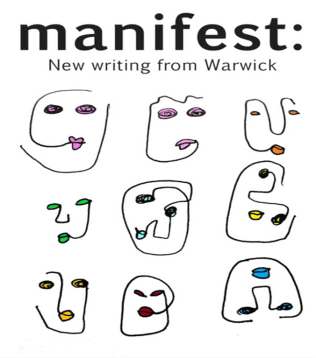
    ‘What do you think of this?’ she asked us, holding up her phone. It was an illustration by her friend Gaia, of a collection of abstract, cartoony faces. And then we had our cover.

    A few quick-fire observations:

    Names are hard. Whatever you do, don’t ask me to name anything. In the end, we went for ‘Manifest’, which is vague enough to encompass all twenty-two featured pieces of writing, but hopefully interesting enough to encourage people to pick up the book. It wasn’t an easy decision. Feathers were ruffled. We voted and when there were signs of dissention, had another vote. There were still murmurings, but you can’t argue with democracy. Even when you want to.

    Deadlines: lie to people. Tell them the deadline is at least a week before it really is. Have no shame. You’ll thank me, when people decide to change what they’re submitting, or don’t give feedback in time or give feedback too enthusiastically and brutally, prompting the author of the story to have an existential crisis and consider giving up writing forever.

    Sign off from harsh emails that enforce deadlines or chastise bad behavior as ‘the committee’, not as yourself. ‘The Committee’ is a usefully vague entity. Sometimes, they made tough decisions, but they got the job done. And it was important that those tough decisions couldn’t be traced back to a single person. It wasn’t me or Katie, Annie or Vanwy, who sees the good in absolutely everyone, even when the rest of us find it impossible. It wasn’t Costanza or Luke, whose facial expressions never reflect what’s going on around him but what’s going on inside his head, as he breaks away from discussions to jot down lines for his stories in a little green notebook. You couldn’t blame Anna or Miloni, who worked so hard buying food, booking rooms but bore it all smiling. It wasn’t any of us. It was the committee.

    People moan and want to have someone to blame, but they’d probably moan no matter what. You have to do the thing. Who made the decision? The Committee. Who’s to blame? The Committee. Who got the book published? The Committee.

    But of course, it’s about the journey, not the destination. Our book launch is on 13th June, at Waterstone’s Piccadilly in London. It will be amazing to hold the book in my hands, to meet agents and publishers that could help me get the career I want in writing. It will also be amazing to watch my colleagues, now friends, read the writing I’ve seen them working on. We had our last meeting in the pub and, when it was over and I was walking away, I turned back towards the table. Sometimes, people don’t eat the props. Sometimes, they create props that are better than anything you could do on your own.

    A note to any prospective employer: I am in fact a great team player. My only flaws are my extreme modesty and my tendency to underestimate my own abilities. And, just for the record, 75g of rice is the right amount of rice.

    About the author of this article

    Ellen LavelleEllen Lavelle is a postgraduate student on The University of Warwick Writing Programme. An aspiring novelist and screenwriter, she has worked with The Young Journalist Academy since the age of fourteen, writing articles and making short films for their website. She’s currently working on a crime novel, a historical fiction novel and the script for a period drama. She interviews authors for her blog and you can follow her @ellenrlavelle on Twitter.
     

  • czech-library
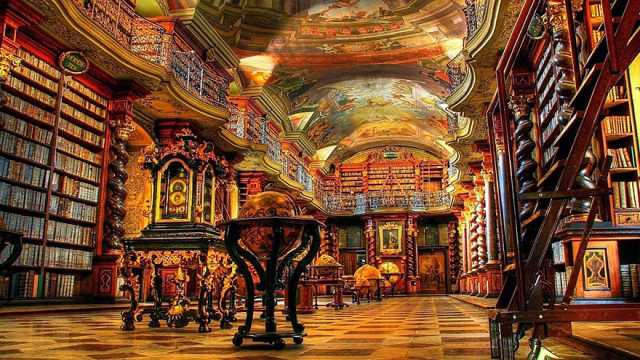
    Libraries are the ideal sanctuary for books. Pictured: the Klementinum Library

    “If you do not value libraries then you do not value information or culture or wisdom,” opined Neil Gaiman as he reminded us of our obligation to support libraries. With Local Elections now taking place across England in thousands of towns and villages, English citizens (and readers of Nothing in the Rulebook) now have a chance to fulfil that obligation, by voting for party candidates who have stressed support for libraries.

    Now, if you didn’t need convincing that libraries are a fundamental necessity to supporting our culture and society, consider the words of famous writers, artists, politicians and even astronauts – who all, many moons ago now, wrote letters to schoolchildren on the value of our public libraries.

    You may also consider the words of Ayub Khan, president of the Chartered Institute of Library and Information Professionals (CILIP), who says: “Public libraries have transformed in recent years to become a true ‘hub’ at the heart of their communities. They offer opening hours to suit local needs, high-quality Internet and WiFi access, business and enterprise support, local information and digital skills along with a huge range of events and activities that add richness to the lives of local residents.”

    After years of a Conservative government in the UK houses of parliament, funding for libraries has been repeatedly slashed – with local conservative councils often cutting funding completely. Indeed, almost 600 libraries have closed since the Conservatives came to national power in 2010.

    So, what can be done?

    At a national level, the only two political parties who have stressed a commitment to supporting local libraries are the Green Party and the Labour Party. Some local Lib-Dem candidates talk a good talk about saving libraries in their community; yet at a national level the party continues to doggedly believe in austerity and neoliberalism, which have led to the decline of libraries as such vital pieces of infrastructure and support for local communities.

    The inverse is sometimes true of Labour – with some local councils, such as Lambeth, Lewisham and Sheffield, cutting councils despite national party policy to the contrary. Of course, these councils argue the cuts are a necessity, caused by crippling cuts to local authority budgets enforced by on high by the inept, cruel, and deluded Conservative national government.

    What this all means in the immediate term is a need to vote for your local councillors based on their personal commitment to libraries in your area.

    What it means for the longer-term is that pressure needs to be applied on a local and national political scale to ensure libraries across the UK no longer suffer the successive series of cuts, which will surely  continue under a Tory government.

    Yet, there is hope. 

    As Alan Wylie, writing in Open Democracy, explains:

    “The good chance of a Corbyn led Labour government in the near future affords us an opportunity to influence policy which supports public libraries and the staff who work in them.

    […]

    We need to get Labour to develop a national policy and then use it to whip these and other councils into line and commit to upholding and strengthening the statutory basis of public libraries. Then we stand a chance of reversing/halting the damage.”

    There are a number of excellent campaign groups organising around our local libraries that you can also get involved with. These groups help lobby politicians on national and local levels to ensure continued support for these “ideal sanctuaries for books“.

    For example, the ‘Speak up for Libraries’ campaign is organising to get MPs and councillors to commit to the following manifesto:

    • Give libraries a long-term future, with a vision for their future development and clear standards of service.

    • Enforce the commitment in law for local authorities to provide a ‘comprehensive and efficient’ library service. This commitment should also include digital, ICT and e-book services.

    • Acknowledge that libraries are important to individuals and communities – especially in times of hardship.

    • Enforce the duty that local authorities have to properly consult with communities to design services that meet their needs and aspirations.

    • Ensure that local authorities receive sufficient funding in order to deliver properly resourced and staffed library services.

    • Recognise that properly resourced library services contribute to the health and well-being of local communities and of society as a whole and therefore complement the work of other public services and of national government agendas.

    Once you’ve voted; the obligation to support our libraries continues. Use the above manifesto to petition your councillors and MP yourself. And, of course, spread the word on social media!

    A haiku for voting

    Before you go, and as a treat for reading to the end of the article, we’ve written the following #Getoutandvote haiku, just for you. Enjoy!

    Today: don’t forget,

    Exercise your right to vote

    Raise your voice for change


  • dr-chuck-tingle

    A few years ago, a new literary sub-genre exploded onto the publishing scene. The sub-genre in question was dinosaur erotica (no need to beat around the prehistoric bush here – these are books where dinosaurs have sex with humans. You can read our detailed introduction here). And, as sales of these books started to take off, so too did the careers of the pioneering authors behind them.

    Among these pseudonymous writers, one name perhaps stands above all others: Dr Chuck Tingle – the Hugo Award shortlisted author of Space Raptor Butt Invasion and My Billionaire Triceratops Craves Gay Ass. Self-proclaimed as the “greatest author in the world” during one of the most incredible Reddit AMAs to date,  Dr Chuck Tingle is somewhat of a mythical figure – with questions over his identity still very much unanswered.

    Always keen to shed light on the work of creatives working around the world, Nothing in the Rulebook reached out to Chuck to see if he would be willing to be interviewed by us. And we were genuinely delighted when he agreed.

    It is a rare privilege for the team here at Nothing in the Rulebook are able to interview someone at the very cutting edge of their writing field (not to mention a Tae Kwon Do grandmaster with a PhD from DeVry University in holistic massage). It is therefore a true honour to bring you the following interview.*

    INTERVIEWER

    Tell us about yourself, your background and ethos.

    DR CHUCK TINGLE

    My name is DR CHUCK TINGLE and i am from billings montana. i was born in HOME OF TRUTH UTAH with mom and dad and that was a very lonesome time. i was by myself in the fields walkin around learning the ways of the world like what is the wind and why do the trees sing? so then i learned this way. i started writing books there but i gotta hide them under the floor so mom and dad dont know whats going on in the butts heart of man of chuck (then boy of chuck) then one day was THE BIG FIRE and this was a scary way next thing i know im on the road to billings then i became a billings man started a dang life. now i am the worlds greatest author and i like to tell stories but i also like to prove that love is real on all timelines. thanks.

    INTERVIEWER

    Who inspires you?

    DR CHUCK TINGLE

    well there are all kinds of ways to be inspired sometimes it is just waking up and hearing the neighborhood birds that inspires my way. thinkin ‘WOW there they are again just talkin their talk and learning about the world maybe i should learn about the world too.’ but other ways of inspiration as a writer is R M STIME hit writer of books THIS LAND IS HORRIBLE AND A MONSTER IS HERE and MY DUMMY IS HANDSOME and DANG THATS A HAND ON THAT DOOR BETTER CLOSE IT so that is important but also STEVES KING writer of JACKS BACK: MY DAD IN THE MAZE and other tales. lets so other insperation is classic jokerman name of ANDYS KAUFMAN he is very funny when he is the worlds fastest taxi driver on television but i do not think this show is on anymore on this timeline. but most of all NUMBER ONE way of chuck insperation is my son jon he is so smart and handsome he always helps out around the neighborhood and i hope one day i can be just like him.

    INTERVIEWER

    Is writing your first love, or do you have another passion?

    DR CHUCK TINGLE

    holistic massage is very important but that is JOB not passion as man of chuck and i am retired in this way so yes it is nice to be a big time writer as a FIRST LOVE. i would say i am PASSAIONATE man in a lot of ways to prove love is real actually all timelines, so i am also passionate about TIMELINE TRAVEL it is very interesting to see other ways that the universe could have been or other layers of reality where fish are made of gold or hands are eyes or maybe a timeline where all foods are made of diffrent kinds of bread and thats it. i do not want to live on these timelines but I enjoy learning about their way.

    INTERVIEWER

    A lot of our readers are quite interested in the rise of dinosaur erotica as a sub-genre in erotic fiction. What is it about dinosaurs, do you think, that makes them so ripe for this kind of writing?

    DR CHUCK TINGLE

    well i think that they are NOTORIOUS BAD BOYS and that is always a very good character type in a story or maybe in a hot date so i think that is important. everyone likes a bad boy who plays by his own dang rules and says ‘GET THE HECK OUTTA THE WAY THIS TRUCK HAS NO BREAKS LOOK OUT IVE GOTTA SAVE THE DAY’ then they drive it to a cliff and then jump out as the truck goes off the cliff then the bad boy looks at the camera and says ‘lets see truckman do that’ and then the truck explodes behind him and he dosnt look at it just keeps looking at the camera.

    INTERVIEWER

    As a writer, and human being, how can you imagine a world where humans and dinosaurs co-exist – how do you get inside the heads of your characters to make your stories believable?

    DR CHUCK TINGLE

     there are a lot of timelines where dinosaurs and humans trot together including this one so that is an easy part of WRITE WAY YOU KNOW so if i see a handsome dinosaur i will think about his way and say ‘what is it like to be that much of a bad boy’ and then i write and write and write and then son jon takes a look and says ‘wow chuck great job’. so i think it is easy to make this beliveable because we encounter dinosaurs all the time in our daily lives it would be much harder to write about something like ted cobbler being a nice man (this is not possible) so I think i have a simply job as writer thanks.

    INTERVIEWER

    What is your favourite kind of dinosaur?

    DR CHUCK TINGLE

     handsome lawyer dinosaur check please

    INTERVIEWER

    In your book ‘My billionaire triceratops craves gay ass’, Oliver, the protagonists gay former pet triceratops, is both an erotic dancer and a heavyweight in the financial sector. Firstly, do you think that dinosaurs would be inherently business-savvy, and secondly, did you choose to use dinosaurs as a metaphor for the financial sector in any way?

    DR CHUCK TINGLE

     well i do not understand this question entirely but i will give it my best shot i would say that dinosaurs are good in business because of their bad boy way this can mean they are RUTHLESS and sometimes this is not fun to be around thinking ‘dang i hope this dinosaur dosnt bite me with his sharp teeth’ but also they have a lot of CHARISMA and they make people think ‘oh wow i am on the INSIDE TRACK this dinosaur lawyer knows what hes talkin on better follow him around and listen up buddy!’ so this also means that they will probably make a lot of money in these big timer jobs but i do not think that is true of all dinosaurs this is a very broad generalization there are many wealthy living objects cant even imagine how much the sentient manifestion of money has to spend on chocolate milks dang

    INTERVIEWER

    Are there any taboos or topics you wouldn’t personally write about, or do we remain too much of a prudish society?

    DR CHUCK TINGLE

    yes i do not write about famous ladybucks because i think they are talked about in this way enough already so it is my way to think, well lets leave that to someone else. but also recently a big time movie company has come to me and said ‘we would like to film a tingler’ so they do not make my perferred pound (bud on bud) but they have said i can write a ladybuck on ladybuck movie for them so i will try that because it is not poking jokes at a famous lady. mostly i would just not like to poke jokes at famous ladies i would like to lift them up instead so that is my line.

    INTERVIEWER

     Where do your ideas come from?

    DR CHUCK TINGLE

    most ideas come as morning meditation first things first gotta wake up and have a big bowl of spaghetti and some chocolate milk then after that go sit on the deck and THINK with a clear mind this is when the best ideas come you just have to listen.

    INTERVIEWER

    What, do you think, is the most important thing to keep in mind when writing a book?

    DR CHUCK TINGLE

     most important thing to keep in mind when making all things as ARTISTIC BUCKAROO is to prove love that is only thing that matters really everything else is just decoration. there are so many ways to prove love so there are lots of options, but it is very important to REMEMBER that only rule for all layers of the tingleverse is that love is real this is consistant across all timelines.

    INTERVIEWER

    Do you feel any ethical responsibility as a writer?

    DR CHUCK TINGLE

    i think that it is okay to make any kind of art that is the point of art so i am a FREE SPEECH buckaroo in this way because i think if i see something that i do not like i will just say ‘okay you are wrong in this way but thats okay im going to trot over this way and ignore this now’ and that is just part of life. but for me as MAN NAME OF CHUCK WORLDS GREATEST AUTHOR i have my own set of being responsibles these are not for others they are for me only. and i give myself this task of saying HOW DOES THIS PROVE LOVE? WHY IM I PUTTING THIS INTO THIS TIMELINE? and these are things to consider i think but this is a limit that is different for everyone.

    INTERVIEWER

    You often say it’s important to remember that LOVE IS REAL. What precisely do you mean by that, and what do we, as a society, need to do more of, in your opinion?

    DR CHUCK TINGLE

    I have already explained this a bit in earlier questions but this is basically way of saying that on all timelines of reality there are MANY variations but love is always real on every one of them and i think this is a BIG DANG DEAL. because there are so many other things that are not real on some timelines like shoes or dogs or the sky or toms cruz. but love is always real and when you UNDERSTAND this way i think it is easier to enjoy life and ignore the call of the lonesome train.

    INTERVIEWER

     The future of literature; of writing, is frequently discussed at great lengths. What are your thoughts on current industry trends – where are we heading?

    DR CHUCK TINGLE

    as man name of chuck worlds greatest author i think that way of the AUTHOR is interesting one. on other timelines this way is much bigger deal here it is big timer but not BIG BIG TIMER not like famous movie star CHANNING TATUM in SPECIAL MIKE 2: A DANCER’S DREAM STORY. but i do not think there is solution to this really and i think it is okay, but in the future maybe there will just be CREATORS of things big and small and you just expirence them in all of their ways. this is how i feel sometimes because i am worlds greatest author but also i have a podcast and also other projects so i think, maybe i am not just an author and maybe this is the way of the future?

    INTERVIEWER

    How would you define creativity?

    DR CHUCK TINGLE

     being creative is just being yourself and trotting with YOUR OWN unique way. just waking up in the morning and stetching your bones is creative because every moment is making infinate timelines. you are so powerful in your way because for every decision there are so many new worlds spinning off and if that isnt dang creative i dont know what is thanks

    INTERVIEWER

     What’s next for you? Are there any exciting new projects or books that we should look out for?

    DR CHUCK TINGLE

     i am very excited for erotic film that i am writing it is like tingler but it is with real people (ladybuck and ladybuck) i think that i will work hard to make sure it proves love and make sure that is PUSHES CREATIVE LEVELS UPWARD to create something new and exciting this puts a spring in my trot

    INTERVIEWER

    Could you write us a story in six words?

    DR CHUCK TINGLE

      my last pound, my first love

    INTERVIEWER

    What are your 10 top tips for aspiring writers and artists?

    DR CHUCK TINGLE

    1. drink chocolate milk buddy not that sick water throw that out
    2. you are important and so is your way. this is already a story that can be told
    3. the void is not worth your curiostiy
    4. listen to your buds
    5. there is something to learn from traditional horseplay and there is something to be learned from modern trots. respect both
    6. dont try to tell people what art is you will always be wrong
    7. there is not very much that separates you from a big timers sometimes it is hard work and sometimes it is luck but its almost never talent
    8. spend time with your family
    9. have gratitude if you dont youll look like a goofball and youll feel like one too
    10. prove love always


    *Please note: all of Dr Tingle’s responses have been reprinted verbatim from our interview with him. Our thanks once again to Chuck for his time!

    tCmsPu8u_400x400
    Before you go, remember to follow Dr Chuck Tingle on Twitter @chucktingle
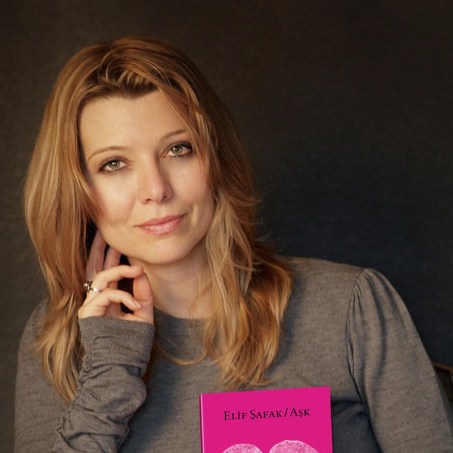
  • 800px-ElifShafak_Ask_EbruBilun_Wiki

    Turkish novelist Elif Shafak has joined Margaret Atwood and David Mitchell in committing a manuscript of her writing to the Future Library project – a 100 year artwork that will see her work unpublished until 2114.

    Conceived by Scottish artist Katie Paterson, the Future Library is, in Paterson’s words, “a living, breathing, organic artwork, unfolding over 100 years”. Starting in 2014, each year Paterson, working closely with her partner and library curator Anne Beate Hovind, has approached a writer to contribute a manuscript to the project.

    To support the project, a thousand trees have been planted just outside Norway in a forest, to ultimately provide the paper on which the manuscripts will be printed in a century’s time.

    Speaking about the ethos behind the project, Anne Beate, in an interview with Nothing in the Rulebook, said:

    “Just a couple of generations back, people were ‘cathedral thinking’ all the time. You know, you build something or plant a forest, you don’t do it for your sake – you do it for future generations.

    We kind of have this fast food thinking and now we have to prepare something for the next generation. I think more people realise the world is a little lost and we need to get back on track.”

    KP_FL_august2014_4
    Planting an entire forest that will one day help make the books of the library of the future takes time. Photo credit: Bjørvika Utvikling by Kristin von Hirsch.

    Shafak, the author of novels including The Bastard of Istanbul, The Forty Rules of Love and most recently Three Daughters of Eve, will now follow Margaret Atwood, David Mitchell and Sjón as one of the 100 contributors to the project.

    Speaking about Shafak joining the project, Peterson described the choice as pertinent, explaing: “Her work dissolves boundaries: cultural, geographic, political, ideological, religious and spiritual, and embraces a plurality of voices. Her storytelling is magical and profound, creating connectivity between people and places: a signal of hope at a particularly divided moment in time.”

    Shafak herself has clearly discovered her own spiritual affinity with the project, saying:

    “I had heard about the project, I had read about it; and I thought it was quite unique. The energy around it spoke to me. And I honestly thought it was a labour of love; I thought there was a lot of love involved in this project. The fact that you can leave a manuscript for the future, without knowing who will open up that box and read that manuscript – you know, for me it was like putting a letter in a bottle and putting that bottle in a river, and just, trusting that the river and the flow will take the letter to the right person, someday.”

    The handover ceremony, where Shafak will deliver her manuscript in a ceremony in the Norwegian forest, will take place on 2 June. Yet if you are keen to find out more about Shafak’s involvement with the project, you can watch the following detailed interview with the Turkish author below.

    https://player.vimeo.com/api/player.js


  • Hovind, Anne Beate

    In Norway, a thousand trees have been planted in a forest just outside Oslo. In 100 years’ time, they will be used to make the paper for an anthology of books, which will form part of the so-called ‘library of the future’.

    Conceived by Scottish artist Katie Paterson, the project has captured the attention of great authors across the world, including Margaret Atwood, who was the first writer to pledge her story to the future collection.

    KP_FL_august2014_4.jpg
    Planting an entire forest that will one day help make the books of the library of the future takes time. Photo credit: Bjørvika Utvikling by Kristin von Hirsch.

    Yet 100-year art projects, by their very nature, take time. When you work with timescales longer than the average human life, the focus of the work shifts: it is no longer about outcomes, or about critical reception from the artistic and literary communities. Rather, it’s about the experience, and the journey, that takes everyone involved in the project along with it.

    Of course, there are also certain logistical necessities that go hand in hand with creating a project of this nature. How do you convince authors to write books that will never be read in their lifetimes? How do you ensure the forest you have planted is used to make the books, and not cut down to make way for some new highway or housing development?

    Katie_Paterson_Future_Library_16.jpg
    How do you ensure the forest you have planted is used to make the books of the library of the future, and not cut down to make way for some highway or housing development? Photo credit: Bjørvika Utvikling by Vibeke Hermanrud.

    To try and iron out some of the answers to these questions, the Nothing in the Rulebook team caught up with the project manager and curator of the project, Anne Beate Hovind.

    It’s an honour to bring you this detailed interview…

    INTERVIEWER

    So tell us about yourself and your involvement with the Future Library project

    ANNE BEATE

    I’m the commissioner and the producer for the project. It’s a magical sort of idea that really challenges our concept of time, as well as of trust, and I think ultimately has a lot to say about our world, and the way we interact with it as human beings.

    What I think is extraordinary about the project is the opportunity to work so closely with the artist, Katie Paterson. In a way, I sometimes have to pinch myself when I talk about how I became involved in the artwork because in a way it’s crazy – because just imagine the pitch that begins ‘I have this proposal: but it’s going to take 100 years’. That’s when you panic. Because you think ‘100 years?! Oh my god”. Then the artist says, ‘and, we’ll also need a forest’. And you know, you immediately ask yourself – where will the forest grow? Because I work in the Oslo harbour development area – where and how do you grow a forest in a harbour? And then, on top of all that, the artist says, ‘one more thing – we need authors, famous writers, who are willing to participate, because it’s their work we’re going to print, a hundred years from now’.

    But even though it’s a little crazy it really is extraordinary and I actually think in my role, it’s an interesting one to see how you have the relationship between the artist and the commissioner or producer, because where the artist is creative in that kind of traditional artistic way, I’m creative in making it happen!

    INTERVIEWER

    The project wouldn’t happen without you!

    ANNE BEATE

    Well I think it’s an interesting relationship – I was actually talking about this with another friend of mine, a Norwegian artist called A.K. Dolven, and we were discussing what it means to put an artwork into the control of the producers and so on who make art ‘happen’. Because you need both the creative idea and inspiration and also that inter-displinary competence and almost entrepreneurship to make those ideas into a reality.

    INTERVIEWER

    You’re the curator, in a sense

    ANNE BEATE

    I wouldn’t call myself a curator because I’m not an artist in the traditional sense – I’m an entrepreneur first, I create start-ups. And I actually spend a lot of my time working in the construction business, which is quite crazy, but I always get into this situation where I get into the exploratory work; the ‘make things happen’ kind of work; so even though I’m in a different field of work professionally, there are elements where I work in the same way – it’s about attitude; methodology; it’s a way of working exploratively. And it’s quite similar to the way artists create art. And this is what I like to share and talk about when I give talks and stuff.

    INTERVIEWER

    You were in Austin, Texas, recently for the Southwest by Southwest festival. Can you tell us a little more about the talks that you give?

    ANNE BEATE

    I was invited there as a speaker for their official programme, and actually on the way out I was a little nervous because I’d never been there before and on my plane out the Crown Prince of Norway was on the same plane and there was a band on board and the fanfare was a little overwhelming. But once I got off the plane I realised quite quickly I was actually the only Norwegian speaker in the official programme, where I was set to appear on their ‘live’ show.

    I didn’t know what to expect but it was really interesting to be a part of. I shared a few of my thoughts about what leadership is about when it comes to making things happen.

    INTERVIEWER

    What do you mean by that?

    ANNE BEATE

    Now, I think what it comes down to is approaching a new project with a kind of explorative attitude – you kind of have to have this tacit knowledge of where to start: what doors to keep open as long as possible, which ones you have to close. In my day job, there’s a lot of risk assessment involved. There’s a totally different risk-mind set involved compared to what I do in my daily life in the construction business; because in order to be innovative – in order to make innovations happen, you have to take risks, you have to be risk taking – and though you might be aware of some of the potential challenges or risks, you have to strike out and lead from the front.

    INTERVIEWER

    How do you identify what sort of projects you’re going to pursue with that vigour? How do you maintain the energy for it?

    ANNE BEATE

    I think what it comes down to is more about your attitude. In any job I do I try to make the most I can out of it. So I can do things that other people might find quite boring or not really very ‘arty’ but I don’t mind. I’m very curious. I learn everything about hospitals when I build hospitals. I worked in shipping classification for the shipping bureau and I learned a lot about that and I’ve worked at the main airport in Norway and I learned lots about that and the aviation sector and I do art – and other things – I think, because of that curiosity. If I’m curious about something or something grabs my attention, I want to find out more and I want to see where we – the project and I – can end up.

    If you’re not curious about something, how can you have the passion for it, how can you find that energy? You know, that’s what it’s about. You have to know how to run a business or a project; but you also absolutely have to know how to stay with it.

    INTERVIEWER

    Surely that’s a really important point in this day and age because, in, for instance, London alone, there are so many different free presses or websites and magazines that start up, and they might be around for a year or two years, and then they die off – or they print one anthology and disappear. Because it’s really hard to sustain a project and keep it going, especially in the world we live in where it’s hard to keep funding coming in. And so often there’s a difficulty in building in a sustainable, long-term view to your project. That you can keep building on.

    ANNE BEATE

    Oh absolutely and you know, I think we might have a similar approach to you at Nothing in the Rulebook, because I like to ‘put bricks on bricks’ – that’s a saying I often use. This whole ethos really resonates with the Future Library project. What we say in Norway is ‘all wood’ – it’s wood all the way through. It’s an expression that basically means something is authentic; it’s true; it’s solid; and it has good correlation between what you say you are and what you do. And building this sort of thing takes time, it takes time and conscious effort. You have to pour yourself into it in a way and make sure your idea doesn’t just stop.

    FL_KP_5.JPG
    “‘All wood’ – it’s wood all the way through” – Anne Beat Hovind. Photo credit: Giorgia Polizzi

    This whole attitude can be seen in the way we approached the project too, I think. Because we don’t spend anything on communication. And Katie Paterson, who is the incredible artist behind the idea, the two of us work very intimately and very closely together. Even though the Future Library project is quite big and quite well-known in the world; it’s mostly me and her.

    INTERVIEWER

    So how does that work? How do you do it? Especially when it comes to first launching the project and getting people involved like Margaret Atwood.

    ANNE BEATE

    How do you do it? How do we do it? We just ask! It’s such a fascinating story – people ask, ‘why don’t you make e-vites when you invite people to the handover ceremonies – but I said, ‘no – I’ll do it personally’. Because I think; that’s what fascinates people. We’re not part of a big organisation. The project does not have a lot of money behind it. It’s small and grounded and goes slow. It’s personal. It’s not like this big stuck up thing. It’s exactly what it says it is.

    I think when you are living in this fast living world, with all this start-up thinking it’s like something gets blown up and then just as quickly it’s like PUFF – gone. But the Future Library isn’t like that at all; it’s totally different. And I think this aspect of the project is what people really respond to and connect with, you know, because it has real meaning and authentic content and impact.

    INTERVIEWER

    It’s this idea of longevity being built within the project from the outset – the entire ethos of it. We live in an age where thoughts around cathedral thinking has disappeared – the idea that we used to build something that would last hundreds of years for future generations, and now, it’s the opposite…

    ANNE BEATE

    Precisely. And it’s interesting you mention that idea of cathedral thinking because this notion is so important. I was thinking a lot about what Stephen Hawking says about this and I totally say the exact same thing about it.

    And you know the day before I was due to give the talk in Austin, Texas, Stephen Hawking died – and I was quite touched by the timing of it because I always mentioned cathedral thinking whenever I talked about the Future Library project and Hawking has been the spokesperson for this idea that we need to invest in ideas for the future, which are made and built for the generations that come after us. And so the night before I gave this talk I totally changed the start of my presentation and I started out with a quote from Hawking about cathedral thinking. And people got really emotional here – and some actually cried. It was very moving.

    But this I think is what makes people feel such a connection for the project. Because people are longing for slow, cathedral thinking projects that are grounded; that are not ‘tech tech tech’.

    INTERVIEWER

    So what influence does technology have on our modern lives and culture, do you think?

    ANNE BEATE

    Well I think firstly I should say that I love tech. You know. I drive a tesla – I was the one of the first persons in Norway to buy a Tesla. In our household we have two electric cars – we don’t have gas or petrol fuelled cars. We Live in a three-generation house run by solar energy and a thermal well – we have a lot of technology. But for me, technology should only be used to facilitate my life.

    INTERVIEWER

    Technology is an enabler.

    ANNE BEATE

    Yes, exactly. It’s about being a human being and keeping hold of that. And I think people are longing for that – to be reminded of what it is to be human, forget about the other tech stuff.

    INTERVIEWER

    Yet we live in a world where you only have to walk down the street to see almost everyone always on their phone. Living their lives plugged in constantly to the digital world. And it can seem difficult to separate the technology that can do brilliant incredible things that bring us closer together – speeding up communication and living our lives more effectively – while of course avoiding the danger that we get sucked into this world of technology where it’s all we think about – and our social media lives take precedent over our social lives; which are actually the real, authentic parts of our lives that allow us to build real relationships with other people that last years; not seconds.

    ANNE BEATE

    This is why projects like this are so important for our time. Just a couple of generations back, people were thinking this way all the time. You know, you build something or plant a forest, you don’t do it for your sake – you do it for future generations.

    We kind of have this fast food thinking and now we have to prepare something for the next generation. I think more people realise the world is a little lost and we need to get back on track.

    INTERVIEWER

    We are designed in our society to be constantly stimulated – To constantly go out and get things for ourselves and gratify ourselfs and just go, go, go, all the time. We’re constantly walking through our cities plugged into our headphones, but you can’t get away from the music in waiting rooms or shops and supermarkets. We don’t even have time to sit and be bored anymore, let alone think about building forests.

    ANNE BEATE

    And this is the world where this Future Library artwork comes in, that’s entirely based on the idea of planting trees – it’s about walking in the forest; doing rituals!

    Katie_Paterson_Future_Library_18
    Photo credit: Bjørvika Utvikling by Kristin von Hirsch

    INTERVIEWER

    And how important is the relationship between nature and art? Especially in a world where we now have eBooks, rather than physical books. How important is it for us to keep creating these projects that entwine physical ‘real’ nature with art?

    ANNE BEATE

    It’s interesting you ask this question about the relationship we have with nature and how we connect to it, because it’s actually a very personal topic to me.

    I grew up on a farm. I carried the farm name – which is 1000 years old. It was once a Viking farm. And when my father died when he was young, I was supposed to inherit it. And in Norway, this is almost taken for granted as a rite of passage, that you would take on the farm and run it as a farm. And you are in fact obliged to run it as a farm if you take it.

    And my father died when I was 22 and I really had a difficult decision to make; about whether I would take it on, and I said ‘no’. So it’s no longer part of the family.

    And this is a decision I haven’t regretted. I realised I wasn’t a farmer, and that that was okay. It was maybe a brave decision, but the right one. And oddly enough what the whole experience has taught me – is that life, in a way, is about planting trees. And planting grains – because my other project is about planting farm crops in the middle of Oslo. And when I first heard about these projects and became involved with them, they both confronted me with how disconnected I had been from nature, even though I have such a long family history of living and working on a farm, which is so connected to the natural world.

    And so when I think about this, I realise that both of these artworks are about sustainability. They’re both about the importance of protecting our environment; about living in this world and our collective futures, and having to protect what we have for the long term. We really need to reconnect with nature and the world.

    So it’s amazing how both these artworks are so rich in the way they communicate a very fundamental message about being human, which is that no matter how much technology we have, we are still the same animals that evolved over millions of years and thousands of years of modern civilisation to live as part of nature – not apart from it. We need to save our world and our planet. So artworks that speak to this fundamental need are really important.

    INTERVIEWER

    But of course, we live in an era of catastrophic climate breakdown – do you think these artworks have a call to action in encouraging people to take better care of our planet and our environment? Do we need to each start planting more trees?

    ANNE BEATE

    So even though Margaret Atwood is kind of quite ‘black’ in her writing, she really isn’t when it comes to her outlook. And when I spoke to her she said “this is a hopeful project” – she’s the one who really knows what it means when it comes to environmental activism. She’s there, on the front of it – and she’s been there all the time; but we haven’t necessarily been listening. And it’s partly her environmentalist background that made her say yes to participating in this work – it took her maybe only two minutes to make up her mind, she said.

    Of course, we were SO happy, when she said she was willing to get involved. I can still remember where I was when I got the message saying she would do it. I was so happy! Because it was at this moment that I realised ‘this project is actually going to happen’.

    Future_Library_Handover2015_8.jpg
    Anne Beate Hovind and Future Library contributor, Margaret Atwood. Photo credit: Bjørvika Utvikling by Kristin von Hirsch

    INTERVIEWER

    Did you have doubts that the project might not take off before you got Atwood’s backing?

    ANNE BEATE

    Not necessarily doubts, but I knew it was a challenge, because, as we said earlier, there aren’t many projects or ideas these days that are built around cathedral thinking – we don’t even build monuments or buildings that won’t be finished for 100 years, let alone art. So how do you talk to a board about this? How do you convince them that 100 years is nothing?

    But it’s been a fantastic journey so far, and it is fantastic still. I’m so happy and grateful to be a part of this work, and it has changed me – it’s been life changing.

    INTERVIEWER

    Why do you think this project resonates so much with so many people, including yourself?

    ANNE BEATE

    Some researchers should do some research on this, you know. When I saw the article had been upvoted so many times to the front page of Reddit, I thought, what is it that makes people upvote it so much? What is it all about?

    INTERVIEWER

    There’s a core essence, perhaps, that the project has which has the capacity to capture people’s imagination’s in a really quick way.

    ANNE BEATE

    And it’s so positive: the engagement people have with it is so built on hope and trust and empathy and compassion. I think it’s really basic human things that we need and are in need of.

    I don’t have the answer of course; I can only try to imagine. But when I hear people say things about it, or when I have people ask me ‘how can you be sure that someone will take on this project after you are dead’ (so there’s even an aspect of mortality here that is intrinsically involved), well, I say it’s all about trust.

    But when you say that – people have a really shocked reaction – they think ‘that’s so crazy’!

    INTERVIEWER

    So how do you sustain the project for the future? In 70 or 80 years time, how will you make sure it’s still running?

    ANNE BEATE

    Trust! It’s all about trust. You know we have set up a formal trust and intention agreements with the relevant municipal authorities in regards to the forest and the room at the Oslo Library, so we have kind of rigged up that admin aspect of it. But to run this project is also about energy – its about respect for the artwork and how it’s set up; and it is about loyalty.

    There will be things the board and the trustees will have to solve that me and the artist couldn’t forsee. So there will be people who have to take on my job and fulfil it.

    Oslo Library.jpg
    Oslo Public Library, where the books of the library of the future will be kept. Photo credit: Atelier Oslo and Lund Hagem.

    The great thing about this artwork now is that I’ve seen there is a whole world protecting it. So if the forest is threatened by anything – the whole world will make sure to guard it and the books.

    I have no choice other than believing in the project. And there’s also trust the other way – because the coming generations have to trust us that we do these kinds of thing for them. They have to trust that we will do things that take care of the planet – that we create work of arts for them.

    INTERVIEWER

    Art is about what brings people together and the connections that this kind of project can form. Do you have any hopes for yourself about how this might turn out? If you could see the ceremony that takes place 100 years from now, what would you like to see?

    ANNE BEATE

    I’m sure it’s going to be very emotional. I hope some of my great grand-children will be there and for them to maybe think ‘it was crazy for my great grandmother to take on this idea 100 years ago’, and I hope they think about that and what it means. Because it’s about building bridges between now and the future – but to turn it around, it’s also going to be about the present in the future and the past.

  • politics of asylum

    When it comes to reviewing new works of fiction, the Nothing in the Rulebook team are always keen to jump at the opportunity. So, when we were offered the opportunity to review Politics of the Asylum, the debut novel by poet, publisher, short story writer and concept artist Adam Steiner, we leapt (both figuratively and literally) at the chance. What’s more, when we heard that Steiner’s book would draw on his own personal experiences working in the NHS, examining some of the tragic effects of recent neoliberal politics on our treasured healthcare service, we were filled with a genuine excitement (this may be expected; after all, our biggest creative project last year involved the publication and distribution of thousands of haikus in support of the NHS).

    So, first thing’s first, what’s the plot?

    Politics of the Asylum follows Nathan Finewax – a cleaner in a hospital steadily falling apart. He’s working on a ward where staff cheat, lie and steal to get ahead, where targets, death tolls and finance overrule patient care, and every day the same mistakes are repeated in a seemingly unstoppable wave of failures. Nathan is sucked deeper into the hospital routine as he dreams of escape, trying to avoid one day becoming a patient himself in this house of horrors.

    Sounds great, right? Well, that’s where things get a little more nuanced. You see, this is a novel that, while startlingly original, is also almost as challenging as it is unique. In fact, to call it a novel, in the traditional sense of the word, is perhaps somewhat misleading. So much so, that we are somewhat bemused to say that Politics of the Asylum is perhaps the first novel we have reviewed that has split the opinions of our creative collective firmly down the middle. A little bit like marmite, there are those here at Nothing in the Rulebook towers who love the book; and those who found it more difficult.

    As we are nothing if not a democracy, we decided that the best way to approach the review of this book, therefore, was to turn it less into a review, and more into a transcribed conversation between our two reviewers.

    Without further ado, therefore, we hereby introduce you to a colossal debate of expert opinion between Professor Wu – amphibious philosophical mastermind and all-round fan of Steiner’s work; and Tom Andrews – NITRB’s resident book reviewer and human being, and some may say a ‘Steiner-sceptic’ (at least, for now…).

    Bang the gong: aka – reviewers, fight (verbally, of course)!

    Professor Wu (PW): 

    Okay, so this is powerful prose if ever I saw it. Though you can tell Steiner is a poet. The language he uses in the book vividly depicts a broken system – an institution where madness abounds and insanity reigns supreme. It would have been easy to say “the NHS is falling apart because of systematic government cuts, bonkers private finance initiatives and underhanded privatisation” – because all that has been said a thousand times before. It’s all true of course; neoliberalism is destroying one of Britain’s most sacred institutions. But what Steiner does so brilliantly is to make the reader not just see what is happening – but to feel what is happening to the NHS. His lyric essays – which is how I’d describe them – capture the frustrations and rage of those people caught within the tangled bureaucracy in a way I’ve personally not seen or experienced before. If we ever needed proof that we find new ways of looking at the world through stories; this is it. Totally unique – and an important work for our times!

    Tom Andrews (TA):

    Can I just start by quoting the first line of this book?

    ‘I intensify atoms. With every step, every breath between pause, a rushing haze  of red water flicks – to remind me – there’s that ugly taste on the lips.’

    It’s a long way from ‘Once upon a time..’ I fear that the language rather tends to obscure the message and the author is too concerned with being poetic to be clear. Some may struggle to get beyond the early pages – it’s not a book concerned with telling a story or being accessible. Steiner should be praised for his ability to find inspiration in the most unlikely and mundane places (he is currently producing a series of poetry films about the Coventry ring road).  He captures well the dullness, the numbing and futile nature of a dead end job.

    PW:

    I understand where you’re coming from with the first line – there’s an element of obscurity that may not be to everyone’s taste. I think in part you almost have two options here – analyse it line by line, word by word, on a granular detail – or take it more in swathes, read each piece of the jigsaw and try and see what images or feelings it stirs within you, as a reader.

    For the general reader I think the second approach is best. No writer wants (or should want) to turn their work into a classroom exercise where you have to find meaning in a rose thorn. But in the same way I can happily go to a modern art or traditional art gallery and stare at artworks without any schooling in the medium, I think readers can take this book and find emotions and themes without necessarily having to have them laid out in a traditional narrative model. In a way, the point may even be the obscurity – working within a bureaucratic behemoth like the NHS is bound to make one feel not only obscure; but confused, alienated; disoriented.

    This, for me, speaks to an even bigger theme and question at the heart of the book. You rightly raise the point about accessibility. You’re talking about accessibility of language, but within the context of the NHS, we should be talking about accessibility of healthcare. Increasingly what we are seeing is that the founding principles of the NHS are slowly being corrupted under this Tory government, and that healthcare is increasingly restricted, and less accessible. The recent case of Albert Thompson is an extreme example, but we are now at the point where UK citizens are being denied access to life saving treatment because of their background. And that’s before we even start to think about increased waiting times, and certain services being removed from NHS provision. In this way, you could say that some of the inaccessibility is a way of holding a mirror up to a system that is being turned into such a mess of procedures and process that restricts access to patients – just as we as readers are restricted from an ‘easy’ or accessible route into the narrative.

    I appreciate this may be a bit of a cheap argument – and I think it’s important to note that this book perhaps isn’t for anyone looking for just a bit of light reading before bed. But for me, part of the narrative comes from the way the reader has to find meaning and explore the language of the book in the same way the principle protagonist/narrator has to explore the tangled web of work within the NHS.

    I also think you’re dead right about the way this doesn’t just have to be about the NHS – it could, as you say, be about any ‘dead end’ job. For workers and people living in a world in which it so often seems the only purpose of your life is to go out and get things for yourself and gratify yourself and buy things and own more and more and more – finding meaning within your existence (and poetic meaning at that) is something we could all with having more of.  

    “You do have a point about this book resembling it’s subject matter: it’s chaotic and overstretched, much like the service itself.” – Tom Andrews

    TA:

    I don’t want to dismiss the work as dead end – it keeps the NHS going.

    However, there is a certain air of futility, of fighting against a tide of mess just to create a fleeting cleanliness that is quickly destroyed.

    The text itself certainly experimental and full of ideas. As the novel progresses, bold type, page layouts and single use onomatopoeia make an appearance. A later chapter is written in the form of a patient’s medical notes, including this delightful couplet.

    ‘This Pepto gives no cure to the fire/with haunting sounds of Orpheus’s lyre.’

    I’m not saying a journalistic expose would be better and as you said there is no lack of statistics and first hand testimony to illustrate the problems facing the NHS, but I feel that by putting across his experiences in such a form, Steiner is in danger of preaching to the converted like you and me.

    There’s a certain incoherence as if it is a collection of poems or lyric essays which want to be a novel rather than a novel in the strictest sense. The description as a novel is perhaps unhelpful as I was expecting something rather more conventional from the blurb. You do have a point about this book resembling its subject matter: it’s chaotic and overstretched like the service itself.

    “I think Steiner’s work can act as a clarion call to all those who are invested in the continued existence of the NHS.” – Professor Wu

    PW:

    Your question of whether this book has an air of preaching to the converted is an interesting one – you’re certainly right that there’s an element that supporters of our healthcare system may approach this work and others like it with an air of intrinsic bias. We want to support the NHS by any means necessary, so any project that strives to do that may be one we inherently think positively of.

    So the question here I suppose is whether the more superficial aspects of the work – the changes in form, structure, the poetic lyrics, etc – are unhelpful to reaching new audiences and convincing them of the value of the NHS (as well as the current challenges the system is facing).

    My concern is that by arguing that such aspects hinder the accessibility of the work, one could use a similar thought pattern to dismiss poetry and lyricism more generally. Should readers be essentially pandered to? If someone expects to read a novel and suddenly finds they have accidentally read a poem or lyric essay, have they somehow been wronged? Do they deserve compensation? Do they require a warning label on the cover of any book along the lines of “warning, may contain poetry”?

    Poetry has long been a vital form of art as a form of protest. Since Percy Bysshe Shelley was moved to pen poetic verse in protest at the Peterloo massacre. The Masque of Anarchy advocates radical social action and non-violent resistance: “Shake your chains to earth like dew / Which in sleep had fallen on you- / Ye are many — they are few”.

    In the same way, I think Steiner’s work can act as a clarion call to all those who are invested in the continued existence of the NHS. Not only rallying the troops but gaining new supporters from those who appreciate writing that is attempting to do new things.

    Conformity with formal structures of writing and the status quo may not have the same impact as a work that challenges its readers’ assumptions.  

    TA:

    The difficulty in reviewing experimental and out of the ordinary writing is that I might dismiss something just because it isn’t what I am accustomed to. I’m not sure that I have the tools to find the merits in this, lacking as I do the literary background of an amphibian professor like yourself. Certainly, I would not have chosen this book for my personal reading.

    Lyrical makes it sound like this is going to be a pleasant, beauty in the details, kind of book. It’s more of a warts-and-blood-and-pus-and-death kind of book – imaginative but not necessarily beautiful.

    It could well rouse opinions among people who are more vaguely angry about the NHS than specifically engaged, although it would be a distinctly avant-garde bit of clarion playing.

    Intrigued? Perturbed? Baffled? Read the first chapter here –

    https://adamsteiner.uk/2018/02/08/politics-of-the-asylum-one-month-to-launch/

     Read the book and want to get involved in the conversation? Leave a comment below!

    Haven’t read the book and want to get involved? Buy the book from publisher’s Urbane Piblications via Amazon here https://urbanepublications.com/books/politics-of-the-asylum/