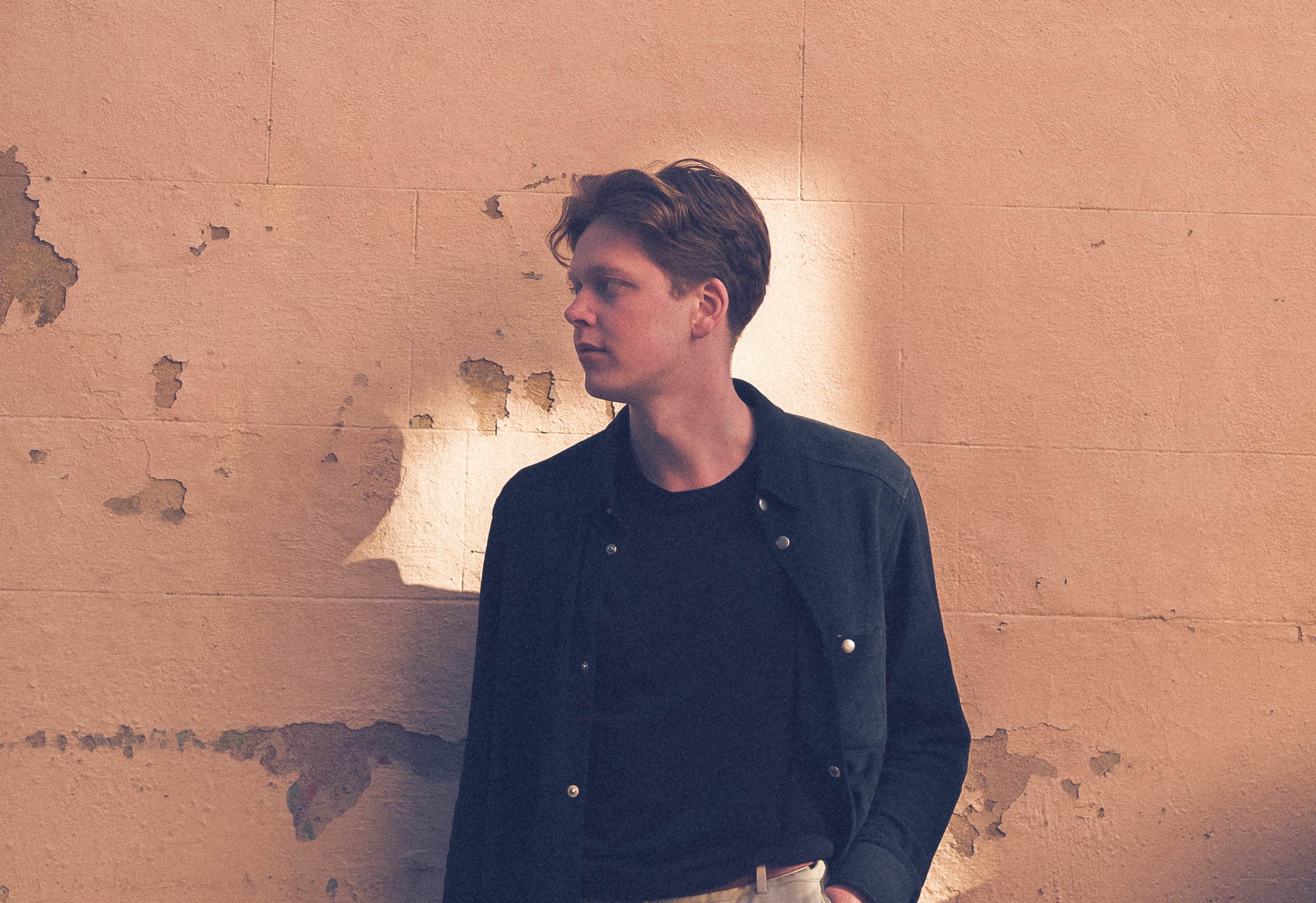
One of the hottest prospects to hit the music scene in 2019, Swedish artist Augustine has now released his debut EP, Wishful Thinking
One of the hottest prospects to hit the music scene in 2019, Swedish artist Augustine has now released his debut EP, Wishful Thinking, adding three new songs that broaden and crystallize a singular sound built on gorgeous falsetto, cinematic productions and evocative lyrics.
Since his February debut, where he released Luzon and A Scent of Lily, Augustine has received worldwide praise for the pair of effervescent indie-pop singles, both of which went to #1 on Hype Machine.
As his debut EP drops for the first time, Augustine has spoken about the highly personal connection he has with the new songs, which he says are a means for him to express, and share, his deepest fears.
“Hearing the EP from a distance,” he says, “it became clear that this music grew out many years of me being afraid of being a disappointment to others. All the lyrics were inspired by being afraid of people, the world and leaving things behind.”
The power of his critically acclaimed singles “Luzon” and “A Scent of Lily” made 22-year-old Augustine one of 2019’s most talked about new artists. Both of these self-released singles led to comparisons with iconic voices like Bon Iver, Mark Foster, James Blake and Ezra Koenig.
The five-track EP contains three new songs: the bombastic synth-pop thrillride “Wishful Thinking”, the warmly pulsating “Viola” and a heartbreaking ballad “Slacks.”
Augustine says he has also taken a lot inspiration from The XX, Lorde and Maggie Rogers among others. All songs are collaborations with producers Rassmus Björnson and Agrin Rahmani (LÉON, Skott).
“An outstanding amount of talent”
The 22-year old songwriter, producer and multi-instrumentalist grew up with the poetry-laden music by artists from Bob Dylan to The National, while living among the traditional Dutch-style canals and leafy boulevards of Gothenburg, before moving to Stockholm. From these beginnings it seems as though Augustine is set to go global sooner rather than later, as Nothing in the Rulebook notes in our review of his debut EP:
“There’s an outstanding amount of talent on display here – and praise is well deserved for a 22-year old who has delivered an EP full of potential summer hits. As the world burns and stumbles from one political crisis to another amidst a global, catastrophic climate breakdown, Augustine captures the optimism of humanity and youth alongside the fear of the oblivion our species is facing.”
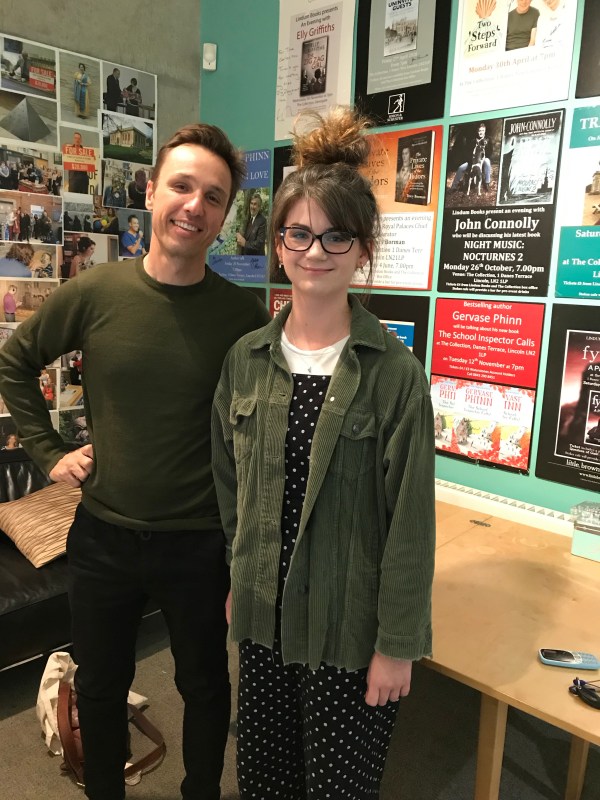
Nothing in the Rulebook’s Ellen Lavelle caught up with best-selling author Markus Zusak at The Collection Museum in Lincoln.
‘I’ve written four books that mean something to me and two that mean everything to me,’ Markus Zusak says. The two books that mean everything to him are The Book Thief and Bridge of Clay – the latter took him thirteen years to complete. ‘It might be time again to write one that just means something,’ he adds.
It seems unlikely, however, as Zusak doesn’t seem able to do anything without doing it well, giving it absolutely everything he has and getting a kick out of the challenge. Even the talk he gives to the crowded auditorium of The Collection Museum in Lincoln is expertly constructed. At first, he tells a funny story from his own childhood, then he explains to the audience why he told it in that order, why he drew our attention to his brother’s red Esky cooler, the upside-down paint cans they sat on to eat their lunch. Why do these details matter?
‘You want people to believe you,’ Zusak says. ‘If you can give them the detail, it convinces people you were there.’
Every story is two stories, he explains. You tell the top layer, while dipping into the bottom layer – the backstory – to add emotional weight. We cared in the moment when young Markus had to confess what he’d done to his dad because we knew his dad yelled at him sometimes when he messed up at work. How did we know this? We knew because Zusak, the grown-up writer, paused the story to relay the time when he painted himself into a corner of a cupboard and had to wait an hour and a half before coming out, so he wouldn’t mess up the paint. We know because Zusak, bestselling author, dipped into the bottom layer.
He’s this good because he’s had a lot of practise. Before going onstage, I interviewed Zusak in the office below the museum, asked how he started out. The first story he ever wrote was about a boy with a cyst in his head that could explode at any time.
‘I stopped at eight pages and thought it could be entered into a competition for the worst book ever written,’ he tells me, laughing. ‘The first thing I finished was when I was eighteen. I wrote my first book and that got rejected by five publishers, which was good – I was lucky that it did. If it hadn’t, I would look back with even more embarrassment at my earlier books. Now, though, I look back at my first published books kind of happily because I think enough time goes by and you can forgive yourself for whatever you didn’t quite get right, all the things you overdid.’
Zusak’s first ever reading was in the year 2000, in a library in Margaret River, Western Australia. Not only did no one come but the librarian made him do the reading anyway, just for her. It’s the unexpected that makes a story work, Zusak explains. When he tells people this story now, the zero-attendance fact gets their sympathy but it’s the sadism of the librarian that really makes them laugh.
As a young writer, Zusak gave talks in schools across Australia in order to make money – telling a good story was essential for his survival.
‘Those boys,’ he says. ‘They really want to kill you.’
It was their sports hour or their lunch break Zusak’s lecture consumed and he knew he had to make it worth their while. It was during a school workshop that he first came up with one of the core features of The Book Thief. In a writing exercise with a class, he described the sky in three colours, used each colour to represent a death.
‘I just knew it was Death talking,’ he said. ‘It wasn’t this profound, deep thing – it was quite simple.’
At the same time, Zusak was writing a short story set in contemporary Australia, about a girl stealing books. He pulled the two ideas together and, inspired by the stories told by his parents about their childhoods in Austria and Germany during the second world war, set the book in Nazi Germany.
Published in 2005, The Book Thief was an international bestseller, translated into more than thirty languages. It was adapted into a film in 2013, starring Geoffrey Rush and Emily Watson. Zusak suggested the filmmakers cast Sophie Nélisse as Liesel, the main character, which they did, but apart from that, Zusak says he had very little to do with the film. There are elements about it he likes, some he doesn’t.
‘Film people are different,’ he says, darkly.
Released in 2013, the film went into production exactly halfway through the thirteen-year break between The Book Thief’s publication and the release of Zusak’s latest, Bridge of Clay.
‘It nearly killed me writing it,’ he says, ‘but it’s also why I’m alive.’
Zusak never imagined anyone would read The Book Thief and, liberated by this belief, was able to write it exactly the way he wanted, in only one year. After its immense success he knew that, whatever he did next, he would have a lot of readers. He revisited Bridge of Clay’s beginning ‘thousands of times’, rewriting it over and over again with different narrators. He likes to write in the morning, at the kitchen table, and when he once asked his daughter if she could eat her cereal quieter because he was trying to work, she snorted.
‘You?’ she said. ‘Work?
This was still ringing in his ears when he finished the book and so he worked out his daily word average for the last thirteen years: 1.9 words a day.
‘Not even two,’ he laughs.
It was a frustrating, painful process but Zusak believes that these long years with the same book, the same characters, made it better.
‘The more time you spend with a book, the more you can make good decisions about it,’ he says. ‘I normally say you want to spend enough time with the book, working on it, making notes for it, writing it, that you feel like you can wake up every day and just roll out of bed into the world of the book.’
But what is it like to roll out of bed the morning after you finish the book? What does it feel like when that world, the world you’ve been in for thirteen years, is sealed off, no longer there?
‘Everyone thinks you should feel really happy but you don’t,’ Zusak says. ‘You feel a bit flat. You’ve just been kind of working for the World Championship of Yourself and then it’s over. You’re relieved, don’t get me wrong – you wouldn’t go back in – but you’re still wondering how you’re going to live without it. That’s how you write the next book.’
It’s clearly a joy, though – anyone can see that. The whole time he’s talking, Zusak is smiling.
‘I say it’s like climbing a mountain but there’s a sandpit at the top,’ he says. ‘You don’t get to play without doing the work.’
‘Playing’ is writing parts that are fun or inserting lines from real life into the story. On a hot day while writing Bridge of Clay, Zusak was cleaning his car with his shirt off. His son, then four, rode up on his trike and stopped.
‘Pop!’ he said. ‘What’re you doing out here in just your nipples?’
That’s in the book. But now the world of Bridge of Clay is over, sealed off, and Zusak is breaking his way into the next one.
‘I’ve got ideas, a few little things,’ he said. ‘I don’t guard my ideas. I was talking somewhere else last night and I told the audience the idea. I just said ‘Don’t write it because you’ll probably write it faster than I can.’ That’s the thing, though – I could give everyone the exact same idea and none of us would do it the same way. We’ll see.’ He smiles. ‘At the moment I’m still writing the first sentence.’
About the interviewer
Ellen Lavelle is a post-graduate alumni of The University of Warwick’s Writing Programme. An aspiring novelist and screenwriter, she has worked with The Young Journalist Academy since the age of fourteen, writing articles and making short films for their website. She’s currently working on a crime novel, a historical fiction novel and the script for a period drama. She interviews authors for her blog and you can follow her @ellenrlavelle on Twitter.
Frank Prem has been a storytelling poet for forty years. When not writing or reading his poetry to an audience, he fills his time by working as a psychiatric nurse.
He has been published in magazines, zines and anthologies, in Australia and in a number of other countries, and has both performed and recorded his work as spoken word poetry.
He and his wife live in the beautiful township of Beechworth in northeast Victoria, Australia.
Nothing in the Rulebook – and particularly Professor Wu – have been fans of Prem’s work for some time, which is available online and via his poetry blog – as well as Youtube. So it was great fun to catch up with him and quickly get down to the bones of what makes a poet tick.
INTERVIEWER
Tell us about yourself, where you live and your background/lifestyle
PREM
I Live in a small town in North East Victoria (Australia) called Beechworth. This is the town I grew up in back in the 1960s and 70s, before moving away to the city for my middle adult years. I returned to the town about 10 years ago, and have settled back into rural life.
The town itself is well known, in a small way, for three things. It is a well preserved gold rush town. It has associations with Australia’s most renowned bushrangers (Ned Kelly and the Kelly Gang), and it has a tourism favourite in The Beechworth Bakery, which is known far and wide.
Professionally, I am a Psychiatric Nurse, and have worked in or around Psychiatric Services for forty odd years now – almost as long as I’ve been a poet.
My wife and I live a creatively rich life in our small town and, despite putting myself about in interviews like this and in whatever media I can entice to publicise my work, I consider myself quite a private person.
INTERVIEWER
Has writing always been your first love, or do you have another passion?
PREM
Terms like ‘first love’ and words like ‘passion’ aren’t quite accurate in defining the relationship I have with my writing. I have always been a word person – whether reading avidly, or writing, but with writing it is not so much a thing that I sought to do, as a thing that was required of me.
I mean that I don’t think there is much in the way of choice available to someone like myself. I simply wouldn’t be who and what I believe myself to be, if it weren’t for writing, and in my case, writing free verse poetry, in particular,
I reserve passion for my football team, or perhaps some aspect of the garden.
Writing is more like the breath I take.
INTERVIEWER
What draws you to writing and poetry?
PREM
Going back to when I started writing in a journal as a teenager, I used words and pen as a way to make sense of my world. This continued into my career in Psychiatry, where much of what I encountered was incomprehensible to me, even though I had childhood associations with the institution in which I trained as a nurse through my parents employment, still it was bizarre and inexplicable to me.
Over time, I found that my interest branched out into many different areas, and gradually I arrived at a point where I felt (and still do) that every single thought, idea, sight or sense that I encounter is potentially worthy of being captured in a poem, that in turn, should be able to be made worthy of being read and appreciated.
I felt and believed that all this was in my grasp and power to achieve.
An example, Professor. On a particular occasion, driving a country road, I had that sense of well being that led me to actually say to myself ‘I could write something amazing about the very next thing I see …’
Well, driving around the corner, the thing I saw was a row of dead foxes in various stages of decay, and strung up on a paddock fence.
Not the subject I might have hoped for, but exactly the test of hubris that I deserved.
Did I write something? Yes I did. Was it worthy, in the way I suggested above? Hard to say, but, fortunately, I can let you decide by posting a link to the poem – a conversation with three foxes – here: https://wp.me/p7yTr8-1MC.
I don’t know if I succeeded but I was quite proud of the poem when finished, and I’ve tried to avoid such extravagant thinking since.
INTERVIEWER
Who inspires you?
PREM
I have a reasonably clear inspiration for my writing and what I attempt to achieve with it, but the source dates back to a couple of writers born in the 1860s – Henry Lawson and A.B. (the Banjo) Patterson.
My writing is nothing like theirs. They wrote poetry in galloping rhyme, and Lawson wrote many short stories. Lawson was an alcoholic associated mostly with the bush, Patterson was a city lawyer who wrote of the bush.
The reason I find them inspirational is that they wrote at a time when words were not easily accessed by a largely illiterate populace outside the cities, and yet their work was memorised and recited as news and as entertainment.
I have a vision that recurs of one person who could read, holding the Bulletin Magazine in his hand and reading aloud, while a group of men stand around listening, with lips moving as they try to memorise the verse for repetition later. Perhaps asking for the piece to be read aloud again to make sure.
Fanciful? Probably, but that image informs the aims I have for my work. I want it to be able to be read and understood. I want to take complex ideas and present them in a way that lets my next door neighbour, or the greengrocer, or a stranger in the street know exactly what I’m on about and be able to form a response without difficulty.
You may get a sense that I have a few concerns about published contemporary poetry. you’d be right. I have no time for the deliberately obscure. I think it does the reader of poetry (and therefore poetry itself) a grave injustice.
INTERVIEWER
Who were your early teachers?
PREM
I’ve deliberately avoided formal instruction in the black arts of writing and of writing poetry.
My first reason is because I’ve always had a belief that only I could write the work of only me. I have been inordinately concerned that reading others and formal instruction would dilute my own voice. When I finally discovered that I had a unique voice (someone pointed it out to me in a poem), it became the most precious thing in my repertoire and I would not risk it.
A second reason though, (and I apologise in advance to any who may feel offended) is that I have not trusted the teachers of creative writing programs to know what they were doing. Harsh, yes, but it seemed to me that what I saw as product of such instruction was largely shallow cleverness dressed up in fashionable and exclusive attire. Very little uniqueness that was capable of communicating to everyday folk, who I saw and see as the proper main audience for poetry.
Having said that, I was strongly encouraged by an English teacher in my Year 9 many moons ago who marked my poem higher than neighbouring essays. I haven’t looked back.
INTERVIEWER
What does the term ‘writer’ mean to you?
PREM
Professor, this is an excellent question, I think. I now understand that , in my own case, I have been a writer forever. That is, a person who creates works – whether they be fiction or non-fiction, poetry or prose – by writing.
I have drawers full of manuscripts created while I was a writer.
So. If you write, you are a writer.
However, being a writer is actually the easy part of the writing pursuit.
When you create a book, you become an author. Wherever you may appear, you are representing your book as its author. Being a writer is a mere prelude to being your book.
Becoming a publisher (my Wild Arancini Press is a single author publisher) is another step again. Followed by becoming a promotor of the book you are author of. These are work tasks that go with being a professional in the industry of writing.
The simple creativity of just being a writer becomes a bit of a nostalgic dream, if we’re not careful.
INTERVIEWER
What research (if any) do you conduct before setting out on a new writing project?
PREM
I have two answers, Professor. One is a little more boring than the other and both might seem a little shallow.
My first three collections (two published, the third starting now) are written in a memoir style. My research has been to live the events that I relate and turn them into a form that is readable and attractive to readers and listeners.
With Small Town Kid, I walked the town again, and went out of my way to have some conversations with folk who could inform and correct my views before I made an ass of myself with them.
Devil In The Wind came from direct experience on the periphery of the fires, conversation with fire fighters, news (TV, radio, papers), and finally the Royal Commission we held to Inquire into the circumstances of the fires. Plus all the empathy I could muster.
The New Asylum will be the third collection, dealing with my lifetime involvement with psychiatry from a child through to the present day. Primarily the material in this collection will be direct experience.
The second part of the answer relates more to my more fictional work, which is yet to see the light of day. This work includes simply hundreds of poems directly inspired from reading the French Philosopher Gaston Bachelard who died in the 1960s. I can’t begin to tell the influence reading this mans translated works has had on me as a writer.
I also have a speculative fiction manuscript that is perhaps more surreal in nature. That came from a given theme, sustained by a piece of music playing in my head throughout the writing.
So, true answer on research? Not much, I’m afraid.
INTERVIEWER
Do you feel any ethical responsibility as a writer?
PREM
Ethics in my own writing is not something I think about a lot, but I believe it is a valid question.
I put great store in my writing having recognisable qualities, so that there is little likelihood of mistaking mine for someone else’s. That includes content, however, and I feel a responsibility to give my reader not, necessarily, what they expect, but to challenge them within some nebulous parameters that are clearly consistent with me, the writer they thought they were getting
I feel the need to shape any controversy in such a way that it represents, rather than dictates or argues.
Without shying away from a topic, I don’t want to be in the position where I am running a partisan or shallow line on a controversial subject.
I am most comfortable, I think, in representing and interpreting ideas and philosophies poetically than in arguing a position.
INTERVIEWER
Could you tell us a little about some of the future projects you’re working on?
PREM
My current work in progress has a working title ‘stories of the somme’. I am taking photographs from World War 1 – Australian Soldiers at the Somme and the Western Front, and using what empathy I have to allow each picture to tell me a story.
I hope to publish these in due course, providing I can raise the cash to purchase high quality photographic prints. They are not cheap.
I have been amazed by the capacity of these 100 year old images to move me, and of the poems and pictures together to affect readers emotionally.
Here are links to two of the sample poems posted on my blog page:
Take your pick. Contemporary seems to be about hype.
INTERVIEWER
Who is someone you think more people should know about?
PREM
It’s going back a bit, but H.E. Bates (Darling Buds of May etc) and Damon Runyan (Guys and Dolls) shouldn’t be forgotten.
INTERVIEWER
Do you have any hidden talents?
PREM
I play ukulele in my wife Leanne’s music classes and like to sing – mainly country songs.
INTERVIEWER
Most embarrassing moment?
PREM
Early on. I was meant to say thank you, but I actually gave a rambling speech full of nonsense. Had to get dragged away from the podium. Have never forgotten, never repeated.
INTERVIEWER
What’s something you’re particularly proud of?
PREM
I think I’m most proud of my wife Leanne’s endeavours and achievements in art and other creative endeavours, including music teaching.
INTERVIEWER
One piece of advice for your younger self?
PREM
Don’t be in a hurry. Everything is material, every moment is developmental.
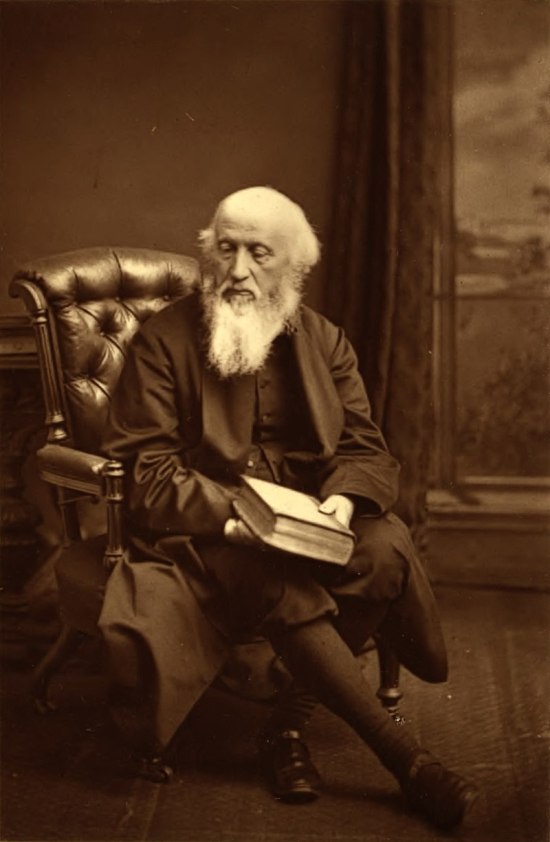
William Barnes: a poet plucked from obscurity in a Dickens-like-happy-ending who wrote the Glossary of Dorset Dialect – which holds the key to understanding terms such as ‘ninnywatch’ and ‘Dumbledore’.
Some years ago, I got it into my head to set a story in the last years of peace before railways arrived ruined everything. As ideas go, it was predicated on some fairly heavy assumptions, but it had the advantage of being inspired by a pub. The pub in question is about 8 miles outside Wimborne Minster and is called The World’s End. So my first assumption was that there was once a time when you could maybe walk that far out of town but beyond that — well, that was the End Of The World, so everything beyond it was a mysterious realm of weirdness. And then, I assumed, the railways arrived and everything started to become ever more mundane.
What happened next was that I started doing research and my vision of a idyllic rural past collapsed like a sodden haystack. Railways came to Wimborne in 1847, around about the time the corn laws were making food prohibitively expensive, the enclosures acts were removing access to the common land that ordinary folk used as pasture; poor laws were damning struggling paupers to the workhouse, and the gradual mechanisation of farming was destroying all rural employment. I learned about the levels of infant mortality, lack of sanitation and the rates of emigration and I gradually realised that there really wasn’t that much for the railways to ruin.
But there was one discovery that cheered me up. I got my hands on a copy of William Barnes’ Glossary of Dorset Dialect. Originally published in 1867, this glossary is a rarity because Barnes was a complete one-off. He was in the unique position of having been born to a family of relatively poor farmers and subsequently receiving an education. This meant he grew up learning to talk with the local dialect, but then, because he was clearly too fragile for farming and showed some acumen at ‘book-work’ he was packed off to school and had the Dickens-happy-ending sort of good-fortune to be plucked from obscurity and sent to university. There can have been very few historical figures to have spoken Greek, Latin and fluent Dorset. And Barnes — bless him — he wrote it all down.
“Readers would be spirited into a long-lost world of cider, button-making and eccles cakes…”
My first intention was to use Barnes’ Glossary to give my story flavour. I thought of it as a sort of linguistic spice rack. I would write Dorset characters and have them use a few authentic phrases and you, dear readers, would be spirited into a long-lost world of cider, button-making and eccles cakes. It was an irresistible idea because the phrases in the Glossary were delicious. There were just so many definitions that sang about the world they came from. The first one I employed properly was the word brags. To make one’s brags is to boast. So I got to write the sentence, “He was making his brags”.
Next came the old Dorset intensifiers. Some of these are still in use, others should be revived. Girt is still understood to mean ‘large’ and Banging makes it larger. A banging girt bridge is larger than a girt bridge. It could also be Brushing, of course, which means much the same as Banging or even Lincen or Trimming. Although, whether a trimming girt hare is bigger than a lincen girt hare or smaller than a banging girt hare or a brushing girt hare is anyone’s guess—but it is clear that Dorset folk did not lack ways of saying that things were large. What sort of things would they have been talking about? It doesn’t much matter because anything complicated would have been called tackle. A Dorset man with aspirations to become a sailor and climb a ship’s mast would have wanted to get a-top all that tackle. That is, of course, unless he or she found the prospect a little intimidating, in which case, he might have called it aturk of a thing. There’s a self-confidence in this sort of one-word reductivism; a hint of humour too.
What I love most about these evocative phrases is how much they reveal a lot about the world they come from. What do you know — immediately — about a world in which it is an insult to call someone Cow-heart? If nothing else, it says they knew cows, and didn’t hold them in high esteem. And maybe it also reveals the true origins of the term ‘coward’ (more conventional etymology has it from the Old French couard — something to do with the tail).
There’s plenty to be learned from other Dorset insults and the things they insulted. Gawk-Hammer is a fool’s bladder, the implied meaning being ‘empty-head’ while the simple term Gawk, meaning ‘fool,’ is still in use through the phrase gawking (staring mindlessly). My personal favourite is Dough-beaked. It doesn’t take much interpretation to understand that a bird with a beak make of dough isn’t too useful. I also love the word, ninny, and its more capacious cousin, ninnywatch. Barnes’ explanation for this term is a feast:
“The following is a bit of talk about the word Ninnywatch between a worthy Dorset gentleman and two of his parish folks: “There see; the policeman told I somewhat that put me in a terrible ninny-watch.” And what’s that?” says I. “What does it mean?” “I d’know ‘tain’t got no meaning, sir; ‘tis only one they words we poor folk do use.” “Old P. tells me it means ‘trouble’” ”Trouble sir? Don’t mean trouble no more than do mean Richard.” “Well then, how do you use it?” “Well, sir, if I’ve a-seed anybody in a-bit of a bumble about his work—a-peeping about—in a kind of stud, like—I’ve a-heard em say “What be you got a ninny-watchen about?” Ninny watch is most likely a “ninny’s outlook” as for he knows not what.”
There’s lots to that paragraph. You might have spotted the word ‘somewhat’ which is said, ‘zummit’, and sounds like ill-educated mispronunciation of ‘something’. But as Barnes points out, Dorset is logical and consistent in its structure. It uses somewhat alongside somewhen and somewhere, making conventional English seem the less consistent.
The Glossary contains more vignettes like the one above and they are revealing to a level that single-term definitions cannot achieve. Here’s another example; it is an explanation that accompanies the term ‘Dewbit’:
“The first meal in the morning, not so substantial as a regular breakfast. The agricultural labourers, in some parts of Dorsetshire, were accustomed to say that in harvest time they required seven meals in the day: dewbit, breakfast, nuncheon, cruncheon, nammit, crammit, and supper.”
Eagle-eyed readers will recognise this from Tolkien’s Fellowship of the Ring, in which one of the hobbits says much the same about the number of meals in a day. This link is unsurprising given that Tolkien was a professor of Anglo-Saxon and it is evident that many of the obscure terms in Barnes’ Glossary can be traced to Anglo-Saxon roots.
There are other echoes of The Shire in Barnes’ Dorset. It has that same sense of homeliness and good humour. This is a people for whom a bumble-bee was a Dumbledore, a deep laugh was a hobble, a short laugh was a sniggle and who would label someone colourless as Dunducky. If you were lazy you’d be slack-twisted, if you were brave they’d shout Good Jeminee! if you were strong, they’d say spry, or if heavy, they’d say soggy. And yes, soggy also meant damp and sinking, with the meeting of meaning around the notion of something being pulled down—sinking through weight or ‘sogginess’. It was a world in which the empty-headed were mocked, and concerns focussed on harvests, plants, animal disease and birds; there are innumerable references to birds.
For a word-obsessed writer it was all too much fun. However, after shamelessly cherry-picking Barnes’ Glossary, I started to be dissatisfied with the dialogue that I was writing because, even though it had a good Dorset tone to it, there wasn’t that truly authentic ring you’d find in Barnes’ poems. At first I told myself this was because I always veered away from phonetic spelling, but eventually I came to realise there were rules I was simply not following. I was using individual terms as spice, but the overall recipe was still modern. This revelation came with the words en and em.
En and em are not random terms, nor are they, as it first appears, phonetic representations of bad diction. They are particles of grammar. En is Dorset for him. And em is Dorset for them. So a Dorset woman would say “Don’t think that of en.” Importantly, Barnes insists these terms have good provenance. He traces them to Fresian and makes the link to the original language of the Angles, before it was corrupted by those uncouth marauding Saxons. En and em are grammatically correct within their own sphere. And there’s more to it than that. There are verb forms that follow Dorset rules. Much like the North German and Southern Scandinavian languages that would have given us the English of the Angles, Dorset has a strange sort of preterite and a complex present tense. So in Dorset, the verb is adjusted if it relates to a plural subject. One bird flies, but a flock of birds dofly. A man runs, but men do run. And the habitual context in which I do write is not the same as singular instance when I am a-writing.
With these different (and in some instances, complex) rules in mind, Barnes has no patience for the stereotype of the dim-witted yokel. His poetry champions Dorset dialect as almost a distinct language, but he also illustrates its deep roots in the Germanic and Norse origins of pre-Norman peasantry. This is not an ill-educated population so much as a society that retains a language (and therefore, presumably aspects of a culture) that was thought dead 800 years previously.
All this seemed to suggest that my original premise for writing about a world that ended eight miles outside the town was not as dough-beaked as I’d thought. For the language to have survived that long, the culture, the mentality and the manner of thinking of the people must also have survived—largely by them just staying put. When the Normans arrived they took control, but in the very act of doing so, they ensured the survival of Anglo-Saxon culture because the farm-workers were forced to stay in their villages. I was spurred towards deeper research.
The greatest extremity of my adventures into Dorset dialect was a teach-yourself course for learning Anglo-Saxon. Yes, such a thing exists and no, I didn’t become fluent. Not even sub-GCSE level. But I gained another insight into the style of thinking. Anglo-Saxon has its own thought-style. A way of melding terms to create evocative new phrases (called Kennings). It was a common Anglo-Saxon poet’s device to replace simple words, like ship, with something much more evocative, like wave-floater (wægflota). A dull Anglo-Saxon would say ‘thesea’, whereas a poet would call it a ‘whale’s way’ (hwæl-weġ). I brought a halt to my teach-yourself-Anglo-Saxon adventure because it became clear that while it was fun and helped me get more from Paul Kingsnorth’s The Wake, it wasn’t the same as learning Dorset dialect. the dialect took a form of its own
So I returned to William Barnes, immersed myself in his records, and eventually started writing. My aim was to create a sort of ‘restored’ Dorset dialect. I couldn’t re-create it, anymore than you can recreate an authentic 19th century farm, but I could manage a sort of restoration. Did I get it right? Maybe. You could spend a life-time studying and still not manage to quite get there. But I got close enough, I think.
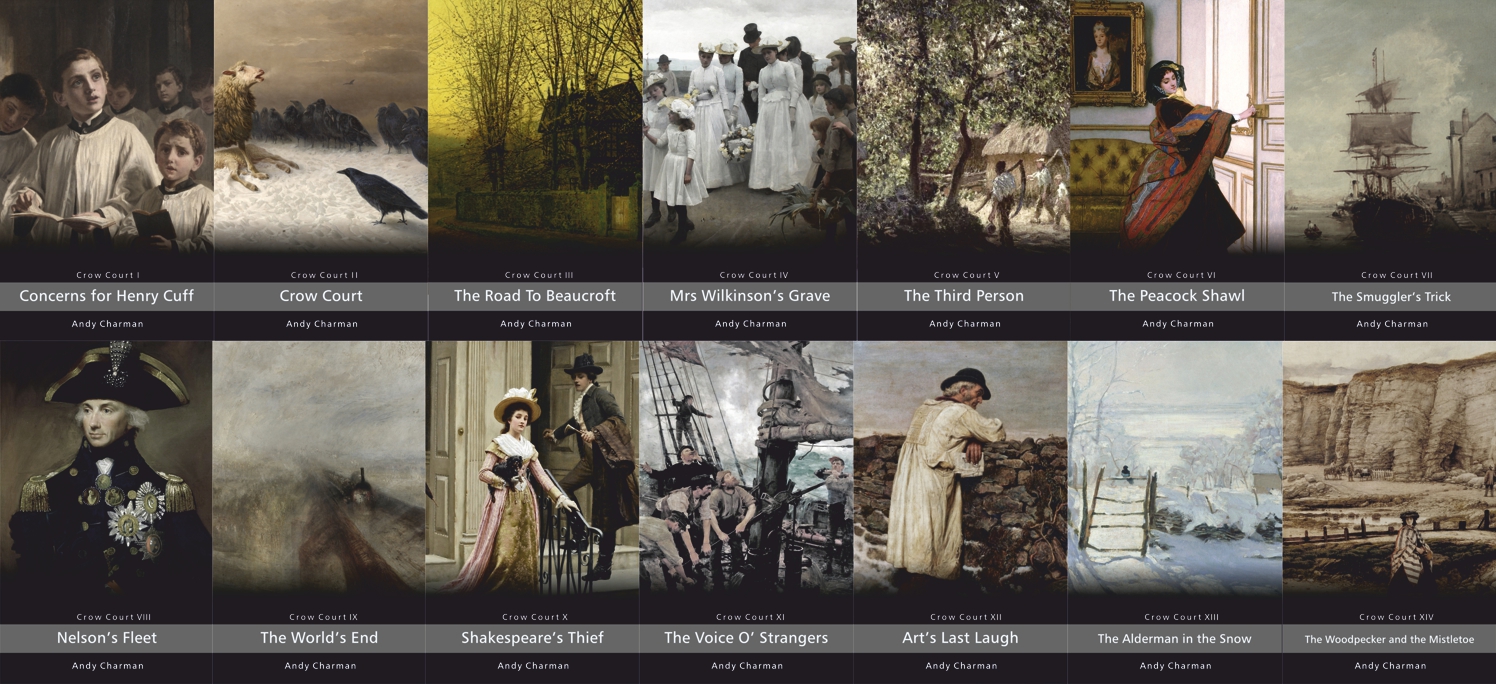
The fourteen stories of ‘Crow Court‘ (Unbound) are steeped in Dorset dialect – pick yourselves up a copy using the discount code RULEBOOK to be immersed in a world of banging girt stories.
And I can tell you why I think that. The simple story I had originally planned grew larger and larger until it formed a whole novel, Crow Court. As I was writing, I found that expressions came to mind that I hadn’t read and didn’t recall having heard. They just seemed right. I was making stuff up, which is what a novelist is supposed to do, but I was using a registry that sounded properly Dorset. In a key moment in a intricate plot, one of the characters tells his smuggling employer that he thinks the Customs men are onto them. This is how he says it;
“He’s snuffled your truffles, Charlie.”
Truffles, as you may well know, are fungi that grow underground. They are considered a great delicacy, but one of the best ways of finding them is by getting a pig to sniff them out. I don’t understand why the phrase, snuffle your truffles, doesn’t already exist. There is a meaning for ‘truffle snuffle’ but it’s rude and you’ll have to look that up yourself.
Another character came up with the expression “tickled his teats” meaning ‘pleased him’ – “You tickled his teats with somewhat…” I liked that because the language stays with farming and again, I couldn’t believe it didn’t already exist. Maybe it does, but I couldn’t find it. But my favourite moment of inspiration happened when one of my characters came up with the expression, “That’s a cat in a coop…” which refers to a cat getting into the hens’ enclosure. The advent of trouble, in other words. Again, why ‘cat-in-a-coop’ isn’t already an expression, I don’t know. It should be. It is now.
Perhaps I was overconfident making up my own terms, but I took it that the semi-spontaneous arrival of these inventions was a sign that I had steeped myself in Dorset dialect enough to have gained a feel for it. It seemed that way to me and it was thoroughly enjoyable to be writing with this gorgeous dialect in mind. Of course, I might be wrong—I might be totally delusional and the language might be completely off-key. I guess, ultimately, you’ll have to judge that for yourselves. Crow Court is lined up to be published by Unbound sometime early in 2020, but you can reserve yourself a copy by pledging support for the project on the unbound website; http://unbound.com/books/crow-court – just remember to use the discount code RULEBOOK to get 10% off.
For more information about William Barnes, his poetry and Dorset dialect, take a gander at the William Barnes society. Their website is here: https://www.williambarnessociety.org.uk/
About the author
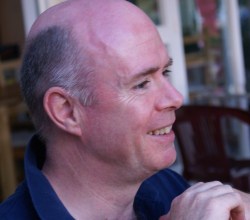
Andy Charman was born in Dorset and grew up near Wimborne Minster. He has had short stories published in anthologies and journals. Crow Courtis his first novel. He studied Philosophy and Literature at the University of Warwick, is married, has a daughter and now lives in Surrey. the first story to be finished, The World’s End, was originally short-listed in Cadenza magazine’s short-story competition in 2008, and was published in the anthology, Pangea, in 2012.
The music video for the song ‘Rigs of the Time’, as featured in the movie SINK (both starring Martin Herdman) has now been released.
The music video of ‘Rigs of the Time’ – as featured in the film SINK (written & directed by Mark Gillis) – has now been released.
Shot entirely on an i-phone and using FiLMiC Pro, the song is performed by Oliver Hoare and the Late Great. Directed by Mark Gillis (who was recently interviewed in Nothing in the Rulebook) alongside Director of Photography, Cassius Rayne (of ‘Go Film It’ fame) – the music video makes full use of the groundbreaking mobile technology that made headlines when Sean Baker’s movie ‘Tangerine’ made waves at the Sundance Film Festival.
Described by Nothing in the Rulebook‘s own Professor Wu as “genuinely original” and getting “under the skin of the audience in a way precious few films do these days”, SINK has received critical acclaim since being released in cinemas.
Agents, publishers, and editors are invited to join Warwick’s Writing students for their
anthology launch at Piccadilly Waterstones on the evening of Wednesday, the 12th of June.
Following tradition at the University of Warwick, the students of the esteemed MA in
Writing Programme have been working hard for the past eight months to publish an eclectic anthology of their work.
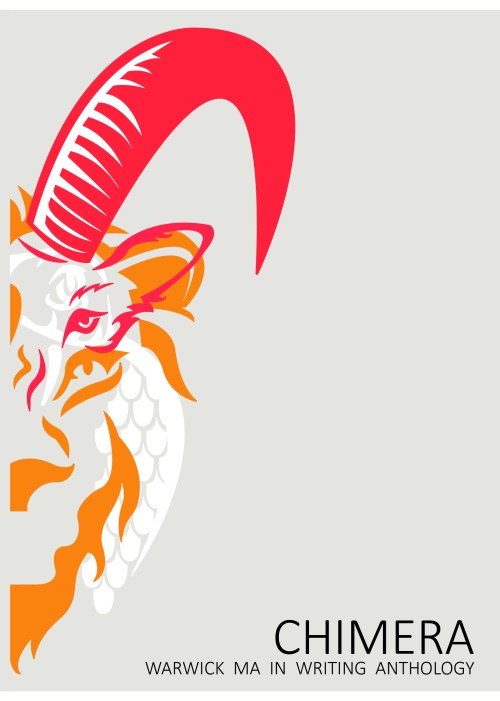
The anthology, Chimera, features work from 41 writers and includes a foreword from
award-winning poet, translator, and critic Michael Hulse.
Chimera, titled after the monster in Greek mythology, encompasses different styles and perspectives from local and international voices travelling across genres in fiction, non-fiction and poetry.
The launch will feature readings from 13 of the students, whose work includes:
An extract from a fantasy novel, where a Warrior-Queen leads her army through the desert to meet a tribe.
The opening of a horror novel centring around the haunted past of a childhood
home, previously owned by a mysterious figure, Howard Pertman.
An extract from a historical fiction duology telling the story of Cecily Neville, mother of Edward IV and Richard III.
A novel exploring a Palestinian Christian family’s experience living under
Bethlehem’s occupation during the early 2000s, from the viewpoint of a child.
A poem that stands strong in the face of tragedy, telling of the poet’s experience
losing a friend in the 2011 Norwegian massacre.
Short stories that range from a humorous tale, to a classical horror story, to an
intricate tale of unfinished business at the end of a life.
Nothing in the Rulebook’s Professor Wu said:
“At a time when the major publishing behemoths risk creating a homogenised culture where only the same books are published by the same small clique of authors, it is vitally important to support collective creative endeavours like the Warwick Writing Programme Anthology, which has consistently brought unique voices to the ongoing literary conversation – and provides a rare opportunity to discover new stories, characters and worlds, as well as the writers behind them.”
A literary invitation
Literary agents, editors, and publishers interested in attending the launch are welcome to register in advance by emailing Frances at projectmanagement.anthology19@gmail.com, as spots are limited. Limited copies of the anthology will be available at the launch.
Alternatively, copies are available in both physical and e-book versions on request.
The launch of Chimera will be at 6 pm on Wednesday 12 June at Waterstones, Piccadilly, London W1J 9HD.
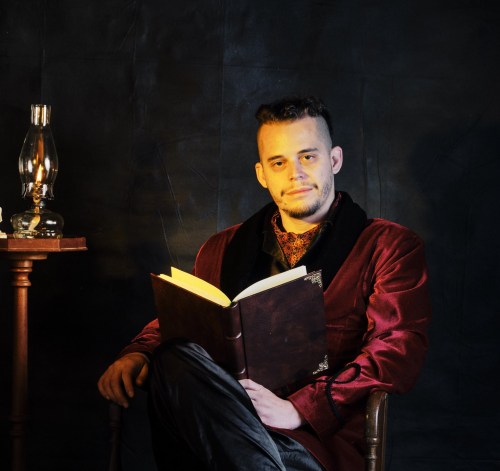
Ben Thomas is editor of The Willows Magazine, author of The Cradle and the Sword, creator of TheStrangeContinent.com, and founder of the neuroscience news agency The Connectome. He travels the world as a freelance writer, and has lived in more than 40 countries. His hobbies include aquaculture, Linux customisation, tantric meditation and ink drawing.
INTERVIEWER
Tell us about yourself, where you live and your background/lifestyle
THOMAS
I spent my earliest years in the woodlands of Ohio — but was transplanted to the desolate steppe of West Texas at age 10. I got out of there as quickly as I could, moving to Los Angeles to study cinema. I spent most of my twenties in California — then in 2013, I made a decision to cast off my material possessions and backpack across Europe, Africa and Asia for four years. These days I’m nesting in Austin, Texas. But I’m hoping to get back to London, Paris and Rome soon; if only to collect the books and relics my friends have been kind enough to keep for me.
INTERVIEWER
Has writing always been your first love, or do you have another passion?
THOMAS
I’ve always been intrigued by mysteries of all sorts. One of my earliest memories is of staring into an aquarium at the Toledo Zoo, gazing deeply into the eyes of a fish, trying to imagine what it was like to look out from those eyes; to be that fish. And I suppose some version of that quest has fueled all my great passions: my fascination with rare and esoteric creatures, my love for mythologies and ancient languages, my research on neuroscience and the human mind, my travels around the world, and my lifelong love for weird tales.
INTERVIEWER
What draws you to writing and literature?
THOMAS
Well, words are magic, aren’t they? When we present a compelling argument or conjure an imaginary scene in someone else’s mind, we’re quite literally casting spells: shaping our own (and others’) perceptions of reality through the verbal evocation of ideas. I can’t imagine a more delightful or rewarding trade to be in.
INTERVIEWER
Who inspires you?
THOMAS
Ashurbanipal, Enheduanna, Paul Atreides, Hypatia, Isaac Newton, Wu Zetian, Aleister Crowley, Lord Byron, Ada Lovelace, Iain Banks, Rosalind Franklin, Hülagü Khan.
INTERVIEWER
Who were your early teachers?
THOMAS
For the first few years of my life, my mother devoted herself almost entirely to teaching me everything I wanted to know. We’d go to the library and check out stack after stack of books, then bring them home and read them one after another in our rocking chair. If I wanted to learn a skill — say, finger-painting or guitar — we’d acquire the necessary materials and explore that area until it was time to move on to the next exploration. She was the most wonderful gardener my growing mind could have wished for.
INTERVIEWER
What does the term ‘writer’ mean to you?
THOMAS
A magician of language. (Cf. my answer to the question above.)
INTERVIEWER
What research (if any) do you conduct before setting out on a new writing project?
THOMAS
I find it’s impossible to write fluently about any subject — fictional or otherwise — without a working knowledge of the world in question. But my research rarely proceeds according to any prearranged plan; each day I simply wake up and ask myself, “What do I want to know about today?” and proceed from there.
INTERVIEWER
Do you feel any ethical responsibility as a writer?
THOMAS
I believe people in all creative disciplines bear a responsibility not only to describe the world as it is, but to present compelling pictures of the world as it could be. One of my mottos is, “Remember, someone is turning sixteen every day.” — in other words, every day, new people are waking up to themselves; examining ideas in the media they read and watch; deciding which ones they want to pursue, or integrate into themselves, and which ones they’ll reject. We don’t get to decide which of our ideas will connect with these people — but we do have a responsibility to provide them with accurate and useful concepts, and not to frighten them with falsehoods for the sake of profiteering.
INTERVIEWER
Tell us about ‘The Willows’ – how did you first conceive of the idea, and what are some of the challenges in running a regular literary magazine in this day and age.
THOMAS
I first conceived of The Willows in 2006. I’d been an enthusiastic reader of Arthur Machen and Algernon Blackwood since my university days — and one evening it just occurred to me that no one was publishing fiction in that vein anymore. Right then and there I set up a small website and put out a call for stories, and the response was far beyond what I expected: authors, illustrators, marketers and supporters appeared out of the blue, all rejoicing that this magazine existed. Seems I wasn’t the only one who’d noticed a cultural void where that The Willows ought to be!
A small crew of us ran the magazine from 2007-2010. The funds came out of my own pocket — earned at a series of mind-numbing day jobs — and many contributors volunteered to provide work for free, or for significantly less than their usual fees. I hadn’t the slightest idea how to produce a magazine; I taught myself Adobe InDesign, found a local print shop that was willing to work with me, and learned the trade through (often expensive) trial and error.
Over the years, the stress and expenses took their toll — I was spending upwards of $1000 of my own money to produce each issue, and usually making only a few hundred in profit, even with the advertising space we sold. My co-editors Skadi meic Beorh and Orrin Grey picked up a lot of the slushpile work, enabling me to focus more on the production side — but even so, we’d set ourselves the task of publishing a bimonthly magazine, out of our own pockets, while simultaneously working forty hours a week or more at our office jobs.
This obviously wasn’t sustainable — and it was, perhaps, inevitable that in the spring of 2010 I suffered a nervous breakdown, stormed out of my job at at a media planning agency, and became a recluse: living off government benefits, painstakingly crafting elaborate ecosystems in garden planters on the balcony – tiny bonsai trees, grassy hills, lakes, mountains and caves – and attempting to populate them with small frogs and fish, who all hopped away, or died overnight, to my horrified dismay; stringing up fluorescent lights in the attic to grow tomatoes and soybeans, resulting in a forest of dead leaves and vines into which I frantically pumped nutrients in the vain hope of resuscitation; poring over Babylonian cuneiform texts and ancient Greek philosophical treatises.
Long story short: I was, for all practical purposes, dead to the world until 2012 or so. When the dust settled, I decided I wanted to have nothing to do with The Willows — or the weird fiction community — and I moved on to studying neuroscience; and later, to traveling to other continents. It wasn’t until the spring of 2019, when I attended the Outer Dark Symposium of the Greater Weird in Atlanta, that I reconnected with many old friends (and made new ones) in the Weird community. At that conference I floated the idea of a Willows hardcover anthology — and once again, the response was far stronger than I expected. The Kickstarter campaign flowed naturally from there.
INTERVIEWER
Could you tell us a little about some of the future projects you’re working on?
THOMAS
I’ve just begun a new Strange Continent series on neolithic China, which I think is a fascinating time and place. I hope eventually to bring all Strange Continent stories together into a single attractive print volume (as some readers have suggested). But since visual images play such crucial roles in the historical tales I tell, I’ll need to find a way to acquire print rights to the paintings I’ve interspersed throughout these stories — and I anticipate a labyrinthine series of bureaucratic headaches in that direction.
In the meantime, I’ve been getting back to my roots, writing weird tales in the classic tradition of Machen and Blackwood (though some are set in the present day). I hope to find welcoming homes for some of these stories over the coming months.
Cult classic. Fashion is fleeting, but style is timeless.
INTERVIEWER
Most underrated artist?
THOMAS
Brian Evenson. He’s our century’s Kafka.
INTERVIEWER
Most overrated artist?
THOMAS
The Apostle Paul. We should’ve tossed him out and kept the rest.
INTERVIEWER
Who is someone you think more people should know about?
THOMAS
My friend Orrin Grey. He’s a skeleton who writes more about monsters before nine a.m. than most people do all day.
INTERVIEWER
Do you have any hidden talents?
THOMAS
All my talents remain hidden until the right time comes.
INTERVIEWER
Most embarrassing moment?
THOMAS
Hmm… probably that time on a cruise to Mexico when I had a catastrophic panic attack (because it was impossible to get away from the throngs of loud drunk people) and locked myself in our cabin’s bathroom while my girlfriend screamed at me to stop being a psychotic infant. I’ve never set foot on a cruise ship since.
INTERVIEWER
What’s something you’re particularly proud of?
THOMAS
I’ve done my level best to share everything I have with my friends.
INTERVIEWER
One piece of advice for your younger self?
THOMAS
Nobody’s going to do this for you. If you want it, you’re going to have to build it yourself.
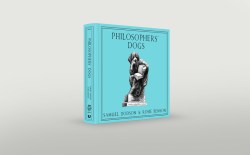
“Canines of the world, unite! You have nothing to lose but your leashes.” – A look inside one of the unique creative projects currently seeking crowdfunding, ‘Philosophers’ Dogs’, from award-winning publishers Unbound reveals the truth about the real masters of human philosophy: dogs.
Will the revolution be digitised? For the past several years, this has been the question increasingly being asked by those in the publishing industry looking to break with the old, frustratingly risk-averse models that so often – as Julian Barnes once noted – only seem to be interested in publishing “copies of novels that are copies of previously successful novels.”
As the online world becomes ever more a part of the real one, the pressures on writers and publishers has only increased. With the incomes of writers continuing to collapse, and independent publishers struggling to compete with the corporate behemoths, many aspiring writers and publishers are reaching out directly to readers before their books are published (or even written, in some cases) through crowdfunding websites such as Kickstarter.
The crowdfunding model is now even being adopted by the publishers themselves. UK publishing house Unbound made waves when they were founded in 2011; and truly announced their arrival as publishing heavyweights in 2014 when one of their novels was longlisted for the prodigious Man Booker Prize.
With Unbound, the company takes crowdfunding beyond the singular focus of financing a project like Kickstarter – as The Independent Publishing magazine explains: “Unbound is a publisher that happens to use a funding platform, rather than a crowdfunding platform suitable for book publishing. It’s an important distinction and visitors to the Unbound website will appreciate that the company is driven by the publication and sales of books. It is refreshingly transparent about its method of business.
Found in the crowd
So, why the move towards crowdfunding? Well, as the author Dan Coxon has noted, part of the reason is that this model provides both writers and publishers with confidence. Coxon says it is “useful to think of the new crowdfunding model as a kind of inverse marketing: whereas the publicity campaign usually kicks in upon publication, here we did all our marketing in advance. I like to think that most of these people would have bought the book anyway – but by doing it ahead of publication, they helped reduce the risk to both publisher and authors, and therefore made the book possible.”
Coxon knows what he is talking about here – having successfully crowdfunded two anthologies on Kickstarter: Being Dad: Short Stories About Fatherhood (Tangent Books), and most recently This Dreaming Isle (Unsung Stories). But for every book that does reach its crowdfunding target, there are two more that fail to do so and never see the light of day.
10 (plus one) of the best literary crowdfunding projects
So, in the hope of honouring our ambition to support creatives of all stripes to fulfil their artistic ambitions – while also introducing readers to new and unique books, we’ve put together the following list of literary crowdfunding projects that we’d recommend you all supporting. And remember, there aren’t just books on offer here, but often wonderful rewards that you can pick up as well.
P.s. If you or someone you know has a crowdfunding project that you’d like to see here in this list, contact us and let us know – we’ll be updating the list over time as projects successfully fund and new ones launch, so it’s always fresh.
Is it possible to be a good dog? Do we catch balls of our own volition? Or are our decisions to eat the rotten apples, to bark at the cat, predetermined? What is it to know that you have behaved well rather than merely believe it?
All these questions – and more – are answered in Philosophers’ Dogs: a ground-breaking book, featuring beautiful illustrations, it promises to shake the very foundations of both western and eastern philosophy.
Support the campaign now – and pick up rewards including the opportunity to name a dog in the book, pick up beautiful original art prints, as well as even receive a personalised illustration of your own dog as a philosopher.
Also – considering one of the creators of this book is a member of our own creative collective, how could you not support this project? We’re a collective, after all.
This book is a necessity for writers everywhere. Traditional rhyming dictionaries are becoming outmoded as we see rappers and poets turn to multi-syllabic slant rhymes rather than the mono-syllabic perfect rhyming suggestions of ‘cat/mat/Monserrat’. Rhyme is rarely so precise anymore. It has evolved. And with that evolution our tools, too, need to evolve.
With traditional rhyming dictionaries ill-equipped to cater to modern writers, this book, from battle rapper Adam ‘Shuffle-T’ Wollard, there are so many applications for this book and so many ways in which it can help people’s creativity.
Get rhyming (and battle rapping, if you so wish) now – all through pledging for one of the fabulous rewards on offer.
Atari: synonymous with some of the best-known early arcade hits such as Pong, Asteroids and Centipede, and to this day a favourite of those who understand the groundbreaking impact it had on the home computer and video games industries.
But this book isn’t just a sweet nostalgia trip (though it promises to be that, too). It is, more obviously, a beautiful, one-of-a-kind compendium book for your coffee tables about the Atari 8-bit home computer and its third party software titles from the 1980’s and beyond.
A full-colour science fiction graphic novel about love, hope and the end of the Earth.
Featuring stunning illustrations from award-winning artist Rupert Smissen, Future posits that it’s during the worst times that we most need to move forward, to push through hopelessness and shape our future rather than letting it shape us.
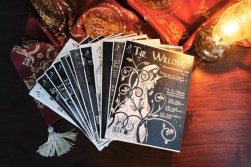
We love a good creative endeavour put together by a collective of likeminded creatives, so perhaps no surprise to find this one in the list. ‘The Willows’ is the beautiful hand-crafted magazine put together by a group of artistic and literary misfits. This project aims to bring all past issues together into one beautiful anthology edition.
Featuring a wealth of classic stories from G. D. Falksen, Sarah Monette, Lawrence Dagstine, and many more — along with brand-new tales from award winners Gemma Files, John Langan, Brian Evenson, Orrin Grey and Jesse Bullington; plus a new introduction from editor Ben Thomas — this anthology will be a collector’s item you’ll be proud to treasure.
This one is right on the cusp of reaching 100% funding. This book will provide readers with a fascinating cultural history of Glam Metal: where it came from, how it defined America in the 1980s and how it all came crashing down.
The book is written by Justin Quirk, an award-winning writer, editor and broadcaster from London who has written for The Guardian’s, Kerrang! Arena and Esquire as well as the Times, Sunday Times and The Independent.
This book is the culmination of a huge undertaking. Between 6 February and 16 May 2018, 100 Voices crowd-sourced stories from female-identifying writers all over the UK. Award-winning novelists, theatre makers, short-story writers, bloggers and poets each contributed a short piece responding to the theme ‘something I have achieved’ on the 100 Voices For 100 Yearspodcast. The resulting collection, transcribed in this stunning book, is a treasure trove of thoughts on what it is like to be a woman in 2018.
This sumptuous book tells the story of science fiction through its most iconic, beautiful, interesting and (sometimes) crass cover art: from the earliest days of publishing in the 19th-century, through the glory days of Pulp magazine covers and the Golden Age, into the endless visual experimentation of the New Wave and so to the post-Star Wars era, when a ‘visual logic’ comes to dominate not just science fiction but culture as a whole.
With over 350 full-colour images and more than 50,000 words of text this is more than simply an anthology of famous science fiction covers–it is an ambitious attempt to tell the whole history of the genre in a new way, and to make the case that science fiction art, from the sober future-visions of Chesley Bonestell, to the garish splendours of Hannes Bok, from the Magritte-like surrealism of Richard Powers, Frank Freas, Judith Clute, and Ed Emshwiller to the amazingly talented designers and artists of the 21st-century, exists as a vital and neglected mode of modern art as such.
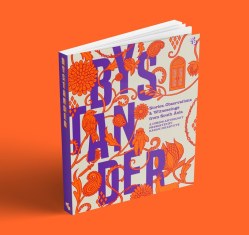
50+ South Asian creatives. 13 countries. 1 Comics Anthology. Stories about Gender,Identity, Boundary and Exclusion. Presented by Kadak.
The BYSTANDER anthology is comprised of both a print and a web component. The print output will be a beautiful and stunning book offered alongside a variety of rewards like delicious zines, posters, postcards, stickers… which are all up for grabs!
Quiet Pine Trees is jet fuel for your imagination and a wrecking ball against writer’s block. This collection features more than 500 tiny, strange stories from my years-long campaign to turn the humble tweet into a self-contained work of literary art. The limited format forces each story to combine powerful imagery with haunting themes in just a few words, creating snapshots of bigger, stranger worlds to inspire the creativity of the reader.
These micro stories cover a wide range of genres, from science fiction about advanced time travel techniques, to otherworldly fantasy about desperate trees and artillery pianos, to cosmic horror about why dolls can close their eyes.
Okay, so technically not a single book, but we’re a collective and all about any project that aims to bring lots of literary delights to lots of people, so we’re big fans.
House of SpeakEasy, an inventive NYC-based literary arts nonprofit, has a 27-foot-long box truck retrofitted with open-air bookshelves with enough room to haul thousands of books. Narrative 4, a global story-exchange organization, has a summit in New Orleans. What happens when you put these two together along with dozens of community partners along the way? A 10-day, 10-stop tour: Poetry to the People.
The tour will feature outstanding authors including Raquel Salas Rivera, Rayna Guy, Rickey Laurentiis, Jenny Johnson, Hanif Abdurraqib, Eloisa Amezcua, Hannah Pittard, Kiese Laymon, Darrell Bourque, and Daniel José Older–with more authors joining the tour soon!
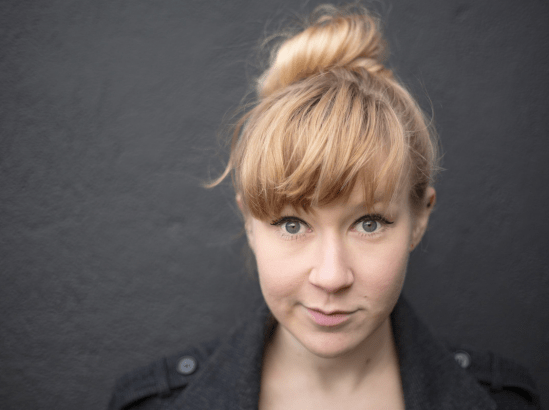
Katie Arnstein is an actor, writer and musician from the Midlands. Her two solo shows have both won Show of the Week at VAULT Festival, with her most recent show, Sexy Lamp winning The Pick of Pleasance Award.
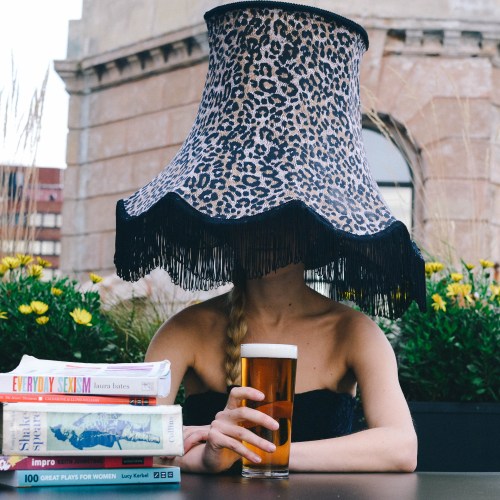
Sexy Lamp is a show inspired by Kelly Sue DeConnick’s ‘Sexy Lamp Test’, which determines if a female character is relevant to the plot of an artistic work or merely decoration. If a female role could be replaced by an item of otherwise alluring lighting without changing the story, it has failed the Sexy Lamp Test. In the era of the #MeToo movement, it is in many way a defining show of our times (and, as such, we – along with many others – have been raving about it in our reviews).
Ahead of a summer touring Sexy Lamp, which includes a run through the Edinburgh Fringe Festival, it was a genuine pleasure to catch-up with Arnstein and talk about her show and everything else besides (including her constant fear of frogs).
INTERVIEWER
Tell us about yourself, your background and ethos.
ARNSTEIN
My name is Katie Arnstein, I am a 28 year old actor, writer and musician originally from the Midlands. I am the daughter of two now-retired teachers, Jane and Tim, and I have two sisters, Grace and Lil. I’m a vegan but am fun in other ways.
INTERVIEWER
In your latest play, Sexy Lamp, you speak about how your love of acting can be traced back to watching Judy Garland in The Wizard of Oz. Has acting always been your first love, and what have been some of the defining moments that have brought you on your journey so far?
ARNSTEIN
I am told that when I was very young I wanted to be a face painter but after seeing the Wizard of Oz I wanted to be Dorothy. I loved acting but didn’t know how to do it as a job until I met the careers advisor at school who said “You can train to be an actor, you know?” and I was like “AWESOME. How?”. I got in to a regional drama school and moved to London in 2012 to begin my glittering career*
*career decidedly not glittery.
INTERVIEWER
Apart from acting, what else are you particularly passionate about?
ARNSTEIN
Equal rights, large cups of tea and Bruce Springsteen.
INTERVIEWER
Who inspires you?
ARNSTEIN
Alexandria Ocasio-Cortez, Jess Phillips, Morgan Lloyd-Malcolm, my sisters and my oldest friend Laura Higgs.
INTERVIEWER
What are some of the key challenges facing aspiring artists and actors today?
ARNSTEIN
How hard it is financially. How hard it is getting your foot in the door. The lack of diversity within the arts.
INTERVIEWER
Could you tell us a little about your journey in putting together your show, Sexy Lamp? Why do you feel it’s been important to put this show on now, and could you have put it on to the same effect when you first arrived in London, in 2012?
ARNSTEIN
Sexy Lamp is the second solo show I have written. It follows Bicycles and Fish, which I have been touring on and off since 2017. I wrote Sexy Lamp in December, 2018 up until the day of the first show on the 6th of February 2019. I had surgery at the start of December so spent the month sitting down and trying to write. I wrote the opening song and a number of real life accounts of my experiences and then tried to piece them together. It was like a nightmare jigsaw puzzle.
There is absolutely no way I could have put the show on in 2012, I didn’t believe I could write until 2016. In 2012 I was waiting for the call from the National Theatre or Spielberg. Reader, that call never came.
The ‘Sexy Lamp Test’: if a female character could be replaced by an item of otherwise alluring lighting without changing the story, it has failed the Sexy Lamp Test. Photography by Simon Jefferis.
INTERVIEWER
In the 1980s, there seemed to be a move within the acting industry towards putting strong, female characters front and centre of stories – think Thelma and Louise, or Alien, for instance. So it’s not unsurprising when many people voice incredulity, really, that we still haven’t moved on much from then, in many ways – and there are still far too many films and theatre productions that don’t pass either the Bechtel Test or the Sexy Lamp test. Why is that, do you think? And what can be done about it?
ARNSTEIN
We need more female voices in every area of the industry; but particularly when it comes to making the decisions of what gets made. We also need to vote with our time and money. We need to seek out and support female and non-binary work. It has been a boys club for the whole time. Thelma and Louise and Alien are exceptions, not the rule, when it comes to films. I hope to see a change and have every film or show pass these incredibly simple tests addressing gender balance.
INTERVIEWER
Writers often speak of having certain habits or processes they follow strictly when writing their first, second and subsequent drafts. Are there any strict rules or rituals you stick to when crafting your shows?
ARNSTEIN
I try and do youtube Yoga with Adriene in the morning. I always start the day with a big cup of tea and breakfast. When the show is coming up I sleep with the script under my pillow and I always have a notebook and pen with me. My friend Dan Goldman will hear the script throughout its many drafts and note it for me. Also, for Sexy Lamp, the wonderful Ellen Havard directed and was key in creating the show as it is now. I always buy a Big Issue on the day of the show. My process also includes huge panic and crying. I am trying to work on this…
INTERVIEWER
Your shows blend performance and almost memoir-like driven narrative with music and song. How do you see the relationship between the various different artistic aspects of your show? Do you prefer writing song lyrics to a script, or vice versa?
ARNSTEIN
I began writing songs when I was 21 and only thought about writing dialog when I entered a scratch night at Redbridge drama centre at the end of 2016. It takes me a while to get a song I like the sound of; but once I get there I can write a song in about an hour, it is just a bit hit and miss until then. The script took longer but I am trying to keep practicing.
INTERVIEWER
Why the ukulele, and what are your biggest musical influences?
ARNSTEIN
My Dad bought me my use for my 21st birthday. I was leaving drama school and wanted to start writing songs and can’t play the piano well enough so the ukulele was a brilliant gift. It’s portable and easy to get started on.
Influences wise, I have my dad’s taste in music. I am particularly interested in great lyricists, Joni Mitchell, Tom Waits, etc. The Kinks are a very important band to me as they make the everyday appear magic.
INTERVIEWER
Do you have a specific audience in mind when you write or act?
ARNSTEIN
I imagine I’m talking to friends which might sound cringe but I hope not. I try to write in a conversational, accessible and gentle way. I want it to feel like you have sat down with a pal you haven’t seen in a while and you’re just catching up. I also try a write a couple of jokes that my parents will like and a couple that my friends will like, then build it up from there.
INTERVIEWER
Do you feel any ethical responsibility as an actor and writer?
ARNSTEIN
I feel I have a responsibility to be truthful and raise awareness of issues surrounding sexism and the everyday struggles that women are faced with. I hope I contribute to the conversation.
INTERVIEWER
What, in your opinion, is the sexiest type of lamp or lighting?
ARNSTEIN
Since showing Sexy Lamp at VAULT festival I have had many images of sexy lamps and lighting sent to me. It is an unexpected perk and it has OPENED MY EYES I can tell you.
INTERVIEWER
What’s next for you and your creative projects?
ARNSTEIN
I have a few more shows of Sexy Lamp and my first show Bicycles and Fish before taking Sexy Lamp to the Pleasance this summer for the Edinburgh Festival. I will start writing a third show I think, although every time I begin it is such a scary feeling I am putting it off. I am also looking to collaborate with other people and theatre companies to keep learning and developing.
INTERVIEWER
Could you give your top 5 – 10 tips for aspiring writers and actors?
ARNSTEIN
Write a to do list everyday with clear achievable goals.
Be brave.
Believe you can do it.
Get a small and brilliant team around you to help you.
Keep a notebook with you at all times.
Find your individuality and that will be your strength.
See as much as you can.
Be kind. (It is not necessary but it helps)
Quick fire round!
INTERVIEWER
Favourite book/author?
ARNSTEIN
I have just had my mind blown by Normal People and Conversations With Friends, both by Sally Rooney.
INTERVIEWER
Critically acclaimed or cult classic?
ARNSTEIN
I suppose critically acclaimed? But then I’ve seen The Room about 20 times.. so I don’t know.
INTERVIEWER
Most underrated artist?
ARNSTEIN
I have followed a woman called Karima Francis for over 13 years and I think she is wonderful.
INTERVIEWER
Most overrated artist?
ARNSTEIN
I think R Kelly is still being played and we need to shut that right down.
INTERVIEWER
Who is someone you think more people should know about?
ARNSTEIN
Anna Seward, she was a writer, poet, botanist and feminist from my home town of Lichfield and even though we have many statues of men there is nothing that celebrates her.
INTERVIEWER
If the acting industry didn’t exist – what would you do?
ARNSTEIN
I would like to enter pub quizzes for money and see if it could sustain me.
INTERVIEWER
Do you have any hidden talents?
ARNSTEIN
Me and my brilliant pal Simon just did American Boy at karaoke and it was wicked. I don’t know if that counts.
INTERVIEWER
Most embarrassing moment?
ARNSTEIN
When I was at primary school I had my dress tucked into my pants when I was taking the register out to the office and my teacher got the whole class to tell me in unison. It was a harsh move from them.
INTERVIEWER
What’s something you’re particularly proud of?
ARNSTEIN
Sexy Lamp won the Pleasance Pick of Vault Festival and that is remarkable. I am proud of my sisters, Grace and Lil everyday.
INTERVIEWER
One piece of advice for your younger self?
ARNSTEIN
Don’t worry so much, please. AND DON’T WEAR STILETTOS FOR SCHOOL WHAT ARE YOU THINKING?!
INTERVIEWER
Could you write us a story in 6 words?
ARNSTEIN
She dreamt it then did it.
Check out Sexy Lamp for yourselves
Follow Katie Arnstein on Twitter @KatieArnstein and on Instagram (also @KatieArnstein). Ahead of her run at the Pleasance Baby Grand Theatre in Edinburgh for the whole of the Fringe Festival, you can catch her at one of her upcoming shows (information on which is available through Arnstein’s website).
The Nordmanka forest, outside Oslo, where the trees of the Future Library are growing. Photo by Kristin von Hirsch
In a forest just outside Oslo, one thousand trees have been planted to supply paper for a special anthology of books to be printed in 100 years time. Between now and then, one writer every year will contribute a text, with the writings held in trust, unpublished, until 2114.
This is part of the ground-breaking Future Library project – and each year, everyone is welcome to join in and participate in a handover ceremony with that year’s author.
The Man Booker International prize winning South Korean novelist Han Kang is the author contributing a manuscript for the Future Library project in 2019. She will hand over her writing on Saturday, 25th May in an intimate ceremony within the Nordmarka Forest, Oslo. Visitors can join Han Kang walking through the trees to a clearing filled with one thousand four-year-old spruce saplings: the Future Library forest.
Future Library is a public artwork by Scottish artist Katie Paterson that will unfold over a century in the city of Oslo, Norway. Han Kang is the fifth writer to participate in Future Library. The Canadian author Margaret Atwood was the first author to contribute, followed by British novelist David Mitchell, Icelandic poet, novelist and lyricist Sjón, and Turkish author Elif Shafak.
An unknown future
Tending the forest and ensuring its preservation for the 100-year duration of the artwork finds a conceptual counterpoint in the invitation extended to each writer: to conceive and produce a work in the hope of finding a receptive reader in an unknown future.
Following the forest ceremony, Han Kang will give a public talk at the Deichmanske Library, Oslo. Speaking ahead of the ceremony, Kang said:
“I can’t survive one hundred years from now, of course. No-one who I love can survive, either. This relentless fact has made me reflect on the essential part of my life. Ultimately Future Library deals with the fate of paper books. I would like to pray for the fates of both humans and books. May they survive and embrace each other, in and after one hundred years, even though they couldn’t reach eternity…”
No more “fast food thinking”
Anne Beate Hovind, the curator of the Future Library project, spoke to Nothing in the Rulebookabout the ethos behind the artwork:
“Projects like this are so important for our time. Just a couple of generations back, people were thinking this way all the time. You know, you build something or plant a forest, you don’t do it for your sake – you do it for future generations.
We kind of have this fast food thinking and now we have to prepare something for the next generation. I think more people realise the world is a little lost and we need to get back on track.”
Safe storage
All one hundred manuscripts will be held in a specially designed room in the new Oslo Public Library opening in 2020. Intended to be a space of contemplation, this room – designed by the Katie Paterson alongside a team of architects – will be lined with wood from the Nordmarka forest. The authors’ names and titles of their works will be on display, but none of the manuscripts will be available for reading until their publication in one century’s time. No adult living now will ever know what is inside the boxes, other than that they are texts of some kind that will withstand the ravages of time and be available in the year 2114.
 Andy Charman was born in Dorset and grew up near Wimborne Minster. He has had short stories published in anthologies and journals.

 Is it possible to be a good dog? Do we catch balls of our own volition? Or are our decisions to eat the rotten apples, to bark at the cat, predetermined? What is it to know that you have behaved well rather than merely believe it?






 nothing in the rulebook