History, seaside, postcards and crime combine as Margate Bookie’s announces the line up for this year’s literary festival.
The friendly literature festival by the sea, Margate Bookie, is back for its fifth year, with a line up that includes Mark Billingham, creator of the Tom Thorne crime series, and Lisa Jewell, who’s sold over 4.5 million copies of her psychological thrillers.
Billingham and Jewell will be joined by Louis de Bernières (Captain Corelli’s Mandolin), Alison Weir (the top-selling female historian in the United Kingdom) and Richard Skinner (head of the Faber & Faber academy).
Alongside the usual mix of writerly talk, tips and book readings, there are also plans for an “intoxicating” hour of burlesque, ballet and banana dancing, as SelfMadeHero and Dr Sketchy’s Anti-Art School team up for a unique life drawing experience.
Writing tips
Writers who attend the festival can also expect to pick up tips on craft, as well as how to break into the industry, as there are an array of talks planned discussing these very topics.
Sebastian Baczkiewicz, author of Radio 4’s Pilgrim, is set to share trade secrets on how to write drama. Meanwhile, in How to Perfect Your Submission, Scott Pack of Guardian Masterclasses will offer practical advice on how to pitch your book to agents and publishers. And, in their latest workshop applying the science of happiness to creative writing, Elise Valmorbida and Vanessa King will explore how to engage your senses to write freely.
Supporting local writing
The festival has long had a reputation for supporting local writers as well as big name authors – and the 2019 festival promises to be no different. There will be a mask workshop with Annie Sutton, group storytelling and rope making from the Listening Post and Waste Land Walking Group, and special movie shows at the Margate School. And local writers will read from their latest works, covering everything from comedy to yoga, love stories to local history, and everything in between.
Book your tickets
The festival takes place from Friday 22nd – Sunday 24th November, and coincides with the Turner Prize being resident at the Turner Contemporary, offering visitors the opportunity to explore new and interesting art forms.
RogerMcKnight hails from Little Egypt, a traditional farming and coal-mining region in downstate Illinois. He studied and taught English in Chicago, Sweden, and Puerto Rico.
His latest collection of stories, Hopeful Monsters has been published by STORGY, and within his collection (our review of which you can read here), he displays his writerly gift for maintaining – even though his characters struggle in an America fraught with lousy jobs, racism, busted relationships, damaged war vets, and homelessness – a subtle but believable hint of optimism that things will turn out alright in the end.
McKnight currently lives in the North Star State, where he is Professor Emeritus in Scandinavian Studies at Gustavus Adolphus College in Saint Peter.
INTERVIEWER
Tell us about yourself, where
you live and how you got here
MCKNIGHT
I grew up in downstate,
small-town Illinois. My family background was working-class. I went to college,
mainly to play baseball, but eventually woke up and decided to study English,
whereupon I grew disillusioned with the sporting world’s hierarchy. I became an
English teacher. In my twenties I lucked out and got a Fulbright to Sweden,
where I learned a few things about society’s and government’s responsibility to
the citizenry. After Sweden, I spent a year in Latin America. I came to
Minnesota to attend graduate school and have lived and worked here since then. Folks
in downstate Illinois dismissed Minnesota as “cold weather country.” I embraced
it because of its humane value system. From this vantage point, I’ve watched
the world change, Minnesota included.. How I got here? Mainly through a desire
to see a bit of the world and understand how people live and think.
INTERVIEWER
Is writing your first love, or
do you have another passion?
MCKNIGHT
In college, I was asked by a baseball
teammate, what would you dream of being if not a baseball player? Without
hesitating, I replied: A writer. I never became a pro baseball player and so….
INTERVIEWER
Who inspires you?
MCKNIGHT
Henry David Thoreau, for his
critique of American materialism. Plus, any writer who can let words flow and
not have to revise, as I suspect was the case with Dickens.
INTERVIEWER
It’s been said that “all
writing is autobiography”. How much of what you write is based on personal,
autobiographical experiences or ideas that you’re working through?
MCKNIGHT
First, everything I write that
is set in Illinois has huge autobiographical aspects; it’s part of my mental
fabric. Second, I chose to make Hopeful Monsters mainly about Minnesota because
the stories in that collection take place in geographical and mental territory
(i. e., Minnesota & Sweden) that is more ‘psychologically neutral’ to me. The
stories in Hopeful Monsters all spring from episodes and people I’ve observed
or experienced and then created tales about. Since I wasn’t born and raised in
Minnesota, however, the stories don’t have the connotative impact on me that
Illinois stories would have. I feel this fact has freed me to observe people
and happenings more objectively and fairly in Humble Monsters. The more
objective-sounding my stories are, the better the narratives become.
INTERVIEWER
Your short story collection, ‘Hopeful Monsters’, introduces us to a plethora of different characters – all of whom feel exceptionally real – but often also exceptionally flawed; there is no person we meet for whom everything seems to be going well or okay. There’s that classic joke writers say about how it’s impossible to write a story about a successful person who is happy and for whom everything works out okay, because a) no one would believe it and b) nobody would want to read it. Why do you think we, as humans, are drawn to flawed characters and tragedy?
MCKNIGHT
The stories in Hopeful
Monsters cover 50 years, from 1968 to 2018. My fictional characters are
troubled souls living in troubled times, as we all are in reality. Stan in
“Genuine Souls” arrives in Minnesota during late summer of 1968. It’s spelled
out in the story that the 1968 baseball season is ending then. I assumed
readers will also understand that that’s the same week and the same year that
the civil rights demonstrations were disrupting the Democratic National
Convention in Chicago, with police violence against demonstrators, still an
infamous happening. Then came Vietnam and Watergate, as discussed in “Out the
Window.” During the 5 decades since 1968, Minnesota has changed and suffered
the same troubles as the world-at-large. Why would I ignore those dramatic,
earth-shaking transformations and write about characters “for whom everything
seems to be going well”? Things aren’t going well, not even in Minnesota, this
former “northern European ethnic enclave.”
INTERVIEWER
‘Hopeful Monsters’ is such a
wonderful book (and story) title. How did you fall upon it, and how important
do you think titles are when putting together a story or book?
MCKNIGHT
The short story title and the
book title, Hopeful Monsters, were not my original fixture in writing the
story. The original image and inspiration for the story was a forlorn dove I
watched tough out a 3-day April blizzard on a tree limb in my backyard. I was
amazed that it survived and flew blithely away. As I wrote the story, the
dinosaur motif occurred to me unexpectedly. Catchy titles may attract buyers,
but titles don’t always reflect content. Don’t judge a book by its title. Who
would buy Moby Dick and Hamlet for their titles alone?
INTERVIEWER
The writer, photographer and
publisher Matthew Smith has written (for Nothing in the Rulebook) about
the craft that goes into putting together a collection or series of stories or
photographs. What do you think is important to keep in mind when putting
together a story collection? How do you choose which story appears at which
point, and how closely did you work with your publishers, Storgy, to do this?
MCKNIGHT
On my walks around various
city lakes in Minneapolis and St. Paul through the years, I noticed the
changing ethnic makeup of the picknickers and swimmers at the beaches and
playgrounds. It was clear that the ethnic makeup of the crowd of frolickers
surrounding Lake Nokomis in “The First, Best Bus” (set in about 2018) had to
differ radically from those at the same lake in “Genuine Souls” (set in 1968). Storgy
and I worked together all along in chronologically aligning the stories toward
dramatizing those changes in society. Given the clear chronological framework,
putting the collection together was relatively straightforward. Remembering to
dramatize changes and not expound on them was the difficulty. Kristine’s jest about
getting four seasons everyday can be read as presaging the many troubles to
beset the land in the coming years.
INTERVIEWER
Can you talk us through your
writing process?
MCKNIGHT
I write best in places where
total silence reigns. Unfortunately, Americans seem (in my homespun opinion)
dreadfully fearful of silence and addicted to noise, even in libraries (in
fact, they’re often noisiest). As a result, it’s hard to find silent spots. When
I succeed in finding one, I try to let the story grow organically one painful
sentence at a time. I can’t write from outlines, and I never know at the
beginning of a story how it’s going to end or at least not specifically how the
ending will take form. I enjoy revising what I write more than actually
composing it from scratch.
INTERVIEWER
Do you feel any ethical
responsibility as a writer?
MCKNIGHT
Yes, I once read a text by
George Orwell, who wrote that in many of his literary feuds he came to feel
anger and revulsion toward his opponents. But once he met them in person he
came to understand them as real persons like himself. Though I have dramatized
some opinions in my stories through different characters’ comments and/or
actions, I have also attempted to retain a sense of ambiguity about those
opinions. That is, nothing appears as fully clear-cut right or wrong. That’s
illustrated when Sylvia in “Victoria” drives off at the end of that story
wondering if there’s a difference between ‘good’ and ‘right.’ And when Karen
and Josh in “Loving Søren” wrestle with their own attitudes about judging
others as they attempt to understand Kierkegaard. Maybe fictional characters
can cross over ethical boundaries, but writers (including polemicists) almost
always need some restraint.
INTERVIEWER
Looking around at current
trends in the writing industry at the moment, what are your thoughts and feelings
on the way the industry is developing? What should we be looking out for over
the coming months/years? And how would you advise aspiring writers to break out
onto the scene?
MCKNIGHT
I don’t really know that much
about this matter. From a purely personal viewpoint, I can only express disgust
at American publications/publishers who openly invite, even beg for,
submissions and then clearly don’t even bother to read the submissions they
receive. Or who refuse the submissions they do receive with the lame,
disingenuous form-letter explanation that “it doesn’t meet our needs at
present” without their ever having stated what their needs are. British editors
are, in my experience, more responsive and civil. For aspiring writers, be
persistent, don’t give up until you find an editor who believes in you and who
follows up on promises.
INTERVIEWER
Could you tell us a little
about some of the future projects you’re working on?
MCKNIGHT
Another collection of short
stories (but no theme developed as of now). A novel maybe, but it has to be
something I know a lot about, and that limits me. Not politics, not the
environment, not sports, etc., but something about how the mind works.
Quick-fire round!
INTERVIEWER
Favourite book/author?
MCKNIGHT
Henry David Thoreau, Walden; or Thornton
Wilder, The Bridge of San Luis Rey
INTERVIEWER
Can you name a book you love, and
a book you hate?
MCKNIGHT
I love the novel Rövarna i
Skuleskogen [The Thieves in Skule Forest] by the Swedish writer Kerstin Ekman. I
don’t have any hated book(s) per se. As Schiller wrote, Where they burn books,
they will burn people.
INTERVIEWER
Critically acclaimed or cult
classic?
MCKNIGHT
Liked the movie Bladerunner, but
never read the book.
INTERVIEWER
Most underrated artist?
MCKNIGHT
Hieronymus Bosch
INTERVIEWER
Most overrated artist?
MCKNIGHT
Can’t answer that. The list would
be endless.
INTERVIEWER
Who is someone you think more
people should know about?
MCKNIGHT
The Swedish novelist/dramatist
Hjalmar Söderberg (1879-1941)
INTERVIEWER
If writing didn’t exist – what
would you do?
MCKNIGHT
Daydream
INTERVIEWER
Do you have any hidden talents?
MCKNIGHT
Do I have any talents at all? Not
sure. Somebody asked Einstein once, “How can a person live with all these
original ideas like yours?” Einstein replied, “I wouldn’t know. I’ve only had
one.”
INTERVIEWER
What’s your most embarrassing
moment?
MCKNIGHT
As a child waking the neighbours
in the night and asking them to come over and stop my parents from fighting.
INTERVIEWER
Something you’re particularly
proud of?
MCKNIGHT
Succeeding in leaving the South
and moving up North.
When ‘Catch-22’ was first published, Evelyn Waugh said that those who claimed it was a novel were “mistaken”, instead arguing the book was “a collection of sketches — often repetitious — totally without structure.”
Yet what Waugh couldn’t (or perhaps didn’t want) to see at the time, was that Heller’s work was actually the product of acute compositional rigour – with all the pieces, scenes, characters and events interlinking and joined together in a clear narrative. That the book might appear to be very much post-structural and jumbled, was, it seems entirely the point. Indeed, for evidence, we have Heller’s own handwritten outline (which you can view both at the top of this article and here below). You can also find a more legible version here.
The outline’s grid presents the events of the story in chronological order, as the novel itself certainly doesn’t. The rows of its vertical axis run from early 1944 at the top to December 1944 at the bottom, and the columns of its horizontal axis lists the book’s major characters. They include the protagonist John Yossarian, Air Force bombardier; the “poor and rustic” Orr; Colonel Cathcart, a “Harvard graduate with a cigarette holder,” and Major Major, who “looks like Henry Fonda.” Within this matrix Heller kept track of what should happen to which characters when, at the time of which events of the real war.
The descriptions of events sketched on the outline range from the broadly comic (“Chaplain spies Yossarian naked in a tree and thinks it is a mystical vision”) to the cynical (“Milo justifies bombing the squadron in terms of free enterprise and the large profit he has made”) to the straightforwardly brutal (“Snowden is shot through the middle and dies”).
For fans of Heller’s work, this is a treasure trove of rich detail and insights into the author’s way of working. Yet it also provides a valuable resource for aspiring writers and students of literature. For here we have a pre-composition of narrative, and a clear guide on the importance of structure (even when you’re looking to create a piece of work that might appear otherwise free from it).
Looking at Heller’s handwritten outline, it’s also clear just how much thought has gone into the book’s plot, and why it is something to admire. Indeed, it’s easy to see why Guardian Reading group contributor Palfreyman described the book’s brilliant structure thus:
“I think of it as a helix, like the threading on a screw or bolt. Heller keeps us circling back to a seeming repetition of incidents and tropes and jokes until we get dizzy. But actually, almost imperceptibly, the way a screw goes forward even as you are actually turning it clockwise, the plot progresses – so that, towards the end, you begin to realise … all the repetitive jokes and themes … have been leading up to this.”
So, writers and readers, over to you. Do you spend your time plotting out (in meticulous detail) your novel’s structure? Or do you deconstruct the books you read in the same way Heller (pre-)constructed his own novel? Let us know in the comments below!
Robert Gottlieb, the editor behind famous literary titans like Joseph Heller, John Cheever, and Beloved Author Toni Morrison, once said that the task of editing books was ” simply the application of the common sense of any good reader.” In the same Paris Review interview, he added that “the editor’s relationship to a book should be an invisible one.”
For decades, many editors in the book industry have remained exactly this – invisible. And, though there have been notable exceptions, it is a role that seems frequently overlooked by authors and readers alike; even though a good editor can make a book a genuine masterpiece (think Gordon Lish and his influence on Carver’s seminal What We Talk About When We Talk About Love); and even though a bad editor (or absence of an editor) can leave a novel full of inconsistencies, formal and stylistic errors, and grammatical mistakes.
So it was a genuine pleasure to be able to begin shedding a light on this crucial literary role by catching up with Philip Connor, Editor at award-winning publishing company, Unbound, and host of new literary podcast, What Editors Want…
INTERVIEWER
Tell us about yourself, where you live and your background/lifestyle
CONNOR
My name is Philip Connor and I do various things in the book world. I’m a former bookseller and now work as an editor for the publisher Unbound. I also host What Editors Want, a weekly podcast where I interview different editors from leading publishers to find out what they look for in a proposal or manuscript. I occasionally review books and do some writing of my own too.
INTERVIEWER
Is literature your first love, or do you have another passion?
CONNOR
I suppose it was my first love you know (if that’s not too sad). I started to get really into books when I was 20 and moved to Australia. I had some family there but no friends at all (or phone or internet connection – at first) so I was in and out of the bookshop constantly. Eventually the manager offered me a job, which really set me on the road to where I am today. With the bookshop came friends and a social life in the form of my colleagues and Brisbane’s ‘book scene’. So for me books have always been not just a personal thing but important for the community around them too.
INTERVIEWER
Who inspires you?
CONNOR
People who inspire me basically fall into two categories: writers and mentors. The former are figures I know primarily through their work, authors like Woolf, Tolstoy, Nabokov, Baldwin, Banville, Sebald, and more contemporarily Joan Didion, Donna Tartt, Sally Rooney, Cynan Jones. These are people who inspire me because of what they’ve made.
The other people who inspire me are people who’ve had a big influence on my life. I’m thinking of Charlie Byrne and Vinny Browne, who ran the amazing bookshop I was lucky enough to work in, Hannah Griffiths, who I worked for at Faber & Faber, and my bosses here at Unbound, Mathew Clayton and John Mitchinson.
INTERVIEWER
Unbound have been making waves in the publishing industry for a little while now. What are the main advantages, do you think, of combining crowdfunding with traditional publishing?
CONNOR
Traditional publishing houses are fantastic:
they provide essential services for both authors and readers. However, they
often think quite conventionally. They are offered so many projects that the
understandable tendency is to publish books that are similar to those that have
been successful before – and that can mean books or authors that are unusual,
not obviously commercial, a bit too ‘out there’, or genuinely new can get
overlooked.
Crowdfunding is a fantastic option for projects like those. At Unbound we offer the reading public the chance to bring books into the world that otherwise would not exist – while simultaneously offering authors all the advantages of a traditional publisher (an editor, cover designer, publicist, sales team).
INTERVIEWER
What’s your main piece of advice for people thinking of using crowdfunding to help make their book a reality?
CONNOR
I wish I could say crowdfunding works for everything but unfortunately that’s not the case.
You need an existing crowd to provide the funding (see what I did there?) around either the author or the subject matter. Unbound is a great home for people who write and do something else: we publish a lot of podcasters, journalists, comedians, business speakers and illustrators, for instance, who’ve built up a fanbase that are likely to fund their book.
As for subject matter, there’s a reason they’re often called crowdfunding campaigns – books with an issue or cause at their heart really prosper too, as it feeds into that wonderful crowdfunding concept of coming together to make something that matters.
INTERVIEWER
There’s been a lot of discussion in the literary community about the way the ‘mainstream’ publishing houses seem increasingly risk averse – interested only in publishing copies of novels that are copies of previously successful novels; prequels, sequels, and (of course) celebrity memoirs. How can independent & alternative publishing houses like Unbound champion new authors and new writing, when the big players in the industry seem relatively disinterested in doing so?
CONNOR
In any creative industry the thing that breaks
the mould rarely comes from the status quo, because the reason they are
the status quo is that whatever they’re already doing is proving fabulously
successful. Big publishers mostly publish books like those that have worked
before because they still work, to a lesser or greater extent. They make money,
which allows everyone to keep their job, the authors to keep writing books, and
of course the many many readers to enjoy what they produce.
That leaves a lot of space for Independent or small presses to play a crucial role in the literary ecosystem, discovering and nurturing talent. Of course every publisher needs to sell books in order to stay alive, but the criteria can be less stringently commercially in a non-corporate environment. It’s also a fantastic option for many authors; independents can rarely match the deep pockets of the big houses, but they often more than make up for it with the care and attention they give their books, which can make all the difference.
INTERVIEWER
As a commissioning editor, what are the types of things you look out for when reading book pitches? What stories do you want to help tell and bring to life?
CONNOR
I’m always looking for stories that
surprise me or a new take on something old. For instance I don’t think there’s
much space in the market for another history of World War 2, but I would love
‘a history of World War 2 told through twelve trees’ – or something equally
unusual.
I also like working on books that have a
strong sense of purpose, and often find myself placing the books I work on into
three categories:
This story needs to be told
I know that every swimmer/coffee enthusiast/design fanatic is going to want this
It made me laugh
INTERVIEWER
What should aspiring writers keep in mind when submitting their manuscripts to Unbound and other publishing houses?
CONNOR
As I mentioned above, Unbound is perfect for certain types of books and authors but not for everything. That’s true of every publishing house – they will have a bit of publishing that they excel at and are interested in doing more of. Authors should research agents and publishers at length to make sure they’re a good fit for what you’re trying to create before sending your book to them.
INTERVIEWER
Do you have a single pet-hate, as an editor, that you just can’t abide when reading manuscripts?
CONNOR
One of the best weapons at an author’s disposal when pitching their book is to compare it to other books in the market – for an editor who gets a lot of books across their desk it really helps me understand it at a glance.
A pet hate of mine and many other editors is when the comparison is something like ‘it’s Harry Potter meets Star Wars’, or on the opposite end of the spectrum ‘it’s like nothing else.’ Both of those approaches are meaningless and an indication that the author doesn’t have a clear vision of where their book sits in the market.
Authors shouldn’t be led by the market, but it’s massively helpful if they’re aware of it.
INTERVIEWER
In The Elements of Style, Strunk & White posit that “a sentence should contain no unnecessary words, a paragraph no unnecessary sentences, for the same reason that a drawing should have no unnecessary lines and a machine no unnecessary parts.” How much of an editor’s job is cutting things that you don’t think quite work, and how much is about suggesting amendments or new additions?
CONNOR
It really is a case by case basis. Some books arrive fully formed, most require editing of one kind or another. While part of the job is getting out my red pen and ‘trimming the fat’, a lot more of it is some form of addition. That is especially the case here at Unbound since we’re often working with debut author or projects that are in their infancy. I spent a lot of my time meeting people to discuss their work in other fields and how it might turn into a book, and from there helping them develop their ideas into a manuscript.
INTERVIEWER
Are there ever any difficult conversations that must be had with authors who are particularly wedded to a sentence, a scene, or a character? And, if so, how do you approach these?
CONNOR
When
I’m first meeting an author I’ll present to them my vision of how we’d publish
the book e.g. what might be on the cover, what size it should be, what other
books I think it’s similar to. Part of that discussion would include any
significant edits. The goal of that meeting is to prove that the author and I
share a vision for the book, which in essence means we are the right place to
be publishing it. Alternatively, a perfectly valid outcome is that we realize
we are trying to achieve different things and should probably go our separate
ways. You’re not just looking for any publisher, but the right publisher.
After that, if there’s something I don’t like but an author is particularly attached to then it’s completely the author’s call. Editing at that level is only ever suggestion. At the end of the day, it’s their name on the cover.
INTERVIEWER
You’ve recently launched a new podcast series, What Editors Want. Could you tell us a little about the podcast, what can we expect to discover through listening to it?
CONNOR
I feel publishing is pretty bad at explaining itself – I don’t think the average reader has any idea what we do, and the fault for that is ours.
This becomes an issue in various ways, for instance why would a reader pay £20 for a book if they don’t know what that money is for? It also means we lose potential publishers of the future who aren’t even aware of publishing as an industry, or how to get into it.
I realised that by working in publishing I have
access to lots of editors who I admire and who have worked on some of the best
books in the world – so I set out to interview them. I wanted to find out how
they got into these privileged positions, and what they look for in a book. The
idea was to give aspiring editors or writers an insight into how the industry
works. My great hope is that by sharing the stories of how both publishers and
books have ‘made it’ will help the book industry feel more approachable,
transparent and accessible.
So the podcast is one interview each week with an industry-leading editor and is available in all the usual podcast places (iTunes, Spotify etc.) or here: https://shows.pippa.io/what-editors-want
INTERVIEWER
If you had to distil it to a single sentence, what exactly do editors want?
CONNOR
To facilitate authors’ greatness.
INTERVIEWER
Could you tell us about any exciting or fun books that are currently crowdfunding on Unbound that you think we should go out and support?
CONNOR
Oh definitely! If you head over to unbound.com
you can find lots of authors pitching their books in the hopes of crowdfunding
the cost of producing them. Lucy Leoneli’s FOMO has been making me laugh a lot –
she spent a year with 26 different subcultures from battle re-enactors to
nudists. Arran Lomas has just delivered the manuscript of Stick a Flag in it and it’s better than I ever dreamed. He’s absolutely smashed the
crowdfunding but there’s still a chance for people to get their names in the
back.
But the book that I’m hoping gets funded most is by Nothing In the Rulebook’s own Samuel Dodson. He’s teamed up with his brilliant sister Rosie to make Philosophers’ Dogs, a visual guide to getting dogs the credit they deserve for really being the ones to make all human’s most important philosophical discoveries.
Patience was never one of my strong points. If you’d have told me in my 20s that I’d have to wait until my 50s to see my first novel published, I think I may have despaired. At that time, like many of my peers, I was convinced that 30 was over the hill. Then I remember passing that milestone and thinking, “Oh well, I suppose I’ll never be an ingénue.” Not for a moment, however, did I let go of my dream of becoming a published author.
Hallelujah for that because on my 56th birthday my debut novel, Bone Lines, was published. I’m a firm believer, therefore, that there’s nothing in the rulebook about age limits when it comes to making a career as an author. Indeed, while one can be a brilliant writer at any age, there is something about experience and maturity that can deepen the ability to draw upon the human condition. (Even if some of that experience is the chastening disappointment of a series of professional rejections or perceived ‘failures’.)
“I feel the same, as unsure, as bewildered and as outward looking as I did at 27. But being 50 does give you perspective on life”
Kit de Waal
In
terms of the literary canon, there are a number of luminaries who were
published only after their half century. Raymond Chandler, Annie Proulx,
Richard Adams, Anita Brookner, Frank McCourt, George Eliot (Mary Ann Evans),
James A Michener, Charles Bukowski and many more made their debuts after 50,
Daniel Defoe was nearly 60, Mary Wesley, 70. The author Kit de Waal, a
high-profile presence in publishing today, brought out her first novel, the
highly-acclaimed My Name is Leon, in
her 50s after a distinguished career in family law.
Kit
is somewhat philosophical about being published later in life, “I don’t feel
like 50,” she says, “I feel the same, as unsure, as bewildered and as outward
looking as I did at 27. But being 50
does give you perspective on life and while I’m overjoyed to be published and
being an author is brilliant, I recognise that it’s not the whole of me – which
maybe it would have been if it had happened when I was younger. It’s wonderful to get a second wind in life,
to have new experiences and meet new people, always realising that it’s here
now, could be gone tomorrow – and that would be fine too.”
Kit
is far from alone in her deferred entry into the industry (or in her equanimity.) And in recognition of such literary late
bloomers, the Society of Authors
has established two prizes for first novels by older writers. Paula Johnson,
Head of Prizes & Awards for the Society explains, “The McKitterick Prize
was set up in 1990 to celebrate debut novelists over the age of 40. The arrival
of the Paul Torday Memorial Prize for debut authors over 60 strengthened the
notion that all writing careers are valued and important.”
“There’s no time limit on starting a writing career,” Paula stresses, “Some leave it until later to consider it; for others, work and life get in the way, other responsibilities making it impractical to devote the time necessary to complete a novel. For all the focus we put on younger writers, the McKitterick and Torday prizes provide a much needed balance.”
Su Bristow was
shortlisted for the inaugural Paul Torday prize in 2019, having won the Exeter
Prize for her novel Sealskin, when it
was still at the manuscript stage. I asked Su – and a number of others who
responded to my call out on social media – about the path to publication and
their experiences as older authors.
Like
most of the respondents, Su had an early and abiding interest in writing but
then life, family, career and, to some extent either having the self-belief or
giving oneself the ‘permission’ to pursue becoming an author delayed the
gratification of that ambition. Su came to completing Sealskin via a (continuing) practice in herbal medicine,
motherhood, an invitation to work on a couple of non-fiction books, a creative
writing course and, ultimately, all the patience and confidence bestowed by a
full and demanding life.
“My work with therapy and as a medical herbalist is all about
understanding what makes people tick, and the strategies we use to cope with
what life gives us. That’s an enormous resource for a writer,” explains Su, who
applied these insights to a long-held fascination for the selkie legend,
exploring how ‘wildness’ can be become subsumed and trapped by marriage and
motherhood. She also feels that maturity gave her the courage to take greater
risks and include some controversial subjects.
A number of common themes emerged in the
various responses to the questionnaire I sent out to the ‘half century club’ – whether
these authors were traditionally published, hybrid or self-published and
regardless of gender, genre, sales or industry recognition. None felt they’d
had an easy ride but each found enormous satisfaction in finally fulfilling
that cherished goal.
Nevertheless, the acute learning curves of a
(rapidly changing) publishing industry were often a shock to the system. Especially
if a would-be author’s time or energy were impacted by still having to work
full-time, run a business or manage a household – or perhaps even by health
issues. And yet, the lessons of a long professional life, of child-rearing or
of entrepreneurial experience also turned out to be excellent preparation for
the endeavour.
I found it fascinating that many later-life
authors had cultivated careers in public service or education, several in
therapy or healthcare, a few in the visual or performing arts, with a strong
showing in journalism, or publishing, or PR and marketing (I am one of that
group, having run my own design PR company for the last 20 years). The common
thread seems to be an interest in people/culture/society – and the need to hone
effective listening and communication skills. Almost all were sanguine about
the sacrifices and dedication it takes to create a quality ‘product.’
The writing itself, however, for most
respondents, seems to have been the easiest part. Considerably more challenging
was finding an agent and/or publisher, or figuring out how to self-publish professionally
and successfully, and then learning how to market oneself and one’s book (especially
in a youth-obsessed culture and an era of reduced column inches for book
reviews, matched by the all-consuming and often alien demands of digital/social
media).
Then again, the willingness to accept the hard
realities and buckle down to dealing with them seems to be another clear advantage
of maturity. A number of authors were prepared to go back to some form of
education to improve their prospects and enhance their abilities. Most seemed to
adjust well to the intensity of the editing process or in learning to handle rejection
or, indeed, criticism
When it comes to theme or genre, older
authors tend to look less at the market and more at their passions. This was
certainly true in my case – and one of the reasons I went straight to Unbound with
Bone Lines rather than waste time
doing the rounds of rejections that seemed likely for an unknown, older author
with a genre-defiant exploration of science and prehistory, full of questions
about what makes us human. I’d spent eight years of weekends writing,
researching, rewriting and editing Bone
Lines – and I believed in my book – but appreciated that it wasn’t a
commercial hot prospect at first glance.
Indeed, Unbound has become something of a go-to for the
older author. This mould-breaking publisher’s selection criteria is as
discerning as any other in terms of quality and a project being the right fit
for their innovative ‘brand’ – but with one vital difference. So long as
authors can convince enough readers to ‘pledge’ for the book (effectively, to
pre-order it) thus covering editing and production costs, Unbound’s risk is
accounted for, at which point it kicks back into the process as any traditional
publisher would to ensure a high-standard of literary and production values.
For Unbound, when it comes to fiction, it’s
all about the merits of the book itself. No pre-existing high profile is
required (though they know a good following or network won’t hurt when it comes
to funding) and commercial potential is wonderful but doesn’t have to be
cookie-cutter ‘on-trend.’ And one good book is enough to get an author started.
There are no handcuffs to a two or three book deal (of a particular type) and all
the market pressure to not only produce, but repeat (ad nauseam).
Also, admittedly, there’s no advance – rather
in its place are months of hard slog and heartache to raise the set budget – but
then there’s a very fair 50/50 split of any profits. (‘Any’ actually being
something of a keyword. There are no more guarantees of sales here than with
any other publishing method. In today’s publishing, there remains a mantra of
‘don’t give up the day job’…yet.)
There are, however, a number of inspiring success stories from the Unbound model. Many of these are non-fiction books or anthologies (The Good Immigrant, Letters of Note), but in terms of fiction, The Wake by Paul Kingsnorth was long-listed for the Booker Prize, Mary Ann Sate, Imbecile by Alice Jolly was runner up for the Rathbone Folio prize this year and Natalie Fergie (a member of the post-50 debut club) has sold over 100,000 copies of her novel, The Sewing Machine.
“Amazon – which must now be considered as one of the ‘Big Six’ publishers – is adding a new e-book to their Kindle store every 1 min and 42 secs. How mad is that?”
Stevyn Colgan
Former policeman and QI writer Stevyn Colgan
published four non-fiction books traditionally, before becoming the ‘Godfather’
of Unbound authors and is currently on his fifth crowdfunding campaign for Cockerings – his third novel.
His fiction debut, comedy crime mystery, A Murder to Die For, came out in 2018
and was longlisted for the ‘Not the Booker’ Guardian prize and a Dead Good
Readers Award, and his follow up, The
Diabolical Club, was launched this summer. He has seen a number of changes both
in Unbound (not least, sadly, how much harder it has become to crowdfund/sell
fiction in the current climate) and in the wider industry over that time.
Indeed, he went to Unbound after seeing
advances disappear and mainstream publishers grow increasingly risk averse,
especially in what was an emerging digitally-flooded, price-competitive,
celebrity-driven market. ‘Mid-list’ author incomes began their ongoing
nosedive, physical book shops were closing in droves and the ‘Zon’ had begun to
establish dominance. What’s more, in maturity, he wanted to write a different
kind of book to the novels he’d attempted in youth. He wanted to write
character-driven, uplifting and engaging romps. Or, as Stevyn describes them, “Ealing
comedies for the 21st Century.”
He explains, “I think it’s
about me looking back on my life and saying ‘Despite all the crap that happens
in this world, 95% of people are good’. It’s true. Far more good things happen
than bad. They just don’t get the press coverage.” (And this, remember, comes
from a former copper.) The fact that
the Wodehouse Prize for comedy novels was cancelled in 2018 due to lack of
entries from publishers tells you why Unbound was for Stevyn – and is for many
– necessary.
But there are still other options! Of the
generous sample of the 37 authors who responded to my call out, there was a
fair mix of traditionally published, hybrid and self-published. The routes to
book making are many and various these days, and while in some ways the
democratisation of the industry has flooded the market and made it harder to make
your mark, or to discern quality, it has also created opportunities for older
authors to pursue their long-held ambitions.
In most cases, however, there was both surprise
and disappointment in terms of how much promotion any publisher, large or
small, will invest in for their riskier prospects – or how much can be achieved
on one’s own. It’s noisy and busy out there and the juiciest PR opportunities
tend to go to the bigger players. All the while social media becomes an essential
but distracting sinkhole for an author’s time, even if something of an echo
chamber. Resilience, self-reliance and self-discipline are increasingly
essential character traits for any author.
Stevyn adds, “I discovered that Amazon – which must now be
considered as one of the ‘Big Six’ publishers – is adding a new e-book to their
Kindle store every 1 min and 42 secs. How mad is that? Between 2014 and 2018
the total grew from 3 million to 6 million (750,000 new books per year). And
that makes up a small fraction of Amazon’s total catalogue of 48.5 million books.
So, whether you’re young or old, how on Earth do you make your book stand out
from the crowd?”
One way, perhaps, is for authors to have confidence in developing their
own voices – and to ensure they are offering a distinctive, high-quality
product. To see getting published for what it is – as much a business as an
art. The desire to do it right, after
waiting so long, is primary, however, and many of the respondents had sought to
work with freelance professional editors and writing coaches, or with critique
groups and author collectives to make the best of their raw material,
especially before submitting or self-pubbing.
Then, often through trial and error, the
process becomes about figuring out who your audience is and where and how to
reach them. There’s also the realisation that success is a long game and that the
second, third and fourth books you bring out as you build your ‘brand’ are as
vital to longevity and income as is creating an accomplished debut.
By example, I went through two rounds of
invaluable assessment and feedback from The Literary
Consultancy (and I can
highly recommend their services) before I submitted Bone Lines to Unbound – and I began outlines for books two and
three in my upcoming ‘Children of Sarah’
series even before finishing book one. (If only completing those had been
easier – promoting one novel while still working full time tends to consume all
available creative energy!)
But like several other post-50 debuts who
responded, I was eventually rather glad that a much earlier attempt at a novel did
not make it beyond the manuscript stage (even if it received a few encouraging
rejections.) That particular effort was
an attempt to tap into a ‘hot’ commercial trend at the time, and I feel, no
longer represents the kind of writer I want to be. Maturity, together with the
economic support of an established PR career (and working with Unbound), has
given me the freedom to write from my heart and soul and about my interests and
values, both personal and artistic.
And I found the right publisher at exactly
the right time. That 20 year-old, abandoned manuscript was seen by only a
handful of industry insiders when the only entry to the industry was via the
‘closed shop’ of the agent/publisher axis. The right connections were as much the
arbiter of success as was talent or determination. Gatekeepers still play a key
role, even if several 50-plus authors admit to having been their own naysayers
earlier in life, or having been held back by a notion they needed to be perfect
at the first draft –or, conversely, that they couldn’t improve on it.
Agents are still the first step for most –
and still a hard nut to crack at any age. But many older authors report that the
younger representatives of the profession seemed to have little affinity for
them or what they – and their potentially ‘shorter’ careers might have to
offer. Plus there’s an increased ‘hyrbridisation’ here too, with some agents
also offering writing courses and diversifying with other would-be-author-targeted
income streams. Agents remain a significant benefit if you can get one, certainly
it seems in terms of higher earnings, but are no longer the be-all and end-all.
Despite the anecdotal evidence from my
survey, Curtis Brown super-agent,
Johnny Geller, insisted in a recent webinar with Sam Missingham of The Empowered Author (an excellent marketing advice platform) that age was no barrier to
getting an agent and that, as ever, it’s all about the right book at the right
time (market forces notwithstanding). Like Unbound, Curtis Brown is one of the
few industry players to invite unsolicited submissions directly over its
website.
Some of the small independent presses may be more
open to ‘un-agented’ approaches – and sometimes open up submission ‘windows,’
or competitions – but they too have a ‘brand’ they are keen to develop and
protect. It’s nigh on impossible to get near the big fish without the hook of representation.
However, a handful of authors in my survey who had self or hybrid published
their debuts then went on to publish books in the mainstream.
Virginia Moffat, for example, crowdfunded her
first award long-listed book, Echo Hall,
but has since seen another long-cherished idea, The Wave, published by Harper Collins. When you consider the demographics
for book buyers and readers – with much research pointing to the largest group being
45-65 – perhaps agents and publishers should be tapping into the
fresh-yet-seasoned voices of the over 50s even more?
There is often the sense among the ‘half
century club’ that having been through much of the best and worst that life can
offer considerably enhances the mature author’s insight when it comes to character
motivation or action. And with this perspective they often include a spectrum
of age groups among their characters. What’s often interesting (or frustrating)
to older authors is when younger (and perhaps more ‘idealistic’ readers) struggle
to like/understand/forgive – or even believe (especially when it comes to a sex
life!) – the flaws, concerns, behaviour or story arcs of older characters. (Or conversely,
when people assume that certain characters are autobiographical.)
These ‘life-forged’ wordsmiths are often
tackling universal or difficult themes, or complex narrative structures. Author
and artist Lulu Allison,
whose debut Twice the Speed of Dark engages
with the grief of loss through violence (and which started life as an art
project), says she writes “not because the world desperately needs another book…but
somehow because it still does?” Lulu fully understands the risk of ploughing
one’s own field (her new work is a dystopia called Salt Lick which features a ‘Greek chorus’ of feral cows) but has
dug in for the long haul, prepared to juggle precarious income sources along
the way.
There may be market trends – and there may be
many obstacles – but each author, each book is unique and the need to add our
own small but distinctive voices to the human chorus seems powerful, at any
age. Frank Barnard, with four novels traditionally published since his debut
post-50 (and a readership of six figures) is now crowdfunding his fifth book, A Remembrance of Ghosts, at the age of 81.
Many older debuts felt they brought
considerably more compassion, understanding and forgiveness to their writing than
they might have done in youth. Some, such as Tabatha Stirling (Bitter Leaves), are open about coming
through the other side of a youth troubled by addictions and mental health
challenges or personal tragedies and hardship.
Most had also acquired the wisdom to know you
need to treat people well, at every level of the industry and in every corner
of life – and that mutual support networks among authors are a godsend.
Gratitude was another common denominator. Some authors, such as Geoffrey
Gudgion, are using
their platforms to help others, with a percentage of profits going to causes
such as Combat Stress, as with his upcoming book and second novel, Draca.
The overwhelming and consistent message from the half century club seems to be one of patience and persistence. Keep writing, they say, keep editing, keep learning, keep submitting, keep going – so long as writing is both a passion and a compulsion.
“Keep writing, they say, keep editing, keep learning, keep submitting, keep going – so long as writing is both a passion and a compulsion.”
Be realistic about what ‘success’
may actually look like. Realise you’re never going to please everyone, but if
you please enough people you’re on your way. Don’t do it for the praise or the
glamour or the money. You may get little, some or plenty of any combination,
but it’s all a gamble. Satisfaction, however, is in no short supply.
The last word goes to Helen Steadman, whose debut, Widdershins,
became an Amazon bestseller: “Don’t let age put you off” she says, “in a
decade, you’ll still be a decade older, so you may as well be a decade older
and an author.”
*
Nearly 40 authors helped with my research for
this piece, which would have turned into even more of a tome if I had quoted
them all – much as I would have liked to. Instead, please be so kind as to
peruse this list of very grateful further acknowledgements (and debut novels
you may wish to consider buying):
Ewan Lawrie (Gibbous House), Susie Wilde (The Book of Bera: Sea Paths), Tadhg Coakley, (The First Sunday in September), Janet Dean Knight (The Peacemaker), Bronwen Griffiths (A Bird in the House), Catherine Kullman (The Murmur of Masks), Jacqueline Ward (Perfect Ten), BRM Stewart (The Deaths on Black Rock), Rosie Meddon (The Woodicombe House Saga), Julia Thum (Riverside Lane), Penny Hampson (A Gentleman’s Promise), Andy Griffee (Canal Pushers), Thorne Moore (A Time for Silence), Miriam Drori (Neither Here nor There), Piri Shepherd (The Northerner), Kate Tyler Wall (Arboria Park), Lynne Francis (Ella’s Journey), Neil Lancaster (Going Dark), Frank Barnard (Blue Man Falling), Lynne Fraser (The Busy Mum’s Guide to Murder), Angela Young (Speaking of Love), Jo Johnson (Surviving Me), Susan Beale (The Good Guy), Marianne Homes (A Little Bird Told Me), Lucy van Smit (The Hurting).
About the author
Born in Hong Kong to a pair of Liverpudlians (and something of a nomad ever since) Stephanie Bretherton is now based in London, but escapes regularly to any kind of coast. Before returning to her first love of creative writing, she spent many years pursuing alternative forms of storytelling, from stage to screen and media to marketing. Drawn to what connects rather than separates, Stephanie is fascinated by the spaces between absolutes and opposites, between science and spirituality, nature and culture. This lifelong curiosity – and occasional conflict – has been channelled into her debut novel, Bone Lines (and into short stories, poems and the continuation of the Children of Sarah series, of which Bone Lines is the first, stand-alone story.)
Some of the 160 botanical illustrations Nicholas Rougeux has restored and digitised from Elizabeth Twining’s 19th Century book, Illustrations of the Natural Orders of Plants.
Of all the varied objects of creation there is, probably, no portion that affords so much gratification and delight to mankind as plants.
Elizabeth Twining
A US artist has digitally reproduced an entire 19th Century book dedicated to botany and the illustrations of hundreds of different plants.
Nicholas Rougeux, who has previously created pieces of art out of subway maps and the opening sentences of famous novels, has now brought us a complete reproduction of Elizabeth Twining’s two-volume catalog from 1868, Illustrations of the Natural Orders of Plants. The book was reproduced in its entirety and enhanced with interactive descriptions, diagrams, and posters.
“Elbow grease”
The project took Rougeux four months to complete, as he painstakingly had to scan and restore every single image, then bring them to digital life by making each illustration interactive. Explaining his decision to restore and recreate a book that might not be known too widely outside of botanical circles, Rougeux says:
“If someone told me when I was young that I would spend three months of my time tracing nineteenth century botanical illustrations and enjoy it, I would have scoffed […] but I’ve loved every minute of it.”
“Finding interesting obscure catalogs wasn’t an easy task when I didn’t know what would pique my interest. Anything was fair game but I had an inkling that something based on the sciences would be most interesting. Scientific catalogs are organised, structured, and data can be extracted from them with some elbow grease.”
Botanical illustrations
Rougeux spent “ages” trawling through online resources like the Public Domain Review and the Internet Archive, before uncovering the world of botanical illustrations.
Among the hundreds of fascinating books I looked at, the botanical illustrations piqued my interest the most—many of them including precise details about measurements, geography, affinities, and more. He says:
“Before this project, my level of knowledge about botanical illustration was minimal at best. Even the term “botanical illustration” was relatively new to me. Acknowledging how little I know about a topic is exciting—especially when learning of its existence reveals an entire community, culture, and history. I didn’t know botanical illustration was “a thing” but now that I do, I’m amazed by it and the talent its artists possess.”
Rougeux has digitally restored every one of Twining’s original illustration down to the last level of minute detail. What’s more, he’s made each image fully interactive. Learn more about how he did it here.
Twining’s work, in particular, stood out to Rougeux, who says he was drawn to her “uniqueness in style” and the fact that she wasn’t as well known as other artists.
Each of the 160 illustrations from her book was restored from the original scans to be as colourful as the plants they depict. This involved carefully adjusting the colours and cleaning up spotting and other other markings on the scans to produce clean images without altering the underlying original illustrations.
“I had no idea what I was getting into when I started this project,” Rougeux says. “I figured I would put a few interesting illustrations online and maybe make something small and interesting with data I could extract them them. I never expected to spend four months learning about Elizabeth Twining, botanical illustration, and gaining a whole host of new skills along the way but I’m glad I did and I’d be lying if I didn’t say I’m a little sad that it’s done.”
And the artist hopes potential viewers/readers will discover lots in the project to enjoy and appreciate. Rougeux told Nothing in the Rulebook:
“It would be great if people developed a better understanding of some of the plants Twining illustrated. The classification method she used to group plans is no longer used, but the individual details are still valid and interesting.”
And, having spent so long in the world of botanical science, what is the one fact that has surprised Rougeux the most about plants?
“I think the things that surprised me is just how connected they all are and how many different varieties there are. I knew there were a lot; but to see them listed out really shows the amazing variety that happens naturally.”
You can see the incredible, finished project via Rougeux’s website. And once that’s piqued your botanical interests, you can also start to discover more about the fascinating world ofbotanical illustrations online through a variety of sources.
Stevyn Colgan is the author of nine books, a former police officer and oddly spelled Cornishman. And, for more than a decade, he was one of the ‘elves’ that research and write the multi award-winning TV series QI and he was part of the writing team that won the Rose D’Or for BBC Radio 4’s The Museum of Curiosity. He is a popular speaker at UK and international events such as TED, QEDcon, the Ig Nobel Prizes, Latitude, the Hay Festival, the Edinburgh Fringe and many more. He has appeared on numerous podcasts and radio shows including Freakonomics, Saturday Live, Do The Right Thing, Ex Libris, No Such Thing As A Fish, Eat Sleep Work Repeat and Josie Long’s Short Cuts. He is the co-host of the We’d Like A Word podcast and his first novel, A Murder to Die for was nominated for two awards.
He is also one of a select group of authors who are helping innovative (and award-winning) publishers, Unbound, to tear up the traditional publishing model with the help of crowdfunding. Having successfully crowdfunded four books with Unbound, he’s currently knee-deep in his fifth campaign for his new book, ‘Cockerings’.
All in all, then, you could say that Colgan is QUITE INTERESTING. And, so, it was a real treat to catch up with the author to talk about writing, crowdfunding, inspiration and everything in between.
INTERVIEWER
Tell us about yourself, where you live and how you got here
COLGAN
Hello! I’m Stevyn. I’m an author, artist, public speaker and ex-pat Cornishman. Currently living on the Buckinghamshire/Oxfordshire border where they film Midsomer Murders so I spend a lot of time looking nervously out of the windows. How did I get here? Well, when a Mummy and a Daddy love each other very much they have a special kind of hug …
INTERVIEWER
Is writing your first love, or do you have another passion?
COLGAN
Absolutely, and to the exclusion of almost anything else. I’ve never done sports, I don’t watch a lot of TV and the last computer game I played was Lemmings and I didn’t enjoy that much. What time I have that isn’t spent writing is spent reading. I do have a passion for the countryside though and my three dogs ensure that I spend at least a couple of hours a day romping through woods, fields and meadows. But that’s good thinking time and I always carry a voice recorder with me to capture ideas for bits of dialogue and plot. I love art and music but, despite having some small modicum of talent in both, i’m more as an observer or listener these days.
INTERVIEWER
Who inspires you?
COLGAN
People that challenge the norm. I spent half of my police service challenging the way policing was done because I believed that prevention is better than cure and that catching the bad guys is focussing on the wrong issue. Most people would rather not be the victims of crime, so put your efforts into preventing crime and then there are no bad guys to catch.
I studied crime science and behavioural insights and tried some ideas that worked. Crime rates dropped. I then ended being part of an experimental team at Scotland Yard that developed these ideas. It’s now part of basic police training and I lecture all over the world (and wrote about it in my book One StepAhead: Notes from the Problem Solving Unit).
I love creators like Nick Park and the guys from Aardman that have a unique vision. When everyone else was going CGI they went to plasticine. I think the Wallace and Gromit movies are the closest thing we’ve produced to Ealing Comedies in decades. Oliver Postgate was another visionary who bucked the trend of puppet shows by using stop-motion (his autobiography Seeing Things is amazing).
I am also inspired by great storytellers, whether raconteurs like Kenneth Williams, David Niven, Peter Ustinov, Will Rushton or on the written page. Comedy writers like Galton and Simpson, Victoria Wood and David Nobbs wrote such beautifully observed stories about real people caught up in extraordinary circumstances. I love that.
INTERVIEWER
You’ve published 8 books, worked as a policeman and as one of the ‘elves’ on QI. You’ve sculpted aliens for movies and dinosaurs for museums. Quite simply, how do you fit it all in?
COLGAN
I refer the honourable gentleman to my answer to Q2. Plus only needing about six hours sleep a night helps. I have an incurably inquisitive mind and a natural tendency to want to try new things. I’m not very good at saying no to opportunities.
INTERVIEWER
Is there one thing you’ve done in your career that you keep coming back to – one thing you’d choose to keep doing above all the others (if forced to choose)?
COLGAN
Writing. And writing comedy in particular. I’ve written a number of non-fiction books but I still couldn’t resist the urge to add humour. Great comedy is so uplifting and laughing is so good for us. If I had my way I’d publish at least two comedy novels a year.
INTERVIEWER
How do you first come up with ideas for your books, and how do you then proceed to start writing them?
COLGAN
They spring from the strangest places. A Murder To Die For grew from the simple idea of ‘how would the modern police react to someone like Sherlock Holmes?’ Real policing and detective fiction exist in parallel universes and I knew both well because I’m a voracious reader of classic whodunits and I was a London cop for 30 years. I’ve been at many crime scenes and worked on homicides. Investigation is pretty dull and procedural for the most part, a far cry from the sleuthing of Poirot or Marple. I thought it might be fun to throw the two cultures at each other. And after visiting Comicon in San Diego and having witnessed the cosplaying and the fan club rivalries, I realised that the perfect place to set the book was at a murder mystery convention where the victim, suspect(s) and witnesses are all dressed as characters and where the police , and the fans, want to investigate the crime. The comedy wrote itself.
The current novel I’m working on was inspired by seeing a circus in France back in the early Eighties where everyone was elderly. A circus trudging towards its own inevitable death but no one will leave because … where would they go? What would they do? The circus has been their whole life. I’m never short of ideas – humans are so damnably fascinating.
INTERVIEWER
5 of your books have been published through innovative publishers Unbound, who use crowdsourcing as a means of funding the publication of their titles. Crowdfunding is increasingly being viewed as a model by these types of independent publishing companies. Why do you think this is, and what was the experience like for you?
COLGAN
A publisher like Unbound wouldn’t need to exist if traditional publishers hadn’t become so risk-averse in recent years. My first book was published in 2008. I got a good advance, a three book deal and all was well. But, between it coming out and the release of the second book, the entire industry went into meltdown.
First came the perceived threat from e-books. Then, mostly due to online sales, several major bookshop chains collapsed such as Books etc., Dillons, Ottakars etc. The recession didn’t help either. Publishers looked for a life-jacket and found it in celebrity books – guaranteed sellers. However, celebrity agents want the best deals for their clients and, pretty soon, the pool of money for advances for people like me dried up.
To add to my woes I also write comedy, which is a notoriously tricky sell because humour is very subjective. There’s no ‘one-size-fits-all’ type of comedy, which is why someone who likes Python may not like Mrs Brown’s Boys or vice versa.
My agent punted my books around but kept getting notes back that said, ‘This is very funny, very well written … but we’re not sure how it would sell so we won’t take the risk’. They’d then go off and publish a book instead about some ephemeral B-lister who’s been on Strictly that gets bought for Christmas and is in the charity shop by January 5th. Bitter? Me? Possibly!
But then Unbound came along and just at the right time for me. I knew the three founders (two of them worked with me on QI) so it was a no-brainer.
Crowdfunding is hard work – no two ways about it. But, in the world of trad publishing, the accountants have taken over the asylum, sadly. And until that changes I’ll get my books into the shops by other routes. There’s no shame in public subscription – Dr Johnson did it, Dickens did it, now I’m doing it. Yet another example of challenging existing norms.
INTERVIEWER
What are your main tips for other writers who might be thinking of going down the crowdfunding route?
COLGAN
Know what you’re getting into. Unless you have a huge fan base, it’s tough. Very tough. You need a hide as thick as a rhino’s. You need to be a salesperson, a publicist, a beggar, and an unremitting nuisance at times. There have never been as many books being published as there are now. Getting yours noticed means doing anything and everything you can to shout above the noise.
INTERVIEWER
What has been the biggest challenge you’ve come across in crowdfunding, and how have you overcome it?
COLGAN
Compassion fatigue among friends and family. The line you walk between pissing them off and getting them to support you is a fine one. You need to constantly check that you’re on the right side of that line.
INTERVIEWER
Can you talk us through your writing process?
COLGAN
They say that there are two types of writer –
the Plotter and the Pantser. The Plotter meticulously researches and plots the
book before they start writing. That’s not me. I’m a Pantser. I have an idea
and a loose outline of the plot in my head. I have some ideas for characters.
So I literally fly by the seat of my pants. I start writing and see where the
journey takes me. Then, once that first draft is completed, I’ll do a series of
re-writes until I’m completely happy with it. I once described it as the
difference between following a proscribed route set by the Sat Nav and knowing
where your destination is but having to find your way there. I prefer the
latter because you’re constantly discovering surprises along the way.
My writing day is pretty disciplined – it has to be or I’d be distracted all the time. I’m lucky in that I have my own room in which to work. I start at 8am, then take a break for Elevenses. I have a longer break and walk the dogs at 2pm and then afternoon tea and a snack. I work through to 6pm when I shut the office door, cook a proper meal and be sociable. I listen to music when writing- usually instrumental so I’m not distracted by words. It ranges from Oscar Peterson to Bach and from prog metal to ‘elevator music’; it’s whatever feels right with what I’m writing. And if even that is too distracting, I use the website Coffitivity.com which plays the sound of a coffee shop as background noise. Stephen Fry put me onto it and it’s amazing. It really does help. There is some science behind why, apparently.
INTERVIEWER
Do you feel any ethical responsibility as a writer?
COLGAN
Very much so. I once said that I’m trying to write ‘Ealing Comedies for the 21st century’. What I mean by that is writing character-based comedies that are quintessentially British and have, at their heart, a strong sense of morality. The joy of films like The Ladykillers or The Lavender Hill Mob or other Ealing-era films like Two Way Stretch or Too Many Crooks is that, even if you’re rooting for the bad guys, they never get away with it.
We love to cheer the underdog in this country – all of our folk heroes are villains like Dick Turpin (armed robber), Robin Hood (armed robber), Guy Fawkes (terrorist), Rob Roy (armed robber) etc. – but there’s far too much romanticising. Take Jack the Ripper for example. We have guided tours and exhibitions and films and plays about him. It’s madness.
I recently read Hallie Rubenhold’s The Five, a wonderfully researched book about the Ripper’s victims. These were living, breathing human beings who loved, got married and had children. They weren’t, as the Ripper myth contends, prostitutes and they didn’t, in any way, ‘deserve’ their fates. Their stories are far more interesting than that of the terrible, damaged man who savagely murdered them.
My first novel, A Murder To Die For, was very much about getting murder mystery fans to confront reality. And the second, The Diabolical Club, was about justice for someone killed a long time ago. I insist that the rule of law must be seen to work. There are many more good people than bad and good always wins in my books. I also like to throw in a surprising romance now and again. I’m keen to say that there’s someone for everyone out there. And all with a good dollop of slapstick and farce or course.
INTERVIEWER
Looking around at current trends in the writing industry at the moment, what are your thoughts and feelings on the way the industry is developing? What should we be looking out for over the coming months/years? And how would you advise aspiring writers to break out onto the scene?
COLGAN
Tricky. The way the industry is currently set up it just seems to want ‘more of the same’; if a book is a success, trad publishers look for others in the same mould. My big bugbear is the lack of comic novels. We used to produce hundreds. Now there are hardly any. It’s all Scandi Noir and grip lit and misery memoirs and I’m sick of it. I’m on a crusade to change that.
Just a few years ago there were new comedy books coming out all the time from the likes of Terry Pratchett, Douglas Adams, Helen Fielding, Tom Sharpe, George McDonald Fraser, Simon Brett, Sue Townsend, Leslie Thomas, David Nobbs, Harry Harrison, Michael Frayn, John Mortimer, Jasper Fforde … I could go on and on. But now there’s barely any being published due to the risk-aversion I mentioned earlier. The fact that many of those authors have died in recent years doesn’t help – without their trailblazing and sales figures, the accountants don’t have anything against which to predict sales. There are still some great romcoms being produced by people like Sophie Kinsella, Marian Keyes etc. and people like John Niven, Nina Stibbe and Jonathan Coe are flying the flag too. But god knows we need more laughs in these depressing times. I’m out to provide as many as I can. I’m challenging the status quo again, albeit because I have no choice.
INTERVIEWER
Could you tell us a little about some of the future projects you’re working on?
COLGAN
My next novel is called Cockerings(it’s pronounced ‘corrings’) and, all being well, it’ll be published next year. That will be the third novel in my ‘South Herewardshire’ series following A Murder To Die For and The Diabolical Club. I’m a goodly way into writing book four and book five is plotted. I also have an interesting non-fiction project on the go but that’s all hush hush. Oh, and I do a fortnightly podcast on writing with a friend called Paul Waters, a BBC radio producer. It’s called We’d Like A Word and it’s getting some good traction now. I’d like to see that develop more.
Quick-fire round!
INTERVIEWER
Favourite book/author?
COLGAN
Favourite book
is Last Chance to See by Douglas
Adams and Mark Carwardine. The perfect mix of travelogue, comedy and pathos. It
carries an important message too. I defy anyone not to enjoy it.
Favourite author has to be Tom Sharpe. If ever I need a good guffaw I’ll re-read Ancestral Vices or The Throwback or Wilt or The Great Pursuit or … okay, any of his books.
INTERVIEWER
Can you name a book you love, and a book you hate?
COLGAN
Love: The Pyrates by George MacDonald Fraser.
A riotous comedy that played havoc with all the pirate tropes long before Captain
Jack Sparrow mumbled his way into Tortuga Bay.
Hate: Tricky. I try not to hate books because, like art and music and humour, taste in books is subjective and, just because I don’t like a book, it doesn’t mean that it isn’t loved by others. But, if I’m being honest, I got close to hate with 50 Shades of Grey. I just couldn’t understand why it was such a runaway success. Why would any woman buy it? Every woman I know that read it was appalled by it. The whole thing is demeaning and that privileged arsehole Grey treated Anastasia so appallingly that I just wanted to beat the crap out of him. As for the writing style … let’s just say that I didn’t like it. I can’t tell you how much I cringed every time I read the phrase ‘my inner goddess’.
INTERVIEWER
Critically acclaimed or cult classic?
COLGAN
I like what I like and I tend not to pay any attention to critics (I don’t read reviews either – even about my own books). As I’ve said already, all art is subjective so why should I pay attention to someone else expressing their likes and dislikes? That said, I have a fondness for terrible old 1950s B Movies and for British comedies from the Fifties and Sixties. And, most of all, I love Laurel and Hardy. I watch one of their films every day.
INTERVIEWER
Most underrated artist?
COLGAN
Jim Moray. Brilliant multi-instrumentalist and arranger. He’s dragging British folk into the 21st century in the most unexpected and interesting ways. Tremendous live too.
INTERVIEWER
Most overrated artist?
COLGAN
People may hate me for saying this but I never got into any of those bands like Coldplay or Snow Patrol where every song has the same chang-chang chang-chang chang-chang guitar riff. I like a bit of artistry and virtuosity in my music. I like musicians that experiment and challenge me. The playlist on my MP3 player right now has some Bjork, some Skrillex, Cardiacs, Animals As Leaders, Zappa and Queen. And there’s music by brilliant new bands like Colossal Squid, Three Trapped Tigers and Lost Crowns. My favourite band of all time was XTC – every song different. Amazing stuff.
INTERVIEWER
Who is someone you think more people should know about?
COLGAN
Kyril Bonfiglioli. He wrote the brilliantly funny Mortdecai books. They attempted to turn them into a film starring Johnny Depp. It’s not great. The books are.
INTERVIEWER
If writing didn’t exist – what would you do?
COLGAN
Write more songs and paint more paintings.
INTERVIEWER
Do you have any hidden talents?
COLGAN
I’m a drummer. And I play guitar. And I can balance eggs on their pointy ends.
INTERVIEWER
What’s your most embarrassing moment?
COLGAN
So many to choose from. The one that haunts me to this day is from the Seventies, during my school days. There was a girl I desperately fancied called Tracy North. One day I saw her struggling to reposition a heavy table. So I immediately acted all gallant and offered to help. However, as I lifted the desk, to demonstrate how strong I was, the effort made me fart noisily. And, as if Fate hadn’t punished me enough, it stank too. I never got the guts to speak to her again.
INTERVIEWER
Something you’re particularly proud of?
COLGAN
My three kids, naturally. They’ve managed to get to their Thirties without being imprisoned, or becoming drug addicts or alcoholics. They’re all wonderful, kind, hard-working and honest human beings and I couldn’t be prouder of them. Also proud that I was on the writing team for BBC R4’s The Museum of Curiosity when it won a Rose D’Or. I’m pretty pleased with some of the results I got in the police too. There’s nothing better than some pensioner telling you that she feels safe where she lives for the first time in years. That’s better than any number of arrests.
INTERVIEWER
Could you write us a story in 6 words?
COLGAN
Lord Lucan stepped aboard the saucer.
INTERVIEWER
Could you give your top 5 – 10 tips for writers?
COLGAN
One. Read. Read and read some more. I don’t
think you can ever be an accomplished writer if you don’t read. It teaches you
how to construct sentences, and how to build a complete book. It improves your
spelling and punctuation. There’s no downside except possible eye-strain.
Two. Write. I know it sounds stupid but writers
have to write. You can spend forever plotting, researching, developing
characters, drawing maps and all sorts of other sexy and addictive activities.
None of them will write your book. There’s no substitute for putting one word
after another until you have that precious first draft. In your life you’ll
meet hundreds of people who’ll say ‘I’d like to write a book one day.’ There’s
a reason why they haven’t and probably never will. Writing a 90,000 word novel
isn’t easy. But you have to get on with it if you’re serious. Procrastination
is your Moriarty.
Three. I nicked this one from Neil Gaiman but
it’s absolutely right – ‘When people tell you something is wrong or it doesn’t
work for them, they are almost always right. If they tell you exactly what they
think is wrong and how to fix it, they are almost always wrong.’ Develop a
group of critical readers who are close enough to you that they can honestly
comment on your writing without you falling out with each other. They are
invaluable.
Four. Read your work aloud as if it’s an
audiobook. It slows you down and you spot the mistakes. It also highlights
clunky dialogue and clumsy sentences.
Five. Keep a notebook. Write down ideas and snatches of dialogue you overhear. Only today, while at a village fete, I saw a lad with his face painted as Spiderman, shooting the portaloos with his toy gun. When asked what he was doing he said, ‘I’m killin’ all the Toilet People!’ I wrote it down. It’ll end up in a book one day. I’ve never suffered writers’ block and I can’t quite believe such a thing exists. The world is full of stories. If I get a bit bogged down in a novel and the writing isn’t going well, I put it away for a while and write something else. A short story. A blogpost. Anything. If writers’ block really is a thing, then the cure surely is to write?
Independent publishing companies in the UK are warning of a potential “disaster” in the event of a no-deal Brexit, which could see companies forced to close.
Peter Buck, Director from Elsewhen Press, a small independent publishing house specialising in speculative fiction, said: “When it comes to the likely impact of a no-deal Brexit disaster, we know the costs of printing (books and also marketing material etc.) will go up as paper and ink is predominantly imported from mainland Europe. If there are the predicted queues/delays at the ports then printing will take longer (and probably become more expensive again as printers compete for reduced supply) as most printers don’t have the capacity for large stockpiles.”
He also warned that shipping costs were also likely to
increase, definitely when distributing to the EU, but potentially also within
the UK in the event of fuel shortages, which were revealed to be a planning
assumption of the Government in leaked ‘Operation Yellowhammer’ documents.
Forced
to “give up publishing”
Further delays to shipping and distribution are also
expected as a result of new customs processes, which could also add to the tax
burdens publishers face, squeezing already-tight margins and potentially making
publishing an entirely unviable prospect.
Buck explained, “Our margins (like most indies) are small, so increasing costs of production and shipping (our two largest costs) will quite possibly make continuing no longer viable, it’s not really feasible to put the cover price of the books up. We are digital first, so one option would be to switch to digital-only. But I think the authors would object to that as the physical feel and smell of a new book is one of the experiences they all crave (whether they are first time authors or long-standing bestselling authors!).
“Overall, I wouldn’t be surprised if we have to give up publishing within a year if there’s a no-deal Brexit.”
Other independent publishers are equally pessimistic about the impact of a no-deal Brexit. Sam Jordison, founder of Galley Beggar Press, told The Bookseller:
“We’re terrified, we are genuinely terrified. There’s all kinds of other reasons to object to Brexit but from a practical point of view it’s going to completely screw us. The main concern is that this is potentially going to put people out of business. Not even potentially, it is going to put people out of business. Our margins are small so rising costs are already a nightmare – that’s only going to get worse. Paper, transport are going to go up – even with a deal that stuff is problematic.”
“The costs have
already begun”
And for independent publishers, these fears aren’t simply
speculation. For many, the impact of Brexit is already being felt.
With the pound having sunk in value by 16% since the
referendum in 2016, publishers have already been feeling the impact of Brexit
in terms of increased costs due to the exchange rate slide. Alongside this,
multiple independent publishing companies are reporting a drop off in sales, as
readers are forced to prioritise where they are spending reduced funds.
David Henningham, of Henningham Family Press, said: “For me the costs have already begun, and it is production costs mainly. I had to re-cost an entire project and relocate production to UK because of inflation and currency fluctuations effecting leases on printing machines and consumables like ink. With a no-deal it will effect coloured foils and pigments that come from USA and Korea via the EU.”
And HFP, who have won awards for their production of beautiful, hand-crafted books, added that while some companies may just about be able to manage, the scale of the economic challenge of no-deal could be catastrophic for the rest of the industry. Henningham explained:
“The second problem [with Brexit] has been inflation from building in a buffer of up to 20% on individual printing processes for the first no-deal deadline that was extended, and now has been extended for a second time. That’s between 10% – 40% increase in costs so far for no reason other than meet inflation. And this is while the rest of the world is leaving recession behind. I’m flexible enough to find solutions, but I worry about bigger Indies with higher overheads and less flexibility.”
No
clear solution?
Yet with an incumbent Prime Minister with no majority,
who has now been found to have broken the law, misled the queen, and unlawfully
suspended Parliament, yet who says he will refuse to obey the law binding him
to ask for an extension to Brexit, the deadline for a potential no-deal could
be just weeks away. For an industry that relies on certainty, the biggest constitutional
crisis for centuries threatens to destroy the livelihoods for writers and
publishers alike – potentially decimating British literary culture in doing so.
But what do publishers see as the solution? Of those we spoke to, all were united in their belief that everything must be done to avert no-deal, and provide businesses like theirs with clear time to prepare for a more certain outcome.
For Henningham, he said he favoured the idea of a long
extension, saying: “I’d support the French idea of a two-year extension to keep
prices under control.”
Whether or not this is the outcome we’ll end up with remains – as with so much of Brexit – unclear.
I’d like to start with a chunky quote from
my favourite music writer, Ian MacDonald. Revolution in the Head: The
Beatles’ Recordings and the Sixties is the book I take off the shelf more
regularly than any other. Sometimes to check what he has to say about one
particular song; at other times, to go to an especially favourite passage. MacDonald
is great on tiny details and then even better on vast social generalizations. However,
the following words, about The Beatles, are not from Revolution in the Head
(although he makes some very similar arguments there). Instead they come from
my favourite piece of MacDonald’s writing – his long, acute, emotional essay on
Nick Drake. This is one of my sacred texts. I read it in 2000, when it first
came out, and I’m still thinking about all it brings up –
Quality of consciousness was the key motif of the countercultures’s revolt against consumer materialism in the sixties, running, for instance, through the Beatles’ work from Revolver onwards and reaching a zenith with ‘A Day in the Life’. The nub of the countercultural society was that the ‘plastic people’ of ‘straight’ society were spiritually dead. New Leftists spoke of ‘consciousness-raising’ while hippies offered a programme of ‘enlightenment’ through oriental mysticism supplemented by mind-expanding drugs. In today’s pleasure-seeking world, introspection holds no appeal and the sixties’ focus on innerness is ignored or derided as a cover for nineties-style chemical hedonism. The truth was otherwise in 1965-9.
(‘Exiled from Heaven: The Unheard Message of Nick Drake’,The People’s Music, Ian MacDonald, 2003, Penguin, p220.)
If my new novel Patience has a slogan, it’s ‘quality of consciousness’.
I was thinking about quality of
consciousness all the time I was writing it – over twelve years, start to
finish. And I was thinking quite a bit about The Beatles, too. The two are
intimately linked.
The main character in Patience is left
alone with his consciousness for long periods of time, and he has developed the
quality of it to a very high level – with very little other education.
His name is Elliott. He is a boy, not an
orphan, whose parents have handed his care over to a Catholic children’s home. The
date is 1979. At that time Elliott would have been called ‘a spastic imbecile’.
Elliott has cerebral palsy. Oxygen-deprived at birth, he is only able to move
the fingers of one hand. But he looks and he listens. How he looks, and how he
listens! He is, as Henry James put it (meaning it for writers) ‘one of the
people on whom nothing is lost’.
The Sisters who are in charge of the children often have the radio on. Elliott’s favourite station is Radio 3. He adores Mahler. But he also loves Radio 1 and pop. More importantly, there’s a cleaner who has a portable cassette-player and only two cassettes – The Beatles’ so-called Red and Blue albums. Her nickname is ‘Mrs Beatles’. Elliott knows all the lyrics to all the Beatles’ songs on those four sides.
When Jim, a blind boy who doesn’t speak,
arrives in the home, Elliott powerfully wants to make friends with him. After
many non-starts and confusions, they find a way of talking to one another –
through humming the Beatles’ tunes, and knowing the words that go along with those
notes in that sequence. ‘Hello Goodbye’ is Hello. ‘Get Back’ is Move my
wheelchair back. And ‘I Wanna Hold Your Hand’ is self-explanatory.
I didn’t really choose The Beatles for this
role in the book, they were just there from the start. Who else was as
ubiquitous and as useful? They were always central – not just for the story but
for me.
The first time I became interested in
words, as written words, it was through reading the lyrics on the back of my
parents’ copy of Sergeant Pepper’s Lonely Hearts Club Band. I remember
hearing ‘tangerine trees and marmalade skies’ then checking I’d heard it right.
What did it mean? How could someone put those words together and get away with
it?
When I was a boy, the Blue Album
(1967-1970) was one of the tapes in our family’s Peugeot 504. We would listen
to the songs as we drove around the excitingly narrow lanes of Cornwall, on our
summer holidays. I was the perfect age to dream about living in an ‘Octopus’s
Garden’.
When I became a teenage surrealist, with a
serious Salvador Dali poster habit, I was chasing a visual equivalent to ‘Lucy
in the Sky with Diamonds’, ‘Come Together’ and ‘I am the Walrus’. (Both John
Lennon and Salvador Dali were egg men, and both liked them runny.)
When I started to learn guitar, I got the songbook The Beatles: Complete. It was anything but complete, and most of the chords were hopelessly wrong. I knew nothing about multi-tracking, varispeed recording, backmasking or microtonal glissandi. Instead, I knew that ‘Being for the Benefit of Mr. Kite’ scared the crap out of me – like the whole of reality was sliding sideways in an existential soulmelt. I knew that ‘A Day in the Life’ was the end of everything ever, because my heart stopped during the climactic chord crash.
Eventually, I knew that I too quite fancied
being a paperback writer.
You could say that The Beatles opened up
art to me. They certainly – along with Bob Dylan and David Bowie – had a big
effect on what I thought an artist was. An artist was someone who made
something as one person, then went away and came back with something else, as a
completely different person.
What keeps me returning to The Beatles,
apart from still being amazed at almost everything about them (yes, even
Ringo’s early drumming), is the feeling of inclusion their music gives me. It
wants to give a lot to me, but it also wants me to give it something. It wants
me to hand over myself. ‘Turn off your mind, relax and float downstream’.
In other words, The Beatles’ music (as Nick
Drake’s also) requires me, you, everyone to improve the quality of our
consciousness. It’s the price of entry and the full refund. They want you to
hear more, see more, understand more – because they believe you’re capable of
all that. Whoever you are. And that means people like Elliott just as much as
anyone else.
John Lennon often did what used to be
called ‘spazzing out’. When Paul McCartney encouraged the crowd at their
concerts to clap their hands and stamp their feet, Lennon would go into a
routine. He’d stick his tongue in front of his bottom teeth, within his closed mouth;
he’d put his limbs at awkward angles; he’d stomp one of his booted feet, as if
it was an awkward hoof; he’d go cross-eyed; he’d make his hands into claw
shapes and pretend to be unable to clap. (Check the YouTube video ‘john lennon
sence of humour’. Be prepared to wince.) He did that thing with his tongue all
the time – whenever there was a camera in his face that he didn’t want there.
Although our image of Beatlemania is
screaming pubescent girls, the first rows at their American shows were often
disabled children. The defence of Lennon’s behaviour, made in one of the
Apple-sanctioned documentaries, is that he was a bit freaked out (my word, not
theirs – but I’ve chosen it carefully) by playing to that audience, and that he
was mimicking back what he saw in front of him.
I haven’t heard anything from those children, now grown up. Or from anyone trying to imagine seeing Lennon doing what he did, from these particular children’s point of view. Without wishing to speak for them, this was the period of time when almost everyone loved almost everything the Beatles did. And so I find it hard to see how the children would have felt other than delighted. Even if Lennon was being cruel, even if he wanted people to laugh at his momentarily disabled body, he was still making himself like them. He was displaying and performing them, and getting a reaction. He wasn’t ignoring or being pious about them. However crassly, he was including them. He was bringing them in.
The Beatles always brought people together.
It’s easy to be snide about a song like ‘All You Need is Love’, but I would
take all the downsides of the blandness of the message for the sheer global
positivity of it. Britain has been emitting something a lot more like ‘Paint it
Black’ or ‘Gimme Shelter’ for the past few years. (I don’t just mean since Brexit.)
For all the criticism he gets, Paul
McCartney’s upbeatness – his core belief that if you’re on a downer, you’ll
bring everyone else down – stands in absolute contrast to much of the art of
our time. He has taken a near impossible stand, quite a brave one, and done it
with grace and genuine resilience. It’s not easy being keen. He’s continued one
part of The Beatles – the inclusive part – by other means.
When you listen back to them, The Beatles –
with each new song – sound like they have given all they have, and found they
have infinitely more to give. From album to album, they raised the quality of
their consciousness – until, for a couple of years, they hummed and made the
rest of us resonate. This is Ian MacDonald’s argument, and I agree with it.
In Patience, I needed something simple to bring together two boys who had no common language. It’s a small story that takes place in a very limited space – most of it on a single corridor. But if Mahler’s Second Symphony is playing, or ‘Strawberry Fields Forever’, then a corridor can become a near infinity, and the sounds resounding down it can make a revolution in the head.
About the author of this post
Toby Litt has published novels, short story collections, comics and, most recently, Wrestliana, a memoir about about his great-great-great grandfather, William Litt – a champion wrestler, smuggler, exile and poet. Toby grew up in Ampthill, Bedfordshire. He runs the Creative Writing MFA at Birkbeck College, and regularly blogs about writing at www.tobylitt.com. When he is not writing, he likes sitting doing nothing. He is one of the judges of the 2019/20 Galley Beggar Press Short Story Prize.
Author Julie Noble with her latest book in Robin Hoods Bay. Pic by Richard Ponter.
In 2018, The Guardian asked a simple question: where are all the British working-class writers? In a country as obsessed with class as Britain, it is becoming increasingly evident that, in England (if not the UK as a whole), this is a question that cannot be asked loudly enough. Especially since, as Tim Lott has said, “for at least a generation there has been a dearth of English working-class novelists – and characters.”
Acclaimed author Kit de Waal has described working class fiction as featuring “narratives rich in barbed humour, their technique and vernacular reflecting the depth and texture of working-class life, the joy and sorrow, the solidarity and the differences, the everyday wisdom and poetry of the woman at the bus-stop, the waiter, the hairdresser.” These are stories that plug a gap in our literary culture that has been missing for decades; and we need far more of them.
So, within this context, we are pleased beyond words to introduce you to our latest ‘Creatives in profile’ featuring award-winning author, Julie Noble.
Noble is a working-class writer who lives in North-East Yorkshire with her two youngest children- the three older ones have homes of their own. She is one of Kit De Waal’s ‘Common People’, a Moniack Mhor Two Roads recipient and Penguin WriteNow longlisted. Her short fiction has won short story competitions including the Writing Magazine Jane Austen Alternative Ending competition in 2017 and She Magazine (2010). A participant in the New Writing North Working Class Writer Development Programme, has also written a stage play, a TV script and an audio play.
Interviewer
Tell me about yourself, where you live and your background/lifestyle
Noble
I’m a working-class mum of five who lives in North-East Yorkshire with the two youngest children. We’re lucky enough to live in a gorgeous part of the world but there’s a lack of well-paid jobs in this area. Culturally it’s a challenge and a social mobility cold spot. – thank goodness for the internet to help make those vital connections writers need.
Interviewer
You’ve previously said in interviews that you “can’t not write”. Has writing always been your first love, or do you have another passion?
Noble
Writing is like breathing for me –necessary for survival! It has helped in many ways, and challenged in many more. I’m very interested in creative writing as a method for recovering from traumatic events, I attended the Writing Recoveries conference in Glasgow last year and it was fascinating.
Writing has helped divert my mind from a challenging reality and opened new doors. In time I hope it helps me follow another passion, for travel. I would love to write stories that reflected authentic experiences of people across the world. As the working classes are underrepresented in literature, it would broaden the range of reading matter for everyone.
Interviewer
Who inspires you?
Noble
Kit de Waal. Fay Weldon, Matt Haig, Pink and loads more.
Interviewer
Your writing has been celebrated in the prestigious anthology, Common People, featuring writing from working class writers. What does the term ‘working class’ mean to you in this day and age? And do you find these identifying monikers helpful as a writer?
Noble
For me,
being working class is not just a category. It affects you emotionally and
limits your dreams, especially in the Arts. We are not ‘entitled’ in our
attitudes and our voices are hesitant rather than bold and confident.
Being called
working class can be a negative experience, sometimes it is intended to be
derogatory, not simply descriptive. I’ve met successful working class writers who hide their roots to
prevent this happening to them.
Diversity schemes often come with the insinuation that you are not good enough on your own merits. Some people fail to see what the barriers are and question the talent-finding opportunities as misguided. It’s very hurtful, but we have to rise above it, and keep going.
Interviewer
With writer’s incomes collapsing to “near abject levels” according to reports – and many creative industries regularly favouring investment in risk-free sequels, prequels or books/films that have famous names attached to them, how can working class writers hope to pursue their passions?
Noble
With immense difficulty. As you know,
being working class often means you have a low-income, like myself. Low income
writers can’t afford courses such as Arvon, MA’s, festivals, paid-for places at
conferences, paid-for meetings with agents, or even entry fees for
competitions, therefore we are often
invisible to the publishing industry. It is hard to have the experiences and
connections that help shape our careers.
The external challenges of trying to write in between paying bills can make for a different experience to write from, one that many people don’t understand. There’s no cushion or safety net. For myself, it’s exhausting physically and mentally, partly because I write most late at night.
Interviewer
With these industries skewed the way they are, are we denying ourselves (as readers, audience members, etc.) the opportunity to discover important new work? If so, what can be done to change things?
Noble
Yes. Diversity schemes do work, several of the Common People now have agents (hurray!). There are many people reading anthologies with new writers and finding work they love. Organisers could offer reduced entry fees for people on a low income to allow all writers to enter competitions which also showcase new work. Some allow you to send in bank statements as proof.
Interviewer
Common People was published through innovative publishers Unbound – who combine traditional publishing with crowdfunding. Can you tell us more about Unbound, and what your experience of crowdfunding was like?
Noble
Unbound are offering a new option for authors who for whatever reason are not taken up by the big boys – and it usually is boys who are in charge. Unbound asks for support from individuals to pay a cost towards publishing a viable book. Personally I love it when supporters of the Common People introduce themselves to me, I think both reader and writer benefit from the connection. Myself and other contributors regularly retweet supporters comments, and thank them. The fact that people have faith in you pre-launch gives greater confidence.
Interviewer
Do you think the crowdfunding model is one that can help solve some of the challenges facing the industry at the moment?
Noble
Yes, there’s many unknown writers who deserve to be heard, and this is a
way of doing it, especially for working class and low income authors who can’t
afford to support publishing costs.
Downside is that there are multiple requests for crowdfunding, which may mean it’s a challenge to know what to support.
Interviewer
Willa Cather once said that having to push yourself constantly in a job that you didn’t enjoy “can’t be good for one”; yet with austerity continuing to bite and hit the poorest people in society hardest, and with so many creatives nowadays having to hold down regular jobs on top of their creative pursuits, do you think our current societal structures act as a barrier to genuine creativity?
Noble
Yes of
course. One of the greatest barriers to being creative when you are on a low
income is the fact that you have to earn money to pay the bills and earning
money takes time away from trying to be creative and developing your practice.
Time is
the one thing you need to produce the work and improve it.
When I am doing one of my various jobs, I always feel conscious that I could be doing my writing and that I am missing out on time. Since meeting agents it has been really hard to find time to redraft the novel I have submitted to them and also to work on the next, which is ready to write.
My fellow
working-class and working writers all say similar things about how hard it is
to find time. I’ve met writers who have other sources of income who can book
themselves into a cottage or a retreat to devote a week or more to finishing a
project.
I’ve
spoken to people who will only write when they have nothing in their schedule,
no work to do, nobody to care for and they can take their time and spend days
immersing themselves in their subjects. This is not an option for me. The only
time I managed it was when I borrowed a spare room where I used to do
bookkeeping, shut myself in and stayed for hours at the laptop.
It was an
eye-opening opportunity. I was writing
my book while at the same time felt like I was experiencing it. When the guy I
do books for opened the door at 9:45 to see if I was ok, I was convinced I was
in Venice. That one-off chance to spend unbroken time immersing myself in
writing made me realise what I am missing.
Having said all that, if possible I make use of my experiences when I’m writing. One of my stories was about a single mother doing book-keeping and accounts, and trying to gain a sense of perspective instead of getting depressed. Part of it was based on on a financially challenging time, and it was lovely when it helped me win the place at Moniack Mhor.
Interviewer
As someone who has worked multiple different jobs – while also raising a family – how did you find a balance between the exertions of your day-to-day-work and the need to write? And how would you advise other creatives in a similar position to yourself to manage all competing priorities?
Noble
This is a tough question. There is no easy one-size-fits-all solution. For myself, my kids come first, then paid work. To do the writing I go without sleep and stay up late to meet deadlines. I also try and multi task as much as possible e.g. dictating into my phone while I am chopping veg for meals. If you can keep an idea percolating in the back of your mind while you are doing something else, then it may be you can write notes on your notebook or on your phone to remember them. I often email myself and when I get on the computer can be surprised to find scenes I might otherwise have forgotten.
Interviewer
Paul McVeigh has spoken about how “the working class vernacular” of the characters in his novel, The Good Son put traditional publishers off from publishing his book; while James Kelman found his Booker Prize winning novel How late it was, how late under attack from mainstream media and critics for the “vulgar” language (as they saw it). Have you ever encountered any resistance from people within the publishing industry because of any working class aspects of your writing?
Noble
I loved the Good Son. It’s laugh out loud funny sometimes and the
language in it completely fits the characters and their setting. But I know authentic,
realistic situations may not be to everyone’s taste. Some of my stories have been described as too
bleak for readers, for instance one which was based on a real event that still
haunts me, when a desperate mum jumped off a bridge with her son.
In my writing I avoid swear words as much as possible, I try to use alternative means of expressing displeasure if I can.
Interviewer
What role to writers have in an era of ‘fake news’ and ‘alternative facts’? Does the world need more fiction?
Noble
Yes. Fiction stretches your imagination and exercises the brain to think in new ways. Writers can help by addressing big issues and giving insights into unfamiliar lives such as working-class and disenfranchised. The deeper and wider we think, the better we will find the truth behind the lies.
Interviewer
What draws you to a topic? And, once inspiration strikes, what does your writing process look like?
Noble
Life draws me to a topic and inspiration, if it strikes, is an overwhelming rush of words and ideas that are hard to keep up with. After I have got the first fresh impressions, I have to work hard to edit and improve, over and over. It feels like standing under a waterfall and trying to channel it into a neat stream that’s still beautiful and vital but follows a proper course.
Interviewer
When writing a new story, what do you think is most important to keep in mind when writing your initial drafts?
Noble
Remember the energy and joy of inspiration. Keep that freedom in as much as possible. Don’t try to police it in the early stages. Wait till it grows older before you reprimand it and curtail it.
Interviewer
How would you define creativity?
Noble
The process of making something you can see and appreciate just from thoughts within your head.
Interviewer
What does the term ‘writer’ mean to you?
Noble
Someone who writes from their soul. Those are the best writers.
Interviewer
Could you tell us a little about some of the future projects you’re working on?
Noble
I need to redraft and shrink a big novel (118k words), write the first draft of the next (currently 48k in), select about 15-20 short stories (from 56) for a TLC Free Read I got as part of the Northern Writers Awards, and prepare some scripts for TV writing opportunities.
Interviewer
Could you write us a story in 6 words?
Noble
Mine were rather autobiographical and a bit bleak till
I got to this one:
Abandoned, alone. Love came – a horse!
Walk alone, soul grows, world knows!
Discussed it with the kids while camping this is what
they came up with:
Melissa: Stop! I know you’ll regret it.
Laura: She died that night. A relief.
Kieran: Kieran went South. Everyone else, North.
Interviewer
Could you give your top 5 – 10 tips for writers?
Noble
Ok my top
10 tips for writers.
Number 1: read and write most days.
Number 2 : join a book group and make sure other people choose books to get a range.
Number 3 : read critically so you know what works and what doesn’t.
Number 4 : figure out what you like as a writer so you can identify your favourite genre and reasons for writing. That will give you a stronger voice.
Number five : send out as much work as you can but not to vanity press or mass anthologies where authors end up subsidising the publishing by buying loads of copies.
Number 6 when things get rejected you have two options: either send them out again or leave them for now. If you leave them go back to them after a rest period and either resend or edit and then resend. Remember that different markets give different responses and different editors can give different answers at different times in their lives. Sylvia Plath sent one of Ted Hughes’ poems to the same magazine and the same editor. First time it was no, second a yes. How many people would dare do that?
Number 7 Get to every writing related course/workshop/event that you can. Make notes. Reread them.
Number 8. Be aware of senses – wind on your skin, taste on your tongue.
Number 9. Be interested in everything, read small notes in museums, listen in on conversations.
Number 10. Keep going.
The best
tip I was ever given was to ‘keep hustling’ by Ishy Din. He’s the playwright
who started off as a working-class cab driver in Middlesbrough and now writes
for TV, radio and the Royal Shakespeare Company. He told people last year to
watch out for me as I was always sending things out, he was right because this
year I won three awards.
Quick fire round!
Interviewer
Favourite author?
Noble
Fay Weldon – had the joy of interviewing her once. She’s wonderful.
Interviewer
Critically acclaimed or cult classic?
Noble
Critically acclaimed.
Interviewer
One book everyone should read?
Noble
Common People – obv!
Interviewer
Most underrated artist?
Noble
My friend Bridget Wilkinson.
Interviewer
Most overrated artist?
Noble
Damien Hirst. He’d say it himself. I did art classes with him.
Interviewer
Who is someone you think more people should know about?
Noble
Kit de Waal, she’s bold, wise, forward looking with a global eye to what the world needs to improve. She would be brilliant in politics.
Interviewer
If not writing – what would you do?
Noble
As a job – teaching kids that struggle. For a creative passion – photography or painting.
Interviewer
Do you have any hidden talents?
Noble
I can paint horses rather well – hours of drawing practice in science class lol.
Interviewer
Most embarrassing moment?
Noble
Suggesting to Simon Armitage that he change a stanza in a new poem and also giving him too much detail about a walk I’d done the same day, same place as him when I jumped in Alcock Tarn in my bra and pants. I’ve not dared go to any of his events since!
Interviewer
What’s something you’re particularly proud of?
Noble
That I go out in the world trying hard to make ends meet and succeed in writing and this year my kids have seen some success after massive challenges. The youngest two came to the Deer Shed Festival and Moniack Mhor with me and had two brilliant new experiences they would never have had without my writing.
Interviewer
One piece of advice for your younger self?
Noble
Don’t get married! (but I probably wouldn’t listen.)

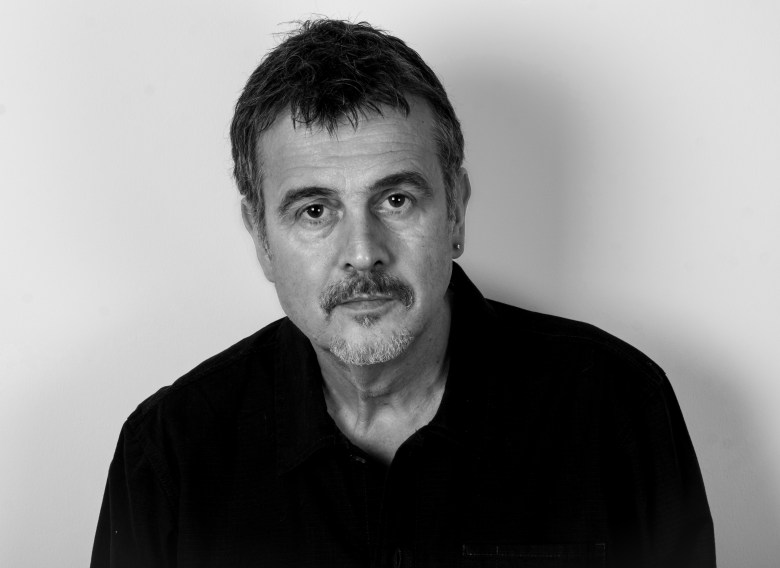

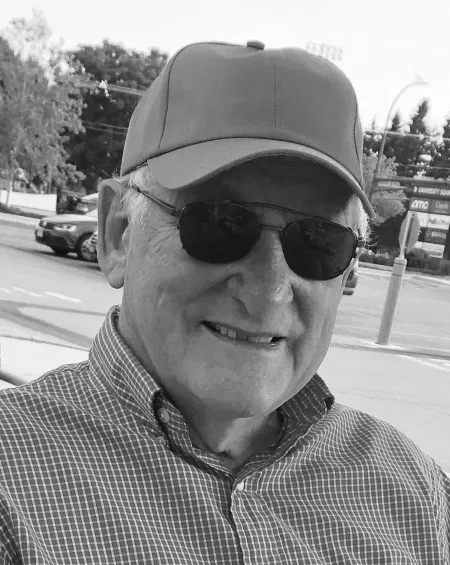



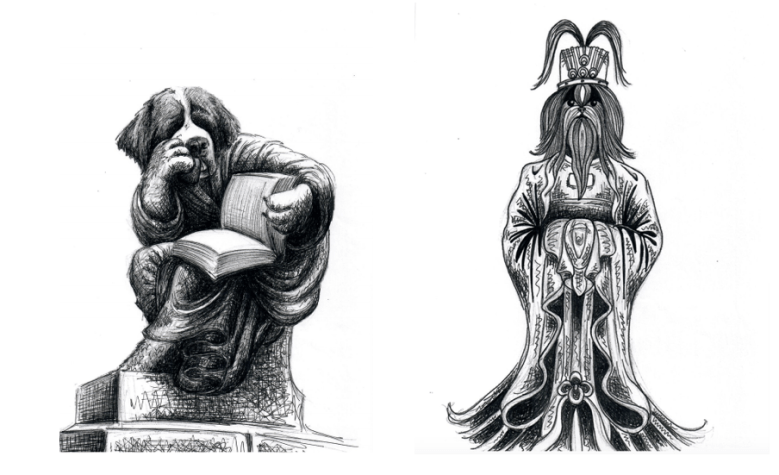





 nothing in the rulebook