• IMG_4186
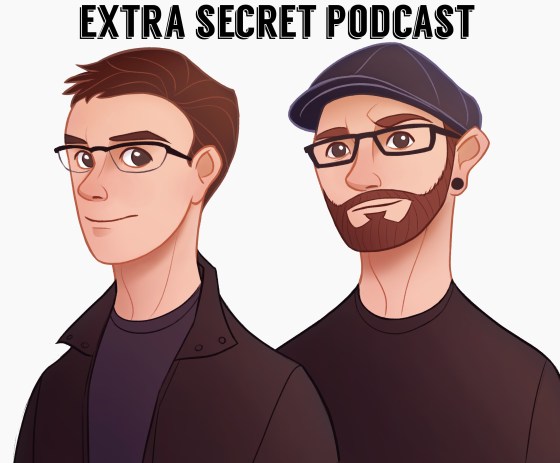
    Eric Henson, one half of the Extra Secret Podcast, introduces us to the world of podcasting, and gives his top tips for starting your own podcast.

    The fine folks here at Nothing In The Rule Book asked if we were interested in contributing some tips on how one would go about starting their own podcast. Since we’re not ones to shy away from reaching potential new listeners, we (over) enthusiastically agreed. Hello. How are you? You look well.

    We’ve been doing the Extra Secret Podcast for just over two years now and I’m pretty sure you’ve never heard of us. So, if you’re reading this expecting some top tips on how to become the next Nerdist, 99% Invisible, or even Serial you’ve come to the wrong place. There are scores of articles out there that deal with the technical side of setting up a podcast. This isn’t one of them. We’re here to give you some pointers on the “whys” of podcasting.

    About three years ago, Dan came to me and said, “I want to do a podcast and I want you to co-host it with me.”  To which I responded, “FINALLY.” Then I found out that I wasn’t his first choice, which I was strangely okay with. I then began to ask some of the big questions, which we’ll get to in a moment.

    Before we get started I have a confession: The Extra Secret Podcast isn’t my fist podcast. Ten years ago I did one with another friend and it was, to be quite honest, terrible. We recorded off of a tiny stick microphone, there were long awkward pauses during conversation, and it lasted for about 15 minutes. I think we had a grand total of five listeners. After that crushing failure I resolved never to podcast again unless I could do it “right.”

    On to the tips!

    • Have a format: I hate to break it to you, but “two or more people droning on and on about something” isn’t a format. For our show we’ve settled on two segments separated by a musical break. Generally we talk about things that have been in the news for the first segment, take a short break, and return to talk about a predetermined topic.
    • Have a schedule: Having a consistent publishing schedule helps keep listeners around. When we started we were on a weekly schedule. I still have no idea how we were able to come up with new things to speak about each week for an entire year and not end up completely burned out. Eventually, we switched to a twice a month format and that seems to keep it fresh. I’ve listened to some podcasts that publish whenever the mood strikes and that’s all well and good. But when months go by with no new podcasts, your listeners may start to wonder if you’ve quit and not bothered to tell them.
    • You do you: There’s no point if doing a show if you’re just going to copy someone else’s style. If you’ve made the decision to inflict yourself on the internet, you had better be doing it in your own voice. Bring something unique to the table.
    • Get some decent equipment: When we started, Dan had purchased a nice mixing board and some XLR microphones. Super professional; but not required to have a halfway decent sounding podcast. There have been a few other podcasts I’ve listened to where it sounds like they use a tin can telephone to capture all their audio. Dreadful. The mixer and microphones were nice but they were tough to transport and time consuming to set up. Eventually we settled on two Blue Snowball USB microphones which are plug-and-play and relatively inexpensive.
    • Keep it brief: We try to keep our recordings limited to about an hour. Most listeners will be digesting your podcast while commuting, endlessly processing data at their desk job, or peddling away on a stationary bike at the gym. Anything longer than an hour and you’re starting to crossover into audiobook territory. If you have a topic that warrants more than an hour’s worth of conversation don’t be afraid to split the episode into two parts. It will give your listeners something to look forward to.
    • It’s not what you say, but how you say it: I know, I know… Swearing is fun. On our podcast we do tend to , but not at the expense of the overall message of what we’re trying to say. If you listen back to a recording and find that you’re using expletives as filler words, you may want to make a concerted effort to avoid that.
    • Be ready to suck: Before we even published our first episode, Dan and I sat down and hashed out what we wanted to talk about. We recorded a pilot episode that we never published (and will NEVER publish) to get comfortable in front of the microphones and get a rhythm down. And even when we did publish our first episode it was still a bit clunky. It’s a work in progress. Still.
    • Is this thing on?: Once you’ve published some episodes, the hosting site (we use Blubrry for ours and it’s great) you use can most likely provide you with some kind of data regarding how many downloads you’ve amassed to date. You may want to sit down when you look at them the first time. And after you subtract yourself and your cohost you may want to lay down. Depending on the level of promotion you’ve put into your podcast you most likely won’t be doing crazy download numbers.
    • Shameless self-promotion: Tell friends, tell family, tell anyone you think may be interested in your podcast. Some of them may actually Start a Twitter account for the podcast. Twitter is good for connecting with listeners and getting new ones. If there’s a particular topic you’re discussing on your new episode, hashtag it. You’d be surprised what people notice. In fact, my skillful use of #CloneHigh got us noticed by this very site! Early on in the show, our musical interludes were often local bands that we’re fans of and retweets from them would never fail to give our numbers a bump.
    • Why bother?: The reason We’ve been doing this for so long is because it’s something we enjoy doing. It’s also cheaper than going to therapy. At the very core of the show it’s really about two friends sitting down and having a conversation and working through some things. It’s not about having tons of listeners and it never was. The best we can hope for is that someone listens to what we’re saying and that it connects with them on some level.

    Now, there’s nothing is this rulebook that says you have to abide by anything I just wrote. Go forth and podcast!

    About the author of this post
    IMG_4166E.A. Henson is one half of the Extra Secret Podcast. When not podcasting he is a mild-mannered worker at a major multinational corporation. He lives in Michigan.

    Thanks to chrisandtanner.com. You’re the meaning in our lives, you’re the inspiration.
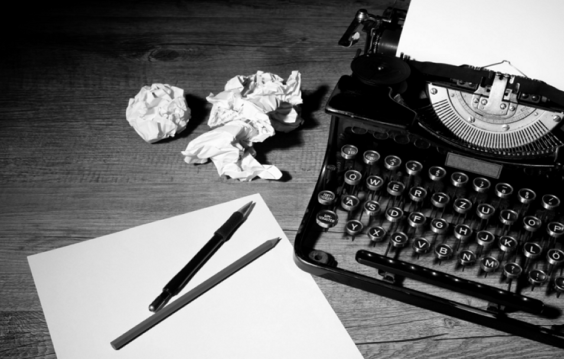
  • Writing Advice
    Write what you know? “Bollocks”, as Aristotle would have said.

    I view ‘advice for writers’ articles with suspicion. Strange opening for what looks like yet another example of the form, I know, but bear with me. I’ve read many that contain good tips and sage wisdom. I’ve adopted strategies other writers have used and found them effective. Still, whenever I see click-bait headlines like ‘10 Tips for Aspiring Novelists’ or ‘17 Mistakes You Are Making With Your Novel / Short Story / Poem / Play / Screenplay / Haiku’ (I might write this one day, 17 Mistakes You Are Making With Your Haiku’ – one per syllable and present it as a mega-haiku) I feel a great disturbance in the Force. Why? Because of the assumptions contained in them and because of the damage they can do.

    These articles start from two simple premises:

    1. There is a right way of writing and a wrong way.
    1. Because I, the article writer, have published X amount of books, Y amount of articles and Z amount of blog posts, I know which is which.


    Both are wrong, and embody what Aristotle would call a ‘false start’, being, as he was, a big fan of athletics.

    There isn’t a right way or a wrong way of writing. There are ways that have met with success and ways that haven’t. Some writers plan every scene, making charts of weather, hours of darkness and light, what was in the news and who was on the 6 Music playlist on the days in question. Others begin with a sentence, a mood, or a voice and follow it for 80’000 words. Some writers set out to deal with an issue, a theme, to explore an argument or an assumption. Others want to tell a story and allow any themes to arise naturally. All are valid. Try them. See what works. But the following argument is what Aristotle would call bogus, being, as he was, a fan of the Bill and Ted movies:

    JK Rowling planned her whole series in advance.

    She has been almost insultingly successful.

    Therefore, in order to be successful, I must do what she did.

    Hemingway said about getting started: ‘All you have to do is write one true sentence. Write the truest sentence you know.’ He didn’t cover his office with sticky paper yet he was quite successful too.

    Secondly, as Aristotle wrote in the Poetics, ‘Danger, Will Robinson.’ Good advice is helpful, maybe it nudges you in a better direction, maybe it lets you see a problem from another angle. Great. Bad advice however can be destructive. It doesn’t just nudge you, it can push you off the road like an elderly driver. At times it can stop you in your tracks like an elderly driver. Occasionally it can metaphorically kill you like a metaphorical elderly driver.

    I studied creative writing at the University of Glasgow. It was a great course with fantastic teachers, wonderful writers and I’d do it all again in a second but boy did it stop me from writing for years. The problem, I now realise, is that I had so many competing pieces of advice, so many contradictory opinions bothering me like Hitchcockian birds that I couldn’t work out what to do or where to go. There is a well-established backlash against creative writing courses, and writers like Hanif Kureishi have famously spoken out against them (not very controversially to be honest, his point boiled down to ‘we can’t teach talent, only technique’ which is fair enough. Learning how to hold a brush and reading about the theory of the golden ratio won’t turn me into Leonardo da Vinci and cutting off my ear won’t make me Van Gogh).

    I don’t really agree with the backlash. The courses are good and writers get a lot out of them. Whether they are value for money is a question about tuition fees and the nature of education, a separate issue. Whether you become a successful writer after graduation is down to talent and luck, neither of which is guaranteed with your degree certificate. In the main, they provide a safe, supportive environment in which to learn and to make mistakes, exactly the same as art school and football academies. However they are not like law degrees or medical degrees. To be a doctor you have to learn anatomy, biochemistry, surgical procedure. To be a lawyer you need to learn precedent, legal codes and how to write offensively expensive letters. There are rules. Memorise them. Follow them. If you deviate, people die. If you internalise everything you’re taught, one day you too can be screwed by Jeremy Hunt.

    Not so with writing, though you wouldn’t know it if you Google for writing tips: Don’t use adverbs. Don’t use adjectives. Don’t use present tense. Don’t use the second person. Don’t use too many auxiliary verbs. Don’t use anything other than ‘said’ (and specifically never, ever use ‘ejaculate’ in reference to speech, I mean, come on, JK). Don’t use passive verbs. Don’t use distancing tenses. If a gun is introduced, it must be fired. Never use your story to get revenge. Write what you know.

    Look again at your favourite writers. They break all of these ‘rules’. David Mitchell does (he has twice written about a writer getting revenge on an unkind reviewer). So does Marlon James (A Brief History of Seven Killings is a triumph of voice and when people speak they use adverbs, adjectives, second person, present tenses, the lot). They’re both quite successful as well.

    But the worst of them all, the most insidious piece of advice is ‘Write What You Know.’

    Bollocks, as Aristotle would have said.

    Write what you know. Because Tolkein was a wizard, Thomas Harris was a cannibal and Shakespeare exited pursued by bear.

    Write what you know because the only real literature is realism, the only authority is experience and empathy is patronising.

    Bollocks, says Aristotle. A load of.

    Literature is empathy. Writing a novel is the ultimate act of empathy. You take on the voice, the mannerisms, the opinions of a character or a number of characters in order to tell their story. Dostoevsky didn’t steal from Alyona Ivanovna after murdering her, he imagined what it would be like. Ian Fleming didn’t have sex with all those women. He imagined what it would be like. Presumably often and at great length. HG Wells didn’t travel in time, to the moon or to the Island of Dr Moreau.

    The entire canon of world literature is treated like the exception that proves the rule. Dickens, Kundera, Murasaki Shikibu and the recently lost, much lamented Umberto Eco all did it the wrong way. They imagined people and worlds and stories about which they had no personal experience, about which nobody had any personal experience. Yet still there’s the advice; write what you know.

    So why then all the fuss about Karl Ove Knausgaard’s My Struggle series? If you don’t know, it’s a six book series that details, in the kind of minute detail Joyce would have appreciated, Knausgaard’s own life. A publishing sensation in his native Norway and in translation, what’s so special about someone writing their own life, writing openly about their family and friends and intimate thoughts and washing up? If all we do is write what we know, a Norwegian man writing what he knows should be unremarkable. Yet it is remarkable precisely because we tend not to write what we know. We write what we imagine, spice it with our own experience and back it up with research.

    My new novel is called The Waves Burn Bright. It deals with a survivor of the Piper Alpha disaster and the PTSD that destroys his family. Half of the novel is told from his perspective. The other half is narrated by his daughter. I could write this book because I did extensive research and because I took empathic leaps to try and understand what it would feel like to think you’re going to die, to have PTSD, to suffer from survivor’s guilt, to be an alcoholic, to commit adultery, to become a geologist, to live in New Zealand and Hawaii, to be a woman, to be gay. Write what you know? Experience isn’t the only source of authority. Research, talking, listening, empathy, imagination. A writer’s tools. Don’t just write what you know. Find out what you don’t know. Mix the two.

    Why, Aristotle would ask, the big fuss?

    Because I’ve seen what bad advice can do to a writer. I struggled to get back to work after studying at Glasgow but eventually I worked out which advice was useful, which I could ignore and which I could actively fight against (during my time in Glasgow, someone (not a member of the university or another student I hasten to add) told me that I wasn’t writing proper Scottish literature because I wasn’t writing about working-class men from the Central Belt. That person can, as Aristotle would say, Γαμήσου). Long before then, however, I was a member of the University of Aberdeen Creative Writing Society. As with all groups of this kind we wrote, critiqued each other’s work and then got drunk. We were all undergraduates, young, horny and oh so damn serious about literature. We stayed up late drinking wine and discussing Keats. We wrote ‘responses’ to Beckett and ‘homages’ to Kerouac. We really deserved a good slap. One writer, however, didn’t. He wrote fun short stories of an Ian Fleming meets Tom Sharpe variety: heroes with guns, cartoon bad guys, slapstick and Tarantino-esque levels of blood. They were over-the-top and unrealistic and every week we told him that. ‘You’re talented,’ we’d say, ‘you should write realism, you should write proper literature. You should write what you know.’ We really deserved a good slap. As our lack of enthusiasm for what he was doing became apparent, so his enthusiasm waned. He kept coming to meetings, but didn’t hand in work as often. Eventually he stopped handing in at all. As far as I know he stopped writing. We remained good friends for years afterwards but eventually lost touch. I’ve never been able to shake the fear that our ‘advice’ derailed him. I wish, instead of saying what we did, we’d said something like, ‘It’s not very believable. Why not do some research into firearms and explosives. Look at anatomy books and trauma studies. Skulls don’t make a pop noise when you shoot them. But what noise do they make?’

    Don’t write what you know, but make sure you know what you write.

    Write what you want. Write how you want. Write where you want, why you want, when you want, who you want. It’ll either work or it won’t. There’s no right way. There’s Tolstoy’s way and Woolf’s way and Voltaire’s way and Oe’s way and they’re all different and they’re all right.

    And don’t take advice from anyone just because they say it with authority, least of all me. Aristotle would say the same.


    About the author of this post

    Iain Maloney was born in Aberdeen, Scotland, and now lives in Japan. He is the author of three novels and has been shortlisted for the Guardian’s ‘Not The Booker Prize’ and the Dundee International Book Prize.

    His third novel, The Waves Burn Bright is out on Freight Books May 19th 2016. First Time Solo and Silma Hill are out now. Iain will be touring the UK in May to promote his new book. To book him for an event please contact him via Twitter. More at www.iainmaloney.wordpress.com and @iainmaloney

  • American Century
    The American Century As Seen Through A Brick: A sequence of poetry based on ‘Academy Award Winner for Best Picture’ winners. The remaining poems can be found here.


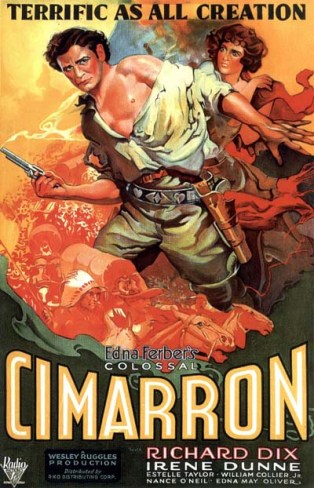
    Cimarron_(1931_film)_posterCimarron 1930/31

    Isaiah fans white folk from the ceiling,

    One nation indivisible –

    An empire pillared by pioneers

    Counting notches on their pistol grips…


    Time will mellow hearts

    Say: America

    Hide me in your love.


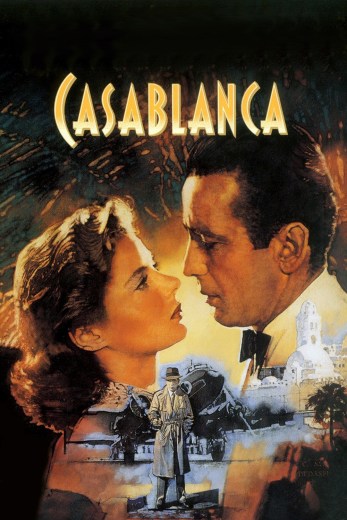
    Casablanca 1943Casablanca.jpg

    The speech of the refugee is the living breath.

    Let them speak of their roads:

    … Through Europe we have travelled

    Fleeing tyranny and vultures,


    The devil has us by our throats,

    The ghettos burn and displace our children,

    You must remember us…


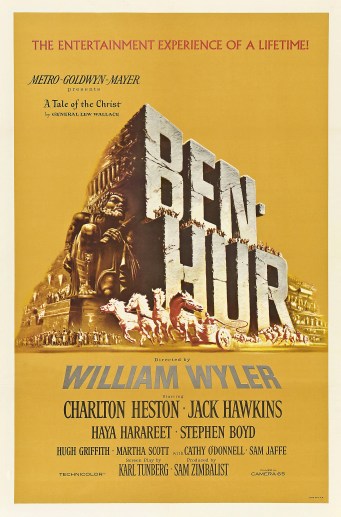
    Ben_hur_1959_poster.jpg

    Ben-Hur 1959

    This country was built by slaves

    – It still is –

    There are no guilty faces

    Just    conquered people


    Oar weary on the galleys

    Air wary on the gallows

    Fire       environs       us       all


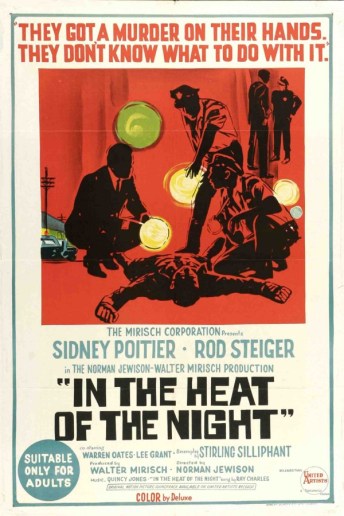
    In the Heat of the Night 1967Heart of the night

    – No Vietcong ever called me a Nigger –

    For Virgil, hell is in police officers,

    The detail in the dead and suffer;

    Tweezers, toothpicks, thermometers.


    Just what they know about the King’s insomnia,

    The wet cemeteries in the state of Louisiana,

    The struggle when fear is attached to color?


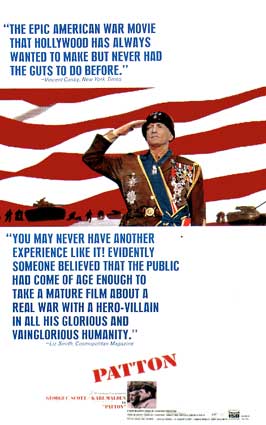
    70_pattonPatton 1970

    If it takes a bloodbath

    Our blood, his guts

    Blood in Chicago

    Dams of blood ready to flood


    Foreign blood stung in battle

    The prayer’s spittle, blood pour.

    Enlightened absolutism – War


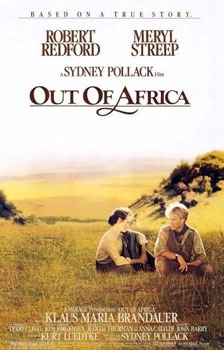
    Out of Africa 1985Out_of_africa_poster

    Alleles of eloquence

    Cradled at this rock

    Bear the scorn/pity of aids

    And are nothing more


    To marionettes

    Than the withering victory of:

    Blood/safari/diamonds.


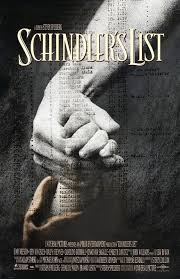
    SchlindlersSchindler’s List 1993

    Show/er of darkness

    Give me strength

    For I am lost in the weakness of others

    Their cracked house cruelty.


    … Light dimmed in interrogation,

    Held hopeful, eternal,

    The fractal lobe.


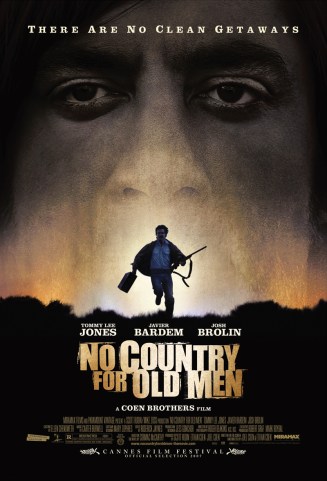
    No Country For Old Men 2007No_Country_for_Old_Men_poster.jpg

    There is no greater me than you;

    The birds will die, the trees too.

    The flesh of fish will foul

    And the song will lose its soul.


    I will be hot, you will be cold;

    The sea’s of what’s coming,

    The intensity of the plunge.


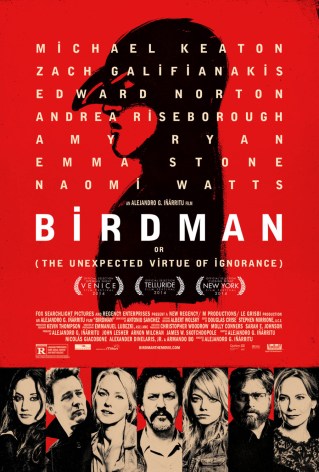
    Birdman poster.jpgBirdman or (The Unexpected Virtue of Ignorance) 2014
    I don’t exist

    , This representation is an act

    – An intervention. A medium

    Of absence, contradiction, negation


    . When I am killed again with impunity

    , My autopsy transfigured as found poetry

    , again I will’ve been defenseless/muffling… I can’t breathe


    About the poet

    Asim Khan is from Birmingham, England. His work has appeared and is forthcoming in various print and online journals. He blogs on www.photoetric.co.uk. He Tweets at @photoetric


    Want to see more great poems like this in your inbox? Subscribe to our newsletter for everything creative! 

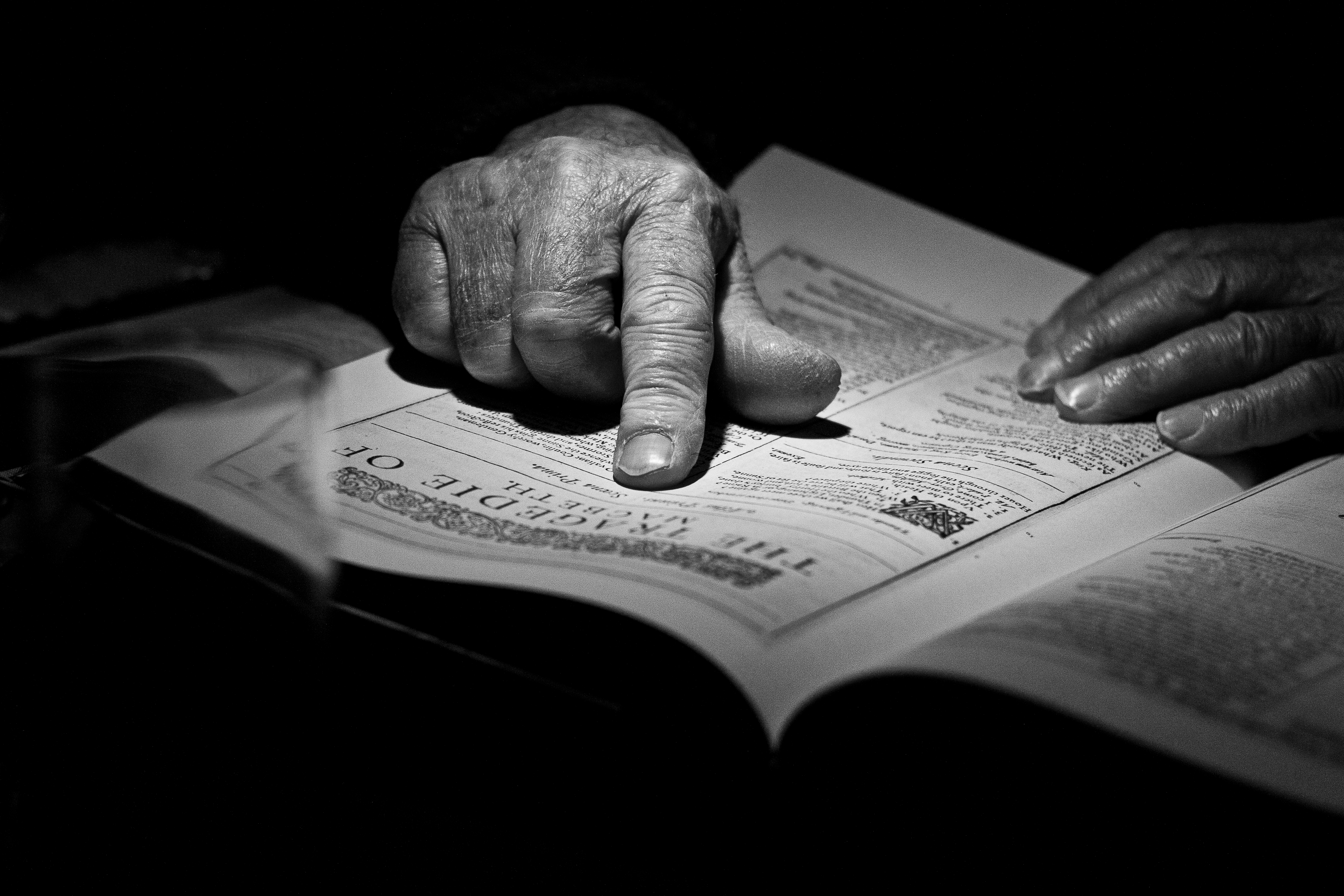
  • Hands4
    Photography by Mike Dodson/Vagabond Images

    We’ve looked before at the reasons great writers choose to sit down and begin writing. These reasons include wanting to discover the answer to some mystery, simple fun, the pursuit of happiness, personal discovery and self-exploration, and because the thought of not writing simply hurt too much. But why are we, as a species, so drawn to the stories these writers write? Why do homo sapiens so desire books and literature?

    In rebuttal to those who might contend that we somehow do not need books, there have been wonderful arguments made in favour of literature, explaining what it does for the human mind and the human spirit. Yet this does not quite answer the question of what it is that draws human beings to books and to literature. It doesn’t answer why we have, for centuries, even erected great buildings in which we can store our texts and stories.

    Scientists, artists, politicians and explorers have explained, sometimes beautifully, why books are essential. They are, for instance, “fundamental to all human achievement and progress”, according to Astronaut Neil Armstrong. But is logical reasoning like this the true reason we are drawn to books, why we worship them? Is there more to it, something spiritual, perhaps?

    Nearly half a millennium ago, the answers to such questions were pondered by Galileo Galilei, one of humanity’s greatest science-crusaders and seekers of knowledge and understanding.

    Galileo
    Galileo Galilei

    In Dialogue Concerning the Two Chief World Systems: Ptolemaic and Copernican, Gelileo observes that books have an uncanny power to transport us, across time and space, into the mind of another person. And suggests that we are drawn to books, and derive such pleasure from reading, because literature is a means of connecting human beings and human ideas across boundaries – and is, in this way, a means of both time travel and telepathy.

    He writes:

    “With what admiration the reading of excellent poets fills anyone who attentively studies the invention and interpretation of concepts! And what shall I say of architecture? What of the art of navigation?

    But surpassing all stupendous inventions, what sublimity of mind was his who dreamed of finding means to communicate his deepest thoughts to any other person, though distant by mighty intervals of place and time! Of talking with those who are in India; of speaking to those who are not yet born and will not be born for a thousand or ten thousand years; and with what facility, by the different arrangements of twenty characters upon a page!

    Let this be the seal of all the admirable inventions of mankind.”

    Several hundred years later, and the same thought processes continue to abide as the world’s greatest thinkers ponder the book as one of these most “admirable inventions of mankind”.

    Indeed, the late, great Italian novelist, essayist and philosopher Umberto Eco, peers back half a millennia to Galileo’s time, and discusses the perennial rewards of the book as a medium or irreplaceable humanity:

    “Alterations of the book-as-object have modified neither its function nor its grammar for more than 500 years. The book is like the spoon, scissors, the hammer, the wheel. Once invented, it cannot be improved. You cannot make a spoon that is better than a spoon. When designers try to improve something like the corkscrew, their success is very limited; most of their “improvements” don’t even work. Philippe Starck attempted an innovative lemon-squeezer; his version was very handsome, but it lets the pits through. The book has been thoroughly tested, and it’s very hard to see how it could be improved on for its current purposes. Perhaps it will evolve in terms of components; perhaps the pages will no longer be made of paper. But it will still be the same thing.”

    It is the abiding qualities of books – of writing, stories and literature – that make them so entwined with human culture. In the same essay, Eco considers just this, positing that reading is almost a biological or natural reflex of humanity:

    “We can think of writing as an extension of the hand, and therefore as almost biological. It is the communication tool most closely linked to the body. Once invented, it could never be given up… Our modern inventions — cinema, radio, Internet — are not biological.”

    If, after reading this, you have that need to scratch your natural instinct therefore and pick up a book, why not try one of those books everyone says they’ve read (even if they actually haven’t). Perhaps you could also consider what the new digital world means for books and literature. Whatever you do, make sure you sign up for our newsletter – a free, regular digest of everything interesting.


  • dickensdream
    Dickens’ Dream, by Robert William Buss.

    The line between fact and fiction has always been fuzzier than most people find it convenient to admit. It is a common line to argue that the work of the novelist is engaged with the creative imagination, while the memoirist is engaged with some accountable “truth” or “reality”, and is trying to tell us – the reader – what really, actually happened.

    It is a distinction that is easy to voice but perhaps harder to sustain in logic, for there is a good argument to be made that any account of a person’s real, lived experiences can never be “true” in the sense that any such account would be verifiable if it were recorded on CCTV cameras. Equally, fiction – and ultimately all art – comes from within the writer or artist’s own mind and own heart, and their choice of words and the way they use language is designed by their own personal experiences of the world. The writer of a fantasy novel exposes their true selves to the same extent that a memoirist does.

    Consider the words of J.M. Coetzee – recipient of the Novel Prize for Literature – here:

    “In a larger sense, all writing is autobiography: everything that you write, including criticism and fiction, writes you as you write it.”

    Or else, of Jorge Luis Borges:

    “I wrote a story once about a man who began a very large picture, and therein was a kind of map – for example, hills, horses, streams, fishes, and woods and towers and men and all sorts of things. When the day of his death came, he found he had been making a picture of himself. That is the case with most writers.”

    The idea that writing is about self-exploration and self-discovery is not new. Harper Lee said, for instance, that writing “is a self-exploratory operation that is endless”. Emerson said there was neither fiction nor history: “only biography”. Samuel Butler wrote that “Every man’s work – whether it be literature or music or architecture or anything else – is always a portrait of himself.”

    Something that may therefore be inferred from this idea then is that all stories – whether they concern goblins or spaceships or Russian princesses or Greek warriors or a middle aged man from Croydon (or all the above) – are, indeed, true. On some level, there exists within every work of fiction an element of reality – an ultimate truth perceived perhaps only in glimpses; that truth being the human being, their feelings and thoughts, behind the words on the page, behind the typewriter (minimalist or otherwise).

    Writing in the Guardian, the writer Belinda McKeon clarified this position: “Writing cannot be anything but autobiographical. To try for distance, for the narrative which is somehow purely imagined, would be the most nakedly autobiographical effort of all. […] Writing, all writing, comes from the well of the self. From the way the mind works; from the places to which the mind goes.”

    If fiction, then, is autobiographical, what does this mean for those works that actually attempt to be autobiography? What does this mean for memoir?

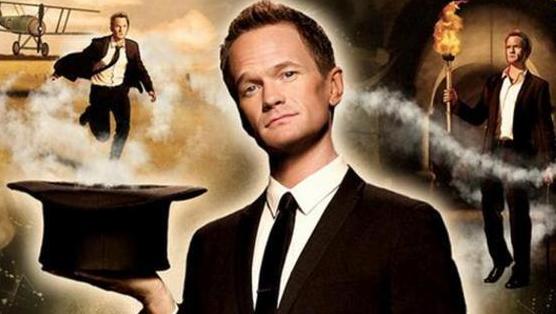
    There are plenty of examples of fiction – and of imagined or perceived truths instead of actual happening truths – in memoirs and autobiographies. Some of these are blatant. Consider, for instance, the “choose your own autobiography” memoir of actor Neil Patrick Harris, who, having not actually lived “a miserable childhood that later in life you can claim to heroically overcome”, simply invents one.

    Then there are those autobiographies in which the fictions are hidden more deeply. Lance Armstrong’s memoirs, for instance, in which he supposedly overcame testicular cancer to win the Tour de France repeatedly without the aid of performance enhancing drugs, are now revealed to be largely self-congratulatory fabrication.

    The outrage surrounding Armstrong’s supposed “memoirs” reached a nadir when people who had bought his book demanded refunds from the publisher. In a similar reaction to how readers responded to the revelation that James Frey, author of A Million Little Pieces, actually hadn’t done very much of anything he claimed to have done in his “autobiography”.

    But perhaps the “untruths” or what we might call fictitious elements that are contained within memoirs and autobiographies may be expected. As David Shields suggests in Reality Hunger, “A lot of nonfiction is highly imagined. We dream ourselves awake every minute of the day. “Fiction/nonfiction” is an utterly useless distinction”.

    This is a position suggested by memoirists themselves. For instance, Mary Gaitskill said, “My books tend not to have the narrative and story you associate with fiction, but at the same time they are arranged and structured, to put it pompously, as works of art rather than accumulations of information. To that extent, I like to think they’re more novel than many novels.”

    Perhaps a reason for this is the inherent, slippery nature of language, and the act of writing. Jonathan Raban, for instance, posits that “the moment you start to arrange the world in words, you alter its nature. The words themselves begin to suggest patterns and connections that seemed at the time to be absent from the events the words describe. Then the story takes hold. It begins to determine what goes in and what’s left out. It has its own logic and it carries the writer along with it. […] that is fiction making.”

    This idea suggests that the moment you begin to write a narrative account of anything, be it a real ‘lived’ event or something from your imagination, you immediately stray from the real actual happening truth. It is an idea also proposed by Sebald, quoted in The Emergence of Memory: “You adulterate the truth as you write. There isn’t any pretence that you try to arrive at the literal truth. And the only consolation when you confess to this flaw is that you are seeking to arrive at poetic truth, which can be reached only through fabrication, imagination, stylisation. What I’m striving for is authenticity; none of it is real.”

    There may seem to be a paradox here: that to create something that is “real”, one must fabricate and imagine. One must invent; one must write fictions; one must lie. Yet it is the inverse of the paradox encountered in writing and reading supposed fiction: that what may set out to be an entirely imagined story contains within it more reality and truth than supposed fact-based narratives.

    Ultimately, perhaps, the gap between fiction and autobiography is entirely artificial. Perhaps it always has been. This may, at its heart, point to some ultimate, universal truth. As David Shields writes: “to be alive is to travel ceaselessly between the real and the imaginary.” Writing and literature, then, are the craft upon which we travel this journey. Writers, in that context, may then be seen as the pilots.


  • Waterstones war and peace

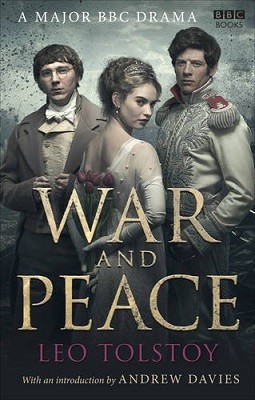
    Although War and Peace may be one of the novels most of us have lied about reading, it seems this is set to change, as the book has entered the UK’s bestselling book charts for the first time.

    According to the Bookseller, the BBC edition of the novel sold over 3500 copies last week, putting it in 50th place in the charts – the first time the novel has made the top 50 since Nielsen BookScan’s records began in 1998.

    Although only 4% of Britons have actually read War and Peace, according to YouGov, the BBC’s recent televised adaptation of Tolstoy’s 1300 page epic seems to have captured the public’s interest, and encouraged thousands of Britons to pick up the original text.

    Waterstones buyer Joseph Knobbs said that it wasn’t just the BBC’s edition of the novel that was flying off the shelves: “Judging by our recent sales … an awful lot of people have finally crossed this classic off their must-read list. Four different editions of the book have hit our bestseller list, shifting an almost equal number of copies each.”

    Book publisher Wordsworth Editions also reported an increase in sales of its edition following the airing of the BBC’s TV series. The publisher said it had sold over 3000 copies since the first episode of the television adaptation – putting its edition into the top 20 of the Bookseller’s small publisher charts.

    As well as attracting praise from critics and viewers for its fast pace, heaving bosoms, flashing sabres, and pouty attractive actors, (as well as having a decent script and solid direction), the BBC’s adaptation seems to have been successful for another key reason: Paul Dano.

    Social media – especially Twitter – erupted with praise for Dano, with Fearne Cotton (among countless others) calling him “completely captivating” in his role as Pierre Bezukhov. It is perhaps in part down to Dano’s success here that Tolstoy’s epic has finally made it onto the bestselling book charts. Indeed, as Dano’s Pierre took his delicate time savouring a potato, you could almost hear the sound of people rushing to bookstores to buy their own copy of War and Peace.

    In looking to answer that age old question of whether Paul Dano is better or worse than 1300 Russians, it seems on the basis of this evidence that an early victory lies with Dano.

  • Stephen King

    The question of what motivates great writers to write has been discussed by writers and critics for decades. Italo Calvino said that he wrote “to give vent to my feelings and because I like it”, and that “one writes most of all in order to take part in a collective enterprise.” Meanwhile, George Orwell suggested the motivation for writing came from “a mystery” that the writer was trying to uncover. David Foster Wallace simply said it was “about fun”.

    As readers, we often wonder what it was that compelled writers we admire to tell their stories. According to some studies, 30% of writers “write to educate, influence and help others”; 2% did it for “exposure and fame”, 2% did it for “curiosity” and 13% did it simply because they “had to” – as though there were no other option for it.

    The statistics, of course, will only get you so far. What is interesting is to see how they correlate with some of the well-known thoughts and musings on this topic from famous authors. Here, we might begin to understand why some authors feel as though there is no other choice open to them but to write and to tell their stories.

    Think of the words of the magnificent Maya Angelou, for instance, when she says that “there is no greater agony than bearing some untold story inside you.”

    Here, we can begin to explore that central conceit, that the supreme animating force of the writer may be the irrepressible impossibility of not writing.

    This is something picked upon by James Baldwin, who described the need and urgency of writing as “Something that irritates you and won’t let you go. That’s the anguish of it. Do this book, or die.”

    This, at first, seems to bear so much similarity to Angelou’s quote that a common concept of the pain of not writing seems to be developing. Yet Baldwin also notes – in an interview with George Plimpton, founding editor of the Paris Review – how writing is also about clarifying one’s own thoughts and consciousness:

    “When you’re writing, you’re trying to find out something which you don’t know. The whole language of writing for me is finding out what you don’t want to know, what you don’t want to find out. But something forces you to anyway.”

    This bears more correlation with the idea of uncovering the “mystery” George Orwell spoke of; yet it also falls into the categories of “curiosity” and a desire “to educate” (even if the only person being educated in this instance is the writer, the idea of self-discovery and self-education through writing still therefore plays a vital motivating role for authors).

    For further evidence that the desire for self-discovery is a powerful motivating force for writers, think of the NaNoWriMo competition, which challenges writers to start and complete a 50,000 word novel during the month of November.

    Chris Baty, the founder of NaNoWriMo, has said that many entrants to the contest never intend to publish their books. Instead, they write for the creative experience “of discovering the novel within them”.

    Just as great literature explores new worlds, new ideas, new feelings; and ultimately the depth of what it is to be human, so too, it seems, does writing provide a tool for exploration. As Harper Lee said: writing “is a self-exploratory operation that is endless.”

  • 1nphbookmain

    In the days where it seems you get your own memoir for being even slightly famous, or if you have ever been raised on the planet earth, actor Neil Patrick Harris has attempted to subvert the memoir model with his own memoir – written in the form of a ‘Choose your own adventure’ book.

    That’s right. In some sort of meta-statement about the uselessness of writing a memoir at all, Harris lets you, the reader, choose which path you want him to follow. The book mixes in stories from the actor’s early days in Los Angeles, life on the How I Met Your Mother set, secrets from backstage at award shows, and family life with David, Harper, and Gideon. And it combines these tales with the gloriously pulpy prose and branching paths of a CYOA book.

    For example, early on we read a description of Harris’s life growing up in Ruidoso, New Mexico, and at the end get the choice to either experience a happy childhood on page 8, or a (fictitious) “miserable childhood that later in life you can claim to heroically overcome” on page 5.

    As Harris points out in an interview with the LA Times, “If you only want to read hard-core, frat guy stories, you can take that path. If you’d rather learn about my interests growing up and how I came to be, you can follow that path. If you’d really just rather learn how to make pasta and Bolognese sauce and a nice cocktail and have a lovely evening by yourself, you can do that too.”

    You can check out an excerpt from this ‘Choose your own autobiography’ memoir, and buy a copy for yourself, over here.

    Remember: Neil Patrick Harris’s life is in your hands.

  • John-Malkovich-01b

    Malkovich? Malkovich Malkovich. Malkovich! Malkovich. No, this isn’t that scene from Being John Malkovich; but it’s still pretty good. You see, Audible has released a John Malkovich-narrated audio book of the Kurt Vonnegut’s Breakfast of Champions.

    It seems this was a project Malkovich was pretty keen to work on. The acclaimed actor said: “Breakfast of Champions is just about the best script an actor could wish for, and it was a real treat to perform. I hope Vonnegut fans have as much fun listening to this challenging and funny American classic as I had recording it, and I believe those new to the book will discover it’s just as fresh and relevant as it was forty years ago.”

    In the meta-fiction novel, which Vonnegut published four years after he released perhaps his most famous work, Slaughterhouse Five, readers once again encounter sci-fi writer Kilgore Trout, a reoccurring character in Vonnegut’s novels. Trout meets with car salesman Dwayne Hoover, who believes one of Trout’s science fiction books is, in fact, non-fiction.

    vonnegut

    The book is full of Vonnegut’s signature writing style, simple in sentence structure and syntax and rich in irony, sentimentality and didacticism. Dealing with suicide, free will, mental illness and social and economic cruelty, the novel received critical acclaim among reviewers and spent 56 weeks on the New York Times bestsellers list. However, Vonnegut himself was unhappy with the novel, and gave it a C grade on a report card of his published work.

    You can listen to a sample of Malkovich’s narration here, and watch behind-the-scenes-footage of the recording below:

    If you’re still in the mood for more Vonnegut, why not check out this mini-compendium of Vonnegut’s timeless wisdom on writing, reading, and semi-colons?

  • Eaves2

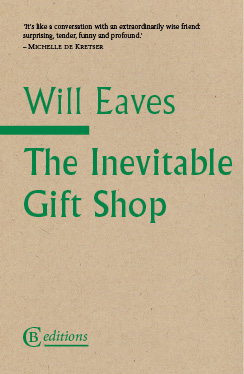
    The Inevitable Gift Shop, the latest book from Will Eaves, is now available, and we here at Nothing in the Rulebook are already excited about it.

    Subtitled ‘A memoir by other means’, The Inevitable Gift Shop lassoes consciousness, memory, desire, literature, illness, flora and fauna, problems with tortoises and cable ties, and brings them back home in double file, as prose and poetry.

    Sri Lankan-born Australian novelist Michelle de Kretser has described the book as being “like a conversation with an extraordinarily wise friend: surprising, tender, funny and profound”.

    Irish poet Ian Duhig has also praised Eaves’s latest offering, saying “It takes itself apart and puts itself back together again as it goes along like a literary Transformer, morphing from prose to poetry, literary criticism to history, every new shape a brilliant incarnation … this is an odd book, no question, one I back to last.”

    The Inevitable Gift Shop is the second book Eaves has published with CB Editions – the imprint of publisher-poet Charles Boyle which has, as The Guardian points out, produced “some truly dazzling books”. CB Editions publishes short fiction, poetry, translations and other work which, “might otherwise fall through the cracks between the big publishers”.

    Will Eaves is the author of four novels and a collection of poems (Sound Houses, Carcanet, 2011). He was Arts Editor of the Times Literary Supplement from 1995 to 2011, and now teaches at Warwick University.

    His previous novel (perhaps better described as a collection of mini-narratives), The Absent Therapist, was shortlisted for the Goldsmith’s Prize 2014. Since this book also made it onto both our essential summer reading list of 2015, and also our recommended list of literary stocking fillers, we’re already looking forward to reading The Inevitable Gift Shop. You should be, too.

    You can order your copy of The Inevitable Gift Shop by Will Eaves here – http://www.cbeditions.com/eaves2.html