• violin

    but suddenly it would come over her, If he were here with me now what would he say? – some days, some sights bringing him back to her calmly, without the old bitterness; which perhaps was the reward of having cared for people;

    -Virginia Woolf, Mrs. Dalloway

    The first time I met Leo was one year ago, on an oddly warm night of October.

    The party was in a small semi-detached house in the suburbs, not far from the train station. The small living room was already overcrowded when I arrived, and smelled strongly of smoke and beer, like every self-respecting student house during a party. There were two threadbare black sofas, a coffee table covered in half-empty plastic cups, and not a single face I recognised. In the middle of a dimly lit kitchen, a wooden dining table had been turned into a beer-pong table. At the back there was also a tiny, untidy garden, where a few people went to get fresh air or, mostly, to vomit.

    He, curly-haired and not much taller than me, looked even more out of place than me, wearing a perfectly ironed shirt and a forced smile.

    I had an assignment about Franz Kafka’s Metamorphosis to write, and wasn’t even thinking about stepping outside my room until the end of term.

    ‘There’s no way you are going to miss this party,’ said Marta, blonde-haired and three years older than me, whilst the two of us squeezed in the back of a taxi.

    ‘I don’t even know these people.’ I tried to discourage her, despite knowing it was too late.

    She pretended not to hear me, ‘we’re going to 4 Wells Terrace,’ she told the driver instead.

    As I predicted, I didn’t know anyone, even though we were all students from the same year. The curly-haired boy was constantly and annoyingly waving at whoever entered the front door. His housemates – two look-alike Spanish girls and a skinny Greek boy – had arranged the party. I remember that all of them came up to me and introduced themselves as hosts, while he looked as if he wanted to be anywhere but in his own house.

    ‘So, Sofia, right? I’m Paula. Feel free to have beer,’ said one of the two Spanish girls, ‘and ignore Leo, he’s a bit moody tonight,’ she nodded in his direction.

    ‘Yeah, a beer sounds fine, thanks,’ I said and smiled, even if I hate beer and I’ve barely drunk one in my whole life.

    The first thing Leo said to me during that party was so irrelevant that I don’t even remember what it was. Maybe he said he liked my dress, or I asked where the toilet was. I guess it is normal, when you have shared so many great and so many awful moments with someone, not to remember the first thing they said to you. Certainly, at one point he said to me: ‘Guess who’s going to clean up this mess? Yeah, me.’

    I spent the whole night leaning against the wall of his kitchen, which was too small to contain all of us and the beer-pong table, and then Leo’s eyes, a surprisingly weird mixture of green and blue, exploring my face.

    *

    ‘Look,’ he whispered to me one morning, in the silence of the library. He put two tickets on my desk, forcing me to look up from the book I was reading. ‘It’s a quartet. Two violins, a viola and a cello. Tonight, 7:30.’

    The classical music concert was held in a bright and spacious hall, in a Georgian spa town, where the two of us went by bus on a rainy evening.

    The music was filling up the hall, and I was trying so hard to push away any thought, to focus on every note of the music, to black my mind out. No matter how hard I tried, I could only feel his elbow against mine. Leo was sitting next to me, eyes closed, deeply lost in those abstract sounds, and in that actual moment I did not even exist for him: what only existed was himself and the music.

    He had been studying violin since when he was a kid, fair-haired and red-cheeked, revealed by some old pictures. He then became an adolescent completely different from the others, completely devoted to his violin and little else. He always had very few friends, very little time for himself or for anyone else. I envied him for this special and visceral relationship with his musical instrument,  which had always been far more than only an object for him. That violin, its strings and its tapered handle, meant ambition and success, fear of failure, and will to reach the top.

    Despite having always loved classical music, I have always been bad at playing any instrument, to the point that it became ridiculous. After a few disastrous piano lessons with a private teacher, a broken guitar and a pair of mental break-downs, I gave up and decided that I would always love the music that other people would play for me. My affection for that kind of music was something I deeply nurtured, by myself and for myself only, too afraid to fail to even commit myself to it. That exclusive relationship with an instrument was something I wanted desperately, but could never reach. For me, that night, during that concert, Leo was himself like a violin: as beautiful, as elegant as a musical instrument, and equally painfully unreachable. I was sitting next to him, closer to him than ever, his elbow against mine, but he could not see me or even hear me, over the sound of music. And ironically enough, no other situation we lived could better sum up our entire story.

    After the concert we ran under the rain and got on the bus back home. I put my head on his shoulder, we stayed silent for a while. The bus was empty, I closed my eyes and listened to the sound of the rain on the windows.

    ‘Can you hear it?’ I asked him, my eyes still closed.

    ‘What?’ I could feel his breath on my cheek.

    ‘The rain is playing for us now,’ I replied, and even if it sounds silly now, in that moment, after the concert, everything I could hear was musical.

    ‘Thank you for coming with me,’ he said.

    *

    The first time Leo played his violin for me I was sitting on his bed, cross-legged and completely speechless. Like everything that mattered in our relationship, that moment came unexpectedly. It happened by chance, with a fluidity and an astounding perfection that I have only experienced when with him.

    We were having dinner at his place, the kitchen was untidy even if he used to do everything he could to keep it clean. It was me who cooked that time, because he used to say that pasta with carbonara sauce tasted different when I cooked it. I have always believed that care is what makes the difference: if made with care, everything tastes better. And every time I made pasta for both of us, I found myself putting as much care as I could into it.

    ‘It’s really easy! I only need two eggs and parmesan… and black pepper,’ I told him, opening his fridge as if it was my own. ‘Oh! And of course, pancetta.’

    ‘Can I do anything to help?’ he asked, standing in the doorframe of the kitchen, his left shoulder leaning against the jamb.

    ‘No, I’m happy to do it, and you can learn from a real expert,’ I replied, the pinch of pride in my voice made him laugh. He came closer and watched me carefully breaking two eggs on the edge of a bowl, and then mixing the two yolks and only one egg-white. I then added just the right quantity of parmesan and a sprinkle of black pepper powder.

    ‘Is that it?’

    ‘Almost, it’s not difficult, is it? Can you pour the boiling water from the kettle into that pan, please? We need to boil the pasta now,’ I said and opened the pack of pancetta to cook it in a frying pan, with a tiny bit of olive oil.

    We ate facing each other, both perched on the stools in front of the kitchen counter, my pasta getting cold on the plate because I had too many things to tell him to stop and eat my portion.  After two or three ‘It’s getting cold! Why don’t you eat it, for God’s sake?’ he gave up and ate his share, listening to my random comments.

    ‘I can’t believe they’re actually planning to host another party here!’

    Leo shrugged his shoulders the way he always did when he wasn’t feeling like talking.

    ‘Do you remember Halloween? I basically followed you around this house with a bin bag for the whole night,’ I continued, in the attempt of provoking some kind or reaction from him. ‘For the whole night.’

    ‘I know,’ he replied, still chewing his pasta. ‘Not the best party of my life, to be honest.’

    ‘And your Greek housemate is still smoking weed in his room, isn’t he? It smells disgusting,’ I said and then ate the first bite of pasta since we sat for dinner, while his plate was already empty. I finally started eating my cold pasta, whilst he talked about the new melody he was learning for a concert with the orchestra.

    ‘Do you think about something when you play?’ I asked, we were now standing in front of the kitchen sink, doing the washing up together.

    ‘Other than the musical notes themselves, do you mean?’ Leo looked up from the pan he was scrubbing, white soap bubbles on his hands.

    ‘Yes. Do you imagine something? Like, I don’t know, fields, mountains… or the sea,’ I said, because to me classical music had always felt as infinite, as mysterious as the sea.

    He didn’t answer straight away. I kept washing the plates and the forks in the warm water, his face looked lost in far thoughts. ‘I only think about the music’ he finally said, ‘there’s only the music … and the pressure of doing the best I can.’

    The house I visited for the first time during our first party now looked like a whole different place, weirdly silent and tranquil. I had been in his room only once or twice before then: it was on the second floor, small and bare, a single wide window just above his double bed, which was often left open. It smelled like fresh air and his cologne. The view from up there was ordinary and grey, on a busy road, and the noise of traffic jams could easily wake you up early in the morning. The view from that window is printed in my memory so clearly, so fiercely, and it provokes, every time I think about it, a profound sense of calm, of shelter.

    ‘I bought you a book,’ I said in one breath, my back leaning against the wall and my legs crossed, I was sitting on his bed. Leo did not look surprised at all, he must have known exactly what that meant. Books were for me what his violin was for him. I had spent nearly two hours in the bookshop, trying to make up my mind, to decide which book I really wanted him to read. In the end, I went for the first one I had  looked at, when I walked in the shop. I chose The Solitude of Prime Numbers: the story of two best friends that never found the courage to tell each other they were in love. The main protagonist, an aspirant mathematician, beautiful, shy and socially awkward, reminded me of him.

    Whilst he unwrapped my present, his violin had been on his desk the whole time. I thought it looked strangely lifeless when not in his hands. He must have noticed that I kept looking at it with curiosity, because he said ‘do you want to hear the piece I’m playing with the orchestra on Saturday?’

    He did not even wait for an answer. Before I even realised it, Leo was standing in front of me, the instrument on his left shoulder, his right hand holding the bow. The room echoed from the very first note, while I did not know exactly what to look at; whether at his beautiful and deeply focused facial expression, or at his hands on the violin. What he was doing was more intimate than anything else he could have done for me: he was establishing a connection that has never ended.

    I do not remember the melody. I do not even remember what I thought about it or what I said when he finished. The only sound I remember is the sound of his breath, how he held it and then released it, in order to follow the tempo. Hold and release, hold and release, that was the intimate melody Leo played for me only.

    *

    Spring came, warm and unexpected, and we were laying on a field, one of the few green spaces in town. I was supposed to go to a lecture, when Leo called me saying that it was too sunny to stay inside. ‘Also,’ he added, ‘hurry up because I need to tell you exciting news!’. One hour later, I was on the bus on the way to the park, where he met me with a striped blanket and a warm smile. A chilly wind was ruffling my hair, as can happen only in a fresh afternoon of March.

    ‘So, tell me all the amazing news!’ I encouraged him as soon as we sat down on the blanket. He laid next to me, facing the sky.

    ‘I got a summer internship in Venice! Isn’t that insane?’

    ‘You got it!’ I hugged him, he wrapped his right arm around me. I smelled his familiar odour on his jumper.

    ‘It’s crazy how fast this year is going,’ I said at last. My jacket rolled under my head to make an impromptu pillow, the sun on my face and Leo’s eyes so close that I could not see anything else, I felt like I had suddenly woken up after a hibernation.

    ‘It is. But I’m excited to see my school mates again for spring break.’ He told me about his friends, how he knew most of them from elementary school, how they had some kind of tradition of spending New Year’s Eve together, how they went on holiday in Greece the summer before.

    ‘So this guy, Nick, is your best friend, right?’ my head was now placed on his chest and he was playing with my hair, I enjoyed the light touch of his fingertips.

    ‘Yes, but I don’t think he’ll be there during spring break. Things are complicated with his girlfriend. She lives in another city, you know…’ I noticed indecision in his voice.

    ‘What do you mean?’ I asked.

    ‘I mean that things are often complicated when you’re with someone.’

    ‘Are they? I don’t get your point.’ I moved so I could look at his face, he stopped playing with my hair.

    ‘It feels like they only have each other, nothing else exists, do you get what I mean?’ Leo said, and I thought it was a beautiful thing to say. But for some reason his voice tone didn’t match the words he was saying.

    ‘Isn’t that beautiful, though?’ I answered, ‘I mean, having such a relationship with someone.’

    ‘I guess. I don’t know, I’ve never been in a proper relationship.’ He didn’t look at me in the eyes.

    ‘Because you didn’t want one?’ I asked, almost without thinking. I regretted it right afterwards.

    ‘Because I feel that my freedom is more important.’ He sounded serious, his gaze was lost in the blue sky above us, so I looked up as well, trying to see what he was looking at.

    ‘But being in a relationship doesn’t mean you can’t be free.’ I sat up, his eyes followed me, he could see my silhouette against the clear, bright sky. My words slipped out of my mouth so easily: ‘I feel I know a lot about you. But still, there’s something I don’t get. You do not entirely open up to me.’

    He looked at me through his dark sunglasses and waited, then I heard again his luminous laughter. ‘I think it is because I am not prepared. I am not ready for –’ he opened his arms, as to include the two of us, the blanket, the sun and the astonishing spontaneity of it all, ‘ – this’. I lay down next to him, silent: all I could see was the blue of the sky above us. We stayed on that blanket until the sun went down and we started feeling cold.

    *

    The first and last time I got drunk was because of Leo. We were out celebrating the birthday of Rose, my Portuguese friend, in an busy pub, of which I do not even remember the name. I only remember it had a terrace, from which, on clear nights, you could see the stars. At midnight she blew the candles on her cake, and we drank champagne. Neither Leo or I could really tolerate alcohol. After a few rounds of a drinking game that involved us drinking straight vodka or answering embarrassing questions, all our inhibitions were gone. All the walls I hadn’t been able to overcome broke down. All I wanted was knowing what he felt. All I wanted to know was if he could feel my elbow against his during that concert. If he could see the care I put in preparing pasta for him. If he understood that freedom is also choosing to share your life with someone else.

    I kissed Leo on the lips out on that terrace, in front of the stars, the wind blowing through my hair. He kissed me back, he tasted like the champagne we drank together. It was a pure, chaste kiss, the only one we have ever shared.

    That night, we slept in the same bed. I fell asleep as soon as my head touched the pillow, his left arm, where his violin usually rested, now around my shoulders. I, even if for one night only, took the place of his violin. I felt, even if for one night only, as important, as beautiful, as elegant as a violin.

    The sounds of the traffic out of the window woke me up a few minutes past 7 a.m., my head spinning around and my stomach upset. Flashbacks of the night before, of the candles, of the music, of Leo’s hand in my hand, of us on the bus back to his flat, came to me and made me feel nauseous.

    I remember him saying ‘please, come home with me, I need you to come with me,’ and then his arm around my waist and his eyes deeper than the sea, and his voice louder than any music he had ever played for me.

    ‘But if you come with me, promise me you won’t expect anything,’ he continued, and I promised myself I would enjoy the moment, without thinking about anything else.

    When the morning came, I felt emptier and more confused than ever before. Leo was still asleep next to me, covered in white sheets, looking peaceful, helpless, oblivious. He had long, fair eyelashes. His blonde hair was messy on his forehead.  I kissed his naked shoulder but he didn’t wake up.

    *

    When I went to Venice, it was summer, thirty-nine degrees Celsius, and Leo was at the station, waiting for me to get off the train. We spent forty-seven hours together in Venice: I believe I’ve counted them to make them seem more real.

    We sat on the steps of a bridge and ate Chinese food from a take-away bag. Leo ate his and my portion too, I was busy enough telling him how much I loved the city and pointing out tourist attractions on a map to have a single bite of food.

    ‘It’s so busy today! Is every day like this?’ I felt naïve, as if I was seeing the world for the first time. From the bridge, I observed the boats and the gondolas full of tourists in the canal, and people walking on the fondamenta – Leo taught me that was the name of the streets in Venice – or sitting at tiny tables in front of the many bars, drinking orange Spritz.

    ‘It is, and it’s exhausting, especially when it’s hot like today. But, you’ll see, at night Venice is even more beautiful,’ he answered.

    ‘Is it even possible?’ I handed him my take-away bag.

    ‘Are you sure you don’t want to eat more?’

    ‘I am, go on.’

    ‘I like it better at night. All the bars close and all the one-day tourists go back to the mainland. It becomes empty, noiseless,’ he said and finished my food. I looked again at the map and tried to figure out how to reach Piazza San Marco from where we were.     He convinced me to go on a ride on a gondola, his hand sustaining me whilst we boarded the wobbly boat. The sun was slowly going down and the canals reflected the shades of orange and pink like I had only seen in paintings.

    At night we wandered around the city, the damp air smelled like sea-salt and  algae and I could not feel my feet anymore, but I did not care. I could have walked until sunrise. Leo was right. When night comes the city becomes silent, it looks almost abandoned, unreal, like the deserted setting of a noir film. I was out of breath. The only thing I could hear was the echo of our footsteps and of our laughter, and the occasional sound of a lonely boat in the canal. The only relief for my sunburnt cheeks was the fresh, salty air of the night. When we felt tired, we sat down on the ground, which was still warm from the hot day which had just finished, and watched the reflections of the lights in the water, without saying a word. Venice was all for us that night.

    After forty-six hours, Leo took me to the train station. The city was bursting again and the magic was over. I kissed him goodbye in front of the train, touching his lips briefly, because I knew he would have not kissed me back. I have learnt that goodbyes are always bitter-sweet.

    *

    Leo called me on the phone one evening. I was busy so I did not answer. It was October once again. He called me twice. I picked it up the third time, it must be something important, I thought.

    ‘Hi Sofia,’ he said. He was crying on the other side of the phone. ‘I have to tell you something, can you talk?’

    I closed the book I was reading and told him that, yes, I could talk. I had missed him. I just can’t help it, when I hear someone I love crying, I start crying as well. Some call it empathy. I guess it’s never comforting for the other person, I get puffy eyes and I’m not good at giving advice, so I’m not sure I’m really empathetic.

    ‘Tell me,’ I said, a first teardrop on my cheek.

    ‘Sorry for not being in touch.’

    ‘That’s alright Leo, we are both busy,’ I said, even though I’ve always thought that it’s the most pathetic excuse ever invented.

    ‘I should have called you.’

    I remained silent, trying not to give away the fact that I was crying too.

    ‘Do you remember?’ he asked, ‘Do you remember that we kissed and then you slept next to me and –’

    ‘I do, of course I do. And?’ I pressed my phone closer to my ear.

    ‘– And nothing happened. We just slept. And do you remember Venice?’

    ‘I do remember Venice.’

    ‘Let me speak, please, it’s hard.’

    ‘I am just answering your questions.’

    ‘Just listen, ok? Don’t answer. Nothing happened, even though I love you, and I know that what we have is unique, and you are the only one who understands, and I’ve tried, I swear I’ve tried.’

    ‘But?’

    ‘But it didn’t work. It didn’t work. It will never work. I have tried. I can’t give you what you want.’

    *

    Leo told me he liked a boy during high school. He was a class-mate, had beautiful, intense brown eyes and never knew about this. No one knew, because Leo had always been too afraid to reveal it to anybody. Despite having known it since forever, it was then that it became reality. He told me he tried to date girls, because after all, they seemed fine. It seemed easier. In the last year of high school, he went out to a club with his mates and kissed a girl he had never seen before, because the other boys were doing the same. He felt guilty for months.

    Leo told me how he had never properly dated neither a girl or a boy, because he was too scared. He was not ready. ‘My dad could have a stroke if I told him, I think,’ he sighed, then waited for few seconds. I realised I was holding my breath. I thought about his dad, he had a white beard and worked as a dentist. I also thought about his mum. I had met her once, she had offered me coffee and asked me about my degree. She looked a lot like him, same green eyes, same passion for classical music. ‘But I have told my mum. She asked if it’s only a moment. She hopes it will pass.’

    Leo told me how he thought I was the right person, the only one who could finally help him through this. ‘I tried,’ he said ‘because if I could decide who to love, it would have been you.’ I was listening, silently crying, ignoring his do you remembers and do you understands, as they evidently were rhetorical questions. ‘If I could decide who to love, it would have been anyone but you,’ I thought, but did not say a word.

    I cried a lot. But I did not cry out of pain or despair.

    ‘Why are you crying? Did you expect this?’ Leo asked after a brief silence. ‘Say something.’

    ‘I am so glad,’ I said at last. I watched my own reflection in the mirror and I dried the black teardrops of mascara on my cheeks with the sleeve of the jumper I was wearing. ‘I’m so glad I met you.’

    ‘You know there’s nothing wrong with you,’ he continued.

    ‘I know,’ I replied.

    That evening, Leo called me on the phone and we were both broken, rifted, cracked. But they say that a crack is where the light comes in.


    About the author

    foto anthology .jpeg

    Anna Maria Colivicchi was born and raised in Rome. After a BA in Italian Literature, she is now pursuing a Master’s in Writing at the University of Warwick. In her writing, she seeks the extraordinary in the ordinary, focusing on the details of everyday life.
  • IMG_9320

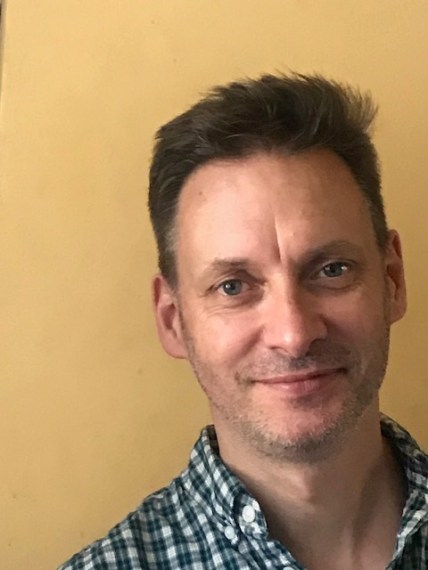
    Will Eaves is a novelist, poet and teacher. He was Arts Editor of the Times Literary Supplement from 1995 to 2011 before moving to the University of Warwick, where he is an Associate Professor in the Writing Programme. His novel-in-voices The Absent Therapist was shortlisted for the Goldsmiths Prize in 2014. The Inevitable Gift Shop, a collection of poetry and prose, was shortlisted for the Ted Hughes Award for Poetry in 2016 and commended by the Poetry Book Society. The first chapter of his most recent novel, Murmur, was shortlisted for the BBC National Short Story Prize in 2017.

    In other words, Will Eaves is an okay dude. His writing has been described by critics as “scrupulous, humane, sad and strange”, carrying “an exciting sense of newness” that feels crucial at a time when mainstream publishing seems increasingly interested only in publishing copies of risk-free, commercially successful novels that are copies of other commercially successful novels.

    In conversation, Eaves speaks the way he writes—with point, clarity and wit. Indeed, the reverse is also true: he writes in a way that feels like conversation.

    INTERVIEWER

    Tell me about yourself, where you live and your background/lifestyle

    EAVES

    I live in Brixton, at the top of Brixton Hill. I’ve been in the area now for nearly thirty years, though I come from the West Country (Bath) originally. I went to a comprehensive school: I think it’s the best kind of education there is. Far from perfect, but fair. It is absurd to talk about freedom of choice, in education or health, if choice is something only the rich can afford. Of course, environment has a lot to do with contentment at a young age, and the setting was beautiful. I liked Cross Country rather than contact sports – I was small and thin – and the weekly runs that the bigger kids hated (because of all the hills) took me through a kind of paradise of beech forest and meadows. While the PE teachers repaired to the staff room for a well-deserved fag break after all that fiddling about with whistles, we ran through Rainbow Wood at the top of Ralph Allen Drive and then down through the grounds of Prior Park towards Mike Casford’s house, where we’d stop for coffee and biscuits. I can’t run any more, which is a shame, but I can remember – well, I conjure up – the trees and thistles on those runs, and the view, and the freedom. The teachers smoked, we had coffee. Fair enough. There was some bullying at school, but nothing too bad. I was conscious of being small. I still think someone is going to push me into the road. On the other hand, I could be sharp, and I learnt to answer back. I don’t mind being taken to task, or disagreed with, or even disliked. I mind being exploited by the dull and fortunate.

    INTERVIEWER

    Is writing your first love, or do you have another passion?

    EAVES

    It is a habit, more than anything else. I think of it as the sum of things that leads to a poem or a story or a book. I’ve always liked trees, and seeing seeds I’ve planted come up in the spring. Music, too: I played the piano and organ as a teenager; I liked the sociability and solitude of both those instruments; I can sing a bit. I enjoy acting. If I could afford it, I’d have a house with a music room. I was a latecomer to sex, and then had a great deal of it for twenty-five years! I’ve loved being gay. Even the bad experiences have been good, because you meet such different people. I’ve been properly in love twice. The last time was eight years ago and completely changed me.

    INTERVIEWER

    Who inspires you?

    EAVES

    My aunt. She is ninety. She left the UK in 1947, at the age of nineteen, and went to New York, where she taught at the Central School and met her husband, Bob Bollard, who was a Broadway composer and director. She got to know Sydney Pollack and Harry Belafonte and became involved in Democratic politics for a while. Bob died of cancer in his thirties and Scilla was completely stuck, no money, three kids. But she got a government grant to go to medical school and became a doctor. An ear specialist. I have never heard her complain about anything. I dread losing her. She is ten times the person I will ever be, but I try to follow her example. She liked Murmur, and if it passed muster with her, well, that’s good enough for me.

    Writers – the Exeter Book, Shakespeare’s late plays and sonnets, Montaigne, Austen, Coleridge, George Eliot, Flaubert, Christina Rossetti, Auden, William Golding, Penelope Fitzgerald, whoever I happen to be reading (Patricia Beer), Elmore Leonard, Thom Gunn. Also, many comedians and comic writers – Victoria Wood, Lily Tomlin, Joe Keenan, Billy Wilder, Paul Rudnick. Musicians and composers – Bach, Poulenc, Chopin, Stevie Wonder, Aretha Franklin.

    And my Dad, John. He is a painter. He has felt it necessary to keep going. His approach is very much “do what you can” in life, which is sensible (and kinder than “do your best”).

    I also admire my friends for a variety of reasons.

    INTERVIEWER

    Your books The Absent Therapist and The Inevitable Gift Shop have both been praised for their fragmentary form. Could you tell us a little about why you chose to structure your work in this way?

    EAVES

    I like the way speech patterns and conversations derail themselves. Good dialogue, like most things in life, is a combination of determined response and wild digression or misprision. I like the moments in arguments when people suddenly hear themselves yelling, or realise they’ve lost ground, and try to shut things down by changing the subject or feigning emotion. Or play dumb, or defend people who don’t need defending and infuriate everyone else. Anger is often dangerous in life, but it’s also the essence of comedy. I was so frustrated with my life, just before I started The Absent Therapist, and felt I’d run aground. Nothing more to say. Which was a kind of turning-point, because when you have nothing to say you start listening, and The Absent Therapist is really a short book about listening – to the people who interrupt each other, the people who sit quietly and take mental notes. The little monologues are both external and internal, and often seem to be about recreating a moment or justifying a position in retrospect.

    Memory is dynamic. It isn’t the retrieval of discrete bits of information, but a sort of paradoxical jigsaw puzzle in which the remembered image changes with the piecing-together. I think that’s what I was trying to get at in The Inevitable Gift Shop, which was an attempt at an honest and therefore slightly discontinuous memoir. I was also in terrific pain at the time, and pain has a way of completely fracturing the mind. You don’t lose your mind. In some obvious ways, the qualia of mental experience are massively heightened. But the intensity of pain can be distracting.

    INTERVIEWER

    While the idea of collage as an artistic form is not new in the visual arts, do you think it is increasingly a form that is influencing writing – or the literary industry?

    EAVES

    There does seem to be a fashion for it, yes. But I wonder if the difference between collage and continuous narrative isn’t overstated. For example, a lot of ancient text is fragmentary – all that’s left after the ruin of the ages – and the suggestive reconstitution of those fragments (the psalms, the surviving tragic drama, the Exeter Book etc.) has helped build the Western canon in its long and short forms.

    All writing is collage, or perhaps tapestry, in the sense that it is a composition of elements. The distinguishing property is the ordering of those elements – whether the collage serves one story, or image, or many; and often the “one story”, on closer inspection, is the many. Proust is long but kaleidoscopic, motes in one immense shaft of sunlight. I think that a lot of the fuss about experimentalism is slightly embarrassing. If you step back from the collage, you rediscover a sense of its cohesiveness; the edges become joined. A political metaphor.

    INTERVIEWER

    We know that life does not run in linear patterns – and rather comes in flashes; moments of clarity and inspiration. As Daniel Dennett notes in his work, ‘Consciousness explained’; “we tend to conceive of the operations of the mind as unified and transparent, [yet] they’re actually chaotic. There’s no invisible boss in the brain, no central meaner, no unitary self in command of our activities and utterances.” Do you think collage – or a fragmentary plot structure – is a more natural way of organising a piece of writing than traditional models, such as the plot-driven novel?

    EAVES

    There are lots of different questions, here. I think we need first to clear up something about linearity – to distinguish between the nature of time, as it affects the objective world (and the body), and the nature of mental reality. It’s an exaggeration to say that “life does not run in linear patterns”, because of course it does have a marked linearity for humans: we are born, we live, and then we die. That is the plot of life. But that is only time as we conceive of it historically; on closer inspection, time as we really apprehend it mentally is rather different: a thing that is experienced both as a linear process (we see its ageing, history-producing effect) and as something that can be reconfigured in (see above) the dynamic of memory. The odd thing is that this mental dynamism – a property of the consciousness that Dan Dennett and others consider to be an effect of ordinary material processes – turns out to be quite a good description of the way time operates at the level of the quantum equation, where physical law does not discriminate between the past and the future. (The direction of time’s arrow is given, it is thought, by the state of extreme orderliness at the beginning of the universe; but, statistically speaking, “chaos” is much more likely.)

    What this combination of characteristics suggests to me is that consciousness, like time, is both highly personal and fundamental: the subjective component, the feeling that we are experiencing something unique to us, is not an illusion, or “just” an ideation, but an aspect of reality – of relativistic spacetime, in fact. Dennett is a brilliant man, but “we tend to conceive of the operations of the mind as unified and transparent” seems to me to be wide of the mark. I have never met anyone who thinks of her mind in this way. The homunculus language of psychology – the “boss in the brain” – is a cartoon. Unless we are on powerful drugs, we normally conceive of minds as being complex and irreducible, as they may well be. My own feeling is that consciousness arises from material processes but cannot be reduced to them (the No Way Back Paradox). The fact that it cannot be reduced without losing its USP – the personal vantage-point – tells us something about our inadequate grasp of those ordinary material processes and their relationship to time.

    I don’t see how a fragmentary narrative could be “more natural” than a unitary one because both are artistic constructions. But is fragmentation more realistic? Possibly.

    INTERVIEWER

    Your latest book, Murmur, puts us inside the mind – inside the dreams, even – of Alan Turing during his chemical castration. Simply, what processes do you go through to so vividly depict the most intimate moments of a genius’s mind at a time of extreme pain?

    EAVES

    I’m glad you feel that the experiment worked: thank you. It’s hard to say what one does. Writing a book – and perhaps especially a book about a dreadful transfiguration – is a little like having a protracted fit. Once it’s over, there’s no way to retrieve the feverish actuality of the creative moment. Thank God. I just remember not enjoying it very much, and feeling exiled from myself – a dissociative condition I couldn’t very well moan about because I’d chosen it. It’s a short book, but it took years to write, mostly because it coincided with a period of restricted movement, and of course I wonder about the relationship of that period to the anxieties inherent in the subject-matter. I also had to continue working as a teacher to pay the mortgage and the bills.

    I was very nervous about tackling Turing. I’m not a mathematician so I had to work hard to understand the meta-mathematics of Godelian incompleteness, the Entscheidungsproblem, etc, and I hope I haven’t made too many errors. For fictional purposes, he had to be his own avatar: I couldn’t allow myself to put words into the mouth of a genius. That would have been wrong. But I think my overall wager is sound. Murmur tries to find a dramatic paraphrase for Turing’s physical, mental and political predicament. It asks: how does one fit the personal experience of trauma into a material conception of the world? The story’s scientist, Alec Pyror, discovers that the outward responses one gives to the world are not necessarily related to the inner life, which may be crying out, in great distress. At the same time, the novel resists that pain. It’s the story of a man trying to overcome desolation and self-pity by objectifying the trauma.

    INTERVIEWER

    Do you feel any ethical responsibility as a writer?

    EAVES

    Yes. Ethics is the social dimension of morality. Lots of books have been written about the social role of the artist, and I don’t wish to misrepresent the complexity of that commentary, because there are so many different ways of making an artistic contribution to society. But, as I see it, my ethical responsibility is not to wear uniform. Writing springs from a strange combination of personal aesthetic ambition, vanity, and guarded conviction. It is much more provisional than the artefactual solidity of a book might suggest: this book is what I have to say this time, and it will be a different performance next time. Ethics, for a writer, are unavoidable because publication is the social dimension of private inquiry. The process is, and should be, discomfiting. One way of producing bad writing, bad philosophy and sclerotic politics is to attempt to get art, argument and policy to represent a standard of conduct that already exists – an ideology, I guess. Writers should be wary of all that. If you find yourself expressly on the side of a political party, or a movement, fine, but be prepared to find yourself in disagreement with it. Soon. The most important thing about a conviction is the moment when circumstances threaten its validity.

    INTERVIEWER

    What role do writers and artists have in shaping culture – or influencing social conversations?

    EAVES

    This is an enormous question. There is one’s ambition to do something, and there is the true state of play. There is the role one’s ego perceives a writer to have – the role one desires, or fears, perhaps – and there is one’s actual insignificance. How you think you come over, how you are. What you think you can do, what gets done. If one thinks of art and writing as one might think of anything else in life, then the answer must be that one shapes and influences one’s surroundings in a piecemeal fashion, sometimes by design but mostly by accident, and of course the shaping and influencing are reciprocal. Often, it’s the work and the actions that take place on one’s blind side that count for most: the contributions to a local paper, the email sent at just the right time, the note to a councillor. Nothing lasts, and that’s fine. We rediscover art and culture and form and justice. Also, it’s a mistake to confuse the public voice with the social voice. Private correspondence is social, too. The most important things I have written have been letters to people who, for one reason or another, needed some acknowledgment.

    INTERVIEWER

    What, do you feel, is the relationship between fiction and non-fiction; prose and poetry?

    EAVES

    A fruitful misalliance. W. Somerset Maugham (in his postscript to The Casuarina Tree): “A work of fiction, and perhaps I should not go too far if I spoke more generally and said, a work of art, is an arrangement which the author makes of the facts of his experience with the idiosyncracies of his own personality.”

    INTERVIEWER

    A running theme in some of your books is the subject of Artificial Intelligence. In a world increasingly full of modern technology, and in which we now have computer programmes writing prose and poetry (including re-writing Harry Potter), what role do human beings have to play when surrounding by all this early-form AI? Are you as sceptical about AI as, say, the late Stephen Hawking?

    EAVES

    I’m not sure Hawking was sceptical about it. He was alarmed.

    There are two issues. One is the sci-fi existential anxiety about conscious machines, which is obviously predicated on an understanding of what sort of thing consciousness itself might turn out to be. We don’t know. We’re not there, yet, and conscious robotics are a way off, because what we have so far is responsive machinery behaving in ways to which we may, if we choose, assign the properties of intelligence. But assigning such properties to a piece of technology is not the same thing as claiming intentionality for the machine itself – that is, the capacity to refer to things outside itself, to understand the meaning of the rules it follows, etc. Metaphorical language isn’t helping us much, because we tend to forget that “messages”, for example, are conscious-user-dependent concepts. A computer doesn’t send messages; you read them.

    Conscious machinery will happen. But machinery doesn’t need to be conscious for it to play a significant, symbiotic and potentially destructive role in social and economic development. Non-conscious tech – automation – has been around a long time and is becoming more sophisticated; the efficiencies/growth model of capitalism means that it will absorb most remaining manufacturing labour in the coming decades. What then?

    The vulnerability of labour in a national context is the second problem. Our anxieties about borders and migration are displaced anxieties about borderless technology and the silent transfer of executive power from the defined state (a country with a border and jurisdictional limits) to the transnational corporation. Cyber warfare is a demonstration of the fact that states are losing their integrity: the more powerful countries use the “freeflow” of cyberspace to advance their political agenda (as Emily Taylor has argued in Cyber Policy Journal); but this goes hand-in-hand with corporatism, it turns out, because the media platforms manipulated by these countries, and flooded with bots and micro-targeting, are mega-companies with enormous worker populations across the globe and the ability to pick and choose their tax liabilities.

    I’m not sure how we wrest back control. Corporates create the tech, the tech crosses or cancels the border, the states survive in name only, the corporates stay in charge.

    INTERVIEWER

    How would you define creativity?

    EAVES

    Consequential wonder.

    INTERVIEWER

    Do you have a typical ‘writing process’?

    EAVES

    No. I used to say “start, then keep going”, but I don’t know what “start” means any more. I try to nurture a habit of reading and annotation, hoping that the trail of scrawl will lead to an interesting, half-original thought, and so to a premise, and then some figures in a doorway . . .

    INTERVIEWER

    What does the term ‘writer’ mean to you?

    EAVES

    Not much. Journalism is a profession – and an important one. Writing is one of its tools. Writers are presumably people who write. It’s too vague as a term to be of much use, though people do like to call themselves writers, don’t they? It’s a conversation stopper, that’s for sure.

    INTERVIEWER

    Could you tell us a little about some of the future projects you’re working on?

    EAVES

    I’m sorry to say that I can’t, because there aren’t any.

    INTERVIEWER

    Could you give your top 5 – 10 tips for writers?

    EAVES

    Read slowly and carefully. Write letters. Eat properly. Walk. Don’t be afraid to stop: other people matter more in the end, and it’s not a race. Learn to spell and punctuate. Look up.


  • IMG_4662
    What would have happened if Karl Marx had become a poet? In this article, Peter Raynard takes The Communist Manifesto to new, poetic levels. 

    The Foundation

    “Capitalism has subjected the country to the rule of the towns. It has created enormous cities. Capitalism has agglomerated population, centralised means of production, and has concentrated property in a few hands.”

    As many readers will know, Karl Marx wrote these words, but used the term ‘bourgeoisie’ instead of capitalism. The words were swapped in a 2012 lecture by John Lanchester (he of Whoops, and Capital) marking Marx’s 193rd birthday, to show how prescient he was in describing the structure of capitalism and the way in which it changes the landscape.

    But as well as Marx’s prescience, he has also been lauded for his literary style of writing. In Robert Paul Wolff’s book, ‘Moneybags Must Be So Lucky: on the literary structure of Capital’, he references Edmund Wilson who likens Marx to the great ironist, Swift.

    “Compare the logic of Swift’s ‘modest proposal’ for curing the misery of Ireland by inducing the starving people to eat their surplus babies with the argument in defence of crime which Marx urges on the bourgeois philosophers…: crime he suggests, is produced by the criminal just as ‘the philosophers produce ideas, the poet verses, the professor manuals,’ and practising it is useful to society because it takes care of the superfluous population at the same time that putting it down gives employment to many worthy citizens.”

    Where Marx may have used satire in Capital, The Communist Manifesto is more of a Promethean tragedy; or as has been argued, Marx is more of a dialectical Promethean;

    “the idea or practical conviction that what is made can be unmade, what is bound can be unbound by purposeful action. It is the sober acceptance that stealing fire from the gods will have serious consequences that will ultimately lead either to the emancipation, or the annihilation, of humanity.”

    The Combination

    Karl Marx had two great loves in his late teens, which he put into practice by joining two social clubs when at the University in Bonn; the first was the Tavern Club, which his father disapproved of because of the prevalence of drunken duels (it’s said that Marx did in fact engage in a duel); the second, was the Poets’ Club, of which his father did approve. Writing to his father however, his love of poetry was superseded by the events around him, ‘I had to study law and above all felt the urge to wrestle with philosophy.’ I wonder what impact he would have had, if he became a poet.

    But as we all know, he didn’t and some twelve years later, he wrote The Communist Manifesto. However, the mix of prescience, satire, and tragedy in theses writings seemed to me to be the perfect ingredients for a poetic response.

    In January this year, I was introduced to the poetic form of coupling by Karen McCarthy Woolf. The form is a poetic response to a piece of text, where the poet divides up lines of prose and responds with lines that include rhyme, repetition and assonance. I took a paragraph of the Communist Manifesto. I decided to explore the form further; writing the Preface, then Part One, and so on, until three months later I had matched 12,000 words of Marx’s masterpiece with roughly the same amount of my poetic own.

    Drawing on a wide range of references, I have tried to situate the Manifesto in a variety of contemporary cultural places, in particular to emphasise the dialectic nature of the text, in the form I am presenting. This is complemented by a series of images, again matching the bound with the unbound. As far as I am aware, this is only the second poetic response (after Brecht) to the Communist Manifesto.

    Below is a sample of the book, where Marx is describing the rise of the bourgeoisie:

    Extract from The Combination

    (rise of the bourgeoisie)

    The feudal system of industry, in which industrial production
    a set of pipes excavated from the intestines of serfs

    was monopolised by closed guilds, now no longer sufficed
    because the human body parts were too emaciated

    for the growing wants of the new markets
    who were still yet to discover the delights of the flesh

    The manufacturing system took its place.
    robots of various stomach sizes, blustered and bulged their way ahead

    The guild-masters were pushed on one side by the manufacturing middle class
    something the middle class did very passively aggressive like

    division of labour between the different corporate guilds
    confraternity contracts between belligerents, some say

    vanished in the face of division of labour in each single workshop
    atomising systems turning the metal of men into powder

    Meantime the markets kept ever growing, the demand ever rising.
    man-sized tissues no longer required, as it was nothing to be sneezed at

    Even manufacture no longer sufficed
    hands took to the machine not the article of craft

    Thereupon, steam and machinery revolutionised industrial production
    playthings of the mind, exponential change in fortunes, spin the wheel

    The place of manufacture was taken by the giant, Modern Industry
    all hail the shibboleths of mammon and their bloody tongues

    the place of the industrial middle class by industrial millionaires
    poor souls in the middle playing catch and missing

    the leaders of the whole industrial armies, the modern bourgeois
    come and have a go if you think you’re hard enough

    Modern industry has established the world market
    connecting cracked palms that never shake hands

    for which the discovery of America paved the way
    with their independent isolationist do-what-I-say

    This market has given an immense development to commerce
    so fly high my sweet nightingales of the east, you bulbul song birds

    to navigation, to communication by land
    enabling the troops of civilisation and Sodom to rape for progress

    This development has, in its turn, reacted on the extension of industry;
    a cleaning up if you will of virulent middle-aged faces

    and in proportion as industry, commerce, navigation, railways extended
    like a pop-up book with a mind of its own

    in the same proportion the bourgeoisie developed
    maturing like cancerous cheese on a wood-rot board

    increased its capital, and pushed into the background
    its nodules of self-aggrandisement, displacing

    every class handed down from the Middle Ages
    and so say some of us, and so say some of us, for

    We see, therefore, how the modern bourgeoisie
    the one percent to you and me

    is itself the product of a long course of development
    yes, yes, yes, we know what you meant

    of a series of revolutions in the modes of production and of exchange
    round and round we go, where will we stop – hold on, I know!

    Each step in the development of the bourgeoisie was accompanied
    by the ‘gertcha’ of Chas and Dave eulogising the end of days and

    by a corresponding political advance of that class
    who still dance on this parliamentary isle to Milton’s ‘light fantastick’

    An oppressed class under the sway of the feudal nobility
    as it was, as it is, as it was always meant to be

    an armed and self-governing association in the medieval commune
    oh for those lazy, crazy anarchistic days, sat around a smoky haze

    here independent urban republic (as in Italy and Germany)
    where townsmen gave purchase to their rights with moneyed fists

    there taxable “third estate” of the monarchy (as in France)
    the 98% of us scrapping over a share of bronze medal

    afterwards, in the period of manufacturing proper
    the threads of stratification began to untwine

    serving either the semi-feudal or the absolute monarchy
    the Naxalites of India can tell you a thing or two here

    as a counterpoise against the nobility,
    it always comes down to standing, back straight!

    and, in fact, cornerstone of the great monarchies in general
    whose spines were now curving to the submittal

    the bourgeoisie has at last, since the establishment of Modern Industry
    with all its rising fallacies and clocking on palaces

    and of the world market, conquered for itself, in the modern representative State
    the porous borders of innovative disorder

    exclusive political sway.
    you turn if you want to, but the old lady of England, is not for turning

    The executive of the modern state is but a committee
    with their bingo numbers to hand & Saturday night covers band

    for managing the common affairs of the whole bourgeoisie
    so not the main party to make us all free

    About the author of this post

    Peter Raynard Photo (6)

    Peter Raynard is the editor of Proletarian Poetry: Poems of Working-class Lives (www.proletarianpoetry.com). He has written two books of poetry, his debut collection Precarious (Smokestack Books, 2018) and The Combination, a poetic coupling of the Communist Manifesto (Culture Matters, 2018), available here.


    References:

    Barker, Jason (2016) EPIC OR TRAGEDY? KARL MARX AND POETIC FORM IN THE COMMUNIST MANIFESTO, (sourced here)

    Lanchester, John (2012) Marx at 193 (LRB podcast)

    Nicolaievsky, Boris & Maenchen-Helfen, Otto (1933) Karl Marx: man and fighter (Pelican Books)

    Wolff, Robert Paul (1988) ‘Moneybags Must Be So Lucky: on the literary structure of Capital’ (University of Massachusetts Press)

  • cursive handwriting

    Handwriting is truly a fascinating thing. Every single detail about each of our personal handwriting style has a specific purpose and meaning, and each is unique to us as individuals.

    Some people’s handwriting and signatures are rife with loops, slants and extra adornments, while others are straight, toned-down, and more modest.

    Even more fascinating is what handwriting can reveal about our personal lives.

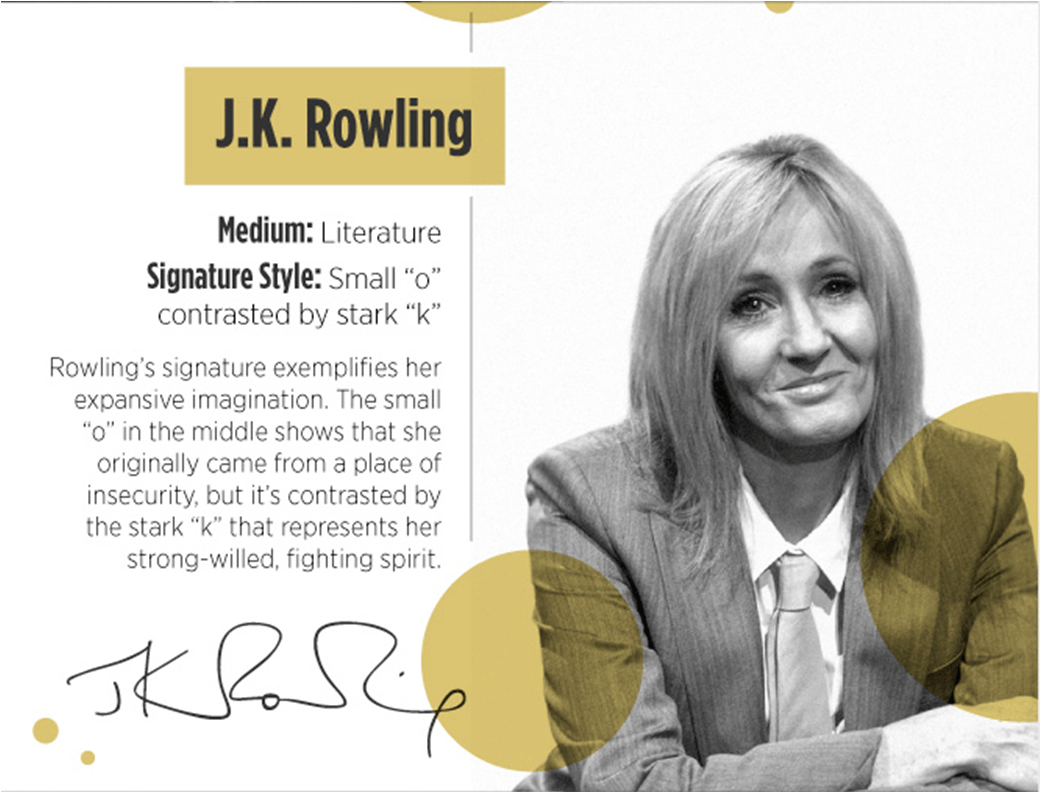
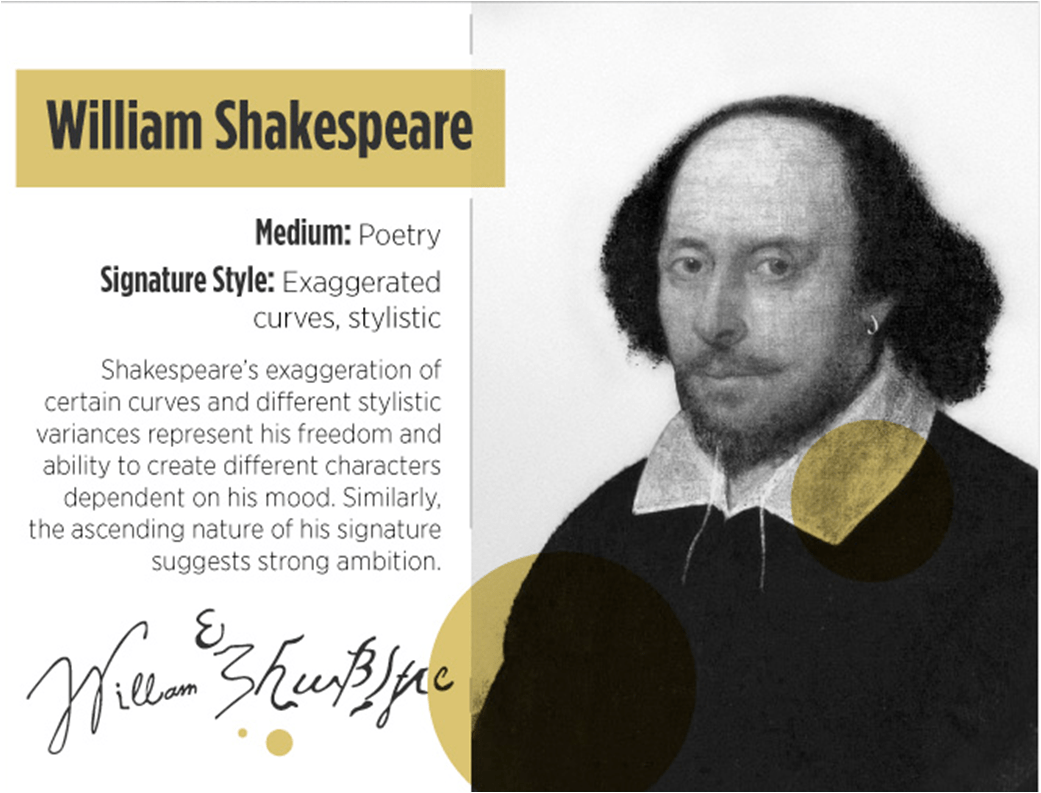
    The team behind Invaluable created a really neat infographic that details famous signatures and the meanings behind them. From Edgar Allen Poe to Picasso, the details expose truly interesting information about the way each lived and operated.

    Check it out below!

    Virginia Woolf signature

    TS Eliot signature

    Jk Rowling signature.png

    Shakespeare signature

    Check out the full list of 14 famous signatures via Invaluable

    About the author of this post

    Emma WelshEmma Welsh is a writer at Invaluable.com, the world’s leading online market place for fine art, antiques and collectibles. You can see more of her and her colleagues’ work at https://www.invaluable.com/blog
  • 37731894_10156512967240396_1629099954574196736_n

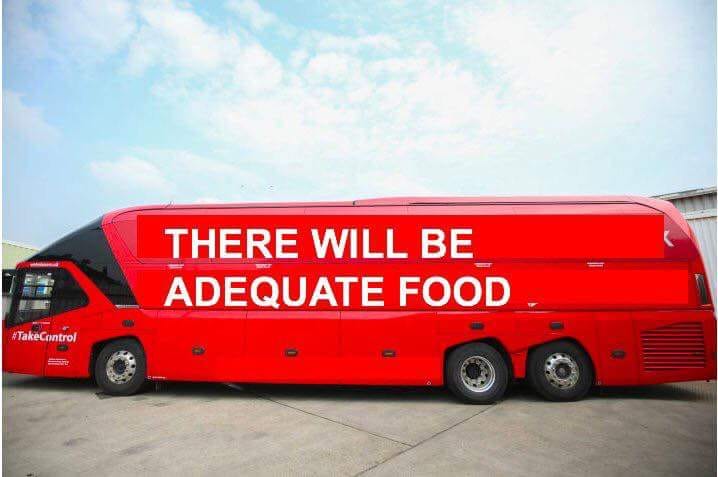
    As the unstable and chaotic conservative government of the UK stumbles ineptly toward a ‘no-deal’ Brexit, UK citizens have recently been given assurances that there will be “adequate food to eat” in the event that the UK leaves the European Union in the style of so many drunken British louts after a Thursday night at the bookies: vomiting a half-eaten kebab onto the floor while simultaneously shitting themselves, then trying to stand up straight in order to flirt with an attractive passer-by, who on closer inspection appears to be a big pile of rubbish.

    The fact that Britons will not be starving in the event of a no-deal Brexit may sound reassuring. Yet given the fact that the electorate was promised a land of cake and honey, rather than tinned liver and spam, as well as perhaps as much as £350 million a week extra to spend on their National Healthcare Service, these latest mutterings from Whitehall represent a bit of a climb down.

    The whole charade got the team here at Nothing in the Rulebook thinking about how a no-deal Brexit may affect other parts of British life. As we prepare to live off a diet of potatoes and humble pie, we have put together a short list of book titles you can expect to see in post-Brexit Britain.

    Publishers, take note!

    1. “Where is mummy now?” – A light hearted children’s book explaining the intricacies of citizen deportation to under fives.
    2. “1000 amazing recipes for powdered eggs” – Who needs Jamie Oliver when you can make all the types of powdered eggs you like with this fabulous cook book (which is also, incidentally, made out of powdered eggs).
    3. “Mogg and friends” – Children’s book for early readers following the adventures of Mogg the cat and her friends as they fend for themselves in the desolate city streets, feeding on litter and the dregs left behind by the former United Kingdom, including the decaying remains of Jacob Rees Mogg’s nanny.
    4. “Low expectations” – Welcome to the Dickensian streets of London, 2019, where orphans live in abject poverty surrounded by the sick and dying masses who no longer have a healthcare or welfare system to support them.
    5. “War and more war” – An epic tale of the Russian oligarchs who run and control Britain. Featuring duals between old racists bigots.
    6. “Our dignity is missing” – post-modern book that would have won the man-booker prize, if it weren’t just a paper front cover stuck to a mirror.
    7. “A brief history of 7 lies” – 2000 page thriller charting the ways a small cabal of old white men were able to convince the British population that facts and logic no longer mattered.
    8. “The liar and the unicorn” – Hilarious romp featuring Boris Johnson as a unicorn who learns not to trust every world despot when he is eaten bottom first by a large orange slug with an uncanny resemblance to Donald Trump.
    9. “No pride. More prejudice” – It is a truth universally acknowledged, that only rich billionaires who store their money in off-shore tax havens can be in possession of a good fortune.”
    10. “What do you mean, we can’t print any more books because we need the paper for kindling? No, don’t write that stop writing that there’s no paper anyway stop typing also you’re fired, everyone here is fired, we’re all fired, there aren’t any more jobs just save yourselves” – release date TBC.


    Any titles we’re missing? Add your own in the comments below!

  • WHY-POETRY-COVER-FRONT-SQU.jpg

    “Poetry is not a luxury. It is a vital necessity of our existence,” Audre Lourde famously opined in a stunning argument on the importance of poetry as a tool of protest and resistance. In these times of extreme global crises, it may be tempting to write off things like poetry as an unnecessary luxury – something beautiful and enjoyable, but ultimately superficial.

    It may come as no surprise to you that we here at Nothing in the Rulebook take a different view.

    It is for this reason that we are extremely excited about a new project from the team behind the excellent Lunar Poetry Podcast (read our interview with their founder, David Turner, right here on NITRB).

    The team are celebrating four years of poetry podcasting with the publication of an anthology of 28 poems by former guests of the podcast. Why Poetry? will be published September 27th by Verve Poetry Press.

    Unique and surprising

    The anthology promises to be a unique and surprising book, charting as it does the history of LPP alongside showcasing poems, most of which will be published for the first time in this book.

    The featured poems will be paired with quotations taken from the 28 featured poets’ Lunar episodes. In this way, Why Poetry? highlights the inextricable link between process and final draft, and helps move us slightly closer to answering that gosh-darned question ‘but what is the point of poetry?’

    Included in the list of poets discussing their process are four ‘Next Generation Poets’, major prize nominees and winners, and – most importantly – a number of writers without pamphlets or collections.

    Writers who consider themselves ‘page poets’ sit alongside spoken word artists and poets known more for their performances than their journal appearance. Those who teach workshops and attend residencies accompany those whose ‘other jobs’ are in cafes and offices. In keeping with the core essence of the Lunar style, the anthology blurs the lines when it comes to what makes a poet a poet and why.

    “An enigma”

    Speaking about the anthology, Nothing in the Rulebook’s very own Professor Wu said:

    “There seems a common misconception that the only purpose of poetry is to try and ‘solve’ it – perhaps a hangover from old school syllabuses that teach students to decipher poetic language and reduce it to a code of metaphors and analogies that need to be broken. Yet poetry is so much more than an enigma. For millennia, its purpose has been to move us, to help us see the world from different perspectives and to gain a deeper understanding of the world and of ourselves. Indeed, one of the finest things about poetry is that it makes us ask that simple yet difficult question: ‘why?’

    It is for this reason projects like Why Poetry? are so important. They carry on a conversation that we risk seeing die out unless we recognise the importance of poetry. They engage us; offer new ideas and, most importantly; make us ask more questions.”

    About Lunar Poetry Podcasts

    Founded in October 2014 in south-east London, Lunar Poetry Podcasts features discussions, interviews and live recordings with poets in the UK and further afield.  Now based in Bristol, the podcast recently agreed a deal with The British Library which will result in the entire series being archived in their audio archive.


  • Nothing in the Rulebook’s resident book reviewer Tom Andrews digs into ‘Cane’, by Sam Bully-Thomas, published by Wundor Editions.

    Wundor_Poetry_Paperback_Design_-_Cane_grande

    The first thing that struck me about this slim but attractive volume from Wundor (see this interview with their founder to hear how they are making unique and interesting in-roads into the publishing sector) is that it has word poetry front and centre on the cover. As if the publisher wanted to avoid anyone picking it up and complaining that they never expected poetry.

    Sam Bully-Thomas (http://issamthomas.com/) grew up all around the world and the poems in this collection are similarly globe spanning – we go to Iran, Cuba, Mexico and Alaska among others. She mixes themes from what I imagine are her own experiences with the historical experiences of the poor and enslaved, usually connected by the sugar trade. Havana 1857 is written from the point of view of a kidnapped Chinese forced labourer, while ‘Husbandman’ describes Cimarron fighters (escaped slaves) planning the ambush of a plantation owner. Set between the poems are quotes from a Hindu veda, a history of sugar (written by a Mr Mintz), a biography of abolitionist Harriet Tubman and the author’s own brief explanatory notes.

    The collection shares its title with a Modernist, Harlem Renaissance novel by Jean Toomer. The poet favours blank verse and sentences that run over many short lines. Sadly, few lines or poems are truly memorable – the overall effect, like the volume itself, is slight. Generally, the historical poems are stronger than the contemporary ones. Havana 1857 is the best poem in it, an evocative and tragic account of people trafficking from China to work in the sugar plantations as the luckless captive remembers the night he was kidnapped. This is one that stays with you:

    ‘Your sores from beatings never healed./And I was traded many times over, my brother,/in the ten years between us.’

    Overall, Sam Bully-Thomas shows a knack for evoking far flung places and times. She is clearly a writer comfortable in several mediums, also writing screen plays and micro fiction. Hopefully future works will offer more substantial rewards.

    To purchase a copy of ‘Cane’ visit Wundor Editions https://wundor-store.myshopify.com/products/cane-by-sam-bully-thomas

    About the reviewer

    tandrewsTom Andrews is a Genetics graduate and book lover based in Somerset. He has previously attempted music and game reviews. He tweets at @jerevendrai 

  • 180713092222-02-trump-baby-0713-exlarge-169.jpg

    Sometimes, the only thing you can do is laugh.

    Around the world, brutes have risen – and continue to rise – to power. Far from challenging these despotic tyrants, our supposedly liberal western democracies have cow-towed to them, flattering them, and inflating their egos. In the UK, the weak and decrepit conservative party hangs on to power with long vicious fingernails and asks the taxpayer to foot the bill of hosting one of these new brutish demagogues so that they can shower him in pageantry and golf. 100 years ago, America and Europe were united in trying to create and preserve a new world peace where liberty and human rights would flourish, and the horrors of imperial wargames would cease. Now these same powers squabble like school children, trading insults and threats, seemingly unaware that theirs in an order that requires radical change – not more of the same.

    This is all such madness it would be funny, if it weren’t so easy to feel terrified by it all.

    Donald Trump is clearly the most obvious fault-line in the current alignment of our stars. The charge list against him is impossible to tolerate: there is the racism of his immigration policies that bans people from Muslim countries entering the USA, and which separates young children forcibly from their parents; then there is the threats posed to the rights of women, people of colour, and LGBT people. He ignores the catastrophic effects of man-made climate change or the fact that our rampant over consumption is threatening our planet’s survival. He sucks up to tyrants, launches trade wars, insults allies, praises fools and dictators, and campaigns against the free press. He is also a coward and a fraud who has tiny hands and evidence suggests he regularly pays prostitutes to urinate on him.

    Our response to Trump, as writers, artists, creatives and – ultimately – human beings, is crucial. It must be appropriate, balanced, and precisely reactionary. If only to support Newton’s third law, our reaction to Trump’s hatred, fear and bigotry, must be equal in its opposition to these traits. In other words, it must be one of love, bravery, and inclusivity.

    To our minds, there is nothing that brings people together more so than laughter. There is nothing braver than laughing at those who would beat you (or worse) for doing so. And there is nothing that can invoke feelings of love more than the euphoria of hysterical humour.

    It is for this reason that we call for all creatives to unite in mocking Trump as the thin-skinned charlatan he really is.

    Join the resistance

    To an extent, the mockery of Trump through satirical art has already begun in earnest. There has been a huge influx of resistance-themed art, whether it’s commentary on world leaders with the graffiti styling’s of Mr. Dheo or Bambi (pictured below), or more simply the crowd-funded Trump baby balloon, which has been flying above London during the President’s visit to the UK.

    yxpxfauaaayvbztfllxi.jpg
    Bambi

    The proliferation of this kind of art perhaps recognises the fact that to continue making art as before is an insufficient response to the state of the world. The dark reality is that intensity, beauty, and devotion to making beautiful creative things are insufficient to halt violence. Indeed, one need only to look to history – to see and hear the march of Nazism accompanied by the tunes of Wagner – in order to realise how these aspects of art can become the accompanying soundtrack to evil.

    We do not use terms such as evil lightly. To label everyone and everything one disagrees with as fascism is surely to dissolve the meaning of a term that threatens the fabric of democracy and liberal decency. And it is for this reason that aggressive art – art that seeks to create representations of darkness, evil, violence and hatred – are equally ill-equipped as positive, beautiful art, for confronting the realities of our times and challenging them. Holding a mirror to violence and anger reflects, but does not shatter, the illusion of power that they hold. Only by making fun of and satirising those who trumpet hate and division can we truly expose the intrinsic lack of power that they have.

    Exposing Trump

    Trump is in many ways the epitome of the weakness of hate and anger. His inflated ego and thin skin make the giant Trump baby currently floating in the skies above London a perfect symbol of a man who is nothing more than hot air: a thin-skinned charlatan who uses racism, homophobia and misogyny to stoke fear among people struggling to get by in a country riven by divisions caused by incessant neoliberal capitalism – that has left the vast majority poorer whilst an extreme minority of billionaires collect ever more wealth. The fragility of Trump’s ego is easily exposed; one need only witness how he rushes to defend the size of his hands, the size of his penis, or that he doesn’t need to use Viagra, to see how afraid the man is of being exposed.

    Indeed, in every encounter with Trump he appears like all those bullies at school who tried to pull the chairs from beneath girls they liked, or boys they were not as smart as, or kids who were more athletic and better looking than them. He exhibits all the behaviours of someone trying desperately hard to scare people into not mentioning his countless failures; his ugliness; his stupidity. If he were your grumpy, rude co-worker who made uncomfortable comments in team meetings, you might think him a sad case of a person who has never known love.

    But Trump is not your grumpy, rude co-worker. He is the President of the United States; a great country that has irrefutably shaped the world (not always for good; but certainly not always for ill); and he is a representative of how the USA is in a moment of deep political crisis – as is all Western Democracy.

    Challenging him and his ethos would usually fall to journalism or traditional media. Yet his clever use of ‘fake news’ and the inability of his opponents to mount an effective alternative to his reign has proven that traditional approaches will not suffice in this instance. Into the breach in its stead must step art – specifically, satirical art, and writing, which can put political pressure on misinformation, folly, and the abuse of power.

    The power of satire

    Satire is so subversive – and often politically fatal for those who rule – because it exposes the absurdities of power. Authority attempts to assert itself partly through a veneer of respectability and seriousness. When that is stripped away, its legitimacy can be lost, along with our subservience.

    Historically, one can trace the power of Satire through such notable pieces as Jonathan Swift’s ‘A Modest Proposal’, which brought public attention to the plight of the Irish people and attacked those British politicians who had ignored the famines ravaging the country. You can also look to the satirical art that accompanied the French Revolutions which, as Will Self notes “were each accompanied by a satiric outburst”. Prior to and during the American revolutionary war of independence, satirical cartoons mocking King George “the buffoon” flourished in towns across America. In all these instances, it was the power of artistic satire that united people together to challenge the status quo and demand change; more so than the anger or shock of individuals could ever hope to achieve.

    This point is crucial: our own individual convictions are worthless if all we do with them is try to shout more loudly or aggressively than ever other angry voice.

    Anger at our political elite seldom fuels action to do anything about it, engendering instead an enraged passivity: people WRITE POLITICAL RANTS ALL IN CAPS on Twitter and Facebook, but this serves no purpose. No one reading these ravings who does not already agree with them will find anything of value to them. At best, it will confirm their belief that the world around them is full of anger and best avoided if possible. They will not engage with anger and hate unless it is an anger and hatred they already feel.

    Burst the balloon

    Here is where quality satirical art plays such a crucial role; because it helps engage those who otherwise find politics tedious. Laughter, it is famously said, is the best medicine. It’s true. You only need to have ever told a joke and made others laugh to see how they immediately warm to you. If you make people laugh with you, you can more easily direct their attention to the failures that exist in society. You can help them, gently and warmly, recognise the faults of those in power. And from there, they are far more likely to choose to fight against people like Trump who seek to sow fear and anger rather than laughter and love. And even if they don’t fight, their laughter at the cowardly bully trying to look tough may just be enough to burst his ballooning ego.

    A call to arts

    There is of course an argument that we need art that lifts up other, dispossessed voices. That keeps their ideas and creativity alive at a time when their existence is threatened by the policies of Trump and his right-wing cronies.

    This too, we need. Of course this too. There is too much hate and anger in the world and we need diversity of thought more than ever. We need to support emerging artists and voices; but we also need to fight back. But it is not the pen that is mightier than the sword; but rather the laughter of millions that is more powerful than the fearful rage and angry Twitter ramblings of an infantile, cowardly egoist.

    So, join in the good fight, comrades – before we can defeat Trump, we must deflate him. All power to your satirical typewriters and easels!


    Get involved and submit your satirical pieces of art or writing to us directly through our contact us page. To get the ball rolling, read our collection of ‘Donald Trump poetry‘ – lines and verses taken straight from the rambling mouth of the fat dotard himself. 


  • I think Britain is a very hot spot right now

    Of course, it is a hell hole

    With blood all over the floor

    It’s a war zone

    It’s going broke and not working


    I just hope they get rid of the windfarms in Scotland

    They’re destroying the golf there


    I think they like me a lot in the UK

    They think I’m really okay

    I am inundated with fan mail from England

    Because I do not have tiny hands

    I have Boris Johnson, he’s a very special friend of mine

    He’s always been very very nice to me

    Theresa May gets very angry

    Not like Lady Di

    I could have, if I wanted, to, you know

    Lady Di is my one regret in the woman department


    Just remember the old Trump bullshit:

    Brexit is Brexit.

    ~Anonymous 

    A note on the above poem: 

    All the lines of ‘My personal Vietnam’ are taken, verbatim, from Donald Trump speeches, Tweets, interviews or recorded comments. For a fully referenced version of the poem please send the NITRB team an email!

  • Do you like me? That’s an important question

    You should like me,

    You can make me look nice, handsome and thin,

    Like Lady Di, she had the whole thing,

    She had that skin…


    What do I think of Kim?

    I think he liked me and I liked him,

    He’s a fat dotard,

    A crazy little rocket man,

    I admire him very much,

    I said, “do me a favour”:

    We got to cure AIDS so we can stop wearing rubbers

    Because, vaginas are like landmines,

    That whole thing

    Is my personal Vietnam.

    Anonymous 


    A note on the above poem: 

    All the lines of ‘My personal Vietnam’ are taken, verbatim, from Donald Trump speeches, Tweets, interviews or recorded comments. For a fully referenced version of the poem please send the NITRB team an email!