• 8th Emotion.jpg

    Here at Nothing in the Rulebook, we often find affinity with Colonel John “Hannibal” Smith, on that we love it when a plan comes together – especially when that plan involves fascinating new ideas and copious amounts of creativity.

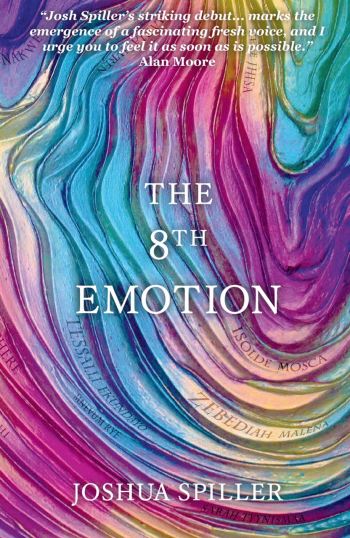
    Josh Spiller’s debut novel, The 8th Emotion, is heavy on both new ideas and creativity. We originally told you about the plan for this project when it launched on Kickstarter in 2018.  So it’s rather brilliant to now let you all know about the official launch of Spiller’s searing new novel.

    Described by legendary writer Alan Moore as marking “the emergence of a fascinating fresh voice” and “Not so much fantasy as post-science science fiction”, The 8th Emotion promises to be everything you’d want from a book to read in 2019.

    So, we’d strongly encourage all of you to make it over to the launch of the book on 1st February in London, where you’ll be able to meet the author and hear Spiller reading an an extract of his novel, meet fellow creative artists, writers and book lovers, and enjoy a selection of food and drink. The event details are here below:

    Date: 1st February 2019

    Time: 18.30 – 20.00

    Venue: South Kensington Books (22 Thurloe Street, Kensington, London, SW7 2LT

    In case you can’t wait that long, you can have a sneak peak inside the book and read a pre-released chapter right here on NITRB.

    And you can also read an interview with Spiller about his book, writing, literature and everything else in between.

    Blurb for The 8th Emotion

    “I recently found something out… A way we can end all violence forever.”

    In a tribal utopia, an unprecedented human emotion erupts into existence. It may be the key to an almost miraculous future.

    But a vicious, predatory rot is also growing. And soon Jak, his best friend Martin, and his sister Laura, will become embroiled in a struggle that will irrevocably alter their lives, their society, and ultimately, the World…

  • brazilian-jiu-jitsu-writing

    The handshakes, that’s how I first know I’m in trouble.

    I’m at a Jiu-Jitsu class. Wednesday. I’m recovering from the usual winter cold, have even opened my email twice that day to compose an excuse.

    Sorry, Kev. I’m feeling under the weather – can I rearrange for next week?

    Delete. If I send that I won’t ever go.

    Down a coffee. Get in the car. Drive to the gym.

    Now, the handshakes. There are ten men and each greets me by gripping my hand and telling me their name – I forget the names but remember the grips. I don’t know if it’s the coffee or the panic, but I don’t feel ill any more.

    What followed was like a nature documentary, but instead of Attenborough’s voice putting the gazelle’s death into perspective, it was the sweaty grunting of ten men and me making noises like Kermit with tuberculosis. They choke me out, one after the other but are very polite about it.

    I learn a few techniques and try to use them, without much success – still, I am getting better, surviving longer before they politely choke me. I start to figure that it’s about strategy, not just muscle and reflex. I have been using all of my strength and “gassing out,” while these men, some in their sixties, are effortlessly squishing me like soft cheese. Then they reacquaint me with their grips. Around my neck this time.

    I stay on for the advanced class and start to last a little longer before tapping out. All the while, there is a strange thought in the back of my head: if these were fights to the death, I would be dead twenty-six times.

    By the end it’s more like thirty.

    I shake Kev’s hand, tell him I’ll be back for the next class, and leave with a smile. I am sore all over, have burns on my fingers and toes, but I keep replaying what I’ve learnt as I drive home, and later, when I’m lying in bed, I can’t sleep because I’m thinking of how I will improve next time, how I will change my game.

    Now, I have been to four Jiu-Jitsu classes. I know nothing. But already, I’m noticing how it affects other areas of my life – my writing in particular. So… why?

    Failure. Nothing acquaints you with it better than Jiu-Jitsu. You will be choked. But after a while, that becomes not so scary. And then, once failure is accepted as a necessary step for growth, once it is seen that the only way you learn is through doing something wrong in the first place, there is a feeling of freedom. Get choked. Get up. Go again. You know better this time. If you aren’t afraid to fail, you are willing to try new things, to play risky, to be interesting. Same with writing, and everything else worth pursuing, failure is inevitable – bad drafts, abandoned projects, rejections. Every novelist I know has a project-graveyard file on their computer. That is no source of shame. It is a mark of craft. Lose the fear of losing. A winner is someone who never let loss stop them.

    Struggle. We as human beings are not built for sitting on beaches with cocktails. That is nice for a while, but only for a while. We need a target. Something with which to contend. Placing happiness as all important is wrong – better to pursue something difficult, something worth the struggle, something with meaning. Often it isn’t pleasant, but in pursuing that target, you are fulfilled. Do something difficult, just to see if you can. You will surprise yourself. Struggle upwards, towards a goal, and you’ll have something better than brief happiness. It’s why we run marathons, why we climb mountains, and it is why we writers choose to sit and write every day when we’d much rather be somewhere else. We turn up, at the desk, ready to contend. It requires an immense amount of work and effort – the trek out into that hinterland of composition. We are grappling with plot, emotions, ideas, and that greater thing, that unconscious current which dictates the direction we pursue, which word follows the previous. Jiu-Jitsu is just a physical manifestation of that which happens every day at the desk. You are willingly contending with something difficult, and it is often painful, but once it is over, you know it was worth it, and you can’t wait to go again, to see if you will be better. To see what you will learn this time.

    A piece of writing is just a by-product of this process of struggle. This contention with the unconscious, the constant working and re-working. If something is jarring with the rest of the work, try something different. In doing this, the process itself will become rewarding – the pursuit of the target. The journey becomes what is important, that process of learning. Like Jiu-Jitsu, if something isn’t working, adapt and find the right technique, be satisfied with the journey, the constant reshuffling of set-ups and finishes. Maybe you will be choked in the end. Who cares? A novel is a by-product of the process of contending with the unconscious, of reshuffling and learning. The process is paramount. The pursuit. You don’t make a sandcastle, you abandon the sandpit.

    Tenacity. The most important thing. In my last class, Kev, the instructor, rolled with me for the last thirty minutes. My ribcage is still bruised. At one point I think he just sat on me, but I can’t be certain. What I do know is that I didn’t quit. He asked if I wanted to stop but I caught my breath and carried on. And at the end, after my total annihilation, he called me “strong as an ox.” That felt good. Still, I think Kev could easily choke out an ox. I left that class aching, but proud that I had not given up. It’s rare today to encounter that kind of situation, but its good to know that if one were to arise, you have the ability to survive, the tenacity to continue. This directly correlates to writing – 40,000 words into a novel, it will feel like Kev is sitting on your chest. Be an ox. Kev will still sit on you, but the important thing is that you aren’t quitting.

    Aggression. Everyone harbours it, no matter what they tell you or themselves. It’s normal. However, it will manifest itself in other, unwanted, parts of life if not acknowledged and integrated. Jiu-Jitsu lets you channel that aggression, and in doing so, gives you the confidence to integrate that assertive side in your life, when people might try to take advantage, when you need to stand up for yourself. It becomes a tool rather than a hindrance. There are circumstances where being nice just isn’t helpful – that isn’t to say that everyone should be an ass all the time. But for those of us who struggle to say no, whose first instinct is to be agreeable, this integration is life-changing. It’s a confidence. A self-belief. Again, an important quality for writers, who are (myself included) some of the most self-critical people around.

    Humility. Try enduring a ritual strangling twice a week. It quickly teaches you humility. Appreciate that you will always be learning, that there are others who know more, that cockiness is laziness. If you are humble you are active, always trying to improve the work, but someone who believes they know everything has given up their desire to learn. Inactive. “There are no egos here,” is the phrase they use like a prayer or affirmation. It is a constant reminder that we are all learning, that we are all on the path – as Ursula Le Guin says so perfectly, “It is good to have an end to journey toward; but it is the journey that matters, in the end.”

    I am halfway through writing a novel at the moment. Kev is sitting on my chest, but I am not quitting. So, on Wednesday, I’ll be back for another choking, and when I get home, I will write my 500 words.

    Both are painful, but worth it.


    About the author of this post

    CB headshot 2.jpg

    Christopher Baker is a writer, published in the Writers of the Future 35th anthology and with theatre work that has won The Stage Award at Edinburgh Fringe. He graduated from the Warwick Writing programme with a First Class BA Hons in English Literature & Creative Writing. He has three dogs and is often covered in their hair. His twitter is @CSBker

  • Marquez.jpg

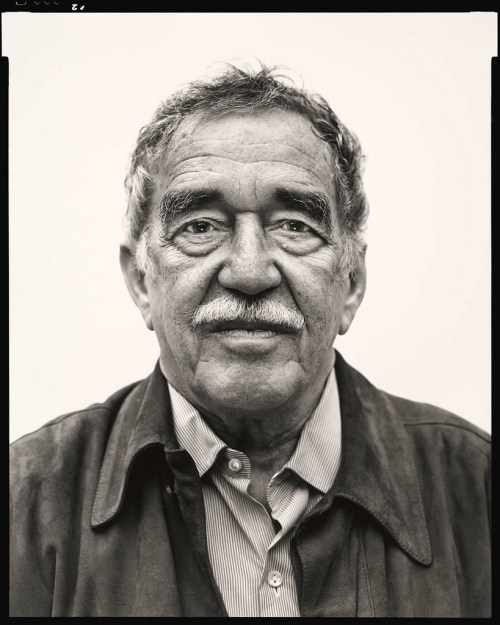
    There are precious few writers who can claim to have influenced the course of literary history and literary criticism in the manner of legendary author Gabriel García Márquez. For aspiring and established writers and litterateurs alike, Márquez stands out as an idol for his role in helping to launch what became known as the “boom in Latin American literature”.

    It is a rare gift indeed then, to learn that the entire archive of this most influential of authors has been made available for everyone to read online entirely for free. Especially when that author’s works were still under copyright.

    But this is precisely what the University of Texas has done, after acquiring the  Colombian-born writer’s archives in 2015, a year after his death.

    The archive includes manuscript drafts of published and unpublished works, research material, photographs, scrapbooks, correspondence, clippings, notebooks, screenplays, printed material, ephemera, and an audio recording of García Márquez’s acceptance speech for the Nobel Prize in Literature in 1982. It was bought by the University of Texas for US$2.2 million.

    The searchable, online archive features almost 30,000 items, so it’s easy to get lost in there.

    “Often estates take a restrictive view of their intellectual property, believing scholarly use threatens or diminishes commercial interests,” Steve Enniss, the director of the Harry Ransom Center, which digitized the archive, said. “We are grateful to Gabo’s family for unlocking his archive and recognizing this work as another form of service to his readers everywhere.”

    Many researchers and academics have been poring over the archive since it first became available in 2017, and have credited the University of Texas for making such a valuable resource available for free. Many expect that access to García Márquez’s archive, including his personal notes and marginalia, will help advance literary research and criticism.

    But this is not just a resource to be enjoyed, used and appreciated by academics. One of the most incredible things about García Márquez’s writing is how accessible it is – as The Guardian noted in its obituary of Garcia Marquez, his most famous novel, 100 years of solitude “not only proved immediately accessible to readers everywhere, but has influenced writers of many nationalities, from Isabel Allende to Salman Rushdie”.

    So, what are you waiting for? Get on over to the Harry Ransom Center and start exploring (and getting lost in) this incredible literary resource.


  • Ian Sansom1B&W.jpg

    Ian Sansom is the author of the popular Mobile Library Mystery Series. He is also a frequent contributor and critic for The Guardian, The Daily Telegraph, The London Review of Books, and The Spectator. He is a regular broadcaster on BBC Radio 3 and Radio 4.

    Previously described by Alex Pryce as an author happy to make “mischief”, his latest book, December Stories I, is full of Sansom’s trademark humour – pulling together a rich collage of different lives lived over the month of December into something funny and sad, lovely and above all else utterly empathetic.

    Nothing in the Rulebook caught up with Sansom to speak about his new book, his collaboration with the fantastic folk at No Alibis Press, and everything else in between.

    INTERVIEWER

    Tell me about yourself, where you live and your background/lifestyle

    SANSOM

    I am a small, round, bearded, middle-aged man. I live – as I have done for most of my adult life – in a remote corner of the UK which currently has no functioning government.

    INTERVIEWER

    Has writing always been your first love, or do you have another passion?

    SANSOM

    I don’t think ‘love’ or ‘passion’ are quite the words I would use. Flann O’Brien described writing as a form of vocational malfunction. For me that’s probably closer to the truth.

    INTERVIEWER

    Who inspires you?

    SANSOM

    In literary terms, I tend to admire writers who manage simply to keep going, despite all the odds. In personal terms, I have been blessed with many friends and colleagues who have been a great source of encouragement and inspiration.

    INTERVIEWER

    Who were your early teachers?

    SANSOM

    Alas, no pipe-lighting dominee lit my way.

    INTERVIEWER

    What does the term ‘writer’ mean to you?

    SANSOM

    A writer is someone who writes.

    INTERVIEWER

    Your latest book, December Stories I, exposes the idiosyncrasies and contradictions of human nature and relationships that the festive period brings to light. Of course, these contradictions are not unique to our species during only the month of December; but they do appear to be heightened. Why do you think that is?

    SANSOM

    In a word: proximity. The coming together of people – or the lack of coming together.

    INTERVIEWER

    Do you personally identify with any of the characters in the short pieces contained within December Stories I?

    SANSOM

    Madame Bovary, c’est moi. I’m everyone and no one.

    INTERVIEWER

    On a scale of Tiny Tim to Ebenezer Scrooge, where would you place yourself during the run up to Christmas and New Year?

    SANSOM

    Tiny Tim, if only for his plaintive cry, ‘God bless us, every one!’

    INTERVIEWER

    What research (if any) do you conduct before setting out on a new writing project?

    SANSOM

    Like most writers, I am incredibly lazy and try to avoid all research if at all possible. If it’s necessary, I will do what’s necessary.

    INTERVIEWER

    You collaborated with No Alibis Press to bring December Stories I to life. How important, for you, is the relationship between a writer and their publisher?

    SANSOM

    We depend on each other entirely. In another life, I’d maybe come back as a publisher, to see what the relationship is like from the other perspective.

    INTERVIEWER

    During a period of the year in which everyone is bombarded with messages urging them to consume more and more goods, food and services, it can feel harder and harder to take time out to read something that doesn’t make December out to be one long glorious month of consumerism. How important is it, do you think, for writers and creatives to try and step away from the background noise of advertising and product placement? And what would be on your Christmas reading list?

    SANSOM

    What is it that Walter Benjamin writes in ‘One-Way Street’: ‘What, in the end, makes advertisements so superior to criticism? Not what the moving neon sign says – but the fiery pool reflecting it in the asphalt.

    The only book I read every year at Christmas is Delia Smith’s Christmas – it’s excellent.

    INTERVIEWER

    Do you feel any ethical responsibility as a writer?

    SANSOM

    It is clear that ethics cannot be put into words.

    Ethics is transcendental.

    (Ethics and aesthetics are one and the same.)

    Lugwig Wittgenstein, Tractatus Logico-Philosophicus, trans. D.F. Pears and B. F. McGuiness (1961)

    INTERVIEWER

    You’ve previously asked whether paper can survive in the digital age. But in an age of e-readers and e-zines; do you ever feel that the traditional printed book may be at risk of disappearing? Or will they simply evolve?

    SANSOM

    Everything changes. Everything evolves.

    INTERVIEWER

    Seneca once wrote that the “reading of many authors and books of every sort may tend to make you discursive and unsteady.” And advised that “You must linger among a limited number of master thinkers, and digest their works, if you would derive ideas which shall win firm hold in your mind.” When you read, do you find it helpful to linger only among a select few authors – or do you think it better to read as widely and voraciously as possible?

    SANSOM

    Personally, I am omnivorous.

    INTERVIEWER

    Could you tell us a little about some of the future projects you’re working on?

    SANSOM

    This year I am publishing 3 books: a novel, a work of non-fiction, and a collection of short stories. Plus all of the usual para-literary activities.

    INTERVIEWER

    Could you write us a story in 6 words?

    SANSOM

    Six words was not nearly enough.

    Get more Samson here: watch the video of the author reading an excerpt from his latest book, December Stories I.

  • reading by window 2

    It is 2006 when I enter a small branch library on Victoria Road, Swindon. On first sight it is stuffed with books and there’s a public computer – hooray! One of the two library assistants notices me and we get chatting. Thus begins my integration into the Old Town – people to meet, books to choose and discuss, reliable information readily to hand and all the advice I need from our librarians. Within days I am greeted by name. And so the uneasiness of settling into a new location is dispelled.

    In those halcyon days small branch libraries up and down the country served millions of people, answering millions of queries and providing a focal point for each community.  Free of charge, it has been a special, accessible and safe space to be enjoyed not only by newcomers, but everyone else. What’s not to like?

    Swindon opened its first public library in August 1943, in the middle of World War II.  The public library was at that time and until recently recognised by politicians and public servants as an institution essential to the public good. Townsfolk enjoyed a central library and 14 further public libraries, plus a mobile service. It is, however, the sad reality today that, in spite of the town’s expansion and so many new people moving in, the mobile service is defunct and all but four of its public libraries have been divested out of the statutory service, their future sustainability uncertain.

    As long ago as 2007 we learned that our own much-appreciated facility was threatened with closure. Margaret, over eighty years of age, said she’d chain herself to the railings in that event, while other users of all ages and backgrounds were similarly distraught.  Roisin had brought her children, then her grandchildren to this little library. Peter had made friends, he says, and it gives him something to look forward to, keeping his brain active. The friendliness and buzz of our branch library, so professionally run had invigorated young and old alike, linking us to the community around us.

    Such a threat to it, then, must surely be challenged. Who would petition the council?  How could the library’s closure or the loss of its staff be tolerated?

    To gather signatures on any physical petition is a salutary experience, uniting disparate people around a local issue perhaps more than any e-petition can. As we cheerfully roamed the local streets, we became aware that few people knew the library was threatened. It had had such a low profile that a few did not even know it existed. Our presence on street corners in the bitter cold, we hoped, would put an end to that. Note the young mother who signed with alacrity. I recall her particularly because she needed to take her autistic son to a smaller space than the central library. He’d not be able to cope with that, she said. The elderly were worried, too, being less mobile. They were accustomed to visiting the library often (on foot) to load themselves up with enough books or audio-books to read at home.

    Appeals to Culture ministers and Secretaries of State, most recently in 2015, met with assurances that our concerns were legitimate and would be investigated. They have actually done absolutely nothing!

    On the upside, the support of The Library Campaign, a national charity, has been crucial to our morale and small successes, as we fought long and hard to retain what we felt was ours by right. As a result our branch library and its paid staff were saved for ten years or so. Result!

    The threat, however, expanded in 2016 to become borough wide, so there was a massive reorganisation of folk across the Town. Users and campaigners united as Save Swindon’s Libraries. As a result, four excellent libraries continue to serve the town within the statutory service, but the remainder, though open, do not enjoy their former status.  Although it could have been far worse, the loss of staff expertise and the general hollowing out of what is left leaves a woeful legacy for future generations.

    Consider, where does the Universal Credit claimant who can’t afford a computer go when he’s told to claim online? What about the teenager who needs somewhere safe to go after school to read or study, when the gates to the library are closed to him? What of the gentleman who has had two strokes; his isolation only eased by trips to the library.  Councils like ours need to think how much they will have to spend picking up the pieces when all these people lose all these lifelines. Health, literacy, education, social services, even crime prevention are underpinned by the public library. Yet at least seven hundred have closed since 2010 and many others have been robbed of staff and have an increasingly precarious existence.

    A public library is the local authority’s window on the world. Must it be curtains for them, due to the decisions of philistines and the withholding of investment, or can the public unite again to demand a comprehensive service? I’ll carry on asking for this and I hope you will, too.

    About the author of this article

    ombudsman3Shirley Burnham is a library campaigner who established the Friends of Old Town Library group in 2008 that became the Save Old Town Library Campaign in 2009. Latterly she has supported Save Swindon’s Libraries which was organised by Sarah Church to protect threatened libraries across the borough of Swindon.  Shirley also campaigns for accessible, professionally-run public libraries in other parts of the country.  You can follow her on Twitter @ShirleyBurnham


  • e-d-in-no-alibis-with-books-e1546540027701.jpg
    Emma Warnock and David Torrans, of No Alibis Press and bookstore

    It is an increasingly rare sight to find newly published books that break with tradition in uncompromising, unique, surprising and challenging ways. This is, in part, a reflection upon our current times. We live in an era where the biggest publishing companies and media organisations are only concerned with stabilising profits for shareholders – and are prioritising making money over supporting originality and new creative ideas. This is strangling our modern culture – limiting us to a devastating cycle of reboots, sequels, prequels and franchises; where the only novels that are published so often seem to be ones we’ve already read; or else another celebrity biography. This risk-averse and profit-focused approach in turn risks homogenising our culture; and limiting our exposure to new ways of thinking.

    At a time when we need new ideas and voices to counter the prevailing cultural winds, which tell us creativity is only of value if it sells, the role of independent publishers becomes more apparent. We need diversity and originality in our publishing; not ceaseless imitation and repetition in pursuit of a fast buck. We need books that experiment and take risks; not those that seem afraid to be different.

    Yet of course, setting up and running an independent publisher is no easy feat – not least because anyone who does so must continually battle with the financial weight of the corporate monopolies that dominate the publishing sector.

    No Alibis front.jpg

    Based in a small corner of Belfast, No Alibis Press is a small publishing company with a big shouty attitude. As an independent press they’re relatively new on the scene, but for some time now they’ve been quietly incubating among the shelves of No Alibis bookstore where David Torrans and his team have been selling books for more than twenty years. One of their first books – December Stories I by Ian Samson – has already received praise from critics (including ourselves). So just how does a brand new publishing house shout loud enough to be heard over the noise emitted by the corporate behemoths?

    Nothing in the Rulebook caught up with the team behind No Alibis to find out.

    INTERVIEWER

    Tell us about yourselves and your background

    NO ALIBIS PRESS

    David Torrans, owner of No Alibis Bookstore (opened 1997) and No Alibis Press (founded 2018), both based in Belfast.

    Emma Warnock, commissioning editor at No Alibis Press, joined in 2018 after 10 years of working in the industry for various publications and presses as a freelance editor.

    INTERVIEWER

    Who inspires you?

    NO ALIBIS PRESS

    The people who take a leap of faith – whatever their discipline/job/motivation – and try to change the way things are done. In terms of writing that has been published recently, June Caldwell jumps to mind. Her collection of stories Room Little Darker (New Island, 2017) is a dramatic departure from the norm – both in terms of the writing itself and the subjects she is exploring. It is dark, uncompromising and incredibly inspiring.

    INTERVIEWER

    Can you tell us a bit about No Alibis Press – how was it borne into existence?

    NO ALIBIS PRESS

    Independent bookselling over the past 20 years has taught us the importance of independent presses in the larger publishing world. Independent presses to a great degree have helped us to survive by bringing in material that is exciting and adventurous, and that’s why it came to mind when we were thinking of ways to celebrate the 20th anniversary of No Alibis bookshop. Happily, this coincided with us coming across Gerard Brennan’s Disorder, which he handed in to the shop to be bound as part of his PhD in creative writing. Having asked if it would be all right to read it, we immediately knew we had our first publication, and this launched No Alibis Press in 2018.

    INTERVIEWER

    Has the press evolved as you expected since you first set it up?

    NO ALIBIS PRESS

    It feels too early to say how it has evolved, as we are only coming to the end of our first (incredibly busy and exciting) year. However, we have had really positive responses to our first two publications (Gerard Brennan’s Disorder and Ian Sansom’s December Stories 1), which has certainly given us the energy and inspiration needed to continue.

    INTERVIEWER

    What makes a work “uncompromising”, in your opinion?

    NO ALIBIS PRESS

    Writing that subverts conventional practices in some way – maybe through form or narrative voice – in order to tap into something new but recognisable. Very often it will defy easy categorisation. For example, Gerard Brennan’s novel Disorder explores the conflicting agendas of a number of characters on the fringes of recreational rioting without entering directly into characters’ minds. It is gritty, darkly funny crime fiction that is experimenting with the conventions of the genre, and it is very effective in creating an appropriately energetic pace. Ian Sansom’s December Stories 1 (a very different work) is also very difficult to categorise. It is a collection of varying forms that work as standalone pieces, but function at a more profound level as a whole. It is a very playful use of form that absolutely suits the insightful portrayals of the characters and their very different experiences of December. In addition to being examples of excellent writing, arguably both of these books are subverting common practice in some way and that makes them very exciting.

    INTERVIEWER

    You’ve recently published December Stories I by Ian Samson. What drew you to this work, and what’s it been like to bring it into literary existence?

    NO ALIBIS PRESS

    As soon as we read the manuscript we knew that we had something very special. The stories are characteristic of Sansom’s playful humour, while also exposing the idiosyncrasies of human nature and relationships that December brings to light. We felt very fortunate to be given the opportunity to publish such an extraordinary collection. Watching it come together with beautiful illustrations by the very talented Rory Jeffers was also very satisfying. Working with Ian has been fantastic. He filmed all 31 of the stories with his son Joseph Sansom (who fortunately for us is a filmmaker) which are available on our website.

    INTERVIEWER

    Can you talk a little about the relationship between No Alibis Press and No Alibis Bookstore? How important is it to ensure there is a physical space to provide a platform for both the books you publish, but also for events and readings?

    NO ALIBIS PRESS

    Quite simply, No Alibis Press wouldn’t exist without the bookshop, without twenty years of selling books and getting to know how the industry works. As well as selling books, we have always held gigs and readings in the shop and at other venues, and we regularly participate in festivals across Ireland and the UK. It all comes down to getting writers in front of an audience, getting their work into the hands of interested readers. Publishing feels like a natural progression from that.

    INTERVIEWER

    What does the average day look like to you?

    NO ALIBIS PRESS

    As a small press, we all end up doing a little bit of everything, so the day can involve processing orders, updating the website or promoting our publications, which may mean tweeting reviews or corresponding with event organisers. As we only publish a couple of titles a year, we can devote a huge amount of energy to the production and promotion of the next book. This means we have been obsessed with December (Ian Sansom’s December Stories 1) since about March. We have submissions coming in all the time, and reading new work is a time-consuming and highly enjoyable part of daily life.

    INTERVIEWER

    What do you think a publishing house or printing press should be for?

    NO ALIBIS PRESS

    For No Alibis Press, publishing is about getting books or stories that may not appeal to more commercial companies out into the public arena. This might be because they are experimental or slightly subversive, or simply exceptional writing that larger companies aren’t willing to take a risk on for various reasons.

    INTERVIEWER

    Julian Barnes has suggested that mainstream publishing companies are only interested in “publishing copies of novels that are copies of other successful novels”. Do you think this is a fair assessment? And how can independent publishing houses help address the balance – championing new voices and new ideas?

    NO ALIBIS PRESS

    One of the pleasant surprises for me over the past year is to see how supportive publishers and editors are of one another (both small and large). I think that’s because there’s a sense we’re all aiming for the same goal – to support writers in a difficult industry at a time when outside players (whether online giants or supermarkets etc) are creating unsustainable conditions. There are lots of very talented hardworking people in mainstream publishing companies and many of them are producing original books while still responding to the demands of readers. Sometimes they might be more restricted in certain areas than smaller publishers, or have slightly different motivations, but I think there is a recognition that both small and larger companies are playing different but equally vital roles in producing a range of material.

    INTERVIEWER

    Do you see your own work as having a political element to it at all?

    NO ALIBIS PRESS

    I suppose publishing fiction – particularly when you are looking for experimental, new or subversive work – is always political because the writing tends to defamiliarise the everyday and challenge norms. We want to publish unheard voices and stories, which is one of the reasons why we decided to publish an anthology of short stories and have opened this up to submissions (until 31 Jan 2019). But besides wanting to promote equality and traditionally under-represented voices, we don’t take a particular political stance. Having said that, personal politics determine many of our choices – we’re never going to publish fiction that champions far-right perspectives, for example. We’ve also rejected manuscripts that carry misogynistic undertones.

    INTERVIEWER

    Obviously, the rise of the internet has seen a big culture shift in the way we communicate. What role do you see traditional presses playing in this new “digital era”?

    NO ALIBIS PRESS

    The digital era prioritises convenience, but arguably something is lost along the way. There is still a strong desire among readers to hold the printed object in their hand. That’s why when it comes to design and formatting we put extra effort into making sure the books we publish are the right quality of paper, the right size, and that the text is beautifully arranged. We don’t see it as a competition with digital, however. Plenty of people want to read some books in a digital format and keep others on their shelf.

    INTERVIEWER

    The future of literature; of writing – and indeed the future of publishing – are all frequently discussed at great lengths. What are your thoughts on current industry trends – where are we heading?

    NO ALIBIS PRESS

    It’s true, we’ve been hearing about the imminent demise of the novel, of traditional publishing, the local bookshop for some time now. Yet, novels are still selling in huge numbers – Milkman by Anna Burns is a good example of that, reprints having exceeded expectations. Of course, not every novel attains the readership of a Man Booker prize-winner, but it does demonstrate that there is an appetite for reading, there is a potential audience. For independent presses, this is a very exciting time. Recent successes of Tramp Press or Galley Beggar Press, for example, remind writers looking for representation that smaller publishers can be an attractive option. At No Alibis Press, we’re really not trying to predict what the future holds, we simply continue to look for the best writing we can find and get it out there on the bookshelves.

    INTERVIEWER

    What are some of the main challenges you face?

    NO ALIBIS PRESS

    I’d say the main challenge we face, which is the same for all publishers big or small, is the financial aspect. As we do not receive external funding, we need money to be coming into the shop and through book sales in order to continue doing what we love. We have to ensure our authors and readers are happy with the price and available buying options, and that we are not compromising on quality or content. We have to find ways to promote the books that don’t cost a lot of money, for example releasing videos of Ian Sansom reading on Twitter and Facebook, and we rely on our authors being prepared to get out there and talk about their work. Financial restraints can bring about more interesting ways to promote books, however, so it’s not all doom and gloom.

    INTERVIEWER

    How would you define creativity?

    NO ALIBIS PRESS

    The process of dissecting what you witness or experience, and representing it in a new, original form.

    INTERVIEWER

    What’s next for No Alibis Press? What should we look out for?

    NO ALIBIS PRESS

    We are currently reading submissions for an anthology of short stories, to be published summer 2019. The purpose of the collection is to celebrate writing that is both exceptionally good and challenging conventions in some way, doing something very new with voice or form. We have been very impressed by the quality of submissions already received (submissions are open until 31 Jan 2019), so we anticipate an exciting volume.

    INTERVIEWER

    Could you write us a story in six words?

    NO ALIBIS PRESS

    Sure. Here’s some historical fiction with a strong female lead:

    Once upon a time, she was.

    INTERVIEWER

    What are your 5 – 10 top tips for aspiring writers and artists?

    NO ALIBIS PRESS

    1. Don’t be swayed too much by what other people are doing, or by the market.
    2. Don’t rush to submit work without rewriting (many times).
    3. Find a way to make your work unfamiliar as you redraft – writers’ techniques include printing out work, changing the font, reading aloud. The aim is to read it as though for the first time.
    4. Embrace failure.
    5. Please believe manuscripts are rejected for many reasons – don’t quit on account of rejection.
  • 56 Writing competitions for 2019

    Jpeg

    2018 has been lots of things to lots of people. For the Prime Minister of the UK, Theresa May, for example, it was an opportunity to see just how terrible a job one could do and still remain employed – even going to the extent of deporting her own citizens for no reason other than the colour of their skin. And, while May’s corpse-like grip on power continues to hold – amid a world increasingly descending into chaos and catastrophic environmental breakdown – many writers have been feverishly attempting to finish their masterpieces before the world officially ends.

    As things currently stand, however, we are still alive (we think), and so that means we’re rapidly hurtling toward another year and another suite of opportunities to get your writing out there and published.

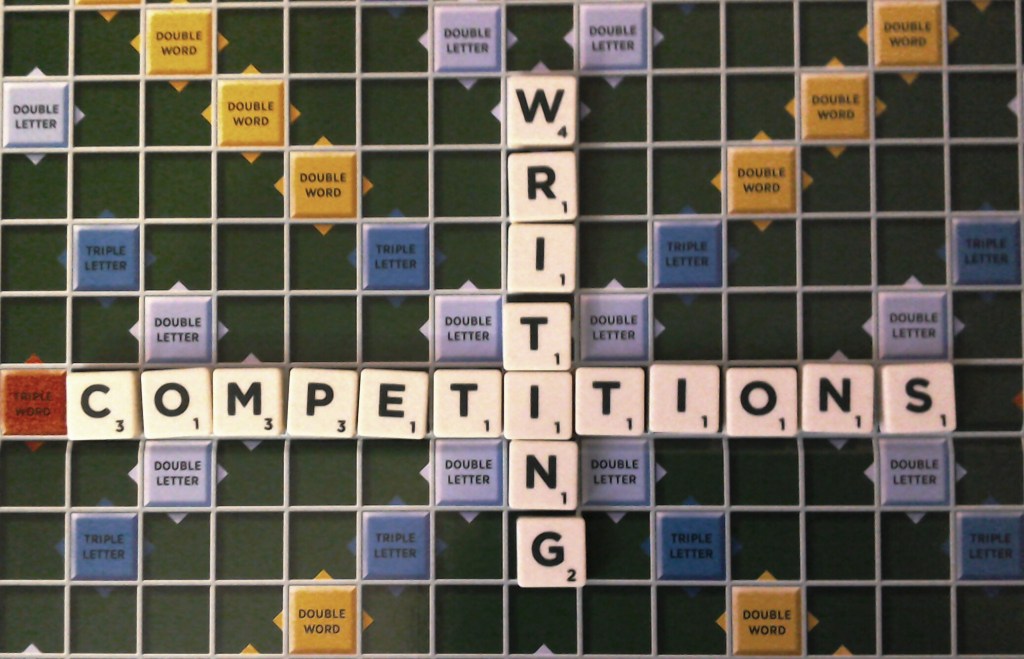
    For our part here at Nothing in the Rulebook, we’ll endeavour to ensure 2019 is filled with a multitude of writerly insights and discussion, and (just for you) we’ve compiled a list of upcoming writing competitions scheduled for the year ahead.

    So, in addition to our list of places that are always open for submissions, as well as places to submit flash fiction, we are thoroughly chuffed to bring you this valuable writing resource you can use to get your writing into the right places.

    Included below are details about word counts, deadlines and direct links to each event.

    If you’d like to add a writing competition to our list then please feel free to contact us!

    1. The James Knudsen prize for fiction

    US$1,000 in prize money awaits for writers of short stories no longer than 7,500 words in length. There’s a US$20 entry fee.

    2. The Fresher Writing Prize

    This year’s Fresher Writing Prize invites you to send in poems and short stories inspired by their theme of Peace.

    There is an entry fee of £7 and a maximum word limit of 3000. Winners receive a £200 cash prize and feedback on their work.

    3. Bath Novella in Flash award

    Your novella-in-flash submission must be in between 6,000 and 18,000 words long. Individual flashes (or chapters) within the novella should not be more than 1000 words long.

    £300 prize for the winner, two runner-up prizes of £100 plus publication in a one-volume three-novella collection. Each published author receives five copies.

    Deadline for entries is January 14th 2019.

    4. The Cambridge Short Story Prize

    International short story competition with a £1750 prize fund. Submit short stories between 2000 – 3000 words. It costs £8 to enter and is free to residents of Bangladesh. Deadline is January 15th 2019.

    5. Fiction Factory short story competition 

    All types of writing are welcome for this writing contest with prizes up to £150 for the winners. 3000 words max and a fee of £6 to enter.

    6. The Caine Prize for African Writing

    For published African authors of fiction. Must be over 3000 words in length and written for adults. Advisable length for the stories is between 3000 and 10,000 words. There is a cash prize of £10,000 and works must be written in or translated into English.

    Deadline for submissions is January 31st.

    7. Masters Review Winter Short Story Award

    The Masters Review Winter Short Story Award is prize that recognises the best fiction from today’s emerging writers. The winning story will be awarded US$3000 and publication online. Second and third place stories will be awarded publication and US$300 and US$200 respectively.

    There is an entry fee of US$20 and a maximum word count of 7000. Deadline for entries is January 31st 2019.

    8. The Screw Turn Flash Fiction Contest

    This contest seeks the finest work that incorporates the uncanny. Ghost stories are welcome, of course—but your submission may involve any paranormal or supernatural theme, as well as magic realism. What they’re looking for is superb writing, fresh perspectives, and maybe a few surprises.

    The maximum word count is 1000 and there is a US$10 fee to enter for your chance to win US$500.

    9. The Fantastica Prize

    Fantastica invites Australian and New Zealand writers to submit science fiction manuscripts for consideration.

    Manuscripts must be at least 30,000 words in length and a publishing contract will be offered to the winners along with $2000 in prize money. Deadline for entries is January 31st.

    10. New Welsh Writing Awards 2019

    The New Welsh Writing Awards 2018, run by New Welsh Review in association with Aberystwyth University and AmeriCymru is open for entries.

    Now in its fifth year, the Awards were set up to champion the best short-form writing in English

    Each category winner will receive £1,000 cash, e-publication by New Welsh Review on their New Welsh Rarebyte imprint and a positive critique by leading literary agent Cathryn Summerhayes at Curtis Brown. Subsequent prizes include residential courses and weekend breaks.

    Entries close at midnight on 4th February 2018.

    11. Newcastle Short Story Award 2019

    One for Australian writers. First prize is AU$2000. The deadline for submissions is  4th February 2018 and the entry fee is AU$15. The maximum word limit is 2000 words, which includes both titles and any subheadings.

    12. Writers’ & Artists’ Yearbook 2019 Short Story Competition

    First prize receives £500 and a place on an Arvon residential writing course of your choice, as well as publication of your story on the W&A website. Closing date for writing submissions is Tuesday February 13th 2017 and all submissions must be unpublished prose of 2000 words or fewer.

    13. Desperate Literature

    The aim of the Desperate Literature Short Fiction Prize is both to celebrate the best of new short fiction and to give winners the most visibility possible for their writing.

    Max word count is 2000 and there is an entry fee of €20 to enter. Winners will receive €1000.

    14. Spotlight Books Competition

    Inventive. Hidden. Compelling. Unrecognised. Challenging. Unheard. Beautiful. Ambitious.

    Creative Future, Myriad Editions and New Writing South seek the best poets and fiction writers from under-represented backgrounds—those who face barriers due to mental health, disability, identity or social circumstance.

    Six writers will be selected and given one-to-one editorial support to shape their manuscript. The six writers will be published in individual small books with international distribution.

    There is no fee to enter; winner received publication. Deadline for entries is 24th February 2019.

    15. The Margery Allingham Short Story Competition

    The Margery Allingham Short Story Competition is open until February 28, 2019.

    Submit stories up to 3,500 words. Your story should fit into crime writer Margery’s definition of what makes a great story: “The Mystery remains box-shaped, at once a prison and a refuge. Its four walls are, roughly, a Crime, a Mystery, an Enquiry and a Conclusion with an Element of Satisfaction in it.”

    Prize: £500 plus two weekend passes to Crimefest 2019 and a selection of Margery Allingham books.

    Entry Fee: £12

    16. 1000 word writing challenge

    1000 words on a set theme. £5 to enter for a chance to win £100. Deadline for entries is February 28th 2019.

    17. Scottish Arts Club Short Story Prize

    First things first; you DO NOT have to be Scottish to enter this writing contest. Stories should be 2,000 words or less and may be on any topic.

    There’s an entry fee of £10 and a maximum word limit of 2000. Winners receive £1000.

    Deadline 28th February 2019.

    18. An Axe to Grind Flash Fiction contest

    Write a story in fewer than 1000 words for a chance to win US$200.

    US$5 to enter. Deadline is 28th February 2019.

    19. The Stella Kupferberg Memorial Short Story Prize

    The Stella Kupferberg Memorial Short Story Prize is a writing competition sponsored by the stage and radio series Selected Shorts.

    Submissions must be no more than 750 words long and there is a US$25 fee to enter.

    The deadline for entries is March 1st 2019.

    20. Ginosko Literary Journal 2019 Flash Fiction contest

    You can submit two pieces of flash fiction of no more than 800 words each to the  Ginosko Flash Fiction Contest, which closes on the 1st March 2019.

    Prizes include US$ 500 and publication on the Ginosko Literary Journal website.

    The entry fee is US$ 5.

    21. Bridgend Writing contest 2019

    Stories on a theme of your own choice, between 1500 to 1800 words.

    Winner receives £200.

    The deadline for entries is March 1st 2019 and there is a £5 entry fee.

    22. Eyelands 2nd International Flash Fiction Contest

    The theme for this year’s Eyelands flash fiction prize is: Spring

     The contest runs from January 10th through March 20th, 2019

    First prize: A week holiday at Three Rock Writers resort οn the island of Crete

    Other prize winners and shortlisted entries receive publication. There is an entry fee of €10.

    23. Nelligan Prize

    International writing prize for writers of all stripes and nationalities. Deadline is March 14th, 2019 for submissions of 12,500 words or less. Entry fee is US$15 and first prize is US$2000.

    24. The Killer Nashville Claymore Award

    Every year, the Killer Nashville Claymore Award assists new and rebranding English-language fiction authors get published, including possible agent representation, book advances, editor deals, and movie and television sales.

    The contest is limited to only the first 50 double-spaced pages of unpublished English-language manuscripts containing elements of thriller, mystery, crime, or suspense NOT currently under contract.

    The entry fee is US$40 and the deadline for submissions is April 1st 2019.

    25. New Deal Writing Competition 2019

    The New Deal Writing Competition is a short story competition where the writer is asked to use a painting chosen by the staff of GVCA as inspiration for their short story.

    This year’s painting is “Fountain, Central Park” by Jacques Zucker.

    There is an entry fee of US$5 to enter and a maximum word limit of 10,000. Top prize receives US$200.

    26. The Bath Short Story Award

    An award for local, national and international writers. Closing date for submissions is April 15th, 2019. Short stories of up to 2200 words in all genres and styles are welcome – there is no minimum word limit. First prize receives £1000 and there is also a local prize for Bath residents, as well as The Acorn Award of £50 for unpublished writers of fiction. Entry fee is £8.

    27. Momaya short story competition

    Any subject and style is welcome for the annual Momaya Short Story Competition.  While entries for the Momaya Competition.

    Submit your short story (3,000 word limit) and entry fee of £12 /US$15 by 30 April 2019 in order to compete for prize money and publication in the Momaya Annual Review 2019.

    28. Adventure Writers Short Story Competition 2019

    This is an international competition and there is just one category: Adventure. The organisers accept traditionally published, e-published and manuscript novels. There is a US$1000 cash prize. A $25 entry fee is charged, and all proceeds go to promoting the contest, the finalists and the winner.  The deadline for entries is 30th April 2019.

    Adventure is out there!

    29. Adventure Writers Writing Competition 2019

    Adventure Writers are an international writing competition now in their ninth year, and have just one category: Adventure.

    They accept traditionally published, epublished and manuscript novels. There is a US$ 1000 cash prize for the winners.

    A US$25 entry fee is charged, and all proceeds go to promoting the contest, the finalists and the winner.

    Deadline for entries is 30th April 2019.

    30. The Bristol Short Story Prize

    Entries are welcomed for unpublished stories written in English. The deadline for submissions is 1st May 2019 and stories can be on any theme or subject. Maximum length of 4000 words. An £8 entry fee and first prize is £1000. There are also 17 further prizes of £100 for all shortlisted writers.

    31. Writer’s Digest Competition

    The winner of this annual award will receive US$5000 and an interview in Writer’s Digest. There are a variety of different award categories so it’s best to check the website for details. Deadline is May 6th 2019.

    32. Raymond Carver Contest

    The Raymond Carver Short Story Contest is one of the most renowned fiction contests in the world. Featuring prominent guest judges and offering US$1500 across five prizes, the contest delivers exciting new fiction from writers all over the world. The contest opens each year April 1 – May 15 and prizewinners are published in their annual fall issue in October. Usual entry fee of US$17.

    33. Lorian Hemingway Short Story Prize

    Writers of short fiction may now enter the 2019 Lorian Hemingway Short Story Competition. The competition has a thirty-nine year history of literary excellence, and Lorian Hemingway and her small judging panel are dedicated to enthusiastically supporting the efforts and talent of writers of short fiction whose voices have yet to be heard.

    Deadline is 15th May 2019. Max word count is 3500, entry fee is US$15 and a prize of US$2500 is available.

    34. Bridport Prize

    International open competition founded in 1973. Four categories in poetry (max 42 lines); short story (max 5,000 words); flash fiction (max 250 words) and the Peggy Chapman-Andrews Award for a First Novel (max 8,000 words from opening chapters plus 300 word synopsis).

    Deadline usually looms towards the end of May each year.

    Entry fees and prizes vary depending on category. Full information about this world-renowned competition can be found online.

    35. Bath Novel Award

    The Bath Novel Award 2018 is an international prize for unpublished and self-published novelists. The winner will receive £2,500, with manuscript feedback and literary agent introductions for those shortlisted. In addition, the writer of the most promising longlisted novel will receive a free place on an online editing course with Cornerstones Literary Consultancy.

    Submit your first 5000 words along with a one page synopsis by 2nd June 2019.

    There is an entry fee of £25.

    36. Narrative Prize

    The Narrative Prize is awarded annually for the best short story, novel excerpt, poem, one-act play, graphic story, or work of literary nonfiction published by a new or emerging writer in Narrative.

    Deadline is mid June 2019 and there is no entry fee. Maximum word counts of 2000 and prizes of up to US$4000 available.

    37. Impress Books prize for new writing

    This is a manuscript contest for unpublished writers. Winners receive a print and eBook publishing contact with Impress, as well as a £500 advance.

    The deadline for entries is usually around the end of June each year.

    You need to submit 6000 words of your manuscript, along with a synopsis and publishing proposal, as well as an author bio.

    38. William Van Wert Award for Fiction

    US$1,000 and publication in Hidden River Review of Arts & Letters is offered to the best unpublished short story or novel excerpt.

    Competition opens in February 2019 and deadline for entries is 30th June 2019.

    Any previously unpublished short story or novel excerpt of 25 pages or less is eligible to enter.

    There is an entry fee os US$17 and winners receive full manuscript publication and US$1000.

    39. The Brighton Prize

    The Brighton Prize offers cash prizes for new short and flash fiction. If you’re a writer with a brilliant short story that will both challenge and excite the judges; this is for you.

    Submissions are currently open for flash fiction up to 350 words, and short stories of 1-2000 words.

    The winner of the short story prize will receive £500, and the winner of the flash fiction prize will receive £100.

    There is an entry fee of £8 for short stories and £6 for flash fiction.

    The deadline for submissions is 30th June.

    40. LuneSpark Young Writer’s Short Story contest

    LuneSpark are looking for talented young writers to submit their work for their 2018 short story contest.

    Stories must be below 1650 words (they recommend 1500 as a standard).

    There is a US$ 15 registration fee (plus an additional US$ 1.82 processing fee) and first prize will receive US$ 500.

    The deadline for entries is July 31st 2019, although you’ll need to register before then (check out the website for details).

    41. The Sean O Faolain Short Story Prize

    The competition is open to original, unpublished and unbroadcast short stories in the English language of 3,000 words or fewer. The story can be on any subject, in any style, by a writer of any nationality, living anywhere in the world. Translated work is not in the scope of this competition.

    First Prize: €2,000, a week-long residency at Anam Cara Retreat and publication in the literary journal Southword.

    There is a fee of €15 per entry and the deadline for submissions is 31st July.

    42. To Hull and Back, writing competition 2019

    To Hull And Back Short Story Competition is an annual short story contest with a humorous twist that celebrates the most imaginative and amazing short stories from writers all over the world.

    First prize is £1000 and publication.

    Max word count is 2500 and the deadline for entries is July 31st 2019.

    The fee for entries is £11.

    43. The Preservation Foundation’s 2019 contest for unpublished writers 

    The Preservation Foundation are a non-profit organisation aiming to “preserve the extraordinary stories of ‘ordinary’ people.”

    Stories must be non-fiction in one of four categories: General, Biographical, Travel, and Animals. Submissions must be between 1000 – 10,000 words in length.

    There are no entry fees and prizes of US$ 200 for winners, US$ 100 for runners-up, and US$ 50 for finalists in each category.

    Deadline for entries is August 31st 2019.

    44. The Caterpillar Story Prize

    The prize is for a story written by an adult for children (aged 7–11). The judges are looking for stories that will inspire, delight and move our young readers. The stories can be on any subject and in any style, as long as they are age appropriate, and the word limit is 1,500.

    The 2019 competition will open from May 2019.

    The winning story will receive €1,000 and appear in the winter issue of The Caterpillar.

    Entry fee is €12 per story

    The closing date is the end of September. 

    45. Greywood Arts Winter Writing Residency Award

    Writers of poetry and any genre of fiction are invited to apply for this award, where two authors will be awarded cosy self-catering accommodation and private work space overlooking the Dissour River. Winning writers are invited to contribute to the summer 2020 issue of Crossing the Dissour, our online journal about creative process.

    There’s a max word count of 3000 and a €12 fee to enter.

    Deadline for entries is October 6th.

    46. Woven Tree Press annual literary competition

    The Woven Tree Press hosts its annual literary competition, with this year’s category being fiction (including creative non-fiction), judged by award winning novelist Ann Beattie. Submissions must be no longer than 6000 words.

    Winners receive cash prizes, with first place receiving a one-week stay in the organiser’s 1909 charming retreat house in the legendary Hamptons, New York.

    Submissions for the contest open on August 15 and run until October 15 2019. There is an entry fee of US$25.

    47. Bare Fiction Magazine Short Story Competitions

    Any style/genre of writing in a variety of forms, including short stories, flash fiction and poetry. An annual competition with submission deadline of October.

    Short story submissions must be below 3000 words and the associated entry fee is £8. Winners of each category receive £500.

    48. Early Works Press

    Annual writing competition accepts entries of any style or genre. Winners are published in anthology containing 10 to 20 stories (length dependent). There is a £5 entry fee for stories up to 4000 words in length and £10 fee for stories up to 8000 words long. Deadline is October each year, though the publishers also run other competitions throughout the year, so it’s worth keeping an eye on their site for details.

    49. PEN/Faulkner Award for Fiction

    For American citizens with books published in the calendar year (or scheduled to be published) – no self-published books will be accepted. No submission fees, with a deadline of October.

    50. ServiceScape short story award

    For this award, any genre or theme of short story is accepted. All applicants should submit their original unpublished work of short fiction or nonfiction, 5,000 words or fewer, to be considered. Along with receiving an award for $1,000.00 USD, the winner will have his or her short story featured within the ServiceScape blog, which reaches thousands of readers per month.

    There is no entry fee and the deadline for entries is 30th November 2019.

    51. Cinnamon Press Writing Competitions

    Any style or genre of writing is eligible for their rolling competition deadlines, which fall throughout the year between September and July. Entry fees vary according to form of writing, such as poetry, novels, short stories and flash fiction.

    52. Manchester Writing Competition 2018

    There are two prizes – one for fiction and one for poetry. Both competitions offer a £10,000 first prize. Deadline for entries is September 2018 and the competition will open in February 2018. The fiction prize will be awarded to the best short story of up to 2500 words, and is open to international writers aged 16 or over. The poetry prize will be given to the best portfolio of three to five poems (maximum length: 120 lines). The entry fee for each competition is £17.50.

    53. F(r)iction contest

    Literary publisher and resource for writers Brink Literacy project (formerly Tethered By Letters) run this tri-annual publication, F(r)iction, – an art and literature imprint that is distributed around the world. It features short fiction, flash fiction, poetry, nonfiction, and even a selection of graphic stories. It also showcases amazing artwork.

    First prize for the short story contest is US$1000 and there is an entry fee of US$18. The first prize for both the poetry and flash fiction contests is US$300 and there is a US$10 entry fee.

    Visit the website for information about upcoming deadlines

    54. The Short Story ‘Monthly 500’ Flash Fiction competition 

    The Short Story was established in 2015 and has quickly developed into an influential platform for short fiction. They champion short stories, flash fiction, and micro-fiction.

    Every month, they invite submissions for their flash fiction competition, the winner of which receives publication on their website and £50.

    The deadline for each month’s contest is midnight on the last day of each month.

    There is an entry fee of £2.28 and entries must be no longer than 500 words (including title).

    55. Reedsy Short Story Contest(s)

    Every Friday, Reedsy kicks off a weekly short story contest by sending out a newsletter that includes five themed writing prompts. Subscribers have one week (until the following Friday) to submit a short story based on one of the prompts. The winner receives US$ 50 and publication on Reedsy’s Medium blog.

    There is no entry fee.

    56. Austin Film Festival competitions

    Austin Film Festival 2018 is offering a number of different writing contests for you to sink your teeth into. In their 25th year, the Austin Film Festival (AFF) have helped many writers break into the industry of film and television.

    AFF currently offer writing competition categories for screenplays, teleplays, short screenplays, digital series scripts, stage plays, and fiction podcast scripts.

    Deadlines for the competitions vary, with some differences in entry fees depending on whether you enter before, early, regular, or late/final deadlines.

    Prizes include cash awards and the opportunity to meet famous figures from the industry. Check out their website for information
  • 49323251_565121860581510_4419461815042310144_n.jpg

    The type of intensive, cloistered work of writers can lend itself to solitude. Sometimes, this can be accompanied by activity – such as running  – but it can also be just as much about stillness. In this article, author Tim Leach reflects upon the art of waiting; of embracing these moments of stillness to help aid your writing.

    The art of the novelist is the art of waiting. Patience. Stillness. Not the lightning flash of inspiration, but in the waiting for the lightning.

    Most of my writing time is spent waiting. Waiting before the half empty page, staring at one of the endless problems to be solved. A minute passes, another and another. Half an hour, perhaps even an hour since last a word was typed. A frightening boredom sets in and seeks to drive me from the chair, to do anything but keep still, hold on. Then a sudden flurry of fingers on the keys, the words springing to the page, the problem solved. And then the next problem, and once more, the waiting.

    There is passion in this still, quiet patience. “Am I in love? –yes, since I am waiting,” says Roland Barthes. “The lover’s fatal identity is precisely this: I am the one who waits.” It can have the quality of trance or prayer. And there is courage in waiting too, for learn it well enough and you may outlast anything.

    Outlast loneliness, for if one has mastered time what is there to fear from the absence of love? Wait out sadness, for the black waters always recede if you can be patient enough for the turning of the tide. And those other more murderous thoughts that circle the mind like jackals – they too must sleep, if you can stare them down for long enough. The hand that quests for the razor grows old and idle, the rattle of the pill bottle fades to silence, the eye that looks hungrily to high places and the third rail droops and grows heavy.

    If writing has taught me anything, it is how to wait. It has been a year of hard waiting. I’ve waited with people and for people, waited out a draft of a book, waited out a madness too. Everything is begun and nothing is finished, much more is broken than is fixed.

    But that does not matter. “In this there is no measuring with time, a year doesn’t matter, and ten years are nothing,” says Rilke, because poets know how to wait, too.

    I hear the tick of the clock and the sound of the sea, and that particular silence in the concert hall before the pianist first lays their hands upon the keys. I am waiting.

    About the author

    Tim Leach

    Tim Leach is a historical fiction author and creative writing teacher. His first novel, The Last King of Lydia, was published by Atlantic Books in Spring 2013, and has been longlisted for the Dylan Thomas Prize. A sequel, The King and the Slave‘, was published in 2014. His most recent novel, Smile of the Wolf  was published in 2018. He teaches creative writing at the University of Warwick, and he lives in Sheffield.

  • december_sstories

    What’s that sound in the air? The crisp crunch of carollers footprints in the even evening December snow, perchance?

    Not a bit of it. That sound you hear is applause; the clapping of hands from all those souls for whom the festive period is never as simple as the unbridled joy and consumerist cheer that the overwhelming majority of corporations and media establishment would have you think everyone is feeling at this time of year.

    Because, of course, the month of December means a multitude of different things to different people at alternate points in their lives. The meaning of Christmas (if there is such a thing) changes as our feelings evolve and our memories build upon one another. The sweet stirrings of excitement many felt as Children on Christmas morning contends with the emotions pent up in familial tensions and blends over the years with Christmases of all stripes and colours; of loneliness, disappointment, anger and – yes – joy, into feelings that are not simple or binary emotions; but not necessarily the poorer for that.

    Yet this complexity is so rarely discussed or acknowledged. And it is rarer still to see it put down in any form of creative medium. And so the aforementioned applause comes because it is precisely this complex diorama of festive feelings that is displayed so well, so vividly and so wonderfully in Ian Samson’s latest book, December Stories I.

    Published by a team of fabulous independent creatives over at Belfast-based No Alibis Press, December Stories I comprises ‘short stories, vignettes, axioms, the odd recipe [emphasis on ‘odd’], art criticism, meditations and literary curiosities relating to all things festive’.

    This collage of 31 entries – one for every day of the titular month – offers readers a plethora of different viewpoints with which to view the Christmas period. And it is within these tales – of terrible Christmas poetry, strict instructions from teachers to parents before the holidays, Floridian barbecues and meditations on faith (among so many others) – that we encounter the rich and so often contradictory feelings and emotions that make Christmas what it is.

    Funny, sad, lovely and above all else utterly empathetic, December Stories I, is the perfect antidote to piped Christmas Muzak played on repeat from October onwards. And it also offers something else to people who may otherwise find themselves rushed off their feet at this time of year with work, social engagements and requisite consumer splurges and extensive (and expensive) grocery shopping: a chance to pause. Indeed, Samson’s book gives everyone who reads it the opportunity to take time out from everything else that may be going on and reflect – perhaps even meditate – on what Christmas means, and has meant, for them over the years; and also, perhaps more importantly, what it can mean for others, too.

    Human beings are wonderful, surprising, contradictory things – and few times is this more apparent than during the Christmas period. Samson captures all of this effortlessly and brilliantly, making December Stories I an essential item on everyone’s Christmas wish list (we suppose you could wait for the January sales; but where would be the fun in that?)

    You can watch Samson reading one of the short stories from the collection, ‘Two words’ in this lovely short video below.


  • 20-writing-lines.jpg

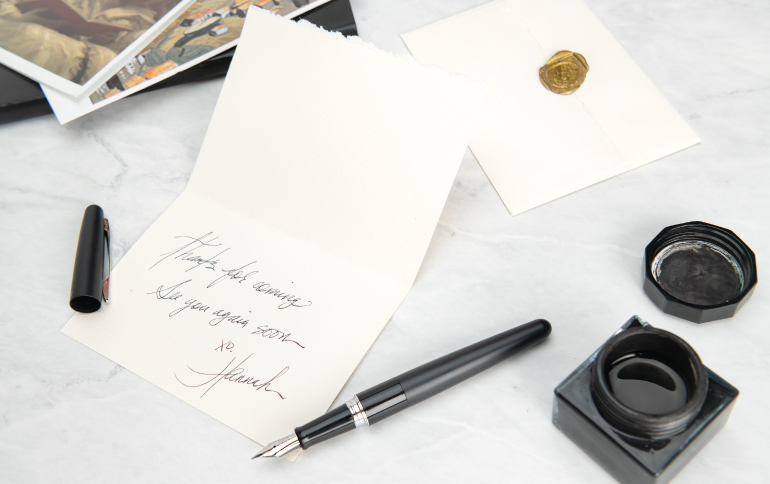
    The benefits of writing on our physical and mental health are endless. Writing stimulates our brain, evokes creativity, helps expand our vocabulary, acts as a form of contemplation and relaxation, and so on. But beyond sitting down at our computer screens and finishing a character or chapter in a novel, the physical act of writing by hand is equally as important. Writing by hand is not only proven to help memory and retention, but it can improve many things including mood, gratitude, and creative thinking.

    If writing in a journal, diary, or simply sitting down to handwrite letters to friends and family isn’t a part of your routine, it’s time to add it to your writing practice! One of the biggest motivators to making writing by hand a habit, is to invest in inspiring writing instruments. A solid notebook and pen are key. Fountain pens are great for creating a smooth, inspired line. If you’re not familiar with writing with a fountain pen, Invaluable created a helpful guide that details all you need to know. It includes everything from the anatomy of the pen to proper technique and hand positioning. Check it out below!

    fountain-pens-IGa

    The rest of the article on Invaluable is well worth a read, too – especially if you’re writing geeks like us. But, then, why would you not be? As Invaluable points out:

    “The fountain pen stands as an iconic writing tool, steeped in history and tradition. From vintage models to modern examples.”

    fountain-pen-hero-2.jpg

    Fountain pens are cool; in other words. And this article is your chance to recapture the lost art of penmanship and learn how to write with fountain pens. Check it out.

    About the author of this post

    Emma Welsh

    Emma is a writer at Invaluable.com, the world’s leading online marketplace for fine art, antiques and collectibles. You can see more of her and her colleagues’ work at https://www.invaluable.com/blog/.