• sean-leahy-3000x15000.jpg

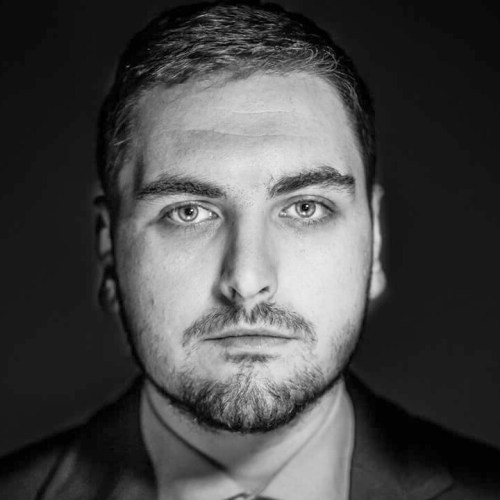
    Named as one of the ’50 Funniest People on Twitter’, Sean Leahy has built quite the following on the Twittershphere as @thepunningman. Appearing on Buzzfeed, Comedy Central, The Poke, Huffington Post, Funny or Die and TimeOut (among others), he has recently published his debut children’s book, The Monster Cafe via award-winning publishers Unbound. 

    Illustrated by Hungarian artist Mihály Orodán, The Monster Café is a humourous tale that deals with pre-conceptions, pre-school excitement and pre-tty big monsters.

    INTERVIEWER

    Tell us about yourself, where you live and your background/lifestyle

    LEAHY

    I’m 36, and I live just outside the gates of Hampton Court Palace with my wife and two children. I earn a crust as a Graphic Designer, and have done for the past 15 years.

    INTERVIEWER

    Beyond writing and comedy, what are you passionate about?

    LEAHY

    Football, punk rock and Guinness. The order is dictated by Tottenham Hotspur.

    INTERVIEWER

    Who inspires you, and why?

    LEAHY

    Shepard Fairey (the mind behind Obey Giant), for taking something as raw as street art (despite my disliking that term) and punk and making a phenomenon out of it. And Jerry Seinfeld for doing the same with comedy.

    INTERVIEWER

    Was it always your intention to wind up writing jokes for a living?

    LEAHY

    Well, it’s not a living yet. I had a real interest in jokes, wordplay and the structure of comedy from a young age, and I had a real interest in ‘making’, be it art, design, writing, film, whatever, in order to get through the working day, rather than doing something I had no interest in.

    INTERVIEWER

    You’ve published The Monster Café, through Unbound books. Can you tell us a little about where the idea for the book first sprang, and how it evolved?

    LEAHY

    Having two children means I’ve sat through several kids books, and while there are loads of utterly brilliant and beautiful ones, there are SO MANY that are just complete and utter dog eggs.

    It’s trite to say “Christ, I could do better than that”, but I think I have, and hopefully the kids agree.

    INTERVIEWER

    What’s your experience of publishing with Unbound been like?

    LEAHY

    The’ve been amazing. The book simply wouldn’t exist had they not afforded me the opportunity. They’re really interesting, in that they crowdfund all of their books, which allows the authors total creative freedom.

    As designers, both Mihaly (the illustrator) and I wanted to be able to lay the book out ourselves, and we were able to do that and make all the decisions about how it should look. Once the money was raised we delivered the finished book to them and they made sure it was just as we envisioned it.

    It’s taken a while, but we’re really pleased with it.

    INTERVIEWER

    It seems old hat to say it in some ways, but generally speaking the ‘mainstream’ publishing industry has been somewhat risk averse when it comes to championing and publishing new books that aren’t in someway “copies of novels that are themselves copies of previously successful novels”, as Julian Barnes once noted. What opportunities do you think Crowdfunding offers to aspiring writers with new, unique or otherwise quirky ideas?

    LEAHY

    It’s meant a lot. You just need to take a glance at a some of the books Unbound have published to see there’s a wealth of topics you don’t see on the shelves in Waterstones. Obviously they’re not only way to go about crowdfunding your book, but the fact they’re a publisher (and a respected one at that), means the buyers take them seriously too. They’re not just putting out any old rubbish, they consider each and every project that is submitted to them, but really champion those who don’t usually get given a voice in this industry.

    INTERVIEWER

    What makes a good crowdfunding project, in your opinion? And what should authors considering following this route themselves consider before starting their own campaign?

    LEAHY

    Make it stand out. You only need to scroll the length of one screen these days before you’re bashed over the head by someone asking for your money. Give them a valid reason to part with theirs, and make it colourful.

    INTERVIEWER

    Your creative partner in The Monster Café is Mihaly Orodan – could you tell us about your artistic partnership; how did you know Mihaly’s illustration style would complement your writing?

    LEAHY

    Mike (to his pals, and some enemies) and I worked together at a tiny creative agency just outside London. His main task was creating infographics and icons for super dry financial companies. But he also drew caricatures for all the birthdays and leaving cards. Once I saw what he was really capable of, I basically twisted his arm until he agreed to illustrate the book. He’s now has an agent and is working on his fourth book since mine.

    His work is really incredible. To be able to put your full faith in someone to just ‘get’ what you want is quite rare, but that’s what I was able to do. I basically laid out the entire book with blank pages and small notes on what should be on each spread. I think I had three amends from the first draft he sent me. It was astonishing.

    INTERVIEWER

    You’re extremely active on Twitter – what role does social media have to play in the professional lives of artistic and established creatives? Is it an inevitable part of our world with which we must participate?

    LEAHY

    Twitter is the reason the book is here, make no mistake about it. I’ve been lucky enough to gain a decent following on there from writing jokes and little “micro-sketches”, and that audience has meant I had someone to sell the book to. Obviously friends and family make up a big part of who fund a project, but the fact there was an active group of people who enjoy my writing enough to subscribe to it meant I had more eyes to put the project in front of.

    Quick fire round!

    INTERVIEWER

    How do you tell a good joke?

    LEAHY

    Start with the punchline and work backwards

    INTERVIEWER

    Curl up with a book or head to the movies?

    LEAHY

    I never get to go to the cinema any more, so definitely that.

    INTERVIEWER

    Critically acclaimed or cult classic?

    LEAHY

    Both have value, but I’ll go cult.

    INTERVIEWER

    Most underrated book/film?

    LEAHY

    The Red Dwarf novels

    INTERVIEWER

    Most overrated book/film?

    LEAHY

    On The Road – It’s SO short and I still couldn’t finish it.

    INTERVIEWER

    Who is someone you think people should know more about?

    LEAHY

    Jon Klassen. His children’s books, particularly I Want My Hat Back, are brilliantly dark and hilarious.

    INTERVIEWER

    Do you have any hidden talents?

    LEAHY

    I can clap one handed.

    INTERVIEWER

    A bad film review can sink a new director, whereas a good one can catapult someone from obscurity into stardom. Do you personally feel any ethical responsibility as a reviewer?

    LEAHY

    I am a very enthusiastic recommender. I will bore the ears off anyone that will listen about anything I love. There is value in criticism though, as long as it’s valid.

    INTERVIEWER

    Could you write us a story in 6 words?

    LEAHY

    She opened the door.
    SURPRISE!
    Goose.

    INTERVIEWER

    Could you give your top 10 tips for writers?

    LEAHY

    Write all the time.
    Write again.
    Read it back, twice.
    You’re never finished.
    Write again.
    Tea and biscuits.
    Consume everything, even the bad stuff.
    Invite criticism.
    Listen to criticism.
    Write again.

  • “The Joyce industry has elevated a diseased and querulous pedantry into an artform […] It is literature at its most debased.” So wrote Kevin Myers in The Telegraph in late 2001.

    Few books have the effect of producing a such a strong reaction upon hearing its name that Joyce’s Ulysses.  Yet the impact of Joyce’s work on modern literature is beyond doubt. Inspiring to some and retch-inducing to others, it is a work surely every writer or creative thinker has encountered at some point or another in some form or another.

    But no matter where you stand on the book, the fact is that Ulysses is, if nothing else, a prime example of the important connection between walking and creative thought.

    Nabokov – a man of strong opinions that could cause no shortage of strong reactions himself – said “Instead of perpetuating the pretentious nonsense of Homeric, chromatic, and visceral chapter headings, instructors should prepare maps of Dublin with Bloom’s and Stephen’s intertwining itineraries clearly traced.”

    You can see his own hand-drawn version here below.

    Ullyses - Nabokov - Map - large.jpg

    A handy visual guide to a challenging literary tome? Or indecipherable scribble based on an equally obtuse book? We’ll let you decide! And while you’re doing so, why not send us your own book maps and literary navigation aids? 

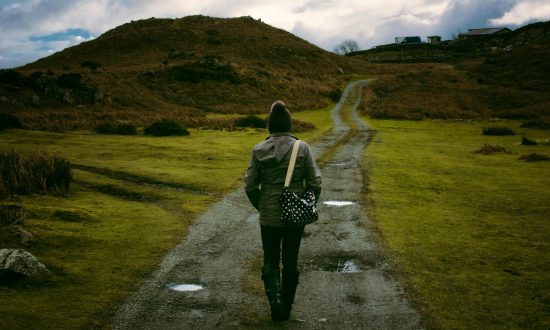
  • person-walking-down-the-path-with-a-bag-550x330.jpg

    In 2014, researchers at Stanford university found that walking boosts creative inspiration. They examined creativity levels of people while they walked versus while
    they sat. A person’s creative output increased by an average of 60 percent when
    walking.

    This research builds on studies conducted by other academic institutions, including
    the University of Michigan and Illinois that confirmed what many Neuroscientists had
    previously identified: that the non-thinking ‘default state‘ of consciousness is key to
    creative thinking. Exercise allows your conscious mind to access fresh ideas that are
    buried in the subconscious.

    Probably the perfect potion for positive peripatetic philosophy

    The implications of this research upon writers and other creatives is clear (we should
    all be walking more to spur the creativity needed to overcome things like writer’s
    block and conjure unique ideas). Yet this perhaps shouldn’t be all that surprising.
    After all, writers, artists and other creative thinkers have been extolling the virtues of
    physical exercise – and walking in particular – for years.

    Indeed, the founding fathers of philosophy – Socrates, Plato, Aristotle – were all said
    to use walking as a means of conjuring creative thought (Aristotle’s habit of walking back and forth as he taught earned the Lyceum the name of the Peripatetic School [from the Greek word for walking around, peripatetikos]). Meanwhile, Darwin walked what he called his “thinking path” twice daily while Dickens walked all over London, three or four hours at a time.

    And, to make a pop-cultural reference, Lin-Manuel Miranda has said he wrote lyrics
    to his acclaimed musical Hamilton during Sunday walks with his dog.

    Walking and writing: enriching your soul

    Soren Kierkegaard, meanwhile, has said of his habitual perambulations that “I have
    walked myself into my best thoughts, and I know of no thought so burdensome that one cannot walk away from it. But by sitting still, the more one sits still, the closer one comes to feeling ill. Thus if one just keeps on walking, everything will be all right.”

    Walt Whitman said walking left him “enrich’d of soul”; while William Wordsworth (to stick with the poets with alliterative, w-led names), said that walking was “indivisible” from writing poetry. Note here a curious calculation by Thomas DeQuincey that Wordsworth walked as many as a hundred and eighty thousand miles in his lifetime
    (between 6 and 7 miles a day, every day).

    There is a clear suggestion here that to write well, one must also be willing to get up from the writing desk. This is something American writer Henry Miller, fervently believed in, saying: “most writing is done away from the typewriter, away from the desk. I’d say it occurs in the quiet, silent moments, while you’re walking or shaving or playing a game or whatever”.

    How it all works

    The reason for this link between writing and walking is perhaps not dissimilar from
    that between writing and long-distant running or other solitary physical activity
    (check out our article on this right here at Nothing in the Rulebook on this very
    topic). Walking – and other solo activities like it – provides just enough diversion to
    occupy the conscious mind, but sets our subconscious free to roam. Trivial thoughts
    mingle with important ones, memories sharpen, ideas and insights drift to the
    surface.

    There is also a clear link between the physical experience of walking and the rhythm and beats of our writing, our poetry and our music. This is the rhythm of our bodies, our steps, and our mental state that we cannot experience as easily when we’re jogging at the gym, steering a car, biking, or during any other kind of locomotion. When we stroll, the pace of our feet naturally vacillates with our moods and the cadence of our inner speech and our attention is free to wander—to overlay the world before us with a parade of images from the mind’s theatre.

    A life less dangerous: why walk and write?

    But the value of walking also extends beyond improvements to our writing and creative abilities. It also helps us, as individuals, escape from a world of distractions – of music pumped into waiting rooms and public spaces, of a life plugged into phones and tablets, where we are constantly on-call, working increasingly longer hours and forced to keep up the appearances of our social media profiles. As Norwegian writer and publisher Erling Kagge, author of ‘Walking: one step at a time’ notes: “Today, you can live a life in a car and behind a screen, and never see the people who live around you. It’s dangerous.”

  • Paul_Bio.jpg

    Paul Scraton is a writer and editor who grew up in Lancashire in the north of England and now lives in Berlin, Germany. Among various projects, Paul is the Editor in Chief of Elsewhere: A Journal of Place and also contributes to Slow Travel BerlinCaught by the River. The author of Ghosts on the Shore: Travels Along Germany’s Baltic Coast, his fiction debut is  Built on Sand (published by Influx Press), which paints a picture of Berlin through a series of interconnected short stories; and in this, we discover a city three decades on from the fall of the wall, and in many ways still coming to terms with that history.

    INTERVIEWER

    Tell us about yourself, where you live and your background/lifestyle

    SCRATON

    I am a British-born writer based in Berlin. I have been living in the German capital since 2002. I feel at home both in the north of England and in Germany, and I feel an outsider in both at the same time. As a writer, I don’t think it’s a bad place to be.

    INTERVIEWER

    Is writing your first love, or do you have another passion?

    SCRATON

    I have wanted to be a writer since I was about seventeen or eighteen, and although I have lots of interests, mainly involving getting outdoors, books and literature remain very important to me.

    INTERVIEWER

    Who inspires you, and why?

    SCRATON

    Family and friends, of course, and each of them in their own unique way. When it comes to writing, it changes frequently, depending on what I am reading! At the moment I am thinking a lot about how history shapes the present, and how the stories of the past, and our knowledge of them, are particularly important in the current political climate. In this I have been thinking a lot recently about the writings of Joseph Roth and Daša Drndić. When it comes to writing on place, a long-term inspiration is Jan Morris. Her writing combines an interest in others with sharp observation, two of the most important components, I think, in any successful literature of place.

    INTERVIEWER

    How has your time as editor of the Elsewhere: A Journal of Place, influenced the way you view the relationship between place and imagination? And how important a role does setting play in your own creative writing?

    SCRATON

    I think the fact that I was already interested in place and how the stories of a landscape and people can shape our understanding not only of that specific location but elsewhere is one of the main reasons that I founded the journal with Julia Stone. When it comes to my own writing, whether fiction, nonfiction or something in between, my main themes are history, memory and identity, and as such place is at the core of nearly everything I commit to paper.

    INTERVIEWER

    It has been said that events like the Brexit vote in the UK have brought to light the differences between so-called ‘anywhere’s’ and ‘somewhere’s – i.e. people who essentially view themselves as citizens of the world, with no particular attachment to their home town or country of origin, and those who view the world directly through the prism of their geographic origins. Do you subscribe to this as an accurate view? Or is this polarity too simplistic a view to take?

    SCRATON

    I think there is something going on here that needs to be understood, but I imagine it is more complex than a simple divide between citizens of ‘somewhere’ and Theresa May’s ‘citizens of nowhere.’ I think there is a certain sense of dislocation feeding dissatisfaction for many people, not only in the UK but elsewhere. There is a difference in the populist movements that can be observed in the US, the UK, Germany, Sweden, Hungary, Italy, Poland… but one common thread is a kind of nostalgia for a rooted sense of belonging that communities supposedly had in the past. And that globalisation and all that comes with it have broken the ties that bound a community together.

    This is the danger of nostalgia, that it in turn creates a sense of ‘belonging’ and identity that is exclusive rather than inclusive. That it idealises a non-existent golden era that could be returned to. People call these movements new, but there is very little in them that we haven’t seen before. What is new is the role of the internet and the media, and how it allows dangerous ideas to spread and take hold. And whenever people are split, into somewhere and nowhere, us and them, it is always important to ask: in whose interest are we being divided? It is very rarely the people themselves.

    On a personal level, I would like to think of myself as both a ‘citizen of everywhere’ and, as someone born in a different country to the one where I’ve made my home, a person committed to being a ‘citizen of somewhere’ in that I want to be part of my community and understand the stories and the history that brought us to where we are in Berlin and Germany today. I have no doubt that it is possible to be both, to be both internationalist and local in outlook.

    INTERVIEWER

    When writing, can you tell us a little about your creative process? How do you go from blank page to fully fledged story or novel?

    SCRATON

    I make a lot of notes. I think a lot. I go for a walk or a run. I spend a lot of time looking and feeling like I am not doing very much at all. But I have always been someone who likes to have a plan, have it fixed – whether in my head or on paper – what it is I am going to do. So it can take a while to get to the blank page (or computer screen) but then when I get there I tend to write quite quickly as I have worked most of the problems out already.

    INTERVIEWER

    How do you decide when a piece of writing is ‘finished’?

    SCRATON

    I think I have to get to a draft I am not totally unhappy with. That is usually after two or three goes at it. Then I give it to my partner Katrin, who is always my first reader and who has an excellent bullshit and pretension detector, and whose judgement I trust more than any other. Basically when she gives the green light I feel comfortable to send it off, to the editor or to post it on my blog or whatever. If she tells me its not working, I’ll probably argue with her for a bit, go quiet, and then return to my desk because deep down I know she was right after all.

    INTERVIEWER

    Your fiction debut Built on Sand will be published in April this year. What has the experience of firstly writing the book, and then seeing it published, been like?

    SCRATON

    This is the second book I have written for my publishers Influx Press, and so I knew how the practicalities would work. My editor, Gary Budden, is someone who I greatly respect both as a publisher but also as a writer. We share many common interests and outlook on the world and in particular how we write about it (although our styles are different). So when I came up with the idea of a collection of stories set in Berlin and the landscapes around, I felt that it would be a project he would be interested in and would be able to help me realise. What changed during the writing and the editing process was the realisation that what I had – what we had – was actually a novel, that although each story could stand alone, together they told a wider story.

    The second time around (and the book is not out at the time of writing) it is interesting to see how much easier it has been to get people to notice the book. I don’t know if it is because it is the second book, if it is because it is a novel (and set in Berlin, which must surely help), or if it is because the publishers are a more established name themselves… most likely it is a combination of all of the above.

    INTERVIEWER

    What are your hopes for the book?

    SCRATON

    All the main hopes were in the writing and bringing it to publication, and they’ve been fulfilled. Of course, I hope people discover it and like what I have written. And I hope that some of the themes in the book will resonate, and will make people think about their own relationships to place, and how history and memory, both collective and personal, shape our understanding of the world around us.

    INTERVIEWER

    Do you feel any personal responsibility as a writer?

    SCRATON

    Only in that I am still trying to find the best way to say what it is I want to say, so my responsibility is to keep working on it.

    INTERVIEWER

    In an age of ‘abject’ incomes for authors and poets, how can aspiring creatives pursue their passions while also making ends meet?

    SCRATON

    I think we all have to accept that – with the exception of the very few – most of us will need to do other work to pay the bills. I do copywriting and other bits and pieces for travel companies and content agencies. I do walking tours on the streets of Berlin (which has certainly been good for honing the storytelling skills).  I don’t really have an answer because I still know that I am one of the lucky ones. I have time to write. I can make time to travel. I have a supportive partner. There are people with much more difficult circumstances than mine who create amazing things, and I am in awe of them. The deeper question is, why do we as society not value art and music and literature in a way that means that artists, musicians and writers can live from their work? Because the danger is that the majority of voices we will hear will increasingly come from a privileged minority, those who can afford, one way or the other, to “pursue their passions”. This will have the knock-on effect of only increasing the idea that the arts are for the few and not for the many.

    INTERVIEWER

    What’s next for you and your writing? Are there any exciting projects we should be looking out for?

    SCRATON

    I have started the next novel and have some loose ideas for nonfiction books, one set in the north of England and the other in the hills of Germany. All three books will no doubt continue to explore ideas of history, memory, identity and place. As I answered earlier: I am still trying to work out the best way to say what it is I want to say.


  • slack tide book cover image.jpg

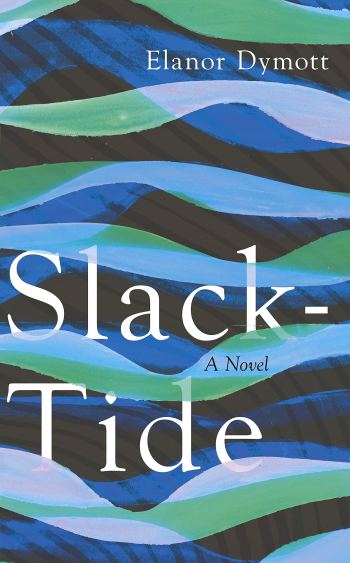
    If you’ve ever wondered why you write, why you feel the need to create, why you feel everything constantly depends on what you are capable of creating, then you should read Elanor Dymott’s Slack-Tide.

    Elizabeth is a novelist in her forties, who had a miscarriage that led her marriage to an end. When she’s set up on a blind date with Robert – who vaguely looks like Keanu Reeves and whose job is “designing cities” –  she feels it is the right time to start again, to be happy again.

    From the very beginning of the book, we know this is a novel about an intense, even though only temporary, love story: at the end of the prologue, it is Elizabeth herself who says “by midsummer the thing between us was finished, and it was as if a storm had torn the roof from over me”.

    Indeed, Sarah Moss’ quote on the back of the book anticipates this is “a compelling and beautiful account on the stories that hold us together and keep us apart”. Dymott’s hypnotic, sharp prose takes us on a journey where love and loss are indissolubly intertwined – and, despite already knowing it would finish, I couldn’t help it but keep on wishing that Elizabeth and Robert’s love story never ended.

    It is Elizabeth’s clear voice that guides us: she is fierce, beautiful and tells her story as if she’s whispering it to a friend. The loss of her child haunts her. Flashbacks of a life that could have been and painful memories – her tears when the anaesthetist asks her to confirm she’s at the hospital for an abortion and the way Elizabeth screams “I’m not choosing this. I wanted my child. I wanted my baby. Do you understand?” – come back at her, neat and clear. These are constant reminders of how vulnerable she feels.

    Robert is vulnerable, too. In his fifties, he has lived a life between the comforts of a wealthy family and a successful career as an architect, that brought him to travel around the globe. We get to know him when his marriage with Lea is already over, and he is torn between the social pressure of being a good father to Philippe and the need to share his daily life with a lover. “I want to be with someone,” he says, “When I come back from a trip, I want to have someone to talk about it […] About the stuff I see. I see so many things. I have so many things to say. […] Right before I met you, I was beginning to think I might burst with the things I’d seen.” As we read on, we begin to discover his acute selfishness. As a reader, you’ll find it impossible to feel indifferent to him: you’ll either love him or you’ll hate him.

    Slack-tide is a book about love, about loss, about the details that make our lives unique. But what strikes most about this novel is Elizabeth’s attachment to the characters of her own books. She is loyal to them, and she’s firm in her decision of putting her writing first, come what may. When Robert tries to make her change her plans, claiming that there are other people involved, she explains “I have characters, waiting for me to tell them what to do. […] the only difference between my ‘other people’ and your ‘other people’ is that I have to make mine up. Every thought they think, every word they speak, and every single thing they do. You are lucky, Robert. You pack your case, get on a plane, and when you get off at the other end, your ‘people’ are waiting in arrivals, holding up a little sign with your name on.”

    Elizabeth was not capable of giving birth. She was not able to create a new life. However, she is capable of bringing those characters to life, and she defends her work at every cost.

    In this way, Slack-tide is, most of all, a book about the power of creating.

    About the reviewer

    foto anthology

    Anna Maria Colivicchi was born and raised in Rome. After a BA in Italian Literature, she is now pursuing a Master’s in Writing at the University of Warwick. In her writing, she seeks the extraordinary in the ordinary, focusing on the details of everyday life.


  • Screen Shot 2019-03-29 at 09.04.08.png

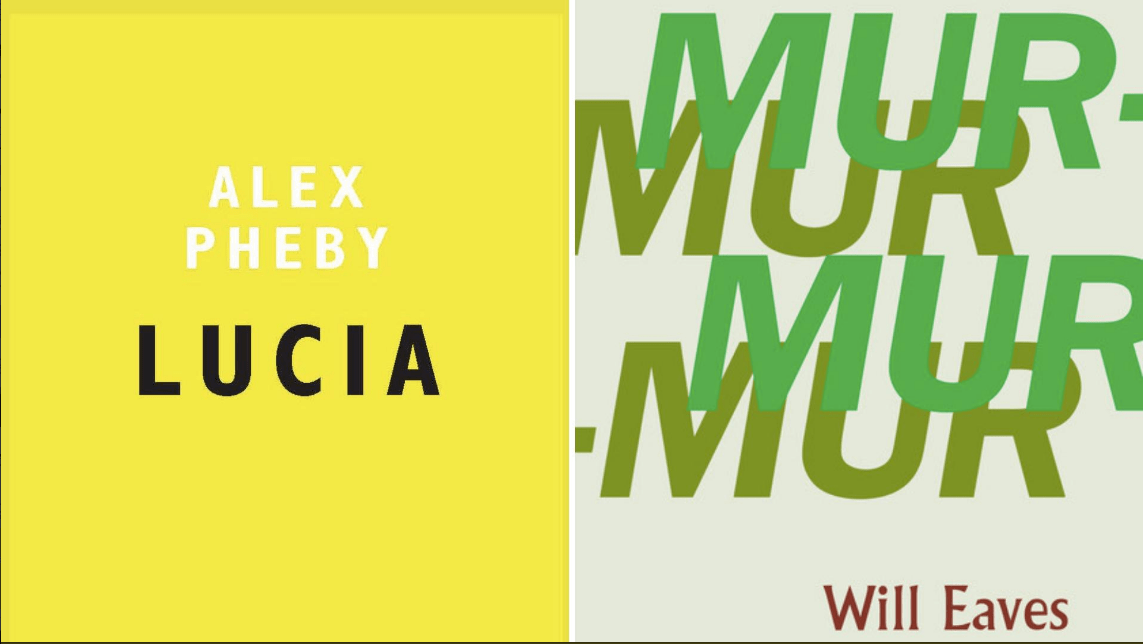
    The writers Will Eaves and Alex Pheby have been announced as the joint winners of the Republic of Consciousness prize, for their novels Murmur and Lucia.

    Murmur, published by CB Editions, is inspired by the chemical castration of the Alan Turing – the father of Artificial Intelligence. Meanwhile, Lucia, published by Galley Beggar Press, is based on the troubled daughter of literary giant James Joyce.

    Life, consciousness, and Artificial Intelligence

    Taking its cue from the arrest and legally enforced chemical castration of the mathematician Alan Turing, Murmur is the account of a man who responds to intolerable physical and mental stress with love, honour and a rigorous, unsentimental curiosity about the ways in which we perceive ourselves and the world.

    Formally audacious, daring in its intellectual inquiry and unwaveringly humane, Will Eaves’s new novel is a rare achievement. The opening section of Murmur was shortlisted for the 2017 BBC National Short Story Award – and it is currently also shortlisted for the £30,000 Wellcome prize for science-related writing.

    In Nothing in the Rulebook’s review of Murmur, Professor Wu writes: “Life and consciousness are not logical (though they can of course be assessed and reviewed with logic). And this is one of the many things that Murmur does so well – it is, by its very nature, both an accurate representation of consciousness and human experience, as well as a thorough, logical analysis of these things. Through Alex Pryor, Eaves has developed a protagonist through which we may see these inherently complex ideas more simply.”

    About the Republic of Consciousness

    The Republic of Consciousness prize, which celebrates and supports small, independent presses in the UK and Ireland, specifies that works entered must have been published by presses with fewer than five full-time staff members, and which have a commitment to “hardcore literary fiction and gorgeous prose”.

    Alongside Murmur and Lucia, the 2019 shortlist for the prize included the following titles:

    This year’s double wins come in a year when small presses continue to outperform their larger competitors; all but two of the 13 titles longlisted for the Man Booker International prize come from independent publishers. The nature of the joint win also reflects the judge’s stance against sole winners, because “while the competitive dynamic of prizes points readers towards ‘the best books’, they also create a false hierarchy where ‘the best’ becomes a valid category”.

  • B_IMG

    Ben Armstrong is a poet from the West Midlands, UK, who specialises in surrealist, hyper-real and absurdist pieces. An alumnus of the renown Warwick University Writing Programme, his poem ‘The Year of the Apple’ was featured in The Apple Anthology (Nine Arches Press, 2013), shortlisted for Best Anthology in the Saboteur Awards. His debut collection Perennial is out now through Knives, Forks and Spoons Press, and has drawn praise from a number of right-on poets and publications, including Luke Kennard, George Ttoouli, and David Morley, as well as the magazines Eye Flash Poetry, and Here Comes Everyone (oh, and ourselves, of course).

    In the large hadron collider that is Perennial, Armstrong challenges the reader to embrace unpredictability and recognise order within otherwise apparent disorder, in what is an extremely fun, engaging, witty and anarchic poetry collection. Given that we love witty anarchy as much as the next creative collective (it’s among the best kinds of anarchy if you ask us), we were thrilled to have the opportunity to interview Armstrong himself and add him to our community of creatives who have shared their stories and innermost secrets with us.

    INTERVIEWER

    Tell us about yourself, where you live and your background/lifestyle

    ARMSTRONG

    I was born in the Black Country, West Midlands, in the early 1990s and still live locally. We’re famous for our pork scratchings, ale, canals and the steel industry (amongst other things). I grew up in Stourbridge, which doesn’t have so much of an accent – people tend to find it hard to place me unless they’re familiar with the Midlands. I’ve just bought a house with my partner so my current lifestyle is mostly settling in there, working, keeping fit and writing for my next book.

    INTERVIEWER

    Is poetry your first love, or do you have another passion?

    ARMSTRONG

    Music is my biggest passion although I’m a much more perceptive listener than a musician. I was in a band for a few years recently and I spent so much time listening to our mixes, tweaking my EQ – focusing on the really minute details. I loved designing our album booklet and packaging. I guess a lot of people would find that stuff boring? For me, the beauty has always been in the detail. In this way, my love for poetry and music stem from the same place. They’re both very liberating mediums that I can really get stuck into them on a micro level, whilst still having a finished piece at the end of the process.

    INTERVIEWER

    Who inspires you, and why?

    ARMSTRONG

    On the whole, people who really dedicate themselves to their art. I find that highly commendable, especially in the modern world where money doesn’t exactly come easily for most artists. I’m inspired also by people who have a very strong artistic vision and stick to it, especially across a collection of pieces. We live in quite a quick-fire culture but I still really value full-length collections, records, etc. that tell a story or carry a vibe across a substantial body of work. You can spot these people a mile away and they tend to have long, varied and diverse careers in art.

    INTERVIEWER

    The structure of your poems is often experimental, while the content blurs vibrant, intricate language with both pop culture references and classical analogy. How do you see the balance or relationship between modern and classical? Are we living in a world of post-post modernism? Or have we simply run out of the terms to adequately express and describe our contemporary cultural trends and styles?

    ARMSTRONG

    We’re living in an age of pastiche. This is the first time that our entire existence as human beings has become self-referential. It feels like we’re finally letting go of the concept of ‘time’ – the whole thing has just become delineated. Courtesy of technology, the recent past may as well be right now. The distant past is as accessible as what I did last week. People are always creating new art, but the leading trend seems to be recontextualisation. We’re a race of curators, of remixers and remodellers. I think that my poetry and Perennial especially speaks to that. My aim is to make sense of the chaos, somehow.

    INTERVIEWER

    When writing poetry, can you tell us a little about your creative process? How do you go from blank page to fully fledged poem?

    ARMSTRONG

    Nearly always, a line or phrase will just drop into my mind. If I choose to pursue it, I can feel the tangents pulling off from the original seed and urging me to get to a computer or pick up a pen. From there, I write quickly to capture as much as possible and edit as I go. I tend not to move on until I’m happy with a line although if I end up at a dead end, I’ll consider some radical changes to the structure to jump-start the process. I favour using a computer because I can get a better ‘feel’ for the visual element of the poem.

    INTERVIEWER

    How do you decide when a poem is ‘finished’?

    ARMSTRONG

    This one is down to intuition. Mostly it’ll be when it feels right, visually. I really champion the visual aspect of the poem on the page – it really steers my decision making throughout the entire writing process. Certain ideas just need to ‘look’ a certain way. Some need to slink down, some appear to me as very horizontal and aggressive, others flutter like a burst bag of feathers. I’m not entirely sure why I feel the need to act on these but I do and it’s a big part of why I love writing poetry. I suppose I’d compare it to how a chef arranges a plate. Certain choices are dictated by things other than logic. Why does the onion need to sit just so? It just does.

    INTERVIEWER

    You’ve recently published your debut collection, Perennial. Can you tell us a little about the work, and the experience of putting it together? How did you first conceive of the idea, and how did it evolve?

    ARMSTRONG

    Perennial has been in the works for a very long time now. I started writing poems for it in around 2012 on a coach to visit my uncle in Scotland. It was never intended to be my first collection – it is actually a spin-off to a bigger, larger story – but it just so happened that I finished it first. The collection is a diary of sorts written by an unnamed character who finds himself lost on a strange island. In a narrative sense it functions as a backstory for the character, but it’s a real book within this fictional world, too. Characters from my other poems have read Perennial. The interesting part for me is that due to a complete lack of contextual information, a first-time reader is going to be pretty baffled by it. I wanted to create this underlying sense that its part of something bigger but never really state that outright. The next book will unlock a lot of the secrets in this one.

    INTERVIEWER

    We live in a time when language is deliberately misused and manipulated – frequently for malicious purposes – to serve and support those in power. This is a time of ‘alt-facts’, an Orwellian landscape in which language is a tool of deception and demagoguery. What role do you see poetry playing in an age of ‘fake news’ and social media trolling?

    ARMSTRONG

    The reliability and ‘usefulness’ of poetry is always going to be a grey area. I frequently misuse and manipulate language for different purposes. The difference, I suppose, is that I don’t have an agenda. I’m not trying to make you think or feel a certain way, politically or socially speaking. I think modern poetry will continue as it has done for a while – to inspire the few and confuse the many.

    INTERVIEWER

    Since Percy Bysshe Shelley was moved to pen poetic verse in protest at the Peterloo massacre, poetry has been used as a tool to provide a voice for the powerless and inspire movements and action against the powerful. What are your thoughts on the idea of ‘poetry as protest’?

    ARMSTRONG

    I think poetry can be used as a tool for those purposes – It’s probably one of the better mediums for it. Of course, it depends entirely on the person writing it, their motivations and the reader’s own interpretation. Performance poetry isn’t really my thing but it’s undeniably effective at bringing together communities and giving people a voice.

    INTERVIEWER

    Do you feel any personal responsibility as a poet?

    ARMSTRONG

    Not as a poet so much as a person writing poetry. We’re all personally responsible for the impact we make on the world.  I write primarily for myself and to do justice to the story I’m telling with each collection I put out. My main responsibility is to let the poems go wherever they want to. In spite of this, I do try and promote the things I think are important through my work, too.

    INTERVIEWER

    In an age of ‘abject’ incomes for authors and poets, how can aspiring creatives pursue their passions while also making ends meet?

    ARMSTRONG

    I’d say just do it and keep doing it and keep finding ways to continue to do it. I find it easiest to keep my passions and sources of income separate, but mutually beneficial. I do a lot of writing for my day job, and this keeps me sharp for my poetry.

    INTERVIEWER

    What’s next for you and your poetry? Are there any exciting projects we should be looking out for?

    ARMSTRONG

    As I mentioned earlier, Perennial, is getting a companion collection which should be finished towards the end of Summer. I’m really proud of what I have so far for it; it’s a lot more playful and experimental than Perennial was. Euripides is the biggest influence on it as a whole. I have an incredible artist working with me on the cover design and some internal illustrations too. We’re currently just working on some initial ideas but I can’t wait to pull everything together. 

    Quick fire round!

    INTERVIEWER

    Favourite poem?

    ARMSTRONG

    It would have to be The Wasteland by T.S. Eliot.

    INTERVIEWER

    Curl up with a book or head to the movies?

    ARMSTRONG

    Mood dependant! I don’t really read to relax so probably the movie more often than not.

    INTERVIEWER

    Critically acclaimed or cult classic?

    ARMSTRONG

    Cult classic

    INTERVIEWER

    Most underrated poet?

    ARMSTRONG

    David Morley. I’m biased because he was my tutor, but in my mind, David stands up against the great pastoral poets of the past. Calling him underrated might be selling him short, but he should definitely be even more known than he is.

    INTERVIEWER

    Most overrated poet?

    ARMSTRONG

    Because of how widely he’s taught, probably Shakespeare. Not all of his work has aged gracefully and I never had him down as a particularly great poet.

    INTERVIEWER

    Who is someone you think people should know more about?

    ARMSTRONG

    This is a really tough question, given that so many poets are unknown in the greater scheme of things. I’d probably say Jonty Tiplady. I love Zam Bonk Dip, his debut collection. I’m not aware of what he’s done since, but this has inspired me to revisit him! Outside of the poetry world, I recommend that people check out the ambient musician Tim Hecker. His sonic landscapes are just so expressive.

    INTERVIEWER

    Do you have any hidden talents?

    ARMSTRONG

    I’m really good at recalling the specific release years of records. I can also recite Pi up to 50 digits after me and a friend decided to see who could learn it to more decimal places. I’m not even sure why I can still remember it – that was fifteen years ago.

    INTERVIEWER

    Could you write us a story in 6 words?

    ARMSTRONG

    “Thank you”

    “Thank you?”

    “Thank you.”

    INTERVIEWER

    Could you give your top 10 tips for aspiring poets?

    ARMSTRONG

    Don’t be afraid to write bad poetry, just write something. It can take years to finish a poem. It can take one minute to finish a different poem. Avoid saying things that have already been said because you think you should say them. Try to write without using any similes. Put effort into your book cover. Remember to title your documents. Performing live doesn’t have to be the goal if you don’t want it to be. Revel in your rejection letters. Aim high.


  • Image result for perennial ben armstrong

    In science fiction, space and time warps are a commonplace. They are used for rapid journeys around the galaxy, or for travel through time. But there is an integer at which fact and fiction collide – where the relativity of space-time comes into play – and it at this point, the writer suggests, we might find poetry.

    Ben Armstrong’s searing debut poetry collection, Perennial, is laced with this relativity; a sense of warped perspectives as different narrative voices walk us through different places and different times – with different poems separated within themselves and sometimes from each other by a clear sense of distance. Distance between one object and another; between one lover and another; between the past and present; between a remembered thought and feeling and a prediction of a future life.

    Yet while the idea of the space (either physical or fourth dimensional) between two set points helps drive the core narrative of the collection, Armstrong’s poetry stridently ignores rules of Euclidean geometry – embracing instead the science fiction (or fact – as Hawkin and Einstein would insist) of space-time warps and jumps. Shifts in tense, and perspectives, blur lines, all the while experimental formal structures breakdown boundaries and conventions, helping the reader rearrange language in unique and surprising ways.

    And by jove does this surprise you. From the greeting that opens the poem to the sad vision of a remembered goodbye, Perennial takes us on a ride infused both with comedy and tragedy, seeped with allusions and allegory that are literary, modern, classical, punk, political and pop-culture, using faux-satirical homages to classical literary figures and Homeric journeys, as well as very specific moments in scenes that collide together like atoms in a collapsing neutron star.

    Take, for example, the shift in tone and style between ‘old bar’ and ‘Coca Cola Focus Group’. The former: a rather beautiful meditation on loneliness and the risks of being consumed by one’s memories. The latter: an extremely fun, engaging, and wry skit on the failings of modern capitalism. Both are excellent – but what the hell are they doing beside one another? In the large hadron collider that is Perennial, Armstrong challenges the reader to embrace the unpredictability and recognise the order within the otherwise apparent disorder. As Dr Ian Malcolm would say in sci-fi classic Jurassic Park, “it doesn’t obey set patterns or rules […] it’s chaos” (to be clear: in Perennial, the chaos is very much a good thing – not one likely to involve the risk of being eaten by dinosaurs, though probably best never to rule that option out completely).

    In short, Perennial sets the highest of high bars as a debut collection and firmly marks Armstrong out as a poet to keep an eye on. Not least because his work reminds us just how damn fun poetry can be.

  • vagabond-images-climate-change
    Adventure is out there as Nothing in the Rulebook joins forces with Adventure Writer’s competition. Photo credit: Mike Dodson/Vagabond Images

    Creative collective Nothing in the Rulebook will this year join the judging panel of the annual Adventure Writer’s writing competition, a contest widely known for being the only pure adventure writing competition available to writers today.

    With a US$1,000 prize up for grabs, writers have until the 30 April 2019 to submit their work to the contest, before the founders of Nothing in the Rulebook will join the Adventure Writers judging panel to sift through entries and pick out a winner, who will be announced on 5 October at the Clive Cussler Collector’s Society convention.

    Announcing the news, Nothing in the Rulebook’s Professor Wu said: “we’re delighted to be teaming up with the fabulous team behind the Adventure Writers competition and looking forward to seeking out some exciting new writing talent.”

    “It’s never easy for aspiring creative writers to get their work out there and recognised, and the idea of sending your prized work with all your innermost secrets and emotions to complete strangers can seem a daunting prospect. But there’s a thrill to it, too – an opportunity to experience your own writing adventures simply by being brave enough to send your story out into the world. To quote a well-known animated movie, adventure is out there!” You just have to go for it.”

    Peter Greene, Director of the Adventure Writers Competition said:  “We are extremely excited about the team from Nothing in the Rule Book joining our judging panel.  Both groups have a common goal: to help aspiring writers receive recognition, feedback and validation of their talents and efforts. Having a distinguished judges panel allows entrants to obtain valuable advice and encouragement to aid in their creative writing and careers. Let the judging begin!”


  • Joana Ramiro

    Joana Ramiro is a journalist, writer and political commentator.

    Born in Lisbon, in 2006 she moved to London, and in 2010 she became one of the founders of the National Campaign Against Fees and Cuts, as well as its Chief Press Officer. Since then, she has covered the occupation of Tahir Square in Cairo during the 2011 ‘Arab Spring’, as well as the 2015 Greek elections and the Calais refugee camp, among numerous other pieces of foreign correspondence.

    Domestically, she was the first reporter to cover the fight of Focus E15, a group of London single mothers campaigning to be rehoused, after being evicted from a hostel by Newham Council in 2014. She has reported from a series of mass demonstrations, occupations, deportations and strikes, focusing on the effects of austerity policies in British society.

    As a political commentator, Ramiro has been featured on Channel 4 News, BBC and LBC radio, as well as debates against fellow pundits Peter Oborne, Michael White and Peter Hitchens.

    At a time when the truth is under attack – when journalists are attacked and maligned by those in power and those online, while Silicon Valley siphons off advertising revenue and amplifies untruths for profit – supporting, and hearing from, independent journalists is increasingly important. So Nothing in the Rulebook were incredibly pleased to catch up with Ramiro to bring you this following interview.

    INTERVIEWER

    Tell us about yourself, where you live and your background/lifestyle
    RAMIRO
     

    Hi, my name is Joana Ramiro and I’m a freelance journalist and writer based in London. I carry a Portuguese passport and was educated in a German school. My dad’s Angolan. It was all a big melting pot back at home and I try to keep it so in my adult life too (not hard, given that I live in the capital of melting pots).

    INTERVIEWER

    Is journalism your first love, or do you have another passion?
    RAMIRO
     

    It wasn’t my first love but it should have been. As a child I wanted to be an actor but when I hit puberty my ambitions got thwarted by the usual patriarchally-instilled insecurities about my looks, weight, and general lack of self-worth. I then went and studied advertising but it wasn’t very satisfying as I needed something a little more academic at that point. So, to compensate the lack of enthusiasm for my degree, I started doing a political blog and getting involved with campaigns I always felt an affinity for. Things like justice for Palestinians and an anti-cuts campaign at my university. That then grew into the student movement of 2010/11 where I was the founder and press officer for one of the main campaigns (National Campaign Against Fees and Cuts). I went back to uni in 2010, did a postgrad programme in politics and then a masters in Middle East politics, went to Palestine and Egypt (during the occupation of Tahrir Square) and a few years later got a full time job as a journalist at a small daily called the Morning Star. A week in I thought: “Goddamn! Why haven’t I been doing this all along?!”

    INTERVIEWER
    Who inspires you, and why? 
    RAMIRO

    Great journalism inspires me and I think of the greats of old and sometimes wonder if it’s still possible to do that kind of work. Journalists of past and present like Martha Gelhorn, Ryszard Kapuściński, Svetlana Alexievitch, Clare Hollingworth and Paul Mason inspire me every day to speak truth to power.

    INTERVIEWER

    What is the role of journalists today, in an era of ‘fake news’ and accusations of media bias? 

    RAMIRO
     

    The role of a journalist at any time is to speak truth to power. To me that means looking at the balance of forces and asking yourself “Who is being exploited, oppressed, or used in this situation?” and then write about it. Much is said about media bias vs unbiased journalism and in the end, you’ll find, the judgement is always in favour of whoever is in control of the narrative. There’s always a bias in journalism because there’s always a bias in our societies. A good journalist asks herself in who’s favour is that bias and writes about what the effects of such bias might be. Who benefits and who suffers under X state policies? Who benefits and who suffers under Y ideology? From there, a journalist’s role is to shine a light on what is in the dark. 

    INTERVIEWER

    When covering complex political issues and discourse, how do you navigate the challenge between communicating an issue or subject clearly and effectively, while also bringing the necessary balance and nuance and critical thought required to ensure the piece has real genuine value? 

    RAMIRO

    Good prose is written simply but at length. Unfortunately, it seems that while writing simply is still cherished in our media landscape, length is going increasingly out of style. A dangerous precedent if you ask me. You can’t explain the complexities of war in a 250 word article or in a 2.30min piece. You can’t explore the nuances of the Venezuelan political conundrum in a series of Tweets. We need to start investing in long-form journalism, not only in the case of what is usually called “long reads” but as a matter of journalistic norm. If people will deadscroll through 5min inspirational videos they will watch a 5min piece about Cape Town’s Day Zero. 

    INTERVIEWER

    Do you feel any personal responsibility as a journalist
    RAMIRO
     

    Of course. That’s why I refuse to work for xenophobic and migrant-bashing publications (we all know who they are). I wouldn’t go as far as condemning all that do – many colleagues work wherever work is available because they’ve got bills to pay – but given the choice I’d rather not write than enable or legitimise far-right opinions and rhetoric.

    INTERVIEWER

    To what extent has current political discourse and debate sidelined other important issues facing the world; such as catastrophic climate breakdown?

    RAMIRO

    I don’t think it has. Not least because the current political discourse might include disgusting people like Viktor Orban and Tommy Robinson, but also includes inspiring voices like Alexandria Ocasio-Cortez (who does speak aplenty about climate and a Green New Deal).

    INTERVIEWER

    In an age of increasingly low incomes for journalists, and with funding models of traditional media corporations often favouring the large, Murdoch-owned papers over other independent news outlets, how can aspiring journalists break onto the scene while maintaining their journalistic integrity and any moral standards they may need? 

    RAMIRO

    Alas, it often seems nearly impossible and all the more so for young journalists who aren’t white middle class men  living in London. It’s good that places like the Guardian have programmes targeting this but more needs to be done. I suspect media reform is the way to go in order to tackle all these problems. Not to be too on the nose, but the Labour Party’s proposals on media reform announced last year would be a pretty decent start. 

    INTERVIEWER

    What’s your analysis of the state of both politics and journalism today? Where are we heading?

    RAMIRO
     

    God, I’d be a millionaire if I had the answer to that question. Can you imagine what the City would pay me for that sort of consultancy?! 

    INTERVIEWER

    What’s next for you personally? Any exciting projects we should know about? 
    RAMIRO
     

    I’m doing a lot of exciting things this year, but one of those I’m having a lot of fun at is my show Red Hacks. It’s a series of conversations with renowned journalists about being a leftwing journalist in a neoliberal world and it’s hosted by the Politics Theory Other podcast. The latest episode is with New Statesman deputy editor George Eaton. Do give it a listen 🙂

    Quick fire round! 

    INTERVIEWER
    Vehicle of choice: Brexit battle bus or Corbyn bicycle
    RAMIRO
     
    Bicycle always! I have my own and it’s called Belinda.
    INTERVIEWER
    Curl up with a book or head to the movies? 
    RAMIRO
     

    Going to the movies in London is extortionate (unless you go to Peckhamplex in Peckham – £4.99 any ticket any day), so I’m gonna say curl up with a book. That would probably be my default choice anyway.

    INTERVIEWER

    Critically acclaimed or cult classic? 
    RAMIRO
     

    Always the classics. Casablanca is a masterpiece in far more ways than it’s known for. Same could be said about To Have and Have Not (I’m not just stanning for Humphrey Bogart, I promise).

    INTERVIEWER

    Who is someone you think people should know more about? 
    RAMIRO
     

    Erika Lust. She’s a feminist porn film maker and a champion of talking about women’s desire openly and outside of the liberal-cisgendered axis. Plus her stuff is simply beautiful to look at. I’ll be interviewing her soon. 

    INTERVIEWER

    Do you have any hidden talents?
    RAMIRO

    I can sleep anywhere under any circumstances, which is very handy for a journalist. Also, in a better world I would have spent more time singing in a more professional way. My brother (who’s an actual musician) and I have a few amateurish projects but I never seem to have enough time to invest in it properly or as much as I’d like to.

    INTERVIEWER

    Could you write us a story in 6 words?
    RAMIRO
     
    Fuckbois. That’s why she was single.
    INTERVIEWER
    Could you give your top 10 tips for aspiring journalists?
    RAMIRO
     
    1. Go to the place, talk to the people. Don’t just write a story from whatever you saw on Twitter or whatever an expert commented on.
    2. Always carry a recorder (most phones will have one nowadays) and don’t forget the batteries (or keeping your phone charged).
    3. When taking pictures in a controversial or dangerous situation always carry two memory cards for your camera. Fill one of them with faff/tourist pictures of the place. Carry the one with the journalistic pictures in your sock or bra. Don’t cross checkpoints or police lines with a camera full of “incriminating” material. 
    4. Always carry cigarettes. Even if you don’t smoke. They’re incredibly handy appeasers, bargaining chips, conversation starters, bonding props. Odd, I know. But it works. 
    5. Learn the art of conversation. Everyone will get the same quotes if they ask the obvious questions. Make it your business to be more than a question machine. Offer something back, even if just a shown interest in what your subject has to say. 
    6. Advice I was given (part I): Start writing your piece as if following the sentence: “Guys, guess what?…”
    7. Advice I was given (part II): Read what you wrote out loud at least once. It really helps you catch otherwise unnoticed typos, grammar errors, generally weird sentences and such.
    8. Invest in a transcription programme (I hate hate hate transcribing). 
    9. Read! Read fiction. Read old books. Read theory. Read as widely as you can. Follow it up by listening to music or watching movies on the same theme (in my family we call this “a festival”). Learn the joys of immersing yourself in something other than what is labelled journalism. Good journalism is done with knowledge wider than that. 
    10. Journalism is team work. George Orwell relied on many many people he never mentioned in his books (true story – not just using this as a metaphor for the case in point). Acknowledge that and use it. Help others and ask for help. Reject the idea that journalism is a rat race. Reject the idea that work is a rat race for that matter. Revel in cooperation. It will make you a better journalist, if not even a better person.