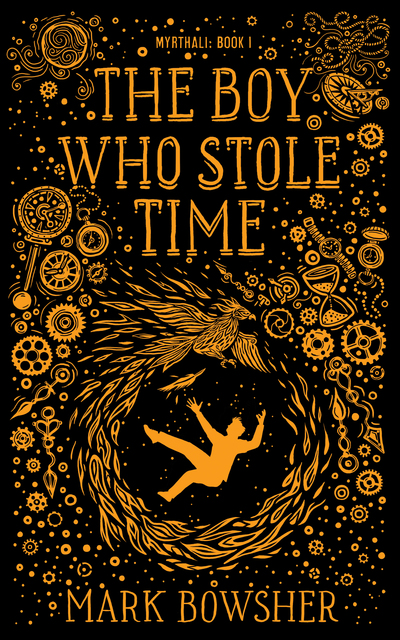
Krish is an ordinary 12-year-old boy, whose world is shaken by his mother’s illness. Wishing for more time for her, he strikes a deal with a mysterious creature. His mission is to travel to another world- the ‘pocket world’ of Ilir- and retrieve the Myrthali, a miraculous substance that allows the possessor to extend their life. Unfortunately for Krish, the only way to get his hands on this priceless commodity is to complete three Herculean tasks at the behest of a tyrannical king. On the plus side, a wizard named Balthrir accompanies him on his quest.
The adventure that follows is marvellously
paced and has a touch of absurd humour that recalls Terry Pratchett’s
Discworld. It’s a fantasy novel that knows it’s a fantasy novel. It also has a
certain strangeness that reminded me a little of William Nicholson’s The Wind
Singer; it’s not a straight-forward sword-and-dragon kind of fantasy.
The writing is really sharp and the
characters are all well-rounded and interesting. It’s because of this that I
enjoyed following Krish’s journey across Ilir and I hope that you give this one
a crack. This is a ‘young adult’ novel and I would recommend it to young adults
(whoever they are) who enjoy the genre, but it certainly has a wider
appeal.
The publisher, Unbound, combines conventional publishing with crowdfunding to give authors a platform for their work. The author gets the support and guidance from the publisher, whilst the capital is raised from the book’s patrons, reducing the financial risk of publishing the book. The process is a long one and a test of self-promotional skills, which I imagine goes against the grain for many creative people. The Boy Who Stole Time is a great example of how Unbound are bringing great new and exciting books to the literary community and it’s a mark of how good the book is that its already got a great community of fans around it. Coincidentally, Nothing in the Rulebook’s very own Professor Wu is working with Unbound to publish his book Philosophers’ Dogs. So perhaps Bowsher can give some tips on how to successfully crowdfund a great book!
I hope that Mark Bowsher, who also makes short films and writes in various places, will carry out his threat to write another novel. Hopefully, there will be a sequel to this engaging adventure.
It was Karl Barks who once said: “Canines of the world, unite! You have nothing to lose but your leashes.”
Dog owners, rejoice! If you’ve ever wanted to immortalise your pooch in a high-quality, beautiful portrait (or “paw-trait”) that you can show off in your family home, here’s your chance.
The creative duo behind the illustrated book, ‘Philosophers’ Dogs’ have announced a new competition that will give you (and your friends & family) the chance to win a FREE personalised ‘Paw-trait’ of your dog, worth a whopping £300.
You just need to send the ‘Philosophers’ Dogs’ team a pic or video of your dog, along with an appropriate philosophical quote! The judge’s favourite dog & quote combo will win.
Here’s what you need to do:
Follow the ‘Philosophers’ Dogs’ team on Twitter (@PhilosophyDogs)
Retweet their pinned tweet about the launch of their competition
Tweet them a picture or video of your dog, with an appropriate philosophical quote to go with it (remember to include a link to their crowdfunding competition page so your followers can see and get involved!)
Make a pledge for the campaign (e.g. pre-ordering a signed hard-back)
Remember to use our exclusive code NITR to get a 25% discount on your order.
Please note: if you don’t happen to own a dog, but would still like to enter, then YOU CAN. Just send in a photo/video of a friendly dog you’ve met out and about and follow the same steps as above. Everyone who enters the competition will get their names printed in the back of the book once its published.
More information about the competition is available via the ‘Philosophers’ Dogs’ crowdfunding page on Unbound.
About the book
‘Philosophers’ Dogs’ is a new creative project from award-winning publishers, Unbound. Written by NITRB’s own Samuel Dodson and illustrated by his sister, Rosie Benson, ‘Philosophers’ Dogs‘ is the ground-breaking textbook that will shake the very foundations of both western and eastern philosophy by revealing a truth that has hitherto been kept secret: that all human philosophers stole their ideas from their dogs.
Featuring beautiful illustrations, the book introduces us to the philosophical ideas of Karl Barks, Mary Woof-stonecraft, Alan Chew-ring, and Sun Shih-tzu (among many others) as it seeks to answer such important questions as, “who really is a ‘good’ dog?” and “are tennis balls always real?”
The book is currently more than 50% funded through Unbound – who have made waves when one of their books was short-listed for the Man Booker Prize. Indeed, they have played a key role in transforming the publishing sector through crowdfunding.
So, what are you waiting for? Play your part in making a book a reality, while also entering a competition that will give you the chance to win a FREE paw-trait of your dog (worth £300)! Good luck in the competition, friends!
On 22 April 1970, the world celebrated the first ever ‘Earth Day’ – a protest against pollution, and a celebration of the planet.
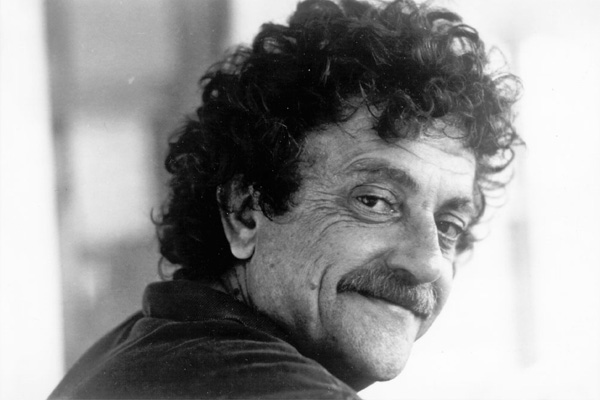
Kurt Vonnegut, the legendary author who once advised humans simply to “stop poisoning the air, water and top soil” was at the first ever Earth Day, too. He was there with thousands of other human beings, too, who had all come to the same conclusion: the planet on which they lived was in grave trouble and something had to be done.
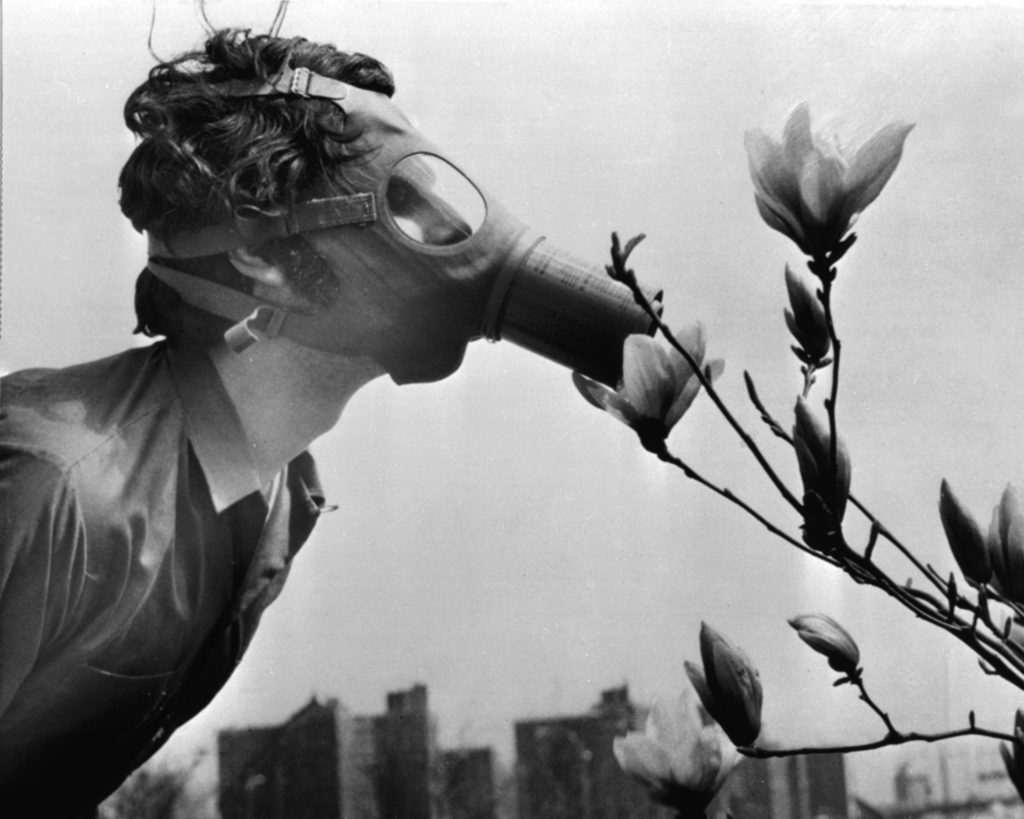
The thing that had to be done, they decided, was to hold this protest, which was also a celebration. Some protestors put on gas masks; others took brooms to the streets to brush away litter. Kurt Vonnegut spoke outside a library.
A protestor at the first ever Earth Day in 1970 wears a gas mask while sniffing flowers. Photograph via Associated Press.
These are some of the things he said when he answered questions from reporters and Earth Day goers.
“The Environmental movement is a big soppy pillow,” said Vonnegut. “Nobody’s going to do anything.”
He said this because nobody had done anything to stop the planet dying so far, and nobody seemed inclined to do anything in future, either.
He said this because he was also a pessimist, which he mentioned himself. He said:
“It is unusual,” he began, “for a total pessimist to be speaking at a spring celebration. Anyway here we all are — the peaceful demonstrators. Mostly white… President Nixon has our power and our money and the best thing for him to do is get out of the war business. Will he do it? No.”
And, as the war goes one, meanwhile we are free to walk up and down Fifth Avenue picking up the trash missed by the Sanitation Department.… We can surely look forward to some great advertising campaigns.… Now polluters are looked upon as ordinary Joes just doing their jobs. In the future, they will be looked upon as swine.… Will the president do anything about pollution? Probably not.”
Even though he was a pessimist, and even though he didn’t think the President would do anything about pollution, Vonnegut did at least try to console the crowd as he finished talking. He said:
“Those who try their best to save the planet will find a loose, cheerful, sexy brass band waiting to honor them right outside the Pearly Gates. What will the band be playing? ‘When the Saints Come Marching In.’ ”
That is what Kurt Vonnegut said at the first ever Earth Day. There have been Earth Days ever since – once a year. And, ever since, human beings have carried on poisoning the air, water, and top soil of the planet – they also started doing new things, too, like setting fire to the Amazon.
Kurt Vonnegut carried on saying the same things about the world, too.
Not long after Earth Day, he told students at Bennington College:
You, too, have been swindled, if people have persuaded you that it is now up to you to save the world. It isn’t up to you. You don’t have the money and the power. You don’t have the appearance of grave maturity—even though you may be gravely mature. You don’t even know how to handle dynamite. It is up to older people to save the world. You can help them.
When it really is time for you to save the world, when you have some power and know your way around, when people can’t mock you for looking so young, I suggest that you work for a socialist form of government. Free Enterprise is much too hard on the old and the sick and the shy and the poor and the stupid, and on people nobody likes. The just can’t cut the mustard under Free Enterprise. They lack that certain something that Nelson Rockefeller, for instance, so abundantly has.
So let’s divide up the wealth more fairly than we have divided it up so far. Let’s make sure that everybody has enough to eat, and a decent place to live, and medical help when he needs it. Let’s stop spending money on weapons, which don’t work anyway, thank God, and spend money on each other. It isn’t moonbeams to talk of modest plenty for all. They have it in Sweden. We can have it here. Dwight David Eisenhower once pointed out that Sweden, with its many utopian programs, had a high rate of alcoholism and suicide and youthful unrest. Even so, I would like to see America try socialism. If we start drinking heavily and killing ourselves, and if our children start acting crazy, we can go back to good old Free Enterprise again.
Ursula Le Guin. Photo courtesy of Wikipedia Commons.
‘There is nothing so dangerous to good writing as having too much time, too much liberty. You need the filtration system of being kept from your work,’ so said renown author Maggie O’Farrel – and in doing so touching upon an idea that has been entwined with writing and writing tips for years: that, in order to be a successful writer, you need a clear routine.
But what might such a routine look like?
Well, we’ve
previously covered how Kurt Vonnegut spent his writing days strictly split
between writing and physical exercise, including swimming and “push ups and sit
ups”. And now, we’re bringing you some more insights from another legendary
author: Ursula K. Le Guin.
Le Guin is beloved by literature fans
across the world – not only for her regular rallying cries for creative people
to imagine new possibilities for the human race, such as an end to capitalism;
but also for her ridiculously impressive body of work. Over a nearly 60-year-long career, the author produced acclaimed
sci-fi novels like The Left Hand of
Darkness, The Dispossessed, and The Lathe of Heaven.
Each of these books deserves an
entire article in themselves; yet what we’re interested in right now is how she
put them together: writing every day, between 7:15 a.m. and 1:00 p.m.
At least, this is what Le Guin
claimed was her ideal writing routine. It first appeared in an interview she
gave in 1988 (and more recently reappeared in Ursula Le Guin: The Last Interview and Other Conversations). It’s a simple and
orderly schedule, and it runs as follows:
5:30
a.m. – wake up and lie there and think.
6:15
a.m. – get up and eat breakfast (lots).
7:15
a.m. – get to work writing, writing, writing.
Noon
– lunch.
1:00-3:00
p.m. – reading, music.
3:00-5:00
p.m. – correspondence, maybe house cleaning.
5:00-8:00
p.m. – make dinner and eat it.
After 8:00 p.m. – I tend to be very stupid and we won’t talk about this.
What is interesting in the
simplicity of this routine is that it’s not all that original. While it doesn’t
necessarily have the same level of physical exercise that writers like Vonnegut
suggest, it still has an orderliness that many authors covet. Think of what
Gustave Flaubert once said, for instance: “Be regular and orderly in your
life, so that you may be violent and original in your work.”
Well, Le Guin was most certainly
original in her writing – even if her routine wouldn’t sound totally radical
when speaking to other writers. What is challenging, however, is the reality
that Le Guin forged her literary career at a time when it was eminently easier
for writers to set up and follow such regimented routines set up to support
their craft – and not have to worry about factoring in time to go to work, pay
the bills, or look after their families in an era of stagnating wages, longer
working hours, and “abject” incomes for writers.
While the challenges of
balancing creativity with a day job are discussed
beautifully by writers like Willa Cather, for those writers reading this
struggling to fit into the type of routine that Le Guin follows, do not lose
hope. Le Guin has also proffered plentiful pieces of advice for writers that
require no set routine, but merely advocate for continued, passionate
dedication to the craft of storytelling. She writes:
“The only way anybody ever learns to write well is by trying to write well. This usually begins by reading good writing by other people, and writing very badly by yourself, for a long time.
There are “secrets” to making a story work — but they apply only to that particular writer and that particular story. You find out how to make the thing work by working at it — coming back to it, testing it, seeing where it sticks or wobbles or cheats, and figuring out how to make it go where it has to go.”
And,
as a reminder for all those creatives who measure the value of their work
through critical acclaim or high sales figures, Le Guin has this to say:
“Making anything well involves a commitment to the work. And that requires courage: you have to trust yourself. It helps to remember that the goal is not to write a masterpiece or a best-seller. The goal is to be able to look at your story and say, Yes. That’s as good as I can make it.”
So, what does your
creative routine look like? And do you think there is such a thing as the “ideal”
or “perfect” routine we should aspire to follow? Share your thoughts in the
comments below!
50
              All that… what was it? I don’t know.
 Some dusty thoughts, the glimmer of decay
 enthralled by sudden sunlight, caught in play-
              ful, random, giddy dance, although
              the tendency is to a slow,
 indelible descent, to settle, gray,
 on everything, as each mote drags the day
              closer to closing. Let them go.

              Driving digits through grime,
 you scrawled a little drivel on the scrawl:
              details without detail.
              Your gift to famished time.
 I’d like to rivet that lubricious fall.
              Like you, I’d like to fail.
- Aaron Novick
About the author
Aaron Novick is an assistant professor of philosophy at Purdue University. His poetry has appeared in Notre Dame Review, The American Journal of Poetry, Dunes Review, and elsewhere. He tweets as @AmneMachin
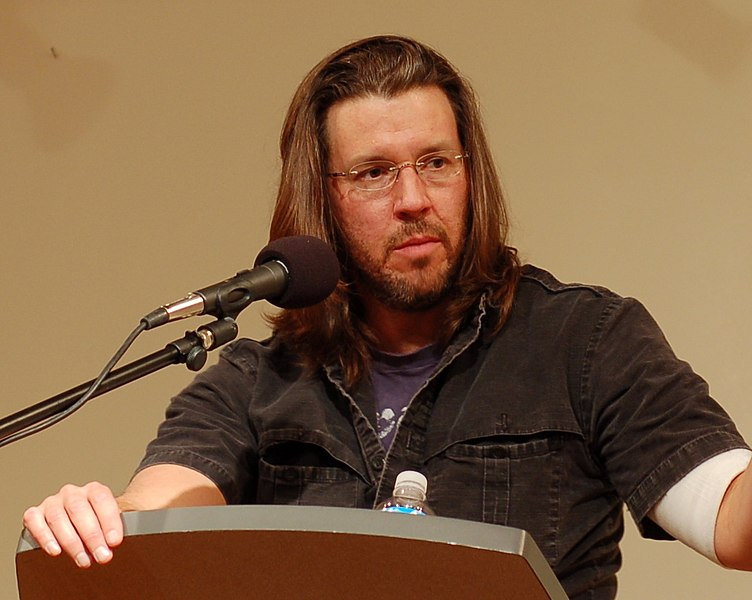
David Foster Wallace has become a legendary figure in our culture – even immortalised in a Hollywood film starring Jason Segal, The End of the Tour.
With his 2005 speech to students at Kenyon College, This is Water, having gone viral, and a plethora of articles and blogs written about him, it seems we just can’t get enough of a man we have elevated from tortured literary genius admired by an intense cult following into a huge presence in our cultural and public consciousness – a man seen by some as a sort of modern literary saint; a professor of sustaining wisdom who is there to shine a light to guide our way forward, and also who can help us make sense of a world, which so often seems senseless.
A criticism of Wallace is often that his writing is long, difficult – bordering on inaccessible. Certainly, his most infamous work Infinite Jest, which runs at over 1000 pages, can be off-putting both for people who have never come across Wallace before, as well as those who admire his other work.
Because it is his other work that often provides the greatest insights into both the world around us; as well as who Wallace was as a man – and his insights into society and human behaviour.
So, friends; we’ve done you a solid. We’ve trawled through the interwebs and put together the following list of essays, articles, and even some short stories, which have been written by Wallace and which are, importantly, totally free. Happy reading, comrades!
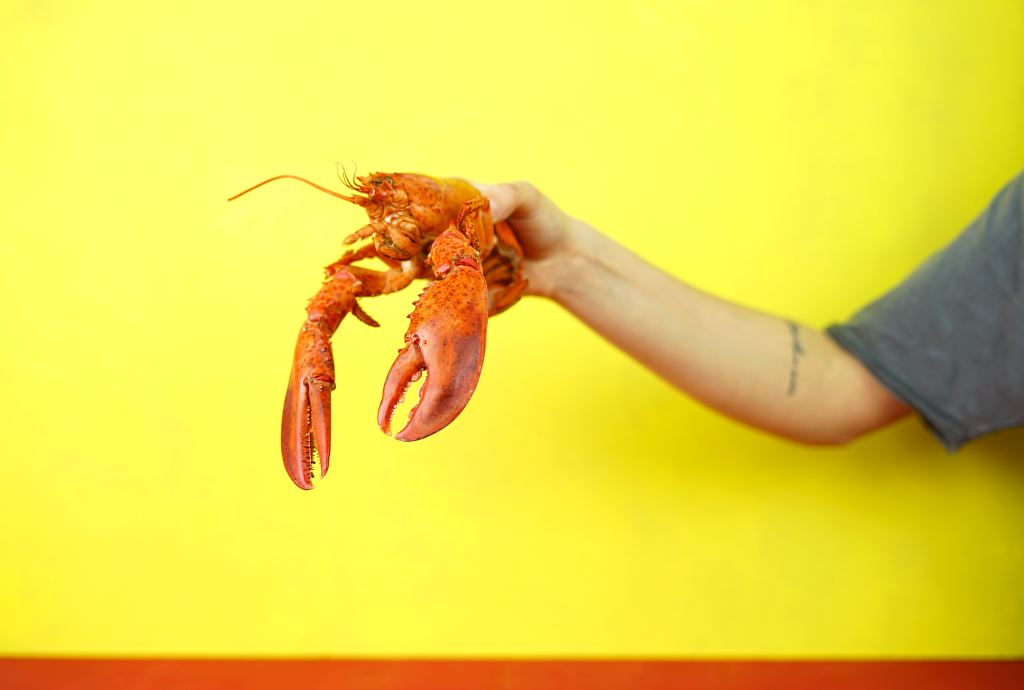
Also the title of perhaps his greatest collection of essays, this article in particular is an absolute classic. Wallace visits the Maine Lobster Festival to do a report for Gourmet, and ends up taking his readers along for a deep, cerebral ride. We consider questions like, “Do lobsters feel pain?” that make us question the relationship between humans and animals. Over the course of the piece, Wallace turns the whole celebration into a profound breakdown on the meaning of consciousness.
“Suddenly everybody has flags out — big flags, small flags, regular flag-size flags”. Wallace explores human (particularly American) reactions to national tragedy, in an essay that asks fundamental questions of our relationship to ‘nationhood’ and patriotism.
What is an introduction for? In this piece, Wallace considers why just about every important word on The Best American Essays 2007’s front cover turns out to be vague, debatable, slippery, disingenuous, or else ‘true’ only in certain contexts.
Wallace has a gift for taking journalism and experimenting with that it is for, and what an article can – or should – be. Harper‘s sent DFW to report on the state fair, and he emerged with this – a feature “wherein our reporter gorges himself on corn dogs, gapes at terrifying rides, savors the odor of pigs, exchanges unpleasantries with tattooed carnies, and admires the loveliness of cows.”
The cruise has often been a controversial type of holiday. Wallace explains – with humour, grace and wit – why the luxury cruise has the potential to be lethal.
Lots of people – especially anyone who has watched The End of the Tour – will know that Wallace was a big fan of tennis. Like, really big. But this stunning piece isn’t just about the sport, or even, really, about one sportsman. Rather, Wallace delivers a profile on Roger Federer that soon turns into a discussion of beauty with regard to athleticism. It’s hypnotising to read.
Success, identity, and all else besides are explored in this stunning essay. Again, Wallace uses tennis as the ‘in’ road to these topics. In the piece, he invited readers “to try to imagine what it would be like to be among the hundred best in the world at something. At anything.” He adds, “I have tried to imagine; it’s hard.”
Grammar and the way we use language has always been a topic of fascination for Wallace (we go into some of the tips and advice he had for writers in our article about his book, Quack this way). If you’re a writer, a reader, or just generally interested in the way language effects meaning, this one’s for you, as Wallace dives into the world of dictionaries, exploring all of the implications of how language is used, how we understand and define grammar, and how the “Democratic Spirit” fits into the tumultuous realms of English. It also considers race bias in academia and the evolution of language to the pros and cons on non-standard English.
“A book-in-progress is a kind of hideously damaged infant that follows the writer around wanting love, wanting the very thing its hideousness guarantees it’ll get: the writer’s complete attention.”
How does the literary establishment impact new writers and authors who stumble into its clutches? A thorough, academic style essay on a topic with obvious parallels to Wallace’s own lived experiences. “The honeymoon’s end between the literary Establishment and the contemporary young writer was an inevitable and foreseeable consequence of the same shameless hype that led to many journeyman writers’ premature elevation in the first place.”
Admittedly, this website is a little difficult to read; but it has a genuinely fascinating extract from DFW’s Infinite Jest that poses questions about our relationship with technology that is perhaps even more relevant today than it was when he wrote it.
“Once when I was a little boy I received as a gift a toy cement mixer. It was made of wood except for its wheels—axles—which, as I remember, were thin metal rods. I’m ninety per cent sure it was a Christmas gift. I liked it the same way a boy that age likes toy dump trucks, ambulances, tractor-trailers, and whatnot. There are little boys who like trains and little boys who like vehicles—I liked the latter.” A personal essay Wallace wrote for the New Yorker that considers, well, ‘all that’.
Another tennis themed essay (he does love them!) this is one where Wallace looks back on his midwestern youth and the way it’s influenced him as an adult. “I grew up inside vectors, lines and lines athwart lines, grids – and, on the scale of horizons, broad curving lines of geographic force.”
An essay charting Wallace’s experience in the press corps following John McCain around during his (ultimately doomed) bid for the republican presidential nomination.
From his collection of essays, Consider the Lobster. Did you know that, every year, between one and two dozen Americans are admitted to hospital having tried to castrate themselves? You do now.
Fiction from Wallace published in the New Yorker – ““Peace on earth good will toward men,” says Gately, back all the way on his back, smiling up at the cracked dun ceiling, not even a hint of a tic to betray anything but a tolerant willingness to let it all pass, for the moment. To work itself out, seek its own level, settle, blow over. Die of neglect. He’s pretty sure he knows who farted.”
What is real? What has the increasing reliance on special effects in film-making done to the industry and our perception of reality? All these questions and more are discussed in this fascinating reflection on the inverse relationship between the amount of special effects used in a film and the quality of the story.
“Rap, whether fecund or sterile, is today’s pop music’s lone cutting edge, the new, the unfamiliar, the brain- resisted-while-body-boogies. And that alien, exhilarating cutting edge has always been black.”
Any movie fans in the audience? This one’s for you if so. In this fantastic essay, Wallace hangs around on the set of Lost Highway (jealous) and dissects the greatness of America’s most distinctive director.
Fiction – but not as you know it. Showcasing Wallace’s amazing gift with structure and form – and his ability to spin emotion and stories out of things that are left out of the story, as much as what is actually left in it.
“In this sequel to Rabbit at Rest, which ended with the hero on his deathbed, beset with transmural infarctions and the consequences of his own appetites, Rabbit Angstrom, ambivalent hero of four Really BigNovels, athlete, adulterer, Republican, duly designated observer of the U.S. scene, and synecdoche of a generation’s pathos, negotiates the pitfalls of post-life America in his own erratic way,and learns some very special truths he’d suspected all along …” (Published in Harpers)
More fiction from Wallace published in Harpers magazine. Close, intimate observations of a ‘typical’ Midwestern family – easy to read aspects of this as autobiographical (though that may or may not be the point).
Excruciatingly short fiction from Wallace – as if only to show he can write pieces of work that are genuinely breathtaking and doesn’t need over 1000 pages to do so. This is a must-read story for anyone who feels like they want to be heartbroken.
The
first time Dan told me he would kill himself, he was at the top of a flight of
stairs, looking down at me. I was standing at the bottom with my arms
outstretched. As if I could save him. The reason behind this madness was that I
had spent the night at a birthday party talking to a guy whose name I don’t
even remember, while Dan was out in Camden Town with a girl he liked back in
high school. When he came back to the university campus he couldn’t find me,
and, after thirty-seven calls that I didn’t take because I had accidentally put
my phone on silent, he decided to send a message:
If you don’t
pick up, I will kill myself.
Back
then, our relationship was still on my terms, because he had never had one, and
I felt happier when I was in control. Never would I have thought that in such a
short time he could not only re-establish our love story in his own design, but
also change the way I saw the world and myself, make me feel worthless.
A
relationship between two lovers is like two trees sharing one root. If the root
is rotten, both will die.
Villa
Giulia, Dan’s family holiday home, has stonework facades, frescoed corridors, creaky
old floors and a lucky, lonely pine. As I draw the heavy curtains that
suffocate one of the villa’s bedrooms, I look for the pine, dark and brooding. It
stands in the middle of the gold and violet hues of the summer evening that colour
the sky like crowns around the smooth hilltops of Tuscany. Next to the pine,
there is an old barn with a long, flagstone roof and ivy-covered walls. The
brightly-lit windows look like eyes in the late sunlight, watching the plain
that stretches in front of them and then gradually merges into the sea.
From
up here, I can listen to the faint noises of Dan’s family chatting and dining
in the fading heat. Like most nights, Dan and I are inside, arguing about
nothing. The glass bowls of peach and whipped cream we were eating have been
left aside on the nightstand, and the cream melted.
“You’re
not listening to me,” I say, staring outside the window.
“I
am.” Dan is behind me, pacing the room, occasionally raising his voice to a
hysterical whine.
My
hands are shaking. I need to be by myself, but he won’t let me. He never does.
Sometimes, he even comes in when I hide into the shower, crying under the water
so hot that my fingers turn purple.
“I
am listening,” he repeats, tugging at the sleeve of my white cotton dress.
I
breathe in. I remember the first time Dan brought me to the Villa two years
ago: we were driving in the sunset with the windows down, listening to ‘Five
Years’ Time’ by Noah and the Whale. Fields of sunflowers were all around us,
and the village of Montepulciano, with its cream and brown houses and the old
bell tower, was visible in the distance. When we arrived at the Villa, no one
was there, so we dived into the swimming pool with our clothes on and swam and
played in the water until the sky was filled with stars.
“We should go back outside,” I say.
“But
I am listening!” He hits one bowl,
which falls onto the floor and shatters. He stares at the shards and melted
cream spreading on the carpet, then at me with wide-open eyes: “What have you
done?”
“It’s
okay,” I say. “I can call Teresa to clean.”
“No!”
he shouts, his cheeks red.
“I’ll
clean it then,” I say. As I collect the shards of glass, I cut myself. Blood
flows into the lines of my palm, but I tighten my grip and hide it, because it
would only make Dan madder. When I have thrown all the shards away in the
bathroom bin and dried the carpet with a hairdryer, I wrap my hand with a
bandage I take from the nightstand. Dan pretends not to notice.
When
we finally walk outside, towards the large table that overlooks the olive
grove, Caleb, Dan’s father, and his sisters Catherine and Harper have already
finished eating their share of the antipasti.
“Danny!
Here you are!” Catherine says, smiling at Dan and inviting him to sit next to
her. Her hair is the colour of wheat and looks soft. She has Dan’s brown, sweet
eyes and also walks like him, on the tips of her toes.
On
the white-lace tablecloth are arranged plates half-filled with cured meat,
slices of buffalo mozzarella, stuffed peppers and olive bread. I fill my plate
with ham and bruschetta, while Teresa,
the main housekeeper of the Villa, comes into the dining room from the kitchen,
a pot filled with pesto pasta in her wrinkled hands. She speaks with a strong
accent from Tuscany and cooks the best ragù
I’ve ever had. She immediately notices my bandaged hand, as I tuck a wavy
strand of hair behind my ear.
“Signorina!” she says placing the pot on
the table and running towards me, “You need antiseptic!”
Teresa
has grown affectionate towards me because I always spend time with her in the
garden when she is doing the laundry. I love the fresh smell of clothes hanging
to dry in the sunlight, when on summer days long dresses and shirts flap in the
breeze like the wings of a swan.
“What
happened to you, honey?” Catherine asks. She always calls me “dear”, “honey” or
“sweetheart” even though I know she doesn’t like me. Dan’s cheeks go red and he
kicks my leg under the table. I feel the need to slap his face.
“It’s
nothing. I dropped a cup on the floor upstairs and, as I was cleaning, I cut
myself.”
“You
should’ve told me, signorina! I would
have cleaned it,” Teresa says.
“It
was my fault Teresa, I took care of it.” I smile at her, while Caleb starts
talking about a friend’s photography exhibition at the Tate Modern. Outside,
the sky is painted with infinite shades of blue. My hand is throbbing with
pain. Dan always studies my reaction to what others say. My eyes linger on his
freckles, his dark blonde curls, his sunburnt shoulders. I have learnt that
beneath these looks there is someone else, a face of shadows with a mouth open
crying for help, dragging all those who answer into its darkness.
Unhappiness
is like a virus, spreading through my veins. I conceal it, I lie. When my mum
calls, I say that “I’m great,” because if I say I am only “okay” she will
become suspicious.
“And
how is Dan?” she asks.
“Couldn’t
be happier,” I reply.
She
adores my boyfriend. She thinks he has a good soul, and I can’t blame her: this
is the impression that he makes on everyone. Once, when he was staying at my
parents’ place in the countryside around Rome, she combed his curls as if he
was her own son. Sometimes I would like to tell her everything, to seek help.
But I never do because, for some reason, since I’ve been with Dan, it is as if
I had become exactly the person she wanted me to be: sweeter, less cynical,
more capable of loving someone tenderly. Which is true, but what is also true
is that this sweetness, this love is draining me. No child should ever be
exactly what a mother expects.
I
spend the days at the Villa thinking about that time I almost broke up with Dan,
on a snowy day of December, when he smashed his new IPhone against the wall of
my bedroom. He threw himself on the floor and cried for hours. “I can’t,” he
repeated like a busted radio. Can’t what? I wanted to ask, but knew the answer:
he cannot live without me. I should have left him then, but I picked his phone
from the floor and tried to fix the screen instead.
Sometimes,
when he is sitting on one of the pale green couches of the living room of the
Villa, staring at the endless hills that stretch beyond the horizon, I sit next
to him and make some remarks about historical or political events he knows
nothing about. I do it on purpose, so I can tell him that I notice he doesn’t
read anything, no newspaper, no books, nothing.
“I
find it hard to focus,” he replies, a hurt and surprised look on his face. He
always looks that way when I say something mean. “I can be mean, I can be
fucking terrible, I hate you!” I want to shout, but I just stand up and leave
the room.
One
morning I walk to the olive grove, the earth dry and silent beneath my feet. I
can hear the rattling coming from the kitchen, the laughs of Catherine and
Harper, the gardener’s shears polishing the roses around the pool. I think
about all the reasons why I haven’t broken up with Dan, even though I have thought
about it so many times I have lost count. When I loved him, I often pictured
our future together, and it was as clear as the summer sky. Now, the love is
gone, he has made sure of that, but the image of that future is etched onto my
body like a scar. I stay for a past that does not exist anymore, and for future
that will never be.
I
take my shoes off and my feet grow dirty against the earth. Somehow, he finds
me. His steps make a suffocated sound; his face is dizzy. He tries to kiss me,
but I turn my head and stare at my dirty feet. In my mind, I go through the
list of things I want to tell him.
But
all I manage to say is: “I am not happy.”
“Why?”
he asks.
How
stupid, how insensitive he can be sometimes.
“Because
this relationship is toxic.”
This
is an undeniable truth, but he is good at denying undeniable truths.
“I
love you. Don’t you love me?” He stares at me like a baby staring at his
mother, waiting for a toy.
“Yes,
but can’t you see we fight and hurt each other all the time?”
As
soon as I pronounce these words, I know I have made a mistake. His face has
changed at my “yes”, and he is smiling now. He hasn’t listened to anything that
came after. He tries to kiss me again, and this time I give in.
Weeks
go by, and every day is the same at the Villa. We wake up late to the smell of
coffee and pistachio and cream croissants. The table is always set in the
dining room, silver cutlery aligned, a wicker basket full of nut loaves in the
centre. Teresa makes me try the jams she makes with apricots and figs.
“You
eat so much signorina and you are so
skinny!” She laughs, cleaning her hands into her stained apron. Then I hear her
talking on the phone with Dan’s family: “Emma is a kind young lady, and you
should see her with Danny! She is caring, just like he needs.”
We
spend the afternoons at the pool, napping under the sun. I try to read as much
as I can and then tell all the stories to Dan: the beautiful descriptions in Tess of the D’Urbervilles, the allegory
of The Lord of the Flies. When I
understand that he doesn’t really listen, I hide in my books again, defeated.
There
is a giant room at the end of the barn that Caleb uses as a painting studio.
Dan takes me there one evening before dinner. It is dark, and a cloak of smoke
lingers in the air.
“Watch
your steps,” Dan says.
I look down and see dozens of clay sculptures
spread among square pieces of paper covered in thick paint.
“He
creates different compositions with the papers,” Dan explains. “And with the
statuettes as well.”
In
most of the paintings there is the same sad face, but outlined from different
angles. It is Dan’s.
He
kisses my neck from behind, and I startle.
“What
are you thinking about?” He asks.
“I
like this place.”
“I
knew you would.” He leans against my back and, today, I don’t want to run. In
moments like this, I want nothing but him. He has soft, curly hair. He laughs
at my jokes. His fingers are long, his hands warm. He loves me.
When
Dan and I met, I was dating an older guy who worked at J.P. Morgan. He was half
Greek and half French and always took me to dinner at the fanciest places. “You
make me crazy,” he repeated all the time. He had full, soft lips and spoke five
languages. One night, as I was waiting for him to pick me up in a black lace
dress and heels, he sent me a text. “Still at the office, won’t make it
tonight,” it said. Annoyed, I got rid of my heels and went to a flat party on
campus, where everyone was too drunk to realise I was overdressed. Dan was
there, looking too young to be drinking the gin and tonic he had in his hands,
too innocent for the smell of weed that permeated the flat. He looked at me as
if I were some kind of angel, fallen there to take care of him.
I
kissed him outside the flat, my hands cold, my back against the brick wall.
When we went to my room, I put on some piano music and we lay on the floor,
distant from each other. He told me that his mother died when he was too little
to remember her, and I told him that I was a ballerina. From his gaze, I could
tell he wanted me to dance but was too shy to ask.
“Do
you want to see?” I asked. He nodded. His smile was pure and confident. He
doesn’t know what malice is, I thought, he doesn’t want to control me like any
of those older boys. I danced for him and the Greek-French guy was quickly
forgotten.
When I
leave Villa Giulia and go back to my parents’, I start having sudden, shooting
pains in my stomach and I don’t sleep at night: I stare at the ceiling, my
heart beating too fast, thinking about all the life that I am wasting. While I
am up all night in pain, working on my never-ending essays, I also prepare Dan’s
presentations and help him with his exams. And I think that there’s something
wrong here, something unfair.
As
soon as high fever accompanies the stomach pains my mum takes me to the
hospital. The doctor is a chubby man with a severe face who keeps asking
questions about my past health and my daily diet. At the end of the visit, he
asks my mother if he can speak to me alone. I remain seated, hearing the door
closing behind me. He looks for my gaze.
“Emma,
some people bottle up their feelings and have them come out as physical pain.”
He
waits and, when I don’t say anything, he continues: “You are going through a
situation of extreme stress. Is that right?”
I
nod, as I stare at a photograph of the doctor and his family framed on the
desk. How did I get here? I feel ashamed of myself.
“I
think you should see a psychologist,” he says.
Doctor’s
appointments, endless tests, panic attacks follow one another. The hospital
walls are always too white, the people always too cold. When the doctor tells
me that I “might have to go through an operation,” I try to keep calm but then
cry in the bathroom of the hospital.
Panic
hits me at night, when I am too tired to be reasonable but too anxious to
sleep. I empty my drawers like a madwoman, throwing everything on the floor,
then fold each item again carefully when I feel calmer. My mum stays with me
all the time but doesn’t understand that Dan’s the cause behind my illness.
Every morning she makes me breakfast: bread and jam with a glass of hot almond
milk. I stare at the milk and, when she is gone, I pour it into the kitchen
sink.
One
morning, after months, I leave the bed after yet another sleepless night and I
know I am ready to break up with him. He is away, preparing his exams in
London, and I am back home. I lock myself into the bathroom while my father is
making breakfast downstairs and I stare into the toilet throat. I feel sick. I
type Dan’s number and call. He replies straight away.
“Danny,”
I say.
He
starts talking about his last exam with enthusiasm, and then about the one he
is preparing. He doesn’t ask me how I am.
“Will
you help me with this exam as well?” His tone of voice is the one he uses every
time he asks a favour; no one ever says no.
“No,” I say.
There
is silence between us for a moment.
“But…”
his tone becomes whiny.
“We
are not going to see each other for a while.”
“You
know I am doing my exams.”
“You
know I spend most of my time in the hospital.”
He
ignores me, he doesn’t understand it’s his fault: “I can’t live without you.”
I
could reply: “You can”, as I have done many times before, but he wouldn’t
listen to me. I can hear the panic rising in his voice, the fear, the madness
that takes hold of him whenever I try to walk away. I can’t help but thinking
that he needs me, he is lost without me. After all, the love he has given me
does not have any conditions or restraints but only assurances. Only parents
can love you like that, because they do not choose you and so they cannot
un-choose you. Will I ever find someone else who loves me in this way? I look
at the worn out toothbrush on the bathroom sink.
“Goodbye
Danny,” I say before hanging up.
Without
thinking I grab the toothbrush, throw it into the toilet and flush. When it
doesn’t go down, I start having a panic attack. The calls of my parents –
“breakfast is ready” – seem far away, the blue towels become shadows. When my
father knocks on the door, first hesitantly then insistently, I don’t answer.
When
the panic stops, there is silence. I brush my hair and apply some lipstick,
covering the cracks on my lips. I open the window until the room is filled with
the scents of spring: fresh grass and poppies. I walk down the stairs, my
parents are sitting at the kitchen table in silence, their breakfast untouched.
I sip some milk from my glass and take a slice of bread; the jam is sticky on
my fingers.
“I
am going for a walk,” I say. I must look awful: my mother is staring at me with
wide-open eyes and my father plays with the tablecloth, almost embarrassed.
“Emma…,”
my mother says.
“All
I ever wanted to do was to make you proud,” I say quietly.
My
mum’s eyes fill with tears.
“All
I ever wanted was for you to be happy,” her voice is broken but loud. She can
be firm even now.
“I
will be happy, I just got lost for a while.”
I leave the house and walk until the village
is far behind me, and the countryside shimmers in the morning light around me.
Half-dried puddles, crimson cherries, fences warmed by the sun. Birds leave
their nest, their wings sharp against the bluest sky. I end up in a cornfield:
the green and yellow stretch for miles forming lines that never meet. I used to
come here with my parents to play hide and seek, when I was as tall as my
father’s knees. My dad would catch me lying low under the corn and would
pretend I was invisible. Then my mum would pick me up from behind and tickle
me. I sit on the ground and, for the first time after months, when I close my
eyes I am not afraid of myself.
They
say that in cases of trees of the same species growing close, when one dies, the other often dies soon afterward, because they
are dependent on each other. Dan and me were not considerate in sharing the
sunlight, but, somehow, I managed to cut the root that kept us together without
falling apart.
Dan will call me many times, on my cellphone, on my mum’s, on my friends’. He will call at my father’s office, he will message me on Facebook and on Instagram. I won’t reply for months. Then, one day, I will be driving in the sunset with someone else, someone who makes me feel happy and light and, when Dan calls, I will answer. He will ask me how I am. I will stare out of the window at the purple light and I will reply: “I am fine.”
About the author
Costanza Casati is a writer and screenwriter. After completing her Master’s in Writing at the University of Warwick, she currently works as a freelancer journalist for the Canadian magazine HOLR and as a screenwriter for Erminio Perocco’s feature-length documentary about the 16th century Venetian painter Tintoretto. The first chapter of her historical novel has been published in Manifest: New Writing from Warwick and her short film Sguardi is available on Youtube.
As Alexander Boris De Pfeffel Johnson, Prime Minister of the United Kingdom, moves to suspend “the mother of Parliaments” to help force through his unelected government’s unscrutinised manifesto, many people across the UK are seeking ways to voice their outrage and help protect the country’s democracy. Protests have been organised; petitions set up. Yet while aggravated Twitter users hash out hashtags, there is a sense among some that all efforts of the people are futile in the face of a government seemingly hell-bent on forcing through a no-deal Brexit.
To offer some food for thought for those in the UK and around the world currently despairing at the wider political malaise (and catastrophic climate breakdown), we have put together a short list of inspiring quotes from famous writers and thinkers on what we can and must do during times as fraught as these.
Check them out below. Solidarity forever, comrades.
William Faulkner
“Never be afraid to raise your voice for honesty and truth and compassion against injustice and lying and greed. If people all over the world…would do this, it would change the earth.”
Maya Angelou
“If you don’t like something, change it. If you can’t change it, change your attitude.”
Henry David Thoreau
“Disobedience is the true foundation of liberty. The obedient must be slaves.”
Margaret Atwood
“Water does not resist. Water flows. When you plunge your hand into it, all you feel is a caress. Water is not a solid wall, it will not stop you. But water always goes where it wants to go, and nothing in the end can stand against it. Water is patient. Dripping water wears away a stone. Remember that, my child. Remember you are half water. If you can’t go through an obstacle, go around it. Water does.”
The Penelopiad
Alan Moore
“It does not do to rely too much on silent majorities, Evey, for silence is a fragile thing, one loud noise, and its gone. But the people are so cowed and disorganised. A few might take the opportunity to protest, but it’ll just be a voice crying in the wilderness. Noise is relative to the silence preceding it. The more absolute the hush, the more shocking the thunderclap. Our masters have not heard the people’s voice for generations, Evey and it is much, much louder than they care to remember.”
(V for Vendetta)
Susan Sontag
“The likelihood that your acts of resistance cannot stop the injustice does not exempt you from acting in what you sincerely and reflectively hold to be the best interests of your community.”
Kurt Vonnegut
“I don’t know what’s going on, and I’m probably not smart enough to understand if somebody was to explain it to me. All I know is we’re being tested somehow, by somebody or some thing a whole lot smarter than us, and all I can do is be friendly and keep calm and try and have a nice time till it’s over.”
Elif Shafak
“Ironically, [living in] communities of the like-minded is one of the greatest dangers of today s globalized world. And it s happening everywhere, among liberals and conservatives, agnostics and believers, the rich and the poor, East and West alike. We tend to form clusters based on similarity, and then we produce stereotypes about other clusters of people. In my opinion, one way of transcending these cultural ghettos is through the art of storytelling”
Charles Fuller
“To spend one’s life being angry, and in the process doing nothing to change it, is to me ridiculous. I could be mad all day long, but if I’m not doing a damn thing, what difference does it make?”
Emma Goldman
“The strongest bulwark of authority is uniformity; the least divergence from it is the greatest crime.”
Neil Gaiman
“Being brave doesn’t mean you aren’t scared. Being brave means you are scared, really scared, badly scared, and you do the right thing anyway.”
Have we missed something?
People have been speaking and writing about protest – and using language, writing and poetry to encourage people to protest – for centuries. Perhaps since 1819, when Percy Bysshe Shelley was moved to pen poetic verse in protest at the Peterloo massacre. The Masque of Anarchy advocates radical social action and non-violent resistance: “Shake your chains to earth like dew / Which in sleep had fallen on you- / Ye are many — they are few”.
So, there’s a lot of groundwork that has been laid here and undoubtedly many quotes from countless great writers that we might have missed in our short post.
Please do tell us, then, if there are any quotes you can think of which we should list here. Drop your recommendations in the comments below, or come find us on the barricades!
Oh, you rascal, you’ve been placing candles
 On the backs of tortoises again,
 Haven’t you? It’s been a while since
 You last went plundering, and things are not,

 Not quite, as you remembered, scurrying
 In all directions as you try to prise
 Them from their fixed accommodations, and
 Now your whole sense of self is out of whack.

 Calm down, will you? You only need to gather
 Your thoughts, re-establish good relations—
 Diplomacy, you know? A little tact
 Goes a long way. This way the tortoise lights,

 But now it’s vanishing around the corner,
 And it hits you: you are lost here, in
 The furrows, too deep to get back out. That’s when
 You hear the worked-up owner: Not again!
- Aaron Novick
About the author
Aaron Novick is an assistant professor of philosophy at Purdue University. His poetry has appeared in Notre Dame Review, The American Journal of Poetry, Dunes Review, and elsewhere. He tweets as @AmneMachin
If there’s one certainty about characterisation, it’s that names don’t exist in isolation. It’s tempting to think: do they really matter all that much? After all, our parents chose our name simply because they liked it —isn’t it enough to do the same with our characters? While this is true to an extent, it’s also important to remember that fiction is not ‘real life’ as we know it, but an imagined version that we use to create a particular effect. Character names form an essential part of this and therefore should be chosen with care to avoid being hit by such dangerous space debris as:
— A confused reader who doesn’t understand who’s who or mixing up similar sounding characters.
— A frustrated reader that has to stop every time they reach a character’s name because it’s difficult to read.
— A disappointed reader who doesn’t feel we’ve done a great job of creating anyone particularly iconic.
It’s interesting to note that the only difference between the naming of a person in the real world and the naming of a fictional character is that with a baby, we don’t know their personality yet. Aside from this; as in physics, there are laws which have governed the names given to us, such as: our cultural background, location and era. It’s exactly the same for fictional characters, with one exception: there are more of them. Let’s take a look now through our telescope to witness these giant planetary forces that influence the choosing of our character’s names.
Planet Genre
Planet Genre is a sweet, rather shy heavenly body; but she’s a stickler for the rules (and setting the right tone). Her influence on the choice of names means that they must make sense within their own context; and if we really want to annoy her, let’s go right ahead and call the serial killer in our new crime story: ‘Runescape Moonstone’. She would do an extra orbit however if Runescape Moonstone was the protagonist of our fantasy story. Fantasy is a genre in which there’s more liberty to create distinct and wacky names, not only because of characters potentially coming from a different world; but also the often endless supply of them the reader has to remember. This is true for all other genres in their own way, whether it’s action, drama or comedy.
Planet History
Planet History is a pretty big guy and no name can exist without his influence. He provides the context for character’s names; reveals their cultural background, sometimes even their religion and class. Of James Bond, Ian Fleming said: “It struck me that this brief, unromantic, Anglo-Saxon name was just what I needed”. (Caplen, Robert (2010). Shaken & Stirred: The Feminism of James Bond. Bloomington, Indiana: Xlibris.) Bond needed such a name to contrast with the names of ‘foreign’ climes and in possessing such a typically English name, would appear ‘neutral’: “Exotic things would happen to and around him, but he would be a neutral figure, an anonymous, blunt instrument wielded by a government department”. (Chancellor, Henry (2005). James Bond: The Man and His World. London: John Murray)
Planet Personality
Planet Personality is the biggest planet in this small solar system and boy does he like to party. His favourite quote is: “His name was Eustace Clarence Scrubb, and he almost deserved it” from C. S. Lewis’: The Voyage of the Dawn Treader (1952); and for good reason. Naming our characters is an opportunity to add something of their personality to the name. Once again, Planet Genre has a little part to play in terms of how subtle or obvious we are and there are multiple ways to execute it, a few of which I’ve listed here:
First name
Let’s take Scarlett O’Hara from Margaret Mitchell’s Gone with the Wind (1936). Mitchell originally called her protagonist ‘Pansy’ before changing it to ‘Scarlett’ dangerously close to the book going to print. Would Scarlett have been such an iconic character had Mitchell not made this decision? Arguably not; but what is certainly clear is that her name would have been a source of irony rather than a linguistic representation of one of the most fiery women in literature. In this we can see how characters ‘deserve’ certain names over others.
Surname
Holly Golightly from Truman Capote’s Breakfast at Tiffany’s (1958) is an example in reverse of the previous point. ‘Golightly’ is a portmanteau of ‘go’ and ‘lightly’ which suggests light-heartedness and restlessness; personality traits which typify this New York Society girl.
Secret or not so secret root meanings
The real name of Vladimir Nabokov’s character: ‘Lolita’ from Lolita (1955) is actually ‘Dolores’; with the root ‘dolor’ coming from the Latin for ‘pain’ or ‘grief’. This is perhaps reflective of the way in which Lolita is mistreated and the circumstances she finds herself in over the course of the novel. Another example would be Lord Voldemort from J. K. Rowling’s Harry Potter (1997-2007). Not only does his name suggest power, it also has the ability to instil fear; with the suffix ‘mort’ evoking the word ‘death’. ‘Captain Fluffybunny’ would certainly not reflect Voldemort’s personality quite as effectively and would also have major complications for: ‘He who must not be named’.
No name or one name
Speaking of characters who must not be named; withholding a character’s name is a powerful tool that many authors have used, often to convey a sense of unimportance or powerlessness; such as Mrs de Winter in Daphne Du Maurier’s Rebecca (1938). We may also decide to choose only a single name for a character, either a first name or surname, such as Santiago from Ernest Hemingway’s The Old Man and the Sea (1951). This could have many different interpretations, but in this case I feel it emphasises Santiago’s old age and world weariness, almost as if revealing his surname doesn’t matter now that he’s at this particular stage of his life.
Planet Location
Planet Location is Planet History’s best friend and they have much in common; particularly when it comes to revealing the ancestry of individuals through their names. Names vary not only between countries but regionally within those countries too; and can be a great source of help when wanting to name a character from a particular area.
To give an example, I’m a native of Yorkshire, England; an area that was once colonised by the Vikings. Most of the local villages and many districts in my town have names that derive partially or completely from Old Norse. This often reflects in surnames too and is a unique characteristic of the area; something which I could capitalise upon if I wanted to write a character from my region. In terms of generating ideas, we can research local history, look in the phone book or even talk to local people (or family) about any ancestors they remember. Charlaine Harris, the author of The Southern Vampire Mysteries (2001-2013), based the first name of her protagonist ‘Sookie Stackhouse’ on her grandmother’s best friend. She said: “It was a fine old Southern nickname, I thought it would do well for my heroine. And ‘Stackhouse’ just flowed right after it”. (Harris, Charlaine (2011). The Sookie Stackhouse Companion. Gollancz).
Planet Time
Planet Time is the smallest planet of them all and a bit of a fashion victim. She influences names based on what she deems to be in or out at any particular time; and suggests that: ‘Æthelswith’ is a great choice if you’re wanting to rock the look of a Dark Age Princess, but don’t be caught dead using it for a modern-day girl, of which she prefers names like: ‘Ava’, ‘Layla’ or ‘Ella’. Turning away from the skies, there’s one more piece of useful information that comes up time and time again when experts offer advice on naming characters. If we don’t feel entirely comfortable with the name we’ve chosen for our character before sending work away; it’s so important to stop and spend some time thinking of something else. After all: “Names have power”— Rick Riordan.
About the author of this post
Sophie McDonald is a blogger and creator of janedoewrites.com; a website dedicated to helping others on the writing path. Through her own experience she imparts the things she discovers along the way, focusing on: craft, mascara-smudging failures, the writing process and discussing cult films more than she should. She tweets as @jane_doewrites













 nothing in the rulebook
