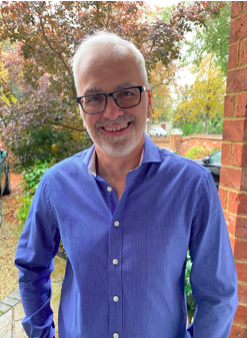
• Creatives in profile: interview with Nick Brooks

    We may be in the middle of a global crisis, but there’s nothing in the rulebook to say you can’t continue your interview series during a worldwide pandemic…

    Nick Brooks was born and lives in Glasgow. He studied art when he left school, made stain glass windows, poured chemicals down toilets, signed on the dole and played in a band. 

    Later, he got a degree and then a PhD, which just goes to show you. Since then, he’s been a community worker, tutor and lecturer. He also coaches strength training.

    He has published three novels: My Name Is Denise Forrester (2005); The Good Death (2007, both Weidenfeld & Nicolson), and Indecent Acts (2014, Freight), and a collection of erotic haiku, Sexy Haiku (2016, Freight). The latter is currently going through an update and will shortly be available as Why Don’t You Write Me A Love Poem?

    Here at Nothing in the Rulebook, we were lucky enough to review Brooks’s collection of erotic poetry, Sexy Haiku, which expertly captures the absurdity of both sex and love. We witness the complications of negotiating a threesome; the politics of semi-open relationships; the trepidation of setting out into unknown sexual waters of BDSM, or even trying “a new position, beyond the three recommended”.

    There’s a huge dollop of humour here – along with a lot else besides – and so it’s little surprise that Brooks himself oozes wry witticisms in our interview, which we conducted over email in the midst of the ongoing Coronavirus pandemic.   

    With England once again about to enter another lockdown (Scotland, where Brooks is based, has been under higher restrictions for some time now), we couldn’t think of a much better way to distract ourselves from the “crepuscular” (Brooks’s description) nature of 2020 than to bring you all this detailed exclusive interview.

    INTERVIEWER

    Tell me about yourself, where you live and your background/lifestyle

    BROOKS

    I live in Glasgow, Scotland. My background is in community work and adult learning. I’ve taught as a learning facilitator with adult learners and also lectured and tutored. Currently, I’m self-employed and create low/no content books. I’m also a qualified strength trainer, so I do that too. I’ve lived and worked in England, Spain, Hungary, Malaysia and Slovakia.

    My lifestyle is not what it used to be. For long periods of my adult life, I was a typical West of Scotland binge drinker. I drank until brain-death three or four nights a week and got very fat. After a mini-stroke, I decided a change was not only necessary but required. At least, if I wanted to live!

    I now have a motor-function disability. Typing and handwriting are excruciating for me. So I use voice-recognition software. In comparison, I live a pretty quiet life now. I’m incarcerated at home like everyone else. I write, drink too much coffee and love curry.

    INTERVIEWER

    Is writing your first love, or do you have another passion?

    BROOKS

    I used to be an avid drawer when I was younger. After I left school I took a place on an art foundation course down in “That England”. A strange thing happened though: I lost all passion and interest in drawing shortly before arriving. As you can imagine, this made the course itself something of a challenge. I got through it, but it was plain that I wasn’t going anywhere with it.

    I floundered around for a few years, variously signing on the dole, or working minimum wage jobs and wisely decided to become a ROCK GOD. I was pretty delusional.

    In many ways, I remain so. Delusional, rather than a ROCK GOD, that is.

    INTERVIEWER

    Who inspires you?

    BROOKS

    I find Beau of the Fifth Column (Florida-based journalist Justin King) pretty inspiring. Check out his YouTube channel.

    https://www.youtube.com/c/BeauoftheFifthColumn/videos

    INTERVIEWER

    How have you found the experience of writing under lockdown?

    BROOKS

    To be honest, nothing much has changed for me, it’s business as usual. The only thing I sort-of miss is being able to sit down in a restaurant spontaneously. However, money is always an issue and I’m on the net a lot of the time, looking for jobs. The trouble is that the job I’m searching for looks like this:

    WANTED

    Glasgow-based writer to produce any novels or poetry (or both), either frequently or in dribs and drabs over years, for lucrative and competitive lifetime salary.

    Essential requirements: grimly humorous outlook, used-to-be-ginger hair (but now brown with the passing of the years); slight limp.

    Desirable: ability to waste salary on fripperies.

    Thus far, it’s been a long and thankless hunt.

    INTERVIEWER

    Alongside three novels, you published your collection of erotic poetry, ‘Sexy Haiku’ through Freight Books in 2016. What did you find particularly sexy about the haiku form, and do you hope readers will find haiku sexy, too?

    BROOKS

    That was the thing – I didn’t find haiku either sexy or even very interesting. There’s a lot of haiku stuff around, especially online and a good 99.9% of it is pretty dreary. People get very worked up about staying true to the form. They go all-in on the 5/7/5 thing, the passing reference to the season and mortality and whatever. So you have all these purists arguing about whether something is, or isn’t a proper haiku. Someone failed to mention the falling cherry blossom? They are so dead to me. I imagine half of them want to throttle the other half to death.

    What I was attracted to was the possibilities inherent in a very brief poem, focussing on a very brief moment. Restricted by the form. Nobody much seemed to be talking about sex or intimacy. Yet, during sex, we are never more intimate with another person. So I saw it as a moment of Zen-like clarity. Here is this thing we’re doing together, and we are as close as two people can be, and yet it’s so brief. We do it and the moment passes. Sometimes, during sex, there are also huge unfathomable gulfs between people too. There are so many intangible feelings, thoughts, fears, joys wrapped up in the act.

    And once I started writing them, they tumbled out. All sorts of moments, some loving and intimate, some hateful, horrible even. A lot of them are the same moment, extrapolated in all different directions. I pulled and pushed and squeezed everything I could from them. Bad sex we’d rather forget about. Funny sex, ill-advised experiments or cringingly embarrassing ones. So this one act can encompass a whole range of emotions and psychological states. By stringing them all together they become a kind of whole inner psychological universe, and a record of a particular series of relationships, beginning and concluding with the same one. Sex is the original comedy of errors.

    I tried to use language that was as frank as possible, to strip away the metaphor and even the complexity. It was a ‘back to basics’ approach. They carry their heart on their sleeve.

    My ambition for the collection was for people to enjoy it then get nasty with whoever was agreeable to the idea!

    (Of course, solo practise can also be useful for developing a skill-set)

    I don’t have any idea if they are erotic for others or not; it’s for readers to judge.

    INTERVIEWER

    What makes something erotic?

    BROOKS

    As opposed to pornographic? The erotic includes human emotion, not just our basic, easily-triggered impulses. I’d defy anyone to read the collection and tell me it is just filth. It’s that – and more.

    INTERVIEWER

    It sometimes seems as though the literary world – especially the British literary world – is simultaneously embarrassed and captivated by sex in books (haiku-based or otherwise). The ‘Bad sex in fiction’ awards is perhaps literature’s most notorious booby prize; yet publishers – and readers – often call for books to include at least a little bit of sex. What’s your view on sex in fiction and poetry, and what do you make of such things as the ‘Bad Sex’ awards?

    BROOKS

    The Bad Sex Awards are a very British (or more specifically English) sort of thing but it’s also a stereotype. If they did a Good Sex Awards too, that’d be a bit more progressive. But they’re also a bit of a hoot. Some writers do need to be hauled over the coals for the nonsense they come up with. But if I was nominated, I doubt I’d be offended. That’s where the stiff upper lip comes in, I guess. It’d be an excuse to put on a smart suit and tie on for the night and have a few drinks and laughs. If you get nominated, you just have to take it on the chin and be like, ‘It’s a fair cop, guv,’ and embrace it.

    I have no problem with sex in fiction or poetry at all. A scour of Amazon will tell you that there are lots of people that’ll pay for smutty stories. Short fiction about sex is a big market. You name it, there’s a niche for everyone: BDSM, furries, bears, twinks, teens, gay cowboys, MILFS, cougars, harem, reverse harem, milkmaids, daddy’s little girl, anal training, shifters, interracial, aliens…on and on. At least some British people must be buying this stuff.

    INTERVIEWER

    Looking around at current trends in publishing right now, what are your thoughts and feelings on the state of the industry as it is and as it has been in recent years. And what has your personal experience been of trying to break onto the ‘literary scene’?

    BROOKS

    I’ve given up on breaking into any kind of scene. I have zero interest in it now. You can read a bit more about my exact reasons for this in the blog post I wrote for Nothing in the Rulebook!

    What I would say is, publishing houses have become much more conservative in what they put out now. Getting a book signed at all is still a dispiriting task. And it takes years to go from manuscript to bookshelves. I mean literally years. Your average self-published indie can do the same job as a whole publishing house in a matter of a couple of months. That includes writing the book and all the promotion and marketing. If it’s a good book, and you hit all the right tropes in your chosen genre but put a twist on it, and all the marketing falls into place, you stand a chance of making some cash out of it.

    Writing ‘literary fiction’ or poetry is not a profitable venture. I still believe it to be worth doing. Genre fiction is fun to read, though. Nobody ever accused James Kelman of being ‘fun’.

    INTERVIEWER

    When writing, what do you think is most important to keep in mind when writing your initial drafts?

    BROOKS

    That it’s only a draft. Get it onto the page first, then worry about making it look good. Everything is always a draft-in-progress.

    INTERVIEWER

    Do you have a specific ‘reader’ or audience in mind when you write?

    BROOKS

    I didn’t use to, but I do now. And it depends on what I’m writing. With the haiku, I imagined someone like myself. In their mid-to-late 40s, male, interested in intimacy, relationships and honesty but not being catered to.

    Poets don’t seem to write openly and frankly about sex. There was a complete hole where male sexuality was concerned. Just a void. It is a topic most poets seemed to steer clear of. Writing honestly about sex from a male perspective and avoiding the caricatures was at the heart of what I wanted to do. And to use, in Tom Leonard’s immortal phrase ‘thi langwidge uv thi gutter,’ to do it.

    INTERVIEWER

    Could you tell us a little about some of the future projects you’re working on?

    BROOKS

    I’m working on a novel right now, a black comedy about a serial killer. I have another novel written, but it is currently in limbo. I’m not sure if it will ever reach print now.

    I’ve also got a follow-up haiku collection. Same subject matter, slightly different take on it. It’s about trying to maintain a normal, healthy, loving relationship whilst being swamped by internet porn, dating sites, email spam, hookup apps, especially if you often work away from home, distractions on all sides. Temptation is rife!

    Quick fire round!

    INTERVIEWER

    If you could describe 2020 in one word, what would it be?

    BROOKS

    Crepuscular.

    INTERVIEWER

    Favourite writer?

    BROOKS

    Charles Bukowski. I’m always happy to reread anything by Bukowski.

    INTERVIEWER

    Favourite book?

    BROOKS

    The Adventures of Huckleberry Flynn. I thought about putting all sorts of highbrow tomes here, but I first had Huckleberry Finn read to me by my dad, as a boy. He’d read me and my brother chapters on a nightly basis and we thought it was the funniest, greatest book ever. When I was old enough to read it for myself, it was a joy all over again. Every decade or so I reread it and love it afresh. I think the books that were important to you in childhood often leave the deepest, most lasting impression.

    INTERVIEWER

    Sexiest thing someone has ever said to you?

    BROOKS

    (Purrs in voice of Madeline Kahn in Young Frankenstein): ‘Is it twue what they say about your people? Oh, it’s twue, it’s twue!’

    INTERVIEWER

    Poetry or fiction?

    BROOKS

    Fiction.

    INTERVIEWER

    Critically acclaimed or cult classic?

    BROOKS

    Cult classic. Critics be damned!

    INTERVIEWER

    Who is someone you think more people should know about?

    BROOKS

    Graham Fulton.

    INTERVIEWER

    If writing didn’t exist – what would you do?

    BROOKS

    Go to and fro on the earth, and walk up and down upon it.

    INTERVIEWER

    Do you have any hidden talents?

    BROOKS

    I make a stupendously good lamb curry.

    INTERVIEWER

    Something you’re particularly proud of?

    BROOKS

    I can’t think of anything. How sad is that?

    INTERVIEWER

    Could you write us a story in 6 words?

    BROOKS

    6 words is a big ask.

    INTERVIEWER

    Could you give your top 5 – 10 tips for writers?

    BROOKS

    To make money: write to genre, read lots of your genre, never read anything but your genre and practise your genre all the time.

    For the literateur: as above. Then try to do something different. This will ensure either remarkable success or total failure.

    For all prospective writers: copy the style of the writers you admire. Take a passage, even a whole story or chapter and copy it out repeatedly, but swap your story for theirs. Use their style, their punctuation, their rhythm, but substitute your events and characters. Do that as much and as often as possible. Eventually, you will have so absorbed the style in such a way as to leave it behind and your own will flutter into the unknown from the chrysalis you’ve left behind. Seriously. Best writing advice you will ever get.

    Examine your motivations for writing. Know and understand them. The more honestly you do this, the more success you are likely to have in your chosen area of literature. Decide if you want to do this for deeply personal reasons, or professional ones early on. If it’s purely personal, nothing I can tell you will matter, so do as you please.

    Join a boxing, martial arts club, or some other contact activity. Writing can be a bruising affair: you need to get tough.

    Try to avoid envy of the success of others. It’s never a good look.

    ‘For if you cannot do this, seek out the ways with which to malign, poison and destroy your enemies; be subtle, this is the whetstone of your blade; with this is the knife tempered.’ Ibn Al Hassan, 1347.

  • Why can’t writers do both literary fiction AND genre fiction?

    I’ve given up on breaking into any kind of literary ‘scene’. I have zero interest in it now.

    Being part of a bunch of writers starting out can be great. You’re all trying to push yourselves and you’re in it together, this great endeavour. I have lots of happy memories of boozy nights arguing in smoky pubs about books and writing and authors. As far as a ‘scene’ goes, those are usually press-imagined things. If they happen along and you become identified with one, you can ride that wave. But they don’t last – and everyone moves on to the next thing. You have to be careful not to get left behind along with it.

    The publishing industry was about to go through massive upheaval as I signed my first book deal. I was unaware of it. I was going to be a writer! Paid to do the thing I loved! I didn’t give a fuck about ‘the industry’, or trends within it. Then the interwebz and ebooks came along while we weren’t looking.

    I’ve found it very hard to be ‘a paid writer’. Getting paid is the only thing that makes you any kind of professional. That’s just a fact.

    Now, if you want to get published traditionally, you have to also have marketability. That means writing to genre. The traditional publishers are trying to play catchup with ebooks, who already stole a march on them.

    I’ve not experienced any kind of loyalty from publishers. If you don’t have a hit right out the gates, you’re done. And most writers don’t. They are never going to say to you, ‘Look, we’ll stick with you, just keep doing what you do, we’ve got your back’.

    The only times that might happen is when there’s a hungry market for certain genres and if you have a series. Sometimes those books take time to break through. Could book 3 or book 5 be the one that does it? Maybe. If that happens, you’ve got a catalogue you can flog off the back of it.

    Publishing houses have become much more conservative in what they put out now. Getting a book signed at all is still a dispiriting task. And it takes years to go from manuscript to bookshelves. I mean literally years. Your average self-published indie can do the same job as a whole publishing house in a matter of a couple of months. That includes writing the book and all the promotion and marketing. If it’s a good book, and you hit all the right tropes in your chosen genre but put a twist on it, and all the marketing falls into place, you stand a chance of making some cash out of it.

    A friend of mine who writes spy/political conspiracy/ espionage thrillers had much the same experience as me with trad publishing: couple of novels, nothing much happened with them, and he was moving naturally to the spy/espionage novel. Most of the publishers he did the rounds with, punting his first novel in that genre, turned it down. One told him there was no market for ‘the traditional British spy thriller’. Eventually, he was offered a deal on it, but he had misgivings about going with it; he knew the kind of chance it would get with them once it hit the shelves.

    He opted to go self-published, online. It took a while, but he now has three novels out in the space of a couple of short years, and recently hit 21 in the whole Amazon Kindle Store. That’s out of all the books in their whole catalogue. He’s given up his day job and gone full-time. Plus, 70% of the royalties are his. And the novels are great, too. Page-turning, well-written, well-researched, pacy, plot-driven stuff.

    His name is Andrew Raymond, you can check out the books and judge for yourselves:

    https://andrewraymondbooks.com/

    But being realistic, we have to ask ourselves who is the vanity writer here? Is it the self-published ebook indie, writing books for a hungry audience of tens of thousands? Doing everything by themselves – from writing to formatting, cover design and marketing? Or is it the ‘literary writer’, catering to a tiny audience – or no audience at all? Because they eschew such things as plot, pace, and dramatic action? You know, those things readers care about and like.

    I’ve had this problem all my writing life. Because I actively want to write genre fiction that sells! I love certain genres; noir, crime, hard science fiction, psychological horror; westerns. I don’t know if I’ll ever find a way to do any of them, though.

    In principal, I don’t see why I can’t do both literary fiction and genre fiction.

    Writing ‘literary fiction’ or poetry is not a profitable venture. I still believe it to be worth doing. Genre fiction is fun to read, though. Nobody ever accused James Kelman of being ‘fun’.

    About the author

    Nick Brooks was born and lives in Glasgow. He studied art when he left school, made stain glass windows, poured chemicals down toilets, signed on the dole and played in a band. Later, he got a degree and then a PhD, which just goes to show you. Since then, he’s been a community worker, tutor and lecturer. He also coaches strength training.

    He has published three novels: My Name Is Denise Forrester (2005); The Good Death (2007, both Weidenfeld & Nicolson), and Indecent Acts (2014, Freight), and a collection of erotic haiku, Sexy Haiku (2016, Freight). The latter is currently going through an update and will shortly be available as Why Don’t You Write Me A Love Poem?

  • Creatives in profile: Steve Gay

    A city on fire, a community in turmoil, a family torn by its principles.

    Steve Gay’s first published novel, The Birds That Do Not Sing is set on the day after the World War II city bombings campaign. Now available for purchase in paperback, the novel was inspired by long-told tales from his own family history. Launched on the even of the 80th anniversary of the Coventry Blitz, the novel is told through the eyes of a ten-year-old boy from a pacifist family in neighbouring Rugby.

    A writer of historical fiction, sci-fi, thrillers and short stories, Gay spent his childhood in Rugby in the UK, and in New England. He grew up writing stories, then put them aside for far too long, working as an underwriter, a salesman, management consultant and lobbyist. Years of commuting and business meetings, of doodling and daydreaming rekindled a habit of writing fiction, of collecting and shaping the ‘what ifs’ and ‘might have beens’ that lie behind the real world.

    It was while graduating from Warwick University’s highly regarded Warwick Writer’s Programme two years ago that his The Birds That Do Not Sing began to take shape. NITRB’s Ellen Lavelle reviewed the novel last week and caught up with Gay just before the book’s release. Gay told her all about the process of turning fact into fiction, his early writing influences and why we should blame Lisbeth Salander for everything he’s written.


    INTERVIEWER

    Tell us a little about yourself. Where do you live? What’s your background/lifestyle?

    GAY

    I live in Rugby, where ‘The Birds that do not Sing’ is set. My family has been in the town for a hundred years, and although my life took me away from the town for a long while, I returned in 2010 with my wife and children. I retired recently and now with work behind me I am free to spend more time writing.

    INTERVIEWER

    Who or what inspires you? 

    GAY

    Exceptional people past and present, particularly people who rise from humble beginnings to become leaders: Lewis Hamilton, Greta Thunberg, spring to mind. Landscapes also inspire, environments that provide the adversity from which great characters and epic stories emerge. 

    INTERVIEWER

    Is writing your first love or do you have another passion?

    GAY

    I never happier than when I am ski-ing. I love the French Alps and have many happy memories of days when the weather was perfect and the snow pristine. I always take my laptop, intending to write when I am away, in a local cafe or bar. Good intentions – but it never quite works out that way.

    INTERVIEWER

    The Birds That Do Not Sing is loosely based on the wartime experiences of your father. What was it like turning memory into fiction? 

    GAY

    My father supplied many of the details that are woven into the story, but people have a tendency to describe circumstances rather than feelings, particularly in a formative period of their life. The passing of time doesn’t always deliver a clearer perspective. It requires persistence to dig behind what is being said, but sometimes they will surprise you (and themselves) with comments that spring fresh and raw from the past, things that have never been said before. And when that happens, when you hear a comment like ‘Little birds that do not sing…’ repeated verbatim after 80 years, you know you have stumbled onto something meaningful, found the story amidst the jumble of memories. 

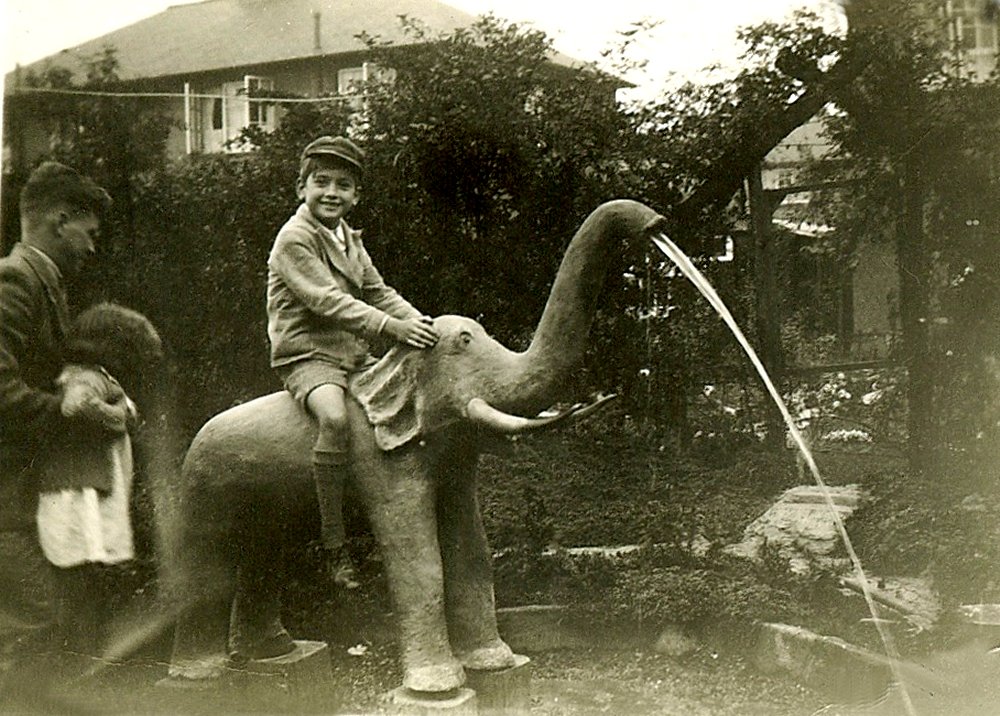
    Steve Gay’s father, Charles, on the Elephant in 1938.

    INTERVIEWER

    Tell us a little about your main character, Jim Brown. We see Jim as both an elderly man and a young boy. What was it like writing about a character at two very different phases of life. Do you feel like you know Jim better as a result? Did you have to make any technical decisions when writing, to make young Jim sound young and elderly Jim sound elderly? 

    GAY

    We all have psychological drivers that shackle us, and in young Jim’s case it is about doing the right thing and knowing what that is. His mind is that of an engineer, valuing precision, and struggling with ambiguity – at a moment in our history when opinions and values, and truth itself was shifting like the sands. I don’t think we change as we get older, not really, and elderly Jim isn’t a different person to the 10-year-old he once was. The challenge in writing the story was to separate a single character into two subtly different voices – so the reader would become immersed in young Jim’s life, no longer hearing the mature narration of his older self but sliding away into something more innocent. The elephant is a prop in this process, providing a bridge between the naïve outlook of the child and something more knowing – although as a make-believe friend, it had to stay within its limitations. ‘I only know what you know’, says the elephant. ‘I just know it differently.’

    INTERVIEWER

    Which writers should we be paying particular attention to at the moment? 

    GAY

    I am going to duck this question, because I think one of the greatest joys of reading is to stumble upon a story or a writer yourself – to open a book in a dusty shop (or even online) and think ‘Wow’!  At the moment, I am paying particular to non-fiction – particularly history. We are living through extraordinary times, and I find knowing the past helps me make sense of it, put it all in boxes. Andrew Marr has done me a service these past months. Besides – non-fiction has all the best stories!

    INTERVIEWER

    Can you tell us a little about your creative process? How do you go from blank screen to completed manuscript? Do you plan the plot before you write, or do you just dive in? 

    GAY

    I always had plans in my working life – without a plan things are bound to screw up. But I write for enjoyment, and I don’t find planning much fun. I have a reasonable idea of where a story is going, and I write down notes as they occur to me, but I tend not to see much beyond the next bend in the road. The ideas emerge instead from the process of writing rather than by sitting with a chart in front of me. It means I write a lot of material that I shuffle around or discard in a second draft, but I find I can write more freely that way. 

    INTERVIEWER

    Do you feel a sense of responsibility as a writer? 

    GAY

    I think it as much about integrity as responsibility. You want to present your story in an authentic and thoughtful way – to walk in your characters’ shoes, give them their voice, rather than making them mouthpieces for your own perspective. Ultimately the interpretation belongs with the readers, but if causes them to think, to care enough about what you have written to make a discussion of it, that has to be a good thing.

    INTERVIEWER

    What was the first book that made you cry? 

    GAY

    To Kill a Mockingbird. Nothing hurts so much as injustice.

    INTERVIEWER

    What is the hardest thing about being a writer?

    GAY

    Labouring in the midday sun is hard, risking your life breaking ships, or scavenging on a rubbish heap to support your family. Hard is being a healthcare worker in these times of Covid – at any time, actually. Writing is a privilege, and most of us are drawn to it by passion rather than necessity. A blank page – how fortunate we are to have such adversity!

    That said – I prefer the drafting and editing to story building. One I find relaxing, the other just turns the brain to knots.

    INTERVIEWER

    Name a fictional character you consider a friend. 

    GAY

    Lisbeth Salander – though she doesn’t really have friends. Lisbeth’s voice snarled in my ear until she forced me to give writing a try. So, blame her for everything I have written. Since Lisbeth’s staged her intervention with me, the fictional characters of my writing have become my friends – and more reliable ones – you have to really like characters if you are going to spend hundreds of hours in their company. Lisbeth would hardly give you the time of day.

    INTERVIEWER

    Did getting published change your perception of writing?

    GAY

    I published ‘The Birds that do not Sing’ independently. It didn’t change my perception of writing, but it did open my eyes about publishing… the myriad pitfalls, the countless things to annoy and exasperate. Above all, it has caused me to see writing not as an art, but a craft – one that has to be approached with humility and pursued with a determination to improve. And then what you have achieved is simply a product – something that requires another set of skills to produce, package and market – and the economics can be daunting. Oh, to just…write!

    INTERVIEWER

    Which book deserves more readers?

    GAY

    I will tell you a book that deserves more writers – it has had plenty of readers in its time and won a Pulitzer Prize. Annie Proulx’s ‘The Shipping News’ is a book I have been reading for a number of years, and I may never finish it. The reason is that it is so packed with lessons on the craft of writing that it makes me want to put it down and go to my laptop. It is a book that nourishes, but fills me up so easily that I can only sip at it.

    INTERVIEWER

    Do you have any friends that are writers? If so, do you show each other early drafts?

    GAY

    Yes, I made many friends on the Warwick Writing Programme – all of us fellow sufferers of this writing addiction. ‘Hi – I’m Steve, and I am… a writer.’ We do share our work, we provide a safe haven to show our experiments, to receive criticism that is knowledgeable and well-meaning. To receive the gift of honesty. 

    INTERVIEWER

    What’s next for you? 

    GAY

    Something different. I like writing science fiction – escaping from this world into one where the only rules are the ones you make yourself. I am planning to publish the first book in my sci-fi series next summer.

    QUICK FIRE ROUND: 

    INTERVIEWER

    Favourite book? 

    GAY

    Every Man for Himself (Beryl Bainbridge)

    INTERVIEWER

    Saturday night: book or Netflix?

    GAY

    Netflix is more sociable on a Saturday – other nights, a book might win.

    INTERVIEWER

    Critically acclaimed or cult classic? 

    GAY

    Cult classic

    INTERVIEWER

    Do you have any hidden talents? 

    GAY

    The Argentinian Tango…. I wish.  

    There is this trick I can do with two corks and I…  

    INTERVIEWER

    Any embarrassing moments?

    GAY

    Are you kidding? Which item, from which page of my curated collection of embarrassing moments do you want? I wish I was as diligent about recording my moments of joy. 

    INTERVIEWER

    What’s the best advice you ever received? 

    GAY

    Well, my Dad said: ‘Son, get a job doing what you want to do… and if you can’t, get a job doing what you don’t want to do.’  I did the latter for far too long – now it’s payback time!

    INTERVIEWER

    Any reading pet peeves? 

    GAY

    Books that are longer than they need to be. Books that are shorter than I want them to be.

    INTERVIEWER

    Do you have a theme song?

    GAY

    Often stories come with a theme tune – something that attaches to it muse-like as I write. My first novel was a thriller, and for some reason the song was The Fray’s ‘How to Save a Life.’  My sci-fi novel was Eva Cassidy’s version of ‘Somewhere over the Rainbow’, and The Birds that do not Sing, was (perhaps less surprisingly) Gracie Fields singing ‘The Thing-Ummy Bob Song’.

    INTERVIEWER

    Your proudest achievement? 

    GAY

    My children – how could it not be?

    INTERVIEWER

    Best advice for writers just starting out?

    GAY 

    Think carefully where you are ‘placing your camera’ in each scene, and then look through that lens unwaveringly, and write what you see happening. 

    Click here to see Steve Gay’s profile on the Rookabbey Press Website and to buy a copy of The Birds That Do Not Sing. You can buy the ebook from Amazon and follow Steve Gay on Facebook and Instagram. Steve also gave this fascinating interview in The Rugby Observer and you can also read the story of how came to write the novel here.


    About the Interviewer

    Ellen Lavelle is a post-graduate alumni of The University of Warwick’s Writing Programme. An aspiring novelist and screenwriter, she has worked with The Young Journalist Academy since the age of fourteen, writing articles and making short films for their website. She works as a digital copywriter and is writing a novel. You can find her interviews with authors on her blog and follow her @ellenrlavelle on Twitter. 

  • Creatives in profile: interview with C.R. Berry

    “Do it wrong and you can end up with plot holes bigger than a temporal rift”, sci-fi and fantasy author, C.R. Berry wrote (in these very digital pages) about the challenges that writers must overcome when writing about time travel. Yet the very real difficulties that can be found in navigating all the timey-wimey stuff haven’t been enough to deter Berry from writing entire novels dedicated to the topic. His first book, Million Eyes is a refreshingly fun, fast-paced conspiracy thriller that goes all-in on the time travel side of things.

    In writerly terms, Berry is one of those authors that hits 88mph and keeps going. After a short stint as a lawyer, Berry turned to writing full-time, and works as a freelance copywriter and novelist turning out new stories and fantastical capers at a light-speed rate.

    In 2018, Berry was shortlisted in the Grindstone Literary International Novel Competition and has been published in numerous magazines and anthologies, including StorgyDark TalesTheme of Absence and Suspense Magazine. He was also shortlisted in the Aeon Award Contest, highly commended by Writers’ Forum, and won second prize in the inaugural To Hull and Back Humorous Short Story Competition.

    We caught up with Berry to discuss writing, time travel, and more besides…

    INTERVIEWER

    Tell us about yourself, where you live and your background/lifestyle?

    BERRY

    I live in a little town called Haslemere in Surrey, UK. I grew up in Farnborough, Hampshire, but Haslemere’s much nicer. I’m a bit of a country bumpkin at heart. I like small towns and pretty scenery, not so much a fan of busy cities and big, concrete blocks of flats everywhere you turn.

    I’m lucky to be a writer full-time these days. Not fiction writing, mind, but copywriting. Basically I do promotional writing for businesses—websites, brochures, blog articles, that sort of thing. I still do fiction on the side, although I’m hoping one day my books might make enough money that I can scale back the copywriting. My girlfriend and I recently made a long-term plan to one day run a creative retreat for writers and artists (if there’s anything 2020 has been good for, it’s making plans beyond it!)

    Oh, and I used to be a lawyer. Of the “Objection!” and “I put it to you that your pants are on fire” variety. 

    INTERVIEWER

    Is writing your first love, or do you have another passion?

    BERRY

    Writing’s my main love, but I’m also a massive nerd. When I was younger, I could recount the names of all 172 Star Trek: Voyager episodes in order, and guess which one was on TV in about 10 seconds. I’m also a big fan of the other Star Trek series and films (apart from the abominations that are Star Trek Into Darkness and Star Trek: Enterprise), Doctor Who, Star Wars (not the horrendous sequel trilogy), Lost, 24, Black Mirror, Game of Thrones, the Alien movies, the Back to the Future trilogy, the Scream movies… I’m a huge Disney nerd, too. I’ve been to Disneyland Paris, urm, 11 times.     

    INTERVIEWER

    Who (and what) inspires you?

    BERRY

    I’m inspired by the conspiracy theories I read and write about on my blog. They’re the reason I’ve taken to writing conspiracy thrillers in recent years, because I love the paranoia and suspicion they elicit, all the moles and masterminds, all the convoluted plotting and scheming. As you’ll know from Million Eyes, I also lace my conspiracy thrillers with sci-fi and/or fantasy, and that comes from the TV series and movies I watch. Mainly Star Trek and Doctor Who.

    INTERVIEWER

    You’ve written for Nothing in the Rulebook about the complexities of writing about time travel. What draws you to science fiction, and why do you think so many of us are so captivated by the idea of time travel?

    BERRY

    I love the imagination of sci-fi. I’m particularly drawn to anything with aliens in it. Particularly non-humanoid ones or ones with clever abilities, lifecycles or origins. I’ve always loved the Daleks, the ‘Thing’ monster, the non-humanoid Species 8472in Voyager. I find the lifecycle of the Xenomorph in the Alien movies fascinating and terrifying, and I particularly enjoyed the recent Prometheus movies for giving us a glimpse into their origin. I bloody hope there’s a follow-up to Alien: Covenant or I might have to hunt down Ridley Scott.

    As for time travel, there are many reasons why it captivates us. Seeing how things used to be done, how people used to think, makes us re-evaluate the things and values we have now. It’s fascinating to see the distinction and it creates fish-out-of-water scenarios that are perpetually entertaining. Time travel to the future, with writers imagining how things will be done, fires imaginations and creates a sense of hope (well, unless it’s a dystopian future as many are nowadays!). I think people are also drawn to time travel because we always yearn to do things differently and change undesirable outcomes. I wonder how many time travel stories will incorporate Covid in the coming years…

    INTERVIEWER

    You published your first book, Million Eyes, with indie publishers Elsewhen Press (and readers can check out our review of it right here on Nothing in the Rulebook). If you were in an elevator with someone who had never heard of the book, how would you describe it or pitch it to them?

    BERRY

    What if the timeline we’re living in has already been corrupted by time travellers? Former teacher Gregory Ferro stumbles upon evidence that time travellers are sacrificing history to recover a mysterious book, and learns that events like the 1997 death of Princess Diana and the 1483 disappearance of the Princes in the Tower weren’t supposed to happen. When he teams up with uni graduate Jennifer Larson, the time travellers get wind of what they’re doing and send assassins to bury them. So begins a chase across time, with countless innocents caught in the crossfire.

    INTERVIEWER

    Will we laugh? Will we cry?

    BERRY

    There are twists, turns, famous historical faces (including some you won’t expect) and conspiracies galore. You may shed a tear at points, and there’s some tough stuff my characters have to go through to get to the truth. That said, though Million Eyes is certainly not a comedy, it’s not all doom and gloom. There are definitely some lighter bits. One reviewer said that some of the scenes in Million Eyes had her chuckling, even the “very bloody ones”.

    INTERVIEWER

    What triggered your idea?

    BERRY

    It was the inquest into Princess Diana’s death in 2007. A number of questions were left unanswered, such the white Fiat Uno. So I decided to create my own answers—with a sci-fi, timey wimey twist. As a lover of history and conspiracy theories, I thought I would draw in some other events that have always intrigued me at the same time. Events like the disappearance of the Princes in the Tower and the supposed ‘accidental’ shooting of King William II.

    INTERVIEWER

    Tell us about your publisher, Elsewhen Press. What’s it like to work with an indie printing press, and what can we as readers do to support indie presses and authors (apart from buy their books, obviously!)

    BERRY

    Elsewhen Press have been great. They have a good grasp of what works and what doesn’t and I’ve learned a lot from them. Together we hosted a very successful launch at Waterstones in Farnham (right before Covid hit), selling way more copies than either of us expected. And it was their idea to launch a fun fake website for Million Eyes, the mysterious tech company that takes centre stage in the book. You should check it out.

    Elsewhen also published an extended universe short story collection, Million Eyes: Extra Time. It is free to download for all ebook platforms and has stories set in the Million Eyes universe about the Loch Ness Monster, JFK’s assassination and Paul McCartney and Queen Elizabeth I being doppelgangers.

    The best thing to do for indie presses like Elsewhen and their authors is spread the word. If you like what you read, leave a review on Goodreads or Amazon or wherever, and tell your friends/family about it. Social media is absolutely saturated with new books, so word of mouth remains a powerful tool.

    INTERVIEWER

    We live in a pretty crazy, unpredictable, and often chaotic world. As a writer, do you ever feel any personal or ethical responsibility about the work you put out there?

    BERRY

    Well, I believe completely and wholeheartedly in freedom of expression, without exception, and I don’t think writers (or anyone) should censor themselves if they have something to say. If a person doesn’t like what they say, that’s what debate and argument is for. I would say my only responsibility as a writer is to tell good stories. Oh, and if I start selling a trilogy or series, like Million Eyes, then I believe I have a responsibility to my readers to finish it. Not naming any authors who might disagree. *cough* George R. R. Martin *cough* 

    INTERVIEWER

    What’s next for you? Could you tell us a little about any future projects you’re working on?

    BERRY

    Million Eyes II and III! The second book in the trilogy is done and in the editing process. It’ll hopefully go off to Elsewhen Press in a few weeks. Meanwhile I’m working on some new Million Eyes short stories, like the ones featured in Million Eyes: Extra Time.

    I actually have a new Million Eyes short story coming out soon. It’s called What Happened To 70? and is a Doctor Who-esque tale about the disappearance of the number 70 from the universe. It’s set to be published in the Rushmoor Writers 70th anniversary anthology The Thing About Seventy, coming out in November from Midnight Street Press.

    I’m also working on Million Eyes short stories that feature the Mandela Effect and the Green Children of Woolpit legend.

    INTERVIEWER

    Finally, could you write us a story in 6 words?

    BERRY

    We’re here. Earth. Human population: 2.

  • A visitor from The North at The House of Commons

    In this second piece of Keir Starmer erotic fiction (published exclusively here at Nothing in the Rulebook), our protagonist and her Knight of the Realm-lover get forensic with a certain Labour Party politician from the North of England…

    This is what a real Mayor of the North looks like…

    I’d been doing work experience in The House of Commons for 6 months. Mostly 120+ hours a week and mostly covering for Boris Johnson, who would drag himself into office in the afternoon with an oxygen tank on wheels behind him (it had a pussy wagon sticker on it). Most of the time he would still be in his pyjamas and he would breathlessly shout words at me and then leave. I would be left to try and decipher the meaning. Often it would be things like ‘Carpe Diem, Chair Cobra’. When he first shouted it at me I thought there was a snake in the office but it turned out he wanted me to lead the cabinet for him in a moment of national crisis, which was a relief because I’ve never been a fan of snakes.

    Having a snake in the office wouldn’t have been surprising to be honest. The Ministers were constantly pranking each other with strippers, kissograms or fake police come to arrest them – that sort of thing. It was like an endless stag party and I was getting the rough end of it. Hardly a day went by when I wouldn’t have to remove a spunk-covered custard cream from my desk before I started work. I spoke to Laura Kuennsberg about it because it was beginning to annoy me but she just said “och, boys will be boys”. I asked who she thought was leaving them on my desk. She sniffed one of the spunky biscuits and said “Och, it’s that wee Matt Hancock, he must like you”.  I decided to put up with it, I mean, some people would kill for this type of work experience, and there were some definite upsides to the job…

    It had become a regular thing now for Sir Keir Starmer to pop his head round the office door about 11pm, lift his perfectly tailored mask a little and, with a completely straight face, just say “donkeys?” to me. I was always ready and willing to go with him to his lovely donkey stables. The baby donkey we had birthed together was getting quite grown up now and I sometimes wondered what the mother and child donkey thought of us… Always turning up to the stables late, giving them a little stroke and then passionately making love on the floor in their hay, or against the stable door, or over the feed bin, often all of these places in one evening.

    One night, I couldn’t find my knickers afterwards and Sir Keir Starmer found them actually pinned to the tail of the young donkey. I would always get home late and my flatmates commented on how I smelt like a barnyard. I would just make some jokes about Tory Ministers being like animals, but really it was Sir Keir Starmer who was the animal. I was averaging 3 hours sleep a night, I would often lie awake thinking about Sir Keir and how his pubic hair parted down one side, and how I had looked in his bathroom cupboard once and seen his hair dye ‘Elephants Breath for Men’. I was worried that I was falling in love. Or maybe it wasn’t love. Maybe I was just addicted to the heady smell of the stables and the smell of his hair wax, or the way his arms looked when he rolled his shirt sleeves up. Either way, I knew I would not be – could not be – the one to put an end to it…

    I wondered if The Iron Lady herself, who famously never turned, would have had her head turned by Sir Keir Starmer, 6 foot 4 of pure testosterone with specially made shoes for his size 15 feet. I decided she would have respected him and probably masturbated over him whilst Dennis was away in Africa teaching their children how to make land mines. She would probably have relished the angry yet formal and measured letters she received from him. When alone in her office late at night she would probably have sniffed them, hoping to catch the scent of his aftershave… Yes, I thought. The Iron Lady would have been weak at the knees in the presence of Sir Keir Starmer… and don’t even get me started on Edwina Currie. She would have spent her days walking backwards and forwards past his office. Sending him garters through the post and so on. Sending him letters about eggs drenched in perfume… I was glad she was not around anymore.

    Despite being dedicated to Sir Keir, only a couple of days later, my head was unexpectedly turned by a visitor from The North. As it turned out, mine was not the only head that turned…

    There was to be a debate in The House about The Coronavirus pandemic that was still bloody well going on. I was standing in for Boris Johnson as usual. Not many people had turned up. Jacob Rees Mogg was sleeping on the front row (as he often did). It was his little way of showing that he was very comfortable in The House of Commons and that he felt he belonged there. Often people would spit on him as they walked past or wipe snot on him. I even saw Sir Nicholas Soames wipe some dog excrement on him one day when he came back to collect a jumper he had left on the benches before Boris Johnson sacked him for refusing to join his gang.

    Today was slightly different though, as there was to be a guest speaker. He was the Mayor of Manchester and everyone was excited to see what a real Mayor from the North looked like.

    Lindsay Hoyle wheeled him in on a sort of trolley and parked him next to his little throne. He lifted him out and gestured to him that he could take the throne whilst speaking to the House. I couldn’t quite see his face at first. I just saw the outline of a smallish man in an anorak and workboots. Someone shouted “Turn the lighting up,” and the lights were turned up. There he was. Proudly standing almost 5 feet tall, his thick dark hair tousled, his little glasses on and his eyes really popping from his trademark thick black eye liner he was never seen without.

    He was not what I expected. My nipples hardened and I immediately felt guilty. I flashed a look at Sir Keir Starmer, but I needn’t have worried. His face was as flushed as mine. He gave me a nod and then tilted his head slightly towards Mayor Burnham, the quizzical look could only mean one thing. “Shall we invite Mayor Burnham to come to the stables with us for a threesome?” I nodded back enthusiastically.

    I turned to listen to Mayor Burnham’s speech and, to be honest, I couldn’t understand most of it. His accent was impenetrable (unlike me), he sounded like he was from a 1960s episode of Coronation Street. I could just about made out the phrase ‘ee by gum’. I knew though, that later that night we would find a way to communicate.

    When he had finished speaking, Sir Lindsay Hoyle lifted Mayor Burnham down from the throne and patted him on the head.

    We all then voted to lock down The North of England for the next year or so as that seemed to be what Mayor Burnham was getting at; no-one really knew.

    As Mayor Andy Burnham left, he punched Jacob Rees Mogg in the dick really hard, which woke him up with a start.

    Sir Keir gave me one of his blank faces that I knew meant “I will pick you up later and take you and Mayor Burnham to the Donkey Stable” he then rushed after Mayor Burnham, linked his arm and I saw him slipping a note into his pocket that must have been a hurriedly written invitation.

    Later, in Sir Keir Starmer’s car, we all wore our face masks and listened to Enya. Mayor Burnham sat in the back on a booster seat. I noticed that on his facemask there was an embroidered picture of some pigeons, a pie, the Gallagher brothers and a Bee.

    He said something and I guessed he had asked how far it was to the stables, but before I could answer Sir Keir Starmer said “Don’t worry, you can borrow my son’s wellies, we’ll stuff some socks in them if they’re too big”.

    When we got to the stables, Sir Keir Starmer had arranged a surprise. Horses for us to ride and a little Shetland pony for Mayor Burnham to ride on. Mayor Burnham and Sir Keir Starmer changed before we set off into loose fitting, white, billowing shirts and breeches.

    Sir Keir and I mounted the stallions after we’d helped Mayor Burnham get onto the patient little Shetland pony, then the three of us rode off into a nearby forest. We arrived at a clearing. I heard Sir Keir saying “woah, girl” and we all came to a halt. Sir Keir and I got off our horses and then helped Mayor Burnham down.

    Sir Keir put his hand on Mayor Burnhams face and stroked it tenderly. Then they kissed. Gently at first and then with a sense of urgency. ‘They must really respect each other’ I thought to myself happily. I watched until they beckoned me to join them. Soon it was impossible to tell stallion from mayor, Sir from stallion, work experience girl from pony.

    Exhausted, we all dozed under a tree for a while. Sir Keir ran his fingers through Mayor Burnham’s hair and gently kissed the top of his head. Then Mayor Burnham awoke and in his pockets he had some bread that he tore up for us to eat and a piece of ham he had wrapped in brown paper. He used a little pocket knife to cut it and share it out. I was glad of the snack. I hadn’t had any lunch that day because all the pret a mangers had closed down because of the virus.

    “Oh no” I cried, “we forgot to social distance”

    “It’s ok” said Sir Keir Starmer. “There’s the 2 stallions, the pony, Mayor Burnham, Me, (Sir Keir Starmer) and you, the work experience girl. That’s six.  The rule of six applies, we’re outdoors, in the countryside and it’s only tier 2. So long as no one else comes along I won’t have to hand us all in.” I smiled thinking he was having a little joke but then I realised he was deadly serious.

    Once we had eaten and retrieved our clothes we took our mounts again and this time slowly plodded back to the stables. I was exhausted and my vagina hurt with every clop, clop, clop of the hooves.

    We helped Mayor Burnham down from his pony again and he spoke, it might have been something like “Thank you for a lovely time”, but it might have been something or other about politics, neither I nor Sir Keir could understand him and we couldn’t read his writing. He kept writing on post it notes and gesticulating furiously but we had no idea what he was on about so we just smiled at him and ruffled his hair. He was so cute.

    We dropped him off at the train station and looked at each other smiling as he hurried away. I wondered if we had crossed a line we could never uncross…  I wasn’t sure and decided it was a bad time to bring up the chlamydia and urinary infection (there was a pandemic going on after all).

    It was time to get back to the HOUSE OF COMMONS, I had work experience to do and the country wasn’t just going to run itself.


    About the author

    Zena Barrie lives in Manchester and co runs the Greater Manchester Fringe and The Camden Fringe, she also does spoken word when it’s allowed. Her book, ‘Your Friend Forever‘ will be published by award-winning press, Unbound, on 15 April 2021. You can pledge to pre-order a copy here – https://unbound.com/books/your-friend-forever/ 

    Lockdown is hard for many writers and artists. If you enjoyed this piece, why not tip Zena the price of a coffee via her Ko-Fi link?


    Read the first piece of Keir Starmer erotic fiction, ‘Little Donkey’ right here at Nothing in the Rulebook.

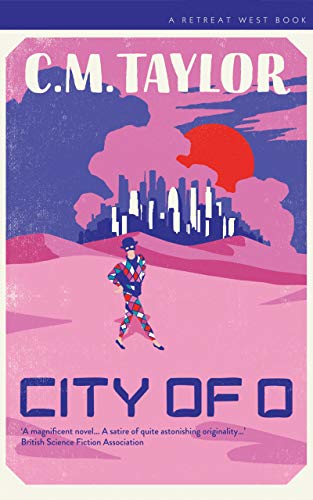
  • Book review: City of O by C.M. Taylor
    City of O by C.M. Taylor, first out in 2005, is being re-published by Retreat West.

    You can never judge a book by its cover- except of course when you can. The City of O is every bit as colourful, quirky and slick as the cover, designed by David Wardle. It may be unusual to start a review with the artwork, but even if you don’t enjoy satire, sci-fi or humour, the Retreat West edition of City of O is still a great purchase – even if you just frame it and put in on a wall.

    City of O reads like an episode of Black Mirror, but penned six years before Charlie Brooker’s first episode aired. Despite fifteen years passing since the books’ original publication, City of O has become perhaps even more topical.

    Today’s consumerist and increasingly polarised society is seen caricatured in the City of O, where human connection comes second to our online presences. It’s not a stretch to see that in a few years, we may too be queuing up to buy the latest pieces of Art-vertising, or that, in our isolated bubbles, we even indulge in a spot of “war play”, where you can pay to direct drone strikes against enemies of the state. The City of O even has a TV-personality President; their own Trump. The characters in the city are seen in stark contrast to the warmth and humanity of the characters outside the city (even Gargantuan, who is in fact a giant).

    The book follows two separate groups, Juan, a new arrival immersing himself in the city and a group of colourful harlequins on a mysterious, circuitous quest. The chapters alternate between each band of protagonists, with chapters numbered in digits for the Harlequins and written out for the city. Several times in reading it I found myself questioning whether my book mark had been moved over night, after finishing reading at chapter three, only to start chapter 3 again the next day. It is in line with the heady surrealism that Taylor fosters throughout the book.

    I particularly enjoyed Juan’s chapters, where we explored the titular City of O, a place where there is an absurd level of decadence, where everything from new faces to mountain ranges can be delivered at order – in a way to rival even the most extreme Amazon-Prime-Addict. It builds a colourful and complex world, however unlike many in the genre, you will not suffer through long dry paragraphs explaining the intricacies of the class system – Taylor hints and eludes to elements, but drip feeds information sparingly, allowing the reader to draw on many of their own cultural touchstones There are some exceptions to this, however, the book generally performs best when it sticks to the abstract.

    For all the topical references however, there were some clear indications that the book had been written before the “Me Too” era. Female characters were, without exception, love interests, mother-figures or cats. It was disappointing to see the only real character development of a main female character take place through the male gaze, in the form of a man sneaking a look at a diary entry. It felt like a tacked-on after-thought, a feminist equivalent to the famous “it was all a dream” literary device.

    Another slightly jarring aspect of the book for a 2020 audience will come from some of the banter amongst the Harlequin group. Positioned in the book as “hearty banter”, it felt a little like overhearing the type of locker-room chat that would come out to haunt a politician running for a second term. Although it’s part of the dynamic of the group of oddball friends, after one too many urine-themed jokes, it’s hard to find sympathy with the characters, which seems to be at odds with Taylor’s intentions.

    City of O’s new edition could not have been better timed if they tried. It’s balances topical social commentary with razor sharp wit with an undeniable optimism, which is sure to captivate readers. It balances the knife edge of stimulating thoughts and ideas, while avoiding the general plot losing its way in heavy world-building. Taylor’s rich creativity has created a truly unique book, which is totally refreshing to read. If you have not already picked up your ‘lockdown 2’ book, you could not come up with many better choices.

    About the reviewer

    Jennifer Taylor is a twenty-something reader and art-lover based in London. She knows a thing or two about Kombucha and how to grow avocados. When not forgetting to water her (other) houseplants, she can usually be found with a book in-hand or else generally wishing she had a dog. She (occasionally) tweets at @JenTaylor300 and can be found on Instagram @jennifertaylor12

  • Review: The Birds That Do Not Sing by Steve Gay
    Author Steve Gay

    Steve Gay’s The Birds That Do Not Sing is a compelling family drama, alternating between modern-day and wartime Rugby. We first meet narrator Jim Brown as an elderly man. He’s managed to track down the concrete elephant sculpture made by his father before the war; it’s now in the front garden of a house in the centre of town. The elephant sculpture has always had a hold over him, he says. It’s as he gets talking to the house’s residents, journalist Harry and his wife Carol, that the narrative rewinds and we meet Jim as a young boy. He’s lying in bed, listening to the sounds of the Heinkel and Junkers flying overheard. Waiting for the All Clear. 

    This is how the story unspools. A few minutes in Harry’s study; days, weeks, years in wartime Rugby. We know there’s trauma waiting in the wings, that some cast members might not make it through to the final act. The Brown family of the 1940s are unconventional, have progressive ideas about politics, religion and conflict, and much of young Jim’s narration is spent reconciling these views with the world around him. He compares his father’s socialism, his brother’s pacifism, to the views of his neighbours, and begins to form his own. 

    It’s in these reflective passages that Gay’s writing really shines. Elderly Jim has spent his working life as an engineer; when revisiting a memory, he’ll ‘hold it up to the light, blow away the swarf, check that it’s true.’ The conversations he revisits, the portraits of family members he draws, are precise and scrutinised for balance. Characters painted as villains in the first act cast a different shadow later. Elderly Jim is trying to make sense of his memories, clear the noise in his head. In many ways, he’s still waiting for that elusive All Clear.

    Jim’s voice is assured and flows beautifully. It can’t be easy, telling the story from the point of an eighty-odd year-old man and a young boy, particularly when they’re supposed to be the same person, seventy-five years apart. And yet, Gay manages to tint the old man’s perspective with just enough vigour, the young boy’s with just enough wisdom, to convincingly unite them. 

    “Authority of voice is a hard concept to define in writing, but one knows it when one sees it, and it is to be found in all the little details of The Birds that do not Sing,” says Tim Leach, author of Smile of the Wolf, a Sunday Times historical novel of the year. “A world is built, filled with characters that are always compelling and convincing as they try to mend the broken pieces of their lives.”

    Based on the wartime experiences of Gay’s own father, The Birds That Do Not Sing, is a meticulously-researched, warmly-written novel about family and the failure to tell the stories that set people free. Guilt hangs heavy over both halves of the story and this too is a strength of the novel. Like the concrete elephant in the garden, some truths are non-negotiable. They can’t be eroded by time or goodwill. Gay doesn’t shy away from making his characters think hard and suffer deeply. And yet the feeling of the novel is hopeful. Storytelling is hard, Jim seems to show us, but it’s necessary. Like oiling the breaks, like servicing an engine, it can get messy, but it’s an essential part of running smoothly. 

    Hold it up to the light, blow away the swarf, check that it’s true.

    Click here to buy The Birds That Do Not Sing as an ebook from Amazon. You can follow Steve Gay on Facebook and Instagram. You can also check out his author profile on the Rook Abbey Press Website.


    About the Reviewer

    Ellen Lavelle is a post-graduate alumni of The University of Warwick’s Writing Programme. An aspiring novelist and screenwriter, she has worked with The Young Journalist Academy since the age of fourteen, writing articles and making short films for their website. She works as a digital copywriter and is writing a novel. You can find her interviews with authors on her blog and follow her @ellenrlavelle on Twitter. 

  • The Snowflake Method

    So you’ve got the idea for a great novel.

    Or maybe you’ve already started.

    Either way, you’re fired up. It’s such an awesome idea, you just know it’s got ‘bestseller’ written all over it.

    But then the initial excitement fades as you realise you actually have to start the process of writing your great novel.

    And that means planning.

    Sure, there are a few authors who really are ‘fly-by-the-seat-of-your-pants’ writers, the kind that don’t plan anything in their books. Stuff just sort of happens.

    And a few people who end up writing a book by accident.

    But the majority of authors, especially new authors, need some method to take that awesome idea in their head and transform it into the basis of the great novel it can be.

    Traditional methods of Planning

    Basically, there are two traditional methods to plan your novel. The first uses a ‘synopsis’ and the second an in-depth outline.

    A synopsis is simply a general overview of your novel, usually around 500-800 words. It includes all the plot points and main characters. An in-depth outline can run to thousands of words and often includes a plan for each chapter.

    They both have their strengths and weaknesses. A synopsis gives you enough detail to start writing, but not enough to develop the plot or characters in any depth. A rigid outline on the other hand gives you sufficient detail but doesn’t allow room for flexibility as the novel progresses.

    So what’s the alternative?

    The Snowflake Method

    This is halfway between a synopsis and an in-depth outline, but much more intuitive. Called the ‘Snowflake Method’ because it starts with a single sentence or ‘snowflake’ and adds more detail ‘snowflake’ by ‘snowflake’.

    There are many advantages to the Snowflake Method.

    • All you need to start is a single sentence.
    • It takes a non-linear approach, so the mind is allowed more freedom to come up with ideas organically.
    • By the time you start writing, you know your plot and characters well enough to feel confident in your writing.
    • You work on the plot and characters separately and in stages so you can be more focused.

    There are a few potential disadvantages to the Snowflake Method.

    • Youcan get caught up in planning for planning’s sake. This can be avoided by setting a deadline for when you will stop planning and start writing.
    • For those authors who prefer minimal planning, it may feel like too much detail at the beginning. However, it is up to you exactly how much detail you include.

    How to plan your novel using the Snowflake Method

    One of the great advantages of the Snowflake Method is its simplicity. This helps prevent the dreaded writer’s block from the outset. Here’s the step by step process to creating your novel using the Snowflake Method.

    First, what’s your ‘big idea’? Write it down in a single sentence. For instance, if you were writing Moby Dick you might put ‘an old sailor is obsessed with gaining revenge on a white whale’.

    Now think of three major events leading from that idea. Expand your single sentence to a paragraph or two for each event. For instance, one event might be the whale taking Ahab’s leg in a previous encounter.

    Finally, work out where these events take the story? In Moby Dick, for instance, it would be to the final confrontation between Ahab and the whale.

    Now switch and work out who are the main characters you see involved with your ‘big idea’? Write a couple of lines on each. Obviously, in Moby Dick, it would include Ismael, the narrator and Ahab, the old sailor – and maybe the whale itself!

    Return to your ‘big idea’ and expand on those major events and that ending. You should now have several pages of the plot worked out. Now go back to your characters and flesh them, and their storylines, out. You’ll probably have a page on each major character, and a paragraph or two for lesser ones. Keep cycling around until you have enough detail to start your first draft.

    Tips

    • Remember to set a deadline to start writing.
    • Only include as much detail as you need.
    • If you find your creativity flagging, switch to a different event or character.

    There’s no perfect method for planning a novel.

    Some writers love an in-depth outline, some no outline at all, a simple synopsis does them just fine.

    And a lot of writers love the organic approach of the Snowflake Method.

    Whichever method you choose, the important thing is to keep your enthusiasm and focus so you can take that awesome idea and transform it into the equally awesome novel it deserves to be.

    About the author of this article

    Rachael Cooper is the SEO & Publishing Manager for Jericho Writers, a writers services company based in the UK and US. Rachael has a Masters in eighteenth-century literature, and specialises in female sociability. In her free time she writes articles on her favourite eighteenth-century authors and, if all else fails, you can generally find her reading and drinking tea!

  • Top tips for submitting your writing

    It’s more important than ever that political and socially conscious stories – whether they be non-fiction or fiction – reach as varied a readership as possible. We learn more about the world the more we explore beyond of the liminality of our own experiences, which is why political fiction should be read by everyone regardless of age or status.

    Here at Fly on the Wall Press, we’ve long been dedicated to championing the power that socially conscious publications can bring. Change is only brought about when voices speaking from all walks of life speak up on the issues that matter the most to them – and it is these voices, whether they recite short stories or poetry, that our Press was created to represent.

    Right now, Fly on the Wall is open for submissions, which means it’s your chance to send in some writing that challenges prejudice and injustice. So, what do we look for in a submission? There are a few guidelines that you should keep in mind:

    We’re looking for full poetry collections, poetry chapbooks, individual short stories, or short story collections. Whatever form you choose, the manuscript should offer a complete theme or story arc – a strong narrative voice and style certainly helps too. Don’t be afraid to make a statement either! In the past, Fly on the Wall has worked with numerous charities such as Mind, Street Child United, and The Climate Coalition, on an array of sensitive topics, such as mental health, climate change, and poverty. Your work must be accessible and engaging; to not be so would to defeat the point of being socially conscious to begin with.

    Because submitting to a magazine, contest, or Press is often intimidating, we’ve rounded up some of our best tips here so you can ensure your submission is at its best when it reaches us:

    • Your opening sentence or line– does it earn its right as the big first punch of your work? Does it leave something for the reader to unpack?
    • Collections –  start with your best poem or short story first, one that stands alone in terms of form or style. Does it embody you as a writer?
    • Collections – does it have an arc from the opening poem or story to the last?
    • What message or questions do you want the reader to take away after reading? What lasting impression do you wish to leave?

    If you’re unsure about what constitutes socially conscious work, have a look at any of our previous publications. Alternatively, here are a few excellent titles we recommend if you want to educate yourself deeper on the world around you:

    • A Thousand Splendid Suns by Khaled Hosseini
    • Look: Poems by Solmaz Sharif
    • Don’t Call Us Dead, by Danez Smith
    • Romeo and Juliet in Palestine: Teaching Under Occupation, by Tom Sperlinger
    • Hood Feminism, by Mikki Kendall
    • Common People: An Anthology of Working-Class Writers, ed. by Kit de Waal

    Find out more about the Fly on the Wall submission guidelines here: https://www.flyonthewallpoetry.co.uk/manuscript-submissions

    About the author of this post

    Isabelle Kenyon is a northern poet and the author of poetry chapbooks: This is not a Spectacle, Digging Holes To Another Continent (Clare Songbirds Publishing House, New York, 2018), Potential (Ghost City Press, 2019), Growing Pains (Indigo Dreams Publishing Ltd, 2020) and one short story with Wild Pressed Books (Short Story ‘The Town Talks’, 2020). She is the editor of Fly on the Wall Press, a socially conscious small press for chapbooks and anthologies.

    ​She was listed in the Streetcake Experimental Writing Prize 2020; 2019 and for The Word, Lichfield Cathedral Competition 2019. Her poems have been published in poetry anthologies by Indigo Dreams Publishing, Verve Poetry Press, and Hedgehog Poetry Press. She has had poems and articles published internationally in journals such as Ink, Sweat and Tears and newspapers such as The Somerville Times. She has performed at Leeds International Festival as part of the 2019 ‘Sex Tapes’, Verbose Manchester 2020 and for Apples and Snakes’ ‘Deranged Poetesses’ 2019.

  • Review: Big Telly Theatre’s ‘Macbeth’

    Socially-distanced Shakespeare: Big Telly Theatre Bring You the Bard from their Bedrooms. 

    From mid-pandemic panic, Big Telly Theatre have produced and performed one of Shakespeare’s most chilling plays – Macbeth. The actors have never met; they’re responsible for their own tech, makeup and wardrobes. When you log into the Zoom performance as an audience member, you’re on mute, one of many small screens. It’s the only play I’ve watched with a technical briefing at the start: you’re asked to dim the lights, close the doors, watch out for witches. 

    And then the technical briefing is followed by a COVID briefing. It’s the first scene of the play and the three pedestals, the wood panelling, the suits, all look eerily familiar. The scene is a far cry from the misty Scottish Highlands but, right now, it’s enough to send a shiver down anyone’s spine. Only, it’s not coronavirus these three ministers are warning us about. It’s witches. And then they start the witch screening. 

    Soon, live footage of audience members fills the screen. There’s always a second or two before they recognise themselves and then they blink, smile, wave. If a witch hat appears on their head – who knows how this is managed by the tech team, or even where the tech team are – then they’ve found a witch. Exactly what this means is unclear, but it raises a smile, brings a sense of camaraderie to proceedings. 

    The chilling trailer for the production.

    The performances are stellar; Nicky Harley (Game of Thrones, HBO) and Lucia McAnespie (The National, Trafalgar Studios, Lyric TheatreFinborough Theatre, Soho Theatre) are great as the murderous main couple, while Dennis Herdman (Around The World In 80 Days – Tour, RSC, Regent’s Park, Shakespeare’s Globe, RSC, New Vic Theatre), Aonghus Og McAnally (Penny Dreadful, Showtime, John Boorman’s The Tiger’s Tail, The Barbicanand Dharmesh Patel (RSC, Shakespeare’s Globe) take on the rest of the roles between them. Later, after the play, it’s explained by company founder and director, Zoe Seaton, that these actors are based in London, Dublin, Belfast, Kent and Deptford. When the characters are supposed to be in the same room, backdrop images have been shared and moved slightly, to give the illustration of a slightly different perspective. The approach is ingenious, the effect impressive. It’s these creative solutions, the determination of the actors and the unseen producers, that give the production its energy. 

    In these circumstances, it’s impossible for the play to be anything but fragmented. Scenes are cut and spliced; it’s not always clear which sections are being performed live and which are recorded. The backdrop-sharing is ingenious but a little jarring and, while some special effects are amazing, others are a little clumsy. At times, the scenes feel like solutions to problems. But it’s nice to see some solutions. In fact, it’s perfect. We don’t need another production of Macbeth at the RSC with luxurious sets and lighting. We need a Macbeth that can be performed and enjoyed now. 

    Lady Macbeth paces around her bedroom in Belfast, railing at her husband who is sitting at her dressing table (in fact he is sitting at a different dressing table, in another room in Deptford) it’s amazing to consider the other actors that have said these words, paced other rooms, in other circumstances. Wars, famine, natural disasters. And Lady Macbeth is still railing. Still washing her hands, still seeing blood. 

    This is director Zoe Seaton’s fifth lockdown production since April 2020. She’s used the challenges of social-distancing to inform her work; the unpredictability of technology is another visual effect.

    ‘Think of the witches like spyware,’ she says. ‘A form of malicious behaviour gathering information and infiltrating the system. The show is loaded with technology aimed at playing tricks on the mind, eyes and ears of the spectator. I want them to feel privy to every dilemma and dark corner of this classic text but we also want to be playful and have fun with the characteristics of digital theatre –  garbled audio, inexplicable dropouts, fake locations, special effects – the unpredictability of the internet – exactly what is live and what is not – like in horror films when there seems to be a power cut – what if your connection hasn’t been lost – what if it’s been taken? Constantly shifting between the dark and the light, between horror and comedy.”

    This balance is effective – some scenes are eerie, others quite jolly, with members of the audience projected onto the screen as guests at the coronation banquet, raising mugs of tea to toast the new King. It’s fragmented and strange, challenging at times but still good fun. And it exists – it’s being performed, night after night, to people that have bought tickets. And right now, that feels incredible. 

    Big Telly Theatre’s Macbeth is this year hosted by the Belfast International Arts Festival (BIAF). The BIAF is Northern Ireland’s leading contemporary arts festival and, unexpectedly virtual in its 58th year, presents three innovative digital theatrical productions by local and international companies.

    Festival Director Richard Wakely said: “In recent months, due to the restrictions facing the arts and cultural sectors, theatre companies – and indeed artists and innovators from right across the creative industries – have adapted their approach to storytelling to leverage evolving digital technologies and to showcase world-leading theatre remotely.

    “This year, we will host two local companies – Big Telly Theatre Company and Cahoots NI – who are leading the way in programming interactive, immersive and compelling productions specifically for the digital stage.”

    These events, he says, are unlike similar digital productions that rose to prominence in recent months.

    “Importantly, these productions are interactive, not passive. With that comes another layer of complexity in delivering a seamless production that is directed and performed remotely. It also demonstrates how much the storytelling medium has progressed in a relatively short space of time. In April and May, when the digital stage came to the fore, audiences were spectators consuming stories.

    “However, now we’re seeing a shift in focus to a strategy that is aimed at ensuring the best elements of the theatrical experience – audience engagement and interaction – are reflected in new productions in this era of the digital stage and our socially distanced world.”

    And this is what stays with you after the cast take their final bows and the digital curtain falls (i.e. you leave the call). There’s a lot of anxiety for the arts right now but shows like this, put together in the most challenging of circumstances, suggest that art is inevitable. No matter how brutally it’s steamrolled, no matter how hard the cement sets, arts finds a way to peep out, grow through the cracks. 

    Double, double toil and trouble; live-streamed theatre for your social bubble. 

    To book tickets for more Belfast International Arts Festival events, including the Macbeth showing this evening (Saturday 17th October) with a special post-show talk and the showing at midnight on the 30th October visit the production’s page on the website here. Book tickets for showings from the 21st-31st October here. You can also sign up to the Big Telly Theatre Mailing List and check out more BIAF events on the website here, including Cahoots NI’s The University of Wonder & Imagination, running from Thursday 22- Sunday 25 October and Thursday 29 October – Sunday 1 November. 


    About the Reviewer

    Ellen Lavelle is a post-graduate alumni of The University of Warwick’s Writing Programme. An aspiring novelist and screenwriter, she has worked with The Young Journalist Academy since the age of fourteen, writing articles and making short films for their website. She works as a digital copywriter and is writing a novel. You can find her interviews with authors on her blog and follow her @ellenrlavelle on Twitter.