• 14-10-31-secret-writer-300x199

    Writers often hide behind a pen name or keep the very act of writing a secret from colleagues, friends or family. But what is it about writing that makes writers want to hide from view? Chris Smith investigates…

    Pick up the pen (name)

    It wasn’t until the publication of his first novel Call for the Dead in 1961 that David John Moore Cornwell became better known as John Le Carré – but not to his colleagues at British secret service agencies MI5 and MI6 where he worked at the time.

    Cornwell took the pen name Le Carré (Le Carré is French for ‘the square’) because serving officers were forbidden to write under their own names – a relief possibly for Cornwell as interviews suggest a certain reluctance to expose his hobby anyway. Le Carré says that most of his early writing was done on his 90-minute daily commute between London and his home. Whilst the later electrification of the line made the journey far quicker, the result was “a great loss to literature” according to the former spook.

    Le Carré also wrote secretly during his lunch hour and grabbed any time he could during the working day to plot out his novels. “I was always very careful to give my country second best,” he said in an interview with the Paris Review in 1996. Le Carré left the secret service to concentrate on his writing soon after the success of his 1963 novel The Spy Who Came in From the Cold.

    From commercials to couplets – the copywriting poet

    Another writer who invested rather more in writing than the day job was American poet and novelist James Dickey. After being unable to find his job of choice – a lecturing position – Dickey was forced to take a copywriting role at New York advertising firm McCann-Erickson. Something that involved him having to grind out endless perky radio ads for the likes of Coca-Cola. Unbeknownst to his fellow mad men, Dickey used each morning to dash off his commercials and the afternoons to write poetry and prose – courtesy of the company typewriter.

    According to his biographer, Dickey used to keep his office door locked and write on a desk scattered with poetry manuscripts and books. When colleagues came knocking he’d hurriedly hide his notes and pretend to be engrossed in Coke’s latest ad campaign. Things caught up with Dickey after he started making a name for himself as a writer and his bosses suspected his poetry was taking priority over his promotions – which of course it was. Dickey was fired from the ad company in 1961.

    Jane Austen’s furtive habits

    Furtive writing was also a character trait of Jane Austen – author of Pride and Prejudice and other literary classics. Austin lived surrounded by her family in a large busy bustling household. She used to write in the family sitting room and whilst she expected constant interruptions, she didn’t want anyone outside her immediate family – such as servants or visitors – finding out about her writing.

    14-10-31-secret-writer-Jane-Austen-colour
    Jane Austen

    To make sure she could quickly stash away her work, Austin used to write on tiny scraps of paper that could be easily brushed under a large piece of blotting paper she kept with her at all times. She also wrote with a box of sewing material nearby so she could pretend to be engrossed in needlework should an unwanted visitor come snooping around.

    Using a pen name

    Whilst writers like Le Carré and Dickey might have been delighted to escape the confines of the office in order to concentrate on their writerly endevours, Henry Green – an English author best remembered for novels Party Going and Loving – embraced his day job and gained emotional stability from it.

    ‘Henry Green’ was the pen name of wealthy industrialist and aristocrat Henry Yorke who ran his family’s manufacturing plant in the Midlands by day and wrote his novels by night. Yorke found solace in the structure of the everyday and found that it fuelled rather than stifled his creativity. He used a pen name because he never wanted any of his business associates to know about his work – although they did in time as his fame grew.

    Sue Townsend’s secret

    British comic novelist and playwright Sue Townsend spent years writing in secret whilst she raised her family and worked a string of jobs in factories and shops.

    Indeed, it was only in her thirties, after her fourth child was born and with large doses of coaxing from her husband that she started attending a writers’ group at Leicester’s old Phoenix Theatre. Initially too shy to speak, she didn’t write anything for six weeks. Then she was then given a fortnight to write a play. This became the thirty-minute drama Womberang (1979), set in the waiting room of a gynecology department – after that, there was no stopping her.

    Townsend didn’t adopt a pen name like Yorke or Cornwell. She didn’t conceal her writing for fear of colleagues or servants finding out nor to gain inspiration or emotional stability. Rather more likely is that she didn’t reveal her writing for the most human of reasons. She didn’t think her work was any good.

    In interviews, Townsend says that as an unknown writer, she used to store up ideas for characters and stories. She always thought she’d have a use for them later on. Perhaps no wonder then that her most famous work is The Secret Diary of Adrian Mole.

    Are you an undercover writer?

    The team at Write Trackwrit reckon that for whatever reason, lots of writers write in secret.  They have day jobs, families and chores that take all their time and much of their energy – but they still find the time to write.

    Do you hide your writing from your colleagues, friends and family (or like Jane Austen from your servants)? When and where do you secretly write? Why do you keep it a secret? Tell us your furtive writing habits by visiting the website and getting in touch. We promise that your secret is safe with us!

    About the author of this post

    Chris Smith is a writer, blogger, former philosophy lecturer and now co-founder at Prolifiko, a tech startup making digital productivity tools for writers of all types. His most recent side project is a new blog called Founders and Philosophers, where he’s aiming to write about what entrepreneurs can learn from history’s greatest thinkers.  He tweets at @SwarmComms.

  • So. You want to be a writer. You’ve looked in detail at the alternatives – the refined meals in the company of elegant people; socialising with high society; going places; doing things; paying bills; eating food not made in a tin can – and you’ve decided it just ain’t for you. You’re the next Carver, the next Atwood, the next Tolstoy. You look down on EL James and nod seriously during long debates about the use of the semi-colon. You enjoy – perhaps a little too much – the smell of books; and you get a strange feeling every time you hold a pen to paper, as though in that moment you could sit there for eternity, crafting words from your imagination, pouring your thoughts out onto the page. And because of this, you’ve concluded that you’re ready to get writing.

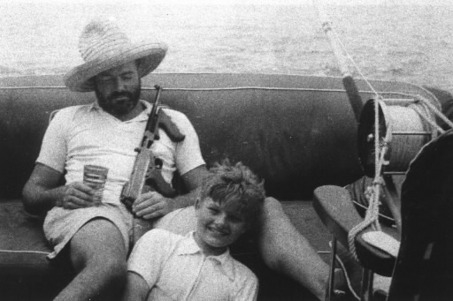
    Ah! But there’s a catch, isn’t there. Whenever you sit down, clear a desk, plonk that picture of Hemingway holding a gun in front of you for ‘motivation’, and get ready to write, you find yourself with a sudden urge to do the vacuuming, or take a stroll around the local park – complete with drug users squatting beneath a children’s slide – for ‘inspiration’. It’s time to admit it; you’re stuck. You’ve caught the most dreadful lurgy of all! Writer’s block.

    Though not as terrifying an ailment as housemaid’s knee, hearing the diagnosis can hit even the most enthusiastic aspiring writers hard. But fear not. As with so many maladies, the first step to recovery from WB is acceptance. They even do WB Anonymous meetings now, we hear.

    But how does one recover from WB? Aside from the well-known prescription, ‘Read; write; edit. Repeat’, we think it can prove pretty valuable to hear from writers themselves on how they actually go about doing this so-called ‘writing’.

    To such ends, we’ve very kindly gathered a set of #WritingTips: from writers; for writers. We hope you find them useful!

    Writing isn’t about getting laid, all right? Stephen King

    stephen-king

     “Writing isn’t about making money, getting famous, getting dates, getting laid, or making friends. In the end, it’s about enriching the lives of those who will read your work, and enriching your own life, as well. It’s about getting up, getting well, and getting over. Getting happy, okay? Getting happy.”

    The nitty gritty from Cormac McCarthy

    cormac

    “I believe in periods, in capitals, in the occasional comma, and that’s it.”

    Stop while the going’s good! Hemingway

    hemingway-with-bumpy

    “The best way is always to stop when you are going good and when you know what will happen next. If you do that every day when you are writing a novel you will never be stuck. That is the most valuable thing I can tell you so try to remember it.” 

    Don’t waste your money on creative writing schools or courses – Chinhua Achebe
    Chinua Achebe, obituaries

    “I don’t really know about [the value of being taught creative writing] to the student. I don’t mean it’s useless. But I wouldn’t have wanted anyone to teach me how to write. That’s my own taste. I prefer to stumble on it. I prefer to go on trying all kinds of things, not to be told, This is the way it is done. Incidentally, there’s a story I like about a very distinguished writer today, who shall remain nameless, who had been taught creative writing in his younger days. The old man who taught him was reflecting about him one day: I remember his work was so good that I said to him, Don’t stop writing, never stop writing. I wish I’d never told him that. So I don’t know. I teach literature. That’s easy for me. Take someone else’s work and talk about it.”

    On revisions and the rhythms of a story – Alice Munro

    Alice Munro wins Man Booker International Prize

    “I’ve often made revisions at that stage that turned out to be mistakes because I wasn’t really in the rhythm of the story anymore. I see a little bit of writing that doesn’t seem to be doing as much work as it should be doing, and right at the end I will sort of rev it up. But when I finally read the story again it seems a bit obtrusive … There should be a point where you say, the way you would with a child, this isn’t mine anymore.”

    Be practical – Margaret Atwood

    MargaretAtwood

    “Take a pencil to write with on aeroplanes. Pens leak. But if the pencil breaks, you can’t sharpen it on the plane, because you can’t take knives with you. Therefore: take two pencils.”

    Don’t worry about swearing – James Kelman

    James-Kelman-author.-002

    “People can use swear words to emphasise the beauty of something – so it’s not really a swear word at all. If you say something is ‘fucking beautiful’, how can it be swearing, because you’re emphasising the beauty of something. If so-called swear words should only be used when appropriate, well what do you mean, ‘when appropriate’? I was in my 20s before I even realised the word ‘fuck’ had to do with a sexual act for some people. It was never used in that way for myself, and none of my community used it in that way.”

    Don’t start out writing novels (they take too long) – Ray Bradbury

    ray-bradbury-zen

    “The best hygiene for beginning writers or intermediate writers is to write a hell of a lot of short stories.  If you write one short story a week, doesn’t matter what the quality is to start, but at least you’re practicing. And at the end of the year you have 52 short stories. And I defy you to write 52 bad ones.”

    Trust in your ability to say what you want – Kafka

    Franz-Kafka_300272k

    I am not of the opinion that one can ever lack the power to express perfectly what one wants to write or say. Observations on the weakness of language, and comparisons between the limitations of words and the infinity of feelings, are quite fallacious.”

  • novel

    Ah yes. The summer. The evenings are long, sultry and glorious; workloads are diminishing (at least in Europe, anyway); and the possibilities are endless. Now is the perfect time to finish writing that novel you’ve been working on. Definitely. Right now. This evening. Maybe this weekend. Maybe on vacation. Definitely soon, though. Very definitely almost right now is when you’ll be able to get past that first impasse – Chapter One – and empty the entire contents of your linguistic genius down on paper (or, more accurately, Microsoft Word).

    Maybe you’ll also finish reading that prohibitively long novel, too! Wouldn’t that be good? Besides, there’s only so many times you can read the first seven pages of Ulysses, before getting distracted by something important like the vacuuming.

    Of course, when it comes to finish writing the novel you’ve been working on, it’s easier said than done. But maybe – just maybe – this summer is going to offer you the inspiration you need to start writing.

    Summer changes us. Boundaries blur; borders relax. In the space opened up by these currents, a hope remains that we might fudge something through our own sluggish systems. The stilted, listless lassitude of days drenched in summer sunshine presents opportunity to relax, yes, and take stock of our lives (which is important, of course); but it also opens up new possibilities for real action – not simply contemplation. If Jack Kerouac can write On the Road during three short weeks in 1951, then maybe you can write your own little masterpiece on your summer holidays – or at least get a significant amount of writing done.

    There are plenty of calls to action these days. If you’re in need of motivation or inspiration, then you need only watch Shia LaBeouf’s speech on YouTube, or look at endless ‘motivation and inspiration’ posts on Instagram (or, if you’re in the mood for motivating quotes that will send you into a deep existential crisis, there’s always a David Foster Wallace Motivation Twitter account that can serve you well). Unfortunately, however, simply listening to a call to action isn’t, actually, enough. You have to act on it. And that’s the hard part.

  • 26 Acrostic Poems

    VERMIN
    ‘Vermin’ – original illustration by George Vernon

    P is for Prologue Articulate buffoons can deduce even fantastical grammar. However, I just keep lying; muttering nonsensical obscene poetic quotations, rhetorical stammers, talking utter verbal wittering. Xeroxing yawping zanyisms!

    A is for Abortion Although babies can, do embryos feel? Genes haven’t inherited judgement, knowledge, love, mind, nurture, or pain. Questionable reasoning, still, their unconsciousness verifies when x-chromosomes yird. Zoothapsis.

    E is for Evolution Abiding by Charles Darwin’s evolutionary findings, generations have inadvertently jeopardised kinetic life. Mutations now obscure populations, quelling resistance. Species therefore undergo variations which xenogenetically yearn zoopathology.

    B is for Birth A born child doesn’t envisage from growth how it journeyed, keeping life’s momentum. Nova of perfect quantity rest, suspended together upon velvet womb. X-chromosome… Y-chromosome… zoom!

    N is for Nursery rhyme Apple bore, chapel door, elephant fat, giant hat, ignite jeeps, kite leaps, more nightmares, or prayers, queen rules, scream tools, umbrella vine, weather xenurine, yippee, zippy!

    F is for Faith αlpha began Christianity. Delusional elephant faced Gods – Hinduism. In Judaism Koshers law. Muslim nations often practice Qur’ān readings. Swahilian tribes use Voodoo. Wisdom ‘xorcizes’ your zen.

    L is for Love Arms bent cradling dearest, entwined for gracious hours. Intoxicating joyful kisses linked, mirroring neatly our palms, quasi reflections sealed together. Utterly vivacious. We. Xiphopagus, yet zestful.

    H is for Horizon A boundless cloud drifted effortlessly from ground’s horizon, inducing joyous kaleidoscopic luminescence, migrating nimbly overhead. Prospering quickly, rain started tumbling upon valleys, weeping. Xanadu’s youthful zenith.

    C is for Church Antidisestablishmentarianism be Church’s decree, exiling faithless gatherings happening inside Jehovah’s kingdom. Lust must not obscure passion, questioning religious sins to undermine values withstanding. Xerif Yahweh zounds!

    G is for Gay A boy callously denies ever feeling gay. However, ignoring joy keeps love’s motion nocturnal of passion. Questioning represses sexual taste, ultimately veiled within. Xenomorphic youthful zone.

    S is for Space Astronauts, beckoning countdown detonation, explore foreign galaxies hither. Ignition jets kick-start. “Liftoff!” Mission now orbiting planets quivering rings, sailing through universes. Voyaging wanderers x-raying yonder zodiac.

    R is for Racism A black cat doesn’t extradite feline gingers having identity juxtapositions. Kenyan lions merge naturally over prides. Quiet racism still tiptoes under view when xenophobia’s your zoo.

    Z is for Zebras Africa’s been considered dramatically exquisite for generating habitat. In jungles, keepers located magnificent natural observations, perceiving quirkily rare species. Twas unimaginable! Vibrant, wild, xanthic (yellow) zebras!

    U is for Upside down Zealously yelling xeric worthless verse upsets the sequence, revealing, quite providentially, other nomenclature. Morphemic language knits jargonistic idioms. However, gobbledegook flourishes, eventually deriving coherent backward alphabets.

    O is for Orchestra A buoyant crescendo detonates, echoes frivolously gathering harmonious instrumentation. Jiggling keys, like millipedes nattering, oscillate, perpetually quaking. Resounding symphonies thunder until vanquishing with xylophones yelling zing!

    Y is for Youth Accidentally by chance, Dave escaped from gerbil hutch. Inquisitive juvenile kids lurk, moulding notions of preposterous questions, riddled secret treasures under verandas where X yearns zilch.

    M is for Mathematics Algebra bemuses calculators deriving equations factorising geometric hypotenuses. Integration jumbles key logarithms multiplying negative ones. Processing quadratics reveals substance to universe verified with X, yet zero.

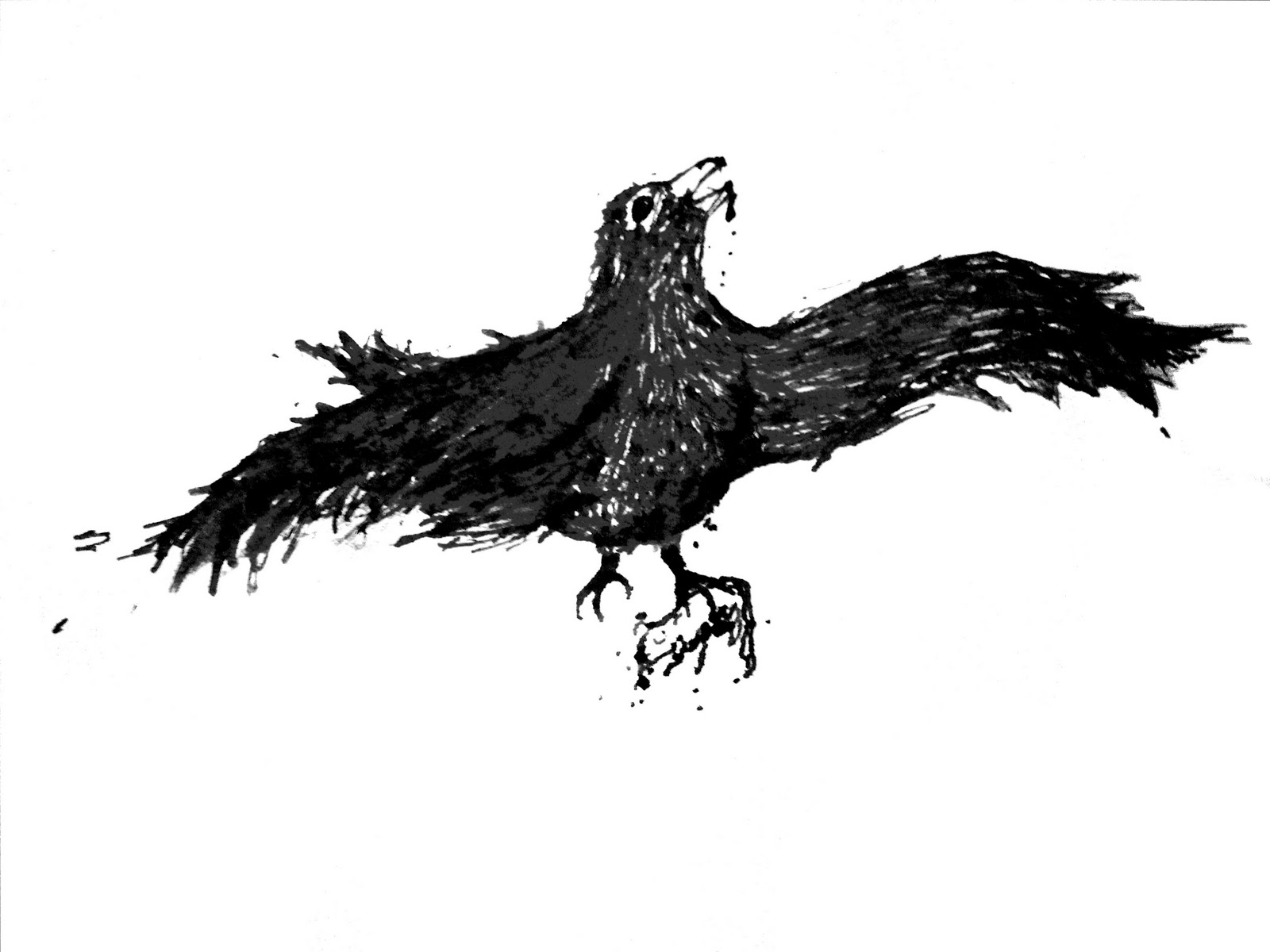
    V is for Vermin A black crow dived expeditiously, feathers gilding his indigo jacket. Kidnapped little mice nesting on pastures. Quickly ripped, scraped, tore up vermin with xyster yanking. Zoophagy.

    T is for Tramp A bent cardboard duvet enveloped, from gales, his identity. Jaywalkers kneel like monarchs, not offering pockets. Quaking rotten shoes the unhappy vagabond wore. Xmas – yesteryears zero.

    X is for X-Rated Adults brandishing corrupt dirty eroticism, flaunt genitalia heartlessly. It jeopardises kinships, letting masturbation nullify. Orgasmic porno queens rouse sexual taint until Viagra withers. XXX yearn zooids.

    I is for Insanity Anxiety, beyond chaotic doubt, embraces frail genius’ head. It judiciously keeps letting my nervousness obligate psychotic questions. Rebellious scaring thoughts umbrella violent ways. X-rated? Yes! Zaniness!

    K is for Kill A blade cuts deeply, empting from gushing head’s inflamed jugular. Knife lacerates materialism’s never-ending ordeal. Pessimism quits – resulting suicide. The ungrateful veins weep, xeransis. Yearlong zombie.

    W is for War Adieu bugle, crying deaths eulogy for glorious heroes, if juvenilely. Killing longevity means naively obliterating peace. Questions rendering? Surrender to undo violent warfare. Xenagogue your zealots.

    J is for Justice Albeit by cruel detriment, execution for genocidal homicide initiates justice. Killing life mitigates not of punishment. Quietus retributes stolen time until victims with xenium yield zoetic.

    Q is for Questions Answers bewilder consideration. Does everything fade? Generations have interpreted juke knowledge. Life’s meaning, nevertheless, offers perplexing questions. Reason seams to undermine validation. Why X? Y Z?

    D is for Death All beings cannot defy eventual fate. Graves hallowing invisible joy. Kin lying motionless, north of paradise, quiet restful stillness. Tombs upholding virtue when xylem, yourself, zeal.

    About the author of this post

    George Vernon is a writer and teacher based in the UK. He graduated from Warwick university with a first class (hons) degree in English Literature and Creative Writing in 2012, and completed his MA degree in Writing from Chichester University two years later. When not teaching, George can be found writing; learning; living; loving. He tweets at @MrGeorgeVernon

  • In a tale of bread rolls, boiled sweets and missed opportunities in Rotherham, Jean and Graham wait for their friends to turn up for tea after a grand day out in Yorkshire. Written by Chris Smith.

    About the writer

    Chris Smith is a full time content marketing and PR type who dabbles in scriptwriting, creative writing and occasional journalism. He is co-founder of Write-Track with Bec Evans. He tweets at @SwarmComms.

  • censorship

    At news award-winning book, The Curious Incident of the Dog in the Night-Time, is set to be pulled from a school reading list over parental concerns about swearing, the debate around language and swearing in literature continues to rage on. But what impact does banning books for supposedly ‘bad’ or ‘offensive’ language actually have, and what message does it send? Professor Wu investigates…

    Freedom of language

    The Whitbread Book of the Year winning novel, Curious Incident, has been pulled from the summer book reading list by a Florida School because, as one parent said: “the f-word is written 28 times, the s-word 18 times, and the c-word makes one appearance […] a few characters also express atheistic beliefs, taking God’s name in vain on nine occasions.”

    It’s perhaps easy and over-simplistic to simply write off this latest act of book censorship from the evangelical, overtly hysterical US ‘sensitive parent’ school of thought. The type of thing the character of Kitty Farmer in the film Donnie Darko might do. Yet to do so is perhaps to sideline an otherwise important debate.

    Indeed, this is something the author of Curious Incident, Mark Haddon, himself highlights: “The truth is that it always generates a really interesting debate among school kids and librarians and parents, not just about Curious, but about literature and freedom and language, and this is an undeniably good thing,” said Haddon.

    The issue here is exactly the point Haddon raises: that at its very core the debate here concerns freedom – freedom of language; of literature; of expression; of culture. And when it comes down to it, attempts to limit and control this freedom are not made solely by fundamentalist Christian parents in Florida who don’t want to read swear words or confront any possibility concerning their religion and belief other than those offered by the bible (which itself, of course, is so full of contradictions that it, perhaps ironically, leaves itself open to almost limitless interpretation – affording readers countless opportunities and possibilities of reading into it however they like to make assumptions that suit them).

    Because of course attempts have been made to censor and control creative expression for hundreds, if not thousands of years…

    Censorship and control

    Think of the words of James Kelman, one of Scotland’s most important living writers: “there has never been a time in the history of this country when censorship and suppression did not exist. […] The film, theatre, newspaper and mainstream magazine industry, all exercise censorship, they collude in suppression.”

    Of course, Kelman himself has been the subject of this suppression and censorship. In 1994, when Kelman won the Booker Prize for his novel How late it was, how late, the controversy that followed deterred publishers from promoting his subsequent books. Indeed, the author was held up to public ridicule; made out to be something far less than he was. A contemporary columnist at The Times compared the experience of reading Kelman to being stuck in a train carriage with a drunk Glaswegian. It’s possible this columnist may have missed the point of it all.

    After all, How late it was, how late, acts as a subversion against attempts to control language. The changes in syntax, the interior monologue technique which leave paragraphs unfinished and the frequent use of expletives such as “fuck”, act as a retort to the conception that there is a “right” and “wrong” way to speak. Because, in truth, there is no such thing as ‘bad language’ – it’s just language. It’s expression.

    Lectures on Rhetoric and Belles Lettres

    Part of debate against swearing or otherwise non-standard English stems from Adam Smith, who, in 1748, began a conscious effort to standardize the English Language. His Lectures on Rhetoric and Belles Lettres hoped to cultivate “the most imperfect” dialects found in regions of Britain, and sought to do away with anything that deviated from ‘standard’ English.

    The crucial flaw in Smith’s works and reasoning, though, is that ‘standard’ English is a myth. The reality of language, the reality of the way we speak and the way we think, is anything but standard. It’s utterly flawed and imperfect – prone to irregularity, syntactical confusion and occasional absurdity. Yet there’s also a certain beauty and truth in this. In fact, it’s only by breaking rules and deviating from ‘the standard’ that we might hope to create new forms of expression – or even new words.

    Any literature that therefore does not contain swearing, or some form of irregularity or deviation from Smith’s rules, stands against the natural. This is part of the reason David Shields, author of the acclaimed Reality Hunger, described traditional novels as “unbelievably predictable, tired, contrived and essentially purposeless.”

    It’s clear why such attacks against the novel can be well-founded. After all, there is certainly something contrived about characters who only speak eloquently – if not perfectly (with a masterful use of all grammar and punctuation). This is indeed something Kelman rails against in his essay The Importance of Glasgow in my work:

    “Look at the nice stalwart upperclass English Hero (occasionally Scottish but with no linguistic variation), whose words on the page were always absolutely splendidly proper and pure and pristinely accurate, whether in dialogue or without. And what grammar! Colons and semi-colons! Straight out of their mouths! An incredible mastery of language.”

    Yet not only is there something problematic here from the point of view of accuracy, realism and truth; there’s possibly something more troubling and disconcerting at any attempt to control language and freedom of expression.

    Just think of Irvine Welsh, author of Trainspotting (a book which has three instances of “cunt”, one of “fuck” and one of “fucking” on the first page). Welsh rails against moves to censor literature on the basis of swearing – and explains:

    “it seems to be an attempt to erase and/or marginalise certain cultures, i.e. the working class, the ghetto and so on. Language is a living, organic thing. If you try to control that and prescribe what people say, the next thing is prescribing what people think.”

    Such concerns of course follow the thoughts of Orwell, who wrote in Politics of the English Language that “If thought corrupts language, language can also corrupt thought.” Indeed, Orwell also refuted the idea that one should follow “a ‘standard English’ which must never be departed from” – rather, he said, “correct grammar and syntax are of no importance so long as one makes one’s meaning clear”.

    What this again illustrates is that to suggest a book is of poor quality because it deviates from the norm or standard, or because it possesses within its pages swear words or other words in which people find offense, is to completely misread such a book, and to misunderstand the point of it all – not just the book; but culture itself.

    This is because culture is not standard. It should not, therefore, be contained or controlled. It is natural. It is alive. It flows and changes in various fluctuations and metamorphoses. Just as one should not attempt to limit access to or dismiss books because they contain ‘foul’ language, neither should one attempt to downgrade or delegitimise books written in perfect Standard English – because they have an equal part to play in showcasing one part of the greater whole that is ‘culture’.

    And here one can see the danger in trying to standardise or control language, because: “The standard language literary form becomes ipso facto ‘the’ literature, and everything else is subservient. It’s marginalised. Writers who are using phrasing and rhythm and grammar in a different way from the standard English literary form – in other words, trying to capture language as it is used by their own community – well it’s a form of English, but it’s inferiorised. It gets pigeon-holed as, at best, vernacular literature,” as Kelman notes.

    What’s the f*cking point?

    Of course, the hope when attempts at banning books or censorship occurs is that such attempts will backfire; setting those asking for such things up for ridicule, particularly from younger people. As Irvine Welsh says: “It makes [censors] seem very infantile.”

    And this, it must be said, certainly seems true. How can anyone, after all, be genuinely upset by swearing – words that irrefutably exist and form a crucial element to our language. People so often don’t even swear to be abusive or to cause offense: it’s just how people talk.

    Here again, Kelman is on hand to explain further: “people can use swear words to emphasise the beauty of something – so it’s not really a swear word at all. If you say something is ‘fucking beautiful’, how can it be swearing, because you’re emphasising the beauty of something. If so-called swear words should only be used when appropriate, well what do you mean, ‘when appropriate’? I was in my 20s before I even realised the word ‘fuck’ had to do with a sexual act for some people. It was never used in that way for myself, and none of my community used it in that way.”

    Indeed, Willy Maley recognises the range of functions swearing can adopt in Kelman’s work, in his essay ‘Swearing Blind’. Maley writes: “The swearing is integral to Kelman’s power as a writer. It is neither a vulgar and superfluous supplement nor an offensive coating concealing shortcomings in the narrative, dialogue or characterization.”

    So, when we see stories of people, organisations, parents, or – more worryingly – governments attempting to censor, ban, delegitimize and generally control the books we read and the type of culture we have access to, we might think ourselves in a position to point out that there is nothing logical about their stance. And indeed, we might suggest they are ever so slightly missing the point of it all.

  • hi-kids-3-300x184

    I don’t have an infectious disease but if I did, I imagine telling people you have one garners much the same reaction as telling people you’ve written a short comedy film.

    There’s normally some initial interest – even enthusiasm – but then a yawning chasm of social awkwardness opens as people think I might expect them to like the film or even worse – find it funny.

    Help, guidance and expertise

    Not withstanding this reaction I am pressing on with my lonely foray into character comedy and writing what I hope might someday be the pilot of a sitcom. I am helped in this by Micheal Jacob, my writing mentor who has, so far never backed away from me in a social situation (although there’s still time).

    Micheal is a hugely experienced former BBC exec producer and is behind some of the UK’s best-loved comedies including The Smoking RoomMy Family and Birds of a Feather. He is also the author of a smashing book on TV sitcom Getting It On and I am genuinely honoured to have his help, guidance and expertise. I am only sorry that I am not writing things more quickly. Indeed whole civilizations have lived and died in the space of time I have taken to write 27 pages of script.

    Learning from Micheal: advice for working with a mentor

    In 2013, I won a competition through comedy film production company COFILMIC to have my script of Tea Time in Haworth, made into a short film. Micheal kindly offered to script edit for me and then after chatting about magical northern realism and his experiences with tempestuous actors, encouraged me to keep writing – but next time a longer piece. Which is what I’m currently trying to do.

    Here are my five tips on what I’ve learned from working with Micheal:

    1. Realise what a mentor is for
      A mentor isn’t going to tell you what to write or how to write – however much you might want them to. They’re not going to write things for you. You have to do the thinking and the writing. For me, Micheal steers me in the right general direction and gives me constructive advice and feedback via sometimes frustratingly vague but eventually always very useful comments.
    2. It’s up to you to do the work
      In an early email exchange, Michael said that I should make one part of my story ‘more complicated’. What in God’s holy order does that mean? It’s already complicated – isn’t it? I went away and downloaded a script of the genius that is The Smoking Roomand broke it down into scenes to see what ‘complicated’ meant. I then bought a book of Royle Familyscripts and read all three series – taking notes as I went. If you’re still unsure ask for clarification but do the work first.
    3. Be ready to take brutally honest feedback
      If you want people to say only nice things about your work, go ask your mum. I find writing workshops where everyone sits round saying how great other people’s ideas are to be deeply unhelpful. Micheal is always courteous and polite with his feedback but the message is always crystal clear. A mentor doesn’t do the writer any favours if they’re not frank. It’s good to be a bit scared of them.
    4. Know your own style but trust their judgement
      Part of the problem with writing scripts is that every bugger has a view on them. But some bugger’s views are better than others – like Micheal’s. If you’re writing something like a sitcom and your mentor tells you something won’t work – that’s because it probably doesn’t work. If you feel you’re being forced into taking a course of action that you wholly disagree with – you’ve probably got the wrong mentor.
    5. Never take your mentor’s help for granted.
      Be nice to them, don’t abuse their help, always understand they are busy. Don’t hassle them but make it clear that if you need them to look at something quickly. They’re a writer, they know that you work to deadlines. Also, be respectful of how you communicate with them. In general, writers tend to like good writing and get pissed off with typos, poor spelling and general sloppiness – whether in your work or correspondence. I know I do.

    So, in summary:

    • Don’t expect your mentor to do your writing for you – that’s your job
    • Feedback isn’t always going to be easy to understand – do the research
    • Feedback isn’t always going to be easy to take – deal with it
    • If you really don’t agree with your mentor’s advice – get a new mentor
    • Respect people and don’t be a pain in the ass (this is just general life advice)

    About the author of this post

    Chris is a writer, blogger, former philosophy lecturer and now co-founder at Prolifiko, a tech startup making digital productivity tools for writers of all types. His most recent side project is a new blog called Founders and Philosophers, where he’s aiming to write about what entrepreneurs can learn from history’s greatest thinkers.  He tweets at @SwarmComms.


    You’ve read about it: now watch the film!

    You can now watch Tea Time In Haworth, the excellent short film written by Chris, here. Nothing in the rulebook’s very own movie critic and film aficionado, Professor Wu, says: “Tea Time in Haworth is an absolutely excellent film – funny, interesting and engaging all in equal measure.”

  • plain sight pic

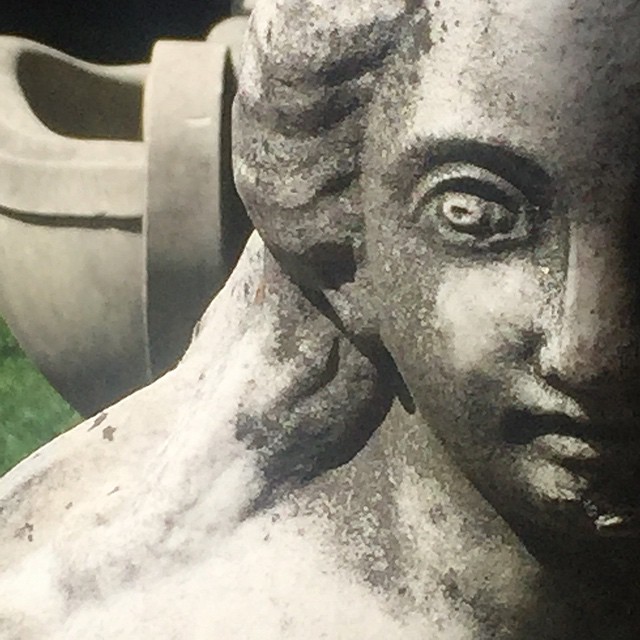
    Eyes that cannot close,
    Do not always see
    For behind each blink
    Forms a memory,
    And she makes none.
    Her stone drapes,
    Fold heavy,
    As sunken shadows
    Embrace gravity,
    Woebegone.

    Deep loss
    Is not solely felt
    By those who remain
    and remember,
    The resilient ones,
    Frozen awake
    The benighted
    Passively surrender
    And dead stare,
    with silenced tongues.

    About the author

    Artist and activist, writer and creative conservationist, Asher Jay, uses ground-breaking design, multimedia arts, literature and lectures to inspire action and promote change. All her work is anchored by the deep commitment she harbours toward the realisation of a collective future. Visit her website and tweet her @EarthHeiress

  • Man of the moment Jeremy Corbyn has written a passionate article in The State of the Arts, arguing what we here at Nothing In The Rulebook have always known: that there is creativity in all of us and, as such, government should be supporting the arts with funding – rather than slashing art council budgets left right and centre.

    In an attack on the increasing inequality of opportunities within the arts and creative industries, the Labour Leadership frontrunner argued that “every child deserves the chance to learn a musical instrument, act on stage, and develop their creative imagination.” He also pointed out that “the arts and creative industries are the backbone of much of our cultural heritage” and, as such, would be protected and defended under a Corbyn-led opposition Labour party (and, of course, under any future Corbyn-led government).

    “It is my firm belief that the role of government must be to work alongside arts communities and entrepreneurs in widening access to the arts, and for this broader engagement to stimulate creative expression, as well as support us in achieving our social objectives,” Mister Corbyn wrote.

    Corbyn argued that the Government was using the guise of a misguided – and economically illiterate – austerity programme to make savage, ideologically driven cuts to the UK artistic industries – and was following on from the moves of Thatcher in the 1980s, which, Mister Corbyn noted, “sought to disempower the arts community, [in an attempt] to silence the provocative in favour of the populist.”

    In a rousing call to arms, Corbyn wrote: “Beyond the obvious economic and social benefits of the arts is the significant contribution to our communities, education, and democratic process they make. Studies have demonstrated the beneficial impact of drama studied at schools on the capacity of teenagers to communicate, learn, and to tolerate each other, as well as on the likelihood that they will vote. The greater involvement of young people in the political process is something to be encouraged and celebrated.”

    “Further, the contribution and critique of our society and democracy which [the arts have] the capacity to offer must be protected. To quote David Lan, “dissent is necessary to democracy, and democratic governments should have an interest in preserving sites in which that dissent can be expressed,” The Labour Leadership frontrunner said.

    Analysis

    “While it is as yet unclear what Jeremy Corbyn would personally make of Nothing In The Rulebook, both myself and my esteemed accomplice, Billy the Echidna, believe he would be firmly in favour of our project, and would like to take this opportunity to invite him to contribute to our site any time – alternatively, he can always pop by and say hello at our residences at London Zoo or the Natural History Museum,” Professor Wu says.

    “Jeremy Corbyn has worked with and for the arts sector throughout his time in parliament, and his most recent article demonstrates why he is winning the hearts and minds of people throughout the country, and across the political spectrum,” Professor Wu adds. “For too long, funding of the creative industries have been slashed, and creative individuals from poorer or less fortunate backgrounds have been denied the opportunities to express themselves that they deserve. We can’t all be Benedict Cumberbatch, you know.”

    Billy the Echidna agrees: “The devastating £82 million in cuts to the arts council budget over the last five years is repealing creativity and increasing callous commercialism, as priceless community programmes, art galleries, operas and other artistic and creative organisations are targeted by a neoliberal ideology that places value on currency, rather than human beings.”

    “It is heartening to see the levels of support Mister Corbyn is currently experiencing, as the government needs MPs like him who are able to offer an alternative programme for the arts – which supports their ability to enrich the cultural lives of hundreds of thousands of people, while also promoting a feeling of community ownership and spirit, from which we all benefit,” Billy adds.

    Both Billy and Professor Wu noted that the Government cuts to arts funding seemed driven by a vehement, ideological drive to attack the artistic industries, which appear to frighten conservative minds, due to their propensity to foster original thought and promote ideals at odds with neoliberal ideology.

    “Faced with the challenges ahead, we both firmly support Mister Corbyn,” they said. “To use a popular social media hashtag, let’s just say, in Jez we can!”

  • commute-2

    He wanted to kill someone. Not anyone in particular, or for any particular reason – he just wanted to see what it felt like.

    He didn’t want to get caught, though. He’d be careful.

    He bought a high-powered collapsible rifle with a silencer from a bloke’s mate’s friend of a pal, and found an old abandoned building in Bethnal Green that was right next to the railway line to Liverpool Street.

    He went in, suited and booted at 7.00am. He found an old fridge to sit on, opened the briefcase and constructed the gun.

    Sitting in the darkness (away from the window, of course), no-one knew he was there, and once people did they wouldn’t be able to do anything anyway – no-one would know exactly where they were, and by the time they’d called the police he would be gone.

    Then he simply waited for one of the frequent trains to stop outside, as it waited for a platform at the next station to clear.

    He just wanted to see what it felt like.

    Eventually a train arrived. Commuter traffic into which he’d blend perfectly; all suits and power – he nearly tried to justify it in his mind as a statement against capitalism. Some protest.

    There was a man facing towards him, reading a book – he’d do.

    He peered through the scope, adjusting it as he did so. Between the eyes was industry standard, he’d been told.

    The cross hairs on the bridge of the nose, and the man looked up – looked straight at him. Blue eyes.

    SPINCH.

    The man’s head was gone, and screaming erupted from the carriage.

    He sat down, collapsed the gun into the briefcase, took the stairs three at a time, and then out onto the alley where the screaming was ripping apart the sky.  Under the bridge and away – turn left onto the street, and off towards the station. A few of the male commuters had managed to get free. They ran towards and past him, not even a second glance.

    So, how did it feel, he considered.

    Not much cop. Bit of a disappointment, really.

    About the author of this post

    The Goatman – due to the usual experiments going wrong &c &c, The Goatman is  an internationally-available gentleman of letters, raconteur and wit. His amorous conquests are myriad, his taste in whisky of renown, and his ability to look comfortable in extreme situations is of significant scientific study. He has been known to conspire with Vagabond Images.