• ‘It felt like I’d caught a beautiful butterfly, put it in a glass case, and put a pin in it,’ – Pamela Petro on writing books, finishing books, and teaching others to write.
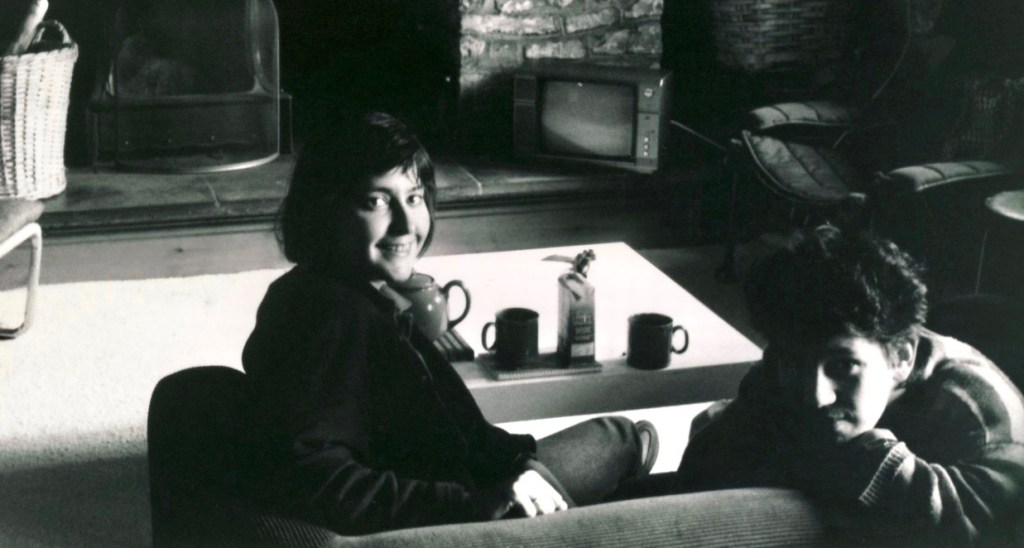
    Pamela Petro and her partner, Marguerite, in their 20s, in Wales.

    Five years ago, Pam Petro was visiting her mother in a nursing home in Connecticut. She’d arranged to meet her mother’s caregiving team for a meeting, but she was early, so she went for a walk. It was a walk she’d done before, around a pond in the grounds, but as she set off, she saw a car parked across the pond’s entrance. 

    ‘Why would anyone park there?’ she thought, but started to walk around the car. 

    As she did, a voice called out of the passenger window: ‘Are you looking for Pam?’ 

    Pam started – she’d thought the car was empty. ‘Sorry?’ 

    ‘I said, are you looking for Pam?’ It was a woman with straggly grey hair and very few teeth. 

    ‘I am Pam,’ said Pam. 

    The woman was unsurprised. ‘Well, Pam just came by and said she’d be out walking around the pond, picking up rocks. Go on now. If you hurry you can catch her.’ 

    Pam started towards the path. As she got closer to the pond, she could see there were no rocks and no Pam, other than herself. 

    ‘She’s talking about me,’ she realised. 

    ‘It just felt like the world shifted,’ Pam tells me, over Zoom in 2021. It’s lunchtime where Pam is in Northampton Massachusetts, and almost dinnertime for me in Sheffield. We’re both in our bedrooms, and Pam is telling me the story of the story at the heart of her book, The Long Field.

    Pam Petro

    The Long Field is a memoir, but it’s more than that. It’s an exploration of the Welsh concept of hiraeth – the idea of feeling homesick, or a longing for something irretrievable. It could be a place, person, or time – anything, really. But you know you don’t have it, you’re aware of your own longing and, as the longing sinks down into your bones, it becomes something stronger. Hiraeth.

    Pam weaves this concept into stories from her own past. Her life as a gay woman, as the survivor of a train crash, as a daughter, teacher, partner, and friend. In doing so, she makes a subject that could seem abstract and enigmatic suddenly concrete: as solid as the ground under your feet, or as a car blocking the entrance to a pond. 

    ‘It was never supposed to be about me,’ Pam says. ‘It was supposed to be about Wales. It was the input I had from agents and the friends that read it – they said ‘Where are you in the book?’ I kept saying I didn’t want to be in the book. I thought that would be the end of it. But then I had the experience at the pond at my mom’s nursing home. It hit me then.’ 

    When the woman in the car told her, quite literally, to find herself, Pam knew she had to return to Wales, write from being there, not from memory. Wales, the town of Lampeter, specifically, was where Pam travelled as a young woman and lived for a year. Though thousands of miles away from her place of birth, Pam immediately felt at home. She became obsessed with Welsh stories, Welsh language, Welsh people. She learned to speak Welsh and travelled around the world with her partner, Marguerite, finding other Welsh-speakers in locations all over the globe. She wrote a book about her adventure, Travels in an Old Tongue, and wrote another two nonfiction books, The Slow Breath of Stone and Sitting Up With the Dead. She’s a lecturer in writing at Lesley University, Smith College, and The University of Wales, Trinity St David. She knows her way around words. But The Long Field felt different. It wasn’t just about writing, or Wales. 

    ‘My three previous books were about determined events,’ Pam says. ‘I did the research and wrote the books. I participated in the events but they were external to me. This book emerged from life itself and from my relationship with Wales. I’ve been thinking about it and trying to write it for thirty years. One of the reviewers of Travels in an Old Tongue said ‘it’s all very well and good, but why is Pam so obsessed with Wales?’ That stuck with me for years afterwards. I started writing an essay about hiraeth in 2010 and it came out in The Paris Review in 2012. The response was huge. People said ‘I know what that feels like.’ That was when I realised this has meaning to more people than just me. This is the project I really need to work on.’ 
    So she’s been thinking about it for thirty years, writing it seriously for seven. The book covers a wide expanse of thematic ground – she writes about her relationship with her parents, her relationships with men and women, her recovery from a traumatic, life-threatening train accident. All intimate, emotional subjects. But perhaps the most intimate section of the book is where she introduces Aled. 

    Aled Rhys is ‘beautiful, bilingual, bisexual’ with ‘the contradictory appeal of the gods of old.’ He’s an athlete and a poet. He’s also completely made up. Pam created him as a way to keep Wales with her, even when she returned to the States. Though she created romantic sagas about him and his friends, it wasn’t until she was recovering from the train accident in which she almost lost her life, that she retreated further into fiction. 

    ‘I think fiction is a break for both writer and reader,’ Pam says over Zoom. ‘We say we ‘lose ourselves in books’ because we walk away from our own lives and think of others. I think we think of that in terms of readership but it’s also a way of leaving yourself behind as a writer. I did wonder about including this in the book.’ She starts to laugh. ‘I thought, ‘Am I going to come across as a nutcase?’ But I sort of tested it out as an essay, again in The Paris Review, and again I got a lot of responses. It was people, mostly women, writing to say ‘Oh thank god, I’m not alone.’ That felt really good.’ 

    But finishing anything you’ve been working on for thirty years can be difficult, let alone something so personal and exposing. Pam teaches at two universities in spring and one in autumn, so writing time was scarce, every word hard-won.

    ‘I thought I’d be jumping for joy when I finished,’ she said. ‘I thought I’d run out into the street and pour champagne on my head. But it didn’t feel like that. It felt like I had just caught the most beautiful butterfly I’d ever seen, put it in a glass case, and put a pin in it. It was perfect but it was dead. It sounds dramatic but I was so used to the book living with me and changing as my life changed. To finish it was devastating.’

    Because writing is more than ink on a page or text on a screen. Writing demands that you spent a certain, considerable amount of time putting words in order, moving them around. It’s time you spend, every day if you’re disciplined, contributing to something bigger than yourself. This last statement just trips off Pam’s tongue mid-Zoom, but it stays with me for days afterwards. The idea that, even if no one reads what you write, you’re contributing to something, inching your way closer to something important, breaching some kind of gap. Between what? Yourself and yourself? I don’t know about you, but to me that sounds like trying to find yourself. That’s hiraeth with words. 

    This is what it’s like talking to Pam. You start with something funny or flippant – the weather, where you’re both sitting, what you think of Wales – but before you know it, you’re talking about the purpose of fiction, why we make stuff up, how the words we use change who we are. But none of it is hard to follow or intense. Pam laughs a lot and talking to her is fun – she must be a wonderful teacher. 

    ‘It’s no accident I started teaching the year before I started writing this book,’ she says. ‘In a workshop, the moment you learn the most is not when your work is being discussed but when you prepare to discuss other people’s. Then, your ego is not involved and you can see clearly. I’ve learned so much about writing from doing that. As I’ve taught, I’ve become a better writer. Teaching has enabled me to write this book. Could I have written this book before I started teaching? I don’t know.’ 

    Not only has teaching improved her writing, but it’s also affected her relationship with Wales. Pam teaches as part of the Dylan Thomas summer school. Students from the US travel to Wales to study. A lot of them have never been to a place like Wales – they’re from urban or suburban parts of the States – and a lot of them are people of colour. 

    ‘It made me realise I can walk into Wales and not immediately be a foreigner,’ says Pam. ‘Nobody would say ‘You’re not from here.’ But the Black students immediately feel ‘other’. They’ve shown me how white Wales is. Some of the reactions from the locals to the students… it’s like going back fifty years in some ways. That side of it is something I’m not always aware of. That really stood out to me and I wanted to make sure I included it in the book.’

    It seems to me that the best teachers turn up to class because they want to learn too. The best writers write not because they have all the answers but because they want to discover something for themselves. Pam’s here, eyes wide, ears open, pen ready to take notes. 


    The Long Field will be published in September 2021. You can pre-order copies from Little Toller Books here.

    You can find out more about Pam and her writing over on her website, and follow her on Twitter and Instagram.


    About the Author

    For ten years, Ellen Lavelle has interviewed writers for The Young Journalist Academy, Nothing in the Rulebook, Newark Book Festival, and her own blog. She’s written for several publications, including The Sunday Times Young Writer of the Year Award Blog. Now an editor at Nothing in the Rulebook, she writes fiction and non fiction, while working as a copywriter for an education company. You can follow her on Twitter @ellenrlavelle
  • Metamorphosis: an interview with poet Charlotte Lunn
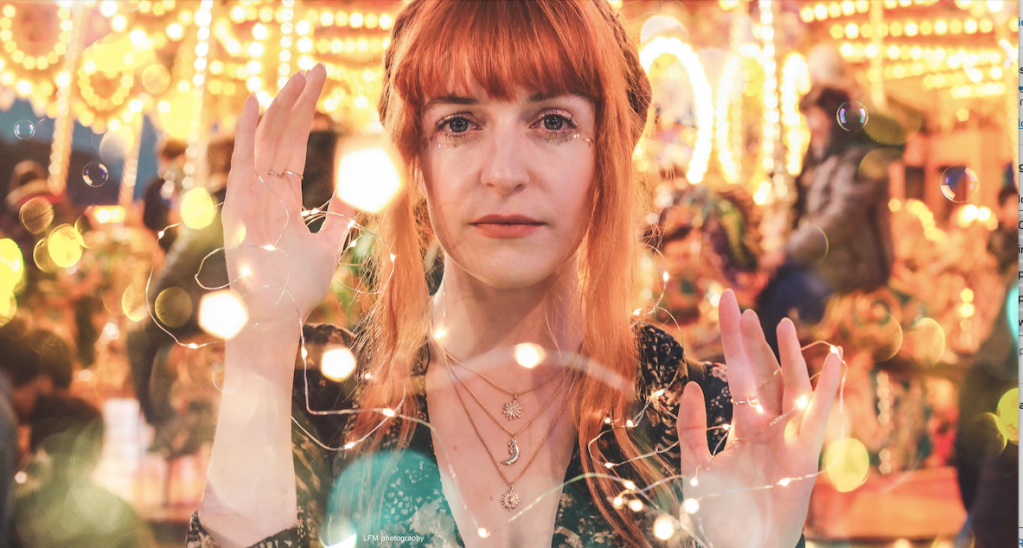
    Poet Charlotte Lunn. Photo credit: Laura Foulds Moody.

    Charlotte Lunn went to her first poetry reading when she was ten. There were community days at her local church every Saturday, and one weekend they invited a poet. He’d written a book of children’s school poems and, as he read, Charlotte became enthralled. He signed her book and she took it home. She told her Dad: ‘I want to be a poet.’ 

    And now she is. She’s written her own book of poetry, Metamorphosis. She’s signed copies of it. But it’s not been an easy ride. The poems inside Metamorphosis deal with Charlotte’s personal experiences of trauma, abuse, mental health difficulties, and her path to recovery. 

    ‘Writing and rereading some of the poems was painful,’ Charlotte tells me over Zoom. ‘Other times it was cathartic. At times, I even felt removed from them. It’s a different experience every time. I do think it’s helpful though. I’m a spoken-word performer as well so having that kind of emotional connection with a poem really helps me tap into that place. I think that makes performances more authentic – it’s really important.’ 

    Though not able to appear at live events for the past year, Charlotte still managed to find ways to perform her poetry, running workshops and readings online. 

    ‘Teaching people really feeds my soul,’ she says. ‘I love it so much and I hope I get to do it for the rest of my life. Connecting with other people that want to learn more about poetry and being able to help people develop their writing is such a beautiful thing.’ 

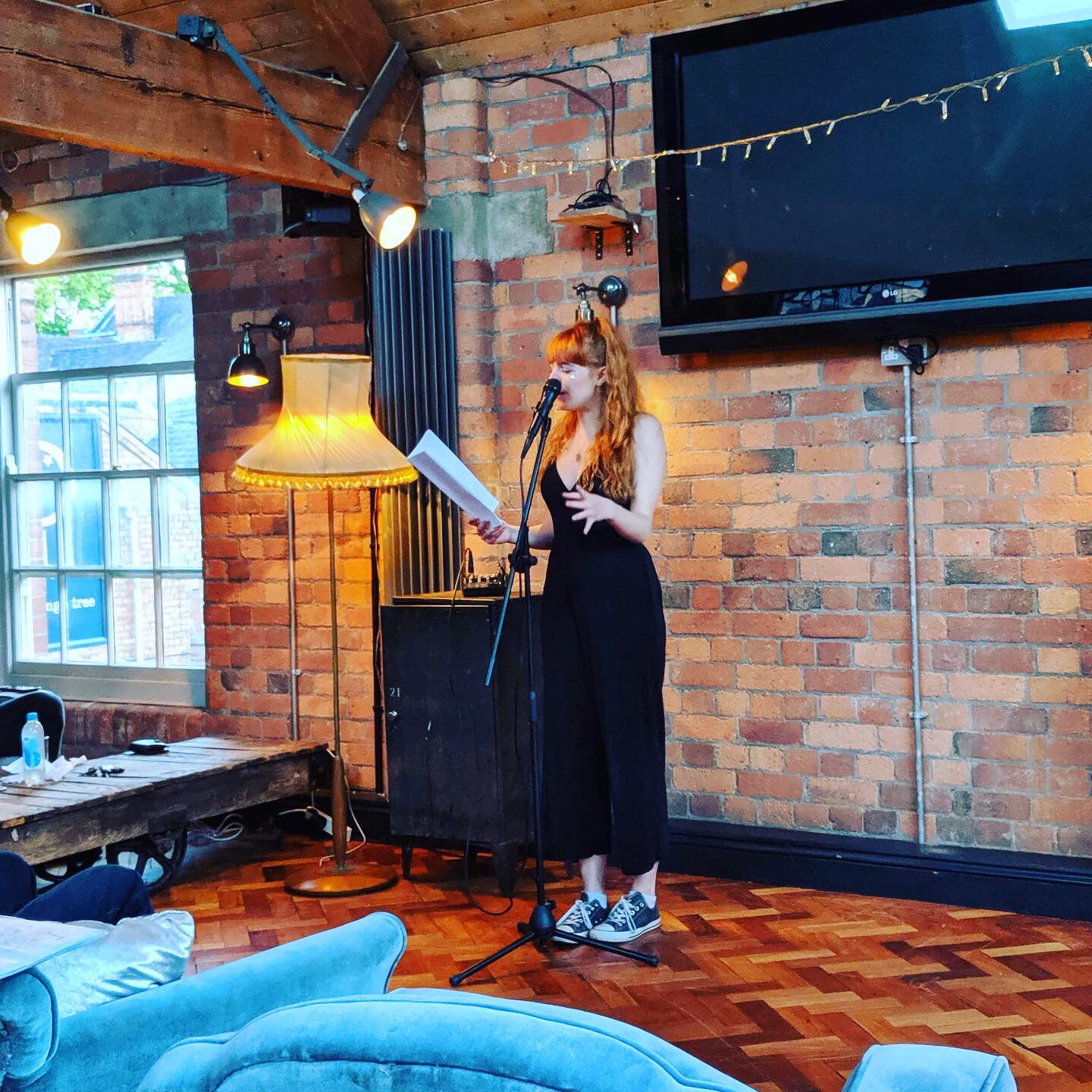
    Charlotte performing pre-Covid. Photo credit: Laura Foulds Moody.

    Charlotte is chatty and cheerful; with her long, pink hair and huge blue eyes she seems to shimmer on the other end of the Zoom call like the Good Fairy of poetry. But the content of the book is hefty and serious. Among other things, Metamorphosis deals with emotional abuse and the stigma around periods and cervical smears. Online, Charlotte has also charted her experiences with chronic illness and her recent diagnosis of fibromyalgia. Her next project, as-yet unentitled (or even officially announced – we’re getting a Nothing in the Rulebook exclusive here), is set to encompass poems inspired by the stories of people living with chronic illness. So it’s no wonder that a writer like Sylvia Plath affected Charlotte so deeply. 

    ‘I’ve devoured everything she’s ever written,’ she says. ‘I think she’s the queen of poetry.’ 

    But baring your soul, even through the distorted lens of poetry, must be an intimidating prospect. Think of Sylvia Plath and, while her writing talent is certainly one of the first things that comes to mind, it’s swiftly followed by darkness, depression, and a terrible, tragic death. So while writing may be cathartic, performing may be liberating, preparing for readers and reviews must be tough. 

    ‘I am quite nervous about people reading it,’ Charlotte says. ‘But I’m also excited at the same time. I’m just hoping that it resonates with people that have experienced abuse and trauma, people that are having mental health struggles, and that it helps them feel less alone. I almost want to give them a friend, as a book.’ 

    The book that was Charlotte’s friend, the book that got her through some of the hardest times in her life? Twilight.

    Charlotte holding a copy of Metamorphosis on publishing day.

    ‘Those books got me through some really dark times,’ she says, laughing. ‘They cheered me up so much.’ 

    There is something magic about the Twilight saga, about the way that Stephanie Meyer writes about a supernatural world in a dreary, rain-streaked town. In a chapter about werewolves and drinking blood, someone will also put the washing on. In a scene in which someone describes the hierarchy of the vampire overlords, someone will also eat a bowl of cereal. It’s the extraordinary balance, of the otherworldly and worldly, of the ridiculous and mundane, that makes it all believable. You might not know what it’s like to be stalked by a bloodthirsty creature of the night, but you do know the sound of Cheerios tinkling into a bowl, of the rain on asphalt. And then you’re halfway there. Then you care. 

    And isn’t all of this, the world we construct around us, a balancing act? Charlotte Lunn is a poet and performer, but she’s also a bookseller and tutor. She has a chronic illness but runs workshops, she was hurt but wants to help others heal. Now, she moves in light, but has dug through darkness. And every day demands digging. But when in one – the light or deep darkness – it can be hard to remember the other, even if it was only a year, a month, a minute ago. And sometimes the light is just a minute, a Zoom call, a poem away. 

    ‘I wrote Metamorphosis over a very long period of time,’ Charlotte says. ‘Originally, it was just lots of individual poems, but then I went on a course with Jane Commane, the founder of Nine Arches Press. She did a ‘putting your book together for publication’ workshop and it was in that session that I finally figured out what my arc was. I realised that all the individual poems I’d been writing told my story. I went home, put it all together and it started to become a real thing.’ 

    So you have to wait for your arc. In the middle of something, you can’t see clearly. But poetry hammers things into shape, gives pain a punchline. You just have to stick around to see it in print.


    To find out more about Charlotte and her poetry, you can follow her on Twitter (@CharlotteLPoet) and Instagram (@charlottelunnpoet). You can  buy a copy of Metamorphosis from Verve Poetry Press

    You can also buy tickets for the book’s official launch on the 28th May here

    Credit for the featured image and headshot goes to Laura Foulds Moody.


    About the Author

    For ten years, Ellen Lavelle has interviewed authors for The Young Journalist Academy, Nothing in the Rulebook, Newark Book Festival, and her own blog. She’s written for several publications, including The Sunday Times Young Writer of the Year Award Blog. Now an editor at Nothing in the Rulebook, she writes fiction and non fiction, while working as a digital copywriter for an education company. You can follow her on Twitter @ellenrlavelle

  • The film set in the front yard: Pale Raven Pictures prevails despite pandemic
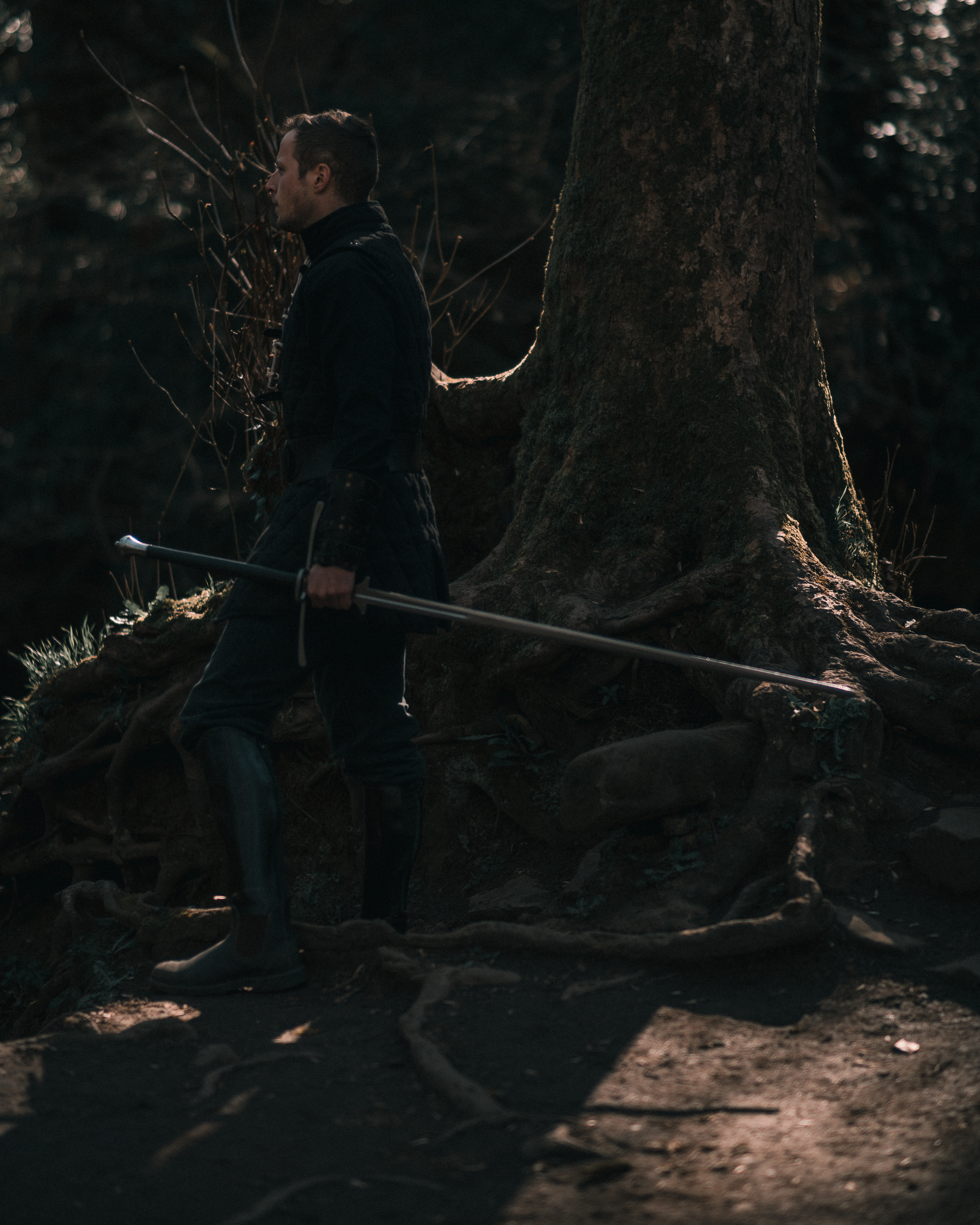
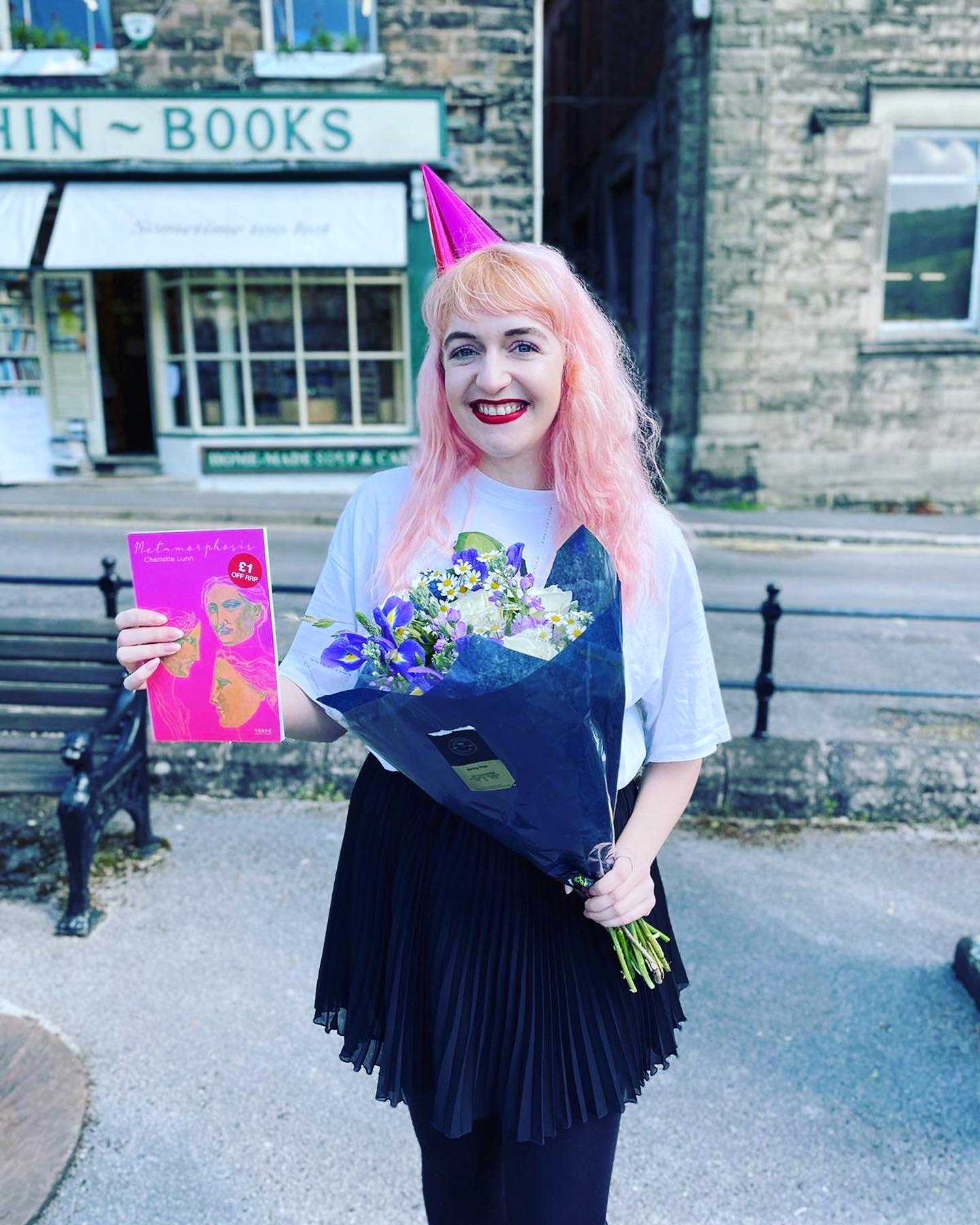
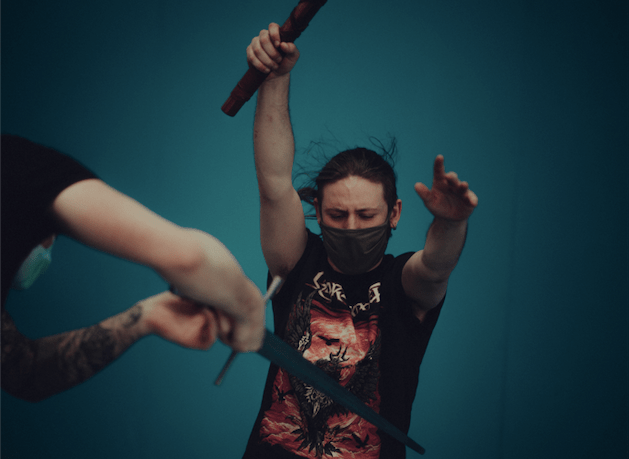
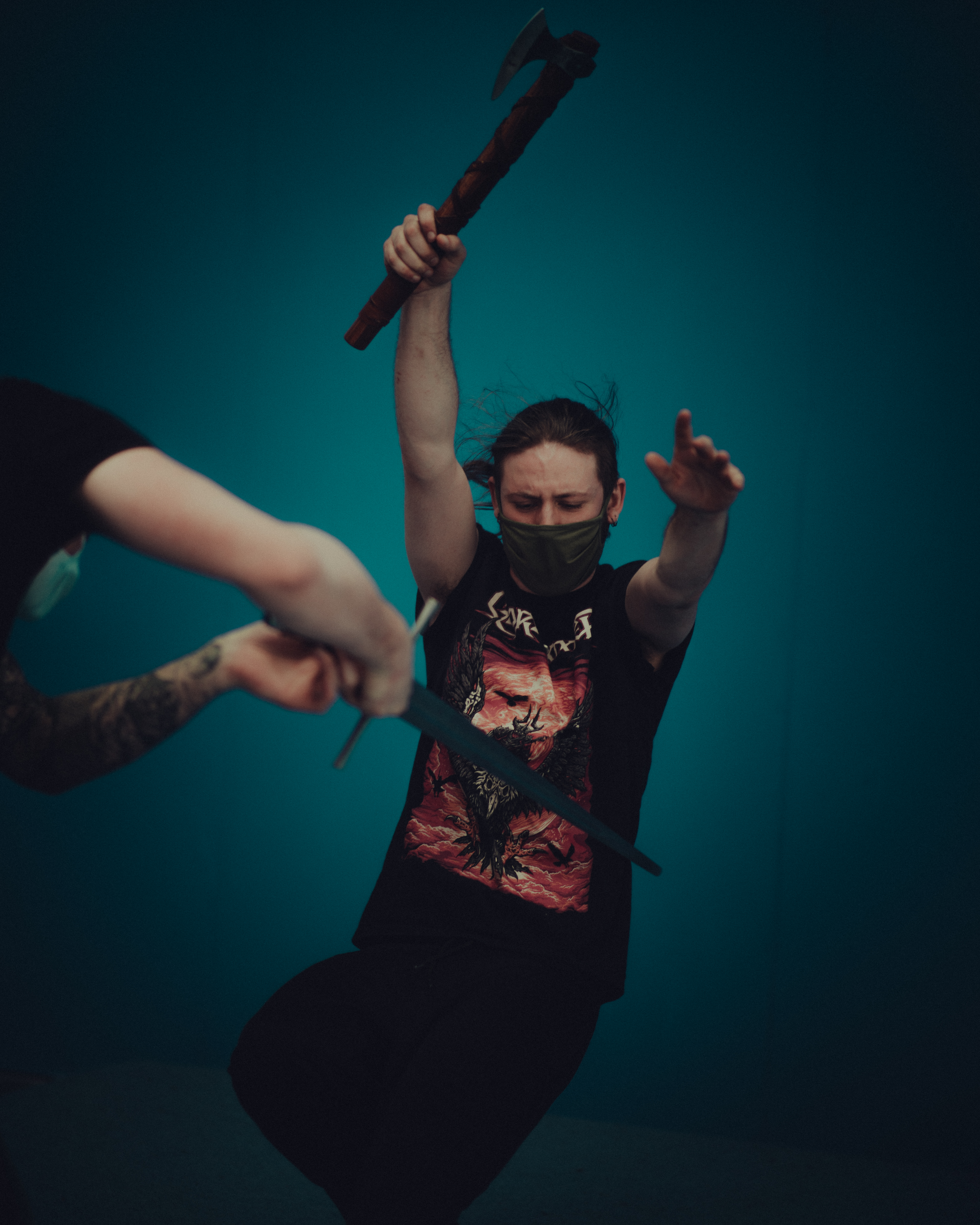
    Dale Raven in fight training for Myrlan. Photo credit: Johnny Lannen.

    I moved into a new flat during the pandemic, so I haven’t got to know my neighbours yet. Last week, about to go for a run, I opened the front door and found a film set in the garden. 

    There was a cream tent, a marquee, a few people inside. 

    ‘We managed to get all that for free,’ said a guy with a ponytail, pointing at a heap of medievally-looking treasure on the picnic bench. ‘The only thing we had to pay for is this tent.’ He gestured to the fabric, as another guy set about stitching. 

    The guy with the ponytail turned out to be Dale Raven, co-creator of Myrlan, a short fantasy film. The director, writer and other co-creator of the film, is Cieran Ryan. And when he’s not in Myrlan (the film is named after the fantasy realm in which it’s set) Cieran lives in the flat above me.

    Over the last year, in the attic flat, Cieran and Dale (known professionally as Pale Raven Pictures) have created a kingdom. Bubbled together for the duration of the pandemic, they’ve continued work on their short film, despite COVID-19. They’ve planned and plotted, created languages and legends. They generated a staggering amount of funds through their Kickstarter campaign. And, last week, they started filming. 

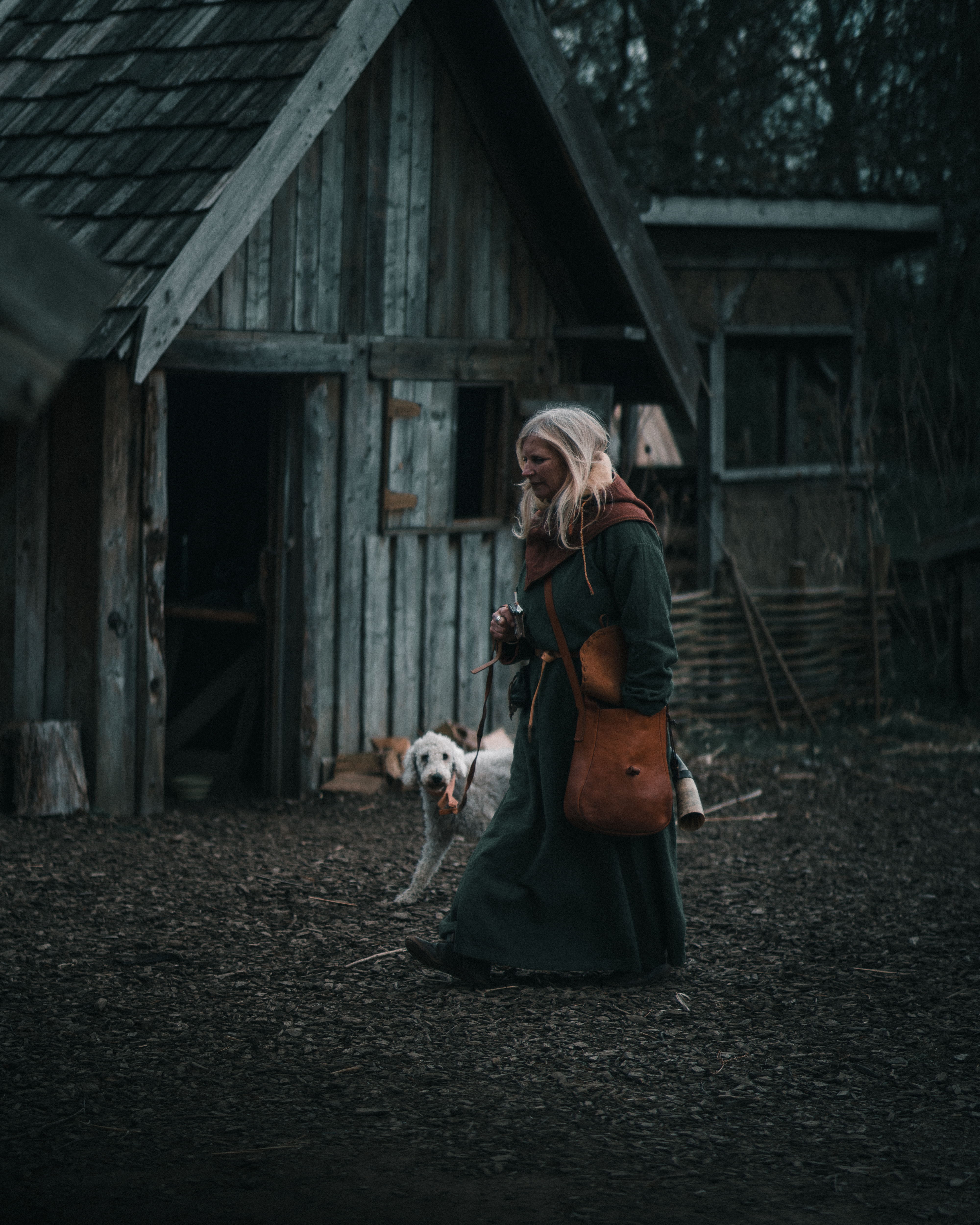
    The yard at the side of our house became an inn. There was a heavy oak table, a hand-sewn banner and, courtesy of a pickup truck that skilfully negotiated our difficult drive, hay bale seating. For two days, there were actors in medieval costume, with added masks for COVID compliancy. 

    Later, I Zoomed Cieran and Dale, to find out more about Pale Raven, their film, the kingdom of Myrlan. Cieran was upstairs, I was downstairs, Dale was in his home elsewhere in Sheffield. 

    ‘Short films don’t make any money,’ Cieran told me. ‘You invest in them in the hope they’ll propel you onto something else. We could probably convince someone we can write or direct a drama script, but trying to convince someone that you can conceptualise for fantasy or sci-fi… on paper it’s not enough. We want to put the world we’ve made into other people’s heads. Then, if we want to pitch a feature film, or pitch a series, we can say ‘it’s like that but bigger.” 

    So Myrlan is their calling card, their message to investors, important film people, that they know what they’re doing.

    They know what they’re doing. 

    They’ve created the world from scratch, studied Old Norse, and started writing their own language. For a year, they worked with the Viking Society, training with swords, learning which dyes the Vikings used to colour their clothes. But they’re not historians. They’re researching to make their film look authentic, not because they want to be experts in Viking culture.

    ‘We’re not making a documentary,’ says Dale. 

    The Kickstarter pitch Pale Raven Pictures shot for the film.

    It seems lucky, to have a friend with whom you’re so creatively aligned. Someone as driven, as determined to succeed in exactly the same way. It’s a nice story: Cieran and Dale met during their drama course at Norton College in Sheffield. 

    ‘Norton College was basically like Fame Academy,’ says Cieran. ‘There were people doing ballet stretches in the hall, people playing guitar, musical theatre people singing. Sheffield is this tiny city centre with loads of residential areas, so there are loads of schools. It felt like the weird kid from every one of these school did this course and met all the other weird kids. We realised we could do this. It was ok.’ 

    Cieran and Dale have been working together since. They’re both twenty-seven, their birthdays only four days apart. Dale starred in Alone, a post-apocalyptic short written and directed by Cieran, and starred, co-wrote and co-directed Blessed with him too – the feature film that inspired Myrlan. They’ve done a lot together: studied, written, directed. 

    ‘I don’t think I’ve ever worked in a bar with Dale,’ says Cieran. 

    ‘We’ve worked in the same bar but not at the same time,’ says Dale. 

    Cieran Ryan directing on the set of Myrlan. Photo credit: Johnny Lannen.

    Enthusiasm bursts from them. Their story, their knowledge, their perspective on filmmaking, it all flows from them easily. Listening, you absorb it, find yourself smiling. 

    ‘We’ve got a real shorthand now,’ says Cieran. ‘I can say, ‘remember around the third era when this King was on the Throne, and then he went over and did that thing in Oaksbridge with the-”

    ‘Genuinely, I know exactly what he’s talking about,’ says Dale.

    They give actors a ‘World Pack’, containing crucial information about the world, when they join the cast. And, though this world is theirs, they’re keen to open it up to others. 

    ‘When you give someone a character, I think it lessens their performance if you’re really strict about what you want,’ says Dale. ‘You may as well do it yourself. When an actor comes in, they’re going to add their own flavour. With previous projects, we’ve had ideas for characters and completely switched them around after auditions.’ 

    They even made some of the parts gender-neutral during casting, to open them up to as many people as possible. 

    ‘It stopped the film becoming what you’re used to,’ says Cieran. ‘You start to be surprised by people and think ‘I never would have thought this, but they’re perfect for this role.’ People give you something deeper.’

    They’ve written new characters into the script, specifically for actors that gave blistering auditions, and cast ex-squaddies as soldiers. 

    ‘It’s not always about your level of experience in the industry,’ says Dale. ‘Sometimes it’s about your experience in the world.’

    And your experience in the world of Myrlan. Cieran and Dale ask actors to think carefully about their character’s backstory, about the realm: to become real residents. To ensure they understand the world themselves, they tell the lore to each other, to their friends, to the cast and crew. 

    ‘You retain 10% of what you learn but 90% of what you teach other people,’ says Dale. ‘We essentially teach each other the lore. Because we openly talk about it with the cast and with people that are interested, we’re reciting this information audibly all the time. It’s really cool because, traditionally, that’s how myths and legends were told. The story of how Naagra created Oaksbridge means absolutely nothing to you, but I’ve told that story to Cieran ten, twenty times-’

    ‘And to anyone that would listen,’ chips in Cieran. ‘People know this story in our friendship group.’ 

    Not only am I left with the feeling of really wanting to know the story of how Naagra created Oaksbridge, but I also feel quite jealous. It’s pretty awe-inspiring, the way the two of them have carved out time to sit, and think, and talk, and create. They seem to carry with them a confidence, a faith in themselves, in each other, and the world they’re creating, that is enviable in this distracting, content-saturated world.

    So I ask them how they got there.

    ‘Dale just doesn’t want to cut his hair,’ says Cieran. ‘He’s not going to get any other parts.’

    ‘Yeah,’ says Dale, laughing. ‘I need to create a role for myself.’ 

    But then they say that part of it is time – they’ve spent a lot of time on this project. They’re deeply invested, have learned their own legends. Part of it comes from their time at Norton College, where being weird was normal, where committing and creating was cool. But it’s clear from listening to them that this commitment is not a chore – they love this stuff. When they’re not filming, they’re training for battle scenes. When they’re not training, they’re researching fighting styles or reading tales of the Norse Gods. Dale tells me the Death of Balder legend off by heart, no questions asked. They’re committed because they’ve found their thing. They’ve found the project they’ll stay up late for, get up early to make, lose sleep thinking about. 

    And they’re in it together. In the inns, in the taverns, on the blood-soaked battlefield, they’re wading through side-by-side. And soon, after shooting, when it’s all put together, we’ll be able to wade there with them.  


    You can find out more about Dale, Cieran, and Pale Raven Pictures over on the Pale Raven Pictures Facebook page, official Instagram account, and Twitter profile. There’s also Facebook page specifically for Myrlan, and a separate Twitter account.

    You can follow Dale on Instagram @thedaleraven and Cieran on Twitter @cieran_7. Cieran also has a website www.cieran.co.uk, where you can find out more about Pale Raven Pictures’ other projects.


    About the Author

    For ten years, Ellen Lavelle has interviewed authors for The Young Journalist Academy, Nothing in the Rulebook, Newark Book Festival, and her own blog. She’s written for several publications, including The Sunday Times Young Writer of the Year Award Blog. Now an editor at Nothing in the Rulebook, she writes fiction and non fiction, while working as a digital copywriter for an education company. You can follow her on Twitter @ellenrlavelle
  •   ‘The more you say you’re a writer, the more it becomes part of your DNA,’ – an interview with Anna Jefferson  
    Author Anna Jefferson

    When my friend introduced me to Anna Jefferson over email, she described her as ‘officially the funniest person I know.’ It’s a weighty title but, with two popular comic novels – Winging It and Nailing It – delighting readers all over the world, Jefferson has the strength and the skill to bear it, flex, and crown herself with it. 

    Jefferson is in the interesting position of having released both her novels during lockdowns. 

    ‘It’s a strange and wonderful thing,’ she tells me over Zoom. ‘I’m still yet to see them in any bookshop. My step-brother lives in Australia. He sent me a picture of my nephew holding up a copy of Nailing It in a café. So it’s out there, it’s just not here.’ 

    The first novel, Winging It, tells the story of Emily who, when she has a baby, discovers that motherhood isn’t as glamorous as she thought it might be. It’s the friendships she fosters when her baby is a newborn, and the old friendships she revisits and examines, that help her create her family. Nailing It catches up with Emily five years later. While Winging It was told exclusively from her point of view, Nailing It contains two other perspectives, alongside Emily’s. Helen and Tania, characters readers will be familiar with from the first book, also get the chance to tell their stories. 

    ‘I’m so fond of all these women,’ said Jefferson. ‘It was a real joy to revisit them. Not everything works out the way they’d anticipated and I was quite keen for that to be the case. It’s not all neatly wrapped up. The main theme in both of the books is female friendship, and how we support and hold each other up. I think there might be a point where I come back to them in the future as well. I’ll leave them for a while and then, in a few years’ time, pick them back up again wherever they are in their lives.’ 

    It must be useful, having a group of characters to whom you can return, time and time again. Topping them up with knowledge as you experience more, as your audience gets older. 

    Jefferson grew up in Caistor, in Lincolnshire. I’m also from Lincoln, so we spend a while talking over our shared geography – the Stonebow, the Adam and Eve, the charity shops in town (Jefferson’s work-in-progress centres around a charity shop). Now living in Brighton with her husband and children, she writes for the stage and screen alongside her novels. Her blog, You Can Take Her Home Now, was shortlisted for national awards, including the Best Writer and Blog of the Year by the MAD Awards, and Brit Mums’ Best Write. It was from the blog that Winging It was born – an agent, a new mum herself, spotted Jefferson’s ability to hone in on the details, take the deeply emotional and make it entertaining. There was also a following, an appetite for this kind of story; people looking for lives like their own to help them make sense of this extreme chapter of their own lives. 

    But it’s not all about motherhood. The latest novel, Nailing It deals with characters starting new businesses and relationships, as well as the complications of helping ailing parents. 

    ‘I always try to balance how brutal these things can be with a sense of humour as well,’ says Jefferson. ‘There’s a line. Things can break your heart but there’s normally also something that can make you laugh as well. In terms of dealing with the bigger, meatier subjects, I’ve always tried to do it with a sense of humour, to bring the reader in with you.’ 

    It seems to me, too, that a sense of humour actually allows you to drill a little deeper, to get away with brutality that you otherwise wouldn’t. Life is a tragicomedy – it’s not transgressing genre convention to pair sadness with humour. It’s the truth.

    ‘At times when things are difficult and you’re not sure how your brain’s going to process stuff, you do look for the light,’ says Jefferson. ‘Otherwise you’d just be hurtling from one heart-breaking disaster to the other, which doesn’t sound like a huge amount of fun.’ 

    But charting emotion, deciding how you’re going to make a reader feel when, at which point within a novel, is very difficult. At one point during our call, Jefferson moves her laptop around to show me the wall behind her desk. There’s a huge piece of paper pinned-up, covered in pictures and post-it notes. They’re all colour-coded according to their purpose within the novel. 

    ‘If all the post-it notes are yellow, then I’m in trouble,’ she says. ‘Because then I have a lot of questions. When they start to go pink, then I know I’m on track, because I know I’m finding answers.’ 

    Jefferson’s books are about friendship, finding community in difficult times. Over the course of our conversation, she mentions several writer friends from groups, famous writing figures that have taken the time to impart advice, the joy of talking about books with people that ‘get it’. She met our mutual friend, the friend that introduced us, on an Arvon writing course. This friend has told me since about Jefferson’s writing, how funny it was, how it left the whole group in hysterics.

    And it seems to me that this is how not just writing, but the world, works. If you do a thing because you love it, because it connects you to people, word spreads. 

    ‘You need to back yourself,’ Jefferson says. ‘It’s a really powerful moment, when someone asks you what you do and you say ‘I’m a writer.’ You have to push the imposter syndrome down. The more you say it, the more it becomes part of your DNA.’          

    It doesn’t feel like a lie to say you’re a writer when you’re writing, when other people reflect it back to you. When a friend introduces you as officially the funniest person they know. 

    It’s just the truth. 


    Winging It and Nailing It are now available to buy in paperback, as Kindle books, and as audio books. To find out more about Anna and her writing, you can follow her on Twitter @annajefferson and visit her website annajefferson.co.uk


    About the Author

    For ten years, Ellen Lavelle has interviewed authors for The Young Journalist Academy, Nothing in the Rulebook, Newark Book Festival, and her own blog. She’s written for several publications, including The Sunday Times Young Writer of the Year Award Blog. Now an editor at Nothing in the Rulebook, she writes fiction and non fiction, while working as a digital copywriter for an education company. You can follow her on Twitter @ellenrlavelle
  • ‘Screw the Pooch’: Amy Brandis’ directorial debut hits the circuit

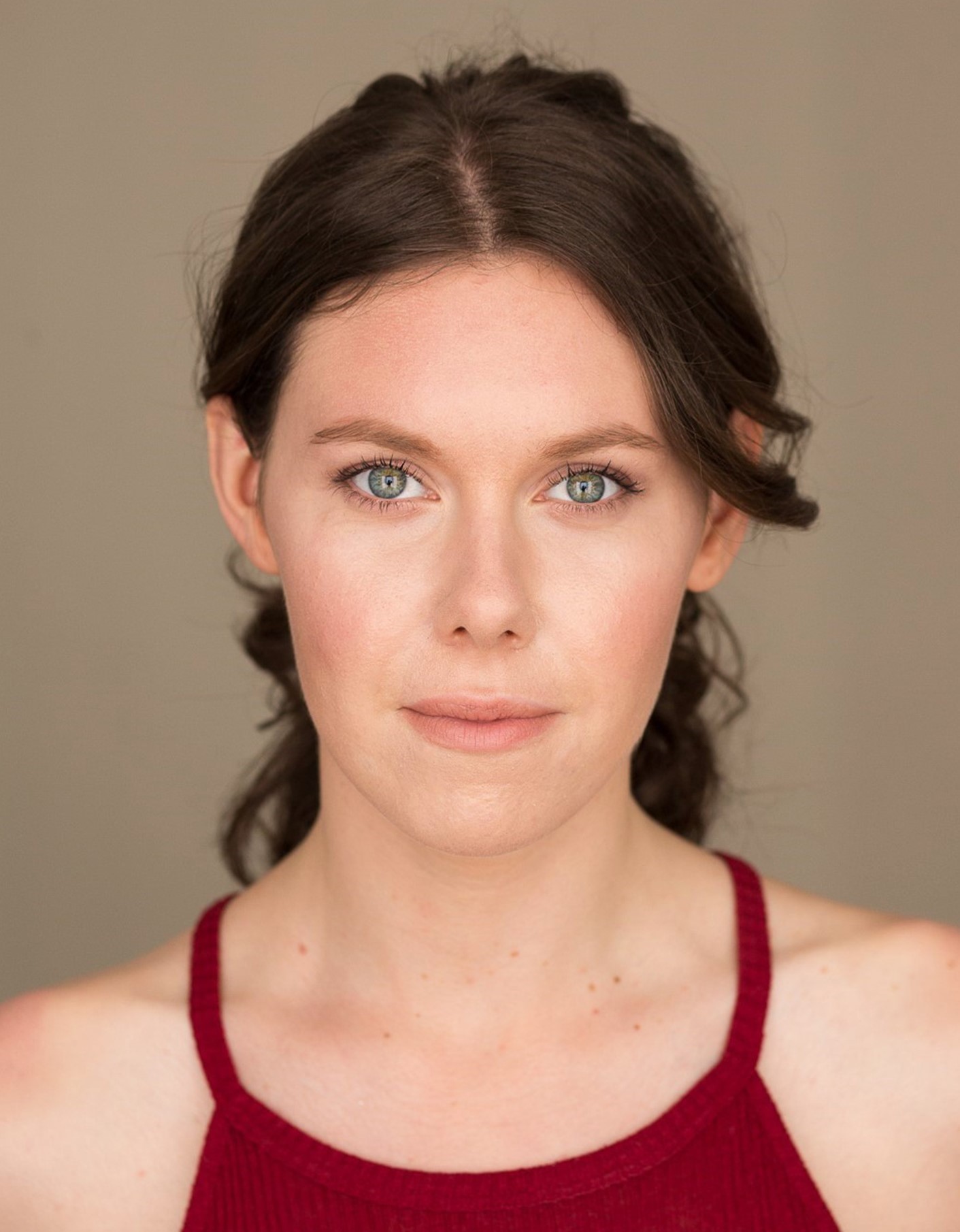
    The first time I met Amy Brandis, I thought she was a member of staff. 

    I was in a seminar at university and, at the end of the class, a young woman came in to tell us about her new radio show. She stood at the front of the room and told everyone to submit pieces of writing to be featured. It would be great to hear from us, she told us, smiling, as she left for another engagement. 

    How lovely, I thought, that staff were so invested in giving their students opportunities. 

    Of course, it turned out that the young woman, Amy, was a first year like me. She was just on a mission. 

    I’ve known Amy for eight years now and, no matter where she is, no matter what she’s doing, she’s striding: firm-footed, smile on, hand out ready to shake. She does things with an energy that makes you want to do them too. And now she’s done a film. 

    Writer and director Amy Brandis

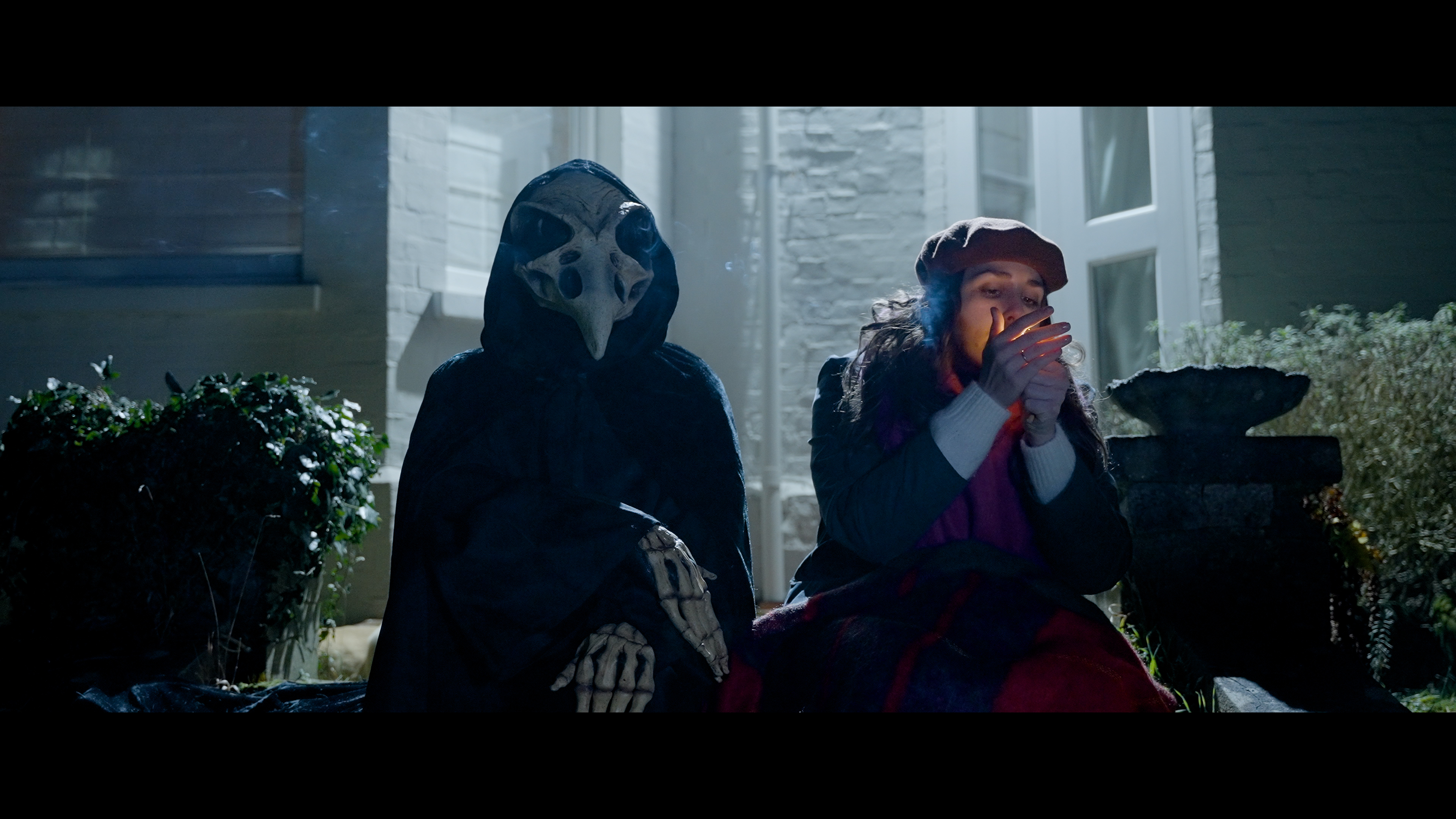
    Screw the Pooch is Amy’s directorial debut. Currently on the festival circuit, the short film follows Kay who, when her mother dies, finds herself with Death as a roommate. 

    ‘2020 was a year in which, on a personal and global level, I experienced loss in ways that I hadn’t before,’ Amy tells me over a Facebook video call. ‘I think previous generations and generations in other countries had seen terrible warfare, or famine – loss on a massive scale. But the pandemic for us in the UK was the first time our generation had seen death affect, if not everyone we knew, the majority of people we knew. I myself struggled with that at points. My family also faced some very difficult experiences as well. There were moments where we felt like we were bargaining with Death. And yet, this film isn’t supposed to be a be-all judgement of what death feels like or what death is. It’s a strange little moment where I’m trying to make sense of the role Death plays in our lives. That’s why it came out as a tragi-comedy and not a tragedy.’

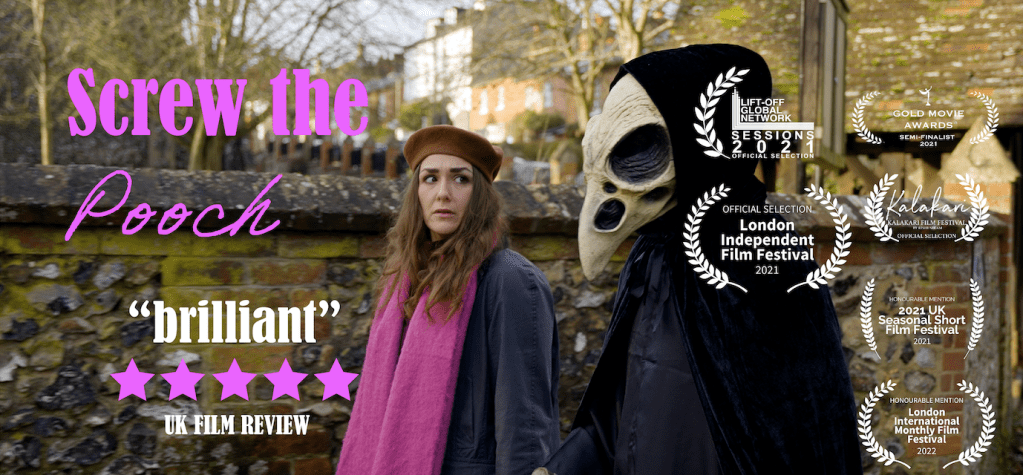
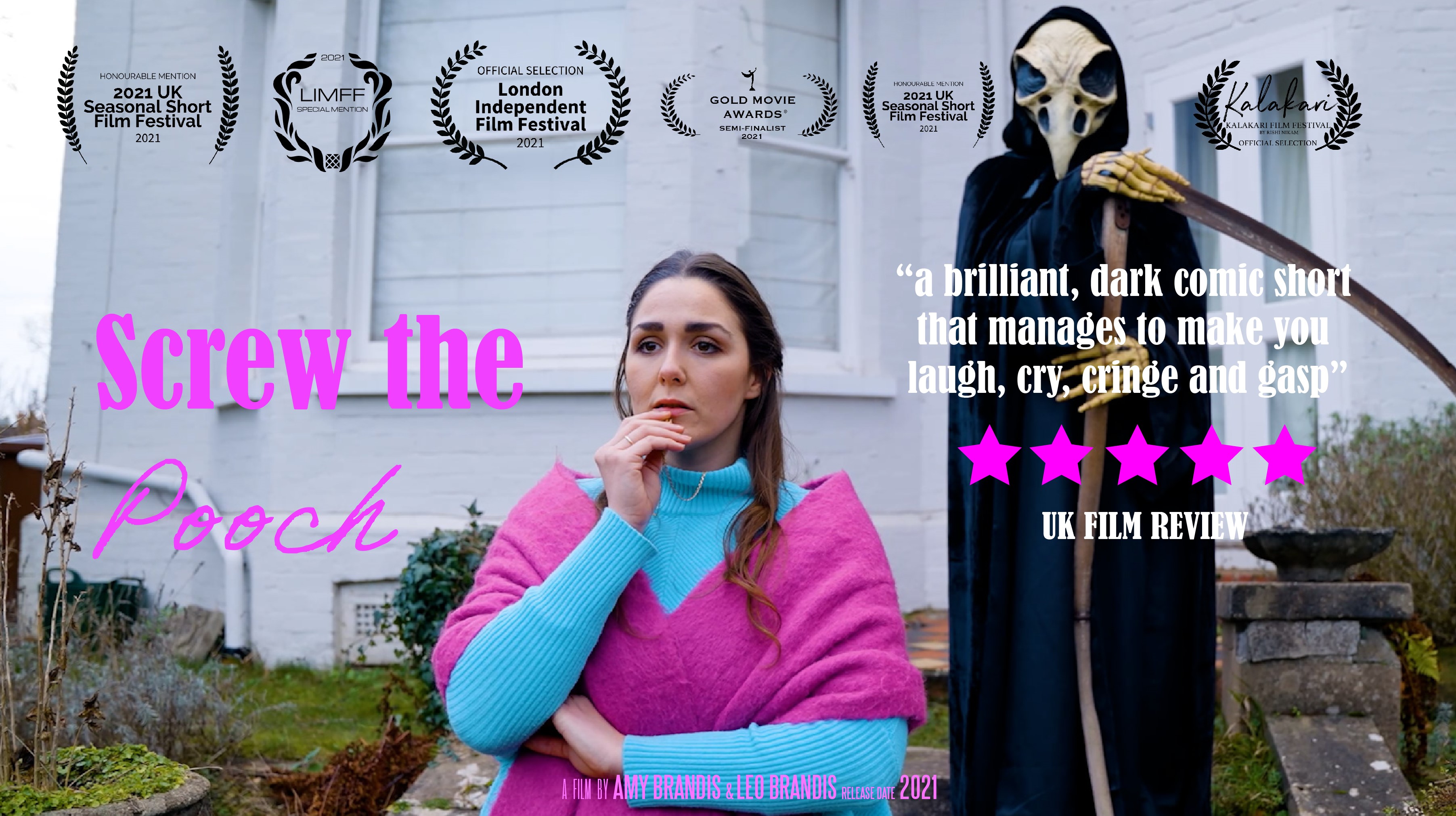
    In the trailer for the film, you can see Death [played by Mark Brandis, Amy’s father] in all its glory. It’s a strange, haunting figure, so obviously sinister that there’s something quirky about it, in its bird-skull mask, next to brightly-bereted Kay [Nadia Lamin]. 

    ‘2020 was such a painful, tragic, bizarre year that a drama or a straight tragedy didn’t feel appropriate,’ Amy goes on. ‘It wasn’t something I wanted to do. I needed to bring out the tragi-comedy of life as I saw it. What was so incredible was that, after the film was released, I had people contact me saying they’d lost loved-ones. They said it was funny, because they’d pictured Death with them in the house and they would sometimes talk to it. That was incredibly humbling. The perspective I presumed to be my own and not shared by anyone turned out to be more universal than I’d thought.’ 

    2020 has brought universal difficulties. Lockdowns, social-distancing, anxiety and isolation have made progress in many professions difficult. Filmmaking is no exception. COVID tests, bubbling, and PPD all cost money, money young filmmakers don’t have, so rather than expand outwards, Amy hunkered down with her family. Her mother catered and produced (‘she did more than a producer would on a normal set,’). Her brother, Leo, took on three roles: tech, framing, and lighting (‘he’s incredibly talented’). And her dad played Death. 

    ‘My dad actually trained at the National Youth Theatre when he was sixteen,’ Amy says. ‘He loved it, but when he was eighteen he was told by various people, including himself, that acting wasn’t a profession that was going to serve him in life and that he ought to get a Proper Job. I just thought it would be an interesting experience to have him be Death. He leant a mature perspective to the role. He’s experienced more death than I have. But it was also an opportunity for him to come back to acting with a mask to act behind. He didn’t have to worry about facial expression or dialogue, so it seemed like a sort of safer way for him to come back to it.’ 

    Safer, perhaps, but not easy. The costume was ‘essentially a boiler-suit’ Amy says. There was an all-in-one black body suit, two cloaks, two clawed hands, the huge bird skull mask, and two hoods. ‘He spent a lot of time overheating,’ says Amy. ‘He was a real trooper.’ 

    But it’s all paying off. The film has received special mentions at the 2021 Seasonal Short Film UK Festival and the 2021 London International Monthly Film Festival, made the official selection at the London Independent Film Festival and the Kalakari Film Festival, and is a semi-finalist at the Gold Movie Awards. 

    UK Film Review describe Screw the Pooch as ‘a brilliant, dark comic short that manages to make you laugh, cry, cringe and gasp.’ 

    Death [Mark Brandis] and Kay [Nadia Lamin] in Screw the Pooch

    Amy Brandis is kind of a big deal. But we all knew that anyway. She’s always been able to look you in the eye and say she’s a writer without cracking up, which takes a level of sincerity many people, including those on courses specifically for those professions, often don’t have. 

    ‘We haven’t got long on this planet,’ Amy says. ‘That’s the truth. And you could write the lightest, tamest little comedy in the world, by the way. I don’t mean you have to be super-aware of your own mortality and therefore write super serious things. But we don’t have much time. And that’s kind of what Screw the Pooch was about. You don’t have time to get in your own way. And your audience doesn’t have long on this planet either, so don’t waste their time. Write something you enjoy. That’s it.’ 

    While Screw the Pooch sweeps along the festival circuit, scooping up commendations, Amy’s looking ahead. She’s got two projects in the pipeline, one that’ll need a higher budget, so she’ll be writing funding applications, writing scripts, finding a cast. If this year has taught us anything, it’s that life is unpredictable, that carrying on can be hard. It’s endurance and resilience, making the best you can with what you have, that means you make it. 

    And Amy’s still striding. Feet firm, smile on, hand out. Still looking you in the eye and saying, ‘I’m a writer.’ 

    And she is. 


    You can find out more about Amy and Screw the Pooch on her website, amybrandis.com. You can also follow her on Twitter, @AmyBrandis and follow the film’s official Instagram page @screwthepoochfilm.


    About the Author

    For ten years, Ellen Lavelle has interviewed authors for The Young Journalist Academy, Nothing in the Rulebook, Newark Book Festival, and her own blog. She’s written for several publications, including The Sunday Times Young Writer of the Year Award Blog. Now an editor at Nothing in the Rulebook, she writes fiction and non fiction, while working as a digital copywriter for an education company. You can follow her on Twitter @ellenrlavelle
  • The Tilt’s new talent: interview with author April Roach
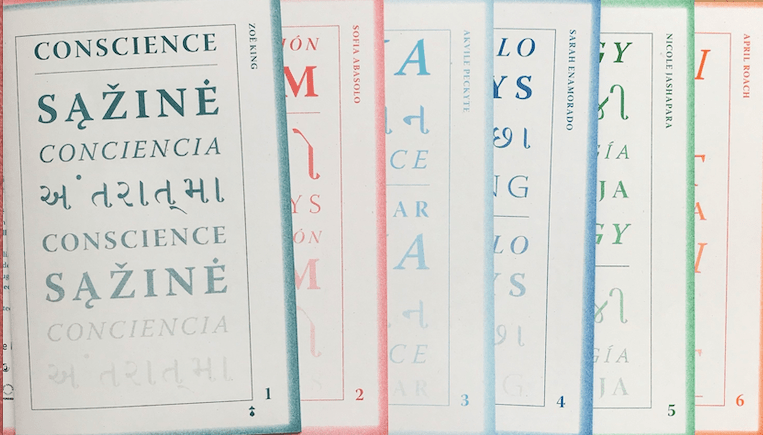
    The Literary Platform’s The Tilt anthology

    Last month, The Literary Platform released The Tilt, ‘an illustrated collection of new writing that centres around belonging, identity and inequality in the publishing industry.’

    The anthology features work from the 2020 mentees on the Platform’s ‘Lit:Up’ programme – a scheme that pairs a new, emerging talent with experienced writers, to help them pave their way to publication. Alongside the work from new writers, The Tilt features forewords from their mentors, and creative pieces from writers personally-selected by the mentees. It’s an intriguing concept, realised with painstaking attention. Not only is the book beautifully designed, available to buy as a physical copy or to download for free as an eBook, but each chapter has also been translated into languages chosen by the writers. You can ‘unlock’ the audio by scanning the illustrations to head the writing in Gujarati, Lithuanian and Spanish. 

    One of the 2020 mentees is my friend, April Roach. I’ve known April since university, where we both studied Creative Writing. We got closer during a year abroad in Paris where, while I stuttered through my phrasebook, struggled to order a coffee without a gaffe, April took her lectures in French, held down a job, volunteered, socialised, and saw the sights without issue. She did all this while also putting in an hour a day on her then work-in-progress, a YA sci-fi novelI’ve always thought that, whatever I’m doing, April is probably doing twice as much, in a foreign language. 

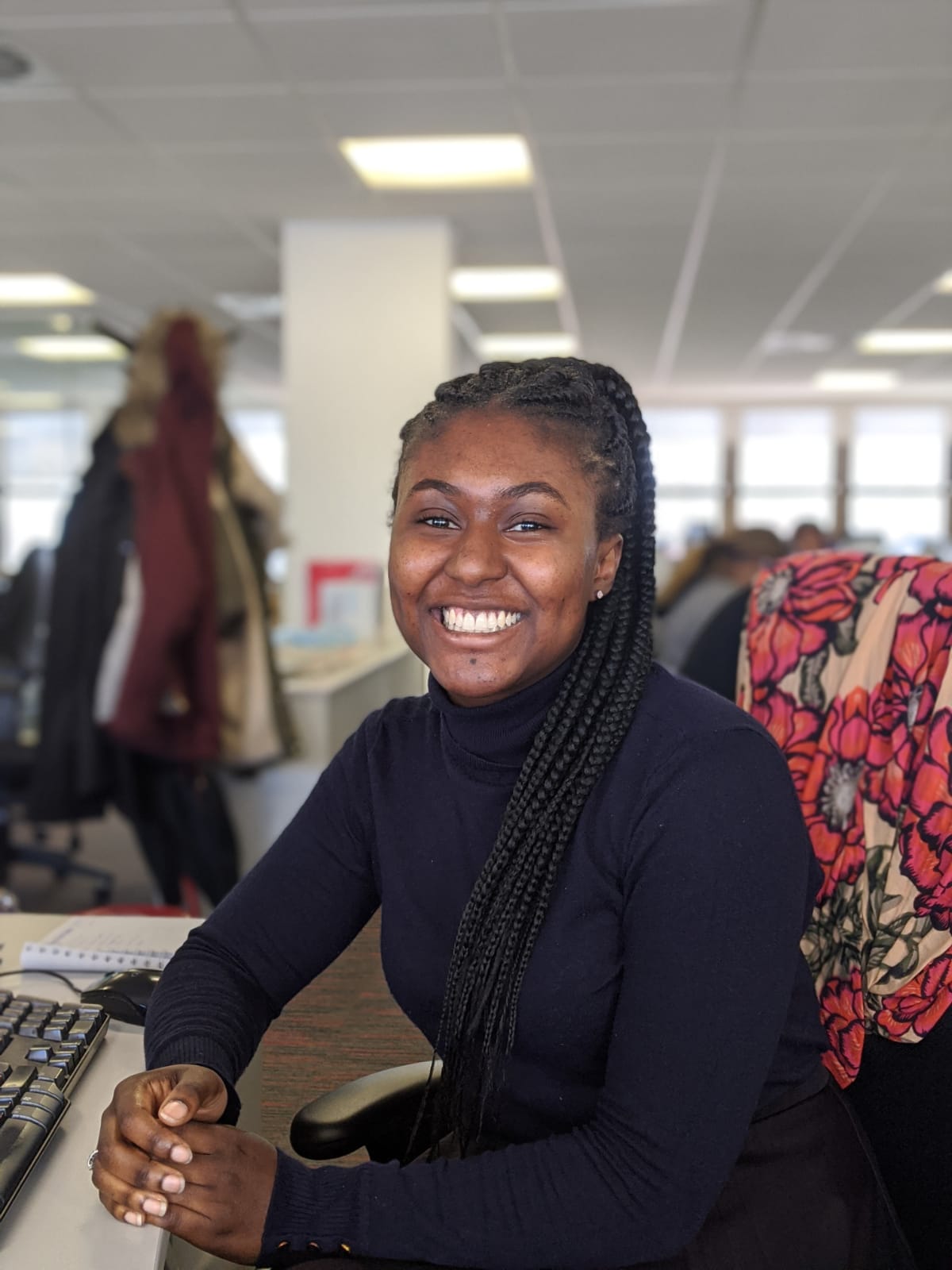
    Author and journalist April Roach

    April is now a successful journalist. She’s written for locals, as well as huge London papers like The Evening Standard, and is about to embark on an exciting new career in Amsterdam, reporting for Bloomberg. I caught up with April to find out more about The Tilt, her story, and how she keeps so many plates spinning so fast. 

    ‘I thought very hard about who I should choose to respond to my story,’ April says. ‘I knew The Literary Platform had some connections with Amy Lilwall. I read her book The Biggerers – it’s so good, and she writes speculative dystopian fiction like I do. She was given my short story and was invited to respond to it any way she wanted. I think some of the other writers chose to respond with a poem or an essay but she chose to respond with another piece of fiction. Her story takes place just before the events of my story – it’s kind of a prequel.’ 

    April’s short story is a sort of ‘outtake’ from the novel she’s currently writing. I remember her beginning this novel at university, reading the first chapter and being gripped by its premise, how compulsive it was. The story is set in an alternative world, similar to our own, but where people view the world through filters. They can choose how they look to others, the parts of themselves they display, the parts they hide. But even as early as chapter one, the ramifications of this are clear – though the filters enhance, they also distort. So wrapped up in herself, in a possible love interest, the main character hasn’t noticed the glaring truth. Her filters flicker off for a moment. Long enough for her to realise her roommate is missing. But for how long? And why? 

    The short story in The Tilt, We Paint with Our Eyes Open, features the missing friend. While the protagonist in the novel is pretty satisfied with her world, the narrator of We Paint with Our Eyes Open is a rebel, deliberately disfiguring and damaging the propaganda of the ‘Fixers’, the government officials that enforce the illusions. 

    It’s one thing to create a world. It’s another entirely to invite in someone else, ask them to walk around, smell the air, feel the ground beneath their feet. 

    ‘I was so excited to read her [Amy Lilwall’s] story,’ April says. ‘It was almost strange how well it works with my story. She really embodied the characters and the world. I think my chapter is probably particularly difficult to work from because it’s speculative science fiction. I know a lot about the world because I’ve lived in it for a very long time, but she was just given 1,500 words and had to imagine what it would be like. But she did it really well – it flows so smoothly. It’s also so interesting to see a different side of the character in such a small space. I thought it was great.’ 

    Lilwall’s story has the same energy, the same feeling and flair, as April’s. Both stories are propulsive and fun: cool things happen fast. That another writer, with their own deadlines and worldbuilding to do, can climb so confidently into a new fictional world, says something about that fiction’s foundations. 

    The chapters of The Tilt.

    April’s mentor at The Literary Platform is C.J. Flood. In her foreword to the pairing of stories, Flood observes, ‘It is crucial for a writer to be able to take feedback and use it to improve the work far beyond any mentor’s vision. April did this after each of our meetings, taking suggestions I made, and sprinting with them, much further and faster than I could have envisioned, returning without a drop of sweat with work enriched beyond what I could have imagined. This is the quality that writers need above all, if they are to succeed in a market crammed full of talented writers. To be able to turn guidance into gold.’ 

    ‘April’s imagination, work ethic, and passion for the craft of writing and her story made mentoring her feel like I’d won a prize. Each session, she raised the bar, and reading this new piece from her, I see she has done it again. This is a new writer with something to say about the world we live in, and an arresting way to say it. I cannot wait to see the full novel in print.’

    She’s not the only one. 

    There are six chapters in The Tilt; six emerging talents, six mentors, six established writers invited to respond. The one-word titles of each chapter (Conscience, Room, Longing, Ecology, Paint, Sacrifice) symbolise the change that each contributor wants to see enacted in publishing. 

    Six stories to read, six writers to watch, six changes to make. The Tilt is a slim volume but it’s beautiful. It’s ink and ideas, paper and power. 

    You can buy a copy here


    You can find out more about April and her writing by following her on Twitter @aprilroach28. You can also check out some of her journalism on her Contently profile.

    To find our more about The Tilt and The Literary Platform, you can visit theliteraryplatform.com. You can buy a physical copy of The Tilt or download a free PDF version.


    About the Author

    For ten years, Ellen Lavelle has interviewed authors for The Young Journalist Academy, Nothing in the Rulebook, Newark Book Festival, and her own blog. She’s written for several publications, including The Sunday Times Young Writer of the Year Award Blog. Now an editor at Nothing in the Rulebook, she writes fiction and non fiction, while working as a digital copywriter for an education company. You can follow her on Twitter @ellenrlavelle
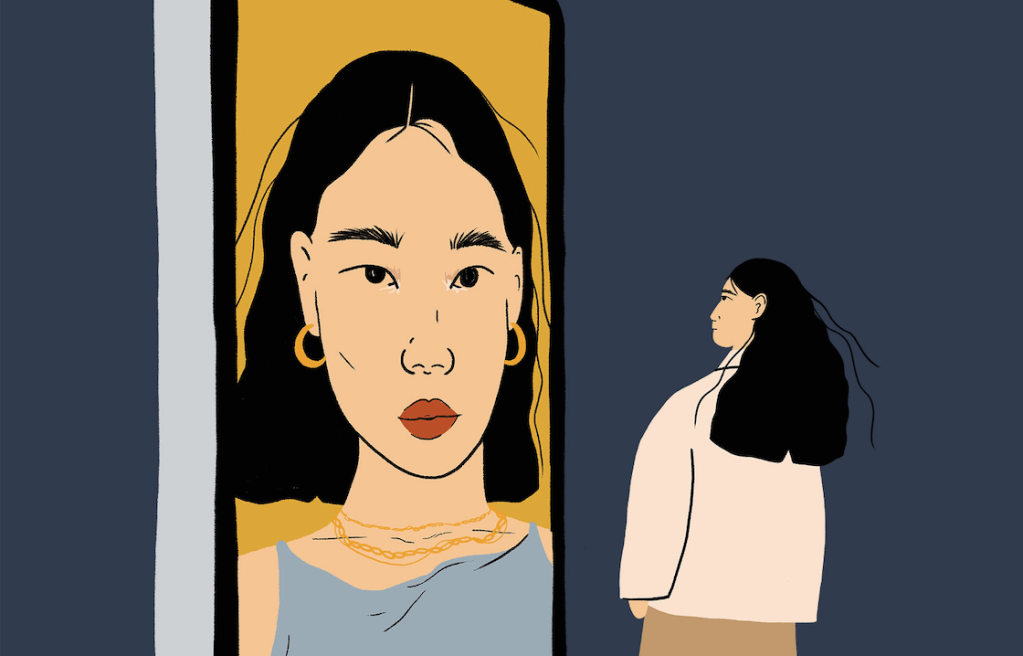
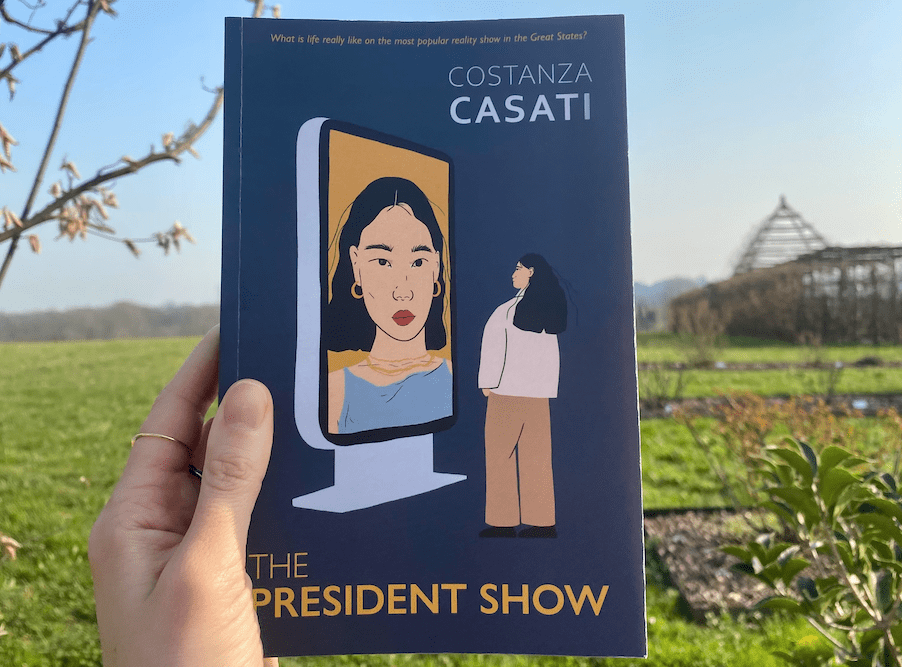
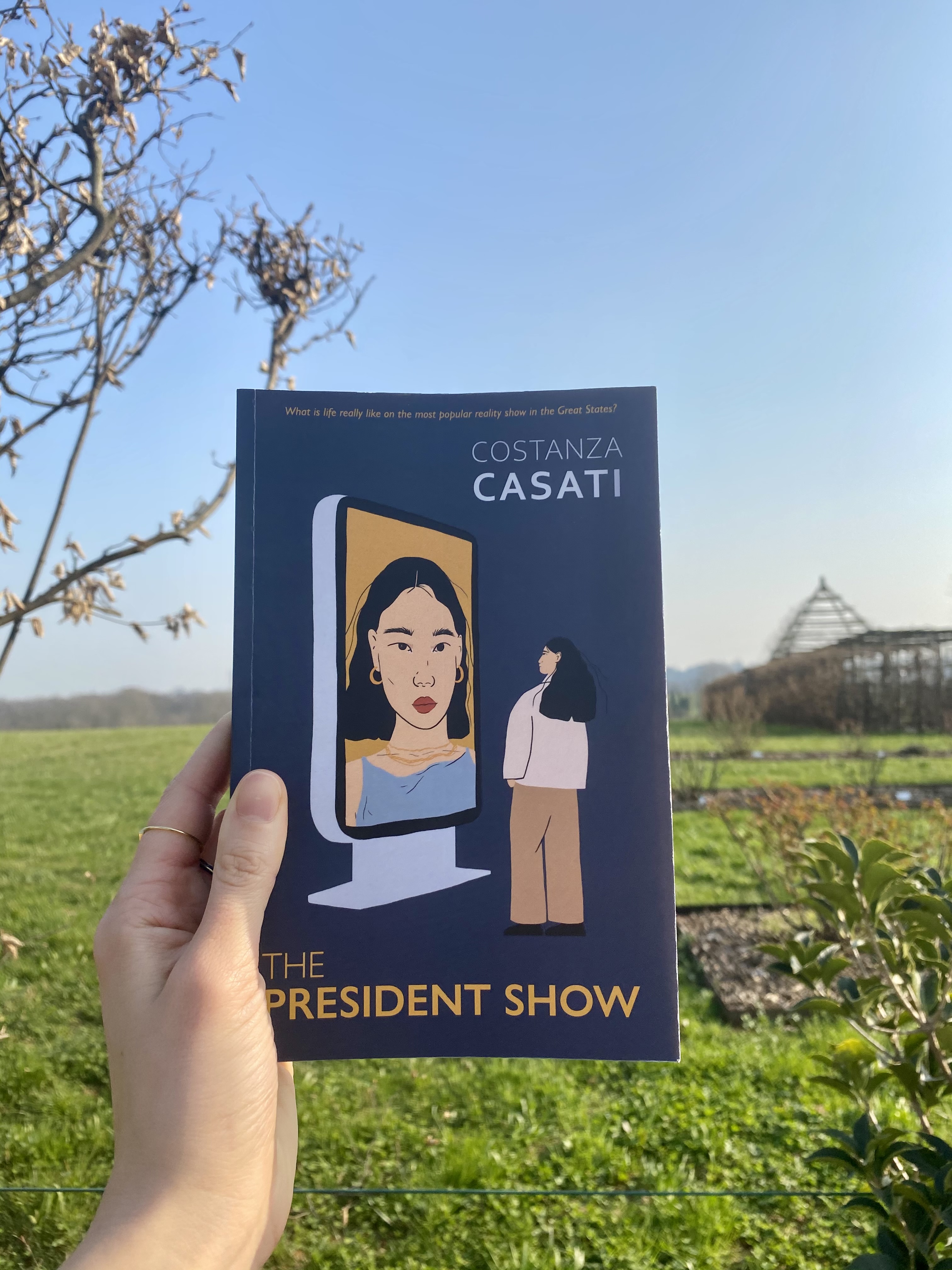
  • The President Show by Costanza Casati – Extract

    THIEF

    My mother told me there were too many guards around town to steal tonight, but I didn’t listen. Now I’m fucked. 

    I’m running as fast as I can, the pocket of my jacket heavy with the stolen watches, my boots slipping on the thin layer of snow that covers the sidewalk. Chinatown at this hour is a mess. The bright signs with green and orange writing throb all around, blinding me. There are heavily made-up girls smoking and women overloaded with plastic bags. Shopkeepers linger by the dirty curtains that hang in place of shop doors. An old woman smiles at me, toothless. I run past her, panting, as the smell of fish and burning plastic makes me feel sick. I almost knock over a tanghulu stall, the candied fruits skewered on sticks that look like tree branches; the vendor yells at me but I ignore him. 

    I turn left into a narrow street and quickly enter the first door on the right. The room is stuffy, and the ceiling is low. Tiny dumplings are arranged on a counter, and, behind it, an old man looks at me, confused. His nails are broken and dirty, covered in flour. Before he can say or do anything, I put my forefinger to my lips. He must be quiet. 

    I take the steep spiral staircase at the back of the shop. The steps are slippery and I’m almost climbing, hands against the cold metal. On the roof of the building, I lower my body so that no one can see me from the street, and peep. Three guards in silver uniforms are entering the shop. I hear menacing shouts, then the old man’s fearful voice. I hurry and climb onto the roof of the adjacent building. 

    The guards’ voices become closer. I throw myself over the wall, land on my back, gasping for air. I push myself up and start running across the roof. When I hear the gunshots I turn, even though my father always told me to never look back, only run forward… I see the guards running, closer and closer. One lifts his gun and takes aim. 

    I hold on to the drainpipe of the building and let my body hang in the air. I look for toeholds on the walls, but I can’t find any. My body drags me down; my palms bleed against the rusted iron. A few meters down there’s a green metal staircase. I let go of the pipe. The impact with the stairs makes me gasp with pain. I’m barely on my feet when the guards start shooting at me from the roof. I rush down the stairs, missing some steps. 

    Back in the half-deserted streets, I run until I cross the border between Chinatown and my district. My feet splash in puddles of half-melted snow. Some men are walking back home from their nightshifts in the factories, their faces sunken, their cigarettes burning in the dark. I avoid the path that leads me straight home, in case the guards are still following me. I need to protect my mother, my sister. They will be waiting now, their faces flattened against the cold windowpanes, their eyes looking for a gray shadow in a white landscape. I have instructed them to never leave the building at night if I don’t come back. But I always come back. 

    I catch my breath in a corner, away from the feeble light of the lamp posts, burying my hands in the snow to stop the bleeding. There is silence, except for the gusts of wind that make the snowflakes dance in the sky. I breathe out, relieved, and take my shaking hands out of the snow before they freeze. I walk around the corner, thinking about the upcoming warmth of our apartment. 

    A sudden blow to my head makes me fall to the ground. My face is wet with snow and tears. There is my heavy breathing, and the smell of garbage and mud. 

    “You’re fast, aren’t you?” A man’s voice. My head hurts, all I can see are my red fingertips in the snow. Other steps. Hard, gray boots around my hand. 

    “Search her pockets,” another voice says. 

    A man pulls me by the hair and throws me against the wall of a building. My back scrapes against the rough plaster. The man is short and looks young, about my age. Before searching my pockets, he looks at my face. 

    “She’s also pretty,” he laughs. “Maybe this one has a chance on the show.” 

    “Get those watches.” Another man, with the tattoo of a snake around his neck doesn’t even look at me. The short man unbuttons my jacket. His hands linger on my body before taking the watches from my pocket. 

    My voice comes out as if I’m being strangled. “Please.” 

    The slap is quick and painful; it makes my eyes water and my nose bleed. The snake looks at me from the man’s neck, its mouth open, ready to bite me. 

    “Shut your mouth.” 

    My voice dies in my throat. 

    “Hit her again before she runs away,” he adds. 

    Before I can think, my head is bashed against the wall. As I lose my senses and everything becomes blurred, I see the creepy smile of the short man, his teeth chipped, his lips cracked. 


    If you want to know what happens next, you can buy The President Show from Amazon or Waterstones.


    About the Author

    Costanza Casati is a writer and screenwriter. The President Show, her debut novel, is now available to buy from Amazon and Waterstones.

    Casati was born in the US, but grew up in Milan, in Italy. She studied at universities in London and Oxford before graduating from the prestigious Warwick Writing MA with a distinction. You can find out more about Costanza Casati and her writing on her website, or by following her on Twitter and Instagram. She also runs a successful bookstagram account, @youngpeopleread.

    NITRB also published some of Casati’s short stories, You Asked For It and Horrible Feet. We also interviewed Casati earlier this month about the release of her novel.

  • The President Show by Costanza Casati – Review

    “We must not fall in love with another Lover, we must not leave the Golden Palace, we must not get pregnant, we must not reveal any classified information we overhear in the politicians’ rooms.”

    These are the rules that Iris, a Lover in the sinister reality series The President Show, has to obey or risk expulsion… and worse. In the show, young women compete for the attention of politicians. They’re conniving and sly – the flashes of companionship between them, any tentative relationships, are over-analysed and turned against them. Everything is filmed, everything is content. The only way out is to win. 

    Though author Costanza Casati sets the story in a dystopia, there are very few elements of Iris’s world that do not seem to have an equivalent in ours. People’s sexual relationships are played-out on screen for entertainment. Women portrayed as glamorous and powerful are systematically abused behind the scenes. Hysterical social media posts reported as gospel truth. There are too many enemies to count. There are the other contestants jostling for the top spot, the entitled politicians the Lovers are ordered to ‘entertain’, the bodily imperfections – the cellulite, the wrinkles, the extra few pounds – that are said to hold each contestant back. There’s a lot for Iris to think about. 

    But one enemy stands head-and-shoulders above the rest. Entertaining the President is seen as the ultimate honour. Casati depicts this president as a kind of amalgamation of Berlusconi/Trump/Weinstein. It would seem too much if we hadn’t just seen it all. 

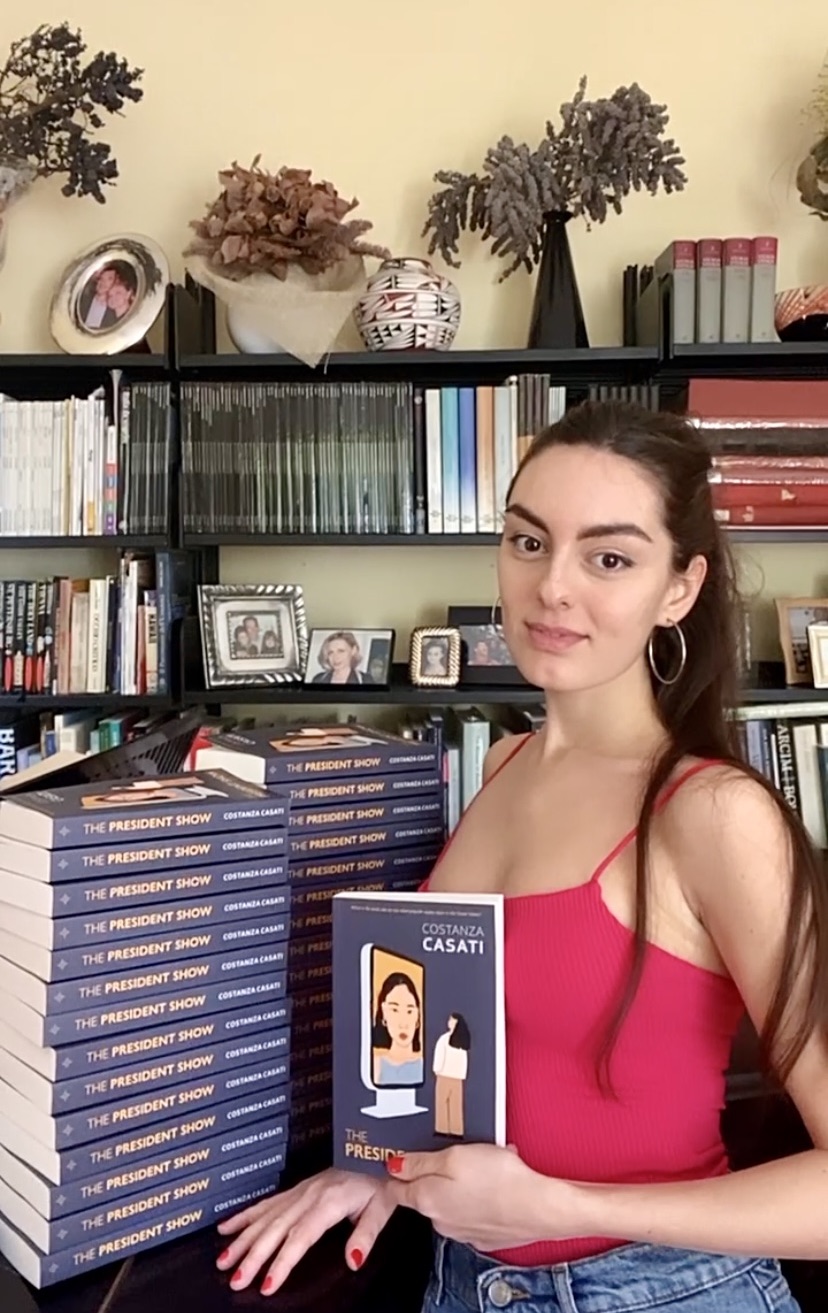
    Author Casati with stacks of The President Show, at her home in Milan.

    And this must be the challenge with writing dystopian fiction now. We’ve had the reality star presidents, the harems of women, the stories of systematic abuse. Now, we even have a global pandemic. In this new normal, it must be hard for fiction writers to shock. Present a reader with a crazy totalitarian regime, pantomime-evil characters, and improbable hairdos, and they’ll point to a spot on the world map, say ‘You set it there.’ 

    But this, it seems, is the point of Casati’s novel. She’s not taking us to a faraway world, she’d showing us our own. On her bookstagram page, she’s hosted talks with other writers, discussing everything from the Epstein scandal to the influence of social media on body image. The President Show is deeply-rooted in the moment. Casati wrote with her eyes open and now she’s showing us what she’s seen. 

    Despite its heavy themes, the novel is fast-paced and energetic. Iris is a gutsy heroine – at no point are we left to wonder who we should side with. There are flashes of The Hunger Games, nods to The Handmaid’s Tale. In our interview with Casati earlier this month, she cited Margaret Atwood, Madeline Miller, Elena Ferrante and Sally Rooney as major influences. Certainly, the fraught female relationships of Ferrante, Sally Rooney’s staccato, slightly-detached observations, shimmer in Casati’s own writing. 

    There are moments when more would be good. We don’t see much outside the Golden Palace, and the precise structure of the show is slightly vague, but it’s possible Casati trusts we know enough about our own world to fill in the blanks. And we don’t see much beyond the Golden Palace because Iris is trapped there. If the atmosphere is stifling, it’s because Iris is stifled. 

    As you’d hope, over the course of the novel we see these rules – do not fall in love with another Lover, do not leave the Golden Palace, do not get pregnant, do not reveal any secrets – broken, smashed, blown to smithereens. This Chekhov’s gun has four barrels. In a world of pain, predators, and poisonous perfection, Casati comes out firing. 

    You can read an extract of The President Show here.


    The President Show is now available to buy from Amazon and Waterstones. You can find out more about Costanza Casati and her writing on her website, or by following her on Twitter and Instagram. She also runs a successful bookstagram account, @youngpeopleread.

    NITRB also published some of Casati’s short stories, You Asked For It and Horrible Feet.


    About the Reviewer

    For ten years, Ellen Lavelle has interviewed authors for The Young Journalist Academy, Nothing in the Rulebook, Newark Book Festival, and her own blog. She’s written for several publications, including The Sunday Times Young Writer of the Year Award Blog. Now an editor at Nothing in the Rulebook, she writes fiction and non fiction, while working as a digital copywriter for an education company. You can follow her on Twitter @ellenrlavelle

  • The Hiding Game by Naomi Wood – Review

    ‘So: Walter König is dead.’

     This is how Naomi Wood’s The Hiding Game begins, and how it continues; a cool account of life, art and death, narrated from a distance by Paul Beckermann. The novel flicks between the older Beckermann of ‘now’, in England, painting in his studio, and the Paul Beckermann of the 1920s – young, in love, passionate to the point of insanity. 

    Young Paul Beckermann arrives at the Bauhaus art school in Weimar in 1922, where passionate insanity is almost a course requirement. In love with the teaching, in love with his new freedom, in love with his new friend Charlotte in particular, Beckermann has a lot to think about, and throws himself into artistic study. 

    But he’s not the only one in love. 

    In his group of six close new friends, there are tensions and allegiances, secrets and understandings. When Walter (the Walter older Beckermann tells us is dead at the very beginning of the book) is betrayed, his reaction has consequences that spiral out, through the twenties, through the thirties and forties. Consequences that leave hearts broken, lives lost. Leave older Paul Beckermann alone in England, painting and remembering. 

    Author Naomi Wood. Photo ©Rachel Hippolyte

    It’s a gripping story. Describing it by its themes – art, passion, love, friendship – can make it sound worthy and a little inaccessible, but Wood’s writing is whip-smart and, at times, brutal. Handing the story to the older Beckermann to tell from his position of distance, allows her to reach through time and hand us facts from the future. The artists we see, happily laughing and drinking in the bohemian parties of the 1920s? These are the architects of the 1930s and 40s. They’re the people killed, the people killing. And Wood tells us which ones make it. Over the champagne, over the sound of the jazz music, older Paul Beckermann shouts from the future: ‘this one is dead.’ 

    That’s not to say there isn’t time for philosophy. Wood’s meditations on the meaning of art are interesting and thought-provoking, made more so by the way she wraps them tightly in plot. There’s the young typographer at the Bauhaus that, after being imprisoned at Buchenwald concentration camp, designs the sign for the gate. Act of collusion or rebellion? What is art? Making things look good? Or truth? Is it, as Master Itten tells his class, cutting open a lemon – smelling and tasting it – before you draw its exterior? ‘How can you draw a lemon without first tasting its flesh?’ 

    It feels like Wood has tasted the flesh of the Bauhaus. The research is thorough but never heavy-handed. We’re reading about people, not the factors leading to an historical event, and the pages are infused with emotion, not peppered with facts. Wood has tasted it, so we taste it too. It’s sour and sweet, with a kick we know is coming. 

    Walter König is dead, we know. But there’s more to the story than that. 


    About the Reviewer

    For ten years, Ellen Lavelle has interviewed authors for The Young Journalist Academy, Nothing in the Rulebook, Newark Book Festival, and her own blog. She’s written for several publications, including The Sunday Times Young Writer of the Year Award Blog. Now an editor at Nothing in the Rulebook, she writes fiction and non fiction, while working as a digital copywriter for an education company. You can follow her on Twitter @ellenrlavelle

    She’ll be interviewing Naomi Wood, author of The Hiding Game for a live Zoom event on Tuesday 23rd March 2012, at 7pm. You can buy tickets for the event, which is organised by Lindum Books, and find ways to buy signed copies here.

    To find out more about Naomi Wood, author of The Hiding Game, Mrs Hemmingway and The Godless Boys, out can follow her on Twitter. She also has fascinating information about the real people that inspired on her novels available on her website naomiwood.com

  • NITRB’s own Joshua Spiller publishes new sci-fi adventure comic, ‘Time Fracture!’

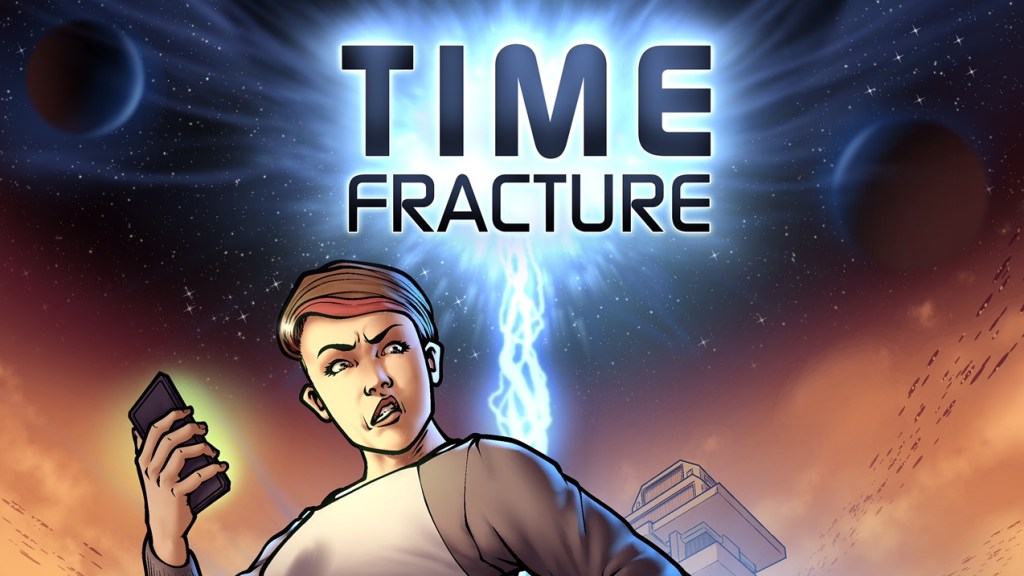
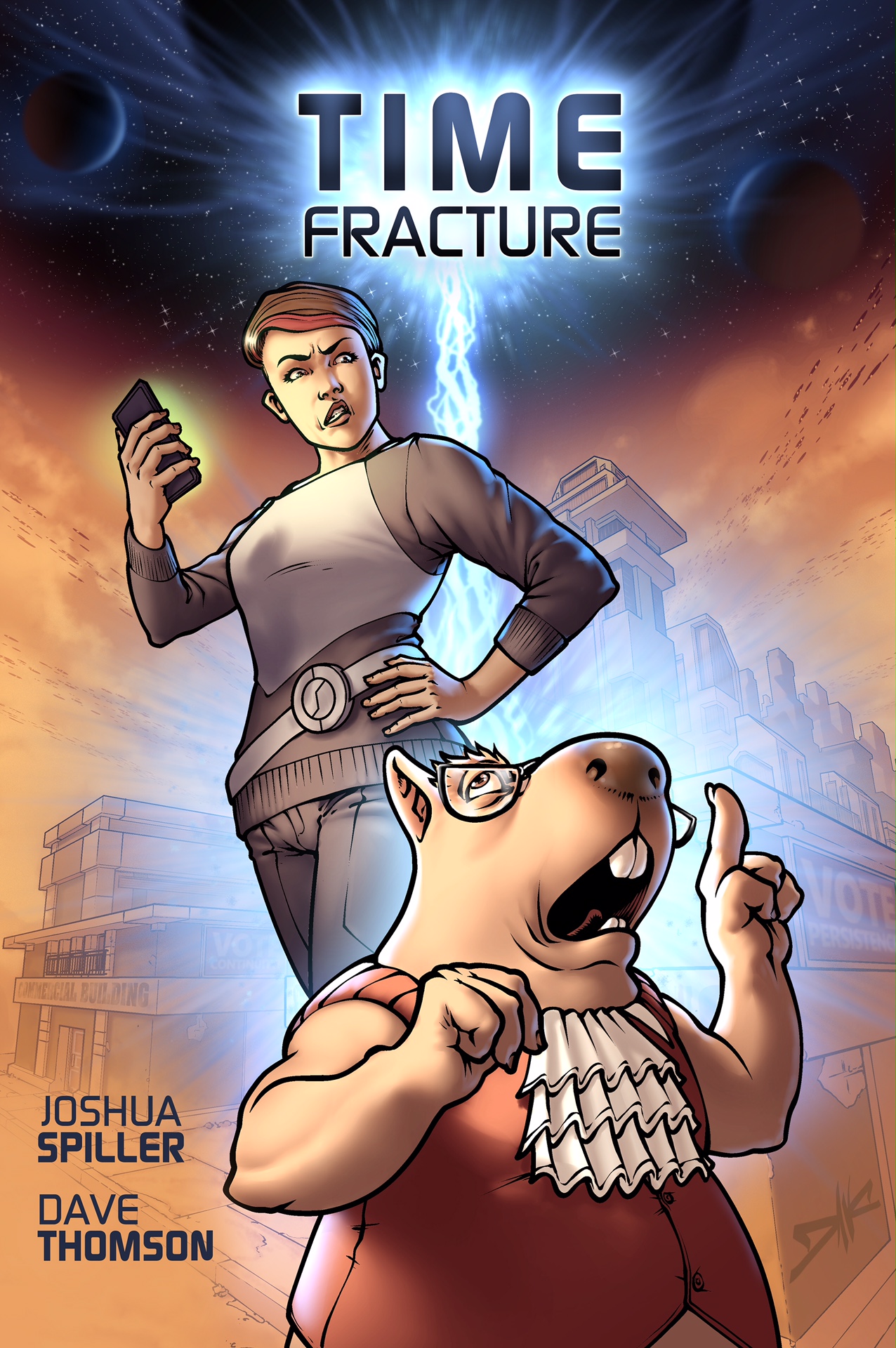
    Time Fracture! is a newly released, 21-page, self-contained story written by NITRB’s very own Joshua Spiller. It’s a comedy space-opera thrill-packed adventure – just the ticket if you’re looking to escape the relentless sordidness of modern existence.

    So, what’s the gist?

    Highly intelligent robot A.E.X has gone rogue. Now, its creator – Orissa, a set designer for VR theatre – and her suavely cute anthropomorphic accomplice, Piedmont, will track the alarmingly paranoid machine down. But, unbeknownst to them, its bizarre experiment with aesthetics is about to reshape all of space and time…

    Careening across multiple wondrous worlds, this is a zippy and zany space-opera adventure packed with humour and good ol’, larger-than-life, mind-bending comic-book ideas.

    How to check it out

    The story was originally published in the award-winning anthology, Aces Weekly.

    And as it’s a digital comic, it can be downloaded straight to your computer, tablet, or phone – and even read in hi-def glory on your TV.

    Check it out – it’s how all the cool kids are whiling away their brief mortal spans: https://gum.co/WGlRC


    You can follow Joshua Spiller on Twitter @JoshSpiller and on instagram.com/joshua_spiller/