Avoid interesting verbs and internet connections; take pencils on aeroplanes; spend more time reading books than anything else; put one word after the other; write. These are just a handful of the numerous priceless tips and pieces of advice from famous authors that we have been featuring here at Nothing in the Rulebook for the last few weeks.
Have humility. Older/more experienced/more convincing writers may offer rules and varieties of advice. Consider what they say. However, don’t automatically give them charge of your brain, or anything else – they might be bitter, twisted, burned-out, manipulative, or just not very like you.
Have more humility. Remember you don’t know the limits of your own abilities. Successful or not, if you keep pushing beyond yourself, you will enrich your own life – and maybe even please a few strangers.
Defend others. You can, of course, steal stories and attributes from family and friends, fill in filecards after lovemaking and so forth. It might be better to celebrate those you love – and love itself – by writing in such a way that everyone keeps their privacy and dignity intact.
Defend your work. Organisations, institutions and individuals will often think they know best about your work – especially if they are paying you. When you genuinely believe their decisions would damage your work – walk away. Run away. The money doesn’t matter that much.
Defend yourself. Find out what keeps you happy, motivated and creative.
Write. No amount of self-inflicted misery, altered states, black pullovers or being publicly obnoxious will ever add up to your being a writer. Writers write. On you go.
Read. As much as you can. As deeply and widely and nourishingly and irritatingly as you can. And the good things will make you remember them, so you won’t need to take notes.
Be without fear. This is impossible, but let the small fears drive your rewriting and set aside the large ones until they behave – then use them, maybe even write them. Too much fear and all you’ll get is silence.
Remember you love writing. It wouldn’t be worth it if you didn’t. If the love fades, do what you need to and get it back.
Remember writing doesn’t love you. It doesn’t care. Nevertheless, it can behave with remarkable generosity. Speak well of it, encourage others, pass it on.
Disappear Here – a project founded and crowd funded by the artist Adam Steiner are looking for film-makers/artists to submit up-to 1 film-poem idea of their own, with 2 films produced to be in collaboration with a writer for a collaborative poetry-film project about Coventry ringroad.
The 18 artists selected will (in pairs) produce 3 poetry-films between them that explore the ringroad as brutalist/modernist structure/setting/inspiration.
The organisers are interested in artistic approaches to urban space, telling city stories and re-imagining the cyclical ringroad as an (in-between) area of change/flux/progress.
Selected artists will be commissioned for the production of up-to three film-poems, at a fixed-fee of £550 (to include all travel and project costs – with a focus upon the time-taken to shoot and edit footage) and will work alongside with a writer and their poems, offering support as performer/concept planning/production consultat for their work.
There will be a summit meeting in Coventry (SAT – 23/7/2016) between all of the participating artists – if applying – please ensure you are free on this date.
DEADLINE for applications is midnight 15/6/2016
TO APPLY
There is a simple application form to be completed – there will be an opportunity to detail your ideas and provide links to previous work – more information:www.disappear-here.org/submit
CONTACT
If you have any questions, wish to talk through initial ideas, plesae email: adam@disappear-here.org
Disappear Here – a project founded and crowd funded by the artist Adam Steiner – are looking for writers/poets/artists to submit THREE ideas / proposals / full poems for a collaborative poetry-film project about Coventry ringroad.
The 18 artists selected will (in pairs) produce 3 poetry-films between them that explore the ringroad as brutalist/modernist structure/setting/inspiration.
The organisers are interested in artistic approaches to urban space, telling city stories and re-imagining the cyclical ringroad as an (in-between) area of change/flux/progress.
Selected artists will be commissioned for the production of up-to three poems, at a fixed-fee of £350 (to include all travel and costs – with a focus upon paying writers to write) and will work alongside the film-maker in performance/production/consultation of their work.
There will be a summit meeting in Coventry (SAT – 23/7/2016) between all of the participating artists – if applying – please ensure you are free on this date.
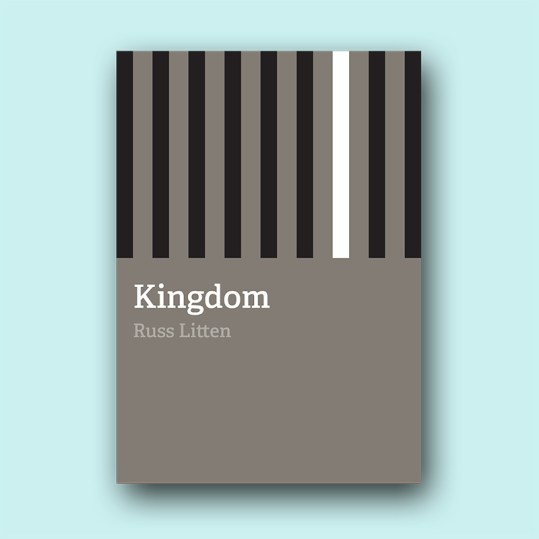
Kingdom is written by Russ Litten and published by Wrecking Ball Press. You can read our extensive interview with Litten here.
Few books will capture your attention from the first page as Russ Litten’s Kingdom. Indeed, the quasi-surrealist opening scene in an unknown prison library is perhaps the most interesting and unique introduction to a novel that we here at Nothing in the Rulebook have read all year.
Of course, many novels start extremely well – explosively well, even – only to lose some of their initial spark and magic as the plot progresses. And while in this case the plot does settle down, it retains that opening magic for the entirety of the book.
While the action of the plot may be light on significant moments of incident (this is about gradual exploration of both the world and the self – more so than driving the narrative on through event after event), Litten’s style is infectious. And when you read writing as crisp and as fast as this, it is difficult not to turn page after page with a broad smile on your face.
Described on paper as a ghost story, this is unlike any ghost story you’ll have read before – and that’s a declarative statement we’re happy to be challenged on. More than anything, the book is a reflection on – and an exploration of – what it means to be alive (or not) in 21st Century Britain.
Indeed, what Litten explores, with gripping clarity, is a reality left unseen and marginalised in the national consciousness. As with works such as Alisdair Gray’s Lanark or Irvine Welsh’s Trainspotting, Litten vividly paints a picture of working class inner city life with concision, but also sensitivity and charm.
In the context of modern Britain, Litten thus explores the legacy of neoliberalism – which leaves us with a country of burgeoning inequality, stripping assets from the poorest and most vulnerable to redistribute them to the wealthiest in society. But we can all read statistics about income gaps, zero hour contracts and housing and rental crises; what is more difficult is imagining the realities these statistics infer for those people most affected by them. And this is where Litten’s remarkable writing skills truly enter the fray, because this book is not cold in the way facts, figures and statistics – or even political theory and rhetoric – so often is. It is rich, and warm – with a underlying, constant beating thread of humour which is both grim and good. And there are moments that will also hit you in the lungs and take your breath away.
Indeed, it is a hard task to think of a more sympathetic character than the novel’s protagonist, Alistair Kingdom. Considering Kingdom is self-described as having been “born a ghost”, creating such a compelling and fleshed out (pun intended) character from a ghost is quite some feat. And when Kingdom falls in love with another of the book’s great characters – Gemma – it pulls at the soul in a way few other love stories manage.
A clear reason Litten’s characters – especially Kingdom – seem to grow out of the page, is Litten’s use of language. For this is the language of real people.
For want of a better term, one might describe the changes in syntax, the interior monologue technique which leaves sentences unfinished and thoughts left unsaid – as well as the use of expletives – as “non-standard English”. But there is hesitation in using such a term since there is surely no “right” or “wrong” way to speak.
Indeed, using language in the way Litten does strikes the reader very much a political decision. Since Adam Smith’s Lectures on Rhetoric and Belles Lettres in 1748, there has been a conscious effort to standardize the English language; cultivating what Smith viewed as “the most imperfect” dialects found across the United Kingdom.
But what this standardization of language has meant is the obliteration of entire cultures and communities. Thousands of voices silenced, or pushed to the margins, seen as inherently other – as being beneath those who hold the power of “perfect” speech.
And when you take away an individual’s language, you also remove their heritage, their culture. Consider the words of Booker-Prize winning author James Kelman:
“Everybody from a working class background, everybody in fact from any regional part of Britain – none of them knew how to talk! What larks! Every time they opened their mouth out came a stream of gobbledygook. Beautiful! their language a cross between semaphore and Morse code; apostrophes here and apostrophes there; a strange hotchpoth of bad phonetics and horrendous spelling – unlike the nice stalwart upperclass English Hero, whose words on the page were always absolutely splendidly proper and pure and pristinely accurate, whether in dialogue or without. And what grammar! Colons and semi-colons! Straight out of their mouths! An incredible mastery of language. Most interesting of all, for myself as a writer, the narrative belonged to them and them alone. They owned it.”
By using language and accurate representations of working class, urban dialects, Litten thus presents us with a challenge to the status quo. Kingdom therefore provides us with a glimpse of the real United Kingdom that is so often otherwise ignored. An extremely timely and necessary book.
It’s a near universally accepted truth: criticism can be hard to take. Seeing, reading or hearing someone deconstruct what you’ve written is strange at the best of times; and when the feedback you receive is negative, well that can feel like a sucker punch right to the lower intestine. This is true not only for aspiring writers, receiving the first of many rejection letters and emails from literary agents and publishing houses; it’s also true or established authors (if you don’t believe us, just ask master story teller Robert Ford, who was so upset about a review of his book The Sportswriter, he took a gun and shot bullets through one of said reviewers own books).
Indeed, in a 2003 interview with The Guardian, Ford explained his thinking behind shooting Alice Hoffman’s book. He said:
“People had written me off. When the book came out it just took a while to make its way. It didn’t happen overnight. It got bad reviews – that’s the book that Alice Hoffman wrote nasty things about in the New York Times […] my wife shot it [Hoffman’s book] first. She took the book out into the back yard, and shot it. But people make such a big deal out of it – shooting a book – it’s not like I shot her.”
Of course, not every author would endorse shooting holes in books of any kind, even if they have been written by someone who has just sent you a rejection letter for your first novel, or by a “nasty” New York Times reviewer.
In fact, some might even suggest a more thoughtful response is required. How to relate to criticism in a healthy way is one of the essential survival skills of the creative spirit.
So what exactly is the best way to deal with, and respond to, criticism? Well, fortunately, this has been answered by some of the greatest writers of the 20th Century, including Kurt Vonnegut, Truman Capote and Ray Bradbury.
And here are those answers, collected lovingly by your comrades here at Nothing in the Rulebook. Enjoy!
Margaret Atwood
“Critics haven’t been any harder on me than they usually are. If anything, maybe a bit easier; I think they’re getting used to having me around. Growing a few wrinkles helps. Then they can think you’re a sort of eminent fixture. I still get a few young folks who want to make their reputations by shooting me down. Any writer who has been around for a while gets a certain amount of that. I was very intolerant as a youthful person. It’s almost necessary, that intolerance; young people need it in order to establish credentials for themselves.”
Truman Capote
“Most of all, I believe in hardening yourself against opinion… There is one piece of advice I strongly urge: never demean yourself by talking back to a critic, never. Write those letters to the editor in your head, but don’t put them on paper.”
Aldous Huxley
“[Reviews] have never had any effect on me, for the simple reason that I’ve never read them. I’ve never made a point of writing for any particular person or audience; I’ve simply tried to do the best job I could and let it go at that. The critics don’t interest me because they’re concerned with what’s past and done, while I’m concerned with what comes next.”
William Styron
“I think it’s unfortunate to have critics for friends. Suppose you write something that stinks, what are they going to say in a review? Say it stinks? So if they’re honest they do, and if you were friends you’re still friends, but the knowledge of your lousy writing and their articulate admission of it will be always something between the two of you, like the knowledge between a man and his wife of some shady adultery.
There’s only one person a writer should listen to, pay any attention to. It’s not any damn critic. It’s the reader. And that doesn’t mean any compromise or sell-out. The writer must criticize his own work as a reader. Every day I pick up the story or whatever it is I’ve been working on and read it through. If I enjoy it as a reader then I know I”m getting along all right.”
John Irving
“Listen very carefully to the first criticism of your work. Note just what it is about your work that the reviewers don’t like; it may be the only thing in your work that is original and worthwhile.”
Kurt Vonnegut
“I never felt worse in my life [when reading negative reviews]. I felt as though I were sleeping standing up on a box car in Germany again. All of a sudden, critics wanted me squashed like a bug… It was dishonorable enough that I perverted art for money. I then topped that felony by becoming, as I say, fabulously well-to-do. Well, that’s just too damn bad for me and for everybody. I’m completely in print, so we’re all stuck with me and stuck with my books.”
Toni Morrison
“I read [reviews]; I read everything. I read everything written about me that I see. I have to know what’s going on! It’s not about me or my work, it’s about what is going on. I have to get a sense, particularly or what’s going on with women’s work or African American work, contemporary work. I teach a literature course, so I read any information that’s going to help me teach. […] unflattering reviews are painful for short periods of time; the badly written ones are deeply, deeply insulting. That reviewer took no time to really read the book […] There are authors who find it healthier for them, in their creative process, to just not look at any reviews, or bad reviews, or they have them filtered, because sometimes they are toxic for them. I don’t agree with that kind of isolation.”
Ray Bradbury
“The critics are generally wrong, or they’re fifteen, twenty years late. It’s a great shame. They miss out on a lot. Why the fiction of ideas should be so neglected is beyond me. I can’t explain it, except in terms of intellectual snobbery […] there was a time when I wanted recognition across the board from critics and intellectuals. […] But not anymore. If I’d found out that Norman Mailer liked me, I’d have killed myself. I think he was too hung up. I’m glad Kurt Vonnegut didn’t like me either. He had problems, terrible problems. He couldn’t see the world the way I see it. I suppose I’m too much Pollyanna, he was too much Cassandra. Actually I prefer to see myself as the Janus, the two-faced god who is half Pollyanna and half Cassandra, warning of the future and perhaps living too much in the past—a combination of both. But I don’t think I’m too overoptimistic. […] I don’t tell anyone how to write and no one tells me.”
Neil Gaiman
“When things get tough, this is what you should do: Make good art. […]Someone on the Internet thinks what you’re doing is stupid or evil or it’s all been done before — make good art. Probably things will work out somehow, eventually time will take the sting away, and that doesn’t even matter. Do what only you can do best: Make good art. Make it on the bad days, make it on the good days, too. […] And make mistakes! If you are making mistakes, then you are making new things, trying new things, learning, living, pushing yourself, changing yourself, changing your world. You’re doing things you’ve never done before, and more importantly, you’re Doing Something.”
“Catching the muse”; “Doing an Ernest”; “Shooting the black stuff”; “Clobbering the pencil”; whatever you want to call it, the decision to chuck in your job security, risking debt, isolation and insanity in favour of a career as a writer is undoubtedly a momentous one. But being prepared for what awaits you on your writing journey is vital as you pursue that first publishing contract. So here are just a few of the things you need to know as you set out on your journey.
You no longer use pens: you use The Porlington Pontiff.
All the important scenes in your books take place on hot air balloons.
Why would you even consider setting your scene anywhere else? Photo by Jaybee Bondoc.
The thought of wearing a waistcoat fills you with unbearable excitement.
You use poems instead of more traditional methods of currency
The majority of your stories involve men gradually transforming into smartphone cases
You discover the real name for a duck is actually a cazoogle
When you run out of paper, you’ll be surprised at how often you end up writing on significant others, strangers on the street, and family pets.
Your favoured item of clothing attire quickly becomes the Lucifer Thigh Throttler
You’ll complete your first novel in less than thirty minutes, and spend the next twenty four years working out what to do with it.
Books need watering, like plants. But you must never feed them in the afternoon.
Nothing gets the creative juices going like hanging upside down like a bat, slapping yourself on the cheeks shouting “No, no, no, no, no!”
Every coffee stain has a poet in it. They’re just really small and they all look like Sylvia Plath.
As a writer, you no longer drink water: you’re only able to drink a long-forgotten Scotch Whiskey known as Blackbeard’s Watercloset.
Most of the characters you write about will come alive at some point. The majority of them are fabulously rude and only eat oysters. The best thing to do is ignore them: they will go away eventually and become rejected contestants for The Voice and Britain’s Got Talent.
The only way to cure writer’s block is by making a human pyramid with at least seven world leaders.
You’ll receive a call from your favourite author, who will tell you the secret ingredient in Quorn meatballs.
In order to find a literary agent you must perform a mystical ritual. This means purchasing an Apple Macbook, visiting a chain coffee store (preferably owned by a company that doesn’t pay tax), and drinking a mocchalattecino while reciting the 5th Amendment of the American Constitution. You must also be wearing your best pair of Seamen’s Curtains.
When it comes to choosing what laptop to buy, the bigger the better.
On your third night as a writer, William Shakespeare and Christopher Marlowe will visit you in your dreams. You must choose to make out passionately with one of them. Choose wisely.
Writing Flash Fiction really is as easy as writing the word “flash” over and over again until your word count reaches 500.
Strangers will always be offering you free vegetables.
Get ready to see a lot more of these. Photo via Flickr.
You’ve already had some practical advice from Margaret Atwood, who advised us that writers “most likely need a thesaurus, a rudimentary grammar book, and a grip on reality.” Meanwhile, Zadie Smith gave us timeless writing rules, reminding us to “Avoid cliques, gangs, groups: the presence of a crowd won’t make your writing any better than it is.” And of course, who could forget Neil Gaiman’s deceptively-simple sounding tips, including: “Put one word after another. Find the right word, put it down.”
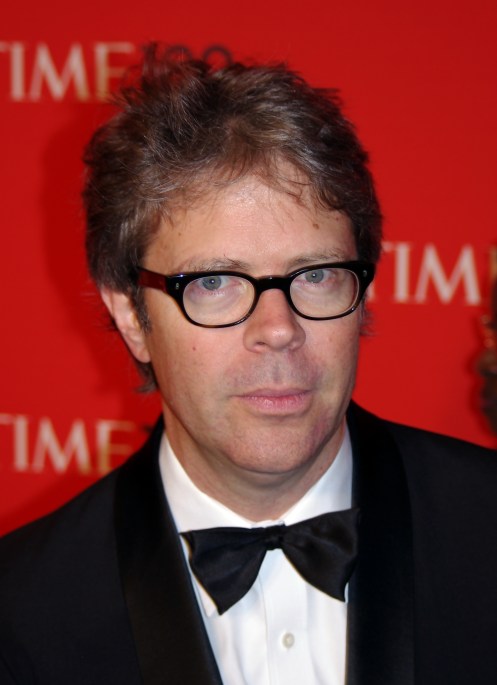
Now, it’s our turn to treat you to this fabulous set of writing rules from Jonathan Franzen. Enjoy!
The reader is a friend, not an adversary, not a spectator.
Fiction that isn’t an author’s personal adventure into the frightening or the unknown isn’t worth writing for anything but money.
Never use the word “then” as a conjunction – we have “and” for this purpose. Substituting “then” is the lazy or tone-deaf writer’s non-solution to the problem of too many “ands” on the page.
Write in the third person unless a really distinctive first-person voice offers itself irresistibly.
When information becomes free and universally accessible, voluminous research for a novel is devalued along with it.
The most purely autobiographical fiction requires pure invention. Nobody ever wrote a more autobiographical story than “The Metamorphosis”.
You see more sitting still than chasing after.
It’s doubtful that anyone with an internet connection at his workplace is writing good fiction.
Nothing in the Rulebook – a literary and new writing blog dedicated to new ideas – is looking for contributors.
We are a collective of creatives bound by a single motto: ‘there’s nothing in the rulebook that says a giraffe can’t play football!’ Our news, opinion and interviews are read around the world and attract on average 20,000 unique views a month. We’ve featured writers and artists such as Iain Maloney, Julia Bell, Paul M.M. Cooper, Russ Litten, Asher Jay, Tim Leach, Rishi Dastidar, Eric Akoto, David Greaves, Charlotte Salter and many more.
We are looking for people who think just because there’s one way to do things, it doesn’t mean that’s the only way.
We’re commissioning a wide range of articles including opinion, commentary, news and features. You can get an idea of what piques our interest on our website, Twitter and Facebook.
Nothing in the Rulebook was established by Warwick University creative writing alumni with over ten years’ experience in journalism, marketing and communications. We’ve won awards for short fiction, poetry and writing and our work has been published in national newspapers, literary anthologies and magazines.
An extract from my own ‘I Love You Thi$ Much’, a comic that no one has yet compared to ‘Watchmen’ or ‘The Dark Knight Returns’. You can check out more of my stories at joshspillercomics.tumblr.com
It’s an undeniable fact – comics have never saturated culture more.
From the endless plethora of superhero blockbusters, to TV hits like Daredevil and Jessica Jones, to the slew of related videogames and cartoon series, it feels like the vast bulk of modern entertainment is either superhero-dominated, or at least superhero-inflected.
But within this boom, there is a surprising paradox: monthly comic-book sales – you know, the ones with all the superheroes in – are at pretty much their lowest ebb of all time.
For instance, according to these figures, the third highest-selling comic book of February 2016, in North America, was Batman, which shifted 102,689 copies. So what percentage of Americans bought this comic? Well, according to Google, the population of America is roughly 318.9 million.
So, if we do 102,689 ÷ 318,900,000 x 100, we should get the percentage we’re looking for. Which is… a paltry 0.03%.
To put that into context: in the 1940s, many individual comics sold over a million copies apiece. And even by the 1980s, a title on the verge of cancellation, like the pre-Alan Moore Swamp Thing, could still sell 20,000 copies per month, enough to almost be included in February 2016’s top 100-selling comics.
(For a far more detailed, accurate, and all-round better analysis of the trajectory of comic book sales over the past seventy years than I can provide, click here.)
So what’s going on? Why does there seem to be an inverse relationship between comics’ cultural profile, and their physical sales? Why aren’t individual titles selling anywhere near as well as, presumably, they should be?
Firstly, I don’t think it’s the fault of readers. You have to earn your readership. So instead, let’s consider the storytelling – and the mindset behind that storytelling – that they’re being offered.
Let’s talk revisionism
If one thing characterises modern, mainstream superhero comics, it’s revisionism. Continuities are constantly being rewritten. Titles relaunched, with a brand-spanking new ‘Issue 1’, and the promise that things will be radically different, more exciting, and better than ever.
The problem with these revisions is everything they wipe away. For all the readers that might be freshly drawn to the title, all of those who have loyally followed it for years are suddenly told: “Umm, you know all that stuff you’ve spent your time and money on? Well, none of that counts anymore. Enjoy!”
Such revisionism is applied, as you would expect, almost solely to titles with a lot of historical baggage – a.k.a the top-selling superhero books. It’s a narrative quirk, so far as I can think of, which is pretty much unique to comics. Here, a single series – such as Batman or Superman – can run continually for seventy years, with creators constantly needing to find new ways to keep readers hooked. No wonder they sometimes resort to drastic extremes.
But the moment you invalidate the history of a continuing series, you begin stripping the joy or meaning out of any long-term commitment to it; chipping away at your own edifice, and, frequently, sliding towards a regurgitation your own mythology. I mean, has any story ever justified the pressing of a reset button?
Do this, and your storytelling loses some of its integrity. The readers’ trust wanes. That’s basically inevitable.
The fact that this failing besets the very comics that once ruled the sales charts, may help explain why the top-selling comics now only sell tens of thousands of copies, as opposed to hundreds of thousands.
The problem with “big event” storylines
Alongside revisionism, mainstream superhero comics also suffer from, in my opinion, one other major deficiency: a feverish obsession with big-event storylines. Every summer, both Marvel (Spider-Man, Hulk, Avengers, etc.) and DC (Superman, Batman, Aquaman, etc.) deliver massive, cataclysmic storylines that embroil the vast bulk of their titles, and which basically declare, year after year after year, that Nothing Will Be The Same Again.
As you can imagine, it all gets a bit wearing and pointless. If the status quo is always being shaken up, is there really a status quo to shake up? (Welcome to Zen Comic Teachings 101.) Or is it an unavoidable case of diminishing returns, where each “ground-breaking” event means less and less than the one before?
Pointing this stuff out is nothing new. Countless comic readers, afflicted with “big-event fatigue”, complain about it all the time.
What’s worth mentioning is that the stories which have actually changed these comic characters, their universes, and the very medium itself, haven’t been crossovers or needed a ton of hype. Instead, when Watchmen and The Dark Knight Returns got the wider world paying attention to, and enthusing over, comics, it was mainly through sheer critical acclaim and word-of-mouth buzz. Thirty years later, these stories are still selling phenomenally well.
These weren’t grand-event narratives screaming for your time and money. They were self-contained, experimental stories, told with passion and integrity. They weren’t built to change the medium; and yet, perhaps even to the surprise of their creators, they were the ones that did.
So forget the short-term sales spikes that big-event narratives can bring. Just focus on telling a dope story. Or, to put it another way: ply crisis upon crisis to your books, and your sales could soon be in one.
To be clear: this is not to say that no good or great work is done in mainstream comics. It’s simply highlighting a broad phenomenology that seems to be leading to their decline.
The issues we’ve looked at so far – revisionism and big-event storylines – are both matters regarding storytelling integrity. They are problems internal to the medium, and thus are (relatively easily) fixable.
What’s much trickier are the external factors.
The wider worldview
Comics, in their physical monthly format, seem to have been hit hard by almost every other medium. Want your superhero fix? Movies, TV and videogames can take care of that. Fancy reading this month’s latest comics? Don’t go down to the shops. Simply download them from Comixology (owned by Amazon) to your computer.
Even graphic novels – simply monthly comics collected into a book-like form – have eaten up some of comics’ old market share. For instance, while February 2016’s comic book sales were down 7% on February 2015’s, graphic novel sales were up 12% over the same period. This isn’t surprising. Graphic novels tend to be cheaper than the individual comics they collect; have no adverts; and can be binge read (Netflix-style).
Plus, unlike monthly comics (which you can read for years, only to have much of what you enjoyed eliminated from continuity) graphic novels essentially have a beginning, middle, and end. You’re not likely to have your story undermined partway through reading it. Therefore, there’s an integrity to their form, and this perhaps gives them an advantage over monthly comics.
All of this, I hope, helps to explain why, in the age of the superhero boom, the medium that birthed them is going through something of a superhero bust.
Nevertheless, within this flux that the industry is experiencing, there are fascinating shoots of green growth – growth wholly contingent upon 21st-century culture.
The crowdfunding community (on websites such as Kickstarter and Indiegogo) seems to be remarkably generous, enabling numerous independent, company-less creators to realise their projects.
In fact, it’s been such a success that established comic companies are now also beginning to utilise these platforms. In February this year, for instance, comic company Avatar posted a campaign on Kickstarter to raise money for a new black-and-white anthology that would feature some of the best talent, scriptorial and artistic, in the business. In 14 days, it was ridiculously over-crowdfunded to the tune of 1,000%+ its initial target, drumming up a total of $110,333.
Clearly, there’s a lot of good will out there for backing new comics, both from obscure, amateur creators, as well as from the industry’s hoary heavyweights. None of this would have been possible even a decade ago.
Moreover, on a general level, spending is like voting. Whatever you spend your money on, you’ve voted for there to be more of that thing in the world, whether it’s vegetarian food in the supermarket, action films, or electric cars. And broadly speaking (although there are many caveats), in a capitalist society, you get the world you spend/vote for. So perhaps these crowdfunded comics signal the way things are going.
Personally, I’d hate to guess. Look at Marvel – they filed for bankruptcy in 1996. Flash-forward twenty years, and they’re a corporate juggernaut. Who would’ve predicted that?
But whatever happens, hopefully this article offers a snapshot of where comics are at today… where they might be heading… and spotlights a couple of key flaws that, to bring readers back into the fold, the monthly medium urgently needs to address.
(N.B. I’m not a comic retailer, and this article is largely based upon anecdotal evidence and online research. So if there are any false facts, glaring gaps of knowledge, or cack-handed misprisions on my part, then, as ever, corrections are welcome. Well, not welcome exactly – they’ll really undermine my authority – but I’ll be happy to post them below.)
About the author
Josh Spiller is a published writer of comics, short stories, and scripts, and is currently looking for representation for his first novel. He’s also interacted with the “real world” by reviewing restaurants and theatre pieces for Flux Magazine and The London Word, and is worried that this bio is too self-centred. You can judge his work here, joshspillercomics.tumblr.com; and his very soul here – @JoshSpiller.
Nothing in the Rulebook – a literary and new writing blog dedicated to new ideas – is looking for an enthusiastic and passionate individual to join our team as our creative intern.
We are a collective of creatives bound by a single motto: ‘there’s nothing in the rulebook that says a giraffe can’t play football!’ Our news, opinion and interviews are read around the world and attract on average 20,000 unique views a month. We’ve featured writers and artists such as Iain Maloney, Julia Bell, Paul M.M. Cooper, Russ Litten, Asher Jay, Tim Leach, Rishi Dastidar, Eric Akoto, David Greaves, Charlotte Salter and many more.
We are looking for people who think just because there’s one way to do things, it doesn’t mean that’s the only way. We are looking for creative writing and journalism students or bloggers to help us run our project. This means maintaining our social media presence, writing articles for our blog and commissioning and reviewing new work.
Nothing in the Rulebook was established by Warwick University creative writing alumni with over ten years’ experience in journalism, marketing and communications. We’ve won awards for short fiction, poetry and writing and our work has been published in national newspapers, literary anthologies and magazines.
This is a great opportunity to build connections with publishers, literary agents, writers, artists and photographers while learning how literary journalism works from the inside. You’ll gain hands on experience in marketing, social media management, copy-editing and commissioning.
If you’re interested, read some of the stories and articles on Nothing in the Rulebook and pitch us five articles you’d like to write. Send us an example of writing of no more than 500 words to nothingintherulebook@gmail.com. Don’t forget a brief cover letter and your CV.
You don’t have to be Kurt Vonnegut – what’s most important to us is enthusiasm and a willingness to learn.
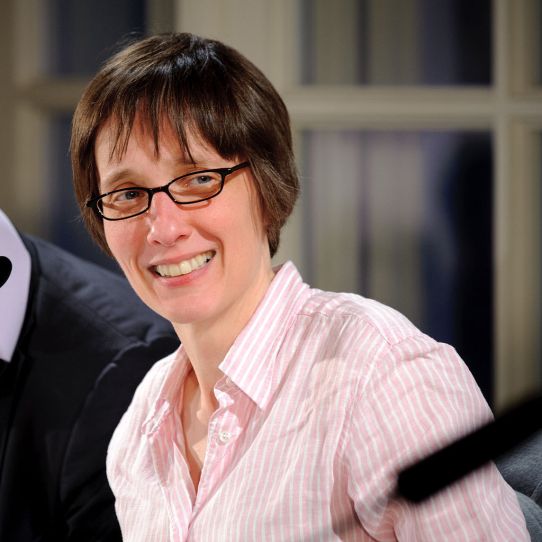






 Josh Spiller is a published writer of comics, short stories, and scripts, and is currently looking for representation for his first novel. He’s also interacted with the “real world” by reviewing restaurants and theatre pieces for Flux Magazine and The London Word, and is worried that this bio is too self-centred. You can judge his work here,
  nothing in the rulebook
.jpg)