• A Winter War by Tim Leach – book review

    History, they say, is written by the victors. Yet when it comes to fiction, there’s something particularly special about those books that bring to life the people on the other side of these victories; those whose voices may otherwise be erased by the histories of conquerors.

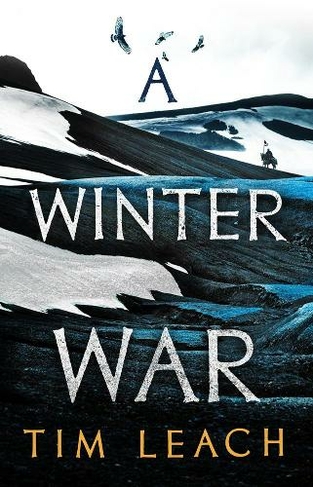
    This is certainly the case with A Winter War, the latest novel from Tim Leach.

    Following on from his brilliant book, Smile of the Wolf, Leach has swapped the freezing winters of medieval Iceland for the frozen land beyond the Danube; the land of the ancient Sarmatians. It speaks to Leach’s impressive authorship that he can once again bring us, as readers, so easily into the world of an ancient culture of which precious little is known.

    He does this not least through vivid descriptions that transport us into the harsh, often unforgiving; but nonetheless beautiful world of the Steppe. As we have come to expect from Leach, there is a certain Hemmingway-esque element to his writing that balances simplicity with the extraordinarily complex.

    Indeed, it is in the complexities of the characters of A Winter War that brings such connection, as a reader, to the novel. We find this in the shame and hope that our protagonist, Kai, carries with him; the dishonour he feels so deeply that in turn leads him to repeatedly pursue honourable (if not necessarily the smartest) courses of action. And we find it in the shifting relationships between Kai, Bahadur, and Arite; as loyalties and feelings change, and feelings of love are tinged with betrayal.

    Despite the historical chasm in time between the events of the novel and now, there are many parallels for readers to draw that feel extremely relevant. Indeed, in reading A Winter War, it is striking that we begin amongst a people who are facing the end of their civilisation – the end of their history. In this sense, it bears a striking resemblance to the place we find ourselves: facing as we of course do, the catastrophic breakdown of our planet’s climate, alongside a veritable plethora of other existential issues – from renewed global, nuclear-powered conflicts through to Artificial Intelligence and global pandemics.

    And there are key themes, such as national identity, conflict, familial feuds, and loyalty, which would not feel out of place in any contemporary conversation. So while there are millennia separating the events in the novel and today, the core themes and actions that take place in the book strike right at the heart of something timeless – calling to something within human nature that is as old as literature and shows little sign of changing.

    In short, this is a book that gives a voice to a vanished people, and in doing so, shows that this voice may not be unlike our own.


    A Winter War by Tim Leach is the first in a trilogy, published by Head of Zeus. Purchase a copy via Amazon here – A Winter War: Amazon.co.uk: Tim Leach: 9781800242869: Books

  • New Honeyboys song, ‘Green Tea’, will make you think twice about ordering coffee
    California based band, Honeyboys – interviewed by Nothing in the Rulebook here

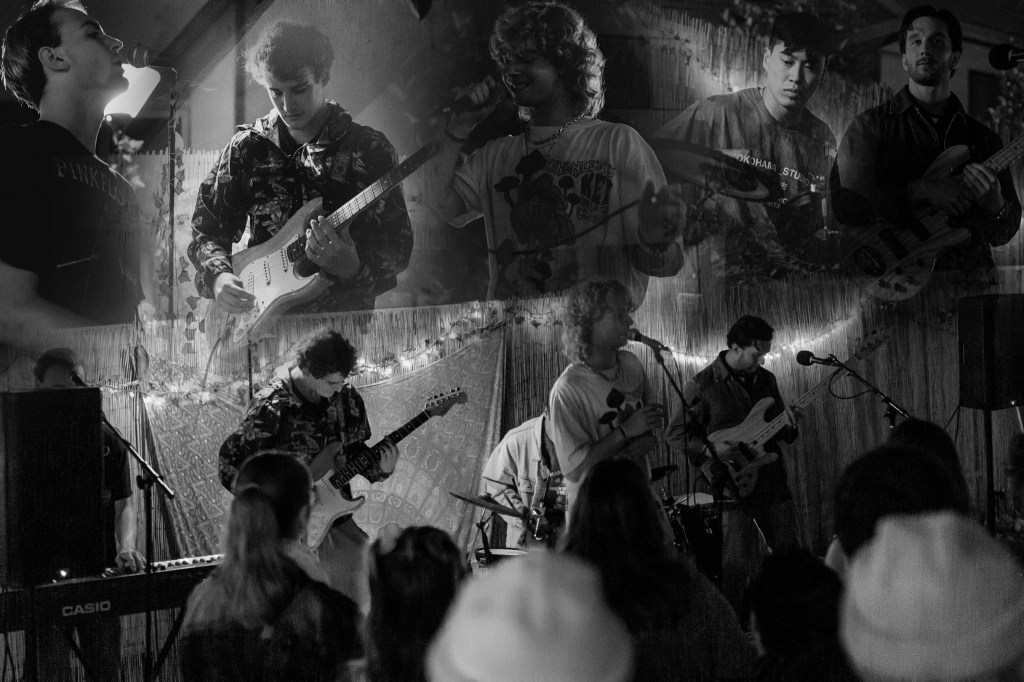
    After a recent hiatus, Honeyboys return with their new single “Green Tea”, a song that both looks to the past and future in its influences. Combining layers of jangly guitar strums with pulsating bass and a driving drum machine, the track has features of the soundtrack to a blockbuster 80’s movie. While the music soars, the lyrics remain intimate, detailing the differences in compatibility between two lovers. 

    Listen to “Green Tea” on Soundcloud HERE or on Spotify HERE

    Green Tea is influenced by artists such as Dayglow, Coldplay, and Bickle. With its upbeat tempo and soaring/emotional vocals, it’s a song that you can either relax to or move your hips and dance. The hookiest part occurs first at :54 (“She drinks coffee, I like Green Tea) and then it explodes into a rousing synthpop anthem.

    Nothing in the Rulebook’s own Professor Wu was lucky enough to listen to the preview of Green Tea before it officially dropped. Upon listening to the track, he said:

    “The Honeyboys remain as sweet as honey with this absolutely killer new track, featuring 100% good vibes. It’s upbeat tempo and all round funky-ness will bring many listeners back to heady days of youth taking road trips to the beach. After what has been a difficult couple of years for many, this is exactly the sort of song we need right now.”

    The band has been developing their live sound performing at college house parties and venues around San Luis Obispo and plan on making their way down the coast of California.

    The single is one of the twelve tracks that will appear on their upcoming album set to release early next year.

  • “Always bring a pencil”: the most important piece of writing advice?

    “My novels begin in a strange way”, Joseph Heller told the Paris Review in 1974 [link].  “I don’t begin with a theme or even a character. I begin with a first sentence that is independent of any conscious preparation.”

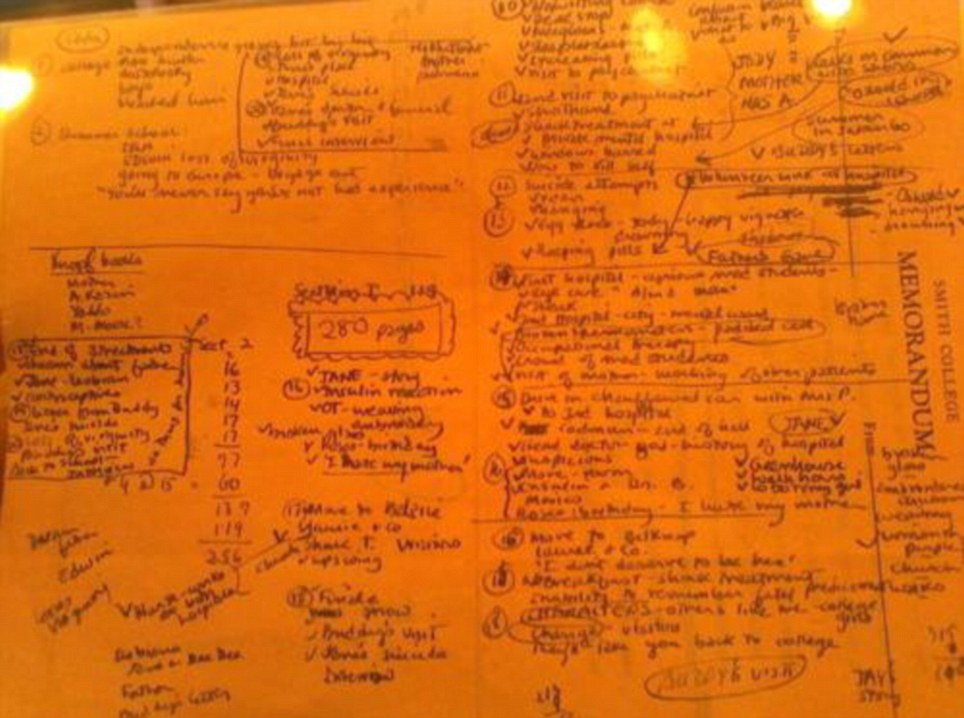
    That the author of one of the 20th Century’s most famous novels should approach the writing ‘process’ in such a way may – at first – seem a touch absurd (much like the crazy bureaucratic world of Catch-22). Indeed, when you compare this approach: of simply waiting to “receive” a line of fiction that then may inspire a further line, and so on, with the processes employed by other writers, it seems stranger still. Many employ – or actively encourage – meticulous planning. Take Sylvia Plath, for example, who mapped out in fine detail the full plot of The Bell Jar to help her writing process.

    Sylvia Plath’s outline for her novel The Bell Jar

    Yet we should all know by now that there is no ‘right’ or ‘wrong’ approach to writing. And Heller is not alone in approaching writing, not from the point of view of process; but of inspiration.

    Take the advice of poet Naomi Shihab Nye, for example, composer of the existentially symphonic Kindness. In a reflective prose section of her collection Everything comes next, she echoes the Heller’s advice, writing:

    “Don’t start with a big idea. Start with a phrase, a line, a quote. Questions are very helpful. Begin with a few your carrying right now.”

    This advice may sound similar to anyone who has studied philosophy. After all, it was one of the grandfathers of philosophy, Aristotle, who said: “philosophy begins in wonder”, which is to say, by questioning our surroundings and the world around us, we can uncover new ideas and ways of thinking.

    So it goes for philosophers; so too for creatives, it seems, should they follow the advice of Shihab Nye, who believes that small questions and moments of inspiration can lead to many more. Indeed, she goes on to say:

    “Small increments of writing time may matter more than we could guess. One thing leads to many — swerving off, linking up, opening of voices and images and memories. Nearby notebooks — or iPads or tablets or laptops — are surely helpful.”

    What it all comes down to, ultimately, is, well: writing. Writing everything. Thoughts and ideas – whatever they may be. Rather than meticulously labouring over plot elements, character development and narrative arcs, Nye and Heller both seem to adopt a stance that tells us the joyful, creative sparks of writing are the things that will lead us to the more substantial and sustained periods of creative labour. Write little; write often. Start with a first line or a last line and see where they take you. Sometimes, they won’t take you anywhere (Heller notes that he would start with a first sentence but sometimes never get to a second; while in other cases, he might write a whole chapter but leave it at that). What matters is the writing; our soulful expression pressed by pen and ink upon plain paper, or jotted down on an iPhone notes app. When creativity bites: you bite it back. As Nye explains:

    “The more any of us writes, the more our words will “come to us.” If we trust in the words and their own mysterious relationship with one another, they will help us find things out… Consider the pleasure we feel when we go to a beach. The broad beach, the bigger air, the endless swish of movement and backdrop of sound. We feel uplifted, exhilarated. Writing regularly can help us feel that way too.”

    This is not to say, of course, that steadfast discipline does not have its place in writing and creative expression. But rather to celebrate the vitalising, joyful moments of inspiration that strike us all – and ultimately are the soul food for our passions that fuel our creative labours.

    And this is why, it feels fitting to end on one of Nye’s simplest – yet undoubtedly beautiful – poems, Always bring a pencil.

    ALWAYS BRING A PENCIL
    by Naomi Shihab Nye

    There will not be a test.
    It does not have to be
    a Number 2 pencil.

    But there will be certain things —
    the quiet flush of waves,
    ripe scent of fish,
    smooth ripple of the wind’s second name —
    that prefer to be written about
    in pencil.

    It gives them more room
    to move around.

  • “Nothing has changed; but everything has changed!” – an interview with Tim Leach

    The last time Nothing in the Rulebook caught up with Tim Leach, the world was a very different place. Granted, the differences weren’t on the scale you discover in his books (for starters, there are fewer swords in our case – and we’re perhaps worse for it); but there was no global pandemic; had been no President Trump; no Brexit; and lockdown was something writers tended to do voluntarily if they needed to escape the mania of the world to finish their manuscript.

    Yet for all the changes – some things remain as they were. Leach himself remains as witty, thoughtful and articulate as ever. He’s still rock climbing and – perhaps most importantly – he’s still writing, too.

    A writer of historical fiction, Leach’s books specialise in the ancient world, unreliable source texts, and the crossover points between myth and history. His first novel, The Last King of Lydia, was shortlisted for the Dylan Thomas Prize in 2013. A sequel, The King and the Slave, followed in 2014, followed by Smile of the Wolf in summer 2018 and A Winter War in 2021.

    He is a graduate of the Warwick Writing Programme, where he now teaches fiction as an Associate Professor. Originally from Essex, he now lives in Sheffield.

    We spoke with Tim shortly after the publication of his latest book, A Winter War – the first in a trilogy (and incidentally available via Amazon and Waterstones, to name but two stores). It’s an honour to bring you this following interview…

    INTERVIEWER

    Tim, it’s been a little while since our last interview (6 years!) – how much has changed since we last spoke?

    LEACH

    It’s interesting to see our last interview was in 2015, because 2016 was something of a breakthrough year for me. I went from a temporary contract at university to a permanent one, I finished a draft of Smile of the Wolf (which was something of a personal creative breakthrough in writing), I bought a house, and generally became a much happier person (lots of personal breakthroughs in that year too). On the other hand, I’m still teaching, still writing, still living in Sheffield, still climbing. So nothing has changed, but everything has changed!

    INTERVIEWER

    In 2015, you said you were optimistic about the potential for the internet to connect readers to new books and ideas; but felt more pessimistic about the future of bookshops. Is this still the case?

    LEACH

    Less pessimistic than I was then! Waterstones seems to be holding strong from what I can tell, and the renewed desire for physical books definitely bodes well for bookshops. Their position is still precarious, especially the small indie bookshops, but I’m really glad to see them surviving better than I thought they might.

    INTERVIEWER

    You’ve published two more historical fiction novels in this time; Smile of the Wolf (which we loved) and your latest book, A Winter War. What draws you the past, and what is it about history that makes for such rich pickings for fiction writers?

    LEACH

    I think it’s the ‘same same, but different’ quality that the far past has. On the one hand, these are worlds that are motivated by strange and unfamiliar social and religious values or lost ways of life – the feuding honour bound world of Smile of the Wolf or the wandering warrior nomads of A Winter War. On the other hand, their desires and struggles and loves and fears are deeply familiar to the present day reader and allow us to connect with them. So there’s this really fun push and pull between the familiar and the unfamiliar that provides a fertile ground for the fiction writer and (hopefully!) an interesting experience for the reader.

    INTERVIEWER

    A charge often levied against works of historical fiction is that, as Hilary Mantel once explained, “authors of historical fiction are ducking the tough issues in favour of writing about frocks”. And, while it’s probably fair to say there’s far more cloak and dagger to your books than any frocks, do you think there’s any truth to this charge – and how do you avoid it in your own work?

    LEACH

    There are some particular issues that are specific to the present day moment, but I think the really big challenges of being human are timeless – the questions of what it means to be a good person, why people do evil things to one another, the question of when we keep our promises and when we break them, what we choose to stand and fight for. And I think looking at these challenges in an unusual historical context allows for us to consider them anew and understand them better.

    In any case, I think fiction is a poor choice for directly tackling tough issues – because the writer invents everything that exists within their fictional world, it tends to be tediously didactic when the author is trying to ‘make a point’. Instead, in fiction we’re often coming in at an oblique angle, not trying to teach or declaim or prove something, but to explore, understand, and empathise instead. The historical is one particular angle to view ideas from, much like any other genre (including literary fiction) – they all have value in different ways.

    INTERVIEWER

    What are some of the practicalities involved with setting out to write a work of historical fiction? How much of your work is research – and what do you do when limited historical records remain?

    LEACH

    I’ve always been drawn to unreliable source texts, though this went one stage further in A Winter War, where there were no source texts as such. The Sarmatians were a nomadic people who didn’t write anything down or leave much of an archeological record behind – all we have of them are a few grave sites, some mythology that’s been passed down through word of mouth, and stories told about them (mostly by their enemies, people like the Romans). 

    I do as much research as I can with the material that I’ve got, but I’m quite content with making grand extrapolations out of very scanty evidence. I’m looking to tell a good story with the material that I have, not attempt a rigorous historical recreation.

    INTERVIEWER

    Tales of the Roman Empire abound; yet of the Sarmatians – and their conflict with Rome in the time of Marcus Aurelius – it seems much less is known. What drew you to the Sarmatian people – and to this particular moment in history?

    LEACH

    Part of this is connected to the previous answer, in that the historical record (and therefore the work of historical fiction writers) tends to be prejudiced towards the cultures that a) wrote a lot down, b) built lots of cities, and c) were the victors in their battles with other nations. So we have a lot of evidence of Greeks and Romans, for example, but very little for people like the Sarmatians – it seemed a good opportunity to give a voice to what is essentially a vanished people.

    I also was drawn to them as a nomadic people with an honour culture and strong heroic mythology – perhaps most intriguingly of all, they have a tenuous  but very fun connection to Arthurian mythology that I really enjoyed playing with.  

    INTERVIEWER

    What responsibility do you feel, as a writer, to historical people and figures both real – as with your portrayal of the “philosopher” Emperor, Marcus Aurelius – and imagined – as with Kai and his companions?

    LEACH

    I took a deliberately uncharitable interpretation of Marcus Aurelius – he’s something of a coldly murderous tyrant in my book. In part, that was inspired by Hilary Mantel and the fun she had with turning the traditionally saintly Thomas More into a horrible zealot, it seemed a good opportunity to go against the grain and play with a reader’s expectations.

    But it was also interesting going back to The Meditations (which I love, along with Stoic philosophy in general) and finding some nihilistic stuff in there: “You should always look on human life as short and cheap” and “Just as you see your bath – all soap, sweat, grime, greasy water, the whole thing disgusting – so is every part of life and every object in it”, for example. For all his beautiful philosophy, he’s also the man who (according to Cassius Dio) would have wiped the Sarmatians out if he could have done.

    For the Sarmatians, I definitely wanted to steer away from any ‘noble savage’ stereotypes. I hope to provide a more balanced creation – I admire their communality, their interest in honour, and their roaming way of life, but that also comes with some rigid social structures and expectations that sometimes crush the difficult individual. There’s some surviving mythology of the various steppe peoples (The Tales of the Narts) that had a beautiful line in the introduction that I took as my touchstone for their culture: “as children of the wolf they love hunting and fighting, cattle raids and campaigns, and as children of the sun they love the frolicking radiance, gaiety and happiness of feasts, games and dances”. It was this dual nature that I hoped to bring to life.

    INTERVIEWER

    How do you bring the dead to life?

    LEACH

    The Dungeons and Dragons player in me wants to make the flippant answer “With a level 5 spell”!

     But in writing terms, I try to form emotional connections with the characters that I’m creating (“How am I similar to this person?” “Where do we differ?”), and try to think about the world that they live in – in particular, what makes life there difficult, what aspects of the world put the characters under challenging pressure. It’s impossible to accurately recreate the thoughts and actions of lost cultures from a different time and place, but we can seek to forge a connection whilst acknowledging cultural difference.

    INTERVIEWER

    A recurring theme that emerges from both your previous novel Smile of the Wolf, and A Winter War is that of family – and in particular, familial feuds. What do you see as the role of war or conflict play in your writing? Does all writing – and do all stories – require some form of conflict in order to function?

    LEACH

    I don’t think conflict is necessary for stories – Ursula Le Guin has a wonderful essay (The Carrier Bag Theory of Fiction), where she casts a pleasingly skeptical eye on the conflict driven story by imagining an ancient hunter gatherer society, comparing the spear wielding blowhards and their stories of the hunt with the gathers and collectors and foragers and the quieter, subtler stories they can tell.

    I prefer to think that contrast tends to be the driving force of stories rather than conflict – this can be a philosophical contrast between different ideologies or ideas, the contrast between different characters (or the different aspects of a single character), the contrast between different ways of living. Conflict is a really powerful force for showing these kinds of contrasts (and one that I’m unabashedly drawn to) but conflict isn’t necessary or even what most books are about – it’s a narrative tool rather than an end goal in its own right.

    INTERVIEWER

    Reading A Winter War, it is striking that we begin amongst a people who are facing the end of their civilisation – the end of their history. In this sense, it bears a striking resemblance to the place we find ourselves: facing as we of course do, the catastrophic breakdown of our planet’s climate, alongside a veritable plethora of other existential issues – from renewed global, nuclear-powered conflicts through to Artificial Intelligence and global pandemics. Is this at all a conscious decision of yours, and how much do you subscribe to the belief that the past constantly offers up a mirror to our own present and futures?

    LEACH

    Definitely a conscious decision, as that was one of the intriguing parallels between past and present I really wanted to play with. It also puts characters to difficult choices with a lot of narrative potential. The old way of life is going to be lost – will they find a new one or not, and will they do what they must to survive?

    It’s also another common element across all the books that I’ve written so far, depicting characters who stand upon the threshold of some momentous change in their society – the fall of the Lydian empire and the rise of Persia in the first two books, the Christianisation of Iceland in Smile of the Wolf

    INTERVIEWER

    A Winter War is the first of a trilogy. Without giving away any spoilers, can you give us any tantalising insight into how things will develop with our cast of characters – Kai, Tamura, Tomyris, Lucius et al.? Where will the story take us?

    LEACH

    We’re heading to the other end of the Empire for the next two books, all the way up to Hadrian’s Wall. So for the first time in my professional writing career, I’m actually writing something set in my own country (albeit about 2000 years ago)!

    In terms of story, Lucius makes a very serious promise at the end of the first book – sworn upon a sword, in the sacred way of the Sarmatians. It’s a promise he’s really going to struggle to keep in the next part of the story, and that’s going to have big and dramatic consequences for all of the characters.

    INTERVIEWER

    How does it feel to be setting out writing your first trilogy of novels – what are some of the different writing skills you need as opposed to writing a self-contained story?

    LEACH

    Part of it is the patience to allow for things to develop in the longer term, to not hurry to resolve everything in the first novel and leave space for the characters to grow and change over time. There’s also the vision needed to try and keep track of all the different moving parts of character and plot and theme so that they do continue to develop and not be forgotten. Combined with all that is the need to make each individual book feel both distinct from the others and satisfying in its own right whilst still remaining part of a larger story.

    Lastly, there’s the challenge (in the sequels) of writing for multiple different readers – you’ve got to write for people who have just finished the previous book, people who read the previous book but it was a while ago and they’ve forgotten quite a lot, and the people who have jumped straight into the second or third book because it had a cover that they like!

    INTERVIEWER

    How has lockdown been for you? What sort of impact have the past two years had on your writing?

    LEACH

    I actually had a good lockdown on the whole. It turns out writing is quite decent training for spending lots of time in a room on your own, and I’ve always had the suspicion that I’d be quite well cut out for monastic life (I don’t believe in reincarnation, but if I did, I would have definitely been a Benedictine monk in some previous life).

    That’s also a function of privilege, though – I live in a nice house on my own with plenty of space and a little garden and no small children or clinically vulnerable people, which was definitely playing the lockdown game on easy mode. 

     One of the lucky things about writing historical fiction is that I don’t primarily draw inspiration from my day to day life or the workings of the present day world, so I was able to keep writing very steadily.

    INTERVIEWER

     And what is next for you and your writing? Anything exciting in the pipeline that we can plug/shout about?

    LEACH

    Just the sequels to A Winter War! Second book should be out August 2022, and the last book the year after that. I’ve already got a very tentative idea for what comes next – after writing about warriors for this trilogy, I’ve found a healer from the ancient world with a very intriguing story to tell…

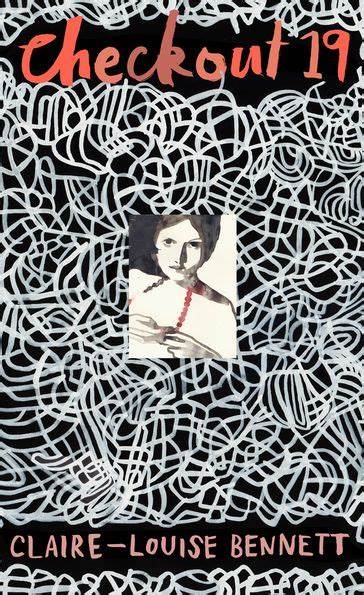
  • Book review:  Checkout 19 by Claire-Louise Bennett

    There have been occasions when I’ve met literary agents who use their linguistic prowess as a badge of status. These are the sort of people whose sonorous tones deploy the multi-syllabic where simpler words would do as a way of flaunting their easy comfort with a Latinate lexicon; It says very plainly that they’re at home with their sophisticated Norman origins and their ruling class background, while you — dear peasant — are still wallowing in your Anglo-Saxon roots, all guttural and monosyllabic.

    By contrast, when Claire-Louise Bennett rolls out her vocabulary, she does so with playfulness and honesty. Her enjoyment of language hasn’t a hint of exclusivity about it; she is inviting us to join in and to play along. Yet, importantly, she doesn’t compromise in order to make the invitation appealing. She’s quite happy to explain how her ‘cognition’ is ‘fractured’, she’ll quote Nietzsche and Sartre and she’ll refer casually to London galleries and Venetian palaces without stopping to explain or apologise. She does this with a breezy conversational style that boasts such flamboyant over-the-garden-fence vernacular that no-one could ever mistake her dazzling displays for attempts to garner status. Her writing uses the tone, rhythm and whimsy of a slightly batty West Country gossip who has no-one left to talk to but herself. She refers to herself in the plural, repeats herself constantly and adds reflections in the manner of a monologue while still managing to throw in phrases such as ‘commodious proportions’ and ‘sublime prestidigitation’, and she will do this in service of meditations on subjects like the merits of the expression ‘you wouldn’t think it to look at her’.

    The combination of colloquial tone and highbrow vocabulary allows her to be audacious because, as a reader, even if we have no idea why she might be piping us along a particular (and peculiar) narrative path, she is doing so with such a delightfully melody, we are happy to follow.

    But where Bennett really stands out among experimental writers, is the playful thoughtfulness that sits behind her approach. When commenting on the origins of her collection of short stories, Pond, she explained how she sought to replace the dull tedium of semiotics with the experience-rich wealth of phenomenology. This is a startling claim to the intellectual-artistic high-ground no less daring than smoking a filterless Gauloises in Peckham; an illustration of her audacity. Upon first reading this (in an interview by Philip Maughan in The Paris Review July, 2016) I was equal parts shocked and inspired, not least because seeing phenomenology as a framework for fiction that describes our experience of in-the-world phenomena — of everything from bananas to ponds — is both a brilliant justification for Bennett’s flow-of-consciousness style and an intellectual ambition that she manages to realise. Setting out the ambition would be daring — achieving it is dazzling.

    The front of my copy of Checkout-19 quotes booker-shortlisted novelist Deborah Levy calling Bennett ‘a major writer’ and for me this majority is justified by Bennett’s ambition and her intellectual aims — heavily qualified by her ability to wear them so very lightly. Her writing alone is enthralling, but the thrill is doubled seeing such literary gymnastics coming, not so much as the result of theorising, more the result of intellectual serendipity.

    Even so, if you either didn’t know or didn’t care about the phenomenological basis of Bennett’s, writing, it wouldn’t make a lot of difference. There are alternative bases, other than the sheer reading pleasure, for admiring her work. There is currently a small ripple of writers who are experimenting in literary form while reflecting fine arts in their output or at the very least using art as a springboard for literary exploration. Sue Rainsford’s Follow Me To Ground draws on artistic expression to create a fantastical but instinctively recognisable expression of earthly femininity, and her more recent novel, Redder Days reverberates with echoes from artistic approaches to embodiment and expressions of power. Eliza Clark gave her shocking but ultimately conventional novel, Boy Parts, the context of a fine arts graduate mixing work and pleasure. And although she denies a conscious artistic connection, Rebecca Watson’s recent form experiment Little Scratch has a clear spiritual affiliation with contemporary art world in attempting to capture life in a single day with a multi-threaded flow-of-consciousness narrative (one can’t help imagining Little Scratch among the selection of books on sale at the ICA). In interviews, Bennett emphasises the influence of theatre, but she also bridges literary and artistic worlds, having written for art reviews and having been a writer-in-residence at a London art gallery. Whereas Sue Rainsford seems to take art as a context, or landscape to reflect, Bennett shows herself more interested in the way ideas manifest themselves as images. But what she has in common with Rainsford is the curious result that by moving her focus away from dialogue and character interaction alone — the conventional approach to fiction — she manages to obtain a closer relationship to the lived experience (as, incidentally, does Watson). This works extremely well when it is focused on a specific visual subject within a constrained context. Bennett’s Juxta Press published piece, Fish Out of Water, illustrates this perfectly; it offers a number of interwoven textual responses to a single art-work, rebounding with associative and unconstrained narratives that draw on personal events to represent the writer’s experience of the painting. The result is a sort of triangulated meditation rebounding between the visual art form, personal recollections, and a synthesising common experience. It is a trinity that also served Bennett well in Pond where the narrative would often move between everyday objects (banana, pond), shared responses, and highly idiosyncratic ideas, often informed by literary or philosophical sources. In an interview with Sebastian Barry for the Arts Council of Ireland, Bennett quoted Thomas Mann – “Is man’s self restricted to and tightly sealed within his fleshy ephemeral boundaries. Don’t many of his constituent parts come from the universe outside and previous to him?” Pond explored this proposition with respect to the aspects of the ‘outside and previous’ with the emphasis on the outside. Checkout-19 moves the emphasis to the previous.

    The question of how much of Checkout-19 draws on actual experiences can be triangulated from fragments of memories recalled in Fish Out of Water and anecdotes that also pop up conversationally in her interview with Sebastian Barry; these are the moments that make full a theatrical show of it in Checkout-19; she isn’t making this stuff up; even when the topic at hand is her making stuff up.

    What carries all this is that sympathetic, characteristic voice, the playful, fulsome vocabulary and the courage to use it. But whether that voice can carry the weight of a full length two-hundred page novel is (clench your jaw as you read it) more questionable. The heart of Checkout-19 beats to the rhythm of a coming-of-age story. It is Julian Barnes’ Metroland, James Joyce’s Portrait Of The Artist As A Young Man;it is Louise May Alcott’s Little Women and Dickens’ David Copperfield. It is a Bildungsroman since it tells us the story of how the child became the writer. This process, evidently, involved a teacher that the narrator had a crush on, the inability to draw, a scribbled out portrait, and the spooling-on of the pen that was partly to blame for the inability to draw to a fabulist’s scene in which a child turns from seamstress to conflagration. It has many of the necessary elements of a Bildungsroman, including a figurative — or maybe symbolic — representation of the death and rebirth, even though it battles, in every other manner possible, to defy its own genre.

    Yet, with all the defiance in the world this is still a book about how Claire-Louise Bennett became a writer. It lists a good selection of the books she read en route and provides ample examples of her varied approaches to reading them. It defines books as the social fabric that bound her friendships and it offers a very small sample of the practical requirements for writing (pens, paper and a desk). But because it is so uncompromisingly subjective, Checkout-19 alsoaccommodates Bennett revisiting her own earliest stories. One of these features Tarquin Superbus, a cipher with more superficial emotional monotonality than Amor Towles’ Count Alexander Rostov in A Gentleman in Moscow; which is a long-winded way of saying the character lacks depth. Perhaps, in time, Bennett will crush any criticism of the Superbus sections by explaining — I don’t know — something about how the fable exemplifies Derrida’s methodology of deconstruction by demolishing the notion of an indefinable ‘essence’. But in the meantime, until she does so, I feel the Superbus sections take shine off the otherwise superb Checkout-19.

    About the author of this post

    Andy Charman was born in Dorset and grew up near Wimborne Minster. His short stories have appeared in Every Day Fiction, The Battered Suitcase, Cadenza, Ballista and other periodicals and anthologies. He lives in Surrey with his wife and daughter. His first novel, Crow Court, was long-listed for the Desmond Elliot Prize 2021.

  • Film Review: Iceland is best
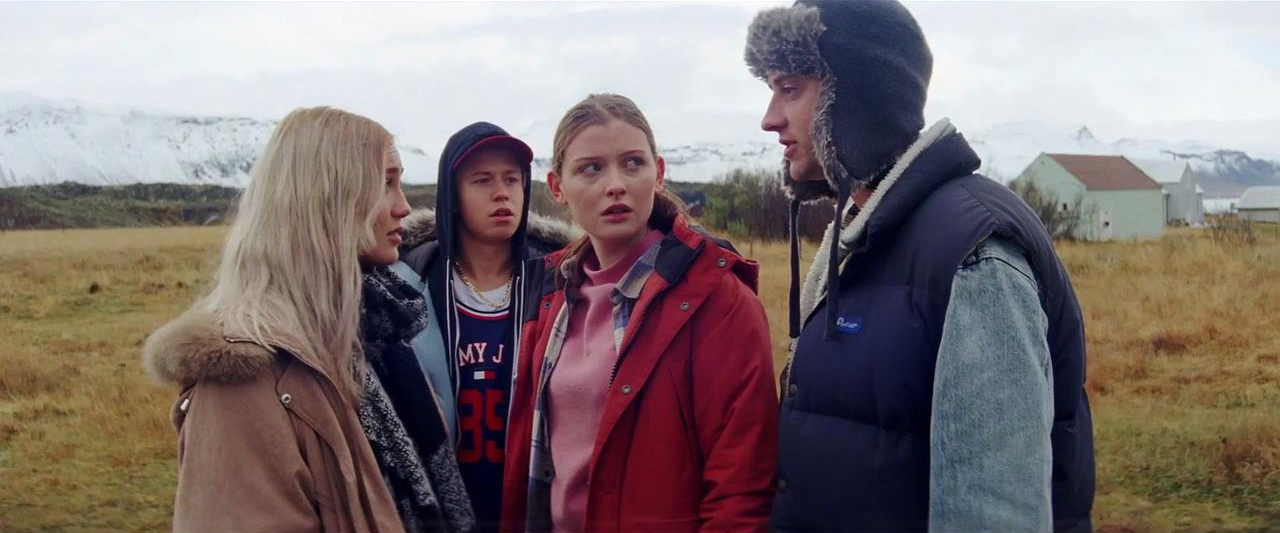
    In Iceland is Best, feisty teenager Sigga (Kristin Auður , left) longs to move to California from her small hometown in Iceland.

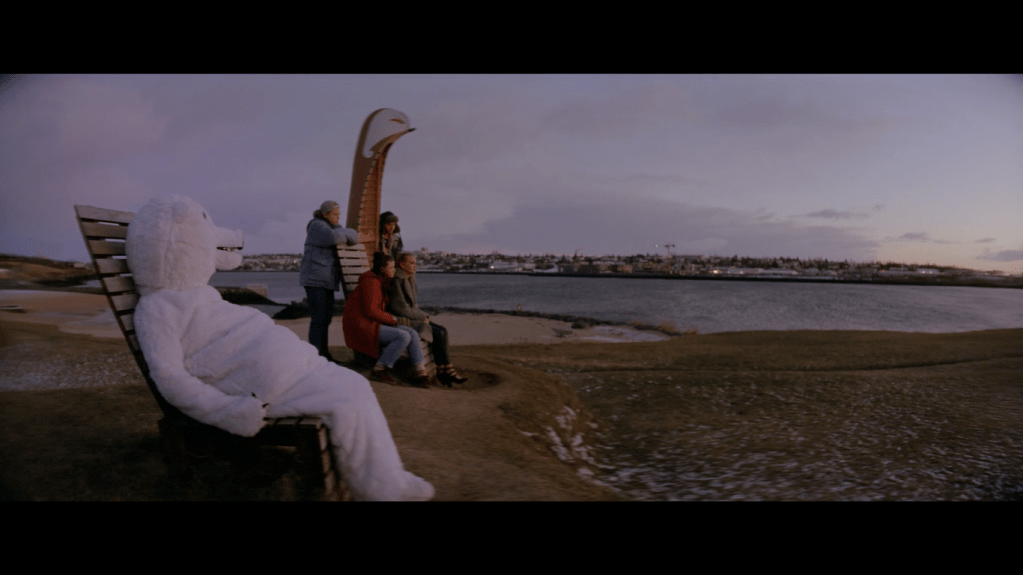
    The gorgeous, breath-taking landscape of Iceland is the ultimate source of energy that feeds the soul of Max Newsom’s Iceland is Best. Against the incredible vistas of black-sand beaches, snow-filled valleys and jagged mountain ranges, the stirring majesty of the island both contrasts and complements the film’s subtle meditation on love and relationships; on youthful existentialism; on innocence and experience.

    It makes for a film that is both beautiful and enchanting, as we follow 17-year old Sigga (Kristín Auður Sophusdóttir), and her attempts to leave Iceland for California, where she hopes to realise her dream of becoming a poet. On this journey she is joined by her three friends (her “guardian angels”, as one, Gunni describes them), and – fatefully – by a stranger; the loud and charismatic Nikki (Tom Maden).

    If it’s true that there are only two types of story – ‘a person goes on a journey’ and ‘a stranger comes to town’ – Iceland is Best is thus a film that combines both narrative elements. And as Sigga’s youthful existential angst drives her forwards and backwards, buffeted by the fates on her own odyssey, Nikki rushes to meet her head on; a strange and at times opposing force that disrupts and disorientates.

    Yet as Sigga and Nikki’s spiritual forces collide, we spring from scene to scene and place to place as though fractured in a kaleidoscopic shard of Icelandic ice. Newsom’s keen ear for dialogue delivers a script on which the emphasis is placed on brief conversations in which every word tells, and non-verbal communication is just as important as those words that are said. But this does mean we often find ourselves arriving in new places only to leave again shortly afterwards. New characters emerge and stand quietly in the background, encountered and acknowledged without always fully entering the narrative. This combines with the short scenes to create a sense of a lack of permanence; we feel unable to find our footing. In this way, the film mirrors that agitated feeling of youth; the anxiety in the pit of your stomach that shifts you from one mood, one feeling, to the next, and propels you forwards without a necessarily clear sense of direction.

    “Sometimes, you don’t know when a journey ends”, Sigga’s grandfather tells her. It’s a true enough statement, and a lovely meditation and thought in its own right; but we might consider, watching this film, that the inverse is also true: you don’t always know when a journey begins, either.

    Watching Sigga’s repeated attempts to reach her main objective, we are thus encouraged to look inwards, and to consider our own journeys; our own destinations; our own stories.

    Both lead roles are played with real range and depth by their young actors; but the real strength of this film comes from the supporting ensemble.

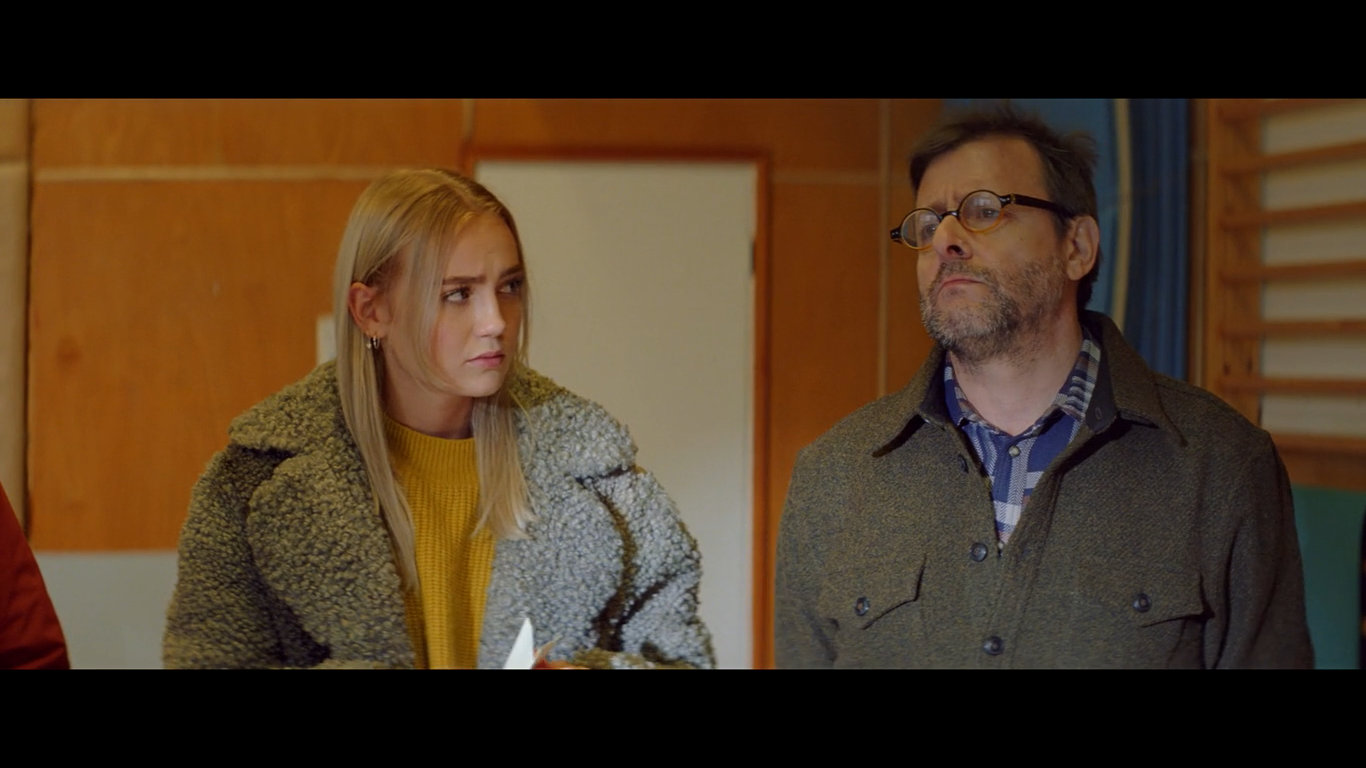
    Judd Nelson (The Breakfast Club) is the star draw in this respect, and his turn as Mr. Sondquist is perfectly weighted. Yet in Sigga’s ‘Guardian Angels’, Mikael Kaaber

    Sigga (left) and her poetry teacher, Mr Sondquist (Judd Nelson, right)

     Álfrún Laufeyjardóttir, and Atli Oskar Fjalarsson we see just how valuable it is to have such clear chemistry between the players involved. Oskar Fjalarsson, in particular, stands out – playing in effect two roles, as he communes with and speaks for an anthropomorphised tribal canoe, Topanka.

    Of course, the real lead role is held for Iceland itself. There is something ethereal and transcendental about this small volcanic outcrop of rock. This land of fire and ice famously inspired J.R.R. Tolkien’s Middle Earth; and before him, Jules Verne chose Iceland as the gateway for his Journey to the centre of the earth (itself inspired by Icelandic sagas), as Verne’s protagonists begin their journey via Iceland’s Snæfellsjökull glacier. And while Newsom can’t resist a sly reference to this final point of trivia – as one character reveals the fate of another – it’s ultimately further proof of the love that the director has for this island. It’s a love that is evident in every shot, the light of the ice and sun brilliantly captured on stunning 35mm. It combines to provide a meditative quality to the cinematography that perfectly matches the setting, and perhaps ultimately provides the evidence to support the film’s central hypothesis: Iceland is best.

  • ‘We’re living in a time of personas. I think people need liberating,’ – an interview with poet Tecola Smith

    Last week, Tecola Smith posted her book of poetry to Oprah Winfrey. 

    ‘I’ve paid for it to be signed for,’ she says, ‘so someone’s going to get it.’ 

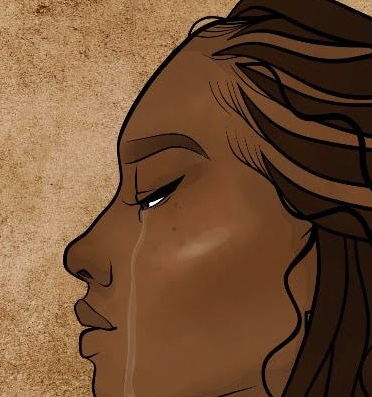
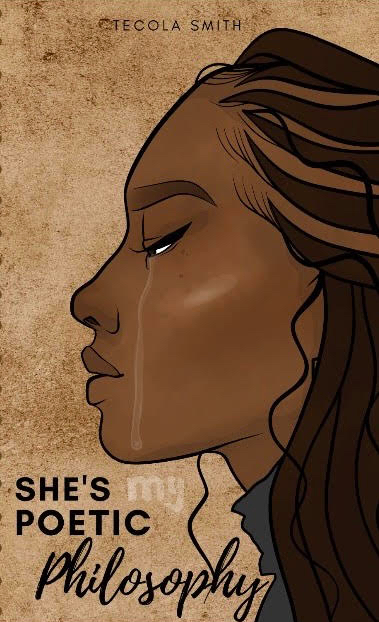
    Her poetry collection, She’s My Poetic Philosophyis based on Tecola’s experiences as a Wellbeing Mentor at a university in Birmingham. They tell the stories of the young women she’s met over the years, anonymously of course. The stories are often sad (some feature abuse, trauma, violence, difficulties with mental health) but there’s a strength in sharing, Tecola believes. The reactions to her poems make her want to write more. Not just for others, but for herself too. 

    ‘I was exposed to so many stories,’ Tecola says. ‘Girls were telling me about being abused – sexually and mentally. They told me about addictions, mental health problems, all kinds of things, and I had no outlet. I didn’t have a councillor. The only thing I had was writing. Of course, I couldn’t write about it using names or dates because of confidentiality. I had to find a way to get it off my chest. The poems tell multiple people’s stories – it’s never just about one person.’ 

    But writing isn’t new to Tecola. She started writing poetry when she was eight, growing up in Handsworth in Birmingham. 

    ‘It was the kind of neighbourhood where you saw a lot of things,’ she says. ‘Drug addicts, violence, things like that. Writing was my way of dealing with it. I became fixated with reading the dictionary. My mum bought me a little dictionary and a little thesaurus – I actually still have them now – and I used to read them every day. I was trying to come up with words to describe how I felt. I wanted to make the words a kind of riddle, something I would understand but no one else would. I think that’s where the poetry came in.’

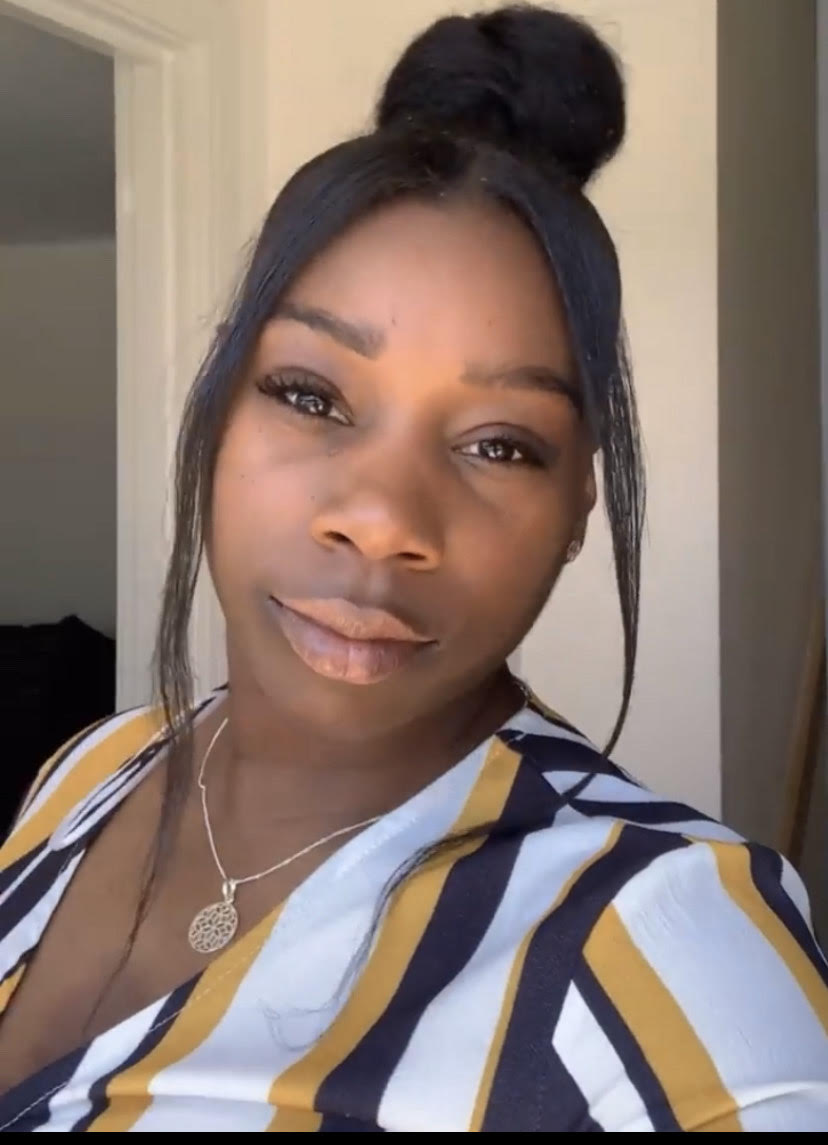
    Tecola Smith

    Tecola would write about the sounds she heard – she remembers hearing gunshots once and these became ‘boom, boom, boom’ in her poem. She started early and continued into her adult life, using it as a way to process her emotions and events in the world around her. 

    But it was only in 2019, at a women’s empowerment event organised by a friend, that Tecola started to take her writing seriously. She agreed to read a poem in front of an audience, no stranger to public speaking because of her job. She was pregnant with her twins at the time and, as she sat in the front row with swollen legs and a huge stomach, the reality of what she was about to do hit her. 

    ‘I was trembling,’ Tecola says. ‘I remember thinking ‘oh my god, I’m next.’ All the other speakers had gone up. I knew it was my turn. But I knew I had to do it though, for my mum, who was there, and my oldest daughter. But, after I did it, I realised all the fears I had were in my head. People clapped me – it was like being accepted. People were asking me about when my next poem would be out. They were giving me their email addresses and everything. I think I needed to experience that, to have the confidence to release the book.’ 

    It was at this event that her friend announced Tecola would be writing a book. So then she had to do it. And then it was 2020, and we all know what happened then. She wrote the book throughout lockdown and published it via Amazon. No messing about. The publication was delayed slightly, but then the final release date fell on her birthday – meant to be, surely? 

    ‘I hope people are able to use the book to express themselves,’ says Tecola. ‘In the back there’s a notes section, and I say I want people to use that part to tell their story. I think we live in a time of personas – everyone parading around with smiles on their faces, when what they’re actually experiencing is deep pain. I think people need liberating. I hope that me discussing all these taboo topics in my poetry (and some of them are very taboo) will help them find the way to express what they’re feeling too.’ 

    We talk a lot about mental health now. Talk to anyone older than thirty and they’ll tell you how much things have changed. Tecola is in her early thirties, a mental health professional, studying for a Masters in psychology and has two small children – she seems pretty well-placed to offer a clear-eyed perspective. So I ask her if the current situation – mental health problems everywhere – is actually just down to the fact that people are talking about it more and have more methods of expressing themselves, or if there really is something that has turned the dial and brought these emotions up to boiling point. 

    ‘We had an assignment on our Master’s course asking us this very question,’ says Tecola. ‘And it’s funny, before I did the research, I would have just said it was down to exposure. I’d have said people are just more aware of it. But, when I did the research, my mind changed. I believe that, for younger generations now, resilience is at an all-time low. Older generations tend to be quite resilient to situations. They’re able to work through things. But in this day and age, a lot of young people struggle with day to day life. Things we consider to be ordinary emotions like sadness, they see as depression. And once they’re in that mind frame, it kind of takes over. ‘Why is my life like this? Why am I not like that person in the YouTube clip?’ Then, they put it back on themselves – they think it’s all their fault and it becomes a personal attack.’ 

    Tecola’s noticed this in her own children. She says that, when she was a little girl, the only things she really cared about were playing, eating and sleeping. But when her ten-year-old daughter has bad moods, they last a long time and spiral into something else. Some of Tecola’s friends work in schools and they’ve noticed primary school children carrying worry differently. 

    ‘They’re taking on so much,’ Tecola says. ‘They’re worried about the environment, their sexuality, pronouns – they’re concerned with a lot. These are eight-and nine-year olds. And they’re starting to use the term ‘anxiety’. Language is a powerful thing. If that’s what they’re told when they’re very young, they’re going to adopt that behaviour.’ 

    And it’s not just the very young. Tecola works with university students that struggle to leave their rooms. They’ve never cooked or cleaned for themselves before so, when suddenly in a new environment and under academic pressure, they have no idea how to cope. They retreat, hide in their rooms and, in a state of isolation, reach dangerous mental places. Tecola’s had students ring her up and ask her to walk them from their accommodation to her office. Sadly, she also knows several students that have died by suicide. 

    ‘I had a student on campus the other day that wanted to kill himself,’ she says. ‘He had a breakdown on the campus, and it was a big ordeal. They called me from home to come down. It was awful because I’d watched this individual deteriorate over the weeks. Near the end, he’d had enough. It was just too much. And, in that moment, I realised this could have been prevented with a different upbringing. He needed the chance to become a man. Instead, we cushion the kids and overcompensate and give them whatever they want. But then, if things don’t go their way, they can’t cope.’ 

    So, when term begins in September, Tecola’s running resilience training for new students. It’s based in affirmations and mindfulness, designed to help them build perspective and self-confidence. But, of course, at some point, we all end up in mental places we don’t want to be. Even Tecola. 

    ‘Yesterday, I found myself in a place of unhappiness for no real reason,’ she says. ‘Fifteen, twenty years ago, if I’d been looking at my life right now, this would be the perfect situation. I have three beautiful children, a loving partner, a lovely home and a full-time job. But this is the illness, this is what the parasite does. I call it a parasite because once it gets in you, it can grow unbelievably fast. So I knew I needed to get it out.’ 

    So she started to write. This is what she wrote: 

    My life is my own and I am in control of what I do in and with my life. Happiness is a choice and I choose to be happy. I choose to love my choices because they were and are mine. There are no bounds unreachable, no paths that can’t be a choice for me to journey upon. I create and live in what I have created. There is only greatness, abundance, happiness, love, wonders, nature, enlightenment, wisdom, creativity, poetry, spoken word, music in my future and I choose to accept it. I walk in this path. I run on their journey. I am in charge of my success and my failures. Life is a wonderful privilege, in all its hardship and whims. No achievement is beyond reach and no achievement is without loss. I strive for greatness and I learn through weakness. I am my only challenge. With awareness I can conquer my own disbelief. Regret is not your problem. Your problem is your inability to be grateful for the opportunity of choice itself. 

    ‘Once I wrote it and read it to myself, it was like I was released,’ she says. ‘I was in a place of gratitude again. I had to remind myself of what I do have, because I’m bombarded constantly by what I don’t.’ 

    It’s possible you don’t yet have a copy of Tecola’s book. Get it here. Before Oprah reads hers. 


    She’s My Poetic Philosophy is now available to buy from Amazon. To find out more about Tecola and her writing, you can follow her on Instagram


    About the author

    For ten years, Ellen Lavelle has interviewed writers for The Young Journalist Academy, Nothing in the Rulebook, Newark Book Festival, and her own blog. She’s written for several publications, including The Sunday Times Young Writer of the Year Award Blog. Now an editor at Nothing in the Rulebook, she writes fiction and non fiction, while working as a copywriter for an education company. You can follow her on Twitter @ellenrlavelle

  • ‘I don’t want you to think Cecily is good; I want you to think she’s extraordinary,’ – an interview with ‘Cecily’ author, Annie Garthwaite

    Annie Garthwaite waited thirty years to write a novel about Cecily Neville. She’s always been a writer, but a writer within the world of business. She’s worked for multinational corporations, set up her own communications company, sustained a successful career. But, throughout it all, she’s had one eye on Cecily. And Cecily’s had an eye on her. Observing the arch of Annie’s achievements, tapping her fingers on her goblet of wine, Cecily has been patient, biding her time, waiting for the opportune moment.

    Which is now. Summer 2021, fresh out of the pandemic, Cecily strikes. If you haven’t already seen her cover – pink, orange, bold black text – you will soon. Well-reviewed in broadsheets, sitting resplendent in bookstore windows, sitting face-out on the shelves, Cecily’s time has come

    But it hasn’t been easy. 

    Annie vowed to give up her company and career in corporate communications when she turned fifty-five. She enrolled on the MA Writing course at the University of Warwick, but before the first term began, she went on a week-long Arvon creative writing course. 

    ‘I couldn’t write a sentence,’ Annie tells me over Zoom, the week after the novel’s release. ‘I just couldn’t do it. I was writing stuff on this week-long course that was just utterly, shockingly bad. And I panicked. I thought ‘I can’t do it. I’ve lost it. I’m going to have to phone Warwick and tell them I can’t come because I can’t write.’’

    Novelist Chris Cleave, author of Everyone Brave is Forgiven, was one of the tutors on the Arvon course. Annie turned to him for help. ‘It’s just that your writing engine has seized up,’ he said. ‘You just need some writing WD40. You just have to keep, keep, keep doing it.’ 

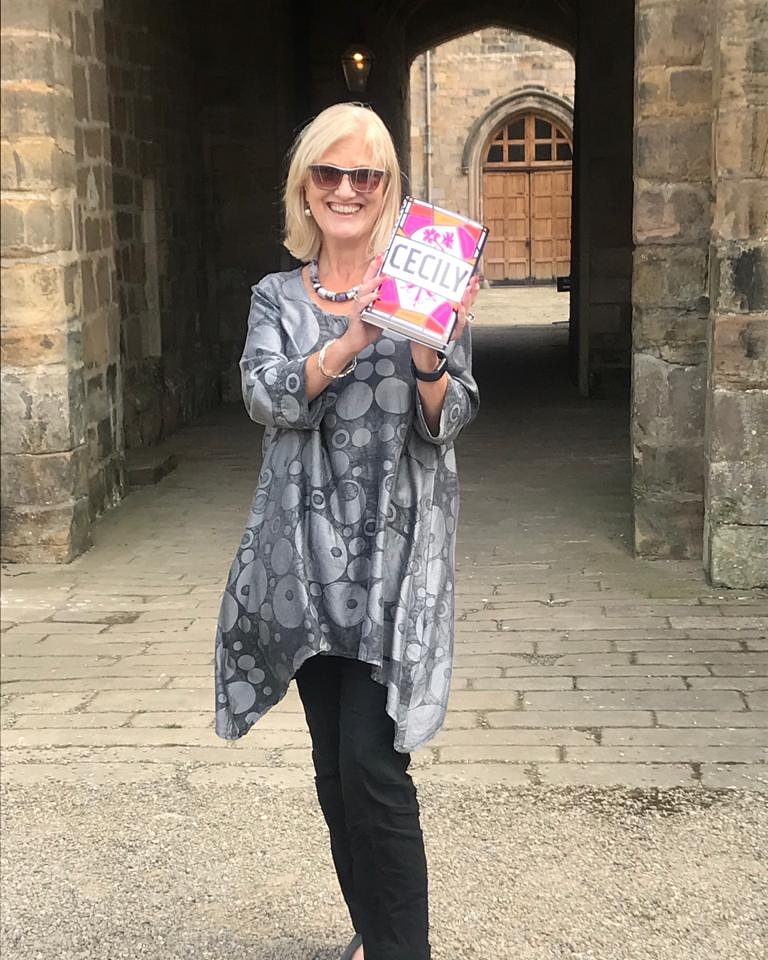
    Annie at Raby Castle, Cecily Neville’s birthplace.

    ‘But even in the early months of the course at Warwick, I was writing terrible stuff,’ Annie says. ‘I look back at it now and it is embarrassingly, laughably bad. But then, suddenly, and it was almost overnight, the fluency came back. I never find writing easy – every sentence is work, it’s all crafted. I work very hard at every line. But I did start to get the feeling that it was going right.’ 

    I think I remember this moment. I met Annie at Warwick, on the MA course, and I remember a group of us sitting in the café after class. We’d all read a chapter of Cecily and the feedback was glowing. 

    ‘I’m just so relieved you think I can do it again,’ Annie told us. 

    But this period she mentions, of writing laughably bad stuff – I can’t remember that. When I think back to those early Warwick days, the first few times I met Annie, I think about her quiet, considered answers to questions, the depth of her reading experience, the energy her presence gave to each class. Word soon spread: Annie gave up her business to be here. Those of us sliding from BA to MA felt our backs straighten, our ears prick up. This wasn’t a time for messing about. This was a time to get stuff done. 

    I was walking away from a workshop once with a classmate, who said: ‘The thing about Annie is, she really cares.’ 

    Annie cares about writing, she cares about her characters, their history. She was first inspired by the story of the Wars of the Roses at school. Back then, it was Richard III that leapt out as a possible protagonist but, after thirty years in business, thirty years as the only woman at the table, thirty years exercising power in worlds dominated by men, it was Richard’s mother, Cecily, at the top of her call sheet. 

    ‘As I grew older, I began to feel closer to Cecily,’ Annie says. ‘When I worked for huge,  American, multinational corporations, I don’t remember many women at the same managerial level as me. I know I learned all of the techniques Cecily uses to get stuff done. As a feminist, there are some of them I don’t feel that happy about. Why should I have to flatter men to do what I want? But let’s face it, we all do, as women. We’re still working around it, five hundred years on. It’s ridiculous.’ 

    Annie with the book in Waterstones

    Over the course of Annie’s novel, Cecily flatters and flirts, she plots and schemes. She also faces an army, bargains for the lives of her children, and endures terrible losses. Annie’s writing is brutal in places, beautiful in others, all powered by her thirty years of research and careful observation. 

    Other people care about this period too. They write about it, they read about it, they fall out over it. Richard III in particular is a divisive figure, and this has intensified, Annie says, after the discovery of his body under a car park in Leicester in 2012. 

    ‘The history of this period is so contested, so contentious,’ she says. ‘And people have very firm opinions that they hold strongly.’ Annie is planning a second book that continues  Cecily’s story beyond the crowning of her eldest son as Edward IV. ‘Whatever position I take on some of the contested issues, I’m bound to ruffle some feathers with book two,’ she grimaces. ‘I’ll be writing not just about Cecily but about her children, including Richard III who is, after all, England’s most contentious monarch.’

    The ultimate underdog, Richard III gets people going in a way that very few other historical figures do. For so many, he represents the overlooked, the overshadowed, the falsely-accused. We don’t actually know whether he killed his nephews (and we probably never will) but there reaches a point where fact is almost irrelevant. There’s five hundred years of emotion whirling around, a great deal of rehabilitation to do in Richard’s name, and some bear that burden very heavily indeed. 

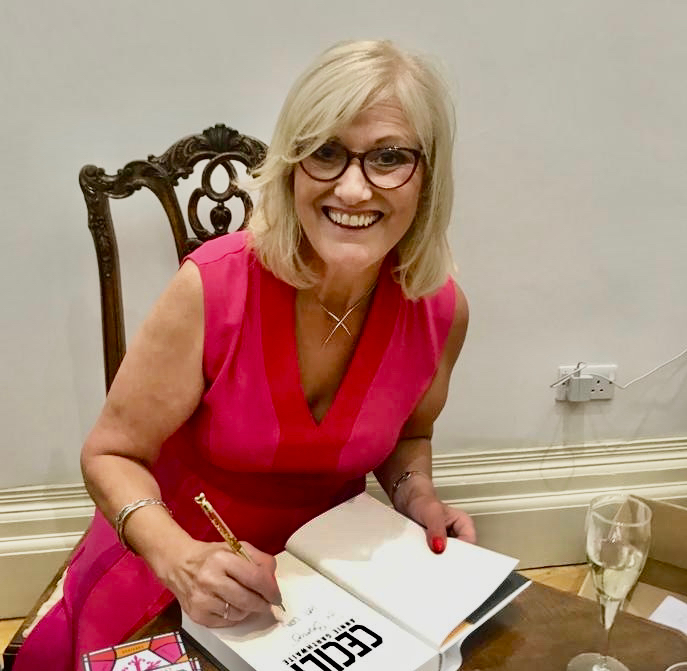
    But if anyone can handle troubled waters, it’s Annie. Not just because she’s a keen kayaker, but also because the woman is made of steel. Her voice is soft, but that just means other people have to lean in. She’s glamorous and feminine, but also ready to hike up a mountain, or to the other end of her homestead to feed the sheep at the crack of dawn. Other debut authors would have been self-pitying when the release of their book was delayed by a pandemic (Cecily was supposed to come out in spring), but Annie has been firm-footed, taken it all in her stride. In the run-up to the launch, she drove to bookshops all over the country to deliver proofs. After publication, she’s been driving all over to sign stock. In the pictures she’s taken with booksellers, they’re all wearing masks. But they’re in a bookstore, they’re holding up copies of her books, it’s still all going on. It’s not perfect – doubtless, it hasn’t happened the way she thought it would – but it’s happening. 

    And this is one of the things I certainly take away from Cecily’s (and Annie’s) story. Nothing is wholly good or wholly bad. Things just happen. Over the course of the novel, there are battles and deaths, burnings and betrayals. Cecily is a strong force, certainly, but she doesn’t control the world she inhabits – none of us do. There’s something odd, I think, about the way people talk about their lives now. The idea that you can use plans or meditation techniques to determine what happens to you. That if you do enough yoga or drink a lot of herbal tea, you won’t get cancer. If you have enough self-esteem when you step out into the street without looking, you won’t get flattened by a bus. It’s tempting to think about impressive, ambitious historical figures like Cecily Neville and Thomas Cromwell dictating their own paths. ‘It’s so great the way she just keeps on getting up,’ a reader said to Annie. But, Annie said, if Cecily didn’t keep on getting up, she’d be kicked into the gutter. 

    Signing with masks on.

    Sometimes, it’s about more about staying upright than taking a step forward. And staying upright sometimes means pushing someone else over. 

    ‘I don’t want you to think Cecily is good,’ Annie tells me. ‘I want you to think she’s extraordinary. She’s got some real blind spots about herself. It’s partly because she’s so motivated and driven, that sometimes she doesn’t see herself very clearly at all. She doesn’t ever look inwards, she’s always looking out. It’s why the book could never have been written in the first person. Cecily could never have told her own story. It had to be in close third. You have to resist the temptation to explain why characters are the way they are and just show them doing their thing. Readers are smart – they’re dealing with people in the real world all the time. They’ll be able to make similar observations about your characters too.’

    And there’s plenty to observe about Cecily. Years ago, in a workshop about Cecily at university, one of our classmates (and NITRB contributor) Anna Colivicchi, threw her hands in the air and exclaimed: ‘Cecily, you are terrible and I love you!’ 

    ‘That’s what gives me most pleasure,’ Annie says. ‘When people say Cecily is awful, but they’re rooting for her. I love it when people tell me the book made them cry. If a book makes me cry, it’s making me feel intense emotions. It’s not just intellectually interesting, it’s emotionally engaging. When people tell me they cried when some of the characters died, I see that as a huge tick.’ 

    And people have cried. They’ve also messaged her on Twitter to clarify the exact ways people were killed. 

    ‘Did they really slit this throat on the bridge?’ one reader asked of one particular character. Annie had to tell them that, unfortunately, yes, they did. ‘Oh no,’ said the reader. 

    Along with some other classmates from the Warwick MA, I went to the Cecily launch party last month. It was held in Ludlow Castle, where Cecily spent some time. She even defended it, alone, against a brawling Lancastrian Army. And then, in July 2021, she was back. 

    Annie stood in the centre of the room, welcomed friends and family, gave a speech. It’s not just her words on paper that can bring a tear to the eye. Because, as that classmate once said, ‘the thing about Annie is, she really cares.’ Not just about the book she’d written, the story she’d told, but sharing it with the people in the room. Us, her old course mates, her family, her friends. Her partner, Caroline, to whom the book is dedicated. 

    And then she cracked the spine of the book she’s waited thirty years to write, and read.

     It’s the end of May, 1449. Cecily, her husband Richard, and their small children (among them the future Edward IV), are riding across Ludlow Bridge, to the castle. They watch the sun sinking lower in the sky, down towards the battlements. Richard smiles, turns. ‘Ludlow,’ he says. 

    In the function room, in 2021, the sun is setting too. We go outside, stand on the patio, raise glasses to a wonderful book, to a strange year, to Annie, to Cecily herself. The ruined tower beyond the moat casts shadows. Long shadows, where history hides.  

    Annie signing copies of Cecily at the launch.

    Cecily is now available to buy from Amazon, Waterstones, and bookshop.org. To find out more about Annie, you can visit her website and follow her on Twitter, Instagram, and Facebook.


    About the reviewer

    For ten years, Ellen Lavelle has interviewed writers for The Young Journalist Academy, Nothing in the Rulebook, Newark Book Festival, and her own blog. She’s written for several publications, including The Sunday Times Young Writer of the Year Award Blog. Now an editor at Nothing in the Rulebook, she writes fiction and non fiction, while working as a copywriter for an education company. You can follow her on Twitter @ellenrlavelle

  • Totally roar-some? Independent British comics team launch new Kickstarter campaign

    A British independent comics team have launched a Kickstarter for a brand-new action-adventure comic, Sinavore, which is set in the prehistoric past.

    The story begins with a boy from the 21st century – Zeph – mysteriously falling from the sky, into the time of the dinosaurs. From there, he will not only make a new (dinosaur) best friend, but the two of them will have to take on the monstrous tyrant of the land: the giant, evil, skeletal T-Rex known as Sina.

    It’s a comic that aims to have a broad appeal. “Not only did I want to write an action-adventure story that I, as an adult, could enjoy,” says writer Joshua Spiller. “But I also wanted it to be completely accessible to younger readers too. Think of comics like Robert Kirkman’s ‘Invincible’, or Saturday morning cartoons such as ‘Ben 10’. That’s the kind of fun, dynamic energy I wanted our story to capture. I mean, Pixar do films that appeal to both adults and children, so I thought, ‘why don’t we give that a go?’”

    The physical version of the comic will exclusively be available through this Kickstarter campaign, a key feature of which is that the comic is being offered for only £2 including UK postage (although overseas shipping is offered as well).

    “Partly,” Spiller adds, “this Kickstarter is an experiment. We want to see if there’s a way to make comics really affordable again. Something a bit more like they were in the 1980s, or even before that, where you could, from what I understand, basically buy them for small change. We think we’ve found a way to do that. But it’s a business model that relies on a high number of low-paying customers. Kickstarter is our safe way of testing whether that’s achievable. 

    “And, I mean, a 28-page, full-colour comic, including UK delivery, and which comes with the added warm glow of knowing you’re helping a group of creators realise a project they’re passionate about, all for a mere £2?! I don’t think you can say much fairer than that.”

    Joining writer Joshua Spiller (Symbolism Rewired, Time Fracture!, The Ogxcun Myth) for this project are artist Richard Waugh (Happy Glory Day, Void of Dreams, McNulty), colourist Owen Watts (Hocus Pocus, Im/Purity, MSD “Perspectives on Vaccine” policy comic) and letterer Rob Jones (Cyberarchy, Nicnevin And The Bloody Queen, 24 Panels).

    The Kickstarter-exclusive print version of Sinavore #1, along with a variety of reward packages, is available now for a limited time.

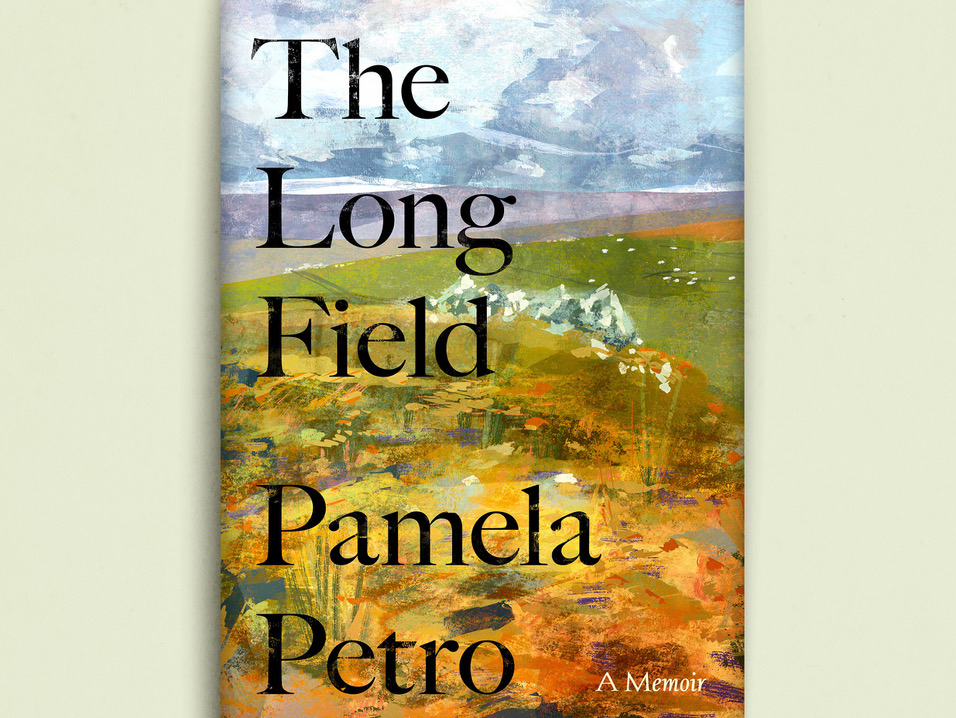
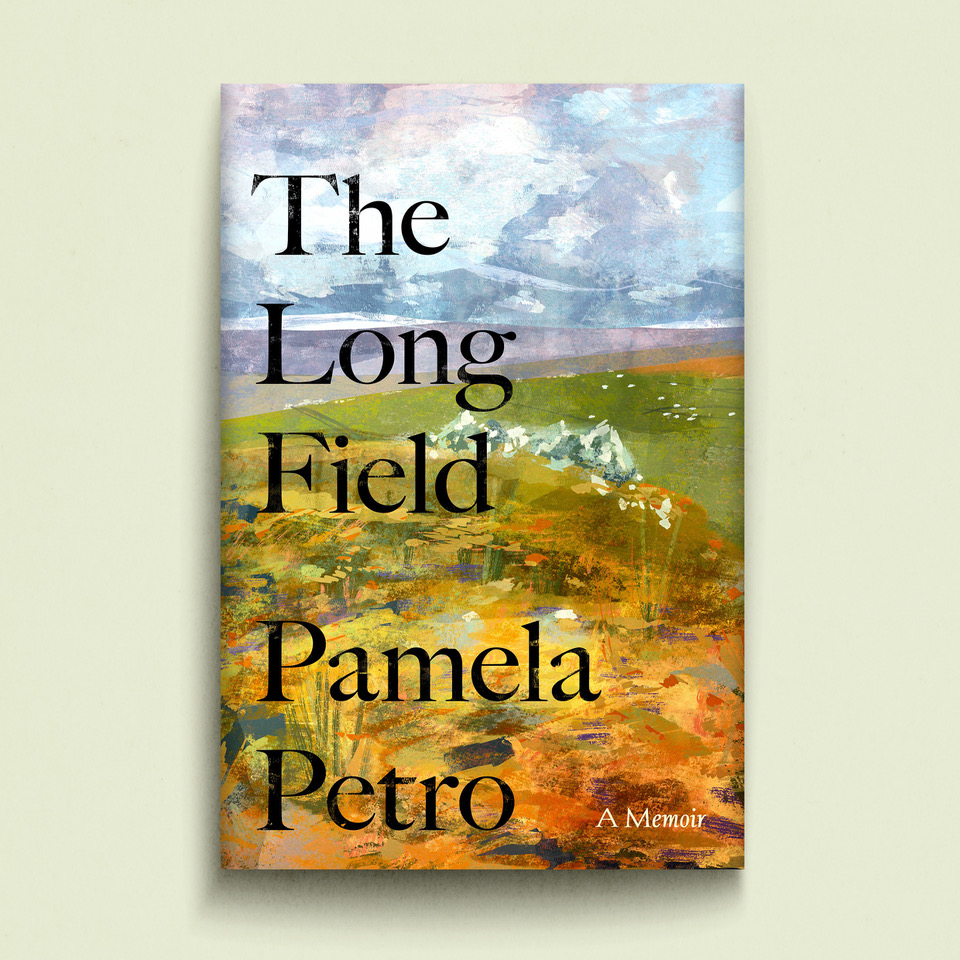
  • The Long Field by Pamela Petro – review

    A memoir, Wales, and the presence of absence. 

    From conception to finish, it’s taken Pamela Petro eight years to write The Long FieldBut it’s a memoir, so it demanded a lifetime of research. Petro writes about events from her own history, her own close relationships, and sews wider observations – about Wales and the world – into them. Her brush strokes are precise and piercing one second, broad and forgiving the next. Here’s the sky, blue-grey, applied with a roller. Then we’re going right in, stepping close to the canvas, to add detail to someone’s features, the shape of a cloud. 

    The knowing when to focus, when to take a step back, comes from years of reading, writing and teaching writing, in the USA and Wales. 

    ‘As I’ve taught, I’ve become a better writer,’ Petro revealed in an interview with Nothing in the Rulebook last month. ‘Teaching has enabled me to write this book. Could I have written this book before I started teaching? I don’t know.’

    The book is largely preoccupied with Petro’s experiences as a student in Wales, and the effect it had on her life later. Though she’d lived in a number of places by the time she was twenty-three – New Jersey, Rhode Island, Washington DC, Cape Cod, France – her time in Wales was different. 

    ‘…I found myself nodding, as if I were in agreement with the landscape. Its lucidity cut like a scalpel through mental images of all the other places I’d lived… It sliced through their forests and highways and towns and cities and clutter, peeling them away, down to the mental bedrock beneath – a primary place of understanding where memory and concept conjoin. And that place looked like Wales.’ 

    Pretty much every sentence is like this: layered, vivid, earnest. Though her descriptions of landscapes are excellent and the explanations of its impact on her internal landscape are extremely moving, it’s her portraits of people that stand out. It was during her time studying in Wales that Petro began to understand her own sexuality – she writes about early, confusing relationships with honesty and the humility of hindsight. Her family are a constant thread in the book – their bonds are sometimes supportive, sometimes strained. The terrain is undulating, difficult to traverse. Over the course of the book, there are plenty of emotional entry points: plenty of places to stop, think, take in the view. There are also moments designed to trip you up. You thought you were reading this kind of book, but now it’s this kind of book. Petro shifts gears confidently between settings, scenes, mental states, draws your attention to the right thing at the right time.

    It’s the kind of writing that comes from years of practise. It comes from reading, teaching, living. It comes from knowing the world is strange sometimes and unexplainable. That a place can be new to you, completely alien, and still feel like home. 


    The Long Field will be published by Little Toller in September 2021. You can pre-order copies here. To find out more about Pamela Petro and her writing, you can visit her website, or follow her on Twitter

    Nothing in the Rulebook were also lucky enough to interview Pam last month. Read the interview here


    About the Reviewer

    For ten years, Ellen Lavelle has interviewed writers for The Young Journalist Academy, Nothing in the Rulebook, Newark Book Festival, and her own blog. She’s written for several publications, including The Sunday Times Young Writer of the Year Award Blog. Now an editor at Nothing in the Rulebook, she writes fiction and non fiction, while working as a copywriter for an education company. You can follow her on Twitter @ellenrlavelle