• 01267_gg

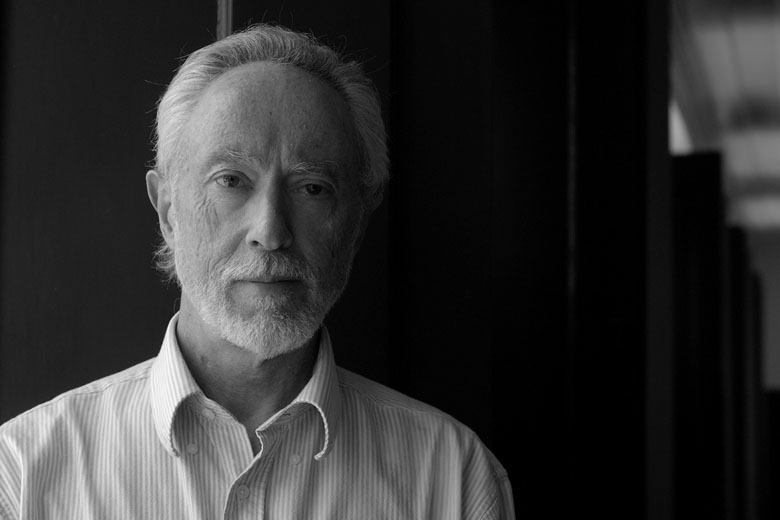
    J.M. Coetzee is the author of sixteen works of fiction, as well as numerous works of criticism and translation. Awarded the Nobel Prize in Literature in 2003, he has also received the Man Booker Prize for fiction twice (he was the first author to do so). To say he is one of the ‘big names’ on the literary circuit is probably an understatement.

    Coetzee built his literary reputation on the eight novels he published between 1974 and 1999. All of which can be said to be almost unusually good – with one in particular, Waiting for the Barbarians (1980), seemingly ready to stand the test of time and remain within the literary canon for years to come, being as it is such a parable for the human condition and our mistrust of ‘the other’ and how it is possible to use our falsely imagined enemies to exert social control over entire societies (substitute “terrorists” for “barbarians” and you have an accurate history of Britain and America since 2001).

    This literary master is a master story-teller and writer – every word he chooses is chosen precisely, with Coetzee exerting an extraordinarily tight control over his use of language.

    His work therefore offers aspiring writers an invaluable opportunity for study and inspiration. To help bring this directly to you, we’ve combed the internet to uncover four of his short stories that are free to read right now – and provided them below (along with a short excerpt).

    Enjoy!

    1. Lies

    ““The real truth”: that was what she demanded, or perhaps implored.

    She knows very well what the real truth is, as do I, so it should not have been hard to speak the words. And I was angry enough to do so—angry at having to come all this way to perform a duty for which you or Helen or I will get no thanks, not in this world.

    But I could not. I could not say to her face what I have no difficulty in writing here, now, to you: The real truth is that you are dying. The real truth is that you have one foot in the grave. The real truth is that already you are helpless in the world, and tomorrow you will be even more helpless, and so forth day after day, until the day comes when there will be no help at all. The real truth is that you are in no position to negotiate. The real truth is that you cannot say No.

    You cannot say No to the ticking of the clock. You cannot say No to death. When death says Come, you must bow your head and come. Therefore accept. Learn to say Yes. When I say, Leave behind the home you have made for yourself in Spain, leave behind your familiar things, come and live in—yes—an institution where a nurse from Guadaloupe will wake you up in the morning with a glass of orange juice and a cheery greeting (Quel beau jour, Madame Costello!), do not frown, do not dig in your heels. Say Yes. Say, I agree. Say, I am in your hands. Make the best of it.”

    1. The Dog

    “How does the dog know that, despite her mask of indifference, she fears him? The answer: because she gives off the smell of fear, because she cannot hide it. Every time the dog comes hurtling toward her, a chill runs down her back and a pulse of odor leaves her skin, an odor that the dog picks up at once. It sends him into ecstasies of rage, this whiff of fear coming off the being on the other side of the gate.

    She fears him, and he knows it. Twice a day he can look forward to it: the passage of this being who is in fear of him, who cannot mask her fear, who gives off the smell of fear as a bitch gives off the smell of sex.

    She has read Augustine. Augustine says that the clearest evidence that we are fallen creatures lies in the fact that we cannot control the movements of our own bodies. Specifically, a man is unable to control the motions of his virile member. That member behaves as though possessed of a will of its own; perhaps it even behaves as though possessed by an alien will.

    She thinks of Augustine as she reaches the foot of the hill on which the house sits, the house with the dog. Will she be able to control herself this time? Will she have the will power necessary to save herself from giving off the humiliating smell of fear? And each time she hears the growl deep in the dog’s throat that might be equally a growl of rage or of lust, each time she feels the thud of his body against the gate, she receives her answer: Not today.”

    1. As A Woman Grows Older

    ““What I find eerie, as I grow older,” she tells her son, “is that I hear issuing from my lips words I once upon a time used to hear old people say and swore I would never say myself. What-is-the-world-coming-to things. For example: no one seems any longer to be aware that the verb ‘may’ has a past tense—what is the world coming to? People walk down the street eating pizza and talking into a telephone—what is the world coming to?”

    It is his first day in Nice, her third: a clear, warm June day, the kind of day that brought idle, well-to-do people from England to this stretch of coast in the first place. And behold, here they are, the two of them, strolling down the Promenade des Anglais just as the English did a hundred years ago with their parasols and their boaters, deploring Mr. Hardy’s latest effort, deploring the Boers.

    Deplore,” she says: “a word one does not hear much nowadays. No one with any sense deplores, not unless they want to be a figure of fun. An interdicted word, an interdicted activity. So what is one to do? Does one keep them all pent up, one’s deplorations, until one is alone with other old folk and free to spill them?””

    1. Youth

    It is late, past midnight. In the faded blue sleeping-bag he has brought from South Africa, he is lying on the sofa in his friend Paul’s bedsitter in Belsize Park. On the other side of the room, in the proper bed, Paul has begun to snore. Through a gap in the curtain glares a night sky of sodium orange tinged with violet. Though he has covered his feet with a cushion, they remain icy. No matter: he is in London.

    There are two, perhaps three places in the world where life can be lived at its fullest intensity: London, Paris, perhaps Vienna. Paris comes first: city of love, city of art. But to live in Paris one must have gone to the kind of upper-class school that teaches French. As for Vienna, Vienna is for Jews coming back to reclaim their birthright: logical positivism, twelve-tone music, psychoanalysis. That leaves London, where South Africans do not need to carry papers and where people speak English. London may be stony, labyrinthine, and cold, but behind its forbidding walls men and women are at work writing books, painting paintings, composing music. One passes them every day in the street without guessing their secret, because of the famous and admirable British reserve.

    For a half-share of the bedsitter, which consists of a single room and an annex with a gas stove and cold-water sink (the bathroom and toilet upstairs serve the whole house), he pays Paul two pounds a week. His entire savings, which he has brought with him from South Africa, amount to eighty-four pounds. He must find a job at once.”


  • hp01
    “I’m Harry Potter!” Harry began yelling. “The dark arts better be worried, oh boy!”

    When we last wrote about computer algorithms producing works of creative writing, we were talking slightly off-kilter poetry from the ‘mind’ of a program called OGDEN. Now we’re back on the topic again – only this time we’ve abandoned poetry in favour of Harry Potter; the greatest selling book franchise of all time.

    Less an advanced computer algorithm and more a simple predictive text keyboard, Botnik describes itself as “a community of writers, artists and developers collaborating with machines to create strange new things.”

    In their latest project, the team behind Botnik fed the machine the entire volume of seven Harry Potter novels, and then asked it to come up with a new chapter for the franchise.

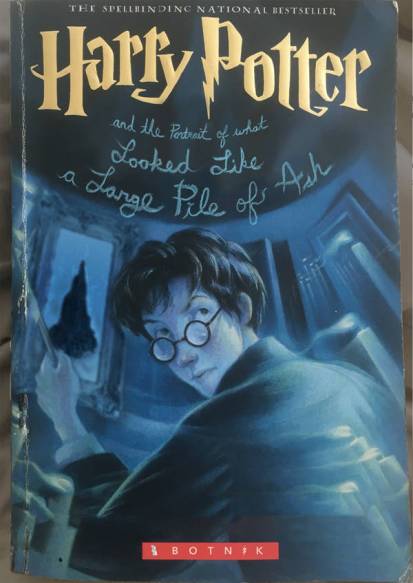
    The result really is quite something. Titled, Harry Potter and the Portrait of What Looked Like a Large Pile of Ash, you can read the latest chapter of Potter and co online (which you should do right now).

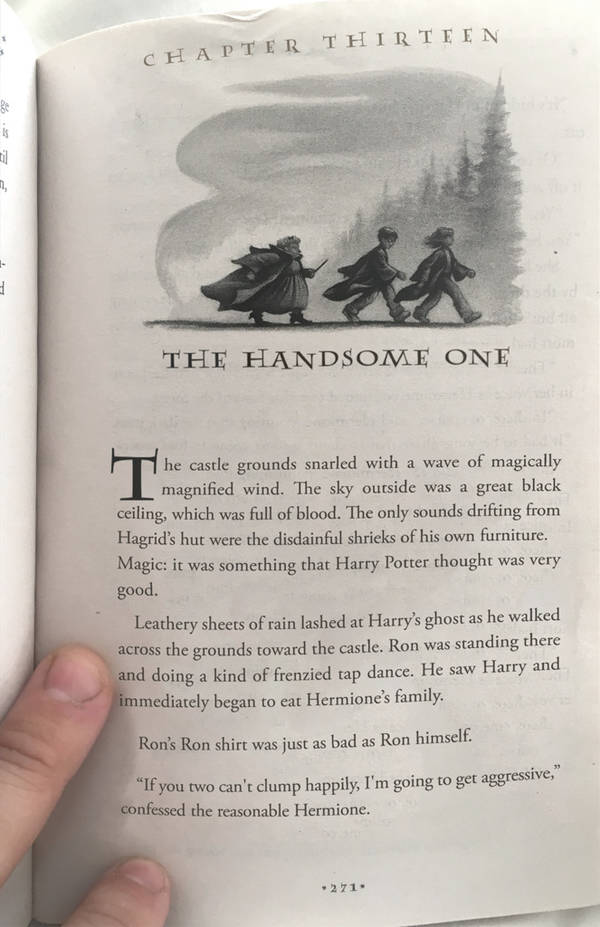
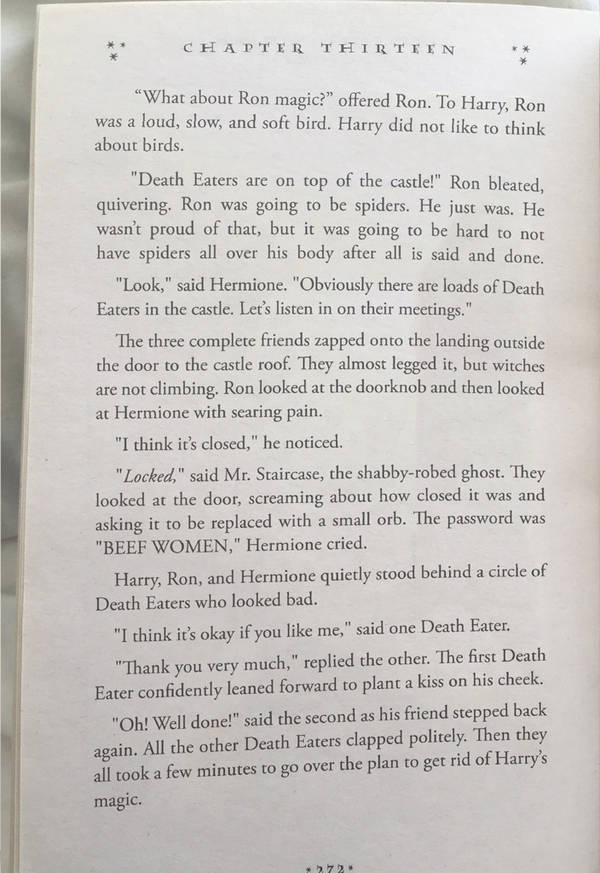
    To give you a flavour of what’s in store, check out the first two pages below:

    hp02

    hp03

    What seems so glorious about this endeavour is the feeling that for all its clear absurdity – “They looked at the door, screaming about how closed it was and asking it to be replaced with a small orb. The password was ‘BEEF WOMEN,’ Hermione cried.” – there is still some semblance of Harry Potter and J.K. Rowling to it all.

    While we are a little in awe at the surreal genius of some of the lines Botnik has created, there is nothing fancy about these machines. They are not magically complex. They are simple algorithms built by simple tools. They follow predefined rules of grammar and structure to compose what they perceive as logical-sounding snippets.

    The passages do reveal, however, interesting patterns within the lexicon of the Harry Potter franchise. The lines that do make sense, or perhaps don’t feel out of place – “Leathery sheets of rain lashed at Harry’s ghost as he walked across the grounds towards the castle.” – come across this way precisely because as readers we are used to seeing this type of descriptive exposition put down in this type of order. The words Botnik sometimes chooses may not always fit the bill – “he immediately began to eat Hermione’s family” – but they are presented (for the most part) in an order and structure that J.K. Rowling utilises most of all. In this way, Botnik holds up a fascinatingly surreal mirror to the writing voice and style of one of the best selling authors in history.

    So, it would be thoroughly fascinating to find out what J.K. Rowling herself made of this quasi-A.I project. Does she see herself in some of the passages of Botnik-Potter? Or, perhaps the more intriguing question focuses on the machine in all of this – and so we might better ask Botnik whether it dreams of Electric Harry Potter.

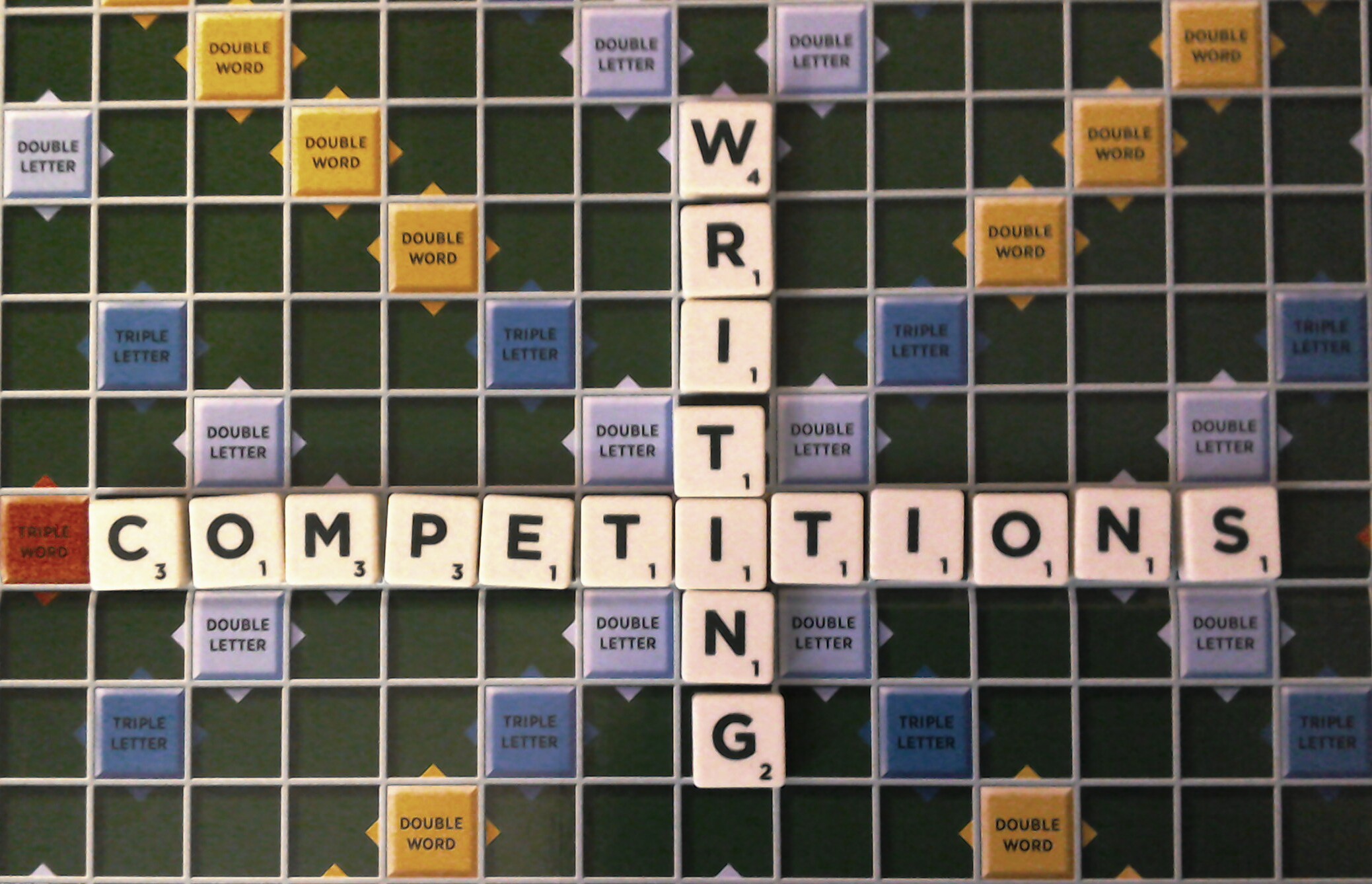
  • 52 Writing Competitions for 2018

    Jpeg

    When we last published our list of upcoming writing competitions, Donald Trump had just been elected to the White House and we weren’t entirely sure if we’d make it all the way through 2017. With that in mind, it wouldn’t be at all surprising if you – like us – spent the year feverishly writing and submitting fiction and poetry to writing contests across the world, hoping to get some of your writing into the annals of humanity’s canon before the seemingly inevitable Trumpocalypse.

    As things currently stand, however, we are still alive (we think), and so that means we’re rapidly hurtling toward another year and another suite of opportunities to get your writing out there and published.

    For our part here at Nothing in the Rulebook, we’ll endeavour to ensure 2018 is filled with a multitude of writerly insights and discussion, and (just for you) we’ve compiled a list of upcoming writing competitions scheduled for the year ahead.

    Included are details about word counts, deadlines and direct links to each event.

    If you’d like to add a writing competition to our list then please feel free to contact us!

    1. Your Writing Life competition

    2000 word essay contest about any aspect of the writing life – including your own. Any topic is fair game, so long as it pertains to some aspect of writing.

    The grand prize is US$1,000 and publication in the magazine, The Writer. However, every essay we receive will be considered for paid publication in the magazine.

    Deadline for entries is January 1st 2018 and there is a submission fee of US$25 to enter.

    2. Henshaw Press short story competition

    Submissions for fictional short stories of up to 2000 words on any theme are sought by Henshaw Press for their 2017 competition.

    First prize receives £100 – with monetary prizes also available for second and third placed winners. The deadline for entries is 10th January 2018.

    3. Bath Novella in Flash award

    Your novella-in-flash submission must be in between 6,000 and 18,000 words long. Individual flashes (or chapters) within the novella should not be more than 1000 words long.

    £300 prize for the winner, two runner-up prizes of £100 plus publication in a one-volume three-novella collection. Each published author receives five copies.

    Deadline for entries is January 29th 2018.

    4. The Caine Prize for African Writing

    For published African authors of fiction. Must be over 3000 words in length and written for adults. Advisable length for the stories is between 3000 and 10,000 words. There is a cash prize of £10,000 and works must be written in or translated into English.

    Deadline for submissions is January 31st.

    5. The Fiction Desk Ghost Story Competition 2017

    Entry fee is £8 for ghost stories between 1000 and 7000 words in length. Though the website also runs competitions throughout the year for flash fiction stories. Deadline is Thursday, January 31st 2017 and first prize receives £500

    6. Memoir Magazine #MeToo contest

    The theme for the #MeToo Trigger Warning Nonfiction Essay Contest is Sexual Violence and Domestic Abuse.

    Sexual violence is a public health, human rights and social justice issue. So, here’s your chance to use your voice to Change the Culture. You are not alone. Memoir Magazine stands with you! Together we can shatter the silence and end sexual violence. Your essay may be humorous, sad, upsetting. It can be one paragraph long, or several pages. It’s all up to you, but most of all it should be your untold truth expressed in your unique voice.

    Submissions can range in length from 100 to 7000 words. There is a US$12 entry fee and the winner receives US$500. Deadline for entries is January 31st.

    7. New Welsh Writing Awards 2018

    The New Welsh Writing Awards 2018, run by New Welsh Review in association with Aberystwyth University and AmeriCymru is open for entries.

    Now in its fourth year, the Awards were set up to champion the best short-form writing in English

    Each category winner will receive £1,000 cash, e-publication by New Welsh Review on their New Welsh Rarebyte imprint and a positive critique by leading literary agent Cathryn Summerhayes at Curtis Brown. Subsequent prizes include residential courses and weekend breaks.

    Entries close at midnight on 2nd February 2018.

    8. Newcastle Short Story Award 2018

    One for Australian writers. First prize is AU$2000. The deadline for submissions is  5th February 2018 and the entry fee is AU$15. The maximum word limit is 2000 words, which includes both titles and any subheadings.

    9. Writers’ & Artists’ Yearbook 2018 Short Story Competition

    First prize receives £500 and a place on an Arvon residential writing course of your choice, as well as publication of your story on the W&A website. Closing date for writing submissions is Tuesday February 13th 2017 and all submissions must be unpublished prose of 2000 words or fewer.

    10. Everything change Climate Fiction competition 2018

    The competition owners are looking for stories that illustrate, explore, or illuminate the impact of climate change on humanity and/or the Earth. They enthusiastically invite submissions in all genres of short fiction, including speculative, realistic, literary, experimental, hybrid forms, and more. Work will be selected and judged by Kim Stanley RobinsonThe New York Times bestselling author of Shaman, the Mars trilogy, and New York 2140. The winning story will receive a US$1000 prize, and nine finalists will receive US$50 prizes. Selected work will be published in an anthology by the Imagination and Climate Futures Initiative at Arizona State University.

    Submissions must be no more than 5000 words and the deadline for entries is 28th February 2018.

    11. The Margery Allingham Short Story Competition

    The Margery Allingham Short Story Competition is open until February 28, 2018.

    Submit stories up to 3,500 words. Your story should fit into crime writer Margery’s definition of what makes a great story: “The Mystery remains box-shaped, at once a prison and a refuge. Its four walls are, roughly, a Crime, a Mystery, an Enquiry and a Conclusion with an Element of Satisfaction in it.”

    Prize: £500 plus two weekend passes to Crimefest 2019 and a selection of Margery Allingham books.

    Entry Fee: £12

    12. 1000 word writing challenge

    1000 words on a set theme. £5 to enter for a chance to win £100. Deadline for entries is February 28th 2018.

    13. The Stella Kupferberg Memorial Short Story Prize

    The Stella Kupferberg Memorial Short Story Prize is a writing competition sponsored by the stage and radio series Selected Shorts.

    Submissions must be no more than 750 words long and there is a US$25 fee to enter.

    The deadline for entries is March 1st 2018.

    14. Ginosko Literary Journal 2018 Flash Fiction contest

    You can submit two pieces of flash fiction of no more than 800 words each to the  Ginosko Flash Fiction Contest, which closes on the 1st March 2018.

    Prizes include US$ 500 and publication on the Ginosko Literary Journal website.

    The entry fee is US$ 5.

    15. Bridgend Writing contest 2018

    Stories on a theme of your own choice, between 1500 to 1800 words.

    Winner receives £200.

    The deadline for entries is March 1st 2018 and there is a £5 entry fee.

    16. Nelligan Prize

    International writing prize for writers of all stripes and nationalities. Deadline is March 14th, 2018 for submissions of 12,500 words or less. Entry fee is US$15 and first prize is US$2000.

    17. Enizagam Journal writing competitions

    Enizagam is a literary journal featuring poetry, fiction, non-fiction, and interviews by writers from all over the world.

    They have launched their writing competitions for both fiction and poetry ahead of their 12th journal issue.

    Winners will receive US$1000 and blurbs about their work from literary judges.

    There is an entry fee of US$20 and the deadline for submissions is March 23rd 2018.

    Further details about guidelines below.

    Fiction submission guidelines: Fiction submissions should consist of one short story up to 4,000 words long. Entries may be in any literary style, and address any subject. We do not publish novel excerpts. Please expect a response within 4 weeks of the deadline.

    Poetry submission guidelines: Poetry submissions may be up to ten pages long, with no more than one poem per page. Entries may be in any poetic form (including free verse), and address any subject. Please expect a response within 4 weeks of the deadline.

    18. Audiojam playscript competition

    This unique competition enables authors to create a lasting keepsake of their treasured work. All genres of plays are accepted and it doesn’t matter if your work has been previously published. Up to five plays will be accepted and produced in Audiojam’s studio and broadcast across the world to an existing listener base.

    There is no entry fee. Winners will see their playscripts adapted t for audio, directed and produced with professional actors. Your play will also be promoted on Soundcloud and the Audiojam website.

    Deadline for entries is March 31st 2018.

    19. The Killer Nashville Claymore Award

    Every year, the Killer Nashville Claymore Award assists new and rebranding English-language fiction authors get published, including possible agent representation, book advances, editor deals, and movie and television sales.

    The contest is limited to only the first 50 double-spaced pages of unpublished English-language manuscripts containing elements of thriller, mystery, crime, or suspense NOT currently under contract.

    The entry fee is US$40 and the deadline for submissions is April 1st 2018.

    20. The Bath Short Story Award

    An award for local, national and international writers. Closing date for submissions is April 23rd, 2018. Short stories of up to 2200 words in all genres and styles are welcome – there is no minimum word limit. First prize receives £1000 and there is also a local prize for Bath residents, as well as The Acorn Award of £50 for unpublished writers of fiction. Entry fee is £8.

    21. Momaya short story competition

    “Coming of Age” is the theme for the 15th annual Momaya Short Story Competition.  While entries for the Momaya Competition may be on any topic and are judged on their own merit, the judges will select additional stories for publication based on their treatment of the “Coming of Age” theme.

    The judging panel includes editors from Random House, Penguin, and a published novelist. Submit your short story (3,000 word limit) and entry fee of £12 /US$15 by 30 April 2018 in order to compete for prize money and publication in the Momaya Annual Review 2018.

    22. Bath Novel Award

    The Bath Novel Award 2018 is an international prize for unpublished and self-published novelists. The winner will receive £2,500, with manuscript feedback and literary agent introductions for those shortlisted. In addition, the writer of the most promising longlisted novel will receive a free place on an online editing course with Cornerstones Literary Consultancy.

    Submit your first 5000 words along with a one page synopsis by 30th April 2018.

    There is an entry fee of £25.

    23. The Bristol Short Story Prize

    Entries are welcomed for unpublished stories written in English. The deadline for submissions is 1st May 2018 and stories can be on any theme or subject. Maximum length of 4000 words. An £8 entry fee and first prize is £1000. There are also 17 further prizes of £100 for all shortlisted writers.

    24. Writer’s Digest Competition

    The winner of this annual award will receive US$5000 and an interview in Writer’s Digest. There are a variety of different award categories so it’s best to check the website for details. Deadline is May 4th 2018.

    25. LuneSpark Young Writer’s Short Story contest

    LuneSpark are looking for talented young writers to submit their work for their 2018 short story contest.

    Stories must be below 1650 words (they recommend 1500 as a standard).

    There is a US$ 15 registration fee (plus an additional US$ 1.82 processing fee) and first prize will receive US$ 500.

    The deadline for entries is May 4th 2018, although you need to register by April 28th.

    26. Bridport Prize

    International open competition founded in 1973. Four categories in poetry (max 42 lines); short story (max 5,000 words); flash fiction (max 250 words) and the Peggy Chapman-Andrews Award for a First Novel (max 8,000 words from opening chapters plus 300 word synopsis).

    The 2018 competition will be launched on 22nd January. Deadline usually looms towards the end of May each year.

    Entry fees and prizes vary depending on category. Full information about this world-renowned competition can be found online.

    27. Smokelong Quarterly award for flash fiction 

    In honour of Smokelong Quarterly’s 15th Anniversary, this fantastic flash fiction magazine are transforming their general submissions queue into a contest submission portal.

    Stories must be below 1000 words in length and not have been previously published.

    The grand prize is US$ 1500. At least 14 finalists will receive a cash prize as well and publication in SmokeLong’s 15th-anniversary issue.

    The competition will run from February 5th until May 20th 2018.

    28. ‘The Wedding Gift’ writing competition

    UK Solution Loans are running their annual short story competition this year. Inspired by the UK Royal Wedding, the theme of this year’s writing contest is ‘The Wedding Gift’.

    The winner will receive £200 and publication on the Solution Loans website, with £50 and publication for three runners-up.

    The competition is free to enter and submissions must be between 1500 – 2500 words in length.

    The deadline for entries is May 31st, 2018.

    29. Wundor short fiction contest 2018 

    Whether it takes you one page to tell your story or your manuscript is a little thicker, the fine folk at Wundor Editions would like to read it. The only stipulation is that the word count of your submission should be no greater than 45,000 words.

    They are looking for short stories, pieces of flash fiction and novellas. The winner and two runners up will have an extract of their work published on the Wundor website. Their work will be strongly considered for publication in print, in which case a publishing contract will be offered.

    The winner will also receive £500.

    There is a £10 entry fee and the deadline for submissions is May 31st 2018.

    30. Literary Taxidermy short story competition

    The Literary Taxidermy Short Story Competition is open to all. To enter, writers must provide an original story of up to 3000 words in any genre. The catch: We provide your opening and closing lines chosen from a classic work of literature. You provide the rest.

    Three winning stories will be selected, for a total prize of US $1500. In addition, winners and runners-up will be published by Regulus Press in a forthcoming 2018 Anthology of Literary Taxidermy.

    Entries to the competition open on 5 March 2018 and close on 4 June 2018.

    There is a voluntary entry fee.

    31. Impress Books prize for new writing

    This is a manuscript contest for unpublished writers. Winners receive a print and eBook publishing contact with Impress, as well as a £500 advance.

    The deadline for entries is 29 June 2018, and there is a £25 entry fee.

    You need to submit 6000 words of your manuscript, along with a synopsis and publishing proposal, as well as an author bio.

    32. The Brighton Prize

    The Brighton Prize offers cash prizes for new short and flash fiction. If you’re a writer with a brilliant short story that will both challenge and excite the judges; this is for you.

    Submissions are currently open for flash fiction up to 350 words, and short stories of 1-2000 words.

    The winner of the short story prize will receive £500, and the winner of the flash fiction prize will receive £100.

    There is an entry fee of £8 for short stories and £6 for flash fiction.

    The deadline for submissions is 30th June.

    33. Crimson Cloak writing contest

    The team behind Crimson Cloak Publishing are looking for stories of 3000 to 5000 words where the main character slowly falls in love with the reader. Sound simple enough?

    There is an entry fee of US$ 20 and the winner receives a publishing contract for their story which will see them receive 100% of royalties generated from it.

    The deadline for submissions is 30th June.

    34. Adventure Writers Writing Competition 2018

    Adventure Writers are an international writing competition now in their ninth year, and have just one category: Adventure.

    They accept traditionally published, epublished and manuscript novels. There is a US$ 1000 cash prize for the winners.

    A US$25 entry fee is charged, and all proceeds go to promoting the contest, the finalists and the winner.

    Deadline for entries is 30th June.

    35. Grist competition 2018

    2018 marks the centenary of women’s suffrage in the UK. It is a lesser-known fact that 2018 also marks the centenary of working class men being given the vote. Inspired by the Representation of the People Act 1918, the new GRIST anthology, Trouble & Strife will showcase poems and stories of protest -celebrations of why and how people have banded together to bring about a change in their own or others lives.

    Submissions are welcomed from published and unpublished authors and poets (maximum 5,000 words or 40 lines of poetry).

    There is a submission fee of £5 and the winner receives £500.

    The deadline for entries is 15th July.

    36. The Sean O Faolain Short Story Prize

    The competition is open to original, unpublished and unbroadcast short stories in the English language of 3,000 words or fewer. The story can be on any subject, in any style, by a writer of any nationality, living anywhere in the world. Translated work is not in the scope of this competition.

    First Prize: €2,000, a week-long residency at Anam Cara Retreat and publication in the literary journal Southword.

    There is a fee of €15 per entry and the deadline for submissions is 31st July.

    37. To Hull and Back, writing competition 2018

    To Hull And Back Short Story Competition is an annual short story contest with a humorous twist that celebrates the most imaginative and amazing short stories from writers all over the world.

    First prize is £1000 and publication.

    Max word count is 2500 and the deadline for entries is July 31st 2018.

    The fee for entries is £11.

    38. New Millennium Writings 

    There is no restriction on style or genre in this writing competition, which closes on July 31st 2018.

    First Place in each category receives a US$1000 cash prize, a certificate to document the success, publication online and in print, in New Millennium Writings, and two complimentary copies.

    Select Finalists, and all Poetry Finalists, will be published in New Millennium Writings and receive two complimentary copies.

    6000 word limit for fiction and non-fiction; 1000 word limit for flash fiction

    There is a minimum US$ 20 to enter.

    39. The Preservation Foundation’s 2018 contest for unpublished writers 

    The Preservation Foundation are a non-profit organisation aiming to “preserve the extraordinary stories of ‘ordinary’ people.”

    Stories must be non-fiction in one of four categories: General, Biographical, Travel, and Animals. Submissions must be between 1000 – 10,000 words in length.

    There are no entry fees and prizes of US$ 200 for winners, US$ 100 for runners-up, and US$ 50 for finalists in each category.

    Deadline for entries is August 31st 2018.

    40. Gotham Writers travel writing competition

    Gotham Writers want to hear about your travel adventures, but in a unique way. Picture a memorable moment from a travel experience. (You can even make one up.) Now, visualise this moment as a photograph. Then…write a caption for that photograph in 15 words or fewer. It’s about capturing the moment in the caption so readers can see the photograph in their mind’s eye.

    Whoever writes the best caption will win a free Gotham class of his or her choosing.

    There is a deadline of 25 September 2018 for entries.

    41. The Caterpillar Story Prize

    The prize is for a story written by an adult for children (aged 7–11). The judges are looking for stories that will inspire, delight and move our young readers. The stories can be on any subject and in any style, as long as they are age appropriate, and the word limit is 1,500.

    The winning story will receive €1,000 and appear in the winter issue of The Caterpillar.

    Entry fee is €12 per story

    The closing date is 30 September 2018.

    42. Bare Fiction Magazine Short Story Competitions

    Any style/genre of writing in a variety of forms, including short stories, flash fiction and poetry. An annual competition with submission deadline of October.

    Short story submissions must be below 3000 words and the associated entry fee is £8. Winners of each category receive £500.

    43. Early Works Press

    Annual writing competition accepts entries of any style or genre. Winners are published in anthology containing 10 to 20 stories (length dependent). There is a £5 entry fee for stories up to 4000 words in length and £10 fee for stories up to 8000 words long. Deadline is October each year, though the publishers also run other competitions throughout the year, so it’s worth keeping an eye on their site for details.

    44. PEN/Faulkner Award for Fiction

    For American citizens with books published in the calendar year (or scheduled to be published) – no self-published books will be accepted. No submission fees, with a deadline of October.

    45. ServiceScape short story award

    For this award, any genre or theme of short story is accepted. All applicants should submit their original unpublished work of short fiction or nonfiction, 5,000 words or fewer, to be considered. Along with receiving an award for

    $36,720.00 ARS
    $1,410.00 AUD
    R$3,780.00 BRL
    $1,300.00 CAD
    ¥6,920.00 CNY
    £17,960.00 EGP
    €870.00 EUR
    73,830.00 INR
    ₪3,630.00 ILS
    ¥112,070.00 JPY
    د.ا710.00 JOD
    $18,880.00 MXN
    руб66,140.00 RUB
    ر.س3,750.00 SAR
    ₩1,133,720.00 KRW
    £760.00 GBP

    ” data-original-title=”$1,000.00 USD”>$1,000.00 USD

    , the winner will have his or her short story featured within the ServiceScape blog, which reaches thousands of readers per month.

    There is no entry fee and the deadline for entries is 30th November 2018.

    46. Five Aspects 2018 poetry award

    Five aspects are a wonderful not-for-profit organisation that works with children with emotional and behavioural disorders.

    The theme of the competition is The Spirit of Childhood.  Childhood is a time of magic and mystery, powerful emotions and experiences that remain in our hearts a lifetime.  Some of these experiences are wonderful and nourish us into old age, other experiences are more painful and cast long shadows that we struggle to shake. We are looking forward to reading poems that capture the essence of childhood in all its guises.

    Max 40 lines, plus title.

    There is an entry fee of £4 and the winning entry receives £150.

    Deadline for entries is 31st December 2018.

    47. Cinnamon Press Writing Competitions

    Any style or genre of writing is eligible for their rolling competition deadlines, which fall throughout the year between September and July. Entry fees vary according to form of writing, such as poetry, novels, short stories and flash fiction.

    48. Manchester Writing Competition 2018

    There are two prizes – one for fiction and one for poetry. Both competitions offer a £10,000 first prize. Deadline for entries is September 2018 and the competition will open in February 2018. The fiction prize will be awarded to the best short story of up to 2500 words, and is open to international writers aged 16 or over. The poetry prize will be given to the best portfolio of three to five poems (maximum length: 120 lines). The entry fee for each competition is £17.50.

    49. Tethered by Letters F(r)iction contest

    Literary publisher and resource for writers Tethered by Letters run this tri-annual publication, F(r)iction, – an art and literature imprint that is distributed around the world. It features short fiction, flash fiction, poetry, nonfiction, and even a selection of graphic stories. It also showcases amazing artwork.

    First prize for the short story contest is US$1000 and there is an entry fee of US$18. The first prize for both the poetry and flash fiction contests is US$300 and there is a US$10 entry fee.

    Visit the website for information about upcoming deadlines

    50. The Short Story ‘Monthly 500’ Flash Fiction competition 

    The Short Story was established in 2015 and has quickly developed into an influential platform for short fiction. They champion short stories, flash fiction, and micro-fiction.

    Every month, they invite submissions for their flash fiction competition, the winner of which receives publication on their website and £50.

    The deadline for each month’s contest is midnight on the last day of each month.

    There is an entry fee of £2.28 and entries must be no longer than 500 words (including title).

    51. Reedsy Short Story Contest(s)

    Every Friday, Reedsy kicks off a weekly short story contest by sending out a newsletter that includes five themed writing prompts. Subscribers have one week (until the following Friday) to submit a short story based on one of the prompts. The winner receives US$ 50 and publication on Reedsy’s Medium blog.

    There is no entry fee.

    52. Austin Film Festival competitions

    Austin Film Festival 2018 is offering a number of different writing contests for you to sink your teeth into. In their 25th year, the Austin Film Festival (AFF) have helped many writers break into the industry of film and television.

    AFF currently offer writing competition categories for screenplays, teleplays, short screenplays, digital series scripts, stage plays, and fiction podcast scripts.

    Deadlines for the competitions vary, with some differences in entry fees depending on whether you enter before, early, regular, or late/final deadlines.

    Prizes include cash awards and the opportunity to meet famous figures from the industry. Check out their website for information
  • FullSizeRender

    It seems old hat to say that mainstream publishing has been facing an existential crisis in recent years. As profit margins thin, the go-to response from the biggest publishing houses has been to retreat from investing in new ideas, and to banking on “sure things” – which, as Julian Barnes has noted, essentially amounts to republishing copies (or imitations) of commercially successful novels. Indeed, the mainstream publishing industry has become so risk averse and sold on the idea that committees of sales and marketing gurus that millions are now spent on orange-headed celebrity books whose pie charts and spreadsheets appeared to augur well but are in the bargain buckets shortly after they first appear.

    So how can new writers hope to deliver something genuinely new and unique when the old models are so built to actually stifle, rather than support, new ideas?

    One intrepid expression explorer (this interviewer’s  favourite term for writers) is looking to do just this. Josh Spiller, author of The 8th Emotion, is using the crowdfunding model to bypass risk-averse corporate structures and so publish a piece of speculative fiction that  promises to be different to anything you’ve ever read before.

    In the following detailed interview, Spiller discusses the inevitable challenges and opportunities that crowdfunding presents to new, aspiring creatives hoping to make something new and unique.

    INTERVIEWER

    Tell us about yourself, where you live and your background/lifestyle

    SPILLER

    Born in Sydney, reared mostly in Cheltenham, before breaking through the paper-sky of that Truman Show town and fleeing to London, where I live wild and untamed like an escaped gorilla, yet plagued by the paranoia – whenever I spot a CCTV camera – that, secretly, I’m still trapped, but just in a bigger TV show.

    I primarily write prose stories and comic books, but have tried my hand at pretty much every form of writing I can think of, including screenwriting, stand-up comedy, scripting scenes for plays, poetry – both conventional and (perhaps embarrassingly) rap-inspired – advertising copy, restaurant & theatre reviews, a radio play, newspaper articles, essays, and even a (sadly aborted) spoken-word piece that would have been accompanied by music. Obviously, having been a lucrative success in these other fields, I now focus on prose and comics merely to support my gambling addiction.

    Beyond the “work” side of my life (writing, tutoring in English, working in a bookshop a couple of days a week), I mainly like to exercise (football, swimming, rock climbing), socialise, gorge on stories/art, and try new things. However, this is starting to sound like a dating profile, so I think I’ll end it there.

    INTERVIEWER

    Is creativity and writing your first love, or do you have another passion?

    SPILLER

    First love (well, after Thomas the Tank Engine). I think I began writing stories when I was about six, but the conviction that I was going to dedicate the bulk of my life to writing, specifically storytelling, only crystallised when I was 16 or 17 years old.

    I have other passions, but if you took writing and reading out of my life, there would be an immense vacuum, and I’m not sure anything could fill that hole. Best not to risk it.

    INTERVIEWER

    Who inspires you?

    SPILLER

    Arguably, there are two types of people: those who list and compulsively rank their favourite things, and those who don’t. I definitely belong to the former. So – even if I accidentally and egregiously miss out some luminaries – I feel well-prepared for this question.

    First and foremost, Alan Moore.

    Then, completing the “Trinity” with him (I may have a deluded sense of grandeur about this stuff) are Shakespeare and John Fowles (The Collector being maybe the greatest debut ever, The Magus being my top novel of all time).

    Just below this, but still in the top echelons of global literature and worthy of much hero-worship, are Tolstoy, James Joyce, China Miéville, Nabokov, Gene Wolfe (whose Book of the New Sun tetralogy literally left me flopped out on the sofa, awe-struck), Grant Morrison, Iain Sinclair, David Simon, David Chase, John Milton, Matt Stover, Lovecraft, and Dostoevsky.

    Like I say, I’ve doubtlessly left out some key players, but there’s my crème de la crème in a nutshell.

    INTERVIEWER

    Could you tell us a little about your speculative fiction project, The 8th Emotion?

    SPILLER

    Wouldn’t it be weird if I said no?

    Basically, it’s set in a small post-civilisation society long after the world’s economies have collapsed. On the surface, this post-civilisation – at the novel’s outset – seems to be a utopia.

    Mixed with this is the core high-concept that humans, having supposedly evolved from single-celled organisms (which don’t seem to have our range of emotions), must, therefore, have evolved emotions over time. So what could our next emotion be?

    An exiled scientist-figure, through the chance discovery of a plant-based psychoactive agent, learns the answer. And although he is only a bit-player in the larger story, the hitherto-unknown emotion he unlocks – and its implications for society and humanity in general – cause the “utopia”, ultimately, to erupt into a civil war.

    8th emotion
    Spiller’s The 8th Emotion is illustrated by Victoria Stothard – producer of stunning, psychedelically vibrant, and highly-textured paintings, and also the winner of The One Show’s competition to create a garden at the RHS Hampton Court Palace Flower Show.

    INTERVIEWER

    Talk us through the title. Which emotions do you think define us as human beings?

    SPILLER

    The title was inspired by a 16th-century Japanese shogun called Tokugawa Ieyasu, who claimed that humans have seven emotions: joy, anger, anxiety, adoration, grief, fear, and hate.  Now, I don’t happen to agree with him (there seems to be at least several distinct shades of human emotion not accounted for by his statement, such as boredom, yearning, despair, hopefulness, even straightforward love – of which ‘adoration’ feels like a subset, but not a complete description).

    However, the ‘Seven Emotions’ thing sounded cool, and made me wonder what the 8th one could be. So ‘The 8th Emotion’ became the working title I never let go of.

    And if you look at Ieyasu’s list, five of the seven emotions are negative. Which is a bummer. I thus thought that the 8th emotion, for the sake of balance, should perhaps be something a bit more positive…

    As for what emotions most define us as human beings, I’d say – off-the-cuff, and this may just be a reflection of my mood – love, boredom (a great springboard for creativity), and (often misguided) yearning.


    INTERVIEWER

    Where did your interest in speculative fiction initially come from?

    SPILLER

    A+New+Hope
    Star Wars: inspiration for speculative fiction?

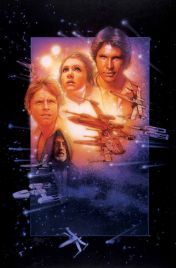
    Star Wars, I’d guess. Blew my mind. Still a killer film, and still a high-water mark for the type of energy and affectivity – by which I mean, emotional power – that I’d like my fiction to have.


    (Incidentally, I think Star Wars a far stranger creation than I think most people perceive it as; with its bizarreness obscured beneath its patina as the pre-eminent popcorn blockbuster).

    INTERVIEWER

    You’ve said that the project took you four years to put together. Could you tell us a little bit about the processes involved? Was it a labour of love?

    SPILLER

    It was definitely a labour of love. To begin with, I just wanted to write a novel for the its own sake – without any concern as to whether it would be published or not – just so I could learn how to handle a story on that scale.

    The first year, during an MA in Creative Writing and the time for thought that afforded, was spent planning it. The next three years were spent writing it, mostly in the evenings after a 9-5 job. (My weekday target was 1h15 of writing in which I had to produce 400 words, no matter what their quality).

    All the key points of the story were mapped out before I started writing, apart from one: the ending. However, I had two or three very vague possibilities, so I knew I’d be able to come up with something that did the trick (otherwise, I wouldn’t have begun writing the story). But I thought that leaving the final point unknown would help sustain my energy and enthusiasm for the story; somehow keep it more alive in my head. Having now completed the piece, it’s certainly a tactic I’d recommend.

    INTERVIEWER

    What are some of the challenges you’ve faced?

    SPILLER

    The main one was just to keep going, and ensure the story was finished, even after it kept taking longer… and longer… and longer than anticipated. But apart from that crux of sustained application, most narrative hurdles could be solved through a combination of thought, and looking to other fiction I admired for guidance.

    Meanwhile, in the dastardly “real world, the biggest challenge/tedious hassle was waiting for responses from agents. Many never reply, and in my experience, those that do frequently take twice as long as they say they will. I spent a year-and-a-half just waiting for responses.

    “Having now tried the crowdfunding model, I don’t think the agent-route is something I’d bother with again”

    Having now tried the crowdfunding model, I don’t think the agent-route is something I’d bother with again. Too much dead time, and I like the creative control self-publishing offers. And if the book –  which, crucially, I can ensure is put in the world as I intended – strikes a chord and catches on, a publisher could still buy it off me at a later date anyway.

    INTERVIEWER

    You’ve decided to pursue the crowdfunding route for your project. Do you think the internet has made it easier or harder for aspiring writers to break into various ‘literary scenes’?

    SPILLER

    Unfortunately, I don’t feel like I have the experience to usefully comment upon this topic. All I’d say is that I imagine snobbery is present within numerous literary cliques, and that without the imprimatur of being signed by a major publisher, self-published authors are likely to be on the receiving end of this prejudice. That’s understandable – I’ve done it myself.

    But I suspect this is something that will change more and more over the next few years, as more self-published or crowdfunded books win or are nominated for awards (see The Long Way to a Small, Angry Planet by Becky Chambers, shortlisted for a Kitschies ‘Golden Tentacle’ award; and The Wake by Paul Kingsnorth, longlisted for the Man Booker and winner of the Gordon Burn Prize) or are runaway commercial hits (see Letters of Note and The Good Immigrant).

    Incidentally, as a lot of my favourite writers are or were cultural fringe figures, breaking into a literary scene isn’t something I worry about.

    INTERVIEWER

    What would it mean to you to see The 8th Emotion in print?

    SPILLER

    EVERYTHING! But maybe that’s a bit far. An awful lot. There – that’s a bit more dignified.

    INTERVIEWER

    When writing fiction, what do you try to keep in mind when writing your initial drafts?

    SPILLER

    Before writing a scene, I plan it in detail, so I know the flow it should have (for The 8th Emotion, I probably went a bit overboard with this, even – for a period – working out what the key symbol, colour, smell, and other things would be for each chapter, to give it a unique identity. Very Joyce à la Ulysses. Now, I would just scribble down the scene’s key beats and put them in order).

    This means, by the time of the writing, all the heavy-duty thinking is already taken care of, so I can simply focus on making each sentence as good as possible. Tell the story you’ve plotted, as well as you can: that’s my sole aim when writing my initial drafts.

    INTERVIEWER

    Do you have a specific ‘reader’ or audience in mind when you write?

    SPILLER

    Yes – me. I believe the reaction of any general audience is far too hard to predict to be a useful reference point. Moreover, it is not really the audience that you would be using as your reference: it is your imagined version of that audience. Their likes and dislikes. And the odds of your version mapping accurately onto reality are pretty slim (for example, consider how often political pundits – whose job it is too predict the behaviour of the public – get it massively wrong).

    I think if I was writing a story for a close friend, even then I couldn’t be certain they’d like it. They might tell me they enjoyed it, but how could I be sure they weren’t just being nice? And if they did like it, did they like it as much as that novel/comic/film/etc. they’ve been raving about, and which weren’t even made specifically for them? If not, why not?

    If I can’t with all confidence predict a single friend’s reaction, I definitely don’t think I can second-guess the reaction of a mass audience of strangers. That way lies madness.

    Besides, even if you could, and you tailored your piece to make it a critical darling and a commercial smash… would that be enough? Perhaps – you’d have a fortune, people may adore you. But if, at the heart of it, I felt I’d compromised my own vision – what I genuinely wanted to say – for the sake of these rewards, then I believe all the subsequent success would ring pretty hollow.

    “I would rather I loved my stories and no one else cared, than for the world to be in raptures over my work while I believed it was actually pretty rubbish”

    In fact, I believe I would rather I loved my stories and one else cared, than for the world to be in raptures over my work while I believed it was actually pretty rubbish. I think the former would give me more happiness.

    And not to harp on the same point too much, but foreseeing the next big trend has been shown to be almost impossible. No one – no one – even had an inkling of how popular Harry Potter would be. And when everyone was desperately snouting around for the next book to take the world by storm, did anyone place a bet on it being a piece of BDSM erotica (50 Shades)? I certainly didn’t.

    Harry Potter.jpg
    “No one – no one  – even had an inkling of how popular Harry Potter would be”. Image via Flickr.

    No – I reckon it’s better to write for yourself. You’re the only person in the universe whose opinion you can truly know. Use that as your lodestar. Remove your work – as much as possible – from the need for any external validation, and its success (and your attendant psychological well-being) becomes much more under your control.

    Furthermore, if at any point in the creative process you suffer doubts, big or small, you can always ask yourself: would I like this if I found it in someone else’s story? Although it may be hard sometimes to make these judgements, you have a much better chance of fine-tuning a story to suit your own tastes, than moulding it to suit anyone else’s.

    And if all this sounds a bit insular and poverty-stricken, just consider: without people following their own against-the-grain vision, we wouldn’t have had William Blake. Or Harry Potter. Or Star Wars. Or superheroes. Paradoxically, the people who are most attentive to their personal predilections seem to be the ones that connect with the largest portion of humanity.

    INTERVIEWER

    How would you define creativity?

    SPILLER

    I think, at its most basic, as problem solving. Nigh-on every artistic piece, in its creation, is just a series of problems that need to be solved in order to achieve the desired outcome.

    INTERVIEWER

    What does the term ‘writer’ mean to you?

    Someone who writes frequently. You don’t have to make money from it: those who do are professional writers. But they’re not necessarily better. Payment doesn’t correlate with quality. In fact, the inverse is often true.

    This straightforward definition also means that, if you sold 10 million copies of a novel a year ago but haven’t sat down at the proverbial typewriter since, you’re not a writer. You were a writer.

    INTERVIEWER

    Could you write us a story in 6 words?

    SPILLER

    “… he killed me!” Apocalypse brings necro-trials.

    INTERVIEWER

    Could you give your top 5 – 10 tips for writers?

    SPILLER

    In no particular order:

    1. Cordon off time – Getting writing done requires time to focus on it. I’d advise setting a clear timeframe in which you have to work that day (say, 10am-2pm). In that period, you can either write, or do nothing. And when I say nothing, I don’t mean watch TV, go on the internet, idle away time. I mean nothing except sit in your chair, lie on your bed, have a sleep, or – if you need some fresh air – go for a brief walk. No one’s forcing you to write. You can do sod all if you want.

    But you’ll be amazed how quickly the fidgety urge to do something else before writing… to tackle it later, when you’re more in the mood… is dispelled when boredom is your only other option. You can’t just sit there for four hours. That’d be mad. So, tentatively, you begin to write. And within a few minutes, you’re in the flow. Easy.

    1. Ideally, make your writing times a habit – As with exercise, once your body is used to the routine, it automatically readies itself for the endeavour. Helps prevent that heavy, sluggish mental state that is the bane of getting going.
    2. Finish things – Told this by a visiting speaker at university. Top advice. If you at least finish pieces, no matter how bad they are, your confidence will grow, and you’ll have something to show for your labour. Earth-shatteringly simple, this may be the main key to getting better at a craft.
    3. Follow the energy – This is one of those personal mantras that is of great help to me, but may be hopelessly vague to anyone else. Essentially, it means follow whatever interests you; whatever feels energised in your head, no matter its obscurity. If it means a lot to you, there will automatically be an audience for it. No one’s so unique that there aren’t other people on the planet who share their taste.
    4. Relax properly – vital for recharging your mind and creativity. I find working mornings and afternoon is best, as that way, I’ve earned my evening relaxation and thus its pleasure is enhanced.
    5. Pretend the internet doesn’t exist – The super-villain of distraction, you have to have some way to thwart it. For me, this works wonders. As long as you think you could be on the internet, you can be tempted to justify to yourself why you should, this once, be allowed to quickly go on it, just to check that one thing.

    But: tell yourself it doesn’t exist and, suddenly, there’s nothing to persuade yourself about. No distraction demanding your attention. Just an added sense of calmness and simplicity, making it easier to be productive.

    (It’s amazing how quickly telling myself the internet doesn’t exist convinces the rebellious part of my brain. Maybe I’m mentally simple).

    Note: Only break this rule if there’s something you absolutely NEED to research online for your piece. Confine yourself to the research. Close your web browser straight after.

    1. Treat yourself as a terrorist – Don’t negotiate with yourself over any writing rules you’ve made, at least for that day. You can reassess afterwards if they’re worth sticking with or not.
    2. Read idiosyncratically – I disagree with the publishing advice that says you should be up-to-date with the latest fiction, and au fait with the current trends. Reading novels is time-consuming. You could spend all your energy simply keeping abreast of the newest releases, and it’s not like modern fiction is a priori better than the classics (the clue perhaps being in the term ‘classics’).

    If every aspiring writer reads similar stuff, they’ll produce similar stuff. Instead, read idiosyncratically. Follow your own interests, wherever they lead. Do that, and your brain is likelier to make fresh connections, come up with new ideas, and bring something different to the table.

    Which means this approach is not only better for you as a reader and writer, but better for the reading public as well.

    1. Write ideas, not words – I don’t know about you, but thinking about that X number of words I have to write… oh, that can feel so tiresome. But wait. Think of the ideas (as in the feelings, visuals, scenes, etc.) you’re going to convey, and the task suddenly seems like a much more exciting prospect.

    Words, devoid of content, seemingly just an abstract target you have to hit, sit dead and oppressively on the mind. Ideas are full of animation and life. Focus on capturing them, one at a time, and the words will take care of themselves.

    1. Art requires willpower – Lots of people have good ideas, but that doesn’t make them good writers or storytellers. Once you have an idea, it is your job as a creative person to bring it down from idea-space (in your head) into the real world (this can be as a book, film, album, whatever. Just something others can experience).

    In fact, this process is how all ideas manifest. Even something as simple as thinking I’ll see my friend tomorrow, then arranging that meeting and going to it: that’s having an idea, then bringing it into the world through willpower.

    It may not be as glamorous as a sudden burst of inspiration, but for me, this application of willpower – which enables you to turn the abstract into the tangible, the blurred outlines of a notion into vivid detail – that’s where the real magic happens. It’s an often necessary, and incredibly empowering, part of the process. Enjoy it.


    You can pledge your support for Josh Spiller’s exciting debut novel, The 8th Emotion, via Kickstarter – you can get a signed first edition copy, and lots of other exclusive rewards


  •  

    _99005650_bollen_getty
    US author Christopher Bollen. Photograph: Getty Images

    US author Christopher Bollen has been named the winner of the 2017 Bad Sex in Fiction Award for his novel The Destroyers.

    The judges voted him the winner after reading a scene depicting the book’s protagonist, Ian, with his ex-girlfriend on the island of Patmos. The following extract drew particular focus from this year’s judges:

     “Do me a favor,” she says as she turns. She covers her breasts with her swimsuit. The rest of her remains so delectably exposed. The skin along her arms and shoulders are different shades of tan like water stains in a bathtub. Her face and vagina are competing for my attention, so I glance down at the billiard rack of my penis and testicles. “Let’s not tell Charlie and Sonny about us. Let’s leave them out of it. You know how this kind of thing can become a telenovela for everyone else.”

    Bollen – editor-at-large of Interview magazine – did not attend the ceremony; not an uncommon move by winners of the award, with some previous winners describing receiving the dubious honour as “a repulsive horror”.

    The Destroyers is his third novel and the judges said he “prevailed against strong competition” – with extracts from the books of those shortlisted available to read here.

    The award, organised by the Literary Review, was presented by Carry On star Fenella Fielding at London’s Naval and Military Club – also known as the In & Out.

    It was established in 1993 by journalist and writer Auberon Waugh.

    Read extracts of all the winning authors of the Bad Sex in Fiction award since 1993

    Organisers say the purpose of the prize is “to draw attention to poorly written, perfunctory or redundant passages of sexual description in modern fiction”.

    It does not cover pornographic or expressly erotic literature.

    Some notable lines from other nominees for this year’s award include those from Wilbur Smith’s War Cry, in which a male character says he would like to explore his lover “like Dr Livingstone and Mr Stanley exploring Africa”.

    Another shortlisted work – The Future Won’t Be Long by Turkish-American author Jarett Kobek – likens sexual intercourse to a “pulsing wave”, a “holy burst” and a “congress of wonder”.

    Another nominee – The Seventh Function of Language by France’s Laurent Binet – features a woman telling her lover to: “Fuck me like a machine.”

    In her shortlisted debut novel Mother of Darkness, Venetia Welby wrote about a character called Tera who “moans in colours” as her lover approaches.

    Recent winners include Morrissey’s debut novel List of the Lost, which has become infamous for its use of the phrase “bulbous salutation”. Last year the award went to Italian author Erri De Luca.

  •  

    8th emotion
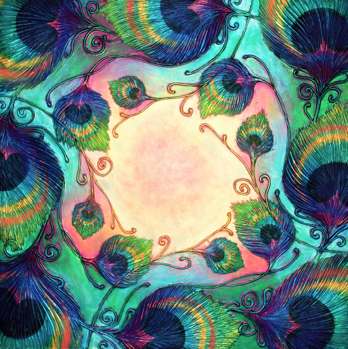
    Peacock IV (2016), by Victoria Stothard – cover designer of new speculative fiction project, ‘The 8th Emotion’ 

    “Science-fiction [is] the only genuine consciousness-expanding drug.”

                — Arthur C. Clarke, “Of Sand and Stars”, 1983

    First off, apologies for the title. It’s a shameless piece of provocation. Obviously, crack destroys lives, and I wouldn’t want to equate it – in all seriousness – with an addiction to spaceships, lasers, and aliens. Nonetheless, the title sounded good, and it does get at what I want to discuss.

    Sci-fi is not as narrow a set of parameters as perhaps many believe. It is not really just “lasers, spaceships, and aliens”, although I imagine this is what comes to most people’s minds when they hear the term.

    Culture shock

    Sci-fi, if anything, is about culture shock. It’s a form that implicitly dictates that something new be brought to the table, whether it’s a new world, a new species, a new technology, a new psychology… you get my drift. Some sort of breach with our everyday reality, our everyday culture, is required. Therefore, it is a form which, at its core, is built on the notion of a culture shock.

    At this point, I’d like to make a distinction between the Arthur C. Clarke quote with which I began this article, and my own belief (although his wording is probably just a by-product of his time). I believe ‘speculative fiction’, though a tad clunky to say, is a better term to use when considering the most potent type of mind-altering fiction, encompassing as it does science-fiction, fantasy, and everything in-between. ‘Science-fiction’ – to me at least – has a degree of prescriptiveness: it’s exotic worlds, final frontiers, and advanced technology. ‘Speculative fiction’, as long as it’s a break from our current world, can be anything. It has a less restricted sense of what a story can be. And as the most drug-like, visionary fiction can come in a variety of guises, that seems like the safest term to use here.

    So, to my original point, now amended – speculative fiction relies on culture shock. It can incorporate any genre within it (see the beautiful romantic plot thread in Joe Haldeman’s The Forever War, or the noir detective elements in the Blade Runner franchise) but it must always, even in a very watered-down form, contain this key ingredient.

    blade-runner-2049
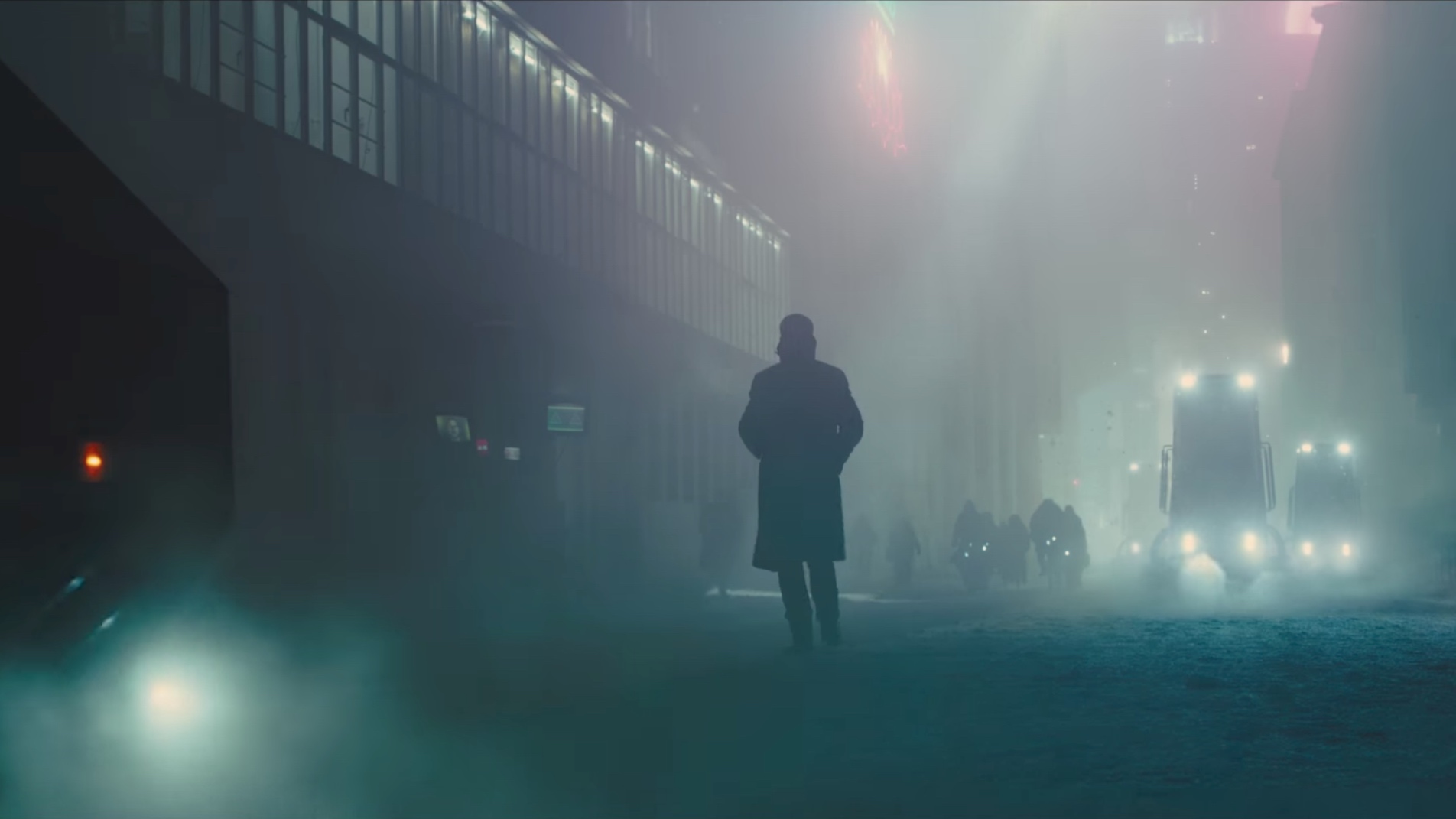
    Speculative fiction can incorporate any genre within it – including the noir detective elements in the Blade Runner franchise. 

    However, this isn’t quite the culture shock we get when we go on holiday and think, “oh, so here the steering wheel’s on the other side”, profound though that is. Culture shocks in the real world occur in a state of flux: we’re being bombarded with from all sides by ever-changing, multi-sensory stimuli; incessant distractions that diminish each other and compete for our attention. Prose is very different: it’s a very controlled reality, experienced moment by moment, word by word. With a painting, you can look around the canvas, your eye roving across the detail in whatever order it pleases; an order that is unlikely to be the same from one person to the next. Prose is the only truly linear experience of reality I can think of. As a writer, it lets you specify the exact stimulus for a brain at any given moment (through a word-form), and precisely how that flow of impressions should be arranged. It’s a very effective and finely-tuned means of interacting with another human consciousness.

    “Prose is the only truly linear experience of reality […] it’s a very effective and finely-tuned means of interacting with another human consciousness.”

    On a broader level, purely verbal communication is as close to telepathy as we’ve got. It’s mind communing with mind, the whole material world stripped away, leaving just information: the best rendering of our thoughts that we have. And in my opinion, the better the thoughts, the better their drug-like effect when expressed. Trite thoughts, captured in words, dull the mind. Numb your senses. High-grade thoughts can excite and elevate you, sharpen your mind, make you see the world in a whole different light. This is euphoria. And, at an extreme end, they can even produce physiological side-effects – but I’ll come to that in a second.

    Really, it’s the thought, conveyed from one person to another, that is the drug. The language is just the necessary packaging; the means of transmission.

    The power of language

    There are two stand-out instances in my life that drove home how powerful language can be. The first was the most physiologically striking: it was after I’d been to see a live performance of Alan Moore’s spoken-word piece Unearthing, which was accompanied by music and a photographic slideshow. All these components worked in synchronicity, informing each other, vying for pole-position in your awareness, impossible to follow in their totality. I had to leave the event two-thirds of the way through, rushing to get my coach home. I remember sitting on it, staring at the passing traffic lights: they were glowing slightly but distinctively brighter than usual, like psychedelic blurs of luminosity. I felt stoned. And exactly like someone in that condition, I barely blinked for the first forty minutes of that trip.

    (Later, when Unearthing was available to download, I listened to it again, this time the entire way through. Again, I felt stoned, unblinking, although here the effect lasted for more like three minutes. I imagine familiarity wore away some of its impact, as did the lack of a multi-sensory presentation.)

    This is probably the peak version of language-as-drug: when it works in tandem with other art forms (like henchmen backing up a criminal mastermind) to overload your senses and mind.

    The other stand-out instance utilised words alone. I was in a café, above a bookshop, in a busy central area of London. A long-term friend and I had been talking, for a couple of hours or so, about concepts like time and the quantum world. Then, in the space of a few seconds, reality got strange. I felt light-headed, trippy, as if I could happily stare at any part of the world; as if it was all full of fascinating detail. It also felt like I could sense the atoms that made up the table we were sat at, their energy; and consequently, I had the bizarre impression – while knowing it was false – that I should be able to pass my hand, ghost-like, through that solid block of wood. Between its atoms.

    Like I say, this only took a moment to kick in. I asked my friend if he felt it, without specifying what ‘it’ was. He said he did. Switching back and forth, without – as far as I can recall – any leading comments, we described what we were feeling. It seemed to be identical; more than that, it had been induced synchronistically during our conversation.

    Obviously, this may all sound crazy. And although, certainly on that latter occasion, it felt like I was in a heightened state, I’m not saying there was any objective validity in my sensations. But you can’t deny that’s pretty trippy.

    (And no, smart-arse, I hadn’t taken any drugs that day, or even that week, and at neither event was I sat in a fug of second-hand marijuana smoke. Otherwise, these anecdotes would be rubbish).

    As I mentioned, similar effects have happened to me at other times after some sort of intense interaction with language; but these are the two most pronounced cases. And what’s great when this state hits is, unlike with conventional drugs, you retain full cognitive and motor facilities. It feels like you can put the energy you have to much better use.

    So if language operates exactly like, or at least has the capacity to be a drug, as these experiences have pretty firmly led me to believe, then there’s an immediate implication for prose. Seen as a psychedelic chemical compound, with words forming the atoms of the overall substance (work with me here) then the less extraneous words there are to dilute the compound, the purer and more intoxicating the final result will be. Think of it as an alcohol with a higher proof. This would fit in with the Hemingway school of writing, where you pare away every unnecessary word until the minimalism almost drives you mad (there is a daily holocaust of adverbs in his name).

    Where this perspective cleaves away from that orthodoxy is in the potential of chemicals, mixed correctly, to trigger fizzing and spectacular reactions in each other. So while the spare approach of Hemingway may state that sentences should be short and sharp like a gun report, with all floridity excised, this drug metaphor would argue – and I’d agree – that words can have some of their most exciting effects when the unfamiliar collide. Three adjectives where one would do? Yes, cut that down. But three adjectives that you’ve never seen together before, which spark off one another in interesting ways, like James Joyce’s description of a woman’s body in his short story The Dead as “musical and strange and perfumed”? Keep it. That’s up there with the best of literature.

    What this means is that the dictums ascribed to Hemingway and Orwell aren’t the be-all and end-all of prose style. There’s a wider palette of possibilities on offer.

    However, what I’ve just said applies to all writing. And I know what you’re thinking: I began this essay in good faith expecting to learn about sci-fi and where I can get a fix of crack cocaine before midnight. Cut to the chase already!

    Okay. Geez. I was just about to get there.

    The other key thing that the conversation in the café above the bookshop implies is that, for language to get you into a trippy, altered mind-state, this comes easiest when you’re discussing big ideas. Ideas that feel bigger than your brain; like it can’t contain their magnitude. The concepts of time and the quantum world were the examples in that instance, but there are plenty of alternatives: space; the ancestral path and all the DNA matches that, after millennia, led to the creation of you; parallel universes; how different the universe would be if light only travelled at 30 mph; what the psychology of a deity would be; what the ramifications would have been, big and small, if that pivotal historical event had never happened/gone the other way.

    All of these notions involve a large sense of scale regarding either time or space, so maybe that’s the key to spinning out your own mind with concepts alone. What they also have in common is that, though such ideas could appear in any genre, they are very much the province of speculative fiction, with them and their ilk having formed the basis for countless stories in that ideas-obsessed narrative field.

    A genuine, mind-altering drug on the page

    Speculative fiction is where such concepts are literalised, are given concrete form so that the reader can have – on an imaginary level – a visceral engagement with them. It is where such abstract, mind-altering notions are brought to life.

    Although most speculative fiction may not reach the giddy, psyche-warping heights I’ve expounded upon here (perhaps a lack of finesse in the prose; perhaps a failure of sustained intensity of imagination) I believe this area of literature, more than any other, has the potential to do so. And the evidence is plentiful and wonderful.

    There is the cosmic, puzzle-like world building of Gene Wolfe’s The Book of the New Sun tetralogy, whose grandeur and intricacy dawns on you like a creeping madness; the fecund neologisms and innovative typography of China Miéville’s Embassytown; the screaming, horror-drenched, pioneering and unmistakable purple prose of Lovecraft; the magisterial and idiosyncratic visions of William Blake. And hopefully, in a hundred years, these authors will be seen as the mere vanguard of what was to come.

    Speculative fiction is where you can unite the experimentalism of the modernists (form, language, story content, narratorial and character voices, imagery, setting, etc.) but justify it for narrative reasons, and tie it into a ripping yarn. It can be a genuine, mind-altering drug on the page.

    It is, I believe, where the next level of literature lies.

    About the author of this post

    FullSizeRenderAttempting to practice what he preaches, Josh Spiller has written his own speculative fiction novel, entitled ‘The 8th Emotion’. He is currently trying to fund it through Kickstarter, and you can check it out – as well as get your own signed first edition – here.



  • An extract from Josh Spiller’s forthcoming speculative fiction novel, ‘The 8th Emotion’…


    In a tribdwell situated in Karthalia, but beyond the boundary of any tribe – like some exiled building – Pavneet worked frantically.

    Night-time candles glowed on his desk, while a cooking fire burned in the corner of his tribdwell’s main room. The smell of acidic chemicals singed the warm air, emanating from the beaker of green liquid that sat on his desk.

    Taking yet another sheet of paper, Pavneet scrawled more notes, his eyes – behind his brass-rimmed glasses – in a trance-like state. He wore a long, stained jacket which he used as a makeshift lab coat. Above his greying temples, his craggily-lined forehead was furrowed in intense concentration. His World had contracted to the sheet of paper that lay before him, so much so that he hadn’t noticed that Bastian, his sandy-coloured dog, was barking in agitation and fear.

    Two strident door-knocks resounded through the room. Cowering, Bastian fell silent, before leaning forward and barking with even more aggression.

    Pavneet, frozen still, stared over the rim of his glasses, at the front door that lay directly ahead of him. No one had knocked on that door in years. Cautiously, he rose from his wooden chair, and started to shuffle around his desk.

    Then with frightening suddenness, something shattered loudly. Pavneet instinctively ducked, snapping his gaze in the direction of the noise. Any last dregs of his trance-state were gone. The real World had come roaring in, flooding his alert mind with intense, vivid impressions. From beneath Bastian’s deafening barking, he heard, with acute sensitivity, a dull and solid thud strike the floorboards somewhere nearby. Then he saw that the single window in the left-hand wall was smashed open. And framed within its new jags of glass, which were like a jaw of predatory, vitreous teeth, a balaclavaed face stared back at Pavneet.

    “Shut that dog up!” the balaclavaed man hissed. Then, with menacing slowness, he raised a lit candle into view. “Or we’ll blaze this place to the ground.”

    In a state of shock, Pavneet whispered: “Sh-shush boy. Shush.” Bastian fell silent.

    “Good,” the balaclavaed man said, and Pavneet could practically hear the smirk in his voice. “Now – open the door.”

    An enormous fear gripped Pavneet, rattling his heart in its gigantic grip. Please, he thought. Oh please, don’t let them hurt me…

    With a trembling hand, he unlocked the door, and pulled it toward him.

    Two imposing men, balaclavaed like the one at the window, stood before him. One held a knife, its sharp point only an inch away from Pavneet’s gut.

    “Get inside,” the man with the blade said. Within the holes of the man’s balaclava, Pavneet saw tiny, gloating, and vicious eyes. Silently, just enough to prod the flesh without cutting it, the man jabbed the knife into Pavneet’s stomach.

    “W-what do you want?” Pavneet mumbled, fearfully stepping backwards toward his desk. He couldn’t believe a stranger was attacking him. Such a thing had been known to happen in other lands, in other times, but never in Karthalia. It was a peaceful place. “P-please. I’ll give you anything.”

    “We already know that,” the man carrying the blade said, speaking with a twisted and gleeful sense of power.

    He forced Pavneet back into the chair by the desk. Half-collapsing into it, Pavneet rubbed Bastian’s neck with trembling hands, as if he were trying to soothe his beloved companion, when it must have been obvious that it was simply a nervous expression of his own terror. Bastian growled, baring his teeth.

    “E-easy, boy” Pavneet whispered. “Shhh.”

    The other two intruders seemed subservient to the man with the blade. Both were now searching Pavneet’s tribdwell, one rifling through the sheafs of pamphlets and notepaper which Pavneet, to get them out of his way, had piled up around the edges of the room; the other, taller one standing nearby, inspecting the notes in the drawers of Pavneet’s desk. It was obvious that neither was finding what they were looking for.

    The man carrying the blade spoke, still holding the knife just in front of Pavneet’s chest: “You’re not a liar, are you Pavneet?”

    “N-no.”

    “So this is true?” ‘Blade’ withdrew from his pocket a scrunched-up piece of paper. He flattened it out on the top of the desk, before showing it to Pavneet. With a gut-wrenching sense of horror, Pavneet recognised it at once. The page had been ripped out from the last scientific pamphlet he’d written, published only a week ago.

    The chain of reasoning Pavneet had expounded in the pamphlet flashed into his mind, fierce and white-hot like burning magnesium:

    1. Single-celled organisms don’t experience emotions, or if they do, they experience very little.
    2. Humans evolved from single-celled organisms.
    3. Humans experience emotions.
    4. Thus, humans must have evolved emotions.

    Then came the main part of Pavneet’s article. He’d claimed that he knew how to unlock humanity’s next emotion, so that it could become a permanent part of anyone who wanted it. What’s more, he’d said that when everyone possessed it, it would end all human conflict, equalising everyone profoundly, and ushering in a true paradise.

    For now, though – he’d ended his article – he needed to do more testing, to check that what he’d discovered was safe. But in the next pamphlet he released, he would explain how people could tap into this emotion for themselves.

    This memory of what he’d written hit Pavneet with the force of a tempest, and then, following close behind, realisation stabbed through him: these men were searching for proof that he really could unlock this next emotion. Why? He had no idea. But if they found it, he knew they’d have no reason to keep him alive.

    “I lied,” Pavneet blurted. “I just did it to sell the next issue. I’m alone, my income, it’s all through trading these pamph—”

    Out of nowhere, Blade’s knife-gripping fist smashed into Pavneet’s cheek, knocking him into his desk and rattling the container of chemicals that sat on top of it. Bastian barked ferociously, but Pavneet retained his terrified, white-knuckled grip on the dog’s collar. As he gasped from the blow, Pavneet could almost feel ‘Blade’ grinning at him sadistically from behind his balaclava.

    “Give me a reason to do that again,” ‘Blade’ said.

    Then one of the other men came over to ‘Blade’, pointing at something on a piece of paper.

    They’ve got it, Pavneet thought, a cold thrill of terror running though him, shifting the hyper-real present into even sharper focus. He felt upon his back the heat from the cooking fire in the corner. Saw the fire’s light gleaming upon the knife, as if the blade shone with its own golden, vicious soul. An inchoate, instinctual plan was forming in his mind.

    With regret, he remembered how – on the day of his breakthrough – he had told himself that he would never again inflict any type of injury on another human being. A sort of premonitory sympathy pain shot through him: he understood the agony these men might be about to suffer. And there was something still worse…

    He looked at Bastian with sorrow.

    ‘Blade’ stared at the piece of paper, his eyes widening in a look of quiet awe. All humour had dropped out of his voice: “So you really can do it.”

    And with that, Pavneet’s decision was made.

    With his right hand, he shoved Bastian forward and released the dog’s collar. “Go!” he shouted, and Bastian leapt upon ‘Blade’, slobbering fangs barking and snapping. Spinning round, Pavneet snatched up the container of chemicals and threw it at the cooking fire. A blaze exploded upwards, blasting a wave of searing heat over Pavneet’s face. Everything became confusion and clamour. Fire-tongues gobbled ravenously at floorboards and terracotta walls, vomiting black smoke. Pavneet bolted across the room, past the indistinct shapes of his attackers, through a haze of barking, swearing, and shouts. Leaping, he hauled himself up to the smashed-in window, his adrenaline making him oblivious to the jags of glass that were slicing open his forearms.

    Then, through the whirlwind of smoke and shouts, there cut a sharp, canine yelp. For a moment, Pavneet froze. Tears brimmed in his eyes. Blood poured out of his arms. He wanted to look back, but he couldn’t bring himself to do it. Struggling over the knives of glass that jutted up below him, he toppled out the window’s other side, landing with a thump on the soil and vegetables below.

    Gasping for breath, he hauled himself to his feet, and ran, trampling vegetables, fruit, and grass, sprinting alongside the winding River Menignus. The reek of sulphur burned in his nostrils, beneath a clear, starry sky.

    Who were those men? Why were they after him? He didn’t know. And that meant he couldn’t trust anyone.

    Still running, he tried to ignore his screaming desire to go back, even as tears ran down his cheeks. Bastian… it was Pavneet’s fault. And it was too late for him to do anything about it.

    And as he ran, Pavneet also imagined that gang of men, amongst the fiery confusion, enduring an emotion they’d never felt before… enduring Oceanos, as the flames ate through the scientific specimens stored in his bedroom, and released their psychotropic vapours into the air.


    You can read more about ‘The 8th Emotion’ – and order your own signed first-edition copy of the novel – here

  • 8th emotion

    A new speculative fiction project, ‘The 8th Emotion’, has launched on Kickstarter. Set in a utopian future, the story is about how humanity unlocks a new emotion, thereby gaining a radically different way of perceiving the world. This in turn precipitates a civil war.

    The Kickstarter is aiming to fund the design and printing of this novel, and at the time of writing, is already 70% of the way there.

    The novel features a post-civilisation society where, centuries after the collapse of the world’s economies, money has been replaced by a sophisticated, bartering tribal network; its prose is unusually textured, incorporating elements of French, Armenian, and Lebanese Arabic into its dialogue; the book itself will include beautiful maps of its fictional world; and the novel’s cover will also be experimental, containing a significant Easter Egg that will only be apparent once you’ve read the final chapter.

    If you help realise this project, there are lots of awesome rewards available, such as: having your name printed in the final book; receiving a unique signed and annotated edition; and getting Kickstarter-exclusive artwork from the stunningly talented Niamh Keenan and Alan Ashworth Muñoz.

    Speaking about the launch of the Kickstarter project, Nothing in the Rulebook’s very own Professor Wu said:

    “More than ever, it’s important that we have access to new and exciting literary works that encourage us to see the world differently. We live in impossibly turbulent times, and we need art, and books in particular, to illuminate some of the possible paths that lie ahead. Yet we increasingly live in a world in which it is becoming harder and harder to read books that aren’t copies or imitations of previously commercially successful books.”

    “Josh Spiller’s The 8th Emotion promises to break that trend, in delivering a piece of writing that is different to anything you’ve ever read before. While the old traditional models of publishing continue to follow the money, we need to collectively band together to support such artistic endeavours. So get involved and make a pledge to help make this book become a reality.”

    You can read an exciting extract of the novel here

    And you can see the Kickstarter in full, including a video and all the wonderful rewards on offer, here.

  • bad-sex-image (1)

    Have you noticed it in the air? Perhaps it’s something etched onto the faces of passers-by, or the fuzzy feeling in your stomach that lifts you up and puts a smile on your face. That’s right – it’s that time of year again – the literary period that brings one of the greatest gifts of all to so many people around the world. In case you haven’t guessed by now, it’s time for the annual Bad Sex in Fiction award, which has just released its shortlist of nominated entries, even as further nominations continue to pour in.

    If you’re a fan of spasming muscles, shooting blobs of “lo-cal genetics”, sighs, moans, groans and general limb-flying raunchy madness, then you’re in for a treat.

    All eyes are now on the judges at The Literary Review, which founded the award, to see who will be crowned this year’s winner – and whose name will be added to our long-running connoisseur’s compendium.

    We’ve listed the full set of shortlisted authors below, along with their literary extracts. Enjoy!

    The Seventh Function of Language – Laurent Binet – “fuck me like a machine”

    “He tips her back and lays her on the dissecting table. She takes off her skirt, spreads her legs and tells him: ‘Fuck me like a machine.’ And while her breasts spill out, Simon begins to flow into her assemblage. His tongue-machine slides inside her like a coin in the slot, and Bianca’s mouth, which also has multiple uses, expels air like a bellows, a powerful, rhythmic breathing whose echo – ‘Si! Si!’ – reverberates in the pulsing blood in Simon’s cock. Bianca moans, Simon gets hard, Simon licks Bianca, Bianca touches her breasts, the flayed men get hard, Gallienus starts to wank under his robe, and Hippocrates under his toga. ‘Si! Si!’ Bianca grabs Simon’s dick, which is hot and hard as if it’s just come out of a steel forge, and connects it to her mouth-machine. Simon declaims as if to himself, quoting Artaud in an oddly detached voice: ‘The body under the skin is an overheated factory.’ The Bianca Factory automatically lubricates her devenir-sexe. Their mingled moans ring out through the deserted Anatomical Theatre.”

    The Destroyers – Christopher Bollen – “the billiard rack of my penis and testicles”

    “Do me a favor,” she says as she turns. She covers her breasts with her swimsuit. The rest of her remains so delectably exposed. The skin along her arms and shoulders are different shades of tan like water stains in a bathtub. Her face and vagina are competing for my attention, so I glance down at the billiard rack of my penis and testicles. “Let’s not tell Charlie and Sonny about us. Let’s leave them out of it. You know how this kind of thing can become a telenovela for everyone else.”

    Mother of Darkness – Venetia Welby – “diabolical torso”

    “They lie beneath molten sunrise, head nestled in inner elbow, mould of muscle mingling flesh with flesh, one body, soul within soul. The green grass curls around Tera’s left breast as she curves her sleek physique around Matty’s diabolical torso like a vine. Paralysed, complete, the marble statue of the lovers allows itself to be painted by the dawn’s lurid orange spillage. Shards of innocence, they lie in the sweet, sweaty chill of the morning light. Darkened by the sun and dust, Yang curls round s-curved Yin, a perfect fit.”

    As a God Might Be – Neil Griffiths – “getting to bed would be awkward”

    “The kiss was an order and a disguise. She pushed her hand into his jeans and felt for his cock. She was experienced enough to prepare for disappointment. Her tongue sought out his tongue and whipped around it, teasing it out. There was the taste of whisky, the fresh basil from the salad. Both knew that from where they were standing, getting to the bed would be awkward; he still had his boots on.”

    The Future Won’t Be Long – Jarett Kobek – “hypercharged by orgones”

    “We made love and we had sex and we had sex and we made love. But reader, again, I implore. Mistake me not. I am not your Pollyanna, I am not your sweet princess. We fucked, we fucked, we fucked, we fucked, we fucked, we fucked. We fucked in the effluvia of our bodies, we fucked in the scent of it, in the sheer stench of it, in the garden of our human flowering. Stained sheets, stained clothes, stained souls, stained towels. Fucked until my pussy ran dry and was rubbed raw, fucked until the Captain yowled outside my door, his gray paws smacking against the wood, fucked until Jon’s daily erections withered into nothingness, unable to support a third or fourth condom, fucked until the arrival of my period, pausing only until the heavy flow ceased, then fucking as Jon’s penis turned cartoon red with my discharge, fucked until celestial bodies rotated on their axes and reversed course in the Heavens, until the bed broke, until the building itself became hypercharged by orgones. Our fucking was a pulsing wave, a holy burst of scared geometry, a congress of wonder.”

    War Cry – Wilbur Smith (with David Churchill) – “like Dr Livingstone and Mr Stanley exploring Africa”

    “‘Yes…’ he said, taking the robe off her, without the slightest resistance on her part, and laying her down on the bed. ‘I want to explore you, like Dr Livingstone and Mr Stanley exploring Africa…’ He gave her a little kiss on the lips, but then his head moved down her body, following his right hand as it ran down her breastbone and then around each of her breasts in turn. They were not large, but they were pretty and in proportion to the sleekness of the rest of her; the long, flowing lines of a body that was naturally athletic, gifted with speed and strength but still entirely feminine.

    Her nipples were a delicate shade of coral pink and they were standing up for him as proudly as little guardsmen on parade. ‘Here for example,’ he whispered, taking her left nipple between his finger and thumb, squeezing it slowly, gently, just to the point where she gave a little gasp and arched her back, and then he ran the palm of one hand over that same nipple touching it as faintly, delicately as he possibly could while his other hand squeezed her right nipple so that she was engulfed by two totally different feelings at one and the same time. Then, still working her right breast with his hand, he lowered his head over her left breast and started playing with it with his lips and tongue and teeth: sometimes kissing her skin, sometimes flicking the nipple with his tongue, then very gently biting it, taking infinite care to apply just the right amount of pressure. Her hands were running through his hair and then stroking his back and then, as he brought his head over to her other breast, she moaned and shuddered with pleasure, her fingernails tore at his skin and her buttocks began to writhe as the need for him took hold.”

    Here Comes Trouble – Simon Wroe – “he remembered his parents were in prison”

    The details of what happened in that bed, while engrossing, have no business in this report. Nor is it certain that, put into words, they would survive the imprisonment. But it is worth noting that when people shed their clothes they lose certain trappings and conventions. A clothed body is always human or human-like, a naked body always animal or animal-like. Only at close quarters is the full extent of a body’s wildness revealed, like when a bird gets trapped inside a house. One is moved to not entirely human thinking then. One goes towards its animalness.

    […]

    Sometimes during he would think about where he was and feel a start of fright at doing this in his father’s place of work – until he remembered his parents were in prison and couldn’t catch him and this would fill him with relief.


    So, what do you think? Which of these writers deserves to join Morrissey and co on the full list of winners since 1993?

    For more information about the award, visit the Literary Review website.

  • bad-sex-image (1)

    Nominations continue to come in as the Literary Review prepares to announce the winner of the notorious ‘Bad Sex in Fiction’ prize, which aims to draw attention to poorly written, perfunctory or redundant passages of sexual description in modern fiction.

    Books nominated so far include The Seventh Function of Language by Laurent BinetThe Destroyers by Christopher Bollen, Mother of Darkness by Venetia WelbyAs a God Might Be by Neil GriffithsThe Future Won’t Be Long by Jarett KobekWar Cry by Wilbur Smith (with David Churchill), and Here Comes Trouble by Simon Wroe.

    Read extracts of the passages that earned this year’s nominated authors a place on the Bad Sex Award shortlist here

    The prize is not intended to cover pornographic or expressly erotic literature. Monique Roffey’s The Tryst, despite being heavily nominated, is therefore not eligible, even though it is full of the sort of lines that tend to be picked up by the judges, such as ‘He lightly kissed my breasts, his beard all grassy, like a great sea sponge.’

    Many people also nominated Vince Cable’s novel Open Arms for consideration. However, Open Arms does not qualify simply because its author is a Member of Parliament.

    “Fuck me like a machine”

    Among the choice passages chosen in this year’s shortlist is the following extract Laurent Binet’sThe Seventh Function of Language: 

    “He tips her back and lays her on the dissecting table. She takes off her skirt, spreads her legs and tells him: ‘Fuck me like a machine.’ And while her breasts spill out, Simon begins to flow into her assemblage. His tongue-machine slides inside her like a coin in the slot, and Bianca’s mouth, which also has multiple uses, expels air like a bellows, a powerful, rhythmic breathing whose echo – ‘Si! Si!’ – reverberates in the pulsing blood in Simon’s cock. Bianca moans, Simon gets hard, Simon licks Bianca, Bianca touches her breasts, the flayed men get hard, Gallienus starts to wank under his robe, and Hippocrates under his toga. ‘Si! Si!’ Bianca grabs Simon’s dick, which is hot and hard as if it’s just come out of a steel forge, and connects it to her mouth-machine. Simon declaims as if to himself, quoting Artaud in an oddly detached voice: ‘The body under the skin is an overheated factory.’ The Bianca Factory automatically lubricates her devenir-sexe. Their mingled moans ring out through the deserted Anatomical Theatre.”

    The winner of this year’s award will be announced on Thursday 30 November. They will join a long line of illustrious authors – or not so illustrious, in the case of 2015’s winner, Morrissey – to have picked up the booby prize (pun intended, of course), which stretches back to 1993.

    Italian novelist Erri De Luca scooped the 2016 award for his book, The Day Before Happiness.

    You can read extracts from all the Bad Sex in Fiction Award-winning books in our connoisseur’s compendium.

    For more information about the award, visit the Literary Review website.

    Nothing in the Rulebook will continue to monitor all updates relating to the Bad Sex in Fiction Awards with (possibly too much) interest.