• Behind the scenes at Newark Book Festival

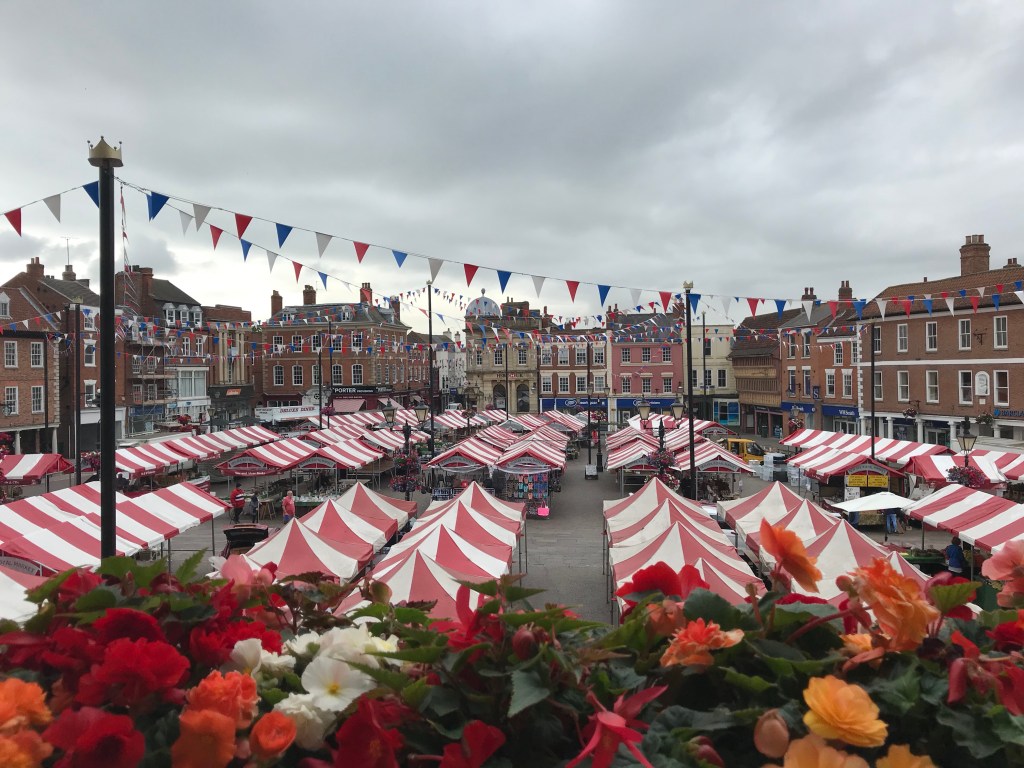
    It’s possible you’ve never heard of Newark and, if you have, you’ve only ever sped through it on a train to or from London. Most people only see it as they leave it behind: the fading lights of the station Costa, the carpark sliding past a smudged window. In the past, it’s been a big deal; King John, the bad one, died at the castle in 1216, which was then ruined when Charles I was besieged there in 1646. Now, it’s all kicking off again, thanks to arts consultant Sara Bullimore, now artistic director of the Newark Book Festival. Since 2017, she’s occupied a number of venues across the city for three days every year. Over a long weekend in July, her army of volunteers hand out brochures, rip tickets, direct people to the loos: bring culture to the people.

    I’m one of the volunteers. I normally spend these three days running from one ornate room in the Town Hall to another, finding writers, showing them to the green room, getting cups of coffee and trying not to sweat directly on anyone. This year, I brought Chocolat author Joanne Harris a glass of water, facilitated the creation of a sandwich for bestselling fantasy writer Samantha Shannon and offered Michelle Harrison, winner of Waterstones Children’s Book Prize, a mint. It was a crazy few days and I met a lot of interesting people. In the few minutes before they went onstage, I was able to grab a few of them and ask for the truth about their lives as writers. I wanted to know what being a writer actually looks like, the steps they take to make sure they meet deadlines and how they manage to keep up with their writing when they tour, appearing at festivals like Newark. Were we getting in the way of their next novel? Were they really happy to be there or would they prefer to be at home at their computer, in the worlds they’ve made up?

    *

    “I do most of my writing at night, quite late on. Maybe because I’ve run out of the day and I feel like I have to do something. Between midnight and three – if I have to get work done, that’s when I do it.” – Sara Barnard
     

    Sara Barnard
    Sara Barnard

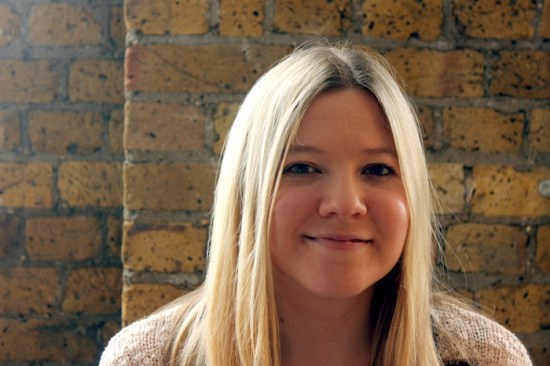
    On Friday, I was stationed at The Palace Theatre. The theatre auditorium is very grand but the dressing rooms are strange, full of pipes and gurgling sounds, as if in the hold of a ship. It was in one of these dressing rooms that I met Sara Barnard, author of the Bookseller YA Book Prize 2017 shortlisted Beautiful Broken Things and its sequel Fierce Fragile Hearts. She arrived with her publicist, Sabina, who sat at the table while I asked Sara about her writing process.

    ‘I’m not an early bird,’ Sara told me. ‘I do most of my writing at night, quite late on. Maybe because I’ve run out of the day and I feel like I have to do something. Between midnight and three – if I have to get work done, that’s when I do it.’ Catching Sabina’s expression, she started to laugh then.

    ‘I had no idea,’ Sabina said.

    ‘But I do get it done!’ Sara laughed.

    A few hours later, I was back in the same room with a fresh jug of water and glasses, waiting for Joanne Harris.
    Screenshot 2019-07-16 at 22.01.29
    Joanne Harris

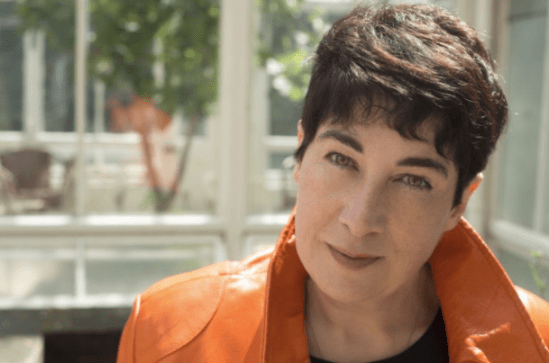
    Joanne Harris is very famous – most people have heard of her, even my Nan who, whenever I mention books, tells me she doesn’t like ‘any of that stuff that’s made up.’ I was a bit nervous before she arrived, waiting with the jug and the glasses, but Joanne is warm and friendly, the kind of person that can talk about anything to anyone, seemed genuinely happy to be there.

    ‘I don’t really have a routine because I don’t have the sort of lifestyle that can incorporate a writing routine,’ she told me. ‘I do too much travelling, journalism, touring and book events. I tend to claw back time to write, not just hang on for ideal circumstances that rarely arise. I find little and often works best for me. I try to write three hundred words a day, wherever I am, whatever I’m doing. That’s about twenty minutes and you can manage twenty minutes even on a busy day.’

    That day, her three-hundred words were written under a tree near King’s Cross Station, before she boarded the train to Newark.

    ‘It means the project is still in your mind,’ she went on. ‘Even if you don’t write more than that, it adds up and you get a first draft within a year or so.’

    With over seventeen published novels, one with a successful film adaptation, two novellas and several shorts stories, all spanning multiple genres from magical realism to crime, cookery books to Norse mythology, it’s a system that works, allows for creativity, for words on a screen to develop, become a story.

    And Harris is full of stories. She has stories about people she meets at events, about Harvey Weinstein and Johnny Depp, about the boys she taught at school and where they are now. Her life, like her books, transcends genre.

    ‘My category is other, always!’ she says. ‘It’s a big category – lots of space in there for all kinds of people.’ It seems like a good place to live.

    *

    On Saturday, I moved to Newark Town Hall. It’s big, it’s grand, makes everyone say ‘Oh my god,’ when they walk in. Even Alison Weir who, as a writer of historical fiction and biographies, has visited some impressive buildings. I took her through the huge ballroom, laid out in preparation for her talk on Anna of Kleve, to a small dressing room at the side of the stage.

    ‘I keep office hours,’ she says. ‘I’m quite strict. I write two books side-by-side usually, so I do one in the morning and one in the evening. I do housework early and I’m at my desk by 9:30, dealing with emails until 10:30. I work through for three hours until 1:30. Then I break half an hour for lunch. I’m usually doing fiction in the afternoon so I have to do five pages minimum. I can do ten – I did thirteen on one occasion – but five is the minimum. Then I do a set of exercises and deal with emails again. My husband is our chef and when I’m at home we eat at six o’clock, though if we eat out it’s later. In the evening, that’s my time.’

    It turns out by ‘my time’ Alison means ‘time for more historical research.’

    ‘That’s when I’m doing my research on royal portraits,’ she said. ‘Scanning images from books and that sort of thing. At nine o’clock I get together with my husband and we watch a couple of hours of DVDs, or longer if we get hooked.’

    She takes May and June off completely, to give her time to tour books, come to festivals like Newark.

    ‘I work hard and play hard,’ she said. ‘It’s a joy.’

    Mark Billingham credit Steve Best
    Mark Billingham

    “Finishing a book is the best feeling in the world. Starting one is the worst.”

    – Mark Billingham

    Also big on working and playing in equal measure is crime writer Mark Billingham. His bestselling Thorne books have not only brought him international acclaim and a loyal readership, but also an opportunity to play at Glastonbury with his band The Fun Lovin’ Crime Writers.

    In a side room in Newark Library, ten minutes before he appeared onstage with Nick Quantrill, a crime writer based in Hull, Mark (tall, hat, earring) sat with his long legs stretched out beneath a table and revelled in the memory of the gig.

    ‘Glastonbury was just bucket-list,’ he said. ‘It was an absolute dream come true. I was the one that got the call asking if we could play. I got to send the email to Chris [Brookmyre] and the rest of the band saying, ‘THIS IS NOT A JOKE,’ – that was the subject line of the email. It was just brilliant. I do a lot of live events with Chris Brookmyre and when you can do stuff with mates and have fun, that’s great. You just go up, mess about for an hour and then go and have something to eat. I never want to do events on my own.’

    He’s not so keen on the actual writing part of being a writer. Sitting in a room, on your own, filled with self-doubt is difficult but he and Nick, who was waiting with us, make themselves write fifteen hundred words a day. Unlike Joanne Harris, Mark has designated writing days and designated touring days. On the train from London, instead of slogging away at the novel, he watched three episodes of Brooklyn Nine-Nine, ate a snack-box.

    ‘But you’re writing the book all the time in your head,’ he explained. ‘Typing is just when you get to the computer and write it down. You’re constantly thinking about the book, especially if you’re writing crime. You’re trying to work stuff out and solve problems, get over brick walls. I haven’t written anything today, not a word, but something will have been going around my head. It’s really not a nine to five job. Finishing a book is the best feeling in the world. Starting one is the worst.’

    Nick told us he finished a book the previous day but, when he handed it over to his wife to proof-read, he found himself feeling anxious, rather than euphoric.

    ‘Oh god!’ said Mark.

    ‘The act of handing it over was quite a scary step,’ said Nick. ‘I didn’t enjoy finishing it. I’m more excited about starting the next one.’

    But he might not be able to start it for a while, as he and Mark are heading down to Harrogate this week for the biggest crime fiction festival there is.

    ‘It’s brilliant,’ Mark said. ‘As long as you leave yourself a week to get over it. You go to bed at, like, two o’clock in the morning, going ‘I can’t do this,’ and the bar’s still rammed with people. It’s Glastonbury for the book world, with fewer drugs… as far as we know.’

    *

    Sunday: back in the Town Hall, in the small room off the ballroom. I was with the first writer of the day, Rowena Edlin-White, a Nottingham-based author and researcher. She specialises in forgotten authors and her talk that day was on Dorothy Whipple. Like a lot of the authors I interviewed over the weekend, she says she drinks a lot of coffee. Unlike other authors, she likes to work in graveyards.

    ‘I specialise in forgotten authors and I like to know where they are,’ she told me. ‘I’m quite a graveyarder. If I’m not out and about, I sit down at the screen at nine o’clock. Once I get going I’m fine but sometimes that takes longer.’

    The dressing room’s next occupants, How to Find Home author Mahsuda Snaith and Gavin Extence, author of the Richard and Judy Bookclub pick The Universe Versus Alex Woods and The End of Time have to find the time to write their critically-acclaimed novels around the schedules of their small children.

    ‘When I have my little one I have to wait until she’s asleep which is normally about seven o’clock,’ Mahsuda said. ‘That has actually been good for me, though, as it’s proved I can write in the evening, when I never thought I could. I thought I could only do the mornings because that’s when I’m fresh, but I found that you can do it when you have to. I do write slower in the evening, though.’

    For Gavin, it’s the opposite. He gets up very early, around five o’clock, and tries to do two hours work before the school run. ‘I write longhand,’ he says. ‘I find it easier. I find staring at a blank screen more intimidating than being able to doodle on a page.’
    IMG_2082
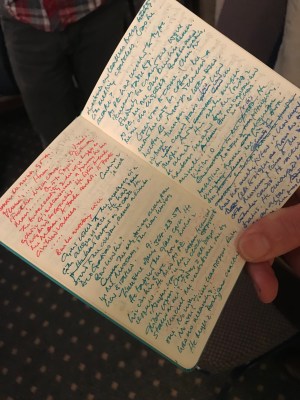
    Andrew Caldecott’s journal.

    This idea, of typing versus longhand writing, is extremely controversial among the next group of writers. It’s a fantasy and sci-fi panel, featuring authors Samantha Shannon (The Bone Season, The Priory of the Orange Tree), Andrew Caldecott (Rotherweird) and Adam Christopher, author of the new Stranger Things novel, based on characters from the Nexflix series, Darkness on the Edge of Town.

    ‘I’m a manuscript man,’ said Andrew, showing us the pages of his journal. It was like something from Middle Earth; thick pages covered with slanting, coloured ink. ‘I change the colour of my pen every time I start a new day. I find that so much easier.’

    Samantha and Adam both looked frightened by this.

    ‘I don’t think I’ve hand-written anything since I left uni seven years ago,’ Samantha said. She’s written a lot though and works eight hours a day every day, sometimes up to seventeen if she’s on deadline.

    ‘I’m on deadline at the moment,’ she said. ‘That’s why I might look like a panda – I’m exhausted!’

    Neither she nor Adam can work if they know they have events scheduled later in the day but Andrew, who is a QC, writes very early in the morning and very late at night.

    ‘Better early,’ he said. ‘I tend to just edit late. When I write late, I wake up in the morning and think ‘How did I write that crap?”

    A chorus of agreement from the others.

    *

    The final panel in the ballroom was a children’s fiction panel. Elly Griffiths, bestselling crime fiction writer for adults, was at Newark to discuss her first book for children, A Girl Called Justice. Thomas Taylor, who illustrated the very first edition of Harry Potter and the Philosopher’s Stone back in 1997, has now written and released his own book for children, Malamander. With them, in the dark, slightly creepy dressing room, is Michelle Harrison, author of The Thirteen Treasures and A Pinch of Magic, winner of the Waterstones Children’s book prize. All three of them also have to fit their writing in around children, family, dogs, but most intriguingly, they also all have a kind of lucky talisman, that helps them write better.

    Michelle keeps a set of Russian dolls by her side, a motif from A Pinch of Magic. Elly’s cat sits outside her writing shed at 7:30am every morning, staring at her, scolding her with his eyes.

    ‘It’s like he’s my conscience,’ Elly said. ‘Like he’s telling me it’s time to start writing.’

    Thomas has a scarf that he likes to wear to write if it’s not too hot. It was knitted for him by his grandmother when he was very small.

    ‘She was a librarian,’ he explained. ‘She’s no longer with us but it’s a kind of a lucky thing for me. A big Dr Who-style scarf. It helps me think everything’s alright when, often when I’m writing, it doesn’t seem like it is!’

    *

    As the festival drew to a close, the market stalls were packed up, the brochures collected and I was able to sit down for what felt like the first time in three days. I sat down and I thought about it all, about Sara writing in the early hours, Joanne under her tree, Mark playing to the crowd at Glastonbury, Rowena in a graveyard making notes. I thought about Andrew choosing the colour of his ink for the day, Thomas in his scarf. All these people, these different, unique people, doing the same thing. But, like Mark said, that time at the computer, or scribbling in a notebook – that’s not the real writing. The real writing happens all the time. That was it, raging behind their eyes as I shook their hands, asked about their journey, offered them coffee.

    Though the festival is over, the writing isn’t. It carries on as these people stare out of train windows, through the windscreens of cars. It’s happening while they pick up their kids, walk the dog, go shopping. If they find enough time, they write it down. If they and we are lucky enough, one day we get to read it.

    About the author
    Ellen LavelleEllen Lavelle is a post-graduate alumni of The University of Warwick’s Writing Programme. An aspiring novelist and screenwriter, she has worked with The Young Journalist Academy since the age of fourteen, writing articles and making short films for their website. She’s currently working on a crime novel, a historical fiction novel and the script for a period drama. She interviews authors for her blog and you can follow her @ellenrlavelle on Twitter.

  • White paper


    loverna-journey-uyZg_ksYsQ4-unsplash

    It is with a mixture of excitement and nerves that I pull a new sheet of paper out of its sleeve and wait for the inevitable cloying smell of sizing to waft up from the paper, once I have wetted it.

    As an antidote to the blinding whiteness, I splash the ink and paint around, thinking about the tones needed for the scene in the manuscript.

    I am mapping the flat space of the paper to reach a world beyond it, familiarising myself with its atmosphere before even populating it.

    I have read and re-read the story and travelled to the locations through my research, taking notes on costume, buildings, interiors, and furniture. I need to explore the vegetation to identify trees and flowers, or creatures, which will cohabit with the characters inside the story. I’ll visit more online archives, or museums and reference libraries.

    Collecting all this is exciting: it feeds my hunches as I make my rough drawings. They have been hovering around inside my head.

    I am in fact circling around the story looking, and waiting – for clues and unexpected connections to be revealed.

    I glean smells and images, subtle and powerful, which find their way into small scribbly prelims. The tip of the pencil, as it touches the surface, also reaches somewhere beyond it: an accessory or detail in the clothing or fleeting facial expressions are reflected back to me, as they materialise on the paper, which becomes a stage. For the characters to become fully alive, what shapes will their moods take? What body language will be needed?

    There are emotions waiting to be expressed in colours and lines.

    The landscape emerges bit by bit: a tree and perhaps other trees, a field around them, then the coast, the cliffs or a beach, the sea and new horizons.

    I listen to the silent call from the words, their meaning or origin; look at their shape; or look out for a visual metaphor for the characters’ inner life; or for setting the scene.

    I can turn the words into pictures – bringing more to light in these drawings, while I remain faithful to this newly incarnate world.

    I wait for accidental marks and textures to settle into unpredictable patterns. More dampening down using crushed tissue or sponges might be necessary. I’ll need to wait for the paint or ink to dry, before the next layer can appear.

    In the mean time, I get on with other drawings. It’s good to return to these views with a fresh eye.

    Later, maybe after a slight hover, I’ll draw lines in colour, new threads that connect image and text.

    The characters are coming alive; we are together on the journey from within their existing story onto the paper and then into the world.

    *

    Over days and days, I watch them on the paper and in my head.

    Late at night, when there are few sounds from the street below the studio, I see into this imagined world. It speaks to me, soundless yet powerful; my cat is on the table under the warm beam of the angle poise lamp; a seemingly casual witness of these exchanges on my desk, but though his eyes are closed, one ear turned in her direction, he is with me, at the ready.

    The characters on their journey might even appear in dreams, in flashes so clear I can put down on paper in the morning.

    *

    Silent deliberations carry on in parallel to daily life.

    I can be on the bus, or waiting in a queue, or looking out of a steamed up train window at cloud floes; at silent crows fluttering up from hedgerows, a lonely fox, lines of washing in gardens, textures in the fields or the city, the hotchpotch of allotments, or patterns of car lights in the semi dark.

    It is a double life.

    Coincidences occur between these two worlds, prompting me.

    I snap gestures and facial expressions, catch them in vignettes; or pick a stop frame, from strobe-ing sequences preceding and also following it.

    I am riveted to the unfolding of the characters’ lives, and getting to know them behind the scenes.

    Their previous state was contained within the grid of text, or the web of stories, intricate and still within the grasp of the author.

    My work begins where the editors have left off. My pencil hooks these details from behind this mesh of words. I scan the pages again, looking for the objects needed to furnish this emerging world: they are the clues of a mystery waiting to be unravelled through drawing.

    It is my job to pick out each one from the text, turn it this way and that, as people do with shells from the seashore, to feel their resonance – to perceive them fully as mementos redolent of secret past things, and whispers of promises as yet unfulfilled.

    In collaboration, the perspectives of the editors and authors converge and crystallise at last.

    This is the magic moment I wait for, whatever the book I may be working on: when the picture book starts breathing a life of its own, the inescapable truth of the story driving its pace and its heartbeat even, preparing for the journey with the reader …

    I collect up whatever I can, piecing together truth, and hidden truth.

    I fill in the missing dots, until they join, and make a picture.

    About the author

    b_w profile pic.jpegMarge Herman is half French and has lived in the UK since returning to study Visual communication/Illustration at Bath Academy of Art.

    She has worked in the publishing field for thirty years as an illustrator and designer,  venturing into story writing in the last few years.

    Still exploring narrative formats, devices and fragmentation, she is now studying at Lancaster University on the Creative Writing MA.

    Investigating communication on traditional and contemporary platforms, she is currently working on two collections of short stories, gravitating around themes such as memory, loss, eating disorders; isolation; mortality; emotional geographies.

    She lectures in drawing and Visual Communication.


  • Nothing in the Rulebook summer party

    tyler-rutherford-qzr-lqrpe8U-unsplashPick up your party hats and join Nothing in the Rulebook for our first ever creative summer party, as we raise a glass to our community of creatives and celebrate our fourth anniversary – as well as our new site redesign.

    Since first launching in August 2015, we’ve been absolutely honoured to feature a whole host of writers, artists, photographers, comedians, film makers and all round creative individuals – and we thought it was high-time we all got together for a good old fashioned knees up.

    What’s more, Nothing in the Rulebook are very proud to have teamed up with award-winning publishing company Unbound to support one of their latest crowdfunding titles, Philosophers’ Dogs, written by NITRB’s own Samuel Dodson and illustrated by Rosie Benson.

    Join us for free prosecco (should that be paw-secco?) and a mingle on the top floor of the Resident’s Room at Baldwin Point in the new Elephant Park development in central London on Friday 16th August. With stunning, 15th-floor panoramic views of London, we’ll meet, mingle, celebrate, and possibly even answer some of life’s age-old philosophical questions, such as, ‘What does it mean to be a “good” dog?’ and ‘is a bark truly worse than a bite?’

    Karl Marx mock up
    A glimpse into Unbound’s ‘Philosophers’ Dogs’, which you can pledge to support, using your exclusive NITR discount, from their website.

    Anyone interested in pledging to support Philosophers’ Dogs can receive a 25% DISCOUNT when they pledge for any of the rewards on offer (books, art prints and personalised portraits of your dog) using the code NITR.

    Spaces are limited so, to get on the guest list, please RSVP with your name (and the names of any plus ones you’d like to bring) to our email address at nothingintherulebook@gmail.com

    Event details:

    Friday, 16th August 2019

    7pm – 9.45pm


  • Collectivism – a stream of conscience
    tim-marshall-cAtzHUz7Z8g-unsplash.jpg
    Photo credit: Tim Marshall.

    The problem

    The modern professional arena puts much of its emphasis on the prominence of the individual whether in creative mediums like music, which has refined the concept of the ‘front man’ down to an incredibly isolating form, or in office settings where the individual must rise above the rest to receive promotion and recognition. Commercial organisations have systematically adapted to that new emphasis. That isn’t to say that individualism isn’t necessary – most of us will need to promote ourselves in some way to succeed in our chosen fields.

    Despite my low opinion of individualism as it is currently expressed, I certainly don’t reject it (or its tools) out of hand; like most young writers, I use the available platforms for self-promotion or to find opportunities for the same, and get a genuine sense of enjoyment from sharing work with others via Twitter or through submissions and so on.

    However, that individualism quickly becomes isolation, particularly in a crowded industry and on crowded platforms. Confronted with everyone else’s apparent success, your own achievements start to seem irrelevant, and it becomes difficult to break through the noise. Whilst there are hundreds upon hundreds of opportunities, they become either more niche or more expensive to engage with as the importance of the individual becomes paramount.

    The problem is, as I see it, that the emphasis on individualism has resulted in professional bodies or groups that do not, or are not able to support more than a handful of people (and so only contribute to isolationism) – those either able to afford the fees, or picked due to their existing reputation and success – and that support is expressed as a service for those individuals with limited availability. The idea of a creative collective has been largely reduced to informal groups formed in local areas, or ‘movements’ of artists producing work with specific styles or genres, and even ‘big name’ artists using employees to churn out art for sale by the big name (here, think, for instance, of Damien Hirst, who infamously hired teams of assistants to physically create ‘his’ own work).

    The return to collectivism

    One solution to the growth of isolation is to re-invigorate the concept of a collective; that is, a group of people unified by ideals and a desire to create art regardless of style, genre or ability – where promotion of the group as a whole is as important as promotion of the individuals within in it. By encouraging artists, writers, poets and so on to form their own collectives, we encourage mutual support, while also creating spaces for constructive feedback and the viewing of work.

    This in turn increases the ability of existing resources to support creative people, rather than a comparative handful, and reduces the reliance on self-promotion and the notion of individual struggle or ‘paying one’s dues’ before some measure of success. By framing collectivism around shared goals or ideals rather than shared genres or styles, we can minimise inter-group competition for space or opportunities and respect individual effort whilst encouraging each other to create.

    By reframing some of the focus in the industry toward collectives, and allowing groups of artists to speak with one voice, it should become possible to promote the individual by promoting the group; that is, increasing the number of people who can be heard without diluting the visibility of each individual. If fully realised, collectivism would also increase the visibility of creators outside of population centres or popular ‘scenes’, with less reliance on community groups that cannot offer the same degree of personal support.

    As mentioned above, part of me longs for the old structures and organisations, to be able to claim membership of a special club or company that has some meaning beyond a fee payment. I also know that I cannot be in isolation; that whilst I might want peace and quiet to write or make something, I need other people to make that time seem special or to give me the drive to use it effectively. I want to be successful – on some level, everyone does – which does mean some level of individualism, but to have any chance of achieving that success, I will need the support of many others (we often overlook the role of editors, publishers, agents and so on in the success of writers particularly), and collectivism is fulfilled by those needs. By operating as a collective, I can support myself and my friends, publish my own work with a degree of independence, and promote the ideals that I share with the rest of the collective. More than anything, it doesn’t feel like we’re just screaming into the void.

    About the author

    op-el5k-p1-2019_03_09-19-2-zf-6420-58277-1-001.jpgSam Bellamy is writer and poet mildly obsessed with the rebelliousness of hope, magic, and stories. Part-time philosopher, published here and elsewhere. Runs the Writers’ Group collective.


  • Mystery and ritual: a photo essay

    In 2014, I rid myself of all possessions that couldn’t fit in a backpack, and threw myself entirely on the mercy of this wondrous planet of ours.

    For the next four years, I trekked across Mongolian steppe-land, Egyptian sand dunes, Kenyan swamps, and the cobblestoned streets of innumerable ancient cities.

    In the spring of 2018, my path brought me to South Africa — one of humanity’s primeval ancestral homelands, where I found myself drawn irresistibly toward sites of archaic ritual…

    Ben Thomas SA 1

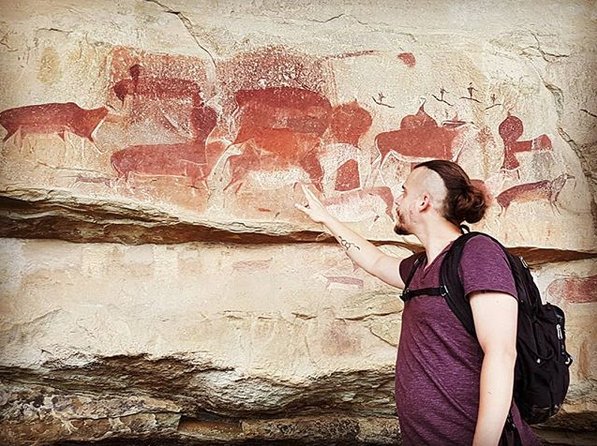
    I spent time investigating palaeolithic San rock paintings in Maloti-Drakensberg Park, near Durban, South Africa. It was absolutely breathtaking.

    But this was only part of a particular adventure that had started some days previously, and would continue for some days after.

    I had talked some fellow adventurers into visiting a very ancient, very important place that most South Africans have never even heard of. But even by the night before, we still weren’t sure how to get access to that mysterious place.

    Ben Thomas SA 2

    Ben Thomas SA 3

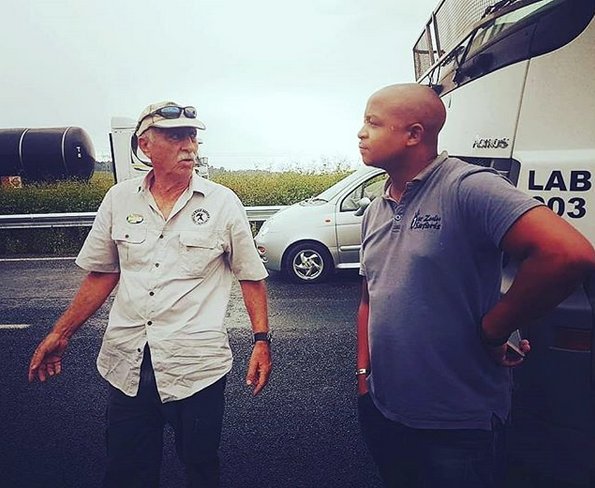
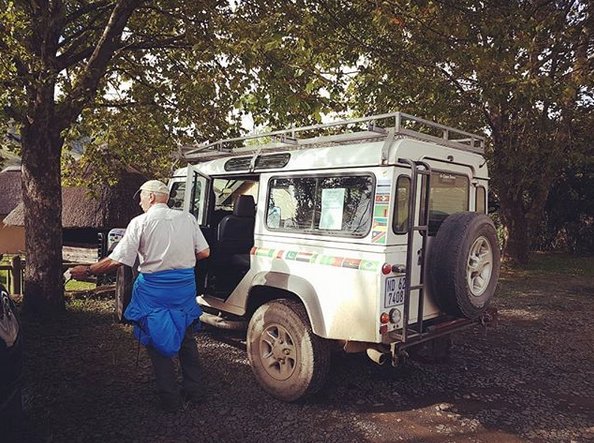
    Our resident expert was Sotiris Spetsiotis, an ex (Greek) Navy Seal who had lived in South Africa for 40+ years, and loved to tell adventure stories all day.

    Ben Thomas SA 4.jpeg
    Sotiris Spetsiotis (on the left). The guy on the right is Sotiris’s protégé Ndumiso, a full-blooded Zulu who knows this country like the back of his hand.

    We set off bright and early in the morning, in Sotiris’s Land Rover. Since we didn’t yet have a definite plan for reaching [UNDISCLOSED LOCATION] yet, we decided to pay a visit to Maloti-Drakensberg Park first, to check out some prehistoric rock paintings by San people.

    Ben Thomas SA 5

    At the park’s visitor center, we met Rowan — a Zulu bush guide who also happens to be an archaeologist specializing in ancient San rock paintings.

    Ben Thomas SA 7.jpeg

    And so, the four of us set off on a long, steep uphill hike, to a hilltop rockshelter that has served as a site of shamanic ritual for San people for thousands of years.

    Ben Thomas SA 6

    Until at last, we arrived at a truly extraordinary place.

    Ben Thomas SA 8

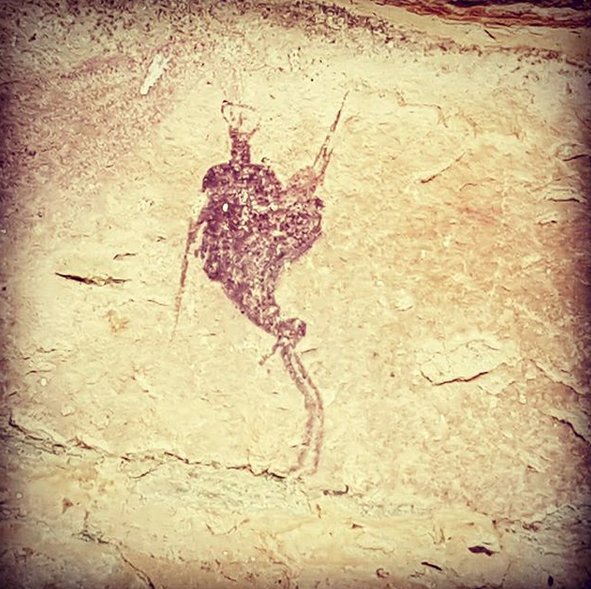
    These rock paintings were made by San hunters more than 3,000 years ago, using the blood of the very same elands (antelopes) depicted in these scenes.

    Ben Thomas SA 9

    This particular figure is a therianthrope — a “beast-man.” He has the torso and arms of a human, but the legs, hooves and head of an antelope. He is a shaman who has fully integrated the physical and spiritual attributes of his tribe’s most sacred prey.

    San people have carefully preserved many aspects of their stone-age culture — — including languages that contain “a whisper of THE ancient mother tongue spoken by the first modern humans.”

    Ben Thomas SA 11

    So it’s likely that these shamanic San paintings — while they’re only about 3,000 years old — offer a window into some of humankind’s very earliest religious beliefs and practices.

    In the spirit of all good adventures, however; we saved the best for last.

    At one point in our conversation, I asked Rowan if he’d heard of [UNDISCLOSED LOCATION]. His reply: “Oh yes. That place is a lot more ancient than this one. I know someone who’s been there.”

    So I talked it over with Soterios and Ndumiso and we agreed to headed to [UNDISCLOSED LOCATION] the next morning.

    We had no idea what to expect.

    Ben Thomas SA 13

    The area surrounding the site is just about the last kind of place you’d expect to find a palaeolithic rockshelter. It’s just… empty countryside.

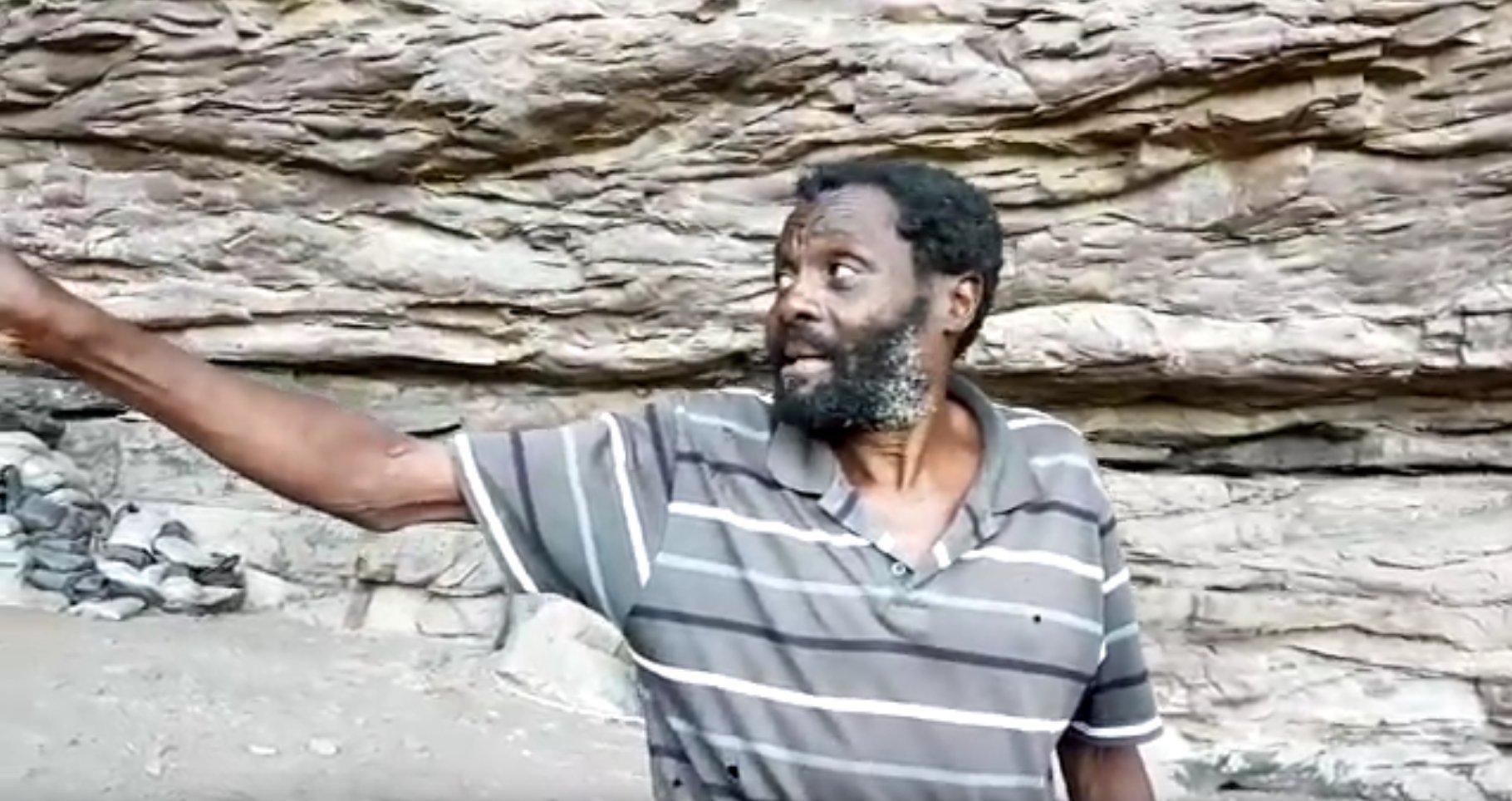
    We finally arrived in a tiny village, where we met a man named John. John had an old book with info on the site — and on the scientists who excavated it.

    Ben Thomas SA 14

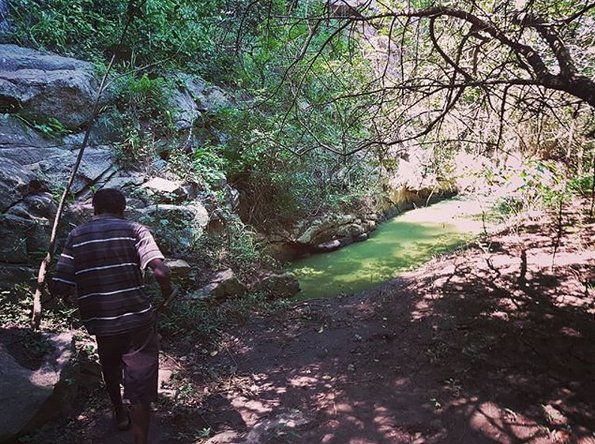
    John warned us that the rockshelter is almost inaccessible — deep in the forest, across a fast-flowing river, at the top of a sheer cliff. I told him I’d do whatever it took to get to the site.

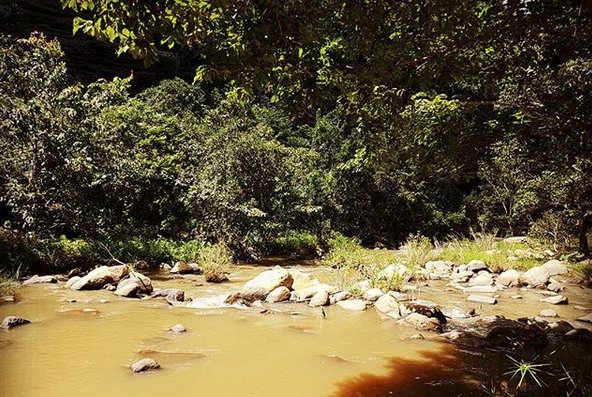
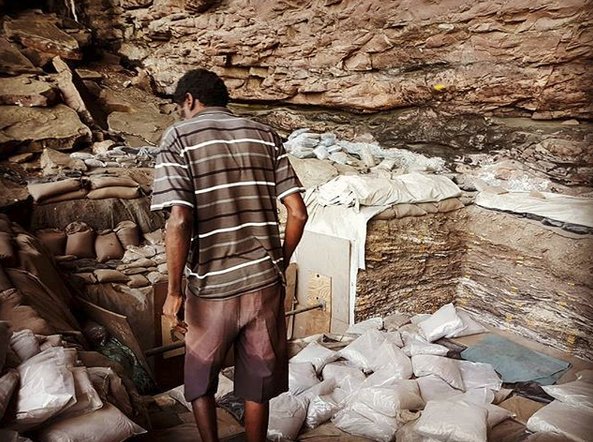
    And so, John led us into the woods. Eventually, we came to a rocky, muddy river. Though it’s hard to tell from this pic, the water is hip-deep, and flows fast enough to knock a grown man down. The slippery algae-covered rocks don’t help, either.

    Ben Thomas SA 15

    As I rolled up my trousers and forded the river, my intrepid guides guides stayed on the shore, cheering me on. I’m just kidding. They were laughing at me. “Watch out,” they called to me. “Pythons and other serpents live in these waters.”

    Ben Thomas SA 16

    “If a serpent eats me,” I shouted back, “Tell people I died searching for the Inmost Cave!” Onward and inward!

    Ben Thomas SA 17

    On the far side of the river, John and I came to a sheer cliff face. If you’ve known me for a while, you know heights are my only real phobia. But I’d already come this far. No turning back now.

    Ben Thomas SA 19

    As we heaved ourselves over the top of the cliff, I turned around to take in the view. It wasn’t hard to see why stone-age San people were in awe of this place.

    Ben Thomas SA 20

    Though this rockshelter contains no paintings like the ones I saw at Maloti-Drakensberg, it’s a treasure-house of primordial relics. Archaeologists here have dug up stone arrowheads, bone needles and other tools dating as far back as 60,000 BCE.

    And here’s the mind-blowing part: Those tools are essentially identical to the equipment that San people still make and use today.

    Ben Thomas SA 21

    John led me to the excavation pit at the far end of the rockshelter… On the strict condition that I not touch anything. I didn’t. My heart was pounding so hard, all I could do was stare in awe.

    Ben Thomas SA21.jpeg

    I stared down into the pit — down through 75,000+ years of unbroken African history. Across all those millennia, San people continued to visit this sacred place.

    Ben Thomas SA 22

    As we turned away from the excavation, John turned to pick up a stray piece of plastic trash, with sadness in his eyes. Sometimes people wander up here, he told me, and contaminate this active archaeological dig in one of the most primeval sites of human habitation on earth.

    Ben Thomas SA 23

    That’s why we promised never to reveal the location, or even the name, of this place. [UNDISCLOSED LOCATION] needs to remain a secret for now — and for the foreseeable future.

    Ben Thomas SA24

    We left without disturbing a single stone. And I hope it stays that way.

    About the author of this post

    006 Ben PortraitsBen Thomas is editor of The Willows Magazine, author of The Cradle and the Sword, creator of TheStrangeContinent.com, and founder of the neuroscience news agency The Connectome. He travels the world as a freelance writer, and has lived in more than 40 countries. His hobbies include aquaculture, Linux customisation, tantric meditation and ink drawing.

  • An Eagle or Something

    fineas-anton-e6WRYia0VuQ-unsplash

    The ride to Philadelphia would take approximately three and a half hours. Nina rented the car for two weeks, to be on the safe side. Her mother had a way of dragging these things out; the funeral wouldn’t last only a few days. “Seeing as you’re here,” her mother would say. “You might as well drop in to see Nicky.” But it wouldn’t just be Nicky. She’d be passed around the extended family like a bag of Cheetos, until only the dust was left in the bottom.

    “She’s a real smooth drive,” the guy in the rental shop had said as he’d handed her the keys. “Great for kids.” Sure enough, Billy fit snugly in the back, his blanket draped over him.

    “See if you can get some sleep,” she said, tucking Tony the Elephant under his chin as she strapped him in. “We’ll be driving for a while.”

    “And we’ll be going past the monkey?” Billy asked. There was a billboard on the highway advertising toothpaste for kids. In the picture, a huge cartoon monkey squeezed the tube and grinned with white, gleaming teeth.

    “Yes,” Nina said. “But first we need to pick up your uncle.”

    *

    When Nina pulled up, he was already sitting with his bags on the steps out front. Her elation waned, however, when she took in how many bags were piled up around him. He was wearing headphones and sitting with his head bent over, staring at his shoes. He didn’t look up.

    Nina rolled the window down. “They finally threw you out?”

    Milo didn’t get up or register her presence in any way except to hold an index finger in the air. This was a sign to wait – a sign Nina ignored.

    “Stay in the car, Billy,” she muttered as she got out and slammed the door. “We need to go,” she said, arms folded. “And why have you got so much stuff?”

    The finger reappeared. Milo nodded along to whatever he was listening to on his phone before theatrically hitting the pause button.

    “I have an audition,” he said. “I need to be able to do an Irish accent.”

    “But we’re going to-“

    “It’s on Monday,” he said, pulling himself upright and tucking his phone into his jacket’s breast pocket. “So I’ll get the train back, or fly or whatever. Of course Rudy had to die right now, you know, when things are actually taking off for me.” He scooped a bag onto his shoulder and left the others at Nina’s feet.

    “What’s in the bags?”

    “Bongos.”

    “What?”

    “The Irish guy is in a band. I need to learn how to play the bongos.” Milo had made it to the car and was about to pull up the hatchback. Nina reached it before he could and held it shut with both hands.

    “You’re not taking bongos,” she said. Her hands were on her hips.

    “It’s for my career.”

    “When the hell are you going to have time to play the bongos?”

    “The funeral’s, what, like three hours?” Milo shrugged. “I’ll get up early in the mornings, go through the lines, practise the bongos. No one will even know I’m doing it.”

    “I think they might if they hear bongos at six in the morning.” Nina’s hands were crossed over her chest now.

    “I’ll be quiet. You know, they can really be a very peaceful instrument.”

    “There’s no way they’ll fit in the car.”

    “They’ll go in the boot.”

    “Billy’s stuff is in the boot.”

    “How much stuff does Billy need? He’s tiny.”

    “He needs a lot of stuff. He’s a child.”

    “We can put them on the back seat.” Milo moved around the side of the car and opened the rear door. Billy was sitting on the other side, wide-eyed. “Billy can play them. You’d like that, right?”

    Billy blinked.

    “Billy is not playing the bongos. One bag. You have to choose which one.”

    “But I need both! Bongos and audition outfits.”

    “One.”

    “You’re such a fascist.”

    “One bag.”

    “Billy, your mom is a real fascist, you know that?”

    *

    Forty minutes into the journey, Milo decided he needed to go to the bathroom. This was because he’d been guzzling coffee from a thermos the moment they set off. “I can’t afford to lose any time by sleeping,” he said. He was listening to interviews with Colin Farrell on his phone. Occasionally, he muttered the odd phrase, turned it over in his mouth like a boiled sweet.

    “He’s done well for himself, so he has,” he murmured against the window. Nina dragged her eyes away from the highway for a second to stare at him. His eyes were closed; he was concentrating fiercely. He’d folded himself into the passenger seat, hunched up like a piece of origami. The bag containing the bongo drums was in the foot well; his legs were bent at such an angle that his knees were only just below his chin.

    “Comfortable?” Nina asked.

    Milo opened a single eye. “Comfortable in the knowledge I’m doing everything I can

    to smash this audition,” he said.

    “Are you going to talk in an Irish accent the whole way?”

    “Just until you pull over so I can go.”

    Around ten minutes later, a small diner crept onto the horizon next to the highway. Milo ran in and out.

    “Drive, drive, drive!” he shouted as he pulled himself back into the passenger seat. “Go! I didn’t buy anything and they were eyeballing me.”

    “Put your belt on.”

    “They’re going to come and-“

    “Put your belt on.”

    Milo pulled his belt on, shaking his head. “You would be the world’s worst getaway driver.”

    “Also the safest.”

    *

    They passed the monkey an hour later. Billy was asleep on the backseat, his mouth open. The monkey whizzed by the windows. Nina watched the billboard disappear in the rear-view mirror.

    “I feel bad,” she said.

    Milo pulled his headphones down. “What?”

    “I feel bad,” Nina said again. “Billy wanted to see the monkey. The one on the billboard. I should have woken him up.”

    “Life is full of disappointments.”

    “What’s the audition for?” Nina asked. Milo had been about to pull his headphones back on and she was sick of listening to the distant, tinny sound of Colin Farrell’s voice vibrating through the headphones.

    Milo sighed. “It’s a TV series,” he said. “Sort of Ocean’s Eleven meets Twin Peaks.” Nina hadn’t seen either, but she nodded anyway.

    “And you’ve got the audition on Monday?”

    “Yes.”

    “You don’t seem that happy about it.”

    “I’m not really that happy about anything at the moment.” He was staring out of the front window. Nina wasn’t going to say it. She was not going to ask him why. Seven years ago, before Billy, before the stuff with Billy’s dad, she might have done. But Milo’s world was a destructive place once it sucked you in. If Milo wanted to be miserable, fine. He wore misery well; the same way Uncle Rudy had worn his racoon fur coat. Unapologetically. Defiantly. Until it peeled away from his back and demanded a wash.

    “I wonder who’ll get that disgusting old racoon coat,” Nina said.

    “It needs burning,” said Milo.

    *

    Their father always talked about how much better Elsinore Street would look if it was lined with trees. “Like West Avenue,” he said, every single time. Dad’s golfing buddy, Hunter Bogan, lived on West Avenue and cut his huge lawn with a ride-on mower.

    Elsinore Street did look particularly bald when Nina parked up on the cramped driveway, behind her mother’s old Ford Fiesta. The white and grey houses looked small and pathetic against the expanse of grey, brooding sky. A single plastic chair was left abandoned on the lawn, positioned so it was facing the street. There were a few attempts at Spring – a couple of daisies were struggling through the gaps in the paving slabs leading to the front door – but, for the most part, the house didn’t look very different to how it had a few months earlier, when Nina and Billy had come for Christmas.

    “Ready?” Nina asked Milo, who was winding the lead of his headphones tightly around his phone and then unwinding it again.

    “No,” Milo said, unplugging his seatbelt. “But let’s just rip it off. Like a band-aid.”

    They had to ring the doorbell twice before the familiar shape of their mother’s spherical figure appeared behind the frosted glass. She struggled with the key for a second before the door snapped open.

    “Have you eaten?” their mother asked, as soon as her head fit through the gap.

    “No,” Nina said, hoisting Billy further up on her hip. “Why?”

    “I’ve made too many sandwiches.” Their mother turned back into the hallway and began to walk towards the kitchen, the open front door the only invitation for Nina and Milo to follow her. They exchanged a glance and stepped inside, Milo inhaling deeply before he crossed the threshold.

    In the days before Nina had left for college and Milo had moved to New York to be a Broadway actor, the hall was clogged with pictures of them as children. Now, these pictures were interspersed with paintings of Jesus Christ, the replacement child. Instead of getting a puppy, like many mother mothers did when they found their nest bereft of chicks, their mother had developed an intense fascination with the Messiah. Looking at him smiling benignly out from the walls, nestled between pictures of Nina and Milo in bathing suits on the beach when they were small, he could have been an absent older brother: the favourite, judging from the way his pictures seemed particularly carefully dusted.

    “I made some with tuna fish and some with cheese,” their mother said, over her shoulder. “Because I wasn’t sure if you were still doing that vegetarian thing.”

    “It’s not a thing,” said Milo. “It’s a lifestyle choice.”

    “Well there are a few cheese ones,” their mom said. “On the blue plate.”

    They reached the kitchen and their mom threw herself down at the table, behind a mountain of sandwiches. Nina set Billy down on the floor and watched as he took in the pile of food at the table, warily sucking his thumb.

    “That’s a lot of food, mom,” Nina said.

    “Yes, well…” her mother dragged herself up from the table again with an effort and moved over to the countertop where a fat kettle was sitting, covered in lime-scale. “Do you want tea, coffee?”

    “Coffee would be great, thanks.”

    “Yeah, mom, coffee.” Milo was still standing in the door way. In his leather jacket, with his coiffed hair, headphones slung around his neck, Milo’s attention to aesthetics seemed to scream out into the cramped kitchen. Half the room was painted clover green and the other half cream, simply because their dad had put his back out while decorating.

    “Where’s dad?” Nina asked.

    “He bought a sweater the other day and it’s too small,” Mom replied, as she noisily filled the kettle. “So he’s gone to return it while he remembers. He shouldn’t be long. The store’s only around the corner.”

    In fact, their father got back an hour later, his paunch appearing in the doorway before the rest of him. “Hey there, kids!” he said, cheerily, kissing Nina on the cheek and patting Billy’s head. “How’s it hanging?” The pile of sandwiches in front of them hadn’t much depleted. Billy tried his best but he was only a very small person and Milo picked at the edges of the bread without ever seeming to transfer a morsel to his mouth. The responsibility, therefore, lay upon Nina and her mother. Though her mother plunged in, taking bites between monologues, Nina was beaten. She pushed her plate away and smiled at her father. “Good,” she said. “How are things with you?”

    Her father was in the process of enveloping Milo in a hug, much to her brother’s dismay. “Fine,” he said, as he rocked Milo from side to side. Over his father’s shoulder, Milo glared at a picture on the counter, of Jesus riding a donkey. “Well,” her father went on, releasing Milo and straightening, “Apart from Rudy dying. That’s not so great.”

    Her mother talked so fast that half of what she said always wafted into thin air without reaching Nina’s ears, so Nina didn’t know if this subject had already been broached. From the stiffening of her mother’s spine, it seemed not.

    “Yes,” Nina said. “How’s it been? It must have been tough.” Her mother’s brother Rudy had always cast a shadow over her parents’ already shadowy house on Elsinore Street. Nina remembered Christmases from her childhood, when Uncle Rudy singing loudly at the dinner table and waking up on Boxing Day, naked, in the neighbour’s back garden, all seemed like funny quirks, not symptoms of his alcoholism. But Milo had always hated him. Even as a kid, he watched with dark eyes from the other end of the table as Rudy spat, swore and sang his way through the leftover turkey. While Nina – older, wiser, top grades in school – had laughed along, Milo had known better. She watched him now, taking a swig of coffee from a mug with ‘To My Gorgeous Wife’ written on it. He was doing a good job of looking sympathetic, but then, he was an actor.

    “Rudy was always troubled,” her mother said, as if Milo and Nina hadn’t spent their childhoods listening to her running commentary on Rudy’s lunacy. “Not matter what we did, it was always going to be this way.” The phone call came three nights ago. Rudy found dead in a hotel. Booze and drugs; too many for a man over sixty, particularly a man over sixty that’s been using them as a lifeline since early adolescence.

    “You did everything you could, hun,” their father said, settling into a chair and reaching for a sandwich.

    “Those ones are cheese,” their mother said, abruptly. “They’re for Milo because he’s vegetarian.”

    “You still doing that?” Dad asked, hand frozen in mid-air, halfway to the plate.

    “It’s not something you do, Dad. It’s who you are. But have one anyway.”

    “You haven’t eaten that much, honey,” their mother said. “Stan, have a tuna one.” She passed him the plate and Stan stuffed a sandwich into his mouth. “It sure is a shame,” Nina’s mother went on, putting the plate back on the table and it took Nina a second to realise she was talking about Rudy again, not Milo’s vegetarianism. “He was so smart. He could have done so much and it just kills me…” she trailed off, her eyes filling with tears. This was unchartered territory. Rudy had never, to Nina’s knowledge, been good at anything except sponging off other people, but her mother had created a fantasy to protect herself and it seemed harsh to shatter it so soon.

    Nina reached across the table and took her mother’s hand in her own. “I know, mom,” she lied. “I know.”

    *

    Later, when they’d been transferred from the kitchen to the living room, they perched on the edge of the sofa they’d sprawled across as teenagers. Their parents were moving about in the kitchen. Seeing as they’d just had lunch, it was probably time for them to start preparing dinner. Billy was on the rug, colouring in a book Nina’s mother had bought him. Milo had his headphones back on, his lips moving soundlessly along with Colin Farrell. Nina wouldn’t allow him to abandon her like this. She launched a cushion at his head, which struck its target with a satisfying slap.

    “What the hell?” Milo cried, launching it back at her, but Nina was ready. It fell to the floor and she wiggled her eyebrows.

    “Talk to me,” she said.

    “About what?”

    “Literally anything,” she said.

    “I need to rehearse.”

    “Rehearse later.”

    Reluctantly, Milo slid his earphones down. “So Rudy’s suddenly a saint,” he said. “Who could have done anything he put his mind to.”

    “I know,” Nina said. “But I think it’s her way of dealing with it.”

    “It’s a lie.” Milo folded his arms over his chest.

    “I know; I was there too. But for now, just let it be. At least until after the funeral.”

    Milo stared at her for a couple of seconds, eyes narrowed, before sighing and leaning his head against the back of the sofa. “So how’s work?” he asked.

    “God, you sound so interested and caring.”

    “I asked, didn’t I? So how is it?”

    “Fine,” she said. This was true. Despite the fact that sitting behind her desk all day made her want to staple-gun her own face, there wasn’t anything specifically wrong with it. “I type stuff, I file stuff, I get lunch.”

    “Sounds like you’re living the dream,” Milo said, staring at the ceiling.

    “Yes, well, some things are more important.” She looked down at Billy, who was inching the felt-tip pens worryingly close to the edge of the paper and her mother’s cream carpet. “Be careful with those pens, honey,” she said.

    “I am,” Billy said, without looking up.

    It was then that the sounds from the kitchen became loud enough to hear. Their mother’s voice had taken on that high-pitched, bleating tone it always did whenever she was anxious. “It’s not just a hat, Stan,” she was saying as she moved into the living room, carrying a tray of mugs. “It’s what he wanted.”

    Their father followed her into the room. “I just don’t want you to stress yourself out looking for it,” he said. “You did a lot for Rudy over the years and it’s not like he’d know anyway.” Their mother’s back stiffened again, jolting the mugs on the tray and Nina moved quickly to take it from her, guessing that a set of third-degree burns would do little to defuse the argument.

    “It’s my duty as a Christian, Stan,” she said, appropriately flanked by the statuettes of Jesus on the mantelpiece. “Just because someone’s dead, it doesn’t mean they stop seeing.” Their father frowned, obviously stuck determining the biological truth of this claim. He didn’t have time to come to a conclusion however, as their mother went on: ‘I wouldn’t be able to rest easy. I just wouldn’t.”

    “But we’ve looked everywhere,” Stan said, as he sunk into an armchair. “And Rudy never exactly put down roots. It could be anywhere.”

    “What’s this?” Nina asked. Her parents looked at each other.

    “Our lawyer showed us Rudy’s will the other day,” her mother began, after a moment. “He said he wanted to be buried with your grandfather’s red baseball cap.”

    “Why?” asked Milo.

    “It doesn’t matter why!” their mother snapped. “It’s what he wanted.”

    “But we’ve no idea where it is,” their father said. “And we’d have to search every cheap, run-down motel between here and Chicago if we wanted to find the – oh no, Cathy, I didn’t mean…” Their mother got up and walked out, slamming the living room door behind her with such force that the Messiahs on the mantelpiece trembled slightly. Their father looked sheepishly at them. “It’s been a tough couple of days,” he said. “I never liked the guy, but he meant a lot to your mother.”

    Nina smiled at him in what she hoped was an understanding fashion. Next to her, Milo frowned. “A red cap?” he asked. “With an eagle or something on it?”

    “Yeah,” their father said, now frowning too. “You seen it?”

    “I might have.” Milo turned to Nina. “Did you ever go to the river with Rudy? To the boating shack?”

    “No,” Nina said, stunned. She could not imagine a less nautical person than her brother. “Did you?”

    “Once or twice,” he shrugged. ‘In high school. I know he was pretty attached to the place. It might be there.”

    Their father stared at him. “Well…uh… yeah I guess. Your mom never mentioned it. I guess it’s worth a look.”

    *

    They walked down to the park later that afternoon, just as twilight stretched over the sky, turning the grey sky greyer. Nina pulled her jacket tighter around her as Milo strode beside her, clicking his tongue. Tacony Creek Park stretched out at the end of the street, consuming a large strip down the centre of the city. It was the setting of many of their hijinks as kids and, apparently, more of Milo’s as a teenager.  Nina glanced at him sideways. The streetlights had just snapped on and, outlined in the yellow, electric light, he looked like he did whenever she saw him on stage: alive, fierce. Capable of anything.

    “So, boating?” she asked “With Rudy?”

    Milo snorted. “Obviously not,” he said.

    “So?” She stopped walking and waited. She could wait all night. Milo, still smiling, also stopped and twisted towards her.

    “I can’t believe I’m going through this with my big sister, now.” He smirked. Nina didn’t say anything, just inched her eyebrows a little further up her forehead.

    “So in high school I did a bit of pot,” Milo said, without a hint of shame. “And occasionally Milo would hook me up. It’s no big deal.”

    Nina stared at him. “No big deal?” she breathed.

    Milo rolled his eyes. “This happened, like, forever ago and-”

    “Why the hell didn’t I know about this?”

    “Because you weren’t around!” Milo was smiling, but his voice was loud and accusatory. “You’d skipped off to NYU. We weren’t exactly besties at that time.”

    “But why?” asked Nina, walking back towards him. “Why do that?”

    “Why does anyone?” Milo said, taking off again towards the park. “Because I was sixteen, miserable and it was what everyone else was doing. Anyway, all of this is irrelevant. We’re looking for that hat.”

    Nina had a thousand responses to this: all emotional, all antagonistic. He was right, unfortunately. Right now, they had to find that hat. This conversation could wait. But that didn’t stop her staring at him as they made their way up the quiet street. She watched the slope of his shoulders as he walked; the same swagger he’d always had. But now she imagined him with a roll-up in his hand, hanging out at some shack in the park, with the kind of kids her mother always said were ‘going nowhere’. She’d known Milo went through periods of darkness, but she thought they were a product of growing up: being rudderless in a gaping, colossal city. But maybe they started earlier than that. Even though she’d had her own life to deal with – her own drama, her own mistakes – she couldn’t help feeling as though this was her fault.

    The park stretched ahead of them: a dark mass of rustling trees encased within a high wire fence and metal railings. There was an entrance a way up the fence to the left, but Milo didn’t seem to be heading in that direction. He crossed the road and walked straight up to the railings.

    “What are you doing?” Nina hissed, hurrying up to him. “The entrance is that way.” She jerked her head to the left but Milo just shook his head, slowly.

    “You’re green, sister,” he said. “Green as grass.”

    “What the hell does that mean?”

    “Green,” he repeated, moving up and down the fence now, searching for something. “Naïve. Inexperienced. Aha!” He’d found whatever he was looking for and beckoned her over. A hole in the fence, big enough for a sixteen-year-old to crawl through.

    “No way,” Nina said.

    “The park entrance will be closed by now,” Milo said.

    “We can come back tomorrow.”

    “Chicken.” Before Nina could say anything, Milo was already down on the ground, halfway through the hole. He was on the other side before she could cry out, the noise trapped in her throat. On the other side, Milo stood up and grinned, dusting down his jeans. Before, they had been purposely dyed so that they looked dirty and had rips in the knees. Now, genuine flecks of dirt clung to the denim.

    “Are you going to stay there all night?”

    Nina didn’t see that she had a choice. Swallowing her pride, she got down on her hands and knees and, much less gracefully, pulled herself through the hole after him. A faint screech escaped her as she slid through and Milo stifled a smirk. He didn’t stifle it very well and ended up coughing as he choked on his own tongue.

    “Shut up,” Nina said, as he wiped the tears from his eyes. She dusted down her own trousers. “So where is this place?”

    *

    The boat house crouched near the edge of the river. The streaks of sunlight still lingered in the sky and the water here moved swiftly, but calmly downriver.

    “Is it locked?” Nina asked. Her voice was too loud, too brash, next to the sound of the water. The boathouse was long and thin, one storey, with long, shallow windows near the roof, like a public bathroom.

    “Yeah,” Milo said. “But Rudy always left a key near the door. I wonder if it’s still here.” He shuffled around for a few seconds, turning over rocks with the toe of his boot. Nina pulled her jacket tight around her. It was still chilly for Spring and it would soon be dark.

    “Can you see it?” she asked.

    “They really need to tighten up security around here.” Milo bent down towards the ground. When he straightened again, he was holding a small silver key, glistening in the dregs of the sunlight and he held it up to show her. A few moments later, he’d unlocked the door and they were both inside the boathouse, blinking into the darkness.

    It was obvious the boathouse hadn’t been used to store boats for some years. There was some fishing tackle leaning against the wall in the corner and a set of lockers opposite them but, apart from that, only a few beer bottles lay on the floor. Milo booted them away and moved to the lockers. Warily, he eased one open, third row, second from the left. Nina stayed in the doorway, trembling slightly. It was cold, but she was also beginning to feel anxious – the darker it became, the more she realised they were somewhere they shouldn’t be. “Can you see it?’ she asked.

    Milo grinned over his shoulder. He turned and, dangling from his fingers, as if he wanted to have as little physical contact with it as possible, was the red cap. It was dirty; she reached out to take it from him and had to bat away a cobweb.

    “This is it?” she asked.

    “Yup.” They retreated out of the boathouse, Nina turning the hat over in her hands. Milo locked up behind them and hid the key back where he’d found it.

    “Why the hell would you want to be buried with something like this?” Nina asked. “Grandpa didn’t even like him.”

    “I know,” Milo took the hat from her and stared at the eagle on the front. “Although maybe that’s the point.”

    Nina frowned at him. “What do you mean?”

    Milo’s jaw was tense now. “He spent his whole life messing mom around. He probably wrote the will when he was drunk – didn’t even know what he wanted. It’s probably meaningless and Mom has spent the last few days freaking out about it.”

    Nina stared out at the river. It was almost completely dark now and the water looked black. Before she could say, or do anything, Milo had taken a step forward and, with his right hand, had pitched the hat into the river, like he was bowling a softball. The dark shape sailed through the air and slapped into the water, carried away instantly by the current. They watched it disappear into the distance, like a crumpled, dead leaf.

    “But he wanted – ” Nina began, stopping when she turned to her brother and saw his profile, backlit by the moonlight. He took a step back, away from the water, his hands in his pockets.

    “Life is full of disappointments,” he said.

    About the author

    Ellen Lavelle

    Ellen Lavelle is a post-graduate alumni of The University of Warwick’s Writing Programme. An aspiring novelist and screenwriter, she has worked with The Young Journalist Academy since the age of fourteen, writing articles and making short films for their website. She’s currently working on a crime novel, a historical fiction novel and the script for a period drama. She interviews authors for her blog and you can follow her @ellenrlavelle on Twitter.

  • 7 shows to see at Edinburgh Fringe 2019
    Screen Shot 2019-07-26 at 16.31.16
    Sexy lamps, lobsters, silent discos and more: all at the Edinburgh Fringe festival in 2019.

    This summer, thousands of shows, actors, directors, writers, musicians and other creatives descending upon the streets of Edinburgh for the world famous Fringe festival. As a collective of creatives, this very much feels like our sort of jam – the diversity of artistic talent on display is enough to make your creative tastebuds start salivating just at the thought of it. 

    Yet with almost 4000 shows to choose from spread across 323 venues, how to choose what to go and see while you’re in town?

    To help you decide, we’ve gone through and hand-picked some of the most all-round tip-top looking shows and performances for you to go and watch, and get involved with.

    Sexy Lamp

    DSC_0363

    Ever since Katie was cast as the lead in her primary school Christmas show “Santa’s Snow Mobile” she believed there was a place for her in show business. Since then named, speaking and fully clothed roles have been hard to come by…

    Sexy Lamp, winner of Show of the Week at VAULT festival 2019, brilliantly combines comedy, original songs and storytelling to shed a bright light on how ridiculous the industry can be and why writer and performer Katie Arnstein is refusing to stay in the dark any longer.

    From the writer and performer of Bicycles and Fish, and winner of Show of the Week at VAULT Festival 2018, you might have come for the lamps; but you’ll stay for the luminescence of the performance, and you’ll come away enlightened.

    Check out Nothing in the Rulebook‘s review of Sexy Lamp here, and our ‘Creatives in Profile’ interview with Arnstein here. 

    Pick up tickets for yourselves here https://tickets.edfringe.com/whats-on/sexy-lamp 

    Follow Arnstein on Twitter @KatieArnstein

    An Objectively Funny Night

    Screen Shot 2019-07-26 at 16.20.22

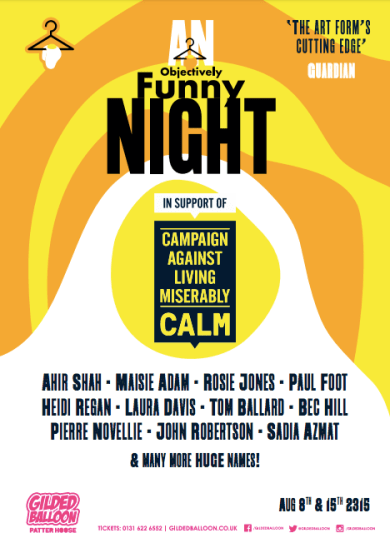
    Objectively Funny is a baby in Edinburgh terms, this being its first foray into multi-show production at the Fringe. We know they’re not ones to shy away from a bit of graft though, having run two massive festivals in London (‘the art form’s cutting edge’ – Guardian) and programming prestigious comedy venue The Albany. Perhaps it’s no surprise then that they’re producing a massive 10 shows at the Fringe and running a campaign to improve mental health support for the industry.

    These two one-offs (this two-off?!) will raise money for their charitable partnership with national good-doers CALM, and fund their own freely-available professionally-delivered peer support mental health workshops.

    An Objectively Funny Night will feature performances from all of the OF-produced acts over two shows, as well as positively brimming with star quality. Confirmed appearance-making Fringe favourites include Paul Foot, Ahir Shah, Rosie Jones, Maisie Adams, Pierre Novellie, Bec Hill and John Robertson, just to name a few.

    Martin Willis, the comedian and founder of Objectively Funny, said of the Night, “We have a lot going on at the Fringe this year, developing shows with some incredibly exciting young talent and doing what we can to improve the experience of anyone working at the Fringe. These two nights are a great opportunity to showcase everything we’re about, with some of our funniest friends on board too. Plus it starts at 11pm, so it’ll be a proper party.”

    https://gildedballoon.co.uk/programme/an-objectively-funny-night/

    Follow Objectively Funny in all the social media places:

    Twitter: @objectivlyfunny

    Insta: @objectivelyfunny

    FB: Objectively Funny

    www.objectivelyfunny.com

    Guru Dudu’s silent disco walking tours

    Edinburgh 4

    Guru Dudu are a company of performers and facilitators who are passionate about using play, love an laughter to engage people towards greater connection with themselves, each other and the outside world. Originating from Melbourne, they are now branching out into other cities in Australia, UK and Europe.

    Since 2013, Guru Dudu’s silent walking tours have been tearing up the festival circuit, offering participants a unique blend of interpretative dance, crazy improvisation, and spontaneous flash mobbing through different cultural settings. Inspiring and insane in perhaps equal measure, they offer participants an extremely rare thing in a day and age so often defined by rules and limitations: they offer people permission to play and celebrate their creative and quirky selves.

    Last year, Nothing in the Rulebook caught up with Senor Samba (pictured above) in an interview full of lycra and Bohemian Rhapsody.

    Check out available time slots and get yourselves on one of these tours through Guru Dudu’s website https://www.gurududu.org/fringe/ 

    Follow Guru Dudu on Twitter @gurududu

    Lobster

    lob ban(2)

    How is it just as easy to order a date on-line as it is to purchase a chicken burger?

    In 30 years, the cultural change in courtship has been vast. Today, overwhelmed by technology, are we losing sight of what human connection truly is…?

    Join Polly as she navigates the perils of love in the digital age. Armed with all the latest dating apps and sites, Polly rides the waves of players, lovers, weirdos – and everything between. Based entirely on real-life experiences, this hilarious, romping, multimedia exposé of modern dating scrutinises the deeper, brutal side of love and life, challenging our preconceptions of women and dating, sex and autonomy.

    From dreadful dates to exciting encounters, Tinder swiping, sexting, dick pics, pressuring parents and supportive friends… why is Polly so desperate…? What lies behind her relentless campaign…? And what might any of us do when our world falls apart?

    Hot on the heels of #MeToo and diving unapologetically into the darker sides of love and life, Lobster unpicks women’s experiences of modern dating with careful and incisive observation.

    Lobster is written and performed by Gemma Harvey.  Follow her on Twitter @gemmagemsharvey. 

    https://www.whatsonstage.com/shows/edinburgh-theatre/lobster_201698 

    Honest Amy

    05-01-2019-165646-9839

    Remember when I got cancer and had a breakdown in Tesco’s? Then literally went mental and posted some songs on Twitter?

    When anxiety was at full capacity level, my mum bought me a ukulele and it has saved my life. I wrote some songs and randomly posted them online. Shit. Got. Real! Before I knew it there were millions of hits. I have no idea how it has all happened but people just seemed to relate to my random bedroom tales!

    Starring Amy Booth-Steel (@AmyBoothSteel) and directed by Kathy Burke (@KathyBurke), this is a common story about common people. Check. It. Out.

    https://www.pleasance.co.uk/event/honestamy#overview 

    Padre Rodolfo

    2019CIARNDO_PH

    World-famous lothario, swordsman and butthead Rodolfo is back! Following an unspeakable tragedy he turns his back on his lifestyle – rejects the sword, takes a vow of chastity and joins the priesthood. But as dark forces rise he must face personal demons and battle actual demons. A supernatural action-adventure and follow-up to the 2018 smash-hit Don Rodolfo, and the creation of Winner of  Ciarán Dowd, the Guardian describes this as “comedy of the most ridiculous variety”.

    https://tickets.edfringe.com/whats-on/ciaran-dowd-padre-rodolfo

    Follow Dowd on Twitter @Ciaran_Dowd

    Holly Morgan is a Witch. Get her!

    Witch-High-Res2

    Witches be trippin’. Witches be cray. Witches be just nice old ladies who live independently in a woodland retreat. Joined by her familiar, Tom the Cat, comedian Holly Morgan summons your favourite witches through song (stand up Stevie Nicks!) to put a hex on the patriarchy, one (barely researched) historical anecdote at a time. Witch? Please!

    https://gildedballoon.co.uk/programme/holly-morgan-is-a-witch-get-her/ 

    Follow Holly on Twitter @morgstoyou

  • What Editors Want
    What Editors Want

    The place of the editor in literary production is an ambiguous and often invisible one. As readers, we may notice their role only when a certain lack of editorial presence is felt in the books that we read (for instance, in many self-published works on Amazon). While, as writers, editors can seem to be the gatekeepers of publishing itself – more so, perhaps, than literary agents.

    Commissioning editors, for instance, are the ones who will judge whether or not a work is good enough for selection. And, as many writers will know, this is a judgement that can often end in rejection. After all, even the greatest writers of all times had their work rejected by editors who just thought it wasn’t the right fit for their publishing firm. Just think of Peter J. Bentley, the editor of Bentley & Son Publishing House, who famously turned down Herman Melville’s Moby Dick, asking the author: “First, we must ask, does it have to be a whale?”

    Meanwhile, there is an art to proofreading and good editorial work (often also conducted by commissioning editors, as well as editorial assistants and teams within a publishing company). Many litterateurs will have heard, for instance, of Gordon Lish – Raymond Carver’s editor, who is known by some as crafting the best bits of seminal works such as What we talk about when we talk about love from the ‘working manuscript’ Carver had originally given him.

    Yet while editors play such a crucial role in how literary works are acquired, developed and disseminated, it is a craft and role that is often ignored. This is no good at all; either for readers or for writers hoping that their manuscript will be judged positively by these literary gatekeepers to publication.

    So what exactly is it that editors within the publishing sector actually want?

    Fortunately, there’s a podcast for that

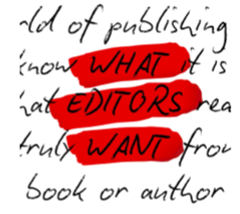
    What Editors Want is a new podcast where we hear straight from industry-leading editors about what they look for in a book and author.

    In the series, Unbound’s Philip Connor interviews a different editor from the world of publishing each week. It is aimed at readers who want to hear the behind-the-scenes story of how their favourite books get made, and aspiring authors who want to know how to get published.

    Connor has spoken to some of the biggest names in publishing and small independent presses that are taking a dynamic and innovative approach to making books. Along the way he has met the editors behind Nobel and Booker Prize-winning authors, ground-breaking nonfiction (from The Panama Papers to Why I’m No Longer Talking to White People About Race), with everything from kid’s books to cookbooks in between.

    In each episode, they’ll be discussing questions like whether or not you need a literary agent to get published, the importance of literary prizes and reviews, and whether editors can spot a bestseller.

    The problem with publishing

    Speaking about the podcast, Connor says:

    “publishing has a massive problem with a lack of diversity – it is staffed almost exclusively by middle-class white people and of course this means there is a huge lack of representation in which books get published. My dream is that this podcast will make the world of books more approachable and inclusive for the authors and publishing professionals of tomorrow by giving them access for the first time to learning about the career paths of industry-leading editors, and how they choose their books.”

    Check it out

    Episode 1 featured Faber & Faber’s Louisa Joyner discussing books like Call Me By Your Name, Shock of the Fall and Milkman.

    You can find it now in all the usual podcast places (iTunes, Spotify etc.) or via this link.

    Credit for the images in this article goes to Patrick Tomasso (via Unsplash) for the featured image, and to Phil Connor and Unbound for the ‘What Editors Want’ image.

  • Book review: Original plus DUB

    opd02_orig

    Here’s the premise: a person (poet, artist, writer, musician) chooses a collaborator (another writer, poet, etc.). They share a poem with one another, and then each produces a visual ‘dub’ version/remix of their collaborator’s poem.

    Now, perhaps unsurprisingly, as a collective creative ourselves, Nothing in the Rulebook was immediately inspired by this idea, which is behind Hesterglock Press’s Original plus DUB anthology. The concept of collaborative collage and remix stands in itself as a revolutionary act of artistic solidarity in a world in which individual competition has so long been the overarching creed. Simply put, we had to see for ourselves what such a work would look like.

    The first impressions of this work are undoubtedly of creativity unleashed. With the variety of poetry, prose, art, illustration, and the shifting styles of each – from more traditionally constructed poems through modernism, post-modernism and more generally at times some works that cross the borders of all sorts of metaphysical cages of ‘form’ that is beyond ‘post-post-modern’ and perhaps, simply, “new”.

    There’s so much to take in, to analyse and feel, that to run through each work piece by piece would require an entire thesis. So instead let us consider this work as a whole.

    (There’s still a lot to consider).

    This is remix; destructive construction; it is, at times, a little bit mad. But there is a strange beauty that lies within the frenetic energy of it all – a beautiful madness within the random that reveals itself as you excavate further and more deeply into the material. Reading the collection, therefore, becomes an exploration – a journey where one repeatedly makes new and unique discoveries, and, crucially, re-discoveries where you uncover new meaning in the remixed versions of the poems.

    So to say this is simply a unique or new work is to do it a disservice – there is little way to adequately do justice to how exciting reading the book is; partly because it seems we have been so worn down by the workings of a publishing industry so risk-averse that so many new books are essentially just copies of previously commercially successful ones. It’s refreshing, essentially, to read something that isn’t a prequel, sequel, reboot or celebrity memoir.

    The influences of the dub poetry movement provide the anthology with a rhythm and a beat that also highlights the editorial craftsmanship on show here – to create a genuine feeling of engaging conversation. Though this is not a simple dialogue, but a multitude of dialogues. The conversation is a group one, with multiple voices and refrains heard in both real-time and as echoes – so that there is almost a sense of temporal distortion; with memories and feelings about certain poems played back at you; only twisted and refracted, creating something similar, but ultimately entirely new.

    There is a danger with putting something like this together in that it becomes too chaotic (though of course, some may say chaos is itself a beautiful force of creation). Yet it never feels like that. Instead, there is undeniably a sense of control through it all, that makes the reading experience not unlike being on a heaving dancefloor listening to a collection to driving songs, all of which riff off one another, blending and refracting themselves and enhancing the beat. That is to say, by the time you put this book down, you may find your mind and pulse racing – you may be covered in sweat, and find yourself blinking at strange lights trying to make sense of the experience you’ve just had. But you will know one thing for certain; that experience was unlike any you’ve had before, and it was totally worth it.

  • Idylls_of_the_King_3.jpg

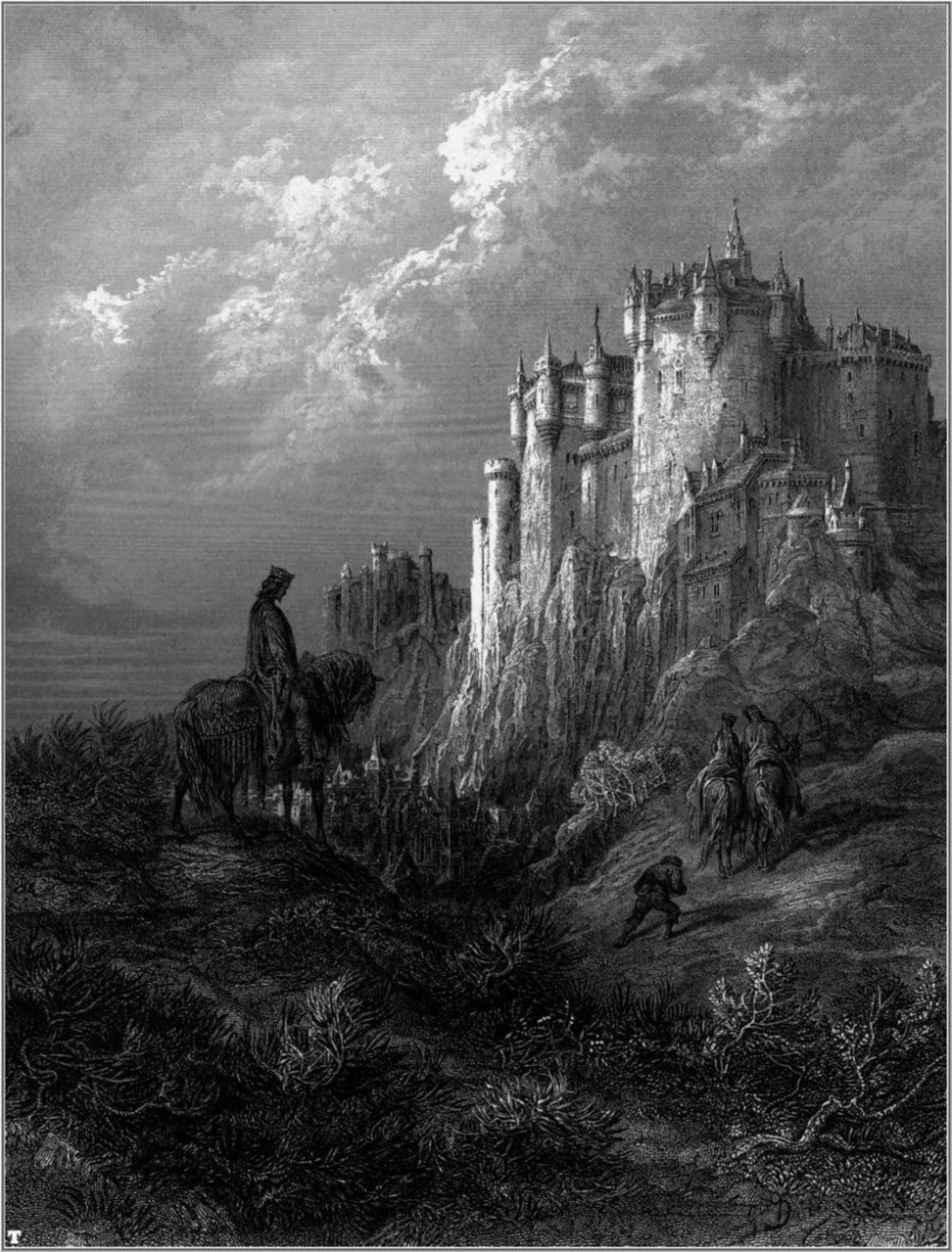
    So after the quest of the Sangrail was fulfilled, and all knights that were left alive were come home again unto the Table Round, then was there great joy in the court. The only obstacle marring this great joy was the fact that, for some inexplicable reason, the King had been seated next to Sir Kay at the Table Round and so therefore the Welcome Home feast was now going to be really shit.

    “I’m not saying that I could have definitely beaten Lancelot,” Kay said, taking a swig from his goblet. Arthur had been staring at the whole roast pig in front of him for the last seven minutes and, as he stared, one of the segments of lemon balanced precariously on its back began to slide down the buttery flesh towards its rump. “I just think that if I hadn’t sprained my wrist decking that ogre last week the tournament could have ended very differently.”

    “Mmmmm,” Arthur said. He glanced across the Table Round towards where Lancelot and Gawain were sitting, both laughing heartily. They were both so goddamned photogenic and cool, Arthur thought as Kay dove into another story that, had he been listening, would have made him want to introduce his forehead, quickly and aggressively, with the legendary tabletop. He watched as Lancelot ran a hand through his long blonde hair, still grinning as Gawain gesticulated charismatically, emphasising his sexy anecdote with even sexier hand gestures. Arthur knew that if he was sitting on their side of the table he’d be having such a great time. He’d be able to tell them both about the time he’d wenched his way through fifteen taverns in a single afternoon. It would have been so great. He clenched his buttocks in agony, which, in armour, is a particularly painful enterprise.

    *

    Meanwhile, on the other side of the kingdom of Logres, Morgan le Fay was brainstorming evil plans with her sidekick the Green Knight. She wrote the word SCHEMES in block capitals in pink gel pen on the parchment in front of her and then proceeded to spend five minutes encircling it neatly in a cloud. Carefully, she drew an arrow extending from the cloud and wrote KILLING ARTHUR at the end of it.

    “Right,” she said, looking up from the parchment. “How are we going to kill Arthur?”

    “I have a big axe,” the Green Knight said.

    Morgan nodded slowly before drawing an arrow extending from KILLING ARTHUR and writing the word AXE. She then reached for a blue gel pen and drew a circle around it.

    “Pink is for concepts,” she explained. “Blue is for strategy.”

    “Oh,” said the Green Knight. “Right.”

    *

    Meanwhile, back at the feast, Gawain was standing up at the table, his goblet held up high. “I propose a toast,” he announced. The stubble on his chin looked really good in the flickering light of the candles. “To our Sovereign and Lord, King Arthur.” Everyone cheered and much merriment was made.

    Suddenly, however, the huge oak doors were flung open wide, and a gust of wind extinguished all of the candles. Gawain’s stubble didn’t look so great any more. Lighting flashed across the dark sky.

    “According to the rules of pathetic fallacy,” Sir Tristam murmured. “Either something bad is going to happen or someone is feeling particularly passionate.”

    “Something bad must be about to happen,” Arthur said very quickly.

    A maiden was standing in the doorway and, as a flash of lightning illuminated her face, Sir Lancelot saw that she was the most beautiful woman in the world.

    “That’s the most beautiful woman in the world,” he whispered to Gawain.

    “Flip me pank!” Gawain replied. “So it is!”

    “Forgive my intrusion, my lord,” the maiden said, stepping forward into the hall. The doors slammed shut behind her and the hall was quiet once more. “But I have come to Camelot to seek your help.”

    Lancelot looked her up and down. Her dress was torn and ragged, though in more of a TopShop kind of way than a dirty, homeless way. It was hanging off one shoulder casually, exposing her collarbones. She didn’t look particularly bothered. Lancelot gulped.

    “Camelot is at your service, fair maiden,” Arthur said.

    “Yes, absolutely!” Kay agreed, a little too enthusiastically.

    “My father has been taken hostage by a troll,” the woman explained, her beautiful eyes brimming with tears. “My entourage of knights were all slaughtered but they’re just background characters so it doesn’t matter. I ran all the way here, ripping my dress in an aesthetically-pleasing fashion on the way.” She held the ribbons of fabric between her fingers and began to cry.

    In the speed of two antelopes, Lancelot had crossed the flagstone floor, had offered her a handkerchief and was cradling her cheek with his freshly moisturised hand.

    “Where is he?” he asked, pleased with the way his voice sounded simultaneously sensitive and badass.

    The maiden’s eyes widened as she stared with amazement upon the man whose voice was so manly while his hands were so soft. “On the other side of the enchanted forest,” she said. “I’ll take you there.”

    *

    Meanwhile, Morgan le Fay sat hunched over her piece of parchment. “Shit on it,” she spat, suddenly.

    “What is it?” The Green Knight asked.

    “I’ve misspelled ‘decapitation’,” she said.

    *

    They had plenty of horses in the stable but Lancelot said that they would cover ground quicker if they shared a steed. The maiden didn’t mind; his hair smelled nice. They set off towards the enchanted forest without further delay, Arthur waving them off from the walls of Camelot. As he watched them disappear into the distance, he smiled; now there would be a seat empty next to Gawain.

    About the author

    Ellen LavelleEllen Lavelle is a post-graduate alumni of The University of Warwick’s Writing Programme. An aspiring novelist and screenwriter, she has worked with The Young Journalist Academy since the age of fourteen, writing articles and making short films for their website. She’s currently working on a crime novel, a historical fiction novel and the script for a period drama. She interviews authors for her blog and you can follow her @ellenrlavelle on Twitter.