
• Writing Sex: How Journaling Can Help Us Have Better Sex Lives

    I’ve always been fascinated by sex. Not just the physical act, but interested in the context, what it’s all about. In my early twenties, I had a sexual experience so mind-blowing I was in an altered state for an entire day. I bought books about spiritual sexuality and even considered studying for a PHD. There was something more to sex that I wanted to discover or learn about.

    Then everything changed. I had a common medical procedure called LLETZ which removes abnormal cells from the cervix. The procedure left me with overwhelming sexual issues, including pain, loss of libido and numbness in my sexual organs. Not much fun.  It was very confusing as doctors had told me it was a completely safe procedure and never mentioned any possible side effects.

    There were plenty of side effects, some of which were extremely difficult to understand. Why did I lie in bed turning over again and again because I felt like I was floating? Why did I need to remind myself that I still had a physical body? Why couldn’t I write fiction anymore? Why did I stop listening to music, and feel as if I wasn’t really ‘living?’

    Throughout the years, as I’ve found various healing modalities to recover my sexuality, I’m beginning to return to who I was before; that inquisitive young woman who wondered; what is going on with sex?

    Why is our culture saturated with porn, and using sex to sell, and yet we can’t seem to have an honest conversation about sex?

    Why do we feel such shame and embarrassment about using the word orgasm or admitting that we are dealing with sexual dysfunction?

    Why are we culturally conditioned to think sex is only for the young and conventionally attractive?

    I have written a memoir about my experiences called A Cut in The Brain, which I’m currently crowdfunding to publish with Unbound. As I was writing the book, I felt that, in some ways, I was recrafting my sexual self and that, in itself, was a sexual experience.

    When I came up with a sentence I was pleased with, I would get a buzz of satisfaction. I would listen to uplifting songs, and even dance around the room. Sometimes I would work in a cafe, and as I’d walk home past the buskers outside the train station I would feel more alive and physically present in my body than I had done in years.

    Long ago, before the procedure, I used to practise Tai Chi regularly. My Tai Chi teacher was always telling me that ‘Chi’ – the energy that flows through the body – is sexual energy originating from our sexual organs. And as one friend pointed out to me, it’s also the origin of creative energy.  

    We currently don’t have a scientific explanation for what ‘Chi’ is, (or ‘Prana,’ a similar concept in Indian spiritual traditions.) But experience has taught me that creativity has everything to do with sexuality.

    If anything positive has come from my difficult experience, it’s that I am developing a ‘whole-life’ sexuality. Sex to me these days isn’t just the act of sex, but everything we do that uses that sexual, creative energy. Whether it’s writing, dancing, listening to music, or feeling that frisson of sexual attraction while having a conversation, or laughing with someone we feel attracted to. This is something I don’t take for granted because for years I didn’t have that feeling. For years, I didn’t feel alive.   

    *

    In her book Vagina, Naomi Wolf, talks about the ways in which societies deliberately try to control and suppress female sexuality. From women accused of witchcraft because they were ‘too sexual,’ to chastity belts, to clitorodectomy and hysterectomy – procedures used to treat ‘hysteria’ and mental illness.

    We might like to think that we have moved on in modern times, but in many ways, the methods of oppression have just become less obvious. For example, the contraceptive pill promised us sexual liberation but can actually cause low libido. Anti-depressants (more often prescribed to women) also causes libido issues, and loss of ability to orgasm. The practise of Gynaecology includes many procedures that can affect sexual functions, but the study of female sexuality is so poor that doctors themselves often aren’t aware of the risks.

    In addition, a huge number of women (1 in 5 in the UK), experience sexual violence over the course of our lifetime. Very few of us survive without some form of sexually traumatic experience.

    I recently read that around 40% of women are considered to be dealing with some form of sexual dysfunction, but sexual dysfunction is not our natural state.

    Writing for me has been a big part of my recovery process. It’s been a way of reinventing and reclaiming my sexuality. Writing has been a way to throw off society’s chains, the rules that dictate what sexuality can be. I haven’t tried to heal for the sake of a relationship, or pleasing a partner, but for myself. It goes way beyond the physical act of sex: it’s about enjoying being in my body, feeling confident, powerful, and happy. I want to feel alive and vibrant – enjoy life in this sensual world.

    Telling stories about sexuality can be scary. As part of my recovery journey I studied for a Certificate in Creative writing for Therapeutic Purposes from The Metanoia Institute. I felt that I needed the community and support of others while I worked on my memoir. I’m now sharing what I’ve learnt along the way in an online course; ‘Rewriting Your Sexual Self.’

    Here’s a little taster;

    Writing Exercise

    Please note that writing about this topic can bring up strong feelings. If anything feels too scary or overwhelming, then I recommend talking to a professional rather than trying to go it alone.


    Natalie Goldberg is one of my favourite creative writing teachers. She teaches a simple method of creative writing where we simply follow the thoughts in her mind and write them down. This is sometimes known as ‘freewriting.’

    You could try freewriting on the theme of ‘sex and sexuality.’ Just write the words at the top of your page, and then write down whatever comes to mind. Or you could reread this article and notice what words and phrases resonate or jump out at you. You could use them for writing prompts.

    I often find that when I’m freewriting, I can be drawn towards writing about problems and challenges in my life. I notice that if I keep listening to my thoughts and writing them down, then I am often led to insights or solutions. The focused attention of putting pen on paper can bring answers and understanding that I might not have gained otherwise.

    Something that can also help is focusing on sensations in your body as you write. Another one of my favourite writing teachers is John Lee, author of Writing From The Body. His book is all about how our best, most true writing, is not something that originates solely from the mind, but comes from what we are feeling in our body. So the mind becomes a vessel for translating what we feel into words. This ties in with the whole idea of our creativity, being something physical – the Chi.

    When I start wandering in my mind. I often bring my attention back to my body, noticing points of tension, and trying to relax them. This often results in a state of peace that helps my writing find clarity too.


    About the author of this post
    Kate Orson is a freelance writer, creative writing teacher, and author of Tears Heal: How to listen to our children, She has a masters in Creative writing from the University of Glasgow, and also a certificate in Creative Writing For Therapeutic Purposes. Kate is currently crowdfunding her memoir A Cut in the Brain – How I lost and Found My Sex Life and Creativity with Unbound.

    Her new course on ‘Rewriting your sexual self‘ starts in November. 

  • 46 famous books you can read for free right now

    Just a few years ago, the Kindle was being blamed for the death of the traditional book. Literary analysts circled the publishing and sales figures of giant and independent publishing houses alike, looking to confirm the trend so many expected. Yet the last few years have seen a reversal of fortune for e-books – showing quite a dramatic reversal of fortunes, with sales of ebooks plunging by over 20% since 2016, while sales of physical books increase.

    Yet while sales of e-books may be decreasing, the fundamental benefits of digital, electronic copies of books has changed. They are still a great means of saving space on your bookshelves, while also carrying multiple titles around with you on the move without forcing you to lug heavy weighted tomes with you.

    So, here at Nothing in the Rulebook, we’ve done you a solid. To compliment our collections of free online literature courses, as well as places you can download literary texts and plays for free (and entirely legally), we’ve brought you a list of famous books that you can now download and read online without spending a penny.

    Below, you can find links to works by James Joyce, Virginia Woolf, Jane Austen, Neil Gaiman and Ernest Hemingway (among others), while also brushing up on epic works from the literary canon like the Epic of Gilgamesh and Aesop’s Fables.

    Check out the list below – happy reading, amigos!

  • Poking Books

    Mark has a habit of bringing authors back to meet his housemate Ellie. But instead of letting them talk about their book, he’ll ask the author to talk about 3 books which influenced said book – Ellie has to guess what the author’s books is actually about. And it could be any kind of book, from literary tome to graphic novel or even a novelty stocking-filler book.

    Presented by Greenwich and Docklands International Festival producer, Ellie Harris, and filmmaker / ‘The Boy Who Stole Time’ author Mark Bowsher, Poking Books turns book podcasts on their head by starting with the author rather than their book. As well as talking about the 3 books which have influenced their own book, all Ellie has to go on are a few random facts about the author (such as them once having had a hair with 50 splits which they kept in a matchbox, that they have a cat called Chekhov or that they are allegedly the only person who has ever drunk Um Bongo in the Congo).

    The podcast started because co-host Mark Bowsher realised that as an author he was being asked the same questions over and over again. With his work as a filmmaker he’d often interview authors and find there were more interesting questions to ask. And most of all, it became clear that people’s influences weren’t always as obvious as people might expect.

    Poking Books is a fun, often irreverent look at all manner of books, featuring authors from all backgrounds which will keep listeners guessing until the end.

    Listen to the podcast and find out more via all usual channels via the links below:

    Soundcloud – soundcloud.com/pokingbooks

    Instagram: @pokingbooks

    Twitter: @pokingbooks 

    Facebook: fb.me/pokingbooks

  • My life without Pratchett, or how I failed to stop worrying and love the books
    Terry Pratchett – photo via Steve James on Flickr.

    I just need to get something off my chest that has been brewing for a few years.

    As a kid, I grew up with Terry Pratchett, some of the first books I read were the Carpet People, Truckers, Diggers and Wings. I then progressed to the Discworld series and I loved them. I loved books in general. I learned to read quite late in life and have Dyslexia, which made it worse, however as soon as I learned to read I was hooked. I would spend hours poring over books in the library and bookshops. I would pick up any fantasy or sci-fi book that grabbed my attention at car boot sales and charity shops. The world of literature had jumped out of Pandora’s box and I had no intention of closing it.

    Then a few things happened. I got a job in a book shop, figuring that working with something I loved would be a great thing to do. My nan died, which in turn triggered depression which has lingered ever since. Both of these things had an effect on me that I didn’t expect. I stopped reading, almost entirely. I went from getting into books and using ever spare second I had reading them to just… Well, you see I don’t even know what I did with the time. I was being bullied at work and that only made things worse, eventually I quit and got out of that hellhole. I thought maybe, just maybe my love for books would return. At that point the only real joy I had in reading was the yearly release of a new Pratchett book, it gave me a chance to escape into the Discworld with characters I knew and loved.

    Then Terry Pratchett died.

    I had never really cried over the death of a famous person, I never let it affect me. When Pratchett passed away, though, when that happened I bawled like a little baby. The last book released is still on my bookshelf; unread. I can’t bring myself to read it, beause if I read it then it will be truly over. If I don’t read it there is still one Discworld book that I have yet to read and it will be something left unfinished, something to look forward to. But I had nothing to replace my yearly ritual of getting one of his books and reading it.

    Since then my reading has been sporadic. The passion has, like so many things, died. I struggle to sit down and read now, whether it is sci-fi, fantasy, non-fiction, crime, general fiction, horror. I have tried many, many different books. I have tried picking up stuff that is out of my comfort zone and I have tried picking up things which sit right inside it; but nothing I have found can reignite the spark. That is something which really hurts.

    I want to start reading like I used to. I want to get lost in stories that stir something inside of me. I want to laugh, I want to cry, I want to hate the antagonist, I want to feel something, anything.

    Now, don’t get me wrong; I still love books. I still have something deep inside me which tells me I should read more, something that won’t let me give up. I guess one day I may find something that can fill the void. I’ll keep searching.

    Thank you for reading. Reply with a comment if you want, anything really. Take care.

    About the author of this post

    Hailing from the UK, Dennis Humm has spent a lifetime loving books from
    authors of all kinds. Over his life he has had a number of professions
    from bookseller to security test engineer. As of late he has started to
    make custom fountain pens with his own company, Den’s Pens, with the
    support of his loving wife and two children. Follow him on Instagram and Facebook.

  • Ignorance

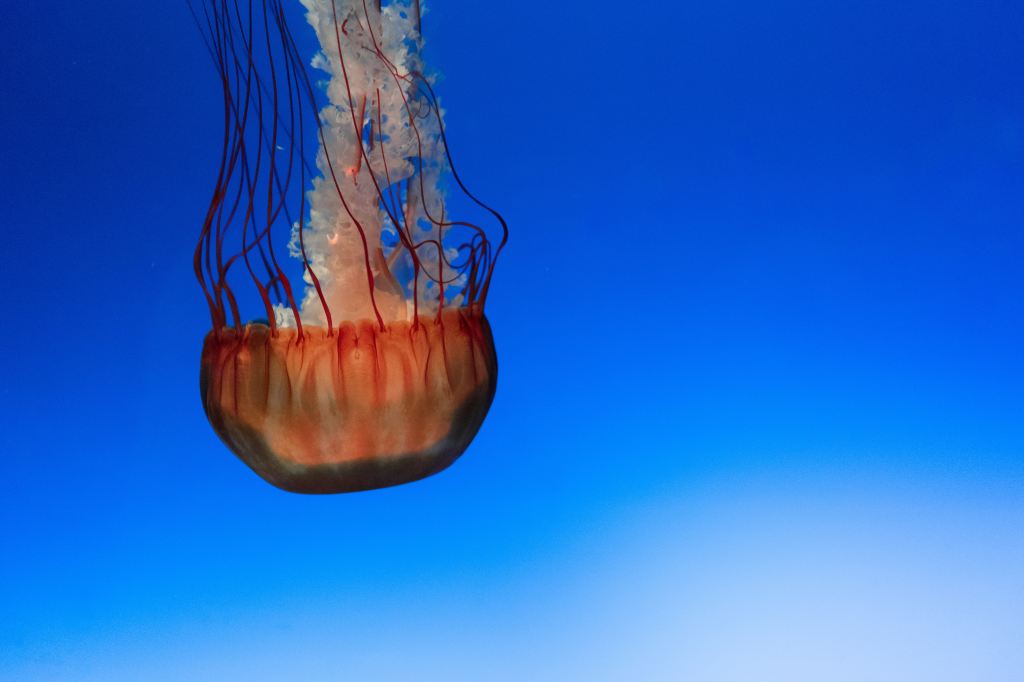
    Descending jellyfish legs bolt down like an awning at dusk when the shops shut, a sheath of downing powering up the innards, keeping us warm, keeping our books lit. Each turn, we blast out the outside with aplomb. A balloon bursts but we keep fucking. We believe in the bubble, fix its tears. One day you are bleeding so badly I think of the approaching dawn as some sort of vast, overarching punishment for my hubris. When you’re able, we ride out and straddle the coast, calm ourselves with old Simpsons jokes: “It’s behind me isn’t it” 

    “No, it’s in front of you”

    About the author

    Ben Armstrong is based in the Black Country, UK. He is an alumnus of David Morley’s Warwick Writing Programme and has been featured in a variety of online journals and zines. His first collection, Perennial, was published by Knives, Forks and Spoons Press in 2019.

  • “Listen to the people” – Little Free Library organisation in dispute with movement’s founding family

    Todd Bol was a man with a simple idea; to help bring people together using books.

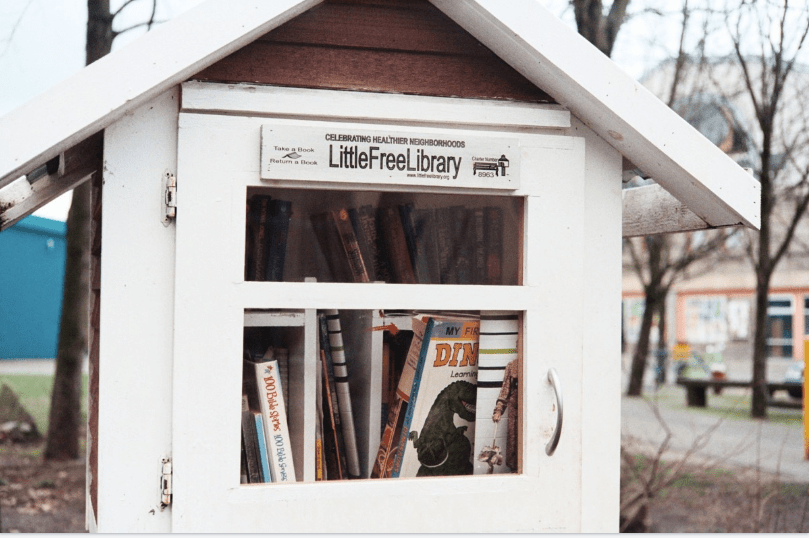
    He built the first ‘little free library’ – a wooden book shelter where people could swap books for free – in 2009. It quickly grew into a global movement, with some 75,000 registered Little Free Libraries (LFL) around the world.

    When he died, he left behind a legacy built on communities; on reading; on sharing ideas. The libraries not only provide access to books, but builds bonds between neighbours and fosters creative expression. In many ways, these little book swaps are pieces of public art; becoming monuments to human kindness and altruism.

    Yet it is this legacy that now seems to be under threat.

    The Bol family are becoming entangled in a dispute with the new management of the Little Free Library organisation – who they accuse of putting profit over protecting the core ethos of the Little Free Library movement.

    In an exclusive statement provided to Nothing in the Rulebook, the Bol family have asked the organisation “to stop applying for trademarks that inhibit the natural growth of little libraries.” and plead with the company to respect Todd’s vision, so that “making and using libraries [is] organic and unencumbered.”

    In June, LittleFreeLibrary.org applied for trademark control of “wooden boxes with a storage area for books”. Additionally, LittleFreeLibrary.org now stakes claim to word variations beyond their trademarked name “Little Free Library”, such as “little library” and “little libraries”.

    Trademark controls

    In doing so, these increased trademark controls may limit people’s choices going forward – potentially even preventing communities from coming together. As Tony Bol, Todd’s brother, explains:

    “Todd knew about limitations on the usage of LFLs trademark name, that’s somewhat why he embraced everyone and let the movement grow to what its become. It took on legs of its own and expanded in different directions, including Pantries, Blessing Boxes, and so on. Todd loved that and encouraged people to engage with one another.”

    Having a trademark for “a wooden box with a storage area for books” associated with the LFL name also means that at any point LFL could mandate book sharing groups or individuals register their library with LFL for a fee and would be able to dictate those fees. Putting these potential market driven actions in place runs counter to Todd’s philosophies.

    LFL claims they have registered for further new trademarks to ward off for-profit competition, yet his brother, Tony, shares a story about Todd that runs counter to this narrative:

    “A few years back, Todd was irked by someone selling a library that didn’t meet his standards, so he bought and modified it. He sent it back to the guy with a better design and told him that he should only sell libraries that can withstand all weather conditions.”

    “Todd was incredible that way, always reaching out to others in surprising ways. He always felt that there was room for everyone. He didn’t see competition, he saw a potential partner.”

    A plea to supporters

    LFL’s movement to secure a greater market share should perhaps come as little surprise; as the new executive director of the LittleFreeLibraries organisation is a former CitiBank, Morgan Stanley and Deluxe Corp. executive, reporting to a board chair who is a current Wells Fargo senior executive. 

    Yet this does not detract from the deep sense of loss and grief clearly felt by the Bol family, who say they are “saddened by specific changes that expand and overreach LittleFreeLibrary.org’s trademark controls.”

    In a plea to readers, library and book lovers everywhere, the Bol family close their statement with a call for the Little Free Library organisation to “listen to the people” and ask supporters to “join us in protecting the Little Free Library movement and ask LittleFreeLibrary.org to abandon its expanded trademark applications and overreach claims.”

    Read the Bol Family’s official statement here at Nothing in the Rulebook.

  • The Movement Is More Important Than the Marketplace

    Todd Bol (1956-2018) started the Little Free Library Movement in 2009. At that time he was unemployed and messing around with scrap lumber from an old garage door. His late mom – a retired school teacher – loved to read, and Todd was looking for a way to give her collection of books renewed value by sharing them with neighbours. He hammered together a book shelter fashioned after a red school house, about the size of an average air conditioner. During these early days of discovery for Todd and afterwards, Bol family members listened to him intently and helped him develop his ideas. 

    Todd next placed the book shelter on a pole in his front yard and watched as a fascinating culture emerged. The friendly and approachable red school house filled with books brought his neighbours together, and the sign he attached that said to help yourself to a book or two brought smiles to their faces. People did take books, but they also added their own; creating an eco-system of sharing. This reciprocity and goodwill got Todd thinking that his idea might work elsewhere, and quickly he became the Jonny Appleseed of the Little Free Libraries, taking his mission of easy access to books through little libraries across America. As the journey unfolded, Todd founded the Hudson-based nonprofit organisation Little Free Library with a friend in 2012. 

    Fast forward to today when front yard sharing has taken on a life of its own. Many like-minded people have come together to support the little library movement in different ways, including neighborhood associations, community groups, churches, public libraries, families, and even art collectives. Todd’s sharing concept has expanded from supporting literacy through books to helping others by providing canned goods, personal care items or household necessities, and beyond. Todd’s original idea naturally morphed into different things – something Todd embraced – and it all began as an the easy-to-do concept for everyone. 

    The Bol Family is committed to Todd’s vision of keeping the grassroots ideals of the Little Free Library Movement alive. We believe, as Todd did, that making and using libraries should be organic and unencumbered. Our family asks LittleFreeLibrary.org to stop applying for trademarks that inhibit the natural growth of little libraries. In June, LittleFreeLibrary.org applied for trademark control of “wooden boxes with a storage area for books”. Additionally, LittleFreeLibrary.org now stakes claim to word variations beyond their trademarked name “Little Free Library”, such as “little Library” and “little libraries”. The Bol’s respect the trademark; however, both “little library” and “little libraries” are common sense, generic descriptions for front yard exchange boxes and should be used freely by everyone. Our family believes these phrases do not confuse people with the LittleFreeLibrary.org brand. 

    The Bol Family wants only to protect the Little Free Library Movement that Todd created and represent him as only a loving family can. New leadership at LittleFreeLibrary.org is experienced at marketplace advancement and trademark expansion. Its new executive director is a former CitiBank, Morgan Stanley and Deluxe Corp. executive reporting to a board chair who is a current Wells Fargo senior executive. Their combined skill sets and business philosophies are changing Todd Bol’s direction for the Little Free Library organisation. Our family is saddened by specific changes that expand and overreach LittleFreeLibrary.org’s trademark controls. 

    We hope that the leadership at the Little Free Library will listen to the people that made it a movement. Join us in protecting it and ask LittleFreeLibrary.org to abandon its expanded trademark applications and overreach claims. These issues can be reversed with your help by reaching out and letting LittleFreeLibrary.org know you do not support the actions of their senior leaders. Our Bol Family does support the devoted team of good people at LittleFreeLibrary.org and wish to be only sharing happy stories about all things little libraries soon. We too hope these details here correct the misleading information recently reported in the Nonprofit Quarterly

    ~ Signed by the Bol family (Photographed below; the Bol siblings, Rick (d.12-9-18), Tony, Carolee, Todd (d.10-18-18), and Scott).

  • Misstep

    Feel the grime on it all – the production feels feral. We split pea pods and throw away the peas so we can suck the skin off of the pods. We ascertain that this is dessert bread at the brink of the picnic and I am so sorry that I didn’t go over the label. After having climbed numerous hills, one shoots up and grabs me like the hand in a b movie horror after the credits. We can’t have a happy ending now can we.

    Gone are the days when collecting insight afforded us anything, except for the hospitality of the well and another grain of darkness slopped in a pocket. Nietzsche did warn us not to stare. We write another wrought requiem and jump. After all, everything is hopscotch in retrospect.

    About the author

    Ben Armstrong is based in the Black Country, UK. He is an alumnus of David Morley’s Warwick Writing Programme and has been featured in a variety of online journals and zines. His first collection, Perennial, was published by Knives, Forks and Spoons Press in 2019.

  • Some of the finest war poetry you can read for free on Remembrance Day

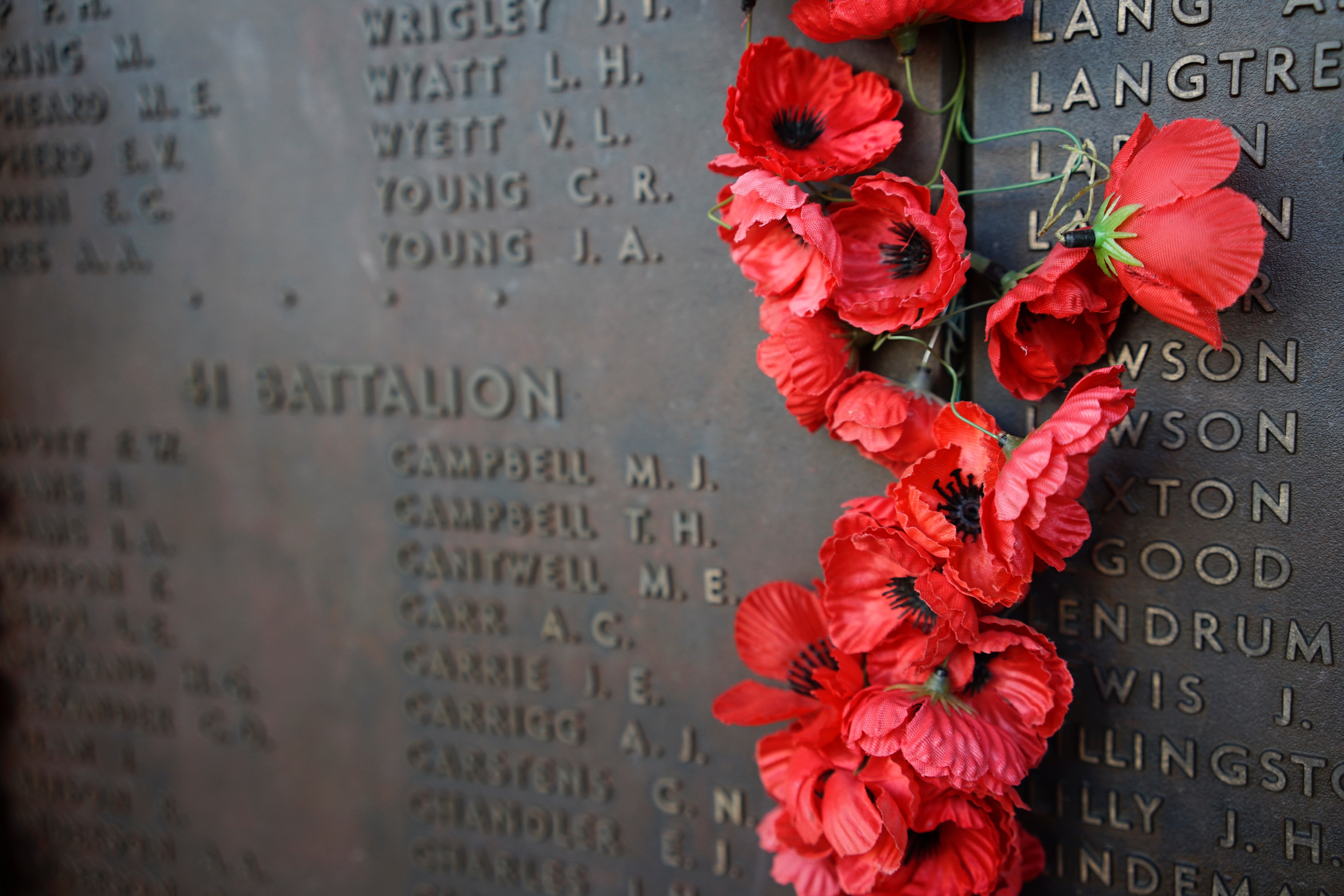
    “Irrespective of the uniforms we wore, we were all victims”, Harry Patch – dubbed ‘the last fighting Tommy’ – said of his experiences fighting in the First World War.

    101 years after the guns fell silent; 101 years after Henry Nicholas John Gunther, the last of some 19 million soldiers to be killed; we still gather to remember the horrors of this conflict – a conflict Patch described as “organized murder and nothing else.”

    Yet many of the soldiers who fought in this war themselves helped to immortalise it – through use of the written word; through use of poetry.

    Bearing witness through their words, these war poets – from both sides of the conflict – provide an extraordinary level of emotional power, which is is in its own terrible way magnificent.

    So, for remembrance day, we have chosen 13 war poems, which you can read for free through the links below.

    To the soldiers of the great war, by Gerrit Engelke

    “Were you at ruined Ypres?  I was there too.
    At stricken Mihiel?  I was opposite you.
    I was there at Dixmuide, surrounded by floods,
    At hellish Verdun, in the smoke and the crowds;
    Freezing, demoralised, in the snow,
    At the corpse-ridden Somme I was opposite you.
    I was facing you everywhere, but you did not know it!
    Body is piled on body.  Poet kills poet.”

    In Flanders Fields, by John Mccrae

    “In Flanders fields the poppies blow
    Between the crosses, row on row,
        That mark our place; and in the sky
        The larks, still bravely singing, fly
    Scarce heard amid the guns below.”

    Channel Firing, by Thomas Hardy

    “All nations striving strong to make
    Red war yet redder. Mad as hatters
    They do no more for Christés sake
    Than you who are helpless in such matters.”

    On being asked for a war poem, by William Butler Yeats

    “I think it better that in times like these
    A poet’s mouth be silent, for in truth
    We have no gift to set a statesman right;
    He has had enough of meddling who can please
    A young girl in the indolence of her youth,
    Or an old man upon a winter’s night.”

    Dulce Et Decorum Est, by Wilfried Owen

    “If in some smothering dreams, you too could pace
    Behind the wagon that we flung him in,
    And watch the white eyes writhing in his face,
    His hanging face, like a devil’s sick of sin;
    If you could hear, at every jolt, the blood
    Come gargling from the froth-corrupted lungs,
    Obscene as cancer, bitter as the cud
    Of vile, incurable sores on innocent tongues,—
    My friend, you would not tell with such high zest
    To children ardent for some desperate glory,
    The old Lie: Dulce et decorum est
    Pro patria mori.

    Easter, 1916, by William Butler Yeats

    “I write it out in a verse—
    MacDonagh and MacBride
    And Connolly and Pearse
    Now and in time to be,
    Wherever green is worn,
    Are changed, changed utterly:
    A terrible beauty is born.”

    Blighters, by Siegfried Sassoon

    “I’d like to see a Tank come down the stalls, 
    Lurching to rag-time tunes, or “Home, sweet Home,” 
    And there’d be no more jokes in Music-halls 
    To mock the riddled corpses round Bapaume.”

    Anthem for Doomed Youth, by Wilfried Owen

    “What passing-bells for these who die as cattle?
          — Only the monstrous anger of the guns.
          Only the stuttering rifles’ rapid rattle
    Can patter out their hasty orisons.”

    The Work, by Gertrude Stein

    It is astonishing that those who have fought so hard and so well should pick yellow irises and fish in a stream.
    And then a pansy.
    I did not ask for it.
    It smells.
    A sweet smell.
    With acacia.
    Call it locusts.
    Call it me.
    I finish by saying that the french soldier is the person we should all help.

    Strange Meeting, by Wilfried Owen

    “I am the enemy you killed, my friend.
    I knew you in this dark: for so you frowned
    Yesterday through me as you jabbed and killed.
    I parried; but my hands were loath and cold.”

    Attack, by Siegfried Sassoon

    “They leave their trenches, going over the top, 
    While time ticks blank and busy on their wrists, 
    And hope, with furtive eyes and grappling fists, 
    Flounders in mud. O Jesus, make it stop!”

    And there was a great calm, by Thomas Hardy

                                           I
    There had been years of Passion—scorching, cold,
    And much Despair, and Anger heaving high,
    Care whitely watching, Sorrows manifold,
    Among the young, among the weak and old,
    And the pensive Spirit of Pity whispered, “Why?”


                                           II
    Men had not paused to answer. Foes distraught
    Pierced the thinned peoples in a brute-like blindness,
    Philosophies that sages long had taught,
    And Selflessness, were as an unknown thought,
    And “Hell!” and “Shell!” were yapped at Lovingkindness.

    The Cenotaph, by Charlotte Mew

    “Not yet will those measureless fields be green again
    Where only yesterday the wild sweet blood of wonderful youth was shed;”

    A baker’s dozen of war poems hardly captures the variety or number of those available. So, we ask you, dear readers, which ones have we missed? Please do post and link to your favourite war poems in the comments below.

  • I followed my nose,’ – Historian Dan Jones on writing, Game of Thrones and preserving friendships
    NITRB Editor Ellen Lavelle caught up with historian Dan Jones in the following discursive interview

    It’s day fifty-three of Dan Jones’ book tour and he’s in The White Hart Hotel in Lincoln, eating haddock goujons. I’m opposite him, recording everything he says. He’s already offered me a goujon, as many olives as I’d like. The White Hart Hotel is a pretty fancy place for Lincoln; earlier, while I waited for Jones, the bartender intentionally set fire to someone’s cocktail, extinguished it with a flourish. Now, in the hour before he talks to a crowded auditorium about his new book, Crusaders, I ask Jones about his career, his writing, the reason he’s here.

    ‘I followed my nose,’ he says. ‘Going back to 2002, when I graduated with a history degree, I knew I’d enjoyed studying and I fancied doing a bit more but I couldn’t get funding to do a PhD. By the end of the degree, I specialised in medieval legal history and most of the people who studied that became lawyers. I went to fill out the forms for law school and I was like, ‘Urgh there’s too many forms!’ Instantly, that’s a sign you shouldn’t be a lawyer. That’s probably why there’s so many forms.’

    Crusaders, Dan Jones’s new book – available online

    Instead of law, Jones opted for journalism school. His policy of saying ‘yes’ to everything led him to strange and interesting places. In 2003, the invitation of a housemate working at The Guardian’s online sports desk led to an opportunity for Jones to cover the Rugby World Cup. He wrote for broadsheets and magazines, about anything they asked him to.

    ‘I did a newspaper column for ten years for The Standard and loads of magazine journalism,’ he says. ‘Even with the history out of it, that’s about a couple of million published words at least. Part of the business of being a writer is just writing a lot. If someone says they want to be a concert pianist, I’d say, ‘how much piano do you play?’

    Eventually, he met someone with an agent and, at their invitation, pitched the agent his PhD project.

    ‘I never structured anything,’ he says. ‘As time went on, I realised I didn’t want and was probably constitutionally incapable of having a ‘proper’ job. Working with other people in a mature way is beyond my capacity. If you ask me what I do, I say I’m a writer.’

    Structured or not, so far, it’s worked out pretty well for Jones. He’s only thirty-eight, but he’s already written eight books, some of which have been adapted into TV series. His media work is extensive, ranging from writing and presenting programmes about Tudor monarchs to consulting on fictional films based on the lives of Crusader Knights. It seems an exciting life and Jones looks more like a rock musician than a typical academic. However, it was the power of scholars that first attracted him to history when, on a school trip, he encountered David Starkey for the first time.

    ‘There was a whole bunch of Tudor historians,’ Jones tells me. ‘Diarmaid McCullogh I think was there and possibly Stephen Alford and I might be making this up and misremembering but I imagine John Guy was there too. And then Starkey came on. He was like the headline act – he was just mesmerising. This is, like, 1997 or 1998 – twenty years ago. He spoke ex tempore for an hour. There was some sort of weird charisma; someone speaking about events from hundreds of years ago can completely possess. It feels like a triangulation of two things that shouldn’t go together. It was that sense that you can be sort of…’ Jones thinks for a minute. ‘It’s not cool,’ he goes on. ‘Starkey has never in his entire life been cool; he’s kind of anti-cool. There’s something very powerful about being able to command the attention and interest of a whole crowd of people, when you’re talking about something arcane.’

    Starkey was there in the beginning and he’s still in Jones’ life now. Later, as a Cambridge undergraduate, Jones approached Starkey after a lecture and asked if he would supervise him for a project.

    ‘My director of studies did not want me to do it,’ Jones says. ‘It wasn’t part of his [Starkey’s] deal with Cambridge, but he said yes – he came up to Cambridge once a week specifically to supervise me. Incredibly generous with his time, incredibly thoughtful with his teaching. He taught me how to write, or got me thinking about how to write, rather than just how to regurgitate ideas in little blocks which is the lifeblood of the Cambridge Tripos.’

    Though he’s quick to say he does not agree with 80% of what Starkey says, particularly if it’s not about history, Jones considers him a good friend and a mentor, describes studying under him as ‘a privilege and a pleasure’. And whatever Starkey taught him about writing, he taught him well. Crusaders is a long book, coming in at just under six-hundred pages, but it’s immersive and fast-paced, doesn’t feel like work to read.

    ‘I like writing,’ Jones says. ‘I used to like having written and felt a great sense of relief when I finished. Now, though, I like the craft. I only got to that stage after I found my feet and my voice. You start to find the sentence structure easy and then the paragraph construction easy and then the chapter construction easy and then the book construction easy. Easy is maybe the wrong word – perhaps ‘not terrifying’.’

    Jones’ first book, Summer of Blood: The Peasants’ Revolt of 1381, came out ten years ago, in 2009. Since then, Jones cites two major events as having a profound impact on the appetite for medieval history.

    ‘The first is Game of Thrones, which came out in 2011,’ he says. ‘The second is the discovery of Richard III’s bones, which happened in 2013. It’s unreal the effect these events had; both global phenomenon and great for business. Every year, a new series of Game of Thrones would come out and some bright spark at one of the broadsheets would ring up and say they wanted me to write an essay about how Game of Thrones waslike real medieval history. The Richard III thing rolled on for two or three years as well. These were front-page weekend supplements. It lifted the popularity of the period. People were going ‘maybe medieval history isn’t that inaccessible, weird and dull – maybe I should read a book about it…’’

    And the book passed to them by a bookseller would probably be one by Dan Jones. It’s the guiding principle of his writing, he says, to write history books that read as easily as fiction. It’s clear, just from a short time with Jones, that he knows his business and his readers inside out. He would: he’s met a lot of them, on tours like this one. As with every brush with the general public, it seems as though some of these interactions have been interesting.

    ‘Someone who’s coming tonight is bringing a portrait of me,’ he says. ‘I’m prepped because they told me on Instagram.’

    Perhaps because he doesn’t wear the uniform of a typical academic, boffin-type historian, he gets a low-level of sexual propositioning on social media, usually, he says, from men.

    ‘My female colleagues just say, ‘Yeah, welcome to being a woman: routine sexual harassment from men all the time!’ Jones laughs. ‘I get it, I do. People build very strange fantasies about people on the television or people in some way in the public eye and project onto that person things that are sometimes really weird. It’s not traumatic, it’s usually just funny. I can’t imagine what it’s like to actually be famous. It must do strange things to your head.’

    We have to leave then, so that Jones isn’t late to his own event. On the route down from The White Hart to the venue, he asks me about my own writing, says I should read some James Ellroy. I say I will. I drop Jones off with the Lindum Books staff and find a seat in the auditorium.

    ‘We can’t leave any spare seats,’ says the gentleman next to me. ‘Apparently it’s sold out, so we all need to shuffle up.’

    I shuffle and wait.

    Dan Jones appears ten minutes later and, for the next hour, pulls a right David Starkey, talking about events from hundreds of years ago, mesmerising a whole room of people. He tells the story of individual crusaders, real people from Yorkshire, Sicily, the Middle East. People that walked and talked, travelled and wrote it all down. Like Game of Thrones, the book is told through viewpoint chapters, gives you time to settle with a character, understand them, feel it all from their point of view. The story is told by men and women, Christians and Muslims, Arabs, Jews, Turks, Egyptians, Berbers, Mongols and Vikings. It’s about the people sailing across the ocean and the people they’re sailing towards. People that are right, people that are wrong, people that are both. People like us, sitting shuffled together, in this auditorium, listening to Dan Jones.

    I end up buying the book – of course I do – and I’m one of the last in the signing queue. As I reach the table, Jones smiles.

    ‘Hey,’ he says. ‘Do you want to see the portrait?’

    Behind the table, propped up against the legs, is a black and white depiction of Jones’ face.

    ‘You know, it’s not bad,’ I say.

    ‘Yeah it’s pretty good.’

    Though the job sometimes leads to odd places, at the core of Jones’ ethos is something very serious; it is only through re-examining events, through the careful analysis of supposed ‘truths’ that we get to hear the whole story. The real history is in the gaps, he says, the parts left out by primary sources. To truly understand a situation, sometimes we have to work hard. In this uncertain time, when polarising points of view can split people, friends and families apart, sometimes we need to turn the page, read a chapter from another point of view. In this uncertain time – at any time – a friend we don’t agree with is as valuable as one we do.