Samantha Maw photo by Lindsey Cawrey. Picture credit for the ‘Goat on a Bike’ drawing to Laura Jones.
Last month, NITRB had the chance to interview poet Samantha Maw about her writing and the time she spent teaching in Uganda. Now, we bring you Goat on a Bike, a poetic exploration of emigration. ‘In Uganda, every day the strange and unexpected were ordinary,’ says Maw. ‘Returning to the UK, with its clear rules and ingrained manners, was the real culture shock.’
Goat on a bike
An undignified turkey
swinging
beady-eyed
upended
feathers dancing
in the breeze
37 trays of eggs
on her head held
steady with a
scarred hand
A clutch of children
unbound behind a boda
grinning fearlessly in
in the heat-soaked wind
A cackle of chickens
scattering like marbles
across the
orange dust
A confused tortoise
airborne like a trophy
The seller hoping for a good price
The product dreaming of lettuce
and a safe, warm box
A giant yellow bloom
of jerry cans banging
out a hollow tune
A woman walking
in her Sunday best
no shoes
A broad-chested man
with a Hello Kitty Jacket
and a Santa hat
playing pool under a
hot tin roof
All traffic ignoring the red
lights and the Puffa fish
law enforcers in their white
jumpsuits and
oversized black boots
Armchairs stacked high
on a pick-up
a suited recliner enjoying
the wind on his face
The Blessed Furniture Centre
The Alleluia Tea Room Amen
This strangeness suits me
wraps around my soul
like I’ve returned home.
Samantha’s Radio Show Word Perfect is currently accepting commissions from writers. You can reach Samantha at smaw@sirenonline.co.uk
Christmas can be a fraught time of year, particularly if you’re a fictional character. Here are seven Christmases from literature that, whatever your plans this festive season, you’ll be glad aren’t yours…
Kicking things off with a classic…
Far From the Madding Crowd – Thomas Hardy
Bathsheba Everdeen’s husband – Sergeant Troy – is missing, believed dead, and has been for some time. Mr Boldwood, a wealthy, local landowner is obsessed with Bathsheba and is convinced that she will agree to marry him and make good on a half-hearted promise she made several years ago, if he throws the best Christmas party EVER. However, even during the party preparations, things do not seem right:
‘Intended gaieties would insist upon appearing like solemn grandeurs, the organization of the whole effort was carried out coldly by hirelings, and a shadow seemed to move about the rooms, saying that the proceedings were unnatural to the place and the lone man who lived therein, and hence not good,’ (pg. 419)
It’s all a bit try-too-hard. Boldwood is in such a state about it all that he can’t tie his own neckerchief and has to ask Gabriel Oak, the novel’s good-guy-long-suffering-hero, to tie it for him. Of course, Oak is also in love with Bathsheba, was turned down in the early pages of the novel, and has to endure Boldwood’s twittering about his hopes for the future, how it’s all going to work out this time.
Then the party happens. The fact that Bathsheba turns up in mourning dress pretty much sets the tone. Just when she thinks she’s stayed long enough to be polite and is about to make a quiet exit, Boldwood confronts her in a quiet room, coerces her into saying she’ll marry him after six years if Troy does not turn up. Of course, then Troy turns up in uniform, demands Bathsheba return with him. Boldwood shoots him, which is one way of winning an argument. He’s about to turn the gun on himself when his servant grabs it from him.
‘There is another way for me to die,’ Boldwood says and walks out into the darkness.
Believe it or not, Far From the Madding Crowd is among the chirpier of Hardy’s novels. Not so hot on Christmas spirit, though.
Veering off into the realm of fantasy now, we spend a fairly unmagical Christmas with everyone’s favourite boy-wizard…
Harry Potter and the Deathly Hallows – J.K. Rowling
We’re in the seventh book now so, by this stage, we’ve read six descriptions of the amazing Christmases at Hogwarts. This time, Harry isn’t at Hogwarts. He’s freezing, in a tent with Hermione and everything’s terrible.
They’re in the middle of their quest for Horcruxes; Ron has abandoned them and they’re about to hit Godric’s Hollow. They have to go in disguise as Voldemort now knows what they’re up to so they nick hairs from ‘innocent Muggles who were Christmas shopping’ so that, when they apparate, they won’t look like themselves.
It’s only when they arrive at the scene and hear a carol start up in a nearby church that Hermione realises it’s Christmas Eve. Harry has a moment by his parents’ grave and visits the ruined cottage where they died but then things take a turn when they meet Bathilda Bagshot and it turns out that Nagini, Voldemort’s snake, is actually living inside her. There’s a fight and Harry passes out, is forced to relive the moment his parents died. He wakes up on Christmas morning, drenched in sweat, to find that Hermione rescued him from the scene but that, in the process, she broke his wand. She’s crying and he’s mad but trying not to be because he’s a good guy and she didn’t mean to but nOW THEY’RE A WEAPON DOWN AND HAVE TO CARRY A SOUL-SUCKING HORCRUX EVERYWHERE
As far as Christmases go, it’s pretty bad.
Next, a trip through time and across the pond. 1990s Vermont: ice, murder and a really bad Christmas…
The Secret History – Donna Tartt
In his first year at Hampden College, protagonist Richard Papen decides to spend his winter break in an unheated apartment building. ‘My quarters were uncomfortable, certainly,’ he says. ‘They were foully dirty and bitterly cold; but it never occurred to me that they were actually unsafe.’ There’s a hole in the roof and the cold is like nothing he has ever experienced before: ‘In the morning when I woke I was as stiff and sore as if I’d been beaten.’ He makes mandolin struts for his landlord (as you do) and, when he tries to repair the roof, almost falls off. He cuts his hand on a tin tile and has to get a tetanus shot.
After this, Richard Isn’t Very Well. He doesn’t tell anyone about his situation because he’s too ashamed – his friends are extremely wealthy and Richard is pretending to be wealthy too. He hops from one warm, public building to another:
‘Christmas came and went without notice, except that with no work and everything closed there was no place to get warm except, for a few hours, to church. I came home afterwards and wrapped myself in my blanket and rocked back and forth, ice in my very bones, and thought of all the sunny Christmases of my childhood…’ (pg. 135)
He throws rocks into the river to prove to himself that he exists and, after a time, considers throwing himself in. ‘One night, in a dream, I saw my own corpse, hair stiff with ice and eyes wide open,’ (pg. 139). It turns out he has ‘chronic hypothermia, with bad diet and a mild case of pneumonia’ on top. It’s only way into January – the coldest on record – that friend Henry turns up and effectively air-lifts him out of the trauma and into hospital.
‘If there is a place where lists are kept and credit given,’ Richard says. ‘I am sure there is a gold star by his name.’
Interesting, considering the other marks that must be there too…
Continuing with our stint in the US, this next Bad Christmas involves an after-dinner Christmas activity that you might want to consider suggesting to the most irritating of your young cousins…
This Boy’s Life – Tobias Wolff
Tobias, who at this point is going by ‘Jack’, and his mother have recently moved in with a guy called Dwight and his two children. Dwight is trying to convince Jack’s mother to marry him and has an interesting way of bonding with his prospective stepson over the Christmas period:
‘Dwight had filled several boxes with horse chestnuts from a stand of trees in front of the house, and now I was given the task of husking them… Dwight would dump a pile of nuts on the floor of the utility room and put me to work with a pair of pliers until he judged that I’d done enough for the night. The husks were hard and covered with sharp spines. At first I wore gloves, but Dwight thought gloves were effeminate. He said that I needed bare hands to get a good grip on the husks, and on this point he was right, though he was wrong when he told me the spines weren’t sharp enough to break skin. My fingers were crazed with cuts and scratches. Even worse, the broken husks bled a juice that made my hands stink and turned them orange. No amount of borax could get it off,’ (pg. 80)
This is the only time his step-siblings see him, crouched over nuts in the utility room of their shared home. Sometimes, Dwight comes in to check on him. The smell is ‘deadly’. His hands grow the ‘colour and glow of well-oiled baseball mitts’. Local boys pick on him and eventually he gets into a fight, but ‘…by then the nuts were all husked anyway.’
And Christmas is over.
Christmas is a time of love and joy, for kisses under mistletoe. Unless you don’t like the guy. Then it’s time for really awkward carriage rides back to your country estate…
Emma – Jane Austen
Emma Woodhouse spends the first part of the novel trying to hook her friend, Harriet Smith, up with eligible bachelor Mr Elton. She thinks it’s going pretty well until the Weston’s Christmas party, where she has to share a carriage home with him. It’s then that he starts ‘making violent love to her: availing himself of the precious opportunity, declaring sentiments which must be already well known, hoping – fearing – adoring – ready to die if she refused him…’ (pg. 100)
Hold the phone. Mr Elton is not in love with Harriet but with Emma herself. The carriage ride gets increasingly awkward as it becomes clear that Emma really does not return the sentiments and that Mr Elton is a terrible snob: ‘No doubt there are men who might not object to…Everybody has their level…’
When the carriage pulls up at his house, he storms out without as much as a ‘good-night’ or ‘Merry Christmas’ – the Regency England equivalent of a bitch-slap. Season’s Greetings to you too, pal.
All families have tensions but this next novel takes the cake. It takes the cake, whips it in the front yard, psyches it out, hangs it from a tree and then eats it in front of its next of kin. It is, of course, the most gothic of all the gothics, the ghoully window-scratcher itself…
Wuthering Heights – Emily Brontë
Cathy has been at Thrushcross Grange for five weeks and returns to Wuthering Heights on Christmas Eve. She’s had something of a makeover in that time. Before she left, she was a scruffy troublemaker that enjoyed getting into all kind of scrapes with her servant-friend Heathcliff. One of these scrapes involved sneaking onto the Thrushcross estate and spying on the insipid kids that live there – Edgar and Isabella Linton. While there, however, Cathy gets attacked by a guard dog and tells Heathcliff to run, which he does. The Lintons take Cathy in for five weeks and, when she returns, she’s quite the young lady.
Things are tense. It’s Christmas Eve and Nelly – the narrator and maid – has gone to a lot of trouble to show off for the Lintons, who will be staying the night. She’s shined the pans, baked a cake. Cathy turns up, all dolled up, and laughs at Heathcliff for being dirty: ‘How very black and cross you look! And how – how funny and grim!’
Heathcliff takes offense and won’t shake her hand, storms off across the moors and even leaves the cake Nelly has put aside for him. He has a think though, while he’s out and when he comes back on Christmas morning, he plucks up the courage to ask Nelly if she’ll ‘…make me decent. I’m going to be good.’
Nelly spruces Heathcliff up and feels pretty pleased with herself. BUT THEN: when he goes down to dinner, Hindley (Cathy’s horrible brother) says he doesn’t want Heathcliff around because ‘he’ll be cramming his fingers in the tarts and stealing the fruit…’ Rude. Nelly says she’s sure Heathcliff won’t, that he’s on his best behaviour, but by then Hindley is on a roll:
‘He shall have his share of my hand, if I catch him downstairs again till dark. Begone you vagabond!’
Then Edgar Linton joins in and says Heathcliff’s hair is really long and looks like a horse’s mane so Heathcliff grabs a tureen of hot apple sauce and tips it up over Edgar’s head. Way to prove you’re civilised, Heathcliff.
Hindley whips Heathcliff and then later, mulling it all over, Heathcliff vows to Nelly that one day he will have his vengeance: ‘while I’m thinking of that I don’t feel pain.’
A fair few of the later disagreements can be traced back to this scene, to this Christmas and the apple sauce.
Heathcliff might have tipped a tureen over Edgar’s head but at least everyone left the table with their heads still attached to their bodies. If only the same could be said for the folks in the next tale…
Sir Gawain and the Green Knight – the Pearl Poet
Strictly speaking, this one isn’t Christmas but New Year. It’s still part of the festive season, however, so we think it still counts.
At King Arthur’s court, there is a tradition that on New Year’s Day the king will not eat until he has seen some great feat. This particular New Year, people are getting pretty hungry – no great feats are forthcoming. BUT THEN: the doors of the great hall swing open and in rides a massive green man on a massive green horse, swinging an axe.
The green man explains that he has come to test the bravery of the Knights of the Round Table, having heard tales of their adventures. He has a challenge. He dares any one of them to cut his head off, right there and then on the flagstones of the hall. He will let them do this on the proviso that he can return the blow in exactly one year’s time.
Sir Gawain is a young knight at the table, still yet to cut his teeth on a dangerous quest. He springs to his feet, says yeah sure, he’ll cut the guy’s head off. There’s no coming back from that, right? Except there is. Gawain lops the man’s head off only to have the man get up, headless, and snatch it back.
‘Great,’ says the Green Knight. ‘See you in a year, loser.’
And so, Gawain’s fate is sealed. In one year, the Green Knight will return the blow. By accepting the challenge, Gawain has walked straight into the jaws of death… or has he?
We think these seven make pretty bad Christmases. We’re glad we’re not pulling crackers with Hindley Earnshaw. If you can think of any others worthy of mention, comment below or tweet us at @NITRB_Tweets
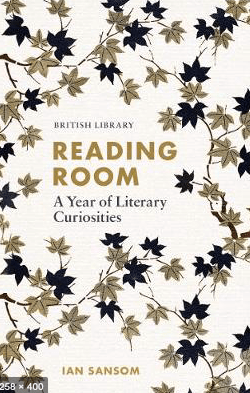
He’s too popular; the room is crammed with well-wishers, all desperate to congratulate him on his new book,Reading Room: A Year of Literary Curiosities. The book is published by The British Library, so it’s fitting that that’s where we are, in the small bookshop off the main atrium. There are books, drinks, people and, somewhere among them, Sansom himself.
Ian Sansom is a novelist, journalist, broadcaster and university tutor. He’s written over a dozen books, writes for The Guardian, Times and Spectator and regularly presents programmes on BBC Radio 4. His latest creative endeavour, Reading Room, is a scrapbook of Sansom’s reading career, with a literary extract for every day of the year. It’s a beautiful object, designed by The British Library’s Jonny Davidson, who Sansom personally thanks in his speech.
‘Without Jonny, it really would just be a mess of notes,’ he says. ‘He’s turned it into something extraordinary.’
He’s addressing a friendly crowd, made up of old students, old colleagues, old friends. Everyone is creative – over the course of the evening, I talk to screenwriters, actors, novelists, poets, short-story writers. They all have one thing in common: Ian.
‘I sent him a manuscript,’ says Chris, an ex-student. ‘I didn’t expect him to read the whole thing but he did. Then he sent me pages and pages of notes. What a guy.’
Abigail Day, the woman behind the idea for the book, works for The British Library’s publishing house. She too knows Sansom from her days at The University of Warwick, where Sansom was her personal tutor.
‘I remember the first meeting we ever had,’ she said. ‘I told him I was interested in publishing and he gave me all this advice, wrote down all these contacts. Then he told me I should probably talk to my personal tutor. I had to tell him that was him! He’d just been doing it all without obligation, to help me out. I think that sums him up really.’
Later, in his speech, Sansom cites two people responsible for the creation of the book. Day is one of them – she’s the person that connected Sansom to the project. ‘She was a brilliant student,’ he says. ‘And we kept in touch.’
The other person responsible, he says, is a man named Russell Sherman.
Sherman was Sansom’s A-level history teacher when he was at school, a comprehensive in Essex. There were only three students in the class so, instead of teaching the curriculum, Sherman drove them into London, parked in Bloomsbury, took them to the British Museum.
‘He was really into progressive rock,’ Sansom says. ‘So we used to listen to Led Zeppelin on the way.’
He’s not sure how Sherman managed it but he somehow got hold of three passes for the Reader’s Room at the museum. From the moment he stepped inside, Sansom says, he felt at home.
That’s what a good teacher can do. They make you feel like you belong.
Finally, the crowd around Sansom subsides and I reach him. The first thing he does is say he remembers me from his class, asks what I’m doing now. And so, even though it’s his book, his party, we spend a few minutes talking about me. Then I ask him about the book,
‘It’s thirty plus years of reading at whim,’ he says.
And why is reading so important?
‘I have never, ever had a single original idea. Everything I have done has come from multiple, multiple, multiple sources. It’s like everything I’ve eaten, I’ve swallowed and digested and has made its way out. This has been the resource that has allowed me to do everything I’ve wanted to do.’
Within its pages, you’ll find Jane Austen praising good apple pies (27th July) and Walt Whitman praising himself (3rd June). You’ll hear F. Scott Fitzgerald describing Gatsby as like ‘one of those intricate machines that register earthquakes ten thousand miles away,’ (3rd February) and D.H. Lawrence describing England as ‘only a spot of grease on the soup just now,’ (3rd December). Sansom has opened the doors to his mind, invites us in, to walk through a bibliography of his thoughts.
You’ll feel right at home.
Nothing in the Rulebook editor, Ellen Lavelle, is a graduate of the University of Warwick’s prestigious Writing Programme. An aspiring novelist and screenwriter, she has worked with The Young Journalist Academy since the age of fourteen, writing articles and making short films for their website. She’s currently working on a crime novel, a historical fiction novel and the script for a period drama. She interviews authors for her blog and you can follow her @ellenrlavelle on Twitter. She is currently commissioning features for Nothing in the Rulebook and can be reached via the nitrbeditor@gmail.com email address.
“There’s a problem in the publishing industry when it comes to class.” – Paul McVeigh and Kit De Waal take on literary establishment with new anthology from Unbound.
A new book from award-winning publishers, Unbound, seeks to address the entrenched class biases within our creative industries by championing the voices of marginalised, working class Irish writers.
The 32: An anthology of Irish Working Class Voices, will be a collection of essays and memoir, bringing together sixteen well-known writers from working class backgrounds with an equal number of new and emerging writers from all over the island of Ireland.
Edited by Paul McVeigh – author of acclaimed novel The Good Son – the book intends not only to support and promote the writing of working class authors, but to also challenge an industry that at times seems not to recognise the existence of working class people at all.
“It’s very much the case that these publishers seem to think, well, we’ve already published a working class story before, so we don’t need another one,” he explains. “We’ve already had Trainspotting. That’s your quota of working class writing used up I’m afraid.”
“Huge barriers” to working in publishing industry
Yet the problems in the industry are entrenched by the fact that it’s increasingly difficult for people from working class backgrounds to even enter into the sector.
“There are huge barriers within the industry to working class people as a whole,” McVeigh says. “Who can afford to do an internship at these publishing houses when they aren’t paying you any money?”
“Something needs to shift”
A sister anthology to Kit De Waal’s Common People anthology (also published by Unbound), The 32 attempts to smash down some of these barriers working class writers face, while also introducing readers to new voices and stories.
“This is about giving working class writers an opportunity and platform they wouldn’t otherwise have,” McVeigh explains. “You also have to remember that this is all happening in the context of collapsing payments for debut authors. Something absolutely needs to shift, which is why we’re offering all the writers who are published in The 32 a substantial payment for their stories.”
The book is also about improving the variety of stories readers are given. As McVeigh notes on his Unbound crowdfunding page:
“We read because we want to experience lives and emotions beyond our own, to learn, to see with others’ eyes – without new working class voices, without the vital reflection of real lives, or role models for working class readers and writers, literature will be poorer.”
Readers can support The 32 anthology by pledging for a variety of rewards offered by Unbound.
Paul McVeigh is a writer, blogger, playwright, teacher and festival director – Nothing in the Rule Book were lucky enough to catch up with him over Skype to discuss his latest literary project, The 32: An Anthology of Irish Working-Class Voices. McVeigh sits with his sister’s Dachshund as he tells us about the anthology, published by the award-winning platform Unbound.
The 32 is centred around the additional hurdles faced by working-class writers in comparison to their more affluent counterparts. It’s a project about which McVeigh is extremely passionate; as a working-class Irish writer himself, he too has faced many of these challenges.
Nothing in the Rulebook asked McVeigh about the new anthology and growing up during the troubles, about the lack of diversity in literature and to what it means to write: telling stories in a way that is true to who you are.
Paul McVeigh. Photo credit to Roelof Bakker. Credit for Featured Image to John Minihan.
INTERVIEWER
Could you tell us a little bit about yourself and your background?
MCVEIGH
I was born in Belfast in a very poor working-class area called Ardoyne, which was known at the time as the biggest slum in Europe. I grew up during the height of the troubles; as a child we had walls at the top and bottom of my street. I knew how dangerous it was to even just to go one or two streets away. My street was Irish but if you lived on the other side of the wall, you were British. It was a very fractured society – damaged, at war with itself.
I’m from a very large working-class family. I didn’t get much of an education at school but I went and did another year at a further education college to get the qualifications for university. I was the first in my family to do that.
I knew I wanted to do something artistic, but I didn’t quite know what it was. At the further education college there was an amateur dramatics society that I got involved with through a friend. I started doing little parts in plays and I was pretty terrible!
It was at a really interesting time for stand-up and I worked with some great comedians. They often wanted to create comedy characters and shows for Edinburgh so I’d help them. That’s really how I got into writing – bouncing off these writer/performers. I would help them to write their comedy characters and work out how to weave in storylines that combined all their different characters and sketch ideas. That’s how the writing really started.
Even so, I was so enamoured by theatre that when I went onto university, I studied theatre and English. I soon discovered that what I really wanted to do was direct. When I got back home after graduating, I set up a theatre company and theatre festival in Belfast. Then I was asked to come to London to work with stand-up comics.
Someone saw one of the shows I’d written and got in touch to invite me to submit a short story for an anthology they were producing. That’s when I wrote my first short story and first piece of prose.
INTERVIEWER
Have you always been a fan of literature and stories? Did you read a lot of books growing up or did that come later?
MCVEIGH
When I was younger we didn’t have books in our house – we weren’t that kind of family. But I fell in love with books anyway. I was a library boy – I spent so much time there. I read a lot of fantasy books – Tolkein, Ursula Le Guin – but I also read a lot of funny books, and I actually remember there was one book in particular, called Badjelly the Witch by Spike Milligan, which started me reading. I was probably about six or seven and I was obsessed with this book because of a character called Fluffybum the cat – I remember thinking it was hilarious that a book said the word ‘bum’. But what also struck me was that until then I had always thought that books weren’t meant for someone like me.
The insecurity stayed with me, though. I thought I could read a book but never thought that I could write one – that was for smart people, who spoke “proper” English. They weren’t for people with Northern Irish accents, who used the idioms and language I used; books didn’t swear as much as I did or the people I knew did, and the humour was different, you know. In Northern Ireland, our humour is very harsh and cutting and you don’t find that in books. And I was also aware in my youth that I was different, even though I didn’t quite know what it was. I got the idea that sexually I was interested in boys and girls but I didn’t really know what that meant you know – I was a kid. I didn’t see any books about me or any books about people who were anything like me, at all. I couldn’t read books about working class people, I couldn’t read books about Northern Irish people, I couldn’t read books about children questioning their sexuality. I never thought I could write a book because my story wasn’t present.
This was what was on my mind when I came to write my first novel; I wanted to write about a working-class kid and Northern Ireland, in a Northern Irish idiom. I wanted to write about a kid questioning his sexuality. It took me forty years to write the book that I’d been waiting to read since I was about ten or twelve.
INTERVIEWER
Literature for so long has been the preserve of the English middle and upper classes; not only in terms of the people writing the books, but also the characters inside of them – with characters from places outside of this world (whether that be Scotland, Wales, Northern Ireland, or from working class backgrounds) always being shown as caricatures – very different from the stalwart upper class English hero or narrator, who never errs and always speaks in such eloquent, ‘correct’, Standard English, never swears. And that’s not authentic; it’s not the real-life experience that so many people have.
What you’re saying is almost reminiscent of what James Kelman has spoken and written about after he won the Booker prize in 1994, when the literary establishment described it as “vulgar”, and he had to try and explain to him that he was just writing about the Glaswegian working class world he lived in and that this was reality for lots of people outside of the literary establishment.
Were you therefore always quite conscious about literature’s ability to exclude people from different backgrounds?
MCVEIGH
Absolutely and it’s important to say it isn’t just literature. It’s radio, it’s television, it’s film. Nowadays you might get the odd regional voice on some shows, but even this only started maybe 30 years ago with Channel 4, I think. You started to get regional voices but that might have been the first time you ever heard some of these accents and voices!
It is interesting though – I was at an event recently for the anthology Common People in Durham, and I was doing a talk about the danger of the single story, which is this idea I first heard expressed by Ngozi Adichie that there is ‘one African story – and that’s it’ more or less, or there’s one Irish story, or one working class story. We’re not allowed to have more than one.
I was giving this talk at this event, and someone put his hand up and said, well, we have had a working-class story – Trainspotting. Which was exactly my point. I had to say, ‘Isn’t it funny that you’ve named a book that was published 30 years ago?’ I asked if he could name any others and he couldn’t.
It’s the same across the board. You can only have one gay person on TV at a time; we’ve got Graham Norton, we don’t need another one. Back when I was writing comedy, it was: ‘we’ve got our black comedian, we’ve got Lenny Henry, we don’t need another’. It’s the same with women in comedy. And, yes, it is changing; slowly, but it is changing. These ideas take a long time to shift.
When my book, The Good Son, first came out, I had a couple of reviews in the Guardian. The first was quite small but relatively complimentary; the second was as part of the Not The Booker Prize and the reviewer spent most of the time talking about how my book was similar to Paddy Clarke Ha Ha Ha, which was a book out many years ago. And the reason the reviewer compared the two was because they were both about a working-class boy in Ireland. It’s the same thing again; “we’ve had one of those stories”. It doesn’t matter that one is set in the 1950s and one is set in the 1980s. It doesn’t matter that one is set in Dublin and one is set in Belfast. It doesn’t matter that one is set in the troubles when there’s a war on and one isn’t. It doesn’t matter that one is about a boy whose sexuality is fluid and one isn’t. It doesn’t matter because it’s about a young working-class boy who is funny on the island of Ireland – and we already have had one of those, so we can’t have another one. Frankly, I think the tokenish reduction of the working class into caricature or a single story is disgraceful.
INTERVIEWER
You’re currently crowdfunding for your anthology, The 32, through (award-winning) publishers, Unbound. Is the reason you want to make the book in part about challenging this idea of there only being “one story” for working class people?
MCVEIGH
For sure, you know, the thing about this anthology is that there are so many different experiences of being working class. And, of course, there are similarities – there are human similarities; there are similarities around what it means to grow up lacking access to the things other people take for granted. But every person’s experience of being working class is different, and there is a myriad of different voices as a result. Every family is unique and every place you grow up is in different – we have just a rich and diverse experience within our class as everyone else.
INTERVIEWER
The anthology is intended to be a sister publication to Kit De Waal’s Common People (Unbound). Why is it important that these books are published and the stories within their pages told?
MCVEIGH
There’s a problem in the publishing industry when it comes to class. It’s not just about the lack of their stories in literature, but there are huge barriers within the industry to working class people as a whole. And Kit De Waal really came up with the idea for collecting these working-class voices as an essential assault on these barriers.
So it’s about that, but it’s also about the richness of working class life. And it’s also – and I think this something I felt particularly personally drawn to – it’s about this idea that you have to ‘see it to be it’.
INTERVIEWER
Giving working class writers faith that their stories do matter and are important?
MCVEIGH
Yes. You know, I came to writing very late because I didn’t think it was something I was able to do. I never thought I had a chance at a seat at the table. And it’s entirely because of my background, you know – it’s the lack of education, which hits your confidence and makes you think you just aren’t going to be able to enter into this literary world.
All this is also to do with the industry as well. As a working-class person you’re often denied access to the opportunities others get.
A great example of this is a friend of mine, an excellent writer. She was at a dinner party, and was sitting next to the editor of a big publishing house who, and during the conversation the editor asked her to send in her manuscript and she got her book published. Now, there’s nothing untoward going on there because she’s a great writer who was always going to make it; but how many working-class people are going to be sitting at those kind of dinner parties because they’re friends of friends with these middle and upper-class professionals from within the industry?
You know, it’s this same thing – who can afford to do an internship at a publishing house when many aren’t paid? Middle and upper-class boys and girls can. The industry is basically run on these unpaid internships and the only people who can afford to do these are the folk who don’t need to depend on money or wages because daddy bought them a flat in Hampstead in London so they can live there for free which means they can work for free (or little) and do some writing and make connections within the industry. How many times do you read on the Bookseller that someone who works in publishing has just sold the rights to their book? When I see that, I wonder how many working-class people can go and get those jobs and have that incredible learning experience, make those connections?
Another thing that isn’t often considered is also the familial and social pressures that working-class people are put under not to pursue these sorts of careers. Certainly, when I was leaving school there was a lot of pressure not to go into the arts. My family had seven kids and they needed me to go out and get a job and bring money in. And these are the sorts of pressures that people who aren’t working class don’t always have.
The Common People and The 32 anthologies are about challenging the industry and giving writers the platform they wouldn’t otherwise have. After Common People was published, several of the authors featured in the collection also got agent. When there were events at literary festivals, new writers from the anthology had to be invited alongside famous ones, so they got their chance to go out and build an audience and gain experience of that circuit.
INTERVIEWER
And all of this is in the context of author’s incomes falling to abject levels. Even established writers like Philip Pullman are complaining about it. Within this context, what chance to people from working class, vulnerable or marginalised backgrounds have of going out and actually making a living from their passion? And when you make it difficult for people to make a living from their writing, it’s not only bad for writers but also bad for literature itself, for audiences and readers who get the same stories repeated again and again written by the people who can afford to write.
MCVEIGH
Absolutely – though don’t feel too bad for Philip Pullman! I’m sure his advances are still far and above what most writers are getting. The people you should feel sorry for are the debut novelists. The average advance for a debut novelist is around a thousand pounds. And often they’ve spent years working on their book. A thousand pounds is nothing in that context! It’s what – less than month’s wages? For years of work? Something needs to shift, which is why we’re offering all the writers published in The 32 a good rate for their stories, in anthology terms – there are 32 after all, and books don’t make that much.
INTERVIEWER
Why did you choose to go down the crowdfunding model of publishing through Unbound?
MCVEIGH
In part it’s because Kit had done this already with Common People and it had done so well – it raised its funds quickly enough, and the book became a bit of a sensation. Unbound also have experience with Common People and they’ve done an Irish anthology, Repeal the 8th about the abortion law in the Republic of Ireland, so it really seemed like the logical choice!
INTERVIEWER
And in terms of when you write personally, what is it that draws you to a story initially? Is it your own biographical experience or is it a topic or theme you’re particularly interested in that you want to explore?
MCVEIGH
I think it’s both of those. I’m not a prolific writer but quite often the process of writing I follow is the same: it occurs to me that an experience I’ve had hasn’t been described in a particular way or an experience has taken me by surprise. I tend to sit on that idea for a long time – probably too long as it can be a few years – and I think about the form the idea should take, whether it’s a short story, play or novel. Then I start working on it and editing it and, by the time that it’s gone through all that, it’s also no longer autobiographical in plot.
So, for example, I’ve recently written a short story, Cuckoo, for BBC Radio 4, which I wrote after going through quite a big surgery. You definitely get a bit weird after going through surgery. You aren’t the same. And so that’s what inspired this story.
INTERVIEWER
How many drafts do you go through before you’re happy for your writing to go out into the world?
MCVEIGH
With my novel, it went through scores of drafts. With short stories, I spend a lot of time thinking about them before starting so, by the time I sit down to write, I can more or less write them in one go. Once I’ve written them, I normally send them to a group of very trusted readers before submitting for publication.
I definitely need that outside eye to review something before I’m ready to send my writing out into the world. I have so many stories in my desk drawers that I’ve never sent out to anyone. I don’t think they’re dreadful, they’re just not quite ready. I find it really tough to let go of an idea or a story – sometimes I do want to hang onto them. But I don’t think it’s necessarily a bad thing to not send everything you write out into the world.
INTERVIEWER
Do you think there’s a pressure, though, on writers to just get their writing out into the world for the sake of ‘content’?
MCVEIGH
For sure. There are definitely things I’ve written, including a collection of short stories, and another idea for a novel, that I’d love to get out there. But I think one of the most important things about writing is that you should only put stuff out there when you have something to say.
It’s about having a philosophy; this piece is about love, or this is about the way I see the world or my understanding of what makes people do the things they do. If you don’t have that, why would you want to add to the noise? For myself, I say ‘if you don’t have something that’s necessary and important to say; then shut up!’
INTERVIEWER
Do you subscribe then to the idea put out by Maya Angelou that there is “nothing more painful than bearing the agony of an untold story inside you”? Or perhaps Bukowski’s notion that, if “it doesn’t come bursting out of you like a rocket”, then you shouldn’t write?
MCVEIGH
Yeah and I think that’s definitely true. When I wrote my novel, I definitely put everything into it. But the danger of that of course if that you leave yourself a little empty afterwards. When you put every part of yourself into something you’ve written, it can be draining. It can leave you asking what else you can say? What else can you talk about now?
So that’s really what I’m waiting for now. I’d love to write another novel but I have to find something that will sustain that passion and commitment first.
INTERVIEWER
What are your main tips for writers who might be thinking of submitting to The 32 anthology? Do they have to make sure they have something to say first?
MCVEIGH
The anthology is very particular; what we’re asking the published and unpublished authors for is memoir or an essay. Ideally the writing will be about someone’s personal experience so writers should tell their truth as best they can.
It’s funny; I was writing comedy but then when I first started writing short stories they were all really fucking miserable. They all tended to be sad or quite disturbing. But when I wrote my novel and when I wrote my memoir piece for Common People, they were funny again. I think, where we’re good at something, we don’t value it as much. Perhaps because it comes more easily, we end up thinking we have to do something differently, or fool ourselves into thinking we have to aspire to be this serious type of ‘writing archetype’, which of course doesn’t exist.
So, show us what you’re good at – wordplay, humour, poignancy, searing satire, anything. Just show us your best work.
Quick fire round!
INTERVIEWER
Favourite author?
MCVEIGH
Hemmingway
INTERVIEWER
Critically acclaimed or cult classic?
MCVEIGH
Critically acclaimed.
INTERVIEWER
One book everyone should read?
MCVEIGH
100 Years of Solitude
INTERVIEWER
Most underrated artist?
MCVEIGH
Green Gartside
INTERVIEWER
Most overrated artist?
MCVEIGH
Justin Timberlake
INTERVIEWER
If not writing, what would you do?
MCVEIGH
If I was born again and someone gave me a choice, to swap my writing talent for another one, I would be a singer. I’m not talking stadium; I’m talking dirty bar, with people talking, eating chicken, you know. Just being able to sing to them there.
INTERVIEWER
Most embarrassing moment?
MCVEIGH
My life is full of them! Okay, so I was in the audience at a massive function recently for a big festival and this twat came in, shouting, really loudly. And I started giving off to this famous poet sitting next to me, you know, ‘who is this awful person? What gives them the right to behave that way, acting like they are someone?’ and this famous person turns to me and says ‘they’re actually a very close friend of mine, and they are the person who has set up this festival.’
And then, this very famous poet was called up onto the stage to give a speech in praise of this guy I’d just been slagging off to her. I just died, like, 12 times.
INTERVIEWER
Something you’re particularly proud of?
MCVEIGH
I think The 32 project is something I’m very proud of, that it will be giving opportunities to writers and make more people aware of them. I’m also involved in an apprentice scheme in London that gives opportunities to writers (for free), so I’m pretty proud of that!
Supporting writers, readers, writers, and the book industry all at the same time; while giving your friends a truly unique, personal gift: what better present than crowdfunding a book for your friend this Christmas?
Are you looking for that perfect Christmas present? The one that shows a friend or loved one you care, without falling victim to the feverish calls from retailers trying to make you spend ever more on things nobody really ever needs? Perhaps you’re also looking for one that is eco-friendly, re-useable, creative, and utterly unique?
Well, perhaps it’s time to consider exploring the world of literary crowdfunding.
Helping to crowdfund a book on behalf of a friend or loved one offers you the chance to gift a present like no other, while also supporting people who make them. But don’t just take our word for it! Nothing in the Rulebook have spoken to people who have pledged to support crowdfunded books, as well as authors who are using this method to get published, to hear why we should all help crowdfund a book for Christmas.
Alternative Christmas presents – supporting people; not Amazon
Kayleigh Petrie is a twenty-something communications professional living in Southampton, UK. She says she discovered the joys of crowdfunding books this year after two of her friends crowdfunded their books this way.
“I always enjoy the act of gifting or supporting people and this is just another excellent way to do so. It means you get the warm fuzzies that you’re actually making a difference to someone more directly than buying from Amazon or any other friendly neighbourhood corporate conglomerate. Oh, wait…”
“There are a whole treasure trove of book proposals on sites like Unbound – and crowdfunding a book means that you are able to help support authors get to publication. Plus, you get your name in a real-life published book. Say. What?!”
Andy Griffiths, from Bath, UK, agrees, saying that it also feels brilliant when somebody pledges to support a book on your behalf:
“I actually had a friend pledge for a copy of a book that they thought I’d like on my behalf. I thought, ‘what a brilliant idea’ – it’s so much more personal, and it’s pretty fun seeing your name in the back of the book when it arrives. Plus, it means you don’t have to worry about wrapping paper or waste. You get a book – AND – you get to brag about having helped make it.”
“A book is for life; not just for Christmas”
Award-winning UK publishers Unbound have been disrupting the traditional publishing model for quite some time now, making over 500 books a reality since they first launched. Authors selected by Unbound fall into quite an exclusive club, as their proposed books have all gone through a rigorous commissioning phase that ensures only books of the highest quality make it onto their site. We caught up with some of their writing community to hear their thoughts on a crowdfunded Christmas…
Sam Dodson is just over 70% of the way through the crowdfunding campaign for the book he has created with his sister, Rosie Benson. Philosophers’ Dogs is an illustrated, humorous book based on the idea that all philosophers stole their ideas from their dogs (meaning readers can expect to be introduced to canine philosophers like Karl Barks, Sun Shih-tzu, and Mary Woof-stonecraft, among others). Sam says that, with consumers becoming ever more environmentally conscious, crowdfunding a book can be the perfect way to buy presents that are eco-friendly this Christmas:
“Is there any present you can buy that’s better for the environment right now than a book? After all, they are made from 100% natural sources, come with no plastic packaging, require no batteries, and can be used over and over again.
Obviously, I’m bound to say I think crowdfunding a book for Christmas is one of the best presents you can give this year; but speaking from a personal point of view, I can honestly say there is no feeling quite like receiving a pledge from an unknown stranger. It speaks to the utter brilliance of human beings that we all want to help one another and support each other in creating new things. Simply put: reaching our funding target would be the greatest gift I could receive this year, and hopefully the book (or one of our rewards, like our art prints) will also make the perfect gift for someone brilliant once it’s published. After all, just like dogs, a book is for life; not just for Christmas.”
A Christmas tale…
Author Stevyn Colgan, meanwhile, is the author of nine books – five of which have been published through Unbound. The former police officer (and one of the ‘elves’ who research and write QI), is currently crowdfunding for his sixth Unbound book, Cockerings, which is the third book in his ‘South Herewardshire’ series, and is over half way towards its target at the time of writing. Of crowdfunding at Christmas, Stevyn told us:
“At Christmas I like to think about the struggling writer who was forced to crowdfund his early works in order to get them into the public’s hands. Public subscription is never easy but it does work. And it creates a bond between reader and writer that is stronger than when a book is traditionally published. Eventually the struggling writer was picked up by a publisher and produced a series of modestly successful novels. But then his sales started to decline and his publishers threatened to drop him. So he dug deep, found a new story, wrote a novella in six weeks and it became one of the most famous and popular stories in the English language. The author was Charles Dickens. The book was ‘A Christmas Carol’. Never give up. Never stop believing in what you do. Merry Christmas!”
And, sticking with the Dickensian theme for a moment, Pete Langman, whose Unbound book, Killing Beautiesis currently preparing for print, wrote into us:
“’Bah,’ he said. ‘Humbug.’
Scrooge may not have liked Christmas, but he didn’t ban it, as Cromwell is reputed to have done. Scrooge may well have disapproved of supporting a book on Unbound because you don’t just get a great book that you can spend Christmas day with (barring the odd break for vital seasonal refreshments), you also get to make an author smile as you do so.
So pledge away, and be part of something a little bit bigger than yourself.
And stop misquoting Scrooge. Poor fellow gets a bad enough press as it is. He changed, people! Read to the end.”
“Bringing new literature to life”
One theme that kept coming up in our conversations with authors was the idea that crowdfunding could help bring something new and creative into the world as part of a collaborative experience. Instead of the standard consumer model of simply purchasing something over the counter or online, the act of crowdfunding was participatory – creating bonds between authors and supporters that stand the test of time.
Amelia Kyazze (A.B. Kyazze), has just finished crowdfunding for her book, Into the Mouth of the Lion, which tells the story about a photographer looking for her missing sister at the end of Angola’s civil war. With a publication date expected in Autumn 2020, there’s still time to pre-order Amelia’s book and get your name (or your friend’s) printed in the back. She told us:
“As both a funder and author, I see crowdfunding from both sides. As an author, you are so grateful for the support from friends and strangers, to help bring your creative work into the world. As a funder, you feel great that your support – whatever level you can give – is part of the momentum that will literally change one author’s life. Because there is nothing an author wants more than to get their book out there and into the minds and conversations of readers. What better x-mas present can you give than that?”
Like Amelia, Paul Waters is also already over the 100% target for his book, Blackwatertown, which follows the story of a maverick cop on the hunt for a killer against the backdrop of the troubles in Northern Ireland. While Paul’s book is currently in the editing stage, it is still open for pledges – so readers can still support it and get their name in the back! When we caught up with him to talk festive crowdfunding, he said:
“I’m a book lover and a book giver, especially at Christmas. People can usually guess what sort of present they’re getting from the shape of the wrapped object, if not which book is inside. And naturally I write their name on the wrapping so they know which is theirs. But how much better to also have their name on the inside too – actually printed inside the pages of the book? In fact, printed inside the pages of everyone’s copy of the book. You don’t get that by ordering from Amazon or queuing up at your local bookshop (no matter how welcoming it is). But you can make it happen by pledging for a new book via Unbound.
What’s not to like? A new book. Personally boosting the author and creating a link to him or her. Having your name printed inside – or in this case, your Christmas giftee. And an introduction to a whole new way of bringing new literature to life. And depending on how you pledge, you might even get to name a character or a spaceship. With Unbound, all sorts of new literary involvement becomes possible. Oh, and authors will love you. Especially me. (Hint, hint).”
Go get crowdfunding for Christmas
So, dear readers, what are you waiting for? If you’ve been inspired to help crowdfund some books for Christmas, you can head on over to Unbound’s website to explore their wide range of titles on offer. And you can also check out the projects listed above in the article through the direct links listed here below:
Alison Littlewood doesn’t believe in ghosts but she does think writing is magic.
‘It might have been Stephen King in On Writing who calls it ‘strange telepathy’, the way we can transmit ideas and emotions to each other,’ she tells me. ‘There is something magic about it.’
We’re in the Crime Section of Lindum Books, where Littlewood has been signing copies of her latest novel for attendees of her Christmas-themed talk. It’s early December and Lincoln has been Christmassed in preparation for the market this weekend. Earlier, Alison gave her talk in the basement of the ice-cream parlour next door, where guests helped themselves to mince-pies, tea, cake and coffee, listened as she talked them through her writing process, her inspiration and her fascination with Christmas.
‘I think there is a part of us that is still very animalistic,’ she said. ‘Wondering what is out there in the dark while we sit, safe and warm, inside by the fire. I think that’s why ghost stories are so popular at this time of year.’
Littlewood would know; her eighth novel, Mistletoe, is a ghost story set during the festive season. It follows Leah, a young woman looking for a new life following the tragic deaths of her husband and son. Of course, when she moves to a run-down farmhouse in Yorkshire, creepy things start happening and soon old ghosts threaten to drag her back into her own haunting past.
Though she’s always been fascinated by books and stories, it wasn’t until Littlewood was in her thirties, no longer inspired by her job in marketing, that she started writing seriously. Even then, she says she had no presumptions about getting published.
‘I forced myself to sign up for a local writing class and started that way,’ she says. ‘I realised it was something I just loved to do. I had a secret dream of a book with my name on it but I didn’t especially think that’s where I would be. I loved it so I just kept writing for its own sake and it led me to places I never would have imagined. This is my eighth book and I’ve written a couple of short story collections. I never thought any of this would happen.’
Littlewood is small and softly-spoken; her Yorkshire accent gives her words real warmth. As she talks about her early reading days, going to the library with her mum, it is clear the spark in the little girl still burns in the woman.
‘There was a huge old, print map of the world on the wall of the children’s library with all the shelves underneath it,’ she says. ‘It did feel like you were just being let loose into this amazing big world. The first book I remember being in love with was Hans Christian Anderson’s Fairy Tales. I cried buckets over The Little Mermaid but I loved it because it made me cry. I used to love writing little books and drawing pictures but then I kind of lost it. I thought writing books was something other people did. It wasn’t until I was in my thirties that I returned to it. I sometimes think that little five-year-old knew what it took me years to discover again.’
Once she discovered it, however, she cracked on. Littlewood started out writing short stories, then tackled NanoWriMo (National Novel-Writing Month) a couple of times before finishing her first novel A Cold Season. This, to Littlewood’s surprise, was selected as part of the 2012 Richard and Judy Bookclub.
‘They don’t normally go for horror,’ she said. ‘So it was a real shock. I didn’t think it would even get published, so to walk past WH Smith and see it in the window was amazing.’
Since then, Littlewood has written seven more novels and contributed many short stories to anthologies. However, she maintains that her working day is unchanged, despite her success.
‘My writing day is dictated by my dogs,’ she said. ‘They sit by me while I write and get quite cross if they think it’s time for them to have lunch when it isn’t.’
The dogs prove useful, however. They get her out of the house, give her an excuse to clear her head. She also says she has buried fictional bodies on the beauty spots where they walk; while they sniff around, she wonders what it would take to get a body up that hill, through that path of woodland. The house in which she now lives, an old Yorkshire farmhouse, is also a useful setting for stories, again blending the homely and the haunting.
Littlewood is also active in the writing community, quick to recommend other writers. Her most chilling, recent read? Ghoster by Jason Arnopp.
‘If you’re looking for a ghost story that really represents now, contemporary time, he’s great,’ she says. ‘He uses modern technology a lot. He takes people’s online behaviour and phone addictions and turns them into really exciting, well-written books.’
Littlewood herself tends to steer away from technology, delves deep into the past. Snowfall is useful for isolating characters, she says, and it’s important to establish dodgy phone signal early on in the plot, so it doesn’t seem too convenient later. She’s drawn to the Victorian era and the gothic as a setting, having used it in two of her previous works and will return to it again for her next novel. She can’t say too much about it just yet but reveals that it’s based on a real incident that happened at a school.
‘People started thinking they were seeing a teacher where it was impossible for her to be,’ she says. ‘That’s probably all I can say about it right now. It’s not a ghost story but there are a few similarities.’
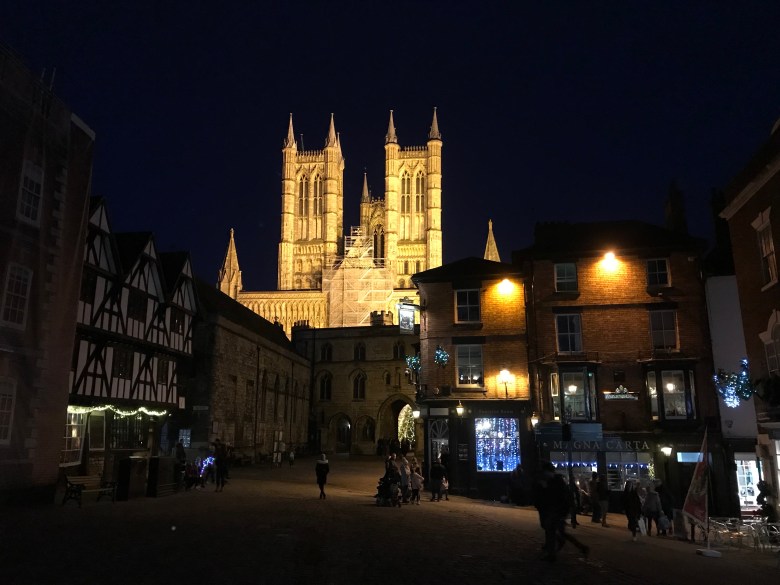
Outside, Christmas lights stretch between buildings, twinkle over the dark street. The other shops are closed but trees glow in the windows. Across the road, The White Hart Hotel leaks laughter onto the cobbles. But around the corner, there’s the castle and the cathedral. The cathedral, holding the remains of kings, queens and bishops. The castle, where prisoners were hanged from the roof of Cobb Hall, buried in Lucy Tower. This small square between the buildings: how many footsteps have crossed it? How many stories?
How many ghosts?
Nothing in the Rulebook editor, Ellen Lavelle, is a graduate of the University of Warwick’s prestigious Writing Programme. An aspiring novelist and screenwriter, she has worked with The Young Journalist Academy since the age of fourteen, writing articles and making short films for their website. She’s currently working on a crime novel, a historical fiction novel and the script for a period drama. She interviews authors for her blog and you can follow her @ellenrlavelle on Twitter. She is currently commissioning features for Nothing in the Rulebook and can be reached via the nitrbeditor@gmail.com email address.
Tonight, French novelist Didier Decoin and British author John Harvey became the joint winners of the 2019 Bad Sex in Fiction Award.
Judges were unable to choose between the two novels, Decoin’s The Office of Garden and Ponds, translated by Euan Cameron, and Harvey’s Pax.
In a statement, judges said they tried voting ‘…but it didn’t work. We tried again. Ultimately there was no separating the winners… we found ourselves unable to choose between them. We believe the British public will recognise our plight.’
The section of prose that won Decoin the accolade, which he will no doubt consider in conjunction with the Prix Goncourt awarded to him in 1977, is as follows:
‘Rummaging among the folds of Katsuro’s kimono, she uncovered areas of naked flesh that she began to stroke with the tips of her fingers, with her lips, her tongue and with a sweep of her hair, sleek and cool as the feathers of a crow. Drawing her mouth close to the opening of the wide sleeves of the haori [footnote: ‘A sort of jacket’] that he wore over his kimono, she took hold of the fisherman’s fingers, nibbled them and sucked at them, coating them in a saliva so smooth that they became as slippery as if he had stuck them in a pot of honey, to the extent that he was then incapable of picking anything up.‘
While Harvey stuns with this passage:
“I see it,’ he said. ‘You are the female praying mantis, devouring her mate.’ ‘I am. You are. I shall eat every shred of you.’ ‘Mouthful by mouthful.’ ‘Exactly. Ah. But boy, you taste good.’ She licked her lips, and pulled him close, but now he was clasping too. It was a kind of slow wrestling, they were knitting each other into a loose slipping knot. He was upside down over her, loving her bush and lick-kissing like eating her inner thighs. Till at last they loved fully and later lay back. She did not chatter. Their arms stirred in a luxurious desultory twining.‘
Runners up included Eat, Pray, Love author Elizabeth Gilbert for her novel City of Girls and Irish writer Mary Costello for The River Capture.
The Bad Sex in Fiction Award was set up in 1993 and aims to ‘draw attention to poorly written, perfunctory or redundant passages of sexual description in modern fiction.’
Last year’s winner was US author James Frey. His 2018 novel Katerina left judges spoilt for choice as it featured sex in a car park, the back of a taxi and Parisian hotel rooms. Frey, however, took the win in his stride, saying, ‘I am deeply honoured and humbled to receive this prestigious award. Kudos to all my distinguished fellow finalists – you have all provided me with many hours of enjoyable reading over the last year.’
This winners of the 2019 awards are yet to make a statement about their shared victory.
It’s the most notorious ‘booby’ prize in the literary world; something designed to bring joy to readers and horror to writers; which has become something of a world-wide phenomenon since it launched in 1993.
While all eyes are now on the judges of The Literary Review, which founded the award, to see who will be crowned this year’s winner – we’ve listed the full set of shortlisted authors below, along with their literary extracts. Do have a read and see how they stack up compared to past winners (whose ‘winning’ excerpts you can read in our long-running connoisseur’s compendium.
“Crowded organ cavities” – The River Capture, by Mary Costello
“He clung to her, crying, and then made love to her and went far inside her and she begged him to go deeper and, no longer afraid of injuring her, he went deep in mind and body, among crowded organ cavities, past the contours of her lungs and liver, and, shimmying past her heart, he felt her perfection.”
“Open-lipped genitals” The Office of Gardens and Ponds by Didier Decoin
“Katsuro moaned as a bulge formed beneath the material of his kimono, a bulge that Miyuki seized, kneaded, massaged, squashed and crushed. With the fondling, Katsuro’s penis and testicles became one single mound that rolled around beneath the grip of her hand. Miyuki felt as though she was manipulating a small monkey that was curling up its paws.”
[…]
“She continued crawling over him. It was the turn of her breasts to brush against Katsuro’s face. They were small, round, full and supple; they skipped over the obstacles of the fisherman’s chin, his nose and the arch of his eyebrows, exposing small furrows in his hair, like the tracks of hare through millet fields. Then it was her slightly rough bush that rasped against his chest, and her open-lipped genitals that slid over the man’s face, immersing it in warm balms, sticky and musky.
He moaned for a third time while Miyuki, a lock of whose hair had come adrift (she grabbed it and held it between her teeth in the way that courtesans do), spread her thighs wider and impaled herself on Katsuro’s nose. On contact with this pistil of warm flesh, cyprine tears appeared on the labia minora of her vagina; sliding onto the fisherman’s cheeks, they were trapped on the stubble of his beard, and his face became starry-eyed and began to sparkle as it did when he walked through the curtain of foam of the waterfall at the Shuzenji weir.”
“As if I was being run over by a train” – City of Girls by Elizabeth Gilbert
“Then I felt it. There was a sensation occurring here that I didn’t even know could occur. I took the sharpest inhale of my life, and I’m not sure I let my breath out for another ten minutes. I do feel that I lost the ability to see and hear for a while, and that something might have short-circuited in my brain – something that has probably never been fully fixed since. My whole being was astonished. I could hear myself making noises like an animal, and my legs were shaking uncontrollably (not that I was trying to control them), and my hands were gripping down so hard over my face that I left fingernail divots in my own skull.
Then I screamed as though I were being run over by a train, and that long arm of his was reaching up again to palm my mouth, and I bit into his hand the way a wounded soldier bites on a bullet.”
“Loving her bush” – Pax by John Harvey
“She gave a yet deeper, moaning sigh. Like breathing in he saw the word he had said shiver and expand inside her. Her arms moved now, and flexed: out of here, Venus de Milo. He watched the death-life fill her growingly. She grabbed and caressed him with more muscle, more zest, than ever before. Her long lean arms were spider arms, while her kisses roved and dug.
‘I see it,’ he said. ‘You are the female praying mantis, devouring her mate.’
‘I am. You are. I shall eat every shred of you.’
‘Mouthful by mouthful.’
‘Exactly. Ah. But boy, you taste good.’ She licked her lips, and pulled him close, but now he was clasping too. It was a kind of slow wrestling, they were knitting each other into a loose slipping knot. He was upside down over her, loving her bush and lick-kissing like eating her inner thighs. Till at last they loved fully and later lay back. She did not chatter. Their arms stirred in a luxurious desultory twining.”
“A series of cryptic clues” – The Electric Hotel by Dominic Smith
“The actual lovemaking was a series of cryptic clues and concealed pleasures. A sensual treasure hunt. She asked for something, then changed her mind. He made adjustments and calibrations, awaited further instruction.
For most of the proceedings he felt his own desire as if it were tethered to a wire, a bright red balloon floating in his peripheral vision, but eventually he burst through. It was toward the end, as their breathing quickened. Her stage directions had stalled out into silence. He looked to his right and noticed the scene in the smoky lens of the mirror above the bureau, saw his own body move with the steady rhythm of a bellows blowing air at the base of a fire. It brought back the early experiments at the photographic society in Paris, the wiring of a bird’s feet to a cameragun, the mounting tension and uplift before a surge of exasperated flight. His own face looking back in the mirror – open-mouthed, flushed, euphoric – was a wild, strange thing to him. A beguiled stranger he’d never met, held in place by an infinite loop.”
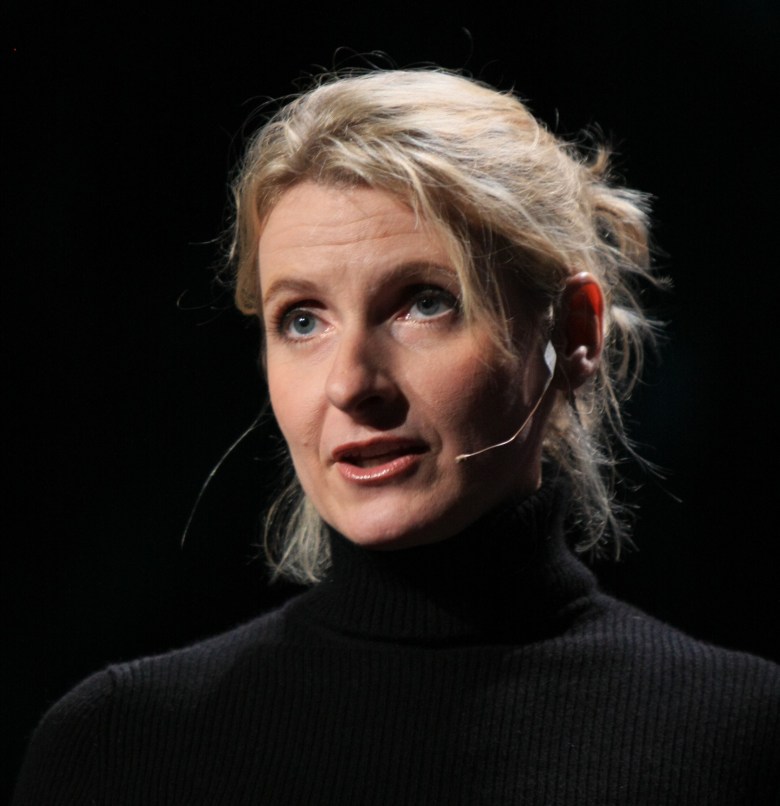
Elizabeth Gilbert, author of best-selling book Eat, Pray, Love, has made the shortlist for the notorious Bad Sex in Fiction award.
The literary world’s most notorious booby prize is back for its 27th year, as the Literary Review announces the shortlist for its infamous ‘Bad Sex in Fiction’ award.
The award is given to authors who have “produced an outstandingly bad scene of sexual description in an otherwise good novel”, according to judges. The purpose of the prize is to draw attention to poorly written, perfunctory or redundant passages of sexual description in modern fiction, and to discourage them. The prize is not intended to cover pornographic or expressly erotic literature.
Judging is currently underway – with the winner announced on Monday, 2 December 2019.
The shortlist features The River Capture by Mary Costello, The Office of Gardens and Ponds by Didier Decoin, City of Girls by Elizabeth Gilbert, Pax by John Harvey and The Electric Hotel by Dominic Smith. You can read extracts of all the shortlisted books here.
In its time, the Bad Sex awards have claimed a number of high-profile scalps, including Sebastian Faulks, Tom Wolfe, and Morrissey. This year’s shortlist is no different, with Decoin a former winner of France’s most presitgious literary award, the Prix Goncourt, and Gilbert the best-selling author of Eat, Pray, Love, which sold over 12 million copies.
There were also a number of high-profile names from the literary world who only just missed out on the 2019 Bad Sex in Fiction award shortlist. Judges singled out Jeanette Winterson, for her book, Frankissstein, an Michel Houellebecq, for his work Serotonin.
Houellebecq came particularly close, with lines such as:
“She would have waited until we were in the water … to offer her moist parts to my triumphant phallus.”
Ultimately, however, the judges considered the sex scenes in Serotonin to be of a piece with the novel’s overall tone.
Last year the prize was won by James Frey for Katerina (John Murray). The award was presented by pop star Kim Wilde.













 nothing in the rulebook