• Creatives in profile: an interview with Joanna Briscoe

    We may be in the middle of a global crisis, but there’s nothing in the rulebook to say you can’t continue your interview series during a worldwide pandemic.

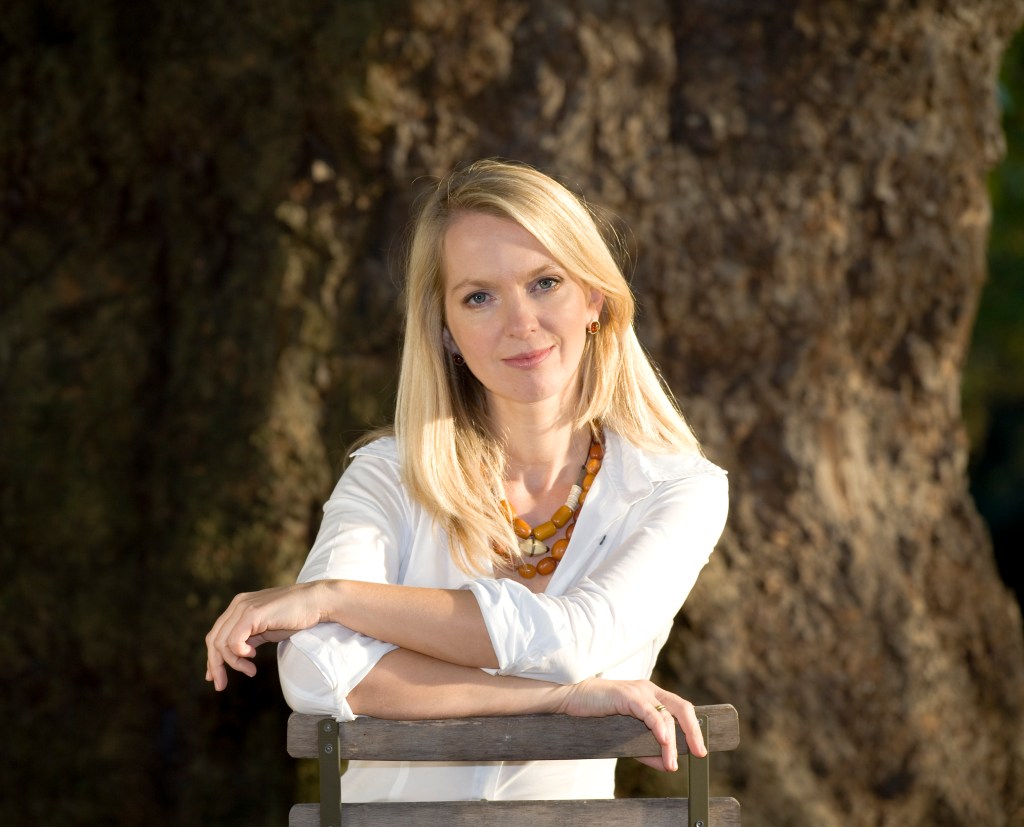
    Joanna Briscoe was born in London in 1963 but grew up in various villages in the West Country. Briscoe’s family relocated several times until, when she was ten, they settled on Dartmoor. She returned to London for university, reading English at UCL, and then became a freelance journalist writing for many publications, including the Guardian and Elle magazine. She started to write fiction in the evenings and is now the author of six novels and several short stories. Her first novel, Mothers and Other Lovers, won a Betty Trask Award in 1993, and her third, Sleep with Me (2005), was adapted for television.

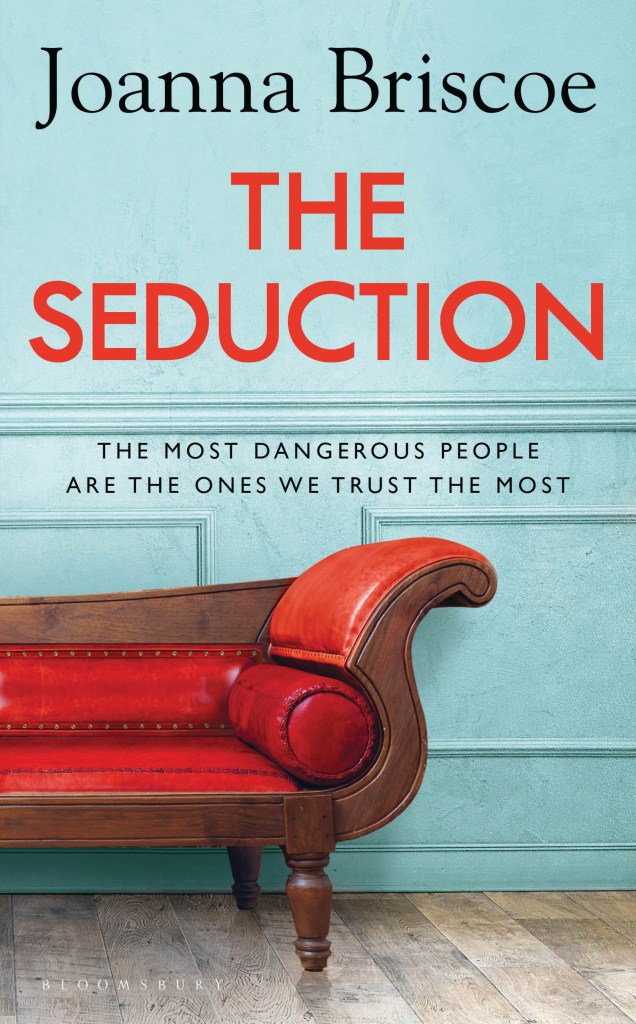
    Her latest novel, The Seduction, tells the story of Beth, who begins to attend therapy sessions when she suspects her daughter of keeping secrets. Beth’s own childhood is complicated – her own mother disappeared when she was a child – and she seeks help from Dr Tamara Bywater in unravelling both the past and present. However, soon it seems that the person meant to be the solution could be most dangerous of all.

    Briscoe has been described by The Sunday Times as ‘ a vivid and passionate writer’ that ‘plunges headlong into sticky themes of desire, love and hatred, uncovering the unpalatable parts of the psyche with an unflinching eye.’ The Seduction is available in hardback from Waterstones and Amazon.

    We asked Briscoe what drew her to therapy as a subject, the ‘pull’ of character, and how she finds what to say when writing in silence.


    INTERVIEWER

    Tell us a little about yourself. Where do you live? What’s your background/lifestyle?

    BRISCOE

    I live in North London, between Kentish Town and Hampstead Heath, so I’m incredibly lucky to have the Heath to walk on for my daily exercise in Lockdown. I come from a very rural background – the middle of Dartmoor! – with quite hippie parents. I reacted, and went as urban as possible, living in central London for years, but now this feels like a bit of the country has returned to my soul. I write in London, and, when not in Lockdown, I travel quite a lot.

    INTERVIEWER

    Who or what inspires you? 

    BRISCOE

    My children first and foremost. They are everything. Being out in the world and travelling, and great literature, feed my imagination as well.

    INTERVIEWER

    Is writing your first love or do you have another passion?

    BRISCOE

    Yes, in terms of work, writing is my first love, and always has been. I decided very definitely that I was going to try to be a writer at fifteen. If I wasn’t doing this, I’d love to be a photographer, but writing always came first.

    INTERVIEWER

    Your new novel, The Seduction, centres around the relationship between a therapist and their patient. What drew you to this dynamic?

    BRISCOE

    I’d had therapy myself, and I was interested in the one-sided relationship, where the client becomes intrigued because they can find out absolutely nothing about the therapist. As an eternally curious, I found this frustrating but interesting! And then I heard of people who had had affairs with therapists, and I wanted to explore that taboo. I’m always interested in the subject of crossing boundaries, and the exhilaration of that, but also the damage caused. 

    INTERVIEWER

    Tell us a little about your main character, Beth. What did you find interesting about her? 

    BRISCOE

    Beth has suffered a lot, and is impulsive and oversensitive, but she’s always strong. She knows she’s made mistakes, but she keeps trying, and I got to know her more and like her more as I was writing about her. Her behaviour is quite contradictory, yet there’s a consistency of purpose in her own mind, and she’s very motivated by love for her daughter, and by not wanting to repeat her own mother’s mistakes. And then, perhaps, she does…

    INTERVIEWER

    Elizabeth Day has described your writing as ‘beguilingly good.’ What do you think are the three most important ingredients for a gripping story? 

    BRISCOE

    If there’s one thing I do when I’m writing, it’s to tell myself that I mustn’t bore my reader. So I read through my work as objectively as I can, and if I’m ever remotely bored myself, I know my reader will be, and I cut or edit. For a gripping story, I think, really, something has to be happening. I think in terms of action, however small or subtle, and also in terms of something else going on underneath that may not be immediately apparent. But now, as I write my seventh novel, I’m thinking more in terms of character. If we care about the protagonist, we will be pulled into her story. But there has to be a story. Things have to happen. And the reader needs to be surprised sometimes. 

    INTERVIEWER

    Which contemporary fiction writers should we be paying particular attention to at the moment?

    BRISCOE

    Maxine Mei-Fung Chung, who was one of my students in fact, has written The Eighth Girl, which is a page turner with depth. She was published in the US in March, and is coming out with Pushkin here. I love the work of Maggie O’Farrell and Helen Simpson, and there is a short story writer called Tamara Pollock who is so talented, she just has to be published more widely.

    INTERVIEWER

    Can you tell us a little about your creative process? How do you go from blank screen to completed manuscript? Do you plan the plot before you write or do you just dive in? 

    BRISCOE

    From blank screen to completed manuscript is a long, complicated process, so multi-layered, full of stops and starts and revisions, it’s hard to sum it up. I always have an initial idea of the plot, and certainly the theme, before I start, and when an idea hits me, I frantically make notes. I make myself start the novel before I’m ready, in a sense, just in case the idea in my head doesn’t translate to the page. After that, I jump between my document that is the actual novel, and my Notes document, as I’m constantly jotting down thoughts and refining the plot. But essentially, I do plot quite early.

    INTERVIEWER

    Do you feel a sense of responsibility as a writer? 

    BRISCOE

    I do, but it’s not my first motivation. I am quite political, and very feminist, as a person, but I don’t set out to write political novels, or novels whose aim is to change the world. The only real responsibility I feel is to entertain, and to encapsulate some sort of truth if possible. 

    INTERVIEWER

    What was the first book that made you cry? 

    BRISCOE

    Honestly, I’ve been sobbing over books ever since I could read! Which was at the age of four. I can’t ever remember not crying over a book!

    INTERVIEWER

    What is the hardest thing about being a writer?

    BRISCOE

    Without a doubt, the solitude. I want to do nothing but write, yet as a sociable extrovert, I’m temperamentally unsuited to it, and I’ve had to accept that. I solve this partly by going to the British Library, writing at a communal table, and seeing friends for lunch, but I find the hours of silence quite trying….

    INTERVIEWER

    Name a fictional character you consider a friend. 

    BRISCOE

    I think it would have to be Jane Eyre….

    INTERVIEWER

    Did getting published change your perception of writing?

    BRISCOE

    It’s hard to answer this one…. I wanted to be published since I was a teenager, and, like a teenager might, I thought publication would somehow solve my whole life. So, I hung a lot onto it, which was not realistic, but it didn’t change my perception of the process itself. Published or not, writing is very hard. You come to accept that. But publication does provide that vital sense of structure and encouragement to go on.

    INTERVIEWER

    Which book deserves more readers?  

    BRISCOE

    I think my novel ‘You’ could have done better, but it was the wrong title, the wrong cover, and I think, in retrospect, I could have cut it more. But it’s quite close to my heart, and I’d love it to have another life.

    INTERVIEWER

    Do you have any friends that are writers? If so, do you show each other early drafts?

    BRISCOE

    Yes, I have several friends who are writers, and I have my loyal band of novel doctors. We show each other early drafts. Some of my early readers aren’t writers, though – they’re just intelligent readers, and I trust them. I’ve used the same readers from my very first novel onwards.

    INTERVIEWER

    What’s next for you? 

    BRISCOE

    Well, I’m writing my next novel while I’m publicising The Seduction, because it keeps me sane! So I’m quite absorbed by that when I have time to write it.

    QUICK FIRE ROUND: 

    INTERVIEWER

    Favourite book?

    BRISCOE

    Beloved by Toni Morrison

    INTERVIEWER

    Saturday night: book or Netflix?

    BRISCOE

    Both! At the moment, I admit it’s Netflix

    INTERVIEWER

    Critically acclaimed or cult classic?

    BRISCOE

    Cult classic

    INTERVIEWER

    Do you have any hidden talents?

    BRISCOE

    Um, I can draw flowers quite well. Sometimes.

    INTERVIEWER

    Any embarrassing moments?

    BRISCOE

    Plenty. I’m not going to reveal them. 

    INTERVIEWER

    What’s the best advice you ever received?

    BRISCOE

    To keep going.

    INTERVIEWER

    Any reading pet peeves?

    BRISCOE

    I’m really getting sick of the first person present tense.

    INTERVIEWER

    Do you have a theme song?

    BRISCOE

    No…. I have favourites.

    INTERVIEWER

    Your proudest achievement?

    BRISCOE

    My children.

    INTERVIEWER

    Best advice for writers just starting out?

    BRISCOE

    Just do it. Ignore that critical voice in your head, know that everyone has it, and just write in short bursts.


    To find out more, you can follow Joanna on Twitter and visit her website. The Seduction is now available in hardback from Waterstones and Amazon.

  • Keir Starmer: the new face of literary erotica?
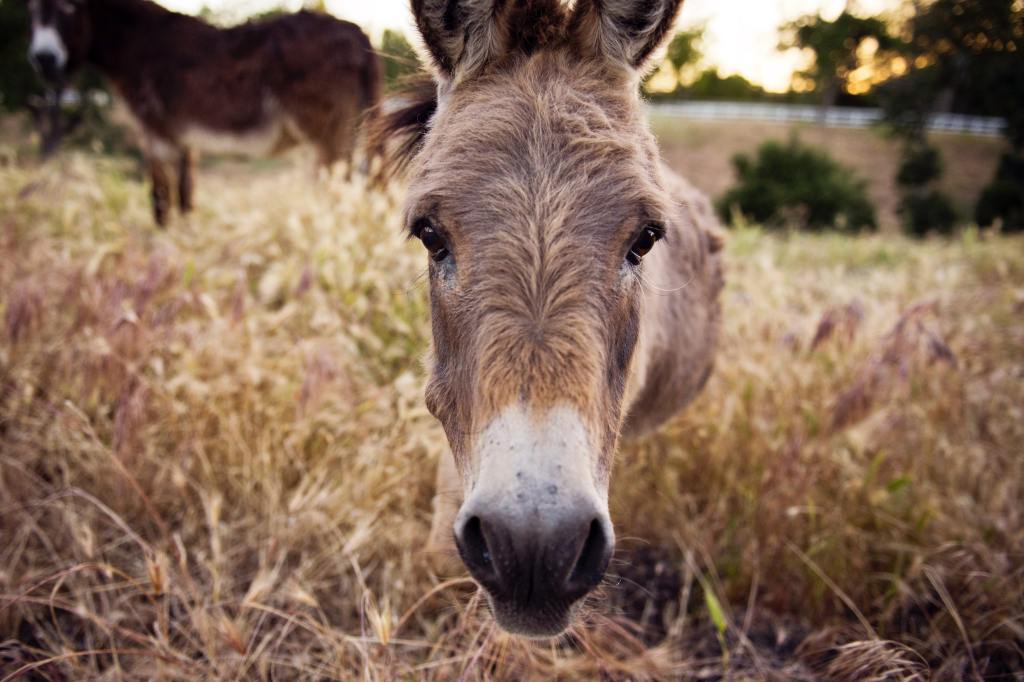
    Look at those eyes; Starmer’s eyes; sexy Starmer’s eyes; now, you’re under. Imagine those eyes caressing you with their sexy, smooth Starmer sight. The sexiest sight; Starmer’s sight. Imagine those sexy eyes inviting you, without words, to take a trip with him to his mother’s donkey sanctuary. Oh wait, you’re already at the donkey sanctuary. Now those eyes are explaining the benefits of socialism to you. Sexy socialism. Socialism is sexy – you know this to be true, just like beautiful, sexy Starmer. Sir Keir Starmer, Knight of the Realm. He’s an actual knight, did his sexy eyes mention that? They didn’t need to; they’re so sexy you just knew, deep down. Now, you’re hot and bothered. You need to read some sexy Starmer erotica right now. The sexy Starmer eyes command it. Fortunately, NITRB have just the thing for you

    It is a rumour universally acknowledged that Keir Starmer, the leader of the UK Labour Party, may have been the inspiration for Mark Darcy in the hit book and film Bridget Jones’s Diary. So, is it any wonder that this chisel-jawed, human-rights lawyer-cum-political-heavyweight could become the star of an entire genre of literary erotica?

    Nothing in the Rulebook are incredibly pleased to bring you what is perhaps the first ever published piece of Keir Starmer erotic fiction. Written by author Zena Barrie, ‘Little Donkey‘, sees a young political idealist arrive in Westminster for some work experience with Boris Johnson, but sparks fly when she meets the handsome leader of the Labour Party, and they travel to his mother’s notorious donkey sanctuary where things get raunchy.

    Here’s an excerpt:

    I tried to focus my attention on the donkeys but it was hard.

    And then I realised. So was he.

    He laid me down next to the mother donkey and we made love in the hay. When we had finished the baby donkey wobbled over to us and curled up in Sir Keir Starmer’s lap.

    While “Sir Keir” has only been the Leader of Her Majesty’s Opposition for a few months now, his good looks have been causing a stir for a little while now, with the Evening Standard describing him, in 2014, as “hot, ready, and legal”, and noting how he had been tipped to win a “hottie list” of barristers for “thrilling admirers” across the legal world. So he does seem a perfect fit for erotic fiction. So is this why Barrie chose him as the star of her sexy story?

    “Starmer is the Donald Draper of The House of Commons,” Barrie explains. “Not a hair out of place. Look at him and then look at scruffy covid-riddled, bloated Johnson. There’s no competition.”

    While this is Barrie’s first Starmer story, she’s admitted she may write more “if he keeps being erotic at PMQs”. And she also agrees that Starmer’s could be the face that launches a thousand pieces of erotic fiction, telling Nothing in the Rulebook:

    “Starmer erotica could be a whole new genre if he carries on like he’s going more writers will turn to it and more and more people will be putting their kids to bed then turning on their laptops to google Starmer erotica. There will probably be a calendar next year.”

    Who is Zena Barrie?

    When not writing Starmer erotica, Zena Barrie runs the Camden Fringe Festival and the Manchester Fringe Festival. She’s also the author of the (very funny) book, Your Friend Forever, which you can order through award-winning publishers, Unbound.

    You can read Barrie’s full sexy Starmer story, ‘Little Donkey’ exclusively here at Nothing in the Rulebook.

  • Little Donkey

    james-newcombe-Ro7Rfs4Tb_I-unsplash

    I’d always been a little bit interested in politics so imagine my joy when I got a phone call from Boris Johnson saying he’d read my CV and that it was very promising.

    He asked me to email him a full length picture of myself and said that he’d be making a decision that day.

    I sent him the best selfie I could manage.

    He replied asking me to send another picture but this time without my jumper on.

    I sent one back quickly and he replied within 2 minutes asking me to start on Wednesday.

    I was to be his intern for the next few months. I couldn’t be happier.

    It took a while to get through security but eventually I was in The House of Commons! I was so excited. Now I needed to find his office.

    The House of Commons is a big place with hundreds of people milling about, so it was not going to be easy to find. I looked around to see if I could see a familiar face. I spotted Laura Kuensberg, she was trying to take a selfie with the Margaret Thatcher statue.

    I went over and offered to take the picture for her.

    “Och, that would be great” she said in a Scottish accent.

    I took some pictures for her and then asked directions to Boris Johnsons office. “Och” she said “I dinnae think ye wannee be gaen there wee lassie”

    “Oh I have to” I said “I’m doing work experience”

    She laughed and said “Och, I hope you’re on the pill” and then pointed to some stairs.

    Then she turned around to face a TV camera and said “This is the news”.

    I turned in the direction she had pointed just in time to see Michael Gove tripping on a banana skin that Anna Soubry had dropped in front of him on purpose. He cut his head open very badly. Dominic Raab came running over, but not to help him, he just laughed, got his penis out and pissed on the blood, which did sort of do the job of washing it away.

    I had my my first aid qualification but decided not to get involved. Michael Gove managed to get up but then he slipped again on the blood and Dominc Raab’s piss. This time nobody went to help.

    As he lay on the floor he had a resigned look on his face. It seemed like it had happened before. Possibly every day. Eventually Ed Milliband walked past him and booted him in the head really hard with his steel toe capped boots. He was unconscious now and that seemed like the best possible outcome.

    I began to climb the stairs, my whole body was tingling. I was SO nervous. I was about to meet The Prime Minister.

    I walked along the corridor that housed offices for all of the shadow cabinet, it was amazing seeing the names on all the doors and also how everyone had personalized them. For example, Rishi Sunak had a poster of Carol Vorderman on his office door and Matt Hancock had Wrestle Mania.

    As I approached Boris Johnsons office door I could hear a trombone and lots of laughter. It sounded like there were a lot of people in there. I knocked but it was so noisy nobody heard me. Eventually I tentatively opened the door, I didn’t want to be late after all!

    The small dark room was filled with men wearing rugby shirts with the collars turned up tucked into reddish pink jeans. They were all drinking tankards of beer and pushing each other around. In the middle of them all was Boris Johnson. He had his trousers around his ankles and was drinking a yard of ale. I noticed he was wearing suspenders for his socks.

    Suddenly, my presence was noticed. Everyone stopped what they were doing and stared at me.  Boris Johnson passed the yard of ale to one of his friends and quickly pulled up his trousers.

    “You” he said pointing at me “You’re my new helper, yes?”

    “Yes” I said.

    “Great great, Carpe diem! Carpe diem! Young filly! Seize the day, fill in for me. I just need to go out for a few hours.”

    “What do you need me to do?” I asked.
    “PMQ’s” It’s at 12 O’clock.

    “You want me to fill in for you at PMQ’s?” I couldn’t quite believe what I was hearing.

    “Yes yes, you can do it, I read your cv, you know about politics and stuff”.
    Before I could answer him his friends picked him up on their shoulders and jeering and shouting they ran off with him down the corridor. I peered after them and spotted one of them shooting an air gun at Michael Gove who was just crawling back into his office.

    I looked at the clock, I had just a couple of hours to prepare to be questioned. I hoped that the leader of the opposition, Sir Keir Starmer would go easy on me. The problem was though, just thinking about him even a tiny bit made me blush. I’d wanted to apply to do work experience with him but I was afraid that I couldn’t cope with being aroused for 8-12 hours a day.

    I decided to just be as honest as I could with my answers and say “I don’t know” if I didn’t know the answer to something, which was quite likely.

    I put the radio on and started to tidy away all the beer glasses. There was also an empty piñata hanging from the ceiling and I found not one but 7 cricket bats. I cleared it all away, mopped the spilt alcohol from the floor had a cup of tea and then it was time, time for my first ever PMQ’s.

    The chamber was almost empty because the corona virus had killed everyone in the world over the age of 60 except Michael Palin. It was just me, and Sir Keir Starmer and that bloke that bangs a hammer. It was very tense, I was aware that I was being filmed and that this was being broadcast across the world.

    That bloke that bangs a hammer banged it and I stood up.

    “Any questions?” I asked, trying to look at Sir Keir Starmer but finding it incredibly difficult to meet his eye.

    He looked at me warmly. “Is this your first day?”

    “Yes, yes it is, but you can ask me anything” I replied.

    He laughed and loosened his tie slightly.

    Seeing slightly more of his neck than usual was almost too much to bear but I just about managed to bear it.

    “Seriously! I said indignantly, you can ask me anything!”

    “Ok” he said. “Do you like donkeys?”

    “Pardon me?”

    “Do you like donkeys?”

    “Of course I do!” I replied. “Everyone likes donkeys. They have kind eyes.”

    Sir Keir Starmer took off his blazer and threw it over the TV camera. He turned to that bloke with the hammer and calmly asked him to leave immediately.

    Now it was just me and him, in the house of commons.

    “Would you like to help me birth a donkey?”

    I look at him quizzically, had he gone mad?

    “You see, I bought my Mum a donkey sanctuary for retired donkeys and it turns out not all the donkeys were past it. I now have a pregnant donkey and she needs help. Will you come with me?” He reached his hand across the desk thingy and I took it.

    In the car Sir Keir Starmer loosened his tie even further and drove with one hand whilst resting his elbow out of the window. Baker Street played on repeat on the radio. Just the saxophone bit. I was feeling wild with longing but was not sure what his intentions were.

    When we got there it was dark all of a sudden. He leant me some wellington boots because the 6 inch stilleto’s that Boris Johnson had told me I had to wear were no good for the donkey stable.

    I watched intently as Sir Keir Starmer finally took off his tie entirely and changed into his own wellington boots. I noticed they still had fresh mud on from this morning. He must really love those donkeys I thought to myself.

    He led me into the stables and straight away I could hear the panting and whinnying of a donkey in pain. We found her lying in some fresh straw. Sir Keir Starmer was at her side immediately. He gently lifted her head and placed it on his knee. Stroking her and whispering comforting words to her. I knelt beside her and started to do the same.

    “Can you just check her vagina for me?” asked Sir Keir Starmer.

    I checked the donkeys vagina and could see two little legs sticking out of it.

    “She needs to push” I said, instinctively.

    “Go on my girl”, Sir Keir Starmer said to the donkey. “One big push and you’ll be a Mum.”

    The donkey pushed and within moments, and rush of blood, there was a squirming little donkey on the floor.

    Sir Keir Starmer quickly unbuttoned his shirt and used it to clean the blood off the baby donkey. Underneath his shirt he was wearing a white vest. He was much more muscular than I ever imagined possible.

    I tried to focus my attention on the donkeys but it was hard.

    And then I realised. So was he.

    He laid me down next to the mother donkey and we made love in the hay. When we had finished the baby donkey wobbled over to us and curled up in Sir Keir Starmer’s lap.

    We all slept for a while and then Sir Keir Starmer gently woke me with a soft kiss on my forehead and said “I best get you back to The House of Commons”

    It was true.

    I had work experience to do and the country wasn’t just going to run itself.

    About the author

    unnamed-1

    Zena Barrie lives in Manchester and co runs the Greater Manchester Fringe and The Camden Fringe, she also does spoken word when it’s allowed. Her book, ‘Your Friend Forever‘ will be published by award-winning press, Unbound, on 15 April 2021. You can pledge to pre-order a copy here – https://unbound.com/books/your-friend-forever/ 

  • Lockdown Lit: video anthology expands

    Online collective Nothing in the Rulebook has launched the second instalments in its ‘Rulebook Readings: Lockdown Lit’ series. The curated video anthology features videos from authors, artists, poets and creative entrepreneurs from within the Nothing in the Rulebook community, as people continue to share their stories of life under coronavirus-related lockdown.

    “The response to our ‘Lockdown Lit’ initiative’ has been completely overwhelming and brilliant,” says NITRB co-founder, Samuel Dodson. “When we launched the project, we wanted to try and bring people together at a time when we were all being forced to self-isolate and stay physically apart. And so to see so many creative people getting involved and joining the conversation is beyond fantastic. There are so many people around the world doing all kinds of brilliant and creative things – and being able to provide a platform to showcase and celebrate this work is just what NITRB is about.”

    Contributors to the second edition of the ‘Lockdown Lit’ series include award-winning author, Will Eaves, as well as best-selling crime writer Nick Quantrill.

    Eaves and Quantrill are joined by screenwriter and fiction author Costanza Cosati, novelist and short story writer, Andy Charman, and writer and creative entrepreneur, Mark M. Whelan.

    NITRB editor, Ellen Lavelle, said: “I think the most amazing thing about the project, for me anyway, is the space we cover. We have submissions from all over the UK but also from California, Mumbai, Milan. When you watch the playlist, one minute you’re in Nick Quantrill’s back garden in Hull, the next you’re in Lisa Marie Simmons’ home near Lake Garda in Italy. In a time when a lot of us are feeling quite isolated and trapped, it’s so lovely to be able step outside of your own situation and visit someone else’s, even if it’s just for a few minutes.”

    Running ‘live’ over the course of lockdown, Lockdown Lit is a curated video anthology, with Nothing in the Rulebook inviting everyone and anyone to share their stories and join in the (virtual) conversation. The first edition of the series featured best-selling authors and artists including Mark Billingham and Paula Bowles – and anyone interested can get involved by submitting a video to the NITRB gang.  

    Check out the latest videos below and find out more about the creative folk behind them…

    Will Eaves is a novelist and poet. Murmur (2018), a fictional meditation on the life and work of the computer science pioneer Alan Turing, won the Welcome Book Prize last year. Broken Consort (Essays, reviews and other writings) will be published this autumn. Here, as part of Nothing in Rulebook’s Lockdown Lit series, Will reads two poems from his first collection Sound Houses – ‘Home’ and ‘Punk Revolution’.
    Nick Quantrill was born and raised in Hull, an isolated industrial city in East Yorkshire. His trilogy of Private Investigator novels featuring Joe Geraghty are published by Fahrenheit Press with the fourth, ‘Sound of the Sinners’, due Summer 2020. Nick is also the co-founder of the Hull Noir crime writing festival. Here, he reads the first chapter of his current work in progress, a novel with the working title Cast No Shadow.
    Costanza Casati is a fiction writer, freelance journalist and screenwriter, passionate about storytelling with women at the center. She is currently working on her debut novel and on the launch of a monthly podcast that focuses on book-to-film adaptations for millennials.

    After a near death experience with a Box Jellyfish, Mark M. Whelan realised that his purpose in life was to become an author and an entrepreneur. He wrote two books and founded the Human Centered Leaders company: a professional coaching company that focuses on mental wellness and performance, based in Silicon Valley. In this video, he reads a reimagining of Gabriel Garcia Marquez’s Love in a time of cholera .
    Andy Charman was born in Dorset and grew up near Wimborne Minster. His short stories have appeared in Every Day Fiction, The Battered Suitcase, Cadenza, Ballista and other periodicals and anthologies. He lives in Surrey with his wife and daughter. Crow Court is his first novel. Here, he reads an extract

    If you’re interested in submitting your video to the Lockdown Lit playlist; you can visit the site’s ‘Lockdown Lit’ launch page. You can track the progress of the project by following us on Twitter(@NITRB_Tweets) and liking us on Facebook, or spread the word using the hashtag #LockdownLit

  • Creatives in Profile: an interview with Ellen Alpsten

    We may be in the middle of a global crisis, but there’s nothing in the rulebook to say you can’t continue your interview series during a worldwide pandemic.

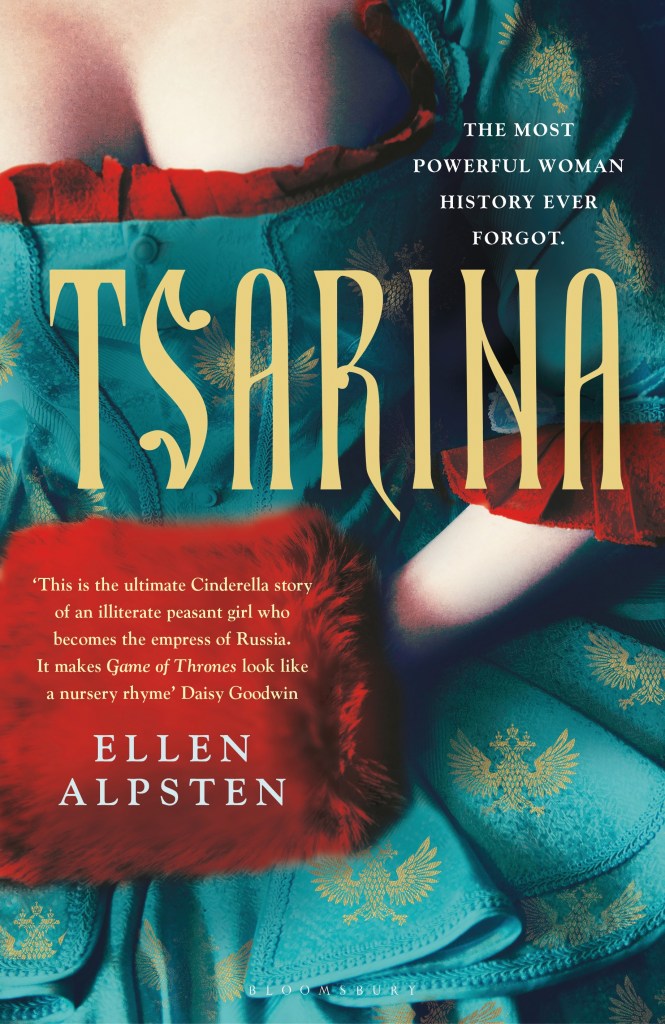
    Ellen Alpsten was born and raised in the Kenyan highlands, before attending L’Institut d’Etudes Politiques de Paris. Whilst studying for her Msc in PPE she won the Grande École short story competition with her novella Meeting Mr. Gandhi and was encouraged to continue writing. Upon graduating, she worked as a producer and presenter for Bloomberg TV in London. Her first novel Tsarina, described as ‘Memoirs of a Geisha meets Game of Thrones’ is a page-turning epic, charting the untold story – the extraordinary rags-to-riches tale – of Catherine I. Tsarina is currently available in hardback and as an ebook from Amazon and in hardback from Waterstones.

    We asked Aplsten why she was initially drawn to Catherine’s story, how she balances research with plot and which historical fiction novels we should all read during lockdown. 

    INTERVIEWER

    Tell us a little about yourself. Where do you live? What’s your background/lifestyle?

    ALPSTEN

    I was born in the highlands of Northern Kenya at the foot of mystical Mount Elgon, where life glows in Technicolor. My father is a vet, my mother taught at a local school. We had no TV, but we had a big garden, plenty of pets – amongst them a wounded Serval cat, a grumpy Polo pony called Calypso and at times even a baby crocodile. There were lots of books. I read, I drew, I wrote in my diary (recording things like: This morning there was a 9ft Python curled up in the tree above my swing.) My two elder brothers were away at boarding school, so I dressed up my four dogs and three cats and told them stories. The 70’s in Kenya were a pretty special time – the country was blossoming in a post-colonial growth spurt. Storytelling is also very popular in Kenya, as it is in most tribal traditions: memories and myths are passed on orally. Also, a tall tale was always appreciated around the campfire on safari or on an evening in when the rains came. At eighteen, I moved to Paris. It was love at first sight and was admitted to the ‘IEP de Paris’, which had schooled as diverse minds as Christian Dior and Emanuel Macron. I walked the city’s roads endlessly and wrote long diaries every day, noting small observations and big things – such as meeting my future husband, a handsome, warm, tall, funny, clever and upright Swede, in a Parisian Sunday market. 

    Upon graduating I moved to London; my handsome Swede proposed the day I had my one-way Eurostar ticket to join a ‘Graduate Trainee Program’ of a big, international PR Agency.  I hardly earned any money and I had few friends. So, I started writing for real, in the evening, in my little room in a Hammersmith flat share. Very soon, I wrote shamelessly during work hours in the Agency as well – not surprisingly, I was the only graduate who was not offered a job. Instead, I joined a financial TV station as a producer and presenter – an incredibly stringent exercise: I got up at 2 am, was home by noon, napped, went for a run, wrote until 9pm, sleep, repeat. By the time I had finished Tsarina. I was exhausted and suffering from anxiety and depression. Today, we live in Petersham – I love the cows on the meadows who blissfully ignore the red double-decker bus – together with the Swede, my three sons and a moody, chubby fox-red Labrador girl. 

    INTERVIEWER

    Who or what inspires you? 

    ALPSTEN

    As a writer the germ of a story can be found in many places, e.g. every morning I walk past this incredible houseboat lying on the river Thames. It looks like a pile of trash bound together with a piece of string, but it grows and morphs, with new boxes, containers etc added each week, like a ‘Babapapa’ house – who lives there, and why? How? What is their story? Curiosity and empathy are invaluable traits for a writer. I’m especially inspired by survivors – characters with an iron will interest me, regardless of their flaws. Marta’s need to carry on, to survive the darkest days, to never surrender has given me strength while writing it. Whatever fate throws at her, she deals with it, dusts herself off and sees the sun rise for another day, ready to be surprised by its gifts. I respect that and I think that even though Tsarina is a character from the 16th century, it’s a very modern lesson in taking control of one’s destiny.  

    INTERVIEWER

    Is writing your first love or do you have another passion?

    APLSTEN

    Writing is my first love, hands down. I wrote a first, atrocious novel aged 11 and then was always encouraged by teachers etc. I suppose two small breaks were starting to write for some of Germany’s biggest newspapers when I was 17, and later winning my Grande Ecole’s Short Story competition with the novella ‘Meeting Mr. Gandhi.’ I do not remember the plot, only that it rained a lot in the story. My husband was convinced that I HAD to be a writer; though I today think that there are more ways to happiness. I always loved fashion, too, and if I had fitted in a corporate career I would have loved to edit ‘VOGUE’ (who would not?)

    INTERVIEWER

    Tsarina is your debut novel and tells the story of Catherine I of Russia. What was it about Catherine that made you want to invest in her as a character? 

    ALPSTEN

    Catherine I is not Catherine The Great, but she set the scene for everything that was to follow politically: a century of unprecedented female reign in Russia! The fascinating story of Catherine I. of Russia  – from serf to Empress, from backward nation to superpower – had never left me, ever since I first read about her when aged 13 in ‘Germans and Russians’ by author Leo Sievers, charting the millennial history and the deep mutual fascination of those two people. One chapter in that book was devoted to Catharine I, and I never forgot her story. Who could? When I had matured enough to really write, I realized that, amazingly enough, there was no book about her: no thesis, no biography, no novel, nothing. I do not want to write the umpteenth book about either Catherine the Great or the last Tsars; I wanted to tell a new story. I admit I have a soft spot for Cinderella stories – who doesn’t?  In the beginning, I was mesmerized by the 2D ‘elevator-pitch’ of her life’s story, but slowly, as those bare bones got fleshed out, there was a myriad of aspects to consider making the story realistic; no half-measures were possible: I completely fell for her. I did research for almost a year before I dared writing the book’s opening sentence, entering her strange, shocking and sensuous world.

    INTERVIEWER

    Hannah Rothschild has said Tsarina was ‘impossible to stop reading.’ How did you manage to balance research and historical detail with a page-turning plot? 

    ALPSTEN

    Even though my Russian is patchy at best, there are original and of course secondary sources galore, as such infinitely fascinating: My research ranged from watching experimental movies such as ‘Russian Ark’ to immersing myself into a 17thcentury German merchants Russian travel diaries and understanding the imaginary of Slavic fairy tales. Robert Massie’s and Henri Troyat’s biographies about Peter the Great, and, last, but not least, Prof. Lindsey Hughes of the London School of Slavonic Studies’ FABULOUS tome ‘Russia in the time of Peter the Great’. This turned out to be my bible as I encountered the Slavic Soul: seemingly insurmountable contrasts are casually combined and lived out without any qualms. This absoluteness is fascinating. In the end, I read for almost a year before writing my first word, immersing myself completely into this woman’s life and rise in the Russian Baroque. Perhaps that is why people ‘feel’ the book: it is stuffed to the brim with soul, detail, and truth – and an attempted answer to the question: So, what was her life really like? History is not only writing about kings and queens. A lot of early readers have particularly appreciated the early life of Tsarina: chasing the heroine on towards her destiny – and often the reader will stop and say: how on earth will this woman meet the Tsar – makes for pace and suspense. No character, no scene must be wasted. Everything is there for a reason. 

    INTERVIEWER

    Which historical fiction writers should we be paying attention to at the moment? 

    APLSTEN

    It is impossible not to name Hilary Mantel, of course, who combined her genius with a fresh look at an eternally fascinating story. But I also like Tracey Chevalier as well as German-born NYC-living writer Daniel Kehlmann. Both his ‘Tyl’ and ‘Measuring the World’ are fabulous and deliver on every level. I admire Barbara Kingsolver – her ‘Poisonwood Bible’ made me cry, as I understand that you can lose yourself to Africa in so many ways. 

    INTERVIEWER

    Can you tell us a little about your creative process? How do you go from blank screen to completed manuscript? Do you plan the plot before you write, or do you just dive in? 

    ALPSTEN

    I normally read, research and reflect until I have an idea for an interesting angle to kick off with – in Tsarina this is the Tsar’s unfinished last will. What is to happen, to whom shall the world’s largest and wealthiest realm and his absolute power fall? And I take it from there, having read a lot before I dare to write. Then things develop, characters get their own life, claim more attention etc. The necessity to keep things pacey and surprising forces you to plan to a degree. Five chapters from the end, I pinned up a note reading ‘how it all ends. The blank page holds no threat – it is better to write something, anything! You can always delete it later. Normally it helps to read what I wrote the day prior. The muse is a treasured employee who is required to appear every day 9.30 – 14.30! 

    INTERVIEWER

    Do you feel a sense of responsibility as a writer? 

    ALPSTEN

    Yes, hugely. Who has not been touched deeply by a book, and its protagonist? Who has not at least one opening line to quote? I hope that no-one who reads Tsarina will remain untouched: I always try to do my best – the published version is probably the 30th draft of the manuscript. You could compare the novel’s early manuscript to the first Mercedes Benz from 1886, and the final one published today to a Bugatti Chiron. The responsibility to do my best extends far beyond my agent, my editor, or my publisher. The person I owe most to is the reader. Not only do they pay good money for my book, but, crucially, they give me something so much more valuable: their time, that ever-diminishing resource. 

    INTERVIEWER

    What was the first book that made you cry? 

    ALPSTEN

    As a child, ‘The Brothers Lionheart’ by Astrid Lindgren. So deep, spiritual and mythological, about the meaning of life and love. My 10-year-old just finished it and then came into my study for a long, silent hug. As an adult, I remember Kuki Gallmann’s ‘I dreamed of Africa’, which made me cry a great deal. What a sense of destiny, what tragedy – be careful what you ask for, it might be granted; everything comes at a price.

    INTERVIEWER

    What is the hardest thing about being a writer?

    ALPSTEN

    It can be a quite lonely profession, yet still you bare your soul to a possibly – hopefully – vast audience. I could not write without immersing myself in the process. Tsarina is my horcrux! 

    Last but not least, rather amusingly, if you have written a book some people assume you doing financially as well as JK Rowling – and ask rather shameless questions about it. 

    They also find it hard to imagine that this is a steady profession: Often I get asked ‘How is the writing doing?’ I never ask, ‘How is the dentistry going?’ It is my profession, and has many facets, such as journalism, creative writing classes, editing advice etc. One has to develop many arrows to make a quiver. 

    INTERVIEWER

    Name a fictional character you consider a friend. 

    ALPSTEN

    Pippi Long-stocking. Very fetching how she just moulds the world like a piece of playdough until it resembles something she is pleased with! 

    INTERVIEWER

    Did getting published change your perception of writing?

    ALPSTEN

    Yes. The more I write, the more I see how hard it is on how many levels to write an accomplished novel – plot, prose, pacing. So, so tough and impossible to achieve in one single sitting. Finishing a novel is a fantastic achievement, but the first draft is a drop in the ocean. Editing is schizophrenic – knowing the text by heart, but having to read it completely afresh, each time, many times: in the case of Tsarina, about 300 pages got the cull! Traditional publishing is also no charity – you need to sell. I think that the Corona-Crisis will also have a deep impact on the world of publishing, and on all its players. 

    INTERVIEWER

    Which book deserves more readers?  

    ALPSTEN

    The Bible. I am serious – the Old Testament is stunning, and full of heroes, villains, love, hate, trust, betrayal, princes and paupers. Story telling at its finest! Too few people have ever truly read the Book of Books. 

    INTERVIEWER

    Do you have any friends that are writers? If so, do you show each other early drafts?

    ALPSTEN

    No showing of early drafts, I am superstitious and fret and torment myself before sending anything away – it has to be the best I can do. But yes, one of my neighbours is a successful Psychological Suspense author and we support each other a lot, e.g. on agenting questions, what to expect from whom when, social media questions, tips and tricks, get togethers etc. It is such a strange, lonely profession in which you bare your soul, and quite schizophrenic at times. And yes, there can be a sense of competition, a certain: why not me? Impossible not to. We live our passion after all. 

    INTERVIEWER

    What is next for you? 

    ALPSTEN

    Researching Tsarina has led me deeper into all aspects of the Russian Baroque and the early Romanovs. I am now addicted to their company and have just finished writing a Tsarina sequel, which I loved doing – it is also about a Romanov and it is also the very first novel about that woman, which I like. There is too much on Catherine the Great! The Tsarina sequel is again a very modern book, about my young heroine fighting to do things her way. At the same time, the task of writing the follow-up was daunting: proving that you aren’t a one trick pony can be harder than doing the first trick at all. Next up will be a prequel – Fingers crossed!

    QUICK FIRE ROUND!

    INTERVIEWER

    Favourite book?

    ALPSTEN

     Gone with the Wind – Scarlett is such a perfectly unsympathetic, egoistic and narcissistic yet fascinating heroine. She is very real! 

    INTERVIEWER

    Saturday night: book or Netflix?

    ALPSTEN

    Book. I only have a TV because my children insist! Also, endless fights and discussions precede any choice of movie / series.

    INTERVIEWER

    Critically acclaimed or cult classic?  

    ALPSTEN

    Critically acclaimed! ‘To Catch a Thief’ – witty banter, beautiful scenery, a secret soft spot for Cary Grant, a surprising twist in the end and Grace Kelly’s wardrobe. What is not to like?

    INTERVIEWER

    Do you have any hidden talents?

    ALPSTEN

    Certainly not singing! I envy people with a great voice though. What a gift. I dabble in painting and dream of following a portrait class, which I suppose is a colourful extension of writing., Every face tells a story. 

    INTERVIEWER

    Any embarrassing moments?  

    ALPSTEN

    Too many to tell! Pst!

    INTERVIEWER

    What is the best advice you ever received?

    ALPSTEN

      …certainly the advice of a Parisian friend: shape-enhancing underwear and lights off. 

    INTERVIEWER

    Any reading pet peeves? 

    ALPSTEN

    Hm. I want a book to offer me something on every level – plot, pace and prose. That is a tall order. I am guilty of donkey ears to mark a page! 

    INTERVIEWER

    Do you have a theme song?

    ALPSTEN

     I Will Survive 

    INTERVIEWER

    Your proudest achievement? 

    ALPSTEN

    Keeping my marriage on the road – and my three sons! 

    INTERVIEWER

    Best advice for writers just starting out?

    ALPSTEN

    Keep going and explore all those new ways to publication. It’s artistically the hardest challenge. You look at a painting in one second. You listen to a song in three minutes. But convincing someone to read your 628-page tome about a forgotten Russian Empress? Hang in there.


      To find out more about Ellen, you can follow her on twitter. Tsarina is currently available in hardback and as an ebook from Amazon and in hardback from Waterstones.

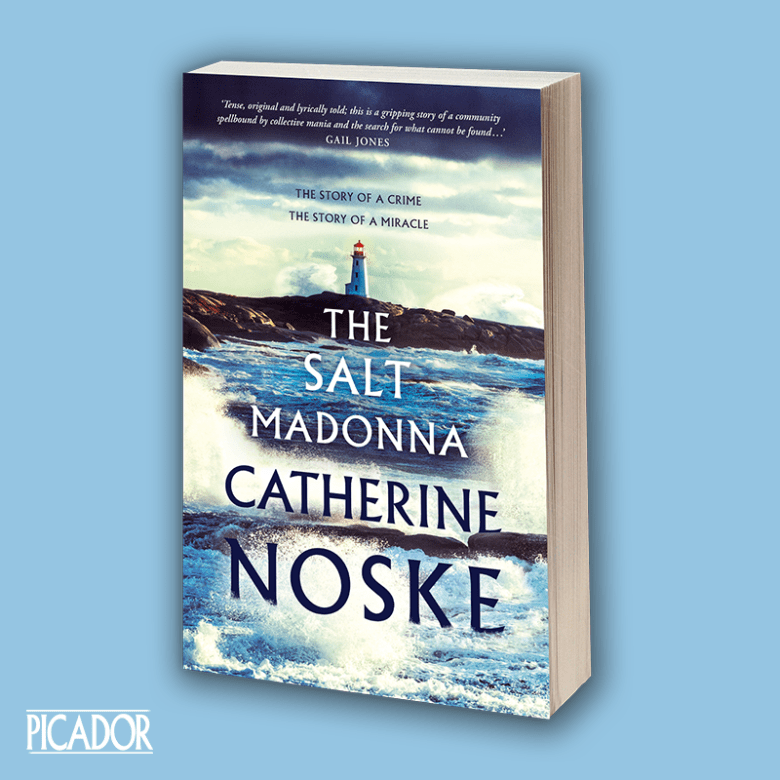
  • Book review: ‘The Salt Madonna’, by Catherine Noske

    Catherine Noske’s debut novel, The Salt Madonna (Picador/Pan Macmillan Australia), blends dreams with nightmares in an often startling work that in many ways makes for perfect lockdown and quarantine reading. This is a story that builds slowly, drawing the reader down a surreal, twisting path, which ultimately leads us into the realm of genuine horror.

    At its heart, this is a book grappling with the terrifying power of faith. Set on the fictional Australian island of Chesil, we follow the trials of the island’s inhabitants as they contend with a world beset by the challenges of climate breakdown and failing economic systems. As a fictional tool, Chesil is a prism through which Noske is able to skilfully draw together multiple competing ideas into a compelling narrative that catches you early on and refuses to let you go.

    Through the – somewhat unreliable – narration of the principal protagonist, Hannah, we arrive in a world instantly recognisable to anyone who has ever encountered the ‘small town’ (or small village) mind-set that so often accompanies remote and isolated populations. At first, the quirks that accompany such a place seem fairly benign – the village gossips; the curtain-twitching of the neighbours; the contempt for “the mainland” (and the people from it); the wayward, bored-senseless youths. Yet, as the story moves on, the early sensation of reading what feels like a nostalgic, sepia-tinged dream is displaced by something far more tense and malignant.

    After an incident involving one of the island’s young students, strange acts of man and nature that could be explained away by science are instead held up by the island’s devout populace as miracles. And it is from this point that the novel takes such a dark and gothic turn – something that is only amplified by the feeling of entrapment; of lack of possible escape routes. Not only are we – and the islanders – cut off from the mainland by often ferocious sea, we are trapped by far more human constructions, also; needless bureaucracy (as seen when police officers refuse to process reports of underage pregnancy), established religion, familial ties and human superstition.

    It’s interesting, reading the book in an era where all the reality and facts around us point to deep rooted problems with our current socio-economic systems – the faults of corporate capitalism, the man-made destruction of the planet – to see how easy it is for people to turn away from recognising the uncomfortable truths of situations in favour of the implausible miracles. Noske is so successful at navigating the exploration of this idea, partly because of her clear devotion to her characters. Each carry their own flaws, of course, but even the most challenging ones are never simplified or made into two-dimensional, ‘evil’ characters. If anything, this serves to amplify the horror elements of this tale; because we see how easy it is for humans to take such appalling actions.

    There’s certainly something of Lord of the Flies about The Salt Madonna. And some of the questions explored in each are the same; particularly how human beings react when cut off from ‘civilisation’ and presented with acute challenges. Yet there is also something Shakespearean and Tempest-like to this tale – alluded to even as police officers dismiss reports of underage pregnancy as part of a “Romeo & Juliet” romance. There must be no coincidence that Noske sets her story on an island battered by waves and storms both literal and figurative; and while there is no stand in for Caliban, there is no mistaking the heavy pressure of colonialism and its legacy the permeates the story.

    But this is not just a book to be analysed. It’s a great story that makes you want to analyse it and ask yourself questions precisely because Noske does such a good job of spinning a thought-provoking and entertaining yarn. The writing is always strong and engaging, and frequently veers into the cinematic (which is perhaps why certain scenes feel so reminiscent of classic horrors like The Wicker Man). Noske’s description is beautiful and lyrical, evoking masterpieces in our mind’s eye of great statues covered in bright salt glinting in the sunlight, but also of stagnant, rotting rivers (another thing Noske does well is really make you smell Chesil; whether it’s the stench of the river, or rotting corpses of seagulls or fermenting seaweed).

    In short, then, The Salt Madonna is an expertly crafted, gripping story that will capture you within its pages just as Chesil seems to capture those who land there. A fine way to while away the hours while trapped under coronavirus-imposed lockdown and quarantine (even if the general sense of being trapped might strike a little too close to home at times).

  • You Asked For It

    The email comes with an attachment that might, probably will, ruin her life forever. 

    You.

    Asked.

    For.

    It.

    She repeats each word carefully, her face bright in the pale blue glow of her laptop screen. She’s sure she knows what the attachment is but she’d rather die than open it. 

    The email has no subject. The sender is a certain thirty-year-old Davide who works in TV production and whose life goal is to be like Berlusconi. At work, Davide’s private office is right next to her desk, and every time he walks by talking about budgets or casting he winks at her while she answers calls and brings coffee to the men. Davide invited her to a ‘huge party’ last week and she went only to discover that it was a small gathering in his private hotel suite in Milan. A chandelier, long and thick curtains, smell of refined wine like Château Du Tertre or Terra Gratia (names she read on the bottles scattered all over the glass tables), skinny models in fashionable and glittery clothes. Men talking excitedly about business, politics, the elections, while women listened to them, mute. One of these women looked at her, with her gorgeous blue eyes, like the colour of sky and sea when they merge together in the summer evenings. She looked back, but she can’t remember what happened after, she just knows she was on the balcony and her bra was off and then what? Someone must have taken pictures. 

    There is a nice smell coming from the corridor. She closes her laptop, stands and walks out of her tiny bedroom, which smells stuffy, and goes to the kitchen, which has one old wooden table, always covered with her sister’s books. Sofia, her sister, looks up from her 400-page volume on female-writers-in-modern-literature-or-something-like-that and says, 

    ‘Are you alright, Ambra?’ 

    Sofia keeps her hair in short, emancipatory bobs and doesn’t cover her freckles with foundation. She talks freely about tampons in front of grandmothers and is the first member of the family to go to university. 

    Ambra nods. Mum is stirring something in the pot, her back to them. It really smells delicious. Penne with tomato and aubergines. Just to do something and avoid her sister’s gaze, Ambra starts cutting the basil. 

    Mum puts the pasta in the dishes and Sofia moves her pile of books onto the battered armchair, which is where Dad used to sit, when he was still with them. Mum’s hands used to be long and beautiful but now are chapped and a bit swollen. 

    Buon appetito,’ she says and Sofia says ‘thanks,’ her mouth filled with pasta. They turn the TV on. There is a reality show with girls with fake boobs and lip fillers who shout at each other. 

    ‘Disgusting,’ Sofia comments and switches over to the news. 

    Mum doesn’t say anything. She is looking at Ambra but Ambra is thinking of the attachment. 

    She knows now what it feels to look normal 

    but to hold despair inside like a sickness, 

    spreading all around the body,

    crippling her, 

    killing her, 

    slowly. 

    At night, when she hears Mum going to bed and Sofia joining her and turning the light off, she stops staring at the ceiling and opens her laptop. The attachment is a video. She watches it. There she is, 

    her hair braided around her head like a crown, 

    her arms thin and long,

    her lips bright red. 

    She is dancing, 

    visibly drunk,

    until the men tell her to striptease. 

    She sees a flicker in her own expression, like candlelight before it’s blown out, but the men are the ones who decide, at least that is how it is in her office – and everywhere else, really – where they choose budgets and presenters and topics for the TV programs and she just brings coffee and occasionally auditions to be among the showgirls, the veline.

    So she takes her top off and then her bra, while Davide and the others say things like: ‘Someone’s going to be promoted, HA!’ 

    She shuts her laptop. 

    Fuck them. 

    But it is her fault. 

    It is her fault because, when she was a child, she promised herself she would be different from her townspeople. 

    She would see the teenage moms carrying their yelling babies around the grocery shop, their faces hysterical, just like her own mum had been. 

    She would see them tired but still setting the table quickly when their husbands were hungry and asked for bread or focaccia, and the mums hurried to give them food, as if the men didn’t have hands themselves, as if once seated they couldn’t move. 

    She would look at the courtyards where they lived, yellowish and striped curtains leading into the apartments, grandmas sitting on plastic chairs outside as children played with sticks and adolescents smoked and climbed on rusty bikes. 

    She would look at all of this and think: I will be famous, I will be on TV someday. 

    But she didn’t realise 

    there is no escape 

    for someone 

    like her. 

    Father was the only one who believed in her. He always took her to dance rehearsals in his old pale blue Fiat 500. They listened to the radio together and sang Tu vuo’ fa’ l’americano while she dreamt of dancing rock’n’roll and making love under the moon just like the song said. 

    But Mum didn’t like Dad and neither did Sofia. For his part, Dad always said that Sofia was boring because she was always sitting somewhere, her head buried in a book. Sofia ignored him, even when Dad said: ‘look at Ambra, look how pretty your sister is.’

    Once, when he came home in a bad mood and Sofia was writing on her leather notebook, he grabbed the notebook from her hands, threw it on the floor and shouted: 

    ‘This shit never did a girl any good!’

    Mum, who was cutting mozzarella into thin slices, banged her fist on the table.

    ‘Leave her alone,’ she said, her eyes bloodshot. ‘Maybe she’ll get a decent job someday!’

    Dad was scornful. ‘Right,’ he said. ‘Because studying worked out so well for you, didn’t it?’

    Mum broke a glass and shards went flying everywhere. Dad slapped her, hard, and her cheek was red for the rest of the day. 

    Years later, when Sofia and Ambra were doing the shopping together, choosing bread and ham at the marketSofia said, ‘We’re so happy without dad, aren’t we?’ 

    ‘I guess,’ said Ambra.

    Dad had left for some other woman months before and Ambra had cried for one week, punching the wall and wishing the other woman dropped dead. 

    In the morning, when the sky is flat and grey, she goes to find Davide. She takes the bus, then the train, then walks the long walk to the TV production headquarters. 

    Inside, no one cares about her, which means no one has seen the video yet. Davide is in some all-guy meeting in a posh room with glass walls, so she waits outside, clutching her hands, untangling her hair, watching the people running everywhere around her. 

    When the meeting is over, she stands to confront Davide but, without even taking her aside, he says: 

    ‘Did you see it? Great performance. Should’ve paid more attention though. Now you’re at a dead-end.’

    ‘Who did you send it to?’ she whispers. 

    ‘Just the boss,’ Davide says, smirking, and she wants to smash his face against the wall, arrogant piece of shit who feels entitled to ruin other people’s lives, who spends his time talking about drugs and luxurious holidays and weekends in London and Paris and the women he’s been with. He hasn’t earned one thing in his life, not one. And he hates her only because she wouldn’t sleep with him, because that is what they all want from her, always. 

    So she goes to see the boss, because what other choice does she have? 

    There is no waiting this time. When the boss sees her, he lets her in straight away. He smells nice like vanilla and is the kind of man who jokes about keeping ‘his’ women all in one room because ‘maybe, if you put them all together, they can make one man’s brain, HAHA.’ 

    There is no need to explain. Before she can say anything, he starts talking, mumbling things like: 

    ‘Who knew you were this pretty’

    and

    ‘I will make sure to have you on-air every night next week…’

    But at the same time he is coming closer and closer to her, and before she knows it, he is trying to kiss her, she can see his grey eyes closed as he leans forward…

    She pushes him away. 

    It takes a minute before he recomposes himself. 

    ‘Do you want to lose your job?’ he asks. 

    ‘No.’

    ‘Then you know what you have to do.’

    ‘No.’

    ‘Then I’ll fire you, and your stupid beginners porn video will be everywhere, is that what you want?’

    She wants to throw up. 

    She walks out of the office. 

    Her sister was right when she said, ‘at least in class I can prove that I’m better than the men, at least I can show them I have brains too.’

    In the street, everything is blurry, is it because she’s crying?

    She stops under a lamppost, 

    aware of the traffic, 

    of the hundred people 

    walking around her, 

    and sobs. 

    Mum isn’t home yet. Ambra stares at the pots and pans hanging on the kitchen wall. Her life will soon be over. The boss will upload the video and she will die, because she can’t live in shame. She doesn’t want to go back working in that supermarket, how humiliating, how tedious, scanning each item while the clients wait impatiently, giving out change under the neon lights, always the same, like hospital lights.

    She shakes with rage and rubs her eyes and smashes one plate on the floor, just like she saw her father do so many times, until-

    ‘Ambra, what is it?’

    Sofia has come out of the bathroom, a pink towel wrapped around her slim body, glasses balanced on the tip of her nose. 

    Ambra doesn’t want to tell, because her sister can’t understand, she is perfect, she is always right, she knows what to do even though no one ever taught her…

    But then it was Sofia who cared after Ambra whenever she got home drunk and wanted to sleep on the kitchen floor, Sofia who told her she was much prettier than all the other showgirls even though Ambra knows how much Sofia hates Italian TV. 

    So she tells her sister everything that happened, the video and the threats and the firing. 

    And to her surprise, Sofia doesn’t blame her. 

    She calls her boss ‘a pig’ and Davide ‘an arrogant loser’ and promises she will do anything to take the video taken down, anything she can, she will go as far as taking the pigs to court if she has to, even if that is the last thing she does.

    And, for a moment, Ambra looks at her sister. Her hair is wet after the shower, her grip firm on her hands, her face determined and a bit defiant. 

    She looks at the small kitchen she has always hated, at the smashed plate, at Sofia’s books on female filmmakers and the suffragette movement and the best poetry of the twenty-first century. 

    She closes her eyes,

    and feeling hopeful 

    she says:

    Thank you. 


    Costanza Casati is a fiction writer, freelance journalist and screenwriter, passionate about storytelling with women at the center. Her short stories have been published on Nothing in the Rulebook and broadcast on RAW1251 Warwick Radio as part of the show ‘Flash Fix’. Her latest project, ‘Tintoretto and the New Venice’, a documentary on the 16th century Venetian painter, has been broadcast by ARTE, the European culture TV channel, and by RAI, the national public broadcasting company of Italy. She is currently working on her debut novel, a dystopian feminist, and on the launch of a monthly podcast that focuses on book-to-film adaptations. You can find out more about Costanza on her website https://www.costanzacasati.com

    Her short stories Rotten Roots and Horrible Feet are also available on Nothing in the Rulebook.

    Feature picture photograph: ‘Crouching Nude’ by Schiele.

  • Creatives in profile: interview with Holly Watt

    We may be in the middle of a global crisis, but there’s nothing in the rulebook to say you can’t continue your interview series during a worldwide pandemic.

    Holly Watt started her journalistic career at the Sunday Times, before moving to the Daily Telegraph, where she worked as the Whitehall Editor and co-ran the investigations team. At the Telegraph, she won an award for her work on the MPs’ Expenses scandal and later, as an investigator for The Guardian, she won another award for her coverage of the Panama Papers.  

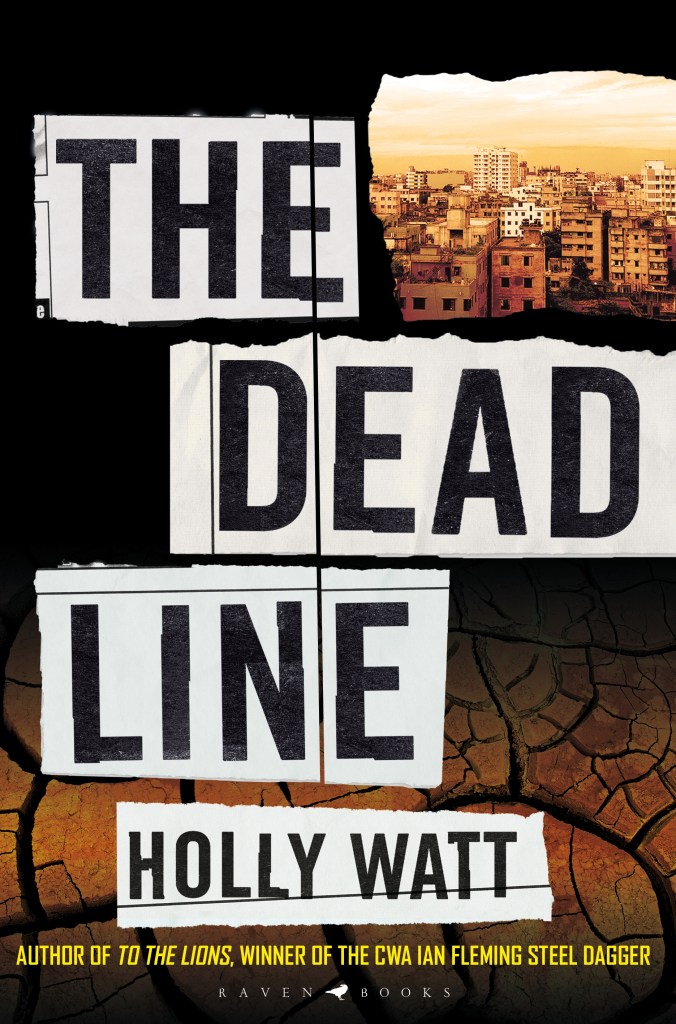
    She’s reported from all over the world, from Afghanistan to Bangladesh, Libya to Jordan to Lebanon. She’s flown in everything from Lynx helicopters to Air Force One, worked on location and undercover but, in 2019, she took her writing to a new frontier: fiction. Her first novel, To The Lions, won the 2019 CWA Ian Fleming Steel Dagger and her second, The Dead Line, published by Raven Books, is out now.

    Through the power of technology, we had the chance to ask Holly about her life as a reporter, her creative process and Casey Benedict, the heroine of her novels. We’re delighted to bring you this exclusive interview. 

    INTERVIEWER

    Tell us a little about yourself. Where do you live? What’s your background/lifestyle?

    WATT

    I live in the middle of nowhere in Dartmoor. I moved down here after quitting my job at the Guardian, where I worked on the investigations team. Before the Guardian, I worked at the Telegraph and the Sunday Times

    INTERVIEWER

    Who or what inspires you?

    WATT

    Apart from my nearest and dearest, I find newspapers inspiring. Despite all the criticism they receive, sometimes justifiably, I still find it amazing that these thousands and thousands of words are produced every day with the intention of informing the public. Even after almost fifteen years as a journalist, I still find that extraordinary. And I can never read a newspaper without finding some fact or story that makes me stop and think. 

    INTERVIEWER

    Is writing your first love or do you have another passion?

    WATT

    Writing was definitely my first love. I spent years of my childhood writing little stories and making up endless adventures. I remember being quite surprised that not everyone did the same thing. 

    INTERVIEWER

    According to The Literary Review, your first book To The Lions is ‘…eye-popping in its revelations of undercover journalists’ tactics…’ As a reporter, you chased pirates around the Indian Ocean, flew on Air Force One and ended up lost in a nuclear shelter under one of Gadhafi’s palaces. Was it difficult turning your real-life experience as an investigative reporter into fiction? 

    WATT

    I didn’t find it hard. In fact, I found writing about these things really helpful. In hindsight, I lived my twenties and early thirties at a completely ludicrous pace. I remember once flying London-Montreal-Paris-Djerba (Tunisia)- driving to Tripoli in Libya-back to Djerba-Stuttgart-Monaco-London. Monaco was for a friend’s birthday party, which was a bit of a culture shock after Tripoli. I would only be back in London for a few days at a time before heading off again. It’s quite hard to process things when you’re zooming around that much, so writing about some of it helped.

    INTERVIEWER

    Tell us a little about your main character, Casey Benedict. What did you find interesting about her? 

    WATT

    She’s hugely driven, but she doesn’t really understand why. She finds it easier to jump on a plane and fly to a warzone than face any sort of emotional music. She loves the hunt, but she doesn’t like the kill. She’s a mass of contradictions. 

    INTERVIEWER

    Which crime writers should we be paying particular attention to at the moment? 

    WATT

    I always love Eva Dolan’s writing. Her books pop back into my head at unexpected moments. 

    INTERVIEWER

    Can you tell us a little about your creative process? How do you go from blank screen to completed manuscript? Do you plan the plot before you write or do you just dive in? 

    WATT

    I don’t really know! And sometimes I worry I will never be able to do it again. For the first one, I just started writing and hoped for the best. That one took the longest, because I didn’t know who the characters were. The first draft of the second one was a mess – I had to do a huge rewrite which was a bit stressful. But it hadn’t felt like it was “working” right the way through, and luckily halfway through the rewrite, it suddenly pulled together. (I am using the word ‘suddenly’ only because my lovely editor won’t let me use it in my book!) For my third book, which I am just finishing now, I wrote a synopsis for my publisher and used that as a springboard for the actual book. But I’ve been quite happy to bin bits that don’t work. I usually find out what a book is really about around 80% through writing it. There’s a point when I realise: “oh, that’s it.” I aim for a first draft to come in at about 80,000 words, as I am the sort of writer whose word count goes up and I edit. 

    INTERVIEWER

    Do you feel a sense of responsibility as a writer? 

    WATT

    Not especially. I want to make people think, but I don’t want to force them to a conclusion. It’s more like “for your consideration” than “think this”.

    INTERVIEWER

    What was the first book that made you cry? 

    WATT

    I read Tess of the D’Urbervilles when I was quite young (Probably about eight. Who knows why? It must have just been on a bookshelf) and felt very sorry for Tess. It was all just quite bleak. I gave Thomas Hardy quite a swerve after that. And then had to read Jude the Obscure at university and… Well, you don’t feel wildly uplifted by the end of it. 

    INTERVIEWER

    What is the hardest thing about being a writer?

    WATT

    Some days, the words don’t flow. And some days, they don’t flow, but if you sit there and push on through, they do. And both those days look the same, and feel the same, so you can’t tell when you are completely wasting your time. On top of that, I’ve written some of my favourite bits on days I really didn’t feel like writing at all. It’s weird. 

    INTERVIEWER

    Name a fictional character you consider a friend. 

    WATT

    I’ve always loved Cassandra Mortmain in I Capture the Castle

    INTERVIEWER

    Did getting published change your perception of writing?

    WATT

    I was lucky because the way publishing schedules work, I was a long way through writing The Dead Line by the time To The Lions came out. My first review was on something like NetGalley and it was really dire – the reviewer really ripped it apart. I think if I hadn’t been quite a long way into The Dead Line, it would have knocked me a lot more. As it was, I just read some nicer reviews instead and got on with it. But I definitely found it discombobulating having people appraising To The Lions while writing something else!

    INTERVIEWER

    Which book deserves more readers?  

    WATT

    Emma Flint’s Little Deaths (although to be honest, a lot of people read it!)

    INTERVIEWER

    Do you have any friends that are writers? If so, do you show each other early drafts?

    WATT

    Yes, two of my best friends are a married couple called Paul Vlitos and Collette Lyons. Paul teaches creative writing at the University of Surrey. One night, they were over at mine for dinner and I admitted I was trying to write a book and he ordered me to send it to him. The next day, rather unwillingly, I sent him about a third of To The Lions. He ordered me to finish it. Rather brilliantly, about a year after that he and Collette sent me the first draft of their book, which they wrote under the name Ellory Lloyd. I read it on the way back down to Devon and missed my stop. It’s called People Like Her and it comes out early next year. It is completely brilliant. I secretly think they only wrote it because To The Lions got published and they thought, “Well, if that muppet can do it…” 

    INTERVIEWER

    What’s next for you? 

    WATT

    Finishing Book 3! I’m trying to come up with a title…

    QUICK FIRE ROUND:

    INTERVIEWER

    Favourite book? 

    WATT

    Possession by AS Byatt. 

    INTERVIEWER

    Saturday night: book or Netflix?

    WATT

     Book, but usually next to Jonny while he watches something on Netflix. 

    INTERVIEWER

    Critically acclaimed or cult classic? 

    WATT

    Critically acclaimed – I need to be told what to read next. 

    INTERVIEWER

    Do you have any hidden talents?

    WATT

    No. If I do, they are too hidden for anyone to have ever spotted them. 

    INTERVIEWER

    Any embarrassing moments? 

    WATT

    Oh so many. 

    INTERVIEWER

    What’s the best advice you ever received? 

    WATT

    He’s putting you down because of his own insecurities (Ooh, that’s a bit heavy. But also true.)

    INTERVIEWER

    Any reading pet peeves? 

    WATT

    I think I’ve slightly spoiled crime fiction for myself, because I sort of write it alongside as I read it. It’s a bit like newspapers – I think about how I would have done the story as I read it. I’d love to be able to go back to just enjoying them straightforwardly. 

    INTERVIEWER

    Do you have a theme song?

    WATT

     No, but I probably should. 

    INTERVIEWER

    Your proudest achievement? 

    WATT

    I still feel very thrilled when I think about winning the CWA Ian Fleming Steel Dagger last year.

    INTERVIEWER

    Best advice for writers just starting out? 

    WATT

    Don’t wait for the muse to show up. Sometimes, you need to crack on without her. 

    To find out more about Holly, you can follow her on Twitter or visit her website: www.hollywatt.co.uk

    The Dead Line by Holly Watt (Raven Books) is out now – available from Amazon and Waterstones.

  • Creatives in profile: interview with Addy Farmer

    We may be in the middle of a global crisis, but there’s nothing in the rulebook to say you can’t carry on interviewing people during a worldwide pandemic.

    In fact, the lockdown has made it more important than ever to stay creative and connected. Addy Farmer is a children’s author and the chair of the North Lincolnshire Literary Trust. She lends her insight into children’s writing to app developers, consulting on story arcs and narrative software. She also offers feedback on manuscripts via her website: www.addyfarmer.com

    As a response to the coronavirus epidemic, Farmer – with fellow award-winning children’s authors – launched My Corona Diarya project to encourage young people to keep diaries throughout the Coronavirus Crisis. The aim is to build an online archive and ultimately publish an anthology that can become part of the historic record of a time that changed the world forever.

    NITRB caught up with Addy to find out about the project, her writing and how the pandemic has changed her creative life. 

    INTERVIEWER

    Tell us a little about yourself. Where do you live? What’s your background/lifestyle?

    FARMER

    I live in a small town called Crowle in the middle of the North Lincolnshire countryside. It’s very flat around here; there are big skies and you can see for miles. It’s a great place to walk, think and make shapes out of the clouds (I am a fully paid up member of the Cloud Appreciation Society). From my house, I can walk down a road bordered by farmland and in fifteen minutes reach Crowle Moors: an ancient peat land, once industrialised and now a place of birdsong and a kind of rough beauty. On a warm day, it is life-enhancing. I think myself lucky, especially at the moment, because I live in the countryside, in a house with a big, messy garden. I’m not a gardener but I am a very keen potterer which is also a good way of Not Writing when I should Be Writing. I also run a bed and breakfast. 

    INTERVIEWER

    Is writing your first love or do you have another passion?

    FARMER

    I write in the morning and sort out any admin, workshop preparation, bed and breakfast business and volunteer stuff in the afternoon. My creative workshops are with festivals or with organisations like Landscape Partnership and ReWild. They’re mostly outdoors, which I love. I am a volunteer network co-ordinator for the SCBWI (Society of Children’s Book Writers and Illustrators) and this means that I help organise meetings and workshops for our region – it’s a wonderful thing to do because it brings writers and artists together in what can be a rather lonely line of work. I love to connect with people and organisations because making connections can lead anywhere! 

    I am basically a jobbing author and will work on children’s writing related content. I have, for example, developed a story world for a start-up company and, recently, I worked with a brilliant education company called PANJANGO, helping to create story arcs for their app. I am very interested in exploring children’s writing in other media especially children’s theatre. The amazing Rhubarb Theatre in Lincoln has adapted two of my picture books for performance; watching and taking part in those productions was fascinating. Seeing children’s immediate reactions to the story was brilliant. For me, it’s all about trying to live the creative life.

    INTERVIEWER

    Tell us a little about your new project, ‘My Corona Diary.’ Why do you think it’s important?

    FARMER

    It is the brainchild of my amazing friend and fellow writer, Kathryn Evans. She began it as a creative response to the outbreak. She wanted to give children from littlies to teens, the opportunity to respond to the lockdown. She wanted children to know that what they had to say was truly important. We hope to curate these responses and bring together a book at the end of the pandemic. You can find out more information about it at www.ourcoronadiary.com

    INTERVIEWER

    How has the pandemic changed your creative career? 

    FARMER

    Inevitably, the bed and breakfast and workshops side of things has completely dried up but I have channelled that time into more writing and helping out with this rather wonderful new project, Our Corona Diary. 

    INTERVIEWER

    As well as writing, you’ve also worked as a teacher. What is it like balancing a career in writing and a demanding profession?

    FARMER

    I moved out of London and ran a bookshop in the Midlands before settling in North Lincolnshire and starting a teaching career in primary and special education. I also had three amazing children with one brilliant husband. I no longer formally teach but the experience was invaluable when I started running workshops in schools. Interacting with children was always the best part of teaching so to be able to go into schools now and inspire children (without the hassle of endless admin) is such an enjoyable privilege! 

    INTERVIEWER

    Which children’s writers should we be paying particular attention to at the moment? 

    FARMER

    I would say all of my friends in the Slushpile blog: Teri Terry, Kathryn Evans, Candy Gourlayl, Mo Lynas, Jo Wyton, Paula Harrison and Nick Cross. They are all very different writers but what unites them is the heart they put into their stories. All of us on the Slushpile blog have faced challenges in our writing but one of the hardest things is keeping going in the face of almost constant rejection. This isn’t a plea for sympathy because all writers – published and pre-published – face failure. But you do have to develop an ability to stand back from rejection, de-personalise it, analyse it and crack on with the next thing. And most importantly enjoy being creative! I have blogged about this in Notes from the Slushpile, here! I can say that writers are some of the staunchest people I know.

    INTERVIEWER

    Can you tell us a little about your creative process? How do you go from blank screen to completed manuscript? Do you plan the plot before you write or do you just dive in? 

    FARMER

    I have ideas flying all over the place. I am never short of ideas – they could come from something I’ve read or seen but often my ideas start with the way I’m feeling. I like to write stories that spring out of folklore and nature – I used to love reading Alan Garner and Susan Cooper. Just after Christmas, I went on a writing retreat in the Lake District with some friends. It was inspiring not just because of the people I was with but also because of the place I was in. 

    Plotter or pantser? I think a lot about my story before I begin writing. I have a very good idea of the structure and I know my characters. I know what my characters want and where they will end up. I know how I want my reader to feel about these people. If I ever drift from that feeling, I know to go back to it. Knowing the spine or heart, the centre of your story, is crucial. I used to fly off into a story because I was so excited about it but then screeched to a halt in chapter 6 with no idea where to go or how to get there. Making an exciting, believable outer journey for your character is important but it’s the emotional journey that makes a story memorable. 

    INTERVIEWER

    Which three qualities do you think are essential in a good story for children? 

    First, I want to be lost in the story and be borne along effortlessly from beginning to end – I must never see the construction, the scaffolding that goes on behind that story. I must also identify in some way with the protagonist and love her VOICE – get this part right and it feels like the character is talking to you directly. The writer can’t intrude in any way. Finally, when the book ends, I have to feel sad and know I’ll want to read it again. 

    INTERVIEWER

    Do you feel a sense of responsibility as a writer? 

    FARMER

    Yes, perhaps because I mostly write for young children. You are telling stories to them at an amazing time in their lives. They want to understand and enjoy but they’re also open enough to be transported wholeheartedly to other worlds and really believe in your characters. I absolutely want to make my writing the best it can be not just for me but for the reader who is ALWAYS front and centre when I’m writing.

    INTERVIEWER

    What was the first book that made you cry? 

    FARMER

    I’m pretty unsentimental and it takes something to make me shed tears. Books about hard-won friendship will do it. Most recently, it was Five Children on the Western Front by Kate Saunders which is a truly heart-wrenching sequel to E. Nesbit’s Five Children and It.

    INTERVIEWER

    Name a fictional character you consider a friend. 

    FARMER

    Who would I enjoy a good chat with AND trust with my life? I would say Hermione Granger but she’s too serious … I thnk it has to be Moomintroll – for his sense of adventure and being brave and holding onto his family and friends. For Moomin beginners, I recommend, Moominsummer Madness by Tove Jansson. Once in the Moomin’s world, you won’t want to leave. 

    INTERVIEWER

    Which book deserves more readers? 

    FARMER

    One of the wonderful things about being a children’s writer is that you have to read a lot. Here are a few books which left an impression on me…

    The Silver Donkey by Sonya Hartnett – a wartime story about honesty and courage.

    The Crowfield Curse by Pat Walsh – a wonderfully evocative and exciting medieval story of magic and secrets.

    Charmed Life by Diana Wynne-Jones – I could choose any of her books, really. They are clever, magic and funny. 

    INTERVIEWER

    What’s next for you? 

    FARMER

    I’ve been working with Child Bereavement UK on a chapter book called, I Love You, Sunshine that I hope will make a difference. I’m also working on a creative non-fiction picture book called, Little Peat. It’s about a little industrial engine abandoned on the moors (spoiler: there’s a happy ending). I am also working on a funny middle grade novel and a ghost story! I always hope for publishing success with my work but I always try to remember that I’m living a creative life which is a wonderful thing.  

    QUICK FIRE ROUND: 

    INTERVIEWER

    Favourite book? 

    FARMER

    My Swordhand is Singing by Marcus Sedgewick

    INTERVIEWER

    Saturday night: book or Netflix? 

    FARMER

    Netflix

    INTERVIEWER

    Critically acclaimed or cult classic? 

    FARMER

    Cult Classic

    INTERVIEWER

    Do you have any hidden talents? 

    FARMER

    Fencing

    INTERVIEWER

    Any embarrassing moments? 

    FARMER

    Plenty

    INTERVIEWER

    What’s the best advice you ever received? 

    FARMER

    When you think you’ve finished, leave it to stew and go back later. You’ll find more to do.

    INTERVIEWER

    Any reading pet peeves?

    FARMER

    When people fold down the corners of pages to mark their place. 

    INTERVIEWER

    Do you have a theme song?

    FARMER

    Let’s Go Fly a Kite from Mary Poppins

    INTERVIEWER

    Your proudest achievement? 

    FARMER

    Seeing my work performed

    INTERVIEWER

    Best advice for writers just starting out? 

    FARMER

    Read, read, read!

    You can buy Addy Farmer’s books on her website, follow her on Twitter and Instagram, and find out more about the My Corona Diary project here 

  • Nothing in the Rulebook launches new ‘Rulebook Readings’ initiative

    Online collective Nothing in the Rulebook has launched the first instalments in its new ‘Rulebook Readings: Lockdown Lit’ series. The playlist features videos from authors, artists, poets and writers from within the Nothing in the Rulebook community, sharing their stories of life under coronavirus-related lockdown. 

    “One of the best things about being part of the Nothing in the Rulebook community is having the chance to meet people doing creative things,” says NITRB editor, Ellen Lavelle. “Often, we only speak over email or Skype but, with everyone now relying on the power of technology to unite and protect, we thought we had an opportunity to bring contributors, readers and supporters together to create something good in a world gone weird.”

    Featuring contributions from around the world, ‘Lockdown Lit’ is intended to run as an ongoing curated video anthology, which will run ‘live’ over the course of the lockdown. Meaning anyone interested in getting involved in a (virtual) conversation with best-selling authors and other creative artists can do so just by submitting a video to the NITRB gang. 

    One of the early contributors to the new Lockdown Lit series was acclaimed crime writer Mark Billingham. “It’s sobering to think about what so many people have lost in these strange and terrible times,” Billingham says, “but one of the most significant losses has been the joy and power of simple human connection. As usual, Joni said it as well as anyone: You don’t know what you’ve got ‘til it’s gone. Thankfully, we now have ways of trying to address that loss and Rulebook Readings is a fantastic way of bringing people together online to share their stories and experiences; to connect.”

    In his video, filmed in his London home, Billingham shares an extract of his current work-in-progress: a standalone crime novel set for release next year. 

    Also featured in the launch is Superkitty illustrator Paula Bowles. In her vlog, filmed from her home in Bristol, Bowles talks us through the way her post-lockdown working day; she shows us her new ‘studio’ (her kitchen), takes us on her daily run and introduces us to friends, family and colleagues via Zoom.

    Chris White, a children’s illustrator and author, shares lockdown-inspired poems, after a school visit tour to Russia was cancelled.

    Some writers discuss books due to be launched during lockdown, now limited to efforts online. 

    Billingham, Bowles and White are joined by a number of other creative artists, including Lisa Marie Simmons, the lead singer of Italian jazz band Note Speak, novelist Carolyn Kirby and Apeksha Harsh, an education facilitator and aspiring writer based in India. 

    “It’s been so brilliant to see people from around the world getting involved in Lockdown Lit,” says Nothing in the Rulebook co-founder, Samuel Dodson. “What we’re all going through right now is totally unprecedented, and yet it’s incredible how people are able to respond to these events with such creativity.”

    “The whole point of the site is to spread the word about creative projects and foster a community of collaboration,” adds editor, Ellen. “We know the coronavirus pandemic is having a huge impact on people’s creative careers and we want to help in any way we can.” 

    If you’re interested in submitting your video to the Lockdown Lit playlist; you can visit the site’s ‘Lockdown Lit’ launch page. You can track the progress of the project by following us on Twitter(@NITRB_Tweets) and liking us on Facebook, or spread the word using the hashtag #LockdownLit

    Featured image photo by DNK.PHOTO on Unsplash