• Creatives in profile: interview with Costanza Casati
    Writer Costanza Casati. Picture ©Arianna Genghini

    Costanza Casati is a writer and screenwriter. She was born in the US, but grew up in Milan, in Italy. She studied at universities in London and Oxford before graduating from the prestigious Warwick Writing MA with a distinction. Her short stories Rotten Roots, Horrible Feet, and You Asked For It, have all been published on Nothing In the Rulebook and she’s written and produced documentaries for Italian television. Her popular bookstagram page (@youngpeopleread) features interviews with writers from all over the world.

    She’s just released her debut novel, The President Show, which is now available to buy from Amazon. Set in a dystopian world, run by a sinister totalitarian regime, the novel follows Iris, a nineteen years old thief. She’s captured and forced to take part in the state-run President Show, a reality programme where ‘Lovers’ have to entertain politicians in a bid to win their freedom. Described as Vox meets The Hunger Games, The President Show is a  story of resilience, abuse, betrayal and hope.

    Nothing in the Rulebook caught up with Casati just as the book was published. We asked her what the publishing process was like, for the name of the stories that made her start writing, and the advice she has for young writers like her.


    INTERVIEWER

    Hi Costanza. Could you first tell us a little about yourself? Where do you live? What’s your background/lifestyle?

    CASATI

    I was born in Texas in 1995. I moved to Italy when I was two and grew up in a small town near Milan – my whole family is Italian. I then moved to London after finishing high school and lived there for five years. I’m currently back to Italy and quarantining here to be close to my family. In addition to writing novels, I’ve been working as a freelance screenwriter and journalist. 

    INTERVIEWER

    Who or what inspires you? 

    CASATI

    Many things inspire me depending on what I’m writing – a beautifully written book, current world events, exceptional figures in history. Writers who inspire me are the ones whose books can make me cry and stay in my mind for a long time after reading them – Margaret Atwood, Madeline Miller, Elena Ferrante, Sally Rooney. 

    INTERVIEWER

    Is writing your first love or do you have another passion?

    CASATI

    Writing is definitely my first love. I spent my childhood reading and making up stories – I used to draw before I could write. I then started writing stories when I was eleven and I don’t think I’ll ever stop. 

    INTERVIEWER

    Your debut novel, The President Show, will be released on 8th March. What is it about the book that you’re most excited to share with readers? 

    CASATI

    I’m most excited to share my characters with readers. The President Show follows a young woman named Iris as she tries to survive on a reality TV show where she has to entertain powerful politicians. My favourite part of the story is really Iris’s journey from prisoner to defiant heroine, and the bonds she forms and breaks with the other young women on the show.

    INTERVIEW

    In preparation for the novel, you’ve filmed a lot of conversations with other writers and friends, discussing the themes of the story. What are some of the most interesting things to come out of those conversations?

    CASATI

    It’s definitely the research that went into those conversations. For a talk on rape culture and headlines about abuse (we were discussing a few cases of rape, including a recent Italian scandal), I discovered an ISTAT survey that proves that 24% of Italians still think women get raped because of the way they dress, while 39.3% think women can avoid rape if they really want to. Another scary statistic came out as we were doing a poll on the obsession of young people with fame and perfection as well as the unrealistic beauty standards on social media. To the question ‘have you ever wanted to change a part of your body you don’t like?’ more than 80% of people voted ‘YES.’ Interesting, but scary stuff. I’d also highly recommend the two documentaries we mentioned in those conversations: Filthy Rich and The Social Dilemma – both available on Netflix.

    INTERVIEWER

    Tell us a little about your main character, Iris. How did you go about getting into the head of someone in her situation? Did you watch any reality shows as research? What did you learn?

    CASATI

    Iris is a very resilient heroine. She is strong, resourceful and protective of the people she loves, but she is also very distrustful. She despises The President show and the other contestants, and yet she understands that the only way for her to win the show and go home is to perform and be like them.

    I watched some episodes from globally famous reality shows – Love IslandBig BrotherThe Apprentice and Survivor – and one of the most interesting things I learnt is the bad message that reality TV sends about human behaviour. Lies, a lack of fairness and compassion, plots to get other players voted off the show are not only accepted on reality TV, but they are rewarded. Most of these shows are about finding weaknesses in the other competitors and throwing them under the bus, and this dangerous mentality of winning at all costs deeply affects our society.

    I also researched the stories of victims from famous sex political scandals. Reading testimonies of women like Virginia Roberts Giuffrè – one of the most outspoken survivors of Jeffrey Epstein’s sex trafficking ring – who were groomed and exploited by powerful men was crucial for me in order to write The President Show.

    INTERVIEWER

    What has the process of publishing the novel yourself been like? The cover, by Sophie Parsons, is fabulous. What was it like, seeing your ideas and characters interpreted by someone else? 

    CASATI

    I love the cover! I came across Sophie’s work on Instagram and contacted her. She loved the idea behind The President Show and worked on a couple of illustrations – one of them then became the cover. Seeing my ideas illustrated by her was a dream come true. I love the sadness and melancholy of Sophie’s illustration – it’s almost as if the two girls on the cover are mirrors, each trapped in her own loneliness. 

    Working on every step of the publication has been very tough – I’m not going to lie – but also very rewarding. I learnt a lot, and I keep learning, but in the end the feeling of holding your book in your hands for the first time is probably the best. 

    INTERVIEWER

    Which writers should we be paying particular attention to at the moment? 

    CASATI

    This is a great moment for feminist retellings of history. I’ve recently interviewed two authors whose debuts are coming out this year – Annie Garthwaite’s Cecily and Elizabeth Lee’s Cunning Women – and both are books I’d highly recommend. You can watch the interviews on my bookstagram page here.
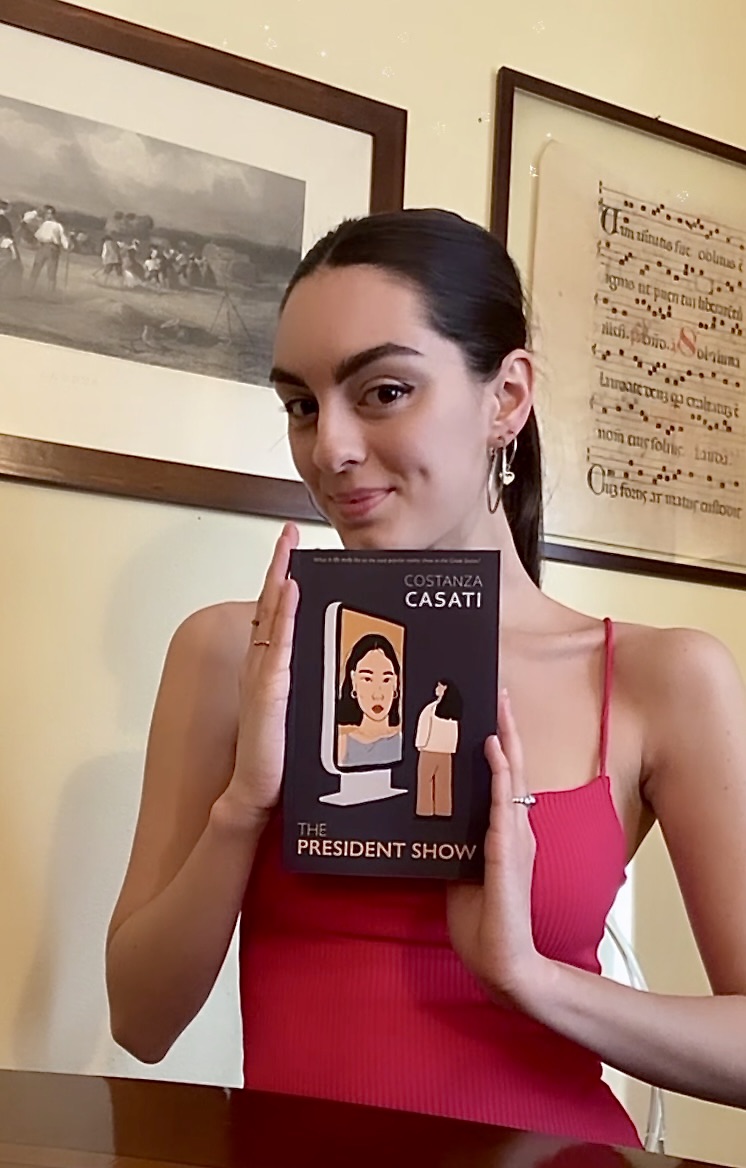
    Casati and her novel.

    INTERVIEWER

    Can you tell us a little about your creative process? How do you go from blank screen to completed manuscript? Do you plan the plot before you write or do you just dive in? 

    CASATI

    I don’t plan a lot before the first draft. I just dive into it and see where it takes me. Then, when it’s time to edit, I draw a detailed plan chapter by chapter to make sure everything works. I rewrote The President Show so many times I lost count, but in the end the most important part of the creative process for me is to connect to the characters, to make sure I understand them, their fears and hopes and dreams. 

    INTERVIEWER

    Do you feel a sense of responsibility as a writer? 

    CASATI

    I do, but mainly for myself. I always push myself to do better, to write better and I don’t stop until I feel that the story is the best it can be. In terms of responsibility towards the readers, I’d like my book to make them think, or simply show them the world from a perspective different from their own.

    INTERVIEWER

    What was the first book that made you cry? 

    CASATI

    It was an Italian book called Cuore (Heart in the English translation) – the story of a group of schoolboys, their hardships, hopes and dreams, set during the Italian unification. My mother used to read it to me when I was little. Then the Harry Potters, obviously. 

    INTERVIEWER

    What is the hardest thing about being a writer?

    CASATI

    It has to be the editing for me, but also the assumption that people often make that anyone can write a book. It’s a wonderful job but it’s very hard; it demands a lot of discipline. That said, I feel incredibly lucky and privileged to be able to write.

    INTERVIEWER

    Name a fictional character you consider a friend. 

    CASATI

    Hermione Granger and Harry Potter. Also Frances and Bobbi from Conversations with Friends

    INTERVIEWER

    Which book deserves more readers?  

    CASATI

    Nothing to Envy by Barbara Demick, which is an incredible non-fiction account of the ordinary lives of people from North Korea. It is drawn from the author’s interviews with extraordinary people who escaped the country’s regime, and it is eye-opening. 

    INTERVIEWER

    Do you have any friends that are writers? If so, do you show each other early drafts?

    CASATI

    I do and I’m so grateful for them! I did my Masters in Writing at the University of Warwick as well as attending the creative writing summer schools at Oxford and Cambridge and I was lucky enough to meet some incredible people there. We still keep in touch and give each other feedback on early drafts. 

    INTERVIEWER

    What’s next for you? 

    CASATI

    My next book is my debut historical novel set in Greece in the age of heroes – a feminist retelling of Clytemnestra, the queen who famously murdered her husband after he came back from the war of Troy.

    QUICK FIRE ROUND!

    INTERVIEWER

    Favourite book? 

    CASATI

    The Handmaid’s Tale and The Song of Achilles.

    INTERVIEWER

    Saturday night: book or Netflix? 

    CASATI

    Both. 

    INTERVIEWER

    Critically acclaimed or cult classic? 

    CASATI

    Lately, critically acclaimed. I love to pick my next book from prizes such as the Women’s Prize for Fiction, the Booker etc. 

    INTERVIEWER

    Do you have any hidden talents? 

    CASATI

    I can sing quite well – and I can do the ‘Cup’ song from Pitch Perfect.

    INTERVIEWER

    Any embarrassing moments? 

    CASATI

    Too many to pick one…

    INTERVIEWER

    What’s the best advice you ever received? 

    CASATI

    Write scene by scene.

    INTERVIEWER

    Any reading pet peeves? 

    CASATI

    Romantic clichés. 

    INTERVIEWER

    Do you have a theme song?

    CASATI

    I don’t actually, though sometimes I write listening to the soundtrack of Game of Thrones!

    INTERVIEWER

    Your proudest achievement? 

    CASATI

    Writing a book in my second language and getting it published! 

    INTERVIEWER

    Best advice for writers just starting out? 

    CASATI

    Focus on what you care about – that will make the book special. 


    The President Show is now available to buy from Amazon. You can find out more about Costanza and her writing on her website. You can also follow her on Instagram and Twitter, and follow her bookstagram page @youngpeopleread.

  • The Mask Falling by Samantha Shannon – Review

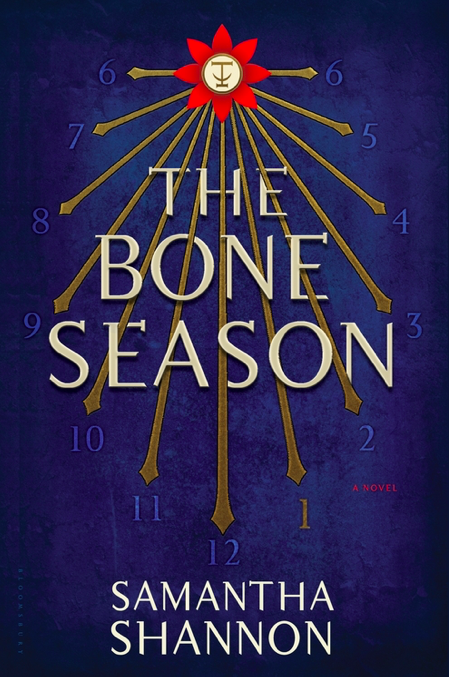
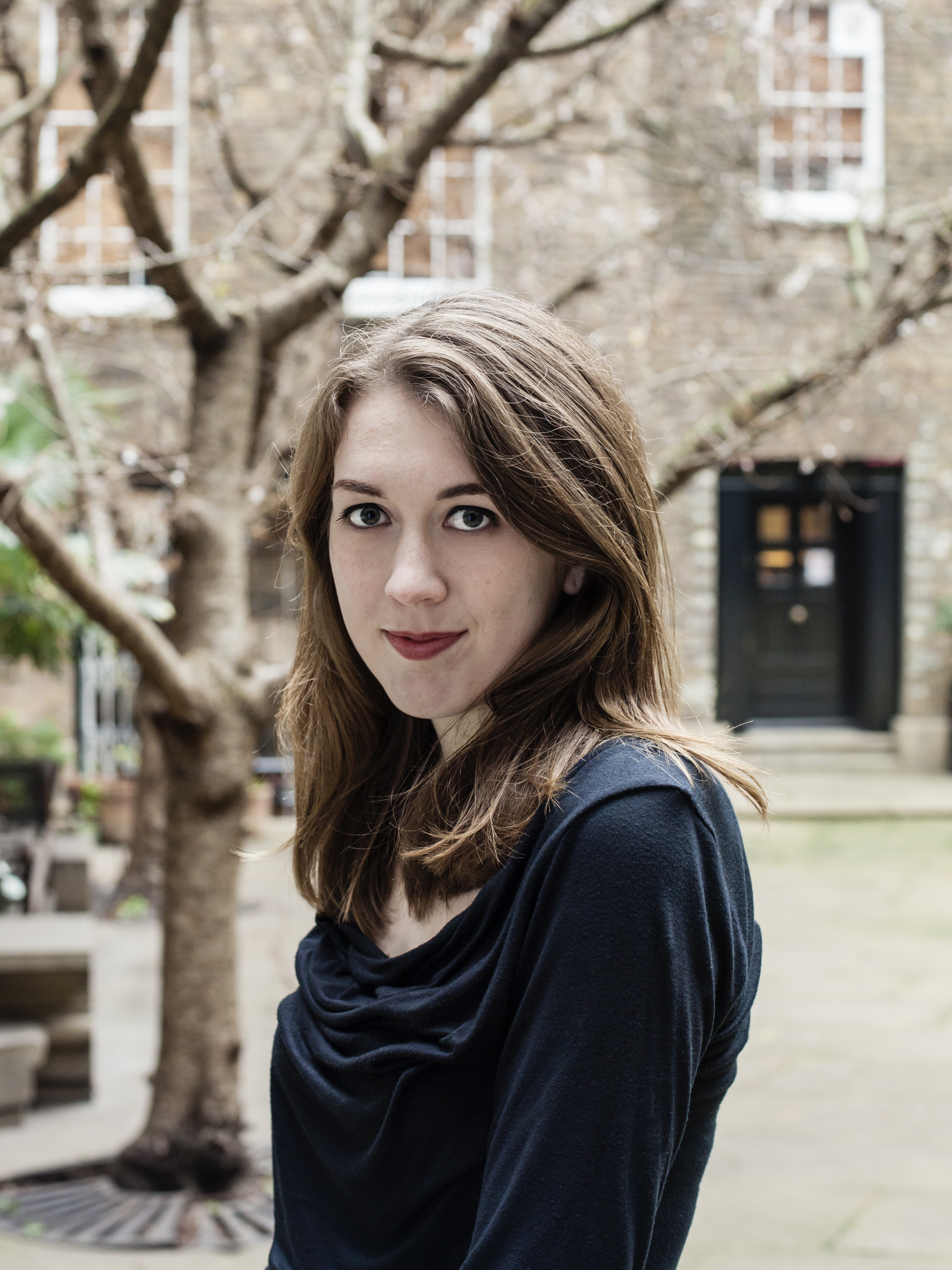
    Samantha Shannon’s The Mask Falling is the fourth book in her The Bone Season series. Shannon finished the first book ten years ago, when she was a nineteen-year-old studying at Oxford. Now an internationally bestselling author, with the rights to adapt sold to Andy Serkis’ production company, Shannon’s reached the mid-point of the saga.

    ‘This is the point at which I hope readers will understand why this is a seven-book series,’ Shannon told NITRB in our Creatives in Profile interview earlier this week. ‘The world opens up on a whole new level.’

    Author Samantha Shannon

    For those new to The Bone Season, the series follows Paige Mahoney, a young clairvoyant in a world where being clairvoyant is not easy. Britain, Ireland, and parts of Europe are occupied by the sinister regime of Scion, which aims to eradicate all forms of ‘unnaturalness’ from its streets. Clairvoyants are forced underground, where various mafia-like cohorts reign. To survive, Paige has aligned herself with Jaxon Hall, a powerful Mime Lord (sort of Crime Boss), who offers her protection in exchange for the use of her powers. And Paige’s powers are powerful, even by the standards of clairvoyant world. She can leave her own body, reach out and occupy other people’s ‘dreamscapes’, possess them, walk around in their skin. She gets better at this throughout the series and, as you can imagine, it comes in handy. 

    But it’s not all plain-sailing for Paige. In the first book, she’s kidnapped and imprisoned, exposed to an even more sinister side of Scion. As the series unspools, as Paige discovers more about her own ability, about the world and people around her, the scale of Shannon’s ambition becomes clear. 

    Dystopia novels are typically restricted to a city or a small country, she says. But with The Bone Season, Shannon takes a more global view. The first three books in the series, The Bone Season, The Mime Order, and The Song Rising, take readers to alternative, slightly Steampunky versions of London, Oxford, Manchester and Edinburgh. The latest, The Mask Falling is ‘the Paris book.’ Each city, each country has a different relationship with Scion, a slightly different hierarchy, a different regime. 

    It’s clear Shannon cares deeply about the world she’s creating. She’s been building it for the last ten years. Many elements of The Bone Season are tied to real historical events, real figures from the past. There are maps in the front, to help readers chart Paige’s adventures. For those deeply-immersed in the fantasy genre, this will be a joy. For others, some of this exposition may be a little raw. At the beginning of The Bone Season, Paige begins by earnestly explaining every element of the world, how she feels about it, what the difficulties are. But it’s stuff you need to know. And Shannon doesn’t hang about. Though parts feel a little to-camera, it’s not long before Paige is jumping across rooftops, breaking out of prison cells, forging allies, making enemies. 

    The fast pace keeps the pages turning, but it can also make it tricky to keep track of characters, their status, their various abilities. But Shannon seems aware of this. In the back of The Mine Order, there’s a substantial ‘People of Interest’ section at the back, detailing trajectory of each character in the series right up until the beginning of the novel. It doesn’t always make for the most seamless reading experience, flipping backwards and forwards, but it is a thoughtful addition. And for those most deeply-immersed in the story, followers of Shannon’s since the very beginning of her career, it probably won’t be necessary. 

    There’s a huge following for The Bone Season. When you type ‘mask falling samantha shannon’ into the search bar, YouTube lights up with book vlogs, ‘unboxing’ videos and reactions. There are a lot of readers deeply invested in Shannon’s story, in the relationship she builds between Paige and the series’ love-interest Arcturus Mesarthim. Arcturus is a Rephaite, an immortal, humanoid being that feeds on the aura of clairvoyants. It’s not an easy relationship, but the obstacles drag willing readers deeper into the story. Though set in the future (The Mask Falling is set in 2060), with aesthetics from the past (Shannon’s world seems tethered to Victorian London, but also involves futuristic technology), The Mask Falling is absolutely a book of the 2020s. The relationship between Paige and Arcturus has been carefully considered with regards power and gender. There are characters with non-binary gender identity and fluid sexual orientation. In an interview with Cymera Festival, Shannon confirms that Paige is in fact demisexual (the trait of only experiencing sexual attraction to people with whom you have an emotional bond). This had, apparently, been suggested by a reader. It’s an anxious time for creators, with a readership more righteous and louder than possibly ever before. But Shannon seems to take this in her stride. She says she doesn’t ‘write by committee’ but thanks her readers for making her consider things that otherwise might have slipped under her radar. 

    Alongside The Bone Season series, Shannon released The Priory of the Orange Tree in 2019. You’ve probably seen the striking cover in bookshop windows. Based on the story of St George and the dragon, the novel is a high-fantasy standalone, based in a matriarchal kingdom on the brink of war. At over 800 pages, Shannon did well to fit it in between Bone Season releases, for which her fans are continually desperate. But with both The Priory of the Orange Tree and each instalment of The Bone Season seriesShannon proves her mettle. The six-figure deal for her debut was no fluke. The books are big because the ideas are big. And, with books five, six, and seven to go, they’re only going to get bigger. 


    The Mask Falling is now available to buy from Bookshop.org. You can follow Samantha Shannon @say_shannon on Twitter and also find more information about her writing and upcoming events on her blog, samantha-shannon.blogspot.co.uk.


    About the Reviewer

    For ten years, Ellen Lavelle has interviewed authors for The Young Journalist Academy, Nothing in the Rulebook, Newark Book Festival, and her own blog. She’s written for several publications, including The Sunday Times Young Writer of the Year Award Blog. Now an editor at Nothing in the Rulebook, she writes fiction and non fiction, while working as a digital copywriter for an education company. You can follow her on Twitter @ellenrlavelle

  • Judged by a cover? What to avoid when writing a book description?

    “Don’t judge the book by its cover.”

    That’s the rule that we were told to apply to everyone and everything. Books are not an exception.

    But where does it leave authors who are about to publish their novels? Should they completely disregard the design of the book covers because what’s inside is more important?

    Absolutely not!

    The design of the cover is essential for the marketing success of your book. If you don’t fully believe it, check out the study by 99designs.

    In it, the authors researched several book covers before and after they were redesigned. As a result, they found that a successful book cover design can improve book visibility by up to 50%, or even more.

    You might still be hesitating and say that putting a pretty picture would be enough for a successful book cover. And you’ll be wrong once again.

    The success of your book cover is not just defined by the picture, fonts, hardcover, or paperback. Your book description is equally as important because it gives a little glimpse – a sneak peek – into the world that the reader will immerse themselves into when reading your book.

    That’s why writing a good description for your book cover is important if you want your book to sell better. Today, we will help you write an engaging description by sharing a few things you need to avoid.

    1. Making your book description too hard to read

    First, let’s answer the most important question – should you use fancy language for your book description?

    You may, but just think about your future readers for a second.

    It’s not in everyone’s capacity to spend too much time in the bookstore to read long and eloquent book descriptions. Angela Baker, a writer and researcher at Supreme Dissertations, shares: “Our research shows that a reader spends 2-3 minutes on average to check out the new book, including its description.”

    Moreover, when a reader sees a book that interests them, they just want a brief but informative paragraph about the book’s contents. They don’t need long, vivid, Tolkien-style descriptions.

    It might be tempting to showcase your literary talents to try and attract the readers, but it’s not your aptitude for fancy language that they are looking for when they’re choosing the next book to read.

    So, try to keep your book description as straightforward as possible. Avoid long sentences and overwhelming words. Also, try to use more verbs instead of adjectives and adverbs. This will make your book description more dynamic.

    2. Not connecting your book to the real life

    One of the most important factors in successful book marketing is relatability. When the author connects their book to real-world events, it instantly drives more interest and attention to it.

    In her recent sequel to The Handmaid’s Tale, The Testaments, Margaret Atwood made such a connection, confirming the readers’ suspicions about the influence of the real-life events on this book. As a result, such a move made her book even more exciting and relatable in the eyes of the readers.

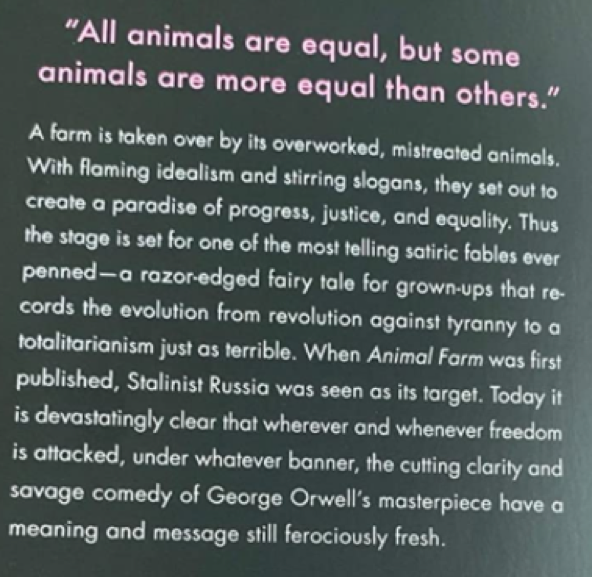
    Another example is the book description of George Orwell’s Animal Farm. People who have read this book know that this book (spoiler alert!) in some way references Stalinist Russia and the complete loss of freedom that Russian people experienced at that time. This reference was wisely put in the book description as well because it gives a hint at what the book is about:

    So, if it is possible, in your description, connect your book and real-life events to create more context for the readers. And if you cannot do it for some reason, tell what your book can teach the readers and why it is relevant to them at this point in time.

    3. Having no hook in your book description

    The book description has to immediately engage the potential reader. Hook them with a gripping question, address some issues, tell an anecdote or funny incident.

    Focusing on the character is also a common approach among the essay writers who do that to add some suspense and also give a little sneak peek of what is ahead for the reader.

    Margaret Atwood used this approach in the book description for The Handmaid’s Tale, focusing it on the character, Offred:

    If you decide to dedicate your book description to the main character, keep the focus on the main events that happened to them and the emotions that they felt. This way, they will appear as real people in the eyes of the readers, making them sympathise with your character.

    4. Not adding social proof

    If you want to get your book published and noticed by the readers, you need something to convince them that it’s really good. Of course, you know that the book is good, but your readers are yet to discover its greatness.

    One way you can make your book seem like the real deal is by adding social proof to your book description. For example, it can be a review from a reputable resource, like the one from The Wall Street Journal of Margaret Atwood’s novel The Blind Assassin:

    You can also make up your entire book description using the reviews from different journals and magazines. This is a common (and effective) approach to help your book stand out from the crowd.

    Over to you

    Even though we are taught not to judge a book by its cover (in the literal sense of this phrase), we still do. But how else will we know that the book is good?

    In the design of a book cover, all elements are important, especially the book description. It invites the reader into the new world that they are yet to discover, makes them excited and thrilled about what’s ahead of them.

    So, put some time and effort into making your book description good. And you can keep this article at hand to remind you about the mistakes you should avoid.

    About the author of this post

    Nicole Garrison is a content strategist, writer, and contributor at TrustMyPaper and a number of platforms for marketing specialists. She is a dedicated and experienced author who pays particular attention to quality research. In her free time, Nicole is a passionate runner and a curious beekeeper. Moreover, she runs her own blog LiveInspiredMagazine.

  • Creatives in profile: interview with Samantha Shannon

    It’s been a busy decade for Samantha Shannon. A writer of dystopian and fantasy fiction, Shannon signed a six-figure book deal with Bloomsbury back in 2012, when she was just twenty years old and still studying at Oxford. Her debut, The Bone Season, the first in The Bone Season series, went on to become an international bestseller. In November of that same year, the film rights were optioned by Andy Serkis’ production company, The Imaginarium Studios. She’s had a lot going on.

    Not least, actually writing her novels. Last month, she released the fourth book in The Bone Season series, The Mask Falling. Beginning in the year 2059, the series is set in a slightly-futuristic, dystopian Britain, ruled by the sinister Scion government. Scion have outlawed clairvoyance; Shannon’s novels follow Paige Mahoney, a ‘dream walking’ clairvoyant who, with the help of an eclectic group of allies, rails against the oppression of the world in the many forms it takes.

    As the series progresses, Shannon’s lens widens. Set in Paris, The Mask Falling begins to show the impact of the Scion regime on other parts of the world. As this is only book four in a projected seven-book series, there’s plenty of room for the lens to get wider yet.

    Born and raised in West London, Shannon has been writing seriously since she was fifteen years old. In an article in The Times, published shortly after the deal was signed, Shannon’s described as writing for up to fifteen hours a day. She was still studying for her degree, reading Hamlet, when she signed the deal for her debut. Almost a decade later, she’s now an established figure within the fantasy genre, within publishing in general. Alongside The Bone Season series, she’s also written a standalone high fantasy novel, The Priory of the Orange Tree.

    We were lucky enough to have the chance to catch up with Shannon, and ask her about her writing practice, influences, and the books that keep her reading while she writes.


    INTERVIEWER

    Hi Samantha. Could you first tell us a little about yourself? Where do you live? What’s your background/lifestyle? 

    SHANNON

    Aside from my three years at university, I’ve lived in West London all my life – I love this city and don’t think I’d ever want to move away from it for good. I studied English Language and Literature at St Anne’s College, Oxford. Writing has been my full-time job since I graduated. 

    INTERVIEWER

    Who or what inspires you? 


    SHANNON


    Travel, music, the night sky, books with lyrical writing, history, mythology – the list goes on.  

    INTERVIEWER

    Is writing your first love or do you have another passion? 

    SHANNON


    It’s been my passion since I was about twelve. It was an all-consuming hobby, and I’m fortunate I now get to do it as my job. My side passion now is etymology – I love studying where words came from and how they’ve changed over time. 

    INTERVIEWER

    The fourth book in your Bone Season series, The Mask Falling, has just been released. What is it about this new book that you’re most excited about sharing with readers? 

    SHANNON


    The Bone Season series combines the hallmarks of dystopia with the scope of epic fantasy. In The Mask Falling, the world opens up on a whole new level, finally taking the reader out of Britain and into mainland Europe, and allowing me to show you the tyrannical Republic of Scion from a new, Parisian perspective. This is the point at which I hope readers will understand why this is a seven-book series. It also combines my favourite elements of the first three books. 

    INTERVIEWER

    Your fans include Andy Serkis, Ali Smith, and Susan Hill. Do you feel now confident with such famous admirers, or is the release of each book still a nerve-racking process? 

    SHANNON

    It’s always nerve-racking when you’ve spent years working on a piece of art, stitching your heart into it, agonising over every detail, and suddenly it’s out in the world. In the past I’ve often spiralled in the days before each book is released, doubting myself and fixating on certain sentences being ‘wrong’ somehow, but with The Mask Falling, I avoided that. I was reasonably calm throughout its release week.  


    INTERVIEWER

    Tell us a little about your main character, Paige Mahoney. You’ve spent a lot of time in her head. What is it like in there? 

    SHANNON


    Stressful, on occasion – Paige is a reckless and stubborn opportunist with little regard for her own safety, often acting first and thinking later – but I enjoy every minute of writing her. Paige is a kind of clairvoyant called a dreamwalker, with the rare and dangerous ability to possess other people and puppeteer their bodies. Clairvoyance is illegal in the Republic of Scion, where Paige has lived since her childhood, so by the time the first book starts, she’s become entangled in London’s criminal underworld to protect herself. She’s had to grow a hard shell to survive, but she still has a lot of compassion. 

    INTERVIEWER


    You’ve talked about the third in the series, The Song Rising, being your ‘difficult book’. What made it different from the others? How do you feel about it now that it’s complete? 

    SHANNON

    Every author I know has had a Difficult Book, which took them a very long time to get right. With hindsight, what made The Song Rising difficult was that I’d written it chiefly as a bridge between the second and fourth books, rather than giving it a strong backbone of its own, and that reflected in the reading experience. I had to dismantle it, bit by bit, and rebuild it from the ground up. Every scene felt like it was being wrenched out of me. I’m very proud of the finished book – it’s tightly plotted, action-packed, pacy – but it does feel like the least me book of the series. I naturally lean towards slow-burn plots, and I really don’t relish writing action.

    INTERVIEWER 

    You’re also writing another series. The first in that series, The Priory of the Orange Tree, came out in 2019. Featuring fictional countries based on historical versions of real nations, it sounds like that series must demand a lot of research. How do you schedule that? Do you get to know everything you need to know before you begin, or do you research as you write? 

    SHANNON

    I do ‘groundwork’ first – enough to get me started – and then continue to as I go along, allowing the plot to guide my research. I start with the basics, getting to grips with a topic using online secondary sources, and then I go deeper, using books from the British Library, visiting museums and galleries, sometimes going to a place in person, if I can. Where possible, I like to use primary sources for historical research. 


    INTERVIEWER

    Which fantasy writers should we be paying particular attention to at the moment? 

    SHANNON

    Aliette de Bodard, Amanda Joy, Ava Reid, Ciannon Smart, Helen Corcoran, Kiran Millwood Hargrave, Laure Eve, Nghi Vo, P. M. Freestone, Tasha Suri, Zen Cho. 

    INTERVIEWER

    Can you tell us a little about your creative process? How do you go from blank screen to completed manuscript? Do you plan the plot before you write or do you just dive in? 

    SHANNON

    I write a detailed synopsis, breaking the plot down into chapters, and follow it as closely as I can, figuring out by instinct if I need to move away from it or change it.  

    INTERVIEWER

    Do you feel a sense of responsibility as a writer? 

    SHANNON

    To a degree, yes. Not to the point that I think all my characters need to be role models, but I feel a responsibility to research my books well, and to make sure my readers are getting my best work every time. I always put quality over quantity or speed. 

    INTERVIEWER

    What was the first book that made you cry? 

    SHANNON

    I think it was Noughts and Crosses by Malorie Blackman

    INTERVIEWER

    What is the hardest thing about being a writer? 

    SHANNON

    Writing battle scenes. I find it mind-numbing. 

    INTERVIEWER

    Name a fictional character you consider a friend. 

    SHANNON

    Lazlo Strange, from Strange the Dreamer by Laini Taylor. 

    INTERVIEWER

    Did getting published change your perception of writing? 

    SHANNON

    Not massively, but the publishing industry is different to how I’d imagined before I got my book deal, when it was all quite vague to me. Editing is far more collaborative than I’d realised, for example. I used to have this notion that a faceless editor would just take your book away and turned it into something publishable. 

    INTERVIEWER

    Which book deserves more readers? 

    SHANNON


    Senlin Ascends by Josiah Bancroft. It’s inventive, perfectly paced, and unlike any other fantasy I’ve read.

    INTERVIEWER

    Do you have any friends that are writers? If so, do you show each other early drafts? 

    SHANNON

    I showed Priory’s very first draft to three of my friends who are writers – Melinda Salisbury, Lisa Lueddecke and Katherine Webber. Their enthusiasm gave me confidence that this was a story worth telling. 

    INTERVIEWER

    What’s next for you? 

    SHANNON

    Right now I’m finishing the first draft of a story set in the same world as The Priory of the Orange Tree (I’ve sold it, but it’s not yet been announced). Then I’ll be drafting the fifth Bone Season book. 

    QUICK FIRE ROUND!

    INTERVIEWER

    Favourite book?

    SHANNON

    I’m not sure I have one favourite . . . 

    INTERVIEWER
     

    Saturday night: book or Netflix? 

    SHANNON


    Book. 

    INTERVIEWER

    Critically acclaimed or cult classic? 

    SHANNON

    Cult classic

    INTERVIEWER

    Do you have any hidden talents? 

    SHANNON


    I can sing reasonably well. 

    INTERVIEWER

    Any embarrassing moments? 

    SHANNON


    I once had a ‘phantom period’ on stage in front of several hundred people – as in, I had a kind of anxiety-induced hallucination that I was on my period when I actually wasn’t. No, I still don’t understand how or why that happened. 

    INTERVIEWER

    What’s the best advice you ever received? 

    SHANNON


    ‘Don’t forget to enjoy yourself’ – from Neil Gaiman.

    INTERVIEWER

    Any reading pet peeves? 

    SHANNON


    Aggressive love interests. 

    INTERVIEWER

    Do you have a theme song? 

    SHANNON


    Not yet. 

    INTERVIEWER


    Your proudest achievement? 

    SHANNON


    Probably getting into Oxford – I worked very, very hard to get the grades I needed. Looking back, I’m still not sure how I did it. 

    INTERVIEWER

    Best advice for writers just starting out? 

    SHANNON

    Don’t listen to too much advice. A lot of it is prescriptive, but there’s no one-size-fits-all approach to writing. You should treat most advice as a guide, not a rule. 


    You can buy The Mask Falling from Bookshop.org here, and follow Samantha on Twitter @say_shannon. She also has a blog, samantha-shannon.blogspot.co.uk, which she updates with information about her writing and upcoming events. For more information about The Bone Season, follow @theboneseason on Twitter.

  • “Books read us back to ourselves” – Jeanette Winterson on why we read

    Scientists, artists, politicians and explorers have explained, sometimes beautifully, why books are essential. They are, for instance, “fundamental to all human achievement and progress”, according to Astronaut Neil Armstrong. But is logical reasoning like this the true reason we are drawn to books, why we worship them? Is there more to it?

    Kafka – that masterful writer of spiritual and physical transformation – suggested books acted like axes to break “frozen seas” within us. Meanwhile, one of the most beautiful thoughts expressed in Alan Bennett’s The History Boys is said by the character of Hector – the student’s teacher:

    “The best moments in reading are when you come across something – a thought, a feeling, a way of looking at things – which you had thought special and particular to you. Now here it is, set down by someone else, a person you have never met, someone even who is long dead. And it is as if a hand has come out and taken yours.”

    Both Kafka’s and Bennett’s quotes speak to the ability books seem to have to break down spiritual barriers we erect within our souls and bridge chasms and divides – connecting us, spiritually, with the thoughts of others. There is almost a sense of transformative power here – one built on subtlety and tenderness; an act of healing, a self-salvation, a self-creation. 

    We read for countless reasons and books transform us in countless ways, reckoned and unreckoned. Some of these reasons have been pondered by some of humanity’s greatest thinkers, from Galileo to Umberto Eco.

    Adding her own contribution to this incredible wealth of ideas is Jeanette Winterson — one of the finest writers and thinkers of our time, a maker of axes and lifelines welded and woven of words.

    Wilson takes up the subject of why we read, with rare and unique insight in the introduction to the Audible edition of her 1985 classic Oranges Are Not the Only Fruit (public library).

    Just like Bennett’s Hector, Winterson asks how can it be possible that single person’s experience can become raw material for something that speaks to generations of strangers, something that shapes selves radically different from the author’s and from each other’s? How, in short, can a writer from the other side of the world – or the other side of history – pen stories and ideas that bring connection and the most intimate of emotions to so many countless others, across the span of generations?

    She considers what it takes to write from a deeply personal place in a way that bridges the abyssal divide between consciousnesses:

    The trick is to turn your own life into something that has meaning for people whose experience is nothing like your own. Write what you know is reasonable advice. Read what you don’t know is better advice.

    From this point, she also reminds us that, as readers, we find in stories a realisation that we are, in our own worlds and lives, living stories ourselves. Our journeys, and our adventures – our very lives – are echoes of those we find in the pages of books:

    “The escape into another story reminds us that we too are another story. Not caught, not confined, not predestined, not only one gender or passion. Learning to read yourself as a fiction as well as a fact is liberating — it is the difference between energy and mass. Mass is the beloved object — the world we can touch and feel — but mass is also the dead weight in ourselves and others.”

    One of the things both fictional stories and our own personal adventures/stories share is uncertainty; the unknown mystery that waits for us tomorrow, or around the corner, mirrors the lack of knowledge we have as readers before we turn the page. The fact that we are always figuring ourselves forward in an uncertain universe — becomes a safe vessel from which to explore the uncharted territories of our knowledge and our self-knowledge:

    Reading is an adventure. Adventures are about the unknown. When I started to read seriously I was excited and comforted all at the same time. Literature is a mix of unfamiliarity and recognition. The situation can take us anywhere — across time and space, the globe, through the lives of people who can never be like us — into the heart of anguish we have never felt — crimes we could not commit.

    Yet as we travel deeper into the strange world of the story, the feeling we get is of being understood — which is odd when you think about it, because at school learning is based on whether or not we understand what we are reading. In fact it is the story (or the poem) that is understanding us.

    Books read us back to ourselves.

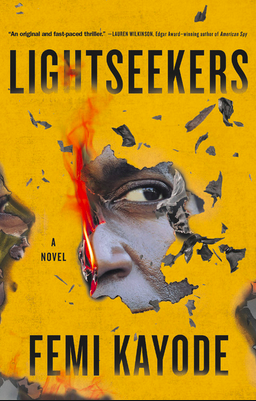
  • Lightseekers by Femi Kayode – Review

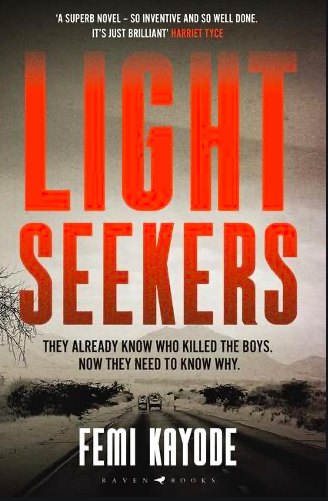
    Femi Kayode’s Lightseekers is big news. Selected by Metro, iNews, the Independent, DeadGood , ShotsMagazine and CrimeReads as one of 2021’s most anticipated reads, Kayode’s debut is not only the beginning of his career in crime fiction, but also the launch of a promising new international crime series. 

    All crime series need a good detective. Meet Dr Philip Taiwo. He’s a clinical psychologist, born and educated in Nigeria. He moved to the US to study, establish his career, raise a family. After returning to Nigeria with his wife and children, Taiwo finds himself a stranger in his own country. There are challenges in the landscape – after such a long absence, he must re-acquaint himself with many Nigerian customs. There are challenges at home, friction between himself and his successful, lawyer wife. And then there’s the biggest challenge of all – a request from a grieving father, asking him to look further into the murder of his son. 

    There are seven people already on trial for the crime. In a Nigerian University town, a mob descended on three young students and murdered them brutally. The killings were captured on social media, assailants detained. Everyone knows who killed them. Now they need to know why. 

    Dr Philip Taiwo is an expert in crowd behaviour, has written papers on lynch mobs in the American South and the ways in which crowds can get away with murder. The grieving father, who is a classmate of Taiwo’s own father, thinks Philip is perfect for the job. But, of course, writing a paper isn’t the same as investigating a triple-murder, and soon Philip is out of his depth. In the wake of tragedy, in a now-strange land, Philip has to make alliances, make connections, before it’s too late. 

    In Lightseekers, Kayode seems to understand that, no matter the crime, no matter the setting, one of the most compelling elements of any crime series is the relationship between the detectives. And so, he created Chika. Sent as a driver by Philip’s employer, it’s Chika’s job to guide Philip around, from suspect to suspect, from crime scene to hotel. But Kayode deftly gives Chika mystery and charisma, the skills he needs to help Philip escape from a number of scrapes. It’s this central, constantly-shifting relationship that acts as the emotional anchor to the story. Two different men, with two very different lives, facing a challenge that, very quickly, seems to spiral out of either of their control. 

    Femi Kayode, the author of Lightseekers

    Femi Kayode is a busy man. While he wrote Lightseekers, he continued to run his own successful marketing agency. Before that, he trained as a clinical psychologist in Nigeria (experience that no doubt helps him channel his detective Philip Taiwo), and worked as a writer on several prime-time TV shows. He’s got a lot on his plate. As a result, he doesn’t hang about on the page. You begin a page with Philip mid-interview. By the end you’re back in the Land Crusier, shooting across the uneven streets of Okrika, on your way to someone else. This unrelenting, slightly frantic pacing will enthral some readers, make the experience even more gripping and pleasurable. But it might give others whip-lash. Indeed, there are times when the focus of the writing seems slightly mis-placed. Some scenes seem ripped away from the reader, at a point when it could be interesting to dive a little deeper. 

    This is particularly true towards the end of the novel. The finale is explosive and relentless – possibly too much so. In the frenzy, some moments seem glossed-over. Opportunities for further drama seem to pass unmined. But perhaps this is simply evidence of Kayode’s experience writing for the screen. The writing is cinematic, brimming with tense action scenes, establishing shots, action sequences. I can see Taiwo and Chika, rumbling down the road in their Land Crusier, straight onto the silver screen. The book, the series, seems built for TV. In Hollywood style, most of the women are brilliant and beautiful. The simmering love triangle consists of Taiwo, his wife, a beautiful, brilliant lawyer, and new acquaintance, Salome Briggs, a beautiful, brilliant lawyer. It’ll get some people’s goat, but others will be too busy, carried away by the plot, the tense, atmospheric writing, to consider this too deeply.

    In an interview with UEA, the university where he studied for his MA and began to write Lightseekers, Kayode describes the novel as ‘a kind love-letter to my home country, Nigeria.’ And it’s time to whip out the cliché – the setting really is a character in the novel. Though the crime is brutal and terrible, though the atmosphere Kayode builds is tense and charged with danger, Lightseekers does still somehow make you want to get on a plane and go. The dusty streets, the heat of the Mama Patience Canteen; it’s settings like these where Kayode’s love for the place shines through and bring light to this story of trauma, of grief and death. 

    And at a time where travelling is impossible, it’s this power to take you to new places, to step inside strangers, that that makes reading not just a pleasant pastime, but a necessity. It reminds you there are other places, other people, more life, beyond your own, small world. 

    You can follow Femi Kayode on Twitter @FemiKay_Author. Lightseekers is now available to buy from Waterstones, Bookshop.org, and Amazon.


    About the Reviewer

    Ellen Lavelle is a post-graduate alumni of The University of Warwick’s Writing Programme. She’s worked as a journalist, bookseller and freelance writer. Now, she works as a digital copywriter and is the co-editor of Nothing in the Rulebook. You can find her short stories and interviews with authors on NITRB and her blog. You can follow her @ellenrlavelle on Twitter.

  • Creatives in profile: interview with Grae J Wall
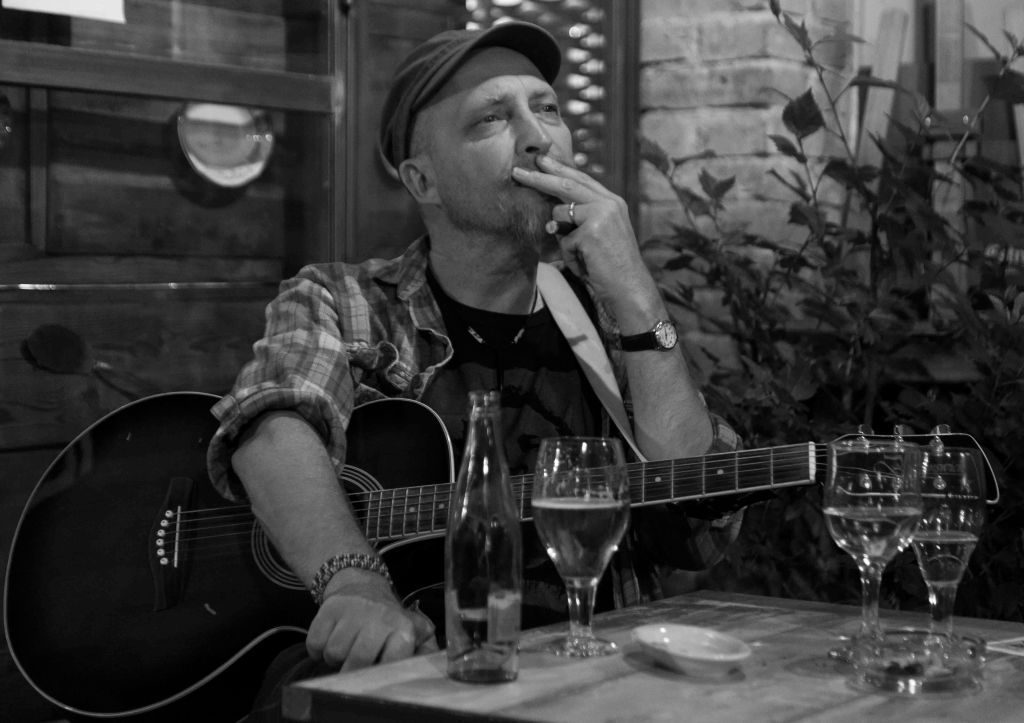
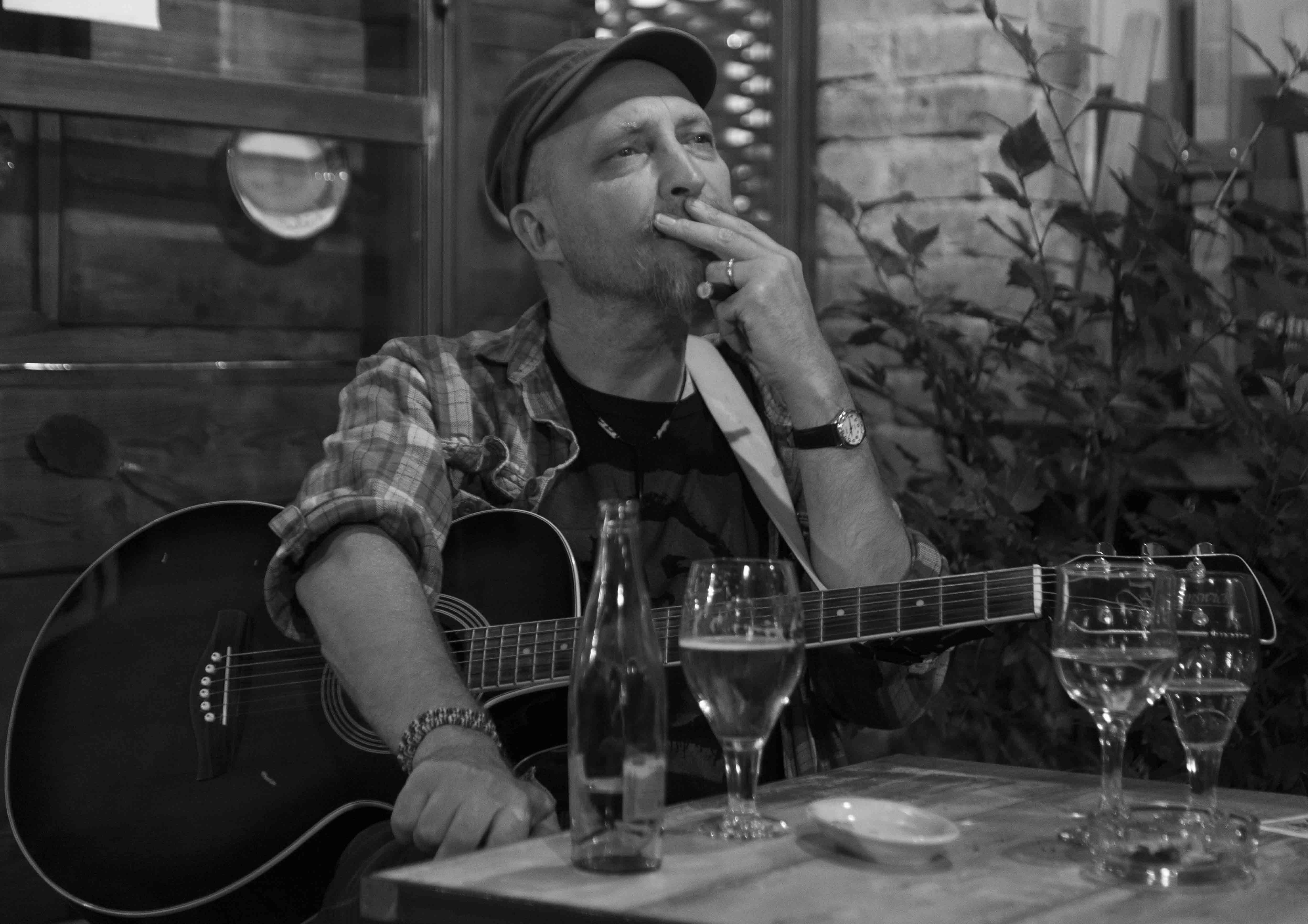
    Grae J Wall (Photograph by Johannes Haslinger)

    Grae J. Wall is a poet, lomographer and songwriter from St Albans, UK. As a regular performer at venues and festivals, both at home and around continental Europe, his work is often inspired by those travels along with global issues, anxiety, red wine and cats.

    Wall had a childhood inspired by Bowie and Lou Reed, followed by Patti Smith, Richard Hell and Leonard Cohen, whilst reading the beats and Rimbaud. As a musician, Wall mixes poetry with more regular lyrics. Then, during the noughties, he published his poetry in a ‘DIY’ style, publishing poetry in zines and producing a tiny booklet of poems to sell at gigs. He set up a virtual cafe space where he and a developing community of ‘outsider’ poets could share their work.

    Now, at the age of 56, he has entered the world of slam poetry, with his first collection of slam poetry, The Sound of Revolution, receiving praise from critics – who have described it as “a collection like no other”, featuring beat, lyricism and working class revolution poetry.

    It’s an honour to bring you this detailed interview…

    INTERVIEWER

    Tell me about yourself, where you live and your background/lifestyle

    WALL

    I’m from the small city of St Albans in the UK, 22 minutes from London on the train. I hated school and it hated me right back so I developed a mistrust of authority figures from a very early age. The only subject that I had any success in was English and thankfully I had a few good teachers who inspired me. Having failed most of my O Level exams my parents insisted I went to a Further Education College to retake some of them but by then The Clash and Patti Smith had arrived in my life so I failed the exams again but formed a band instead. Apart from a few crazy temporary jobs early on (they sent this skinny kid to work with a demolition team) I have managed to live as a troubadour whilst maintaining a string of jobs in the Arts, facilitating and promoting events and projects.

    INTERVIEWER

    Is writing your first love, or do you have another passion?

    WALL

    I guess at this stage I would say I am equal parts poet, musician and lomographer. I started with poetry when I was very young and that developed in to song writing when I hit my teens. I never stopped writing poems though and in the last couple of decades they have gone more hand in hand. I inherited my granddad’s Kodak Brownie camera when I was a kid and that’s always been there too but I never really enjoyed using big fancy cameras. About 12 years ago I picked up a Holga 135 plastic camera for £19.99 and it stole my heart. I now have a small collection of lo-fi cameras and always take one with me on tour.

    INTERVIEWER

    Who inspires you?

    WALL

    Working in the arts I have had the pleasure and honour of working with so many folks and watching their journey. This includes many who have overcome disabilities or tough circumstances to follow some kind of creative path and that is often very inspiring.

    In my teens I discovered David Bowie and he did have a profound effect – that realisation that it was OK to be an outsider – the beauty and passion of his words and music. He remains an inspiration and for me his final two albums are strikingly as good as anything he produced. The year he died I was on tour in Germany and with my band mates we went to visit the apartment in Berlin where he’d lived with Iggy Pop in the ‘70’s and just hung out for a while absorbing and contemplating. On the corner of the road a cafe bar displayed a black star in the window – we just took some photos, goofed around – silly really but had to be done.

    I was 15 when punk broke and that was ultimately life changing. Patti Smith, Richard Hell, The Clash and The Ramones – suddenly the doors had been kicked in and I felt like maybe I could actually be part of this magical new world of street-punk-beat-art-blues. The ethos that art should be accessible to all to pursue and engage with has been central to almost all I have done since.

    Nowadays I find inspiration in all sorts of arts and situations – just wandering round a gallery, sitting at a pavement cafe, delving in to new books, CDs and movies – though often still it’s those outsider voices that strike a chord.

    INTERVIEWER

    Who were your early teachers?

    WALL

    My mum was probably my earliest teacher but in a kind of organic way. She was a poet herself and would send in poems to the letters page of our local newspaper. Sometimes amusing, these would usually be in response to something she’d read that cast local characters in a bad light – teens drinking cider in town or rehearsing rock music at the church hall, a homeless man sleeping in the church porch. Through her words she was able to speak on their behalf and offer a more charitable perspective but in a way that perhaps ‘Mr. Angry’ might find more palatable. As mentioned I fortunately had some good English teachers and by the time I hit secondary school I was already reading Shakespeare, Chaucer, Betjeman and Kipling. I guess I was bit of a weird kid.

    INTERVIEWER

    Could you tell us a little about your collection The Sound of Revolution?

    WALL

    When the pandemic hit last year I was immediately furloughed and found myself unable to get together with band mates or head out on tour. I knew that I needed to maintain a level of creativity just to preserve my sanity, so I decamped to the little summerhouse at the bottom of our garden and set about recording a collection of poems and songs. This I released through bandcamp as the mouseclubvirusblues album and it started getting some positive attention on various radio shows and podcasts. I also started getting asked to contribute to or perform at a variety of virtual events and festivals which was sweet.

    At several interviews I was asked whether the poems were available in a book that folks could find and the truth was they weren’t. The last book I’d published was just a tiny collection around 7 years ago that had sold out pretty fast and since then I had mostly just been sharing work at the Poetry Underground Facebook page that I run. So with time on my hands and the help of my daughter I set about putting this new book together. I had this poem called The Sound of Revolution and that just seemed to be a great starting point for choosing a collection of poems that in some way related to change, resilience, anxiety and resolution.

    There are a few poems which are directly inspired by global issues – Extinction Rebellion, inequality and injustice – but most are a lot less literal – cats, red wine and train journeys. The response so far has been incredibly positive and genuinely heart warming. As well as the physical book which is available from my website (www.graejwall.com) I have also released it as an e-book on all the major platforms, though I have to confess to having never actually read an e-book or used a kindle myself.

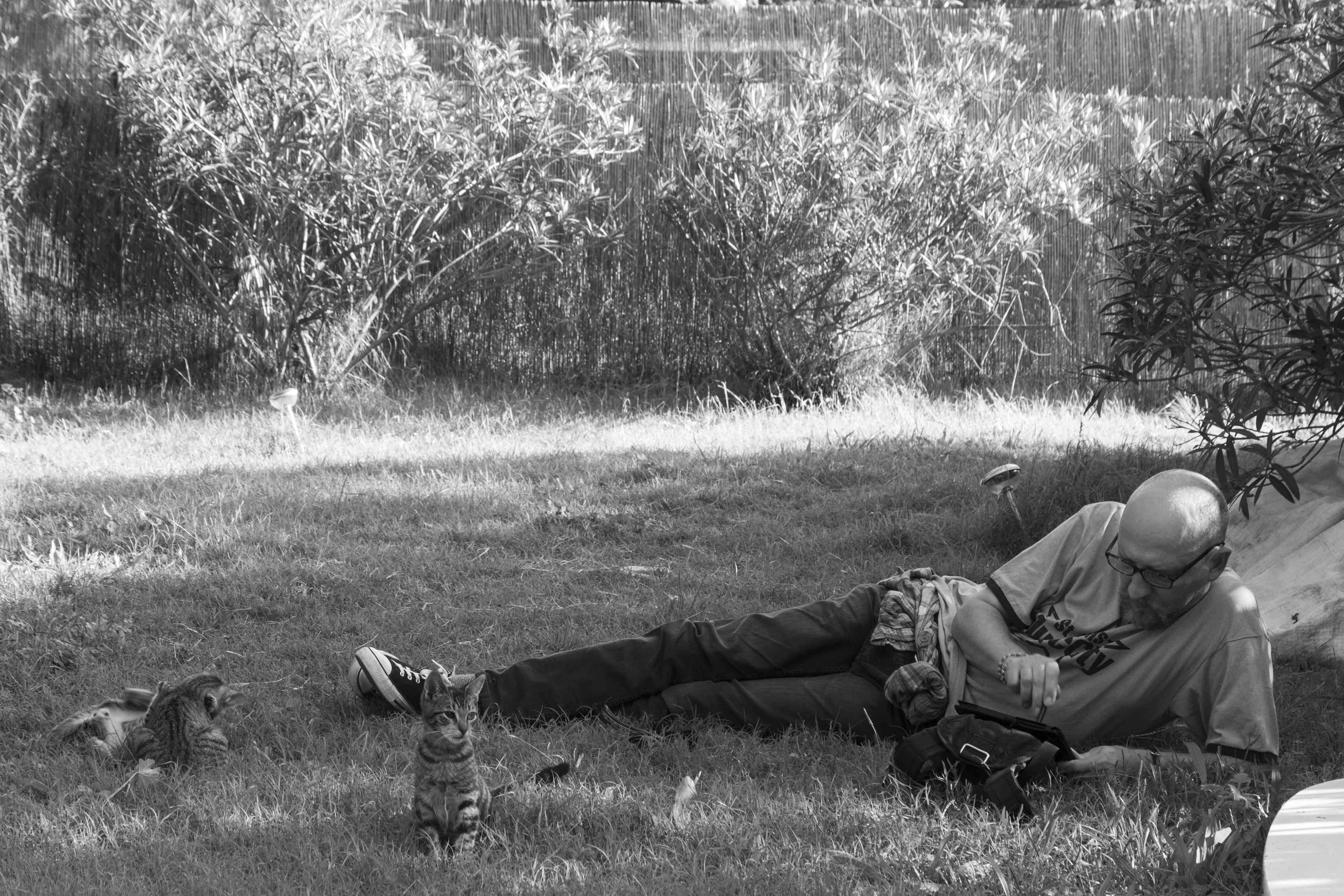
    For the love of cats? Slam poet Grae J Wall pictured here with kittens. (Photograph by Johannes Haslinger)

    INTERVIEWER

    What has drawn you to beat poetry? And how do you think your work compares to the writing of the original beatniks?

    WALL

    I was probably about 18 when (like so many) I read On The Road and Fear and Loathing in Las Vegas and they just lead me to that cool, gonzo, stream of consciousness, outsider rock ‘n’ roll style. So I read Ginsberg and Burroughs and also worked backwards to Rimbaud and Baudelaire.

    I think pouring over the lyrics to Aladdin Sane had already kind of opened me up to that kind of pre-punk, scatter-gun, no rules world of writing. I could hear it in Lou Reed and Bob Dylan and it resonated. Patti Smith for me was like a bomb exploding – the first time I heard Piss Factory it just blew me away and I think it remains one of the great defining artistic moments of the Twentieth Century.

    Similarly Richard Hell was a great influence and I could see how as those past beatniks had responded to jazz and be-bop for my generation we had punk and new wave to spar with – perfect. Being a musician as well there is inevitably rhythm to the way I write and it’s about spotting the beauty and the anger amongst the mundane and everyday – the diamonds in the sand. I

    have been fortunate enough to perform on the same stage as John Cooper Clarke and he along with the likes of Patrik Fitzgerald have of course inspired. Sharing a (graffiti covered) dressing room with John was a delight – the first thing he said to me as we came off stage was ‘I love your go-go dancers’ – a true national treasure.

    INTERVIEWER

    Gil Scott Heron famously told us that the revolution will not be televised. So what role does poetry have to play in the revolution?  

    WALL

    I think poetry (and the arts in general) has the ability to offer fresh perspectives and visions, to challenge the status quo and allow folks to walk for a moment in others’ shoes. As a poet you can be quite idealist and not really worry too much about the mechanism of obtaining that beauty – that’s kind of our job – but also exclaiming that visceral pain at a world that is so obviously not working for so many.

    It’s also about highlighting the connectivity, the shared human experience, empathy and angst. People see revolution as holding the barricades and sometimes that is the case; I have felt compelled to join the London XR actions in the last few years, but sometimes it is just about a changing mindset, quiet positive actions and genuine empathy. It seems so obvious to me that if economic policies are killing the planet, children are dying of starvation and people are persecuted and killed for the colour of their skin, their faith or sexuality than we have a need to dismantle the machine that causes these things and build something fresh.

    As a poet (musician and lomographer) I see the construct of nations and borders to be an outdated irrelevance – my comrades and colleagues lie all around the world in this strange collective of back-room troubadours and discontented agitators. These are the people with whom I share aspirations and convictions and I see so many standing up and saying enough is enough. Poetry just holds up a little mirror and allows us a glimpse of the you that is in there somewhere, encourages that soul to surface.

    INTERVIEWER

    Do you feel any ethical responsibility in your role as a writer?

    WALL

    I kind of do but I also think it’s important not to force it or fake it. Some days I’m just inspired to write about love, loss or hanging out with my cat and that’s fine too. I also think it’s important to acknowledge that the art and the artist are two separate things and actually it’s almost that realisation that you can recognise and relate to the inner spirit of someone whom in other ways you might fundamentally disagree with that reveals that connecting spirit.

    I find myself quite confused in my own mind when it comes to things like the closing down of free speech and the emergence of cancel culture. I feel like whilst it is important to combat and challenge viewpoints and ideologies, unless it is genuinely hate speech or inciting violence towards others, then we need to be able to hear those voices and understand how they evolve. I feel that extends to venues and galleries as well as social media or TV. Also I’d add that there’s nothing wrong with owning your flaws and contradictions – that is to be human. Whilst attempting to smash down the walls of our gated community world I still want St Albans FC to beat their adversaries each week.

    INTERVIEWER

    Do you have a specific ‘reader’ or audience in mind when you write?

    WALL

    I really don’t but sometimes folks let you know that they have related to what you have written and that is always gratifying. When you are writing about things like losing someone to suicide or battling depression it’s often these things that people don’t often open up about or discuss that can allow others to feel that ‘thank god it’s not just me’ sense of relief. That’s not really what you set out to do, you just need to release those emotions and let them fly – a kind of self-therapy – but sometimes they help and that is a positive thing.

    As an artist you of course want to provoke reaction, be it joy, anger, relief or sadness but it can be a surprise to discover which pieces or words have deeply touched another. When I am performing live I far prefer a room full of complete strangers to a local crowd or friends of friends – it’s when those strangers come up after and say ‘thanks, I really related to what you were saying there’ that you really feel you have achieved something.

    INTERVIEWER

    What advice can you give to aspiring creatives and poets who are interested in pursuing a similar pathway?

    WALL

    Don’t plan the pathway too thoroughly – there will be paths that lead from paths that lead from other paths and that’s all good. Allow yourself to be taken by the wind especially in to uncharted territories. Listen, travel, read and relate. Open your heart to others – be kind, courteous and forgiving and you will find doors opening in the most unexpected of places. Enjoy the journey and realise that your journey is unique – it is the uniqueness of your voice that is special so allow it to bloom. The moment is everything for you cannot change your past and the future is always something of an unknown.

    INTERVIEWER

    If you had to draw up an essential reading list everyone should read, which books would make the cut?

    WALL

    I have already mentioned On the Road (Jack Kerouac) and Fear and Loathing in Las Vegas (Hunter S. Thompson) both of which would be near the top of my list. Other desert island books would also include Kerouac’s The Dharma Bums and Thompson’s The Rum Diary. From Patti Smith it would be Just Kids, her love letter to Robert Mapplethorpe and their emerging creative selves. Clothes Clothes Clothes Music Music Music Boys Boys Boys by Viv Albertine is a beautiful, raw and honest autobiography that I found delightful and surprisingly moving. Danny Sugerman’s No One Here Gets out Alive biography of Jim Morrison is a wild rock ‘n’ roll read. You’ve gotta throw in collected works or Rimbaud, Baudelaire and Brecht. I think both Charles Bukowski’s Love is a Dog from Hell and Leonard Cohen’s Book of Longing are indispensable poetry tomes. George Orwell’s Down and out in Paris and London along with Homage to Catalonia are perhaps more essential than the predictable Animal Farm. I have a beautiful old copy of Christopher Isherwood’s Goodbye to Berlin with illustrations by George Grosz, which is a treasure. I could go on and on but I’ll finish with Herge’s Tintin in Tibet – the crowning glory of that series bears rereading on a fairly regular basis.

    INTERVIEWER

    Could you tell us a little about some of the future projects you’re working on?

    WALL

    It’s so difficult to plan right now but I have a number of on-line performances on the horizon. I’ve started recording more poems and I think a second mouseclubvirusblues collection is likely. When we return to some kind of normality I have a few ideas around trying to do something that mixes exhibition and performance – so something of a combined arts project utilising poetry, music and photos.

    I’m obviously looking forward to getting back together with my musical cohorts and returning to venues. Touring on the continent has been an important part of my annual schedule for the last 25 years and I’ve really missed that. My worry there though is how it’s all going to work in these new Brexit times with work permits and visas – it’s a huge concern for thousands of artists who work regularly abroad. More live poetry for sure.

    Quick fire round!

    INTERVIEWER

    Favourite book?

    WALL

    Patti Smith – Just Kids

    INTERVIEWER

    Curl up with a book or head to the movies? 

    WALL

    For a treat it has to be the movies – we have an amazing cinema in St Albans called The Odyssey – all art deco with plush seating, tables and a bar – a decadent delight.

    INTERVIEWER

    Critically acclaimed or cult classic?

    WALL

    Cult classic – be it book, CD or movie.

    INTERVIEWER

    Most underrated writer?

    WALL

    Rod McKuen – often critically ignored – I think he is a bit of a lost gem.

    INTERVIEWER

    Most overrated writer?

    WALL

    Jean-Paul Sartre – I’ve tried, I really have.

    INTERVIEWER

    Who is someone you think people should know more about?

    WALL

    Geoff  Berner is a Canadian singer-songwriter who should be much better known – he can make me laugh out loud and then weep within the space of minutes. He’s kind of a contemporary alternative klezmer artiste.

    INTERVIEWER

    Do you have any hidden talents?

    WALL

    I haven’t really checked which of these I can still do but I used to be able to unicycle, juggle and dive roll over 12 people lying down. I’m pretty sure I can’t do the dive roll thing anymore.

    INTERVIEWER

    Most embarrassing moment?

    WALL

    After a gig one time this girl was chatting to me for a few minutes before proclaiming ‘you don’t remember me do you?’ I searched my memory but had to admit ‘I’m so sorry, I’m afraid I don’t.’ She looked daggers at me and growled ‘I went out with you for six weeks!’

    INTERVIEWER

    Something you’re particularly proud of?

    WALL

    When I was an Arts Council Music Officer I helped kick-start a number of cool projects and organisations including the wonderful Attitude is Everything, an important UK Charity that improves Deaf and disabled people’s access to live music by working in partnership with venues, audiences, artists and the music industry. I carried on working with them for some years after I left The Arts Council and programmed Attitude showcases at Glastonbury Festival including an appearance by the legendary Heavy Load.

    INTERVIEWER

    Could you write us a story in 6 words?

    WALL

    The plague arrived and the world closed.

    INTERVIEWER

    Could you give your top 10 tips for aspiring authors/artists?

    WALL

    Find your own voice

    Don’t worry about being cool/current

    Be generous of heart and supportive of others

    Travel and absorb

    Relish the journey

    Write about the tough stuff

    If it’s not working today, leave it a while then come back to it

    Always have tools to hand

    Try not to punch critics, count to ten and walk away

    Remember to breathe

  • 42 Writing Competitions for 2021
    Jpeg

    When we put out our annual compendium of creative writing contests, we were worried it might be the last chance for some of us writers to see our writing win some excellent prizes – what with the threat of total climate collapse and World War III seemingly around the corner. COVID-19 wasn’t even on our radar!

    Still, while these existential threats haven’t gone away, and with so many millions of us still under some form of Coronavirus-related lockdown, we are – at the time of writing – still here (and still writing).

    So, perhaps 2021 is the year for some new creative talents to get their writing recognised and published before the world actually ends.

    For our part here at Nothing in the Rulebook, we’re here to help writers do just that. And so, (just for you) we’ve compiled a list of upcoming writing competitions scheduled for the year ahead.

    So, in addition to our list of places that are always open for submissions, as well as places to submit flash fiction, and a long list of independent publishers you can submit your manuscripts to, we are thoroughly chuffed to bring you this valuable writing resource you can use to get your writing into the right places.

    Included below are details about word counts, deadlines and direct links to each event.

    If you’d like to add a writing competition to our list then please feel free to contact us!

    1. First Pages Prize

    A perfect competition for unagented writers, this. The First Pages Prize wants to read your first 5 pages of a longer work of fiction or creative non-fiction. Open worldwide, your pages must be unpublished. Judging criteria are writing craft, a sense of a bigger story emerging and how hooked reviewers are by your writing. This year’s judge is Iowa Writers’ Workshop director, Lan Samantha Chang. Entry is via Submittable.

    Visit the First Pages Prize website to enter – there’s a US$20 submission fee and the deadline is 7th February 2021.

    2. Creative Scotland (‘Our Voices’)

    ‘Our Voices’ aims to develop the writing of emerging writers from under-represented communities who might not otherwise be able to access this kind of professional support as they work towards a full draft of their first book and consider their next steps in building a career as a writer.

    There is no application fee; just submit an application form to apply before the 12th February 2021.

    3. Writers’ & Artists’ Yearbook 2020 Short Story Competition

    First prize receives £500 and a place on an Arvon residential writing course of your choice, as well as publication of your story on the W&A website. Closing date for writing submissions is February 13th 2020 and all submissions must be unpublished prose of 2000 words or fewer.

    4. The Ambroggio Prize

    The Ambroggio Prize is a US$ 1,000 publication prize given for a book-length poetry manuscript originally written in Spanish and with an English translation. The winning manuscript is published by the University of Arizona Press, which is nationally recognised for its commitment to publishing the award-winning works of emerging and established voices in Latinx and Indigenous literature, as well as groundbreaking scholarship in Latinx and Indigenous studies.

    Established in 2017, the Ambroggio Prize is the only annual award of its kind in the United States that honors American poets whose first language is Spanish.

    Submissions will be accepted from 15th September, 2020 to 15th February, 2021. The 2021 Ambroggio Prize will be judged by Rigoberto González.

    5.  Bumblebee Flash Fiction Award

    These fine folk are looking for short, sweet, and sassy fiction – in return, you have the chance to win $300 and publication in Pulp Literature.

    Deadline is 15th February 2021. There’s a US$15 entry fee and a US$300 prize available. Max word count is 750.

    6. Writers Online – Dialogue Only short story contest

    No attribution, no description – just tell the folks at Writers Online what was said. You’ll need to use all your narrative skills to paint a scene, define a character and tell a story, while still keeping your dialogue realistic and flowing. The only restriction is a 1,500-1,700 word count.

    The winner will receive £200 and publication in Writing Magazine, with £50 and publication in Competition Showcase for the runner-up.

    Deadline for entries is February 15th 2021.

    7. The Puchi Award

    The Puchi Award is a publishing project held by La Casa Encendida and Fulgencio Pimentel.

    The Puchi Award seeks for the most innovative, groundbreaking, vibrant book proposals in any genre, focusing entirely on their boldness and their links with present-day art language.

    This competition is open to literary and graphic projects of any kind that stand out by virtue of their premise, literary and graphic quality, originality, unconventionality or mould-shattering conception. A book can contain everything and anything, and that is precisely what this contest wants: fiction and non-fiction, essays, informative literature, poetry, illustration, comics, cookbooks, geography books, combinations of the above or any other type of work.

    There is no fee to enter and the deadline for submissions is 18th February 2021.

    8. Fiction Factory short story competition 

    All types of writing are welcome for this writing contest with prizes up to £150 for the winners. 3000 words max and a fee of £6 to enter.

    9. The Margery Allingham Short Story Competition

    The Margery Allingham Short Story Competition is open until 26th February, 2021.

    Submit stories up to 3,500 words. Your story should fit into crime writer Margery’s definition of what makes a great story: “The Mystery remains box-shaped, at once a prison and a refuge. Its four walls are, roughly, a Crime, a Mystery, an Enquiry and a Conclusion with an Element of Satisfaction in it.”

    Prize: £500 plus two weekend passes to Crimefest 2021 and a selection of Margery Allingham books.

    Entry Fee: £12

    10. Scottish Arts Club Short Story Prize

    First things first; you DO NOT have to be Scottish to enter this writing contest. Stories should be 2,000 words or less and may be on any topic.

    There’s an entry fee of £10 and a maximum word limit of 2000. Winners receive £1000.

    Deadline 28th February 2020.

    11. The Crime Writers Association – Debut Dagger award

    The international competition is for the opening of a crime novel not exceeding 3,000 words and a synopsis of up to 1,500 words.

    Winners receive £500 and consideration by Literary Agents.

    There’s a £36 entry fee and deadline for entries is the last weekend of February 2021.

    12. The Rialto’s Nature and Poetry Competition

    The Rialto working in association with the RSPBBirdLife International and the Cambridge Conservation Initiative on this lovely offering that is sure to attract poets and nature lovers.

    Poems are invited that deal with any aspect of nature and place – these terms will be given a wide interpretation by the judge Daljit Nagra. The closing date is 1st March 2021. There is a £7 submission fee and winning entries can receive between £250 to £1000 in prize money.

    13. The Stella Kupferberg Memorial Short Story Prize

    The Stella Kupferberg Memorial Short Story Prize is a writing competition sponsored by the stage and radio series Selected Shorts.

    Submissions must be no more than 750 words long and there is a US$25 fee to enter.

    The deadline for entries is 5th March 2021.

    14. Kenneth Brannagh Award for new drama writing

    Amateur playwrights world-wide are invited to submit unpublished one-act plays.

    Three winning scripts will be selected for fully staged performances during the Fringe Festival in October. One of the three scripts will be chosen for the £500 prize, judged purely on the writing. Plays must be no longer than 30 minutes long.

    Submission deadline March 5th 2021.

    15. Evesham Festival of Words short story competition

    All genres and styles of short fiction are welcome in this international competition.

    Stories must be no more than 2500 words if you’re entering the adult contest (there are shorter word counts in the junior categories).

    The winner receives £150 and the two runners up will also receive £50 and £30 for 2nd and 3rd placed stories.

    Deadline for submissions is 12th March 2021 and there is a £5 fee to enter.

    16. Nelligan Prize

    International writing prize for writers of all stripes and nationalities. Deadline is March 14th, 2021 for submissions of 12,500 words or less. Entry fee is US$15 and first prize is US$2000.

    17. New Welsh Writing Awards 2021

    The New Welsh Writing Awards, run by New Welsh Review in association with Aberystwyth University and AmeriCymru is open for entries.

    The awards have been set up to champion the best short-form writing in English

    Each category winner will receive £1,000 cash, e-publication by New Welsh Review on their New Welsh Rarebyte imprint and a positive critique by a leading literary agent. Subsequent prizes include residential courses and weekend breaks.

    Entries close at midnight on 16th March 2021.

    18. Short Fiction Journal 2021 writing contest

    This is an internationally-renowned competition, now in affiliation with the Department of Literature, Film, and Theatre Studies at the University of Essex. 

    Submit your short fiction (of no more than 5000 words) by March 31st 2021 to have a shot at scooping the £500 awarded to the winning story (or £250 awarded to the runner up).

    There is an entry fee of £7 until March, at which point it increased to £9. There are also a number of free entries available – for more information about these, check out the website using the link above.

    19. The Killer Nashville Claymore Award

    Every year, the Killer Nashville Claymore Award assists new and rebranding English-language fiction authors get published, including possible agent representation, book advances, editor deals, and movie and television sales.

    The contest is limited to only the first 50 double-spaced pages of unpublished English-language manuscripts containing elements of thriller, mystery, crime, or suspense NOT currently under contract.

    The entry fee is US$40 and the deadline for submissions is April 1st 2021.

    20. New Deal Writing Competition 2020

    The New Deal Writing Competition is a short story competition where the writer is asked to use a painting chosen by the staff of GVCA as inspiration for their short story.

    This year’s painting is “100 Years Past” by James Guy.

    There is an entry fee of US$5 to enter and a maximum word limit of 10,000. Top prize receives US$200.

    The deadline for entries is 1st April 2021 (the portal will open in March).

    21. Newcastle Short Story Award 2021

    One for Australian writers. First prize is AU$2000. The deadline for submissions is  14th April 2021 and the entry fee is AU$15. The maximum word limit is 2000 words, which includes both titles and any subheadings.

    22. Desperate Literature

    The aim of the Desperate Literature Short Fiction Prize is both to celebrate the best of new short fiction and to give winners the most visibility possible for their writing.

    Max word count is 2000 and there is an entry fee of €20 to enter. Winners will receive €1000.

    The deadline for submissions is 15th April 2021.

    23. The Bath Short Story Award

    An award for local, national and international writers. Closing date for submissions is 19th April, 2021. Short stories of up to 2200 words in all genres and styles are welcome – there is no minimum word limit. First prize receives £1000 and there is also a local prize for Bath residents, as well as The Acorn Award of £50 for unpublished writers of fiction. Entry fee is £8.

    24. Adventure Writers Short Story Competition 2021

    This is an international competition and there is just one category: Adventure. The organisers accept traditionally published, e-published and manuscript novels. There is a US$1000 cash prize. A $25 entry fee is charged, and all proceeds go to promoting the contest, the finalists and the winner.  The deadline for entries is 30th April 2021.

    Adventure is out there!

    25. Leapfrog Press Story Contest

    Adult, young adult (YA) and middle grade (MG) novels, novellas, and short story collections are accepted. Minimum word count: 22,000. Individual stories in a collection may have been published in journals. Books that have been self-published will be considered “unpublished” if fewer than about 200 copies were printed.  

    We look for literary fiction and mainstream fiction, including science fiction. Generally we are less interested in strict genre fiction, but if a manuscript is good and grabs our attention, we don’t care what the genre is.

    There is a US$33 fee to enter and you could win US$150 and publication of your finished manuscript. The deadline for entries is 3rd May 2021.

    26. The Bristol Short Story Prize

    Entries are welcomed for unpublished stories written in English. The deadline for submissions is 5th May 2021 and stories can be on any theme or subject. Maximum length of 4000 words. An £8 entry fee and first prize is £1000. There are also 17 further prizes of £100 for all shortlisted writers.

    27. Writer’s Digest Competition

    The winner of this annual award will receive US$5000 and an interview in Writer’s Digest. There are a variety of different award categories so it’s best to check the website for details. Deadline is 7th May 2021.

    28. The Cambridge Flash Fiction Prize

    International flash fiction competition, sister contest to the Cambridge Short Story competition (which opens in April – see further on down this list). It costs £8 to enter (before February) and £9 thereafter. There are also a number of free entries available to writers from low income backgrounds. First prize is £1000 and the contest runs from February 15th until May 14th 2021.

    29. Raymond Carver Contest

    The Raymond Carver Short Story Contest is one of the most renowned fiction contests in the world. Featuring prominent guest judges and offering US$1500 across five prizes, the contest delivers exciting new fiction from writers all over the world. The contest opens each year April 1 – May 15 and prizewinners are published in their annual fall issue in October. Usual entry fee of US$17.

    30. Smokelong Grand Micro Competition 2021

    Smokelong was one of the original names for flash fiction (read a story in the amount of time it takes to smoke a cigarette), and Smokelong Quarterly are one of the all time literary big hitters in this field. So, their ‘Grand Micro’ fiction competition for 2021 is certainly one writers should have on their radar.

    There is a grand prize of US$1500 on the table, with monetary prizes also available to all finalists – who’ll be published in the June edition of the journal.

    There is a limit of 400 words for entries of micro fiction submitted before the final deadline of May 16th. Submit up to two stories for a fee of US$6.

    Brush up on some tips for writing smokelong fiction by reading this crackin’ article by Smokelong Quarterly’s own Christopher Allen right here on Nothing in the Rulebook.

    31. Bridport Prize

    International open competition founded in 1973. Four categories in poetry (max 42 lines); short story (max 5,000 words); flash fiction (max 250 words) and the Peggy Chapman-Andrews Award for a First Novel (max 8,000 words from opening chapters plus 300 word synopsis).

    Deadline usually looms towards the end of May each year and 2021 is no different; so make sure you submit by 31st May 2021.

    Entry fees and prizes vary depending on category. Full information about this world-renowned competition can be found online.

    32. Bath Novel Award

    The Bath Novel Award 2018 is an international prize for unpublished and self-published novelists. The winner will receive £2,500, with manuscript feedback and literary agent introductions for those shortlisted. In addition, the writer of the most promising longlisted novel will receive a free place on an online editing course with Cornerstones Literary Consultancy.

    Submit your first 5000 words along with a one page synopsis by the end of May 2021.

    There is an entry fee of £25.

    33. The Cambridge Short Story prize

    Sister writing competition to the TSS flash fiction prize. Deadline is 14th June 2021 for submissions no longer than 3000 words. There is a prize of £1000 available to the winner. Entry fees vary depending on when you submit your work (the earlier; the cheaper!) – so get submitting early if you can.

    34. Narrative Prize

    The Narrative Prize is awarded annually for the best short story, novel excerpt, poem, one-act play, graphic story, or work of literary nonfiction published by a new or emerging writer in Narrative.

    Deadline is 15th June 2021 and there is no entry fee. Maximum word counts of 2000 and prizes of up to US$4000 available.

    35. The HG Wells Short Story Competition

    You may have heard of this feller called HG Wells. He’s inspired countless authors; and now he has a writing competition to get them excited, too (in fairness, this competition has been around for a little while, now).

    The annual HG Wells Fiction Short Story Competition offers a £500 Senior and £1,000 Junior prize and free publication of all shortlisted entries in a quality, professionally published paperback anthology.

    All entries must relate to the theme for this year’s Competition: MASK.

    You can if you wish enter more than one story: please complete a separate entry for each story entered.

    Your story can be set anywhere, feature any characters, and be written in any style. The length is 1,500 to 5,000 words. Entries must be in English.

    The deadline for submissions to the HG Wells competition in 2021 is 12th July.

    36. The Sean O Faolain Short Story Prize

    The competition is open to original, unpublished and unbroadcast short stories in the English language of 3,000 words or fewer. The story can be on any subject, in any style, by a writer of any nationality, living anywhere in the world. Translated work is not in the scope of this competition.

    First Prize: €2,000, a week-long residency at Anam Cara Retreat and publication in the literary journal Southword.

    There is a fee of €18 per entry and the deadline for submissions is 31st July 2021.

    37. The SmokeLong Quarterly Comedy Prize

    Comedy writers! Show off your razor-sharp wit, share your sideways view of the world, and let others hear your irresistibly bizarre voice. The editors of one of the finest flash fiction magazines out there – the Smokelong Quarterly – have a new comedy prize just for you.

    There is a word limit of 782 (including title), and a small fee, which varies depending on when you submit (the earlier you do so; the cheaper it is!).

    Submissions are open from 1 August until 15 November, and four writers will win US$400 each from the prize money.

    38. Manchester Writing Competition

    There are two prizes available in this annual award – one for fiction and one for poetry. Both competitions offer a £10,000 first prize. Deadline for entries is usually around mid-late September and the competition generally opens in February each year. The fiction prize will be awarded to the best short story of up to 2500 words, and is open to international writers aged 16 or over. The poetry prize will be given to the best portfolio of three to five poems (maximum length: 120 lines). The entry fee for each competition has usually been £17.50.

    39. PEN/Faulkner Award for Fiction

    For American citizens with books published in the calendar year (or scheduled to be published) – no self-published books will be accepted. No submission fees, with a deadline of October.

    40. ServiceScape short story award

    For this award, any genre or theme of short story is accepted. All applicants should submit their original unpublished work of short fiction or nonfiction, 5,000 words or fewer, to be considered. Along with receiving an award for $1,000.00 USD, the winner will have his or her short story featured within the ServiceScape blog, which reaches thousands of readers per month.

    There is no entry fee and the deadline for entries is 30th November 2021.

    41. Reedsy Short Story Contest(s)

    Every Friday, Reedsy kicks off a weekly short story contest by sending out a newsletter that includes five themed writing prompts. Subscribers have one week (until the following Friday) to submit a short story based on one of the prompts. The winner receives US$ 50 and publication on Reedsy’s Medium blog.

    There is no entry fee.

    42. Austin Film Festival competitions

    Austin Film Festival 2021 is offering a number of different writing contests for you to sink your teeth into. In well over two decades, the Austin Film Festival (AFF) have helped many writers break into the industry of film and television.

    AFF currently offer writing competition categories for screenplays, teleplays, short screenplays, digital series scripts, stage plays, and fiction podcast scripts.

    Deadlines for the competitions vary, with some differences in entry fees depending on whether you enter before, early, regular, or late/final deadlines.

    Prizes include cash awards and the opportunity to meet famous figures from the industry. Check out their website for information


    See a competition that we’ve missed? If you’d like to add a writing competition to our list then please feel free to contact us!

  • Broken Consort
    Broken Consort, by Will Eaves, is published by CB Editions.

    Life under COVID-lockdown here in the UK feels, at times, to consist of a kaleidoscopic collection of failed interests and hobbies. The weekend spent delving into the biographies of impressionist painters; which gives way to the evening watching The Sopranos back to front; which is in turn replaced by the fortnight trying to learn the piano; the Wednesday where you try to “get into” existentialism. Life feels unsettled, we are wayward wandering, captivated by sudden interest and distracted by glimmering new lights and ideas. There is so much to explore, so much to think about and understand, that it is difficult to know where to begin – or how.

    This is where Will Eaves’ Broken Consort steps in. A genuine high point of 2020 was receiving this book here at Nothing in the Rulebook towers; for it is a book that captures so brilliantly the shifting, unstable, multiform, effervescent experience in and of the world.

    An ensemble piece of writing (just as a ‘broken consort’, in musical terms, is an ensemble featuring instruments from different families), Broken Consort brings us in-depth analysis of The Odyssey;but also of James Bond and Titanic. It gives us the author’s own observations on and experiences of the art of writing, but also personal reflections on familial relationships. We explore philosophical problems buried deep within literary criticism and analysis (“how do I know what the picture means?”), and these frequently lead us into new worlds that explore other aspects of art and culture – gay photography; how we construct – and even visualise – music; art and impressionism.

    It is, in short, the sort of book that is perfect for a world under lockdown. Not just because it lets our minds wander from one subject to another, dancing around ideas without settling on any specific thing for too long. But also because it gives you an entire armoury of witty and astute observations that you can then use to impress your friends and colleagues over the seemingly endless series of zoom calls: “It is the spaces between settlements and acts that give them a dramatic foundation” (is this what our lockdown gives us?); “Memorability is not a magical essence, aptness can only be achieved with hindsight”; by letting go of preconceptions, we’re freed to discover something else”.

    Formally, this book seems more structured than some of Eaves’ previous (and also very good) books – most notably The Absent Therapist and The Inevitable Gift Shop. Yet it retains a core essence of collage – of fractured ideas brought together. In some of Broken Consort’s personal essays, Eaves touches upon the amount of physical pain he has been in while putting these books together, which might have something to do with this fractured structure. Indeed, in our ‘Creatives in profile’ interview (also featured in this book), Eaves notes that  “pain has a way of completely fracturing the mind”.

    Again, this is perhaps why this book seems so suited to our current pandemic predicament. 2020 has, after all, been full of pain, experienced by so many people across the globe (one need only glance at your data-harvesting-social-media-corporate-behemoth-of-choice for evidence of this). So it is perhaps little wonder we are drawn to pieces of art and creative expression that are in themselves fractured.

    Yet within the kaleidoscope, there are connections. What Eaves does so expertly well in this book is find them. Reliably inquisitive, analytical and contemplative, as we read and re-read these essays, we begin to hear the broken harmonies between the different instruments playing – the echo of Odysseus’s journey across the Aegean in James’s own odyssey in James and the Giant Peach (and indeed in the author’s own travels across the world); the similarities between James Bond and Macbeth, both tragic heroes who fight hard to avoid thinking too much about anything.   

    “Who do I think I am, wandering about looking for the links between things?” the author asks. But in the asking of it, we find it mirrors our own thoughts. After all, as readers, what are we doing if not searching for the hidden links and meanings in a piece of text? Perhaps this is the connection that runs through the entire the book; not knowing why the world around us is presented to us in the way that it is; not understanding how it all works; but still, this unceasing desire to keep looking, to try and understand why.

    This is, in nuce, another book to add to your undoubtedly growing lockdown collections; and another success for both Eaves and his publishers, CB Editions. It is beyond fitting that the penultimate entry of Broken Consort reviews Daniel Defoe’s Journal of a Plague Year, finishing with a final thought: “Terrible things come to pass, and then pass away. This is a fact. Now: what are we to make of it?”


  • “What does God owe you now?”
    Crow Court by Andy Charman is the latest in a long-line of good books published by innovative publishers, Unbound.

    When the Dorset poet and autodidact William Barnes died in 1886, his obituary in the Saturday Review, read: “There is no doubt that he is the best pastoral poet we possess, the most sincere, the most genuine, the most theocritan; and that the dialect is but a very thin veil hiding from us some of the most delicate and finished verse written in our time.”

    Barnes was not just a poet able to spin beautiful verses, but a man whose commitment and love of the Dorset dialect went against the literary establishment’s fashion for ‘Standard English’ (which itself took off apace following the publication of Adam Smith’s ‘Lectures of Rhetoric and Belle Lettres’ a century or so earlier). In putting together his invaluable Glossary of Dorset Dialect, he demonstrated that he was that rare thing among 19th – and even most 20th – century writers; one who understood that the language and dialect of a place, of where a person comes from, plays such an important part in shaping a human life.

    Author Andy Charman makes no secret of the fact that Barnes’s Glossary… helped in the creation of his debut novel Crow Court (Unbound). This episodic collection of interconnected tales brings to life the small community of Wimborne Minster – a village nestled in the heart of Victorian Dorset.

    Through these tales, Charman transports us back to the past, as we see the people of Wimborne Minster react to the aftermath of a choirboy’s suicide and the violent death of the choirmaster. While some of the language is modern, the book is drenched in Dorset life, and frequently enriched by the authentic dialogue and dialect in which the book’s characters converse. This helps make for a genuine sense that the novel we are reading is absolutely real and believable, as Charman brings to life those invisible moments and experiences that are lost to all but those who experience them directly.

    That the novel is episodic could mean those looking for a traditionally plotted novel might find themselves confused – lost in the intricacies of different characters and their stories. Yet we are at all times centred and grounded on two things: the pull of the Dorset countryside (and the village of Wimborne Minster itself), and our author’s charming presence leading us forward through the stories. Indeed, more often than not, Charman’s writing instincts lead in the right direction. He transforms revelations into cliffhangers – picks out characters for further exploration who allow us to more fully appreciate what it means to be a part of this 19th century village community. In a way, he is the prime village gossip – weaving together the private tales of the villagers and drawing you close to reveal their secrets to you (perhaps over a pint at The World’s End).

    Indeed, this sense of gossip and secrets means that the pages of Crow Court deliver tender, close-up intimacy. But they also deliver a great sweep of history. The book does so, not through the backdrop of great historic battles or by trotting around the then-swollen British Empire, but by focusing on the small moments that take place in a small village (and occasionally on board a ship out at sea). Through the prism of Wimborne Minster, we see the drastic changes caused by industrialisation – perfectly captured in the reaction of a character seeing a steam train arrive in the village for the first time. And the reaches of the Empire and colonialism are felt in the conversations and ideas characters share; for instance, the thought of fleeing the reach of the law by joining the British army in India (we’ve all been there).

    Charman has a gift for nimble interior monologues and a superb ear for the varieties and vagaries of human speech. It’s often the interior questions that his characters ask themselves that stand out most strongly; “What does God owe you now?” one asks as Crow Court moves to its conclusion. It’s a question that hangs in the air, as well as on the pages of the novel, as though we had asked it ourselves.