• LondonLaureates-logo

    Young, poetically-inclined Londoners should take note here – fears that “there’s no money in poetry anymore [sic: or at all]” are wholly misguided. In fact, there looks to be a truly fantastic opportunity for aspiring young poets living in the Capital, as London Laureates announces applications are open for the next Young Poet Laureate for London.

    Acting as a voice for young Londoners, the winner will provide reflections on current events across the capital throughout the coming year, as well as working with communities and London based organisations to inspire and inform through poetry. The Young Poet Laureate is a Spread the Word programme, supported by the Foundation for FutureLondon.

    This terrific opportunity supports and develops some of London’s most talented young poets, generating income possibilities, creating work opportunities and elevating the profile of the successful poets, accelerating their careers as creative professionals.

    Part of the role will include the opportunity to carry out five two-week writing residencies in different community settings – all while encouraging people to get involved through writing and performing poetry with workshops, ad-hoc interactions and planned performances or readings.

    With a fee of £1500 paid for each residency, the total value of the contract for the Young Poet Laureate for London is £7500, plus any additional commissions that arise as a result of holding the title.

    If that wasn’t enough to entice you to apply, our very own Professor Wu issued the following endorsement of the programme: “The opportunity here for aspiring young poets in London is not one to miss. This is a thoroughly brilliant initiative and one which I endorse wholeheartedly.”

    “From my tank here in London Zoo, I am fortunate enough to meet a wide range of visitors to our city; and have noticed to my chagrin the lack of poets and, indeed, laureates – especially among the younger population. We therefore need such programmes – not just to inspire others, but to help lay the foundations of culture in this most vibrant of cities. More than banks and skyscrapers and new airport runways, this city needs poetry. We all need poetry. Because poetry, more than anything, is about love and about life,” Professor Wu adds.

    The deadline for applications here is fast approaching, so make sure you apply now, while there’s still time! Spread the word poets! Spread the word!

  • Power of Words

    Maya Angelou once said there was no greater agony than bearing an untold story inside you. If you have such a story, doubtless you’ll understand such pain. Of course, to overcome it means to write out and finally tell said untold story. Which, inevitably, is easier said than done. So, when setting up to write your novel; or short story; or poem, here are a few writing tips that, with luck, will set you on your way. Bon chance! – Professor Wu.

    • All stories are true.
    • You never have to change anything you got up in the middle of the night to write
    • Art is theft
    • You can tell a good story if it embarrasses you
    • Success is relative. The end goal of writing needn’t be getting published – or making money. It’s simply about joining the conversation. If you have something to say; say it.
    • If you’re writing a scene, ask yourself: ‘could this take place on a hot air balloon?’ If yes, it probably should.
    • There’s nothing in the rulebook that says a giraffe can’t play football!
  • An interview with the most searched for echidna in the southern hemisphere

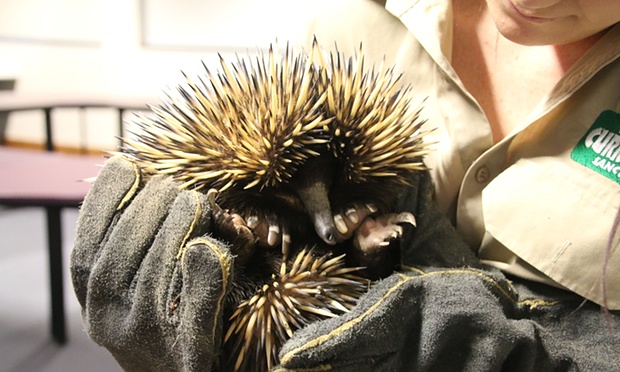
    Piggie the Echidna
    Piggie the Echidna

    Let it never be said I haven’t shown solidarity with my egg-laying mammalian brethren. In an exclusive interview with Nothing in the Rulebook, Piggie the Echidna talks imprisonment, conquering fear and what the future holds for the much-loved pet and ambassador. Billy the Echidna (BK)

    BK: Thank you for speaking with me today

    PE: The pleasure is mine. I’ve never been good at sitting around doing nothing

    BK: If I could bring you back to that fateful day…

    PE: Of course. I’ve kind of dined out on the fact I was the first echidna successfully bred in captivity at the sanctuary, and dining is how I spend a fair bit of my time. I’m an after dinner speaker you see and for the reasonable fee of 30 crickets I will delight your debating society or after dinner club with tales in utero.

    BK:: But back to the matter at hand…

    PE: Yes, so I was stociously drunk.

    BK: Weren’t you dining at the time?

    PE: Fermented fruit. Addicted to them some would say. And I can bring your scout troop or AGM to tears with the story of how I conquered my addiction for only 30 crickets.

    BK: They came for you at night?

    PE: Oh yes. Terrifying. I had passed out on a bed of plum stones from the effects and next thing a gloved hand is bristling my spines. I assumed it was my keeper come for a roll in the hay and a drunken fumble but something about this gloved hand felt different. I felt another on my side and it grasped me and I could feel my legs coming out from under me.

    BK: Do you think there was a sexual motive to your kidnapping?

    PE: What I can tell you is they touched me in ways I hadn’t been touched before by another living being. That’s to say they tossed me into a sack. I thought nothing of it and fell back into an intoxicated slumber.

    BK: Weren’t you afraid?

    PE: I’d grown weary of life in the sanctuary. The prestige that comes from being the first of one’s kind born behind plexiglass had dampened with age and I was contemplating life away from the sanctuary’s soothing heat lamps. And i would have got quite far in that contemplation if at the time I wasn’t rolling around in a sack on the floor of Ford Transit.The fear set in when I wondered if these kidnappers weren’t just stoned high-schoolers or animal rights activists but jihadi extremists, and I was to be ransomed to fund their cause. If the sanctuary wouldn’t pay, I feared my tiny head would be removed from my spiny shoulders on video for the world to see.

    BK: Could you overhear anything your captors were saying as they transported you?

    PE: Not quite, they were blaring Men at Work through the stereo; the only word I could pick out was “Rosebud” which is when I realised my assailants were Orson Welles fans. Serious foes indeed.

    “They kept laughing at how weird I looked and humming a bizarre melody they called my theme song.”

    BK: Where did your captors take you?.

    PE: We parked up what I can only imagine was about 20 minutes from the sanctuary. They let me out of the dark sack and I waddled around the floor of the van looking for weaknesses in the van’s design or grubs to eat They kept laughing at how weird I looked and humming a bizarre melody they called my theme song. I had never been so humiliated. We did that for what felt like hours and then they put me back in the sack. The next hands to reach in and clasp me were my keeper’s so I can only assume that after tiring of my peculiar appearance they brought me back to the sanctuary. Baffling really.

    BK: The entire experience must have been traumatising.

    PE: If I hadn’t been so wasted I’d say so but the world is a stage and the men and women on it merely players.

    BK: I’m not sure I see how that reference is appropriate.

    PE: You will my boy, in due time.

    BE: Now you’ve settled back into life in captivity, what does the future have in store for Piggie?

    PE: I’m so glad you’ve asked even though I shouldn’t be saying something. I’ve been commissioned by BBC3 to present an untitled talent search programme for Britain’s best escape artist. The catch? They’re escaping death itself.

    Piggie the Echidna lives at Currumbin Wildlife Sanctuary, Gold Coast, Australia. When not hosting obscure reality television, she is drunk.

  • Microphone-Whealans

    It’s my first gig. I’m at Angel Comedy, and it’s rammed. There are people standing, there are people being turned away from standing. The MC, Barry Ferns, has got the crowd properly warmed up. This is an audience that wants to be entertained, they want to laugh at every joke and unless they find a very good reason to not, they will.

    There’s been about fourteen comedians on before me and I’m the penultimate act. I’m nervous, properly nervous. I’ve got about five friends in the audience, well three friends and two friends of friends. This is a room of total strangers, about a hundred of them, and I have to make them laugh. Mental, why did I ever sign up to do this?

    Barry does about five minutes, calls my name and before I’ve had time to do any final preparations  I’m on stage. I take a deep breath and launch into my first joke. It’s a good joke but I tell it badly. It gets a big laugh anyway and my nerves dissipate. My next joke goes well too and the one after that. My entire routine about King Solomon goes down a treat, it doesn’t really have an ending and there are no proper punchlines, but if it’s getting laughs like these who cares? Comedy is easy and I’m fucking brilliant at it.

    It’s my second gig. I’m at Heavenly comedy. It’s a small room below a pub which the comedians have to set up before the gig. There are seventeen comedians on and two genuine audience members. The room is hot and the audience is bored. They want to go home but they aren’t allowed to because they’re all comedians, they have to stay to the end to support the other acts and turn makeshift comedy club back into a small room beneath a pub. They don’t want to hear two minutes of incompetently told jokes about being tall and a three minute routine about King Solomon that doesn’t have any punchlines. Especially not from a man who is visibly shaking from nerves. At best, I get two laughs. Comedy is impossible and I’m fucking terrible at it.

    I’ve done twenty gigs now and many of them have been like my second. A room either beneath or above a pub in front of around fifteen other comedians and a few genuine punters who look somewhere between confused and concerned. I genuinely love it and my only regret is not having done significantly more over the past three months. I secretly think I’m quite good too. Don’t tell any of the other comedians I said that though or they’ll shun me for being immodest.

    My earnings thus far are: three drinks (two Cobras and a Yakima Red) and eleven AAA batteries. I won the batteries for coming joint second in my heat at the Jaunty Lark competition, which is my career highlight to date, and every appliance I power with them will a reminder that I’m at least a reasonably good comedian. Unfortunately all my alarm clocks, nineties Gameboys and anal vibrators require AA batteries, so I’m hoping I’ll win some of them in the final (which is later this month).

    I’ve performed, all in all, about twenty-five minutes of material. Some of it has worked, some of it, like my 4 minute routine about Stewart Lee, has conclusively not. I write a lot of material as the writing is probably my favourite part of the whole thing. Aside from the booty and batteries obviously. The process of watching a routine turn from a half baked idea based around a single pun to a genuinely tight five minutes of comedy is wonderful. I’m seldom happier than when I’m in-front of six other comedians trying to turn my new routine about satire and feminism into something that’s at least serviceable.

    About half of the gigs I’ve done have been ‘bringers’. A large proportion of the gigs available to new stand-ups require the act to bring audience members along with them. My friends, generally, have been very supportive and I’ve only had to cancel one gig due to unreliable companions. Most comedians seem to hate bringers and some refuse to do them on principle. I’m somewhere in the middle. Most of the ‘great’ audiences I’ve had have been rooms full of people dragged along by acts. It’s a pleasure to perform in-front of a packed room but I’m also beginning to run out of friends who haven’t seen most of my material. There’s only so many times you can sit through my puns about Ed Balls.

    I’m not sure the friends of acts are proper audience members anyway. They either only laugh at their friend or are so surprised that some comedians on the open-mic scene are actually quite good that they laugh uproariously at every single joke. My twentieth gig, this evening, was in front of my first genuine, paying, audience who’d come of their own volition (for some reason) and the atmosphere was very different to what I was used to. Obviously I’m far too new a comedian to make wild judgements about the nature of audiences but my feeling is that bringers aren’t a particularly good place to hone your craft. I’m only going to become a great comedian if I learn to kill at the nights where it’s just the other comedians and a few bedraggled people off the street. After that, a room full of real, actual, people will surely be a doddle?

    Anyway, I’m getting better slowly. Lots of comedians have come up to me and said they’ve really enjoyed my sets, or given me invaluable advice, which is always lovely. I’m constantly humbled by how many other brilliant comics there are on the circuit. As arrogant as I am, there’s rarely a night were I can conclusively say I was amongst the funniest on. I went to see the wonderful Bridget Christie a few weeks ago and her brilliance reminded me quite how far I have to go before I’m considered even competent. I reckon I’ll need to do at least eighty more gigs before I can even begin to think of myself as a proper comedian, I’ve got around ten planned in over the next two weeks. That’s a start.

    About the author of this post

    Daniel Offen is an aspiring comedian and writer. He has written four jokes and half a book. He assures us he is capable of all of the usual thoughts and emotions of an unusual twenty four year old man and will talk about them at length. He deal primarily in irony and whimsy. He tweets as @danieloffen.

  •  

    When I were a lad, we used to keep chickens. One Easter they hatched a brood of chicks – all little yellow fluffy things, and one black one, who was immediately and clearly the runt.

    I went to feed the chicks one day, and replinished their water. They raced towards the plastic dish that served as their bowl, squeaking and bleeping with delight, and the black one was – for the first time in his life – at the head of the pack.

    As he got to the bowl in his excitement he stamped his big flat foot on the edge of the dish, thus spanging himself as hard as possible right in the face and destroying their water supply.

    About the author of this post

    The Goatman – due to the usual experiments going wrong &c &c, The Goatman is  an internationally-available gentleman of letters, raconteur and wit. His amorous conquests are myriad, his taste in whisky of renown, and his ability to look comfortable in extreme situations is of significant scientific study. He has been known to conspire with Vagabond Images.

  • Literature of the America Colonies

    America. The American Dream. Uncle Sam. Rapacious capitalism. An impossible yearning to own and know everything. The North/South divide. Slavery. Race. Oil. Music. Culture. Literature. The Beat Generation. Kerouac. Ginsberg. Steinbeck. Whitman. Hemingway. Twain. Are these just factions, individual, separate identities – or are they part of a greater whole? What that whole might be? Broadly, we might say they are elements of American culture – or, more specifically, of American Literature. But what exactly is American Literature? What is it about? Where is it? Who is it? How is it?

    Of course, there is no single, simple answer here. But the suggestions and ideas and answers that we do have will inevitably be very different from within the United States and outside. Asking yourself how others see you, however, is a healthy exercise of any culture, and US books site Literary Hub has done precisely that. In order to celebrate American Independence Day, the site invited non-American authors to offer their thoughts and musings on American literature – and suggest what they saw as being the most quintessential American fiction titles.

    From the responses they received – from almost 50 writers, editors, agents and publishers from over 30 countries – Literary Hub have compiled a list of 96 titles. It is a fascinating list, with the most cited writers being William Faulkner, Herman Melville, JD Salinger, F Scott Fitzgerald, and Mark Twain.

    The subjects at the heart of these books, in theory, reflect how the rest of the world sees America and its Literature. They include the Vietnam War, the Great Depression, and the ‘Great American Road Trip’. They speak of “disillusionment” and “loneliness”; of “cheerful melancholy and demonic rage”, “Drugs”, “competitive sports”, “wild capitalism”, and “blood”.

    Please do take a look at the full list to see all the suggested fiction titles.

  • Book and Stones

    Summertime. The time when the living is easy, apparently. Also the time when we look for breezy, beachy books to take with us on our travels around the world. But what about books that help us actually take other, metaphorical, journeys? Obviously metaphorical journeys won’t necessarily give you the best pictures to post on Facebook or Instagram – and you might not even get a tan! – but they can be both spiritual and intellectual, while they also cost significantly less than a return trip to that 5* all-inclusive resort in the Maldives; so it’s a win-win situation, really.

    So how does one take said metaphorical journey? Fortunately, there’s no need to get Tripadvisor involved here. In fact, it’s rather simple: all it takes is a good book and a bit of your time!

    But what books to read? That Harry Potter collection under your bed has had its day, I fear, and what are you doing reaching for that dusty copy of War and Peace? It might be brilliant, but is it summer reading brilliant? At over 1200 pages, I’m not so sure. Instead, I feel it’s best to opt for some really rather marvellous books, which pack a lot more bite than your classic holiday lit; but which don’t weigh more than your entire luggage allowance.

    As such, I’ve put together my essential summer reading list for 2015 – so here you can find three books guaranteed to take you places you’d never dreamed of. Enjoy!

    The trick is to keep breathing – Janice Galloway

    So, what gives? As well as being a simple yet effective life hack for anyone seeking an easy win in the constant battle against death, Galloway’s the trick is to keep breathing is also a deviously intricate novel about mental health and gender roles.

    Lost the plot? The central character of Joy Stone has just lost her married lover, a fellow teacher from the local school, in a terrible drowning accident while they were on holiday. The book contains short dream-like passages which piece together that dreadful event. On returning from overseas, Joy is ostracised by her colleagues and friends. She is the unwanted reminder of a less than perfect life, and it is not how people want to remember the dead. Everyone – including Joy, at least in part – wishes she would disappear. Galloway manages to convey a life where every little task becomes unimaginable, overwhelming and virtually impossible. The detail and the effort are beautifully rendered in Galloway’s unsentimental and often disconcerting writing. There is humour, but in context it is of the blackest kind.

    Verdict: The perfect literary companion for married teachers to read while on holiday – preferably while their SO is taking a dip in the sea.

    The Absent Therapist – Will Eaves

    So, what gives? Well, what doesn’t? This is a fabulous book – not a novel; not a collection of short stories – but rather a collage of over 200 mini-narratives; thoughts and voices of different people about different places, different memories, other people, other stories. Some of these voices and people recur, but that isn’t to say there’s a linear story here. More than anything, it’s a compilation of different experiences; more than anything, it’s about life.

    Woah: Yep. Each of these narratives makes sense on their own, and where characters or voices or places recur there’s some tantalizing hint at something larger, more complex and significant at work. But isn’t that just true of life in general? We exist through a collection of myriad different places, events and people – only ever able to catch the smallest of glimpses at what greater meaning there may – or may not – be. It’s only by looking at events and moments – and listening to voices – one at a time that they become manageable. You have to whittle life down to these individual scenes and narratives to make sense of it; otherwise it builds up in one great tumultuous event that doesn’t make sense. And that’s possibly what makes The Absent Therapist so interesting: it is, quite possibly, fantastically insane. Yet, irrespective of this; it simply seems to make sense.

    Verdict: While listening to the waves of the sea, open this book and let the stories wash over you. Immerse yourself in these funny, wry, acute and startling observations; snapshots and overheard conversations  – all written in a flawless, vivid and compelling style and mixed in with deeper intellectual thought and discussion on all manner of topics – from sex to existence, as it were.

    Butchers Crossing – John Williams

    So, what gives? This, quite simply, is a novel for all disenchanted university graduates whose disillusionment with societal pressure to take up jobs ‘in the city’ has led them to wonder what it would be like to step outside civilization for a while and spend a gap year slaughtering buffalo.

    We’ve all been there. For sure, the protagonist Will Andrews’s general malaise at post university life is as much a driving narrative force in the novel as the relentless character of Miller, whose determination to seek out and kill the now extinct American Buffalo drives the characters out to a wilderness both physical and psychological. There are of course clear themes of humanities rapacious consumption – pertinent in this day and age of unrestrained capitalism and striving for growth at any ecological cost – but this is primarily a literary western. There’s also something deliciously evil and human about seeking out a great and rare hidden, beautiful treasure – in this case, the last great herd of buffalo hidden in a lost valley in the Rocky Mountains – and destroying it on sight.

    Verdict: Set yourself up with a large, thirst quenching cocktail and within a short distance of an all-you-can eat buffet on some all-inclusive Mediterranean holiday and enjoy reading Williams’s pitiless depiction of men reduced to the most basic and extreme situations: thirst, cold, heat, exhaustion; and isolation. Preferably discuss over some expensive steak – cow, I guess; for want of buffalo meat.