• I woke up this morning
    thinking I’d won the
    Prix de l’Arc de Triomphe.

    This is where love and capitalism
    has got me, having me on that
    I can win a horse race in Paris,

    when it’s obvious that
    I’m only any good over
    the jumps at Wolverhampton.

    About the poet

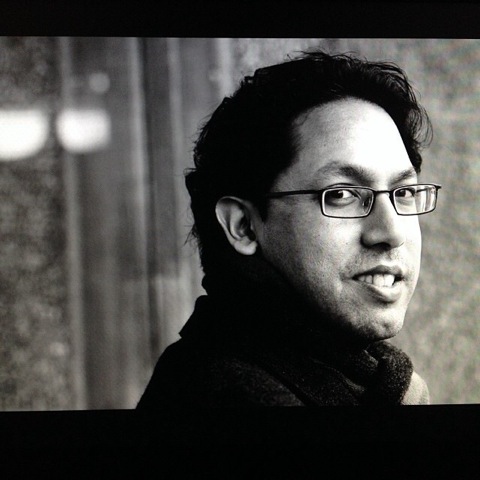
    Rishi Dastidar has worked as a journalist, copywriter and poet. He has written for a wide variety of brands in different sectors during his career, while his poetry has been published by the Financial Times, Tate Modern and the Southbank Centre amongst many others. His work was most recently in Ten: The New Wave (Bloodaxe, 2014). A winner of And Other Stories short story prize in 2012, he has also had reviews published in the Times Literary Supplement. He was part of the 2014-15 Rialto / Poetry School editorial development programme, and also serves as a trustee of Spread The Word.

  • IMG_0008_2

    Creativity, in all its myriad different forms, can take us to the edge of the world and look beyond. It can inspire, inform, influence. Used in the right way, it can illuminate the path ahead.

    Because of this, Nothing in the Rulebook has been founded to emphasise such creativity. Yet we’re also here to highlight not just works of creativity; but the creative individuals who write our stories and our poetry; take our photographs; create our artworks.

    Our new ‘Creatives in profile’ interview series offers creatives the opportunity to discuss their life and art at length. And it is an honour to introduce our very first interview – with journalist, copywriter and poet, Rishi Dastidar – Assistant Editor at The Rialto.

    He has written for a wide variety of brands in different sectors during his career, while his poetry has been published by the Financial Times, Tate Modern and the Southbank Centre amongst many others. His work was most recently in Ten: The New Wave (Bloodaxe, 2014). A winner of And Other Stories short story prize in 2012, he has also had reviews published in the Times Literary Supplement. He was part of the 2014-15 Rialto / Poetry School editorial development programme, and also serves as a trustee of Spread The Word.

    INTERVIEWER

    Tell me about yourself, where you live and your background/lifestyle.

    DASTIDAR

    Ach, no, that stuff doesn’t really matter. Suffice to say: London-born and still reside; older than I’d like to be; over-educated, work in marketing; you’ll mostly find me in bookshops, theatres and burger joints. If your readers really want to know more, and frankly I’d be worried if they did, I’m not too hard to find online.

    INTERVIEWER

    Is creativity and writing your first love, or do you have another passion?

    DASTIDAR

    Let’s say ‘writing’ rather than creativity, as in the advertising / marketing / brand world I also inhabit, it does have a different, means-to-an-end spin. It’s a love, yes, fraught with all the difficulties that implies… I knew I wanted to ‘write’ by the age of 14. But I had no clue what I wanted to write, let alone how I could make a living out of it. Thank God I did find out in the end… But music was actually my gateway to everything: discovering Queen, R.E.M. and then My Bloody Valentine early in my teens, and then the NME, the writers, the sub-cultures, the new genres… I have spent a lot of time being a neophiliac, chasing new sounds and new words, which in an analogue age was much harder than it is now.

    INTERVIEWER

    How long have you been working with The Rialto – and could you let us know a little more about the magazine?

    DASTIDAR

    I’ve been lucky enough, along with Holly Hopkins, to be part of the most recent editorial development programme the magazine has been running along with the Poetry School. The programme started in October 2014, and we recently ‘graduated’ with the publication of issue 83 of the magazine. So about 10 months or so, during which we worked with Michael Mackmin, the editor, looking at submissions, choosing and then finessing poems, working out running orders, organising launches, even getting involved with behind the scenes stuff too – a real immersion in what it takes to get a magazine published.

    The Rialto is (adopts sales voice) the UK’s leading independent poetry magazine; going for 30 news now, based in Norwich, with an enviable track record in spotting and publishing some of then best new voices in British poetry. I might of course be a bit biased, but it’s really the place to come if you want to dive into and immerse yourself in poems, loads of them. And if you’re a writer – send some poems! We’re always on the hunt for good ones, from every quarter.

    INTERVIEWER

    When looking to submit poetry, what are the steps and key aspects to consider before doing so?

    DASTIDAR

    I think talking of ‘steps and key aspects’ makes it sound far more of an intensive burden than it should be. It’s mostly advanced common sense, I think:

    • Make sure you read the magazine / publication you want to submit to: if you’re a writer of doomy melancholic epics, the editor of that light verse magazine isn’t going to be hugely impressed. Do your research.
    • Don’t send your first draft: it won’t be ready. I guarantee it. If it takes 8, 16, 20 drafts to get a poem right, then take that long. This is a patient game. And the poem will wait for you.
    • Speaking of patience, don’t be alarmed or downhearted if you don’t get an instant response. Most poetry magazines are labours of love, run in people’s spare time. Things do sometimes get lost and timelines slip; but if your poem is good enough, it will get found.
    • But do send. You won’t get on to editors’ radar without doing so – or rather, it’s less likely. And you deserve to give yourself that shot. Editors are hungry for new poems and new voices. And yours could be the one their page has been waiting for.

    INTERVIEWER

    Do you have a specific ‘reader’ or audience in mind when you write?

    DASTIDAR

    Depends; I’ll often write poems which are for, or inspired by, a particular person, and I try to keep them in my mind’s eye when drafting. But mostly, I’m self-indulgently trying to entertain myself – that someone else then subsequently likes my nonsense is unutterably humbling and pleasing.

    INTERVIEWER

    How would you define creativity?

    DASTIDAR

    Putting two or more different things together, and hoping for the best.

    INTERVIEWER

    What does the term ‘poet’ mean to you?

    DASTIDAR

    On a good day: a post-modern Casanova. On a bad day: a failed post-modern Casanova.

    INTERVIEWER

    James Joyce argued poetry was “always a revolt against artifice, a revolt, in a sense, against actuality.” In the modern world, ‘actuality’ is increasingly hard to define – with reality often seeming more fictitious than fiction and beyond the imagination of mainstream culture. How does poetry revolt against actuality in a reality increasingly ‘false’? And what role can poetry play in protest and activism – specifically protest and revolt against current dictats of ‘reality’?

    DASTIDAR

    Let’s separate some of that out, mainly because I lack the brain power to try and conflate poetry and power, and then deal with reality on top.

    In terms of activism, politics, and the relation to power, poetry clearly can’t do much in terms of the hard stuff of changing things on the ground, policy, implementation. But where it can and must play a role is in that more indefinable sphere – the one of arguing for new vistas, new perspectives on problems; bringing into the public domain voices that might otherwise go unheard; opening up space for the imagination, because at one level politics is the art of using power imaginatively. I think part of the disaffection from politics as currently practiced that lots of people feel at the moment is precisely because the language of it is managerial and corporate, rather than poetic. People hunger for rhetoric – it wasn’t just because Obama was cool that people flocked to him; it was precisely because he could couch his arguments in ways that were, more or less, poetic. Of course, you have to deliver, but bloody hell you have to inspire too.

    Now, you’ll note that I said that politics and imagination are linked. So I think part of what our job as poets revolves around imagining new realities – that is to say, not to take the world as it is, but to dig about, to reveal what’s underneath, sense what can be changed, find the language that can help to change it. If there is any revolt that poetry has to make, it’s against that sense that there is only one way of doing things, one way to the truth. Our gifts as engineers of metaphor should make us embrace the idea of multiple realities. Because we can do and do see the familiar anew, and we should wake the world up to that.

    INTERVIEWER

    In an internationalist, interconnected world, ideas and creativity are constantly being flung across community threads, internet chatrooms and forums, and social media sites (among many others). With so many different voices speaking at once, how do you cut through the incessant digital background babble? How do you make your creativity – your voice – stand out and be heard?

    DASTIDAR

    If I crack that, I’ll be rich and I’ll tell you afterwards.

    INTERVIEWER

    For all writing, the importance of finding the right ‘voice’ is of course crucial. Often, writers’ speak of developing an ‘other’ – who provides that voice when they write. How have you created and refined your voice and tone for your writing – and do you have a separate, ‘other’ persona who helps you write?

    DASTIDAR

    Hmmm; my day job involves a lot of writing for different brands, so I guess I’ve got reasonably skilled at some form of ventriloquism. Whether that’s come across into my poetry, I’m not so sure; but then, looking at the tone that’s emerging through a lot of what I’ve written over the last 18 months or so, the poet in them is probably more sure than I actually feel about things; probably more political than I actually am in real life; and certainly more articulate in conversation than I ever hope to be. Though I do worry the guy in the poems could be a bit too bumptious, and wearing if you have a prolonged exposure to him… How has that voice arrived? By writing and writing and writing, I’m afraid. No shortcuts. Oh and embracing the tendency to maximise that I appear to have. Even my short poems appear to be full – of nonsense mostly, but still.

    INTERVIEWER

    Could you tell us a little about some of the future projects you’re working on?

    DASTIDAR

    At the moment it’s trying to pull a manuscript together for a first collection, and writing some more poems to flesh that out. There’s always other ideas for projects floating around, but I have great trouble committing to any one of them… but the itch to write something like a verse novel is becoming almost unbearable so I think I will have to attack that at some point soon.

    INTERVIEWER

    And, finally, could you write us a story in 6 words?

    DASTIDAR

    ‘Lazarus was tired of his trick.’

    I’ve done loads of those. More here.

  • Mark Tomlinson is an aspiring stand-up comedian. He thinks because he’s watched a lot of comedy that somehow means he’ll be good at it. After spending a year honing his material in various hovels throughout London (sometimes in front of as many as 10 people!) he’s hubristically decided to perform a split show at the world’s largest Arts and Comedy festival.

    For the uninitiated, a split show means around four people performing four sets in one hour. For Mark this means carefully preparing 15 minutes of material, doing the first five, going off on a tangent because he’s lost his place and then deciding he’s sick of talking to people in the audience and leaving after a failed one-liner at the 11 minute mark.

    Mark tweets at @MComedylinson. Mark likes writing introductions to his articles, eggs and talking in the third person.

    Here, we present the unabridged diary of his experiences at this year’s Edinburgh Fringe Festival…

    Ed Fringe Diary Day -1

    Dear Diary,

    Finally ready to drive up North.
    Finally ready to head to the Fringe and take part as more than a spectator for once.
    Staying at relatives on the way to make the drive more bearable.
    Questioning why I decided to drive in the first place.

    Manowars ‘the Absolute Power’ live show will power my journey. All three hours of it. Unfortunately the only way I can listen to this in my car is by using my phone to send internet to my laptop which is then plugged into a radio transmitter which I then tune my car radio to. Perhaps CDs would have been a better idea.

    Oh, also, my festival got off to a terrible start this morning with the cat jumping up and scratching my bell-end.

    Ed Fringe Diary Day 0

    Dear Diary,

    Already seen Stewart Lee and Bridget Christie. Not as funny when they’re standing in a train station.

    This could be a good omen though.

    Ed Fringe Diary Day 1

    Dear Diary,

    First show today. I feel neither excited nor terrified. Which I guess means it will be average – either that, or I’ve finally achieved a state of emotional repression even Spock would be proud of…

    Ed Fringe Diary Day 2

    Dear Diary,

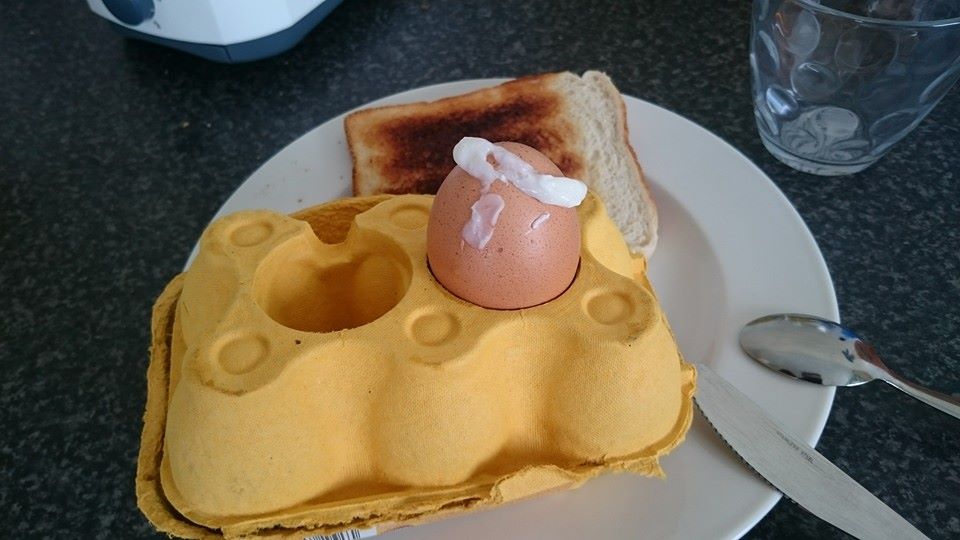
    No egg cups.

    EggCups

    Ed Fringe Diary Day 3

    Dear Diary,

    Number of people I know that I’ve bumped into: 4
    Number of those people I want to spend time with: 0

    Ed Fringe Diary Day 5

    Dear Diary,

    I am politely informed by my fellow comedians that today is known as “Black Wednesday”.

    I am politely informed by passersby on the street that they don’t want flyers.

    I mean, silence is a kind of politeness, right?

    Befitting of its name, today’s show has our lowest turnout and yet our highest number of walk outs…

    Unfortunately, I am going on last today and the audience numbers drop from twelve to two by the time of my set. So I just try and speak to them like normal human beings. I could do with the company by this point.

    The remaining man kindly describes my set as “cathartic”.

    Later we find a flyer where someone had written a note to their mate saying “this is awkward as FUCK” – with “FUCK” underlined three times.

    Ed Fringe Diary Day 6

    Dear Diary,

    So it’s come to this; putting out a message on Facebook to try and find some company: “Does anyone want to go see a celebrated Lecoq company present their award-winning five-star sell-out spin on Spielberg’s classic Jurassic Park?”

    Ed Fringe Diary Day 7

    Dear Diary,

    Starting to get a little concerned at my inability to find guest spots. People said they were easy to come by in Edinburgh; but no luck so far. Despite my spreadsheet.

    Ed Fringe Diary Day 8

    Dear Diary,

    Just spent about half an hour lost in a seemingly abandoned night club looking for some toilets before a show. In terms of drinking, last night was the heaviest night so far. If I’m going to shit myself, today will be the day.

    Ed Fringe Diary Day 10

    Dear Diary,

    Somehow left myself over half an hour to walk to my next show for the first time. Looking forward to seeing my first piece of theatre. Also to the prospect of arriving somewhere and not being out of breath.

    Ed Fringe Diary Day 11

    Dear Diary,

    It’s not Edinburgh until you’ve had to apologise to someone for forcing them to watch some utter garbage.

    Ed Fringe Diary Day 12

    Dear Diary,

    Still no guest spots.

    Ed Fringe Diary Day 13

    Dear Diary,

    Success, first guest spot! I thought it went well. Afterwards had to sprint along Cowgate to grab some flyers for my show. Gave away seven.

    Ed Fringe Diary Day 14

    Dear Diary,

    Just had a promoter who didn’t recognise me by face, despite us meeting several times, say my name had been mentioned to him on the circuit. This could ruin my plan of starting afresh with a stage name once I feel like I know what I’m doing.

    Ed Fringe Diary Day 15

    Dear Diary,

    Just had a guest spot, which was going well despite being in front of my biggest audience yet, get cut short for a last minute pro headliner. It’s a dog eat dog world up here, and I am crouched in the handbag of a Hilton trying not to be seen.

    Ed Fringe Diary Day 16

    Dear Diary,

    I’m getting sick of watching stand-up so I finally made it out the flat in time for a show that starts before midday. I’d bought tickets and everything – only to discover there are no trains in time due to something called “Sunday”. It’s the bloody Fringe – every day is like Sunday! Ten pounds down the drain.

    Ed Fringe Diary Day 17

    Dear Diary,

    I’ve had a first-hand glimpse of the negative effect the Fringe can have on a comedians psyche. A fellow comic complained to me about people with charity buckets taking away change that people could be giving to free Fringe shows. I pray I never become like him.

    Ed Fringe Diary Day 19

    Dear Diary,

    I’ve now became so desensitised to stand up that I was comfortably sitting at the back of a show I had a spot in (success!) while reading about the migrant camps in Calais and still laughing along to the show.

    Although this created one awkward moment when I laughed out of time after reading about a militia called “janjaweed”.

    Ed Fringe Diary Day 21

    Dear Diary,

    Going home tomorrow.

    I am so sick of stand-up; sick of getting on a stage; sick of watching people who are terrible; sick of watching people who are so amazing I’ll never be as good as them.

    I came to the fringe to learn and if I’ve learned one thing it’s that next year I’m going to watch a lot more theatre.

    Ed Fringe Diary Day 22

    Dear Diary,

    In a last minute effort to make up for lost time I’ve crammed in three guest spots today and had my most enjoyable day! I think I’d quite like to come back next year…

    Signing off until then,

    Dylan Dodds

    PS. My meagre earnings have been spent on the way home.… begrudgingly given to a not amused petrol station attendant in small change.

  • Jungle

    Jungle Books (or Livres de la jungle in French), the makeshift library at the Calais migrant camp known as ‘The Jungle’ is in urgent need of books to populate its shelves and desks.

    Already, the publishing industry has heeded the call, with Verso Books already sending books across the channel. But many more are needed.

    Mary Jones, a British teacher who set up the library, wants to add more books in the native languages of the migrants, refugees, and asylum seekers, and hopes that eventually, the camp inhabitants will run the library.

    Besides stocking around 200 books, the Guardian reports: “the library supports a school that offers classes to the refugees and asylum seekers that live in the camp.”

    The library is stocked with giveaways, supplied by donations and staffed by a stream of volunteers sympathetic to the plight of the refugees whose stories continue to dominate the news right across Europe. So far, it stocks fiction and children’s books, dictionaries, reference books ad business titles. Yet Jones wanted to go beyond that. She told Publishing Perspectives: “I wanted to start something that offered real, practical help. Many people here are well-educated — they want to get on and they want books that will help them read and write English, apply for jobs, fill-in forms.”

    Among the popular books at the camp are Gone Girl and Lord of the Rings, while there are also books by Tom Wolfe and John Grisham.

    Requests have been issued for more literature – from books and dictionaries to texts and zines – in any and all languages. Camp inhabitants ask for all sorts of books, according to Jones, including short stories and poetry, and she made a specific request for the following donations: “Pashto-French dictionaries, Pashto-English dictionaries, Eritrean dictionaries, books in native languages.”

    To contact Jungle Books directly, email Mary Jones. maryjones@orange.fr

  • In a series of posts, we here at Nothing in the Rulebook have been asking writers to share their top tips and advice on writing. Today, it is our pleasure to bring you the top writing tips from Asher Jay – artist, writer, National Geographic Explorer and creative conservationist.

    Whether you enjoy writing simply for the pleasure it gives you, or if you are looking to develop and improve, these great little pieces of advice will set you on your way!

    1. Write what you know, but more importantly know how you feel about what you know.
    2. Own your words. Own you.
    3. Don’t be afraid to speak up.
    4. Don’t doubt.
    5. Have someone else proof your work. (Ideally an editor.)
    6. Accept counter perspectives and criticisms gracefully.
    7. Assimilate the other. Don’t fracture yourself or the collective with your words.
    8. Cast a light not shadows with your content.
    9. Don’t sensationalize just to sell your story.
    10. Treat ignorance with compassion not condescension.

    So there you have it, writers! Some excellent tips to mull over and help you through any unfortunate bouts of creative block – and send you on your way to publication. For further inspiration, we recommend visiting Asher’s website!

  • It is 147 years since the first recorded use of the word “dystopia” was uttered by philosopher John Stuart Mill. At the time, Mill coined the phrase during a speech denouncing the British Government’s shameful colonial ‘Irish Land’ policy. Since then, of course, it has taken on a whole number of meanings and inspired multiple different trains of thought. The term does, admittedly, have human beings to thank for becoming so well known – after all, it’s difficult to witness two world wars, the rise and fall of colonial empires, genocide, environmental collapse and constant global conflict and not feel a little miffed about everything.

    This is not, of course, to say that we are living in the end times – as some might suggest. Instead it is to simply illustrate how a long-term trend in human reality has been the occurrence of negative events. Of course, there have also been, in the past 150 years, fantastic events, too, which highlight the goodness of human beings and our ability to create great and beautiful things. But nobody really wants to talk about things being good – after a while doing so just starts to sound a bit smug.

    Far more interesting, it could be said, is our cultural reaction to what might be seen as dystopian realities in the world we live. While the debate surrounding whether forms of culture reflect and proceed; or in fact influence and precede real life continues to whirl on, it is without doubt that a definite trend in our culture over the last 100 years has been toward creative forms that deal with dystopian realities – be they alternate or otherwise.

    These cultural forms abound in myriad different spheres. Films, for example, which depicting mass catastrophe, death and destruction have been well analysed and critiqued – think of the words of internationally acclaimed philosopher Slavoj Zizek, who argued that Hollywood blockbusters showcasing the end of the world illustrated his point that “it is easier to imagine the end of the world than the end of capitalism”.

    Yet while films are all fine and dandy, perhaps the most intriguing cultural form to deal with ideas of dystopia is and has been for the better part of the last century, the novel.

    In the wider publishing industry, of course, dystopian fiction remains a subset of a subset (somewhere following on from speculative fiction and science fiction). Yet it is undeniably a buzzword that provides us with an instant reaction – and the novels that work best within it provide us with fascinating room to read into; analyse; interrogate; deconstruct; and provide the inspiration for articles like this one.

    And here, dear reader, we bring you what you’ve been waiting for. The highly subjective view of some of the best ever dystopian novels. Please do read our well-constructed list below and feel free to tell us how wrong (or how right on) you think the list is in the comments below. Tell us what books we’re missing – or, if for some reason we wake up to find the world of Fahrenheit 451 has somehow descended upon us, then tell us which single book we should learn and commit to memory as we strike out into the forest to go and live with fellow book people.

    The highly subjective list of the best ever dystopian novels

    1984 – George Orwell

    1984 image

    A book that possibly needs no introduction. Eerily prescient in a disconcerting number of ways – from newspeak and jargon (in the media; workplace and politics); to Big Brother and Room 101. What is perhaps most intriguing is that we have become in so many ways the dystopian society featured in the novel not under a communist totalitarian dictatorship – as Orwell suggested – but under the guardianship of right wing conservatives and neoliberals. Irrespective of where your own politics lie, that this novel is a disturbing, dystopian world brilliantly depicted and fascinatingly detailed is surely without argument.

    Professor Wu Says: “Orwell’s disturbing world of constant surveillance and government controlled media are uncomfortably recognisable. Another strong bonus point in this book’s favour is that it is just heavy enough to throw at any members of the thought police you think might be on your trail.

    Do androids dream of electric sheep? – Philip K Dick

    do-androids-dream-of-electric-sheep-1968

    A seminal novel from the excellent Philip K Dick, which gave us the wonderful Blade Runner film when Ridley Scott was still not terrible. The work is built in the futuristic, post-apocalyptic society featuring (but of course) hover cars and robots. Yes. You read that correctly. Hover cars. And Robots. Need we say more? Apart from creating a thoroughly convincing and involving futuristic world, Dick also uses the novel to expertly help us question what it is that makes us human, thanks to Deckard and the apparently unfeeling androids.

    Professor Wu says: “Did you ever notice that the Voight-Kampff test (the test Deckard gives to determine humanity) doesn’t really use questions? Rather, Deckard describes a scene and the subject of the test reacts to it. What one might be tempted – I know I certainly am – to read into here, is that this stands as a perfect example of what literature is to the reader. Books – including Dick’s novel – are our Voight-Kampff test. And our reaction to the words on the page and the scenes we read is what is perhaps the most distinguishing feature that proves our humanity. An excellent work on so many levels, and part of an deliciously intriguing train of thought concerning AI and the Turing Test. You see a turtle in plight. What do you feel?

    V for Vendetta – Alan Moore

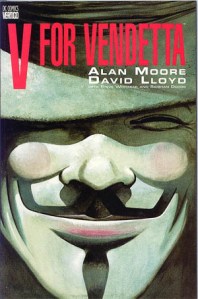
     V_for_vendettaxOkay. So not strictly a novel – rather a graphic one – but still, this is a hugely influential dystopian book, and arguably one of the most popular of contemporary dystopias. The work follows the classic line of establishment conspiracies, depicting an authoritarian government, which maintains itself in power through exploiting people’s fears and indolence. While critics have described it as ‘an adolescent fantasy’, Moore’s work has an undeniably inspiring message – that the people can resist those who abuse power. Demonstrators in Britain and around the world wear the ‘V’ Guy Fawkes mask; while the symbol has also become synonymous with hacker group anonymous.

    Professor Wu Says: “Verily, the vivacious and vivid V for Vendetta shows us yet another cultural example of the very real, deep mistrust that exists between the people and those supposedly elected to represent them. It is built on the basis of deep mistrust of those exerting political authority – something recognisable by all of us living in Western Democracies today. UKIP voters should read the book and beware; voting for a party that draws support by preaching fear and anger can lead us down very dark alleyways.

    Blood Meridian – Cormac McCarthy

    blood_meridian.large

    Blood Meridian is perhaps a contentious one, considering the obvious McCarthy dystopian novel is perhaps, ‘The Road’; but The Road is just too obvious, if anything. And it just wouldn’t do to put Cormac McCarthy on any list more than once – while he most probably deserves to be awarded the Nobel Prize for literature at some point, his ego may not quite yet be able to cope with the honour of being featured twice in an NITRB article. So why have we plumped for Blood Meridian anyway? It’s not just that we’re trying to be out there (which of course we are); it’s also because this is quite possibly one of the greatest novels in the dystopian genre, despite being set more than a century ago. This is because it depicts, simply, the end of the world. The image of barren prairies, carpeted as far as the eye can see with piles of bleached buffalo bones is haunting. Indeed, the general depiction in the novel of the violence at the heart of human nature – a violence so close to being somewhere between chaos and orchestrated evil –  leads us to confront that nameless, faceless thing in us and in the world that is, at its heart, about subverting something recognisable (the human being) and turning it inside out to the point that it is at once both terrifyingly ‘other’ and – yet more terrible – also frighteningly close to home.

    Professor Wu says: “More than protagonists, this is a novel about landscape, and the vivid descriptions of it make it come alive in a way that reflects a savagery in McCarthy’s vision of human beings. With too many hellish landscapes to count, it’s possibly not one to recommend to your lovely but somewhat doddery old vicar who lives at the end of your street.

    A clockwork orange – Anthony Burgess

    a-clockwork-orange-1962

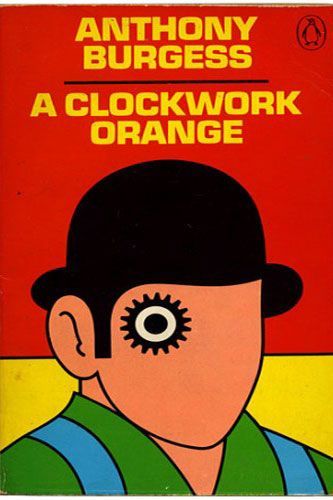
    Quite an unforgettable book, which Burgess came close to refusing to publish because he apparently felt repulsed by what he had written. The work paints a vivid, depressing future of violent gangs and extreme youthful violence, which the duplicitous state authorities try to maintain through ever more disturbing methods. Muses intriguingly on what it means to be free.

    Professor Wu says: “Personally, I think this book is overrated, and not as good as those who like it claim. Yet it makes it onto this list because it is so hugely influential. Burgess’s work gave birth to many new words – such as ultraviolence – and as such deserves credit for its linguistical tricks. It muses on what it means to be free, while it also gave us a Kubrick film, which itself gave us Malcolm McDowell sporting a fabulous cod piece. And nobody can complain about that – or can they?”

    World War Z – Max Brooks

    World War Z

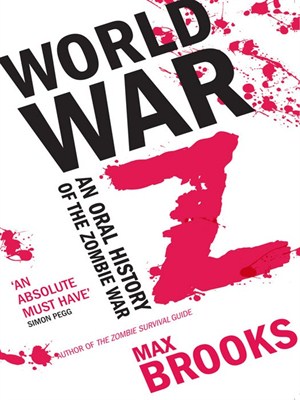
    Is Zombie fiction dystopian fiction? For the purposes of this list, yes. Yes it is. It’s a highly subjective list, after all, so we can put what we want here. Perhaps we could call it ‘apocalit’. Would that work? The point is that this is a great piece of modern, original storytelling. The beauty of a zombie piece is that it takes what we know and takes away all the rules – allowing anarchy to reign supreme. It is a novel less about zombies than of human beings and how they react in a world without law. The depiction of national governments, in particular, is certainly in the tradition of dystopian literature – as they do everything from force their citizens to live underground, poison and drop bombs on their own populations, and conspire secretly with devious schemes and plots.

    Professor Wu says: “Zombies. Zombie capitalism anybody? There’s probably a link there. The most important thing, though, is zombies, okay? Zombies zombies zombies.

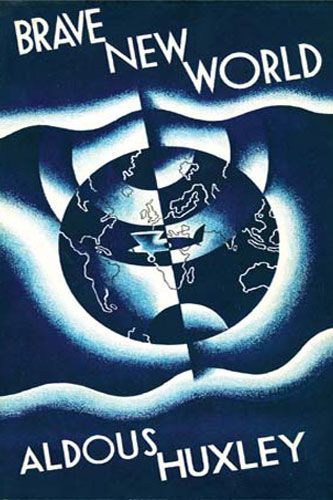
    Brave New World – Aldous Huxley

    brave-new-world-1932

    This stylish novel is another vision of globalised capitalism every bit as prescient as Orwell’s dystopia. Here we have a world of organised reproduction, brainwashing from birth and numbing drugs.  Following the occupy movements and wide public awareness of the 99% vs the 1%, it is fitting that this world we encounter is controlled by just 10 “World Controllers”. With no concept of family, this depiction of cold, unfeeling world is made all the more compelling by the superficially hedonistic society Huxley depicts. But what is the point of never feeling pain, if you cannot feel joy?

    Professor Wu says: “One character in the book tells us that “words can be like x-rays if you use them properly” and Huxley does this with aplomb. For some reason this is often a book everybody has heard of but nobody has read; yet not to read it is to do this book an injustice. In this work we see not the terror and fear of totalitarianism; but the stranger fears and dangers of rapacious consumerism, fuelled by the soft power of brainwashing *ahem* I mean advertising.

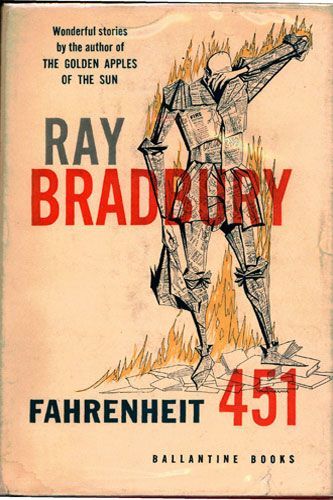
    Fahrenheit 41 – Ray Bradbury

     farenheit-451How any writer or reader could possibly read this excellent novel and not find it brilliant is beyond us. This is the ultimate dystopia for literature lovers, describing a society where books are burned and intellectual thought illegal. The work tackles head on the nightmare world in which a free press and the dissemination of ideas is not possible. In a fantastic trick of irony, the book was banned upon release for containing “questionable themes”.

    Professor Wu says: “Bradbury insists he wrote the book because of his concerns at the time – during the McCarthy era – about the threat of book burning in the USA. Yet to lock interpretations of this world into the historical context of its time is to do it a disservice, as this fantastic novel contains so many elements that persist today. The proliferation of sleeping pills and addiction to shallow TV dramas in the suburbia Bradbury depicts enables us to confront the glaring passivity of many people today – who remain indifferent to the suffering around them while the world spins into chaos.

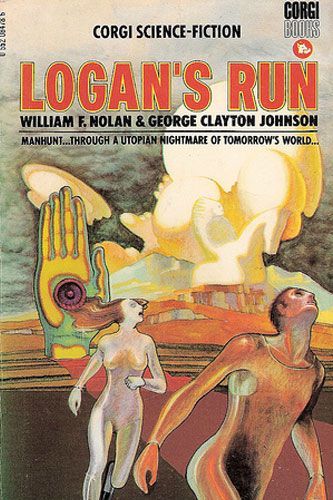
    Logan’s Run – William Nolan & George Clayton Johnson

     logan-s-run-1967In many ways this is a lost science fiction and dystopian classic – with people far more familiar with the film than the book. It has been out of print since 1976, yet most probably deserves a return to the spotlight and easy accessibility, since this is a poetic and original work. Unlike the movie, people in the novel are killed at 21 – not 30, which gives an interesting edge, since killing takes place at a time when people are just beginning to know themselves. In this world, wisdom has been forgotten and machines think for humans. If that isn’t a frightening enough concept then we don’t know what is.

    Professor Wu Says: “A simple but terrifying concept – imagines a world where resources maintained and the population controlled by the mandatory death of all humans when they reach the age of 21. The image of such a superficially perfect world, in which great darkness lurks beneath the surface, is the perfect example of a dystopian utopia.

    The Time Machine – H.G. Wells

    the-time-machine-1895

    Arguably the work that popularised time travel – so in that respect H.G Wells deserves all sorts of accolades from all sorts of people. His term ‘time machine’ is now the standard vehicle used in tales that depict this. Unfortunately for the time traveller in this novel, his machine takes him to some rather disturbing dystopian places – rather than oh, say, 2015 or 1955. Quite simply, the word influential does not do justice to how important this book is to the genres of dystopian or science fiction.

    Professor Wu says: “Ahead of its time – in more ways than one. (See what I did there?)

    What are we missing?

    So, there we have it. Our very own, highly subjective list of the very best dystopian novels of all time. To those of you in the publishing industry, you needn’t worry about publishing any new dystopian fictions, because they ain’t gonna be as good or as influential as this (we’re just kidding, obviously). But what are we missing out? What do you make of our list? Where have we erred and strayed? And which works have we forgotten? Let us know in the comments below.
  • writing lecturer

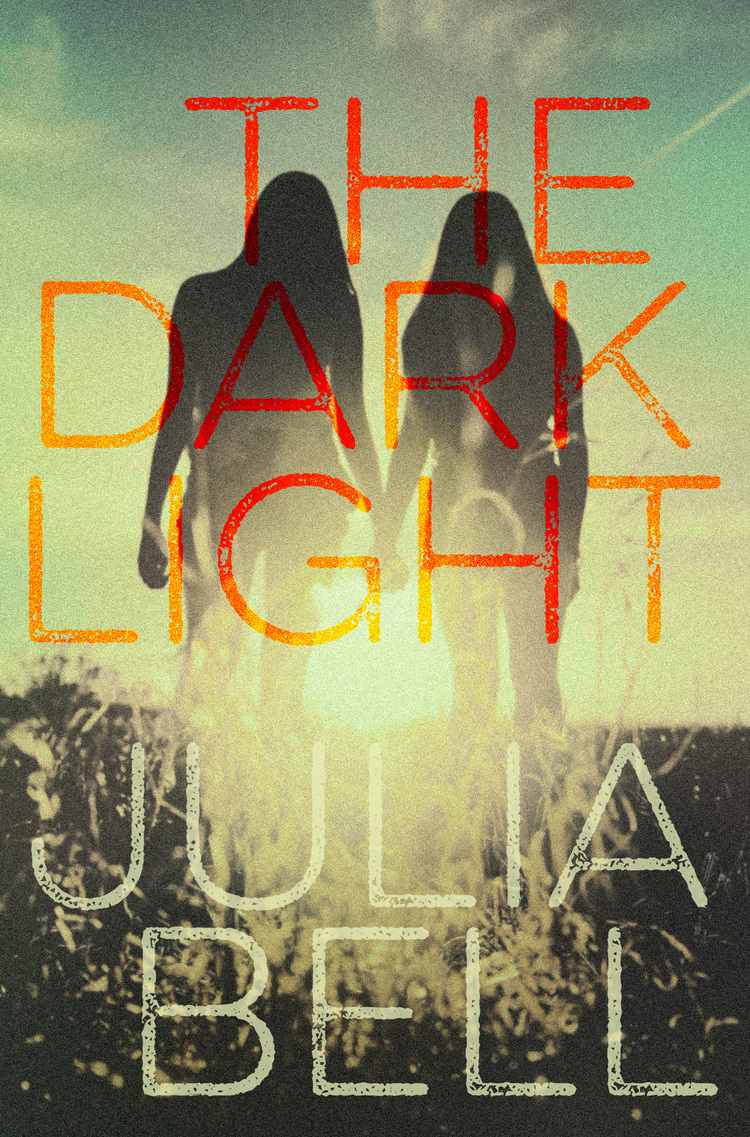
    In a series of posts, we here at Nothing In The Rulebook have been asking writers to share their top tips and advice on writing. Today, it is our pleasure to introduce the esteemed Julia Bell – a creative writing lecturer and novelist with her book The Dark Light out now. Julia Bell is one of the UK’s foremost authorities on creative writing. Here, she shares with us the top ten pieces of advice she gives her students at the start of each year. Whether you enjoy writing simply for the pleasure it gives you, or if you are looking to develop and improve, these top tips will set you on your way!

    Light bulb moments

    Sometimes as a teacher you feel like you’re trapped in a groundhog day, repeating the same pieces of advice every year, just to a different cohort of students, although as I get older and more forgetful perhaps I’m just repeating myself and students are being too polite to call me on it.

    Julia Bell's 'The Dark Light' is a fantastic novel, based on a true story.
    Julia Bell’s ‘The Dark Light’ is a fantastic novel, based on a true story.

    In any given year these are the pointers about writing good prose – novels and stories – that I find myself saying over and over, but they are also in themselves, light bulb moments from my own practice as writer:

    Julia Bell’s top ten writing advice tips:

    1. A good piece of writing is an experience for the reader.The meaning of a story or a novel does not pre-exist the writing of it. You can’t write with a manifesto in your hand unless you are intent on writing parables or sermons. Technique – point of view, character, sentence structure, style – are all in service to the creation of this experience.
    1. The writing of a story should be an experience for the writer too.The work needs to transmit something – love, anger, jealousy, rage, disturbance, (add your own abstract noun here) – but you can’t experience these abstractions in prose just by using the abstract noun. In fiction, meaning is delivered through concrete detail and description. Don’t tell me that your character is angry, show them throwing the ashtray. As a rule of thumb if your work makes you feel – cry, laugh, explode – chances are it’s transmitting something of this to the reader too.
    1. Make your story question the world. A story should never set out to answer a question, rather it should pose the question correctly. Here I am paraphrasing advice from Chekhov. Good writing offers up a knotty picture of the world for a reader to untangle: Over here, reader! Look at this tangle of thorns! A story which ties everything up in neat conclusions might be more commercial (read Disney) but if it doesn’t make us question the world then it cannot claim to be art.
    1. Cut out all unnecessary words.Frilly language just gets in the way. If you’re going to write stylishly read lots of poetry and think about rhythm. Good sentences are concrete and they choreograph the action for the reader – too many flouncy words just get in the way of what’s going on and makes the action and characterisation hard to see.
    1. Get used to editing.You will write a lot of words that you don’t need as you get to know your characters. Those paragraphs of back story? They are mostly character notes that are helping you get to know your character but they are also holding up the flow of the story. Cut ruthlessly.
    1. When editing, look for the sentences that should be paragraphs and the paragraphs that should be sentences.That means the places where you can move more swiftly and you’ve waffled on with something which you could deliver in a line, and where you’ve delivered something in a line which is worth expanding into a paragraph or scene. Good time management is key to this.
    1. The beginning point for a writer and a reader are in two different places.The opening paragraph of a published book is often a polished affair written at the end of the project when the writer knows what it is they are offering the reader. As a writer, when you start a story everything is provisional until you have finished it so don’t over polish your beginning – you may end up having to cut it anyway.
    1. It’s better to have a ‘frankendraft’ than 10,000 words of finely wrought prose.Writers are often paralysed by the idea of writing a bad sentence but until you’ve finished a project you have no idea of what you’ve got. A potential novel is just that, the real novel is the one you actually wrote. Better to push on to the end of something than agonise over sentences. The whole thing will need redrafting anyway – when you have finished a piece, however unwieldy and full of mistakes, you actually have the raw material to work with and turn into something better.

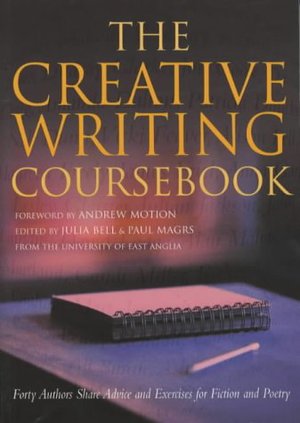
      The Creative Writing Coursebook.
      The Creative Writing Coursebook.
    1. Don’t assume the ‘frankendraft’ is good enough.You finished your book – congratulations. Now the hard part starts. Agents dread the months post NaNoWriMobecause they get heaps of unsolicited submissions from people who wrote a novel in a month and think that’s all there is to it. Please go back to point 1. Editing always makes the work better.
    1. No one can do the work for you.There is no substitute for the work. If you want to write a book do it, don’t dream about doing it. And worst of all don’t bitch at others for achieving something you haven’t had the guts to get on with. Rivalry is useful if it’s inspiring you to write better, harder, faster. If you’re just jealous because they’ve done the work and you haven’t there is very little that can be done to help you.

    This edited post was originally published by our fantastic partners over at the Write-Track.

    About the author of this post

    Julia Bell is a writer and Senior Lecturer at Birkbeck College, London where she teaches on the Creative Writing MA and is Project Director of the Writer’s Hub website. She is the author of three novels, most recently The Dark Light – an excellent novel, available to purchase here. She is the co-editor of the Creative Writing Coursebook as well as three volumes of short stories most recently The Sea In Birmingham. She also takes photographs, writes poetry, short stories, occasional essays and journalism, and is the co-curator of spoken word night In Yer Ear. She tweets as @JuliaBell

  • wt-circle

    “There is nothing to writing – all you have to do is sit at a typewriter and bleed.” – Ernest Hemingway.

    Ernest makes it sound simple enough there, and possibly fun, for those into that kind of thing. But of course the reality of writing is that it is difficult; Hemingway also suggested, remember, that any young person thinking of becoming a writer should first try to hang himself (because at least that way he would “have the story of the hanging to commence with”).

    Of course, at Nothing In The Rulebook, we absolutely do not suggest hanging oneself – or any other self, for that matter – just to be clear. Instead, we advise practice, and listening to and learning from others. Because of that, it was nothing short of being our duty to inform you all about a fantastic writing tool to aid you in finally writing that novel you’ve been working on – or even just starting to write anything, really; anything at all.

    Write-Track is a supportive, goal-setting community and writing productivity tool for writers who want to write more.

    Whether you’re writing a haiku, a comedy caper, a hardboiled cop drama or a zombie romance thriller set in space, one thing remains the same – you need to get it written. Write-Track helps you do just that; and as a result comes highly recommended by both of our moderators.

    “Write-Track is a fantastic tool for all writers – aspiring, experienced or otherwise,” Billy the Echidna says. “No matter what you’re writing, it helps you track the frequency of your writing, set yourself achievable writing goals, and also monitor your writing against those goals.”

    “If anything it would be a failure of mine not to recommend Write-Track,” Professor Wu adds. “This is, simply, a quality tool for all writers. If you’re a writer and you’re still reading this, frankly I’m unsure why, because you should be getting involved with Write-Track right now! Just like Nothing in the Rulebook, Write-Track has that community feel – where you can engage with other writers and offer and receive the support and motivation to keep writing.”

    So there you have it. A fabulous writing tool for writers. But don’t just take our word for it – check it out for yourselves and get on the Write-Track!

  • everybody-should-sit-by-a-little-stream

    When was the last time you were bored – or even just waiting alone by yourself for a spare moment – and didn’t instantly spring to bridge that feeling of boredom or fill that moment of waiting by checking Facebook or Twitter or Instagram (or even LinkedIn if the boredom were really acute)? And how about the last time you were out for a meal with your partner, and didn’t reach for your smartphone the minute they left to use the bathroom?

    What we are doing, when we do these things, is recoiling from the dull. But why? Why do we do this? Perhaps this desire to flee boredom and escape from it is created in our minds because boredom is intrinsically painful – we describe it, after all, in linguistical terms that imply this pain: ‘deadly dull’; ‘excruciatingly boring’; ‘bored to death’. And studies even suggest that people prefer painful experiences to being alone in a room with their own thoughts for fifteen minutes.

    Our lives, however, are completely entwined with experiences of boredom. We can all recognize that feeling of suspended anticipation in which things are started and nothing begins; that mood of diffuse restlessness which contains that fiercely strong desire for action, for movement.

    An ode to boredom: a force for good

    Yet, although boredom is an intrinsic part of life for everyone; it needn’t be destructive – and it certainly needn’t be painful. In fact, there’s a growing consensus that boredom should be embraced – and that avoiding boredom is potentially far more destructive and dangerous.

    Indeed, consider the words of British Philosopher, Bertrand Russell, “A generation that cannot endure boredom will be a generation of little men… of men in whom every vital impulse slowly withers, as though they were cut flowers in a vase.”

    Meanwhile, Soren Kierkegaard – perhaps the world’s first existentialist – explained that “the unhappy man is always absent from himself, never present to himself.” In this, he hints at what lies behind our decisions to constantly reach for the smartphone; for the device that distracts us. It is an unconscious desire to be “absent” from ourselves and from the world: an insidious form of escapism.

    And in acquiescing to our fear of boredom, of sitting quietly and thinking hard about things for thirty minutes instead of thirty seconds, we deny ourselves the opportunity to become greater than we are: we deny ourselves the opportunity to better understand who we are, at our very deepest levels, as human beings.

    Boredom is important, then, because it opens channels. It expands our potential and helps us to grow – to better understand ourselves and the world. We can find new ways of thinking about life in those moments when boredom forces us to think about things other than the latest post about cats on Facebook.

    On writing

    Boredom, of course, is not just a ‘real life’ issue, which affects us intermittently depending on the flows of our lives. It is, instead, a very real part of the writing process. Writing is, after all, essentially the attempt to elucidate thoughts and ideas: the very things boredom helps us dwell upon and create.

    It’s perhaps little coincidence so many inspiring thoughts are had in moments of quiet solitude – sitting beneath apple trees or relaxing in a bath. These are the moments in which we are able to think carefully about ideas and draw unexpected conclusions we are otherwise unable to in a world of constant stimulation – of music and television everywhere you go; of constant out-of-office emails and work patterns; of incessant digital background babbling.

    Certainly, there seems a feeling among certain writers that boredom is essential for writing and creative thinking. For example, comedy writer Graham Linehan said, in a recent interview for the Guardian: “I have to use all these programs that cut off the internet, force me to be bored, because being bored is an essential part of writing, and the internet has made it very hard to be bored.”

    It is the fear of boredom, and the ease of distraction from boredom – enabled by the internet and smartphones – that is dangerous to writing. Little wonder Kingsley Amis said “the art of writing is the art of applying the seat of the pants to the seat of the chair.” We have to be willing, as writers, to embrace boredom and resist that desire to flee its embrace.

    The boredom paradox

    One of the issues with suggesting that we need to embrace boredom in order to become creative and to think in new and unexpected ways, is that, once we start being creative and thinking in this way, we stop being bored. Very few people hit upon an idea that absolutely inspires them and are able to retain a detached distance from it in which conversations about their work proceed something along the lines of:

    “So I’ve discovered the meaning of existence.”

    “Oh, really? That’s incredible!”

    “Yah. Yah, it’s okay I guess. I dunno. I guess it’s fine to be getting on with for the time being.”

    In fact, in a way it perhaps seems strange that we recoil from boredom at all: because why would we fear the opportunity to be creative, to think stimulating thoughts and break down boundaries? Perhaps there’s something else here. Something deeper. That it is not boredom itself that we fear: but rather, the things we might discover in ourselves, within that boredom.

    The late writer, David Foster Wallace, touched upon this in questioning why we held in ourselves “This terror of silence [when faced with] nothing diverting to do. I can’t think anyone really believes that today’s so-called ‘information society’ is just about information. Everyone knows it’s about something else, way down.”

    It is that something else, perhaps, which truly frightens us. Because perhaps what we fear most is understanding who we actually are – or allowing ourselves to realise and acknowledge those things we spend so much time trying to ignore: that we are mortal, and never ever more than a breath away from death. That we are alone in a vast, spinning, and infinite world; that we exist in a universe in which we are totally and utterly and completely insignificant.

    These thoughts truly are terrifying. I don’t know about you but I am literally screaming at the top of my lungs as I write this and think these thoughts, eyes wide and pupils dilated. But in all that terror, there’s also something deeply, intensely interesting.

    In fact, in a way, it’s incredible, really, that we allow ourselves to become bored, anyway. After all, there is an infinite amount to be thought of; an infinite number of ideas to be had. We live in a universe full of wonders, so impossibly vast that we can’t comprehend it, even with our minds, which are themselves infinite and vast and go on forever.

    What is to be done?

    So what do we do, then, other than taking all our mobilephones, our laptops and computers and throwing them in the nearest ocean? Perhaps we could become hermits, and live alone by ourselves in perpetual solitude. Although I hear this is a dying trade and an industry in great decline.

    Once again, Bertrand Russell offers the following thoughts: “A happy life must be to a great extent a quiet life, for it is only in an atmosphere of quiet that true joy can live.”

    How about that, then. Perhaps we should just start talking a little more quietly. I know this can be difficult, especially in the digital age of ‘social media’ – which so often just seems to be an echo-chamber in which communities of like-minds write ALL IN CAPS as their empty theses, condensed into 140 characters, are lost in a cacophony of data and trending #hashtags.

    Indeed, this is a problem of social media highlighted by Mark Fisher in his work, Capitalist Realism: Is There No Alternative? As he suggests the internet “facilitates communities of solipsists, interpassive networks of like-minds who confirm, rather than challenge, each others’ assumptions and prejudices.”

    If true, what this suggests is that rather than broadening our horizons, as is necessary to think deeply and hard about subjects and ideas – a crucial act in writing – we are instead simply shouting loudly over the top of other people saying the exact same thing. In such scenarios, a break away from technology; from these communities, can only be a good thing for our minds and our writing. So perhaps the first step in embracing boredom is to step away from that which tries so hard to distract us from being bored – the internet. Perhaps the first step is to turn off the power and start to think.

    Coda

    The greatest irony with all this, of course, is that I have written this post on my smartphone while waiting in a queue to watch The Minions movie, because I couldn’t bear to stand by myself doing nothing. Indeed, in writing this, then, am I myself escaping the reality of boredom? That necessary reality we must embrace in order to live a happy life? And here I was hoping those little yellow bastards would help distract me for 90 minutes from the ultimate reality that we are all slowly being drawn toward that sweet caress of death.

    But wait, this isn’t just me, is it? You’re probably reading this on your iPhone, while sitting on the toilet, aren’t you? What are we to do?

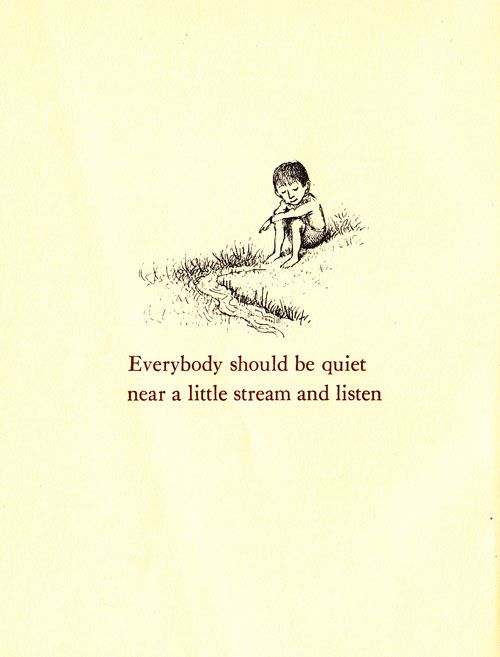
    Pfft. Everything’s just too meta these days. And too meta meta, as well. Meta2, if you will. Oh the humanity. I’m off to find a little stream where I can sit quietly and listen. You should too, if you want to, maybe.

  • Hopwood Hall College TheaTRE
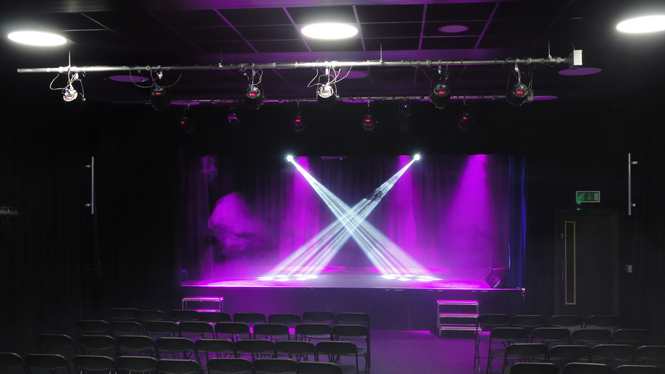
    Hopwood Hall College Theatre

    The venues for the Rochdale Literature & Ideas Festival have been announced. Twelve venues will host over 30 live events over the course of the festival, which includes music, readings, comedy, children’s shows, interviews and talks.

    The main festival venue will be Rochdale Central Library at Number One Riverside. The library and first floor Hollingworth Conference Suite will stage some performances, including talks by actress Helen Lederer, writer Jackie Kay, playwright Bonnie Greer OBE, comedian Dom Joly and author Jonathan Harvey. Number Ten Gallery on Baille Street, Touchstones Arts and Heritage Centre, Rochdale Town Hall and Bar Vibe Music Venue will also host events.

    New venues for 2015 include Hopwood Hall College Theatre in Middleton, the Church of St Edmund and Rochdale Pioneers Museum.

    The Flying Horse Hotel hosts Andy Kershaw’s acclaimed one man live show and a Theatre Writing Showcase will be at The Baum.

    Warm up events will also be held at Middleton Arena, Rochdale Town Hall, The Baum and Number One Riverside.

    The festival will be staged from Friday 23 to Sunday 25 October. It will offer people a chance to get together with others to share or discover a passion for reading and books.

    Other highlights include author/poet Gervase Phinn, ‘Emmerdale’ star and photographer Bill Ward, the Poet Laureate Dame Carol Ann Duffy, television historian David Starkey CBE and poet Lemn Sissay.

    Under the theme ‘expand your mind’ – the programme covers workshops, music, readings, children’s shows, interviews, talks and more from other guests including playwright Ian Townsend, artist Jim Medway, poet Andrew McMillan, plus authors Frances Brody, SF Said and Sathnam Sanghera.

    There is a full programme of free events for children and families themed ‘Pirate Adventures’.

    The festival celebrates and promotes the Maskew Collection of classic literature and philosophy at Rochdale Central Library, encouraging people to engage in thought and philosophy. It is due to the generosity of Annie and Frank Maskew, a Rochdale couple who shared a passion for reading and thinking, who originally met in Rochdale Library. They left a sum of money to be used on resources and events related to literature, and philosophy to ensure classic works are available for future generations.

    To find out more and to book your tickets to the festival, please visit the festival website.