• Esther Freud.jpg

    In 2010, inspired by Elmore Leonard’s 10 Rules of Writing, The Guardian asked authors for their personal lists of dos and don’ts. We’ve gone through the whole list and, week by week, will be bringing you the timeless counsel of the great writers of the 20th and 21stcenturies.

    Last time out we brought you the rules of writing from Elmore Leonard himself. And in the past we’ve also featured Zadie Smith’s exquisite balance of the practical, the philosophical, and the poetic. Then there’s Neil Gaiman’s timeless counsel on writing, which complements the writing commandments of Jonathan Franzen, as well as the wise decree of Margaret Atwood. Today, we’re pleased to feature the writing advice from renown British novelist Esther Freud. Enjoy!

    1. Cut out the metaphors and similes. In my first book I promised myself I wouldn’t use any and I slipped up ­during a sunset in chapter 11. I still blush when I come across it.
    2. A story needs rhythm. Read it aloud to yourself. If it doesn’t spin a bit of magic, it’s missing something.
    3. Editing is everything. Cut until you can cut no more. What is left often springs into life.
    4. Find your best time of the day for writing and write. Don’t let anything else interfere. Afterwards it won’t matter to you that the kitchen is a mess.
    5. Don’t wait for inspiration. Discipline is the key.
    6. Trust your reader. Not everything needs to be explained. If you really know something, and breathe life into it, they’ll know it too.
    7. Never forget, even your own rules are there to be broken.


    For more excellent wisdom on writing, consider the excellent musings of ground-breaking Scottish author, Iain Maloney; and complement that with some priceless advice from Kurt Vonnegut, alongside our compendium of writing advice from some of the greatest authors.

    Alternatively, you could get all this and more by signing up to our free, weekly newsletter for everything interesting. Join the gang!   

  • book1

    Why do we write? Litterateurs throughout history have often taken time to reflect on this question. Yet with the advent of neoliberalism and the proliferation of commercialisation that has taken place within most capitalist countries in the 20th and 21st centuries, it often seems as though the only purpose of fiction, of publishing, of writing itself – is to make money and sell books.

    Indeed, it often seems as though we have ignored Stephen King’s protestations that “Writing isn’t about making money, getting famous, getting dates, getting laid, or making friends. In the end, it’s about enriching the lives of those who will read your work, and enriching your own life, as well. It’s about getting up, getting well, and getting over. Getting happy, okay? Getting happy.”

    Instead, our culture seems at times obsessed with bestselling novels, not because they are necessarily the best novels, or even particularly well written; but because they are best selling novels. And when the only metrics of worth we use to discern what has value and merit and what doesn’t is by casting an eye over how much something sells, it surely seems as though we are in danger of missing out on what is really, actually important.

    Independent writers and authors have often attacked and railed against this commercialization of writing. In 2005, for instance, the Society of Authors raised concerns over the music retailer HMV’s takeover of Ottakar’s bookstore. And, as pointed out in this article from Litro Magazine, when all that matters about a book is whether or not it sells copies, the inevitable result is a contraction of ‘newness’; as publishing houses simply print copies of books that are copies of commercially successful novels (which themselves are copies of other best selling books).

    And it doesn’t just affect the quality of the writing we read. Increasingly, capitalist power structures drive the commodification of literature, and literary icons. We now see t-shirts imprinted with the face of Jack Kerouac or quotes from Jane Austen novels. We hang posters instructing us to “keep calm and read on”. We dry our dishes with Charles Dickens-themed dish cloths. In this world, what does it say about our society when we choose to reduce these people and pieces of culture to mass-produced commodities?

    Railing against such developments in literature may not seem particularly new. Indeed, fears over the direction we are heading, culturally, have been raised for decades (though these warnings have rarely been heeded).

    Think of the words of one of the true literary masters, Jorge Luis Borges. In a 1970s discussion with Argentinian writer Fernando Sorrentino, Borges considers how the commodification of literature threatens to warp its metrics for success:

    “It’s possible that the fact that literature has been commercialized now in a way it never was before has had an influence. That is, the fact that people now talk about “bestsellers,” that fashion has an influence (something that didn’t use to happen). I remember that when I began to write, we never thought about the success or failure of a book. What’s called “success” now didn’t exist at that time. And what’s called “failure” was taken for granted. One wrote for oneself and, maybe, as Stevenson used to say, for a small group of friends. On the other hand, one now thinks of sales. I know there are writers who publicly announce they’ve had their fifth, sixth, or seventh edition released and that they’ve earned such and such an amount of money. All that would have appeared totally ridiculous when I was a young man; it would have appeared incredible. People would have thought that a writer who talks about what he earns on his books is implying: “I know what I write is bad but I do it for financial reasons or because I have to support my family.” So I view that attitude almost as a form of modesty. Or of plain foolishness.”


    Borges – as he so often was – here sounds remarkably prescient. And as we continue to live with the impact such commercialisation and commodification of literature has had on our literary culture, it seems more than unfortunate we were not able to pay much attention to the author’s warnings.

    But this is not to say we can do no more on the subject. Indeed, quite the opposite. By recognising what is and is not important in literature and writing, we – as both readers and writers – can discern for ourselves just exactly what constitutes literary success. As Neil Gaiman wrote: “read the books you love, tell people about authors you like, and don’t  worry about [which books are best sellers].”

  • Final_Cover

    In many ways, the 1980s can be seen as one of the most pivotal decades in British history since the second world war. Accompanying the rise of the city and the collapse of the Fordist, Keynesian consensus, were cultural changes that embedded themselves in Britain through the booming entertainment industry. This is the decade of Madonna; Back to the Future; Boy George; Prince; The Return of the Jedi; Michael Jackson; and Top Gun, just as much it is the decade of Margaret Thatcher, Ronald Reagan, Pinochet, credit crunches and miner’s strikes.

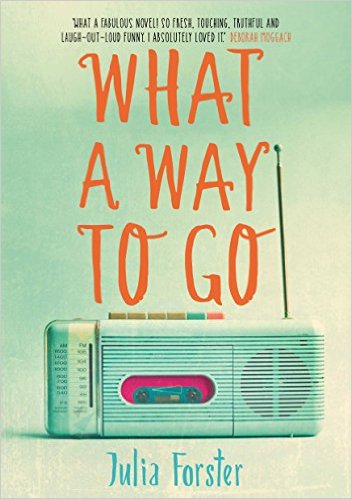
    Yet just because a decade is important does not mean it is easy to bring to life. And this is part of what makes Julia Forster’s debut novel, What A Way To Go, so impressive: because Forster doesn’t simply recreate the 1980s: she makes it dance.

    What A Way To Go is the story of twelve-year-old Harper Richardson – and it is through Harper’s eyes that we are transported back to the era of Bananarama, neon trousers and the gradual decline of the unions.

    As you might expect from a novel following the life of a twelve-year old, this is, essentially, a coming of age story. Living two distinct, separate lives, Harper divides herself into “two cut-out versions” of herself: “one for each parent”. It’s an intriguing and – to anyone who has been a child of divorce – instantly recognisable concept. It is a sure sign of a novelist in possession of clear literary talent that Forster is able to create such an emotional connection between the reader, her characters, and the text itself.

    When writing in the first person from the perspective of a young girl on the cusp of puberty, it is crucial that the world we as readers experience, and the characters we meet, ring true. And the real skill Forster shows is her ability to render this work of fiction as incredibly authentic. This is not simply through Harper’s consistent voice; but also in the way she and other characters in the novel interact and adapt to the world around them.

    Indeed, the dialogue between characters, also, runs extremely true – and is often delightfully surprising and funny. And this fills in the world – and the characters – which is complemented by scenes that feel thoroughly drawn from real, lived experiences: Harper watches Top of the Pops every Thursday; and has her hair cut while Cilla Black’s Blind Date plays on the television in the background.

    Because the novel feels so real, as readers we quickly slip into uncovering some of the underlying themes of this marvellously witty and insightful book. Family, of course, looms large, as Harper feels compelled to attempt to bring her parents back together. And through the prism of divorce we can see mirrored the splintering divide that – from the 1980s onwards – has come to separate British society, as inequalities widen and social attitudes diverge.

    It’s also a novel about women. Harper’s mother, perfumed and chain-smoking, signs up to credit cards in order to keep a healthy stock of high heeled shoes. Harper, thinking that “buying high heeled shoes is an illness” is demonstrably unlike her mother. She visits graveyards with her father and is interested in the Socialist Worker magazine. Perhaps sensing this difference, her mother repeatedly encourages Harper to be “more feminine”. It is this question of womanhood – of what it means to be a woman – that ultimately sits at the heart of the novel. And it is therefore that much more intriguing to have the spectral figure of Margaret Thatcher looming large in the backdrop. Britain’s first – and, at this time of writing, only – female Prime Minister notoriously hated feminists and feminism; a curious figurehead indeed for any young girl to encounter on her journey to adulthood.

    Forster addresses these themes and ideas incredibly well, with controlled, tight language and astute observations, alongside slight asides and allusions the reader is able to pick up on themselves.

    This makes What A Way To Go far more than an enjoyable coming-of-age story. It’s also a showcase of writerly talent that is a joy to experience; and, what’s more, it is an extremely valuable and important book through which we can better understand Britain of the 1980s – and the Britain of today.


    To purchase What a Way to Govisit https://www.amazon.co.uk/gp/product/1782397523/ref=s9_simh_gw_g14_i2_r?ie=UTF8&fpl=fresh&pf_rd_m=A3P5ROKL5A1OLE&pf_rd_s=desktop-1&pf_rd_r=0J8NWC2D9RANBKKCY5QB&pf_rd_t=36701&pf_rd_p=26de8ef0-2ad7-412c-8634-6cd03b7b73e2&pf_rd_i=desktop

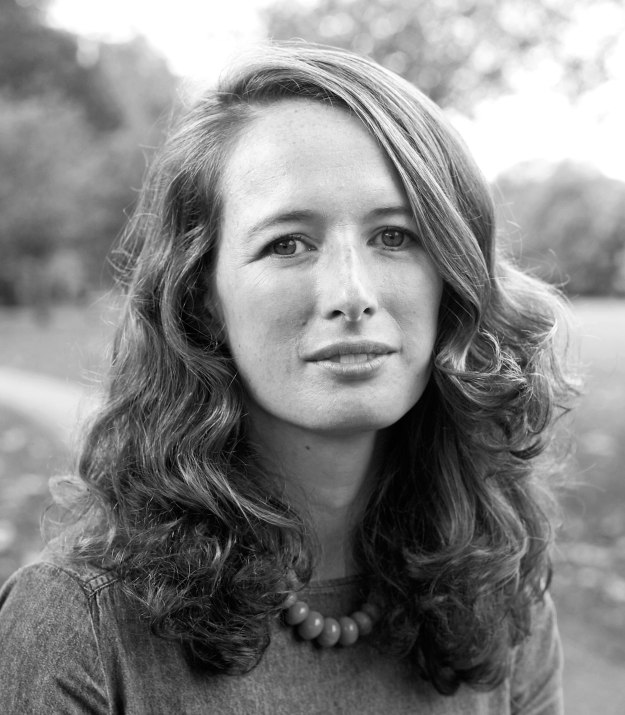
  • Julia-Forster-B&W-©-Alice-Hendy-2014.jpg

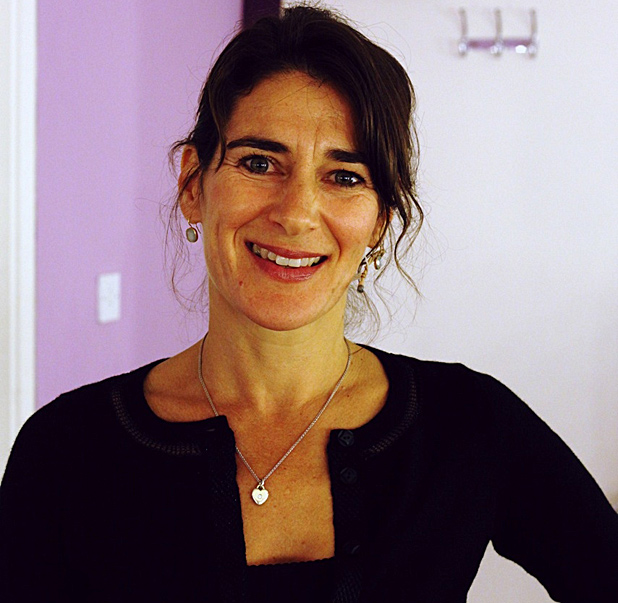
    Julia Forster was born and raised in the Midlands. She studied Philosophy and Literature at the University of Warwick and has a Masters in Creative Writing from St Andrews. While at Warwick, she was awarded the Derek Walcott prize for creative writing. She works in publishing, but has also been a magician’s assistant in Brooklyn, a nanny in Milan and a waitress in Chartres.

    Her debut novel, What A Way To Go, follows the exploits of 12-year old Harper Richardson, as she navigates the tumultuous paths of childhood, while also attempting to fix her divorced parents’ broken hearts. Set against the backdrop of the high hairdos and higher interest rates of the late 1980s, Forster’s novel has been described as “fresh, touching, truthful and laugh-out loud funny” by best-selling author Deborah Moggach.

    It is an honour to bring you this detailed interview.


    INTERVIEWER

    Tell me about yourself, where you live and your background/lifestyle

    FORSTER

    I live with my young family in mid Wales, 150 miles due west of where I was brought up in the east Midlands. We live in a cottage, which we share with the local wildlife: there’s a large maternity roost of pipsistrelle bats in our loft and we often have little visits from mice and bird-life. I try – and fail – to grow vegetables, read a lot and attempt to look busy when I hear the kids running up the stairs.

    INTERVIEWER

    Is creativity and writing your first love, or do you have another passion?

    FORSTER

    I am a keener reader than I am a writer, which is perhaps not a bad thing? I guess that might also have to do with having small-ish kids (they’re nine and six years-old). After all, it is far easier to pick up a book to read in between small tasks than it is to delve right back into an imaginary world and start writing again…

    INTERVIEWER

    Who inspires you?

    FORSTER

    I’m lucky to have some amazingly creative friends. I met the poet Retta Bowen at an Arvon course when I was 19 and she’s been a permanent source of hope and inspiration ever since. I met the all-round creative genius Philip Cowell when I was 24 and he’s likewise lit up the path when I haven’t known where to tread next. I couldn’t have written a word without the inspiration of my friend here in Wales the author, editor and campaigner Angharad Penrhyn Jones.

    Books are a continual source of inspiration, of course, but when you’re faced with a creative dilemma, nothing beats a phone call or sharing a leathily strong coffee with a friend who can both challenge and counsel you.

    INTERVIEWER

    Who were your early teachers?

    FORSTER

    I had an English teacher in Year 10 who used to tell ghost stories which were so petrifying, some pupils had special dispensation to leave the class while he told them. He made a significant impression on me, but it wasn’t until I was at university that I began to write in earnest. I was lucky to be taught at the University of Warwick when the writing programme there was in its relative infancy and as such I would often have entire office hours to myself with David Morley. That’s when I began to write poetry. Maureen Freely and Russell Celyn Jones were also teaching at the time, and it was in one of Russell’s workshops that I wrote the germ of What a Way to Go in response to his provocation to ‘write about something traumatic’.

    INTERVIEWER

    Could you tell us a little about your debut novel, What A Way To Go?

    FORSTER

    It’s set in 1988 during the summer of the ‘Lawson Boom’ when house prices became eye-watering, along with interest rates (and I’m sure many of us may have also shed a tear when we’ve looked back at what we wore in that era too!) Twelve year-old Harper’s parents Mary and Pete are divorced. Harper is trying to fix their broken hearts but she also enjoys her blossoming independence – both politically and emotionally. It’s a book with a big heart and a retro feel.

    INTERVIEWER

    It is often said that “all writing is autobiography”. How closely do you find your own, personal experiences of childhood are tied to those of your novel’s central protagonist, Harper? Is it easier to write about your life experiences through the prism of fiction – rather than, say, memoir?

    FORSTER

    When I was nine, I announced that I would ‘cook’. I took a packet of shell-off prawns from the freezer and attempted to make prawn cocktail. The marie rose sauce was easy: tomato ketchup and mayonnaise to a 50:50 ratio. What I didn’t know was how you defrost shellfish, so I sucked each prawn until they’d defrosted, spat them out and then served them in the sauce. I honestly didn’t think that this was bonkers.

    I don’t think it’s a plot-spolier to say that this event is repeated in one scene in the novel! What I suppose this demonstrates is that a) everything is copy and, in the case of What a Way to Go, b) I was always searching for a way to inhabit that child-like imagination and point of view. Adults do tend to complicate matters.

    I chose to use the prism of fiction because, frankly, I wasn’t ready to publish a memoir but also because, like many childhoods, there was plenty of emotional drama but not enough to warrant the cutting down of trees to print it out in multiple copies. An earlier iteration of this novel was in fact a full-length autobiography of 80,000 words. The manuscript serves as excellent sound insulation in our echoey cottage.

    INTERVIEWER

    As you write and prepare to write, what do you think is most important to keep in mind when writing your initial drafts?

    FORSTER

    Imagine if you could get some kind of inoculation against self-doubt, or a course of confidence pills that you could pop while writing! Straight up, I believe that the crucial thing when writing an initial draft is not to judge yourself or your writing. Believe in yourself in epic proportions. It is all too easy to get downbeat and for the oxygen to be sucked out of an embryonic project. Just keep going.

    INTERVIEWER

    Do you feel any ethical responsibility as a writer?

    FORSTER

    I write from a place of authenticity. I wouldn’t undertake anything I haven’t thought about from an ethical point of view.

    INTERVIEWER

    Do you have a specific ‘reader’ in mind when you write?

    FORSTER

    A man in his fifties who is sitting on the tube wearing a frown and a bowler hat.

    INTERVIEWER

    Reading What A Way To Go, the wider historical and social context are subtly fed in – weekends in Hardingstone are “low voltage, thanks to Maggie Thatcher”, for instance. For you as a writer, how do you balance the central focus of the novel – the coming of age story of a child of divorce – with the wider story of England’s changing society through the 1980s?

    FORSTER

    I read Andy McSmith’s There’s No Such Thing as Society which helped me to choose the historical era in which I set the novel. It was my intention to show, without it being too invasive, how the increasing commercialisation of childhood and pop music hoodwinked a generation of kids, but also how the rising prices of housing in the UK coupled with easy credit – our flexible friend – became the enemy to happiness and skewed our sense of what it means to be free.

    INTERVIEWER

    In a novel driven so much by characters, what are some of the challenges you, as a writer, face in bringing them to life? And do you develop any kind of relationship with the characters on the page?

    FORSTER

    I cut several characters out and amalgamated a few after the first draft because the chorus was too large. I wanted Harper to have two good friends as counterpoints – Derek and Cassie – but also I wanted both parents to have confidants – Oona and Patrick. As the novel is told in the first person, there is quite a lot of dialogue as this is one of the few options that were available to me for Harper to find out information that she wouldn’t otherwise have known. I did develop a relationship with the characters, especially Harper, who I felt very fond of by the end because of her ability to straight-talk, and tell a joke. I can’t tell a joke for toffee; I always forget the punch line.

    INTERVIEWER

    For all writing, the importance of finding the right ‘voice’ is of course crucial. Often, writers’ speak of developing an ‘other’ – who provides that voice when they write. How have you created and refined your voice and tone for your writing – and do you have a separate, ‘other’ persona who helps you write?

    FORSTER

    I don’t have another persona who helps me write. For me, it is a matter of getting myself as far away from the keyboard as possible as it were, and becoming more of a conduit. As soon as ego starts to get in the way, things become murky. The ideal is to have a direct line to the writing in hand and not to over-think. It’s an intuitive process, but it takes a lot of practice and a large part of my writing career to date has been about failing and learning from that process.

    INTERVIEWER

    What are your thoughts on some of the general trends within the writing industry at the moment? Is there anything in particular you see as being potentially future-defining, in terms of where the industry is headed?

    FORSTER

    I think there will always be authors who experiment, set trends and defy norms. I don’t think any of us can predict where the form of the novel is heading. That is what makes reading a book so exciting.

    INTERVIEWER

    Could you tell us a little about some of the future projects you’re working on?

    FORSTER

    I am working on a project on the theme of sorrow.

    INTERVIEWER

    Could you write us a story in 6 words?

    FORSTER

    Piano washed out by spring tide.

    INTERVIEWER

    Could you give your top 5 – 10 tips for writers?

    FORSTER

    1. Believe in yourself.
    2. Turn off the Internet.
    3. Read books intimately.
    4. Pretend you know what you’re doing.
    5. Remember: you have other body parts aside from fingers.
    6. Caffeinate regularly.
    7. Celebrate each small achievement.
    8. Be supportive to fellow authors.
    9. Invest in wax earplugs.
    10. Ignore housework until it reaches biohazard level.
     

    Final_Cover

    To purchase What a Way to Go visit https://www.amazon.co.uk/gp/product/1782397523/ref=s9_simh_gw_g14_i2_r?ie=UTF8&fpl=fresh&pf_rd_m=A3P5ROKL5A1OLE&pf_rd_s=desktop-1&pf_rd_r=0J8NWC2D9RANBKKCY5QB&pf_rd_t=36701&pf_rd_p=26de8ef0-2ad7-412c-8634-6cd03b7b73e2&pf_rd_i=desktop

    Follow Julia on Twitter

    or visit her website here!


  • faulkner.jpg

    As prizes go, the Nobel has long been accepted as one of our civilisation’s highest seals of merit. Among the great writers to have received the Nobel Prize for literature – including J.M. Coetzee, Ernest Hemingway, Alice Munro and Seamus Heaney – stands one of the all time masters of the written word: William Faulkner.

    Exactly 20 years after he wrote The Sound and the Fury, Faulkner was awarded the Nobel Prize in Literature in 1949 – and what is remarkable here is not so much that a great writer was recognized for his creative skill and genius, as well as his contribution to our culture and society; but that his acceptance speech remains a pinnacle of articulate thought and literary conviction.

    Long before acceptance speeches became synonymous with the glitz and glamour of modern award spectacles – of teary-eyed celebrities reeling off a list of thank yous to a crowd filled with other celebrities teary-eyed themselves at not having the chance to read off their own list of thank yous, Faulkner seems to make his speech an art in itself. Despite the poor sound quality of the recording, his thoughts remain remarkably timely in the context of our day. The transcript, found in the ceaselessly inspiring Nobel Lectures: Literature 1901–1967 (public library), follows.

    “Ladies and gentlemen,

    I feel that this award was not made to me as a man, but to my work – a life’s work in the agony and sweat of the human spirit, not for glory and least of all for profit, but to create out of the materials of the human spirit something which did not exist before. So this award is only mine in trust. It will not be difficult to find a dedication for the money part of it commensurate with the purpose and significance of its origin. But I would like to do the same with the acclaim too, by using this moment as a pinnacle from which I might be listened to by the young men and women already dedicated to the same anguish and travail, among whom is already that one who will some day stand here where I am standing.”

    At this point, Faulkner adjusts the tone of his speech slightly, and reflects on how toxic it is to write from a place of fear; rather than a place of hope for the human heart. While the literary titan was writing just as the Nuclear age was dawning, and dystopian thoughts of nuclear holocaust were reaching their zenith, Faulkner’s words surely seem applicable to us today – gripped as we are by news of faltering diplomatic relations across the world, as acts of terror are committed, and our media spreads fear and anxiety.

    “Our tragedy today is a general and universal physical fear so long sustained by now that we can even bear it. There are no longer problems of the spirit. There is only the question: When will I be blown up? Because of this, the young man or woman writing today has forgotten the problems of the human heart in conflict with itself which alone can make good writing because only that is worth writing about, worth the agony and the sweat.

    He must learn them again. He must teach himself that the basest of all things is to be afraid; and, teaching himself that, forget it forever, leaving no room in his workshop for anything but the old verities and truths of the heart, the old universal truths lacking which any story is ephemeral and doomed – love and honor and pity and pride and compassion and sacrifice. Until he does so, he labors under a curse. He writes not of love but of lust, of defeats in which nobody loses anything of value, of victories without hope and, worst of all, without pity or compassion. His griefs grieve on no universal bones, leaving no scars. He writes not of the heart but of the glands.

    Until he relearns these things, he will write as though he stood among and watched the end of man. I decline to accept the end of man. It is easy enough to say that man is immortal simply because he will endure: that when the last dingdong of doom has clanged and faded from the last worthless rock hanging tideless in the last red and dying evening, that even then there will still be one more sound: that of his puny inexhaustible voice, still talking.

    I refuse to accept this. I believe that man will not merely endure: he will prevail. He is immortal, not because he alone among creatures has an inexhaustible voice, but because he has a soul, a spirit capable of compassion and sacrifice and endurance. The poet’s, the writer’s, duty is to write about these things. It is his privilege to help man endure by lifting his heart, by reminding him of the courage and honor and hope and pride and compassion and pity and sacrifice which have been the glory of his past. The poet’s voice need not merely be the record of man, it can be one of the props, the pillars to help him endure and prevail.”


  • Franz-Kafka_300272k

    For many aspiring writers and artists working full-time jobs, the difficulty in pursuing their calling comes from the challenge of rousing one’s creative self after hours spent in stressful offices trying to meet tight deadlines. Often, the easiest option is to simply stumble through the front door, and crash in front of the television set on the sofa, or socialise with friends.

    For inspiration here, therefore, let us turn to Franz Kafka, the literary genius who spoke of the power books have to “break the frozen seas inside us” and who taught writers to trust in their ability to say what they want (and how they want to). After completing his education, Kafka worked for twelve years in an insurance company – pulling long, hard shifts, and only able to write on nights and weekends.

    Despite the limitations of being shackled by the capitalist system, he nonetheless composed The Metamorphosis. And his intellectual, creative mind never ceased working.  In the last four years of his life, he befriended the son of a colleague at the insurance company – a young Czech boy named Gustav Janouch. The two began taking long walks together, on which they discussed everything from literature to love to life itself.

    Decades after Kafka’s death, these conversations were put down in writing by Janouch, and published in Conversations with Kafka.

    Perhaps some of the most intriguing observations contained in the collection (and there are so many to choose from), are those the pair shared on the topic of reality. For instance, in one encounter, Kafka posits his thoughts on the nature of wisdom, and “truth”:

    Wisdom [is] a question of grasping the coherence of things and time, of deciphering oneself, and of penetrating one’s own becoming and dying.

    […]

    The truth is always an abyss. One must — as in a swimming pool — dare to dive from the quivering springboard of trivial everyday experience and sink into the depths, in order later to rise again — laughing and fighting for breath — to the now doubly illuminated surface of things.

    According to Janouch, after making this point, Kafka “laughed like a happy summer excursionist” – which is perhaps how more philosophers should laugh and deliver their observations on the world, human nature and the universe itself. Kafka also added:

    Reality is never and nowhere more accessible than in the immediate moment of one’s own life. It’s only there that it can be won or lost. All it guarantees us is what is superficial, the facade. But one must break through this. Then everything becomes clear.

    […]

    There is no route map of the way to truth. The only thing that counts is to make the venture of total dedication. A prescription would already imply a withdrawal, mistrust, and therewith the beginning of a false path. One must accept everything patiently and fearlessly. Man is condemned to life, not to death… There’s only one thing certain. That is one’s own inadequacy. One must start from that.


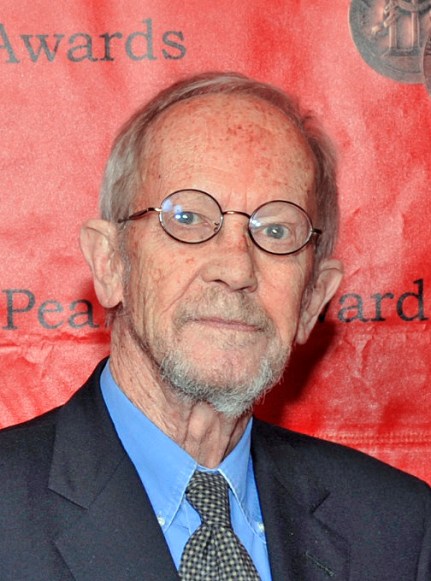
  • Elmore_Leonard.jpg

    In 2010, The Guardian asked authors for their personal lists of dos and don’ts. We’ve gone through the whole list and, week by week, will be bringing you the timeless counsel of the great writers of the 20th and 21stcenturies.

    Last time out we brought you Michael Morpurgo’s writing tips. And in the past we’ve also featured Zadie Smith’s exquisite balance of the practical, the philosophical, and the poetic. Then there’s Neil Gaiman’s timeless counsel on writing, which complements thewriting commandments of Jonathan Franzen, as well as the wise decree of Margaret Atwood. Today, we’re pleased to feature the writing advice from renown author Elmore Leonard (who also inspired the Guardian’s project to collect together all the writerly wisdom they could). So this is a big one. Enjoy!


     1 Never open a book with weather. If it’s only to create atmosphere, and not a charac­ter’s reaction to the weather, you don’t want to go on too long. The reader is apt to leaf ahead look­ing for people. There are exceptions. If you happen to be Barry Lopez, who has more ways than an Eskimo to describe ice and snow in his book Arctic Dreams, you can do all the weather reporting you want.

    2 Avoid prologues: they can be ­annoying, especially a prologue ­following an introduction that comes after a foreword. But these are ordinarily found in non-fiction. A prologue in a novel is backstory, and you can drop it in anywhere you want. There is a prologue in John Steinbeck’s Sweet Thursday, but it’s OK because a character in the book makes the point of what my rules are all about. He says: “I like a lot of talk in a book and I don’t like to have nobody tell me what the guy that’s talking looks like. I want to figure out what he looks like from the way he talks.”

    3 Never use a verb other than “said” to carry dialogue. The line of dialogue belongs to the character; the verb is the writer sticking his nose in. But “said” is far less intrusive than “grumbled”, “gasped”, “cautioned”, “lied”. I once noticed Mary McCarthy ending a line of dialogue with “she asseverated” and had to stop reading and go to the dictionary.

    4 Never use an adverb to modify the verb “said” … he admonished gravely. To use an adverb this way (or almost any way) is a mortal sin. The writer is now exposing himself in earnest, using a word that distracts and can interrupt the rhythm of the exchange. I have a character in one of my books tell how she used to write historical romances “full of rape and adverbs”.

    5 Keep your exclamation points ­under control. You are allowed no more than two or three per 100,000 words of prose. If you have the knack of playing with exclaimers the way Tom Wolfe does, you can throw them in by the handful.

    6 Never use the words “suddenly” or “all hell broke loose”. This rule doesn’t require an explanation. I have noticed that writers who use “suddenly” tend to exercise less control in the application of exclamation points.

    7 Use regional dialect, patois, sparingly. Once you start spelling words in dialogue phonetically and loading the page with apos­trophes, you won’t be able to stop. Notice the way Annie Proulx captures the flavour of Wyoming voices in her book of short stories Close Range.

    8 Avoid detailed descriptions of characters, which Steinbeck covered. In Ernest Hemingway’s “Hills Like White Elephants”, what do the “Ameri­can and the girl with him” look like? “She had taken off her hat and put it on the table.” That’s the only reference to a physical description in the story.

    9 Don’t go into great detail describing places and things, unless you’re ­Margaret Atwood and can paint scenes with language. You don’t want descriptions that bring the action, the flow of the story, to a standstill.

    10 Try to leave out the part that readers tend to skip. Think of what you skip reading a novel: thick paragraphs of prose you can see have too many words in them.

    My most important rule is one that sums up the 10: if it sounds like writing, I rewrite it.


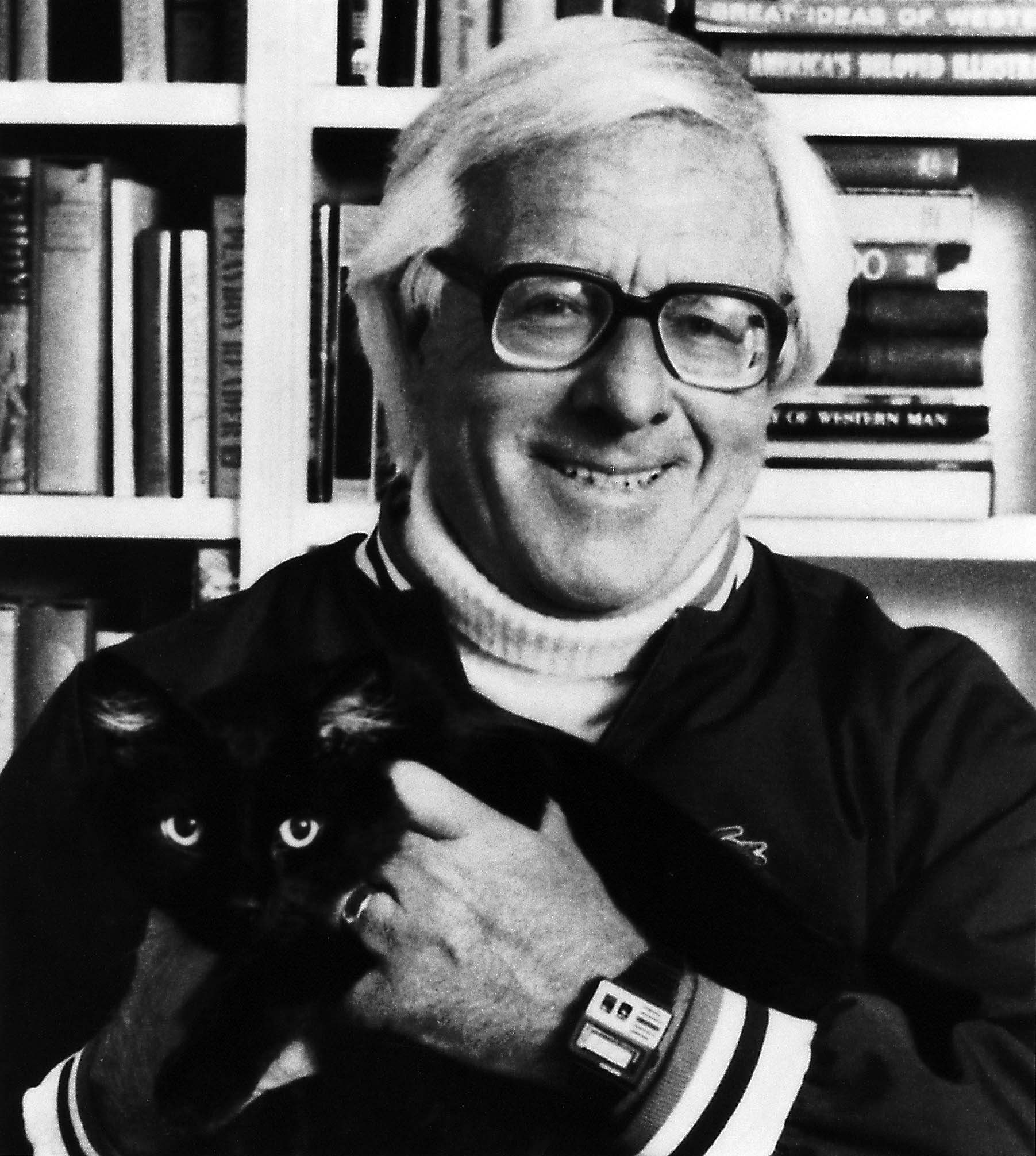
  • raybradbury

    Often, it is easier to shy away from work than face it head on. And when we do tackle our work – be it the drudgery of the nine to five, or the fear of finally getting round to working on that novel you’ve not yet started actually, well, writing – we can often approach it with a less than constructive attitude. It’s natural, perhaps; but it isn’t helpful.

    These, at least, are the thoughts of one of literature’s truly great champions – Ray Bradbury.

    Indeed, Bradbury has given us more than his excellent novels and short stories. He has also given us his timeless wisdom on work, motivation, and creating from a place of love. These are collected in Zen in the Art of Writing.

    Bradbury considers why we hate work, as a culture and as individuals:

    “Why is it that in a society with a Puritan heritage we have such completely ambivalent feelings about Work? We feel guilty, do we not, if not busy? But we feel somewhat soiled, on the other hand, if we sweat overmuch?

    I can only suggest that we often indulge in made work, in false business, to keep from being bored. Or worse still we conceive the idea of working for money. The money becomes the object, the target, the end-all and be-all. Thus work, being important only as a means to that end, degenerates into boredom. Can we wonder then that we hate it so?

    […]

    Nothing could be further from true creativity.”

    Bradbury argues that writing for either commercial rewards or critical acclaim is “a form of lying.”

    This warping of motive can also deform our definitions of success and failure. And, urging us not to quit on something before we know exactly what it is we are quitting, Bradbury writes:

    “We should not look down on work nor look down on [our early works] as failures. To fail is to give up. But you are in the midst of a moving process. Nothing fails then. All goes on. Work is done. If good, you learn from it. If bad, you learn even more. Work done and behind you is a lesson to be studied. There is no failure unless one stops. Not to work is to cease, tighten up, become nervous and therefore destructive of the creative process.”

    A lifelong advocate of doing what you love (and making sure you do it as much as you can), Bradbury ends with a beautiful disclaimer for the cynical:

    “Now, have I sounded like a cultist of some sort? A yogi feeding on kumquats, grapenuts and almonds here beneath the banyan tree? Let me assure you I speak of all these things only because they have worked for me for fifty years. And I think they might work for you. The true test is in the doing.

    Be pragmatic, then. If you’re not happy with the way your writing has gone, you might give my method a try.

    If you do, I think you might easily find a new definition for Work.

    And the word is LOVE.”

  • snow-forest-trees-winter-large

    The woods are shrouded in a white winter mist. Snow falls from the sombre sky, trees twist and creak in the icy wind. There is someone lying in the woods. A girl.

    Her skin is as white as the snow around her, and yet it is a sickly pallor. Her mouth, once as red as blood, is now pale and lifeless. Her hair, as black as ebony, is unkempt and lies straggled on her shoulders. Her figure is delicately cracked in place, as if she were porcelain. Yet the cracks are tinted with faint blue hues – the tell-traces of cyanide.

    She had always been so lively – scampering and exploring the woodlands which had become her home. Her eyes had shone with bright delight whenever she found a new fruit, flower or animal.

    Everything she encountered seemed to befriend her. She was the darling Snow White; her pure white skin, her vibrant red lips, her glossy black hair made her perfect.

    She was irresistible.

    She was envied.

    The girl was exploring in the woods, when the Queen – the Hag – crept up to her, offered up the cursed fruit. She had seen the young girl’s beauty, and was overcome with jealousy.

    “An apple darling?” she rasped, outstretching a withered hand.

    The girl should have run – she might have been spared. Yet alas, she was blind to the Hag’s wicked ways.

    “For me?” she cried, her innocent eyes, widening in surprise.

    “For you,” replied the Witch, in her feigned, scratchy voice.

    The girl gazed at the fruit: its red flesh looked positively divine. “It’s to die for.” the old woman chuckled. Like Eve, the girl was tempted. Like Eve, she couldn’t stay strong. She gave in, took a bite, and fell. Her body collapsed upon the freezing snow, her limbs spread-eagled, her mouth parted slightly in shock. The Hag vanished – victorious.

    The girl grew weaker and weaker; the poison grew stronger and stronger. It surged through her veins, controlling her, overwhelming her. She could not move. The snow whirled, the winds howled furiously, as if to rouse her from her sleep – her nightmare. She could not sleep. She could not wake.

    There was no-one to save her; the pulse slowed in her wrist. The girl’s heart stopped beating in the white winter mist.


    About the author

    Profile Picture.jpgJudith Webster is an English student and aspiring journalist who loves reading and analysing books, which inspired her to start her own blog. Her favourite books to read are classic novels, Gothic novels and a little mix of Horror and Young Adult books, too. She has always been quite a creative person, as well as a bookworm, and so always wrote stories as a a child. As she makes her way as an aspiring creative writer, she is inspired by reading other people’s posts and watching “BookTube” videos on YouTube. You can find her on Goodreads, here.

  • Michael_Morpurgo_20090315_Salon_du_livre_1.jpg

    In 2010, inspired by Elmore Leonard’s 10 Rules of Writing, The Guardian asked authors for their personal lists of dos and don’ts. We’ve gone through the whole list and, week by week, will be bringing you the timeless counsel of the great writers of the 20th and 21stcenturies.

    Last time out we brought you Hilary Mantel’s wisdom and writing tips. And in the past we’ve also featured Zadie Smith’s exquisite balance of the practical, the philosophical, and the poetic. Then there’s Neil Gaiman’s timeless counsel on writing, which complements thewriting commandments of Jonathan Franzen, as well as the wise decree of Margaret Atwood. Today, we’re pleased to feature the writing advice from renown author Michael Morpurgo. Enjoy!

    1. The prerequisite for me is to keep my well of ideas full. This means living as full and varied a life as possible, to have my antennae out all the time.
    2. Ted Hughes gave me this advice and it works wonders: record moments, fleeting impressions, overheard dialogue, your own sadnesses and bewilderments and joys.
    3. A notion for a story is for me a confluence of real events, historical perhaps, or from my own memory to create an exciting fusion.
    4. It is the gestation time which counts.
    5. Once the skeleton of the story is ready I begin talking about it, mostly to Clare, my wife, sounding her out.
    6. By the time I sit down and face the blank page I am raring to go. I tell it as if I’m talking to my best friend or one of my grandchildren.
    7. Once a chapter is scribbled down rough – I write very small so I don’t have to turn the page and face the next empty one – Clare puts it on the word processor, prints it out, sometimes with her own comments added.
    8. When I’m deep inside a story, ­living it as I write, I honestly don’t know what will happen. I try not to dictate it, not to play God.
    9. Once the book is finished in its first draft, I read it out loud to myself. How it sounds is hugely important.
    10. With all editing, no matter how sensitive – and I’ve been very lucky here – I react sulkily at first, but then I settle down and get on with it, and a year later I have my book in my hand.


    For more excellent wisdom on writing, consider the excellent musings of ground-breaking Scottish author, Iain Maloney; and complement that with some priceless advice from Kurt Vonnegut, alongside our compendium of writing advice from some of the greatest authors.

    Alternatively, you could get all this and more by signing up to our free, weekly newsletter for everything interesting. Join the gang!