• It’s true – there’s nothing in the rulebook that says a giraffe can’t play football

    To quote early noughties cult TV show, Clone High, “There’s nothing in the rulebook that says a giraffe can’t play football”.

    It’s a motto that inspired the founding of this website, and one that we hold true to this day. But why? We hear you ask.

    At its core, this notion speaks to a profound truth about creativity: rules, as we commonly understand them, often exist to be questioned, broken, or outright disregarded in the pursuit of innovation. Creativity thrives not in the confines of structure but in the spaces where we allow imagination to roam free, unrestricted by the limitations imposed by convention. In today’s world, more than ever, we need these open spaces where innovation isn’t just encouraged, but celebrated.

    We live in a time where the pressures of commercialisation, conformity, and market-driven success often weigh heavily on creators. It’s easy to fall into the trap of thinking that the only way to succeed is to follow the rules — to write what sells, to design what’s trendy, or to produce what pleases the masses. Yet, history shows us that the most groundbreaking ideas, the most memorable works of art, and the most enduring inventions have come from those who dared to do something different, something unexpected.

    Take the surrealists, for example. Their bizarre, dreamlike paintings challenged traditional notions of art, offering instead a window into the subconscious. Or consider the writers of the Beat Generation, who eschewed the formal constraints of traditional prose in favor of something more fluid, more reflective of the chaotic, often messy nature of life itself. These creators did not ask for permission to deviate from the norm; they simply did it.

    It’s in this spirit that we must foster an inclusive space for creativity. A space where the shy artist feels as welcome as the loud visionary. Where the poet experimenting with new forms of verse stands on equal ground with the filmmaker disrupting narrative structures. Inclusivity in creative spaces isn’t just about representation; it’s about acknowledging that the best ideas come from a diverse range of voices and perspectives. By inviting people from all walks of life into the fold, we broaden our understanding of what’s possible and enrich the creative landscape for everyone.

    Innovation, in whatever form it takes, relies on the freedom to fail as much as it does the freedom to succeed. When we impose strict rules or confine creativity to narrow parameters, we create an environment where fear of failure outweighs the desire to experiment. The true essence of innovation lies not in avoiding mistakes, but in embracing the unknown, in venturing into uncharted territory with the knowledge that failure is not the end—it’s a necessary step toward discovery.

    To create spaces where this kind of boundless creativity can thrive, we must first dismantle the invisible rules that govern our thinking. Ask yourself: What would happen if you set aside your assumptions about what’s “supposed” to be? What if you let your ideas run wild, unchained by the expectations of what your medium, your genre, or even your audience demands?

    There’s nothing in the rulebook that says you can’t. Creativity knows no bounds, and in a world that often tries to box us in, we owe it to ourselves—and to future generations of creators—to keep it that way.

    Help us break the rules

    As ever here at Nothing in the Rulebook, we are keen to support you. You the creatives. You the writers. You the artists, the photographers, the filmmakers, theatre designers, comedians, essayists and everyone else. If you have an idea that needs to be shared. If you have something inside you that needs to get out. We want to hear it. Please do get in touch and submit your work for consideration via nothingintherulebook@nitrbcontributor
  • Students are using AI to summarise the books assigned to them in class, rather than read them. We asked Chat GPT how it would solve the issue

    After feeling both surprised and saddened to see news articles (like this one) highlighting the plight of professors whose students are using AI and other tools to avoid the books assigned to them in class, we asked Chat GPT for its suggestions on how to solve the problem.

    Ah, the allure of YouTube’s bright colours and soothing narration—it’s like the candy aisle at the academic grocery store. Sure, it’s quick and satisfying, but after a while, you’re left with a sugar rush and no substance. Yes, textbooks can be dense, but that complexity is your brain’s CrossFit. You wouldn’t skip leg day at the gym, right? So why skip the mental workout of unpacking intricate ideas?

    How Professors Can Beat the “Skim Culture” and Help Students Love Real Reading Again

    With the rise of AI tools and the ever-enticing YouTube summaries, professors today face an uphill battle. How do you convince students to actually read, rather than let algorithms digest the text for them? Simple: you embrace the tech, but outsmart it with creativity and strategy.

    Break it Down, TikTok Style
    If YouTube is winning students over, meet them where they are—short, snappy breakdowns of dense material! In fact, encourage students to create their own TikTok-length summaries of readings. It keeps them accountable, engages them in active learning, and brings the material to life. By distilling 100 pages of text into a 60-second clip, they’ll have to dig deep and actually understand the content (take that, AI bots!).

    Make Reading a Quest—Gamify It!
    Turn assignments into a game: a treasure hunt where students unlock clues or points for finding deeper meanings in texts. Bonus points if they use actual books! Think of it like “Where’s Waldo?” but for existential themes. Not only does it drive engagement, but it also sparks that satisfying sense of discovery that only real reading provides. Make flipping through pages feel like leveling up.

    In-Class Pop-Up Book Clubs
    Randomly transform a few minutes of class into a pop-up book club where students get to discuss parts of the text they found surprising, confusing, or just plain weird. Low pressure and high energy, these “bookish flash mobs” could make readings feel more like a collective adventure than solitary confinement.

    Audiobooks, But Make Them Crafty
    Yes, students love video, and we’re not here to take away their screen-time comfort. But how about promoting audiobooks alongside the reading? Encourage students to listen while they walk, cook, or even (dare we say) fold laundry. For an extra touch, add guided questions that they must answer based on the full narrative. If they skip around, they’ll miss key clues—AI can’t save them there!

    Textbook Therapy Sessions
    If students say textbooks are too complicated (a fair critique), host “Textbook Therapy” sessions where you demystify the cryptic language together. The goal? To arm them with decoding skills, so they can learn how to handle tough texts on their own—like handing them a machete and saying, “You’ve got this. Go conquer the academic jungle.”

    . Make ‘Em Relatable:

    Sure, academic texts can feel like they’ve been run through a jargon blender. So, professors can create a space for humor by asking students to rewrite a complex passage in ‘Gen Z slang,’ or as if the author were writing a love letter to the subject. This approach allows students to truly understand the material, even if they’re poking fun at it. Plus, who wouldn’t want to read Darwin explaining natural selection like it’s a TikTok trend?

    4. Real Talk Discussions:

    Rather than letting students avoid reading with “CliffsNotes” versions, professors could host “real talk” discussions where the focus is on deeper questions, like “How would this theory survive in today’s society?” or “What would this philosopher’s TikTok account look like?” These kinds of questions encourage students to bring the material into their own world—and that requires actually knowing what’s in the book.

    5. The ‘Analog Escape’ Incentive:

    Ah, the physical book. There’s something rebellious about holding a paper copy in a world ruled by screens. Professors can embrace this by making “offline” reading trendy again. Maybe host a “Ditch Your Device” day, where students bring physical copies of their texts to a cozy coffee shop-style class, sip some metaphorical (or literal) tea, and dive into the pages like it’s the latest page-turner. It might just remind them how refreshing it is to not constantly be checking for notifications.

    AI as an Ally, Not a Shortcut

    Rather than treating ChatGPT as the villain, professors can lean into it, showing students how AI can serve as a study buddy after they’ve done the reading. For instance, they could use AI to quiz themselves on key points or clarify things they didn’t fully understand, transforming it from a text-skipping tool to a comprehension enhancer.

    And finally… drumroll…

    Reading, Rebranded
    What if reading wasn’t “reading” anymore? Instead of assigning 50 pages of “required reading,” call it an “intellectual adventure” or “curiosity challenge.” Sure, it’s a little hokey, but who cares? We’re battling AI here—throw out the traditional syllabus! Packaging matters, and if you make students feel like they’re entering a secret society of knowledge (without the beige walls and monotone lectures), you just might lure them back to the printed page.


      Yes, the temptation of AI shortcuts will always be there, hovering like the Wi-Fi signal students cling to—but in the end, nothing can replace the magic of cracking open a book, of flipping the pages, of seeing where the author’s thoughts align with your own. AI can mimic summaries, but it can’t recreate the experience of getting lost in a good story or the satisfaction of wrestling with a challenging text and coming out on top.

      Reading is more than absorbing information; it’s about exploring ideas. So, professors, take heart: AI may help students skim the surface, but the depth and richness of actually reading a book—real or digital—remains one of life’s greatest rewards. Plus, no YouTube channel or AI tool can compete with that “new book smell.”

    1. Writing competitions 2024

      After a brief hiatus to our publishing schedule, we are back and still trying to pull together as many helpful tools, resources and guides to help creative folk fulfil their potential.

      It is with this commitment in mind that we are thrilled to once again bring you our list of creative writing competitions from around the world, scheduled for the year ahead (2024).

      So, in addition to our list of places that are always open for submissions, as well as places to submit flash fiction, and a long list of independent publishers you can submit your manuscripts to, we are thoroughly chuffed to bring you this valuable writing resource you can use to get your writing into the right places.

      Included below are details about word counts, deadlines and direct links to each event.

      If you’d like to add a writing competition to our list then please feel free to contact us!

      1. Reedsy Prompts Contest

      • Genre: Fiction, Short Story
      • Prize: $250
      • Entry Fee: Free
      • Deadline: Weekly
      • Details: Respond to weekly prompts and enter for a chance to win. More info

      2. Future Scholar Foundation Short Story Competition

      • Genre: Short Story
      • Prize: $25 Amazon gift card
      • Entry Fee: Free
      • Deadline: Monthly
      • Details: Short stories up to 350 words. More info

      3. The International Amy MacRae Award for Memoir

      • Genre: Memoir, Non-fiction, Short Story
      • Prize: $1,000
      • Entry Fee: $25
      • Deadline: June 30, 2024
      • Details: Original, unpublished works up to 2000 words. More info

      4. Francine Ringold Awards for New Writers

      • Genre: Fiction, Poetry
      • Prize: $500 and publication
      • Entry Fee: $12
      • Deadline: July 15, 2024
      • Details: For new writers, judged by the University of Tulsa. More info

      5. Rattle Poetry Prize

      • Genre: Poetry
      • Prize: $15,000
      • Entry Fee: $30
      • Deadline: July 15, 2024
      • Details: No word limit on poems. More info

      6. Seán Ó Faoláin International Short Story Competition

      • Genre: Short Story
      • Prize: €2,000 and publication
      • Entry Fee: €19
      • Deadline: July 31, 2024
      • Details: Stories up to 3,000 words. More info

      7. Stephen Spender Prize for Poetry in Translation

      • Genre: Poetry in Translation
      • Prize: £1,000 and publication
      • Entry Fee: £10
      • Deadline: July 31, 2024
      • Details: Up to 60 lines. More info

      8. Foyle Young Poets Competition

      • Genre: Poetry
      • Prize: Publication and mentorship for top winners.
      • Entry Fee: Free
      • Deadline: July 31, 2024
      • Details: Open to poets aged 11-17, poems up to 40 lines. More info

      9. Gival Press Short Story Award

      • Genre: Short Story
      • Prize: $1,000
      • Entry Fee: $25
      • Deadline: August 8, 2024
      • Details: Stories between 5,000 and 15,000 words. More info

      10. One Year Adventure Novel Contest

      • Genre: Novel (for students)
      • Prize: Various prizes
      • Entry Fee: Free
      • Deadline: August 15, 2024
      • Details: For students under 20 who complete a novel. More info

      11. Futurepoem Hybrid Literature Prize

      • Genre: Poetry, Fiction, Creative Non-fiction, Hybrid
      • Prize: $1,000, publication, and 25 author copies
      • Entry Fee: $28 (or sliding scale $9 or $18)
      • Deadline: August 15, 2024
      • Details: Manuscripts up to 200 pages. More info

      12. Harvard International Review Summer Essay Competition

      • Genre: Essay
      • Prize: Various prizes, including publication.
      • Entry Fee: Free
      • Deadline: August 31, 2024
      • Details: Essays 800-1,200 words on international issues. More info

      13. 21 Futures: Financial Fallout Anthology Competition

      • Genre: Short Story
      • Prize: $1,000
      • Entry Fee: Purchase of anthology
      • Deadline: August 31, 2024
      • Details: Stories up to 3,000 words on the theme “Financial Fallout.” More info

      14. SaveAs Writers’ International Writing Competition – Poetry

      • Genre: Poetry
      • Prize: £200
      • Entry Fee: £4 per poem
      • Deadline: August 31, 2024
      • Details: Poems up to 60 lines. More info

      15. SaveAs Writers’ International Writing Competition – Prose

      • Genre: Short Story
      • Prize: £200
      • Entry Fee: £5 per story
      • Deadline: August 31, 2024
      • Details: Stories up to 3,500 words. More info

      16. Searchlight Awards – Best Novel Opening for Children or Young Adults

      • Genre: Novel
      • Prize: £500
      • Entry Fee: £16
      • Deadline: September 1, 2024
      • Details: For the best opening of a novel. More info

      17. Dogwood Literary Prize

      • Genre: Poetry, Short Story, Essay
      • Prize: $1,000 each for poem, short story, and essay
      • Entry Fee: $12
      • Deadline: September 5, 2024
      • Details: Up to three poems (10 pages total) or 22 pages of prose. More info

      18. Mslexia Novel Competition

      • Genre: Novel (Children’s for 2024)
      • Prize: £5,000
      • Entry Fee: £26
      • Deadline: September 18, 2024
      • Details: Open to unpublished women writers. Submit the first 5,000 words of your manuscript. More info

      19. Dream Quest One Writing Contest

      • Genre: Fiction, Short Story
      • Prize: $250 (1st), $125 (2nd), $50 (3rd)
      • Entry Fee: $10
      • Deadline: September 30, 2024
      • Details: Short stories up to 5 pages on any theme. More info

      20. The Moth Nature Writing Prize 2024

      • Eligibility: Open to anyone over the age of 16, as long as the work is original and previously unpublished.
      • Genres: Poetry or prose.
      • Word Limit: Maximum of 4,000 words for prose.
      • Entry Fee: €15 per entry. Participants can enter as many pieces as they like.
      • Prizes:
        • 1st Prize: €1,000 plus a week-long stay at the Circle of Misse in France.
        • 2nd Prize: €500.
        • 3rd Prize: €250
      • Deadline: September 30, 2024.

      For more details and to enter the competition, you can visit the official Moth Magazine website

      21. The Caledonia Novel Award

      • Genre: Fiction, Novel, Young Adult
      • Prize: £1500
      • Entry Fee: $36
      • Deadline: October 15, 2024
      • Details: Submit the first 20 pages and a 200-word synopsis. More info

      22. Bedford Writing Competition

      • Genre: Short Story, Poetry
      • Prize: £1,500 (short story), £500 (poetry), plus additional prizes.
      • Entry Fee: £8.50 per entry
      • Deadline: October 31, 2024
      • Details: Short stories up to 3,000 words and poems up to 40 lines. More info

      23. New York Times 100-Word Narrative Contest

      • Genre: Non-fiction
      • Prize: Publication in the New York Times.
      • Entry Fee: Free
      • Deadline: Expected October-November 2024
      • Details: True stories in 100 words. More info

      24. New York Times Student Review Contest

      • Genre: Review
      • Prize: Publication in the New York Times.
      • Entry Fee: Free
      • Deadline: Expected November-December 2024
      • Details: Reviews on various subjects. More info
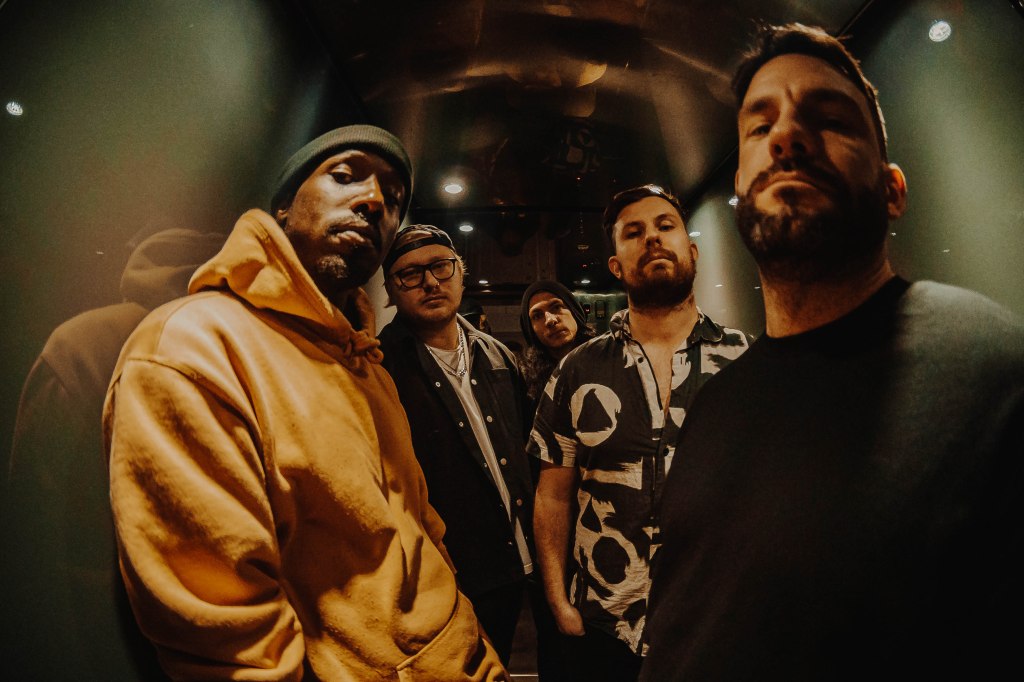
    2. “Being in a band is like being in a marriage” – post-hardcore band Tether. on launch of their new EP
      Phot credit: Pete Woolven (@xvisua)]

      London post-hardcore newcomers Tether. have announced the release of their debut EP Mirror Work, recorded and mixed by long-term producer MyKey Kew at Rogue Recording Studios in London, and set for release on 21st June 2024.

      To celebrate the news the band have launched their lead single ‘Straight With Me’, which you can check out on Youtube: https://youtu.be/BY4JW6Rvc_o?si=bHK6ROgpHgs77PYW

      The quintet supported Dayshifter in April at The Fighting Cocks, Kingston, are planning a special EP release show at The Black Heart, Camden on 27th June with tickets on sale now.

      Commenting on the track, which examines the life of a touring musician and the dynamic between band members who are often trying to achieve a shared goal, front man Justin says:

      “I think writing this song reflected and summed up all the frustrations that band members have, and also have with each other. I say this all the time, ‘being in a band is like being in a marriage.’ You’re coupled up, sometimes realising that you’ve now found incompatibilities, but then sometimes you’re too far in to quit. The frustration of being in a long term situation you love, with people you love, where you sometimes don’t see eye to eye. Trying to keep your mouth shut to appease others, but hold back and bite your tongue to avoid a build of tension.”

      “The line ‘we can’t read the same book expecting a different ending’ is about understanding that you’re on a similar path to someone that has different visions of the outcome, and the frustration involved with that, but we all have to bend sometimes in order to make things perfect, which usually can only be seen in hindsight. ‘Walk, Straight With Me, instead of going round in circles’ is about rationalising and understanding a situation in order to move forward and achieve your united goal, otherwise no one moves forward.”

      Formed in late 2018, Tether. are a post-hardcore beacon of hope in a hopeless world, on a mission of introspection to explore the very essence of what it means to be taking part in the collective human experience. Through front man Justin Jackson’s ongoing internal struggle to find meaning to life on Earth in an otherwise meaningless universe, the band set out to deliver messages of optimism, self-conviction, and a sense of the infinite possibilities for what can be.

      Influenced by scene titans Every Time I Die, letlive, Poison The Well and Alexisonfire, their sound probes the darkest, rawest, but also the brightest areas of modern life, delivered with an unrelenting energy that has seen stages and floor shows across the UK torn apart.

      The band immediately broke out on the capital’s underground scene sharing the stage with the likes of Hawthorne Heights, Loathe, As Everything Unfolds, Blood Youth, The City is Ours and Black Coast before heading out on their first tours alongside MSRY and Groom Lake in late 2019 and early 2020.

      Their latest single, ‘The Deciders’ was released in February 2023, and debuted exclusively on BBC Radio 1 Introducing Rock as the first Track of the Week for the year. Since returning to playing live post-pandemic, they have continued to bring their captivating shows to audiences across the country.

      Building on that momentum, the band headlined London’s inaugural Lume Fest in April 2023 alongside Dream State and Graphic Nature, before playing their largest show to date in July 2023—a support slot for Cancer Bats at O2 Academy Islington—and recently supporting Quebec hardcore mob Don’t Try on their 2024 UK/EU tour.

      “It was fantastic working with the guys in Tether. again, this time for a full EP,” says producer MyKey Kew of the Mirror Work recording sessions. “All the songs were so well written, crafted and cared for, I think everybody levelled up and put all they had into making these tracks the best they could be. It was a really fun recording process, pushing ourselves to get the best performances and tones possible during tracking—it made mixing this EP a real pleasure. I’m very excited for everyone to hear these new songs, and to see them introduced into their live set!”

      Tether.’s debut EP Mirror Work is released 21st June 2024. Catch their show at The Black Heart in Camden on 27th June.

    3. Who will be the breakout stars on stage in 2024?

      The Stage Debut Awards, the only awards devoted solely to recognising breakthrough theatre talent both on and off stage, today announces that submissions for 2024 are now officially open. The live ceremony will be held on Sunday, September 29, and promises to be an unforgettable night celebrating the outstanding achievements of upcoming performers and creatives who have made their professional debuts on stages across the UK over the past 12 months.

      This much-anticipated annual fixture in the awards calendar will be hosted again at 8 Northumberland Avenue, London. On the night, a mix of the industry’s freshest talent and a starry who’s who of established names will be entertained by Theatreland’s most exciting artists, performing musical numbers up close in this intimate space. Tickets will go on sale soon. 

      Newly rebranded ATG Entertainment returns as the headline sponsor. Trafalgar Entertainment reaffirms its sponsorship for the Best West End Creative category, Crossroads Live for Best Composer, Lyricist or Book Writer and Sonia Friedman Productions for Best Writer. This year, we welcome the Noël Coward Foundation and Michael Harrison Entertainment to The Stage Debut Awards’ esteemed stable of sponsors with their support for the Best West End Debut Performer and Best Performer in a Musical respectively. 

      The eight eligible categories championing performers, directors, designers, writers, composers and lyricists are Best Performer in a PlayBest Performer in a MusicalBest DirectorBest Writer; Best DesignerBest Composer, Lyricist or Book Writer and Best West End Creative Debut. The winner of the Best West End Debut Performer is the only category to be determined by a public vote. Last year, theatre audiences picked former Strictly Come Dancing’s breakout star Rose Ayling-Ellis as the winner for her standout debut performance in As You Like It at @sohoplace. The star has recently announced landing a major upcoming BBC television role. 

      Anyone who has made their professional debut between July 18, 2023 and July 17, 2024 will be eligible. Submissions can be made HERE and entries will close on the June 30. The shortlist of nominees will be announced in August.

      Ted Stimpson, Group CEO of ATG Entertainment said: “We are delighted to be supporting British theatre’s emerging talent through The Stage Debut Awards for the third year. At ATG Entertainment, we profoundly appreciate that we must nurture the next generation of talent that will bring exciting and groundbreaking ideas and voices to our audiences. We look forward to being part of an exceptional night celebrating the awesome talent at these awards in September.”

      The Stage Debut Awards launched in 2017 and has proven to be a career defining launchpad with recipients of these prestigious awards enjoying continued success across stage and screen. Last year’s winners included Rob Madge for My Son’s a Queer, (But What Can You Do?) at Garrick Theatre and Ambassadors Theatre, Isobel Thom for their leading role in I, Joan at Shakespeare’s Globe, Michael R Jackson for composing A Strange Loop at the Barbican Theatre and Tingying Dong for her sound design on The Crucible, Gielgud and National Theatre. A further roll call of notable award winners from previous years include Shan Ako (Hamilton), Spitlip (Operation Mincemeat), Tyrell Williams (Red Pitch), Sam Tutty (Dear Evan Hansen), Miriam-Teak Lee (& Juliet), Bush Theatre artistic director Lynette Linton (Sweat) and composers Femi Temowo (Death of a Salesman) and Dan Gillespie Sells (Everybody’s Talking About Jamie). 

      For details on eligibility and the judging process see The Stage Debut Awards website: HERE

    4. Echoes of Eternity: Celebrating World Poetry Day

      In the heart of March, amidst the shifting winds and awakening whispers of spring, the world takes a collective breath to celebrate a timeless art form that transcends boundaries, languages, and cultures – poetry. World Poetry Day, an occasion that stirs the soul and unites the disparate voices of humanity in a symphony of verse, offers a moment to reflect on the profound impact of words woven into the fabric of existence.

      Poetry, that elusive dance of rhythm and rhyme, holds within its delicate grasp the power to illuminate the darkest corners of our consciousness and to stir the embers of forgotten dreams. It is a mirror held up to the human experience, reflecting our joys, sorrows, hopes, and fears with unparalleled clarity and grace. Through poetry, we find solace in solitude, companionship in chaos, and beauty in the mundane.

      On this day, poets and poetry lovers around the globe gather to pay homage to the bards and troubadours whose words have echoed through the corridors of time, leaving an indelible mark on the tapestry of human history. From the ancient verses of Homer and Sappho to the modern musings of Maya Angelou and Rupi Kaur, the poetic tradition spans centuries and continents, each verse a testament to the enduring power of the human spirit.

      But World Poetry Day is not merely a time for reflection; it is a call to action, a reminder of the importance of fostering creativity and expression in all its forms. In a world fraught with division and discord, poetry serves as a bridge, connecting disparate souls in a shared moment of understanding and empathy. It is a force for change, challenging conventions, and speaking truth to power with unyielding conviction.

      In the digital age, poetry has found new avenues of expression, transcending the confines of the printed page to inhabit the vast expanse of cyberspace. Blogs, social media platforms, and online communities have become virtual salons where poets from every corner of the globe come together to share their work and engage in spirited discourse. Through hashtags and retweets, they forge connections that defy geographical boundaries, celebrating the diversity of human experience in all its myriad forms.

      Poetry should not, of course, be defined to a single day (and it’s important to clarify that here, given we’re publishing this particular story one day “late”). So when we celebrate World Poetry Day, let us do so every day of the year. We must not forget the transformative power of the written word, nor the responsibility that comes with wielding it. Let us honour the poets who came before us, whose words paved the way for our own, and whose legacy endures in every stanza and couplet. And let us continue to raise our voices in solidarity, weaving a tapestry of verse that speaks to the shared humanity that binds us all.

      In the words of the poet Rumi, “Out beyond ideas of wrongdoing and rightdoing, there is a field. I’ll meet you there.” May we all find ourselves in that sacred space, united in our love for the written word and the eternal quest for truth and beauty that binds us together as one.

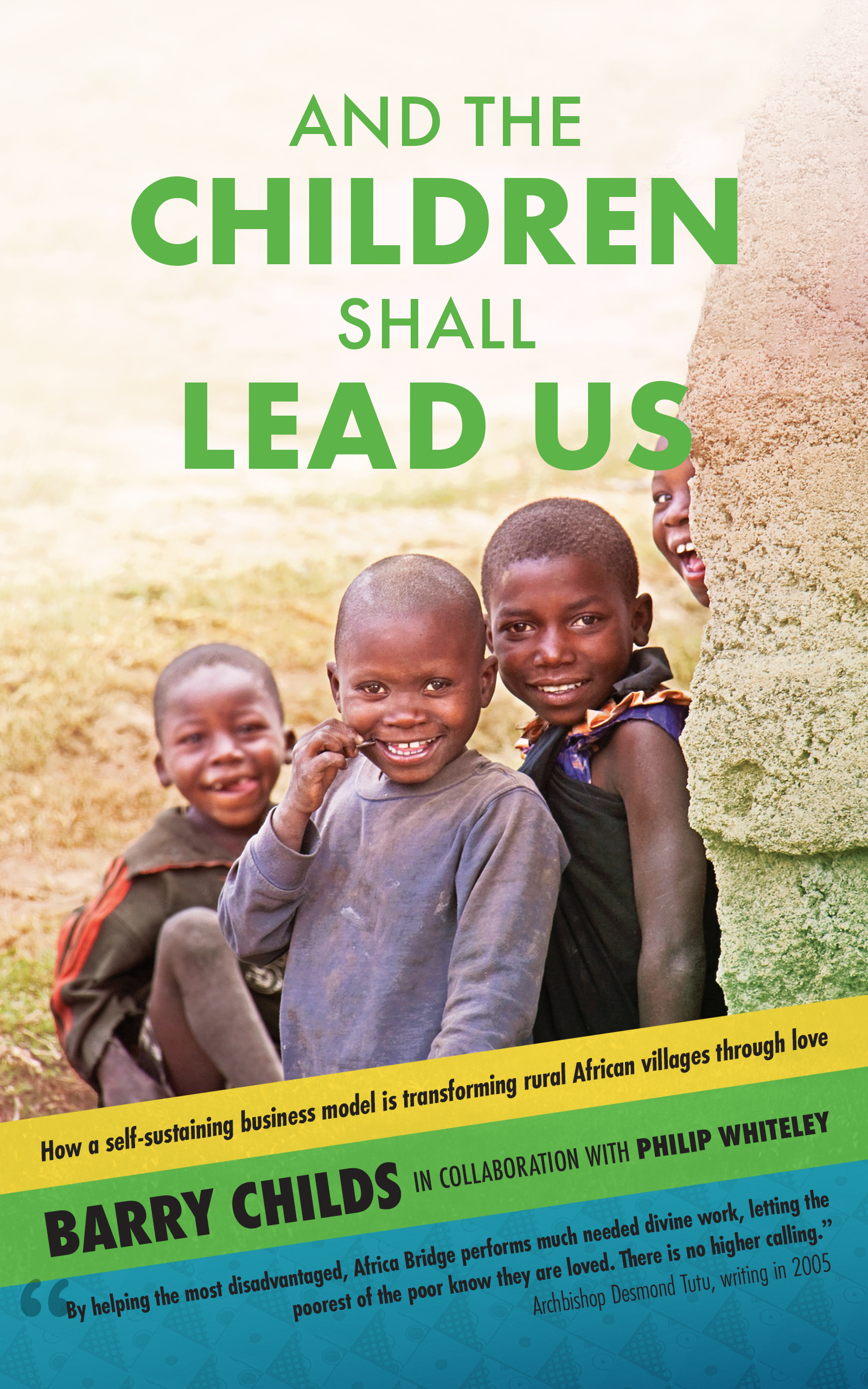
    5. And The Children Shall Lead Us

      How can a social enterprise develop an independently validated model for lifting rural African communities out of extreme poverty?

      The answers are revealed in the latest non-fiction offering from pioneering publishers, the Breakthrough Books collective. And The Children Shall Lead Us tells the heartfelt and fascinating account of 23 years of Africa Bridge, the sustainable, cooperative agricultural model transforming rural villages 

      Described by Archbishop Desmond Tutu as performing “much needed divine work”, the Africa Bridge model offers powerful potential to lift the most vulnerable children out of poverty. And to do so in ways that are sustainable, sensitive and repeatable.

      This work is not simply ‘charity’; it’s a proven community-led model that could redefine ethical development in Africa. The book is destined to become recommended reading for the social sciences.

      Written by Barry Childs, founder of Africa Bridge, And The Children Shall Lead Us tells the engrossing story of how the project works, how it came about and was implemented, and what has been learned during its 23 years of operation. 

      Childs understood that to transform vulnerable children’s lives a secure revenue stream was needed, enabling them to be nurtured and educated, and offering realistic opportunities to achieve their potential. Africa Bridge establishes agricultural cooperatives and children’s committees, by actively empowering village women, to generate sustainable incomes while meeting social needs. This community-based, child-focused approach provides a blueprint for ethical development.

      Barry’s personal journey from son of an agricultural officer to visionary leader dedicated to service (and winner of the Purpose Prize) is compellingly described in the book. Backed by academic research, it provides not only a proof of concept for Africa Bridge, but a promising blueprint for meaningful development work. For anyone interested in the future of equitable development, And the Children Shall Lead Us offers an eye-opening and engaging read. Order through Breakthrough Books.

    6. Unleash your inner bookworm: 10 ways to elevate your reading experience

      Stories, we know, transport us. But are there ways we can enrich our approach to the literary journeys we embark upon? Whether you’re a seasoned bookworm or just starting to dive into the world of literature, there are always ways to enhance your reading experience and make it even more enjoyable. From finding the perfect reading spot to discovering new genres, here are 10 tips and tricks to take your reading game to the next level.

      1. Create Your Reading Sanctuary: Set up a cozy reading nook in your home—a comfy chair, soft blanket, and a warm mug of tea or coffee. Make it your sanctuary, a place where you can escape into the pages of your favorite book and immerse yourself in its world.
      2. Diversify Your Reading List: Step out of your comfort zone and explore new genres, authors, and perspectives. Challenge yourself to read books that you wouldn’t normally pick up. You might discover hidden gems and broaden your literary horizons in the process.
      3. Set Reading Goals: Whether it’s a certain number of books to read in a month or a challenge to explore different genres, setting reading goals can motivate you to stay on track and make reading a priority in your life.
      4. Join a Book Club: Engage in lively discussions, exchange recommendations, and connect with fellow book lovers by joining a book club. It’s a fantastic way to discover new books, gain fresh insights, and build a sense of community around your passion for reading.
      5. Utilize Audiobooks and E-books: Embrace technology and explore the convenience of audiobooks and e-books. They’re perfect for multitasking—listen to an audiobook while commuting, exercising, or doing household chores, and enjoy the flexibility of carrying an entire library in your pocket with e-books.
      6. Take Notes and Annotations: Enhance your reading experience by taking notes, highlighting passages, and jotting down your thoughts in the margins. It allows you to actively engage with the text, deepen your understanding, and revisit key moments later on.
      7. Embrace the Power of Bookish Communities: Connect with fellow bookworms on social media platforms, online forums, and book-related subreddits. Share your reading journey, participate in discussions, and tap into a wealth of bookish knowledge and recommendations from like-minded individuals.
      8. Visit Local Bookstores and Libraries: Support your local bookstores and libraries by exploring their shelves and discovering hidden literary treasures. Attend author events, book signings, and literary festivals to immerse yourself in the vibrant literary scene of your community.
      9. Create a Reading Ritual: Establish a reading ritual that helps you unwind and prepare for your reading sessions. Whether it’s lighting a scented candle, playing soft music, or indulging in a pre-reading snack, find what works for you and make it a part of your reading routine.
      10. Share Your Love for Reading: Spread the joy of reading by sharing your favorite books with friends and family, recommending titles to fellow book lovers, and participating in bookish conversations online. Pay it forward and inspire others to embark on their own literary adventures.

      With these 10 tips and tricks, you’ll be well-equipped to unleash your inner bookworm and elevate your reading experience to new heights. So grab your favourite book, cozy up in your reading nook, and let the magic of storytelling transport you to distant lands and imaginative realms. Happy reading!

    7. Writing Our Way Back to Nature: The Urgency of Environmental Storytelling

      In a world gripped by the relentless throes of climate breakdown, where headlines scream of unprecedented wildfires, vanishing ice caps, and species on the brink of extinction, it’s increasingly apparent that our relationship with the natural world stands at a precarious crossroads. As writers and storytellers, we find ourselves tasked with a weighty responsibility—to lend our voices to the urgent narrative of environmental stewardship and ecological awareness.

      Jonathan Franzen, in his foreword to Spark Birds, eloquently articulates the challenge of writing about nature in the face of such existential threats. He highlights the fundamental dilemma of crafting compelling narratives around non-human characters, whose motives and desires differ starkly from our own.

      With an eye to the basic A-to-B structure of a story propelled by a sense of purpose along the axis of its plot, he considers the challenge of creating a dramatic narrative around creatures whose primary purpose is basic survival, creatures “driven by desires the opposite of personal” and free from “ethical ambivalence or regret” — those marvellous, maddening complexities that make for the human drama.

      Franzen writes: “Absent heavy-duty anthropomorphizing or projection, a wild animal simply doesn’t have the particularity of self, defined by its history and its wishes for the future, on which good storytelling depends. With a wild animal character, there is only ever a point A: the animal is what it is and was and always will be. For there to be a point B, a destination for a dramatic journey, only a human character will suffice. Narrative nature writing, at its most effective, places a person (often the author, writing in the first person) in some kind of unresolved relationship with the natural world, provides the character with unanswered questions or an unattained goal, however large or small, and then deploys universally shared emotions — hope, anger, longing, frustration, embarrassment, disappointment — to engage a reader in the journey. If the writing succeeds in heightening a reader’s interest in the natural world, it does so indirectly.”

      Amidst this conundrum lies a profound opportunity—to weave tales that bridge the gap between humanity and the natural world, igniting empathy, understanding, and action.

      As we embark on this literary journey, we confront another troubling reality: the steady erosion of nature’s presence in our collective lexicon. Children’s dictionaries, once teeming with the vibrant vocabulary of the outdoors—words like “catkin,” “acorn,” and “bluebell”—now bear the scars of our disconnection from the natural realm (seen acutely in the removal of such words from these dictionaries https://www.theguardian.com/books/2015/jan/13/oxford-junior-dictionary-replacement-natural-words). This linguistic impoverishment speaks volumes about our society’s waning intimacy with the environment, foretelling a future where the very essence of nature slips from our grasp.

      The implications of this decline are profound. When we strip language of its ability to evoke the sights, sounds, and sensations of the natural world, we risk severing the ties that bind us to our planet. We rob future generations of the linguistic tools needed to articulate their relationship with nature, relegating them to a world where concrete jungles replace verdant forests, and digital screens obscure the starlit sky.

      Yet, in the face of this daunting reality, hope flickers like a lone beacon in the night. For every word erased from a dictionary, a writer pens a poem that sings of meandering streams and whispering leaves. For every tree felled in the name of progress, a novel takes root, weaving a tapestry of human resilience and ecological redemption. It is within these narratives—imbued with the raw beauty and unyielding spirit of the natural world—that we find solace, inspiration, and the courage to confront the challenges ahead.

      So let us heed Franzen’s call to arms, embracing the power of storytelling to illuminate the path towards a more sustainable future. Let us reclaim the lost words of nature, infusing our prose with the richness of the earth beneath our feet and the skies above our heads. And let us, as writers, stand as custodians of the environment, wielding our pens as swords against apathy and indifference.

      For in the end, it is through our stories that we reclaim our connection to the land, and in doing so, rediscover the profound beauty and boundless wonder of the world around us.

      About the author of this post

      Emma Reynolds is a passionate advocate for environmental conservation and storytelling. Currently pursuing her degree in Creative Writing at Bath Spa university, Emma’s love for nature and literature intertwines seamlessly in her work. She strives to use her writing to raise awareness about pressing environmental issues and spark positive change in the world. When she’s not lost in the pages of a book or scribbling furiously in her notebook, you can find Emma exploring the great outdoors, seeking inspiration from the natural world she holds dear.

    8. “Each book is a gift” – Rebecca Solnit on the transformative power of books

      “Read, read, read!” implored Dr Seuss; “If you have books, you have everything” taught Kingsley Amis; while Maria Popova told us that “a life of reading is a richer, nobler, larger, more shimmering life”.

      For centuries, books have fed our irrepressible hunger for truth and meaning, and some of the most celebrated exemplars of humanity – from writers to astronauts, politicians to philosophers – have extolled reading as a pillar of our very human essence. Among them is Rebecca Solnit — one of the most lyrical and insightful writers of our time.

      In one of her brilliant essays on how books saved her life, Solnit observed that “the object we call a book is not the real book, but its potential, like a musical score or seed.”

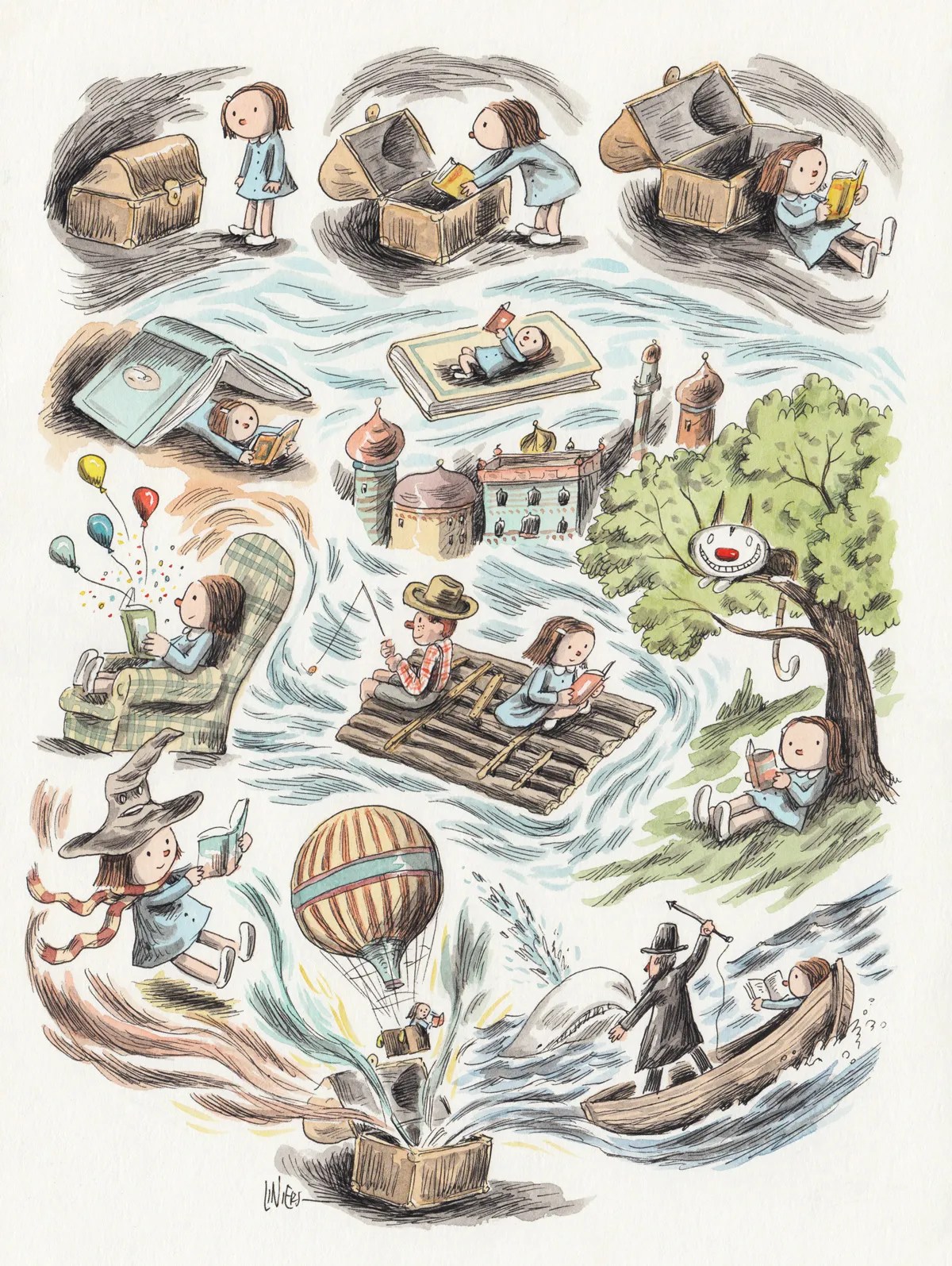
      This idea speaks to the value books can bring to us, most acutely felt perhaps in childhood – when our life stretches before us in infinite waves of pure energy and potential; of ideas yet to be thought, inventions yet to be made real; stories yet to be told; lives yet to be lived. In the hands of a child, a book increases such potential by an infinitesimal degree. Solnit speaks to this exquisitely in her contribution to A Velocity of Being: Letters to a Young Reader (public library) — a labour of love eight years in the making, comprising 121 illustrated letters to children about why we read and how books transform us.

      Solnit writes:

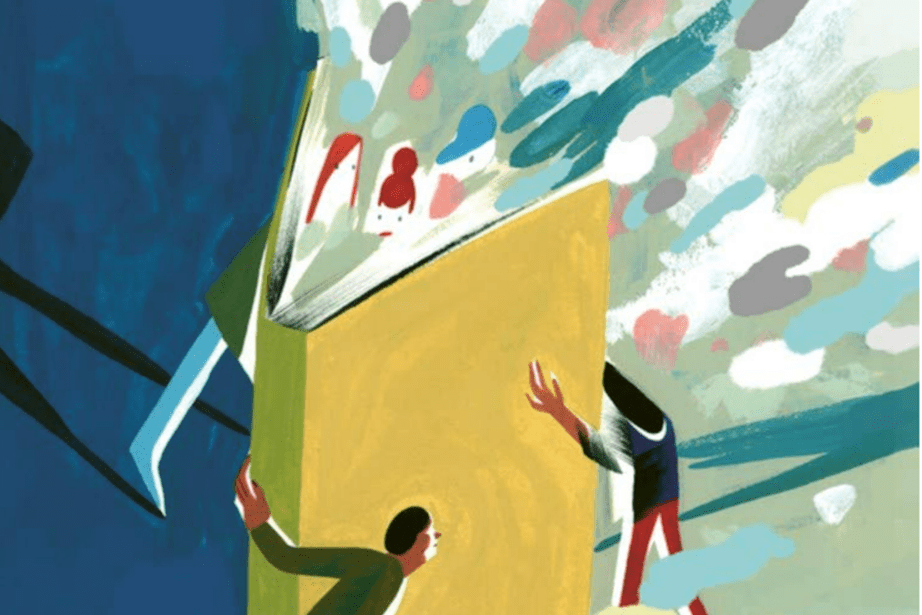
      Nearly every book has the same architecture — cover, spine, pages — but you open them onto worlds and gifts far beyond what paper and ink are, and on the inside they are every shape and power. Some books are toolkits you take up to fix things, from the most practical to the most mysterious, from your house to your heart, or to make things, from cakes to ships. Some books are wings. Some are horses that run away with you. Some are parties to which you are invited, full of friends who are there even when you have no friends. In some books you meet one remarkable person; in others a whole group or even a culture. Some books are medicine, bitter but clarifying. Some books are puzzles, mazes, tangles, jungles. Some long books are journeys, and at the end you are not the same person you were at the beginning. Some are handheld lights you can shine on almost anything.

      Such ideas have of course been spun by other fantastic thinkers – yet there is something beautiful and important of voices and creative ways to teach children of the value of books. In an era of AI, increasing corporate art – the commercialisation of thought – in a time of 12 second tik tok videos, misinformation, culture wars and societal division, reading books is perhaps more important than ever. And it seems especially vital that future generations should revere books as so many of our greatest minds do. In a beautiful metaphor, Solnit likens a book to a gift, writing:

      “Each book is a gift a writer made for strangers, a gift I’ve given a few times and received so many times, every day since I was six.”

      So, why not make Solnit’s beautifully illustrated book a gift of your own to someone you love? And share your own reasons for loving books in the comments below!